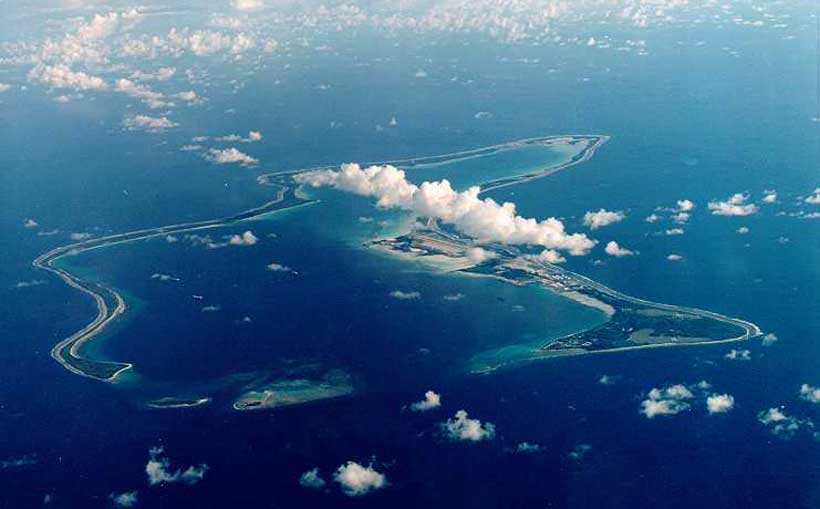
On 18 February 2026, reports emerged that Britain was withholding American permission to use Diego Garcia in any hypothetical strike against Iran. The following day, Trump posted “DO NOT GIVE AWAY DIEGO GARCIA” on Truth Social, linking the base directly to potential operations against Tehran in terms that left no room for diplomatic interpretation. The sequence lasted forty-eight hours and revealed what months of careful legal construction had obscured: that the architecture of conditional access Britain had built around a strategically significant military installation was worth precisely what the decisive power chose to make it worth. Whether the intervention also carried tactical signalling toward Tehran is a legitimate question, and intra-alliance friction of this kind sometimes functions as maximalist positioning before settlement. What matters analytically, however, is not the post itself but what the post revealed when operational pressure arrived. It was also, for anyone who had read Washington’s December 2025 National Security Strategy carefully, entirely predictable.
Power Does Not Ask
There are two ways to understand how military power operates in the international system, and the Chagos episode forces a choice between them. The first holds that great powers are meaningfully constrained by the frameworks they inhabit, alliance structures, legal agreements, and diplomatic settlements, and that these frameworks produce stable, predictable behavior even when the underlying interests they were designed to manage come under pressure. The second holds that frameworks are expressions of power relationships at a given moment rather than independent constraints upon them, so that when power shifts or decides to assert itself, the frameworks adjust to reflect the new reality rather than containing it. The first is the language of liberal internationalism. The second is the language of realism, and what February produced was an unambiguous realist moment.
The December 2025 National Security Strategy had already committed this diagnosis to paper. The document did not describe Europe as weak through circumstance. It described Europe as having chosen weakness, identifying a “loss of national identities and self-confidence” as the continent’s defining condition and stating openly that it is “far from obvious whether certain European countries will have economies and militaries strong enough to remain reliable allies.” The strategy framed European concerns about Russia as evidence of that same condition, noting that this lack of self-confidence was most evident in Europe’s relationship with Russia, despite the fact that European allies enjoy a significant hard power advantage over Russia by almost every measure save nuclear weapons. Washington’s reading of its European partners, formalized two months before the Diego Garcia friction became public, was of states that had systematically preferred institutional solutions over sovereign ones, legal arrangements over unconditional control, and managed conditionality over the exercise of will. Britain’s handling of Chagos was, in that context, not an anomaly. It was a confirmation.
What is analytically significant about Trump’s intervention is not simply that he rejected the deal but that he did not engage it at all, did not address the ICJ ruling that gave it legal foundation, did not contest the lease terms that were its operational expression, and did not enter the diplomatic logic that had produced it over months of negotiation. A decision of this kind does not derive its authority from the framework it overrides, because it precedes that framework, and the framework itself only ever existed on the sufferance of the power now choosing to move against it. When Trump asserted that leases are “no good when it comes to countries,” he was not making a legal argument that could be answered within the same register. He was stating a principle about the nature of sovereign will: that when it moves, it moves prior to and above whatever conditional arrangements were constructed in the period of its dormancy.
This is realism in its purest operational form, in which states pursue interests, great powers pursue interests with the capacity to enforce them, and legal architecture functions as an instrument of power when it serves those interests and an obstacle to be displaced when it does not. The Chagos deal did not alter the underlying power relationship between Washington and London, but it did create a layer of conditionality over an asset Washington considers operationally essential, and when operational pressure arrived, that conditionality became intolerable, not because Mauritius is hostile, not because Britain is an adversary, but because no great power conducting military projection at a global scale can accept that a weak state sits structurally inside the chain of its operational decisions, regardless of how that state arrived there or how benign its intentions are understood to be.
Beneath the realist logic sits a transactional one, and the two reinforce each other in ways that matter for how Britain should read what happened. Trump does not evaluate alliance relationships by their historical depth or their institutional architecture. He evaluates them by what they yield in the current moment, and every asset is a leverage point to be maximized. Diego Garcia represents unconditional American operational value. The Chagos deal reduced that value by inserting a condition. From a transactional perspective, that insertion was not a diplomatic nuance to be managed but a concession to be reversed, because Trump’s governing principle across every alliance relationship is maximum American gain, and conditionality is by definition a reduction of gain. The decisionism explains how he responded. The transactionalism explains why.
The Geography of Decision
Diego Garcia is not incidental to American power projection in the region, though its significance is that of an enabler rather than a prerequisite. The base sits at the center of the Indian Ocean, within operational reach of the Persian Gulf, the Strait of Malacca, and the East African littoral, and it has supported American military operations across that entire arc for half a century through bomber rotations, logistics chains, and a sustained forward presence that no other installation in the basin fully replicates at the same scale and permanence. It does not make American power projection possible in any absolute sense, but it makes it faster, cheaper, and more sustained, which in the context of time-sensitive operational planning against a target like Iran is not a marginal difference but a meaningful one.
The Iran dimension exposes the conditionality problem with particular clarity because the operational context in which Diego Garcia’s value is most acute is precisely the context in which conditional access is most dangerous. American military assets have accumulated across the Middle East, talks are active, and a base capable of projecting strategic airpower directly into the Persian Gulf theater is not a background consideration but a variable whose availability, or unavailability, shapes what options exist and on what timeline. Britain’s reported reluctance to grant operational clearance, under a deal still unratified and still contested in domestic courts, still legally dependent on Mauritius’s continued cooperation, revealed that the conditionality embedded in the arrangement had already entered the operational calculus before any of the stabilizing assumptions behind the deal had time to establish themselves. Strategic friction did not arrive at the end of a long maturation period. It arrived in weeks, because operational pressure does not wait for diplomatic frameworks to consolidate.
That compression of the timeline is itself the most realistic lesson. Power does not defer to the developmental logic of legal arrangements, and when the operational moment arrives, whatever sits between a great power’s will and its objective is reclassified from a framework to be respected into a problem to be solved.
The Structural Position of the Weak
The analytical core of the Chagos case is not about Mauritius’s intentions, which by all available evidence are not hostile, but about the structural position that the deal assigned to it within the architecture of American operational planning, because in the logic of great power competition, it is position rather than intention that determines strategic relevance. By inserting itself, or being inserted, into the chain of conditions governing a great power’s operational freedom, a weak state acquires a form of leverage it could never achieve through military means, and the Chagos deal gave Mauritius exactly that position, not through hostility but through legal standing, not through power but through presence within a conditional architecture that a great power now had reason to find constraining.
For Washington operating within a decisionist strategic logic, that presence is categorically unacceptable regardless of Mauritius’s intentions. The relevant question is not whether Mauritius would obstruct American operations but whether, under the terms of the arrangement, it structurally could, and the answer is yes in a way that no amount of diplomatic goodwill can fully neutralize. Sovereignty transferred to Mauritius is not sovereignty parked with a neutral party but sovereignty that now sits within reach of Chinese economic leverage, meaning the lease does not merely introduce conditionality but introduces conditionality whose future content Washington cannot determine or guarantee. A great power conducting global military projection cannot organize its operational planning around the sustained goodwill of a small state whose strategic orientation it cannot guarantee. That such goodwill is required at all is the problem the deal created.
Weak states do not constrain great powers through legal arrangements in any durable sense, because the constraint only holds when the great power chooses to honor it, and great powers choose to honor constraints only when the cost of non-compliance exceeds the cost of compliance, a calculation that shifts decisively once operational necessity enters the equation and the framework reveals itself to be dependent on tolerance rather than grounded in power.
Conclusion
Britain converted unconditional sovereign control over a strategically significant military installation into a conditional leasehold arrangement whose operationalization depended on a small state’s legal cooperation and presented that conversion as a resolution of vulnerability rather than the creation of a new one. Britain was not being naive. It was an attempt to preserve the base’s long-term legal viability against mounting international pressure, a calculation that the alliance relationship would absorb any friction that followed. What Britain did not account for was that its ally evaluates arrangements not by their legal durability but by whether they constrain American will, and a solution sophisticated enough to satisfy international law was simultaneously insufficiently decisive to satisfy Washington.
From the perspective of the December 2025 National Security Strategy, that conversion was not a surprise. It was the predictable output of a European strategic culture that Washington had already formally diagnosed: one that reaches instinctively for institutional solutions when strong states would resolve through will, that mistakes legal legitimacy for strategic security, and that has internalized the habits of the post-Cold War order to the point where it can no longer easily distinguish between a framework and the power that makes frameworks real.
Trump’s response was the most realistic verdict on that presentation, not an argument against the deal’s legal coherence, which was never in question, but a decision that the framework was insufficient for the operational reality it was meant to serve, delivered in terms that made the underlying logic unmistakable. The framework did not collapse under the pressure. It was revealed, under pressure, to have rested entirely on the assumption that the decisive power would continue to choose not to decide otherwise, an assumption that realism has always identified as the central fragility of arrangements built on consent rather than grounded in power.
The strong do not negotiate with the architecture of constraint, and for Europe, February was less a shock than a reminder that the rules it has built its strategic identity around have always depended on the continued willingness of a decisive power to operate within them.