From beachfront island resorts to mega theme park stays
THE best hotels and resorts in Europe have been revealed and two in the UK have made the cut.
The annual World Travel Awards has named everything from beach resorts to city stays.
The good news for us Brits is that there are two in the UK – one in London and the second is a floating hotel in Edinburgh.
The Chancery Rosewood in London which opened its doors in September last year has been named Europe’s Leading New Hotel 2026.
The Grade II listed building is on Grosvenor Square and is considered one of the most expensive hotels in the country.
It has 144 suites, some of which even have steam rooms and two-person bathtubs.


On the roof are the two penthouses named Elizabeth and Charles which are 350sqm in size, and even come with private butler.
Start saving – they can cost £20,000 a night.
Otherwise the hotel has a whopping eight restaurants and bars, 24-hour in-room dining and a spa with a 25metre long swimming pool and fitness studio.
The other hotel mentioned on the list is Fingal Hotel in Scotland which was named Europe’s Leading Boutique Hotel.
It’s unlike most others as the hotel is inside the Northern Lighthouse Board ship that is permanently docked in the Port of Leith.
It has 23 custom- designed cabins onboard with super-king beds, tartan textiles,and Art Deco styling with a sun terrace, restaurant and bar.

A one-night stay for two adults starts from £279.
When it comes to hotels abroad, Ikos Odisia in Greece is one to talk about – it’s won Europe’s Leading All-Inclusive Resort at the World Travel Awards for three years in a row.
The hotel in Corfu sits on the edge of Dasia Bay – it has Mediterranean-style rooms, 10 swimming pools and a private beach.
With its ‘All Inclusive Plus’ package, guests have unlimited access to all restaurants and bars, as well as beach and pool food and beverage service with drinks, cocktails and snacks.
There’s 24-hour complimentary room service, guests can also use the Local Discovery programme which includes the use of a Tesla for one full day during the stay.
It also includes free museum tickets (one museum ticket per person, per stay) and 30-minute complimentary beachside childcare for children four and up.
Named as Europe’s Leading Luxury All-Inclusive Resort is Cullinan Belek in Turkey.
It’s been described as having true ‘glitz and glamour’ with 600 rooms in total some of which are private family villas or rooftop suites with Jacuzzis.
When one Sun Writer checked into the Cullinan Belek, she found her room came with its own pillow menu.
Her Superior Duplex room also had “top-of-the-range tech to control lights, curtains and air, plus divine Bvlgari toiletries in the two bathrooms.”
She added: “But the real treat is the swim-up infinity pool which lapped my second-floor terrace, overlooking the main resort.”
There’s a gym with a Pilates reformer stand, yoga room, Hyrox zone and the hotel has its own golf course.
Meanwhile, Almar Lido Jesolo in Italy has been named Europe’s Leading Beach Hotel.
Fifty minutes away from Venice, the hotel has 184 rooms as well as a 70metre pool heated to three different temperatures.
Even the gym overlooks the sea, otherwise head to the ocean as there is a path down to the private beach.
Another beach hotel that made it onto the award winners list is Elounda Beach Hotel & Villas which won Europe’s Leading Beach Resort.
It’s considered one of the most luxurious in Crete – the five-star resort has everything from five tennis courts and a scuba diving centre, to a swimming pool and two private beaches.
There are lots of rooms to choose from but one of the most impressive is the Island Bungalow Waterfront which has direct access to the water.
When it comes to Europe’s Leading New Boutique Hotel, the Avali by Mar-Bella Collection in Corfu has been named the best.
The hotel is on the smaller side with 76 rooms and suites, some of which have private rooftop pools.
There’s an option to go all-inclusive (which comes with unlimited ice cream) as well as 30-minutes free use of a canoe and pedalo.
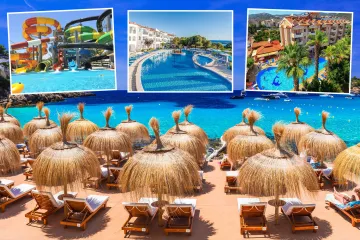
It’s not all about relaxing though, the awards even highlighted the best Theme Park Hotel in Europe which went to The Land Of Legends Kingdom Hotel in Turkey.
For any fan of the theme park its ideal as guests of the hotel get included and unlimited access to the attraction.
This includes its rollercoasters and Aqua Land waterpark, and a complimentary shuttle bus and access to the private beachfront.
Next door is the newly opened Nickelodeon Hotel which opened just last year – it has character meet-and-greets throughout the day with free gaming stations and a kids’ club.
Here are all the hotels and resorts in the Winners 2026 list…

Europe’s Leading Airport Hotel 2026 – NH Lyon Airport, France
Europe’s Leading All-Suite Hotel 2026 – THE VIEW Lugano, Switzerland
Europe’s Leading All-Inclusive Resort 2026 – Ikos Odisia, Greece
Europe’s Leading Beach Hotel 2026 – Almar Lido Jesolo, Italy
Europe’s Leading Beach Resort 2026 – Elounda Beach Hotel & Villas, Greece
Europe’s Leading Boutique Hotel 2026 – Fingal Hotel, Scotland
Europe’s Leading Boutique Resort 2026 – Collegio alla Querce, Auberge Resorts Collection, Italy
Europe’s Leading Casino Resort 2026 – City of Dreams Mediterranean, Cyprus
Europe’s Leading City Hotel 2026 – Conrad Istanbul Bosphorus, Türkiye
Europe’s Leading Design Hotel 2026 – 1908 Lisboa Hotel, Portugal
Europe’s Leading Entertainment Hotel 2026 – Seven Visions Resort & Places, The Dvin, Armenia
Europe’s Leading Family Resort 2026 – Sani Resort, Greece
Europe’s Leading Heritage Hotel 2026 – Párisi Udvar Hotel Budapest
Europe’s Leading Hotel 2026 – Estoril Vintage Hotel, Portugal
Europe’s Leading Hotel & Spa 2026 – Almar Timi Ama Villasimius, Italy
Europe’s Leading Island Resort 2026 – Inchydoney Island Lodge & Spa, Ireland
Europe’s Leading Landmark Hotel 2026 – The Phoenicia Malta
Europe’s Leading Leisure Resort 2026 – Domes Zeen Chania, a Luxury Collection Resort, Greece
Europe’s Leading Lifestyle Hotel 2026 – Hyatt Regency Vilamoura Algarve, Portugal
Europe’s Leading Lifestyle Resort 2026 – SO/ Sotogrande Spa & Golf Resort, Spain
Europe’s Leading Luxury All-Suite Resort 2026 – Almar Giardino di Costanza Mazara del Vallo, Italy
Europe’ s Leading Luxury Beach Resort 2026 – Forte Village Resort Italy
Europe’s Leading Luxury Boutique Hotel 2026 – Gran Hotel Inglés, Spain
Europe’s Leading Luxury City Hotel 2026 – The Peninsula Paris, France
Europe’s Leading Luxury City Resort 2026 – 91 Athens Riviera, Greece
Europe’ s Leading Luxury Family Resort 2026 – Domes of Elounda, Autograph Collection, Greece
Europe’s Leading Luxury Hotel 2026 – Çırağan Palace Kempinski Istanbul, Türkiye
Europe’s Leading Luxury Hotel & Spa 2026 – Majestic Hotel & Spa Barcelona, Spain
Europe’s Leading Luxury Island Resort 2026 – Grand Resort Lagonissi, Greece
Europe’s Leading Luxury Resort 2026 – Domes Miramere, a Luxury Collection Resort, Corfu, Greece
Europe’s Leading Luxury Villa Resort 2026 – Elounda Beach Hotel & Villas, Greece
Europe’s Leading New Boutique Hotel 2026 – Avali, Mar-Bella Collection, Greece
Europe’s Leading New Hotel 2026 – The Chancery Rosewood, England
Europe’s Leading New Resort 2026 – AMOH, a Luxury Collection Resort, Rhodes, Greece
Europe’s Leading Theme Park Hotel 2026 – The Land Of Legends Kingdom Hotel, Türkiye
Europe’s Leading Wellness Hotel 2026 – Palazzo Fiuggi, Italy
Europe’s Leading Wine Region Hotel 2026 – L’AND Vineyards, Portugal
Europe’s Most Romantic Hotel 2026 – The Gritti Palace, a Luxury Collection Hotel, Venice, Italy
Europe’s Leading Hotel & Spa 2026 – Almar Timi Ama Villasimius, Italy
Europe’s Leading Resort 2026 – Forte Resort, Italy
Europe’s Leading Resort Villas 2026 – Dunas Douradas Beach Club, Portugal
Europe’s Leading Fully Integrated Resort 2026 – City of Dreams Mediterranean, Cyprus
Europe’s Leading Luxury All-Inclusive Resort 2026 – Cullinan Belek, Türkiye
Europe’s Leading Sports Resort 2026 – Cascade Wellness Resort, Portugal
Europe’s Leading Villa Resort 2026 – White Shell Beach Villas, Portugal