Gabriel Pirani scored the equalizer in a four-goal first half to help the Galaxy earn a 2-2 draw with San Diego FC on Saturday night.
The Galaxy (10-11-10) jumped in front in the fourth minute when Sergi Roberto set up João Klauss for his ninth goal in 14 appearances this season.
Anders Dreyer pulled San Diego (8-12-10) even in the 10th minute when he scored on a penalty kick. Dreyer’s 13th goal of the season came after Cédric Bakambu was fouled by Galaxy goalkeeper JT Marcinkowski.
The Galaxy regained the lead seven minutes later when Erik Thommy used assists from Harbor Miller and Marco Reus to score for the second time this season.
Pirani netted the equalizer in the 39th minute to cap the scoring. It was the midfielder’s fourth goal in 10 matches this season.
Marcinkowski finished with five saves for the Galaxy, who have gone 4-2-2 since the start of September.
Pablo Sisniega saved seven shots in his second start this season for San Diego, which beat the Galaxy 3-1 at home to close out August but hasn’t won since — going 0-4-4.
WASHINGTON — President Trump told a crowd in Texas on Wednesday night that he would not allow Iran to attack San Diego or Los Angeles, a comment that came two days after he made off-the-cuff remarks suggesting the West Coast cities could be struck.
“You want to see a horror show? You want to see problems? Let them hit San Diego, let them hit Los Angeles,” Trump said at a rally. He then assured the crowd: “We are not going to let that happen. We protect our cities. We protect our country.”
The San Antonio crowd cheered the remarks.
Trump’s decision to return to the subject capped two days in which the White House had been on the defensive, and it appeared aimed at tamping down the fallout from remarks he made Monday night that quickly spread online.
Speaking to a crowd in Nebraska, Trump had said: “They can take out a city, let them take out Los Angeles, let them take out San Diego. This is a very small price to pay.”
The comments drew swift condemnation from California leaders, even as the White House communications director, Steven Cheung, insisted the president’s remarks had been taken out of context.
“The media freakout over President Trump’s comments is not rooted in reality,” Cheung wrote Tuesday. “He was clearly stating U.S. cities would have been threatened if a nuclear Iran hadn’t been stopped. America is safer because of the president. Iran has no nuclear, no navy, no air force, and no money.”
But the remarks were enough to rattle many in California and drew backlash from the state’s leaders, including Republican Jim Desmond, a Navy veteran running in a highly competitive U.S. House race.
“I vehemently disagree with President Trump’s comments,” Desmond wrote on social media. “America must stand up to Iran and defend our interests, but the first responsibility of our Commander in Chief is to protect the American people and our homeland.”
Gov. Gavin Newsom on Tuesday opened the state emergency operations center to assess potential threats following Trump’s remarks. San Diego Mayor Todd Gloria and Los Angeles Mayor Karen Bass also condemned the president for potentially compromising the safety of their cities.
“San Diego is not collateral damage,” Gloria posted on social media. “We are not expendable. And we are never a ‘small price to pay.’ Keep our city out of your reckless war talk.”
Members of the Republican Party have joined Democrats in questioning remarks made by United States President Donald Trump about the California cities of Los Angeles and San Diego.
Much of the backlash came on Tuesday, a day after Trump told a midterm rally in Nebraska that Americans should be willing to make sacrifices to gain victory in the US-Israeli war against Iran.
Recommended Stories
list of 3 itemsend of list
Those sacrifices, he implied, could include the destruction of American cities, in case of an Iranian attack.
“It’s a small price to pay for keeping the world safe, keeping our country safe,” Trump said, seemingly in reference to the knock-on effects of the war, including rising fuel and fertiliser prices.
“They can take out a city. Let them take out Los Angeles. Let them take out San Diego. This is a very small price to pay, and it’s going to be over with very soon.”
Trump has downplayed the impact of the war – now in its eighth month – despite polling that shows the conflict is widely unpopular in the US. He has also repeatedly promised the war would end soon, though no lasting ceasefire has been reached so far.
The fallout from his Nebraska remarks was swift. Gavin Newsom, an outspoken critic of Trump and the Democratic governor of California, said the president was “deranged”.
“This is not only madness. This is dangerous,” Newsom said in a video on the social media platform X, in which he called for Congress to rein in Trump’s behaviour.
Newsom, a possible contender in the 2028 presidential race, has clashed repeatedly with Trump.
Last year, the two faced off over Trump’s decision to deploy federal troops to California, as part of an effort to support a crackdown on undocumented immigration in the Los Angeles area.
In December, a federal judge ruled that the deployment had been illegal and ordered its end. Newsom, who opposed the deployment, cited that conflict in his remarks about Trump’s Nebraska rally.
“The president of the United States – the same one who sent in the National Guard into Los Angeles, sent 700 active duty Marines to the second largest city in the United States of America – just invited Iran to take out Los Angeles and San Diego,” Newsom said.
He added that Trump’s remarks should convince those who “didn’t think the November election mattered” to vote in the upcoming midterms.
Some from Trump’s own party have also expressed shock at his remarks.
Jim Desmond, a Republican running in a competitive race for the House of Representatives near San Diego, was among those who distanced themselves from Trump’s statement.
“I vehemently disagree with President Trump’s comments. America must stand up to Iran and defend our interests, but the first responsibility of our Commander in Chief is to protect the American people and our homeland,” Desmond wrote on X.
“No American city is expendable, and no American family should ever be treated as collateral damage.”
US Representative Kevin Kiley, an independent who caucuses with Republicans and is running for re-election in northern California, also called Trump’s comments “unhelpful”.
But the White House has dismissed criticism of the remarks, calling it part of a “media freakout” that “is not rooted in reality”.
“He was clearly stating U.S. cities would have been threatened if a nuclear Iran hadn’t been stopped,” White House Director of Communications Steven Cheung wrote on social media.
“America is safer because of the President. Iran has no nuclear, no navy, no air force, and no money.”
California has the largest population and economy of any state in the US. Because of its population, it also has the most seats in the House of Representatives, at 52.
All 435 seats in the House of Representatives are up for grabs in November’s midterms, along with a third of the Senate. Also on the ballot are key state and local races.
With Republicans’ control of Congress on the line, the results of the midterms are expected to weigh heavily on the final two years of Trump’s second term.
I went to bed at a decent hour Monday night and got a pretty good sleep.
I woke up refreshed Tuesday morning, only to see the news that President Trump seemed to have told a crowd in Nebraska that it wouldn’t be such a bad thing if Iran attacked Southern California.
“Let ’em take out Los Angeles. Let ’em take out San Diego,” he said in a typically meandering speech, perhaps trying to justify a war he has repeatedly claimed is keeping the U.S. safe, even as gas prices have spiked. “This is a very small price to pay.”
“San Diego is not collateral damage,” said San Diego Mayor Todd Gloria.
Such “dangerous” remarks could “potentially compromise our safety,” said L.A. Mayor Karen Bass.
“He is deranged and dangerous,” said Gov. Gavin Newsom.
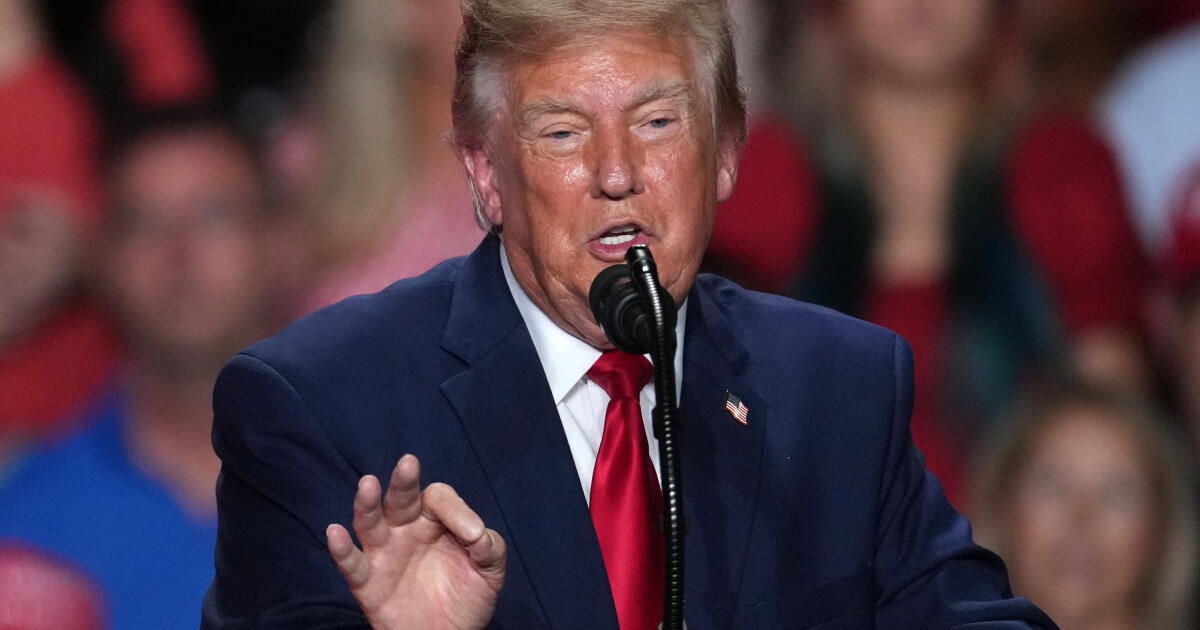
President Trump throws a pen into the crowd after he signed an executive order during a campaign rally at Pinnacle Bank Expo Center in Grand Island, Neb., on Oct. 5, 2026.
(Kent Nishimura / AFP via Getty Images)
About 8 a.m., I took my dog Philly out for our morning walk. This is usually a lovely time for us. I clear my head. For Philly, a 3-year-old beagle, these are essentially business trips.
I got to thinking about the similarities in the daily routines of Philly and the president of the United States.
The thing is, I carry bags with me and clean up after Philly. The president to my knowledge has nobody on his staff doing this. We are at a point in American politics at which we must consider posting signs, everywhere Trump travels, that say, “Please Curb Your President.”
Not that it would be easy to clean Trump’s daily messes. You’d need the equivalent of those parade attendants in overalls who run along behind the horses with shovels.
The White House does not use poop bags. Instead, it uses denial and spin.
Critical reactions to Trump’s Nebraska comments were “not rooted in reality,” said White House Director of Communications Steven Cheung, who claimed Trump was misrepresented.
We’ve got to respect Cheung’s opinion. Does anyone in the world have more experience when it comes to analyzing comments not rooted in reality?
Some of you may know there are two topics I often revisit in my column. One is the effects, good and bad, of aging. The other is failure of leadership.
So I feel eminently qualified to psychoanalyze the president.
I don’t mean to generalize, but as people age, it’s not unusual for them to undergo behavioral changes. Some folks mellow, they abide, they lean into the ride. Others can become churlish, combative or grouchy.
Not only is Trump the poster boy for the latter group, but as things go wrong, he becomes more obstinate.
And things have definitely gone wrong.
The war in Iran is a disaster. The president is personally responsible for rising gas prices. He’s ruined the economy with his tariffs. He’s picked a fight with Canada. He may cost his party the House and the Senate because his almost daily outrages have pumped oxygen back into the blood of long-slumping Democrats.
A normal person would have the good sense to scale back or shrink away.
President Trump at the campaign rally at Pinnacle Bank Expo Center on the Nebraska State Fairgrounds on Oct. 5, 2026, in Grand Island, Neb.
(Win McNamee / Getty Images)
Trump keeps doubling down, wants to put his name on everything, and lashes out the way someone does when it’s not clear what’s bigger — their ego or their insecurity.
I’ve been to Nebraska, by the way. Nice place, met a lot of lovely people.
I enjoy corn, on or off the cob.
Popcorn. Caramel corn.
Not wild about “Children of the Corn,” the slasher movie based on Stephen King’s short story. But thank you very much, Nebraska, for Fred Astaire, Johnny Carson and Henry Fonda, who, by the way, was born in Grand Island, where Trump made his cracks Monday about California.
Did it occur to any of the shuckers who cheered Trump’s throwaway line about an attack on San Diego and L.A. that:
A: It wasn’t funny.
B: San Diego has one of the nation’s largest military installations, with thousands of personnel currently deployed to the Middle East because of the war in Iran.
C: Maybe we should expect more from someone serving as president and commander in chief.
In defending Trump, the White House said news outlets had misunderstood and misrepresented the president’s comments in what amounted to a “media freakout.” A White House media post singled out an L.A. Times post that said Trump suggested “letting Iran take out” L.A. and San Diego.
“No, he didn’t, you buffoons,” said the White House. “He was saying the U.S. is fighting to STOP Iran from having the ability to take out LA and San Diego with a nuclear weapon — which they would if they had the chance.”
Please.
This buffoon would like to point out that this is yet another case of Trump using California as a punching bag to prop up support for the war and nail down what’s left of his diminishing base. But even some of his longtime disciples know that he has said on dozens of occasions that the war had ended, was ending, or had been won, and not once were any of those words rooted in reality.
It’s not clear whether we’re any safer in the U.S. as a result of the war, although it is clear that we have paid with lives and higher costs.
So maybe a gratuitous and unfunny line about anyone taking out American cities is better left unsaid.
I’m fresh out of muzzles, but I do have extra poop bags.
SACRAMENTO — Gov. Gavin Newsom signed a pair of bills this week designed to help a San Diego stadium and development project led by Los Angeles Rams owner Stan Kroenke sidestep environmental review hurdles.
Newsom signed Senate Bill 344 and Senate Bill 958, which were put forward by state Sen. Akilah Weber Pierson (D-La Mesa) to help the stadium project, known as Midway Rising. The project would replace the decades-old Pechanga Arena and include a new 16,000-seat facility, 4,254 homes, including up to 2,000 affordable units, and commercial and outdoor space. The site is south of Mission Bay.
Newsom cast the bills as part of a package to help speed up the construction of much-needed housing.
“Every Californian deserves a fair shot at a stable home — families shouldn’t have to wait years for housing to be approved and built in their communities,” he said in a written statement.
Senate Bill 344 deems Midway Rising in full compliance with the state’s landmark California Environmental Quality Act, known was CEQA.
The act, adopted in 1970, has been credited for protecting California’s natural resources and minimizing pollution. It also has been criticized for sometimes being weaponized by opponents of a project, including housing developments.
After the state Legislature’s vote last month, Weber Pierson said the project would provide “much-needed affordable housing, permanent jobs, community spaces, and health resources in a part of our city that is ready for investment.”
Former San Diego Assemblymember Lori Saldaña, a longtime critic of the proposal, called Senate Bill 344 “reckless and rushed” because it was introduced late in the session without public input. Saldaña said the site isn’t suitable for development because of sea-level rise that she said is causing street flooding in the area.
Senate Bill 958 states that a project’s increased building height, and any related noise, shadows, or impact on wildlife shall not be considered significant environmental impacts, if the project meets a host of conditions.
It would apply to any development in the state but was introduced to benefit Midway Rising, according to Weber Pierson.
Assemblymember Carl DeMaio (R-San Diego) was among those who voted against both bills.
The developers “don’t want to play by the rules, so they came here to Sacramento asking for a special exemption,” DeMaio said during a discussion on Senate Bill 958 last month.
“We’re talking about the coast. I think a big condo tower on the coast impeding the view is a significant environmental impact, and I think deep down in your heart of hearts, you know that,” DeMaio said.
Former Senate leader Darrell Steinberg (D-Sacramento) led his colleagues in passing a bill in 2013 that helped the Sacramento Kings arena by limiting environmental lawsuits. The new arena for the Golden State Warriors basketball team in San Francisco also benefited from CEQA reforms passed by state lawmakers in 2011.
The San Diego City Council still needs to approve the project.
Coach DJ Gay started 120 games during his playing days at San Diego State, so when his star guard at Windward High, Davey Harris, announced he had committed to San Diego State, Gay couldn’t have been more pleased.
“That’s the least I could do for everything the school has done for me,” Gay said. “I think San Diego State is going to be a great place playing in the new Pac-12.”
Harris has grown to 6 feet 6 and is only scratching the surface of his ability because he missed his first two years of high school with an injury.
“I truly believe the sky is the limit,” Gay said.
This is a daily look at the positive happenings in high school sports. To submit any news, please email eric.sondheimer@latimes.com.
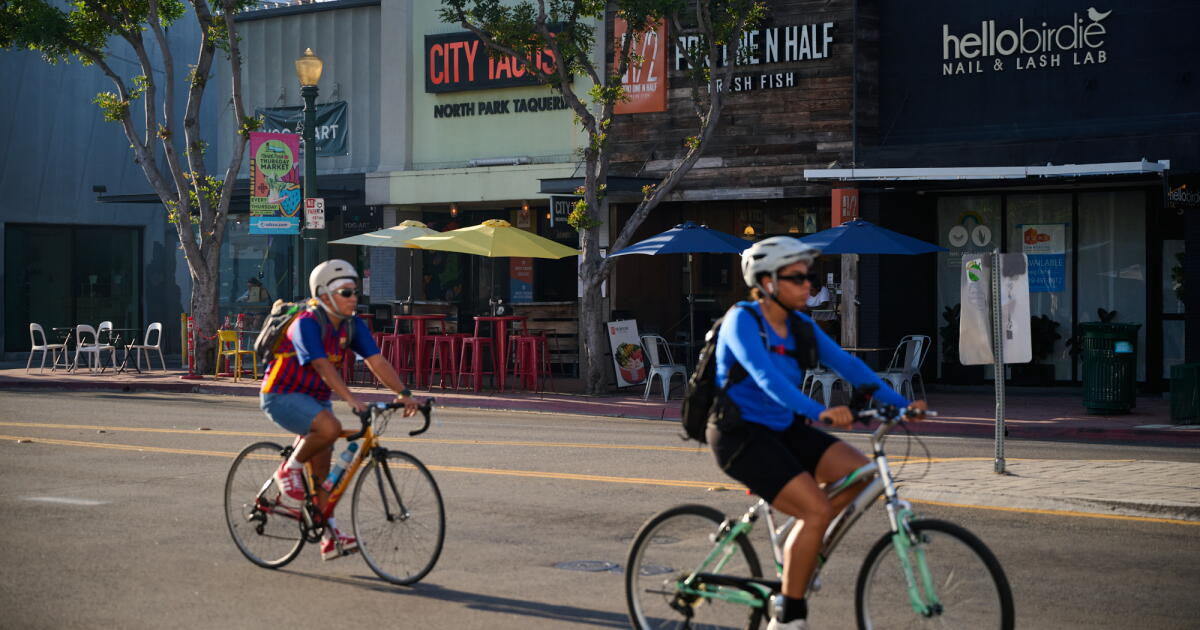
You could easily spend all day on South Coast Highway 101 in Encinitas, with its many restaurants and shops, but this northern stretch feels more laid-back, if that’s possible in San Diego, where flip-flops are de rigueur.
Conceived by owner Heidi Ledger as a showcase for small independent makers, including women in particular, Thread Spun is a sunny, inviting retail space offering fair trade apparel, home goods, accessories and gifts from around the world.
Inside, you’ll find plenty of great gifts for others — or yourself — including Los Angeles women-owned brands such as Amente clothing, Flowerhead Tea, hand-poured candles from Roen Candle Co. and Jessica Gonzalez’s playful asparagus-shaped candles for Happy Organics.
Grab a cold drink while you shop — visiting on a hot day, I appreciated that they offered refrigerated drinks for sale — while perusing a wide assortment of cards, books, apothecary gifts and jewelry.
The boutique also offers creative workshops for the local community on the back patio, including sewing, upcycling, journaling and, fittingly, the art of making sun catchers to brighten your home.
Around Encinitas: The boutique opened here in 2020, right next to 101 Piercing, Child of Wild jewelry and Leucadia Floral and Plant, known for its great selection of houseplants and fresh flowers. If you head farther down North Coast Highway 101, you’ll find plenty of restaurants, surf shops and coffee houses, including the longtime favorite, Pannikin Coffee and Tea.
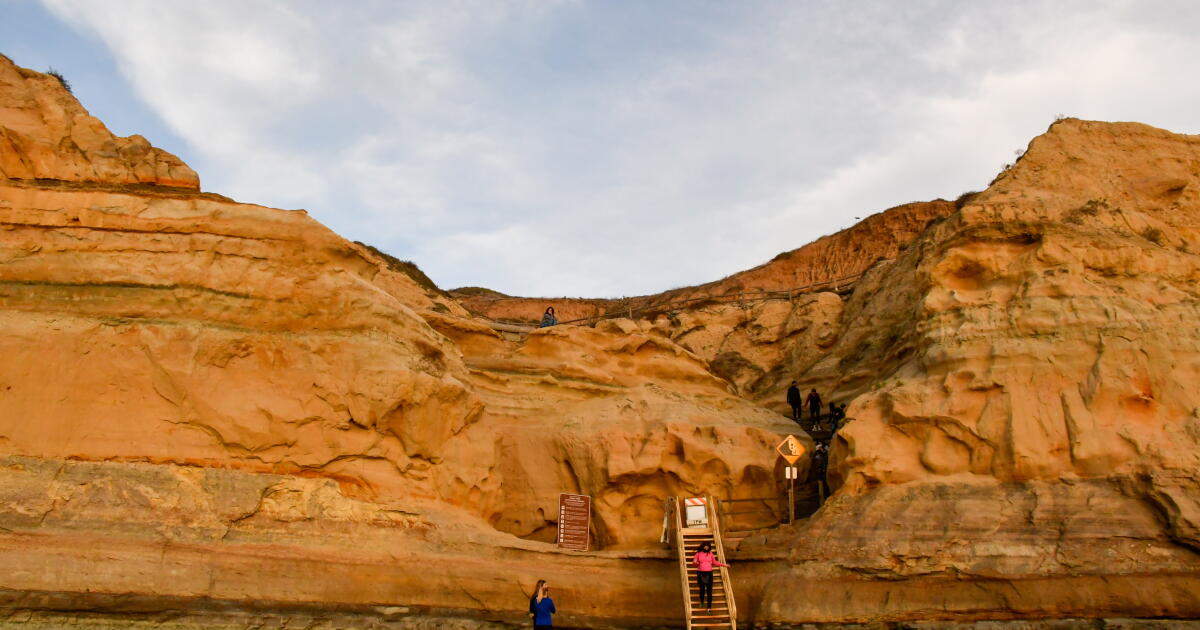
Torrey Pines State Natural Reserve, which includes some of the most dramatic sandstone sea cliffs and oceanfront trails in Southern California, closed Monday for utility upgrades. Reopening is scheduled for March 2027.
The closure covers cars, cyclists and walkers. The 1,750-acre Torrey Pines reserve, located north of La Jolla and south of Del Mar in San Diego County, attracts an estimated 4 million visitors yearly. Its population of Torrey pine trees is one of just two spots in the U. S. where that species is found. (The other is Channel Islands National Park’s Santa Rosa Island, where a fire in May killed much of the Torrey pine population.)
Meanwhile, next door to the natural reserve, Torrey Pines State Beach remains open. Visitors can still park at the North Beach and South Beach parking lots and walk to that 4.5-mile stretch of sand, much of it at the foot of 300-feet cliffs.
State parks officials said in a release that the improvement project includes installation of new gas, water, wastewater and communication lines, along with accessibility upgrades.
The derby carries particular significance because of Real’s recent difficulties at the Metropolitano, where they have won only two of their past 11 away matches, with the last in La Liga four years ago.
Atleti also won the corresponding derby last season 5-2 – a result that represented an early setback for Real’s previous project under Xabi Alonso.
This time, though, there is a different manager on the touchline.
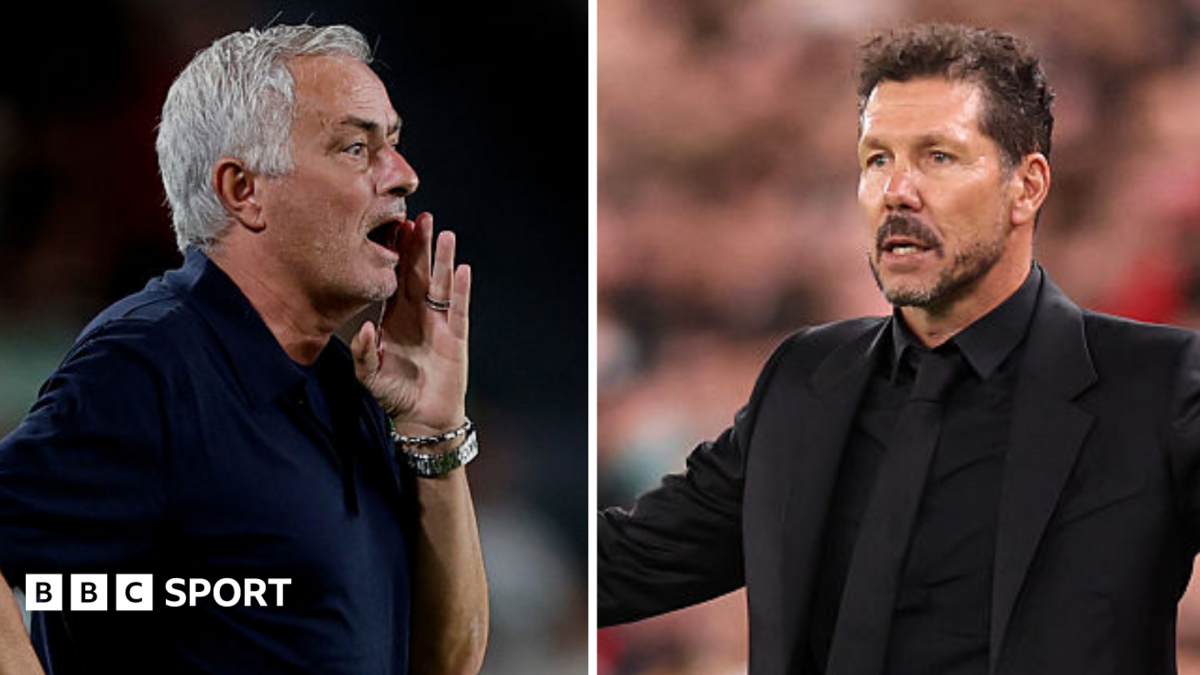
Mourinho’s return this summer has brought a familiar emphasis on organisation and adaptability, but he insisted his tactical approach is dictated by the players available to him rather than a fixed philosophy.
“I’ve evolved alongside my players,” he said. “You have what you like and don’t like as a manager but then you have to work with the group of players you have.”
Simeone’s assessment of Real’s biggest weapon was clear.
“They’re better in transition than us,” said the Argentine, who has managed Atleti in over 800 games since taking charge in 2011.
He believes Real’s ability to turn winning the ball into instant attacking opportunities will be one of the key tactical elements in the game.
“When there’s a loss of possession, they look for [Kylian] Mbappe and Vinicius Jr, they play to that strength,” added Simeone.
“We have to read the game well and not allow any turnovers, so we don’t allow them to use those transitions.”
It is a warning that carries weight given the attacking options and speed available to Mourinho.
France striker Mbappe remains the focal point, while Vinicius Jr provides another route into space.
Real also have the quality to change the game from the bench, something the 21-year-old Espi has already demonstrated since his summer arrival from Levante.