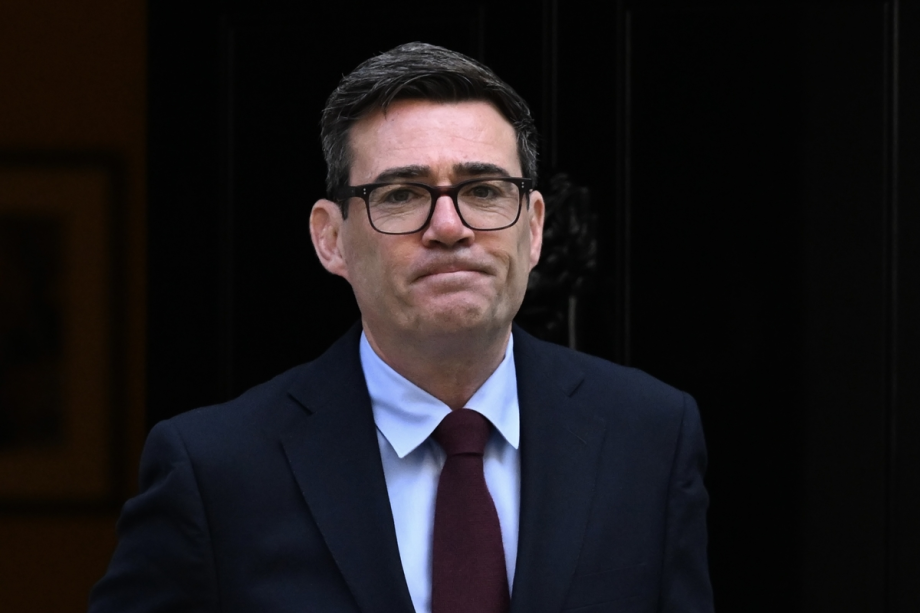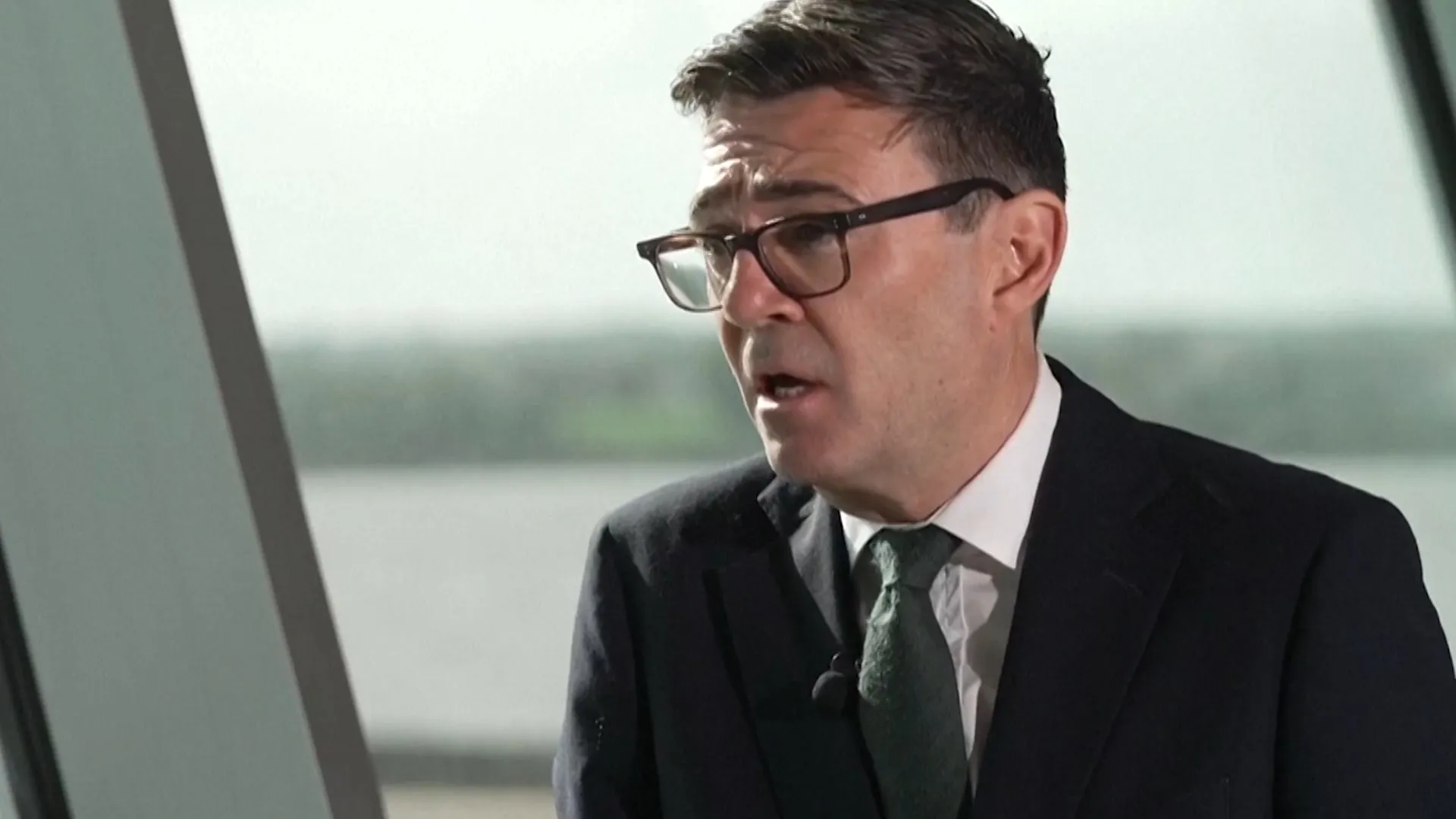
Reporting from Manila — The contrast was inescapable. At the top of a local newspaper’s front page here was a huge photo of the new Canadian prime minister, in a trim suit and wind blowing through his hair, captioned “ladies’ choice.” Next to him was a workmanlike headline over a separate story: “Obama to give PH two warships.”
President Obama, once a glamorous figure among world leaders, has been replaced as the “It Boy” of the summit circuit by Canada’s newly elected Justin Trudeau, as heads of state meet up this week in Turkey, the Philippines and Malaysia.
Though Obama came to Manila for the Asia-Pacific Economic Cooperation summit with a new financial commitment to bolster the Philippine maritime fleet, the nation’s hearts and minds seemed won over by the 43-year-old Canadian, who lighted up Twitter with the designation #APECHottie.
If there was any resentment on the part of a president whose hair is more salt than pepper these days, it didn’t show as he and Trudeau sat down here for their first official meeting.
Obama warned him: “If you don’t want to gray like me, you need to start dyeing it soon.”
“So young and yet so cynical,” Trudeau joked in response.
Though Trudeau’s global image as a hip, next-generation leader mirrors Obama’s of seven years ago, Trudeau’s views on some of Obama’s biggest policy priorities provide a more sobering contrast.
Trudeau has been ambivalent on the massive Pacific trade deal Obama is pushing, and he reiterated to Obama on Thursday that he planned to follow through on his campaign pledge to end Canada’s part in the air campaign against Islamic State — though his nation will ramp up efforts to train local fighters in Iraq and Syria.
“Canada continues to be a strong player, doing its part – and more than its part,” Trudeau said.
Differences in viewpoint between two North American leaders is familiar. Canadian leaders have long tried to show independence from the United States in matters of foreign policy. Trudeau’s father, Prime Minister Pierre Trudeau, was one of the first Western leaders to embrace communist China and grew so close to Fidel Castro that the Cuban leader served as an honorary pallbearer at his funeral.
“Canada and the U.S. have not always seen eye-to-eye when there’s a Liberal government in power, something that stems from Trudeau’s own party and parentage,” said Antonia Maioni, a political science professor at McGill University in Montreal who researches and writes about the Canadian political process and social policy. “It stems from the Canadian attitude that emerged under Pierre Trudeau that was about Canada finding its own way in international relations and not just being part of the U.S. orbit.”
But in the budding relationship between Obama and the younger Trudeau, there may be potential for collaboration, given the youth-oriented campaign that Trudeau ran – Obama noted the similarity to his own “hope and change” message – and their shared affinity for progressive social policies, especially on climate change.
Given that common ground, said Maioni, Trudeau may eventually drift more closely toward Obama’s point of view on national security and trade, too.
“A lot of people in Trudeau’s inner circle were inspired by and have taken advice from people around Obama,” she said. “That may open a conversation that would allow for change.”
Obama and Trudeau on Thursday began to explore an area in which they may be able make progress together – the fight against climate change.
Obama’s recent announcement to reject a Canadian company’s request to build the controversial Keystone XL pipeline that would have carried crude oil from Alberta to U.S. Gulf Coast refineries was fortunate for Trudeau, said James Coleman, a legal scholar at the University of Calgary who studies environmental and energy regulation. Even though Trudeau was in favor of the pipeline, he is helped by the timing of the debate over it, which came during the tenure of his predecessor, the Conservative Party’s Stephen Harper.
“Given that President Obama was going to reject the pipeline, sooner was better for him,” said Coleman. “Because now it will be easier for him to pin it on Harper.”
Added Coleman: “It’s not hard to predict a little more friendliness between Obama and Trudeau than there was between Obama and Harper.”
Trudeau, whose graduate studies were in environmental science, emphasized the similarities in his and Obama’s climate doctrines. He noted that Canadians feel that their government hasn’t done enough to protect the environment, and he vowed to set and meet tough targets for carbon reduction.
Obama echoed the sentiment, arguing that transition from fossil fuels “does not happen overnight,” especially by nations that produce and consume a lot of oil and gas. Seated next to Trudeau, the father of three young children, Obama also made an argument about parenthood.
“If we want to preserve this planet for our kids and grandkids, then we’re going to have to shift increasingly away from carbon-emitting energy sources,” Obama said.
“This is going to be a messy, bumpy process worldwide,” he said, “but I am confident that we can get it done.”
SAN FRANCISCO — He needed one shot to warm up. Then almost nothing could stop Cameron Carr.
In his unofficial NBA debut, the first-round draft pick flashed the type of three-point shooting that could turn him into a valuable player for the Lakers, scoring 19 points on seven-of-15 shooting in the Lakers’ 104-72 summer league loss to the Golden State Warriors.
Carr missed his first shot, a nearly straight-away three-pointer. But he bounced back quickly by hitting a catch-and-shoot three from the wing on an offensive rebound. He knocked down the next one. He held his thumb and forefinger in a circle over his eye in celebration.
The Lakers spent the first days of free agency addressing their shooting deficiencies. While Luke Kennard signed a two-year contract with Phoenix, the Lakers reloaded with guards Quentin Grimes and Collin Sexton and versatile power forward Sandro Mamukelashvili. The three free-agent additions came in a flurry Wednesday after the Lakers pulled off an aggressive sign-and-trade for center Walker Kessler.
The moves were meant to reshape the roster to maximize superstar Luka Doncic, who will take the reins with the departure of LeBron James.
After leading the offense at Baylor, Carr knows his assignment supporting Doncic with the Lakers will be simpler: cut, run and dunk, he said at his introductory news conference.
And, for the guard who shot 37.4% from three at Baylor last year, his job is to knock down shots.
“If you can shoot the ball,” Carr said with a slight smile in New York the day before the draft, “you’re wanted by a lot of people.”
The Lakers wanted the 6-foot-5 guard so badly that they executed a draft-day trade with the New York Knicks to grab the 24th overall pick. Carr was projected to be a mid first-round pick, but slipped down the board in what many projected to be the deepest draft in a generation.
Lakers rookie Cameron Carr shoots a three-pointer over Golden State’s Lachlan Olbrich during the first half of the California Classic on Friday.
(Thearon W. Henderson / Getty Images)
Any of the top three picks of AJ Dybantsa, Darryn Peterson, and Carlos Boozer could have been No. 1 picks in other seasons, analysts predicted. Eleven guards were taken before Carr, who was named third-team All-Big-12 last year after averaging 18.9 points, 5.8 rebounds and 2.6 assists with 45 total blocks at Baylor last year.
But ESPN analyst Fran Fraschilla estimated that Carr could be the best athlete out of the entire draft.
His 7-foot wingspan was the best among guards at the NBA combine and his 38-inch standing vertical and 10.46-second lane agility test ranked first for his position.
Carr said his top objective is to put on weight. Weighing 184 pounds at the NBA combine, Carr would have been the third-lightest, 6-5 player in the league last year, ahead of only Sacramento’s Nique Clifford (6-5, 175 pounds) and Dallas’ AJ Johnson (6-5, 160 pounds). He may be joining the Lakers at the exact right moment as the team — with the investment and guidance from big brother organization the Dodgers — will expand weight room, treatment and sports science resources in its facility. The 21-year-old guard said he plans to make the weight room his new home.
Building up his strength to handle the NBA will be critical for Carr as he hopes to show “that I’m the best defender here,” he told reporters. Adding another defender became even more important after guard Marcus Smart signed a contract with Western Conference rival Houston.
The Lakers, after trading Deandre Ayton on Friday for guard Jaden Hardy and two second-round draft picks, could still look for a wing defender and back up center to round out their roster that currently stands at 13.
Lakers re-sign Chris Mañon
The Lakers re-signed guard Chris Mañon to a two-way contract, the Lakers announced. The second-year guard appeared in nine games for the Lakers last year and also played in 33 G League games for the South Bay Lakers, averaging 10.3 points, 5.6 rebounds and 2.3 assists. With a team-high 1.9 steals per game, Mañon was named to the G League all-defensive team and finished second in defensive player of the year voting.
Chinese stocks advanced after fresh manufacturing data pointed to sustained factory expansion and President Xi Jinping reaffirmed his commitment to promoting high-quality economic development. The upbeat market reaction reflected growing optimism over the resilience of China’s industrial sector and the continued strength of technology and innovation-driven industries.
However, investor sentiment remains tempered by concerns over uneven economic growth, with persistent weakness in consumer confidence, the labour market and the property sector continuing to weigh on the broader recovery.
Strong factory activity boosts market confidence
China’s manufacturing sector expanded for a seventh consecutive month, marking its strongest quarterly performance since late 2020. The data reinforced expectations that industrial production remains a key pillar of economic growth despite ongoing challenges in other parts of the economy.
Stay ahead of the geopolitical week.
MD Briefing delivers expert analysis across five global fronts — the Indo-Pacific, energy, geoeconomics, European security, and the Middle East — every Monday morning. Free.
The stronger-than-expected factory activity provided investors with reassurance that export-oriented manufacturing and industrial output continue to support China’s recovery.
Xi reiterates commitment to high-quality growth
President Xi Jinping renewed his pledge to pursue high-quality development, signalling that Beijing remains committed to an economic strategy centred on technological innovation, industrial upgrading and sustainable long-term growth.
The remarks reinforced expectations that policymakers will continue prioritising advanced manufacturing, strategic industries and innovation rather than relying solely on traditional stimulus measures to support the economy.
Technology sectors continue to outperform
Technology-related stocks led gains as investors increased exposure to sectors expected to benefit from China’s industrial and technological ambitions. Chipmaking equipment, biotechnology and software companies posted strong advances, reflecting continued confidence in industries viewed as central to China’s long-term economic transformation.
The rally highlights investors’ preference for sectors with stronger earnings potential and policy support.
Traditional sectors show signs of broader participation
Alongside technology stocks, gains also spread to agriculture and property-related shares, suggesting investor optimism is gradually broadening beyond high-growth industries.
Although these sectors continue to face structural challenges, their recovery indicates improving market sentiment and expectations that policy support could help stabilise weaker areas of the economy.
Economic recovery remains uneven
Despite encouraging manufacturing data, investors remain cautious about China’s broader economic outlook. Consumer spending continues to be constrained by weak confidence, labour market pressures and the prolonged downturn in the property sector, creating an uneven recovery across different parts of the economy.
The divergence between strong industrial performance and softer domestic demand continues to shape investment strategies and policy expectations.
Future Outlook
Chinese markets are likely to remain supported by resilient manufacturing activity, continued policy backing for innovation and expectations of further measures to sustain economic growth. However, the durability of the rally will depend on whether improvements in industrial production translate into stronger domestic consumption and broader economic recovery.
Investors will closely monitor upcoming economic data and government policy announcements for signs that Beijing can address persistent weaknesses in the property market, employment and consumer confidence while maintaining momentum in high-value manufacturing and technology sectors.
Denzer Guzman hit a tiebreaking single with two outs in the seventh inning Saturday night that sent the Angels to a 5-2 victory over the Athletics.
The Angels tacked on two insurance runs in the eighth on RBI singles by Oswald Peraza and Logan O’Hoppe.
Angels reliever Ryan Zeferjahn (4-3) struck out two in a scoreless seventh to earn the win and increase his hitless streak to 10 innings, with 19 strikeouts, over his last nine appearances.
Kirby Yates threw a 1-2-3 ninth for his 100th career save and second this season.
Josh Lowe sparked the go-ahead rally with a one-out single off left-hander Geoff Hartlieb (0-1) in the seventh. Lowe stole second and scored for a 3-2 lead when Guzman hit a hard grounder down the line that third baseman Max Muncy couldn’t get his glove on.
Angels right-hander Sam Bachman escaped a bases-loaded, one-out jam in the eighth when he struck out pinch-hitter Carlos Cortes with a 100-mph sinker and got Muncy to fly out.
Angels starter Reid Detmers gave up two runs and four hits in 5⅔ innings, striking out eight and walking three. The left-hander increased his strikeout total to 112, third-most in the majors behind Milwaukee ace Jacob Misiorowski (146) and Toronto right-hander Dylan Cease (128).
A’s starter Jack Perkins gave up two runs and four hits in five innings, striking out five and walking one.
The A’s took a 1-0 lead in the second when Jonah Heim crushed a first-pitch fastball that Detmers left over the heart of the plate. Heim sent a 109-mph drive 445 feet over the left-center field wall for his seventh homer.
The Angels countered with two runs in the fourth, a rally that began with Nolan Schanuel’s walk and Jorge Soler’s single. Wade Meckler struck out, but Jo Adell ripped a two-run triple into the left-field corner for a 2-1 lead.
The A’s tied it in the sixth when Nick Kurtz singled, Lawrence Butler walked and Colby Thomas lined a two-out RBI single to left.
The A’s, already playing without injured shortstop Jacob Wilson and second baseman Zach Gelof, lost Tyler Soderstrom when the left fielder was pulled in the third inning because of left hip soreness.
St Helens strongly came through an attritional contest with Bradford Bulls to move back up to fourth in Super League.
They were quickly 10-2 behind after a Phoenix Steinwede try, but from there the visitors fought back to take control.
Jacob Douglas and Curtis Sironen tries had them in front by half-time, but they dominated after the restart with 28 unanswered points and further scores from Jack Welsby (2), Joe Shorrocks and Jackson Hastings, who had a 20-point haul with eight kicks too.
The victory took Saints up two places in the table, level again with Wigan Warriors but with an inferior points difference.
Having faded after a good start, this was a third straight defeat for Bradford, who stay 11th in their first year back at this level.
This was Saints’ first visit to Odsal since 2014 and the home side responded to the sight of one of the great names of rugby league being back at this famous old ground.
It made for a very physical start following a hard-fought game at the Brewdog Stadium in March.
Hastings kicked an early goal for Saints, before Shane Wright was yellow-carded for a late hit on Chris Atkin.
With the Australian forward off for 10 minutes, Bradford scored 10 unanswered points, highlighted by Steinwede’s hard run into the line and a smart sidestep taking him over the line.
But that was the high point for the Bulls as the visitors turned the scoreline around with two tries in the space of seven minutes.
Winger Douglas finished well in the left corner to mark his debut with a try, coming in with injuries leaving a big hole in the backline.
Then second-rower Sironen, on his 100th St Helens appearance, proved unstoppable from close range as Paul Rowley’s side went in ahead at the break.
That advantage was extended within a few minutes of the restart as Welsby got his hand down to Hastings’ grubber kick before the ball went dead.
Shorrocks took advantage when his own little kick bounced up kindly to dive over. Hastings then grabbed a try of his own after Harry Robertson had parried down the Australian’s chipped kick to move the lead out to 20 points and effectively seal the success.
Welsby got his second and St Helens’ sixth try, but the match ended on a worrying note after a very serious-looking injury for Bradford forward Will Gardiner, who needed treatment on the field from both sets of medical teams before he was carried off on a stretcher.
Back-to-back major earthquakes of magnitudes 7.2 and 7.5 rocked Venezuela on Wednesday evening. The quakes are likely to cause widespread damage and mass casualties, the U.S. Geological Survey said. Image courtesy of UPI
June 24 (UPI) — Two major earthquakes — magnitudes 7.2 and 7.5 — hit near the Venezuela capital of Caracas on Wednesday evening, collapsing buildings and bringing people flooding into the streets.
The first quake hit at 6:04 p.m. local time, BBC News reported, with the second less than a minute later. June 24 is a holiday in Venezuela, and more people than usual were at home instead of on an evening commute.
The U.S. Geological Survey has reported that high casualties and widespread damage are likely, saying that there is a 44% chance that fatalities will exceed 10,000 and a 30% chance that they will exceed 100,000. The USGS said aftershocks may still occur.
Venezuela’s interior minister has asked people to leave their homes, citing damaged buildings and concerns about gas leaks. Companies cut gas lines to some areas as a precaution, Minister Diosdado Cabello said, BBC News reported.
The Ministry of Communication and Information in Venezuela said security forces have been deployed around the country because of the risk of building collapses.
Armagh made a storming start in Killarney with Joe McElroy going close to an early goal, but his shot landed the wrong side of the post.
Paul Geaney got the first point of the game for the hosts, but Armagh’s incisive play paid dividends as they rattled off the next four scores to move ahead.
They were soon pegged back however, through a combination of their own wastefulness and some David Clifford brilliance.
The Orchard County hit four wides in a row before Kerry and David Clifford, who had been quiet up until the 12-minute mark, sparked into life as, on his 50th championship appearance, he fired low into the far corner for his 26th goal after latching onto a fine pass from Dylan Geaney.
He followed that up with another score before momentum swayed back in the favour of Armagh through points from Ross McQuillan and Jason Duffy.
The end-to-end nature of the absorbing contest continued as Clifford notched another point and Dylan Geaney added three, including a two-pointer, to move Kerry ahead.
A close-range free from Conor Turbitt and a score from Oisin Conaty brought Armagh back within a point, but not for long as a two-pointer from David Clifford increased Kerry’s lead back out to three.
Armagh then suffered a hammer blow on the stroke of half-time as they conceded a second goal as a result of some poor game management.
As Kieran McGeeney’s side pushed for a late point before the hooter, Jarly Og Burns surrendered possession cheaply and, with Ethan Rafferty out of his net, Paul Geaney collected a long pass and stroked the ball into an empty net to give the Kingdom a six-point lead at the break.
Two goals from Ayari and one each from Isak, Gyokeres and Svanberg take Sweden to the top of Group F in Monterrey.
Published On 15 Jun 202615 Jun 2026
Sweden crushed Tunisia 5-1 to leave the North African nation’s defensive reputation in tatters and seize control of World Cup Group F as the Mexican city of Guadalupe hosted its first fixture of the tournament.
Graham Potter’s men took the lead in the seventh minute of the game on Sunday, courtesy of midfielder Yasin Ayari’s thunderbolt from outside the box, following a mix-up at the back.
The celebrations of Ayari, who is of Moroccan and Tunisian descent, were muted, despite his fine finish.
Sweden doubled their lead on half an hour after a rapid break freed Alexander Isak on the left.
The Liverpool forward raced ahead and cut inside before unleashing a shot, which goalkeeper Mouhib Chamakh failed to keep out, even though he got a hand to the ball.
Sweden’s fans celebrate after their team’s win [Julio Cesar Aguilar/AFP]
Tunisia did not concede a single goal in qualifying, becoming the first side to achieve the feat, subsequently matched by Ivory Coast and England.
Sweden threatened to overwhelm their opponents, but the match changed complexion minutes before half-time, when Omar Rekik headed home Hannibal Mejbri’s teasing cross.
However, the Scandinavian nation restored their two-goal cushion in the 59th minute after another defensive calamity for Tunisia.
Midfielder Ellyes Skhiri was caught in possession on the edge of the box by Isak, who fed Viktor Gyokeres, and the Arsenal man fired home.
Substitute Mattias Svanberg made it 4-1 late on after VAR ruled he was onside.
And there was still time for another stunning goal from Ayari from outside the penalty box.
Sweden reached the quarterfinals of the 2018 World Cup in Russia, but did not qualify for the tournament in Qatar four years later.
Tunisia were the first African team to win a World Cup match when they beat Mexico in 1978, but they have never progressed beyond the group stages.
The Spanish fashion giant behind Zara, Inditex, posted net income of €1.4 billion in the first quarter, up 5.4% year-on-year and ahead of market expectations.
ADVERTISEMENT
ADVERTISEMENT
Sales rose 5.8% to €8.7bn, or 8.8% at constant exchange rates, ahead of the roughly 8% analysts had anticipated.
Gross profit rose 6.9% to €5.4bn, helped by an improvement in profit margins, meaning the company kept a larger share of revenue as profit. EBITDA, a measure of underlying earnings, increased 7.3% to €2.6bn.
Inditex shares rose more than 5% on Wednesday after the company reported a strong start to the second quarter, with sales increasing 11.5% between 1 May and 1 June, reassuring investors that the Zara owner remains resilient despite signs of weakening consumer spending.
“Inditex continued its strong momentum with its latest results beating first quarter expectations, and also seen a strong start to the second quarter too, as sales grew more or less in line with the rate the company exited with in the previous quarter,” said Mamta Valechha, consumer discretionary analyst at Quilter Cheviot.
The revenue jump from one of the world’s largest listed clothing retailers points to solid consumer appetite heading into the summer, despite concerns that a more uncertain economic and geopolitical backdrop could weigh on spending in the months ahead.
Navigating geopolitical risks
The results come as businesses around the world face growing uncertainty over the global economy and concerns that consumers may cut back on spending.
Inditex said its wide-ranging supply chain and flexible transport network had helped it keep products flowing to stores around the world despite recent disruptions.
“Ultimately, Inditex continues to have a resilient business model that can withstand significant economic pressures and currency headwinds,” said Mamta Valechha, consumer discretionary analyst at Quilter Cheviot.
Valechha said strong customer demand and the company’s ability to source products close to its key markets had helped it keep collections up to date while limiting the need for discounts. Productivity improvements had also helped protect profitability.
Inditex also said that the current “geopolitical challenges” had an impact on the sales in the Middle East, a region that Barclays estimates accounts for about 5% of its revenue.
The company also warned that ongoing instability in the region could affect its performance in the months ahead.
Inditex faces a number of other challenges, including higher shipping costs and rising prices for raw materials such as cotton and polyester. Currency movements are also expected to weigh on results this year.
Inditex ended the quarter with 5,456 stores and a net cash position of €10.8bn.
The board has proposed a dividend of €1.75 per share for the last fiscal year, comprising an ordinary component of €1.20 and a bonus of €0.55, payable in two instalments in May and November 2026.
Despite the strong start to the year, Inditex left its outlook unchanged. It said it expects sales growth to continue into the second quarter, supported by strong demand for its spring and summer collections and ongoing improvements to its stores and operations.
However, the company said currency fluctuations are likely to reduce sales growth by around 1% over the full year. It also expects to invest about €2.3bn in the business during the current financial year.
PHOENIX — The “Beat L.A.” chants at Chase Field rose and fell for the final four innings, sometimes spurred organically, at other times prompted by the immense videoboard looming above center field.
And as the Dodgers’ offense continued to sputter, the Diamondbacks surged with a trio of home runs, giving the fans exactly what they asked for Monday night.
“Overall, I thought we had some good at-bats and barreled up some balls,” Dodgers right fielder Kyle Tucker said after the 4-1 loss. “But they made some nice plays and we just weren’t able to get the runs across, so just kind of how it goes sometimes.”
Tucker was one of five Dodgers in the starting lineup who went hitless. Designated hitter Shohei Ohtani was the only Dodger with multiple hits (three). And a quiet offensive night for the Dodgers wasted a quality start from starter Emmett Sheehan.
Sheehan held the Diamondbacks (32-27) to two runs and three hits in 6⅓ innings, carrying forward a recent trend for the Dodgers’ rotation, which entered Monday with a National League-best 3.05 ERA.
“I think it’s probably the back half of the rotation,” manager Dave Roberts said before the game. “To see what [Justin Wrobleski’s] done, to see what Roki [Sasaki] has done, to see what Emmet’s done — I think for me we’ve raised the floor of the starting rotation. The top end guys are kind of who they are, which is great. But every night we have a really good chance to win because of the starting pitcher.”
Monday was another one of those nights. But the Dodgers’ offense didn’t hold up its half of the bargain.
Sheehan — like Wrobleski and Sasaki this week — benefited from an uptick in velocity. His fastball averaged 95.9 mph on Monday, a season high and 1.7 mph above his average.
“I think it’s honestly just trying to relax early, and throw harder later in my delivery,” Sheehan said. “Before I was getting a little too tense, and that’s something the coaches mentioned to me. And it’s a bunch of other things too, but we’ve been working hard on it.”
Sheehan’s velocity has fluctuated all season, which he and the team attributed to inconsistent mechanics.
Dodgers starting pitcher Emmet Sheehan delivers during the first inning against the Arizona Diamondbacks on Monday.
(Rick Scuteri / Associated Press)
“It’s definitely been a process,” pitching coach Mark Prior said last month about syncing Sheehan’s delivery. “And it’s been a grind for him. Because he feels like some days he has it, some innings he has it; and other innings he doesn’t. It’s been kind of a roller coaster for him. It’s just part of the game.”
At times, his lower half was opening too quickly, throwing off the way his legs worked with his upper half. But on the days his timing was in sync, his velocity would often tick up, and everything would fall into place.
On Monday he was nearly perfect through the first 5⅓ innings, with the exception of Corbin Carroll’s first-inning double. He’d induced plenty of soft contact, plus three strikeouts, all in the first two innings. All three were put away with sliders.
“I thought he was really good — certainly deserved better,” Roberts said. “The fastball was good, slider was good, used the curveball, minimized hits.”
Then with one out in the sixth, Sheehan tried to work back from a first-pitch ball with a fastball up to Diamondbacks rookie Tommy Troy. The No. 9 hitter roped it beyond left field for his first major league home run.
After the Arizona lineup turned over and Sheehan retired Ketel Marte and Carroll to get out of the inning, Roberts stuck with the right-hander against switch-hitting Geraldo Perdomo and right-handed Nolan Arenado in the seventh.
With one out, Sheehan hung a slider to Arenado, who put the Diamondbacks up with a solo blast. And that would spell the end of Sheehan’s strong outing.
Reliever Jack Dreyer, making his first appearance since being activated off the 15-day injured list (left shoulder discomfort), gave up a two-run homer to Marte in the eighth inning to round out the Diamondbacks’ scoring.
The Dodgers’ offense managed just five hits against Diamondbacks starter Eduardo Rodriguez, and were robbed of two by center fielder Jorge Barrosa, who made diving catches on line drives hit by Will Smith and Andy Pages.
“He made some nice plays out there for them,” Tucker said. “We did all we could really do. Once the ball leaves the bat, it’s out of our hands. So we had some good swings, good at-bats, it just didn’t go our way sometimes.”
The Dodgers eked across a run in the third on a Freddie Freeman groundout with runners on second and third. And the Arizona bullpen faced the minimum over the final three innings.
Strong first-quarter earnings across corporate America are reinforcing the case for maintaining exposure to U.S. large-cap equities, according to a recent investor note from Citi.
The firm said S&P 500 (SP500) companies delivered 27% year-over-year earnings growth during the quarter, significantly
Defeating Tabur stretched Sinner’s winning streak to 30 matches, which has already yielded clay-court titles in Monte Carlo, Madrid and Rome.
His most recent triumph in Rome meant he completed the full set of nine ATP Masters 1000 titles – known as the ‘career Golden Masters’.
Sinner dominated the opening two sets, with winners flowing from his racquet while unforced errors were kept to a minimum.
Tabur did not have a break point in the match as Sinner wrapped up victory in two hours and eight minutes.
Sinner’s path to the Coupe des Mousquetaires is already without one major obstacle because Alcaraz is absent – and seeds tumbled in his half of the draw on Tuesday.
Sixth seed Daniil Medvedev and ninth seed Alexander Bublik were defeated in the first round, while fourth seed Felix Auger-Aliassime needed a fifth-set tie-break to beat world number 57 Daniel Altmaier.
Auger-Aliassime is the next highest-ranked player in Sinner’s half of the draw, but the Canadian has lost his past five matches against the four-time major winner.
Up next for world number one Sinner is Argentina’s 56th-ranked Juan Manuel Cerundolo, who knocked out Great Britain’s Jacob Fearnley on Tuesday.
President Trump, it’s well known, is into gold. Every day brings new evidence that he’s thoroughly enjoying the “golden age” he pronounced in his inaugural address — as few other Americans are — with stock trades, crypto profiteering and much more, even a new taxpayer-financed slush fund to reward his allies.
As for me, I’ve gone into silver. That is, I constantly look for the silver linings in Trump’s heinous acts.
One silver lining, of course, is his cratering job-approval numbers in the polls, especially among the young and Latino voters who made his reelection possible. But here’s another: By his humiliating failure to bring Iran to heel, nearly three months after starting a war that he said would last weeks at most, Trump has brought new, more positive attention to what he again this week derided as “Barack Hussein Obama’s Iran nuclear deal.” (The emphasis on “Hussein” is Trump’s, always.)
The president, along with his Republican cheerleaders, counts his first-term abrogation of the 2015 Iran nuclear agreement, the Joint Comprehensive Plan of Action, as a signature achievement. This week, yet again, he falsely claimed that had he not done so, Iran would have a nuclear weapon. In fact, his action in 2018 taking the United States out of the multinational deal subsequently led to Iran’s rebuilding of its nuclear program, the emboldening of the Iranian hard-liners now in power and the Middle East morass in which the United States is now mired.
That quagmire has left Trump seeming desperate for a deal — almost certainly a worse deal than the one Obama struck. Call it JCPOA Lite.
If he were able to get Iran’s sign-off on the sort of detailed, restrictive agreement that Obama and other world leaders won 11 years ago, he’d be trumpeting himself as the world’s greatest dealmaker. (He does that anyway, but his record proves otherwise.) Instead, by his own failure to date, Trump has invited reconsideration of the very agreement he decried as the “worst deal ever” on his march to election and reelection.
No sooner was the 2015 deal signed than Trump and Republicans succeeded in defining it as a giveaway to Iran that assured, not hindered, its development of a nuclear weapon to threaten Israel and the world. Opponents condemned the agreement for not addressing Iran’s other threats, notably its support for militant proxies throughout the Mideast. Some Democrats, notably Senate Minority Leader Chuck Schumer of New York, were among the foes. Other Democrats, cowed by opposition to the agreement by Benjamin Netanyahu’s Israeli government and pro-Israel lobbyists, were all but mute in the pact’s defense.
Now some Democrats are belatedly finding their voice (and, post-Gaza, some willingness to defy Israel). Along with nonpartisan experts, those Democrats are drawing comparisons between the 2015 agreement, flawed yet successful, and Trump’s promised yet ever-elusive alternative. What’s ironic for Israel and Netanyahu, still implacably against negotiating with Tehran, is that they could end up, under Trump, with a nuclear deal that gives Iran more leeway than the hated JCPOA did.
As Americans are being reminded, the 2015 deal wasn’t just between Iran and Obama, as Trump has long suggested; other signatories were China, Russia, Britain, France, Germany and the 27-nation European Union. Reconstituting that group would be all but impossible today.
The pact’s 159 highly technical pages and five appendices — a far cry from the short-lived one-pager that Trump officials teased earlier this month — required Iran for 15 years to limit its nuclear program to civilian purposes, forfeit more than 97% of its enriched uranium and submit to intrusive monitoring by the International Atomic Energy Agency to ensure compliance. In return, Iran gradually got relief from some, but not all, international economic sanctions and access to Iranian funds that were frozen after the 1979 Islamic revolution. Presumably, after 15 years, the agreement would have been extended somehow.
By all accounts, including those of Trump’s first-term intelligence and national security officials, Iran was complying when he abandoned the deal. Its “breakout time” for building a nuclear weapon was about a year — time enough for the world to intervene — instead of two to three months. Now, though the president boasts he barred Iran from having that weapon by breaking the Iran nuclear deal, he incessantly tells Americans that he went to war against Iran on Feb. 28 because it was on the brink of a bomb — never mind that he also said he had “obliterated” Iran’s nuclear program last summer, a program that was in a well-monitored box until he first took office.
If you’re confused, you’re paying attention.
A month ago, Trump posted online that he was close to a deal “FAR BETTER” than the 2015 accord. “I am under no pressure whatsoever, although, it will all happen, relatively quickly!” To several reporters, he suggested he in fact had a deal and that Iran had agreed both to suspend its nuclear activities and to forfeit all of its enriched, near-weapons-grade uranium.
Preposterous claims, given Iran’s current government, and Tehran promptly denied them. It was a sign of Trump’s squandered credibility that few, if anyone, believed him in the first place. Nor have folks believed his more recent talk of imminent success; oil markets, too, have learned not to trust the president, as prices at the pumps attest.
On Tuesday at the White House, amid a noisy tour of the billion-dollar-ballroom construction site, Trumptold reporters he’d been “an hour away” from striking Iran again that very day but Mideast leaders asked for more time for negotiations.
Don’t hold your breath.
But for the tragic consequences, Obama might be enjoying some justifiable schadenfreude about Trump’s travails.
“We pulled it off without firing a missile. We got 97% of the enriched uranium out,” he told Stephen Colbert in an interview last week. Both U.S. and Israeli intelligence agreed that Iran was abiding by the nuclear limits, Obama added, “and we didn’t have to kill a whole bunch of people or shut down the Strait of Hormuz.”
That sure doesn’t sound like the “worst deal ever.” It wasn’t.
WASHINGTON — Bold conservative thinkers with clear public records need not apply.
An increasing number of conservative activists fear that is the message President Bush is sending with his two choices for the Supreme Court.
This week’s nomination of White House Counsel Harriet E. Miers, following Bush’s earlier selection of John G. Roberts Jr. as chief justice, means that the president has chosen two Supreme Court nominees with limited — or virtually no — public records on the key constitutional controversies dividing the parties. In the process, he’s bypassed a long list of judges with consistent conservative records on state and federal courts.
“I don’t know that there is a deliberate message — I think he is just trying to avoid trouble — but the message comes through: Do not be controversial, do not express strong opinions that arouse opposition,” said Robert H. Bork, the conservative legal scholar and former federal judge. Bork’s extensive writings keyed an explosive confirmation battle that culminated in his rejection by the Senate when President Reagan nominated him to the Supreme Court in 1987.
During almost five years of bruising partisan warfare on issues from taxes to Iraq, few people have ever accused Bush of dodging a fight. But that’s exactly the charge he is now facing from disgruntled conservatives.
They contend that Bush has chosen Miers, and even Roberts, largely because he fears Democratic resistance to conservatives with more concrete public records, such as appellate court Judges J. Michael Luttig and Edith H. Jones.
“Is the president sending a message that these distinguished conservatives are too controversial to be nominated for the high court, even with a Senate containing 55 Republicans?” a Wall Street Journal editorial asked Tuesday.
White House officials and some Bush allies on the right deny the charge that he is gun-shy about promoting nominees with extensive public records. They note that the president has consistently appointed known conservatives, such as Janice Rogers Brown and Priscilla R. Owen, to the powerful federal appellate courts — even renominating them after they were initially blocked by Democratic filibusters.
“In the president’s mind, it is not disqualifying if you have a public track record of conservatism, and he has proved that through his appellate court appointees,” said White House counselor Dan Bartlett.
Bush, at a Tuesday news conference, sought to assure his supporters that Miers shared his conservative views and would remain steadfast to them.
“I know her well enough to be able to say that she’s not going to change, that 20 years from now she’ll be the same person, with the same philosophy, that she is today,” he said.
But Bush’s critics on the right maintain that his reluctance to nominate a known conservative for the Supreme Court sends a strong signal encouraging caution and consensus among conservative legal thinkers and judges.
“I suppose a lot of people are not going to want to join the Federalist Society,” said Bork, in a reference to a conservative legal group.
Both sides agree that the 1987 defeat of Bork marked a turning point in Supreme Court nominations. Since then, both parties have generally favored nominees without the detailed and controversial record he carried to the witness table.
“It’s almost become a qualification,” said Bork, a senior fellow at the conservative Hudson Institute think tank.
But Bush’s conservative critics say he has carried this tendency to a new height through his selection of Roberts, who had served just over two years as a federal judge, and Miers, who has never served on the bench or written publicly on major legal questions.
In contrast, both of President Clinton’s Supreme Court appointees — Stephen G. Breyer and Ruth Bader Ginsburg — had served for more than a decade on federal appellate courts. And Ginsburg had written widely as a law professor and general counsel for the American Civil Liberties Union.
Bush’s conservative critics acknowledge that Roberts’ limited public record made it more difficult for Democrats to organize against him, an advantage that Miers may also benefit from.
But the president’s critics maintain that Bush is underestimating his ability to win confirmation for a more clearly defined candidate while Republicans hold 55 Senate seats; only twice since 1930 has a president’s Supreme Court nomination been rejected while his party controlled a Senate majority.
“If Bush feels he could have put a Mike Luttig on there without a fight, he would have done it,” said Mark Levin, president of the conservative Landmark Legal Foundation and a former chief of staff to Edwin Meese III, who was attorney general under Reagan. “It’s a political calculation that he’s got enough on his table right now, and why instigate a fight?”
Luttig, of Virginia, is a favorite of conservative activists.
The critics on the right see two principal risks in choosing justices without a long pedigree. One is that without a firm anchor in conservative legal views, they will trend leftward on the court — the way almost all conservatives believe David H. Souter, appointed by President George H.W. Bush, has done. This fear is greater about Miers because Roberts’ advocacy for conservative positions in previous GOP administrations has left the right considerably more, though not completely, confident about him.
The other fear is that the nomination of candidates without lengthy public records will discourage conservatives from advancing controversial positions that challenge legal conventional wisdom — either in their writings or on the courts. The Wall Street Journal said that by appointing Miers, the president “missed a chance to send a message that taking firm sides in our judicial debates is not politically disqualifying.”
Bush advisors and allies say such conclusions misread his logic for the Miers appointment. They say his long personal relationship with Miers gives him more confidence about her judicial philosophy than he could obtain from reading a judge’s opinions or from a short interview.
“Harriet Miers reflects less a reticence to appoint someone with a record and more a commitment to appoint someone he knows shares his judicial philosophy,” said Leonard Leo, a former vice president of the Federalist Society now working with groups supporting the president’s court nominees.
Still, the uneasiness on the right about Bush’s decision-making has reached the point that two prominent legal conservatives this week joked that the best thing that ever happened to Roberts was the refusal by the Senate, then controlled by the Democrats, to confirm him after President George H.W. Bush nominated him to the Court of Appeals for the District of Columbia Circuit in 1992.
If Roberts had been confirmed then, his lengthy legal record might have dissuaded the current President Bush from nominating him to the Supreme Court this summer, said one of the conservatives, who asked not to be identified.
Indonesian President Prabowo Subianto unveiled ambitious economic growth and fiscal deficit targets for 2027 while promising reforms aimed at restoring investor confidence and strengthening state institutions. The announcement comes after months of market concerns over government spending plans, policy uncertainty, and weakening confidence in Southeast Asia’s largest economy.
Government Sets Ambitious Economic Targets
Prabowo outlined a growth target of 5.8 percent to 6.5 percent for next year while aiming to lower the fiscal deficit to between 1.8 percent and 2.4 percent of gross domestic product. The government also expects inflation to remain under control and pledged to improve food security and attract greater investment.
Investor Confidence Faces Pressure
Indonesia has faced growing scrutiny from investors and rating agencies this year. Credit rating outlooks were downgraded due to concerns about policymaking credibility, fiscal discipline, and transparency. Market fears intensified after discussions around possible changes to the country’s long standing fiscal deficit ceiling and rising state spending commitments.
Commodity Control Plan Sparks Market Concerns
Prabowo confirmed plans to establish a new state agency to oversee exports of major commodities including coal, palm oil, and nickel. The government says the move is intended to reduce revenue losses and strengthen national control over natural resources, but investors worry it could disrupt pricing systems and reduce private sector profitability.
Private Sector Role Remains Important
Despite increasing state involvement in strategic sectors, Prabowo stressed that Indonesia still welcomes private companies and small businesses as partners in economic development. He called for cooperation between the government and the private sector to achieve long term prosperity.
Analysis
Indonesia’s latest economic strategy reflects a balancing act between ambitious state led development goals and the need to maintain investor confidence. While the government aims to accelerate growth and strengthen control over key resources, markets remain cautious about rising fiscal risks and unpredictable policy changes.
The proposed commodity export agency could significantly reshape Indonesia’s role in global resource markets because the country is one of the world’s largest exporters of coal and palm oil. However, stronger government intervention may create uncertainty for foreign investors and commodity traders.
At the same time, maintaining fiscal discipline will be critical as Prabowo moves forward with large welfare programmes and economic reforms. The success of his agenda will likely depend on whether the government can reassure markets while delivering growth, stability, and stronger institutional credibility.
Nearly 50 years on from “Star Wars” and the launch of a media empire (large or small “e”? You decide), the fandom has become its own galaxy of warring planets. But based on the success of the streaming series “The Mandalorian,” set around the title bounty hunter, we can all agree that his charge Grogu — green, wrinkled, big-eyed Baby You-Know-Who — is still adorable. Of the many “Star Wars” offshoots, this seems to be the sturdiest.
The brand is back together for “The Mandalorian and Grogu,” which is a movie, a hoped-for franchise revival, a fourth season of sorts and an affable throwback. But it’s never quite riveting enough as canon or fodder to supplant anyone’s memories of [insert favorite “Star Wars” film here].
The expectations game was never going to help series creator Jon Favreau’s big-screen version, written with Dave Filoni and Noah Kloor. Granted, this upscaled, agreeably rangy treatment of an adventure storyline that wouldn’t have been out of place on the show could have attempted more. Especially when it puts sci-fi icon Sigourney Weaver in an X-wing pilot uniform as a veteran of the Rebellion, but barely gives her anything to do besides secure Mando a job and keep tabs on his progress. (Gang, try harder. It’s Sigourney Weaver.)
Aimed squarely at kids of all sizes, “Star Wars” has become a glorified tour of a billionaire’s expanding playworld and “The Mandalorian and Grogu” wants the track well-oiled, not bumpy. The simple pleasures here of good vs evil, IMAX hugeness and composer Ludwig Göransson’s space-opera-hits-the-club score, go down easy enough to not be aggravating. It’s a lot.
But it’s not this reviewer’s position to tell you what “a lot” is — loose lips spoil scripts. When the moment comes at an appropriately dangerous time for our heroes, we sense the kind of thing that only movies can do well when they’re myths writ large: slow things down, shift momentum away from the tyranny of exposition and let emotion, humor, wonder and character co-exist. “The Mandalorian and Grogu” takes the series’ thematic underpinnings — what parenting looks like between a masked human loner and an otherworldly toddler — and deepens them.
The movie takes place in wonderfully detailed environments that evoke the earlier, beloved films. You’re not being pandered to, however; the payoff is a lovely echo. Elsewhere, the action set pieces are serviceably handled by Favreau. (One of them plays like, of all things, an homage to “The French Connection.”)
Otherwise, this is another hunt-and-retrieve narrative for the bounty hunter voiced by Pedro Pascal, physically embodied in armor by Brendan Wayne and, in combat, by fight choreographer Lateef Crowder. Still independent but New Republic-curious, Mando is tasked by Weaver’s Col. Ward to find a wayward scion of the slimy gangster Hutt clan, Rotta (voiced by Jeremy Allen White), whose return will unlock some important information. Of course, things don’t go as planned, which for a while is interesting — are the Hutts like the Corleones, perhaps? — until it’s not, because then the dialogue would need to rise above the level of a middle-school play.
That being said, one of the movie’s strong points, absent its story deficiencies, is that, across its many wordless scenes, it’s at heart a solidly rousing, delightfully icky creature feature, in the vein of a supercharged Ray Harryhausen-meets-Guillermo del Toro joint. “It’s a hard world for little things,” Lillian Gish famously says in “The Night of the Hunter,” a movie nobody will ever confuse with “The Mandalorian and Grogu.” But we all know summer fare like this is only ever as enjoyable as the monsters conjured up for conquering.
CNH Industrial (CNH) down 0.4% in Monday’s trading as Goldman Sachs downgraded shares to Neutral from Buy with a $10.50 price target, dropped from $12, saying the seller of agricultural machinery and construction equipment is fairly valued after a period of strong
Security forces have intensified their presence across parts of Mexico’s Sinaloa, setting up checkpoints as rival factions of the Sinaloa Cartel battle for control. Despite the visible military deployment, more than 3,000 people have been killed in nearly two years. The conflict has deepened amid political instability following investigations and indictments linked to former officials.
Canadian Prime Minister Mark Carney took office last year amid a flurry of aggressive actions by his country’s southern neighbour. A recently sworn-in United States president, Donald Trump, slapped tariffs on Canadian exports and threatened to make the US neighbour the 51st state.
The actions were particularly damning as Canada had deep trade and security ties with the US, not only sending nearly 80 percent of its exports to that market, but also often following lockstep on geopolitical policy and strategic moves.
Recommended Stories
list of 4 itemsend of list
All that was thrown aside when Trump took office, and Canada, under former Prime Minister Justin Trudeau, was one of the first countries he slapped with tariffs.
After a year of dealing with a mercurial and unpredictable US president, experts applaud Carney as “standing strong and resolute”, not just in the face of Trump’s threats, but also against internal critics.
“The most notable aspect of the last year was both a bullet dodged and a savvy bit of statecraft to avoid a rush to do a deal on trade and invest with the US the way many other countries did,” said Brett House, a senior fellow at the University of Toronto’s Munk School of Global Affairs & Public Policy.
“Commitments from this president are absolutely worthless, and the biggest accomplishment of the first year has been standing strong and resolute in the face of internal critics,” House told Al Jazeera.
Indeed, Carney has used Trump’s attacks on allies and others to refocus Canada’s foreign policy and place in the world.
With the US no longer the anchor of a rules-based order, and with there now being a “deep rupture” caused by changes in Washington, “Carney has aimed to build at home and diversify abroad, as Ottawa’s dependence and long ties have now become a source of weakness,” said Vina Nadjibulla, the vice president of the Asia Pacific Foundation of Canada.
“And he’s doing this at a speed, scale and ambition that we haven’t seen in recent years” in Ottawa, Nadjibulla said.
‘Rupture’ in global order
Some of that stance was evident in January, when Carney, in a speech in Davos, said there was a “rupture” in the global rules-based order and that Middle Powers like Canada and others had to rise strategically to address geopolitical tensions.
But it was visible in his actions even before Davos, when he had reached out to countries that had historically been important trade partners but where relations had been frozen due to political tensions under his predecessor, Trudeau.
For instance, Carney invited Indian Prime Minister Narendra Modi to the G7 meeting in Canada to initiate a reset of ties with New Delhi that had been in a deep freeze since Trudeau alleged in 2023 that India was involved in the killing of a Sikh separatist activist on Canadian soil.
Carney also recalibrated Canada’s relations with China, which had been tense since Canadian authorities arrested a key official of Chinese telecommunications firm Huawei as she was transitioning through the Vancouver international airport in December 2018. China retaliated against the arrest of Meng Wanzhou, which was carried out at the request of US authorities, by detaining two Canadians.
Carney has also deepened relations with Japan, South Korea, Australia, and others, making sure to align on security and economic issues, and has drawn Canada closer to Europe, Nadjibulla pointed out.
Domestic push
In the lead-up to elections last year, Carney “positioned himself as a centrist, a moderate, and went to great lengths to distance himself from the image of Justin Trudeau,” said Sanjay Jeram, the chair of the political science department at Simon Fraser University in Burnaby, Canada.
“He hasn’t shown much interest in discussing things outside the economy, international relations and trade, and even when asked, has avoided those questions and steered the conversation back to what he believes is his true purpose. Or that could be his political strategy, or a bit of both.”
US President Donald Trump greets Canada’s Prime Minister Mark Carney during a world leaders’ summit on ending Israel’s war on Gaza war on October 13, 2025, in Sharm El-Sheikh, Egypt [Evan Vucci/Pool/Getty Images]
Under that pragmatist persona, “Carney takes the world and the economy as it is, rather than what we hope it to be”, which allows him to be judged on pragmatist metrics, Jeram said, referring to criticisms that Carney is overlooking concerns related to political interference or human rights in his dealings with foreign partners.
“Canadians have bought that [stance] so far,” Jeram added.
Indeed, Carney’s approval ratings are up. According to a March Ipsos poll for Global News, 58 percent of Canadians approve of him, up 10 percent from a year before, while 33 percent do not.
While there has also been significant movement on paper to remove federal barriers to facilitate business and trade within the country, there have also been concerns about certain policy pushes. A major projects bill, for instance, is meant to fast-track big infrastructure projects, but critics are concerned that it undermines the importance of consultation, especially with the Indigenous communities whose land these projects could go through.
“Carney recognises we need more of infrastructure to be able to diversify trade,” the Asia Pacific Foundation’s Nadjibulla said.
As he settles into his second year, Carney’s main challenge will be to see if he can deliver on his first-year announcements.
One of his biggest challenges this year will be a successful conclusion of the review of the trade pact between the US, Canada and Mexico, known as the USMCA, which starts on July 1 and which has helped shield Canadian exports from US tariffs.
The “US has signalled that a successful review could hinge on Canada lining its external tariffs in line with US tariffs, but that’s at cross purposes with Canada’s efforts”, said the University of Toronto’s House, especially as Canada has lined up deals with China on electric cars and agriculture.
Nadjibulla added that “2026 will be harder, because it will be about implementation and delivery, especially against the US-Canada dynamics.”