
Power

Column: Tucker Carlson’s reversal on Trump is a familiar script

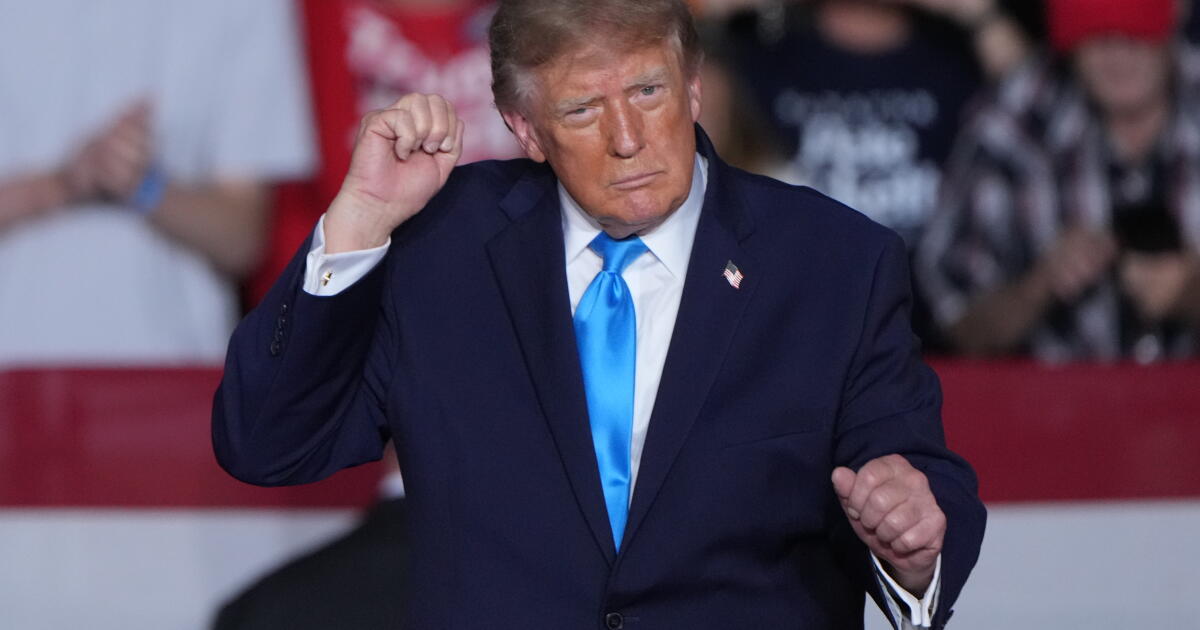
This week Tucker Carlson apologized for unintentionally “misleading” voters into supporting President Trump’s return to the White House. The apology came days after the president called Carlson dumb and overrated on social media. We’ve seen this plot before: It’s a different name but the same story.

Recall the president’s first term was closely shadowed by high-profile breakups from loyalists who disagreed with him on matters of substance. For example, the split with his first Defense secretary, James Mattis, began in 2017 when Mattis, a man who spent more than four decades in uniform, defended the importance of NATO. His successor, Mark Esper, found himself at odds with the president for refusing to use the military on citizens. On his way out the door, Esper told the country that if his replacement was “a real ‘yes man’ … then God help us.”

Some of the highlights from Trump’s second term include squabbles with his biggest donor, Elon Musk, who was upset the president wasn’t lowering the national debt enough; with former congresswoman Marjorie Taylor Greene because millions of Americans faced losing health insurance; and with Rep. Thomas Massie for having the audacity to seek justice for the victims of Jeffrey Epstein’s child sex-trafficking operation.

Now it appears it’s Carlson’s turn. He, like Pope Leo XIV and many of our allies and nearly 70% of Americans, disapproves of the president’s handling of the war in Iran. On a recent episode of the Carlson podcast, the former Fox News host invited his brother Buckley, himself a former Trump speechwriter, on the show to discuss their buyer’s remorse.

Everyone has that line they won’t cross for the president.

Omarosa Manigault Newman left reality TV to advise Trump. She followed him to the White House, found out there was a lot of racism over in MAGA land, and ended up back on reality TV. For Mattis, it was abandoning our allies. For Esper, it was shooting protesters.

For Carlson, it’s Iran. Candidate Trump campaigned on ending endless wars. This week, Trump said there’s no timeline for when the war he started with Iran will end.

“I do think it’s like a moment to wrestle with our own consciences,” Carlson told his brother. “We’ll be tormented by it for a long time. I will be. And I want to say I’m sorry for misleading people.”

Now before Tucker’s apology, Buckley defended his initial support of Trump’s candidacy in 2015 — despite “all of his obvious foibles and his disgusting elements of his personality” — in part because “he built things.” Buckley also said that after the election of President Obama, white Americans in Washington were subjugated by a version of Jim Crow in education and society, and that progressives “would look blank or angry” whenever he asked what Obama was doing to strengthen the nation.

In other words, being red in the face over Trump did not turn the Tucker boys blue. In fact, the episode ended with the two calling the left a bunch of “lunatics,” even after listing the ways the Trump administration was holding back release of the Epstein files and hurting the country.

“Demonic influences concentrate on those who have power. Beware of power,” Tucker warned listeners halfway through the show before his brother chimed in: “And those who seek power.”

Of course, Trump’s ascension to the White House wasn’t solely based on the contributions of media folks. The president entered 2015 having been a public figure for more than 30 years. He’s had the luxury of criticizing elected officials and legislation on camera without the burden of governing for much of that time. When he entered the political arena, he didn’t have a record to defend. He likes being quotable, not being held accountable. That’s why it’s doubtful he would have been elected a second time if not for the support from unscrupulous podcasters masquerading as political journalists such as Joe Rogan, Theo Von and Andrew Schulz, who less than a year ago said everything Trump “campaigned on, I believed he wanted to do. And now he’s doing the exact opposite thing.… I voted for none of this.”

As if “this” had not been clearly spelled out in the pages of Project 2025 for all to see before deciding whether to vote for Trump and that agenda.

Schulz, the comedian and podcaster, might not have read that outline, but Tucker Carlson probably did. That’s why his apology to listeners — like the mea culpas from the discarded loyalists of the past — ultimately won’t mean anything to mainstream Republicans or MAGA. Those who identify with the latter listen only to Trump. As for the former — they have always known that people like Carlson don’t regret supporting Trump. They regret falling out of favor.

YouTube: @LZGrandersonShow

Source link

With talks in ruins, Iran displays its power over strait

Iran displayed its strengthened control over the Strait of Hormuz on Thursday by releasing video footage of its commandos boarding a large cargo ship. The video, aired on state television, showed masked troops storming the MSC Francesca and included scenes of another captured ship, the Epaminondas, which Iran accused of trying to cross the strait without proper permits.

As tensions remain high, the U. S. announced that it boarded another tanker, the Majestic, in the Indian Ocean. This was likely a reference to the supertanker, the Phonix, which was carrying 2 million barrels of crude oil off Sri Lanka. Since the start of conflict in February, Iran has effectively restricted access to the strait, asserting control after peace talks between the U. S. and Iran were halted shortly before a ceasefire expired.

Iran’s willingness to re-engage in talks depended on the U. S. lifting its blockade and releasing Iranian ships. In a post on Truth Social, U. S. President Donald Trump indicated that he ordered the Navy to “shoot and kill” Iranian boats that were laying mines in the strait, escalating military actions without addressing other Iranian tactics like speedboats and drones.

Iran’s judiciary chief stated that the merchant vessels attacked by Iran’s forces had faced legal consequences, while Iran’s vice speaker announced that the first toll revenue collected from ships using the strait had been transferred to the central bank, but provided no specifics on payments or amounts.

Tehran proclaimed it would not reopen the strait, which typically handles a significant portion of global oil and gas shipments, until the U. S. lifted the blockade considered a breach of the ceasefire. Although Trump refrained from escalating attacks in the ceasefire’s final hours, he remained firm on not lifting the blockade. There was no formal extension of the ceasefire nor plans for new negotiations.

Iranian citizens faced uncertainty and anxiety in what they termed a state of “neither peace nor war,” fearing potential attacks from the U. S. or Israel. Pakistan, previously facilitating talks, remained in contact with both countries about reviving discussions, but Iranian officials hesitated to commit due to the U. S. blockade.

On the U. S. side, another round of discussions was set for Thursday, focused on Israel and Lebanon, where Lebanon sought an extension of a recent ceasefire amidst continued Israeli airstrikes that resulted in casualties, marking a significant day since the ceasefire began.

In a significant personnel change, U. S. Navy Secretary John Phelan was dismissed amid conflicts over shipbuilding decisions and tensions with high-ranking officials.

The ongoing situation in the Strait of Hormuz has caused volatility in markets, pushing oil prices upward, while stock prices in the U. S. reached record highs despite uncertainty about energy supply. Washington has thus far failed to achieve its stated war goals of limiting Iran’s military capabilities, ending its nuclear efforts, and fostering regime change. Iran maintains its missile and drone capabilities and stockpiles of highly enriched uranium, while its government remains resilient against internal dissent. Despite threats from Trump, Iran’s control over the strait appears to strengthen its position in the conflict.

With information from Reuters

Source link

Gregg Foreman, the Delta 72 founder and Cat Power collaborator, dead at 53

Gregg Foreman, the founder of the influential blues-punk band the Delta 72 and a longtime collaborator with Cat Power and other acts, has died. He was 53.

News of Foreman’s death on Tuesday was confirmed by Cat Power’s label, Matador Records. No cause of death was given.

Foreman, born in Philadelphia, formed the Delta 72 in Washington, D.C., in the mid-’90s, putting a soulfully-scuzzy blues twist on the city’s post-hardcore sound of the era. Foreman was a distinctly charismatic frontman, pairing the flamboyant stage presence of his beloved ‘60s and ‘70s R&B acts with the live-wire tension of punk. The band released three albums before dissolving in 2001.

For two decades, he played in Cat Power’s backing ensemble, the Dirty Delta Blues band, and became the project’s musical director. He also collaborated with Pink Mountaintops, Suicide’s Alan Vega and Martin Rev, the Gossip, Lydia Lunch and Death Valley Girls, along with singer-songwriters Lucinda Williams and Linda Perry.

Outside of his live-band career, Foreman was a prolific DJ and a deeply knowledgeable music journalist. He most recently played on Cat Power’s “Redux,” January’s three-song EP celebrating the 20th anniversary of the band’s beloved LP “The Greatest.”

Music and cultural figures like director Jim Jarmusch, Kid Congo Powers, and Cold Cave’s Wesley Eisold mourned Foreman’s death on social media. Eisold wrote on Instagram that “Like others, he bounced in and out of our lives and changed each one he visited. For better or for worse, he lived a life that others only claim to have lived and he was one of one. His love for music was as genuine as the pain he harbored.”

Source link

Worst-run state? In Britain, Steve Hilton was inspired by California

Steve Hilton is a former Fox News host who has unexpectedly emerged as a leading candidate in the race for governor with a message that California is a failed state in need of radical reform.

But his sudden rise in California politics comes a decade and a half after he pitched the U.K. Conservative Party with a very different idea: Britain could learn a lot from the Golden State.

Back in 2010, when Hilton was a top strategist during David Cameron’s rise to power as Conservative prime minister, he looked to Silicon Valley’s high-charged ethos of techno-optimism and green innovation for inspiration as he sought to revitalize the ailing Conservative Party and the U.K.

Splitting his time between London and the Bay Area — his wife worked for Google — Hilton was instrumental in getting California companies to invest in the U.K. and persuading Google to open its first wholly owned and designed building outside the U.S. in London. So infatuated was he with California that one British political commentator dubbed the Cameron administration’s philosophy ”Thatcherism on a surfboard.”

But Hilton is now utterly unsparing in his criticism of California.

After moving to the Bay Area full time, teaching at Stanford University and hosting Fox News’ “The Next Revolution,” Hilton is running as a Republican on a platform of “Making California Golden Again.”

To the dismay of many Democrats, the 56-year-old British immigrant, a supporter of President Trump who dubs California “America’s worst-run state,” is ahead in multiple polls in a crowded race with no front-runner.

Even after former Democratic Rep. Eric Swalwell dropped out April 12 after multiple women accused him of sexual assault, Democrats are struggling to unite around one candidate. And Trump’s endorsement of Hilton this month almost seems to guarantee Hilton will secure enough Republican votes to make it past the June primary.

Hilton accuses Democratic leaders of turning the state into the “Wuhan lab of modern leftism.” As Democrats amassed power in Sacramento, seizing control of statewide offices and the Legislature, he argues, California government has become “a massive, bloated, bureaucratic nanny state,” so overregulated and poorly run, it is failing its people.

“We have the highest poverty rate in the country in California, tied with Louisiana, which is shameful, really, for a state that prides itself on being the home of innovation and opportunity,” he told The Times. “We’re ranked by U.S. News and World Report 50 out of 50 for opportunity. The performance of California, when measured against the rest of the country, is really dire.”

Most California voters rank affordability and cost of living as important as they weigh whom to elect as governor. But whether Hilton can persuade them that Democrats are responsible for the state’s problems, or make inroads as a Republican aligned with Trump on immigration and abortion, is unlikely in a state where Democrats outnumber Republicans nearly two to one.

Many Californians who do not watch Fox News know little about Hilton. Even some of Britain’s political observers who followed Hilton for years admit it’s been a struggle at times to make sense of his political odyssey.

Dubbed a “barefoot revolutionary” for his habit of striding around Downing Street without shoes, Hilton was credited with pulling the Conservatives into the 21st century and ushering in a more green, socially liberal strain of British conservatism. He helped turn around their image by highlighting climate change and supporting gay marriage.

Fraser Nelson, a columnist for the Times in London, said Hilton had been seen in Britain as a figure closer to Democratic Gov. Gavin Newsom than to Trump.

“When he popped up on Fox, it was like somebody reborn,” Nelson said. “Somebody who seemed to be on the left of politics was somehow on the Trumpish right. We thought it was like a joke. I’m not saying he is not sincere, just … the political journey of Steve Hilton … to being Newsom’s nemesis is something to behold.”

Born in London to Hungarian refugees who fled their homeland during the 1956 revolution, Hilton grew up in a household without much money.

After studying at Oxford University, a life-changing experience for a son of immigrants, Hilton worked at Conservative Party headquarters and as an ad executive on the Conservatives’ 1997 election campaign. When Labour’s Tony Blair won in a landslide, Hilton co-founded a consulting firm, Good Business, advising corporations on how to make money by investing in social and environmental causes.

In 2001, Hilton voted Green. But he returned to the Conservative fold in 2005 to try to detoxify the Tory brand. As an author of the party’s 2010 manifesto, he came up with Cameron’s “Big Society” agenda, which sought to scale back the state and hand more power to local communities. Critics, however, argued that the focus on local control was a fig leaf for austerity and dismantling the welfare state.

When Cameron won in 2010, Hilton infuriated colleagues in the coalition government, the British press reported, proposing a stream of wacky ideas: scrapping maternity leave, abolishing job centers, even buying cloud-bursting technology so Britain would have more sunshine.

Hilton ultimately became disillusioned with Westminster, deciding U.K. politics was stymied by excessive bureaucracy. In 2012, he moved full time to the Bay Area.

Hilton says he was drawn to California because of its “rebel spirit.”

But what he liked about California was the specific Silicon Valley ethos of disruption that emphasized meritocracy and risk-taking, not the state’s ascendant liberal identity politics.

Hilton settled in California precisely when Democrats were consolidating their political and cultural power. Just months after his move, Democrats gained full control of the Legislature with a two-thirds supermajority.

Meanwhile, populism was rising across the U.S. and Britain.

On the 2016 Brexit referendum on whether the U.K. should leave the European Union, Hilton was firmly pro Leave.

Hilton also disagreed with many fellow conservatives on Trump. In November 2016, George Osborne, chancellor of the exchequer under Cameron, watched the U.S. election on Hilton’s couch in Atherton, Calif. “Steve was the only person in the room who said, ‘I think Donald Trump’s going to win,’” Osborne said. “I think he identifies with Trump, although they’re obviously very different. … The outsider challenging the system.”

After the election, Hilton joined Fox News as a contributor and in 2017 was given his own Sunday night show, “The Next Revolution.” Produced out of Los Angeles, it explored populism in the U.S. and globally.

Like many conservatives, Hilton became agitated in 2020 by the COVID-19 lockdowns and Black Lives Matter protests that swept U.S. cities.

Early in the pandemic, Hilton invited Jay Bhattacharya, a professor of health policy at Stanford, to discuss COVID-19 after his study in Santa Clara County indicated the virus was more widespread and less deadly than initially thought. Bhattacharya argued the best path forward was not a general lockdown, but focused protection of the vulnerable. California leaders went on to impose some of the nation’s most stringent lockdowns.

After Joe Biden defeated Trump in November 2020, Hilton repeated Trump’s false allegations of voter fraud on air and called for an investigation.

Hilton became a U.S. citizen in 2021. Asked how his worldview changed in 2020, Hilton said: “I don’t think it changed. I think it actually enhanced my skepticism of centralized bureaucracy and it made me even more determined to dismantle it in California, because you saw all the worst features of it in California.”

In 2023, Hilton left Fox to launch a supposedly nonpartisan policy group, Golden Together, to develop “common sense” solutions to California’s problems. Two years later, he published “Califailure: Reversing the Ruin of America’s Worst-Run State,” a screed against Democrats. He accused them of spending “their time — and taxpayers’ money — pushing increasingly fringe race, gender, and ‘climate’ extremism instead of attending to the basics of good governance.”

A month later, Hilton announced he was running for governor “to make this beautiful state, that we love so much, truly golden again.”

On the campaign trail, Hilton has pledged to slash taxes, make housing more affordable and bring the cost of gas down to $3 a gallon. But how he plans to achieve some of these goals is controversial.

Hilton advocates scaling back environmental regulations. State agencies such as the California Coastal Commission and the California Air Resources Board, he argues, are a “massive roadblock” to housing development.

To lower gasoline prices, Hilton would ramp up California domestic production of oil and natural gas and reduce regulations on refineries.

Hilton would likely struggle to persuade a majority of voters to roll back environmental protections. According to the Public Policy Institute of California, about 55% of Californians think stricter state environmental regulations are worth the cost, while 43% believe they hurt the economy and jobs market.

Hilton is also at odds with most Californians on major issues from immigration to abortion.

If elected, he would foster more local cooperation with U.S. Immigration and Customs Enforcement and rescind state healthcare to undocumented immigrants. He would work with states such as Louisiana to extradite California doctors accused of prescribing and mailing abortion pills to women in states where abortion is illegal. He would also establish a Covid Accountability Commission to examine officials’ decisions during the pandemic.

Asked if Newsom and other Democrats could face prosecution, Hilton said: “They need to be held accountable for these crimes.”

With Trump in the White House, 2026 is a difficult year to mount a right-wing populist campaign for California governor, said Christian Grose, a professor of political science and public policy at USC.

“That message of ‘Newsom and the Democrats have been a disaster for California,’ that’s like, if you’re running in South Carolina,” Grose said. “It’s a caricature of California. While many California voters think there have been problems and the state is not doing as well, a Fox News presentation for East Coast viewers … that’s not going to win 50%.”

To make inroads past the primary, Grose said, Hilton would need to focus on governance and affordability and ditch the anti-Democratic red meat: “He has to massively soft pedal the kind of Fox News conservative stuff.”

Hilton’s Republican rival in the race, Riverside County Sheriff Chad Bianco, has questioned Hilton’s MAGA credentials, raising his green advocacy in the U.K. to cast him as an unprincipled opportunist.

Hilton, however, said he considers himself a “very strong environmentalist.” The problem, he argued, is the movement has become too narrowly focused on climate change and CO2 reduction. As crude oil production within California has fallen in recent decades and refineries have closed, he questioned California importing the bulk of its oil from as far away as Iraq and Ecuador.

“We are shipping oil halfway across the world in giant supertankers that run on bunker fuel, the most polluting form of transportation you can think of, rather than producing in Kern County and sending it in a nice, clean pipeline to the refineries in Long Beach,” Hilton said. “It’s total insanity. We are increasing carbon emissions in the name of climate change.”

Some political observers in the U.K. argue that Hilton’s questioning of California’s policy isn’t necessarily intellectually inconsistent.

“Perhaps in 2010 we needed more environmental policies,” Nelson said. “Perhaps in 2026 they’re doing more harm than good.”

Nor is it so odd, he argued, that Hilton now views California with a more critical eye.

“Even from a distance, when you look at California, there’s so much going fundamentally wrong,” Nelson said, citing its energy policy, homelessness and the exodus of residents to other states. “I’m not surprised by that, and I think it’s entirely consistent with Steve Hilton in 2010.”

Times staff writer Stephen Battaglio contributed to this report

Source link

Labor Secretary Lori Chavez-DeRemer is leaving Trump’s Cabinet after abuse of power allegations

Labor Secretary Lori Chavez-DeRemer is out of President Trump’s Cabinet, the White House said Monday, after multiple allegations of abusing her position’s power, including having an affair with a subordinate and drinking alcohol on the job.

Chavez-DeRemer is the third Trump Cabinet member to leave her post after Trump fired his embattled Homeland Security Secretary Kristi Noem in March and ousted Atty. Gen. Pam Bondi earlier this month.

Unlike other recent Cabinet departures, Chavez-DeRemer’s exit was announced by a White House aide, not by the president on his social media account.

“Labor Secretary Lori Chavez-DeRemer will be leaving the Administration to take a position in the private sector,” White House communications director Steven Cheung said on the social media site X. “She has done a phenomenal job in her role by protecting American workers, enacting fair labor practices, and helping Americans gain additional skills to improve their lives.”

He said Keith Sonderling, the current deputy labor secretary, would become acting labor secretary in her place. The news outlet NOTUS was the first to report Chavez-DeRemer’s resignation.

Labor chief, family members faced multiple allegations

Chavez-DeRamer’s departure follows reports that began surfacing in January that she was under a series of investigations.

A New York Times report last Wednesday revealed that the Labor Department’s inspector general was reviewing material showing Chavez-DeRemer and her top aides and family members routinely sent personal messages and requests to young staff members.

Chavez-DeRemer’s husband and father exchanged text messages with young female staff members, according to the newspaper. Some of the staffers were instructed by the secretary and her former deputy chief of staff to “pay attention” to her family, people familiar with the investigation told the Times.

Those messages were uncovered as part of a broader investigation of Chavez-DeRamer’s leadership that began after the New York Post reported in January that a complaint filed with the Labor Department’s inspector general accused Chavez-DeRemer of a relationship with the subordinate.

She also faced allegations that she drank alcohol on the job, and that she tasked aides to plan official trips for primarily personal reasons.

Both the White House and the Labor Department initially said the reports of wrongdoing were baseless. But the official denials became less full-throated as more allegations emerged — and when Chavez-DeRemer might be out of a job became something of an open question in Washington.

At least four Labor Department officials have already been forced from their jobs as the investigation progressed, including Chavez-DeRemer’s former chief of staff and deputy chief of staff, as well as a member of her security detail, with whom she was accused of having the affair, the New York Times reported.

She enjoyed union support — rare for a Republican

Confirmed to Trump’s Cabinet in a 67-32 vote in March 2025, Chavez-DeRemer is a former House GOP lawmaker who had represented a swing district in Oregon. She enjoyed unusual support from unions as a Republican but lost reelection in November 2024.

In her single term in Congress, Chavez-DeRemer backed legislation that would make it easier to unionize on a federal level, as well as a separate bill aimed at protecting Social Security benefits for public-sector employees.

Some prominent labor unions, including the International Brotherhood of Teamsters, backed Chavez-DeRemer, who is a daughter of a Teamster, for Labor secretary. Trump’s decision to pick her was viewed by some political observers as a way to appeal to voters who are members of or affiliated with labor organizations.

But other powerful labor leaders were skeptical when she was tapped for the job, unconvinced that Chavez-DeRemer would pursue a union-friendly agenda as a part of the incoming GOP administration. In her Senate confirmation hearing, some senators questioned whether she would be able to uphold that reputation in an administration that fired thousands of federal employees.

She was a key figure in Trump’s deregulatory push

Aside from reports of wrongdoing in recent months, Chavez-DeRemer had been one of Trump’s more lower-profile Cabinet picks but took key steps to advance the administration’s deregulatory agenda during her tenure.

For instance, the Labor Department last year moved to rewrite or repeal more than 60 workplace regulations it saw as obsolete. The rollbacks included minimum wage requirements for home healthcare workers and people with disabilities, and rules governing exposure to harmful substances and safety procedures at mines. The effort drew condemnation from union leaders and workplace safety experts.

The proposed changes also included eliminating a requirement that employers provide adequate lighting for construction sites and seat belts for agriculture workers in most employer-provided transportation.

During Chavez-DeRemer’s tenure, the Trump administration canceled millions of dollars in international grants that a Labor Department division administered to combat child labor and slave labor around the world, ending their work that had helped reduce the number of child laborers worldwide by 78 million over the last two decades.

The Labor Department has a broad mandate as it relates to the U.S. workforce, including reporting the U.S. unemployment rate, regulating workplace health and safety standards, investigating minimum wage, child labor and overtime pay disputes, and applying laws on union organizing and unlawful terminations.

Kim writes for the Associated Press. AP writers Cathy Bussewitz in New York and Will Weissert in Washington contributed to this report.

Source link

Venezuela in talks with Siemens, GE over power crisis

Avilio Troconiz (C), regional president of the Primero Justicia party in Zulia, speaks at a press conference in front of the Las Tarabas electrical substation in Maracaibo, Zulia state, Venezuela, on March 26. The party denounced the the electricity crisis, which has worsened in recent months. Photo by Henry Chirinos/EPA

April 20 (UPI) — Venezuela’s interim president, Delcy Rodríguez, said her government is talking with two major companies to address the country’s power crisis, citing recent diplomatic engagement with the United States.

“Thanks to that diplomatic dialogue, I can say we are now in direct contact with Siemens and General Electric to resolve the electricity problem in Zulia state,” Rodríguez said Sunday during a public event broadcast by state television.

She said the government decided to “open a new chapter in national political life” and in Venezuela’s international relations following a Jan. 3 U>S> military operation that captured President Nicolás Maduro and his wife, Cilia Flores.

Analysts say Zulia, a key oil-producing region in western Venezuela, is critical to the country’s hydrocarbons industry. Persistent electricity shortages have limited efforts to boost crude production, making restoration of the power system a strategic priority for economic recovery.

Situated at the western edge of the national grid, Zulia is the last region to receive electricity transmitted from the south. Failures in the transmission network often leave it disconnected. The system in the region operates at less than 40% of installed capacity.

According to local outlet El Tequeño, both companies conducted technical missions in March to assess Venezuela’s electrical infrastructure and present rehabilitation proposals.

The inspections included hydroelectric facilities in the Bajo Caroní complex in Bolívar state, following a February visit to Caracas by U.S. Energy Secretary Chris Wright.

Rodríguez made the remarks at the launch of a 13-day pilgrimage she called to demand the full lifting of economic sanctions imposed on Venezuela.

“Enough sanctions against the noble Venezuelan people,” she said, addressing the governments of the United States and Europe, according to Globovisión. She added that economic freedom is a sovereign right, not a concession from foreign powers.

The mobilizations began in Zulia, Amazonas and Táchira states and were led by Rodríguez, National Assembly President Jorge Rodríguez and ruling party leader Diosdado Cabello.

International sanctions have worsened Venezuela’s electricity crisis by limiting access to financing and technology needed to maintain and upgrade infrastructure.

A partial easing of U.S. sanctions on the oil and mining sectors has opened the door to talks with companies such as Siemens and General Electric to address those gaps.

Source link

Why The Middle East Crisis Cannot Be Read Through Power Alone

There is another way to read the ongoing Middle East crisis, one that makes legible what standard analysis consistently struggles to explain. It begins not with capability but with the geometry of the system through which capability must travel to produce effects. The United States and its partners possess overwhelming military superiority over Iran, and that superiority is not in question, yet the conflict has produced a pattern that defies its logic. A superpower coalition has been unable to impose coherent strategic outcomes against an adversary operating through proxies, low-cost disruption, and the systematic exploitation of global commercial vulnerabilities.

Over the past two years, we have seen multiple instances of this kind of disruption with consequential effects on the global system. Houthi drones force the rerouting of global shipping, with Red Sea cargo volumes falling by roughly 50% through early 2024 as major carriers diverted around the Cape of Good Hope, adding up to two weeks to transit times, driving freight costs sharply higher across European markets, and costing Egypt nearly $800 million per month at peak in lost Suez Canal revenue. A non-state network spanning Lebanon, Yemen, Iraq, Syria, and Gaza has absorbed sustained air campaigns, targeted eliminations of senior commanders, and repeated ground operations without losing its capacity to generate coordinated pressure across multiple theaters simultaneously. The asymmetry seems to follow a deliberate strategic logic that raw power analysis struggles to read, precisely because the conflict operates on a surface that capability assessments were never designed to map. What this suggests is that the decisive variable is not what actors possess but whether the relationships connecting them can transmit coordinated action when the system is under strain.

When that system cannot coordinate, something important breaks down. An alliance that formally exists but faces operational friction at every decision point ceases to be an alliance in any meaningful strategic sense. A security guarantee that cannot be transmitted rapidly to the partner it is meant to protect has, in effect, already failed its primary function. It follows that the gap between what a system formally is and what it can actually do under pressure is not a secondary consideration but the surface on which this conflict is being decided. Conventional analysis, calibrated to count warheads and assess intentions, consistently leaves this gap unmapped.

Analysts know that Saudi Arabia’s OPEC production decisions have repeatedly positioned Riyadh against Washington’s economic preferences, they know that European energy dependency complicates transatlantic alignment, and they know that Iran’s proxy network extends across five countries and absorbs military pressure without fracturing. Yet what the available frameworks cannot do is convert that knowledge into a structural reading of the system. They show that these conditions exist. What they cannot show is how those conditions interact, where they compound, and what the aggregate geometry of their interaction means for whether coordinated action is possible at all.

Power analysis was built to read capability differentials between states, and it does that well. Alliance theory was built to read the conditions under which formal commitments hold or fail, and it does that too. Neither, however, was built to read the operational weight of the ties through which capability and commitment must travel to produce effects.

The instruments available are calibrated to answer questions different from those the current situation poses. Deploying them on a problem they were not designed to read produces the consistent failure to explain what is actually happening that has marked analysis of this conflict from the start.

Adjacency mapping is an instrument designed to read that gap by mapping connectivity, by which I mean their operational weight, specifically their capacity to carry coordinated action under strain. What distinguishes it from standard approaches is its unit of analysis. Rather than the actors themselves, it treats the weight of the relationships as primary. The question it asks is not who holds power but whether the ties connecting power-holders can transmit that power when the system needs them to. Two states can be formally allied, operationally integrated in name, and structurally disconnected at the same time, and nothing in standard analysis will tell you which of those conditions is actually operative until the moment of crisis reveals it.

The instrument assigns each significant relationship in the system a weight between 0 and 1, reflecting how frequently the two actors interact operationally, how reliably information moves between them, how the tie has behaved under recent stress, and how quickly it transmits pressure when the system is under strain. At the higher end of the scale, a weight at or above 0.6 indicates that coordination approaches automaticity, and the tie carries load without constant investment to maintain it. Around 0.3, friction accumulates. In this setting, decisions require deliberate effort at every juncture, slowing the system and making it susceptible to gradual degradation that never triggers a visible rupture. At or below 0.2, the tie has effectively ceased to function as a transmission pathway, leaving the actors operationally disconnected regardless of what their formal relationship nominally says.

These weights are analytical judgements calibrated against observable evidence. In other words, their value lies in making visible what experienced analysts already carry as intuition and in giving that intuition a structure precise enough to argue about. The numbers are therefore analytical judgements, not measurements. A more rigorous application would derive them from quantifiable indicators across each dimension, including military interoperability, intelligence exchange depth, crisis responsiveness, economic interdependence, and signaling consistency, averaged and weighted systematically. That work lies beyond the scope of this piece, but the architecture is designed to accommodate it.

There is a risk management dimension to this reading that is worth making explicit. Standard geopolitical risk assessment focuses on actor-level variables such as regime stability, military capability, and leadership intentions. What adjacency mapping adds is a structural layer that those assessments typically miss. A coalition whose load-bearing relationships operate in the friction zone is exposed to a category of risk that capability assessments do not capture and that becomes visible only when the system is read structurally.

What the matrix adds is the ability to see how compound weakness across multiple relationships produces cascading effects that bilateral assessment alone would struggle to predict. A system whose dominant actor holds several weak partnerships faces more than friction. As a consequence, the geometry of those weaknesses determines whether any concerted response is structurally possible at all. Aggregate capability becomes, in that light, secondary to that question.

If we apply this to the Middle East security complex, the instrument produces one possible reading. This reading differs considerably from the picture conventional analysis generates. Its value is not in the precision of the numbers but in making the system’s geometry visible enough to argue about.

The matrix below maps operational connectivity across the system’s key actors. The numbers are analytical judgements, not measurements.

The geometry they make visible is what matters here.

  US IL SA QA UAE OM KW BH PK IR PN
US 0.8 0.4 0.8 0.6 0.5 0.7 0.8 0.6 0.1 0.1
IL 0.8 0.5 0.4 0.6 0.2 0.2 0.4 0.1 0.1 0.1
SA 0.4 0.5 0.5 0.6 0.4 0.6 0.7 0.6 0.2 0.1
QA 0.8 0.4 0.5 0.4 0.4 0.4 0.3 0.3 0.2 0.1
UAE 0.6 0.6 0.6 0.4 0.3 0.5 0.6 0.4 0.1 0.1
OM 0.5 0.2 0.4 0.4 0.3 0.3 0.3 0.3 0.4 0.1
KW 0.7 0.2 0.6 0.4 0.5 0.3 0.5 0.2 0.2 0.1
BH 0.8 0.4 0.7 0.3 0.6 0.3 0.5 0.2 0.2 0.1
PK 0.6 0.1 0.6 0.3 0.4 0.3 0.2 0.2 0.5 0.1
IR 0.1 0.1 0.2 0.2 0.1 0.4 0.2 0.2 0.5 0.7
PN 0.1 0.1 0.1 0.1 0.1 0.1 0.1 0.1 0.1 0.5

The matrix is intentionally non-symmetric. Where operational influence flows asymmetrically between two actors, the weights reflect that directionality.

The matrix reveals, in this light, a system whose dominant actors are connected at fundamentally different weights. And more significantly, its most important bilateral relationship is operating in the friction zone. It’s formally excluded adversary has constructed the only alternative connectivity architecture in the system. What this implies is that the geometry of the conflict runs considerably deeper than standard alliance analysis tends to suggest.

On the coalition side, the US has high adjacency with Qatar, Bahrain, Israel, and Kuwait, ties that enable rapid coordination and require little maintenance, constituting the operational backbone of what Washington can actually activate quickly.

Its relationship with Saudi Arabia, however, sits at 0.4. That number is analytically more significant than almost anything else in the matrix. Saudi Arabia remains, on most readings, the relationship on which Gulf order coherence formally depends, the anchor of the security architecture since the 1970s, and it is operating in the friction zone where every significant decision requires renegotiation from scratch rather than flowing through an established channel. Saudi Arabia’s invitation to join BRICS in August 2023, yuan-denominated oil transactions with China, and its participation in the Chinese-brokered rapprochement with Iran in March 2023 all point in the same direction. Riyadh is hedging structurally toward China and the broader non-Western order, a posture that sits uneasily alongside its formal security alignment with Washington. Taken together, these are not isolated political episodes but evidence of a tie that has been operating below the coordination threshold for years and whose weakness is, on this reading, the system’s most consequential structural vulnerability.

Through the normalization architecture, the UAE has arguably become the system’s most structurally reliable node at 0.6 with both the US and Israel, its operational integration exceeding Saudi Arabia’s despite Saudi Arabia’s formal primacy. The Abraham Accords of September 2020 established the formal foundation for that integration. The operational depth it has since generated, across intelligence sharing, defence cooperation, and coordinated positioning on Iran, has made the UAE the coalition’s most functionally connected Gulf partner. Oman holds what is perhaps the system’s most anomalous position, meaningful adjacency with both the US coalition and Iran simultaneously, a profile no other state actor in the matrix replicates. That structural position gave Oman the back-channel role it played through the early phases of the conflict, with documented precedent in the secret US-Iran nuclear negotiations that began in Muscat in 2012 and ran through 2013. As the conflict has intensified, Pakistan has assumed the primary mediation function, but Oman’s position as a quiet facilitator has not disappeared; it has simply been supplemented by a node with more direct access to both capitals at this particular moment.

Pakistan has emerged as the conflict’s primary mediation node, hosting the highest-level direct negotiations between Washington and Tehran since 1979 and brokering the April 2026 ceasefire. That role reflects a structural position the matrix makes legible: high Saudi adjacency, a functioning Iran tie, and a rehabilitated relationship with Washington that no other regional actor currently combines. China’s influence over both Pakistani and Iranian decision-making operates as an exogenous pressure that the matrix only partially captures, and Pakistan’s own domestic constraints, including its difficulty developing direct channels with the IRGC, limit how far that mediation role can ultimately reach.

Iran’s position is where the matrix becomes most analytically revealing. Across the state actors in the system, Iran’s adjacency sits at or near fragmentation, built up through sanctions, absent operational channels, and decades of adversarial signalling that have left Tehran formally isolated from the coordination architecture the United States and its partners have constructed.

And yet the only high-weight tie Iran holds is with its proxy network at 0.7. That single number may go further toward explaining the architecture of the entire campaign than any other figure in the matrix.

It is an asymmetric relationship in which Tehran’s capacity to activate and direct exceeds the reverse influence those actors exert over Iranian strategic decisions. What that single structural condition implies goes further toward explaining the architecture of Iranian pressure operations than most analyses of Iranian intentions or capabilities tend to reach. Iran is geographically central and formally excluded. It is precisely that combination, positioned to apply pressure across every theatre while bearing none of the coordination costs that formal inclusion imposes. That, from this vantage point, is what makes legible a strategy that standard analysis, focused on actors and their capabilities, cannot see.

Seen through this lens, what Iran is doing across the region is something more structurally ambitious than a military campaign. It is attempting to restructure the matrix itself. The goal appears to be less about battlefield victory than about the gradual degradation of the ties connecting the United States to its regional partners, below the threshold at which coordinated response becomes automatic, eroding the will to keep paying the price of alignment while simultaneously building alternative adjacency in the nodes where US-aligned connectivity is weakest.

The Houthi campaign against Red Sea shipping is calibrated to stay below the threshold that would compel a unified military response. It introduces friction into the economic relationships connecting European states to the Gulf system, raising the cost of alignment with Washington’s regional posture without forcing the kind of direct confrontation that would unite the coalition. Strikes on Gulf infrastructure follow the same calibration, persistent enough to signal that the US security guarantee cannot insulate its partners from costs, yet restrained enough to avoid crossing the point at which coalition fragmentation becomes irrelevant because a unified response becomes compulsory. Across Iraq and Syria, simultaneous pressure from affiliated militias prevents the concentration of attention that sustained coalition coordination requires. In each case, the instrument targets a relationship rather than a capability, specifically the weight of the ties whose degradation would restructure the system’s geometry without requiring Iran to displace the existing order directly.

The US-Saudi tie at 0.4 is the primary focus of that degradation effort. Should that threshold be breached, Saudi Arabia hedges. As hedging reduces operational interactivity the tie weakens further. The process risks becoming self-reinforcing. Iranian military superiority over any individual partner is not required to sustain it.

The same logic extends across European actors, though not uniformly. Germany’s industrial exposure to energy price volatility, France’s residual strategic autonomy instinct, and the EU’s institutional preference for de-escalation all produce different thresholds for continued alignment with Washington. Their shared energy dependency gives them asymmetric stakes in the Gulf system’s stability, but their appetite for risk diverges from Washington’s in ways that are not identical across capitals, and each time Iran forces a decision about the cost of continued alignment, that divergence fragments the coalition’s coordination surface further.

By sustaining operational ties with non-state actors across the region, Iran is constructing alternative adjacency in precisely the nodes where US-aligned connectivity is weakest. These are populations and factions that the existing regional order has excluded from the dominant coalition’s coordination architecture. Deliberately so — Iran is building in the structural gaps the system leaves open. Displacing the existing order appears unnecessary. Becoming the more reliable pole of alignment for the actors that order has failed to integrate may be sufficient. All that is required is that the order fragment sufficiently at its margins for that offer to appear credible, and the current trajectory of US-Saudi friction and European hedging is steadily moving in that direction.

The coalition’s instruments are calibrated to military threats. The system, however, is failing along a different surface entirely, or so this reading suggests. The formal architecture remains largely intact, security guarantees have not been withdrawn, Gulf states remain formally aligned, and normalisation agreements hold. And yet the operational adjacency that gives that architecture its functional weight is under sustained pressure from an actor that has correctly identified the gap between formal commitment and operational tie as the system’s primary vulnerability. That identification is outpacing the coalition’s capacity to respond.

On this reading, the surface on which the conflict appears to be decided is not the one the coalition is defending.

What adjacency mapping reveals is a story about geometry. The system’s dominant actor holds formal commitments at weights the system cannot sustain under the pressure being applied to it. Its adversary, in turn, has built the only alternative coordination architecture in the space that those weakening ties leave open. The conflict is likely to be determined by which ties the system can no longer afford to lose under sustained and calibrated pressure. The question is whether the actors currently holding those ties in the friction zone can rebuild them to the coordination threshold before the process of degradation becomes irreversible. That is a question that capability assessments are not well-positioned to answer, and one that a structural reading of the system’s connectivity at least helps to make visible.

Source link

US Congress extends controversial surveillance power under FISA for 10 days | Privacy News

The measure has long been criticised for allowing US intelligence agencies to collect citizen data without a warrant.

The United States Congress has temporarily extended a controversial surveillance law which allows federal intelligence agencies to collect the data of foreigners, including their contacts with US citizens.

The move allows a provision of the Foreign Intelligence Surveillance Act (FISA) to continue until April 30. The short-term extension was passed by the House of Representatives and approved by the Senate on Friday.

Recommended Stories

list of 3 itemsend of list

The patch comes after President Donald Trump’s efforts to secure a more lasting extension broke down.

Section 702 of FISA allows the National Security Agency (NSA) and other intelligence services to collect data from foreigners outside of the country.

That could include their interactions with US citizens, a prospect that has alarmed rights advocates.

Collecting such data, which can include correspondence on email and telecommunications platforms, typically requires a warrant approved by a court.

The process has been described by critics as a “backdoor search” that circumvents existing privacy laws.

Speaking after Friday’s vote, Senate Majority Leader John Thune said there was still some openness to reforming the law.

“We’ve got to pivot and figure out what can pass, and we’re in the process ⁠of figuring out how to do that here,” he told reporters.

Supporters of reform, who stretch across party lines, have long sought to repeal or amend Section 702.

While FISA was initially passed in 1978, Section 702 was added as an amendment in 2008.

The addition came amid the US’s “global war on terror”. But during its approval, revelations emerged that the administration of former US President George W Bush had already used the tactics Section 702 legalised.

Supporters, including Trump, maintain that reforming the provision would lead to a lapse in national security.

“I have spoken with many in our Military who say FISA is necessary in order to protect our Troops overseas, as well as our people here at home, from the threat of Foreign Terror Attacks,” Trump wrote in a Truth Social post on Wednesday.

He has pushed for the law to be extended for 18 months without changes. That effort initially appeared on track in the House but was ultimately scuttled by pushback from within Trump’s own Republican Party.

Among the detractors was Republican Congressman Thomas Massie, who has been a regular critic of Trump.

“I will be voting NO on final passage of the FISA 702 Reauthorization Bill if it does not include a warrant provision and other reforms to protect US citizens’ right to privacy,” he wrote ahead of the House vote.

Source link

Contributor: Trump’s empty bluster worked until he took on the pope and Iran

Until recently, President Trump always found a way to fail forward, through a combination of spin, threats, payoffs and bluster.

OK, that’s the simplistic interpretation. The fine print tells a less-glamorous story: a man born on third base who spent decades insisting he’d hit a triple.

Still, it’s hard to argue with success. When Trump entered politics, he redefined the rules of the game. Rivals who tried to outflank him on policy detail, ideological consistency and institutional norms found themselves either vanquished or assimilated by the Borg.

By my lights, only once during Trump’s admittedly chaotic first term did he run into something that his playbook couldn’t at least mitigate or parry: the COVID-19 pandemic. For the final year of his presidency, reality refused to negotiate, and political gravity reasserted itself. It turns out, viruses aren’t susceptible to the Art of The Deal.

But then, miraculously, Trump wriggled through legal jeopardy, bulldozed his way past more conventional Republicans and Democrats, and re-emerged victorious in 2024.

If anything, that comeback reinforced the idea that Trump could survive anything by virtue of his playbook.

By the start of his second term, he’d made impressive headway in co-opting not only individuals but also major institutions within big tech, the media and academia.

Even in foreign affairs, Trump’s sense that any problem could be solved via force, intimidation or money was confirmed when he captured Venezuelan President Nicolás Maduro and installed Maduro’s vice president, Delcy Rodríguez, as a sort of puppet leader. Everyone has a price, right?

Unfortunately for Trump, no. Not everyone does.

Lately, the president has encountered a different kind of resistance — adversaries motivated by something bigger and more transcendent than money, power or the avoidance of pain.

In dealing with Iran, for instance, Trump has confronted people operating under a wholly different set of incentives. It’s a regime guided by a mix of ideology, radical religious doctrine and long-term strategic interests that don’t always align with short-term material gain.

(Now perhaps, having punished Trump enough already, Iran will finally come to the negotiating table. But even if that happens, it will have occurred after exacting a steep price — so steep, in fact, that it may already be too late for Trump to plausibly claim a win.)

It turns out, you can’t easily intimidate or pay off a true believer who isn’t afraid to die and believes they have God on their side.

A similar (though obviously not morally equivalent) dynamic is now also on display in the form of Trump’s skirmish with Pope Leo XIV, a man who commands moral authority. He opposes the war in Iran (“Blessed are the peacemakers”) and has demonstrated a stubborn refusal to back down to Trump’s attempts at bullying.

“Woe to those who manipulate religion and the very name of God for their own military, economic and political gain, dragging that which is sacred into darkness and filth,” Leo said during a tour of Africa. It’s a remark that the American pope seemed to implicitly be aiming at the American president.

Here’s what Trump doesn’t understand: There are still pockets of the world where concepts like faith and national identity outweigh tangible incentives. Where sacrifice and suffering are an accepted part of the plan.

When facing these sorts of foes, Trump’s usual operating system starts to look less like a cheat code and more like a category error.

But he can’t see this because Trump is always prone to a sort of cynical projection — of assuming everyone views the world in the same base, carnal, corrupt way he sees it.

Whether it was his incredulity that Denmark wouldn’t sell Greenland, rhetoric that seemed to discount the motivations of those who serve and sacrifice in the military, or his affinity for nakedly transactional gulf states, the pattern is familiar: a tendency to view decisions through a cost-benefit lens that not everyone shares.

To be fair, that lens has often served him well. In arenas where power, money and leverage dominate, Trump’s approach is eerily effective.

But after years of taming secular, “rational” opponents, he is fighting a two-front war against people who see their struggles as moral and spiritual.

They aren’t stronger in a conventional sense. But they are, in a very real sense, less susceptible to Trump’s methods.

For perhaps the first time in his life, Donald Trump finds himself facing adversaries who aren’t just immune to his usual Trumpian playbook but are playing a different game altogether.

Matt K. Lewis is the author of “Filthy Rich Politicians” and “Too Dumb to Fail.”

Source link

Jones Seeks U.S. Probe Into Davis’ Power Deals

Secretary of State Bill Jones, lagging in the polls for the Republican gubernatorial primary, on Monday asked the U.S. attorney’s office in Sacramento to investigate possible conflicts of interest between energy companies and the administration of Gov. Gray Davis.

For months, Jones has criticized Davis for hiring consultants during last year’s energy crisis who owned stock in companies that the governor alleged were gouging the state. Davis’ spokesman held $12,000 of stock in Calpine, a firm that won state contracts.

On Monday, Jones said the state Fair Political Practices Commission and the attorney general’s office, both controlled by Democrats, were not investigating aggressively enough.

Seizing upon recent reports that Davis met with then-Enron Chairman Kenneth L. Lay during the crisis, Jones called for a federal investigation.

“It is now time that the U.S. attorney’s office actively engage in this scandal and open an investigation into the conflicts of interest and insider dealings of Gov. Gray Davis and his administration,” Jones said at a Sacramento news conference. “Because we cannot get to the truth and we cannot get the entities entrusted by the people to do their jobs, we must now go to a higher authority.”

A spokeswoman for the U.S. attorney’s office declined comment.

Roger Salazar, a spokesman for the Davis campaign, said the governor had taken appropriate action against consultants who had conflicts, dismissing four last summer.

The chairwoman of the FPPC responded coolly to Jones’ allegations. “We do not comment on complaints or any investigative actions taken in response to those complaints,” Karen Getman said. “Nor do we allow the timing of our activities to be influenced by upcoming elections.”

Though Jones called for more disclosure into Davis’ contacts with the energy industry, he has different standards for the Bush administration.

Spokeswoman Beth Pendexter said Jones believes Vice President Dick Cheney does not have to disclose whom he met with while forming the national energy policy last year.

Source link

Jorge Soler’s grand slam helps power Angels to victory over Reds

Jorge Soler hit a grand slam in a five-run eighth inning, Zach Neto and Josh Lowe also homered, and the Angels beat the Cincinnati Reds 10-2 on Friday night to snap a seven-game losing streak at Great American Ball Park.

Jack Kochanowicz (2-0) yielded just one run and two hits over seven innings.

Soler also had a two-out double in the third before scoring on Yoan Moncada’s infield single for a 2-0 lead.

Neto’s fifth home run of the season made it 4-0 and Lowe, who was batting .091 (three for 33) coming in, homered over the left-field wall in the sixth for a 5-1 lead.

The Angels improved to .500 or better after 14 games for a sixth straight season, and eighth of nine.

Cincinnati’s Chase Burns (1-1) gave up five earned runs, seven hits and four walks over 5⅓ innings.

Sal Stewart entered leading all rookies with 16 hits, eight extra-base hits, and 32 total bases before going 0 for 3 against the Angels.

Eugenio Suárez had Cincinnati’s only hit through four and he added the Reds’ second hit on a single in the sixth. Elly De La Cruz hit his fourth homer of the season in the ninth.

The Angels’ last win in Cincinnati came on April 1, 2013, in the first interleague opening day game in MLB history.

Up next: Angels RHP George Klassen (0-0, 6.75 ERA), who took a no-decision in his major league debut on April 5, goes against Cincinnati LHP Brandon Williamson (1-1, 4.76), who picked up his first major league victory on April 6.

Source link

In his first 100 days, Mamdani brings a unique star power to New York City governance

In his first 100 days in office, New York City Mayor Zohran Mamdani has governed with a star power unusual in politics.

Crowds of supporters show up to his news conferences. Basic municipal services have been infused with newfound excitement. Celebrities help him promote his agenda.

In the process, he’s been able to notch a few notable early wins. And he’s reached a detente, at least for now, with President Trump, a mercurial leader with an affinity for celebrities.

But as Mamdani, a Democrat, marks an early milestone in his mayoralty, it remains to be seen whether he’ll be able to leverage his fame into achieving the progressive policy proposals that propelled him to office.

Though he still has staunch critics, many of whom still view his past criticisms of the police department and Israel as major problems, Mamdani has been able to ease concerns among at least some skeptics.

“It’s early but so far, so good,” said Jay Jacobs, chair of the state’s Democratic Party, who made waves for not endorsing Mamdani during the election. “We may not agree on everything philosophically, but he is getting the job done.”

‘The biggest needs and the smallest needs’

As the mayor approached his 100th day — long a benchmark for judging an administration’s opening vision — his team has moved to highlight the administration’s commitment to the everyday responsibilities of the job.

While much of those duties are typical for his local office — picking up trash, plowing snow and filling potholes — the 34-year-old mayor has leaned on his knack for viral content creation to drive interest and awareness of government programs.

To hype up his child-care program for 2-year-olds, Mamdani recruited Cardi B to help judge a jingle contest that will determine the initiative’s theme song. His slick social media videos helped recruit thousands of new snow shovelers as a storm bore down on the city. A public service announcement he made brought more than 50,000 new subscribers to the city’s emergency alert system in a single week.

A few weeks ago, alongside Natasha Cloud of the New York Liberty, Mamdani announced a bracket-style competition in which people could vote on small projects for him to come and personally fix on his 100th day.

On Friday, Mamdani selected a winner — a garbage-filled lot in the Bronx — and helped pick up some of the junk with a sanitation crew, following a celebratory event that featured an overflowing trash can mascot and a cheerleading squad.

“I think every single day it’s an opportunity to meet the needs of New Yorkers,” he said. “And what we’ve seen over the course of this 100 days is that New York City wants to see a city government that is able to meet the biggest needs and the smallest needs.”

The celebrity status, though, can also prompt backlash. During a bitter cold snap, his surprise appearance on “The Tonight Show Starring Jimmy Fallon” was seen by some as insensitive at a moment when the death toll of homeless New Yorkers was rapidly rising.

“Too much styling and profiling,” said Curtis Sliwa, a Republican who ran against Mamdani during last year’s election, noting longstanding problems with street homelessness, public housing and infrastructure.

Still, Sliwa, who hammered Mamdani during the campaign but recently appeared in a comedy skit with the mayor during the City Hall press corps’ annual roast, appeared to give Mamdani some credit, even if it came with a caveat.

“We just had Eric Adams, swagger man who’d party to the break of dawn, and now we have a guy who seems like he’s got a normal working schedule,” said Sliwa, referencing the city’s previous mayor. “So having Zohran as the alternative, I think for a lot of people even if they disagree with him, there’s some stability.”

Still a star among supporters

On the night of Mamdani’s election party, hundreds packed the streets, some spontaneously, waiting for a glimpse of the mayor-elect leaving the venue. Departing campaign aides were cheered, by name, well after midnight. One attendee likened the street party to Beatlemania.

“I feel like I’m at a presidential inauguration,” said Medhavie Agnihotri, a 25-year-old tech consultant. “This is the first time in a while I’ve felt this hope.”

His star power has not appeared to wane since then.

Outside City Hall, New Yorkers and tourists frequently stop for selfies, peering through the iron gates in search of the mayor.

This week, on the mayor’s 97th day in office, a crowd gathered in the lobby of the busy Bellevue Hospital in Manhattan to watch as Mamdani announced the city would start transferring Rikers Island jail detainees with serious medical illnesses to a specialized unit at the hospital.

He entered to woos and applause from the onlookers, as many held up cellphones to record videos of the mayor. Dozens more watched along from a set of elevated walkways.

One man, Ricardo Granados, a 67-year-old retiree, was on his way to take his son to a medical appointment but stopped to see what all the hubbub was about just before the news conference started. He appeared delighted to learn the mayor was going to show up, saying he met Mamdani previously when the mayor was campaigning in his neighborhood.

“I’m extremely fond of him. I think he’s going to make a real difference,” Granados said. “He wants to find out who needs what and he wants to help.”

Izaguirre writes for the Associated Press. AP writer Jake Offenhartz contributed to this report.

Source link

Corridor Of Power: China’s Inland Hub Connects to ASEAN

Thanks to the New International Land-Sea Trade Corridor, trade and economic cooperation between inland China and Southeast Asia are growing fast.

China’s New International Land-Sea Trade Corridor (New ILSTC) is a critical component of the Belt and Road Initiative (BRI), linking the western inland regions to global maritime routes and—it is hoped—enhancing connectivity with ASEAN countries.

Last year was a very, very good year for the New ILSTC. And momentum is expected to continue in 2026.

The corridor’s rail-sea services handled 1.425 million TEUs of cargo in 2025. That’s up 47.6% year-on-year and surpassing 1 million tons for the first time with some 1,300 to 1,316 categories shipped, including electronics, vehicles, auto parts, and machinery. Trade value between January and October of last year saw combined imports and exports via the New ILSTC reach 1.35 trillion yuan ($196 billion), up 17.9% year-on-year.

“Trade between China and ASEAN has surged since 2017, when the New International Land-Sea Corridor was introduced, with ASEAN’s share of China’s exports surging from 12.4% to 17.6% in 2025,” notes Lynn Song, chief economist, Greater China at ING in Hong Kong. “It seems like there are local plans to continue to expand these logistics channels, which should continue to contribute to trade growth between China and ASEAN overall.”

From Beijing’s perspective, trade growth was nothing short of spectacular in the first two months of this year.

Shipments from China to Southeast Asia in dollar terms surged by 29.4% in January and February. Overall Chinese exports grew by 21.8% during that period, defying a Reuters economists’ poll in December that predicted 7.1% export growth. Chinese imports also increased overall, rising 19.8% during the same period. But China still booked a record $213.6 billion trade surplus for a 25.3% gain over the same period in 2025: a year when the country’s trade surplus hit an all-time high of $1.2 trillion.

“The share of exports from China to ASEAN economies has steadily grown from around 5.5% in 2000 to more than 15% in 2024,” says Professor Christoph Nedopil Wang, director of the Griffith Asia Institute at Griffith University in Brisbane. “However, there was no significant breaking point: rather, it was a general growth in line with the ASEAN economies’ overall growth. Imports from ASEAN countries, meanwhile, have stagnated over the past five years at around 15% of total imports to China.Chongqing is still relatively small, handling about 251,800 TEU or only 0.5% of Shanghai’s 55 million TEU.”

That is expected to change as the Guangxi Pinglu Canal opens for 5,000-ton vessels later this year, offering river-sea access from inland hubs to southern ports and the ASEAN countries.

“Once the Pinglu Canal is opened at the end of 2026, with its 89 million tons annual capacity, Chinese southwestern inland provinces will be better connected to ASEAN economies by reducing transport times from weeks to days, says Nedopil-Wang. “Furthermore, several ASEAN countries, such as Singapore or Malaysia, could identify new opportunities to fill existing agreements with live programs, such as the Singapore-Chongqing Connectivity project.”

The latter was established in 2015 to enhance connectivity between the two countries and also between landlocked western China and ASEAN. Last December, the links grew closer when Singapore’s Infocomm Media Development Authority and China’s National Data Administration signed an MoU for a Digital New ILSTC, focusing on AI, blockchain, data analytics, and digital economy cooperation. The same month, the People’s Bank of China provided a further boost to the New ILSTC when it outlined a raft of financial support measures aimed at expanding supply chain finance and infrastructure funding for the project, encouraging the use of digital renminbi for settlement and aiming to broaden intra-Asian trade.

“The Land-Sea corridor is likely further strengthening opportunities for China’s exporters,” observes Nedopil-Wang. “But to what extent ASEAN members will benefit from improved export opportunities to China through the corridor depends on their ability to provide attractive industrial or consumer goods relevant to the southwestern regions of China.”

Source link

‘Revolution’ or ‘chaos’: The massive stakes if a Republican becomes California governor

If conservative commentator Steve Hilton is elected California’s next governor, as President Trump wants, it would mark a “political revolution” for the liberal state, the candidate said.

The state’s Democrat-controlled Legislature, “after all their years of lecturing us about democracy,” would be forced to work with him “to enact the changes that Californians just voted for,” and he would be willing to work with them too, the Silicon Valley entrepreneur and former Fox News host said.

If firebrand Riverside County Sheriff Chad Bianco is elected governor, he will take a decidedly different approach, he said.

“You want to know how I’m gonna work with a Democrat Legislature? I’m not. I’m gonna get every single one of them unelected,” Bianco said. “Every single day, I’m gonna stand on the steps of the Capitol, and I’m gonna tell the California voting public about the idiots in Sacramento that are ruining their lives.”

For the first time in years, the state GOP is riding into its convention this weekend on a wave of optimism about the upcoming gubernatorial race.

According to recent polling, Hilton and Bianco both stand a chance of winning more votes in the June 2 primary than any of the many Democratic candidates, who have spread thin their party’s nearly 2-1 advantage in voter rolls. If the GOP candidates do that, they would advance to a head-to-head contest in November’s general election, and one would become the state’s first Republican governor since Arnold Schwarzenegger.

Much could change to prevent that scenario. More Democrats could drop out. Voters could coalesce around one or two of those left. Hilton, with Trump’s endorsement, could consolidate Republican support and push Bianco out of contention.

Still, the prospect of a Republican governing California, a stronghold of the anti-MAGA movement, has captivated political experts and spectators alike.

A person, seen from behind, walks with hands behind his back in front of another person next to rows of prison cells

Gov. Gavin Newsom imposed a moratorium on the death penalty shortly after taking office, a policy the next governor could reverse. At San Quentin, an inmate is moved from his cell on death row.

(Robert Gauthier / Los Angeles Times)

Trump, in his recent endorsement, said he has “known and respected” Hilton for many years and would help him “turn it around” in California after an “absolutely horrendous job” by Gov. Gavin Newsom and other state Democrats.

“With Federal help, and a Great Governor, like Steve Hilton, California can be better than ever before!” Trump wrote.

Many Democrats predict the opposite: grandstanding and gridlock as either Hilton or Bianco’s MAGA-aligned agenda meets stiff resistance from powerful state Democrats repulsed by the president’s movement.

“If the new governor decided to go hard MAGA, they would face enormous pushback,” said state Sen. Ben Allen (D-Santa Monica), who considers it unlikely for both Republicans to advance.

“I don’t think there’s any question that the state would descend into chaos,” said Phil Angelides, a Democrat and former state treasurer who lost to Schwarzenegger in the 2006 gubernatorial race.

The limits of power

California governors hold substantial power.

They direct and appoint leaders to the state’s many executive agencies, boards and commissions, which oversee vast portfolios in vital areas, such as the environment, California’s university systems and the state parole board. They craft the state budget and have a line-item veto to eliminate legislative appropriations. They can make major unilateral decisions — such as welcoming federal troops into California cities — and command a bully pulpit to drive public opinion and policy, including through statewide ballot measures.

People holding signs face a row of uniformed guards in helmets, holding shields with the words California National Guard

Demonstrators confront California National Guard troops and police outside a federal building during protests in Los Angeles in 2025 after the Trump administration sent in the National Guard. The Republican candidates for California governor said they would welcome similar orders by the Trump administration.

(David McNew / Getty Images)

California’s next governor would have the power to end Newsom’s moratorium on the death penalty, appoint state judges and grant state pardons. During emergencies the governor would be able to reshape state regulations, suspend laws and redirect funding, as Newsom did during the COVID-19 pandemic by banning price gouging, halting evictions and postponing the 2020 tax deadline.

But their power also has limits.

Many of the governor’s appointees are subject to state Senate confirmation. The Legislature can change and amend the governor’s proposed budget and pass a budget bill distinctly different from his proposal. Democrats, with their supermajority, can also override the governor’s vetoes.

The independently elected state attorney general can sue to defend state laws, regulations and residents, a power current officeholder Rob Bonta, a Democrat, has exercised more than 60 times to challenge the Trump administration. The California Supreme Court, which leans liberal, can rein in the executive branch if it determines it has violated the state Constitution or other statutes.

Trump has repeatedly pushed the limits of executive authority and benefited from having a Republican-controlled Congress and a conservative U.S. Supreme Court majority that holds an expansive view of executive power. Hilton or Bianco would face the opposite in California, where many legislators would refuse to acquiesce to a Republican governor, especially one almost certain to face a swift recall, political experts said.

Hilton or Bianco could “potentially build alliances” with Democrats on issues such as housing and affordability and drive change that way, said Kim Nalder, a political science professor and director of the Project for an Informed Electorate at Sacramento State. But “if the Democratic majority in the Legislature decides to dig in its heels, then they could oppose practically everything [the new governor] would do.”

Nalder said Hilton or Bianco could also “try to rule in a Trumpian way” by testing the boundaries of their authority. She expects Bianco would do so given his recent decision to “violate the norms of democracy” by seizing more than half a million 2025 ballots as part of an unusual local sheriff’s investigation into allegations of voter fraud that state and county officials say have no merit.

But he “wouldn’t have the public support or the hold on the other branches of government that Trump has,” she said, “so it would be much more difficult.”

Angelides said electing either Hilton or Bianco would put someone “deeply associated with the MAGA movement” atop a deeply blue state government in which many career employees hold opposing views, which would cause a cascade of disruptions.

“There’s no reason to believe it will be different than the chaos we’ve seen in the Trump administration: an evisceration of a number of state agencies, as well as the departure of a lot of talented people who will not stay and would not jeopardize their careers, their reputations, to work under a governor from the MAGA movement,” Angelides said.

State employees are protected by powerful unions with deep ties to Democratic leaders, which Hilton said he would sever.

A Bonta spokesperson said in a written statement that the attorney general “works in service of the people of California — not the Governor,” and would not hesitate to exercise his independent authority under the state Constitution.

“We hope to maintain a close working relationship with whomever California’s next Governor is, but our mission and our priorities will not change,” the spokesperson said. “Regardless of who is in that office, we will continue to enforce civil rights laws, investigate and prosecute complex crimes, protect public safety, stand up for consumers and the environment, and fulfill our duty to Californians.”

Senate President Pro Tempore Monique Limón (D-Goleta) also offered a diplomatic response, saying in a statement that “it is critical that whoever our next Governor may be helps advance the lives and goals of California and its communities.”

In their own words

Hilton and Bianco both said they would radically reshape state government, in part by dismantling regulations that are hampering development and making basic necessities — housing, food, gas, electricity — too expensive.

Hilton, a top advisor in British Prime Minister David Cameron’s coalition government more than a decade ago, would install agency leaders who would be hyper-focused on slashing costly regulations in order to “reduce the burden of cost and hassle on California families and businesses,” he said. “Elections have consequences, and so it would be irresponsible not to use maximum aggression to make the changes as quickly as possible.”

A man in a dark shirt, left, gestures toward the chest of another man, in dark suit and ballcap, while speaking

The top two Republican candidates running for California governor said they would have a much better relationship with President Trump than Democratic Gov. Gavin Newsom, who challenged the president’s policies in court and mocked him on social media.

(Mark Schiefelbein / Associated Press)

Bianco said “every single regulation in this state is leaving” if he wins, with California becoming far more business friendly. “The environmental activism, the environmental activism terrorists who are controlling state government, are going to be put in their place, which is outside where nobody hears from them.”

Both Hilton and Bianco also sharply criticized California Democrats for challenging Trump at every turn, a practice they would end.

“I would be wanting to work with the administration to help Californians,” Hilton said.

“Why would you ever push back on a president unless they were seriously trying to destroy your state?” Bianco said. “California is failing because of its own policies.”

Hilton said he expects Bonta to lose to his Republican running mate for attorney general, Michael Gates. Bianco said that if Bonta remains in office, he would completely “defund” the state Justice Department.

Hilton and Bianco also shared similar thoughts on Trump’s immigration crackdown and deployment of the National Guard to Minneapolis and Los Angeles, the latter without Newsom’s approval.

Hilton said that he “certainly would never want to see, in California, the scenes that we saw in Minneapolis, nor would I want to see repeated the scenes that we saw in our state last summer,” but that those clashes were “provoked and instigated by Democrat sanctuary policy,” which he would end.

California’s sanctuary policies largely bar local police and corrections officials from conducting or assisting federal authorities in immigration enforcement, which state leaders say is not their responsibility and could undermine community trust in local police.

Bianco said that Trump sent in troops because Newsom “was derelict in his duties to protect the people of California,” and that it is more important to address “failed Democrat policies for the last 20 years.”

“President Trump has done not one single thing to harm California in the last year,” he said.

Matt Lesenyie, an assistant professor of political science at Cal State Long Beach, said that if Hilton or Bianco becomes governor, Sacramento will see “a lot of gridlock and grandstanding, and that’s from both parties.”

But he also said he does not expect that to happen, because undecided voters are going to “figure it out” and coalesce behind a Democrat — even if at the last moment.

“That last slice of the electorate,” he said, “doesn’t wake up until the last two weeks.”

Times staff writer Katie King contributed to this report.

Source link

Pakistan Steps in as Power Broker in US Iran Crisis

Pakistan has emerged as a key mediator in ceasefire talks between the United States, Iran and Israel, hosting negotiations in Islamabad. The announcement of the initial ceasefire by Shehbaz Sharif signaled Islamabad’s unexpected diplomatic centrality in a high stakes conflict.

This role is not incidental. It reflects Pakistan’s long standing regional ties, security concerns, and strategic positioning between major global and regional powers.

Historical Leverage with Iran
Pakistan’s mediation draws on decades of close ties with Iran, shaped by shared borders, religious linkages, and past strategic cooperation. Since 1947, both states have supported each other in regional disputes, creating a baseline of trust that allows Islamabad to act as a credible interlocutor.

Despite occasional tensions, Iran continues to view Pakistan as a state willing to engage without overt hostility, making dialogue politically feasible.

Security Driven Diplomacy
Pakistan’s involvement is rooted in hard security calculations. Instability in Iran could spill over into Balochistan, where separatist movements already challenge state authority. A fragmented Iran risks amplifying cross border militancy and separatist narratives.

Additionally, Pakistan’s status as a nuclear power makes regional de escalation a priority, as prolonged conflict increases the risk of external pressure on its own strategic assets.

Military Influence and US Access
The central role of the military, particularly Asim Munir, has strengthened Pakistan’s credibility with Donald Trump. Direct engagement between military leadership and Washington has enabled Islamabad to maintain influence within US strategic circles.

This relationship enhances Pakistan’s ability to act as a bridge, especially under an administration that values strong security partnerships.

Emerging Strategic Alignments
Pakistan’s deepening ties with Saudi Arabia and parallel coordination with the United States suggest the emergence of a loose strategic alignment. At the same time, Islamabad maintains close relations with China, which has a vested interest in Gulf stability due to energy dependence.

This dual alignment uniquely positions Pakistan as a mediator acceptable to multiple competing blocs.

Implications
Pakistan’s role signals a shift in regional diplomacy, where mid tier powers can leverage geography and relationships to shape major geopolitical outcomes. Successful mediation could elevate Pakistan’s global standing, while failure risks exposing its strategic vulnerabilities.

The talks also highlight how regional conflicts are increasingly multi layered, involving overlapping alliances and competing security priorities.

Analysis
Pakistan is not acting as a neutral peace broker but as a strategic actor pursuing its own stability. By engaging all sides, it reduces the risk of regional spillover while enhancing its diplomatic relevance.

Its ability to maintain simultaneous ties with Washington, Tehran, Riyadh and Beijing gives it rare flexibility. However, this balancing act is inherently fragile. Any perceived bias could undermine trust and derail negotiations.

Ultimately, Pakistan’s mediation reflects a broader geopolitical reality: influence in today’s conflicts belongs not only to superpowers, but to states that can navigate between them.

With information from Reuters.

Source link

Column: We’re stuck with an unchecked mad king until January

Amid all the alarming and unhinged comments of the president of the United States in recent days threatening Iran with genocide — remarks beyond even the usual cray-cray blather from Donald Trump — it was a statement from his spokesperson on Tuesday that really put the madness in the White House in perspective.

“Only the President knows where things stand and what he will do,” Karoline Leavitt said.

She issued those words just hours before Trump’s 8 p.m. Tuesday deadline for Iran to either reopen the Strait of Hormuz to international shipping or face Armageddon — that is, war crimes by the United States. The statement from the White House press secretary was as clear a description as Americans could get of governance under Trump these days: A mad king reigns, virtually unchecked.

And as a practical matter, there is nothing under the Constitution, neither impeachment nor removal under the 25th Amendment, that can be done about him. There’s only voters’ opportunity to eject the complicit Republican majorities in the House and Senate in November’s midterm elections, to install a Democratic — and democratic — check on Trump for the remaining two years of his term.

By now we know that, just before Trump’s deadline to Iran warning “a whole civilization will die tonight,” he announced a fragile two-week ceasefire for negotiations. The commander in chief declared victory, natch. But so did Iran. And it had the better of the argument: Iran continued to control and monetize passage through the strait, unlike before Trump’s war began Feb. 28, and already on Wednesday it flexed that power by closing the route in retaliation for Israeli strikes. The ceasefire also lets Iran retain possession of its enriched, nearly bomb-grade uranium, and the nation won Trump’s offer of possible tariff and sanctions relief.

So much for the “UNCONDITIONAL SURRENDER!” he demanded in a post a month ago.

I’m writing these words on Wednesday. Who knows where things will stand by the time you’re reading this? “Only the president knows.”

Trump has fluctuated, reversed and contradicted himself repeatedly — even within a single social-media screed or chest-thumping performance for the press — since he ordered war against Iran nearly six weeks ago, without notice to Congress, let alone its authorization. Since Sunday, he’s variously called Iran’s leaders “crazy bastards” and “animals” and taken credit for “Total Regime Change, where different, smarter, and less radicalized minds prevail.”

Presidential rule by fiat and whim would be wrong in any case under the Constitution’s checks and balances of power, and specifically of war power. But in Trump’s case, America has a president who lately has piled on the evidence that he is mentally unstable, unfit for the office.

And spare us the cheerleaders’ claims on Fox News about how he’s playing multidimensional chess. When even Alex Jones likens Trump to “crazy King Lear” and calls for invoking the 25th Amendment to remove him from power — echoing former Trump promoters including Marjorie Taylor Greene and Candace Owens, among others — you know he’s crossed a line by his unilateral war-making and profane threats (on Easter Sunday!) of genocidal apocalypse.

The evidence of Trump’s dangerous instability has been there from his political genesis. In his first term, he warned he’d unleash “fire and fury like the world has never seen” against nuclear-armed North Korea then declared that he “fell in love” with dictator Kim Jong-un (without achieving any diminution in Kim’s arsenal). He celebrates the deaths of political enemies and prosecutes those still living. He repeatedly interrupts himself on some policy question to bloviate about his ballroom plans.

He’s ordered armed agents into American neighborhoods on immigration raids, then expressed neither responsibility nor remorse when citizens died and legal residents got deported. The national security leaders of his first term let it be known that they’d prevented him from acting on his worst impulses, but there’s no chance of that from Defense Secretary Pete Hegseth. Retired Gen. Mark Milley, former chair of the Joint Chiefs of Staff, in 2021 described first-term Trump as being in mental decline and “fascist to the core.”

You’d be hard-pressed to find anyone who thinks Trump has gotten better in the intervening five years.

The country “can’t be a therapy session for … a troubled man like this,” Trump’s first-term attorney general, William P. Barr, told CBS in 2023 as Trump campaigned to return to office.

If only the presidency were therapy for Trump. Instead he’s like a power addict in the world’s most powerful job, mainlining its intoxicants, and no one will stop him. Only people with extraordinary egos seek the White House in the first place, but when an actual egomaniac inhabits that warping bubble of butter-uppers, there’s danger. I remain haunted by the words of retired Gen. John F. Kelly, Trump’s first-term Homeland Security secretary and then White House chief of staff, who in 2023 said of Trump’s potential reelection: “God help us.”

Having failed twice to convict and remove Trump in his first term, Democrats have shied from a third attempt, until now. Scores in Congress have called for impeachment or invocation of the 25th Amendment to oust him. There’s some value in sending a message. But Democrats are offering supporters false hope. A Republican-led Congress and a Cabinet of clownish sycophants will not exercise the powers they have, even against a mad king.

The authors of the Constitution, having thrown off a king, debated at length how to guard against a power-crazed president. But they didn’t anticipate political parties that put tribal loyalty over the country. That partisanship has rendered the high bars to a president’s removal — a vote of two-thirds of the Senate for conviction after impeachment, or, under the 25th Amendment, action by the vice president and a Cabinet majority — all but insurmountable.

That leaves the voters, who in special and off-year elections as recently as Tuesday have shown their zeal to punish Trump’s party. We can hope that a new Congress will check him come January.

And we can pray.

Bluesky: @jackiecalmes
Threads: @jkcalmes
X: @jackiekcalmes

Source link

From 9pm shutdowns to remote work: Egypt cuts fuel amid power crisis | US-Israel war on Iran News

The US-Israel war on Iran has sparked a global fuel crisis as thousands of tankers carrying crucial deliveries of oil and liquefied natural gas (LNG) remain stranded on either side of the Strait of Hormuz, currently under a blockade imposed by Iran.

On Saturday, Egypt’s government said it is among the “best-performing” countries in tackling the crisis because of the measures it has implemented to save on fuel.

Here is what we know about the steps Egypt is taking and whether other countries are doing the same.

Why has the Iran war caused an energy crisis?

Pressure on oil and gas markets is mounting due to the almost complete halt to shipping through the Strait of Hormuz as well as air strikes on and around key energy facilities in the Gulf as the United States-Israel war on Iran enters its sixth week.

One-fifth of the world’s oil and LNG is shipped from producers in the Gulf through the Strait of Hormuz in peacetime. This is the only route from the Gulf to the open ocean.

On March 2, two days after the US and Israel began strikes on Iran, Ebrahim Jabari, a senior adviser to the commander in chief of Iran’s Islamic Revolutionary Guard Corps (IRGC), announced that the strait was “closed”. If any vessels tried to pass through, he said, the IRGC and the navy would “set those ships ablaze”. Since then, traffic through the strait, carrying cargoes including 20 million barrels of oil each day, has plunged by more than 95 percent.

Now, Tehran is allowing just a handful of tankers through after reaching agreements with some countries to do so.

Besides this, energy infrastructure in the Middle East has suffered damage over the course of the war.

On March 24, QatarEnergy declared force majeure on some of ⁠its long-term LNG supply contracts after an Iranian attack on Qatar’s Ras Laffan LNG facility – the largest in the world – wiped out about ⁠17 percent of the country’s LNG export capacity, causing an estimated $20bn in lost annual revenue and threatening supplies to Europe and ⁠Asia.

All of this disruption has sent energy prices soaring. On Tuesday, global oil benchmark Brent crude was around $109 per barrel, compared to around $65 per barrel right before the war started.

How is Egypt tackling the energy crisis?

Egypt’s Petroleum Ministry has announced rises in fuel prices ranging from 14 percent to 30 percent.

On March 28, Egyptian Prime Minister Mostafa Madbouly’s office told a press conference that the country’s energy import bill had increased from $1.2bn in January to $2.5bn in March.

Egypt is both one of the region’s largest energy importers and among its most heavily indebted economies. While domestic gas and oil account for the majority of its total energy supply, the country still relies on imported fuels, especially refined oil products and some natural gas, from Israel and the Gulf states.

Madbouly announced measures Egypt is taking to mitigate this and preserve state energy resources.

  • From March 28, shops, malls and restaurants are closing at 9pm (19:00 GMT) every day for one month, except Thursdays and Fridays.
  • On Thursdays and Fridays, the closing time will be 10pm (20:00 GMT).
  • Fuel allocations for government vehicles will be reduced by 30 percent.
  • Street lighting and street advertisement lighting will be cut by 50 percent.
  • From April 1, eligible employees will work remotely on Sundays, the first day of the working week. Some essential services, such as pharmacies, grocery stores and tourist facilities, will be exempted from this.

Which other countries have introduced energy conservation measures?

Besides Egypt, other countries are also taking steps to save energy.

Last week, Malaysia ordered civil servants to work from home to save energy in government offices.

In mid-March, it was revealed that government offices in the Philippines had moved to a four-day work week, officials in Thailand and Vietnam were being encouraged to work from home and limit travel, and Myanmar’s government had imposed alternating driving days.

Pakistan, which imports about 80 percent of its energy from the Gulf, announced on Monday of this week that markets and shopping malls would close at 8pm (15:00 GMT) across the country, except in Sindh province. The government’s statement added that food outlets would close at 10pm (17:00 GMT), which is also when marriage ceremonies at private properties and houses must end.

Bangladesh has reduced working hours for government and private workers and banking services hours in a bid to conserve electricity.

In Sri Lanka and Slovenia, authorities have introduced fuel rationing and purchase limits to manage shortages and soaring costs.

Source link

Trump’s threat to strike Iran’s power plants looms | US-Israel war on Iran

NewsFeed

US President Donald Trump said ‘Tuesday will be power plant day’ in a vulgar post on social media. He says the US plans to start bombing electricity infrastructure unless Iran opens the Strait of Hormuz. Al Jazeera’s Hala Al Shami looks at Iran’s power plants and the dangers of potential attacks.

Source link

Why is Iran’s Bushehr nuclear power plant being attacked? | US-Israel war on Iran

The WHO has warned of ‘catastrophic’ risks if radioactive release occurs.

Iran’s Bushehr Nuclear Power Plant has been targeted four times since the United States-Israel war on Iran began more than a month ago.

And the World Health Organization (WHO has warned of “catastrophic” risks if a radioactive release occurs.

Recommended Stories

list of 3 itemsend of list

Tehran has accused the United Nations’ nuclear watchdog of inaction – an allegation that the International Atomic Energy Agency (IAEA) rejects. But it does acknowledge that the situation is of deep concern.

Why are the attacks happening, and what risks do they pose?

Presenter: James Bays

Guests:

Tariq Rauf – Former head of verification and security policy coordination at the IAEA

Abas Aslani – Senior research fellow at the Center for Middle East Strategic Studies

Alicia Sanders-Zakre – Head of policy at the International Campaign to Abolish Nuclear Weapons

Source link

Trump holds fast to Tuesday deadline, threatening Iran’s bridges and power plants

President Trump said Monday that the United States and Iran are at a “critical point” in negotiating a potential ceasefire agreement, but the chances of reaching a deal by a Trump-imposed deadline on Tuesday evening appeared uncertain.

In a lengthy news briefing at the White House, the president echoed an expletive-laden Easter Sunday warning to strike Iran’s vital infrastructure if Tehran does not agree to open the Strait of Hormuz by 5 p.m. PDT on Tuesday.

“The entire country can be taken out in one night and that night might be tomorrow night,” Trump told reporters.

Mediators from Egypt, Pakistan and Turkey sent the United States and Iran a draft proposal of the 45-day ceasefire on Friday, the Associated Press reported. Its prospects seemed dim amid the president’s threats and a lukewarm response from Iranian leaders, who dismissed the president’s diplomatic overtures as “unrealistic” and denying direct talks with the United States.

Iranian Foreign Ministry spokesman Esmail Baghaei rejected the latest ceasefire proposal, saying Monday that the American demands were “both highly excessive and unusual, as well as illogical.”

Still, Trump continued to assert that Iranian leadership has been negotiating in good faith. He characterized newly installed leaders as an improvement over their predecessors.

“The people that we are negotiating with now on behalf of Iran are much more reasonable,” he said Monday.

Trump declined to comment further on the ceasefire proposal at the news conference, but told reporters that Iran is negotiating ahead of his Tuesday deadline.

“I can tell you they’re negotiating, we think in good faith,” Trump said. “We are going to find out.”

The president did not say whom the United States is negotiating with, but said the most difficult challenge so far has been establishing a reliable channel of communicating with Iranian officials who he said have “no method of communicating.”

Trump also declined to say whether he was prepared to offer Iran assurances to wind down the conflict, or whether he would escalate by following through with his threats to bomb critical Iranian infrastructure, leaving the door open to both diplomacy and military action.

“I can’t tell you — it depends on what they do. This is a critical period,” he said,

Central to the negotiations is Iran’s control of the Strait of Hormuz, a choke point that, if left blockaded, could continue driving oil prices higher and further destabilizing global energy markets.

Trump, in characteristically unorthodox fashion, floated the possibility of the United States seizing operational control of the waterway and charging tolls for passage, a proposal that he provided without much detail.

“Why shouldn’t we?” Trump said. “We have a concept where we’ll charge tolls.”

He also mused openly about seizing Iranian oil, as he has in recent social media posts in which he floated the idea of using the war to claim Iranian energy resources. He acknowledged public pressure was holding him back from that course.

“Unfortunately the American people would like to see us come home,” he said. “If it were up to me, I’d take the oil, keep the oil and make plenty of money.”

In addition to reopening the Strait of Hormuz, Washington is also demanding the permanent decommissioning of Iranian nuclear sites and an end to its uranium enrichment programs. The proposal also requires Iran to halt support for regional proxies and accept strict ballistic missile limits.

In exchange, the United States says it will provide sanctions relief and assistance with civilian energy production, according to media reports.

Speaking at the White House Easter Egg Roll earlier Monday, Trump showed no signs of softening his posture to bring “hell” to Iran if a deal doesn’t materialize.

“We are obliterating their country. And I hate to do it, but we are obliterating. And they just don’t want to say uncle. … And if they don’t, then they’ll have no bridges, they’ll have no power plants, they’ll have nothing,” he said, adding ominously that “there are other things that are worse than those two.”

Iran has warned of “more severe and expansive” retaliations if Trump follows through on the threats.

Also at Monday’s briefing, Trump celebrated the dramatic rescue of the American officer whose fighter jet was downed by Iran last week. He told reporters the operation to retrieve the wounded officer from “one of the toughest areas in Iran” was possible with a mix of “talent” and “luck.”

The president, however, was angered that a news outlet, which he did not name, reported that the weapons system officer had gone missing and was stranded behind enemy lines. Trump vowed to root out the source of that information, including by threatening to jail the journalist who broke the story.

“We have to find that leaker because that is a sick person,” Trump said. “We are going to find out, it is national security. The person who did the story will go to jail if he doesn’t say.”

Also Monday, Israel struck Iran’s largest petrochemical facility in Asaluyeh and killed Gen. Majid Khademi, the head of the Islamic Revolutionary Guard Corps’ intelligence organization.

The Israeli military also hit three Iranian airports, purportedly targeting dozens of helicopters and aircraft it said belonged to the Iranian air force.

Iran responded with missile strikes targeting Haifa, Israel, and energy infrastructure in Kuwait and Bahrain.

Source link