Hello! I’m Mark Olsen. Welcome to another edition of your regular field guide to a world of Only Good Movies.
This newsletter is about going to the movies, of course, but it’s about writing and reading about movies, too. And so it was exciting news this week that Film Comment, the venerable but shuttered publication that helped foster cinephilia in America, would return as a quarterly online publication.
A complete archive is now available online, going all the way back to the earliest issues in 1962. Looking for landmark writings by Manny Farber, Paul Schrader, Richard Corliss, Amy Taubin, Jonathan Rosenbaum, Kent Jones or countless others? It’s all there and well worth digging into. I began my career as an intern at Film Comment, publishing some of my own earliest pieces, and still consider it a North Star for writing about movies. Its return is most welcome.
Agnès Varda’s bruising brilliance

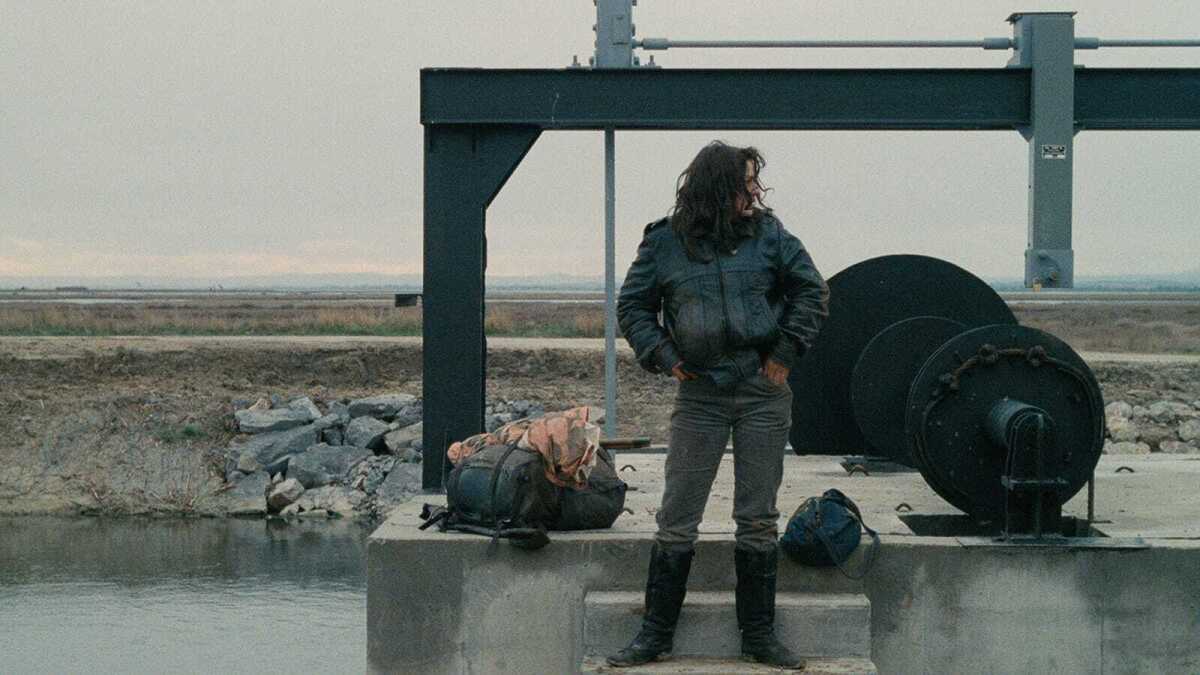
Sandrine Bonnaire in the 1985 movie “Vagabond.”
(Criterion Collection)
Though she became better known for her free-spirited, pixie-ish persona later in life, French filmmaker Agnès Varda was also capable of the bruising emotions of 1985’s “Vagabond,” arguably her greatest fiction feature and winner of the Golden Lion at Venice and the César for best actress for star Sandrine Bonnaire. Opening with the lead character found dead in a ditch, the film flashes backward to piece together her life from the memories of others, creating a fragmented portrait of an enigmatic young woman’s life.
Mezzanine will screen the film on Saturday at 2220 Arts + Archives, followed by a conversation between art critic Megan O’Grady and former Times staffer Carolina Miranda. Writing about the film in 1986, Sheila Benson said, “Just how Agnes Varda has kept ‘Vagabond’ from being a monumental downer is interesting, but she has. It is haunting. It is melancholy … but ultimately, beyond its central tragedy, it is an exhilarating film, the sort you leave burning to talk about with friends.”
A cartoon comes to life

Robin Williams and Shelley Duvall in the 1980 movie “Popeye.”
(Paramount Pictures / Getty Images)
It is one of the most deranged credit blocks imaginable: an adaptation of “Popeye” directed by Robert Altman, produced by Robert Evans, with a screenplay by Jules Feiffer, music by Harry Nilsson and starring Robin Williams and Shelley Duvall. When it was first released in December 1980, it was seen as too weird for kids and too naive for adults, but it has since been reconsidered as a unique snapshot of intersecting talents — a strange, wonderful, one-of-a-kind movie.
Vidiots will screen the film on Saturday afternoon with actors Paul Dooley and Donovan Scott, who played J. Wellington Wimpy and Castor Oyl. In our original 1980 review that is more positive than one might expect, Charles Champlin wrote, “Its difficulties arise not from a lack of ambition and innovation but from excesses of them.”
Neil Young + Devo = gloriously weird

Neil Young in the 1982 movie “Human Highway.”
(Shakey Pictures)
Neil Young’s place as a singer-songwriter and musician is unassailable — he’s an irascible, restless troubadour. But his sidebar work as a filmmaker, typically under the name Bernard Shakey, has had more sporadic and unpredictable output.
Young’s 1982 film “Human Highway” is probably the pinnacle of his work as a director, starring Young himself in an offbeat story of a small community in the shadow of a nuclear power plant. Dennis Hopper, Dean Stockwell, Devo and even former Times music critic Robert Hilburn all appear. Now Instant Image Hall will be screening the film on Saturday and Sunday along with a selection of Devo music videos in celebration of an exhibition at the MutMuz gallery.
After Young premiered a new cut of “Human Highway” a decade or so ago, I somehow found myself sitting across from him at a diner on a rainy midnight in downtown Toronto. (This job does have its moments.)
“My films are not super commercial, but they mean something to me,” Young said.
An Oscar-winning debut

Shirley MacLaine, Debra Winger and Jack Nicholson in the 1983 movie “Terms of Endearment.”
(Paramount Pictures)
Part tearjerker, part family drama and part comedy, 1983’s “Terms of Endearment” trademarks a certain bittersweet tone that is still just pure magic. The story of a mother (Shirley MacLaine) and daughter (Debra Winger) across many years of ups and downs in their relationship, the film was the feature debut for James L. Brooks as writer-director and won five Oscars, including three for Brooks. The Academy Museum will play the film in a new 35mm print on Sunday afternoon.
When the movie came out on 4K disc in 2023, I spoke to Brooks about it. He talked about how even though it does have moments of great emotional weight, it was intended to play with a lighter tone overall.
“The whole thing was to make it as a comedy,” Brooks said. “The whole thing was to clock laughs. You had to, in order to do it right. And of course, once the audience leaves and it has its afterlife, it’s a drama because people are watching it alone. But I swear to you, in the theaters it was a comedy.”
A ’90s noir ripe for rediscovery

Jason Patric, left, Bruce Dern and Rachel Ward in the 1990 movie “After Dark, My Sweet.”
(Kino Lorber)
Set in the Coachella Valley with the woozy feel of a day drunk and a sense of uneasy menace, 1990’s “After Dark, My Sweet” is an adaptation of the novel by pulp icon Jim Thompson, directed by James Foley.
Jason Patric, then only 23, stars as Kevin Collins, known as Collie, a former boxer who escapes from a mental institution and is now just drifting. He falls in with Fay (Rachel Ward), an enigmatic, lonely alcoholic widow, who in turn introduces Collie to a shady man known as Uncle Bud (a delightfully sleazy Bruce Dern). Soon Collie is ensnared in a plot to kidnap a sickly rich boy that immediately goes off the rails.
On Tuesday at Vidiots, there will be a screening of Patric’s personal 35mm print of the film — a gift he received some 20 years ago and has never watched before. (It is said to be in pristine shape.) Along with a video introduction from actor and filmmaker Alex Winter, there will be a Q&A afterward with Patric moderated by critic and scholar Travis Woods, who contributed a commentary track to a recent Australian Blu-ray release of the film.
Patric organized the screening as a tribute to director Foley, who died in May 2025 at age 71. “After Dark” landed in between Foley making “Who’s That Girl” with Madonna and the David Mamet adaptation “Glengarry Glen Ross.” Among his other credits are “At Close Range,” “Fear” and the last two “Fifty Shades” movies.
“He was a good friend of mine at the time,” says Patric on a recent phone call from Santa Monica. “I know this was his favorite movie and it was closest to him. It’s the only movie that he had actually written that he directed. And I thought the best way to do that is just to show the movie.”
Patric, who says Collie is his favorite character in a career that also includes “The Lost Boys,” “Rush” and “Your Friends & Neighbors,” was first given the script and in turn gave it to Foley; developed it further together, trying to retain the language of Thompson’s novel. (The screenplay is credited to Foley and Robert Redlin.)
“It’s really a subjective piece of filmmaking,” says Patric. “So as Collie’s figuring things out, the audience is figuring things out.”
In her original review of the film, Sheila Benson wrote that “Collie is one of those roles actors lust after, the damaged dreamer, maybe dumb, maybe dangerous, and Patric demolishes the conventions of the role with breathtaking skill.”
“After Dark, My Sweet” landed just ahead of the Tarantino-inspired crime movie boom of the mid-’90s, alongside such noir-influenced precursors as Dennis Hopper’s “The Hot Spot,” John Dahl’s “Kill Me Again” and Stephen Frears’ Thompson adaptation “The Grifters.”
“This is just such an exciting film to want to reintroduce to audiences,” said Woods in a call. “And to get the opportunity to see this film on the big screen, which most people haven’t had that opportunity for 36 years, it’s just one of those really cool, really only in Los Angeles cinematic moments.”
New this week

Argentinian director Lucrecia Martel, photographed at the Sunset Marquis in April.
(Jason Armond / Los Angeles Times)
- The unlikely duo of James Cameron and Billie Eilish co-directed a 3D concert film drawn from Eilish’s 2025 tour, “Billie Eilish — Hit Me Hard and Soft: The Tour (Live in 3D).” Film critic Amy Nicholson and pop music critic Mikael Wood traded their thoughts on the movie.
- Argentinian director Lucrecia Martel is among the world’s most accomplished filmmakers and the true crime tale “Our Land (Nuestra Tierra)” is her first documentary. Carlos Aguilar spoke to Martel about it.
- “Mad Bills to Pay” expands to multiple Laemmle venues after a weekend run in the Vidiots microcinema. Carlos Aguilar spoke to director Joel Alfonso Vargas about portraying the Dominican American community in the Bronx.