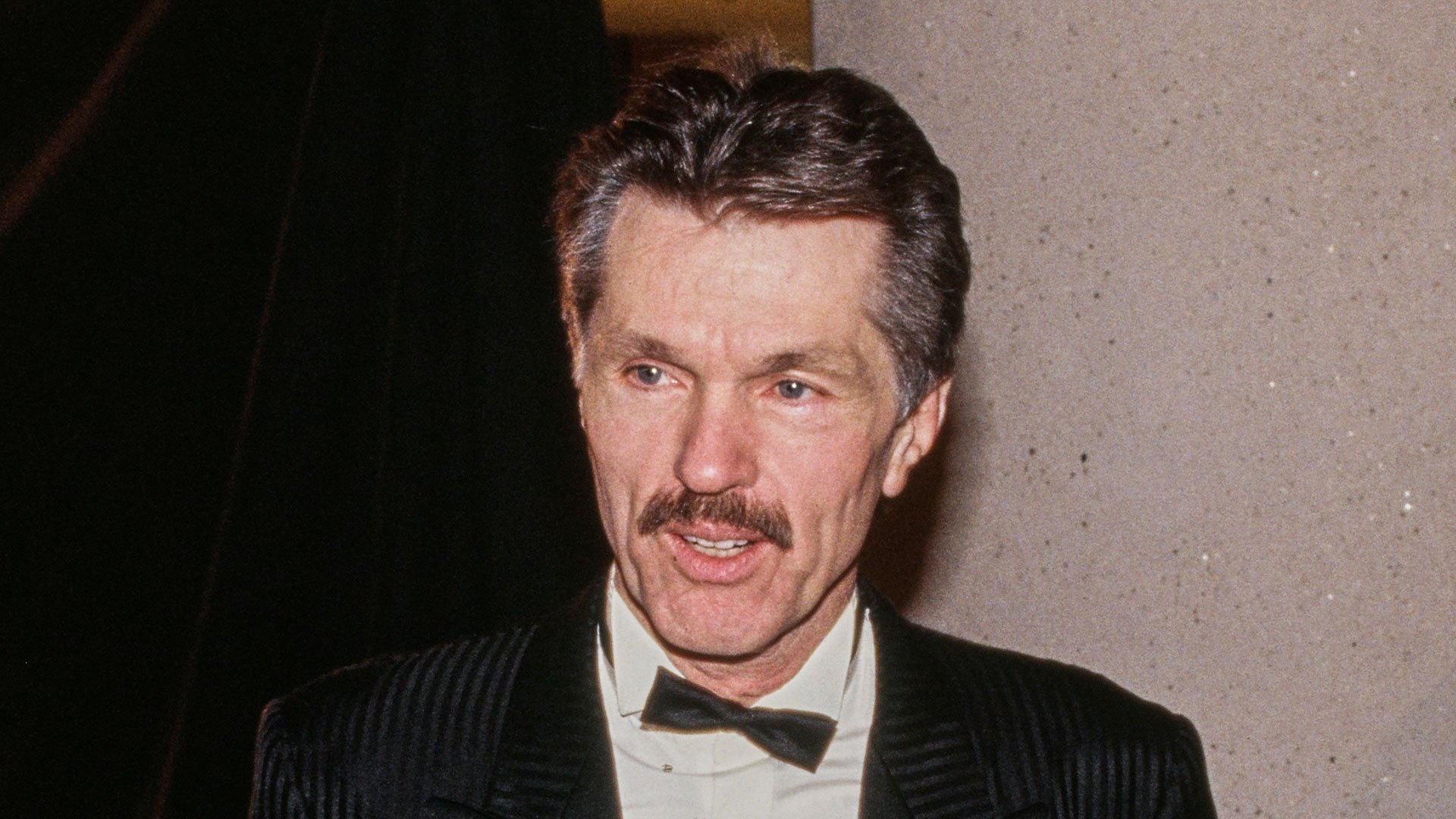



Dory Funk Jr., a pro wrestling icon and one of three members of the Funk family to be inducted into the WWE Hall of Fame, has died at age 85.
Marti Funk, Funk’s wife of 40 years, told Florida’s Ocala Gazette that her husband died Tuesday while in hospice care. No further details were given.
Born on Feb. 3, 1941, in Hammond, Ind., Funk was the oldest of Dory and Dorothy Funk’s two sons. Spending most of his childhood in Amarillo, Texas, Funk grew up admiring his father, a professional wrestler and promoter who once wrestled in Canada as a heel named the Outlaw who hailed from the fictitious location Double Cross Ranch. As wrestlers, Funk and his brother, Terry, often were billed as being from there as well.
“As a kid, I used to dream I could do all the things my father could do,” Funk said during a 2007 interview for World Wrestling Entertainment. “I wanted to be just like him.”
Funk played offensive and defensive line on the West Texas State University football team (now West Texas A&M) from 1959 to 1962 — he was inducted into the university’s athletics Hall of Fame in 1990 — and went straight into professional wrestling. His 50-plus years in the business included stints in a number of associations across the U.S. and Japan.
He was the National Wrestling Alliance heavyweight champion for more than four years uninterrupted (February 1969 to May 24, 1973). In 1986, Funk and his brother joined WWE (then known as WWF) as a team and defeated Tito Santana and Junkyard Dog at WrestleMania 2.
Funk’s involvement in wrestling also expanded into promotion. In addition, he and Marti owned and operated the Funking Conservatory, a wrestling school where he trained a number of future WWE superstars including Kurt Angle, Christian, Edge, the Hardy Boyz, Mark Henry and Mickie James.
“He was such a good guy,” Marti told the Ocala Gazette, “such a good guy!”
The Funk brothers were inducted into the WWE Hall of Fame in 2009. Dory Funk Sr., who died in 1973 at age 54, was inducted posthumously to the hall’s Legacy Wing in 2025. Terry Funk died in 2023 at age 79.
WWE chief content officer Triple H announced Funk’s death Tuesday afternoon on social media.
“From the Double Cross Ranch to the @WWE Hall of Fame, Dory’s style inspired countless performers in our industry” Triple H wrote. “Whether it was at WrestleMania 2, WCW, ECW, or the dozens of NWA-affiliated promotions, his travels across North America and Asia were a part of the early blueprint that helped build this business into a global phenomena.
“A hard-nosed and fierce competitor, his rugged in-ring style was only eclipsed by the decades he spent training athletes to perform in the squared circle he loved so much. My thoughts and those of the entire @WWE Universe are with his loved ones during this difficult time.”
Cassie Plummer left Coronation Street on Monday night but her exit has left behind a trail of mystery and now spoilers have revealed what happens next on the ITV soap
Cassie left Coronation Street on Monday night’s episode
Coronation Street spoilers have revealed what happens next following the sudden exit of Cassie Plummer. The former drug addict, played by Claire Sweeney, was introduced when the bosses of the long-running soap decided to completely rewrite history and install her as Tyrone Dobbs’s long-lost biological mum in 2023.
But in scenes that aired on Monday night, Cassie left Weatherfield – seemingly for good – as she chose to get in the car with Ross Wilkes when he offered her a lift to the train station. Introduced last month as the long-lost biological dad of Tyrone, Cassie knew he was trouble as soon as he turned up, but it was only when put under pressure that she revealed that he had paid her for sex when she was underage.
Ross has already made his mark as the latest villain to turn up in the Manchester backstreet, and viewers know that after striking up a relationship with Tracy Barlow (Kate Ford), he spiked her drink and put her in hospital but has let everyone think that Cassie was the one who did it. Cassie announced on Monday that she had got a job cleaning a cruise ship, and was heading to the train station.
Ross offered her a lift, and she accepted. But whilst in the car, Cassie threatened to go to the police about what Ross had done to her all those years ago. She then began to feel unsafe and tried to get out, but he locked the door and told her they were going “on a little drive.” That was the last time Cassie was seen, and Tyrone later announced to Ross that Cassie had left Weatherfield.
Earlier in the day, Fiz had presented Cassie with a photograph of Tyrone and the kids and an envelope full of cash, but at the very end of the episode, Ross took the photo from his pocket and created a mystery about just where Cassie had ended up.
Now, in scenes set to air this coming week, Ross tells Fiz and Tyrone he wants to move nearby, but Fiz quickly closes down the conversation.
Steve asks Ross where he dropped Cassie off, but Ross feigns ignorance until Steve reveals how he saw Cassie get into his car, forcing him to change his story claiming he took her to Piccadilly Station. Also, in scenes yet to air, Ross tells Hope to help herself to a tenner from his wallet but Hope finds something else which leaves Fiz suspicious.
Viewers have instantly become worried that Cassie did not make it to her new job at all, and are concerned that she might even be dead.
One fan wrote on X, formerly known as Twitter: “Oh s*** is Cassie dead???” and another said: “Cassie getting in the car with Ross, they’re gonna leave us hanging for months over what he’s done to her, I bet!”
A third wrote: “I well like Cassie I’ll be sad if she never comes back,” and, on Reddit, another fan said: ” Feel like he’s deffo killed her. But think they’ve done it this way so that they can bring her back again if they wanted to. “
In real life, actress Claire Sweeney, who found fame when she starred on Brookside, chose to leave so she could take on the role of Miss Hannigan in the current UK tour of the musical Annie, and replaced former Strictly Come Dancing star La Voix in the show in early July.
Claire has previously starred in other musicals like 9 to 5, Tell Me On A Sunday and Chicago. But she recently recently explained that she loved her time at Corrie but always wanted to take on the part of the villainous orphanage proprietress, who has previously been played on stage by the likes of her soap co-star Jodie Prenger, as well as Hi-de-Hi icon Su Pollard, the late Paul O’Grady and British acting legend Sheila Hancock.
She told The Mirror: “You’re part of a family at Coronation Street, you feel safe and protected and leaving is like stepping out into the big, wide world again. It feels like I’ve broken up with a boyfriend I’m still in love with. I’ve loved Corrie and leaving bears no reflection on the job, the people and the work.
“It was just that my phone pinged and it was the producer of Annie saying ‘right, do you want to do Miss Hannigan.’ I’d been hounding him for years for this part and I just thought – ‘if I don’t do it now, it might never come again.’ But I think it’s the hardest job I’ve ever had to leave and my exit is very sad; I had a little weep over my leaving scenes. I got quite emotional.”
BRITISH filmmaker Justin Hardy, who directed the sequel to his dad’s horror classic The Wicker Man, has died aged 61.
The director’s family said Hardy died on Friday – just weeks before his latest film premiered – after suffering a heart attack.
The filmmaker sadly passed away after suffering a heart attackCredit: PAFilming of The Wicker Man saw dad Robin sacrifice his family life for a film that performed poorly initiallyCredit: PA
In a statement the grieving family said: “Our family is devastated to share that Justin Hardy passed away last night.
“He was so full of life right to the end, and incredibly energised to be working towards premiering his latest film this month.
Sign up for the Showbiz newsletter
Thank you!
“We are all so proud of him and heartbroken he won’t be with us at his premiere.
“He was a man of family, of boundless creativity, and of devotion for everyone he held dear.”
Hardy studied history at Oxford University before going on to study film in Bournemouth and scriptwriting in California.
During his career Hardy directed series and films including The Bill, Princes In The Tower, Trafalgar Battle Surgeon, The Relief Of Belsen, Spanish Flu: The Forgotten Fallen and London’s Burning.
He was also nominated for an Emmy and a Bafta, and in recent years had been teaching screenwriting at University College London.
His brother, Dominic Hardy, said Justin would be remembered as someone “with an incredible appetite for life.”
In 2024 the brothers released the documentary Children Of The Wicker Man.
It covered their complicated relationship with their dad’s hit film, which initially bombed at the box office before becoming a cult classic.
Filming of The Wicker Man saw dad Robin sacrifice his family life for a film that performed poorly initially.
Before his death aged 86 in 2016 the legendary director of The Wicker Man – Robin Hardy – spoke publicly about his desire to complete trilogy after he released The Wicker Tree in 2011.
After he died, the brothers were contacted and asked about plans for the third film, which Dominic said they then saw as the “impetus to close the chapter on the films.”
The brothers then decided to wrap up their father’s film trilogy.
Released this month, Wrath Of The Gods was inspired by a concept discovered in a recently unearthed script written by Robin and stars Game of Thrones’ Francis Magee and Norwegian actress Christiane Schaldemose.
Dominic: “I really love writing projects like this and if I could write things like this for the rest of my career, that would be great.’”
Justin Hardy is survived by his wife Larissa, and children Sam, Ludo, Nico and Summer.
Wrath Of The Gods will premiere at FrightFest in Leicester Square on August 28.
Police said at least three people were killed several others were wounded in a shooting at an In-N-Out Burger in Twin Falls, Idaho on Saturday afternoon. Footage captured the suspected gunman firing several shots into a vehicle before he was killed.
At least three people are dead and more than 20 injured after a bomb exploded outside a restaurant in central Moscow. Russian authorities say a woman carrying an explosive device was stopped by a security guard before it exploded. It’s not clear who the target was.
Footage shows firefighters dousing the wreckage of a crashed tourist aircraft in southern Peru. Police said the plane was carrying 13 people when it went down while flying over the ancient archeological site of Nazca Lines.
Vincent Pastore, best known for playing gangster informant Salvatore “Big Pussy” Bonpensiero on HBO’s “The Sopranos,” has died. He was 80.
Pastore was found dead in his Bronx residence Saturday by a friend who did a wellness check after he had not been heard from for three days, his manager Steve Atterman confirmed to The Times. No cause of death was revealed.
While Pastore was best known for his time on the HBO drama starring the late James Gandolfini, he was often cast as an Italian American bad guy in other film and TV projects. His early credits include “Goodfellas,“ “Carlito’s Way” and “The Jerky Boys: The Movie.” He also appeared in the 1996 HBO TV movie “Gotti,” alongside future “Sopranos” co-stars Tony Sirico, Dominic Chianese and Frank Vincent.
A New York native, Pastore was born on July 14, 1946, in the Bronx. He fought in the Vietnam War and went on to graduate from Pace University with a degree in drama. He spent most of his young adulthood running bars and nightclubs in New Rochelle.
He didn’t get into acting until he was in his 40s in the late ‘80s at the encouragement of acting siblings Matt and Kevin Dillon. In a 1999 interview with The Times, Pastore offered his thoughts on why the brothers saw potential in him: “I guess because I looked like a gangster!”
“They used to live in a nearby town, and they used to come to my club a lot, and I became good friends with these guys,” Pastore said. “Kevin brought me down to meet his manager, and I had an interview. I took acting classes and some classes in college, but I didn’t have a clue how to break into film and the New York business. The agent gave me a guidepost, and I started doing some independents and a lot of theater. I started to study acting at 42!”
Pastore appeared in nearly 200 movies and TV projects, and twice in singing roles on Broadway (2007’s “Chicago” and 2014’s “Bullets Over Broadway” productions). But it was his role in David Chase’s 1999 drama “The Sopranos” that became his signature role.
Big Pussy was seminal to the show’s lore as Tony’s longtime best friend and trusted mob enforcer; his betrayal in becoming an FBI informant led to his murder and became one of the show’s most memorable scenes early in the show’s run.
Given his propensity to be cast as a mobster, Pastore was once asked whether he ever considered turning down a job because he thought it portrayed Italian Americans in a bad light.
“No, I haven’t turned any work down,” he told The Times. “The only time I turned work down is when I can’t do it because of ‘The Sopranos.’ I don’t think I am in a position [to turn down work] … when you got a daughter in grad school and you are paying her expenses, it’s pretty hard to turn a job down…You just hope the films are going to be good.”
Aug. 1 (UPI) — At least three people were killed and two injured in a shooting at an In-N-Out restaurant in Idaho on Saturday, police said.
Authorities in Twin Falls responded to reports of shots fired about 2:30 p.m. in an area that included multiple major retailers and a movie theater, NBC News reported.
Videos posted on social media showed a man wearing a black shirt and carrying a large rifle in the area, Boise State Public Radio reported.
The man reportedly shot the front windshield of a parked car and later walked into the In-N-Out drive-through.
Police Chief Matthew Hicks said it was a “very chaotic scene” and confirmed the shooter was dead.
“We have literally hundreds of people that were in some way, shape or form in the area of this restaurant at the time that are being interviewed right now,” he told reporters, BSPR reported.
In a statement, Twin Falls police said roads and a nearby bridge were closed to all residents and visitors while officers responded to the incident.
“We are working to try to ascertain his identity and the motivations behind [the shooting] and we’ll be able to figure that out in the next coming days,” Hicks told reporters.
The police chief added, “Today has been a very hard day here in Twin Falls,” NBC News reported.
Aug. 1 (UPI) — President Donald Trump on Saturday said he would push to codify into law his controversial $1.776 billion anti-weaponization fund if two senators continue to block the confirmation of his nominee for attorney general.
Sens. John Cornyn, R-Texas, and Thom Tillis, R-N.C., have opposed the confirmation of Acting Attorney General Todd Blanche for a permanent role in opposition to the fund.
Speaking to reporters at Camp David on Friday, Trump had admitted the fund was “dead” — but flip flopped in a statement the following day.
“If Senators Cornyn and Tillis, both upset because I wouldn’t Endorse them (they lost, and quit, respectively!), aren’t going to approve Todd Blanche, one of the most respected professionals, according to everybody, in the Country, to be the United States Attorney General, then I will keep Todd as Acting A.G., and push hard to get the Anti-Weaponization Bill, which takes care of those who have been so badly treated by the Crooked Joe Biden (and Obuma!) Administration (I get nothing, although I was treated horribly!), PASSED,” Trump said in a statement on Truth Social.
“Todd Blanche was a voice of reason!” he added. “It will immediately be back on the table, and I will get it done.”
The fund comes from a settlement, negotiated between Trump’s private attorneys and his Department of Justice, that would compensate people who feel they were unfairly targeted by the government, including Jan. 6 rioters.
The settlement would also include a provision that would shield Trump and businesses from IRS audits.
Blanche has said, at times, the anti-weaponization fund would not be moving forward.
But Cornyn and Tillis have asked Blanche for written assurances from the DOJ that the fund was gone for good, which he has failed to produce.
“Despite comments as late as yesterday that the fund is dead, President Trump clearly intends to resurrect the payout pot for punks either by inappropriately establishing another bogus fund or pushing Congress to vote for a bill that the majority of Republicans in the Senate would be against,” Tillis said in a statement on X.
“It’s unfortunate that Todd Blanche, who I consider qualified for the job, will not be confirmed because of this reversal,” the senator added. “Hopefully, we can resolve this by Tuesday.”
THE Sopranos star Vincent Pastore has been found dead at the age of 80.
Cops have launched an investigation into his death, as tributes flood in for the well-loved actor.
Vincent Pastore, who is best known for his role in The Sopranos, has died at his Bronx homeCredit: GettyA neighour his thought to have found Vincent’s bodyCredit: Getty
Vincent played a number of mobster characters in film and TV in a long and illustrious career.
He was found dead on August 1 in his Bronx home by a neighbour, according to sources.
Sign up for the Showbiz newsletter
Thank you!
Vincent had not been heard from in three days before being discovered on Saturday, reports say.
The circumstances surrounding his death are being investigated.
Cops are investigating the star’s deathCredit: Getty Images – GettyVincent also became something of a reality TV star later on in his extensive careerCredit: PA:Press Association
Pastore’s manager Robert Attermann said in a statement: “I had the privilege of representing Vinny for more than 30 years, long before The Sopranos made him a household name.
“To the world, he will always be remembered as the unforgettable ‘Big Pussy,’ but to those of us who knew him, he was so much more.”
He added: “Vinny was one of the kindest, most generous people I have ever known. “He treated everyone with warmth and respect, never turning down a fan who wanted a photograph or an autograph.”
Vincent’s manager continued saying that Pastore “genuinely appreciated the people who supported him and always made them feel valued.
“He loved being an actor. He was passionate about his craft and was always encouraging, respectful, and generous with young actors, taking the time to offer guidance and support whenever he could.”
Atterman wrote that losing Pastore was “deeply personal.”
“Over more than three decades, I had the honour of watching not only his remarkable career but also the incredible person he was,” he went on. “I will miss his friendship, his loyalty, his humour, and his heart.”
He ended his personal statement by saying: “My deepest condolences go out to his family, friends, colleagues, and the countless fans whose lives he touched.
“He leaves behind a legacy that extends far beyond his memorable performances. He will be greatly missed and never forgotten.”
Vincent was born in the Bronx, New York City, on July 14, 1946.
He fought in the Vietnam war before going to graduate with a degree in drama from Pace University.
Vincent had a number of small parts in films such as Goodfellas, Carlito’s Way and Men of Respect in the 1990s.
He came to wider attention though in The Jerky Boys: The Movie in 1995 and the HBO TV movie Gotti, the following year, where he appeared alongside future Sopranos co-stars Tony Sirico, Frank Vincent, and Dominic Chianese.
Vincent though became a household name in David Chase’s 1999 drama The Sopranos, where he played Big Pussy, Tony Soprano’s, played by James Gandolfini, longtime best friend and mob enforcer turned FBI Informant
His extensive credits also include Mickey Blue Eyes, Shark Tale, Once Upon a Time in Brooklyn and Guy Ritchie’s Revolver.
Vincent also made a number of appearances on reality TV shows, including Celebrity Apprentice, Celebrity Family Feud, Dancing With the Stars, Shark Tank and Celebrity Fit Club.
WASHINGTON — President Trump said Friday that his $1.8 billion anti-weaponization fund is “dead” while also continuing to defend it, further complicating his administration’s negotiations with two Republican senators who are blocking his attorney general nominee in protest.
Trump told reporters at Camp David on Friday morning that administration officials had “agreed not to have a fund” that compensates his political allies, yet made clear that he disagrees with that decision.
The comments came hours after an early morning social media post in which Trump said people who had been prosecuted by the Justice Department — many of them for their involvement in the violent Jan. 6, 2001, attack on the Capitol — “are suffering still, many ruined, and I felt that they should be given compensation for what has been done to them.”
Trump’s reluctant declaration that the fund won’t be created came as Republican Sens. John Cornyn of Texas and Thom Tillis of North Carolina, both members of the Senate Judiciary Committee, say they won’t support Todd Blanche’s nomination for attorney general until they see that promise in writing. They have been working for weeks with the White House and Blanche, who is now the acting attorney general, to produce a document to that effect, but both senators have said they aren’t satisfied so far.
“The President made it clear today that the so-called Anti Weaponization Fund is still alive, which is exactly why we are attempting to formally end it,” Tillis said after Trump’s initial social media post.
Trump said in his post that Blanche should be immediately confirmed and is a “pawn in this whole thing.”
Cornyn, Tillis want promises in writing
Blanche said at a hearing two months ago that the anti-weaponization fund would not move forward after Republican senators revolted and held up an immigration funding bill.
But Tillis, who is retiring when his term ends in January, and Cornyn, who lost reelection this year after Trump endorsed his primary opponent, said they want to ensure that the White House doesn’t reverse course, especially as Trump continues to argue that a fund is needed.
The Justice Department has provided the senators with language that says Blanche’s May 18 order establishing the “Anti-Weaponization Fund” is “rescinded and shall have no force or effect,” according to a document reviewed by The Associated Press.
Cornyn and Tillis have said they also want some clarifications on a separate piece of the settlement that would grant Trump and members of his family immunity from tax audits. Cornyn said this week that it was his understanding that the audits could extend to more than 100 different Trump organization subsidiaries into the future.
“Todd Blanche said it was limited to the parties to the litigation — and it was retrospective, not prospective,” Cornyn said. “And all we’re doing is asking them to put that in writing.”
Blanche nomination is delayed in the Senate
The Judiciary Committee postponed a vote on Blanche’s nomination that had been scheduled for Thursday morning after Tillis and Cornyn said they needed more from the administration before they could provide the necessary votes.
After the meeting was delayed, Trump said in a social media post that he might pull Blanche’s nomination and resubmit it after Cornyn and Tillis leave office next year. But the two sides continued to negotiate through Thursday afternoon, when Blanche, Cornyn and Tillis met on Capitol Hill.
On Friday, a person familiar with the negotiations said talks had been positive, but the senators were still awaiting a new offer from the Justice Department. The person requested anonymity to discuss the private negotiations.
The two senators have repeatedly said the Justice Department seemed interested in reaching an agreement, but the White House wouldn’t budge even to aid the confirmation of Trump’s loyal former personal attorney, who has aggressively pursued the administration’s priorities as acting attorney general.
“I think as far as Blanche and the Department of Justice, we were pretty much on the same page,” Cornyn said Thursday. “But then when the president got wind of it, he wasn’t willing to go along with it.”
Tillis said Blanche “has been forthright, thoughtful and patient” but attributed the holdup to an “incompetent personal advisor” to the president, even as Trump himself continued to advocate for the fund.
Behind the scenes, Trump legal adviser Boris Epshteyn is being blamed as an obstacle to an agreement that would let Blanche move forward, according to three people who have direct knowledge of the discussions and requested anonymity to discuss them.
Saying the AP’s “sources are wrong,” White House communications director Steven Cheung said “anyone trying to assign blame to the President or his team has no earthly idea of what is going on and clearly is trying to deflect from the issue at hand — Todd Blanche will be an exceptional Attorney General and he should be confirmed immediately.”
Also on Friday, Trump’s attorneys notified a court it would appeal a judge’s scathing ruling that characterized the settlement of the president’s lawsuit against the IRS as an improper exercise in self-dealing. The judge in her order earlier this month referred one of Trump’s attorneys for potential disciplinary action and criticized Blanche’s involvement in the settlement, given his prior representation of Trump.
Blanche has said he disagrees “with the judge’s insinuations” about him.
Settlement fund could have benefited Jan. 6 rioters
Even as they are usually deferential to Trump, a number of Republican senators have expressed strong objections to the settlement.
“The criminals who assaulted police officers and defiled our nation’s Capitol are not ‘great American patriots’ who are ‘victims of government abuse,’” Tillis said, echoing Trump’s comments about the rioters who could potentially have received payouts. On his first day back in office, Trump pardoned more than 1,500 people who had been charged in the attack.
Republican Sen. John Kennedy of Louisiana said Thursday that the majority of Senate Republicans aren’t comfortable with the settlement fund.
“Blanche said it’s dead, and he testified that it’s not coming back,” Kennedy said. “But for whatever reason, somebody didn’t want to put it in writing.”
Jalonick, Kim and Richer write for the Associated Press. AP writers Eric Tucker and Lisa Mascaro contributed to this report.
Netflix and AMC Global Media, the network that originally aired the zombie series, inked a new five-year co-streaming deal, according to a press release on Thursday. Both companies will be able to show the original “The Walking Dead” series and its six spinoffs on Netflix and AMC+. The deal is valued at $500 million, AMC Global Media said in its second-quarter earnings report.
“This deal creates a global destination for this universe — all shows, all episodes — making the franchise more accessible than ever to fans around the world. In addition, the co-exclusive agreement allows us to bring the original series to AMC+ for the first time early next year,” Kristin Dolan, the company’s chief executive, said in a statement. “This agreement is a fantastic result for our companies, for the fans and for this timeless IP.”
AMC Global Media is renting the franchise, not selling it. The five-year licenses run separately for each show, with start dates that vary based on territory and the expiration of existing streaming deals. The rights to “The Walking Dead” revert to AMC Global Media when the term ends.
The company also keeps global rights to run the “Walking Dead” universe on its own services throughout. Dolan told investors the agreement would supply what she called “a meaningful source of cash flow for years to come,” framing it as evidence that the company’s library still commands premium prices even as its cable business shrinks.
The agreement will extend the franchise’s reach on Netflix in places like the U.K., Italy, Australia and New Zealand — making episodes available beginning in 2027.
“The Walking Dead” premiered on the AMC network in 2010, introducing audiences to the high-stakes world of a zombie apocalypse. In 2011, the series began streaming exclusively on Netflix in the U.S. The show aired for 11 seasons and became one of AMC’s most influential shows. Other popular programs from the network include “Mad Men” and “Breaking Bad.”
“Audiences have discovered and loved ‘The Walking Dead’ on Netflix for nearly 15 years and the show continues to attract new fans,” Lori Conkling, Netflix’s vice president of licensing, said in a statement.
The deal landed alongside a rough quarter. AMC Global Media reported second-quarter revenue of $547 million, down 9% from a year earlier, and a loss of 51 cents a share, compared with 91 cents in profit in the same period last year. Operating income fell to about $16 million from $64 million.
Netflix’s second-quarter earnings showed mixed results. The company‘s revenue rose 13% to $12.6 billion; its net income was $3.4 billion, up 9% from a year ago; and its advertising business is on track to reach $3 billion in revenue this year, double the amount in 2025.
The same filing offered some details on Netflix’s acquisition of InterPositive, the AI post-production startup founded by Ben Affleck, for $587 million in cash in March.
Deadly clashes reported in Pakistan-administered Kashmir amid first round of voting for regional elections on July 27.
Published On 30 Jul 202630 Jul 2026
Watchdogs have raised concerns over mounting reports of deadly clashes during regional elections in Pakistan-administered Kashmir, where a banned activist group has boycotted the vote and staged protests.
The clashes between police and protesters earlier this week killed more than 30 people in the region, according to the leaders of the Joint Awami Action Committee (JAAC).
Recommended Stories
list of 3 itemsend of list
In a video statement on Wednesday shared by Arab News Pakistan, JAAC committee member Sardar Umar Nazir claimed 20 of the group’s supporters had been killed during a march on Monday, when the first round of voting took place.
He listed reports of at least 10 other protesters being killed the following day in the towns of Rawalakot, Mirpur and elsewhere, including during sit-ins.
“Our demand was peaceful, it was peaceful, we tried to keep it non-violent and bullets were fired at it,” said Nazir in the video statement.
Pakistani authorities said a member of the security personnel was killed and five more were injured in clashes on Monday.
Rights group Amnesty International called the reports of lethal force against protesters in the area “disturbing” and urged an investigation.
Pear Pandya, a senior analyst at conflict monitor ACLED, said the violence in Pakistan-administered Kashmir “is bound to overshadow the legitimacy of the entire electoral exercise”.
Monday’s first-round vote – covering the districts of Mirpur, Kotli and Bhimber – will be followed by two more rounds on August 2 and August 10.
Pakistan’s primary governing party, the PML-N, won nine out of the 13 seats that were up for election on Monday.
No justification to ‘mete out violence’
JAAC was banned by the local government under “anti-terrorism laws” in June, causing deadly protests to erupt in Pakistan-administered Kashmir.
Banking, roads and internet services have largely been disrupted since then, hindering the flow of information.
Pakistani officials have justified the crackdown by alleging that armed and India-backed fighters joined the Kashmiri protesters. India has rejected similar accusations in the past.
Amnesty has called the ban on JAAC unlawful and said it does not provide justification for authorities to “mete out deadly violence against protesters”.
The rights group has also urged Pakistani authorities to ”restore all communications access and allow media and independent observers into the area”, its acting regional director for South Asia, Isabelle Lassee, said.
JAAC supporters say the seats are used by major Pakistani political parties to tip the composition of the local parliament in their favour with those who mostly live outside the region.
To form a regional government, the PML-N would likely need the support of some of the 12 representatives, said Hasan Askari, a political analyst.
“But when their government is dependent on those 12 controversial seats, how would it be able to find a solution for this issue?” Askari told the Reuters news agency.
Even among the candidates that did not boycott the vote on Monday, the results were contested. Parties accused each other of ballot box stealing and vote rigging.
Kavinsky, the French electronic musician and DJ whose moody single “Nightcall” scored the hit film “Drive,” has died. He was 50.
French newspaper Le Figaro and TV station BFM reported that Kavinsky, born Vincent Belorgey, died from a suspected stroke. Paris prosecutors investigated and found “no suspicious elements,” they said.
Kavinsky was a defining act of the Paris electronic scene of the 2000s and 2010s, whose neon-smeared synths and noirish atmospheres lent themselves to L.A. freeways and Montmartre nightclubs alike.
Adopting a droll persona — a red-eyed electronic producer who returned from the dead after a Ferrari crash — Kavinsky was a major figure in the second wave of the “French touch” dance scene.
His popular breakthrough came with “Nightcall,” a collaboration with CSS’ Lovefoxxx and Daft Punk’s Guy-Manuel de Homem-Christo. The song was a propulsive theme of Nicolas Winding Refn’s 2011 film “Drive,” a brutal and romantic revenge thriller beloved for its slinky, retro-futuristic soundtrack. Kavinsky performed the song to close out the 2024 Paris Olympics, performing with the French band Phoenix and the Belgian singer Angèle.
While he only released two studio LPs, including the 2013 singles collection “OutRun” and “Reborn” in 2022, he was influential to major acts that came after him. The Weeknd, who sang on an edit of Kavinsky’s “Odd Look,” wrote on X: “So heartbreaking to hear the news. An inspiration to so many, including myself. I will continue to honor your name and your music. Rest easy Kavinsky.”
French President Emmanuel Macron also wrote a tribute on Instagram, calling Kavinsky an artist France could be proud of forever.
Seven people, including two children, have died during a Russian missile and drone attack on Ukraine, according to local officials.
President Volodymyr Zelensky warned on Wednesday that Russia had been preparing for a “massive attack”, urging people to heed air raid alerts.
In the early hours of Thursday, the Ukrainian military reported multiple missile and drone strikes around the country.
The attacks come after Zelensky met US President Donald Trump in Washington DC this week to urge the US to grant Ukraine a licence to produce Patriot interceptor missiles.
Two girls, aged 5 and 12, were among the six killed in a village near the central Ukrainian city of Kryvyi Rih when a ballistic missile hit a private house, a local official said.
Eight more people were injured, including two children, the official added, noting that the number of casualties could rise.
In Kyiv, one person died and fires broke out in three non-residential buildings overnight, the capital’s mayor Vitali Klitschko wrote on Telegram.
Explosions were also heard in Lviv, its mayor Andriy Sadovyi said, reporting that residential buildings had been damaged.
Betye Saar, a Los Angeles artist who transformed collections of bigoted bric-à-brac — Sambo dolls, ceramic mammies and crude renderings of pickaninnies — into potent works of assemblage that mined the searing history of race in the United States, and whose works influenced generations of artists, has died. She was 99.
Saar died in her sleep — just a few days short of her 100th birthday — in Los Angeles, her longtime gallerist Julie Roberts at Robert Projects said. Saar’s death was confirmed by her publicist Hannah Gottlieb-Graham.
“Betye Saar was one of the greatest artists of our time, and it has been an immense honor to work with her for nearly 20 years,” Roberts said. “Her singular vision transformed the course of contemporary art, and her legacy will continue to inspire generations of artists, scholars, and audiences around the world.”
A diminutive woman with a low-key manner that belied a steely resolve, Saar was known for combing garage sales, flea markets and junk piles for objects that she employed in collages and assemblages large and small. These explored difficult aspects of American history — including slavery and Jim Crow — but also touched on more personal themes of family, memory, magic and spirituality.
“My work has to do with recycling,” she told a documentary crew in the 1970s. “Each item I collect has a certain energy from its previous function that carries over into its new use.”
Artist Betye Saar in her Laurel Canyon home in 2016.
(Gina Ferazzi / Los Angeles Times)
In a 1984 profile, Times art writer Suzanne Muchnic described Saar as an artist who used found objects in a way that “draws on the power of mystery, the hurt of discrimination and the authenticity of individual vision.”
As Saar’s 100th birthday approached, her work and its groundbreaking importance were celebrated afresh in a slew of articles, including two recent profiles in The Times. As she approached the momentous milestone, Saar appeared more interested in creating new art than in dissecting her legacy. “That’s what art is,” she told The Times in an interview in late June. “Making something where there was nothing.”
Saar first rose to prominence in the 1970s, after crafting a small assemblage — roughly the size of a shoebox — that featured at its center a stereotypical Black mammy figurine bearing a rifle in one hand and a grenade in the other. The piece was first shown at the Rainbow Sign, a community center in Berkeley that was located near the headquarters of the Black Panthers.
The artist had begun her professional life as a designer of greeting cards and home accessories. But 1972’s “The Liberation of Aunt Jemima,” as the assemblage was called, catapulted her into the center of the Black Arts Movement and connected her with a broader tradition of assemblage in California and the art world at large. Three years after its creation, she had a solo exhibition at the Whitney Museum of American Art in New York. Decades later, activist Angela Davis credited “The Liberation of Aunt Jemima” with spurring the Black women’s movement.
“It’s like they abolished slavery, but they kept Black people in the kitchen as mammy jars,” Saar said in a 2015 interview. “I had this Aunt Jemima, and I wanted to put a rifle and a grenade under her skirts. I wanted to empower her. I wanted to make her a warrior. I wanted people to know that Black people wouldn’t be enslaved by that.”
In June 2020, in the wake of the uprisings following the murder of George Floyd, Quaker Oats announced that it would retire the Aunt Jemima brand. Saar took to Instagram with an image of her famous work and a message: “She’s liberated! Finally at long last! And it’s about time!”
“Liberation” now resides in the collection of the Berkeley Art Museum and Pacific Film Archive, not far from where it was first shown.
Betye Saar was born Betye Irene Brown in L.A. on July 30, 1926, the eldest of Jefferson Maze Brown and Beatrice Lillian Parson‘s three children. Her father, with whom she was close, died when Saar was about 5. And shortly thereafter, Parson relocated the family to Pasadena to live with her maternal aunt, Hattie Parson Keys. (Years later, Saar created a series of works in honor of Keys, employing objects that her aunt had left behind — something she would do for other family members as well.)
Saar’s parents weren’t artists, but art was in the air. When she was a child, her mother encouraged her to sew and make crafts. And, in the summers, she spent time at the home of her paternal grandparents in Watts, where she saw Simon Rodia building the Watts Towers and was struck by his use of materials.
“The one I find the most amusing is the corn cob,” she told the podcast “The Modern Art Notes” in 2016. “He had a piece of space with wet cement so he just put the corn cob in there. And I just love the kind of freedom to make the piece. Anything can go in there.”
After graduating from high school, Saar spent two years at Pasadena City College before transferring to UCLA in 1947. She majored in design, figuring that she would become an interior decorator — and, for a time, she did indeed work in that field, teaming up with Curtis Tann to form a cleverly named studio called Brown and Tann. Operating out of Tann’s home, the company produced an array of decorative and functional objects, including bowls, ashtrays and jewelry.
To market their goods, they turned to an informal network of African American artists, staging pop-up exhibitions in people’s homes and in other impromptu locations. In 1951, the pair was featured in Ebony magazine.
It was through that circle that she met a ceramicist of German American descent by the name of Richard Saar. In 1952, they married. The following year, their daughter Lezley was born. Two other daughters followed: Alison in 1956 and Tracye in 1961. (Lezley and Alison are now respected artists in their own right. And, in fact, on more than one occasion, all three women have shown their work together, most recently at the Museum of Art & History in Lancaster in 2018.) In 2024, the Equal Justice Initiative Legacy Gallery installed Saar’s “Seeking Secrets of Destiny” alongside her daughter Alison’s sculpture “The Beckoning.”
Betye Saar, flanked by her daughters, stands before a painted brick wall.
(Carolina A. Miranda / Los Angeles Times)
In 1962, the Saar family moved to a rambling hillside home in Laurel Canyon, then a very rustic part of L.A. It put them in a hotbed of hippiedom right as the 1960s got rolling.
“Down the road was Frank Zappa,” Saar recalled in one interview. “There weren’t that many houses. We had the long skirts and long hair, and it was very casual. You’d go to a love-in or a concert.”
“We were as hippie-ish as hippie could be, while still being responsible.”
By the late ‘60s, she and Saar had divorced. But she remained in Laurel Canyon, where she would live and work until the end of her life.
Saar came to art almost by accident. In the late 1950s, she enrolled at Cal State Long Beach to pursue a master’s degree so that she could teach. But a stroll through campus led her past the university’s printing department.
“I walked past the print workshop and I was like, ‘Heyyy!’ ” she later recalled.
The master’s degree never happened. Instead, she poured herself into printing.
“I loved making prints,” she recalled. “The move into fine art, it was liberating. It gave me freedom to experiment.”
A pair of other, longer journeys, also proved formative.
There was a trip to Chicago’s Field Museum, where she immersed herself in the institution’s extensive collection of African art, followed by a trip to Haiti in the early 1970s. Saar was drawn to the Caribbean nation because of her interest in voodoo and magic — and the power that these could confer on inanimate objects.
“In the early 1960s I began going to coffee houses and they’d have books on the occult,” she told the New York Times in 1978. “I was attracted to signs and diagrams of alchemy and palmistry, and I began to use them in my prints. I also haunted second-hand and junk stores, and I started to frame my prints in old window frames.”
But it was a visit to an exhibition of the work of Joseph Cornell at the Pasadena Art Museum (now the Norton Simon Musuem) that inspired her to take a three-dimensional turn in her work. Saar was moved by the surreal qualities of the New York artist’s intimately scaled assemblages, which were often presented in small boxes.
“I immediately started collecting stuff after I saw that show,” she told the L.A. Times in 2016. “I started going to yard sales and estate sales.”
During the ‘60s and ‘70s, she took on a series of part-time jobs to provide for her children, designing costumes at a cultural center and teaching at area art schools. These provided her with necessary income, but also allowed her enough time to make work — which she often did at the kitchen table.
“Art comes from the heart and the head,” she once said. “You don’t need to have a separate space in which to make it.”
Plus, art gave Saar a crucial political voice at a time of the civil rights and Black power movements. “If you are a mom with three kids, you can’t go to a march,” she once stated, “but you can make work that deals with your anger.”
“The Weight of Betrayal,” 2015, by Betye Saar.
(Brian Forrest / Roberts Projects)
In her assemblages, she incorporated symbols that channeled dark episodes of U.S. history and African American struggle: the schematics of slave ships, the hackneyed images of vintage kitsch and the cruel sobriquets used by white supremacists to describe Black children.
At first she was apprehensive about using this type of imagery in her work. “Blacks were ashamed of those derogatory images,” she told the New York Times. “I like to think I recycled those images from negative to positive.”
But there was power in those images — and Saar knew just how to harness it.
She would go on to deploy these tropes in myriad ways throughout her career — in particular the stereotypical figure of the Black mammy.
This included one particularly potent work: a glass bottle featuring the visage of a smiling mammy, which she transformed into a Molotov cocktail. The piece, which for decades had been in a private collection, reappeared in the traveling exhibition “We Wanted a Revolution: Black Radical Women, 1965-85,” which went on view at the California African American Museum (CAAM) in 2017.
“Historically, the mammy was the ultimate image of Black female servitude in the American psyche,” wrote historian Steven Nelson in the catalog that accompanied a 2017 exhibition of Saar’s work at the Craft Contemporary (then known as the Craft & Folk Art Museum). “She was kind and giving. She cooked and cleaned and did the laundry. She took care of the children. She was harmless.”
By arming her mammies with revolvers, rifles and bullets, Saar turned a symbol of servility into one of militancy and power.
“Liberation of Aunt Jemima: Cocktail,” 1973, shown at the exhibition “We Wanted a Revolution” at CAAM in 2017.
(Jonathan Dorado, Brooklyn Museum / Betye Saar, Roberts Projects)
Her work also frequently touched on the personal: family, dreams, magic and the body (particularly the Black female body). In the process, she influenced a younger generation of artists, key figures such as Houston Conwill, Senga Nengudi and David Hammons.
“You can really see the impact she had on them,” said Kellie Jones, a scholar and independent curator who organized “Now Dig This!: Art and Black Los Angeles 1960-1980” at the Hammer Museum in 2011. “She had this multimedia practice. It was about Africa, but it was about the world. She has works with Mexican milagros, she has titles in Spanish, she at certain points has Asian influence and Haitian influence. She was really looking at the globe. She was a person in the world, and she really modeled that for people like Hammons and Conwill and Nengudi.”
Saar’s work resides in the permanent collections of more than 80 international museums, and in recent years, she was the subject of solo shows at the Museum of Modern Art in New York, the Prada Foundation in Milan and the Scottsdale Museum of Contemporary Art in Arizona (which hosted a retrospective).
In L.A., she had regular exhibitions at her Culver City gallery Roberts Projects, as well as one-woman shows at CAAM and the Craft Contemporary. In 2019, a small but potent show at the Los Angeles County Museum of Art explored the ways in which her drawing process factored into her assemblage work. But a full retrospective at one of her hometown’s major museums eluded her.
Saar told The Times that she didn’t let it bother her: “I’ve always done what I did and never felt I was competing with what was going on.”
An installation view of “Mojotech,” 1987, by Betye Saar at the Scottsdale Museum of Contemporary Art.
(Tim Lanterman / Scottsdale Museum of Contemporary Art and Roberts Projects)
If anything, she competed only with herself.
Well into her 90s, she continued to get up every day to craft assemblages out of the objects she had amassed in her studio. At 96, she scoured the Huntington Library gardens for a commissioned installation she called a “full-circle” project.
“I used to come to the Huntington with my mother when I was a child. She loved to garden, especially African violets, and she passed that love of plants and nature on to me,” Saar told the New York Times Style Magazine in 2024.
That love is palpable in “Drifting Toward Twilight” and its accompanying documentary, which sees Saar fawning over the orange tint of sloughed bark and the mystical qualities of garden scraps.
“Even in death those things can be really beautiful,” Saar said in the short documentary.
After working with a 17-foot canoe as a centerpiece for the Huntington exhibition, Saar told Curate LA that she felt compelled to return to small-scale pieces. The result was her 2024 Roberts Projects exhibit, “Betye Saar: New Work,” an objet trouvé medley in bronze and gold hues.
“At first, the new works were more nostalgic, with vintage photos and female ephemera, like gloves and such,” Saar said. “Then I brought in the tall ship bookends and African masks, and the works moved in a more ancestral and political direction.”
Even her grandson’s discarded computer parts made a cameo, a testament to Saar’s uncanny ability to mine inspiration from the most mundane objects.
“The worst problem for an artist is having nothing to say,” she once said in an interview. “I just have so many ideas. … Look at things that are important to you, what’s happening in your life. If you have that, you never run out of ideas.”
With her centennial on the horizon, Saar in 2025 formed the Betye Saar Legacy Group, a committee of her trusted curators and collaborators charged with preserving her vast archive and keeping her name fresh in the minds of new generations of artists.
A Saar biography penned by Zoé Whitley, who co-curated “Soul of a Nation: Art in the Age of Black Power,” is expected in 2027.
Saar is survived by her daughters Lezley, Alison (both artists) and Tracye (a writer), and her grandchildren Kyle Leeser, Maddy Inez, Sola Saar, Gen Saar Agustsson, Spencer Saar Cavanaugh, Megan Cavanaugh
Times staff writers Malia Mendez and Jessica Gelt contributed to this report.
German police have shot dead the suspect wanted for the car ramming attack on Berlin’s Pride march.
Abdul Ballout, a German citizen with Lebanese roots, was killed as he attacked officers with a bladed weapon, police reported late on Sunday. Officials have reported that all indications point to a “Islamic terror attack”.
Ballout was shot following a search that lasted nearly 24 hours. He was the main suspect in the attack that took place on Saturday evening, in which a van drove into a crowd at the Berlin Pride LGBT event.
The confrontation occurred in the German capital’s Spandau district. Police said that he died despite efforts to resuscitate him.
“Around 6 p.m. (1600 GMT), the suspect involved in yesterday’s attack in Tiergarten was located at an allotment garden complex in Spandau,” Berlin police wrote social media.
“According to initial findings, he ran towards officers while armed with a bladed weapon; police… subsequently opened fire. Despite immediate resuscitation efforts by the Berlin Fire Department, he died at the scene.”
Officials say 76 of the roughly 179 people believed to have been aboard survived, and 53 bodies have been found so far.
Published On 23 Jul 202623 Jul 2026
The expected death toll from Guyana’s ferry disaster over the weekend has climbed to around 100, with the authorities facing mounting pressure to explain how the country’s worst maritime disaster in decades occurred.
Officials said on Tuesday that 76 of the roughly 179 people believed to have been aboard survived, while 53 bodies have been recovered as divers continue searching for the remaining missing.
Recommended Stories
list of 3 itemsend of list
Families have gathered in the northern town of Charity, waiting for news of loved ones still unaccounted for.
“I know my baby is in that boat,” said Samantha Ramin, who lost two of her three children.
The body of her young daughter has been found, but her baby boy is still missing.
“I know he is down there. I know he is down there,” she said. “I want to see them find my baby.”
The 87-year-old vessel, MV Barima, left Georgetown for Port Kaituma on Saturday but began taking on water and capsized off the Essequibo coast. Although its manifest listed 133 people, authorities now believe as many as 179 were aboard.
Anger has grown over the length of time it took to rescue survivors, some of whom told reporters they spent hours stranded in the water.
Passengers have also alleged the ferry was dangerously overloaded with people and heavy cargo, including engines, vehicles, fuel containers and commercial goods. One survivor said the boat was more crowded than on any of his previous trips, describing cargo packed tightly below deck.
Anger has grown over the length of time it took to rescue survivors, some of whom told reporters they spent hours stranded in the water [Juan Edghill/Reuters]
Survivors also allege the ferry suffered engine trouble shortly after departure but that the crew attempted repairs at sea rather than turning back, and that concerns about water entering the vessel were dismissed by crew members as routine.
Government officials say the ferry was actually under its capacity limits for both passengers and cargo, but acknowledge that conflicting accounts make it too early to draw firm conclusions. The head of the Maritime Administration Department said a full investigation is needed to establish facts such as how the vessel was loaded and whether supervisory staff acted properly.
Prime Minister Mark Phillips said Tuesday that the government has nothing to hide and pledged that anyone found responsible – including for negligence or criminal wrongdoing – will face legal consequences.
Police have already detained the rescued captain, along with at least one other crew member. Both reportedly tested positive for marijuana.
Asked why such an old vessel remained in service, officials said a US$12.7 million replacement ferry purchased from India was awaiting the completion of a special pier at Port Kaituma. The MV Barima last underwent major repairs in 2024 and had additional maintenance scheduled for October.
Tony Thorpe, the guitarist for the English glam-rock combo the Rubettes, has died. He was 80.
“It is with great sadness that we officially announce the passing of Anthony John Thorpe. He was a father to Clay, a husband to Shirle, a friend to many, and a mentor to countless musicians young and old,” read a statement posted to his Facebook page. “His recently failing health did little to diminish his fierce intellect and sharp sense of humour. He will leave an unfillable hole in the lives of all who knew him, or his music.”
The Rubettes formed in 1973 after a session-musician team cut several doo-wop inspired tracks including the single “Sugar Baby Love.” The song hit number one on the UK charts in 1974 when the band, known for its uniform of white suits, performed on Top of the Pops. The single also charted in the U.S. top 40 and became their best-known song, along with European hits including “Tonight,” “Juke Box Jive,” “I Can Do It.”
The band sold millions of singles, primarily in Europe, over its career. Thorpe sang lead on several songs in the band’s catalog, including the country-influenced single “Baby I Know.” He left the group in 1979, and the Rubettes continued to perform and record in various incarnations.
The Rubettes classic-lineup singer, Alan Williams, posted on the band’s official Facebook page, saying Thorpe was “Mercifully now at peace.”
“Dear Tony, our paths having crossed but fleetingly during which time was conceived wondrous music and often hilariously memorable moments. Your brilliance with the axe and the pen cannot be denied and remains with us, never forgotten. Rest now Cowboy.”
A modelling scout linked to the late convicted sex offender Jeffrey Epstein has been found dead at his home.
Daniel Siad, 69, was discovered on Monday in Colombes, a north-west suburb of Paris, the Nanterre prosecutor’s office confirmed to the BBC.
“An investigation to determine the cause of death was opened on Monday evening following the discovery,” the office said, adding that an autopsy will be carried out.
Siad’s name appeared thousands of times in the Epstein files released by the US government. He had previously denied any knowledge of the threat that Epstein posed.
Epstein victim Anya – not her real name – previously told the BBC Siad had introduced her to Epstein.
Ahead of a BBC investigation published on 18 July, Siad’s lawyer had said he was not available for comment, but he had previously denied knowing that Epstein posed a threat.
Actor Kaylee Hottle, best known for her portrayal of a young deaf orphan who shares a special bond with the giant guardian ape in “Godzilla vs. Kong” and “Godzilla x Kong: The New Empire,” has died. She was 18.
Hottle died Tuesday morning after the car she was a passenger in crashed into a culvert off the side of the road in Ijamsville, Md., the Frederick County Sheriff’s Office said in a news release. Her father, Joshua Hottle, confirmed her death in a video on Facebook.
“I am taking a flight that I never would like to take,” he wrote in the caption of the video post, in which he explained the situation in American Sign Language. He was on his way from Texas to claim her body, according to TMZ.
The Texas School for the Deaf also addressed the actor’s death on social media.
“It is with profound sadness that we share the heartbreaking news that one of our TSD seniors, Kaylee Hottle, tragically passed away yesterday in a car accident in Frederick, Maryland,” read the Instagram post. “Our hearts are with Kaylee’s family, friends, classmates and everyone who knew and loved her during this incredibly difficult time.”
Hottle’s breakout role was in the 2021 MonsterVerse crossover “Godzilla vs. Kong,” which marked her big-screen debut as the young orphan Jia. Jia is the last remaining survivor of the Iwi tribe on Skull Island who shares a connection with Kong, the island’s protector. Her adoptive parent, Dr. Ilene Andrews, is a linguistics expert and Kong researcher, played by Rebecca Hall. Hottle reprised the role in the 2024 follow-up, “Godzilla x Kong: The New Empire.”
“After I watched the movie, I thought, ‘Wow, this is going to make such a big impact,’” Hottle said in a 2024 interview with New York’s WABC. “I was so excited. She’s a young deaf girl, just like many others out there. And this journey that she’s going on is just going to be so amazing.”
The actor, who was born in Atlanta, was from an all-deaf family, which included four generations of deaf relatives on her father’s side, according to IMDb.
Authorities said Hottle was one of two passengers in the 1995 Honda Accord that was involved in the crash. While the incident is still being investigated, the Sheriff’s Office said in its news release that “excessive speed is believed to be a contributing factor in the collision.”
Millie Bobby Brown, who also appeared in “Godzilla vs. Kong,” was among those who shared tributes to Hottle following the news of her death.
“I’m so devastated to hear this,” she wrote in her Instagram story, which included a black-and-white photo of Hottle as Jia. “You will be deeply missed Kaylee.”
“I am absolutely gutted about the passing of sweet Kaylee Hottle,” Oscar winner Marlee Matlin wrote on Instagram. “May her beauty and talent be a memory for eternity. … Such a privilege to have met Kaylee last year. Please be kind to one another. Take the time to listen to your child. Say 🤟🏼 each time you part. 🩵”
Jennifer Finch, bassist for the influential Los Angeles rock band L7, has died. She was 59.
Finch died of “an aggressive form of brain cancer,” according to a statement from the band.
“We are shattered by the loss of our beloved bandmate, sister and friend Jennifer Finch, whose fierce spirit, humor and boundless creativity helped shape L7 and changed all of our lives forever,” the group said in its statement. “Jennifer was a true original who lived entirely on her own terms, and the impact she made on music, art and everyone lucky enough to know her cannot be measured. We love her beyond words and will carry her with us always. Rest in power our dear friend.”
Finch was receiving ongoing treatment for brain cancer, and just last week backed out of the band’s planned final tour. The group said those dates were “planned along with Jennifer when all four of us were in good health and spirits,” and Finch had asked the band to continue the shows while she sought treatment.
Finch, raised in Los Angeles, was an outspoken and ambitious fixture of ‘90s rock. She briefly performed in a band with Courtney Love pre-Hole and Babes In Toyland’s Kat Bjelland, and once dated Dave Grohl. But she came to prominence in L7, a foundational act in the alt-rock scene of the ‘90s.
Formed in 1985 by guitarists and singers Suzi Gardner and Donita Sparks, drummer Dee Plakas and Finch, they made a fast impact on L.A.’s punk scene, which was growing out of the hyper-masculine hardcore era of the ‘80s. Alongside Hole and Sleater-Kinney, L7 helped usher in the riot grrl wave of confrontational, female-led rock acts onto charts and festival bills.
“Rock ‘n’ roll was invented and became popular because of its rebellious nature,” Finch told the Times in 1993. “But the world has seen every form of rebellion–from throwing TVs out the windows to heroin abuse to just the guy in the leather jacket with greased-back hair–and the rebel image is becoming tired and burnt out. So (the press) is finding new interest in women who (rebel), creating a whole new aspect.”
“The unfortunate thing is that journalists are trying to create a genre out of gender, which trivializes it,” she added. “That’s extremely ignorant, because it bypasses the uniqueness between the groups.”
Bolstered by Finch’s ferocious basslines, hit single “Pretend We’re Dead” received significant airplay on alternative rock stations and became the group’s signature song, along with the biting anti-war anthem “Wargasm.” Finch wrote several songs across the group’s catalog, including the scabrous single “Everglade.” L7 went on hiatus in 2001, but reunited in 2014.
Finch was a talented photographer, whose intimate shots of SoCal bands lent an air of tragic grit to an ascendant punk and rock scene. “The irony is not lost on me when I’m driving from my house just blocks from where I grew up, and I’m heading to the L.A. Weekly to publish pictures of us as kids hanging out and shooting up, 20 years ago,” she told L.A. Weekly in 2006.” It feels weird but strangely hopeful. That was a totally unique time and it defined who we are, so then maybe it’s not a bad thing to be nostalgic about.”
Beyond L7, her song with OtherStarpeople, “Then There’s None,” appeared on the beloved “Office Space” soundtrack, and founded the punk band The Shocker in 2002. She acted in John Waters’ dark comedy “Serial Mom” as a member of the fictional band Camel Lips.
L7’s last album, “Scatter the Rats,” was released in 2019, and its final tour, “The Last Hurrah,” is booked to kick off in San Diego on Oct. 6.
L7 and Finch’s family opened a GoFundMe to support her medical care, saying “We love her, and we want her to feel the full strength of the community that has loved and supported her for so many years.” Information on surviving family was not immediately available.