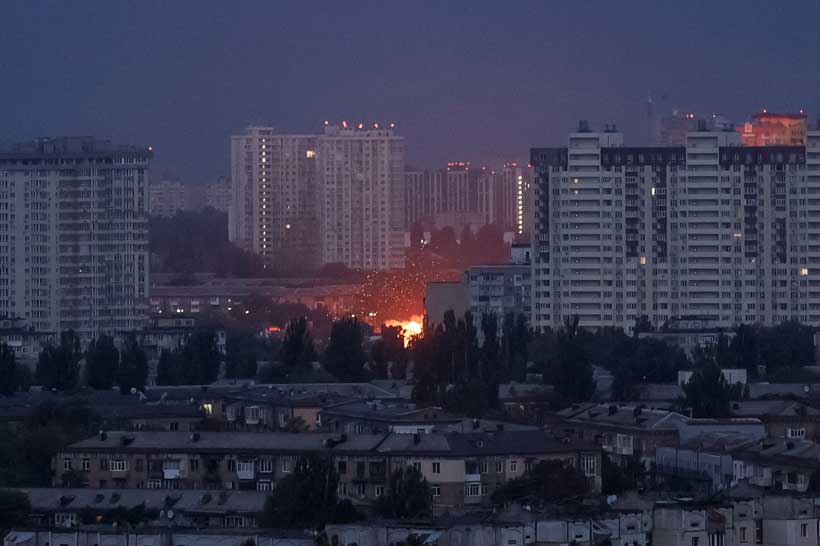
The continued clashes and drone strikes reported by Ukraine despite a United States brokered ceasefire reveal the deep structural difficulties facing diplomatic efforts to end the Russia Ukraine war. Although both Moscow and Kyiv formally agreed to a temporary ceasefire between May 9 and May 11, reports of ongoing battlefield engagements, drone operations, and civilian casualties demonstrate how fragile and limited such agreements have become in the context of prolonged modern warfare.
The ceasefire emerged as part of a broader diplomatic push led by United States President Donald Trump to reduce hostilities and create momentum toward wider peace negotiations. However, within days both Russia and Ukraine accused each other of violations, exposing the absence of trust, verification mechanisms, and shared strategic objectives between the two sides.
The developments illustrate a broader reality increasingly visible in contemporary conflicts. Ceasefires no longer necessarily represent steps toward peace. Instead, they often function as temporary tactical pauses within wars that continue politically, militarily, and psychologically even during formal periods of de escalation.
The Structural Fragility of Modern Ceasefires
The Ukraine conflict demonstrates why ceasefires in modern interstate wars are becoming increasingly difficult to sustain. Unlike traditional wars where front lines were relatively static and centralized military command structures exercised greater control, contemporary conflicts involve decentralized operations, drone warfare, rapid communication systems, and continuous battlefield surveillance.
In such environments, even limited military activity can quickly trigger accusations of violations and retaliation. The reported drone attacks, artillery clashes, and combat engagements along the front line reflect how difficult it is to fully halt military operations across an extensive and heavily militarized battlefield.
Furthermore, both Russia and Ukraine continue to pursue strategic objectives incompatible with lasting compromise. Russia seeks to consolidate territorial gains and maintain pressure on Ukrainian forces, while Ukraine aims to resist occupation and preserve sovereignty. Without broader political agreement regarding the war’s fundamental issues, temporary ceasefires remain highly vulnerable to collapse.
The result is a situation where ceasefires may reduce the intensity of conflict in some areas while violence continues in others, creating ambiguity regarding whether peace efforts are genuinely progressing.
Drone Warfare and the Transformation of the Battlefield
One of the most significant features of the current conflict is the central role of drones in sustaining military operations even during ceasefire periods. Ukraine’s military reported thousands of so called kamikaze drone deployments, while Russia simultaneously accused Ukraine of launching drone attacks into Russian territory.
Drone warfare fundamentally alters the nature of ceasefires because unmanned systems allow states to maintain pressure without large scale troop offensives. Drones can conduct reconnaissance, target infrastructure, disrupt logistics, and inflict psychological pressure while remaining below the threshold of full conventional escalation.
This creates a strategic grey zone where both sides can continue military activity while formally claiming commitment to ceasefire agreements. The low cost, flexibility, and deniability associated with drone operations make them especially attractive during periods of limited diplomatic engagement.
The widespread use of drones also reflects the broader transformation of modern warfare into a technologically driven conflict characterized by constant surveillance and persistent low intensity attacks. In this environment, the distinction between war and ceasefire becomes increasingly blurred.
The apparent breakdown of the ceasefire also highlights the growing limitations facing United States led diplomatic efforts. Although Washington remains deeply influential in shaping international negotiations surrounding the conflict, its ability to enforce compliance remains constrained.
Temporary ceasefires require more than political announcements. They depend on verification systems, mutual trust, enforcement mechanisms, and shared incentives for de escalation. None of these conditions currently exist at sufficient levels between Russia and Ukraine.
Moreover, both sides appear to view military pressure as essential to strengthening their negotiating positions. This creates a paradox where diplomacy and warfare occur simultaneously rather than sequentially. Ceasefires therefore become instruments for tactical adjustment rather than genuine pathways toward peace.
The involvement of the United States also introduces additional geopolitical dimensions. Russia continues to frame the conflict as part of a broader confrontation with Western influence, while Ukraine depends heavily on Western military and diplomatic support. These dynamics complicate efforts to establish neutral or mutually accepted mediation frameworks.
Humanitarian Consequences and Civilian Vulnerability
Despite diplomatic initiatives, civilians continue to bear the costs of ongoing violence. Reports of deaths and injuries across regions including Zaporizhzhia, Kherson, Kharkiv, Donetsk, and Mykolaiv demonstrate how even limited ceasefire violations can produce severe humanitarian consequences.
Modern conflicts increasingly expose civilian populations to continuous insecurity because fighting extends beyond conventional front lines. Drone strikes, missile attacks, and artillery exchanges create environments where daily life remains unstable regardless of official diplomatic announcements.
This persistent insecurity also produces long term social and psychological effects. Populations living under repeated cycles of ceasefire and renewed violence may gradually lose confidence in diplomatic processes altogether. Such conditions weaken public trust in negotiations and reinforce perceptions that military outcomes remain more decisive than political agreements.
The humanitarian dimension therefore remains central to understanding the broader implications of the war. Beyond territorial disputes and geopolitical competition, the conflict continues to reshape civilian life, displacement patterns, and regional stability across Eastern Europe.
The Strategic Logic Behind Continued Fighting
The continuation of battlefield clashes despite the ceasefire reflects rational strategic calculations by both parties. Neither Russia nor Ukraine wishes to allow the other side opportunities to regroup, reinforce positions, or gain battlefield advantage during temporary pauses.
For Russia, maintaining pressure along advancing sectors preserves momentum and signals military resolve. For Ukraine, continued resistance demonstrates operational resilience and prevents normalization of Russian territorial control.
This strategic logic makes limited violations almost inevitable in prolonged wars where military outcomes remain uncertain. Ceasefires become fragile because both sides fear that restraint could weaken their broader position in future negotiations or battlefield developments.
The situation also reflects how wars of attrition generate incentives for constant pressure rather than stable pauses. Each side seeks to exhaust the opponent economically, militarily, and psychologically over time.
Analysis
The reported ceasefire violations in Ukraine demonstrate the growing difficulty of achieving meaningful de escalation in modern high intensity conflicts. Temporary agreements may reduce some forms of violence, but they rarely address the deeper strategic, political, and technological dynamics sustaining prolonged warfare.
The Ukraine conflict illustrates several important realities shaping contemporary international security. First, ceasefires without comprehensive political frameworks remain highly unstable. Second, drone warfare and decentralized military technologies blur the distinction between peace and conflict. Third, diplomatic efforts increasingly coexist with ongoing military operations rather than replacing them.
The events also reveal the limits of external mediation in wars where core strategic objectives remain fundamentally incompatible. As long as both Russia and Ukraine continue viewing military pressure as essential to their long term goals, ceasefires are likely to function more as tactical interruptions than genuine transitions toward peace.
Ultimately, the fragility of the current ceasefire reflects a broader transformation in warfare itself. Modern conflicts are no longer defined solely by formal declarations of war or peace, but by continuous cycles of negotiation, limited escalation, technological warfare, and strategic uncertainty.
With information from Reuters.