Could the Iran War Spark a Prolonged Global Fuel Crisis?
The Iran war has pushed the global energy system into a deeper crisis, with the disruption increasingly shifting from crude oil supplies to the refined fuels that power transportation, industry and economies worldwide.
While global oil markets have adapted relatively well to the loss of a significant share of Middle Eastern crude production, the refining industry has had far fewer options to compensate.
That imbalance is already visible in fuel prices.
Brent crude is around $90 a barrel, roughly 25% above its level when the conflict began on February 28 but well below its wartime peak of $118.
Stay ahead of the geopolitical week.
MD Briefing delivers expert analysis across five global fronts — the Indo-Pacific, energy, geoeconomics, European security, and the Middle East — every Monday morning. Free.
Refined fuel prices, however, have remained much higher. European diesel prices have risen more than 70% since the start of the war, while U.S. gasoline prices have increased around 60%.
The growing divergence suggests that the biggest energy shock may no longer be coming from crude oil itself, but from the world’s ability to turn crude into usable fuel.
Why Are Fuel Prices Rising Faster Than Oil?
The key problem is declining refinery capacity.
The International Energy Agency estimates that more than 20% of the Middle East’s 9.6 million barrels per day of refining capacity was knocked out during the conflict.
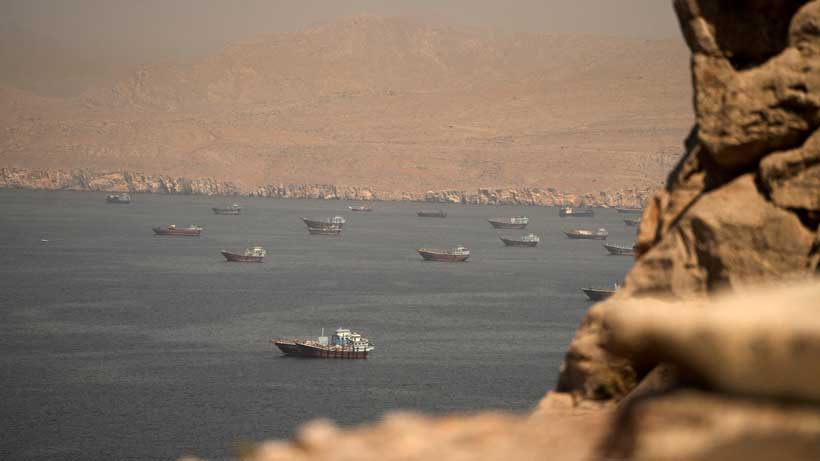
At the same time, the closure of the Strait of Hormuz has restricted fuel exports and disrupted the movement of Gulf crude.
The result has been a chain reaction.
Refineries, particularly in Asia, have had to reduce operations because of difficulties obtaining crude, while damaged Middle Eastern facilities have struggled to return to normal production.
This has created a shortage of diesel, gasoline and other refined products even as crude oil prices have retreated from their wartime highs.
How Has Russia Made the Fuel Crisis Worse?
The Middle East is not the only source of disruption.
Months of Ukrainian attacks on Russian energy infrastructure have also reduced global refining capacity.
Russian refinery throughput has fallen by nearly 30% in recent months to below 4 million barrels per day.
The decline has forced Moscow to restrict diesel exports, removing another major source of refined fuel from international markets.
The combination of Middle Eastern refinery damage and reduced Russian output has left the global market with fewer alternatives.
That is particularly important for diesel, which is essential for freight transportation, agriculture, construction and industrial activity.
Why Are Diesel Refining Margins Surging?
The shortage is reflected in refining margins.
European diesel refining margins have more than tripled since February, rising above $75 a barrel.
U.S. diesel margins have increased more than 140%, reaching a record $100 earlier this week.
These figures demonstrate how severe the shortage has become.
Refineries capable of producing diesel and other fuels are commanding exceptionally high margins because demand remains strong while available capacity is shrinking.
The problem is that simply increasing refining margins does not immediately create new refining capacity.
Building or repairing refineries can take months or years, particularly when specialised equipment is required.
Have Global Fuel Inventories Been Depleted?
Yes, and that could become one of the biggest problems in the months ahead.
Fuel stockpiles provided an important buffer when the conflict began.
That buffer is now largely gone.
According to the U.S. Energy Information Administration, global oil inventories fell at a rate of around 3.5 million barrels per day between March and July.
Stocks are expected to continue declining through the end of the year.
U.S. diesel inventories are already at their lowest seasonal level in three decades, while gasoline stocks are at their weakest seasonal level since 2012.
This leaves the market increasingly exposed to any additional disruption.
Is There a Global Fuel Production Shortfall?
The data suggests there is.
Global refinery runs during the second quarter were 5.1 million barrels per day lower than a year earlier, according to the IEA.
High fuel prices have reduced consumption, with demand for refined products falling by around 4 million barrels per day.
But that reduction has not been sufficient.
The result was still a shortfall of more than 1 million barrels per day.
The imbalance could become even worse during the third quarter.
Refinery runs are expected to remain 4.1 million barrels per day below last year’s level, while demand is projected to fall by only 2.4 million barrels per day.
In other words, fuel supply is declining faster than demand.
Would Reopening the Strait of Hormuz Solve the Crisis?
Not necessarily.
A diplomatic breakthrough between Washington and Tehran that permanently reopened the Strait of Hormuz could send crude prices sharply lower.
But cheaper crude would not automatically translate into cheaper gasoline and diesel.
The reason is that the refining infrastructure itself has been damaged.
More than 20 Gulf refineries suffered damage during the war, and many require extensive repairs.
Crucial equipment such as compressors, heat exchangers and specialised catalysts can take significant time to obtain.
Lead times for some of these components were already stretched before the conflict.
Consequently, even if crude shipments resume quickly, refinery capacity could remain constrained for much longer.
Why Is China Important to the Energy Crisis?
China’s response could have a major impact on global fuel markets.
China is the world’s second-largest refining centre and sharply reduced refinery processing rates and fuel exports during the conflict.
If Beijing keeps exports limited, the international market will lose another potential source of refined products.
Conversely, an increase in Chinese refinery utilisation and exports could provide some relief.
But China must also balance domestic fuel demand, inventory requirements and its own energy security.
That makes its decisions particularly important for Asia and the wider global market.
Could the Energy Crisis Fuel Global Inflation?
The answer could be yes.
The immediate impact of higher fuel prices is already appearing in inflation data.
U.S. consumer prices rose 3.4% year-on-year in July, with energy costs increasing 14.7% and gasoline prices rising 24.6%.
Euro zone inflation accelerated to 2.9%, driven partly by a 10% increase in energy costs.
Japan’s producer price index rose 7.2% in July.
These figures raise concerns that the energy shock could spread beyond fuel markets.
Higher transportation costs increase the cost of moving goods, while expensive diesel raises costs for agriculture, manufacturing and logistics.
If those increases persist, businesses may eventually pass them on to consumers.
Why Could the Energy Crisis Last for Years?
The central problem is that refining capacity cannot be restored as quickly as crude production.
Oil wells can continue producing once transportation routes reopen.
Refineries, however, require complex infrastructure, specialised machinery, skilled workers and maintenance.
If damaged facilities need major reconstruction, restoring capacity could take years.
At the same time, depleted fuel inventories will eventually need to be rebuilt.
That means refiners could face sustained pressure to process more crude even after the immediate crisis ends.
The result could be a prolonged period of elevated refining margins and fuel prices.
What Does This Mean for Europe and Asia?
Europe and Asia could face particularly severe pressure.
Both regions rely heavily on imported energy and have already experienced increases in refined fuel and liquefied natural gas prices.
For European economies, expensive diesel could increase transportation and industrial costs.
For Asian economies, disruptions to Gulf crude supplies and reduced Chinese fuel exports could create additional pressure.
The combination of higher fuel and LNG prices could therefore create a broader energy inflation shock rather than an isolated oil-market disruption.
Could Consumers Eventually Reduce Demand?
Demand destruction remains one of the few mechanisms capable of restoring balance.
If fuel prices remain extremely high, consumers may drive less and businesses may reduce transportation and energy consumption.
Companies may also delay investment and cut production.
That could eventually reduce demand enough to ease pressure on the refining system.
But demand destruction carries an economic cost.
A reduction in fuel consumption caused by efficiency improvements is very different from a decline caused by households and businesses being unable to afford energy.
The latter can slow economic growth while inflation remains elevated.
Analysis: Why the Refining Crisis May Matter More Than the Oil Shock
The most important lesson from the Iran war energy crisis is that the global energy system is not simply dependent on how much oil exists, but on whether the world can refine and transport that oil into usable fuel.
The crude market has shown considerable resilience.
Refined fuel markets have not.
That distinction could determine how long the current energy shock lasts.
Even if diplomacy reopens the Strait of Hormuz and crude prices fall, damaged refineries, depleted inventories and reduced Russian exports will continue to constrain fuel supplies.
This creates a particularly difficult situation for central banks.
If energy prices rise temporarily, policymakers can theoretically look through the shock. But if fuel shortages persist for months or years, higher transportation and production costs can become embedded across the economy.
That would make the assumption of a short-lived inflation shock increasingly difficult to defend.
The depletion of global inventories is perhaps the biggest warning sign.
Stockpiles normally provide a cushion against geopolitical disruptions. That cushion has now been significantly weakened.
As a result, another major refinery outage, shipping disruption or escalation in the Middle East could produce a much larger price response than it would have before the war.
The world therefore faces a dangerous mismatch: crude supplies may recover faster than the infrastructure needed to turn them into fuel.
That is why the energy crisis could outlast the war itself.
The Iran conflict may have started as a crude oil shock, but its most consequential economic legacy could be a prolonged global shortage of refined fuels, keeping inflation and energy costs elevated long after the fighting ends.
With information from Reuters.