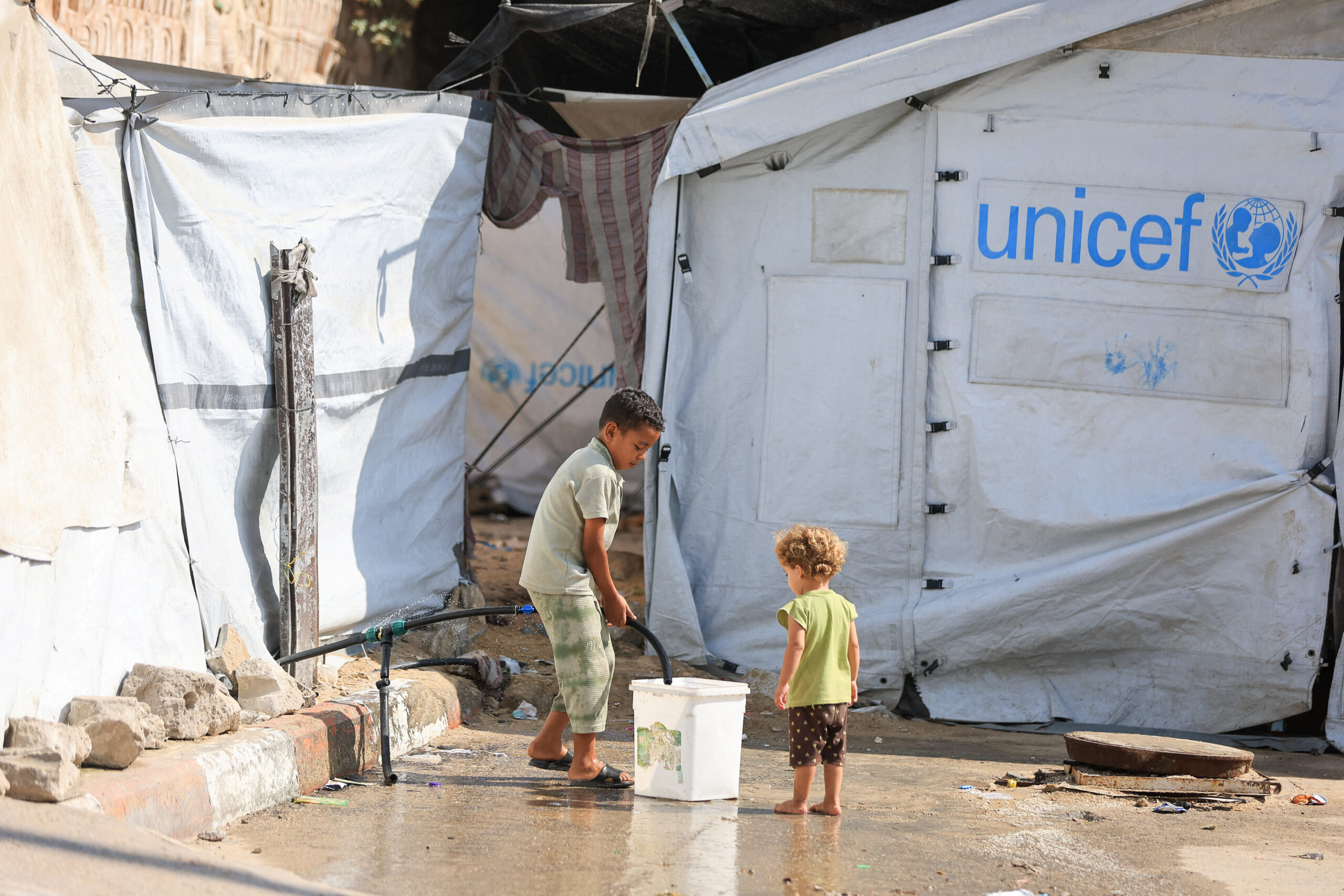
Fragile

Lebanese return to devastated south as fragile 10-day truce takes hold | Israel attacks Lebanon News

Hezbollah warns it has its ‘finger on the trigger’ in case of Israeli violations of the temporary ceasefire.

Displaced Lebanese have begun cautiously returning to their homes in the south after Lebanon and Israel agreed to a 10-day truce, even as the Lebanese army calls on residents to delay their return and Hezbollah warns it has its “finger on the trigger” in case of Israeli violations.

Tens of thousands of people poured into areas of southern Lebanon on Friday morning hours after the truce went into effect, many heading back to homes and villages battered by more than a month of Israeli attacks.

Recommended Stories

list of 3 itemsend of list

“People just couldn’t wait,” reported Al Jazeera’s Zeina Khodr from Nabatieh, one of the hardest hit areas.

“Even if it’s 10 days, they want to return to their homes. Some of them are just coming to see what remains of their homes, what remains of their lives.

“They want to show that they don’t want to give up their lands,” added Khodr.

While the ceasefire largely appeared to hold, Lebanon’s army accused Israel of several early violations on Friday, including intermittent shelling of ‌southern Lebanese villages.

Lebanon’s National News Agency also reported that unexploded ordnance killed a boy in the town of Majdal Selem, while rescuers uncovered the bodies of at least a dozen people killed in earlier attacks in Tyre.

French President Emmanuel Macron warned that the ceasefire “may already be undermined by ongoing military operations” and called for “the safety of civilians on both sides of the border”.

Hezbollah said its fighters “will keep their finger on the trigger because they are wary of the enemy’s treachery”.

Israeli air strikes and a ground invasion of parts of southern Lebanon have killed more than 2,100 people and displaced some 1.2 million in the latest round of fighting, according to Lebanese authorities.

Hezbollah attacks, meanwhile, killed two Israeli civilians, while 13 Israeli soldiers were killed in Lebanon, according to Israel.

Israeli officials have said they intend to maintain control over Lebanese territory extending to the Litani River as a “buffer zone” against Hezbollah.

‘Unliveable’

As residents assessed the damage to their hometowns, some pledged to stay, while others – finding nothing to return to or fearing the fragile truce could collapse – said they would leave again.

“There’s destruction and it’s unliveable. Unliveable. We’re taking our things and leaving again,” said Fadel Badreddine, who returned to Nabatieh with his young son and wife. “May God grant us relief and end this whole thing permanently – not temporarily – so we can return to our homes and lands.”

Al Jazeera’s Khodr said “wherever you look you see damage, destruction” in Nabatieh. “So much has been lost in this conflict in the past 46 days.”

If the ceasefire holds, it could ease one of the main points of tension in US-Iran negotiations. Iran and mediator Pakistan had maintained that Lebanon should be covered in a separate US-Iran ceasefire framework, while Israel claimed it was not part of that deal and continued its attacks.

Ali Akbar Dareini, a researcher at Iran’s Center for Strategic Studies, said the Israel-Lebanon ceasefire had removed one obstacle to wider negotiations between the US and Iran because Tehran views the regional conflict as interconnected, describing this as a “unity of fronts”.

Pakistani Prime Minister Shehbaz Sharif, whose country hosted last week’s ceasefire talks between the US and Iran, welcomed the Israel-Lebanon truce on Friday and expressed “hope that it will pave the way for sustainable peace”.

He also praised the mediation role of US President Donald Trump, who has invited Israeli Prime Minister Benjamin Netanyahu and Lebanese President Joseph Aoun to the White House for “meaningful talks”.

“Pakistan reaffirms its unwavering support for the sovereignty and territorial integrity of Lebanon, and will continue to support all efforts aimed at lasting peace in the region,” Sharif said on X.

Source link

U.S.-Iran direct talks begin in Pakistan as war’s fragile ceasefire holds

The United States and Iran began face-to-face negotiations Saturday in Pakistan, days after a fragile, two-week ceasefire was announced, as the war that has killed thousands of people and shaken global markets entered its seventh week.

The White House confirmed the direct nature of the talks, a rare instance of high-level U.S. government engagement with the Iranian government.

Iran’s state-run news agency said three-party talks including Pakistan had begun after Iranian preconditions, including a reduction in Israeli strikes on southern Lebanon, were met, and after U.S. and Iranian officials met separately with Pakistani Prime Minister Shehbaz Sharif.

The U.S. delegation led by Vice President JD Vance and the Iranian delegation led by Parliament Speaker Mohammad Bagher Qalibaf were discussing how to advance the ceasefire already threatened by deep disagreements and Israel’s continued attacks against the Iranian-backed Hezbollah in Lebanon.

Since the Islamic Revolution in Iran in 1979, the most direct U.S. contact had been in September 2013 when President Obama called newly elected President Hassan Rouhani to discuss Iran’s nuclear program. The recent highest-level meetings were between Secretary of State John Kerry and counterpart Mohammad Javad Zarif during negotiations over the program.

Iran sets ‘red lines’ including compensation for strikes

Iran doubled down on parts of its earlier proposal, with its delegation telling Iranian state television it had presented some of the plan’s ideas as “red lines” in meetings with Sharif. Those included compensation for damage caused by the U.S.-Israeli strikes that launched the war on Feb. 28 and releasing Iran’s frozen assets.

The war has killed at least 3,000 people in Iran, 1,953 in Lebanon, 23 in Israel and more than a dozen in Gulf Arab states, and caused lasting damage to infrastructure in half a dozen Middle Eastern countries. Iran’s chokehold on the vital Strait of Hormuz has largely cut off the Persian Gulf and its oil and gas exports from the global economy, sending energy prices soaring.

Reflecting the high stakes, officials from the region said Chinese, Egyptian, Saudi and Qatari officials were in Islamabad to indirectly facilitate the talks. The officials spoke on condition of anonymity to discuss the sensitive matter.

In Tehran, residents told the Associated Press they were skeptical yet hopeful about the talks after weeks of airstrikes left destruction across their country of some 93 million people. Some said the path to recovery would be long.

“Peace alone is not enough for our country, because we’ve been hit very hard, there have been huge costs,” 62-year-old Amir Razzai Far said.

Meanwhile, Israel pressed ahead with strikes in Lebanon after saying there is no ceasefire there. Iran and Pakistan have disagreed. The Lebanese state-run news agency reported at least three people killed.

Officials posture over key issues ahead of talks

Ahead of the talks, President Trump accused Iran of using the Strait of Hormuz, a key artery for global energy supplies, for extortion, and told reporters Friday it would be opened “with or without them.”

Iran’s closure of the strait has proved its biggest strategic advantage in the war. Around a fifth of the world’s traded oil had typically passed through on over 100 ships a day. Only 12 have been recorded transiting since the ceasefire.

Iran has floated the idea of charging ships, though the idea has been widely rejected by countries including the United States and Iran’s neighbor Oman.

On Saturday, Trump said on social media that the U.S. had begun “clearing out” the strait, but it was unclear whether he was referring to the reported use of mines there or Iran’s broader ability to control the area.

Iranian Foreign Minister Abbas Araghchi had said Tehran was entering negotiations with “deep distrust” after strikes on Iran during previous rounds of talks. Araghchi, part of Iran’s delegation in Pakistan, said Saturday that his country was prepared to retaliate if attacked again.

Iran and the United States outlined competing proposals ahead of the talks.

Iran’s 10-point proposal called for a guaranteed end to the war and sought control over the Strait of Hormuz. It included ending fighting against Iran’s “regional allies,” explicitly calling for a halt to Israeli strikes on Hezbollah.

The United States’ 15-point proposal includes restricting Iran’s nuclear program and reopening the strait.

Israel and Lebanon will have direct negotiations

Negotiations between Israel and Lebanon are expected to begin Tuesday in Washington, Lebanese President Joseph Aoun’s office said Friday, after Israel’s surprise announcement authorizing talks despite the countries lack of official relations.

Israel wants the Lebanese government to assume responsibility for disarming Hezbollah, much like was envisaged in a November 2024 ceasefire. But it is unclear whether Lebanon’s army can confiscate weapons from the militant group, which has survived efforts to curb its strength for decades.

Israel’s insistence that the ceasefire in Iran does not include a pause in its fighting with Hezbollah has threatened to sink the deal. The militant group joined the war in support of Iran in the opening days. Israel followed up with airstrikes and a ground invasion.

The day the Iran ceasefire deal was announced, Israel pounded Beirut with airstrikes, killing more than 300 people in the deadliest day in Lebanon since the war began, according to the country’s Health Ministry.

Energy pressures grow

The spot price of Brent crude, the international standard for oil prices, was above $94 on Saturday, up more than 30% since the war started.

And new pressures emerged in Europe for travelers.

The head of Airports Council International-Europe, Olivier Jankovec, warned the European Union that a ″systemic jet fuel shortage’’ could come within three weeks because of the blockage of the Strait of Hormuz.

Jankovec said in a letter obtained by the Associated Press that the crunch could impact the summer travel season and ″significantly harm the European economy.’′

Ahmed, Metz, Castillo and Magdy write for the Associated Press. Metz reported from Jerusalem, Castillo from Beijing and Magdy from Cairo. Associated Press writer Josh Boak contributed to this report.

Source link

Fragile Ceasefire Tested as Strait Closure and Lebanon Fighting Continue

A two day ceasefire between the United States and Iran has paused direct large scale strikes, but key flashpoints across the region remain active.

The closure of the Strait of Hormuz and escalating violence in Lebanon highlight the limited scope of the truce, exposing gaps in its coverage and enforcement.

Strait of Hormuz Remains Closed

Despite expectations that the ceasefire would stabilise energy markets, the Strait of Hormuz remains effectively shut.

This chokepoint normally handles a significant share of global oil shipments, with around 140 vessels passing through daily under normal conditions. In the first 24 hours after the ceasefire, only a handful of ships were able to transit the route.

The continued disruption has driven immediate delivery oil prices sharply higher, with some refiners in Europe and Asia reportedly paying near record levels.

Donald Trump publicly criticised Iran for failing to uphold what he described as an agreement to allow oil flows, while also signalling that shipments could resume soon without detailing mechanisms.

Disputed Scope of the Ceasefire

A central point of contention is whether the ceasefire extends beyond direct US Iran hostilities.

Iran maintains that the truce should include theatres such as Lebanon, where Hezbollah is engaged in conflict with Israel.

The United States and Israel reject this interpretation, arguing that Lebanon falls outside the agreement’s framework. This divergence has created parallel narratives of compliance and violation, undermining the credibility of the ceasefire.

Escalation in Lebanon

Fighting between Israel and Hezbollah has continued, with both sides exchanging strikes.

Israeli forces carried out large scale attacks shortly after the ceasefire announcement, while Hezbollah resumed missile launches following earlier indications it would pause operations.

Israeli Prime Minister Benjamin Netanyahu has since signalled a shift by expressing willingness to begin separate negotiations with Lebanon, focusing on disarming Hezbollah and establishing more stable relations.

Meanwhile, Lebanese officials are attempting to broker a temporary ceasefire as a stepping stone toward broader negotiations, indicating a parallel diplomatic track separate from US Iran talks.

High Stakes Talks in Islamabad

The first direct peace talks between the United States and Iran are scheduled to take place in Islamabad, which has been placed under heavy security lockdown.

Pakistan’s role as mediator underscores its diplomatic positioning, with tight security arrangements including restricted zones and controlled access around the negotiation venue.

The Iranian delegation is expected to be led by Mohammad Baqer Qalibaf, while the US side will be headed by JD Vance.

Competing Strategic Objectives

The talks are shaped by fundamentally different goals

The United States seeks

  • Limits on Iran’s nuclear programme
  • An end to uranium enrichment
  • Curtailment of missile capabilities
  • Withdrawal of support for regional allies

Iran, by contrast, is expected to demand

  • Removal of economic sanctions
  • Recognition of its authority over the Strait of Hormuz
  • Compensation for wartime damage

Iran’s leadership, now under Mojtaba Khamenei, has adopted a defiant posture, signalling that concessions will come at a high price.

Economic Fallout

The disruption in the Strait of Hormuz is already feeding into global economic indicators.

Oil price volatility is expected to influence inflation data, particularly in the United States, where upcoming consumer price figures may reflect the early economic impact of the conflict.

While futures markets have shown some optimism following the ceasefire, spot prices remain elevated, indicating persistent uncertainty about immediate supply conditions.

Military and Strategic Reality

Despite the ceasefire, the broader strategic objectives of the war remain unresolved

Iran retains missile and drone capabilities capable of targeting regional adversaries
Its nuclear programme continues, with a significant stockpile of enriched uranium
The political system has remained intact despite internal unrest

For the United States, initial goals such as dismantling Iran’s nuclear capacity and weakening its regional influence have not been fully achieved.

Analysis

The current situation reflects a fragmented ceasefire architecture in which the absence of a unified framework allows multiple conflicts to persist simultaneously. The continued closure of the Strait of Hormuz demonstrates how economic leverage can be maintained independently of formal military de escalation, reinforcing Iran’s bargaining position ahead of negotiations.

At the same time, the divergence over whether Lebanon is included in the truce highlights the limitations of narrowly scoped agreements in complex regional conflicts involving multiple state and non state actors. The persistence of Israel Hezbollah hostilities illustrates how parallel wars can undermine broader diplomatic efforts, creating a layered conflict environment.

The decision to proceed with talks in Islamabad despite ongoing violations suggests that both the United States and Iran view negotiations as strategically necessary, even in the absence of full compliance on the ground. This indicates a shift toward diplomacy driven not by stability but by mutual recognition of the costs of prolonged confrontation.

With information from Reuters.

Source link

UK PM Keir Starmer visits Gulf to shore up ‘fragile’ US-Iran ceasefire | US-Israel war on Iran

NewsFeed

As UK Prime Minister Keir Starmer arrived in Doha as part of a Gulf tour spanning Saudi Arabia, the UAE, Bahrain and Qatar, he discussed efforts to secure the US-Iran ceasefire and reopen the Strait of Hormuz. Starmer warned there’s more ‘work to do’, stressing the need for regional partners to restore global energy flows.

Source link

Why ‘fragile’ Kelly Osbourne really split from fiancé Sid Wilson… as pals reveal huge changes since dad Ozzy’s death

IT was supposed to be her happy ending, but just months after the death of her beloved father, Kelly Osbourne has been left mourning again.

From the outside, Kelly’s split from fiancé Sid Wilson looked like a cruel twist in increasingly fragile star’s life, but those close to Kelly have now shed some light on her apparently shock decision to end things with the Slipknot keyboard player, telling me what really sparked the break-up.

Kelly Osbourne and Sid Wilson have called time on their relationship – and insiders have now revealed whyCredit: instagram
Kelly has been going through a particularly tough time following the death of her dadCredit: Getty
Kelly was very close to dad OzzyCredit: MTV

An insider explained: “After her dad Ozzy died it put everything into perspective, the main thing being, she’s realised how she wants to be treated, and what she deserves.

“Things haven’t been right for a while and she realised she needs to prioritise herself.

“She’s so fragile because of everything that’s gone on with her father and is in need of something more. She didn’t want to pour into cups that don’t pour into hers.”


She’s realised how she wants to be treated, and what she deserves.


Insider

Kelly, who shares three-year-old son Sidney with the rocker, has been spending a lot of time in the UK following Ozzy’s death in July last year, having been diagnosed with Parkinson’s disease in 2019.

More than ever she became her mum Sharon’s rock as they navigate this incredibly difficult time, but it’s taken its toll on Kelly. 

Her latest appearances have sparked concern not just from her fans but those close to her. 

The once bubbly looking star has drastically shrunk in size, which has led to her being called gaunt and some even saying she ‘looks like a dead body’.

My insider added: “Kelly is of course aware she looks different but has found the trolling really tough.

“Her friends have really rallied around her and are determined to make sure she is ok. Of course everyone is doing what they can to help her be happy and healthy. They are providing the light in all the dark at the moment. The last thing anyone wants is for her to lose any more weight.

“It’s a worrying time for everyone but the fact that Kelly has taken the step to end her engagement suggests she is ready to move on and start really living again.”

Concerns were raised following her appearance at the Brit Awards with mum Sharon, as dad Ozzy was honoured posthumously.

The trolls were particularly vicious, and Kelly hit back to “defend herself”,. In a  message to her 4.4 million followers she wrote: “There is a special kind of cruelty in harming someone who is clearly going through something.

“Kicking me while I’m down, doubting my pain, spreading my struggles as gossip, and turning your back when I need support and love most.

‘Hardest time’

“None of it proves strength; it only reveals a profound absence of compassion and character.

“I’m currently going through the hardest time in my life. I should not even have to defend myself. But I won’t sit here and allow myself to be dehumanised in such a way.”

Kelly and Sid first met in 1999 at Ozzfest, a music festival founded by her parents.

Kelly and her ex fiance Sid are parents to a little boy called SidCredit: Getty
Sid popped the question in front of her dad Ozzy at his final ever gigCredit: instagram/kellyosbourne

They were friends for over two decades before their relationship turned romantic at the end of 2021. It seemed like the perfect match.

On Valentine’s Day in 2022, Kelly gushed: “After 23 years of friendship, I can’t believe where we have ended up. You are my best friend, my soulmate, and I am so deeply in love with you, Sidney George Wilson.”

They welcomed their son Sid in January, 2023 and being a mother changed everything for Kelly.

But cracks started to show between the pair and Kelly later recalled they had the “biggest fight” shortly after Sid was born.


I can never ever forgive him for that.


Kelly on her biggest row with Sid

She said on The Osbournes podcast: “I wanted our son to have both of our last names, and [Sid] wouldn’t let me, and we had a huge fight.”

“I feel that I was forced into doing something that I didn’t want to do. I can never ever forgive him for that, but we can move on.” 

They started to have couple’s therapy – there were some  “eye opening conversations” and eventually they agreed to change their son’s last name to feature both Osborne and Wilson.

Kelly explained: “We both made our child so he should have both of our last names. Not one is more important than the other.”

Meanwhile Ozzy was becoming increasingly unwell. He returned to the UK to perform for one more time and live out his final days at his beloved family home – a Grade-II listed Georgian mansion in Buckinghamshire.

Kelly, her brother Jack and older sister Amy spent most of their childhood in the UK, where they attended several private schools before moving to LA and starring in their hit reality show The Osbournes.

Sid and Kelly were friends for two decades before they started datingCredit: Getty
Kelly is keen to be with someone who shows her the respect she feels she deservesCredit: instagram
Kelly has been supporting her mum through the very difficult timeCredit: Splash

It was at Ozzy’s last ever Black Sabbath gig at Villa Park in July of last year that Sid proposed – with her whole family around her. 

Sid pulled out all the stops and proposed to Kelly with a bespoke custom-designed ring from Los Angeles based jewellers, Mouawad.

He designed the ring with the team through various one-on-one meetings in order to ensure it was right for Kelly.

Sid chose to curate a dazzling 18K yellow gold ring adorned with both white and yellow diamonds, as well as citrine accents.

The centrepiece is a stunning 2.5 carat round brilliant-cut diamond with the ring being nicknamed the Honeybee – Kelly’s personal nickname.

It couldn’t be missed on Kelly’s tiny hands but in recent weeks, the bling was absent as she came to terms with her decision.

Kelly, who is currently still in the UK, is said to still be on speaking terms with Sid – who is based in the US and is determined to co-parent their son as best as possible. 

Moving on?

For the time being anyway she plans to stay by her mum’s side, and with Sid not yet starting school, there’s no immediate decision needed about where to live.

Sharon is said to still be undecided about whether she’ll remain in the UK – although Ozzy is buried in the grounds of the family home. 

We previously told how Sharon is currently playing to split her time evenly between her historic UK home, Welders, and a new apartment in Los Angeles, spending “half the year at least” on the sun-drenched West Coast. 

If Kelly and young Sid join her or set up home for good in the UK, is yet to be seen, but one thing is for sure though, Kelly has found her voice and she won’t let decisions be made on her behalf. 

Ozzy passed away in July shortly after his final ever gig in BirminghamCredit: @RossHalfin

Source link

US envoys meet Hamas in Cairo to salvage fragile Gaza truce | Donald Trump

In a devastated enclave where more than two million Palestinians remain crammed into a shrinking strip of land under the overwhelming shadow of Israeli military occupation and bombardment, daily survival is tethered to a fragile October “ceasefire”.

But as Israeli and US bombs rain down on Iran, and Tehran retaliates across the region, that battered truce faces a breaking point, prompting an unprecedented diplomatic manoeuvre: direct talks between United States President Donald Trump’s “Board of Peace” and Hamas.

Recommended Stories

list of 4 itemsend of list

Envoys from the new body, personally headed by Trump to oversee post-war Gaza, but with more far-reaching designs, met with Hamas representatives in the Egyptian capital over the weekend, according to the Reuters news agency.

The meetings aimed to safeguard the “ceasefire”, which has been under even more severe strain since the regional war began on February 28.

Following the talks, Israel announced it would partially reopen the Rafah border crossing between Gaza and Egypt on Wednesday. The crossing, Gaza’s sole pedestrian lifeline outside direct Israeli control, was shut when the Iran offensive began.

Despite the diplomatic push, violence in the enclave persists. Israeli strikes on Sunday killed at least 13 Palestinians including two boys, a pregnant woman, and nine police officers, serving as a stark reminder of Israel’s all-encompassing military grip on the territory.

A pragmatic shift or tactical ploy?

While the talks mark a notable engagement by Washington, analysts view the move not as a legitimisation of the Palestinian group, but as a calculated tactic underpinned by the threat of renewed violence.

Abdullah Aqrabawi, a Palestinian political analyst, noted that Washington’s willingness to meet Hamas reflects a stark reality on the ground. “There is a comprehensive, realistic acknowledgement that the main military, political, and social actor in the Gaza Strip is Hamas,” Aqrabawi told Al Jazeera.

However, he warned against viewing the meetings as a fundamental shift in US policy. In the era of the Trump administration, diplomatic meetings do not equate with political recognition. Instead, Aqrabawi argued, the approach is framed by the constant threat of a return to a “war of extermination”.

The ultimate goal of these talks, he explained, is to empower a newly formed technocratic committee in Gaza to build a social base capable of challenging the armed group.

The illusion of ‘reverse blackmail’

Initial reports suggested that Hamas had threatened to abandon the “ceasefire” if Gaza border restrictions continued, purportedly using the regional chaos of the Iran war to force Israel’s hand.

Aqrabawi dismissed this assessment, noting that Hamas has consistently expressed a desire to avoid a return to full-scale war. Rather than a successful Palestinian pressure campaign, he said the reopening of the Rafah crossing serves a different strategic purpose for Washington and Tel Aviv.

“Any facilities, whether the Rafah crossing or allowing aid entry, come through the “Board of Peace” and the new technocratic committee formed in the Gaza Strip,” Aqrabawi said. “It is not a response to negotiations or Palestinian pressure, but rather in the context of allowing this committee to penetrate Palestinian society.”

He added that this aims to establish a security foundation that allows for the disarmament of the resistance, even if it leads to internal Palestinian civil conflict.

Disarmament and the 20-point plan

Prior to the regional escalation, Trump’s flagship Middle East initiative – a 20-point plan for Gaza – had partially halted the mass killings and secured the release of Israeli military captives and some Palestinian prisoners. In exchange, Hamas accepted a ceasefire that left the Israeli military occupying more than half of the enclave.

But the second phase of Trump’s plan, which hinges on Hamas laying down its weapons in exchange for amnesty and reconstruction, remains deadlocked. While some might assume the regional conflict gives Hamas leverage to scrap the disarmament clause entirely, Aqrabawi suggested the opposite is unfolding.

The US and Israel, heavily engaged in Iran, are likely intensifying pressure on the Palestinian group to secure a swift, enforceable victory in Gaza. “The pressure happening today on the occupation government and the American perspective of the war with Iran may push them to pressure Hamas to accomplish this task as quickly as possible,” Aqrabawi said.

Yet, Hamas remains resolute. The group views its weapons as essential for resisting the occupation and forming the foundation of future Palestinian security institutions.

As Washington and Tel Aviv attempt to use the spectre of renewed genocide to engineer Gaza’s political future, the reality for the Palestinians trapped inside the enclave remains unchanged. For them, the partial reopening of a single border crossing is not a diplomatic breakthrough, but a fleeting gasp of air in a besieged Gaza Strip where daily survival is held hostage to the demands of the military occupation.

Source link