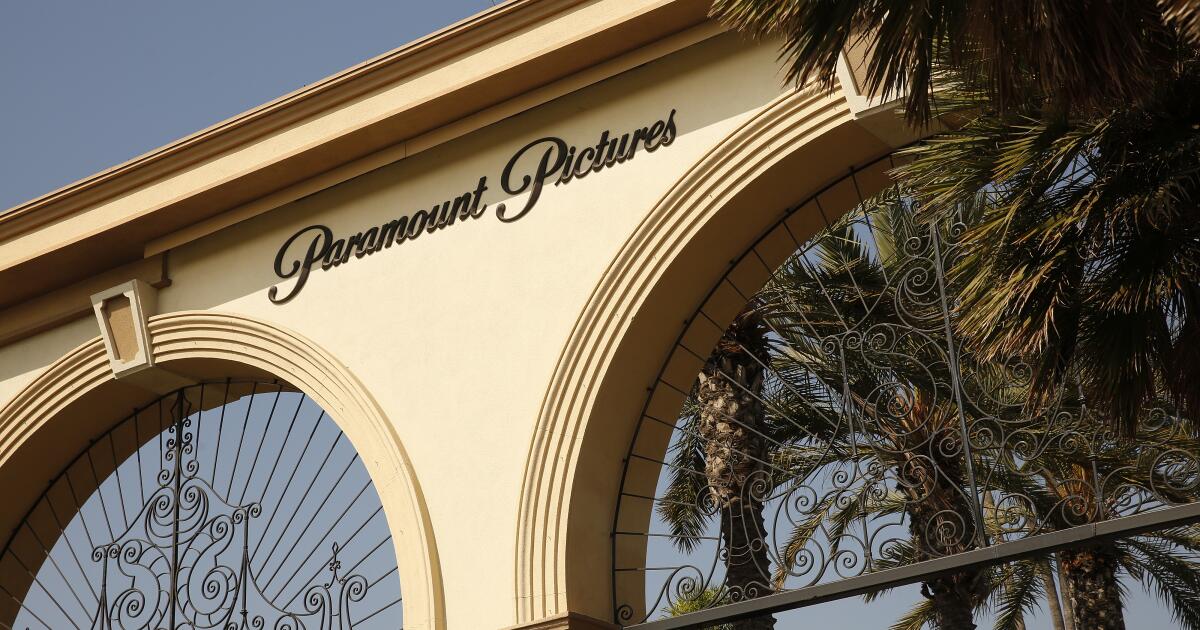
Paramount Skydance has agreed to delay its purchase of Warner Bros. Discovery to as late as next June as David Ellison’s media company mounts its defense to the antitrust challenge brought by California Atty. Gen. Rob Bonta and his coalition of 11 other state attorneys general.
The major concession comes as Paramount was facing an Aug. 3 hearing to try to convince U.S. District Judge Araceli Martínez-Olguín that its proposed $111-billion deal — which would reshape Hollywood with the combination of two historic studios — would not violate U.S. antitrust laws.
The judge appeared to be leaning toward the arguments of the state attorneys general, who have alleged the proposed union of two big film studios and television networks including HBO, CBS, CNN, Comedy Central, Nickelodeon and TBS, runs afoul of the 112-year-old Clayton Antitrust Act.
In a stipulation filed Friday, Paramount agreed to hold off on closing its blockbuster purchase until after the states’ antitrust case can be decided in a trial before the Oakland-based judge or by June 1, 2027, whichever date comes first.
The move came after Martínez-Olguín issued a temporary restraining order earlier in the week — requested by Bonta and the others — which paused the deal until next month’s preliminary injunction hearing when she was set to decide whether a lengthy moratorium should be imposed.
Privately, Paramount officials were worried they might lose that round before Martínez-Olguín, so, during negotiations with the states, Paramount stipulated that it would not close the deal on its preferred timetable.
Paramount had wanted to finalize the takeover this month — or at least have it wrapped up by Sept. 30.
In a statement, Bonta celebrated the delay as “great news for audiences, movie theaters, and the many people who write, build, and create the art, news, and entertainment so many of us enjoy.”
“Our argument against this illegal merger is straightforward: When too few corporations have too much power in markets central to American life, it makes things more expensive, and it makes things worse,” Bonta said.
Now, Paramount will incur added deal costs and significant legal fees as it prepares the case for a full-blown trial. Paramount, in a statement, framed the delay as “a significant win” for the company.
“The result is exactly what we have sought from the outset: a direct path to a trial based on the evidence,” a Paramount spokesperson said in a statement. “This is the fastest and clearest way to prove that this transaction is good for competition, good for consumers, and good for creators, a conclusion dozens of competition authorities around the world have already reached. We look forward to proving our case at trial.”
On Wednesday, the European Commission gave its blessing, allowing the Paramount-Warner merger to move forward in European countries. More than 40 jurisdictions have given their consent. The U.S. Justice Department last month signed off — an approval that had been expected because of President Trump’s desire to see the Ellison family own CNN.
Paramount shares slipped on the news, falling 3.3% to $8.21 — marking the year’s lowest trading day. Warner’s stock gains since Monday’s restraining order ruling were suddenly erased. Warner shares finished at $25.77 — 17% lower than Paramount’s deal offer.
Now Paramount will have to pay Warner Bros. Discovery investors more than the $31 a share it previously promised.
In a show of confidence earlier this year, the company boasted it would quickly secure the necessary regulatory approvals to finalize the Warner purchase by late September. As an added incentive to win over investors, the company said it would pay so-called “ticking fees” should the deal encounter snags.
Those fees of $.25 a share per quarter begin Oct. 1, adding about $650 million to the pricetag each quarter until close. If Paramount is unable to close the deal by June 1, it would owe Warner Bros. Discovery a $7 billion breakup fee.
Larry Ellison, co-founder of software giant Oracle, is bankrolling his son’s ambitions to acquire a second major entertainment company in less than a year. The Ellison family acquired the smaller Paramount in August.
The Democratic state attorneys general, including from New York, New Mexico, Nevada, Colorado, Oregon and Washington, filed their lawsuit nearly two weeks ago.
The state attorneys general have alleged the deal would harm competition in three markets: films released widely (in more than 3,000 theaters); potential blockbuster films; and a concentration of cable TV channels.
Paramount insists that streaming marketshare be included in the market definition because a combined Paramount+ and HBO Max would still trail industry leaders, Netflix, YouTube, Amazon Prime and Disney+.
“Plaintiffs’ market definitions bear no relationship to the realities of today’s marketplace and cannot withstand scrutiny,” Paramount’s spokesperson said.
In her order earlier this week, Martínez-Olguín wrote that the plaintiff states presented “compelling evidence” that the merged company could wield too much control in theatrical distribution.
Friday’s agreement came after Martínez-Olguín on Thursday extended the restraining order for another 14 days — until Aug. 17 — in recognition the two sides needed time to hash out their scheduling requests. In addition, the Writers Guild of America has filed its own antitrust lawsuit, and the judge agreed to allow that case to move forward with the states’ case.
The Aug. 3 preliminary injunction hearing will be canceled as the two sides prepare for a trial.
“We are eager to continue to make our case in court …to ensure this unlawful merger never sees the light of day,” Bonta said.
The months-long delay is expected to affect Warner Bros. Discovery Chief Executive David Zaslav’s proposed $887-million exit package.
As part of a pact earlier this year, Warner board members agreed to cover Zaslav’s expected $335 million in tax obligations tied to his enormous payout, according to regulatory filings. However, Warner is not on the hook to cover Zaslav’s tax bill should the deal extend into 2027.
The merger has faced stiff resistance in Hollywood and beyond. More than 5,000 entertainment industry workers have signed an open letter calling on Bonta to block the merger.
Britain’s culture minister has also signaled that she may open a full inquiry into the proposed media consolidation, which could also bring other delays.
“This victory in putting the merger on hold belongs to the people who refused to treat the merger as inevitable,” Norm Eisen, a former ambassador and Obama White House ethics lawyer who is helping lead the #BlocktheMerger campaign.
“Artists, journalists, filmmakers, and consumer advocates spoke out despite the risk of retaliation, more than 5,500 people signed our open letter,” Eisen said in a statement. “This collective resistance is turning the tide.”