Mark Walter is looking to sell the WNBA’s Sparks, taking another step in the dismantling of his sports-team empire, according to people familiar with the matter.
Walter, a co-founder of money management firm Guggenheim Partners, sold the Lakers earlier this year at a $12.5 billion valuation to Joshua Kushner and Bob Iger, but the WNBA team had remained under his ownership. Kushner and Iger later discussed acquiring the Sparks, but they are not among potential buyers, said the people, who asked to not be identified because the talks are private.
Sportico values the team at $400 million. Walter is looking to sell the franchise and a related practice facility for more than $700 million, said one of the people, who wasn’t authorized to speak discussing private dealings. The practice facility, which was constructed for $150 million, is scheduled to open before the start of the 2027 season. The franchise plays in the Crypto.com Arena.
Such a deal would be by far the largest WNBA franchise sale in history. The current record of $300 million is held by Tilman Fertitta, the owner of the Houston Rockets who bought the Connecticut Sun and is in the midst of moving the franchise to Houston.
A spokesperson for Iger and Kushner declined to comment. A spokesperson for TWG Global, Walter’s holding company, didn’t immediately respond to a request for comment.
The Sparks finished 16-28 during the WNBA season and have missed the playoffs for six straight seasons. The Sparks were one of the original eight teams when the WNBA was founded in 1997.
WASHINGTON — First Lady Melania Trump has brokered an upcoming ceasefire between Russia and Ukraine in the war-ravaged Ukrainian city of Oleshky to allow for humanitarian aid and the evacuation of civilians, the White House announced on Friday.
The localized ceasefire is set to begin Thursday, with the American first lady saying in a news release that the situation there is “on the brink of disaster.”
The White House said Trump had initiated the discussions and that she and a representative worked directly with Russian and Ukrainian leadership to define the terms of the ceasefire.
Ukraine’s lead negotiator for the agreement thanked Trump for her involvement and said the deal would be “extremely challenging to implement.”
“Under our agreement: first a ceasefire will be put in place; second, humanitarian aid will be delivered to Oleshky; and third, civilians will be allowed to move freely out of Oleshky,” Dmytro Lubinets, Ukraine’s human rights ombudsman, said in a video message posted online. “The operation will be carried out gradually and is extremely challenging to implement. I will therefore keep Ukrainian society informed and share the results of the operation.”
Russia’s chief of the general staff, Gen. Valery Gerasimov, said Russian forces “will cease fire on the Kherson axis” starting at 4 a.m. TuesdayMoscow time “in connection with the humanitarian operation near Oleshky.” The Russian forces will also carry out “engineering reconnaissance” and ensure “safe movement of the humanitarian convoy” into the city, Gerasimov said.
Kremlin spokesman Dmitry Peskov also said Moscow was grateful to the first lady and that effort was discussed during the latest call between Russian President Vladimir Putin and President Trump, he said.
Peskov said “those who want to leave it would be able to do so.” He would not say whether those who evacuate will be taken to Russia or Ukraine-held territory. He also demurred when asked how long the evacuation will last, saying only it would likely take several days.
Saving children is first lady’s focus, president says
Melania Trump has made helping children in conflict one of her signature issues and hosted a U.N. Security Council meeting on the issue earlier this year. She has written Putin to work on efforts to reunite families with children who have been displaced by the war.
“What she wants to do is save children, and that’s her focus,” the president said of the first lady during a question-and-answer exchange with journalists in Washington.
Tensions between Washington and Kyiv are rising
The development comes as tensions have increased to new highs between the Trump administration and Ukraine’s government. Kyiv has faced restrictions on the satellite internet system that it relies on to knock down Russian attacks, with Trump and other top U.S. officials sending mixed messages about who was responsible for throttling the Elon Musk-made Starshield system.
Trump also has recently waived new Russian sanctions, reached an agreement with Russia to import diesel and pushed Ukrainian President Volodymyr Zelensky to make a deal to end the war that began in February 2022. In renewed efforts to revive the peace process, Trump envoy Steve Witkoff traveled to Norway this week for talks with Zelensky before meeting with Putin in St. Petersburg, Russia.
Zelensky did not mention the ceasefire in Oleshky during a remote appearance at the Hudson Institute, a Washington think tank. He did note that American Patriot missile interceptors were still on hold and Starshield and Starlink speed limits were still in place.
He also spoke of the importance of the United States to renewed diplomatic efforts to end the war, including a possible joint meeting with Trump and Putin.
Dire situation in Oleshky
Food and medical supplies have been scarce for months in Oleshky, which sits on the Dnipro River that separates Ukrainian forces from the city’s Russian occupiers. There is no electricity, heat or running water. Roads leading from town are mined and dotted with burned-out cars. Drones buzz overhead.
Once a city of about 24,000 residents, Oleshky was captured by Moscow’s forces on the first day of their full-scale invasion of Ukraine in February 2022. Its buildings were shelled and burned, and its infrastructure damaged. In June 2023, floodwaters inundated the city after the Kakhovka Dam collapsed from an explosion that an Associated Press investigation found was likely caused by the Russian military. Hundreds of residents were killed.
Those left in the city along Ukraine’s southeastern front face death from hunger or disease as another harsh winter looms. Ukraine has appealed repeatedly for a local ceasefire to organize evacuations. Russia, as the occupying power, is obligated by international law to ensure civilians under its control have what they need to survive.
Melania Trump details the mission
Melania Trump said in the White House news release that civilian leaders from Ukraine and Russia will visit Oleshky residents to determine the level of assistance they require.
“Residents who wish to evacuate will receive coordinated support and transportation to their preferred destination,” she said. “I anticipate some will want to go to Russia, and some to Ukraine.”
Melania Trump also said “an impartial American media organization” will accompany and document Russian and Ukrainian teams on the ground throughout the process.
“This will play a significant role in ensuring that the wishes of each family are faithfully respected,” she said.
The statement did not identify the media organization.
Finley writes for the Associated Press. AP writers Seung Min Kim and Konstantin Toropin in Washington; Volodymyr Yurchuk in Kyiv, Ukraine, and Dasha Litvinova in Tallinn, Estonia, contributed to this report.
SoFi Stadium is going strong. The deal that built it is in a smoldering heap.
A decade ago, Rams owner Stan Kroenke and Inglewood Mayor James T. Butts Jr. happily dug ceremonial shovels into the dirt at Hollywood Park, celebrating the impending construction of the world’s most expensive stadium.
Electronic billboards are seen along Century Boulevard in Inglewood on Tuesday, Oct. 20.
(Eric Thayer / Los Angeles Times)
Now they’re on opposite sides of a court fight that has spilled onto the Nov. 3 ballot and threatens further development on the nearly 300-acre site.
The feud started over billboards. Last year, Inglewood signed a deal with WOW Media to put electronic advertising all around the city — 60 digital signs carrying 108 screens. Some are bus-shelter-sized kiosks, while others are street displays up to 22 feet tall and positioned on sidewalks and medians.
Those present problems for SoFi Stadium, Intuit Dome and the Forum because they have their own advertising deals and sponsors who paid for exclusivity. Those venues collectively sued Inglewood and WOW Media to block the deal, raising this scenario in a court filing: “Will Pepsi want to sponsor the Super Bowl, knowing Coca-Cola could pay WOW to put up full-motion billboards next to the stadium?”
Skip Miller, lead attorney for the city, said the kiosks are “quite nice and blend in with the surrounding areas,” and that they are connected to a network that provides critical traffic and safety information to thousands of drivers and pedestrians.
Electronic billboards are seen on along Century Boulevard on Tuesday, Oct. 20, 2026 in Inglewood, CA.
(Eric Thayer / Los Angeles Times)
A judge sided with Inglewood, and an appeal is under way.
In the meantime, those opposed to the billboards are taking it to the voters. On the ballot is Measure BB — as in “Billboard Blight” — which would restrict billboard advertising on public property. Miller said the city will challenge it in court if it passes, calling it free-speech discrimination.
The signs generate as much as $7.4 million a year, according to Inglewood budget records.
A consultant hired by the Yes on BB campaign estimated the city’s digital kiosk deal with WOW Media would generate $280,000 to $1.1 million a year, roughly 0.1% to 0.5% of Inglewood’s $238-million general fund.
John Shallman, a Los Angeles-based political strategist managing the “Yes on BB” campaign, also pointed to the unusual length of the billboard deal, which is 20 years plus two 10-year options.
Rams owner Stan Kroenke, right, talks to team president Kevin Demoff before a game against the New York Giant at SoFi Stadium on Sept. 21.
(Allen J. Schaben / Los Angeles Times)
“It’s biblical in length,” Shallman said. “You go back 40 years. We didn’t even have the Internet. We didn’t have cellphones.”
The billboards are part of the fight, but there’s a lot more. Back when the development agreement was signed in 2015, the deal was that Hollywood Park — interchangeable here with Kroenke’s companies — would pay up front for all the improvements around SoFi Stadium and eventually be reimbursed by the city. That means all the road upgrades, water lines, streetlights and the like. Same for event-day police and emergency services.
Over the years, that ran up a significant bill. Kroenke’s companies now want $448 million from the city. Inglewood, which last year wired Kroenke $20 million, is demanding that money back.
So how could that chasm be so wide? A turning point came last month when Los Angeles County Superior Court Judge David K. Reinart ruled the 2015 development agreement “void from the beginning and unenforceable.”
To understand why the judge ruled that way, it’s important to go back a decade and examine how the agreement was constructed.
One of the appealing aspects of building an NFL stadium in Inglewood was the speed with which a development agreement could be assembled and approved. Los Angeles went 20 years without an NFL franchise, during which all sorts of stadium ideas were proposed and eventually died. One of the stumbling blocks for those was the environmental-review process, which could take months or even years.
But at that time in California, there was an opportunity for Inglewood to fast-track the process. Instead of negotiating a new development agreement — there was one from 2009, when Hollywood Park was still a racetrack — supporters of the NFL stadium could bring it to the Inglewood City Council as a voter initiative.
People cross Century Boulevard near an electronic billboard in Inglewood.
(Eric Thayer / Los Angeles Times)
The council then had the choice to either adopt the initiative word for word, or send it to voters. No new environmental review required. Sure enough, in February 2015, the council approved the initiative, 5-0.
Now Kroenke had an approved stadium plan and not just fancy renderings to bring to fellow NFL owners, who 11 months later gave the thumbs up to a state-of-the-art venue at Hollywood Park. There was a competing stadium plan in Carson backed by the San Diego Chargers and Oakland Raiders that was taking the same fast-track approach with its city.
Regardless, the Hollywood Park plan won and the stadium was ultimately constructed, a $5-billion marvel that in February will play host to its second Super Bowl. It has also played host to the World Cup, major concerts by Taylor Swift and Beyoncé, and will be the swimming venue for the 2028 Summer Olympic Games. The Chargers moved to Los Angeles as tenants in the stadium.
“Inglewood loves SoFi Stadium,” said Miller, the city’s attorney. “Nothing is ever going to happen to SoFi Stadium. … As far as the rest of Hollywood Park, the developer has to follow the law, just like any other developer. This developer, who’s a very powerful, very wealthy person, has to follow the law just like anybody else.”
That’s not something you would have heard in 2015 when Kroenke and the city were pulling in the same direction. Something happened in 2018 that changed the landscape in California, and gave Inglewood an argument for why it shouldn’t be required to reimburse the developer for nearly half a billion dollars in public improvements.
It was a court decision involving Moreno Valley, a city about 75 miles east of Inglewood that planned to build a major development through the same approval process that was used in Inglewood. But environmental groups challenged that in court and won. A judge determined that type of development agreement requires negotiations and public hearings, not just a voter initiative. The agreement was voided.
SoFi Stadium in Inglewood, home of the Los Angeles Rams, hosts events throughout the year.
(Eric Thayer / Los Angeles Times)
Meanwhile, everything was moving forward in Inglewood. SoFi Stadium was constructed. The big events rolled in. Promises made, promises kept.
All the while, there was the outstanding issue of the city paying back Hollywood Park for all those improvements, but that arrangement was configured to ensure Inglewood could do so without going into the red. The deal said the city could keep the first $25 million in tax revenue from the stadium every year, then use the revenue generated beyond that to reimburse Kroenke’s companies.
In May 2025, Inglewood made a payment of $20 million.
Two months later, pointing to the Moreno Valley decision, the city deemed the development agreement invalid and demanded its money back.
Hollywood Park found that especially galling because four times over the past decade the city signed assurances to Kroenke’s lenders that the money would be paid back — and three of those times were after the Moreno Valley decision.
In the view of Hollywood Park, Inglewood welcomed the jobs, tax revenue, increased property values and heightened prestige for a decade, then walked away from the deal when the bills came due.
“Now that it’s time for the city to essentially uphold its end of the bargain, now that it’s received all the benefits, it’s saying, ‘Well, actually, we consider this agreement void. Thank you for the stadium, thank you for everything else, but we’re not going to uphold our end of the deal,’” said John Quinn, outside counsel for Hollywood Park in the matter.
An electronic billboard on Century Boulevard in Inglewood.
(Eric Thayer / Los Angeles Times)
Hollywood Park’s argument is that it followed the rules in 2015 in getting the development agreement unanimously approved by the City Council, and the results — a bustling stadium district and development around it — speak for themselves.
The city’s side said it connected the dots on the Moreno Valley case only after the lawsuit was filed against Inglewood and WOW Media last year.
And the city is backing a ballot initiative of its own, Measure AT, which would eliminate a $15-million cap on the 10% admission tax on ticket sales the stadium pays. Venues with fewer than 20,000 seats, including Intuit Dome, would for the first time be charged a 2.5% admission tax on ticket sales.
The ballot measure could generate an additional $47 million to $50 million annually, a city of Inglewood impact report states. Olympic events at both venues in 2028 could be especially lucrative for the city.
Hollywood Park sees that as punishment for challenging the billboard deal.
Also on the ballot, the contentious Inglewood mayor’s race. Butts is running for a fifth term, and his main challenger is Gloria Gray, an Inglewood City Council member.
Meanwhile, Hollywood Park’s legal losses are stacking up. The judge last month rejected the argument that because Inglewood is a charter city, one that operates under its own constitution, it should abide by the original development agreement.
The city is billing the fight as a billionaire versus the people. Those representing Kroenke’s interests say Inglewood should honor its commitment and provide the reimbursements it long promised.
An attorney representing Hollywood Park says changing the rules midstream could have a chilling effect on future developments in California.
“It’s going to seriously discourage new development throughout the state, and we’re not just talking about stadiums,” said Quinn, chairman and founding partner of Quinn Emanuel Urquhart & Sullivan LLP. “We’re talking about all kinds of planning and zoning decisions — including affordable housing projects.
“This just creates a really damaging cloud of legal uncertainty over all development in California.”
Some countries in the region say it infringes on their rights.
Libya’s eastern parliament has walked back its objection to an agreement with Turkiye, demarcating boundaries in the Mediterranean Sea.
Its rival administration, the internationally recognised Government of National Unity, signed the deal seven years ago.
The ratification has revived a simmering dispute over exploring a potentially gas-rich region. Greece, Cyprus and Egypt were quick to object, with Athens referring the issue to the UN Security Council.
They say Libya and Turkiye are ignoring their sovereign rights.
So what are the geopolitical implications of this deal in the eastern Mediterranean?
Presenter: Mohammed Jamjoom
Guests:
Sinan Ulgen – Chairman of the Centre for Economic and Foreign Policy Studies
Maria Gavouneli – Professor of international law at the National and Kapodistrian University of Athens
Tarek Megerisi – Director of Informmi, a geopolitical research and advisory firm
After six weeks of filling in as lead NFL game analyst for CBS Sports, Watt has reached a multi-year agreement to continue alongside play-by-play announcer Jim Nantz in the network’s top broadcast booth. The terms of the deal have not been disclosed.
The move assures that Watt will call his first Super Bowl on Feb. 13, 2028, in Atlanta. In a video posted Wednesday on his X account, Watt said it is “humbling” to be in such a position.
From the first meeting in Arizona with David Berson & Ross Molloy, to the brotherhood of the NFL Today desk, an unforgettable year with Ian, Evan, Ken & crew and now alongside legendary Jim Nantz, Tracy Wolfson, Rikhoff and the whole crew.
“It is a true honor and a privilege, and I do not take that responsibility lightly at all,” Watt said. “I appreciate their trust in me, and I have an absolute blast doing it every single week. And I cannot wait to continue to do it.”
The former three-time defensive player of the year wasn’t so sure the news would be that good Monday morning when he saw he had missed a call from parent company Skydance global sports group chairman David Berson.
“I’m thinking to myself, ‘Oh man, missed call from the boss. Am I in trouble for potentially breaking Jim Nance’s hand on the broadcast on Sunday with our with our ball drill?’” Watt joked. “It turns out that it was significantly better news than being called into the principal’s office.”
After a 12-season NFL career (10 with the Houston Texans, two with the Arizona Cardinals) that included five Pro Bowl selections, Watt joined CBS Sports as a studio analyst in 2023, then moved to the broadcast booth to call games with play-by-play announcer Ian Eagle last season.
Watt got bumped up to the top booth this season after Tony Romo, who had been the network’s lead game analyst since 2017, was placed on indefinite leave following his July arrest on suspicion of operating a vehicle while intoxicated. Earlier this month, CBS announced it had “mutually agreed to part ways” with Romo.
“I’ve had a front-row seat to JJ’s growth as a top-tier broadcaster, watching him tackle this role just like he did his hall-of-fame playing career,” Berson said in a statement. “He’s insightful, entertaining, passionate, meticulous in his preparation, and the ultimate teammate. He has a unique ability to see things and communicate to fans of all levels. We are thrilled to have him leading our NFL coverage.”
Libya’s eastern-based parliament has backed a 2019 maritime deal with Turkiye already signed by the North African nation’s internationally recognised government based in Tripoli to delimit maritime boundaries in the Mediterranean Sea.
The vote on Tuesday came as Turkiye has been cultivating close ties in recent years with the eastern parliament, backed by renegade military commander Khalifa Haftar. Ankara had helped the Tripoli government, known as the Government of National Accord (GNA), push back an offensive in 2020 by Haftar’s self-styled Libyan National Army (LNA) that aimed to capture Tripoli.
Egypt and the European Union have rejected the ratification of the maritime borders agreement, calling the deal “null and void”.
On Tuesday, the Tobruk-based House of Representatives voted unanimously to approve the agreement, reversing its 2020 rejection.
Israel also condemned the move while Greece, which said the agreement violates international law, briefed the United Nations Security Council.
Turkish Foreign Minister Hakan Fidan dismissed the criticism, calling the deal “entirely legitimate”.
So what is the deal, and why has it drawn such a backlash? Here’s what you need to know:
What is the deal?
It is a memorandum of understanding that draws a sea border between Turkiye and Libya across the eastern Mediterranean.
It was signed in Istanbul on November 27, 2019, by Turkish President Recep Tayyip Erdogan and Fayez al-Sarraj, then-prime minister of the UN-recognised government in Tripoli.
Within weeks, Turkiye sent drones and military advisers to help repel Haftar’s assault on Tripoli.
The deal allowed Ankara to claim large and potentially gas-rich areas of the eastern Mediterranean.
Turkish Foreign Minister Hakan Fidan, right, meets with General Saddam Haftar, deputy commander of the self-styled Libyan National Army, in Ankara, Turkiye [File: Handout/Turkish Ministry of Foreign Affairs]
Why does Egypt oppose it?
Because Cairo says it cuts into Egyptian waters.
Egypt’s Ministry of Foreign Affairs said the agreement “constitutes a clear infringement upon Egypt’s sovereign rights within its exclusive economic zone and continental shelf”.
It said the ratification “carries no legal consequences for Egypt”.
President Abdel Fattah el-Sisi has historically been one of Haftar’s strongest backers, but experts said their relations have cooled because Haftar allowed his territory to be used to funnel support to the Rapid Support Forces (RSF) paramilitary group, which is fighting Sudan’s military, the AFP news agency reported.
Cairo is also now a close security ally of Ankara, and in July, Egypt refrained from objecting to a maritime line drawn between Benghazi and Turkiye.
According to exclusive information Al Jazeera received in July, the rapprochement between Ankara and Haftar’s general command included agreements on developing military facilities and advanced surveillance systems.
The agreements also included training programmes in Turkiye for eastern Libyan officers with specialised Turkish defence companies participating in the projects.
Wolfgang Pusztai, a security policy analyst and former Austrian defence attache in Greece, told Al Jazeera that a possible Turkish military presence in eastern Libya was “probably more of a concern for Egypt”.
“This is not so much an issue for Greece, which has a Turkish military presence next door anyway,” he said, adding, “I doubt Cairo would accept this.”
Security forces stand guard outside the parliament building in Tobruk, Libya [File: Esam Omran Al-Fetori/AP Photo]
Why does the EU oppose it?
Because two of its member states said it seeks to take their waters.
In a joint statement on Tuesday, European Council President Antonio Costa and European Commission President Ursula von der Leyen said the memorandum infringes on the sovereign rights of third states and does not comply with the UN Convention on the Law of the Sea (UNCLOS).
They reaffirmed the bloc’s solidarity with Greece and Cyprus.
Athens said the deal ignores Greek islands, including Crete, Rhodes and Karpathos, and therefore infringes on its maritime territory, according to a briefing document from the Greek Ministry of Foreign Affairs.
Sotirios Zartaloudis, an associate professor in comparative European politics at the University of Birmingham, told Al Jazeera that Athens and Nicosia see the deal as a Turkish attempt to block the “crucial Great Sea Interconnector”.
The planned subsea power cable, which would link Greece’s grid to Cyprus and later Israel, has been delayed by a dispute between Athens and Ankara over waters off the Greek island of Crete, the Reuters news agency reported last year. The project is estimated to cost about $2.1bn.
Turkiye has not signed UNCLOS, which means Ankara is not bound by the treaty’s rules governing maritime boundaries.
On Wednesday, EU foreign policy chief Kaja Kallas urged all countries to respect member states’ sovereign rights under EU and international law, including UNCLOS.
Zartaloudis said both countries had pushed for the EU to condemn the deal, but “so far expectations were not met”, and that “they will try to gain further support against the deal”.
He added that “the main actor in the region is the US”, which he said had not repudiated the agreement.
What does Turkiye say?
Ankara said the deal is lawful and already in force.
Turkiye’s Ministry of Foreign Affairs said the memorandum safeguards both countries’ rights on the basis of international law and “the principle of equity”.
“There are countries reacting to this. We know why they are reacting,” Fidan told state media.
“However, this is an entirely legitimate deal, both from a legal and a statutory perspective,” he said.
Why did eastern Libya change its mind?
Because Ankara has spent years courting it and its parliament has new leadership.
After Ankara struck a deal with Haftar’s LNA in July, the eastern parliament on October 6 elected Al-Salhin Abdelnabi al-Obeidi as speaker, replacing Aguila Saleh after more than 12 years.
Al-Obeidi previously chaired the Libyan-Turkish parliamentary friendship committee.
Anas El Gomati, director of the Sadeq Institute, a Libyan think tank, told Al Jazeera that the turnaround in eastern Libya was about the route to the presidency under a US mediation plan for Saddam Haftar, Khalifa Haftar’s son and deputy commander.
“Turkiye is now the most consequential outside power in Libya with leverage over Tripoli and a military presence in the west, and he needs it to get there and to stay there,” El Gomati said.
“But a ratified treaty is hard to reverse, so Ankara gets something that looks permanent in return for support that, depending on how the Haftars use it, may not be,” El Gomati said.
Does the vote unite Libya’s rivals?
Not on the issues that divide them most.
Tripoli’s GNU welcomed Tuesday’s vote, meaning both of Libya’s rival centres of power now back the deal.
But El Gomati said the “unification was never about the sea”.
“It’s about who controls the budget, the army and the electoral commission, and this vote touches none of them,” he said.
What happens next?
Athens said it would take all appropriate measures to safeguard its sovereign rights.
El Gomati said implementation now depended on institutions such as Libya’s National Oil Corporation and he expected pressure “to be diplomatic and slow”.
Pusztai said the risk of naval incidents if Turkiye or Libya act on the deal at sea was “very high”.
He said it might also lead to the involvement of the EU naval mission enforcing the UN arms embargo on Libya since 2020.
In August 2020, months after the deal was signed with the GNU, Ankara sent the survey vessel Oruc Reis to explore for oil and gas in waters Greece claims, bringing the two NATO allies to the verge of military confrontation.
Joey Essex has confirmed he has signed a big fight deal as he prepares to return to the ringCredit: GettyEarlier this month, he took on Daniel ‘Dapper Laughs’ O’Reilly during the Misfits Fight Night at Copper Box ArenaCredit: Getty
Freshened up and having swapped the gloves for a suave suit, Joey walked the Pride Of Britain red carpet on Monday.
Talking to The Sun at the event, he shared: “I feel great, there isn’t a scratch on me! I feel like I’ve come out the ring better than when I first went in – I look even better.
Sign up for the Showbiz newsletter
Thank you!
“But yeah, feeling good and very proud of myself, it was a good night.”
Joey, who is famed for his days on Towie, says he is looking ahead to his next feat and wants to ‘keep learning’Credit: Misfits/ boohooMANHe took on Joao Barbosa during the Misfits 22 last year in his first professional fightCredit: Getty
Answering whether he was happy with the result, Joey replied: “Yeah of course, it’s boxing – you know?
“It’s how it goes. Win, lose or draw, you’ve got to look back and to learn. You just keep learning, experience is a massive thing in boxing so onto the next.”
And the next won’t be too far away, he says.
“I’ve signed a big fight deal, so I guess I’ll be back in [the ring] soon. I don’t know who against, but yeah, I’ll be back in soon,” confirmed Joey.
While he may appear fighting fit now, Joey says he was in the depths of a tough training camp this time last month.
“The training for boxing is very intense, the training is harder than the actual night itself.
“This time around my camp was only about 5 and a half weeks, so it was a very short camp. A lot of my opponents were dropping out and stuff so longer camps are harder. But you learn and the harder you train the better you fight.”
Amid escalating tensions with Ukrainian leader Volodymyr Zelenskyy, United States President Donald Trump has increased pressure on the Eastern European country to make a deal that would end the war with Russia.
Speaking at the White House on Tuesday, Trump doubled down on his efforts to blame the Ukrainian president for holding up peace efforts that would bring the years-long conflict to a close.
Recommended Stories
list of 3 itemsend of list
“Zelenskyy has to want to settle this war, and if he doesn’t, I think it’s going to be a very bad thing,” Trump said as he talked about Russia having an “unlimited” supply of people to send in the fight.
Moments later, the US president referenced a contentious Oval Office meeting he held with Zelenskyy in February 2025, shortly after returning to power.
Zelenskyy, Trump said, could have made a “better deal” then. “He’s going to have to want to make a deal, because I don’t think his people are going to stand for it any longer,” Trump told reporters.
On Tuesday, the Ukrainian president met US special envoy Steve Witkoff and European leaders in Oslo, Norway, to discuss ending Russia’s war.
In a post on social media after the meeting concluded, Zelenskyy said, without providing specifics, that his country has “some clear ideas on how to get to peace”.
“We are united with our European partners in this effort, and we want the Americans to take these ideas to the Russians,” Zelenskyy wrote. “One of the important ideas is to move to a potential trilateral meeting of the leaders to address the issues that only the leaders can do.”
The Ukrainian leader added that Witkoff would head to Russia on Wednesday, where peace discussions are expected to continue.
“Let’s see what Putin has to say,” Zelenskyy said.
When asked whether Russian President Vladimir Putin should meet Zelenskyy, Trump said there was “tremendous” hatred between the two leaders.
“It’s hard for them to be in the same room,” Trump said. “I don’t care how it’s done.”
Starlink controversy
Trump’s remarks come as the White House continues to squeeze Ukraine in order to force the country to cut a deal with Russia.
Last week, Ukrainian officials reported slowdowns with Starshield, the military-grade version of the Starlink satellite system, run by the aerospace company SpaceX.
Ukraine relies on the technology for communications and intelligence to prevent Russian attacks.
It is unclear who ordered restrictions that limit Ukraine’s access to Starshield. SpaceX CEO and Trump ally Elon Musk pointed a finger at the White House.
“Starshield systems are owned and controlled by the US government. Any limits on speed or usage are decided by the US military and ultimately POTUS,” he wrote on October 14.
The news agency Reuters also reported that the order came from inside the White House, citing two US officials and a Western official.
But a report in The Wall Street Journal on Tuesday claimed US officials had blamed Musk himself for the slowdown, saying the SpaceX CEO ordered it last week. Trump and US Defence Secretary Pete Hegseth have both denied that the government directed the restrictions, with Hegseth pushing responsibility towards SpaceX.
Building ties with Putin
Trump, meanwhile, has sought to ease the historically tense relations between Russia and the US.
In August 2025, Trump invited Putin to Alaska, the Russian leader’s first visit to US soil in a decade.
More recently, Trump has expressed openness this month to meeting with Putin and Chinese President Xi Jinping, as part of a trilateral discussion on denuclearisation.
Trump also announced this month that he struck a deal to obtain diesel from Russia, marking a stunning reversal of years of US pressure on Moscow’s economy.
The US president also waived new economic restrictions that would have been imposed under the Lindsey Graham Sanctioning Russia and Iran Act, a bipartisan law he signed one month earlier, in honour of a late senator.
It would have imposed sanctions on Russian officials, banks and tankers, as well as tariffs on countries that purchase Russian oil.
US Secretary of State Marco Rubio defended the decision on Tuesday, saying the law allowed the waiver through a provision embedded in the legislation.
“The president chose to use a national security waiver to not immediately implement those [sanctions and restrictions], because he recognises that these things have to be looked at in their totality,” Rubio said in an interview with India’s News18.
Rubio argued that Trump was engaged in a “balancing act” in deciding the extent of US-imposed economic restrictions and how they could impact the rest of the world.
“When you do that pressure, sometimes it spills over and has a negative impact on other countries,” Rubio said.
A Russian satellite, Kosmos 2612, may have passed within approximately 85 feet (26 meters) of a U.S.-registered satellite belonging to commercial imagery provider ICEYE. This would be an extraordinarily close and potentially dangerous pass-by for two objects in space traveling at thousands of miles per hour. For weeks beforehand, ICEYE-X36, which would be of special interest to Russia, had already found itself in increasingly close orbital alignment with its pursuer. The two satellites now look to be drifting further and further apart, but the episode has been a clear sign of what is to come as the potential for conflict in space only continues to grow.
Publicly available space tracking data from the satellitemap.space and orbitalradar.com websites show that Kosmos 2612 (also written sometimes Cosmos 2612 and abbreviated K2612) and ICEYE X36 had their especially close encounter at approximately 16:07 UTC today. Private space services company LeoLabs also told TWZ today that it could not “confirm or contradict what other data sources have stated publicly,” but that it has “high-confidence that the objects came within approximately [emphasis in the original] 500 meters [1,640 feet] of each other.” Kosmos 2612 had been making progressively closer passes by ICEYE X36 in recent days.
Short time-lapse of part of this morning’s first pass of ICEYE-X36 (59103) and COSMOS 2612 (68762) over South America under partly cloudy skies. pic.twitter.com/t8RhwmKcV4
6/x Note that while ICEYE-X36 was Finnish built, it is (like other ICEYE sats who’s ownership transferred) no longer Finnish. It is registered in the US but might be Ukranian owned/leased now.
“COSMOS 2612 closed from hundreds of kilometers away to extreme proximity to ICEYE-X36. It then maneuvered around ICEYE-X36, remained nearby for an extended period, and then began moving away,” LeoLabs also stated in a report assessing the situation, which was updated today and provided to TWZ. “The latest observations show the spacecraft strongly diverging and confirm that the close-proximity activity had ended.”
LeoLabs’ broader assessment here is supported by data from other publicly available sources, as seen below.
UPDATE: Cosmos 2612 appears to have maneuvered following a close approach with the ICEYE satellite.
The latest TLEs show 2612 in a larger orbit that will drift away with no further maneuvers.
None of the distances stated earlier may seem especially close, let alone worrisome, by terrestrial standards. However, this is absolutely abnormal for operations in space that are not being directly coordinated by the parties involved. As a point of reference, in 2020, another Russian satellite, Kosmos 2542, came within 150 to 300 kilometers (93 to 186 miles) of USA 245, a KH-11 spy satellite, and became a major international news story.
“We are aware of the situation and tracking it closely,” a spokesperson for ICEYE’s U.S.-based division told TWZ this morning. “Our constellation architecture is designed for continuity and resilience.”
ICEYE was founded in Finland, but now has offices globally. The company specializes in providing imagery via synthetic aperture radar (SAR) from satellites like ICEYE X36, which was launched in 2024.
SAR has the benefit of being able to capture images day or night, and regardless of bad weather or other obscurants like heavy smoke. There are trade-offs in terms of the kinds of details typically visible via SAR compared to what is seen in visual spectrum imagery. Ukrainian authorities have been utilizing ICEYE imagery for years now, including for targeting purposes, as part of the ongoing conflict with Russia. There have been reports in the past that ICEYE X36 has been operating more directly under the control of the Ukrainian government, but this has not been confirmed.
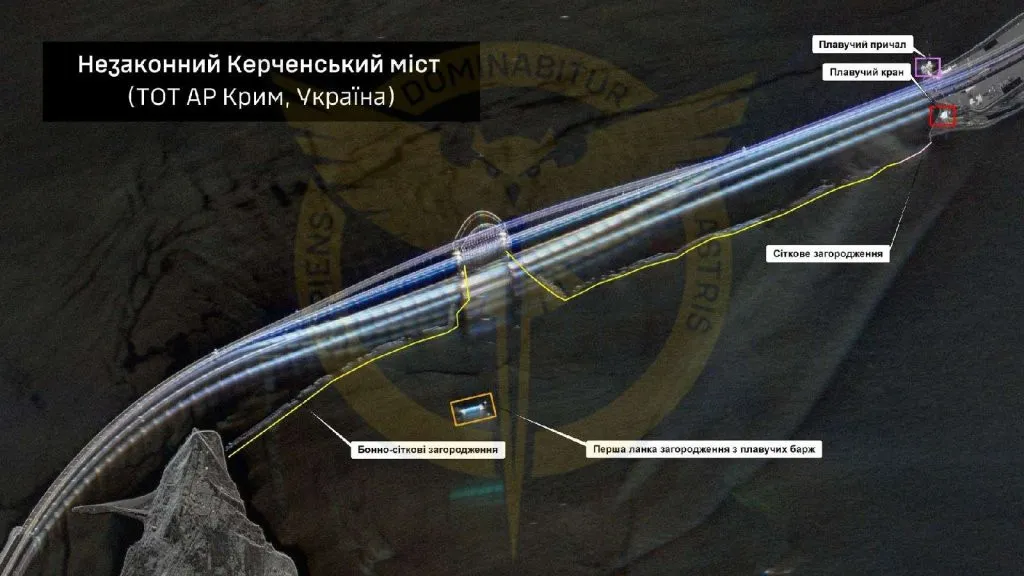
The Main Directorate of Intelligence of the Ministry of Defense of Ukraine (better known by the acronym GUR) previously released this SAR image of the highly strategic Kerch Bridge that links the occupied Crimean Peninsula to undisputed Russian territory, which it said came via ICEYE. GUR
Kosmos 2612 is one of six satellites (Cosmos 2609 through Cosmos 2614) the Russian military launched via a single Soyuz-2.1b rocket on April 17. The exact purpose and configuration of these satellites are unconfirmed. However, they appear to be so-called inspector types capable of rendezvousing and maneuvering close to other objects in space. We will come back to this later on.
What is clear is that Kosmos 2612 has spent the past three weeks deliberately maneuvering to extremely closely shadow ICEYE X36.
“Over two weeks beginning on September 30, 2026, Cosmos 2612 executed a series of new maneuvers that brought it back into coplanar alignment and placed it at nearly the same altitude as the commercial satellite,” Clayton Swope, Deputy Director of the Aerospace Security Project and Senior Fellow at the Center for Strategic and International Studies (CSIS) think tank in Washington, D.C., along with Research Assistant Chantal Li, wrote in an analysis of the situation just last Thursday.
“According to current orbital elements, the Russian #KOSMOS 2612 satellite is now within 1-2 km [0.6 miles to 1.2 miles] of #ICEYE-X36,” Dr. Marco Langbroek, currently a lecturer on Space Situational Awareness at the Faculty of Aerospace Engineering of Delft Technical University in the Netherlands, wrote in a thread on X on Saturday. “Based on current elements, it might come within meters of the latter within a few hours from now. This is an #RPO [rendezvous and proximity operation] without consent.”
2/x Initially I was skeptic whether #ICEYEX36 really was an intentional target: but a series of manoeuvers by #Kosmos2612 starting on Sept 30, were clearly designed to bring the two objects very close and synchronise their orbital periods, orbital altitude and eccentricity: pic.twitter.com/BhIoi8Rtbe
“New TLEs [two-line elements] show that K2612 made a manuever [sic] on Oct 16 and is now stationkeeping within 5 km [3.1 miles] or less of ICEYE X36,” Jonathan McDowell, an astrophysicist and astronomer, who previously worked for the Harvard-Smithsonian Center for Astrophysics and has long been tracking objects of interest in orbit, also wrote in a series of posts on X on Saturday. “To my knowledge this is the first LEO [low Earth orbit] rendezvous of two active satellites where the owner of one of the sats did not give approval.”
McDowell later clarified that “close passes” of objects in orbit had certainly occurred previously, “but not I think rendezvous [sic] (matching velocity vector).”
“This is the most advanced and potentially dangerous uncooperative RPO we’ve observed,” Adam Marsh, LeoLabs vice president for technical solutions, separately told Breaking Defense.
Unprecedented orbital maneuvering
As underscored by the previous interaction of Kosmos 2542 and USA 245, close shadowing of satellites in orbit is certainly nothing new. The U.S. government, as well as Russia and others, have been observed engaging in this kind of activity in the past. At the same time, just how close Kosmos 2612 got to ICEYE X36, and how long they spent in close alignment, are, at the very least, highly unusual.
“It’s important to note that ‘red’ on ‘blue’ engagements, such as this, are relatively uncommon in Low Earth Orbit (LEO),” LeoLabs’ report points out. At the same time, “this was not a routine conjunction or ‘fly by.’ The sequence included a controlled approach, changes in relative position, close-proximity loitering, additional small maneuvers, and a controlled departure. The behavior is consistent with sophisticated rendezvous and proximity operations (RPO).”
On top of this, there are other signs that what just happened between Kosmos 2612 and ICEYE X36 may follow a Russian playbook of sorts that could also be used in a prelude to an on-orbit anti-satellite attack.
Within weeks of their launch in April, Kosmos 2610, 2611, 2612, 2613, and 2614 had all moved orbital planes shared by multiple ICEYE satellites. Three of them subsequently made close passes by ICEYE X36, specifically, but none of them initially kept station with it. ICEYE CEO Rafal Modrzewski did say “the company later moved its satellite, prompting further Russian manoeuvres [sic],” according to a story Reuters published last week.
🛰️ Russian satellites approaching ICEYE: a closer look at the timeline.
Tracking data via @LeoLabs_Space . Analysis via COMSPOC SSA.
On April 16, Russia launched six maneuverable satellites (Cosmos 2609-2614) from Plesetsk. Five of them — Cosmos 2610, 2611, 2612, 2613, and 2614… pic.twitter.com/ISoToOptnp
To take a step even further back, before Kosmos 2542 was caught shadowing USA 245 in 2020, there were reports that the U.S. spy satellite had shifted its orbit. This was possibly prompted by the movements of another Russian ‘inspector,’ Kosmos 2543. This does not appear to have ever been confirmed.
While in space, Kosmos 2542 had deployed Kosmos 2543 in November 2019. Then, on July 23, 2020, the U.S. military said that it had detected Kosmos 2543 itself launching a smaller object in what it described as a test of a space-based anti-satellite weapon. In a subsequent interview with Time, then-Chief of Space Operations Gen. John “Jay” Raymond, U.S. Space Force’s top uniformed officer, disclosed that American forces had first observed Russian “nesting doll” satellites – a reference to traditional Russian matryoshka dolls – similarly demonstrating the “characteristics of a weapon system” in 2017.
U.S. officials have been warning for years that Russia’s growing array of inspector-type satellites, ostensibly designed to examine other assets the country has in orbit if they break down or otherwise malfunction, are inherently dual-purpose in nature. Beyond launching projectiles, a host of other modes of attack, kinetic and non-kinetic, are enabled by the underlying ability of a spacecraft to maneuver very close to other objects in orbit and hold that position. This includes the use of grappling arms to cause damage or just tow a satellite out of orbit, spraying aerosols to harm or impair optics and solar panels, and electronic warfare jamming. A satellite could turn out to be the weapon itself, becoming a kinetic interceptor that smashes into its target on command.
A U.S. Defense Intelligence Agency graphic highlighting some of the ways on-orbit attack can be carried out. DIA
One satellite shadowing another closely in orbit allows various kinds of intelligence gathering, as well. Collection of imagery and signal emissions can offer valuable details about a target’s capabilities and vulnerabilities, as s well as how it is being used in a particular context.
“As observed by LeoLabs Global Radar Network and analyzed by our team, COSMOS 2612 demonstrated a sequence of capabilities that could be used to inspect, characterize, shadow, or potentially interfere with another spacecraft,” according to LeoLabs’ report. “These actions require planning, maneuverability, precise navigation, and significant fuel. They may also indicate the use of onboard sensors capable of measuring the relative position of another spacecraft.”
What has just transpired between Kosmos 2612 and ICEYE X36 highlights how just a viable threat of attack can be disruptive in its own right. Simply forcing an imagery-gathering satellite out of position could prevent it from collecting over an intended area, or at least doing so in the most effective manner.
Furthermore, satellites only have a limited amount of fuel with which to maneuver in any way after reaching orbit. Harassment in space that forces them to burn off that finite resource at a higher-than-expected rate could reduce their total operational life expectancy, as well as further limit their effectiveness and make them more vulnerable to attacks or accidents. Debris in space is a steadily growing hazard that satellites increasingly need to dodge.
“We can only speculate about the operation’s goal, but it could have been anything from simply intimidation to outright destruction or sabotage of a U.S.-registered satellite,” CSIS’ Clayton Swope told TWZ directly today in light of the new developments regarding Kosmos 2612 and ICEYE X36. “Perhaps the operation is on hold. There are, however, several other satellites that shadowed ICEYE X36 back in May that could be brought in[to] action too.”
Attribution and broader ramifications
It is important to point out that space, as a domain, inherently creates complications when it comes to attributing any form of attack, should one occur. Satellites do suffer mishaps, sometimes with catastrophic results, the causes of which are not always clear.
Update: Debris from active PRC satellite Yaogan 50-02.@S4S_SDA has now cataloged 62 pieces of debris originating from the PRC’s active Yaogan 50-02 satellite (68196 / 2026-051A) on around 20 July 2026 (ref my initial analysis on Substack, link in thread).
Some recordings of USA 32 (#19460), whose fragmentation in LEO on 13 Sep 2026 at approximately 2113 UTC was confirmed by U.S. Space Forces–Space (S4S). By the time of the recordings, a large number of fragments had already dispersed over a wide section of the track. pic.twitter.com/gjRxCTPz2o
“While the intention behind COSMOS 2612’s behavior remains uncertain, the deliberate nature of the activity, the fuel required to conduct this activity, and the proximity to a Western commercial imaging satellite make the event strategically important,” LeoLab’s report notes. “This event, and the capabilities demonstrated, do not establish hostile intent. It does, however, demonstrate capabilities that could support intelligence collection, on-orbit inspection, coercive signaling, interference, or preparation for future counterspace operations.”
It is very possible, if not highly probable, that Kosmos 2612’s recent activities will be indicative of a trend going forward. Aggressive and potentially dangerous maneuvering by armed forces in close proximity to each other is not uncommon within the atmosphere, especially in the air and at sea. Extending a variation on those tactics into the space domain would make sense, especially given the central role that capabilities in orbit increasingly play in modern military operations globally. Those roles extend to early warning, general intelligence gathering, weapons guidance, near-real-time communications, and beyond.
American officials have already said in the past that American assets in space are routinely the target of “reversible attacks,” meaning ones that do not cause permanent damage. That also speaks to the difficulty of attribution if there is no lasting effect or impact to draw attention to.
The U.S. government’s long-time monopoly on the space domain has also been steadily eroding in recent years, especially in light of China’s massive expansion of its intelligence-gathering and other satellite constellations. The scale and scope of what commercial satellite imagery and other space services providers, like ICEYE, offer today have led to a further democratization of space-based capabilities to countries like Ukraine that do not possess significant, if any, constellations of their own.
This satellite image indicating multiple Russian Tu-95 Bear bombers having been damaged or destroyed at Belaya Air Base after a Ukrainian strike last year is indicative of what ICEYE provides commercially. Courtesy ICEYE
More details may yet emerge about Kosmos 2612 and its recent rendezvous in orbit with ICEYE X36, but it already points to how space has become an increasingly likely potential zone for direct conflict going forward.
Starboard Value sees significant upside in Skyworks Solutions (SWKS), viewing the chipmaker as undervalued following its acquisition of Qorvo (QRVO),Bloombergreported, citing people familiar with the matter.
The activist investor sees potential value in the companies’ complementary product portfolios and merger-related cost
A woman holds a sign that reads in Spanish, “Corruption has left us in the dark,” during a protest against power cuts in Valencia, Venezuela, on Oct. 2, 2026. (Graphic by Truthdig; images by AP Photo, Adobe Stock)
The “biggest oil deal in history” was announced almost simultaneously by acting Venezuelan President Delcy Rodríguez and U.S. PresidentDonald Trump on Aug. 28. However, many Venezuelans didn’t find out until the next day because massive blackouts — up to 16 hours a day and partly caused by increased oil production — kept them from scrolling the news.
At the United Nations a month later, Trump bragged that he had taken Venezuela’s “spoils,” while Rodríguez said the deal with the U.S. would contribute to resolving the energy needs of “the hemisphere and the international economy.” Venezuelans then asked: What about our energy needs and economy?
The oil deal, the legal and operational details of which are still unknown, covers the exploitation of 17 fields and 65 billion barrels, which equates to 20% of Venezuela’s total reserves — the world’s largest, at an estimated 303 billion barrels. U.S. companies will invest $100 billion in exploiting the fields, a figure which — according to Venezuelan government projections — would translate into more than $209 billion in tax revenue for Venezuela over the years of the contract.
The announcement sparked questions and criticism from different sectors of the country, with concerns about the lack of information and the impact on sovereignty. In response, Rodríguez tried to explain the deal’s benefits in a nationally televised address, noting, “How much does Venezuela receive? Based on a barrel price of $65 … revenue would reach $209.3 billion for the state. In concrete terms, this means that for every barrel produced and sold, about $19 goes to [Venezuela].”
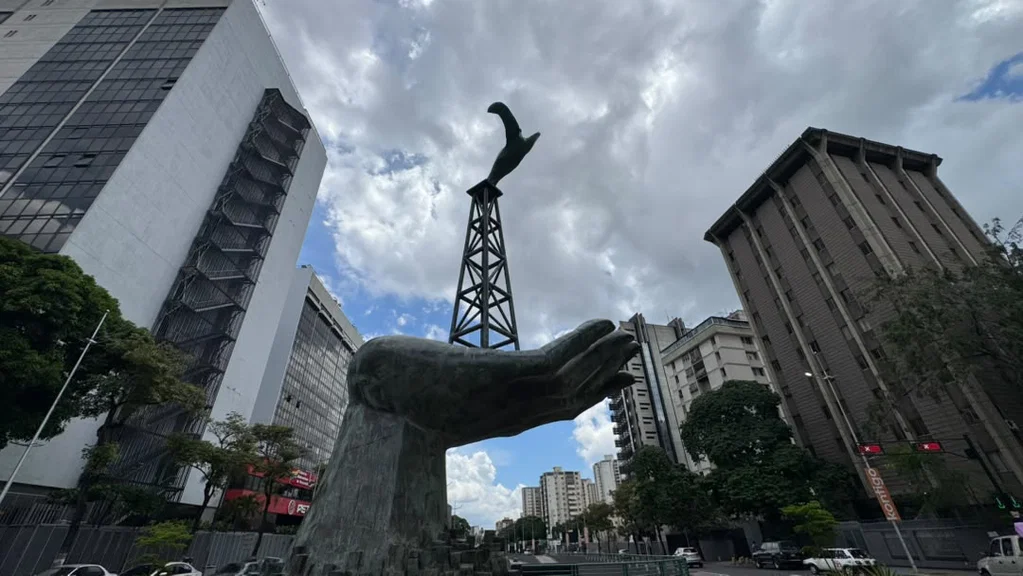
Paúl del Río’s Monument to Peace, erected in 2003, honors the recovery of the Venezuelan oil industry after the government increased state control in 2001, and after the opposition strike ended. (Jessica Dos Santos Jardim)
Oil drives the Venezuelan economy. Currently, it accounts for 71% of the nation’s total exports, but now much of that revenue goes to the U.S. In the first quarter of this year, out of a total of $7.76 billion in exports, $5.5 billion came from oil activity. As the acting president’s address went on, many of us only had more doubts.
A few hours later, Venezuelan economist Francisco Rodríguez summed up some of the nation’s concerns: “Do the projected tax revenues … correspond to nominal amounts, inflation-adjusted amounts, or net present values? A nominal amount of $19 per barrel in 2051, the project’s final year, would correspond to a real value of about $9 today.”
“The $209 billion equates, over 25 years, to about $8.4 billion annually, a relatively low amount compared with the tax revenue Venezuela has collected in the past at similar production levels. The amount would be even lower if it corresponds to a nominal total.” According to Central Bank of Venezuela data, Venezuela took in a record $82.8 billion in 2008 alone from oil sales.
Contradictions
Trump later contradicted Delcy Rodríguez’s 25-year timeline, saying the deal would involve a century of concessions. Francisco Rodríguez, the economist, noted that extracting 65 billion barrels in 25 years would be impossible, due to lack of infrastructure.
“What rights does the U.S. acquire over these resources after 25 years? Can a future Venezuelan government decide to withdraw from this deal if it doesn’t like it?” he asked.
And why wouldn’t they like it? Trump said on Truth Social that Venezuela will begin supplying the U.S. strategic oil reserve immediately through “a gift.” Nobody knows what that means exactly, but since the military intervention on Jan. 3, the revenue generated by the sale of Venezuelan oil — we don’t know how much that is either — is already “in the custody” of the U.S. Treasury.
“It doesn’t look like Venezuela will benefit broadly in the long term. It’s like being on floor minus-18 and going up to minus-10,” Venezuelan researcher Blas Regnault, who specializes in energy policy and oil governance, told Truthdig from The Hague, Netherlands.
“There could be an indirect reactivation of the economy because of the indirect jobs that may emerge in some regions. But let’s also keep in mind that the country has been 100% blockaded, suffocated, so any door that opens will bring some benefits, but this is not the benefit one would expect for a sovereign country,” he said.
“That’s the other problem: There’s no sovereignty of any kind over the resource itself, over what’s being sold. On top of that, there’s a lot of opacity — you’re analyzing blind.”
This “opacity” is also illegal. Articles 150 and Article 187, Paragraph 9, of Venezuela’s Constitution state that contracts of national public interest with foreign states or entities require approval from the National Assembly. However, although the Assembly endorsed the announcement of the deal on Sept. 1, its president, Jorge Rodríguez, said it had not yet been “submitted” to the legislature. Then, a month later he said that “according to some legal experts, it doesn’t need to be reviewed.”
It’s clear that Venezuela is once again, as it was for much of the 20th century, a kind of “U.S. oil province,” Regnault says, “Recovering sovereignty won’t be easy because Venezuela is strategic to U.S. interests.”
“On top of that, the other side of the coin is that China has become a key player [globally]. Today the Chinese do what Saudi Arabia used to do when it cut production and pushed prices up. With this Strait of Hormuz crisis, after the naval blockade of Iran, it was discovered that China had more reserves than previously thought, and that kept the crisis from being bigger and the price from reaching $150.”
That is precisely why U.S. Secretary of State Marco Rubio celebrated the fact that several of the oil fields included in the deal were once “dominated by China and Russia and Iran.” At the same time, the U.S. government has decided to maintain sanctions against Venezuela, thereby preventing any new economic players. In fact, the U.S. Treasury Department, through its Office of Foreign Assets Control, updated its oil licensing policy for Venezuela in late September through Orders 46E, 48D and 49B, which benefit U.S. businesses but maintain an absolute ban on Russia, Iran, Cuba, North Korea and China.
“The [Venezuelan] government has already amended the Hydrocarbons Law to try to create more favorable conditions for investors in the oil and gas sector, but … the [U.S.’] problem isn’t domestic supply. They need to monopolize the world’s energy reserves, markets and prices in order to prevail in the rest of their economic activities,” oil expert David Paravisini explains to Truthdig from Caracas, referring to a legal reform that was passed on Jan. 29 and created the possibility of technical and operational management and direct commercialization by private companies. He believes that for Venezuela, the deal is a diplomatic “quest” to survive.
People block a street during a protest against power cuts in Valencia, Venezuela, on Oct. 2, 2026. (AP Photo/Jacinto Oliveros)
Trump is also maintaining some of his domestic support by presenting Venezuela as the great economic and geopolitical victory of his administration, especially after the war against Iran — which was supposed to last “only a couple of weeks” — reached the six-month mark and cost more than $37.5 billion through the end of July. In fact, Trump has claimed again and again that this oil deal will lower fuel costs inside the U.S. and come “at no cost whatsoever to the American taxpayer.””
Does this mean the $100 billion investment will come from private companies? The deal also aims to exploit eight greenfield blocks, areas where crude has been identified but which have not yet been developed. But what happens if that investment does not materialize? Since Jan. 9, Trump has been trying, without success, to persuade U.S. oil companies to invest in Venezuela.
Corruption is fine if the U.S. profits
So far, the only company we’ve heard about is North American Blue Energy Partners (NABEP), which was selected on Aug. 31 by the Trump administration to lead oil extraction projects in the 17 Venezuelan fields.
According to the White House, the Department of Defense will hold a 35% equity stake in NABEP and, in addition, the Barbados-registered company will grant Washington the right to buy 20% of the oil it produces at the cost of production.
NABEP, which has only operated in Venezuela for two years, was awarded the deal without a prior bidding process. The company belongs to Venezuelan businessperson Alejandro Betancourt, who was under investigation by federal prosecutors in Florida until January 2026 for allegedly laundering more than $1 billion from the state-owned Petróleos de Venezuela (PDVSA). The case was then closed suddenly under the orders of U.S. Deputy Attorney General Todd Blanche (now the attorney general), after a decade-long investigation. He is still the subject of open investigations in Switzerland and Spain.
Betancourt comes from a middle-class family but studied at the private religious school Instituto Cumbres de Caracas, where he befriended Javier Alvarado Pardi, son of Javier Alvarado Ochoa, who later became president of Electricidad de Caracas, deputy energy minister and a PDVSA executive.
Back in 2009, Alvarado Ochoa presented Betancourt and his engineering firm, Derwick Associates, as the best solution to Venezuela’s power generation crisis. Betancourt went on to receive 12 government contracts, awarded without competitive bidding, worth a total of $5 billion, which were either never completed or were implemented improperly, according to Transparency Venezuela and the Organized Crime and Corruption Reporting Project (which is funded by the U.S. government, among other countries).
So why Betancourt? Rubio said that he is no longer under investigation by the U.S., has supported the Venezuelan opposition and he has demonstrated his ability to produce oil. In that vein, NABEP claims it produces 200,000 barrels of crude a day, just behind Chevron.
However, Victor Hugo Majano, a Venezuelan investigative journalist and director of the well-known outlet La Tabla, told Truthdig that Betancourt overbilled the Venezuelan state by billions of dollars for power plants that never worked. He cited information from Thor Halvorssen, an anti-Chavista activist and cousin of Venezuelan opposition leader Leopoldo López. With that money, Betancourt bought a Dassault Falcon private jet and the historic Alamíin Castle in Spain.
Halvorssen also says Betancourt, who is also linked to 50 companies spread across 15 countries, paid former New York prosecutor Adam S. Kaufmann to halt prosecutions; former Wall Street Journal reporters to discredit whistleblowers; and former New York City Mayor Rudy Giuliani to bring the U.S. Justice Department over to his side.
“Despite this, the U.S. still doesn’t attack Venezuelan corruption. They want to protect the dollar and the U.S. financial system. They are only worried about securing capital flow, money that is not controlled by the state, the [Venezuelan] government,” Majano said.
More oil for the U.S., less electricity for Venezuela
Meanwhile, Venezuelans are paying the price for both Betancourt’s alleged corruption and the oil deal. So far this year, oil production has increased by 29.9%, going from 924,000 barrels per day (bpd) in January to an average of 1.2 million bpd. The increase has been driven by the need to deliver oil to U.S. companies, and it has directly worsened the nation’s electricity crisis.
Authorities acknowledge this; Venezuela’s interior minister, Diosdado Cabello, said in May the country is seeing higher electricity demand due to the growth in oil production, which “is a very serious problem.” The Ministry of Electrical Energy also noted that demand has reached 15,625 megawatts (MW), “the highest energy consumption figure in the last eight years, an increase of 3.6% compared with the peak reported in 2025.”
However, this statement omits that Venezuela actually has a nominal installed capacity of approximately 35,000 MW, double the country’s peak demand, but stable real generation barely reaches 11,000 MW. This shortfall is a result of both U.S. sanctions and domestic corruption, which together have led to disinvestment, lack of maintenance, fuel shortages (plants designed to run on natural gas have been forced to use low-quality diesel) and transmission problems.
Where does oil production come in? Víctor Poleo, an electrical engineer and former vice minister of Energy and Mines from 1999 to 2001, told Truthdig that “the national oil industry uses up about 1,500 MW, of which about 250 MW is self-generated, but another 1,250 MW is taken from the national interconnected system. This draw is 24/7 and must be continuous in order to carry out crude extraction, transport, pumps and compressors and refining.”
High-voltage transmission lines cross the Waraira Repano mountain range overlooking Caracas, Venezuela. (Jessica Dos Santos Jardim)
Poleo, who bases his analysis on studies by fellow electrical engineer Nelson Hernández, says light, medium and heavy crudes are estimated to require between 9 kilowatt-hours and 15 kilowatt-hours per barrel to produce. For extra-heavy Orinoco crudes, the estimate is 24 kilowatt-hours per barrel. “As a result, citizens lose their quality of life so that oil can be produced.”
This deterioration is particularly notable in Zulia state, Venezuela’s so-called oil cradle, where production has risen to between 350,000 and 370,000 barrels per day of light and medium crude — far below the historic peak of 1.5 million bpd in 2004, but a figure that, for its residents, has translated into daily blackouts exceeding 12 hours.
From the Isla Dorada residential complex in northern Maracaibo, capital of Zulia, José Javier León tells Truthdig that power failures “have worsened dramatically.” In his area, outages used to last four hours but now exceed seven.
“In many places there are double rounds, meaning the power goes out in the morning and at night, or at night and then before dawn. All the problems have gotten worse, and we don’t know the real reasons. In the suburb of Cuatricentenario, one of the most working-class areas and where the government had the most electoral support, the cuts are the worst,” he says.
León complains that residents are not alerted when the outages will happen. There is nothing like the electricity rationing schedules of the past, which would at least let them plan better. “In my area, there is no domestic gas, so we have electric stoves. Also, these are apartment buildings, where we have to turn on pumps to get water.” To make matters worse, the temperature in Zulia often reaches 39 degrees Celsius (102 Fahrenheit) because of the humidity.
In the Andes, outages add up to as many as 12 hours a day, and 16 hours in rural or border areas. From La Hechicera, an urban neighborhood in the city of Mérida, Silvana Solano tells Truthdig that the power used to go out for seven to eight hours, once a day, “but for the past two months, it goes out twice a day, the first time for seven hours and the other for around five hours, and we can’t predict the schedule. This also affects phone signals, which keeps us from communicating, making payments, etc.”
Some government institutions, including the Mérida mayor’s office, are open only from 8 a.m. to noon. Solano says she is worried that public schools, which operate until 3 p.m., will also adopt this schedule, in turn affecting parents’ working hours. Throughout September, residents of the towns of Caja Seca (Zulia state) and Nueva Bolivia (Mérida state) blocked the Pan-American Highway to protest the power outages.
To Venezuela’s north, on the famous Margarita Island, Alejandro Pérez tells Truthdig there are areas that have gone seven to eight months without water service. “Here we pay for water trucks, $50 for 10,000 liters of water, sometimes with $60 we get 13,000 liters, but you have to pay in foreign cash or at the parallel rate because the Central Bank of Venezuela exchange rate isn’t accepted here.” The black market or informal exchange rate is worth more, for those with foreign currency, than the official exchange rate.
Unlike other Caribbean islands, Margarita doesn’t have significant natural sources of fresh water. Some 90% of the area’s water comes from the mainland, crossing the sea through underwater pipelines that require gigantic pumping stations.
The contradictory rhetoric and the endless problems we face daily mean that, according to the latest AtlasIntel poll conducted for Bloomberg News, only 10% of Venezuelans believe the country will benefit from the oil pact with the U.S. — data that also aligns with the most recent study by the firm Meganálisis, the same one that after Jan. 3 said 92.2% of Venezuelans loved Trump. Emotions change, social problems persist, and without electricity, no economic improvement will be possible.
The views expressed in this article are the author’s own and do not necessarily reflect those of the Venezuelanalysis editorial staff.
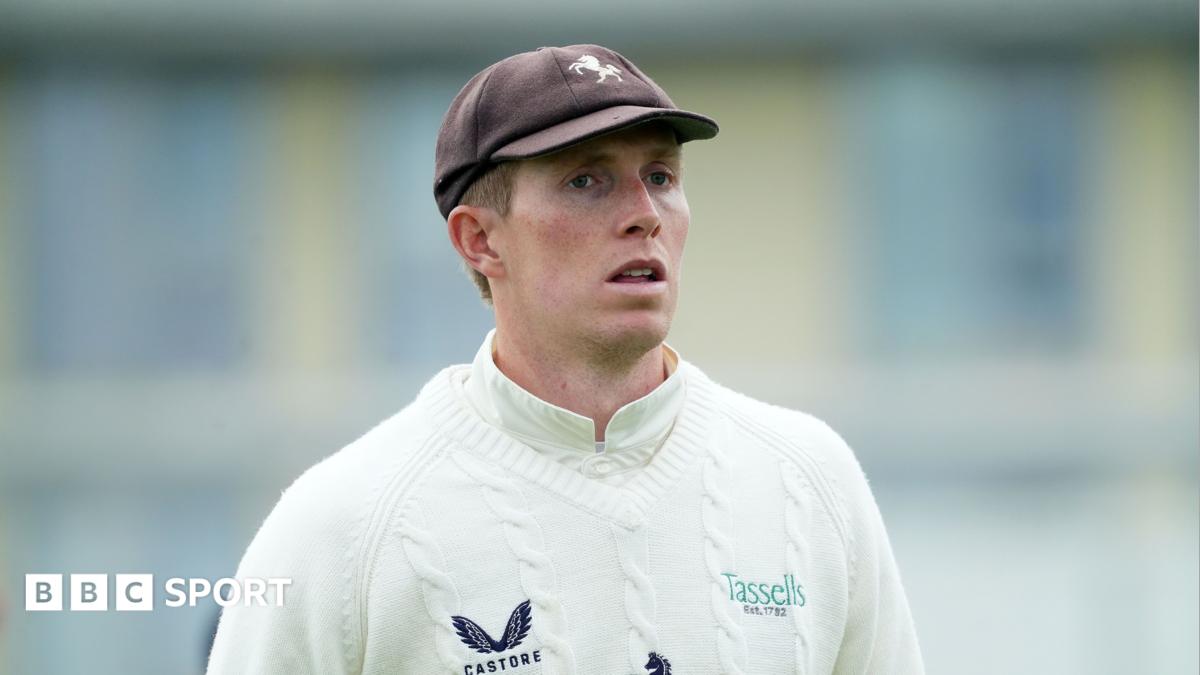
England batter Zak Crawley has signed a one-year contract extension with Kent to keep him at the county next summer.
The 28-year-old has agreed the new deal three days after his central contract was not renewed when the England and Wales Cricket Board released its updated list.
Crawley has not featured in a Test since the final game of last winter’s Ashes tour in Sydney and last appeared for England in a one-day international in Sri Lanka in January.
He played in 12 County Championship matches for Kent this season as they won promotion back to Division One, making 608 runs with a top score of 89 among four half-centuries.
“It’s an exciting time as we head back into Division One of the County Championship and I’m looking forward to the challenge of competing for Kent this coming summer,” said Crawley.
“It’s great to see so many young players coming through the system here, similar to my journey into first-team cricket, and I’m excited to help them settle into the first team and further their development for the long term.”
The opener has made more than 180 appearances in all competitions for his home county since his debut in 2017.
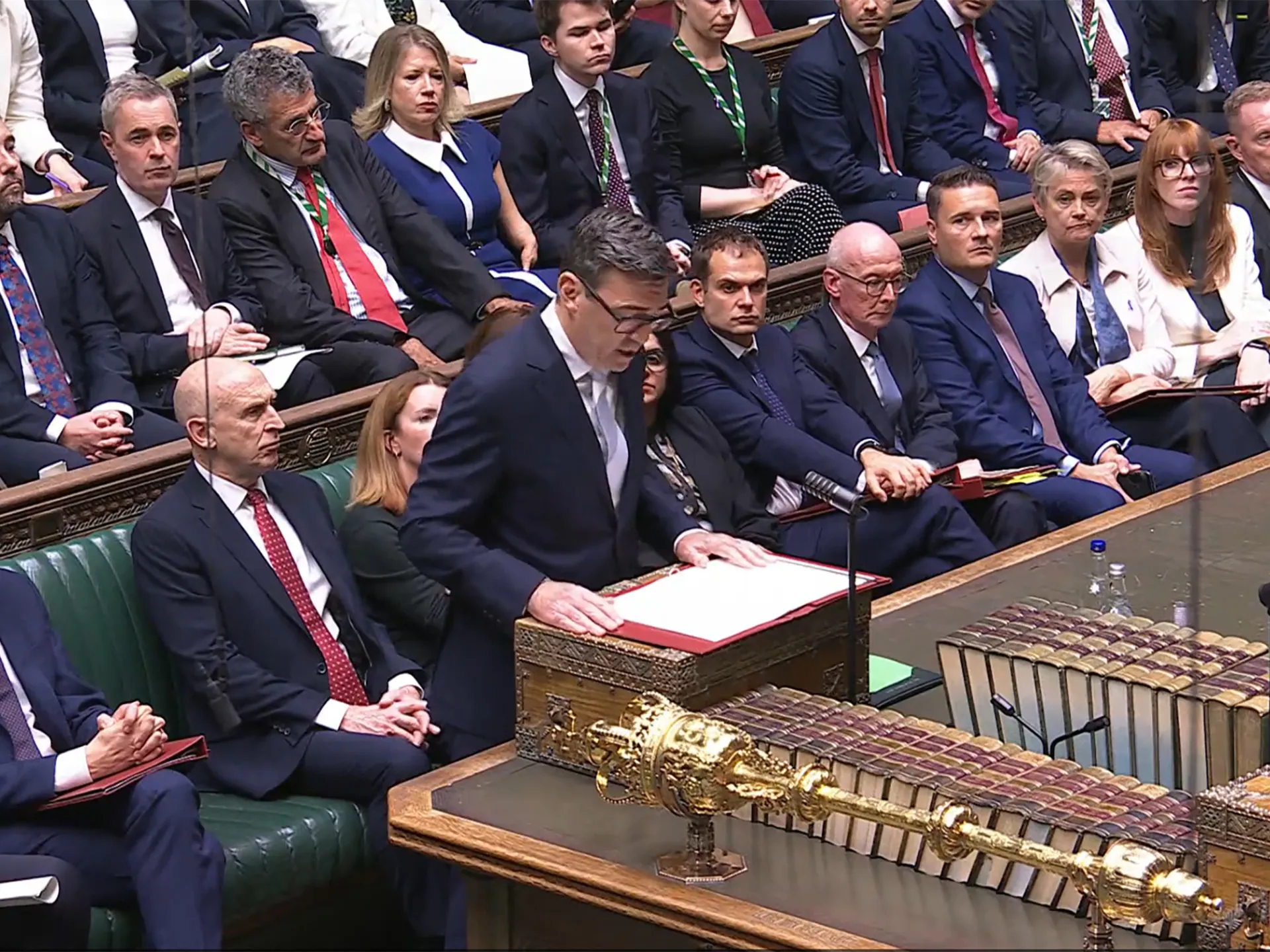
UK Prime Minister Andy Burnham says renegotiating relationship with the EU could reverse some post-Brexit ‘damage’.
Published On 12 Oct 202612 Oct 2026
UK Prime Minister Andy Burnham has pledged to push for closer relations with the European Union, confirming he will attend a bilateral summit in Brussels next month.
Addressing parliament on Monday, Burnham said parts of the trade deal agreed with the EU after the UK voted to leave in 2016 would be renegotiated.
Recommended Stories
list of 3 itemsend of list
Burnham said that the British public would be “the boss” at every stage of renegotiating Britain’s relationship with the EU and that he wanted “serious dialogue” about long-term ties.
He told members of parliament that his focus at the summit would be boosting growth in the economy and controlling illegal immigration.
Among the topics of discussion at November’s summit are cutting bureaucracy for British food exports and emissions trading, as well as a “new youth experience scheme” and deeper cooperation on immigration.
The prime minister, who came into office in July, said the agreements could reverse some of the “damage” done to the post-Brexit British economy.
He told MPs that Britain needed to “take a calm, clear-eyed look at the world as it is today”.
“Sticking to the status quo is not good enough,” he said, adding that “public opinion currently supports a pragmatic approach like the one I am suggesting”.
After his address, the leader of the opposition, Kemi Badenoch, said Burnham would be unable to secure a better deal as the EU was ” tough negotiators” and warned that he had already “shown his hand”.
EU Trade Commissioner Maroš Šefčovič announced a deal with China on Friday to curb imports of Chinese hybrid vehicles into the EU and facilitate access to rare earths.
ADVERTISEMENT
ADVERTISEMENT
While the understanding signals a preference for a diplomatic resolution to the growing trade imbalance, European leaders are pushing for stronger measures to level the playing field. They are expected to review the details at a summit in Brussels next week.
The EU has also floated retaliatory measures if the outcome falls short of expectations.
Šefčovič travelled to Beijing on Wednesday for two days of intensive talks with his Chinese counterpart, Wang Wentao, in a bid to rebalance EU-China trade relations.
The EU is facing a record trade deficit with China of €1 billion a day, as a surge in low-cost Chinese imports threatens entire sectors of European industry.
“We have reached a shared understanding to moderate China’s export of hybrids and plug-in hybrids to the European Union,” Šefčovič said. “This opens up the prospect of cutting China’s exports by more than half.”
The commissioner said the deal would also improve access to the Chinese market for a range of EU products, from “car parts to olive oil and footwear”, representing almost €4 billion in current export value. It should generate at least €225 million in duty savings, he added.
Market access has been at the heart of EU-China discussions since negotiations began last June. Beijing has been reluctant to relinquish access to the EU’s 450-million-consumer market, which provides an outlet for its excess production.
Meanwhile, Brussels has proposed several legislative measures aimed at restricting Chinese companies’ access to the European market, while pressing Beijing to open up its own market to EU businesses.
Šefčovič also said China had agreed to facilitate exports of rare earths, which are essential to Europe’s green technology, defence and automotive industries.
“We have reached a shared understanding to further facilitate China’s export licensing for rare earths and permanent magnets,” he said.
The EU has accused China of “weaponising” its dependence on Chinese rare earths after Beijing restricted exports in 2025 amid a trade war with the US.
Šefčovič described the agreement as the conclusion of a “first phase of negotiations”.
The deal comes ahead of a meeting of EU leaders in Brussels next week, with expectations running high for concrete results from negotiations led by the European Commission on their behalf since last June.
A consensus on China has been emerging across the EU this week.
All EU countries now run trade deficits with China. On Monday, Germany and France urged the European Commission to take strong action against unfair Chinese trade practices that cause severe market distortions.
In a joint document, Paris and Berlin called for measures that could include “an immediate cut-off from the internal market if needed”.
On Wednesday, MEPs overwhelmingly adopted a resolution calling for resolute measures against Beijing.
Meanwhile, 44 EU industries, including chemicals, machinery, metals, solar, glass and cement, issued a joint statement on Friday warning that “Europe cannot maintain and grow its industrial base, quality jobs, and attract investment without the ability to respond effectively to unfair trade practices and distortions”.
Iran’s IRGC says it struck a “giant LPG gas carrier named NV Sunshine” that was “attempting to pass through the illegal route” south of the Strait of Hormuz.
WASHINGTON — President Trump said that he has struck a deal to obtain diesel from Russia, a stunning reversal of years of U.S. pressure on Moscow over its war with Ukraine and an attempt to address high fuel prices ahead of the U.S. midterm elections.
Trump said on social media on Friday that he struck the deal with Russian President Vladimir Putin in a phone call in which he was expected to discuss a suspected case of plague in Russia. Instead, Trump announced that Russia will immediately supply more than 300,000 tons of diesel, followed by an additional 500,000 tons in November and 1 million tons “immediately thereafter.” Russia will deliver another 3 million tons “within a short period of time” after that, he wrote.
Trump’s shocking announcement comes after he signed a sweeping Russia sanctions law last month that aimed at clamping down on Russia’s energy economy, among other areas, that fuel its war against Ukraine.
His move casts doubt on the likelihood of the White House imposing sanctions on Russia this month, given that a bipartisan law passed by Congress directs the administration to target the top importers of Russian oil and gas.
Trump, in his announcement, did not address the sanctions or Russia’s war but said, “Lower prices for Americans, especially our Great Farmers, Ranchers, and Truckers, is my Greatest Priority.”
The White House did not immediately respond to questions about who was paying for the diesel from Russia and when the fuel being supplied under the agreement would become available. It also did not clarify whether subsequent supplies of Russian diesel set to come next month would be supplied prior to Election Day on Nov. 3.
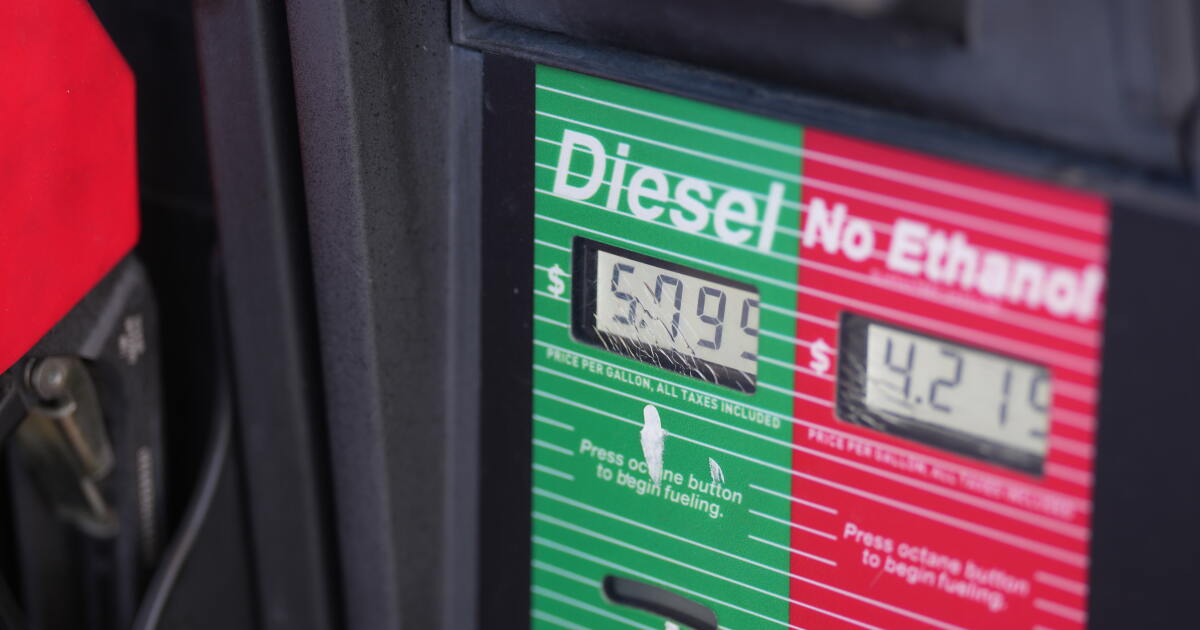
Gas prices globally have surged as the war in Iran upends the energy sector. The national average for a gallon of diesel in the U.S. was $6.23 on Friday, according to AAA, after hitting a record $6.52 on Sept. 22.
Russian presidential envoy Kirill Dmitriev reposted the Treasury Department’s announcement on X Friday and said that “Russia-US cooperation on diesel and energy will benefit the world.”
Rep. Don Beyer, the senior House Democrat on the Joint Economic Committee, called Trump’s announcement, “infuriating.”
“This is what we warned anyone who would listen: Trump isn’t the slightest bit trustworthy when it comes to Russia,” Beyer said in a statement on X. “Giving him expanded tariff powers in hopes he would use them to help Ukraine was a mistake. Now he’s lifting sanctions on Russian fossil fuels.”
The law Trump signed last month envisions sanctions on Russian officials, banks and a shadow fleet of tankers and bans all new U.S. investment in Russia and the handling of sovereign debt.
It also directed Trump to impose tariffs of up to 100% on the top five importers of Russian oil or natural gas, with an exception for countries that import less than 15% of Russia’s natural gas exports and have taken significant steps to reduce those imports.
The U.S. has not imported Russian oil or gas since 2022, when the Biden administration banned them because of Moscow’s invasion of Ukraine, according to the U.S. Energy Information Administration.
Shortly after Trump made the announcement, the Treasury Department said it was immediately issuing a temporary license allowing Russian diesel to be supplied to the global market.
This is the latest in several licenses the U.S. Treasury has issued regarding Russian fuel shipments since the start of the Iran war earlier this year. But it is the first such license to ease sanctions on diesel for a period lasting longer than the standard 30-day window since the start of the Ukraine war.
The new so-called general license means U.S. sanctions will not apply until April 2027 on deliveries of Russian diesel that has been loaded onto tankers as of Friday. The department extended similar easing of sanctions in March and April even though Treasury Secretary Scott Bessent had ruled out such a move earlier in the year.
The extensions continue to underscore how the fallout from the Iran war has boosted Moscow’s ability to profit from its energy exports, which had been restrained by the U.S. and other allies since the invasion of Ukraine.
Price and Binkley write for the Associated Press. AP writer Will Weissert in Washington and Farnoush Amiri in New York contributed to this report.
Russia to supply 300,000 tonnes of diesel immediately, followed by 1.5 million more, as prices soar amid the Iran war.
Published On 9 Oct 20269 Oct 2026
United States President Donald Trump said that Russia has agreed to supply 300,000 tonnes of diesel fuel to global markets amid discussions with Russian President Vladimir Putin.
“I have just concluded a highly successful discussion with President Vladimir Putin, of Russia, wherein it was agreed that Russia will immediately supply over 300,000 Tons of Diesel Fuel to the American and Global Marketplace, another 500,000 Tons during the month of November, and 1,000,000 Tons immediately thereafter,” Trump said in a post on his Truth Social platform.
Recommended Stories
list of 4 itemsend of list
The president added that Russia would deliver an additional 3 million tonnes of fuel “within a short period of time”. He said that the country would supply 500,000 tonnes in November.
An envoy for Russian President Vladimir Putin, Kirill Dmitriev, praised cooperation between Russia and the United States on diesel and energy in a post on X shortly after.
“Russia-US cooperation on diesel and energy will benefit the world,” Dmitriev wrote on X.
Petrol price pressures
The deal comes despite Ukrainian air strikes, which have taken more than half of the country’s oil refining capacity offline, according to claims made by Ukraine’s Ministry of Defence on Sunday.
The move also comes as prices of diesel, used in agriculture, heating homes and trucking goods, are near record highs ahead of the November 3 congressional elections that will determine control of Congress.
Diesel prices have been elevated in recent months but have started to decline. The average price for a gallon is $6.27 ($1.66 per litre), according to the American Automobile Association (AAA), which tracks daily petrol prices. That’s down $0.10 from this time last week, but up $5.94 from this time one month ago.
Diesel prices, which can drive inflation, are up 70 percent since the US and Israel’s war on Iran began this year, despite two high-profile recent moves by Trump to boost supplies of the fuel: pressuring allies to release emergency reserves and expanding access to tax-exempt red-dyed diesel, which is normally used for farm equipment.
The wars in Iran and Ukraine have triggered an unprecedented global fuel supply crunch.
Tech scion David Ellison spent three years doggedly pursuing his dream: acquiring Paramount, then Warner Bros. Discovery.
Ellison pulled off his bold feat this week by completing Paramount’s $111-billion takeover of Warner Bros., uniting two industry pioneers and a wealth of cherished properties — Batman, Bugs Bunny, Harry Potter and Maverick of “Top Gun,” as well as CBS, HBO, Comedy Central and CNN. All will be tucked under a corporate umbrella that Ellison is calling Skydance — the name of the studio he formed two decades ago.
The mogul and his lieutenants celebrated their victory in style, ringing the New York Stock Exchange opening bell on Thursday, capping a bruising battle to secure approval of a deal that had sparked protests across Hollywood over fears of looming job cuts.
Ellison and his team must braid together two huge film studios (housing nine film labels), four streaming services, three TV production studios, three animation units and more than 50 television networks, including two prominent news organizations. That could be a daunting task, particularly based on how previous Hollywood mergers have fared.
“Now, the real work begins,” David G. Fubini, a Harvard Business School senior lecturer, said in an interview.
Anxieties were evident Tuesday — the day the deal closed — when Ellison held a town hall meeting at Warner Bros., which drew nearly 500 employees.
During the session, CNN’s Anderson Cooper quizzed his new bosses, including about anticipated layoffs and news independence.
“Do you stand with CNN and our effort to completely restore access to covering President Trump?” Cooper asked, referring to CNN’s legal fight alongside MS Now and Politico to reverse the president’s ban on the three organizations.
“Of course,” Ellison replied.
CNN news anchor Anderson Cooper, pictured here in 2021, quizzed his bosses at a Burbank town hall.
(Evan Agostini / Invision / Associated Press)
Hours later, Ellison parried with reporters in Paramount’s darkened Stage 3, recently revamped with laser projection capabilities to simulate fantastical and far-flung settings for TV shows, such as the streets of New York.
“This was a turbulent process, and, at times, a really ugly process, to actually get this deal over the finish line,” Ellison acknowledged to reporters. “What I want to be able to do now is turn the page, and actually make sure that we are in the business of rebuilding trust.”
To do that, Ellison intends to make more movies and TV shows than rivals. He wants to ensure the Warner Bros. and Paramount studios, which will be kept separate for now, remain talent-friendly destinations.
Ellison has taken an opposing view from his predecessors who confronted crumbling industry economics by cutting expenditures to boost their corporate bottom lines.
The 43-year-old executive, son of Oracle co-founder Larry Ellison, proudly views his family as “owner-operators,” unshackled by quarterly earnings expectations or the need to dole out dividends to keep investors happy. The Ellison family controls the company’s voting stock, allowing David Ellison to take a long-term view as he charts Skydance’s course.
The goal is to “win in storytelling,” Skydance said in an investor presentation. It intends to build the media industry’s most “technologically capable” firm, which uses artificial intelligence to speed work flows. Skydance plans to spend at least $30 billion a year on film, television and video game content.
Skydance co-CEO Ynon Kreiz, Sarah Ellison, CEO David Ellison and investor Gerry Cardinale of RedBird Capital Partners on the floor of the New York Stock Exchange on Thursday.
(Yuki Iwamura / Associated Press)
The realities of Ellison’s big swing will soon sink in as he and his team turn their focus to integrating the myriad operations and about 55,000 employees.
In some ways, Ellison is behind the curve.
Most major mergers are consummated after executives have dedicated months to quietly drafting detailed operational plans and organizational hierarchies. Ellison, in contrast, has spent the last nine months in a pitched battle for Warner Bros. — ultimately vanquishing Netflix, hundreds of vocal merger opponents, and California Atty. Gen. Rob Bonta and his coalition of 11 other state attorneys general who filed an antitrust lawsuit in July in an attempt to derail the deal.
Ellison and Bonta resolved their legal fight Sept. 21. A week later, a federal judge cleared the way for the merger to close.
The lawsuit settlement with Bonta requires that the combined company produce at least 30 movies a year for five years. It also must maintain the studio facilities in Los Angeles, making “reasonable efforts to operate the lots in a manner consistent with past practices,” according to the agreement.
Skydance has committed to maintaining operations on the Warner Bros. lot, pictured here, and at Paramount Pictures in Hollywood.
(Eric Thayer / Los Angeles Times)
Ynon Kreiz, former chief executive of Mattel toys in El Segundo, has been tasked with leading the integration. The 61-year-old executive joined Ellison at Skydance as his co-CEO earlier this week. Day One of the combined company marked Kreiz’s second day on the job.
“They have a whole new management team that will be expected to immediately lead this massive integration,” Fubini, a former partner at consulting firm McKinsey, said. “The clouds have cleared, and they are at the base camp of Mt. Everest facing this enormous undertaking.”
In a report this week, TD Cowen Global Research maintained its “hold” rating on the newly constituted Skydance, expressing some doubts about Ellison and his team’s ability to “avoid integration and execution problems that have bedeviled other major media mergers.”
Hollywood has had a history of failed mergers, including Discovery’s 2022 takeover of WarnerMedia from AT&T, which led to years of cost cuts that ultimately seeded the ground for Ellison’s takeover. AT&T’s purchase of the same assets in 2018 also quickly unraveled, some 20 years after the epic failure of AOL Time Warner.
Ellison now must grapple with the hefty acquisition costs for Warner Bros., which climbed as the deal was delayed. The company emerged from the transaction with $86.8 billion in total debt; with most of that going toward buying out Warner Bros. Discovery’s stockholders at $31.17 a share.
The debt burden also includes more than $18 billion in obligations leftover from past mergers. Skydance has nearly $7 billion in cash on hand.
Oracle’s Larry Ellison and executive producer David Ellison arrive at the L.A. premiere of “Star Trek Into Darkness” at the Dolby Theatre in 2013.
(Eric Charbonneau / Getty Images for the Hollywood Reporter)
The Ellison family brought in foreign investors, including royal families of Saudi Arabia, Qatar and Abu Dhabi as passive owners, to contribute equity to the deal. Gerald Cardinale’s RedBird Capital Partners, a longtime Skydance stakeholder, added $4 billion, bringing its total investment in Skydance deals to $6 billion.
The deal’s financial terms pose deep challenges, analysts said. Fitch Ratings this week downgraded Skydance credit, citing “materially higher leverage after the acquisition and significant execution and integration risks,” according to its report.
“Interest rate increases made financing this transaction far more expensive than anyone anticipated,” said Eric Talley, a professor at Columbia Law School. “Those lenders are going to start expecting their interest payments — Skydance executives won’t have the luxury of time.”
The company could struggle, Talley said, to “generate the cash flow needed to easily service that debt unless they can significantly cut costs.”
Skydance has promised investors that it will make $6 billion in cost cuts over three years. It anticipates $2 billion in reductions within a year, with the bulk of the rest occurring in the second year of the merger.
“They are going to be firing a lot of people,” TD Cowen Global Research media analyst Doug Creutz said.
During the press briefing, Kreiz sought to downplay the expected workforce toll, saying Skydance would achieve savings by combining technologies that support streaming services and marketing expenditures. It plans to save costs on real estate by locating employees at Skydance-owned properties in Santa Monica, Hollywood and Burbank.
Ellison and Kreiz said they would jointly manage the new colossus.
“Where David will focus on creative, technology, long-term strategy, including especially as it relates to the creative part of the business, I will focus more on the operations and the day-to-day management of the business,” Kreiz said.
Kreiz was named to Skydance‘s expanded board this week along with Laurene Powell Jobs, founder of the Emerson Collective; and Bobby Kotick, former CEO of Activision.
The new leaders expressed confidence they could expand and integrate their two major streaming services to drive growth. HBO Max and Paramount+ combined will reach more than 200 million subscribers.
The plan, they said, is to combine the two streamers within a couple of years, but the company may offer subscribers a bundle with the two offerings sooner.
Skydance, according to sources, also expects to bolster its free, ad-supported service Pluto TV, which offers more than 200 channels. The service hasn’t had much corporate attention in recent years amid the cuts and deal-making.
The executives have not disclosed which teams would soon be affected or how they will structure overlapping business units.
For example, the company’s three TV studios each have their own leader: Channing Dungey runs the largest, Warner Bros. Television; David Stapf has long managed CBS Studios; and Skydance executive Matt Thunell has been president of Paramount Television Studios since last year.
Integrating CNN and CBS
Anxiety over whether CNN and CBS News would be mashed together was quelled, at least for now.
Skydance announced that it was retaining CNN Worldwide Chairman Mark Thompson as head of the larger news organization. CNN journalists had worried that CBS News Editor in Chief Bari Weiss, who has presided over a year of turmoil at the network, would be put in charge of both.
Any news consolidation could take years, in part, because CBS News is largely unionized while CNN is a non-union shop.
“We are going to spend the next several months basically getting under the hood,” Ellison said.
CBS News Editor in Chief Bari Weiss, pictured here in 2023 in Los Angeles, has had a turbulent tenure at CBS.
(Francine Orr / Los Angeles Times)
Another challenge will be stabilizing the Warner Bros. film unit, which has had a rough year at the box office. This month, the top two Warner Bros. film executives, Mike DeLuca and Pam Abdy, exited abruptly, clearing the way for longtime Ellison lieutenants Dana Goldberg and Josh Greenstein to oversee both film studios. The co-heads of DC Comics, James Gunn and Peter Safran, segued to the new Skydance.
Skydance also will have to deal with the NFL, which could demand substantially higher fees for CBS to keep its Sunday games.
The current contract allows the league to reopen negotiations because of the ownership change. Skydance is hoping it can wait three years until the contracts of other broadcasters also are up for discussion.
Skydance will be a major player in sports. Last year, Paramount agreed to spend $7.7 billion for UFC fights. The combined company also has rights to professional golf, including the Masters tournament; National Hockey League; Major League Baseball and NCAA basketball, including March Madness, as well as European rights to televise the Olympics.
“Until you actually get inside the company, there are things you won’t know,” Creutz said. “But they are going to have to come up with answers pretty quick.”
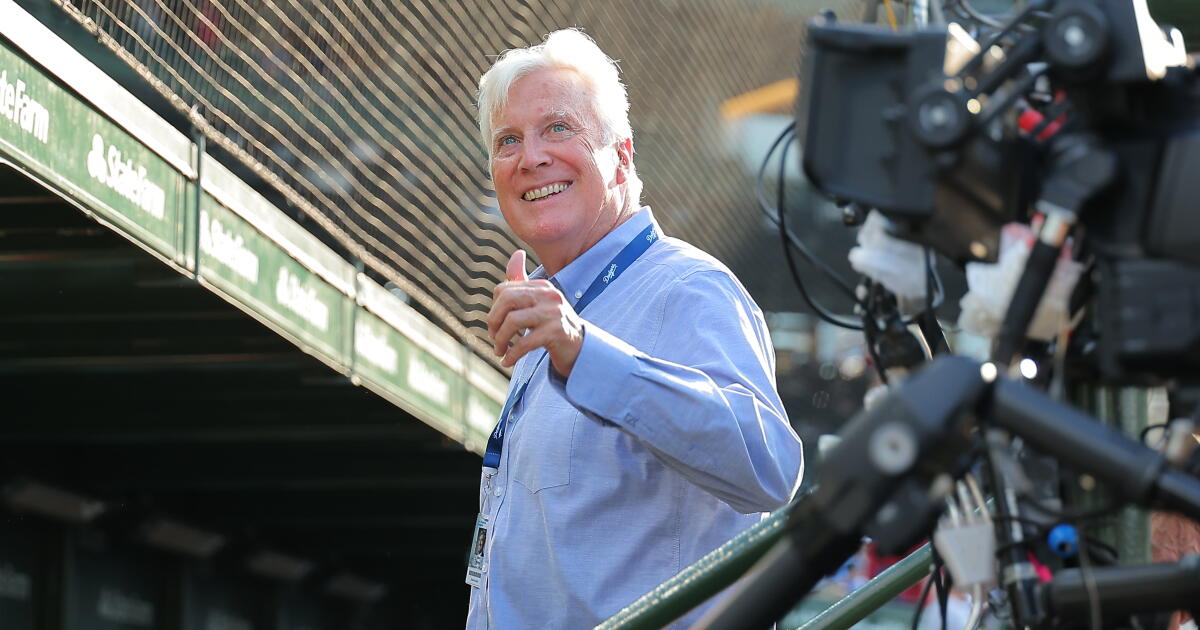
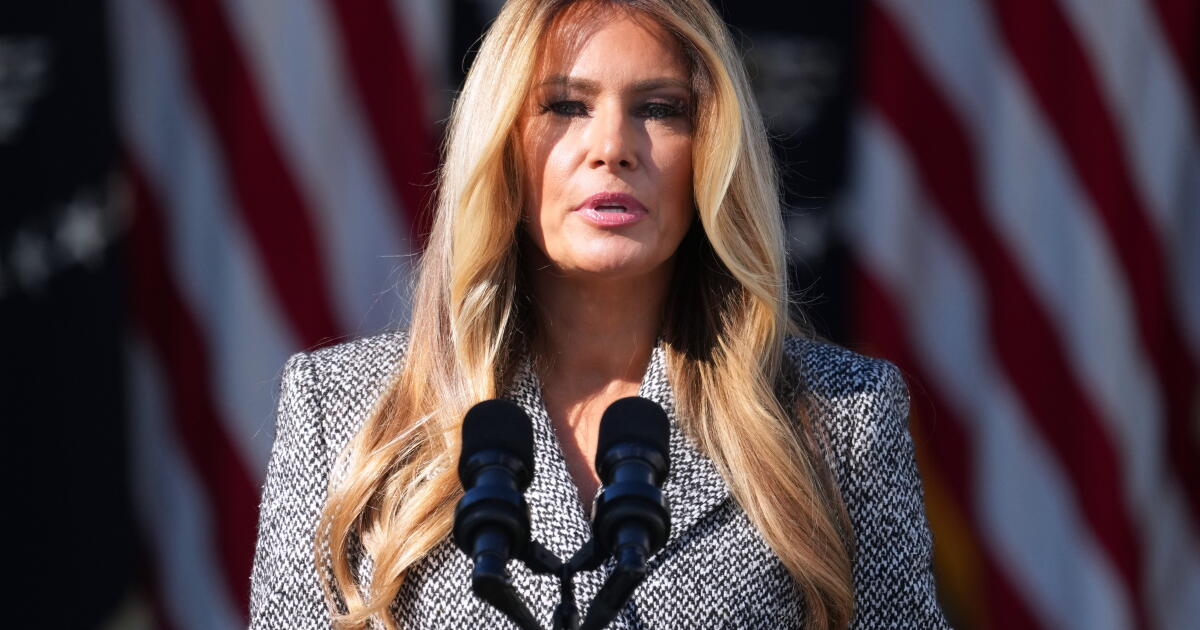



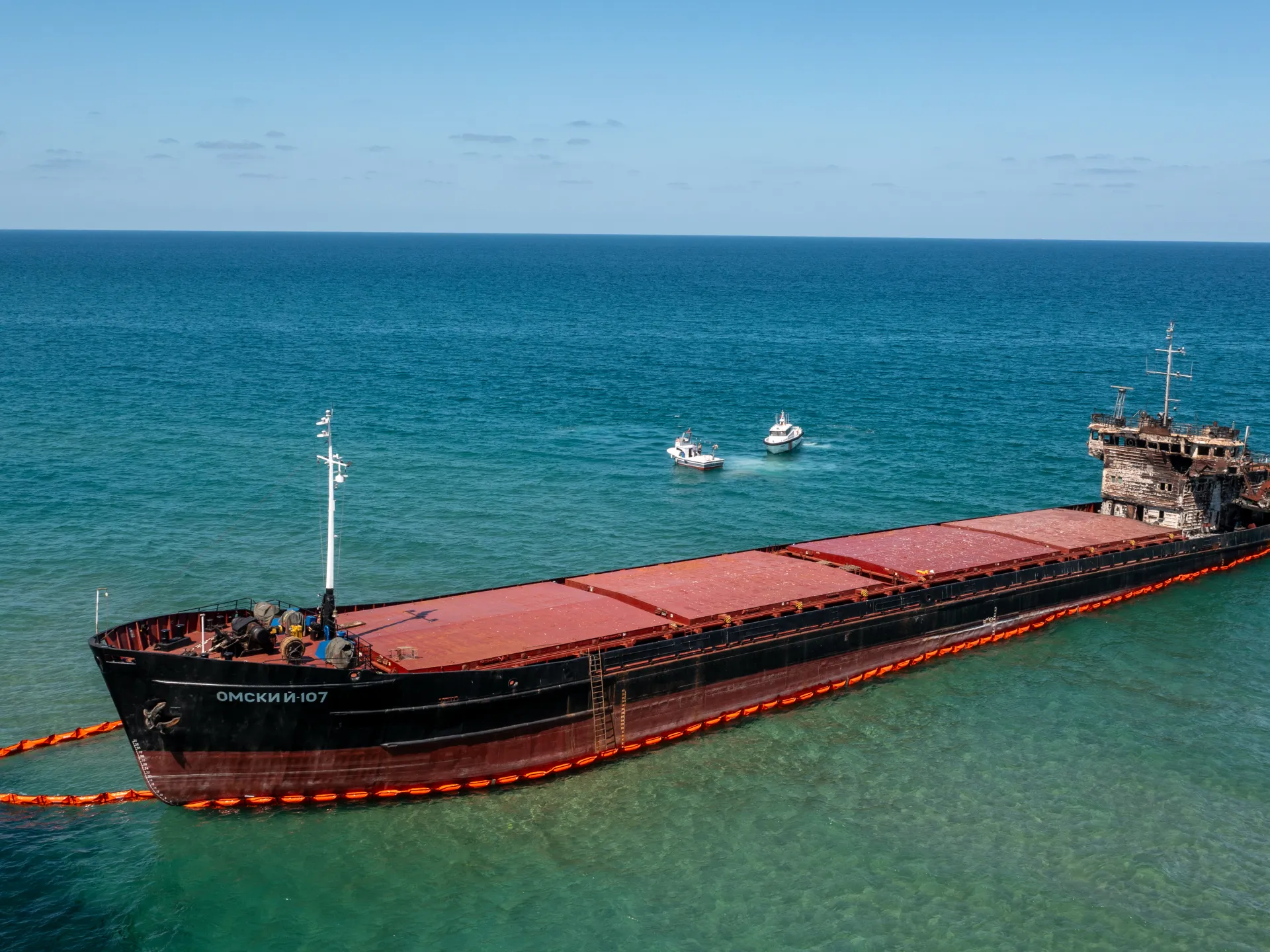

![Minister of Foreign Affairs Hakan Fidan met with Libyan National Army Deputy Commander General Saddam Haftar in Ankara. [Handout/Turkish MInistry of Foreign Affairs]](https://i0.wp.com/www.aljazeera.com/wp-content/uploads/2026/07/G6M_WQJWQAAIQcL-1784453011.jpeg?w=640&ssl=1)