Warner

New West Virginia law requiring photo IDs at polling places greets voters in primary election

Presenting a utility bill as a valid form of identification at a voting precinct in West Virginia has gone the way of the tavern polling place and the punch-card ballot.

State lawmakers tightened an existing voter identification law by requiring photo ID at the polls, with some exceptions. The law was used for the first time in Tuesday’s primary election, and officials said they’ve seen very few glitches.

“The whole point of the law is just making sure you are who you say you are,” Secretary of State Kris Warner said Monday.

Voters will nominate candidates for U.S. Senate, U.S. House and state legislature. They also will elect two new state Supreme Court justices.

During the in-person early voting period that ended Saturday, Warner said his office hadn’t heard of anyone who demanded to vote without a photo ID. He said the state had asked residents to use photo IDs for the past few elections, so “it was not a big shock that it was now law.”

During his statewide travels over the past two weeks, Warner said he was told of some instances where people returned to their vehicle to retrieve a photo ID after entering a polling place. Another voter used an exception to the law by filling out a form that was verified by a poll worker who has known them for at least six months. There also were exceptions for first-time voters.

Most states either require or request some form of ID for in-person voting at the polls.

Proponents say the West Virginia law will cut down on voter fraud and that a photo ID is already required for everyday tasks such as getting on an airplane or buying alcohol.

The bill sailed through the Republican-supermajority legislature last year. All votes against it were cast by Democrats, some who argued it would suppress access to the polls. State Democratic Party Chair Mike Pushkin said no credible evidence was shown during legislative debate that West Virginia had a widespread problem with ineligible voting. Pushkin said the legislation was “designed more for political messaging than solving actual problems.”

But Warner said it allows senior citizens to use expired driver’s licenses, as long as it was valid on their 65th birthday

“I wanted to make sure it didn’t prevent anyone from voting,” Warner said.

Forms of identification that are no longer accepted at polling places include utility bills, bank statements, hunting and fishing licenses, bank or debit cards, and concealed carry gun permits. Acceptable forms of photo IDs include a driver’s license, U.S. passport, military ID, employee ID issued by a government agency and a student ID from a high school or college.

Monongalia County Clerk Carye Blaney said for several years her county has used an electronic system to scan bar codes on the back of driver’s licenses to check in voters at polling places.

“I think that it makes voters feel more secure, or it confirms for the voters the security of our elections when we are verifying a photo to a person,” Blaney said.

Raby writes for the Associated Press.

Source link

Paramount and Warner Music partner to make more music movies

In recent months, movie theaters have seen the likes of Elvis Presley, Billie Eilish, BTS and Michael Jackson take on the big screen. Whether it’s in the form of a concert film, a documentary or a biopic, music-based theatrical releases have delighted audiences — and both major studios and record labels are taking note.

Paramount Pictures and Warner Music Group are joining forces to make movies featuring top talent on Warner’s roster, the companies announced Thursday. The multi-year, first-look deal will feature some of Warner’s most recognizable artists like Madonna, and the late David Bowie and Frank Sinatra — as well as contemporary pop stars like Charli XCX and Dua Lipa.

Together, the companies hope to combine WMG’s vast music catalog and Paramount’s theatrical experience to create more music-themed live-action and animated films.

“Every artist deserves to tell the stories behind their life and music in their own creative way, and we’re excited to partner with our incredible talent and world-class filmmakers to bring these stories to the big screen, growing their audiences around the world,” Robert Kyncl, WMG’s chief executive officer, said in a statement.

WMG will work with its production partner, Unigram and Paramount to develop each project in conjunction with the artists or their estates. The collaboration aims to give music artists more latitude when their work is used in feature films or when storylines are based on them.

Unigram co-founder Amanda Ghost said the deal “finds new ways to empower iconic artists and to bring their creative worlds to the screen with music as a central character.”

The announcement comes after Paramount celebrated the premiere of the Billie Eilish concert movie “Hit Me Hard and Soft: The Tour” at the Westwood Village Theater on Wednesday night. The 3-D feature, co-directed by Eilish and James Cameron, is set to hit theaters this weekend and follows her most recent stint of performances.

Music continues to be a huge draw for movie theaters as the industry navigates rough waters amid hopes of a durable postpandemic recovery. Major releases like the box-office-topping biopics like “Michael,” and documentaries like “EPiC: Elvis Presley in Concert” continue to draw sizable and enthusiastic theater audiences.

In recent years, Paramount also helped bring movies like the Bob Marley biopic “One Love” (2024) and Elton John’s “Rocketman” (2019) to theaters.

Earlier this week, movie theater chain AMC revealed its theaters will begin rolling out a new kind of immersive concert experience in June. The concept will feature acts like Paris Hilton and Kim Petras performing on a remote stage as the show is beamed into theaters around the country. Though unlike a typical livestream, new technology allows artists to see, hear and respond to the theater audience, in effect turning the local AMC into a virtual concert venue.

Source link

Merger costs add up as Warner Bros. Discovery posts $2.9-billion quarterly loss

Warner Bros. Discovery’s impending sale has rattled Hollywood — and the company’s balance sheet as the auction’s high costs increasingly come into focus.

The New York-based media company released its first-quarter earnings Wednesday, which included a $2.9 billion loss. That amount includes $1.3 billion in restructuring expenses, including updated valuations for Warner’s declining linear cable television networks.

Contributing to the net loss was the $2.8 billion termination fee paid to Netflix in late February when the streaming giant bowed out of the bidding for Warner. The auction winner, Paramount Skydance, covered the payment to Netflix but Warner still must carry the obligation on its balance sheet in case the Paramount takeover falls apart. Should that happen, Warner would have to reimburse Paramount.

Warner also spent another $100 million to run the auction and prepare for the upcoming transaction, according to its regulatory filing.

“As we prepare for our next chapter, our focus remains on executing our key strategic priorities: scaling HBO Max globally, returning our Studios to industry leadership, and optimizing our Global Linear Networks,” Warner Bros. Discovery leaders said Wednesday in a letter to shareholders.

Warner generated $8.9 billion in revenue, a 3% decline from the same quarter one year ago, excluding the effect of foreign exchange rate fluctuations.

Its streaming services, including HBO Max, notched milestones in the quarter and 9% revenue growth to $2.9 billion. The company launched HBO Max in Germany, Italy, Britain and Ireland during the quarter.

Advertising revenue for streaming was up 20% compared to the first quarter of 2025.

The streaming unit posted a 17% increase to $438 million in adjusted earnings before interest, taxes, depreciation and amortization (EBITDA).

Warner’s studios, primarily its TV business, had a strong quarter.

Studios revenue rose 31% to $3.1 billion, compared to the prior year quarter.

Television revenue soared 58% (excluding exchange rate fluctuations) due to increased program licensing fees to support the launch of HBO Max in international markets. Those launches also propelled the movie studio, which saw revenue increase 21%.

Video games revenue declined 30% because of lower library revenues.

Adjusted EBITDA for the studios grew $516 million (158%) to $775 million compared to the prior year quarter.

The company’s vast linear television networks saw revenue fall 9% to $4.4 billion compared to the prior year period.

TV distribution revenue tumbled 8% largely due to a 10% decrease in domestic linear pay TV subscribers.

The company also felt the loss of its NBA contract for its TNT channel, which NBC picked up. Advertising revenue fell 12%. “The absence of the NBA negatively impacted the year-over-year growth rate,” Warner said.

As the costs of the merger with Paramount come into clearer focus, the opposition has grown louder.

More than 4,000 artists and entertainment industry workers, including Bryan Cranston, Noah Wyle, Kristen Stewart and Jane Fonda, have signed an open letter warning about the dangers of the merger with Paramount. “This transaction would further consolidate an already concentrated media landscape, reducing competition at a moment when our industries — and the audiences we serve — can least afford it,” according to the letter.

“The result will be fewer opportunities for creators, fewer jobs across the production ecosystem, higher costs, and less choice for audiences in the United States and around the world.”

Adjusted EBITDA for the television networks fell 10% to $1.6 billion, compared to the prior year quarter.

Warner ended the quarter with $3.3 billion in cash on hand and $33.4 billion of gross debt.

Source link

Paramount’s Ellison underscores his pledge to make 30 films a year when his company buys Warner Bros.

Paramount Skydance Chairman David Ellison defended his commitment to release 30 movies a year once his media company swallows Warner Bros. Discovery — a goal that some industry observers view as overly ambitious.

During a Monday call with analysts to discuss Paramount’s first-quarter earnings, the tech scion said the target was achievable because his management team would maintain current levels of production. Paramount has doubled its film release capacity to 15 films this year, matching the number of theatrical releases planned by competing Warner Bros.

“The two companies are actually making 30 films to date,” Ellison said. “We really view our pending acquisition of Warner Bros. Discovery as a powerful accelerant to our strategy.”

The company said it was on track to finalize its Warner takeover by the end of September. The $111-billion deal would transform the smaller Paramount into an industry titan with prestigious programming, including Harry Potter, “Game of Thrones,” “Euphoria,” as well as its current slate of Taylor Sheridan-produced franchises, including “Yellowstone” and “Landman.” The combined company also would own dozens of popular TV networks, including CBS, CNN, Comedy Central, Food Network and HGTV.

But the proposed merger would saddle the combined company with $79 billion in debt, stoking fears that Paramount would need to make steep cost cuts to balance such a large debt load. During the quarter, Paramount lined up banks and other institutional investors to provide bridge financing to help pull off the transaction, the company said.

“We’re pleased with the momentum and will continue to take the necessary steps to bring this deal to completion,” Ellison told analysts.

Late last month, Warner Bros. Discovery stockholders overwhelmingly voted in favor of the deal, which will pay $31 a share to Warner investors. The company now must secure regulatory approvals in the U.S. and abroad, and that process is well underway, Paramount said.

Paramount has asked the Federal Communications Commission for permission to exceed a cap on foreign ownership for U.S. media companies. Ellison’s company is expecting $24 billion from three Middle Eastern royal families, who would become part owners of the combined entity. Those total funds will represent about 49% of equity in that new company, exceeding the current foreign ownership cap of 25%.

More than 4,000 filmmakers, actors and industry workers, including Bryan Cranston, Connie Britton, Kristen Stewart, Jonathan Glazer and Jane Fonda, have signed an open letter asking California Atty. Gen. Rob Bonta and other regulators to block the deal, saying it “would reduce the number of major U.S. film studios to just four.”

Late last week, a small group of consumers sued to block Paramount Skydance’s acquisition of Warner Bros. Discovery and unwind Ellison’s Skydance Media’s takeover of Paramount, alleging that both deals reduce marketplace competition.

For the January-March quarter, Paramount’s earnings beat Wall Street’s expectations. Revenue grew 2% to $7.3 billion compared with the first quarter of 2025.

Adjusted earnings before interest, taxes, depreciation and amortization (EBITDA) reached $1.1 billion, helped in part by growth in its streaming services unit. Paramount+ increased its revenue by 17% to nearly $2 billion, compared with the year earlier period when it generated $1.7 billion. The service added 700,000 subscribers, bringing the total to nearly 80 million.

With Warner’s HBO Max streaming platform, the combined service would boast more than 200 million subscribers.

Paramount reported first-quarter net earnings of $168 million, or 15 cents per share, compared with $152 million in 2025, which occurred before Skydance acquired the media company in August.

Executives pointed to “Scream 7,” a late February release that has topped $200 million in global ticket sales, as a success story. Studio revenue grew 11% to $1.28 billion for the quarter.

Television networks revenue declined 6% to $3.7 billion as Paramount’s cable channels continue to contend with the loss of cable cord-cutters, which reduces the company’s collections from pay-TV providers. Nonetheless, Paramount pointed to the strength of Sheridan’s “Landman,” starring Billy Bob Thornton, Ali Larter, Sam Elliott and Demi Moore, and the strength of the CBS television network, which currently has 13 of the broadcast industry’s top 20 prime-time shows, including “60 Minutes,” “Marshals,” and “Tracker.”

The company told analysts it would achieve $30 billion in revenue for the full year and $3.8 billion in adjusted EBITDA. Paramount said it would also make $2.5 billion in cost-cuts by the end of this year and reduce expenses by $3 billion in 2027.

Paramount said it ended the quarter with $1.9 billion in cash and cash equivalents. It also was carrying $15.5 billion in debt. The company had to draw $2.15 billion from its revolving credit facility to pay Netflix a $2.8-billion termination fee that Warner Bros. Discovery had agreed to pay under a previous deal to sell the company to Netflix.

Paramount released its earnings after Monday’s trading day. Its shares closed at $11.13, basically unchanged.

Source link

Warner Bros. shareholders approve controversial $111-billion Paramount takeover

Paramount Skydance’s proposed takeover of Warner Bros. Discovery cleared a major hurdle Thursday as Warner stockholders overwhelmingly embraced the $111-billion deal.

Approval was expected. Paramount Chairman David Ellison’s proposal would pay Warner investors $31 a share — four times the price of the company’s stock a year ago. Warner Bros. officials did not disclose the precise vote count during the nine-minute special shareholder meeting beyond saying the merger “received sufficient votes and has overwhelmingly passed.”

Paramount offered the generous premium to compete with, and ultimately triumph over, Netflix, which withdrew from the auction in late February after Ellison’s father, Oracle billionaire Larry Ellison, agreed to guarantee the financing of his son’s deal.

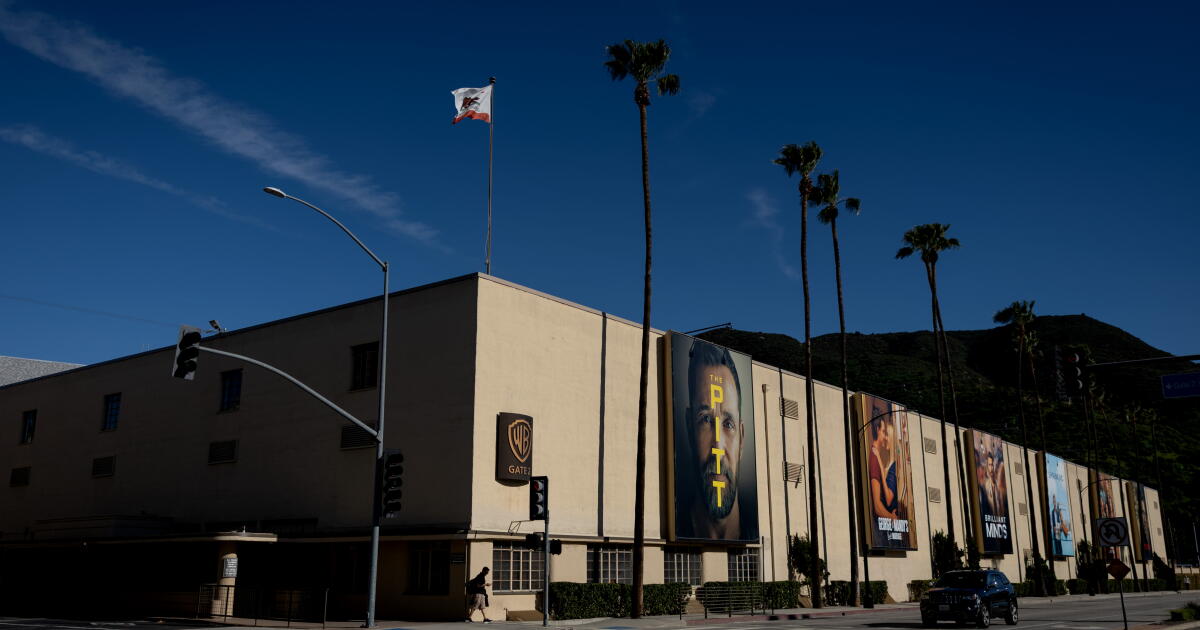
The merger would create a new Hollywood behemoth by giving Paramount, which owns CBS and the Melrose Avenue film studio, such valuable assets as HBO, HBO Max, CNN, TBS, Food Network and Warner Bros.’ film and television studios in Burbank. Warner controls beloved TV shows, franchises and movies, including “Casablanca,” Harry Potter, D.C. Comics, “Game of Thrones,” “Euphoria,” “The Pitt,” and “Rooster.”

“Shareholder approval marks another important milestone towards completing our acquisition of Warner Bros. Discovery, building on our successful equity and debt syndications and progress across regulatory approvals,” Paramount said Thursday in a statement. “We look forward to closing the transaction in the coming months and realizing the creation of a next-generation media and entertainment company that better serves both the creative community and consumers.”

Paramount now must secure regulatory approvals in the U.S. and abroad. Ellison, who is poised to honor President Trump with a dinner Thursday evening in Washington, hopes to complete the deal by late summer.

Shareholders, however, made known their disdain for Warner Chief Executive David Zaslav’s proposed golden parachute, which could swell to $887 million, depending on when the transaction closes. His cash, stock and options would be valued at more than $550 million. Warner board members also agreed to pay his tax bill, which could approach $330 million, should the merger be completed by year’s end.

Shareholders, in a non-binding vote, voted against Zaslav’s package.

Paramount’s deal has encountered significant opposition in Hollywood and beyond.

More than 4,000 filmmakers, actors and industry workers, including Ben Stiller, Bryan Cranston, Ted Danson, J.J. Abrams and Kristen Stewart have signed an open letter asking California Atty. Gen. Rob Bonta and other regulators to block the deal.

Opponents fear the consolidation would be lead to massive layoffs and diminish the quality of programming that Warner Bros., CNN and HBO are known for. Hollywood has sustained thousands of layoffs over the last six years; the film production economy hasn’t recovered from shutdowns during the 2023 labor strikes.

“This is already an incredibly consolidated industry where writers have seen merger after merger leave fewer and fewer companies in control of what our members can get paid to write,” Michele Mulroney, president of the Writers Guild of America West, said Wednesday during a press briefing organized by Free Press and other progressive groups that oppose the merger.

“A combined Warner Bros. and Paramount would create a media behemoth with tremendous leverage to reduce content, to raise prices, to increase control of production, to suppress member compensation, worsen working conditions and silence the voices of our members,” Mulroney said.

Trump has long agitated for changes at CNN, and few expect his Justice Department to block the transaction. Defense Department Secretary Pete Hegseth echoed the sentiment. “The sooner David Ellison takes over that network the better,” Hegseth told reporters in March.

It’s unclear whether Bonta or other state attorney generals will file a lawsuit to try to stop the deal. Bonta previously told The Times that his office is reviewing the consolidation.

“This deal can get blocked. I personally think it will get blocked — or undone,” Alvaro Bedoya, former Federal Trade Commission member who now serves as a senior adviser to the American Economic Liberties Project, told reporters Wednesday. He pointed to other proposed mergers that unraveled due to fierce opposition, including the proposed combinations of grocery giants Kroger and Albertson’s.

David Ellison has promised to keep HBO entact and the Paramount and Warner Bros. movie studios humming. He promised cinema owners last week that a combined Paramount-Warner Bros. would release 30 movies into theaters each year.

“This transaction uniquely brings together complementary strengths to create a company that can greenlight more projects, back bold ideas, support talent across multiple stages of their careers,” Paramount said in a statement to push back on the opposition. The company would have the power to “bring stories to audiences at a truly global scale — while strengthening competition by ensuring multiple scaled players are investing in creative talent.”

To finance the Warner takeover, Ellison’s billionaire father, Larry Ellison, has agreed to guarantee the $45.7 billion in equity needed. Bank of America, Citibank and Apollo Global have agreed to provide Paramount with more than $54 billion in debt financing.

Paramount has enlisted a former Trump administration official, lawyer Makan Delrahim, who served as Trump’s antitrust chief during the president’s first term.

In a confident move, Delrahim filed to win the Justice Department’s blessing in December — even though Paramount didn’t have an agreement with Warner Bros. Discovery’s board at the time. In February, a key deadline for the Justice Department to raise issues with Paramount’s proposed Warner takeover passed without comment from the Trump regulators.

Source link

London Marathon 2026: Jess Warner Judd grateful for ‘second chance’ after epilepsy diagnosis

Jess Warner Judd does not remember much about that night in Rome.

It has been a long and difficult journey since, but the 31-year-old speaks with admirable ease about the traumatic events which have led her to a London Marathon debut in 2026.

“I’m very lucky to have had sort of a second chance at running. It’s a second chance I just didn’t think I’d probably have,” Warner Judd tells BBC Sport.

“I remember having really horrible discussions after trying to restart my track season and it quickly not happening. The doctors, who were brilliant, saying that I would probably have to retire if I kept trying before I had therapy, because my body wasn’t going to cope.”

The distressing details of what unfolded at Stadio Olimpico are recalled vividly by her husband Rob, who witnessed it all from the stands alongside Warner Judd’s father and coach, Mike, in June 2024.

Less than 10 months had passed since Warner Judd celebrated one of her proudest achievements, placing eighth in the world over 10,000m, but it became evident early in the European Championship final that something was amiss.

The noticeable lack of co-ordination. The veering out into lanes two and three. The distress increasingly visible across her face.

“It got to the point around five or six kilometres in when Mike and I had got as close as we could to the track and were shouting at her to stop,” says Rob.

Warner Judd struggled on until, with 600m to go, she collapsed.

Source link

Netflix cofounder Hastings to step down after it lost Warner Bros deal | Entertainment News

The company’s stock plunged about 8 percent on the news of Hastings’s departure.

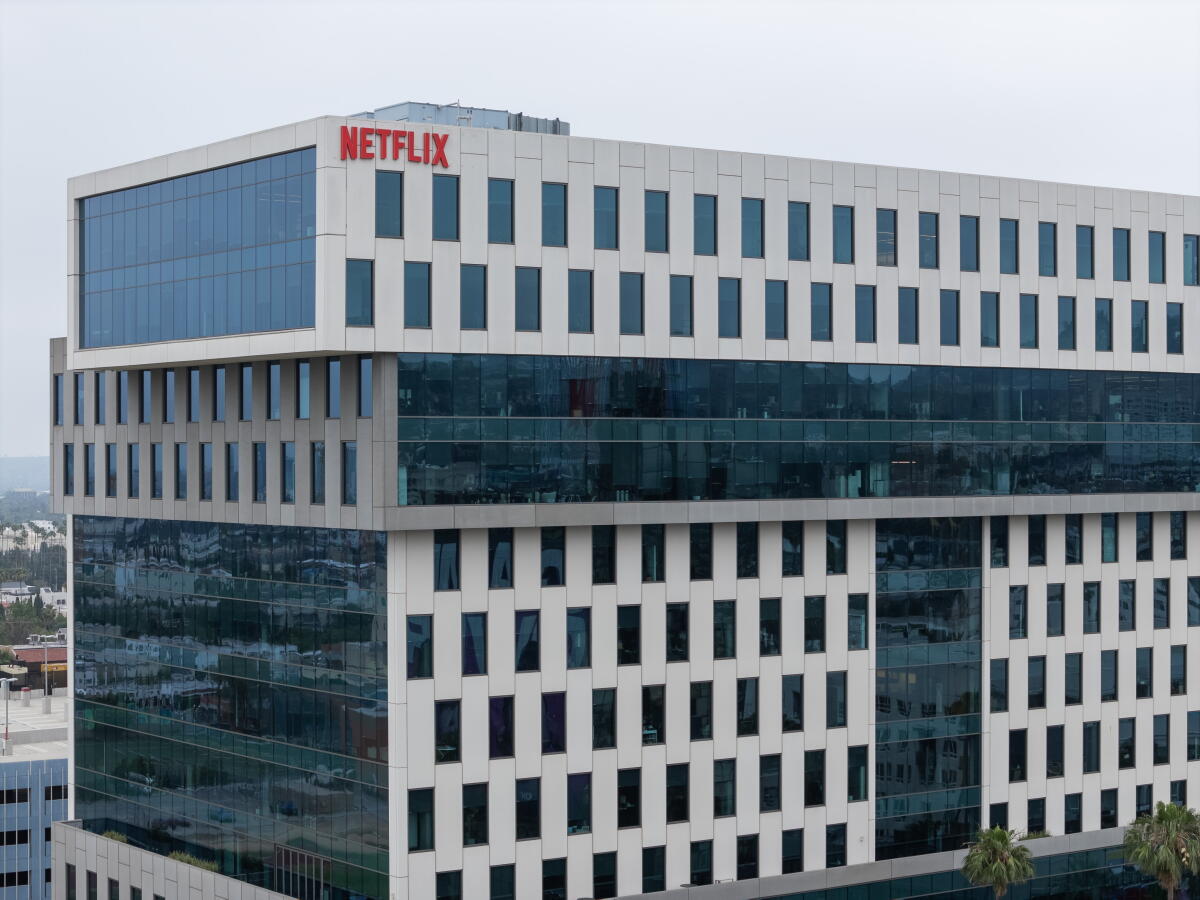
Netflix Chairman Reed Hastings is leaving the streaming service he cofounded 29 years ago as the company regains its footing after it lost its $72bn deal for Warner Bros Discovery to Paramount Skydance.

In a letter to investors released on Thursday, Netflix said Hastings will not stand for re-election at its annual meeting in June and plans to focus on philanthropy and other pursuits.

Recommended Stories

list of 4 itemsend of list

The company’s stock plunged about 8 percent on the news of Hastings’s departure. The cofounder is credited with helping to revolutionise how movies and television shows are delivered in homes, upending Hollywood’s business model.

“Netflix is growing revenues double-digits, expanding margins in 2026 and gushing free cash flow,” said LightShed Partners media analyst Richard Greenfield. “While the Q1 was uneventful financially, the departure of Reed Hastings has spooked investors.”

Netflix reaffirmed in a 14-page shareholder letter that its mission remains “ambitious and unchanged” – to entertain the world, providing movies and series for many tastes, cultures and languages. The company’s full-year outlook remained unchanged.

The company did not say how it plans to spend the $2.8bn termination fee it received after losing the Warner Bros movie studio and HBO, and lifted its earnings per share to $1.23 in the first quarter compared with 66 cents per share in the same quarter last year.

Revenue rose to $12.25bn, an increase of 16 percent from the year-ago period, modestly exceeding analyst forecasts of $12.18bn.

Netflix, which long told investors that a Warner Bros acquisition was a “nice to have, not need to have” proposition, highlighted areas of future growth.

The company said its investment in expanding its entertainment offerings, with video podcasts and live entertainment – such as the World Baseball Classic in Japan – is driving engagement.

It plans to use technology to improve the user experience and improve monetisation, as advertising revenue remains on track to reach $3bn in 2026 – a twofold increase from a year ago.

Source link