Netflix publicly reported box office results for the first time in its history this weekend as it released its queer drama “La Bola Negra” in U.S. theaters.
The Spanish-language film opened in limited release — just four theaters in Los Angeles and New York — and brought in $277,500 on a reported production budget of $15 million to $17 million. That averaged out to about $69,375 per screen, the second-highest per-screen average for a non-English language film.
Netflix acquired the U.S. rights to the film at Cannes, reportedly for about $5 million.
The Los Gatos-based streaming giant plans to expand the number of locations in the coming weeks to as many as 300 theaters across the country. The film already opened in Spain in late September.
“La Bola Negra” will be available on Netflix on Dec. 2.
Netflix has high hopes for the film, which won six audience awards on the festival circuit and will be Spain’s entry for the Academy Awards.
But the U.S. debut comes at a rocky time for Netflix, which cut 6% of its workforce, or about 1,000 jobs, last week. The layoffs, which are believed to be the largest in company history, included Chief Content Officer Bela Bajaria, who was replaced by former Disney executive Peter Rice.
The move arrives as Netflix’s stock price has tumbled, and the company is under pressure from shareholders to churn out more hit films and TV shows, while increasing engagement on the platform.
Elsewhere at the box office, Paramount Pictures’ video game adaptation “Street Fighter” took the top spot, with a domestic haul of $31 million. It is the first major release from Skydance, the company formed when Paramount completed its $111-billion acquisition of Warner Bros. Discovery earlier this month.
A24’s Elizabeth Holmes documentary, “You Can See Everything,” which opened on only 855 screens, made about $15 million, while Universal Pictures’ “Other Mommy” ($8.3 million), Disney-owned 20th Century Studios’ “Whalefall” ($8 million) and Universal-owned Focus Features’ “Sense and Sensibility” ($7.2 million) rounded out the top five.
Tech scion David Ellison spent three years doggedly pursuing his dream: acquiring Paramount, then Warner Bros. Discovery.
Ellison pulled off his bold feat this week by completing Paramount’s $111-billion takeover of Warner Bros., uniting two industry pioneers and a wealth of cherished properties — Batman, Bugs Bunny, Harry Potter and Maverick of “Top Gun,” as well as CBS, HBO, Comedy Central and CNN. All will be tucked under a corporate umbrella that Ellison is calling Skydance — the name of the studio he formed two decades ago.
The mogul and his lieutenants celebrated their victory in style, ringing the New York Stock Exchange opening bell on Thursday, capping a bruising battle to secure approval of a deal that had sparked protests across Hollywood over fears of looming job cuts.
Ellison and his team must braid together two huge film studios (housing nine film labels), four streaming services, three TV production studios, three animation units and more than 50 television networks, including two prominent news organizations. That could be a daunting task, particularly based on how previous Hollywood mergers have fared.
“Now, the real work begins,” David G. Fubini, a Harvard Business School senior lecturer, said in an interview.
Anxieties were evident Tuesday — the day the deal closed — when Ellison held a town hall meeting at Warner Bros., which drew nearly 500 employees.
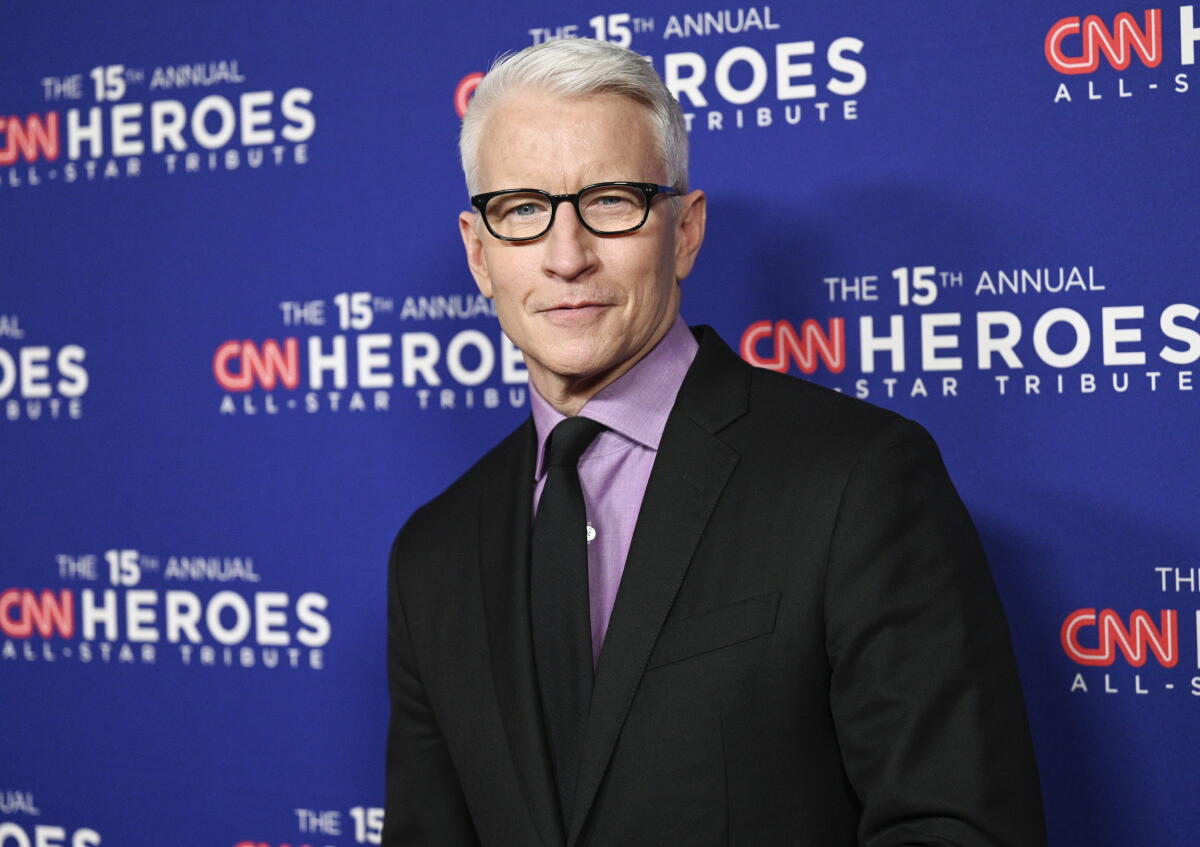
During the session, CNN’s Anderson Cooper quizzed his new bosses, including about anticipated layoffs and news independence.
“Do you stand with CNN and our effort to completely restore access to covering President Trump?” Cooper asked, referring to CNN’s legal fight alongside MS Now and Politico to reverse the president’s ban on the three organizations.
“Of course,” Ellison replied.
CNN news anchor Anderson Cooper, pictured here in 2021, quizzed his bosses at a Burbank town hall.
(Evan Agostini / Invision / Associated Press)
Hours later, Ellison parried with reporters in Paramount’s darkened Stage 3, recently revamped with laser projection capabilities to simulate fantastical and far-flung settings for TV shows, such as the streets of New York.
“This was a turbulent process, and, at times, a really ugly process, to actually get this deal over the finish line,” Ellison acknowledged to reporters. “What I want to be able to do now is turn the page, and actually make sure that we are in the business of rebuilding trust.”
To do that, Ellison intends to make more movies and TV shows than rivals. He wants to ensure the Warner Bros. and Paramount studios, which will be kept separate for now, remain talent-friendly destinations.
Ellison has taken an opposing view from his predecessors who confronted crumbling industry economics by cutting expenditures to boost their corporate bottom lines.
The 43-year-old executive, son of Oracle co-founder Larry Ellison, proudly views his family as “owner-operators,” unshackled by quarterly earnings expectations or the need to dole out dividends to keep investors happy. The Ellison family controls the company’s voting stock, allowing David Ellison to take a long-term view as he charts Skydance’s course.
The goal is to “win in storytelling,” Skydance said in an investor presentation. It intends to build the media industry’s most “technologically capable” firm, which uses artificial intelligence to speed work flows. Skydance plans to spend at least $30 billion a year on film, television and video game content.
Skydance co-CEO Ynon Kreiz, Sarah Ellison, CEO David Ellison and investor Gerry Cardinale of RedBird Capital Partners on the floor of the New York Stock Exchange on Thursday.
(Yuki Iwamura / Associated Press)
The realities of Ellison’s big swing will soon sink in as he and his team turn their focus to integrating the myriad operations and about 55,000 employees.
In some ways, Ellison is behind the curve.
Most major mergers are consummated after executives have dedicated months to quietly drafting detailed operational plans and organizational hierarchies. Ellison, in contrast, has spent the last nine months in a pitched battle for Warner Bros. — ultimately vanquishing Netflix, hundreds of vocal merger opponents, and California Atty. Gen. Rob Bonta and his coalition of 11 other state attorneys general who filed an antitrust lawsuit in July in an attempt to derail the deal.
Ellison and Bonta resolved their legal fight Sept. 21. A week later, a federal judge cleared the way for the merger to close.
The lawsuit settlement with Bonta requires that the combined company produce at least 30 movies a year for five years. It also must maintain the studio facilities in Los Angeles, making “reasonable efforts to operate the lots in a manner consistent with past practices,” according to the agreement.
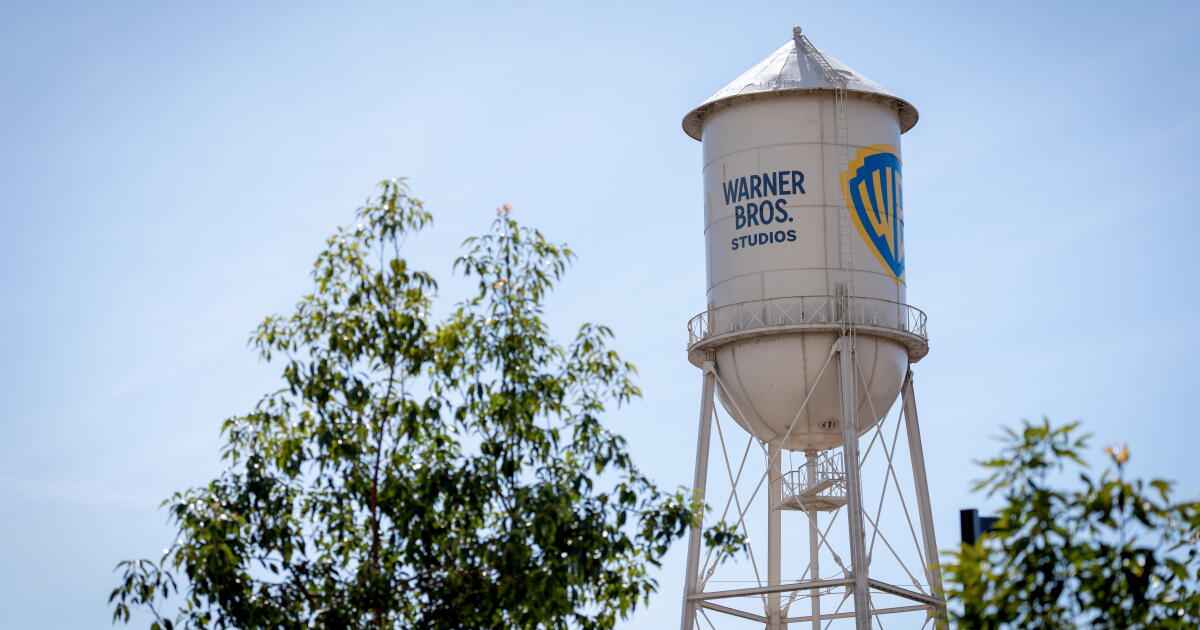
Skydance has committed to maintaining operations on the Warner Bros. lot, pictured here, and at Paramount Pictures in Hollywood.
(Eric Thayer / Los Angeles Times)
Ynon Kreiz, former chief executive of Mattel toys in El Segundo, has been tasked with leading the integration. The 61-year-old executive joined Ellison at Skydance as his co-CEO earlier this week. Day One of the combined company marked Kreiz’s second day on the job.
“They have a whole new management team that will be expected to immediately lead this massive integration,” Fubini, a former partner at consulting firm McKinsey, said. “The clouds have cleared, and they are at the base camp of Mt. Everest facing this enormous undertaking.”
In a report this week, TD Cowen Global Research maintained its “hold” rating on the newly constituted Skydance, expressing some doubts about Ellison and his team’s ability to “avoid integration and execution problems that have bedeviled other major media mergers.”
Hollywood has had a history of failed mergers, including Discovery’s 2022 takeover of WarnerMedia from AT&T, which led to years of cost cuts that ultimately seeded the ground for Ellison’s takeover. AT&T’s purchase of the same assets in 2018 also quickly unraveled, some 20 years after the epic failure of AOL Time Warner.
Ellison now must grapple with the hefty acquisition costs for Warner Bros., which climbed as the deal was delayed. The company emerged from the transaction with $86.8 billion in total debt; with most of that going toward buying out Warner Bros. Discovery’s stockholders at $31.17 a share.
The debt burden also includes more than $18 billion in obligations leftover from past mergers. Skydance has nearly $7 billion in cash on hand.
Oracle’s Larry Ellison and executive producer David Ellison arrive at the L.A. premiere of “Star Trek Into Darkness” at the Dolby Theatre in 2013.
(Eric Charbonneau / Getty Images for the Hollywood Reporter)
The Ellison family brought in foreign investors, including royal families of Saudi Arabia, Qatar and Abu Dhabi as passive owners, to contribute equity to the deal. Gerald Cardinale’s RedBird Capital Partners, a longtime Skydance stakeholder, added $4 billion, bringing its total investment in Skydance deals to $6 billion.
The deal’s financial terms pose deep challenges, analysts said. Fitch Ratings this week downgraded Skydance credit, citing “materially higher leverage after the acquisition and significant execution and integration risks,” according to its report.
“Interest rate increases made financing this transaction far more expensive than anyone anticipated,” said Eric Talley, a professor at Columbia Law School. “Those lenders are going to start expecting their interest payments — Skydance executives won’t have the luxury of time.”
The company could struggle, Talley said, to “generate the cash flow needed to easily service that debt unless they can significantly cut costs.”
Skydance has promised investors that it will make $6 billion in cost cuts over three years. It anticipates $2 billion in reductions within a year, with the bulk of the rest occurring in the second year of the merger.
“They are going to be firing a lot of people,” TD Cowen Global Research media analyst Doug Creutz said.
During the press briefing, Kreiz sought to downplay the expected workforce toll, saying Skydance would achieve savings by combining technologies that support streaming services and marketing expenditures. It plans to save costs on real estate by locating employees at Skydance-owned properties in Santa Monica, Hollywood and Burbank.
Ellison and Kreiz said they would jointly manage the new colossus.
“Where David will focus on creative, technology, long-term strategy, including especially as it relates to the creative part of the business, I will focus more on the operations and the day-to-day management of the business,” Kreiz said.
Kreiz was named to Skydance‘s expanded board this week along with Laurene Powell Jobs, founder of the Emerson Collective; and Bobby Kotick, former CEO of Activision.
The new leaders expressed confidence they could expand and integrate their two major streaming services to drive growth. HBO Max and Paramount+ combined will reach more than 200 million subscribers.
The plan, they said, is to combine the two streamers within a couple of years, but the company may offer subscribers a bundle with the two offerings sooner.
Skydance, according to sources, also expects to bolster its free, ad-supported service Pluto TV, which offers more than 200 channels. The service hasn’t had much corporate attention in recent years amid the cuts and deal-making.
The executives have not disclosed which teams would soon be affected or how they will structure overlapping business units.
For example, the company’s three TV studios each have their own leader: Channing Dungey runs the largest, Warner Bros. Television; David Stapf has long managed CBS Studios; and Skydance executive Matt Thunell has been president of Paramount Television Studios since last year.
Integrating CNN and CBS
Anxiety over whether CNN and CBS News would be mashed together was quelled, at least for now.
Skydance announced that it was retaining CNN Worldwide Chairman Mark Thompson as head of the larger news organization. CNN journalists had worried that CBS News Editor in Chief Bari Weiss, who has presided over a year of turmoil at the network, would be put in charge of both.
Any news consolidation could take years, in part, because CBS News is largely unionized while CNN is a non-union shop.
“We are going to spend the next several months basically getting under the hood,” Ellison said.
CBS News Editor in Chief Bari Weiss, pictured here in 2023 in Los Angeles, has had a turbulent tenure at CBS.
(Francine Orr / Los Angeles Times)
Another challenge will be stabilizing the Warner Bros. film unit, which has had a rough year at the box office. This month, the top two Warner Bros. film executives, Mike DeLuca and Pam Abdy, exited abruptly, clearing the way for longtime Ellison lieutenants Dana Goldberg and Josh Greenstein to oversee both film studios. The co-heads of DC Comics, James Gunn and Peter Safran, segued to the new Skydance.
Skydance also will have to deal with the NFL, which could demand substantially higher fees for CBS to keep its Sunday games.
The current contract allows the league to reopen negotiations because of the ownership change. Skydance is hoping it can wait three years until the contracts of other broadcasters also are up for discussion.
Skydance will be a major player in sports. Last year, Paramount agreed to spend $7.7 billion for UFC fights. The combined company also has rights to professional golf, including the Masters tournament; National Hockey League; Major League Baseball and NCAA basketball, including March Madness, as well as European rights to televise the Olympics.
“Until you actually get inside the company, there are things you won’t know,” Creutz said. “But they are going to have to come up with answers pretty quick.”
David Ellison emerged with his prized Hollywood juggernaut Tuesday as the merger of Paramount Skydance and Warner Bros. Discovery officially closed.
The $111-billion transaction culminated a year-long battle by the 43-year-old tech scion to add Warner Bros. Discovery to his family’s growing portfolio.
The Ellison family now controls one of the largest traditional media companies ever formed, with HBO, CNN, CBS, Comedy Central, TBS, Food Network, two traditional Hollywood studios and two major streaming services.
Shares of the new company began trading under the ticker SKYD, a switch from last week when the company went by PSKY for Paramount Skydance. Ellison has called the merged company, Skydance, the name he selected two decades ago when he began building his Hollywood studio.
A federal judge in Oakland has approved a settlement that allows Paramount Skydance Chief Executive David Ellison to finalize his $111-billion acquisition of Warner Bros. Discovery.
U.S. District Judge Araceli Martínez-Olguín on Wednesday signed a settlement agreement, effectively ending an antitrust lawsuit brought by California Atty. Gen. Rob Bonta and 11 other state attorneys general who initially fought the formation of a new Hollywood colossus.
“The Court finds the proposed settlement agreement reflects a procedurally sound resolution,” Martínez-Olguín wrote in her order.
Ellison is aiming to finalize the merger early next week, capping his meteoric rise into one of the industry’s most influential figures. The Ellison family claimed Paramount and CBS last year, and will now add HBO, CNN, TBS, HGTV and the film and television studio with rights to Batman, Harry Potter, Fred Flintstone, “Friends” and “The Pitt” to its sprawling media and entertainment portfolio.
His father Larry Ellison, through his company Oracle Corp., also owns a substantial stake in the social media app TikTok and is among the tech giants supporting development of artificial intelligence.
The settlement agreement, which spans five years, requires the combined Paramount-Warner Bros. to release at least 30 films in theaters each year, commit an additional $1.5 billion to domestic film production and set aside $47.5 million for workers who may be adversely affected by the merger. It calls for the creation of a five-member panel to monitor editorial independence of CBS News and CNN, although critics note the Ellisons control board appointments, diminishing its independence.
The agreement, known as a consent decree, also stipulates that Paramount won’t sell or close its Melrose Avenue campus in Hollywood or the larger Warner Bros. lot in Burbank. The combined company must instead operate the historic facilities “in a manner consistent with past practices” for at least five years.
Paramount will also face restrictions on how it wields clout during negotiations for distribution of its basic cable TV channels. An independent monitor is expected to oversee implementation of the settlement terms.
The merger has been unpopular in Hollywood and critics denounced the settlement as weak. Opponents accused Bonta, who led the negotiations with Paramount, of caving into pressure from Gov. Gavin Newsom and Los Angeles Mayor Karen Bass, who publicly urged Bonta to abandon his court fight.
“Our settlement with Paramount resolves our antitrust concerns in every market we brought in our case, protects competition and consumer choice, and centers the needs, concerns, and futures of California workers,” Bonta’s office said in a statement.
Los Angeles County’s Department of Economic Opportunity has estimated that the merger will result in the loss of 4,500 local jobs as Ellison seeks to integrate the two entities and cut costs. Paramount has promised investors that it will shave $6 billion in spending within three years.
“Allowing the Paramount Skydance-Warner Bros. Discovery merger to move forward with no meaningful structural remedies will cost jobs, mute creativity, weaken independent journalism, and damage our First Amendment rights,” the Block the Merger coalition said Wednesday in a statement.
Sen. Cory Booker (D-N.J.) last week urged Martínez-Olguín to order an independent review to evaluate the strength of the proposed settlement terms and determine whether the pact adequately addresses alleged violations of the Clayton Antitrust Act.
During a Thursday hearing, Martínez-Olguín questioned key deal tenets, including the five-year length of the agreement and the value of the Miramax film studio, which Paramount agreed to divest should the company fall short of its film goals. She also asked why the state attorneys general dropped so many of their initial demands in pursuit of a settlement with Paramount.
“In years to come, we’ll be able to point to this failure to put consumers over the monied interests of corporate consolidation as the tipping-point moment for media in this country,” the Block the Merger coalition said in its statement.
The judge noted that she recognized the deep disappointment by merger opponents, and heard their concerns about news independence and a potential lack of diversity in storytelling when the two studios consolidate.
“But these hopes and desires for the proposed consent decree to reach farther — to achieve more — do not rise to the level of legal violations upon which the Court can reject the parties’ negotiated resolution,” Martínez-Olguín wrote.
The lawsuit resolution ends months of acrimony over Ellison’s deal for Warner Bros. Discovery, which was stalled for two months after Bonta and 11 other state attorneys general sued, arguing the combination would violate U.S. antitrust law and thwart competition. The Writers Guild of America lobbed its own antitrust lawsuit in an attempt to foil the merger.
But Paramount dug in, and its lobbying reached a crescendo by early September. A parade of state and local politicians, including Bass and others, urged a settlement due to fears that Paramount might follow through on its threat to leave California unless Bonta retreated.
Paramount’s bankers have since been pricing bonds and lining up loans needed to finance the buyout of Warner Bros. Discovery shareholders at $31 a share. Ellison’s team had hoped to price the offering months ago, and interest rates have since climbed.
Paramount is selling about $44 billion of bonds and $7.5 billion in loans to finance the takeover, according to Bloomberg, which said the combined company will have more than $87 billion of investment-grade and high-yield debt.
Larry Ellison has promised to guarantee $47.5 billion in equity that his son needs to close the deal. Three Middle Eastern sovereign wealth funds, representing royal families in Saudi Arabia, Abu Dhabi and Qatar have agreed to invest $24 billion in the merged company, giving them a substantial stake in the new Paramount-Warner Bros.
Paramount separately announced Wednesday that Mattel Chief Executive Ynon Kreiz would soon join the merged company as co-chief executive, running Paramount-Warner Bros. day-to-day operations. Friday will be Kreiz’s last day at Mattel.
Paramount Skydance’s streaming chief Cindy Holland is exiting the studio, clearing the way for HBO Chairman Casey Bloys to claim a key role in the company once Paramount acquires Warner Bros. Discovery.
Holland announced her departure Tuesday in a memo to her staff. Her resignation is effective immediately.
She joined Paramount nearly 14 months ago as chairman of direct-to-consumer operations, in charge of Paramount+ and Pluto TV, after David Ellison’s Skydance Media took control of the media company long held by the Sumner Redstone family.
Holland, a respected former Netflix executive, was one of the few Paramount executives who lacked long ties to Ellison, who brought much of his Skydance team with him to Paramount.
Her resignation comes as Paramount is waiting for a federal judge to approve a settlement agreement that would allow Paramount to finalize its $111-billion purchase of Warner Bros. Discovery, which also includes CNN, TBS and the Warner Bros. film and television studios.
The agreement, unveiled last week, was designed to end a lawsuit brought by California Atty. Gen. Rob Bonta and 11 other Democratic attorneys general, who had argued Hollywood’s biggest merger in decades violated U.S. antitrust laws.
“As David readies for the next phase of his vision, we’ve discussed my role and the future of the combined businesses,” Holland wrote in the memo shared with her staff viewed by the Times. “David is optimizing for HBO stability as we move into this next chapter, and I fully support that.”
Ellison, in recent months, has signaled his intention to install Bloys in a pivotal role at the combined company.
Ellison months ago made a public commitment to protect HBO, which has long been a leader in prestige TV programming. The network has already undergone two ownership changes, and considerable management turmoil, during the last decade. Bloys has led HBO as its chairman since late 2022. He was one of the first Warner executives that Ellison met with this year after Paramount prevailed over Netflix in the bidding war for Warner Bros. Discovery.
The New York Times first reported Holland’s departure.
“Cindy has been a trusted partner to me and so many others, and I couldn’t be more grateful for her leadership, her relentless drive and everything she’s done for our company,” Ellison said in a statement.