



Cole Palmer signs new Chelsea contract until 2034
Cole Palmer has signed a new Chelsea contract on improved terms until 2034.
The England international, 24, was already under contract until 2033 but is being rewarded for his performances following his emergence as one of Chelsea‘s key attacking players.
He is also increasingly viewed as a dressing-room leader behind the scenes.
The deal leaves Palmer on one of the longest contracts in the Premier League, with only Manchester City‘s Erling Haaland and Chelsea team-mates Joao Pedro and Geovany Quenda also contracted to 2034.
“Chelsea means a lot to me and I think the club is going in the right direction, so I’m delighted to sign and I’m obviously very happy,” said Palmer.
“Speaking to the owners, to the sporting directors and obviously the manager, they gave me a lot of confidence so it was only right to sign.
“Speaking to players as well, everyone has the same ambitions. I feel like we win major trophies here consistently and I want to be a part of that and play a big role in it too.”
Palmer signed his previous contract only two years ago having joined in a £42.5m move from Manchester City in 2023.
The renewal is the latest in a series of contract extensions at Chelsea designed to reward established and emerging players while maintaining the club’s wage structure.
Joao Pedro also signed a new contract until 2034 in August, followed by Pedro Neto signing a new six-year contract last month.
Palmer has developed a strong understanding with the Brazil forward, while also rekindling his on-pitch partnership with his “best friend in football”, Morgan Rogers, during the early stages of Xabi Alonso’s reign as manager.
He was one of the few people privy to Chelsea‘s negotiations to sign Rogers from Aston Villa for a club-record £117m fee this summer.
Palmer has scored four goals and provided two assists in seven matches this season.
It represents a return to form for Palmer after suffering a niggling groin issue throughout last season, when he admitted he had played through the problem even though he “probably shouldn’t have done”.
Ultimately, his lack of availability led to his omission from England’s World Cup squad over the summer, having previously sought specialist advice on whether surgery was required.
Palmer has played more minutes than any Chelsea player this season but missed England’s recent international break, prompting Thomas Tuchel to say he “misses too many opportunities”.
Alonso confirmed Palmer is expected to be available for Saturday’s game against Bournemouth and insisted he remains committed to playing for England.
“Absolutely. He’s committed, but he needs to be fully fit to play,” Alonso said.
“And when he’s fully fit, he will enjoy his minutes. We need him in that moment. The club and the national team.
“He trained over the past week and has been feeling better, but we didn’t want to rush him.”
Alonso’s side are 10th in the table after five matches, having conceded 12 goals.
Isaias weakens after making landfall in US Gulf Coast as hurricane | Weather News
More than 664,000 customers in Florida and Alabama have been left without power as Isaias downs trees, power lines.

Published On 10 Oct 2026
Hurricane Isaias has crashed into the United States Gulf Coast before losing speed and turning into a post-tropical storm as it moved over southern Alabama, threatening flash flooding and strong winds farther inland.
The US National Hurricane Center (NHC) said on Saturday that Isaias is about 89km (55 miles) south-southwest of Montgomery, with maximum sustained winds of 100 kilometres per hour (65 miles per hour).
Recommended Stories
list of 4 itemsend of list
When it made landfall near Destin, Florida, as the first hurricane of the Atlantic season, Isaias had maximum sustained winds of 169km/h (105mph), the agency said.
Roads in Destin were flooded, while in nearby Pensacola, police warned residents to stay off the streets because of debris across roadways.
While the extent of the damage was not immediately known, many area residents posted pictures online of downed trees and power lines, and one social media video showed a roof being ripped off an inn in Pensacola.

Some Panhandle counties temporarily suspended their emergency response on Friday night because of dangerous conditions.
Parts of southern Alabama were also flooded, with officials in Mobile reporting downed trees and power lines.
Roads in Houston County, which is in the southeastern corner of the state, were closed because of similar conditions.
More than 664,000 customers in Florida and Alabama were without power early Saturday, according to poweroutage.com.
One of the biggest concerns is a storm surge that could reach 0.91-1.52 metres (3-5ft) from Dauphin Island, Alabama, to Florida’s Aucilla River, according to the hurricane centre.
The storm grounded most Friday flights at several airports, including all flights in and out of Destin-Fort Walton Beach Airport.
![Hotel guests are assisted using flashlights as electricity went off shortly before Hurricane Isaias’ landfall in Pensacola, Florida, on October 9, 2026. [AFP]](https://i0.wp.com/occasionaldigest.com/wp-content/uploads/2026/10/afp_6ac9f88e0b62-1791621262.jpg?w=640&ssl=1)
‘Under control’
Asked about hurricane preparations, President Donald Trump told reporters outside the White House, “We’re watching it very closely, the hurricane,” adding that it was “under control”.
Florida’s National Guard deployed about 5,000 soldiers and airmen to help with the response, with search-and-rescue teams ready to respond, while some prisons evacuated inmates.
“Emergency declarations have been approved in Florida and Alabama to ensure federal resources are available to respond to Isaias,” Homeland Security Secretary Markwayne Mullin said on X, as residents were urged to take shelter and watch out for hurricane conditions.
Another tropical storm, Rachel, was also expected to bring strong winds and rain to northern Mexico and Southern California over the weekend.
And Simon has strengthened into a powerful Category 4 hurricane as it barrelled towards Mexico’s coast early on Saturday.
The NHC said Simon’s maximum sustained winds increased to 225km/h (140mph). A storm of that strength or greater is considered a major hurricane.
Simon is expected to bring heavy rainfall over parts of southwestern Mexico, possibly concentrated along the coast of Jalisco and in parts of Michoacan, Colima, and Nayarit.
Forecasters warned of life-threatening flooding and mudslides.
![Workers cordon off a petrol pump with yellow tape at a gas station in Navarre, Florida, on October 9, 2026, as Hurricane Isaias moves north toward the Florida Panhandle. [AFP]](https://i0.wp.com/occasionaldigest.com/wp-content/uploads/2026/10/afp_6ac9f8b26680-1791621298.jpg?w=640&ssl=1)

I explored the ‘Irish Amalfi Coast’ with Victorian seaside towns, pink palaces and new floating saunas

WHEN you picture Dublin, pints of Guinness in the Temple Bar district tend to be the first thing that spring to mind.
But this city is hiding a stunning coastline, with charming seaside towns, craggy castles and beaches so beautiful they’ve earned the stretch the nickname of the Amalfi Coast of Ireland.
Flights cost as little as £21 each way and take just over an hour, so it’s a no-brainer for a budget break combining city and sea.
I ventured along the Dublin Coastal Trail, which stretches from Balbriggan to Killiney, where cliff walks overlook white sands and there are puffin-spotting opportunities aplenty.
It’s fully accessible by public transport, too. I picked up a Dublin Transport Freedom Ticket from £42, which offers 72 hours worth of travel on buses, trams and the Dart (the coastal train linking these spots).
The first stop on my adventure was Dun Laoghaire, a Victorian seaside town around 15 minutes from Dublin city centre by Dart.


My base was the Royal Marine Hotel, a majestic pink palace that once hosted Frank Sinatra.
A short walk brings you to the Forty Foot, a rocky bathing pool featured in James Joyce’s novel Ulysses and, more recently, on Apple TV’s Bad Sisters.
Locals brave the chilly water year-round, even on Christmas Day, so with the sun shining, I had no excuse.
Plus, visitors can soon warm up at the harbour’s new Helios floating sauna (£21.50pp) where a magnificent floor-to-ceiling window frames paddle-boarders and moored yachts.
Tick off a steak dinner from Casper & Giumbini’s and a delicious treat from Teddy’s ice cream parlour and you’ve done Dun Laoghaire right.
My next stop along the coast was Dalkey, Dublin’s answer to Beverly Hills.
With winding medieval streets and cliffside mansions, it’s an A-list enclave where you might glimpse residents Bono or Enya.
But I wasn’t here for celeb-spotting. It was the seal-spotting I cared about.
A kayak tour (£77) with local guide Jenny took us past seals posing on rocks in curved banana shapes — a sign they feel totally chillaxed, Jenny explained.
We then paddled past bioluminescent moon jellyfish weaving around bladderwrack seaweed, before looping back to Dun Laoghaire, ready for dinner.
This time I gave Hartley’s restaurant a go, where baked salmon followed by a peanut butter brownie rewarded my slightly aching limbs. And if peanut butter brownies sound up your street, you’ll love Blackrock, just over five minutes away by Dart.
This suburb is a bustling hub of artisan bakeries and home to a vintage weekend market you could easily lose hours in.
Armed with a flat white and an iced cinnamon roll from trendy cafe Hatch, I hit the market to sift through a bohemian treasure trove of retro records, vintage dresses and jingling chimes.
This gem of a spot could only be topped by Howth, which might just be my favourite Irish suburb.
Here I met Mark, a local whose Coastal Hike With Pints & Puppies tour (GetYourGuide, £40pp) ticked off a dream combination of activities.
We headed for the Howth Cliff Path on a two-hour loop which offers hands-down Dublin’s most spectacular coastal views.
As we passed turquoise waters shimmering beneath moss-topped cliffs, we came to a lighthouse on a strip of land jutting out over the sea, otherwise known as the Nose of Howth.
In the distance was the small island of Ireland’s Eye, where playful puffins nest.
At local pub The Bloody Stream, Mark’s spaniel puppies (who are likely closer to adulthood by now) mingle with the group.
Mark told me he’s the happiest man in the world to show off the beauty of his town for a living, and I believe him.
If you’re wanting to venture further than Dublin, you can hop on a day’s coach trip with Wild Rover Tours.
The Kilkenny, Wicklow & Glendalough Day Tour (£37) gives you a fast-pass to the neighbouring counties’ best scenery.
Our tour began in Kilkenny, a maze-like medieval city packed with witchy history.
Kilkenny saw Ireland’s first witch trial — that of Alice Kyteler in 1324 — and today you can dine in Kyteler’s Inn, her rumoured former home, marked by the swinging sign of a black cat.
From there we rolled into Glendalough, a glacial valley famous for its glittering twin lakes. After an easy circular loop, we rounded out the afternoon at Cullens Sheep Farm, where farmer Richie led an impressive sheepdog-herding demonstration.
The best part, however, was getting to snuggle up with an adorable fluffy lamb.
You don’t get that at Temple Bar.
GO: DUBLIN COASTAL TRAIL
GETTING THERE: British Airways has return flights from London to Dublin from £42. See ba.com.
STAYING THERE: The Royal Marine Hotel has rooms from £111 per night on a room-only basis. See royalmarine.ie.
MORE INFO: See ireland.com.
Suspect killed after 13 kindergarteners taken hostage, beaten in Brazil | Crime News
Man spreads flammable liquid in a room with 13 children while holding a lighter as police try to negotiate.
Published On 10 Oct 2026
Brazilian police have rescued 13 children who had been taken hostage at a kindergarten in the southern city of Curitiba after killing the suspect, who threatened to set fire to the building, according to officials.
At least one of the children was wounded in Friday’s incident, the commander of the military police special forces unit in Parana state, Alexandre Lopes Dias, told reporters without elaborating on who or what injured the child.
Parana police spokesperson Leticia Martins told journalists outside the kindergarten that the suspect jumped the gate on Friday, broke into a classroom and held 13 children hostage.
He then spread a flammable substance in the room and held a lighter in his hand. He was carrying a knife and also what was initially believed to be a firearm, but later was found to be fake.
“Our negotiating teams were in place but saw no alternative but to neutralise him,” said Martins, who did not specify whether the suspect had expressed a specific reason for his actions.
![A graphic shows the location of the city of Curitiba in the southern Brazil, where the October 10 hostage situation with 13 children took place [Al Jazeera]](https://i0.wp.com/www.aljazeera.com/wp-content/uploads/2026/10/CURITIBA-BRAZIL-WEBMAP-1000x562-1791624974.jpg?w=640&ssl=1)
The incident took place in the neighbourhood of Sao Braz in Curitiba, a city of 1.8 million residents located 400km (250 miles) south of Sao Paulo.
Lopes Dias told reporters the suspect was identified as a man who suffered from schizophrenia, but he did not reveal the man’s identity or how he was killed.
“During the entire negotiation, he stayed with all the children around him and one on his lap,” the police official said.
Children beaten
Talks lasted up to three hours. The children became agitated, and the attacker started hitting them, Lopes Dias told reporters.
“Once we realised that the kids were becoming increasingly upset and that the attacker started assaulting them physically, we opted for a tactical intervention to avoid a greater problem,” he explained.
Local media showed footage of tearful parents outside the school waiting for information as the negotiations between the suspect and police were ongoing. Minutes after what local media described as flash bangs, officers emerged carrying some of the children outside.
“We entered the classroom using a very tactical approach with little risk for the children,” Lopes Dias added.
Curitiba Mayor Eduardo Pimentel wrote on Instagram: “The 13 children are alive and safe! After anguishing and tense moments, this is the news we were all waiting for.”
Brazil in recent years has experienced multiple attacks on schools. In April 2023, a man killed four children with an axe at a day care in Blumenau, also in southern Brazil.
Curitiba City Hall said in a statement that the children and school staffers would receive psychological support.

Key passport rule change for ‘anyone entering UK’ ‘starting from October’
From this month the new rule will start coming in at all UK airports with it fulling in force by early 2027

Passengers arriving in the UK will be able to pass through e-gates without showing their passports(Image: Getty Images)
Anyone with a passport has been warned of a major change for all travellers – coming in early 2027. People who may hve been hit by delays getting back into the UK and tryin to use an eGate has been told of the rule change.
From early 2027, passengers arriving in the UK will be able to pass through the gates without showing their passports, according to the Home Office. East Midlands Airport became the first to offer the new system this week, which uses facial technology to scan passengers on approach.
After taking a photo, the system checks the passenger against verified immigration, travel and passport information. The gate then opens automatically once the checks are complete, meaning passengers do not need to place their passport on the e-gate reader.
If further checks are needed, travellers will need to put their passport on the reader or may be directed to a Border Force officer. After opening at the Leicestershire hub, the Home Office said all UK airports will have contactless e-gates by early 2027. Passengers must still carry their passports, though.
Here’s how it works:
- passengers approach an eGate and have their photo taken
- the system checks this live image against verified immigration, travel and passport information
- the eGate opens automatically once these checks are complete
The system uses state-of-the-art facial technology to verify a passenger’s identity before the UK’s robust border security checks are carried out in full. Legitimate travellers can then simply walk through, without needing to place their passport on the eGate reader.
If further checks are needed, passengers will need to place their passport on the reader or may be directed to a Border Force officer, as happens today. Border Force officers will continue to monitor all eGates offering assistance, and passengers should keep their passport with them at all times.
Testing shows the new contactless system is up to 25% faster than using a passport on an eGate.
The phased rollout starts at East Midlands Airport, initially for British citizens, before expanding to more airports and other nationalities already eligible for eGates over the coming months.
Phil Douglas, Director General of Border Force, said: “This is a win for travellers coming to our brilliant country. By using state-of-the-art technology, we are making journeys smoother and faster, all while fully maintaining the UK’s robust border security.
“Our digital transformation also builds on our work this summer to extend eGates to children aged eight and above, making life a little easier for families.
Karen Dee, chief executive of AirportsUK, the trade body for UK airports, said: “This will be excellent news for the passenger and demonstrates how UK airports continue to be at the forefront of new technologies to keep our borders safe, while improving the travelling experience.
“It is vital that we have the fast, efficient borders that arrivals into the UK now expect, and we will work closely with our members and government officials to ensure a smooth rollout.”
Chris Wilson, Head of Terminal & Capacity Planning at Birmingham Airport, said: “We’re pleased to be one of the first airports in the UK to introduce UK Border Force’s contactless eGates.
“Working closely with our industry partners and government agencies, we have actively supported the rollout of the new UK Border Force system here at Birmingham Airport.”
Customers arriving into the UK will benefit from this new speedier and smoother arrival through the border. Millions of people already use eGates every year – the fastest way for legitimate travellers to enter the UK. This marks the latest step in the government’s efforts to modernise the UK border, delivering on the Immigration White Paper.
Earlier this year to e-gates at UK airports were expanded to include younger children allowing, children aged eight and nine returning to the UK to use e-gates.
The gates use facial recognition technology to check passengers’ identities against the photo in their passport, which is generally quicker than manual inspections. Children must be at least 120cm tall so they can be seen by biometric scanners, and accompanied by an adult.
Under previous rules, only passengers aged 10 and above were allowed to use the gates, forcing families with younger children to queue for passport booths.
In addition to the 13 UK airports with e-gates, children aged eight and nine are also now permitted to use them at ports in Brussels and Paris, where juxtaposed checks take place.

Low scores, high spirits: Guillermo Rodriguez tries his best on ‘Dancing With the Stars’
Twenty-one years into its run, “Dancing With the Stars” is one of the hottest and buzziest shows on TV right now.
ABC’s competition series kicked off its 35th season in September, scoring its biggest premiere ratings since 2020. Fueling a lot of that viewership power are Gen Z and millennial viewers, attracted by a cast loaded with social media influencers, reality TV stars and nostalgic favorites. And a certain 55-year-old late-night sidekick has emerged as a social media hit with his lovable underdog journey: Guillermo Rodriguez.
Best known as the former parking lot security guard-turned-sidekick on “Jimmy Kimmel Live!,” who was discovered after he was caught sleeping in the car of the show’s announcer, Rodriguez regularly steals the spotlight on the late-night talk show with his humorous, humble interactions in comedy bits and as a red-carpet correspondent. Now, he’s expanding his profile as a celebrity contestant on “Dancing With the Stars,” paired with dance pro Witney Carson.
Rodriguez says he’s been asked to join the show before, but he passed because of a busy schedule and his insecurity as a dancer — “I’m not a dancer,” he tells me. “I dance when we have Thanksgiving, Christmas, but it’s for two seconds, four seconds. Not a minute and a half!”
He praises Carson, who is competing while pregnant, for her patience and encouragement in his journey.
“Oh, my God, Witney is a great partner,” he says. “She’s telling me, ‘Listen, just follow me. Follow the steps. Remember, do not look at the floor; look up. And just be yourself. If I want to ask you to be a diva, you be a diva. I don’t want you to laugh.’ She’s been fantastic. She’s helping me a lot. She tells me, ‘The audience know that you’re not a professional dancer, and that you’re trying hard and everything. Just enjoy because this only happens once in a lifetime.’” Read more from my conversation with Rodriguez in Guest Spot.
Also in this week’s Screen Gab, our writers recommend a miniseries about a mysterious sea creature terrorizing a small coastal town and a pair of psychological horror dramas exploring female rage. And just a quick PSA — not funded by taxpayers, I promise — before I wrap up: “Felicity” is now streaming on Netflix. If you want to get (re)acquainted with collegiate angst, the art of making “hey” pack the same power as a Keats poem or experience Keri Russell’s controversial haircut moment, give it a whirl. As a superfan who returned to it often when it was on Hulu, it’s my duty to warn you to proceed with caution when it comes to Season 4. — Yvonne Villarreal.
Turn on
Recommendations from the film and TV experts at The Times

Josh Hartnett as Calvin and Mackenzie Davis as Fonda in Netflix’s “Below.”
(Netflix)
“Below” (Netflix)
A first-rate sea monster miniseries, set in a small fishing village in Newfoundland, where the natives add an “s” to some verbs (“anyway you slices it,” “I gets it”), making them sound a little like Popeye. Creator Jesse McKeown drops enough “Jaws” references to let you know he’s aware of the similarities, but “Below,” which goes some crazy places in its latter half, is very much its own aquatic whirligig. Josh Hartnett plays fisherman Calvin Penney, attempting to harvest blue ice for vodka in the face of declining stocks, but finding his haul smelling strangely of ammonia. Mackenzie Davis is marine researcher Fonda Howander (year’s best name), who has an idea about that. (Global warming, your real-world villain.) The series, in which I detect a quality of Canadian naturalism, uses its special effects budget sparingly, and I would say, wisely; when something extraordinary happens, it doubly registers. But the series’ strength is in its evocative background and nicely drawn characters, going about their messy human business, as the town debates whether to let the government transplant them to somewhere less remote while Calvin tries to get his adult kids on his page. — Robert Lloyd

Summer H. Howell as the titular teenager in Prime Video’s “Carrie.”
(Robert Falconer / Prime Video)
“Carrie” (Prime Video) and “Monster: The Lizzie Borden Story” (Netflix)
Killer women usher in the Halloween season with these two new horror series. The TV adaptation of Stephen King’s novel loosely follows the 1976 big-screen classic starring Sissy Spacek, but reimagines the bloody prom queen Carrie (Summer H. Howell) in today’s world, replete with cyberbullies and smartphones. The limited series from horror master Mike Flanagan (“The House on Haunted Hill,” “Midnight Mass”) pits the terror of the modern world — school shootings, conspiracy-theory fanaticism — against a naive girl’s deadly telekinetic powers for a smart and powerful reimagining of the chilling classic. “The Lizzie Borden Story” is the fourth season of the “Monster” anthology series from Ryan Murphy and Ian Brennan, and it stars Ella Beatty as the titular character. With the help of an enviable cast (Sarah Paulson, Vicky Krieps), it dramatizes the events before, during and after the 1892 ax murders of Borden’s father and stepmother, and jumps timelines to connect Borden’s story with that of another violent female killer who shocked the country a century later. Does it take historical liberties? Absolutely, and it makes for a thrilling new take on a notorious chapter in American crime. — Lorraine Ali
Guest spot
A weekly chat with actors, writers, directors and more about what they’re working on — and what they’re watching

Witney Carson and Guillermo Rodriguez perform during Mariah Carey night on “Dancing With the Stars.”
(Eric McCandless / Disney)
When Guillermo Rodriguez signed up to compete on “Dancing With the Stars,” he came in with no dance background and the least nimble body, but he had experience in how to win over fans as the scene-stealing sidekick on “Jimmy Kimmel Live!” Now, Rodriguez has danced the cha-cha, paso doble, foxtrot and samba before millions of people — captivating audiences with assisted knee walks, floor drops and a bare-chested message for the world. He may be the lowest-scoring star on the leaderboard each week, but the 55-year-old knows how to hold an audience and, with professional partner Witney Carson, has managed to stay alive in the competition. After channeling his inner diva for Mariah Carey night on the show (cheekily performing to “Obsessed”) and making it past this week’s elimination round, Rodriguez spoke to us about how he’s feeling at this stage in the competition. — Y.V.
How is the diva life treating you?
Oh, my God, Yvonne, it’s hard work. Being a diva is not easy.
What body part is hurting you today?
You know what — my legs. My legs and my back hurt bad. If you’re in the 20s and 30s, it’s OK, but when you’re like in the 50s, it’s hard. In the 20s and 30s, you have all the energy and also your body is young.
When you get home from rehearsals or after performance night, what’s your routine? Are you doing a bath soak? Are you elevating your feet?
I actually I get in the pool, I get in the hot tub. But someone was telling me I gotta get a massage and I gotta get a cold plunge because that’s gonna help the body. Also, you know what is helping me. I haven’t [had a] drink in two months, and I feel good. I have a shot, I have a drink, so it can relax me and everything. But with “Dancing,” I cannot have a drink because I don’t wanna forget the steps.
You’ve said that you’re doing the show because you want to dance with your wife. How’s that going? Have you been showing her any moves at home?
I have a little bit. And she said, “Well, wait, this is it?” I go, “No, this is only the beginning [steps]. I still got to show [you] more. She goes, “Oh, now I understand why you’re so tired.” And I go, “Yeah, we have to rehearse and everything, and you gotta smile at the camera, you gotta watch your steps, you gotta move your hips and everything.” And I tell her, “When I move to the left, I hear a noise like [mimics creaking noises], ‘Oh, oh, my body is clicking!’ I move left to the left — my knee is making noise!’” But I’m having a lot of fun. It’s great.
How has this experienced changed you so far? How do you feel when you’re out there performing?
It changed me in that I get nervous and it’s hard, but when I go over there [onstage], I like it. I enjoy. You get like a minute and 12 or 40 [seconds], depending on the music. But I’m happy. I get to push myself.
I get out there and [I think], I gotta give my best. And I feel so good because a lot of the audience, they like it a lot. They go crazy and everything, and that makes me feel so good. You know what — I might not be the best dancer, but I’m trying my best, and the people see it. But who knows what’s gonna happen. I might go home next week.

Witney Carson and Guillermo Rodriguez perform the paso doble on “Dancing With the Stars.”
(Christopher Willard / Disney)
We’ve seen you in the bottom a few times. This week, you were there again. What was going through your head this week as you waited for the names to be called?
I feel very nervous. I said, “Oh, my God, this is it. We going home.” I told Witney [before the show], “Witney, I think this is it. I think we’re going home.” She said, “Well, listen, if we’re going home, we did a good job. You told me that you wanna pass the first week, and you already passed the first week, so you don’t have nothing else to lose.” But I feel very nervous. And then when they say, “The couple going home is Ciara [Miller] and Brandon [Armstrong],” I was like, “Oh, my God.” It was hard. And the dance was hard too. Samba is a fast dance. We didn’t have too much time to rehearse because we were going to New York back and forth.
The fandom for “Dancing With the Stars” goes hard. What has surprised you about the fan response?
A lot of the fans are voting for us. I want to say thank you to all the fans. They‘re keeping us alive. They’re voting a lot. They’re making it happen and everything. I was so surprised. [This week,] Carrie Ann [Inaba] give us bad comments, and the audience started booing. I was like, “Wow, this is so amazing! The audience is on our side.” They want us to keep going. And I told Witney, “Witney, we gotta keep going.” We dance for the people. If we make it past next week, it will be great. If we go home, we did it and that’s it.
On the other side of that, there can be some negative talk too, some frustrated fans who think other contestants should still be there. How do you deal with that? Or when the beefs get stirred up on social media? Are you paying attention to that?
I don’t know. The first week I was listening to the comments and everything, but now I don’t listen. I just go have fun. Everybody has different opinions. You cannot please everybody. So I just go have fun, enjoy, and that’s it. If they like it, [or] they don’t like it. Some people say, “Oh, he’s too old. He’s out of shape.” I say, “You know what? Come and dance yourself. It’s not easy.” Every week I try to do better and better.
How do you think Jimmy Kimmel would do in the competition?
Oh — you want me to be honest? He doesn’t dance. And he told me that. He told me, “You know me, that I’m not good.” And I go, “Yeah, I know you’re not good. You’re like a rock.” I told him, “Jimmy. I think when it’s time and they say, ‘Dancing the cha-cha-cha, here’s Jimmy Kimmel,’” I said, “I’m gonna come right away before you start and I’m gonna spray WD-40 so you can move good.”
Is there a song you really want to dance to if you had the opportunity to pick it?
Oh, I would like to dance to one that goes [begins singing “You’re the Best” by Joe “Bean” Esposito, which is featured in the “Karate Kid” soundtrack]: “You’re the best. You’re the best around. No one’s ever gonna keep you down. You’re the best.” I’m like, oh, my God, I would love to dance that one.
I know you’re super busy with all the rehearsals, but is there a show that you are enjoying right now, one that helps you unwind?
Oh yeah, there’s a show that I’m watching right now. It’s called “The Studio” with Seth Rogen. I cannot wait for the new season. I love the show. Seth Rogen is doing a great job. Bryan Cranston too, and Ike Barinholtz. Oh, my God, everyone in the cast is so funny.
We have to get you on that show, Guillermo. You can play yourself.
Yeah, I want to. I want to be in that show. Hopefully, it happens soon.
ICYMI
Must-read stories you might have missed

Singapore Grand Prix: Max Verstappen wins sprint from Lewis Hamilton after George Russell crashes out
Red Bull’s Max Verstappen won an incident-packed sprint race at the Singapore Grand Prix after Mercedes driver George Russell crashed out of the lead.
Russell was leading in tricky conditions, with half the track dry and half wet, when he got a little too wide at the final corner at the end of the first lap.
He lost control of his Mercedes, which spun across the track into the inside wall, before bouncing back again to the outside, the rest of the field somehow avoiding him.
A final-lap collision between the McLarens as Lando Norris tried to pass Oscar Piastri at Turn Five promoted Russell’s team-mate Kimi Antonelli to fourth place.
In combination with Russell’s retirement, that extends the Italian’s championship lead to 89 points.
More to follow

Chile declares Las Condes disaster zone after mudslide | News
Flash floods and extreme mudslides have turned Chile’s eastern Santiago district of Las Condes into a ‘disaster zone’, with over 1,000 residents evacuated from their homes.
Published On 10 Oct 2026

Saturday 10 October Ancestors’ Day in Cambodia
The provided text explores Pchum Ben, a significant 15-day religious festival in Cambodiaalso referred to as Ancestors’ Day or the Hungry Ghosts Festival. It marks the conclusion of the Buddhist lent and serves as an occasion for citizens to honor up to seven generations of forebears. Originating during the Angkorian era under animist traditions, the observance smoothly transitioned into a Buddhist practice because both belief systems emphasized veneration for deceased family members. According to local folklore, the event commences when the netherworld portals open, allowing the devil to release spirits, including forgotten relatives, to roam the earth.

Four murder arrests after teenagers attacked in Stoke-on-Trent
Four people have been arrested on suspicion of murder after a man died and another suffered life-threatening injuries in Stoke-on-Trent.
A cordon remains in place on Brookhouse Road, in Meir, after police were called to reports of violence at 23:45 BST on Friday.
A man in his late teens was confirmed dead at the scene, Staffordshire Police said, and another man, also in his late teens, was taken to hospital, where he remains in a critical but stable condition.
Two 18-year-old men, a 20-year-old man and a 17-year-old boy, all from Stoke-on-Trent, were arrested on suspicion of murder, while the boy was also arrested on suspicion of attempted murder. All remain in police custody.

Inside Ferne McCann’s controversial business venture as the former Towie star comes under fire over MLM scheme

WHEN Ferne McCann said she wanted followers who were “coachable and consistent and quietly sick of where they are” to join her business, nearly 3,000 people replied that they were ready.
The former Towie star, 36, didn’t however say what the opportunity actually was or what it involved – instead claiming it pays for her family’s security and her daughter’s education – and can even be done around a full- time job.
The business in question? Ferne wants you to join her and become an independent distributor for the controversial company Herbalife.
For nine years Ferne has been encouraging people to sign up for the global multi-level marketing (MLM) corporation that develops and sells dietary supplements.
But behind the glossy facade troubling questions have been asked about the multi-billion pound company.
Herbalife was once regularly pushed by reality stars, but now Ferne is among a handful, alongside Danielle Armstrong, who continues to work with them after a string of concerns.
From the very beginning, Herbalife was a direct-selling company, peddling products to the public through a network of members.
Nothing wrong with that. Plenty of other companies – such as cosmetics giant Avon – have the same model.
Where Herbalife has attracted criticism, however, is in their own particular version of the model.
In the past, members would receive money not just from selling products, but also from bonuses following sales made by new members they had recruited to the brand. New recruits were encouraged to buy a substantial amount of starter ‘inventory’, which meant the person who recruited them earned commission straight away even if the products had not yet sold.
But in 2016 the company was subject to a two-year investigation by America’s Federal Trade Commission.
They concluded that the structure incentivized recruitment over actual retail sales. Herbalife was ordered to pay £147million compensation and told to revamp its compensation structure so that distributors are rewarded for what they sell, instead of fundamentally rewarding recruiting over actual retail sales.
Since the ruling, the recruiter will only get paid commission after the new recruit actually sells those products to real customers and shows receipts.
The ruling did little to quell the fears of some that Herbalife still peddled unrealistic dreams to those who could least afford them.
And despite concerns, last month Ferne was busy recruiting again – sparking outrage and concern amongst ‘victims’ of MLM schemes in the past, who felt she had failed to declare she would be earning money if people signed up and started selling.
A spokesperson for Herbalife confirmed she would not make money just from people being recruited, which appears to be a common misconception about the company.
They said: “Many distributors simply sell products to consumers at a profit. Those who choose to can build their businesses further by coaching their own sales teams of independent distributors and earn a commission on their sales as well as their own. Herbalife distributors are not paid to recruit new members – a practice which is illegal in most countries globally.”
In a surprising move, Ferne admits that MLMs are ‘vague’ but doesn’t explain why – or indeed spell out her business model.
Alongside a series of glam images of herself, Ferne wrote: “Almost 9 years ago I joined a business I didn’t fully understand, with a baby on the way and no plan B.
“Today it pays for my girls’ education, it’s given my family a level of security I didn’t think was an option for me any more.
“I want to be real with you about what this is, because I think the MLM industry does itself no favours by being vague!
“It is flexible. You genuinely can build it from your phone, around school runs, around a full-time job, around whatever your life currently looks like. That part is true and it’s why I’m still here.
“I’m looking for people who are properly ready. People with a work ethic. People who are coachable and consistent and quietly sick of where they are. If that’s you, you already know it.
“I’ll train you, I’ll be in your corner, and I’ll show you exactly what I do.”
There was no direct mention of Herbalife or how anyone signing up, or indeed Ferne, would actually be financially rewarded. I took the plunge and followed the others, who mostly appeared to be women, by writing I was ‘ready’.
I instantly received a DM telling me: “There’s never been a better time to start, it’s exploding…we have such a slick system for anyone who’s ready.”
There was also an invite to watch a 20 minute Information Opportunity Video, hosted by Ferne, which is the point where I got cold feet.
Hundreds will no doubt be desperate to join – tempted by the promise of being able to work around the school run.
There are clearly still some concerns. Many followers were shocked to see Ferne promoting an MLM, with one person remarking: “It’s so disingenuous isn’t it. She knows that her downline won’t be as successful as her, because the only reason she has a decent downline herself is due to her being a celeb and having followers that way.”
Finding someone willing to talk about their experience with Herbalife is tricky – there appears to be a wall of silence surrounding former distributors.
One woman, who didn’t want to be named, told me how there have been issues with the company for decades and she lost around £15k when she signed up back in the nineties.
She explained: “I signed up through an old work colleague who looked like they were making good money.
“Little did I know they were doing it by piling stock onto the people they signed up, encouraging them to get to the next level or event.
“I trusted them and had no experience of MLM before and thought well if she can do it so can I.”
But it was far from an easy ride.
“Hindsight is a great thing isn’t it?” she said. “I lost around £15k I’d say over a two-year period of trying to make it work. I never encouraged customers to do what I did and that’s maybe why it didn’t work as it did for my referrer. I couldn’t sit with people getting into massive amounts of debt so I could earn commission.”
More recently there have been a lot more stories of MLM nightmares.
Laura Whitby, creator of The Nuance Nurse, with several years’ experience in network marketing and direct selling, spoke out after seeing Ferne’s post.
She still works within the direct selling industry but believes the criticism of MLMs is ‘justified’. She has not worked with Herbalife.
She explained: “I spent nearly three years with another company selling thousands of pounds of products every month. But between the money I was spending maintaining rank and trying to qualify for commissions, I barely earned anything.
“Three years of work, thousands of pounds spent, and God knows how many hours. I’ll never get back. And that’s where I want to discuss the difference between network marketing and community commerce. Because in my experience of MLMs, you open your back office and there’s quite literally a group of people with you at the top.
Laura added: “If a business is supposedly about selling products, why is there so much emphasis on recruiting people? And when we’ve got celebrities with enormous platforms promoting these opportunities, I think we need to be asking some serious questions about what they’re actually signing up for.”
Herbalife have denied this is the business model they are using.
The company is a long way from its humble beginnings.
It was founded in 1980 by diet product salesman Mark Hughes who formulated his own protein shake.
The business which he first ran from the boot of his car quickly snowballed and by 2011 its sales had grown to more than £3bn in around 90 countries.
The investigation by America’s Federal Trade Commission in 2016 was a minor setback.
It ruled that it had operated unfairly, cheating hopeful salespeople out of hundreds of millions of pounds with its high-pressure multi-level marketing scheme.
FTC chairwoman Edith Ramirez branded Herbalife’s sale of a “dream” career working from home as “an illusion” and many members “made nothing or lost money on their initial investment”.
And as one bruised former distributor put it: “I would be very wary of something that sounded too good to be true!”
What Herbalife told us:
A Herbalife spokesperson said: “Herbalife is a premier health and wellness company, community and platform that has been changing people’s lives with great nutrition products and a business opportunity for its independent distributors since 1980.
“There are a number of different reasons that people join Herbalife, including to supplement their regular income at a time when household budgets are being stretched. As self-employed individuals, all of our distributors choose how to manage their own independent businesses, and how to attract customers and new distributors.
“Many of them provide tailored one-to-one support to help motivate and coach customers toward their goals at nutrition clubs and fit camps. Other activities include wellness challenges and sports activities that help their customers embrace a healthier, more active lifestyle, as part of a supportive community.
“Our distributors choose how to manage their own independent businesses within the framework of our comprehensive set of rules, policies, and code of conduct designed to promote ethical and responsible business practices. Herbalife works hard to support our distributors with training and practical guidance to help them build their businesses responsibly.
“Herbalife is transparent about what to expect from becoming a Herbalife distributor through our Statement of Typical Distributor Earnings, which is available on our website.”

New Zealand v Australia: All Blacks power past Wallabies 50-19 to retain Bledisloe Cup
Bledisloe Cup – First Test
New Zealand (17) 50
Tries: Lakai, Vaai, Roigard, Taylor, Carter, Moorby, Jordan Cons: McKenzie (6) Pens: McKenzie
Australia (14) 19
Tries: Wright, Wilson, Nasser Cons: Lonergan (2)
New Zealand retained the Bledisloe Cup for a 23rd straight year as they powered past Australia to extend their remarkable unbeaten run at Eden Park.
The All Blacks have not lost at the venue since 1994, with a dominant second-half display increasing their unbeaten run in Auckland to 54 Tests.
Australia remained in touch at half-time at 17-14 down but New Zealand blew the visitors away after the break, scoring five tries.
Peter Lakai, Tupou Vaa’i, Cam Roigard, Codie Taylor, Leroy Carter, Josh Moorby and Will Jordan all scored as fly-half Damian McKenzie kicked 15 points to help the All Blacks retain the trophy which is contested annually between the two nations.
Victory halted a three-match losing streak for the All Blacks after the 3-1 series defeat by world champions South Africa this summer.
Defeat for the Wallabies was their first since head coach Les Kiss succeeded Joe Schmidt in July, ending their six-game unbeaten run.
Australia were looking for their first win at Eden Park since 1986 and went ahead after controlling the early stages through full-back Tom Wright’s try.
New Zealand responded strongly, and inspired by scrum-half Roigard’s searching kicks, turned the match around with tries from Lakai and Vaa’i.
Wallabies captain Harry Wilson scored a try to keep New Zealand at arm’s length, but the All Blacks moved through the gears in the second half.
Roigard grabbed a try for himself shortly after the break, before Taylor, Carter, Moorby and Jordan went over as Australia struggled to hold back the hosts’ waves of attack.
Josh Nasser added a late try for the visitors, but the match was well beyond their reach by that point.
The second match of the two-Test series takes place in Sydney at the Accor Stadium on 17 October.
New Zealand: B Barrett; Jordan, Tupaea, J Barrett, Carter; McKenzie, Roigard; De Groot, Taylor (c), Newell, S Barrett, Lord, Vaa’i, Lakai, Sititi
Replacements: Aumua, Bower, Tosi, Frizell, Segner, Preston, Loane, Moorby
Australia: Wright; Jorgensen, Henry, Ikitau, Sua’ali’i; Donaldson, Lonergan; Bell, Paenga-Amosa, Alaalatoa, Williams, Salakaia-Loto, Valetini, McReight, Wilson (c)
Replacements: Nasser, Ross, De Lutiis, Shaw, De Crespigny, McDermott, Meredith, Potter
Referee: Andrew Brace (Ire)
Assistant referees: Luke Pearce (Eng) & Damian Schneider (Arg)
TMO: Mike Adamson (Sco)

Brazil police rescue 13 children taken hostage at kindergarten | Police
Brazilian police have rescued 13 children held hostage for more than two hours at a daycare centre in Curitiba after an armed man threatened to set the building on fire. The suspect was shot and killed when he attempted to grab a child.
Published On 10 Oct 2026

Cheap and FREE family days out this October half-term

OCTOBER half-term is fast approaching, and keeping the kids entertained without spending loads can feel scarier than Halloween itself.
Luckily, you don’t need to spend a small fortune to keep the half term action-packed, with brilliant cheap and free events popping up across the UK.
From giant inflatable monster takeovers, to ‘Wizard Schools’ and Hey Duggee-themed trails, there are options for families of all ages.
Here’s our pick of the best free and cheap family days out for October half-term.
Free
Spooky Season at the National Railway Museum, York
Visit the National Railway Museum between 24 October – 1 November follow a spooky storytelling trail through spectacular vintage trains.
Drop into free daily storytelling sessions, creepy craft workshops and more, while getting to see everything from steam locomotives to the Japanese shinkansen.
For even more hands-on action, grab tickets to the Wonderlab gallery, where the interactive science exhibits have been given a thrilling seasonal twist.
Tickets are free, just make sure to book online in advance.
The Playful Park of Peculiar & Halloween Trail, London
Head to High Street Kensington for a family-friendly Halloween trail that will lead you in and out of shops along one of London’s prettiest streets.
The free trail takes place from October 23 – 31, but if you visit on Halloween, you’ll also get to visit Big Kensington Vintage Flea market which will be specially stocked with Gothic furniture and florals.
Plus, from 4:30pm – 7.30pm that night, Holland Park transform into the Playful Park of Peculiar.
This is a free trail complete with decorations, illuminations and even live characters and performances to meet along the way.
Pendle Hill, Lancashire
For a proper scare this Halloween, head to Lancashire’s Pendle Hill, which is widely known as one of the UK’s most haunted spots.
The area is famous for hosting witch trials in 1612, and there are plenty of ghostly and historical walking tours that delve deep into its past.
Brave a guided ghost walk for £10pp and explore the very villages where the accused witches once lived.
After working up a fright in the dark, you can calm your nerves and warm up with a well-earned pint by a roaring fire in one of the area’s cosy local pubs.
Halloween trails, murder mystery and more on the English Riviera
Brave the hair-raising ‘Abbey After Dark’ scare trail at Torre Abbey, hunt for mini monsters at the illuminated Babbacombe Model Village, or explore ancient underground caves on a creepy ghost walk at Kents Cavern.
If you need a break from the scares, take a brisk walk along the stunning South West Coast path before warming up with a cosy pub lunch.
Derry Halloween Festival
Visit the home of Halloween this October half-term, as Derry celebrates the 40th anniversary of Europe’s largest Halloween festival.
Families can tackle the ‘Awakening the Walled City’ trail, where the streets come alive with giant illuminated statues, creepy roaming characters, and thrilling fire shows.
Down in the city centre, the streets are packed with free entertainment and live shows to keep the kids entertained, with acrobatics, circus performers and spooky street theatre.
The fun wraps up on Halloween night with a costume carnival parade through the city and a dazzling fireworks finale over the River Foyle.
Halloween in the City, Manchester
From October 24 – 31, Manchester city centre will be taken over by giant inflatable ghosts and aliens as the popular MCR Monsters return to the city to celebrate their 10th birthday.
Families can join in the completely free monster birthday bash, featuring a Rave Yard disco, live storytelling and a brilliantly bizarre Monster Bake-Off.
Kids are also encouraged to don their best fancy dress alongside creepy creatures in the Walk the Plank monster procession.
To top it all off, little trick-or-treaters can tackle the Kids’ Halloween Hunt on New Cathedral Street to bag themselves a party bag stuffed with free sweets.
Lightpool Festival, Blackpool
Blackpool‘s Lightpool Festival is back with a bang this October half-term, celebrating its 10th anniversary with another completely free program of illuminated entertainment.
Running from October 21 – 31, the seaside town‘s landmarks will be transformed by mesmerising 3D projection shows and interactive artworks including neon jellyfish and giant glowing sculptures.
Make sure to visit the famous Tower Ballroom to catch the ‘Carnival Magic’ show, an explosive performance packed with puppets, fire-breathers, and dancers.
With zero cost to explore all the indoor and outdoor displays, it’s the perfect family evening out to brighten up the dark autumn nights.
£5 and under
The Creepy Circus, Zombie Apocalypse party & more, Weymouth – £2.75pp
Head on a haunted trail through Weymouth this October, and meet the cast of the Creepy Circus (made up of live actors) along the way…
Beginning in the city centre, you will explore the seaside town as a team, stopping to collect clues from witches and mystery circus characters.
The trail takes place from October 25 – November 1, from 10am – 6pm daily and costs £2.75pp.
Plus if you’re in Weymouth on Halloween night, there’s a Zombie Apocalypse party at The Donkey Social with totally free entry. Fancy dress is encouraged, and there’s prizes up for grabs, too.
Wizard School & more in Southampton – from £4
There’s plenty of spooky happenings in Southampton this October, with options for families of all ages.
Tudor House will offer free admission on October 30 on a Halloween-themed open day. The site is Southampton’s oldest museum, and was built in the late 15th century.
There will also be additional themed crafts, face painting and more from £4.
Families visiting on October 26 or 27 can take part in ‘Wizard School’ sessions, and even create their own wand to take home (£8 per child).
Scarecastle, Staffordshire- £5
Brave the dark depths of a two-mile long underground canal tunnel on a spooky ‘Scarecastle’ boat trip this October.
The tunnel opened in 1777, and helped to connect the Midlands canal network to Stoke-on-Trent and beyond.
Running daily from October 25 to 31, this historic tunnel is transformed into a floating Halloween tour packed with surprises.
Tickets cost £5 each. Pre-book your spot in advance online.
£10 and under
Southampton Ghost Tour – £10pp
The Southampton Ghost tour winds through underground medieval vaults and includes visits to haunted historic buildings such as the Merchants Hall, Tudor House and The Red Lion pub (which boasts an impressive 21 ghosts)
It starts at 6pm on Halloween night, but if you can’t make this one there are more options with various dates hosted by the likes of Dark Encounters and Get Your Guide.
Halloween at Stockeld Park, Yorkshire – from £9pp
At Yorkshire’s Stockeld Park, families can explore an Enchanted Forest on a Woodland Witches trail, tackle interactive challenges and even take on a giant Mummy Maze.
Beyond the witchy fun, there are tractor rides to pumpkin patches and even a Zombie Laser Tag arena.
For a special after-dark treat, you can grab tickets to the brand new Pumpkin Nights to watch spectacular fire-eating shows under the stars.
The events run every weekend throughout October, with event tickets priced individually. The cheapest event costs £9pp.
£15 and under
Illuminated Halloween trail, Moors Valley Country Park and Forest, Dorset – £14 per adult, £8 per child
As darkness falls, Moors Valley begins to glow with a spectacular illuminated Halloween trail packed with eerie encounters.
Wander beneath towering giant skeletons, dodge creepy characters like manic barbers, and tip-toe through a creepy carnivorous garden.
The route also features a brilliant food village where you can stop to sip a hot chocolate or toast some marshmallows.
The event takes place from October 23 – November 1. Pre-book timed entry tickets online, costing £15.75 for adults and £13 for children.
Hey Duggee Kew Gardens trail, London – £2 (+ £10 entry)
Kew Gardens is teaming up with Hey Duggee for an autumnal outdoor adventure trail for little ones this October half-term.
Kids can grab a map and explore the famous gardens while taking on interactive challenges, stopping to collect Squirrel Club badge stamps along the way.
After earning their final badge and grabbing a quick photo with a Duggee sculpture, there’s plenty more to explore such as the Children’s Garden.
Running daily from October 17 – November 1, the trail is completely free with standard garden entry. You can bag £10 entry tickets if you visit on a Tuesday throughout autumn.
Castle Howard Arboretum, North Yorkshire – from £12.75 per adult, £8.50 per child
Visit Castle Howard Arboretum this October half-term for a spectacular display of autumn colours across 120 acres of beautiful woodland.
After exploring hidden glades and tranquil lakes, you can sit down for a family meal in the cosy on-site cafe.
Make sure to look out for the resident red squirrels, named David Attenborough and Cinnamon.
Enjoy getting out in the fresh air this half term, with adult tickets from £12.75 and kids from £8.50.
Welsh School of Witchcraft and Wizardry, Carmarthenshire – £10pp
Pack your broomsticks, as the British Bird of Prey Centre is transforming into the Welsh School of Witchcraft and Wizardry this October half term.
Trainee wizards can get stuck into a timetable of spooky activities, including crafting their own wands and brewing potions.
You can also upgrade for £10 to a masterclass where you’ll learn how to fly an owl and more.
The event runs from October 26 – November 1, with all standard classes and bird shows included in your regular centre admission ticket (£14 per adult, £8.50 per child).

I went to the Greek city named best underrated winter sun holiday

“THIS can’t be it, can it?” I thought as I gazed up and down the road.
Instead of the ornate Athens streets I’d become used to, here were rundown second-hand electrical shops, smashed windows and crude graffiti.
I checked my phone map.
Sure enough, tucked beneath a battered cellar door, flush in the pavement, was the entrance to Diporto, one of the city’s best-kept culinary secrets.
Friends had tipped me off about this basement taverna in the Omonia district, serving real-deal Greek soul food and wine and, despite its dodgy entrance, it delivered in spades.
When most people think of Greek food, light salad dishes and dips spring to mind.


But in the winter months, the menu transforms.
Out go the chilled dips, replaced by steaming pots of revithia (rich chickpea stew simmered with olive oil and lemon), piping-hot tomato and potato soups, grilled fish straight off the coals, and thick slabs of crusty sourdough.
Sitting next to massive vintage wine barrels, sipping house red from a metal jug, I was in food heaven.
Family-run bakery Feyrouz was another amazing spot secreted away down an alleyway, the heady scent of cumin, za’atar and toasted pine nuts wafting into the street.
Its signature street food includes lahmacun, a crispy spiced flatbread and peynirli, sourdough pasties stuffed with halloumi and spices.
It’s no wonder Time Out crowned Athens the most underrated winter city break in Europe.
With temperatures back in the UK plummeting, I was grateful for the relative warmth of 15C during my January trip.
Winter had clearly chased the tourists away.
Gone were the packed market streets and endless crowds.
I was free to roam around the Acropolis unfettered by the masses that gather in the summer heat and able to really appreciate just how awesome a spot it truly is.
The columns of the Parthenon rise almost 50ft while the view from the hill it stands on is spectacular.
Without the summer heat haze, the crisp sunshine reveals Mount Lycabettus towering next to it and the Aegean Sea visible behind the urban sprawl that lies at its base.
Thousands of years on, this ancient wonder hasn’t lost its magic.
Such remains are commonplace throughout Athens, with Hadrian’s Library, the Ancient Agora and the Temple of Olympian Zeus just some of the amazing ancient spots you find yourself wandering around, just a stone’s throw from the city centre.
Even in January, cafe culture is alive and kicking.
Wrapped in fleece blankets, locals huddle under outdoor patio heaters, sipping hot rakomelo (honeyed spiced brandy) in the historic Plaka quarter.
I climbed Mars Hill to catch the sunset over the city — an experience that’s usually a shoulder-to-shoulder fight in July, but in winter felt like my own private viewing platform.
What’s more, hotels are far cheaper in the winter, the lack of demand stretching your money much further than in the busier months.
This gave me the opportunity to try out a hotel chain I’d never used before and I was once again pleasantly surprised.
Bob W, which stands for “best of both worlds”, markets itself as somewhere between a local homestay and a lifestyle hotel.
They team up with nearby restaurants and cafes to bring locally produced food to your door in the morning for breakfast, while partnerships with local gyms mean guests have access included in the price of their stay, as well as the chance to join in with yoga classes and other sessions.
For just £40 a night at Bob W Akadimia, I had a sizeable design-conscious modern apartment, complete with a comfy double bed, living room area, huge bathroom with rainfall shower and a kitchenette.
It’s very tech forward — with check-in and even access to your room done via mobile phone — and all apartments feature high-speed wifi and smart TVs.
I would definitely recommend spending a night or two with Bob, much as I would visiting Athens for a little winter break.
Its combination of hearty winter stews, incredible archaeology, warmer weather and quiet, tourist-free streets means you can have a wonderful time getting to know the city properly before the summer rush transforms it into almost a different place.
GO: ATHENS
GETTING THERE: Fly direct to Athens in winter with easyJet from Gatwick and Manchester with returns from £79.
See easyjet.com.
STAYING THERE: Suites or apartments at Bob W Akadimia from £42 per night.
US lifts sanctions on daughter of military-linked Myanmar businessman | Boycott, Divestment, Sanctions News
Delisting comes days after Trump administration reportedly reopened talks with Myanmar’s government.
Published On 10 Oct 2026
The United States has removed sanctions on the daughter of a Myanmar businessman accused of supporting the military-installed government.
The US Department of the Treasury removed Theint Win Htet from its sanctions list on Friday, according to its website, after she sued them in July.
Recommended Stories
list of 3 itemsend of list
The decision followed a Reuters news agency report that said US President Donald Trump’s administration has opened talks with Myanmar’s government, a break from years of US policy that sanctioned the generals responsible for a coup in 2021 against Myanmar’s democratically elected government.
In January 2024, the Treasury Department under former President Joe Biden’s administration targeted the Shwe Byain Phyu Group of Companies, which was founded by Theint Win Htet’s father, Thein Win Zaw, along with his family.
The department said the company supplied fuel to the military and owned at least 20 firms with close ties to the military leadership.
Theint Win Htet originally requested her removal in a lawsuit filed against the Biden administration. That case was dismissed last year. She then filed a second complaint in July, arguing that she has no role in her father’s business.
The sanctions had blocked her US credit cards, restricted her foreign bank accounts and forced her to abandon her master’s degree at Columbia University in New York. She now lives in Thailand with her mother, who was taken off the US sanctions list last year.
Theint Win Htet’s lawyer, Washington, DC-based sanctions specialist Erich Ferrari, filed a notice with the federal court in the US capital on Friday to voluntarily dismiss the lawsuit after her delisting.
‘Deplorable’
The group Justice For Myanmar has condemned the Treasury Department’s decision, saying Myanmar’s military is escalating attacks on civilians.
“It is deplorable that the US government continues to delist Myanmar cronies and their family members that provide funding for the junta’s terror,” the group said.
The Biden administration imposed sanctions on military officers and companies after the 2021 coup, which sparked a civil war that has killed about 100,000 people and displaced more than 3.5 million.
Washington lifted sanctions in July last year on several other Myanmar nationals and a company accused of aiding the military.

ITV fans in shock as unearthed clip of Michelle Keegan on Jeremy Kyle show goes viral
MICHELLE Keegan may have gripped the nation with her new ITV drama The Blame, but there’s one surprising TV appearance that has been doing the rounds on social media again.
It’s not the actress fronting a Netflix mini-series or portraying a soldier in Our Girl, but a forgotten stint on The Jeremy Kyle Show.
Michelle was technically on the now-axed chat show – but as her Coronation Street character, Tina McIntyre.
The soap hilariously did a crossover with Jeremy Kyle’s eponymous show for a special episode back in 2010.
The show tackled family and relationship issues and saw members of the British public work out their drama on air.
And who has more drama than the Platt family?


During the crossover episode, Michelle’s character Tina appears on the show as her boyfriend, David (Jack P. Shepherd) is accusing her of having a relationship with his brother Nick (Ben Price).
In a clip from the episode, which has been unearthed by TikTok users and is now being circulated around the app, the trio are seen at loggerheads.
“Shut up David,” Tina is seen shouting over the stage as the pair go back and forth, with Jeremy getting involved.
Later, Nick and David are seen fighting over Tina as Nick slams: “She doesn’t like him. She doesn’t fancy you, she doesn’t, it’s over!”
“You think you can fly in, Nick, and take a piece of her,” hits back David, as Tina breaks down into tears and he slams her “waterworks”.
A crying Tina then tells Jeremy: “I’m sick of him, he ruins everything. Even the thought of accusing me of sleeping with Nick, it’s not important to me right now.
“And he’s got a cheek to actually question it – you’ve got a cheek David.”
The hilarious crossover, which was to celebrate the 1000th episode of the Jeremy Kyle Show, came in the middle of Michelle’s time on Coronation Street, which she joined in 2008.
As the clip has been circulating around Tiktok, many users on the video streaming app were confused as to whether it was real or for a skit.
One user said: “If I didn’t know this was a special episode with actors, I would’ve thought this was real, it’s well good 👏😂”
“I would not have recognised her…what year is this???,” said a second of Michelle.
A third praised: “Corrie was on another level creating this with JK, it makes it look so more real.”
Michelle was just 23 at the time of filming the scenes.
She eventually left the soap in 2014, as Tina was killed off.

Delight for Scotland’s Erin Cuthbert in 2-0 Czech Republic win after long summer of recovery
Erin Cuthbert expressed joy and relief at making her first appearance of the season in Scotland’s impressive 2-0 win over the Czech Republic.
By winning the Women’s World Cup round-one play-off away leg, the Scots are well set up for the return in Paisley on Tuesday, with Sweden the likely opponent for the team that progresses.
Chelsea captain Cuthbert, 28, is yet to feature at club level this season following a knee injury and came on as a substitute in Pardubice. Fellow sub Claire Emslie finished superbly for the Scots’ second after captain Caroline Weir’s stunning opener.
“It’s so good,” Cuthbert told BBC Scotland.
“It’s been such a long summer. It’s always great to come on and play for my country again – I’ll never take it for granted when I get a serious injury.
“I’m just glad to get back on a football pitch. The relief, the amount of self-doubt that you have, the amount of stress – am I going to be back to the same level, how am I going to perform, is my knee going to be alright? All those things run through your head.
“It was a bad one. I was in crutches and a brace for the best part of a month. I lost a fair amount of muscle and over the summer I was trying to rebuild all of that again.
“It’s been a really, really hard journey.”

A decade of Lajee Celtic: The Palestinian club whose fans include Cantona | Football News
London, United Kingdom – Nearly 200 people packed into Edami, a small Lebanese bakery in east London, to celebrate a decade of Lajee Celtic, a grassroots sports club based in a Palestinian refugee camp in the occupied West Bank.
What began as a football project has grown into an international symbol of solidarity.
Recommended Stories
list of 4 itemsend of list
In London, the room was filled with Palestinian flags, the aroma of Edami’s freshly baked manousheh, and Lajee Celtic shirts – which have been worn by celebrities, including football icon Eric Cantona and the actor Hannah Einbinder.
Martin, a Lajee Celtic organiser, travelled down from Glasgow for the celebration in September. He first visited Aida Camp, in the occupied West Bank, more than 10 years ago, a trip he described as life-changing.
“I don’t think anyone would really have expected that the project would have been as successful as it’s been,” said Martin, who requested to be identified by his first name. “But Celtic is a unique football club with its foundation, its Irish identity, the diaspora community, its universal support and then the values, which tie so much of that together.”
![Celtic fans support the project that is thousands of miles away [Courtesy of Lajee Celtic]](https://i0.wp.com/occasionaldigest.com/wp-content/uploads/2026/10/1I2A38982-1791566479.jpg?w=640&ssl=1)
The relationship between Aida Camp, where Lajee is based, and Celtic supporters developed over years.
Mohammed al-Azzeh, director of the Lajee Centre, which provides services to the youth of the camp, remembers how it all began.
“We’d built up relationships with friends from Scotland and Ireland who had visited Palestine, and then in 2012, I travelled to Glasgow for the first time. We started to have conversations about creating a football academy,” he recalled.
By 2015, the idea was taking shape when a group of footballers from the camp travelled to Belfast to play a game.
Then came the 2016 Champions League draw. Celtic were paired with Israeli side Hapoel Be’er Sheva.
Supporters ignored warnings that displaying Palestinian flags could result in a fine. As the teams emerged, the stadium was transformed into a sea of Palestinian flags, an action led by Celtic ultras, the Green Brigade.
UEFA subsequently fined Celtic.
The Green Brigade responded by launching the Match The Fine For Palestine campaign. Not to pay the fine, but to support Palestinian organisations, including with the formation of a football academy in Aida Camp.
For al-Azzeh, it was a turning point.
“The support and solidarity shown in that game was really a pivotal moment,” he said. “And that’s what ultimately led to Lajee Celtic becoming what it is today.”
![A boxing programme was launched at Lajee Celtic in 2025 [Courtesy of Lajee Celtic]](https://i0.wp.com/occasionaldigest.com/wp-content/uploads/2026/10/IMG_3969-1-1791566622.jpg?w=640&ssl=1)
The team has brought together young Palestinians from villages around Bethlehem, refugee camps and communities in Hebron and Jerusalem.
“It means a lot, for us as Palestinians, to be in one place and meeting each other,” al-Azzeh said. “It becomes about more than just playing football.”
Lajee Celtic is competing in organised football for the first time. The club had been due to enter the Palestinian league three years ago, but the competition was cancelled when Israel’s genocidal war in Gaza began. Now, despite restrictions on movement between Palestinian cities and the wider disruption to football, the club has entered the Thousand Martyrs Cup, named after the 1,014 athletes killed in Gaza since October 2023.
Bassil Mikdadi, journalist and founder of Football Palestine, said that international reach has given Lajee Celtic a significance beyond the club itself.
“Lajee Celtic is a blueprint for ways in which fans of European clubs can directly support those on the ground in Palestine. It’s connective tissue,” he said.
For Martin, the popular shirts are more than merchandise.
“When people buy these shirts, they do so knowing that the money is funding football, sports and general youth development in Palestine. And then when the same people wear these shirts, whether they’re in Glasgow or London or New York, they’re each making their own individual solidarity action.”
![The project provides a football academy and summer clubs for children, including many from refugee camps [Courtesy of Lajee Celtic]](https://i0.wp.com/occasionaldigest.com/wp-content/uploads/2026/10/IMG_4418-1791566711.jpg?w=640&ssl=1)
Lajee Celtic created a link between clubs and communities inside Palestine and supporters and campaigners abroad.
“It has this kind of cross-cultural, cross-border solidarity,” he said.
That connection has become increasingly important as Palestinian football has struggled to continue since the genocide in Gaza.
For Mikdadi, the survival of grassroots clubs is essential: They are the groundwork for the national team.
“The success of the Palestinian national team in recent years … the base of that success has always been players provided by clubs in the West Bank and Gaza,” he said.
The club’s ambitions stretch beyond football. It has expanded into sports such as boxing and table tennis, while creating opportunities for young Palestinians across Palestine and the diaspora.
“Fundraising campaigns come and go all the time. But when you create a football club and when you have that sort of tangible idea at the heart of it, then you are creating a journey,” said Martin.
Mohammed al-Azzeh recalled a meaningful memory on a beach in Cape Town, South Africa, where the team played two friendlies in 2025.
Samir al-Amir, a coordinator with Lajee Celtic, had spent more than 19 years in Israeli prisons. When he travelled with the team to South Africa, it was the first time he had been able to leave the walls and checkpoints of the West Bank.
Al-Azzeh remembers watching him on the beach.
“He was acting like a young boy because it was the first time seeing the sea,” he said. “Without Lajee Celtic, I’m not sure Samir would have ever had that opportunity. That illustrates why the project is so important,” he said.
Ditch the busy Algarve coastline for these lesser known Portugal islands with empty sandy beaches and it’s 27C next week

NOT only is the Algarve one of Europe’s most affordable holiday destinations, but also still gets some great October warmth.
But if you want to avoid the crowds, there are some barely-known-to-Brits islands that are just of the coast where you can enjoy gloriously quiet beaches.
To get to the Algarve, most Brits will fly into Faro before heading over to their resort along the coast.
But I highly recommend staying in the city as it is home to Ria Formosa, a group of islands.
I was told about the islands by a local, as I had never heard about them or even seen them promoted as a holiday destination.
But just a few euros by boat (taking around 20 minutes) you’ll find empty beaches that rival Caribbean.


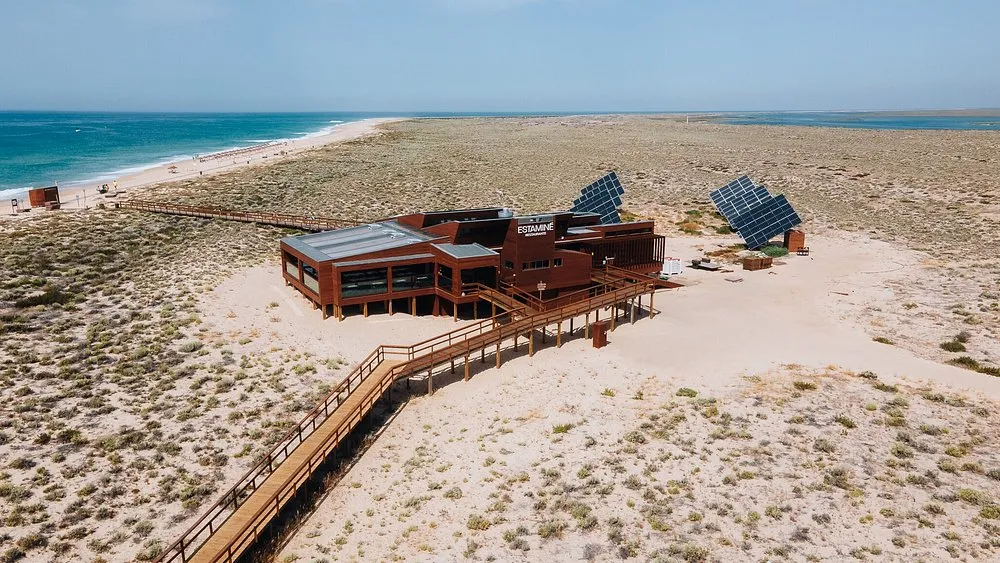
My favourite is Ilha Deserta, also known as Barreta.
But don’t expect to see any huge holiday resorts or even houses, as no-one lives on the island.
Instead, the boardwalk stretches around the coastline, making it a gloriously peaceful walk.
There is one building on the island, however, which is a restaurant called Estamine.
It first opened in the 1960s, but sadly burnt down in 2021.
Thankfully it has since been rebuilt and it’s worth the boat ride – after all, where else can you go to a desert-like island just to see a restarant?

The huge glass windows mean you still get fantastic views, albeit the Portuguese wine and freshly caught fish help too.
Otherwise if you want something a bit more built up, try Isla Armona instead.
There are a few houses and cafes, with a pathway winding through the boat pier to the beach.
Yet that peace and quiet remains, with the stone cottages covered with flowers and tiled patterns.
Get to the soft sand and you can grab an ice cream and a drink before sitting on the beautifully quiet beach.
It still remains quiet however – the boat gets onto the island at one end, with along single path winding through the tiny cottages to the beach on the other side.
However, this beach is just as quiet, with just a small bar serving drinks and snacks.
Now is a great time to go – it’s 27C next week and you can still get flights to Faro for under £20.
If you need somewhere to stay, I highly recommend splashing out on 3HB, which was Faro’s first 5* hotel.
Rooftop restaurant, chic bedrooms and friendly staff all make it worth the stay.

First look at major UK airport’s £2BILLION ‘master plan’ to land 30mil passengers a year
A MAJOR UK airport has announced a £2 billion ‘Master Plan’ that it hopes will land 30million passengers a year.
The expansion will create 50,000 jobs, including 3,800 on site.


Birmingham Airport‘s 15-year plan makes the best of its existing runway with major upgrades to passenger facilities.
It currently has around 13 million passengers travelling through it a year, so the 2041 goal of 30 million annual passengers is more than double.
As early as next year, flyers will see improved baggage facilities, additional aircraft stands and better public transport access.
The terminal area is a main fixture of the expansion, and is set to become 60% larger.


Parking will be vastly improved, too – in the first five years there will be two new car parking areas for flyers.
Nick Barton, Chief Executive Officer at Birmingham Airport Limited, said: “The £2bn proposed investment is unprecedented at Birmingham Airport and will take our airport close to 30m passengers.
“This level of ambition sends a strong signal of support and confidence in our airport and wider region.”
Birmingham Airport has assured local residents that in 2041, the noise impact will be similar to how it is today because of quieter aircraft.
They have also said they will be net zero by 2033; they list energy efficiency, alternative fuels and renewable electricity as a few reasons why.
The West Midlands Mayor, Richard Parker, said: “It’s set to bring thousands of new jobs, better international links, and unlock vital backing for local businesses and supply chains.
“This consultation gives local people and business owners a chance to have their say and help shape the airport’s expansion so that it brings lasting benefits for our communities.”

Ronaldo returns after Portugal quarrel to score in Al-Nassr win | Football
Cristiano Ronaldo opened the scoring for Al-Nassr in their 3-0 win over Diriyah, his first game since Portugal walkout.
Published On 10 Oct 2026
Cristiano Ronaldo returned to club football action on Friday after a controversial international break with Portugal and scored the opening goal as Al-Nassr beat Diriyah 3-0 in the Saudi Pro League.
The victory put the defending champions level on points behind leader Al-Qadsiah on goal difference in the eighth round.
Recommended Stories
list of 4 itemsend of list
During the international window, the 41-year-old Ronaldo walked out of the Portugal squad, for which he has scored 146 goals in 234 appearances.
In a long statement posted on Tuesday, Ronaldo said Portugal coach Jorge Jesus had not been true to his word about when he would play the striker in the Nations League.
Ronaldo won the Saudi Arabia title in May with Jesus as Al-Nassr coach, and opened the scoring on Friday midway through the first half.
Kingsley Coman’s shot from outside the area was blocked by goalkeeper Waleed Abdullah, and Ronaldo was there to shoot home the rebound from close range for goal number 980 in his career.
Samu Costa added a second for Al-Nassr, coached by former Tottenham Hotspur boss Ange Postecoglou, just before the break, and Coman sealed the win with 13 minutes remaining.
Al-Qadsiah earlier thrashed Al-Kholood 5-0, with Dutch international Tijjani Reijnders opening the scoring and Italy’s Mateo Retegui and Mexico’s Julian Quinones also finding the target.