


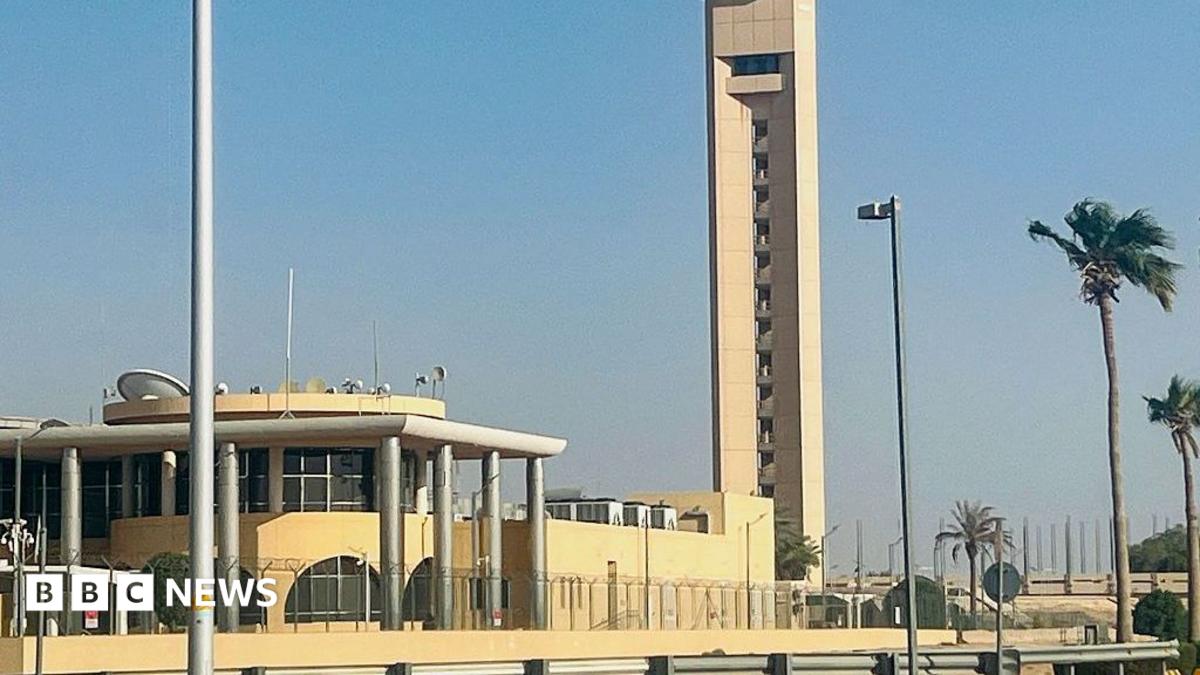
Riyadh’s King Khalid International Airport attacked, injuring several, reports say
Several people have been injured in another attack on an international airport in the Saudi capital Riyadh, reports say, days after Yemen’s Houthis claimed to have carried out strikes on the hub.
King Khalid International Airport in Riyadh was evacuated after a loud blast was heard on Saturday, two international news agencies have reported.
More than a dozen ambulances were seen rushing to the airport, according to Reuters, citing an eyewitness. Saudi authorities have not commented, while the airport told passengers to check with their airline before travelling there.
The US embassy said it was “aware of attacks on King Khalid International Airport” and urged American citizens to avoid the airport and surrounding areas.
The attack comes a day after authorities said three Saudis including a pilot were killed in two attacks on the airport by the Iran-backed Houthis the day prior. Another three people were killed in Houthi attacks on two Saudi airports on 6 and 7 October.
A source at a local hospital told news agency AFP that dozens of people had been wounded in Saturday’s attack.
“I saw 401 hit, I saw injured in front of my eyes. Everyone was running,” an eyewitness who said they had been at gate 401 in the domestic terminal told AFP.
While there has been no official confirmation of an attack, western embassies in Saudi Arabia have warned their citizens away from the airport.
Several Gulf airlines said they had cancelled their flights to and from the airport. with Kuwait Airways citing the “security situation” there.
All flights to Riyadh have either been diverted or cancelled, aviation tracker Flightradar shows.
Doctors had been asked to report to hospitals to address the situation, a medical source told AFP.
“We were told we are dealing with a ‘serious emergency situation’,” the medical source told the agency.
The suspected attack comes during a marked escalation in renewed fighting between Yemen’s Saudi-backed government forces and the Houthis, who control most of the country’s north-west.
The Houthis say they are targeting Saudi Arabia over its support for government forces in Yemen’s civil war.
The conflict worsened after the Houthis seized strategically important stretches of the Red Sea coast in a rapid offensive.
That included the port of Mokha on the Bab al-Mandab Strait, which is the narrowest point of the Red Sea and a chokepoint for global shipping. Yemeni pro-government forces have since said they had “secured” the strait at the southern end of the Red Sea.
A Saudi-led coalition was formed in 2015 after Arab countries joined forces to stop the Houthis taking over Yemen from the country’s internationally recognised government.
A temporary ceasefire was brokered in 2022 after years of air strikes and ground fighting led to the deaths of hundreds of thousands of people, triggering one of the world’s worst humanitarian crises.
But the informal truce began to unravel in July.
The Houthis announced a “maritime embargo” against Saudi Arabia and began missile and drone attacks on Saudi airports, oil facilities and tankers in the Red Sea. They said they were retaliating against what they described as a years-long Saudi blockade and for an air strike on Sanaa airport.

Stacey Solomon shows off her brand new orange bathroom inside £2m home but admits fans will HATE it
STACEY Solomon has unveiled her new-look bathroom – and admitted the colour choice could prove divisive.
The TV star – who has recently uprooted her brood from their famed house Pickle Cottage and moved to a new £2m property – shared photos on Instagram of the room, decked out in orange and grey tones.
Stacey proudly captioned the snap: “The Orange Bathroom – I’m ready for people to hate this!”
The mum-of-five, who also shares a step-son with partner Joe Swash, went on: “Honestly I love it so so much… as soon as I saw this tangerine bath set I fell in love with it.

“I just couldn’t throw it away it was so pretty.
“I have plenty of rooms to be neutral in but this is the boys upstairs bathroom and they LOVE this colour so I got to have so much fun in here bringing colour back to life.


“This room now just makes me happy as soon as I open the door.
“It’s so bright and cheerful!”
Stacey admitted there are “a few snagging bits to do I think I need to add some more bits and bobs but here she is”.
Ticking the room off the list, she finished: “One room done! Wahoo!”
Despite expecting fan backlash, the comments underneath the post were overwhelmingly positive.
“This is incredible,” ITV News‘ Paul Brand gushed, as another fan wrote that it was “nice to see something with a bit of personality as opposed to neutrals and greys that have engulfed the past decade!”
Another remarked, “Abso-loo-tely gorgeous! Totally love it,” as someone else penned: “Oh wow you’ve really smashed that. Looks amazing, great vision that a lot of people wouldn’t have thought of!”
One fan commented that it looked like a “Sindy dream house from the 70s”, as another pointed out the u-bend on the toilet still needed painting.
“I love love it! But stace the white pipe at the back of the loo can we spray paint this? It’s making my eye twitch!” they griped.
Stacey proved that the transformation was quite something, as she shared before snaps of the room, which featured dreary brown tiles and carpet and dull fixtures and fittings.
For the new room, the TV star has installed an orange bath, toilet and sink, with matching accessories, and added light grey tiles and white paint to the walls.
The taps and shower fixtures have been fitted in a brushed bronze, and orange stripes have been painted on the walls – with a “Get Naked” bath mat to complete the quirky look.


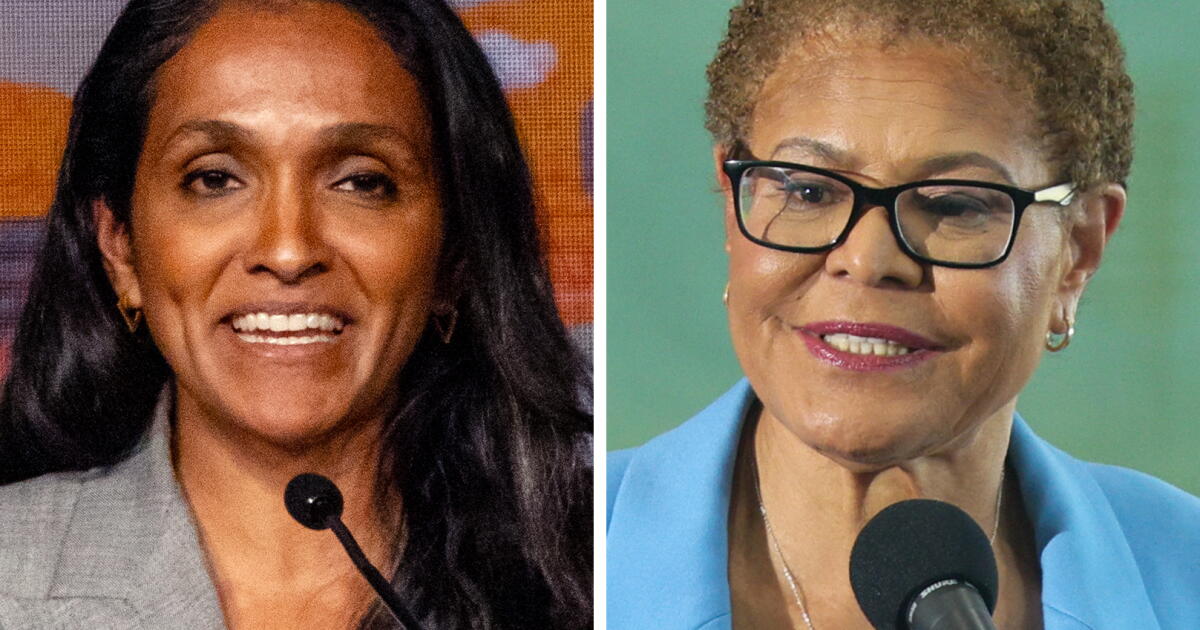
A final face-off in the L.A. mayoral race
Los Angeles Mayor Karen Bass and challenger Nithya Raman will be on the same stage Tuesday night for their final debate before the Nov. 3 election, but the two mayoral candidates are expected to come in with starkly different game plans.
With recent polls showing Raman in the lead, the councilmember will likely try to avoid making any kind of flub during the in-studio debate hosted by NBC4 and Telemundo52 in Universal City.
“A successful debate for Raman is one in which not very much happens,” said Dan Schnur, a professor of politics at USC, UC Berkeley and Pepperdine.
Raman floundered at the last NBC4/Telemundo debate during the mayoral primary, when Spencer Pratt was also on stage. She got better marks after a debate with Bass before the Sherman Oaks Homeowners Assn. in August.
Along with avoiding mistakes, Raman will need to paint a positive view of the city she hopes to lead, said Sara Sadhwani, a professor of politics at Pomona College.
“She needs to able to spell out a vision for the city of Los Angeles and inspire confidence that she would be able to deliver on such a vision,” she said.
For Bass, it’s a different task entirely. The mayor was the top vote-getter in the June 2 primary, but numerous several polls now show her trailing. The Berkeley IGS / L.A. Times poll, conducted Sept. 15-20, showed Raman with an 11-point lead over the incumbent.
To gain ground, Bass needs to go on the attack and convince voters that Raman isn’t fit to lead, Schnur said.
“Bass needs to explain to voters why voting for a relatively unproven candidate would be a dangerous risk to take,” he said. “I’m curious if it will go down the road of the nasty,” Sadhwani said.
The debate, being conducted in partnership with Loyola Marymount University, will run from 7 p.m. to 8 p.m. and will be moderated by NBC4 news anchor Colleen Williams, NBC4 chief political reporter Conan Nolan and Telemundo 52 news anchor Alejandra Ortiz.
The Times will have live coverage.
An influencer digs in on Bass
Social media creator Ed Choi made headlines this week, posting and then removing an Instagram video showing him and Raman declaring in unison: “Only you can stop fascist liars.”
The pair used that phrase as an image of Bass appeared on the video. Raman, facing criticism for her words, said she was referring to Trump and Immigration and Customs Enforcement raids, not the mayor or Los Angeles Police Chief Jim McDonnell, and had asked for the video to be taken down.
Choi defended his messaging, saying in a subsequent Instagram video that Bass is in fact a fascist, pointing to to Bass’ decision to appoint McDonnell, a former L.A. County sheriff. He also cited the Los Angeles Police Department’s treatment of anti-ICE demonstrators as evidence that the city is “descending into fascism.
Raman voted in 2024 to support Bass’ selection of McDonnell, even as her fellow Democratic Socialists of America colleagues on the council cast opposed his appointment. On the campaign trail, she has repeatedly criticized McDonnell, saying the LAPD should not have used tear gas on anti-ICE protesters exercising their First Amendment rights.
Choi also claims in his video that Raman is committed to defunding the police. But Raman no longer supports that idea, saying in February that LAPD staffing should not get any smaller.
Banned word lawsuit
When the Los Angeles City Council considered banning the use of the N-word and C-word at its meetings last year, Stacey Segarra-Bohlinger was in attendance to give the politicians a piece of her mind.
“This is going to bring lawsuits,” said Segarra-Bohlinger, who often sings parody songs at council meetings and has been a member of the Sherman Oaks Neighborhood Council.
Segarra-Bohlinger filed suit Tuesday, represented by lawyers with the Foundation for Individual Rights and Expression. The group contends that word bans — which can lead to people who use those words getting kicked out of meetings and potentially barred from future ones — violate First Amendment protections of free speech.
“The Council has weaponized the Word Ban and Meeting Ban to silence, remove, and prospectively exclude its critics,” asserts Segarra-Bohlinger’s lawsuit, filed in U.S. District Court in Los Angeles.
Segarra-Bohlinger filed the suit after her repeated use of the C-word at two council meetings last year, once while singing a parody song of the Ghostbusters theme song in which she repeated the line “Council is afraid of the word c—” four times.
Council President Marqueece Harris-Dawson is standing by the ban.
“In a moment of very serious attacks on our basic rights in this country, it’s especially absurd that some individuals would waste the court’s time defending the right of racists and misogynists to hurl invectives at the public simply to hear their own profanity,” he said in a statement to The Times.
State of play
—MONEY, MONEY, MONEY: Hedge fund manager Aaron Sosnick dropped another $3 million into Estamos Con Nithya, the pro-Raman independent expenditure committee sponsored by Western States Regional Council of Carpenters. Sosnick, who has been pushing for an expansion of the city’s bike lane network, has now put $6 million into the committee.
— UNION KERFUFFLE: The LAPD’s officer union said Tuesday it will oppose Measure FD, the half-cent sales tax measure on the Nov. 3 ballot pushed by the city firefighters’ union — setting up a bitter and expensive clash between two of the city’s most powerful unions.
— LEFT UNREAD: Citing lingering concerns about the potential misuse of police license plate readers, the Los Angeles City Council voted Tuesday to delay an agreement that would enable the deployment of hundreds of the controversial devices until officials are satisfied that the technology will be wielded responsibly.
— LAUSD WOES: The state’s school Fiscal Crisis and Management Assistance Team concluded that the Los Angeles Unified School District is at “high risk” of insolvency — and needs to move quickly to avoid losing control over budget decisions.
— HIT THE SKIDS: Federal authorities along with local partners like LAPD made more than a dozen arrests on Skid Row during a massive drug trafficking crackdown in the troubled Downtown neighborhood.
— LAPD’S LEGAL BILLS: The city of Los Angeles has shelled out nearly $480 million over the last five and a half years to end legal disputes involving the Police Department, including claims of excessive force, litigation over traffic accidents and cases filed by employees who allegedly faced retaliation after reporting misconduct.
— POLLING UPDATE: New polling from the pro-Nithya Raman independent expenditure group that was conducted between Oct. 2 and Oct. 7 found that Raman is leading the mayor 43% to 33% with 23% undecided. The poll’s margin of error is 3.5%.
— A separate poll sponsored by the United Firefighters of Los Angeles City, Local 112 and conducted between Sept. 25 and Oct. 5 found a tighter race, within the margin of error, with Raman leading 35% to 33% with 19% undecided. That poll’s margin of error was 4%.
— A third poll conducted for the Bass independent expenditure group Unidos con Bass of 602 likely Latino voters found the incumbent ahead by 12 points, 40% to 28% for Raman. The poll, conducted between Oct. 1 and Oct. 8, has a margin of error was 4%. That’s a 36-point swing from a UC Berkeley IGS/L.A. Times poll from September that found Raman ahead with Latinos by 24 points, 45% to 21%.
QUICK HITS
- Where is Inside Safe? The mayor’s signature program went to Councilmember Ysabel Jurado‘s district on Santa Fe Avenue and 23rd Street and moved 35 people indoors.
- On the docket next week: Bass and Raman will square off in a debate Tuesday night at 7:00 p.m. on NBC4/KNBC and Telemundo 52/KVEA.
Stay in touch
That’s it for this week! Send your questions, comments and gossip to LAontheRecord@latimes.com. Did a friend forward you this email? Sign up here to get it in your inbox every Saturday morning.
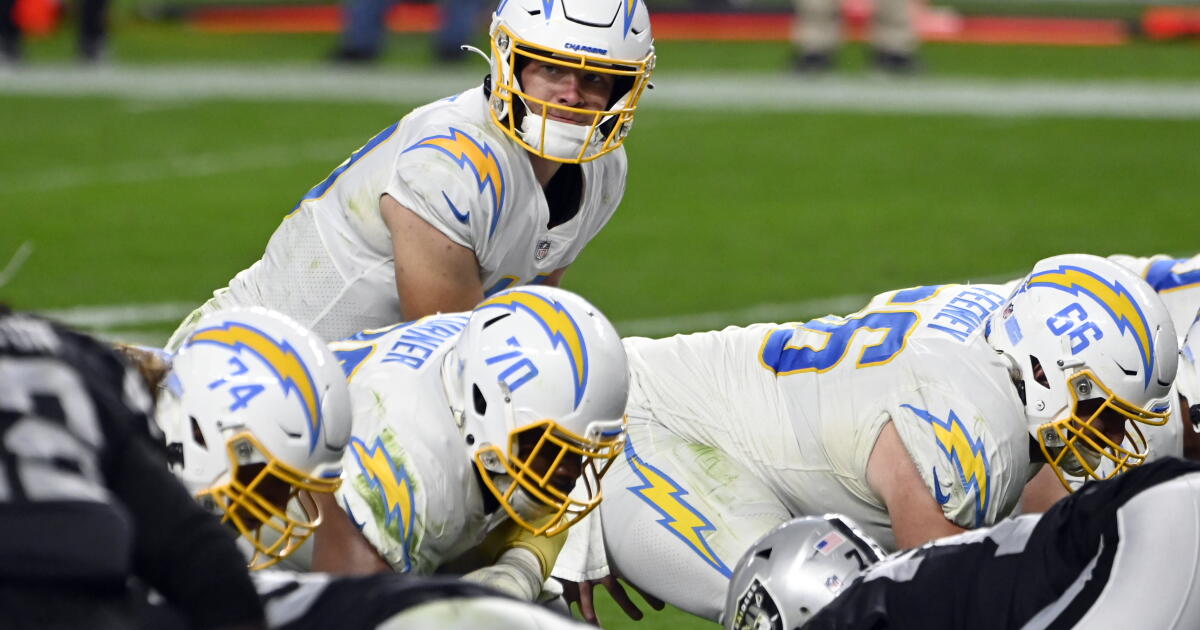
Letters: Chargers have a problem. Is it Justin Herbert?
p]:text-cms-story-body-color-text”>
I’ve been a Justin Herbert fan since his days in Oregon. I kept believing he was going to lead the Chargers to new heights, even after all the leadership changes he’s been through. He’s talented, tough and all-in. I gave him every benefit of the doubt. But now, I can conclude only that Justin Herbert is the problem. Inconsistent, often slow to react, but mostly he’s unable to finish. He’s lost more games in the fourth quarter than he’s won.
So far this season the Chargers have the greatest negative point differential in the fourth quarter in the NFL. The pattern is consistent regardless of the coach. Is it all on Herbert? No. But he is the common denominator through all of this.
Charlie Pankow
Moorpark
The fumbling, bumbling Chargers keep stumbling in their unprecedented 0-4 start in the Jim Harbaugh era.
First, the fumbling. Thank you, Derius Davis. Your inability to simply complete a fair catch led directly to a Seahawks touchdown. How many points did your team lose by?
Next, the bumbling. Call it a banged up offensive line, (AGAIN!), a moderately skilled and depleted receiving core, or a lost, interception prone Justin Herbert, the Charger offense remains sketchy, inconsistent, and self-destructive.
Finally, the stumbling continues … as they cannot beat teams they should or pull out potential victories over the more challenging ones.
Good luck turning this around!
Rick Solomon
Lake Balboa
I don’t care much about the Chargers. I rarely read stories about them and would be elated if they’d return to San Diego where they belong.
But, much like a car accident on the 405 that you instinctively know you shouldn’t stare, I just can’t seem to avert my eyes from the wreck the Chargers have become.
Ron Yukelson
San Luis Obispo
Here is a modest proposal: Lincoln Riley and Jim Harbaugh waive their buyout clauses and swap jobs. It might be the rare trade that improves both organizations. It is difficult to see how it could make things worse.
Paul Hunt
Sierra Madre

Trump Accounts: Free money, but who gets a say? | Donald Trump
Trump Accounts promise children a financial head start. Al Jazeera’s Emma Withrow spoke with one parent asking why he can’t opt out, or choose investments that align with his beliefs. Here’s what the rules actually say.
Published On 10 Oct 2026
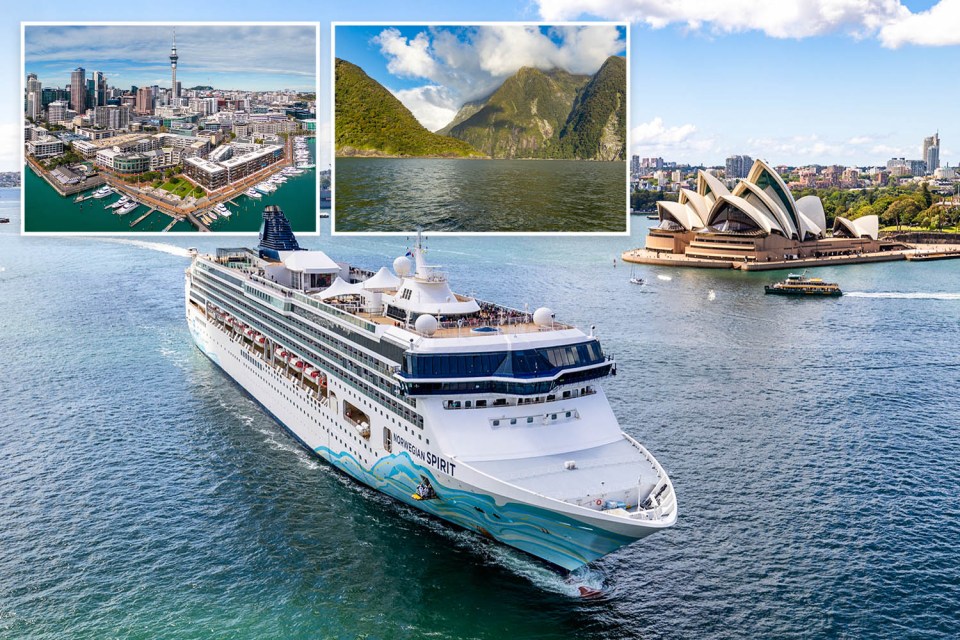
I went on an epic cruise around Australia and New Zealand with bucket list stops along the way

WHAT luck! We admire the northern royal albatross – his jet-black wings spanning more than three metres as he circles above our little tour boat.
“They love gliding on this south-westerly breeze,” says Rachel, captain of the Sootychaser.
But within seconds our attention switches as Rachel spots some adorable blue penguins — the smallest in the world — on the other side of the boat.
With fur seals, oyster catchers, black swans and sooty shearwaters also ticked, this boat trip around Port Chalmers harbour in New Zealand’s South Island has turned into a wildlife adventure that keeps on giving.
Lady luck has been with me since I set out on a 12-night cruise from Sydney.
It was a bucket-list departure as we sailed past the Opera House on our way to Auckland on Norwegian Cruise Line’s ship, Norwegian Spirit.


The Tasman Sea was unusually calm as Captain Nordin navigated Spirit into Milford Sound, a deep fjord with steep cliffs and gushing waterfalls, the low mist clearing to reveal a cloudless blue sky.
Cruising New Zealand’s scenic fiordlands, a vast, wild area at the bottom of the South Island, always promised to be a highlight of the trip and didn’t disappoint.
It was spectacular. From Milford we sailed past the softer scenery in Doubtful Sound — so-named because when Captain Cook was passing in 1770 he didn’t think his ship would get into it.
Last up was Dusky Sound, named by Cook as he first saw it as the sun set.
Port Chalmers is the nearest that most cruise ships can get to Dunedin, the Gaelic word for Edinburgh. “Scottish settlers travelled thousands of miles to this unknown land, but at least the weather was very familiar,” our guide Robert says with a laugh.
He’s not joking. We’re here in New Zealand’s summer, but the sky is grey and it is drizzling.
Things didn’t improve next day, when strong winds prevented Spirit getting into Lyttelton, the port for Christchurch.
Instead there was a day at sea with fabulous views as we sailed past snowy peaks.
I also worked up a sweat in Spirit’s thermal suite and followed up with an altogether different spirit — a margarita in Magnum’s, my favourite bar.
Built in 1998 and with room for just under 2,000 passengers, Spirit is NCL’s oldest and smallest ship, but looking very spruce after a £89million refurb in 2020.
They doubled the size of the spa, updated cabins, turned a waterpark at the back of Deck 10 into an adults-only area and added so many more places to eat and drink that it took me a week to try them all.
As NCL is the king of cruising casual, I booked whichever restaurant I fancied instead of being told when or where to eat, or what to wear. Jeans in the restaurant at dinner? No problem.
Steaks in Cagney’s, noodles in Silk, pasta in Onda by Scarpetta, stir-fry straight off the griddle in the fun Teppanyaki, and a superb Coq au Vin in the Bistro — I munched my way through the lot of them.
They were all really good (top marks went to the Bistro) and usually cost extra, but I paid nothing, thanks to NCL’s generous Free At Sea package.
It includes free meals in up to four speciality restaurants on cruises over nine nights (fewer nights nets fewer restaurants) as well as covering drinks and wifi and giving USD$50 (around £38) off the cost of shore excursions.
There were plenty of included places to eat as well.
Taste, one of two main dining rooms, was good, and I liked the outdoor seating at the Garden Cafe (a posh name for the buffet), but The Local was my favourite, for its salads, burgers, fish and chips and chicken wings.
Outside, the weather was getting better and better, with sunshine and blue skies as we explored New Zealand’s North Island. Wellington, the capital, stole my heart with its relaxed feel, clean streets and waterfront bars.
I rode a cable car to the top of the botanic gardens and wandered back to town, admiring the exotic plants and trees along the way.
In Napier the next day, I joined a hike and wine tour up the lofty Te Mata Peak with guides Helen and Anne.
“We’ve learned from experience it’s good to do the wine after the walk,” says Helen.
Wise words. What started as an easy path from the car park got steeper as we climbed — one foot wrong and you would be tumbling down the grassy bank.
Panting with exertion, it was a joy to finally dive into four tipples, including a cheery sweet rosé aptly named Fleurty.
Tauranga was different again — a beautiful beach resort, with miles of soft sand and stylish apartments that would look right at home on the French Riviera (but were a lot cheaper).
The next day, in Auckland, it was time to say goodbye to Spirit and New Zealand — but I’m not dis-Spirited because, with Lady Luck on my side, I’ll be back.
GO: NEW ZEALAND CRUISE
SAILING THERE: Norwegian Cruise Line offers an 11-day Melbourne, Milford Sound and Eden cruise from Sydney to Auckland departing on February 16, 2027, from £2,030pp for an ocean-view cabin.
Price includes Free At Sea package of drinks, four speciality restaurants, 150 minutes of wifi for one device at a time and USD$50 off shore excursions.
Call 0333 241 2319 or visit ncl.com.
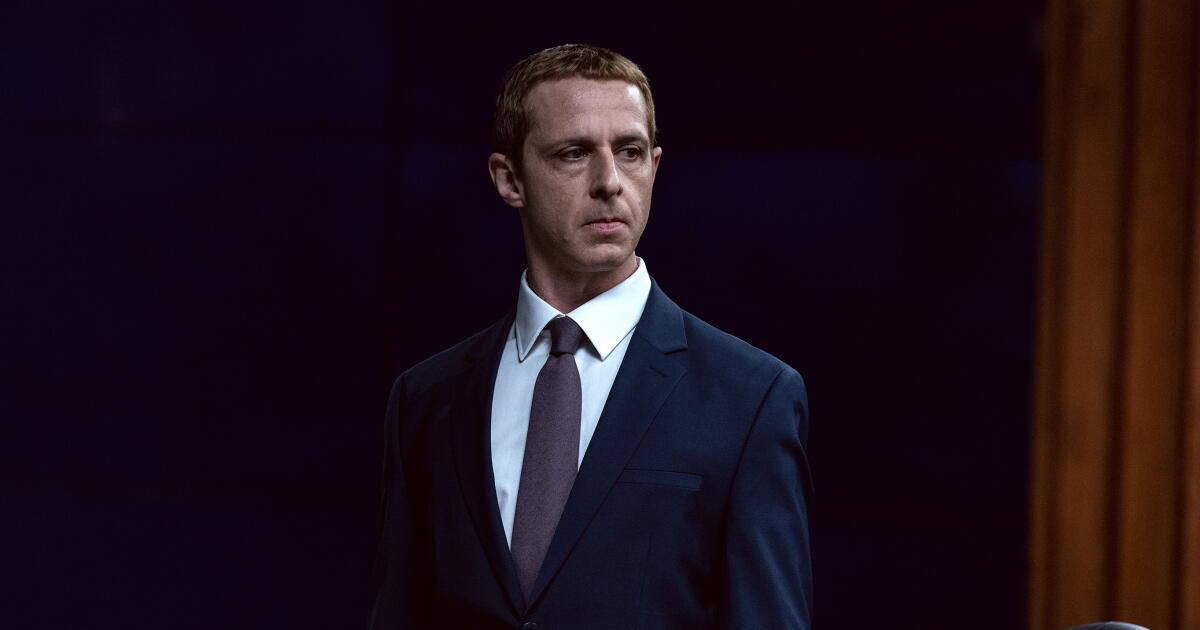
‘The Social Reckoning’ review: Sorkin’s follow-up is awkward
Aaron Sorkin’s “The Social Reckoning,” a sequel to 2010’s David Fincher-directed “The Social Network,” is hitting theaters as part of a surge of tech geek takedowns that includes documentaries on Elon Musk and Theranos’ Elizabeth Holmes, as well as Luca Guadagnino’s upcoming comedy “Artificial” about OpenAI’s Sam Altman.
Still, its timing couldn’t be worse.
Cursory and hollow, it recounts the true story of Wall Street Journal reporter Jeff Horwitz (Jeremy Allen White) and Facebook whistleblower Frances Haugen (Mikey Madison), a disenchanted data engineer on the company’s civic integrity team, who paired up for a 17-part investigative series that provided proof of what people already sensed: Facebook boosted misinformation and rage-bait to juice user engagement at the cost of our country’s mental health.
The script ends shortly after Haugen testified before Congress in October 2021, noting that the carpet in her waiting room had recently been swapped out because of bloodstains from the Jan. 6 Capitol attack. The film rewinds to that day, too, and attempts to squeeze drama from slow-motion reenactments of the rioters, which Alexandre Desplat scores to an overbearing military dirge as Mark Zuckerberg (Jeremy Strong) and his good little Facebook soldiers mull over whether to take down the U.S. president’s incendiary posts.
Back in our own reality, Zuckerberg and the president just had lunch last week. At this point, we’re all so psychically drained that the only response we can muster to this vacant period piece is: So what?
Sorkin has my sympathies. The future moves faster than a film in development. And he fundamentally gets the peril we’ve put ourselves in by entrusting Zuckerberg, who is, at minimum, an ethically askew man. After all, Sorkin’s own screenplay for “The Social Network” remains a prescient masterpiece.
But the movie’s problems go beyond arriving simultaneously too slowly and too soon for Zuckerberg’s endgame, where his emptying social media empire has him gambling his fortunes (and ours) on AI. Expanding his scope from Harvard to the planet, Sorkin now aims to show that we’re all trapped in Zuckerberg’s insensitive mind view. Cold computer speak has infected everyone like a virus. When Madison’s Frances goes on a blind date, her online match says he appreciates that the internet makes it simpler for singles to pair up “within their own vector.” The buddy-buddy Winkelvoss twins’ version of the app might actually have been better for the world.
Meanwhile, Zuckerberg, who mostly stays on the sidelines of the movie, is now a mighty billionaire and, as Strong plays him, a dour, lifeless dork. Gone are the beer bashes, the thrill of invention and any hint that Zuckerberg lusted for something — women, attention, clout — other than a quarterly earnings report. This Zuckerberg is no longer made of flesh and blood but ones and zeros. Pity Strong couldn’t play the CEO after his bro-y 2024 mutation into MMA-fighting Marky Mark. At least that guy is amusingly ridiculous. Trapped in this stiffer, earlier incarnation, the only acting Strong is able to do is poke his head straight up from his shoulders until he resembles a retractable pen.
Worse, all the other characters in the film talk just like him: charmless, frigid and quick to cut each other off with snippy corrections. I could forgive that if it was just Facebook’s employees: Madison’s quavering, exasperated Frances, the co-worker (Anna Lambe) who insists she and Frances are merely colleagues, not friends, even after their company frittered away the meaning of the word, and a media relations executive (a smooth Billy Magnussen) who gets the scariest line, coolly insisting that “we’re post-government around here.” After all, these are the folks who saw “The Social Network” and still wanted to work for Zuckerberg.
But the opposition is steeped in that same monotone rudeness. Sorkin must have adored that earlier film’s opening scene where Rooney Mara insults a clueless Jesse Eisenberg because he’s written three-dozen takes on it. At Sorkin’s version of the Wall Street Journal, everyone up and down the masthead — editors, writers, even interns — insults each other with such relish that someone should be written up by HR. The fast-and-furious dialogue hits its nadir when Madison’s Frances slips Jeff important documents that he can’t even read because she nonsensically starts chattering about the looming coronavirus.
Here’s where you say that this is just how Sorkin writes characters. And here’s where I counter that a movie about how algorithms destroy humanity has to have some credible humans in it, if only to illustrate its own point.
Instead, Sorkin’s protagonist-bots come with bolted-on personality quirks. White’s journalist is a Luddite who would rather be late to his own job interview than use Google Maps. He comes across as so clueless that the audience can barely credit him for his reporting work winning an eventual Pulitzer — he’s just soulful eyes and a cellphone ringtone that tinkles old show tunes.
Madison, 15 years the junior of the real Frances, is too young to convince us that her character truly believes she can turn Facebook into a digital utopia. An ultra-online 20-something, she was a front row witness to Gamergate, yet somehow she’s shocked to overhear about middle-school girls getting bullied on Instagram. Her character wears legwarmers and knit wristlets to the office as protection against the air conditioning, which also serves to emphasize her company’s interpersonal chill.
Yet, bizarrely, the script makes Frances dress like a sex worker whenever she sneaks to Jeff’s hotel to slip him some corporate secrets. It’s a disguise, she explains, although the gag is so forced that it’s just as easy to believe the literal-minded girl is taking her Deep Throat identity too seriously. Or perhaps Sorkin just wanted to remind audiences that this awkward creature is the same actor who won the Oscar stripping off in “Anora.”
A few moments do work, like an opening showdown between a drunk blond (a nasty-great Portia Doubleday) and two cops that gets live-streamed to the web, and Zuckerberg’s congressional coaching sessions with his crisis team, played by Wunmi Mosaku and the comedian Bill Burr. From what we learn of Burr’s Charlie Garrigan, an insider who sold his Facebook stock too fast and then wrote a negative New York Times editorial against the company, he seems to be inspired by early co-founder Christopher Hughes, which would made him the only other callback character from “The Social Network.” But Sorkin has changed his name and upped his age, so as fun and ferocious as Burr is, we also spend his scenes feeling a little confused.
Do we learn anything new about Facebook itself? No. Still, I appreciated how dismissive Frances gets when asked to confirm small scandals that she finds too piddly to care about, like Jeff’s suspicion that Zuckerberg is goosing his posts so that positive comments outrank negative ones 32 to 1. That’s just obvious, her posture says. Facebook is over two decades old and he still hasn’t made many friends.
‘The Social Reckoning’
Rated: R, for language
Running time: 1 hour, 53 minutes
Playing: Opens Friday, Oct. 9 in wide release

Sara Sharif’s grandfather granted guardianship of her siblings in Pakistan
Sara Sharif’s paternal grandfather has been granted guardianship of her siblings by a court in Pakistan.
The decision comes after years of legal limbo following the murder of 10-year-old Sara by her father and stepmother in 2023.
All five children, who are now aged between 16 and four, have been living in Pakistan since 2023. They were asked to speak to the judge in court, where the eldest said they were comfortable and the siblings were settled.
Sara’s grandfather, Muhammed Sharif, told the BBC he was relieved to be granted guardianship after three years of legal battles, saying his hope is that the children “stay healthy” and receive “a good education”.
“It is my responsibility to ensure they get the best possible education and care,” he said.
When told by the judge that the grandfather would become their guardian, the eldest child responded saying “that’s all good”.
The five children have been in Pakistan since August 2023, when they were brought to the country by Sara’s father, stepmother and uncle after Sara was killed.
The family was in hiding for weeks before the children were discovered by police at the grandfather’s house. They were initially put into state childcare.
The adults flew back to the UK and were arrested at the airport. Sara’s father Urfan Sharif and stepmother Beinash Batool were found guilty of Sara’s murder. Sharif was sentenced to a minimum of 40 years in prison and Batool received a minimum of 33 years.
Her uncle, Faisal Malik, was found guilty of causing or allowing her death and given a 16-year sentence.
Sara had been hooded, burned and beaten during a “campaign of torture” that lasted two years before her body was found at the family home in Woking, Surrey.

EU and China clinch deal over cars after heated trade talks as Brussels pushes to rebalance trade
Published on •Updated
EU Trade Commissioner Maroš Šefčovič announced a deal with China on Friday to curb imports of Chinese hybrid vehicles into the EU and facilitate access to rare earths.

ADVERTISEMENT
ADVERTISEMENT
While the understanding signals a preference for a diplomatic resolution to the growing trade imbalance, European leaders are pushing for stronger measures to level the playing field. They are expected to review the details at a summit in Brussels next week.
The EU has also floated retaliatory measures if the outcome falls short of expectations.
Šefčovič travelled to Beijing on Wednesday for two days of intensive talks with his Chinese counterpart, Wang Wentao, in a bid to rebalance EU-China trade relations.
The EU is facing a record trade deficit with China of €1 billion a day, as a surge in low-cost Chinese imports threatens entire sectors of European industry.
“We have reached a shared understanding to moderate China’s export of hybrids and plug-in hybrids to the European Union,” Šefčovič said. “This opens up the prospect of cutting China’s exports by more than half.”
The commissioner said the deal would also improve access to the Chinese market for a range of EU products, from “car parts to olive oil and footwear”, representing almost €4 billion in current export value. It should generate at least €225 million in duty savings, he added.
Market access has been at the heart of EU-China discussions since negotiations began last June. Beijing has been reluctant to relinquish access to the EU’s 450-million-consumer market, which provides an outlet for its excess production.
Meanwhile, Brussels has proposed several legislative measures aimed at restricting Chinese companies’ access to the European market, while pressing Beijing to open up its own market to EU businesses.
Šefčovič also said China had agreed to facilitate exports of rare earths, which are essential to Europe’s green technology, defence and automotive industries.
“We have reached a shared understanding to further facilitate China’s export licensing for rare earths and permanent magnets,” he said.
The EU has accused China of “weaponising” its dependence on Chinese rare earths after Beijing restricted exports in 2025 amid a trade war with the US.
Šefčovič described the agreement as the conclusion of a “first phase of negotiations”.
The deal comes ahead of a meeting of EU leaders in Brussels next week, with expectations running high for concrete results from negotiations led by the European Commission on their behalf since last June.
A consensus on China has been emerging across the EU this week.
All EU countries now run trade deficits with China. On Monday, Germany and France urged the European Commission to take strong action against unfair Chinese trade practices that cause severe market distortions.
In a joint document, Paris and Berlin called for measures that could include “an immediate cut-off from the internal market if needed”.
On Wednesday, MEPs overwhelmingly adopted a resolution calling for resolute measures against Beijing.
Meanwhile, 44 EU industries, including chemicals, machinery, metals, solar, glass and cement, issued a joint statement on Friday warning that “Europe cannot maintain and grow its industrial base, quality jobs, and attract investment without the ability to respond effectively to unfair trade practices and distortions”.

Singapore Grand Prix: Max Verstappen beats Charles Leclerc and Lewis Hamilton to pole
Red Bull’s Max Verstappen took his second pole position in a week by beating the Ferraris of Charles Leclerc and Lewis Hamilton in qualifying at the Singapore Grand Prix.
Verstappen’s first lap in final qualifying was enough to take pole, his time fending off a second lap from Leclerc that was 0.054 seconds off pole.
Hamilton was closest to Verstappen after the first runs but was unable to improve on his second run.
In fact, most of the front runners struggled to improve on their second runs, as Mercedes’ Kimi Antonelli took fourth on the grid, from McLaren’s Lando Norris.
Antonelli’s team-mate George Russell was sixth fastest but will drop to the back of the grid with a penalty for using too many engine parts.
McLaren’s Oscar Piastri was the only driver in the top four teams other than Leclerc to improve on his second run but could do no better than qualify seventh.
Alpine’s Pierre Gasly and the Racing Bulls of Liam Lawson and Arvid Lindblad completed the top 10.
More to follow
Abbas postpones Palestinian legislative elections to September 2027 | Elections News
November 2026 vote delayed and joint presidential and legislative elections set for next year, president says in decree.

Published On 10 Oct 2026
President Mahmoud Abbas has postponed what would have been the first Palestinian elections in nearly 20 years, issuing a decree to further delay voting for the Palestinian Legislative Council for almost another year.
According to the decree, legislative elections planned for next month will be combined with a presidential vote and set for September 11, 2027, Wafa, the official Palestinian news agency, said on Saturday.
Recommended Stories
list of 4 itemsend of list
The long-awaited parliamentary vote was originally set for November 28, with a presidential election expected in early 2027.
The decree came after a committee of top Palestinian officials met on Saturday morning to discuss postponing the vote.
The Palestine Liberation Organization’s (PLO) Executive Committee, which Abbas heads, said in a statement that conditions in occupied East Jerusalem, the West Bank and the Gaza Strip were not conducive to holding elections, noting that Israel had not allowed election materials or international observers to enter Gaza.
Israeli interference, including military raids, settlement expansion and settler violence in the occupied West Bank, has made a fair vote in November impossible, Wafa reported.
The agency also cited Israel’s systemic withholding of Palestinian tax revenues and its restrictions on electoral candidates and international observers entering Gaza and occupied East Jerusalem, as reasons.
As for Gaza, it said that the lack of progress on reconstruction and on deploying an international stabilisation force factored into the decision as well.
The postponement leaves entrenched Palestinian leaders unchallenged and threatens to further erode the Palestinian Authority’s (PA) credibility among Palestinians and donor countries who fund it.
On Friday, the Israeli Minister of Foreign Affairs, Gideon Saar, accused Abbas of “fooling the international community” by planning to cancel promised elections.
A source told the AFP news agency on Thursday that Palestinian factions, including Abbas’s Palestinian National Liberation Movement – also known as the Fatah party – had agreed to hold a “national dialogue” before legislative elections and that they wanted to postpone the vote.
The last parliamentary elections held in the Palestinian territories were in 2006, when Hamas defeated Fatah, which dominates the PA. The split led to factional fighting and Hamas later seized control of Gaza.
Ninety-year-old Abbas won the last presidential election in 2005. His term should have ended in 2009, but he has ruled by decree since then. In June, he signed a decree calling for the presidential election to be held in early 2027.

The pretty UK cottages and glamping huts owned by celebrities that YOU can rent for £40 each a night

IF you’ve ever wanted to stay in a holiday home that has a touch of the celebrity about it, look no further.
These country cottages and glamping stays are all owned by TV stars including an Emmerdale actor as well as presenters of Countryfile and Escape to the Country – and you can actually stay in them.
Stag Cottage Sykes Holiday Cottage
Any fan of Emmerdale will know Kelvin Fletcher for playing Andy Sugden for 20 years.
Since then, he’s also appeared on Fletchers’ Family Farm following his new venture since leaving the ITV soap.
Also on the site of the farm is Stag Cottage, on the site of the Fletcher farm near Wincle, and you can book it on Sykes Holiday Cottages.
Inside, the cottage has been renovated into a cosy rental that sleeps up to six, there’s a sitting room with a woodburning log fire with squishy sofa and chairs.


The kitchen has a central island and is fully-equipped with everything visitors need to make home-cooked meals.
The cottage sleeps six people and upstairs are three bedrooms all with king-size beds with plush bedding, and one has an en-suite.
There’s also a snug and conservatory, and outside is a garden with lawn, patio area, decking, furniture and hot tub.
Stag Cottage has 89 reviews all of which are five-star, one called it the “absolute chicest luxury retreat in the Peak District.”
Some even said they had met their hosts: “We loved our stay made all the more special meeting Kelvin and Liz who are both lovely genuine people, they made us feel so welcome and nothing was to much to ask.”
The cottage is largely booked up for the rest of the year, but if you wanted to book a break in January 2028, a seven-night stay starts from £1680 – or £40pppn.
Cotswolds Farm Park

Did you know that Countryfile presenter Adam Henson has his very own attraction called Cotswolds Farm Park?
It is a farm and petting zoo with animals like donkeys, cows and sheep for kids to see.
When it comes to playing, there are indoor and outdoor play areas with soft play, sand pits, Bouncy Pillows, swings, a zipwire, ride-on tractors, quarry play and a sensory garden.
For a peaceful experience, families can head on the wildlife walk or longer Woodland Walk through surrounding farmland.
Some decide to visit for the day – but it can be easily turned into a weekend getaway thanks to its range of stays from luxury lodges, cabins, safari tents, glamping pods.
There are also pitches to pop up your own tent which starts from £29.96pn.
Glamping pods start from £50 per night, it sleeps four people and has a private decking, electric BBQ along with a communal kitchen area and a shower block.
For a more glam stay, opt for a luxury lodge with a hot tub like the Exmoor and Ronaldsay.
These lodges both sleep up to six people, have a private bathroom and shower, fully-kitted out kitchen and with an upgrade come with a wood-fired hot tub.
A two-night stay from October 13 for four people starts from £654.50 – or £81.80pppn.
Mole Hill Hut
Hidden away in the rolling hills of Herefordshire is a glamping site owned by Escape to the Country‘s Jules Hudson.
Presenter of the BBC show used his skills to handcraft his very own bespoke shepherd’s hut that you can book.
On Jules’ own land near the Wye Valley, the hut is tucked away in a private meadow – the hut is designed for two people as a secluded, off-grid retreat.
Inside is a cosy double bed, a functional kitchenette, and an adjoining lounge area called “The Trough.”
Guests can spend their evenings around the outdoor wood-burning stove enjoying panoramic views of Herefordshire’s rolling hills.
Also provided are books, magazines, maps and board games and guests will find luxury toiletries.
The hut cost £150 per night (for two) with a three-night minimum stay – anyone who books a seven-night stay can get 15 per cent off.

High silver prices threaten Lucknow’s famed bridal nagra craft | Longform
War-driven price rises
Prices for precious metals actually began rising with Russia’s invasion of Ukraine back in early 2022, but economists say prices surged significantly with the US and Israeli attacks on Iran.
In 2023, silver prices in India largely fluctuated between $725 (70,000 rupees) and $830 (80,000 rupees) per kilogramme, rising to around $985 (98,000 rupees) in 2024. But this year, amid the conflict with Iran, silver prices briefly soared as high as $4,670 (450,000 rupees) per kg before easing after the ceasefire. Even now, after some decline, prices are hovering around $2,600 (250,000 rupees) per kg, more than three times their levels just a few years ago.
Dr. Salahuddin Ayyub, an economist and international trade expert with India’s Ministry of Commerce and Industry, said geopolitical conflicts have triggered unprecedented volatility in global commodity markets.
“When stock markets become volatile, investors move their money into safer assets, such as gold and silver,” Ayyub explained. “This sudden surge in demand pushes the prices of precious metals sharply upwards.”
The consequences have been particularly severe in India, he said, because gold and silver remain deeply intertwined with weddings, other cultural traditions and family savings. As prices continue to rise, many households are increasingly opting for lower-cost alternatives, such as artificial jewellery.
He warned that while consumers may find substitutes, those whose livelihoods depend on the precious metals industry, including artisans, silversmiths, jewellery shopkeepers and traditional craftsmen, have far fewer options.
“The impact extends well beyond consumers,” Ayyub said. “Entire communities whose incomes depend on these metals are now facing shrinking demand and growing economic uncertainty.”
The surge in silver prices has had another consequence that is often overlooked by the government and policymakers. According to Ayyub, when a country witnesses a sharp rise in demand for imported precious metals, governments often intervene to curb imports and protect their foreign exchange reserves.
“India depends heavily on imported silver. A sudden spike in imports puts pressure on the country’s foreign exchange reserves, so the government tries to discourage excessive imports through tariffs and other restrictions,” Ayyub said.
These import duties are eventually passed on to consumers. “As tariffs increase, the landed cost of silver rises. That is one of the reasons why silver prices in India are currently trading above global prices,” he said.
Globally, silver currently costs $2,100 (201,000 rupees) per kg, but in India, it’s more than 20 percent higher because of heavy government import taxes and strict licensing that chokes off supply. India depends on imports to meet more than 80% of its domestic silver demand and its purchases account for over 20 percent of the global trade in refined silver.
India more than doubled its effective import taxes on gold and silver in May. That saw silver imports plunge by 87 percent to just $75.6 million that month, down from $566.2 million the previous year, the country’s lowest level in over three years.
High silver prices are now forcing Lucknow’s brides to make tough, sometimes devastating, decisions.

First look at Amy Childs wedding spin-off as ’emotional’ Towie star reveals she’s finished filming the series
AMY Childs has admitted to feeling “emotional” having wrapped filming on her Towie wedding special.
Amy Childs: The Towie Wedding follows Amy and her now-husband Billy Delbosq as they prepare to tie the knot.
The spin-off sees the couple make arrangements before getting legally wed in London, followed by a lavish ceremony at San Roque Golf Club, near Marbella.
Taking to Instagram, Amy shared behind-the-scenes snaps from filming.

She captioned the images: “And that’s a wrap!
“Feeling so emotional our show has come to an end however I am so excited for you to all to see (dates coming soon)!


“It’s been incredible!”
Referencing her daughter, Amy added: “PS Polly the star of the show!”
Amy’s photos saw the reality star sat for cameras solo as well as with Billy.
Another shot saw Polly, nine, who Amy shares with ex Bradley Wright, sat for her own solo pieces to camera.
Amy also shared a selfie, taken after getting glammed up for filming.
She looked chic in a black blazer and matching top, showing off a freshly-styled mane in shades of caramel and hazlenut.
Amy showcased her flawless make-up, with a tanned glow to her complexion, striking black lashes and a slick of rosy gloss across her pout.
She sported a necklace with Billy’s name on it, as well as the names of all her children: Polly and Ritchie from previous relationships and twins Millie and Billy with her now-husband.
The pair had their second ceremony at the end of September, surrounded by 180 guests including Towie co-stars such as Jordan Brook and Sophie Kasaei.
Amy was walked down the aisle by her dad, who is also named Billy, with guests all adhering to a black tie dresscode.
Amy and Billy had their first wedding back in April having previously postponed their nuptials last year.
The new show is expected to land on ITV in the coming months.

Prep talk: Pualani Olotoa-Le’au leads Carson in flag football, softball
Pualani Olotoa-Le’au, a 15-year-old sophomore at Carson High, has become a major contributor in flag football and softball for the Colts.
She’s the starting safety and linebacker for the flag football team. She’s also a catcher for the softball team.
She’s excelling off the field by being a dual enrolled student, taking classes at L.A. Harbor College and Carson.
She’s part Samoan, Filipino, Mexican, Japanese and Native American.
Carson is 11-4 overall and 4-1 in the Marine League for flag football.
This is a daily look at the positive happenings in high school sports. To submit any news, please email eric.sondheimer@latimes.com.
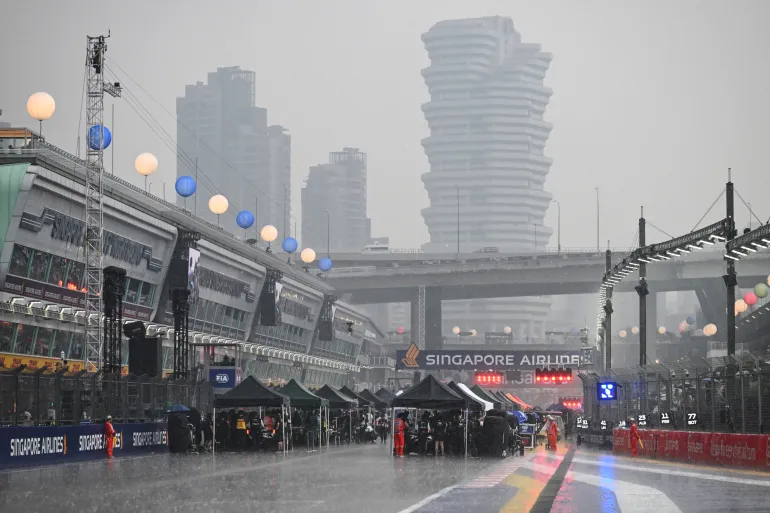
Verstappen wins chaotic Singapore GP F1 sprint after Russell crashes | Motorsports
Max Verstappen’s sprint race win was Dutchman’s first of any kind in Singapore as he finished ahead of Lewis Hamilton.
Published On 10 Oct 2026
Red Bull’s Max Verstappen won a wet and wild Singapore Grand Prix sprint race on Saturday after George Russell crashed his Mercedes while leading at the end of the opening lap.
Four-time Formula One champion Verstappen held off Ferrari’s Lewis Hamilton to win by 2.50 seconds, with Charles Leclerc third as the McLarens of Lando Norris and Oscar Piastri touched and spun on the final lap while in fourth and fifth.
Recommended Stories
list of 4 itemsend of list
A heavy shower 10 minutes before the scheduled start meant a delay of 30 minutes.
All cars began on intermediate tyres, with some sectors of the Marina Bay Street Circuit much drier than others as the field embarked on two formation laps behind the safety car.

The eventual standing start saw Russell start on the front row alongside pole-sitter Verstappen and it was the Englishman who got away better.
His lead was short-lived as he lost control after touching a treacherous white line on the final bend of the opening lap. He slid sideways into the pit lane wall, bringing out a safety car.
It was another setback in a season of bad luck for Russell, who will start from the back of the grid in Sunday’s Grand Prix because of engine penalties.
“It was a miscalculation,” Russell told Sky Sports. “Came through the corner, had more battery deployment than I thought, pushed me a little bit wider than I hoped and went on to the white line.
“Silly mistake. Big consequences.”
It left Hamilton, who had a brilliant start from sixth on the grid, in second place, having leapfrogged Ferrari teammate Leclerc and the two McLarens.
The big beneficiary of Norris and Piastri’s “papaya spat” on the last lap was championship leader Kimi Antonelli, who inherited fourth place in his Mercedes having started seventh on the grid.
Fifth was RB’s Liam Lawson, sixth was the Haas of Oliver Bearman, seventh was Audi’s Nico Hulkenberg and Norris got going again to limp home in eighth and round out the points scorers.

Meta glasses giving ordinary spectacle-wearing perverts a bad name
HI-TECH eyewear used to film women without their knowledge is unfairly besmirching normal bespectacled peepers and voyeurs, it has emerged.
Wearers of Meta smart glasses are following unsuspecting women and uploading humiliating footage to the internet for cash, with the backlash punishing traditional deviants who follow women around for nothing but their own honest entertainment.
Old-fashioned lecher Joseph, not his real name, , wearing NHS spectacles from the 1980s, said: “They accuse me of filming women. Me! Who wants nothing more than to sniff their bus seats!
“Yes, I’m short-sighted. Yes, I wear glasses with comically thick lenses. But when I stand close to a pretty lady and breathe heavily, it’s because I want to actually experience it in the moment not share it online for likes.
“It’s sad, really. These sickos with their secret cameras are turning the simple act of staring at a lone female while rubbing your groin into something weird and creepy.”
Police tech expert Sgt Bates, not his real name, said: “Meta glasses are a real societal problem. We’re suddenly seeing video evidence of all of these instances of sexual harassment and it’s clear that we’ve got to take action.
“It was so much easier to ignore when all we had was women’s word for it.”

I went to the French ski resort that’s one of the world’s largest
AS someone with a fear of heights, dangling by a thin rope from a cable several hundred metres above a deep mountain valley is not on my bucket list.
But here I am, suspended 2,000ft up with nothing between me and the valley below (a situation that could soon change as I feel the pastries I had for breakfast make their way back up).
I have reluctantly agreed to take part in the so-called Aerolive experience, which is essentially a gondola without walls.
“Aerolive invites you to slow down, take a deep breath and appreciate the sheer scale and beauty of the mountains,” teases the bumpf.
Heavenly stuff, but no one has told my pulse, which is going like the clappers as I gingerly step nearer the edge.
I watch in awe as my fellow daredevils lean out into the abyss and decide on a half in/half out strategy, which would typically be described as “chicken”.
READ MORE ON SKIING TRIPS


Because yes, Aerolive is exhilarating and yes, the view is magical but my God it is also bloody terrifying.
This mountain masochism is the latest thing to do in La Plagne — a French ski resort which has spent millions installing the superfast gondola from which I now teeter, to whisk visitors up to the top of its 3,080m-high Roche De Mio mountain.
Of course, you don’t have to — literally — put your life on the line to get up here. Normal, sealed cabins are available.
And while Roche De Mio is most definitely the highest, it is just one of numerous peaks in this vast Alpine resort, with its 77 lifts, 143 pistes and 225km of skiing.
That nearly doubles when you add the runs and lifts in neighbouring resort Les Arcs, which offer a combined 425km of pistes — the third largest ski area in the world.
You could spend a week here and not cover half the terrain, even if you bomb down a few slopes after hours on a sledge, which local ski firm Oxygene offers for around 40 euros.
I gave their so-called Superluge Derby a go and wow, it’s probably the fastest — and most out of control — you can go on these mountains.
Helpfully La Plagne is HIGH, with 70 per cent of runs above the treeline between 2,000m and 3,000m, which is perfect for a late break (I went in late March and conditions were ideal).
From the top of the highest runs, the views across the bowls are spectacular and there are plenty of big, wide runs.
And when your legs get tired, you are spoilt for choice for places to stop, from cosy chalet-style joints serving all the Savoie usuals — such as tartiflette and fondue — to more modest snack bars pumping out croque monsieurs.
So you don’t blow a hundred euros every lunchtime, I’d suggest nipping over to Plagne Bellecote, where cheaper snack bars abound but the view is still cracking.
If you do fancy spending a few bob and you can’t visit the mountains without a blast of electronic dance music, there is a Folie Douce-style bar on the way down to Plagne Village called La Bergerie.
It’s a straight rip-off of the Val d’Isere original Folie Douce and features DJs, half-naked dancers and, of course, some dude on a saxophone.
Getting a big round in here is only for the brave, though. I bought three pints and am still paying off the credit card bill.
But it’s a good laugh for a quick stop and hey, you’re on holiday.
I stayed just down the hill from Bellcote in a Ski Beat chalet in one of La Plagne’s smaller satellite villages, Plagne 1800.
It’s a charming little place with a few bars and restaurants but most importantly, it’s about a five minute totter from the lifts.
This is my second year on a Ski Beat package and again the service was first class and the food top quality.
While Plagne 1800 is a sleepy hamlet, there is enough to keep you entertained if you’re not quite ready to turn in at 9pm.
I spent a few nights in the rowdy La Mine Bar, themed on a “traditional English pub” and it has made a pretty good fist of it.
You can watch Premier League matches here and neck a few proper pints but, with its wooden beams and Gore-Tex-clad clientele, you still feel like you’re in the Alps.
Musical acts take to the stage most nights and, depending on how smashed you are when you ask them, they’ll play requests.
The only, er, downside is you have to walk back up the hill when you’ve reached capacity.
Where’s that windowless lift when you need it, eh?
GO: LA PLAGNE
GETTING/STAYING THERE: A week in a slopeside chalet in La Plagne costs from £731pp including flights from Gatwick or Manchester, transfers and a chalet host to cook breakfast, afternoon tea, and three-course evening meals with wine.
See skibeat.co.uk or call 01273 855100.
OUT & ABOUT: A La Plagne Lift Local Pass costs from £220 for six days. A Paradiski Unlimited Area Pass costs from £244 for six days. For details, see en.la-plagne.com.
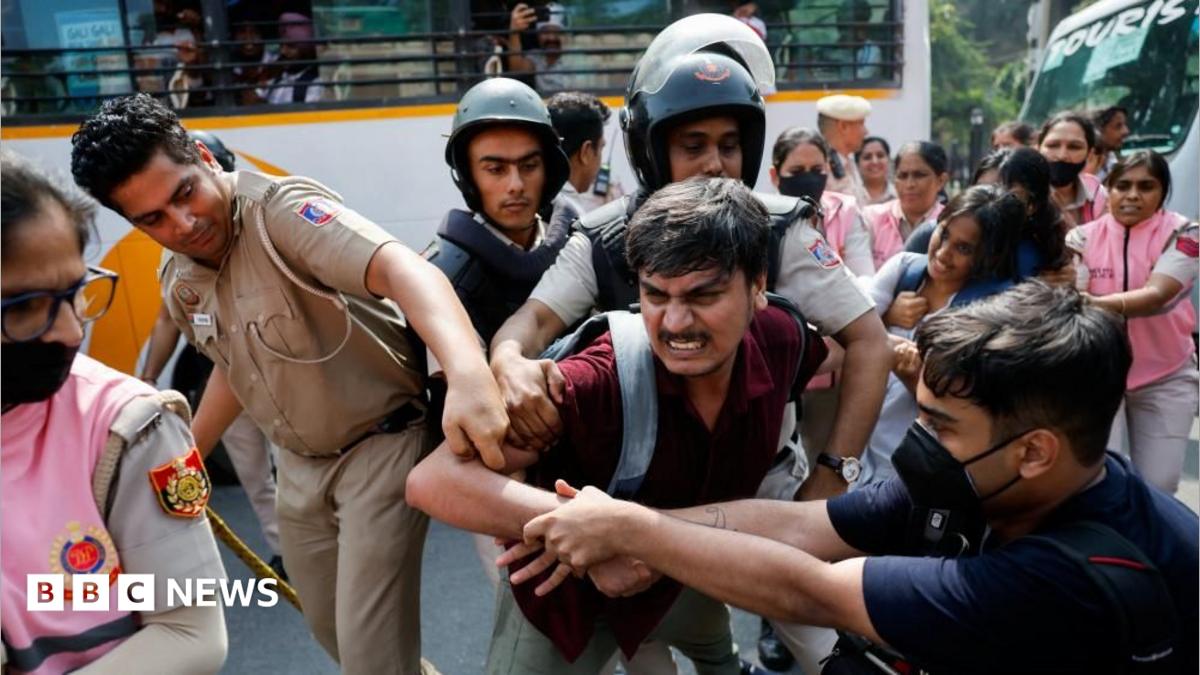
CJP at Jantar Mantar: ‘Cockroach’ group says leaders detained at Delhi protest
Hundreds of protesters have reportedly been detained in Delhi during the latest demonstration by the Gen-Z led Cockroach Janta Party (CJP) over electoral reforms.
The group said its founder Abhijeet Dipke, who began the movement in May after India’s Chief Justice likened some jobless young people to “cockroaches”, was detained with other leaders shortly after landing in Delhi.
Tens of thousands of security personnel were deployed and roads barricaded ahead of the demonstration, though the CJP insisted it would go ahead.
Delhi Police has not commented on the detentions, but had refused permission for the protest to take place at Jantar Mantar, a landmark in the Indian capital.
The group – who are not registered as a political party in India – are seeking electoral reforms just months before crucial state elections.
It has also demanded the resignation of Chief Election Commissioner (CEC) Gyanesh Kumar over allegations of manipulating voters’ lists – which the Election Commission has denied.
Under Kumar’s leadership, India’s election commission has undertaken a mammoth exercise to update electoral rolls nationwide – it said this was a routine exercise to weed out dead, duplicate or ineligible voters.
But in many states, the exercise has been shrouded in controversy, with tens of thousands of people alleging they have been wrongly removed.
The CJP – and opposition parties – accuse Kumar of favouring Prime Minister Narendra Modi’s Bharatiya Janata Party (BJP) in the way the electoral rolls are being updated.
The Election Commission and the BJP have denied this.
Before arriving in Delhi, the CJP’s founder Dipke said: “If you think you can stop us by threatening us with jail or trying to intimidate us with the fear of imprisonment, you are mistaken.”
He and and two other leaders, Saurav Das and Ashutosh Ranka, were detained on their flight from Mumbai on Saturday.
The group claimed the three men have been taken to an undisclosed location. Delhi Police have not commented.
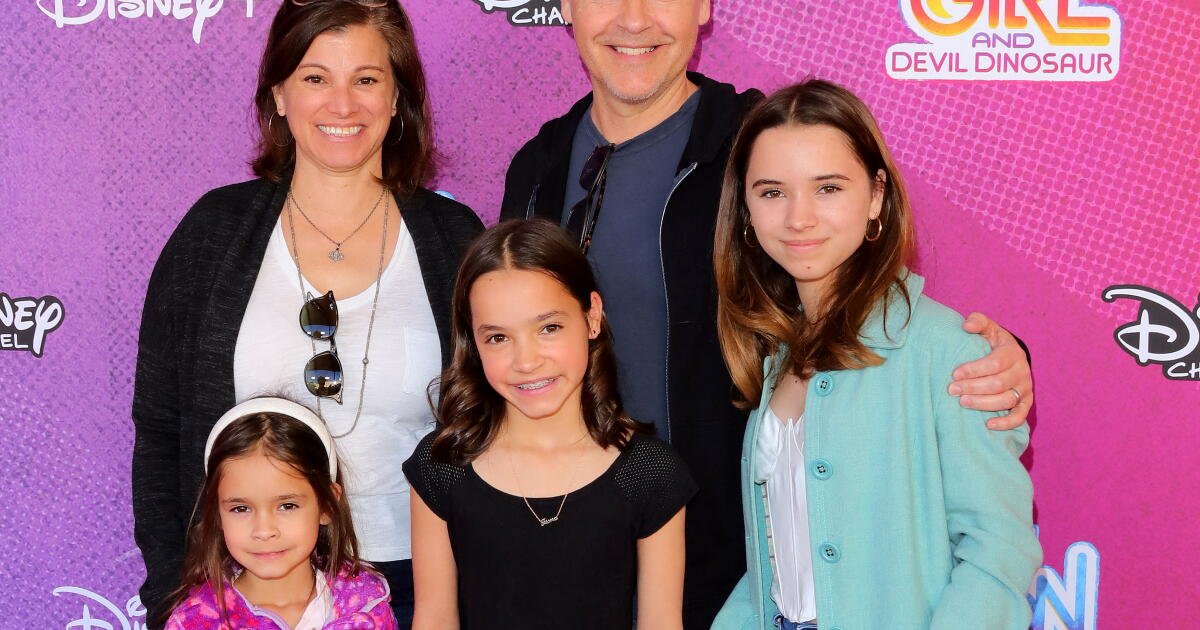
Chad Lowe shares a message of hope after death of 13-year-old daughter
Actor Chad Lowe returned to Instagram on Thursday for the first time following the Sept. 29 death of his 13-year-old daughter Fiona.
The actor shared a spiritual message from author and psychologist Gerry Hussey through Instagram Stories.
“When you ask yourself the deeper, bigger questions,” Hussey said on Olivia Hunt’s podcast “On Healing” after being asked about God, “and you move beyond the human existence — as through meditation or something — as you experience transcendental experience, [you find] we are connected to everything that is.
“And there’s nothing there, but peace and love,” he continued. “When we die. Where do we go? We return to a state of peace and love.”
Fiona’s manner of death was ruled a suicide by the Los Angeles County Medical Examiner in a report released Oct. 2. She died in a hospital.
“We are deeply heartbroken by the loss of our beloved Fiona,” Lowe, the Emmy-winning star of “Life Goes On,” and his family said in a Sept. 29 statement announcing Fiona’s death.
Fiona was the second of Lowe and his wife Kim Painter’s three daughters. The couple also shares Mabel, 17, and Nixie, 10.
Mabel shared an emotional post about her sister on Oct. 3.
“I love you so much fiona,” Mabel wrote in a post containing photos of the sisters. “i wish your short time here was easier and i hope your mind is at ease now. I will honor you forever and keep your memory alive. I love you, i hope you knew just how much.”
Lowe is the brother of “St. Elmo’s Fire” actor Rob Lowe, whose youngest son paid tribute to his late cousin after her death. He posted Emily Dickinson’s poem “Hope Is the Thing With Feathers,” according to an Oct. 5 Page Six report.
“HOPE is the thing with feathers that perches in the soul, and sings the tune without the words, and never stops at all,” John Owen Lowe shared in an Instagram Stories post. “And sweetest in the gale is heard; and sore must be the storm that could abash the little bird that kept so many warm.”
Chad and Rob’s father, Chuck, shared a photo of his granddaughter on Instagram after her death was announced, per People, with the caption, “Rest in peace sweet Fiona.”
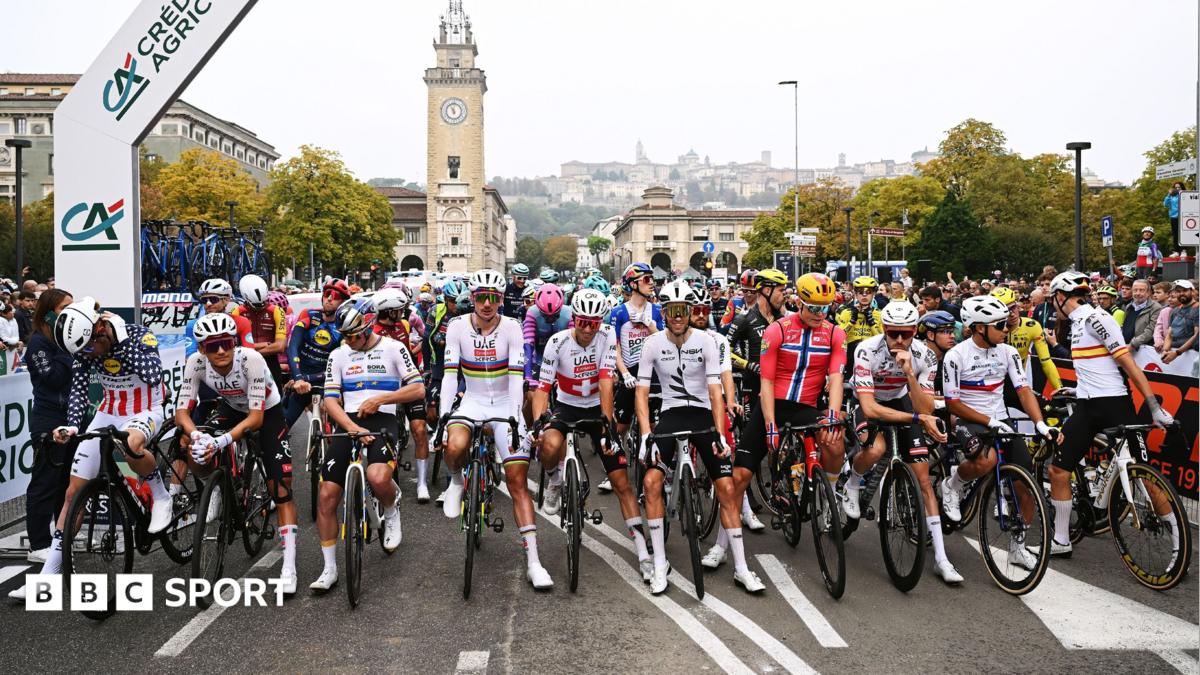
Giro di Lombardia: Competitor safety protest delays start of UCI World Tour race
Riders at the Giro di Lombardia staged a protest which delayed the start of the race for five minutes as they sought to draw attention to safety concerns following a series of incidents.
Organisers completed the countdown and a starting flag was waved but the peloton remained stationary, creating confusion among spectators in Bergamo, Italy.
Belgium’s Remco Evenepoel then addressed the crowd, saying “there’s too many incidents happening with vehicles in the race” and highlighting the death of British cyclist Fin Tarling, who died in a collision with a vehicle at the Volta a Portugal in August.
“Unfortunately we lost the life of a brother and of a colleague of us, so we want to make this statement to show to the world that we cannot keep accepting the fact that guys are getting injured or literally dying in what we like the most to do,” added double Olympic champion Evenepoel.
After five minutes had elapsed, a second starting flag was waved and the riders set off for Como.
“This week alone, there were multiple incidents of vehicles on race courses,” said the CPA union, which represents professional cyclists, in a statement which was re-posted on Instagram by riders including Evenepoel and Great Britain’s Tom Pidcock, external.
“This summer, a life was tragically lost to exactly this kind of failure. We will not stand for this any longer.”
The CPA has called for cycling’s governing body, the UCI, to help ensure race organisers “take responsibility” and “act” to improve safety standards.
Earlier this week, Thomas Gloag and Marcel Camprubi were struck by a police motorcycle travelling in the opposite direction during the Tre Valli Varesine race.
“Riders race at high speed with little protection, and we depend on the UCI and race organisers to secure the roads. That responsibility is not being met,” the CPA statement added.
“We did not want to affect the race, only to show what riders can do when we stand as one.
“We love this sport. We respect the race organisers. We want to race hard and put on a show for our fans. However most importantly we want to come home safe to our loved ones.”
The Giro di Lombardia is the last of the season’s five Monuments, a set of long-standing, prestigious one-day races.
It has been won by Tadej Pogacar for the past five years but the Slovenian is not present at the race, which is also the penultimate event on this year’s UCI World Tour calendar, after sustaining a season-ending injury at the Vuelta a Espana.