



Tom Noonan dead: ‘Manhunter’ character actor also wrote, directed
Tom Noonan, a character actor and filmmaker known for playing villains in “Manhunter” and “The Last Action Hero,” died on Valentine’s Day. He was 74.
The death was confirmed by Fred Dekker, director of “The Monster Squad,” who wrote on Facebook, “Tom’s indelible performance as Frankenstein … is a highlight of my modest filmography.”
Noonan had a nearly 40-year career on TV and in film, making his mark with a role in “Manhunter,” the 1986 movie based on a Thomas Harris novel.
In “Manhunter,” which starred William Peterson of “CSI: Crime Scene Investigation” as an FBI agent and “Succession” star Brian Cox as Dr. Hannibal Lecter, Noonan played Francis Dolarhyde, the serial killer also known as the Tooth Fairy. It was a performance that “knocked out” Dekker, who then pursued Noonan for “Monster Squad.”
Playing a killer wasn’t unusual for Noonan, who stood 6-foot-5 or 6-foot-6, depending on who you trust. On a 2013 episode of TV’s “The Blacklist,” he played “the Stewmaker,” a man with a taste for dissolving human bodies in acid. In the 1993 comedy “The Last Action Hero” he was the Ripper, a fictional nemesis who comes to life in the high-concept film-within-a-film starring Arnold Schwarzenegger as action star Jack Slater.
Born in Greenwich, Conn., on April 12, 1951, Noonan was raised by his math-teacher mother Rita and a large extended family after the death of his father, John Ford Noonan Sr. He went to school at Yale Drama and later founded New York’s Paradise Factory theater with Jack Kruger at the site of the Paradise Ice Cream Factory, where the ice cream cone was invented. The two built a theater and rehearsal rooms where the condemned building stood.
Paradise Factory now bills itself as “bringing the rigor of theatrical discipline to the process of cinematic art, and bringing the intimacy and immediacy of the cinema into theatrical performance art.”
“I wish I had more success as an actor,” the New York-based actor told The Times with a dash of melancholy in 2015. “I think people call me because they’re channel surfing late at night and they see me in a movie on cable.”
In that story, about the actor and his friend and collaborator Charlie Kaufman and Kaufman’s stop-motion animation film “Anomalisa,” a Times staff writer described Noonan: “Like Kaufman, he has a dark worldview, an idiosyncratic sensibility, blackly comic thoughts and, at times, an endearing crankiness.”
In “Anomalisa,” Noonan was credited with playing “Everyone Else” — and that wasn’t an exaggeration. Jennifer Jason Leigh and David Thewlis played the leads; Noonan voiced more than 40 other roles in the film.
“Even I can’t tell if it’s me sometimes,” he told The Times in 2015 about the extensive studio-recording process. “I mean, I recognize the voice, but I’m not sure where it came from.”
“My first TV interview was with Tom Noonan for a local NYC show called MIDDAY(?),” actor Jerry O’Connell wrote early Wednesday on Instagram, including a blurry image of them on the show’s set. “I was so nervous. Tom was so kind. I saw him in every (NYC) play he was in after. He bought my brother and I tickets to Eddie Murphy’s RAW (we were too young to purchase). Btw, on this episode, I was talking about a movie about to come out (Stand By Me) and Mr. Noonan was talking about his movie (Manhunter). Rest In Peace LEGEND.”
Noonan appeared in the famous 1980 flop “Heaven’s Gate” and cast a creepy gothic shadow decades later in “The House of the Devil” (2009). He was a ghoulish host of a late-night television horror program in the 2005 vampire movie “The Roost,” then played a wagon-train missionary in the 2007 western “Seraphim Falls.”
“Robocop 2” (1990) had Noonan as Cain, a messianic maniac with a nose ring who leads a gang of terrorist dope dealers.
In 18 episodes of the series “Hell on Wheels,” which ran for five seasons on AMC, he was the Rev. Nathaniel Cole. Other TV credits included episodes of Fox’s “The X-Files,” HBO’s “The Leftovers,” CBS’ “CSI: Crime Scene Investigation” and the Louis C.K. series “Louie” (FX) and “Horace and Pete.”
Noonan’s half-dozen directing credits include the 1994 film “What Happened Was …,” which was produced as a play, then became a movie and then won the Sundance Grand Jury Prize for dramatic feature. In addition to writing and directing the movie, Noonan played the lead male role opposite actor Karen Sillas. Noonan also won Sundance’s Waldo Salt screenwriting award for the script.
The next year, his feature “The Wife” — a dark comedy once again written, directed by and starring Noonan — was a nominee for the same Sundance Grand Jury Prize. Described by the New York Times as a “bleakly funny evisceration of modern marriage,” the movie co-starred Karen Young, who was Noonan’s wife from 1992 to 1999.
And Noonan’s 2015 movie “The Shape of Something Squashed” was born out of confusion and some despair after his agent called him with what initially looked like a part in one of the “Mockingjay” installments of “The Hunger Games” franchise. When he got the script, though, he saw only one role for someone his age, and that job — playing President Snow — already belonged to Donald Sutherland.
Turns out there never had been a part in the offing. Sutherland was just busy, and Jennifer Lawrence and the rest of the “Hunger Games” cast needed someone to rehearse with them for a week.
After recovering from a brief emotional tailspin, Noonan knocked out the script for “The Shape of Something Squashed” — then directed and acted in the film.
He was preceded in death by his older brother, “A Coupla White Chicks Sitting Around Talking” playwright John Ford Noonan Jr., who died in 2018 at age 77.
Former Times staff writer Steve Zeitchik contributed to this report.

Football gossip: Rashford, Delap, Sancho, Senesi, Richarlison, Goretzka, Modric
Manchester United have regrets over Marcus Rashford’s Barcelona deal, Marcos Senesi wants to join Barcelona, while Liam Delap could leave Chelsea this summer.
Manchester United are regretting their decision to agree to sell England forward Marcus Rashford to Barcelona for £26m because they believe the 28-year-old is now worth around £50m. (Star), external
Bournemouth‘s Argentina defender Marcos Senesi, 28, wants to join Barcelona this summer after deciding he will not sign a new contract with the Cherries. (Teamtalk), external
English striker Liam Delap, 23, is likely to leave Chelsea this summer, sparking interest from clubs including Manchester United, Newcastle and Everton. (Caughtoffside), external
Manchester United are prepared to let 25-year-old England winger Jadon Sancho leave for free at the end of the season. (Sun), external
West Ham are leading the race to sign 24-year-old Canada striker Promise David from Union Saint-Gilloise. (Teamtalk), external
Tottenham could spend big this summer with a potential move for Aston Villa‘s 23-year-old England midfielder Morgan Rogers on the cards. (Football Insider), external
But Tottenham striker Richarlison could leave the club, with Flamengo and Atletico Madrid showing interest in the 28-year-old Brazil international. (Fichajes – in Spanish), external
Bayer Leverkusen want to sign Germany midfielder Leon Goretzka from Bayern Munich this summer, but the 31-year-old would prefer a move to England, with Arsenal showing interest. (Bild – in German) , external
AC Milan are growing confident 40-year-old Croatia midfielder Luka Modric will sign a one-year contract extension at the end of the season. (Calciomercato – in Italian) , external
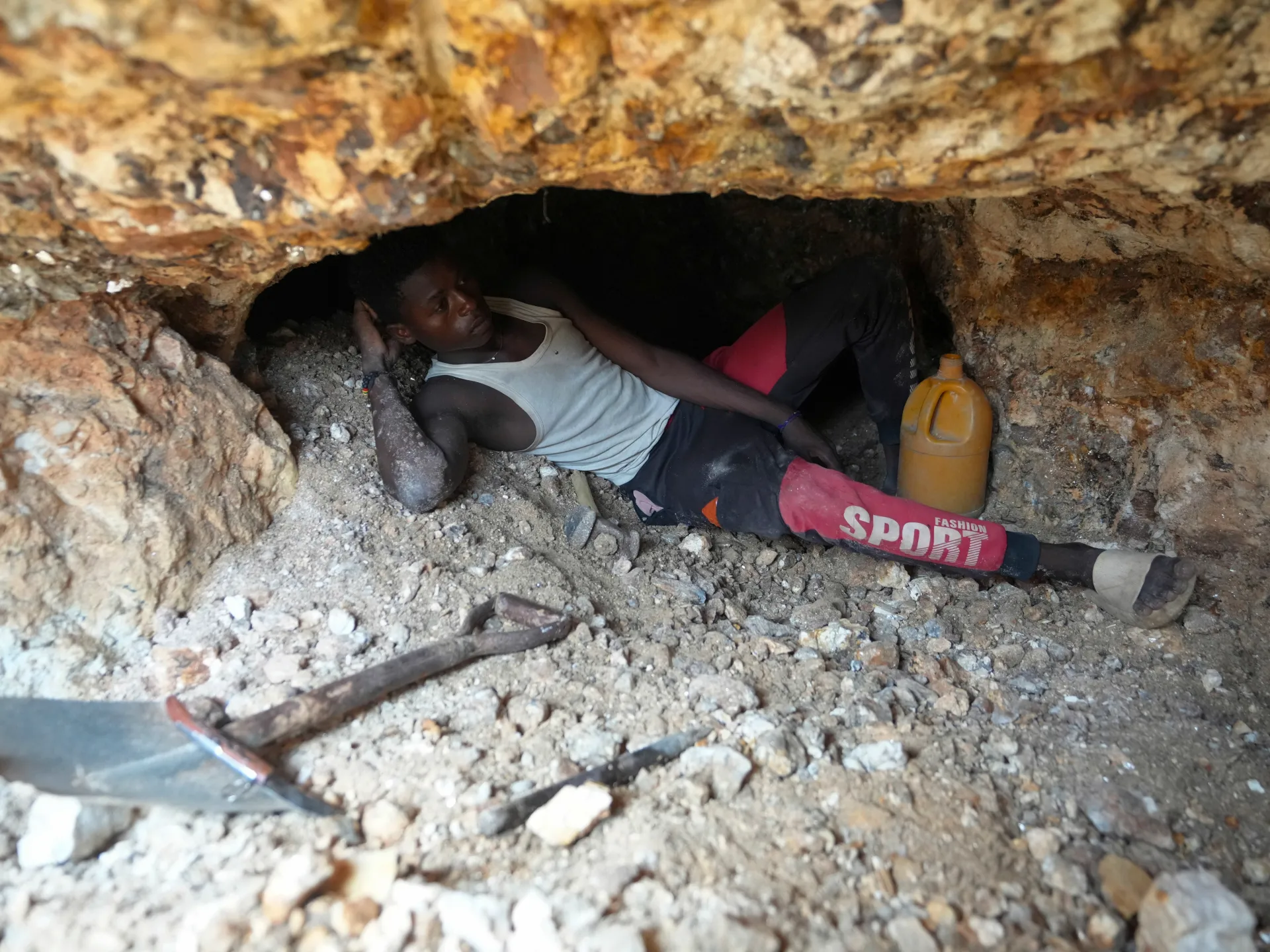
At least 37 killed in Nigeria mine carbon monoxide poisoning: Reports | Mining News
Illegal mining is a widespread issue in Nigeria, where operations lack both government oversight and safety protocols.
Published On 19 Feb 2026
At least 37 miners have died from carbon monoxide poisoning at a mining site in central Nigeria, the Reuters news agency reports.
The deadly incident, which took place on Wednesday morning in the Kampani community in the Wase area of Plateau State, also resulted in the hospitalisation of 25 people, Reuters said, citing a police source and a security report the news agency obtained.
Recommended Stories
list of 3 itemsend of list
Government officials identified the location as a dormant lead mine where accumulated minerals had released lethal fumes.
The Plateau State government said many were feared dead without providing an exact figure, adding that others were receiving treatment in nearby hospitals.
Security forces have cordoned off the site to prevent further access.
Nigeria’s Minister of Solid Minerals Dele Alake said that the accident occurred when local villagers, unaware of the toxic nature of the emissions, reportedly entered the tunnel to extract minerals and inhaled the gas.
Illegal mining remains a widespread concern in Nigeria, where extractive operations frequently lack both government oversight and basic safety protocols.
The federal government in Nigeria has ordered an immediate suspension of all mining activities in areas near the accident site to allow for a comprehensive investigation, Reuters said.
Plateau State is a historical mining region, with its capital, Jos, known as the Tin City, though mining activities have slowed in recent years.
Several similar accidents have killed miners in Nigeria previously, including at least 18 people killed last year in Zamfara State in the northwest of the country after a boulder crashed onto an illegal mine during heavy rains.
The pursuit of mineral wealth across the African continent continues to be shadowed by a recurring cycle of mining disasters, as recent tragedies highlight the persistent dangers of both legal and irregulated operations.
An estimated 200 people were killed in a collapse at the Rubaya coltan mine in eastern Democratic Republic of the Congo last month.
The mine, located some 60km (37 miles) northwest of Goma city, the provincial capital of North Kivu province, collapsed after a landslide.
Rubaya produces about 15 percent of the world’s coltan, which is processed into tantalum, a heat-resistant metal that is in high demand by makers of mobile phones, computers, aerospace components and gas turbines.
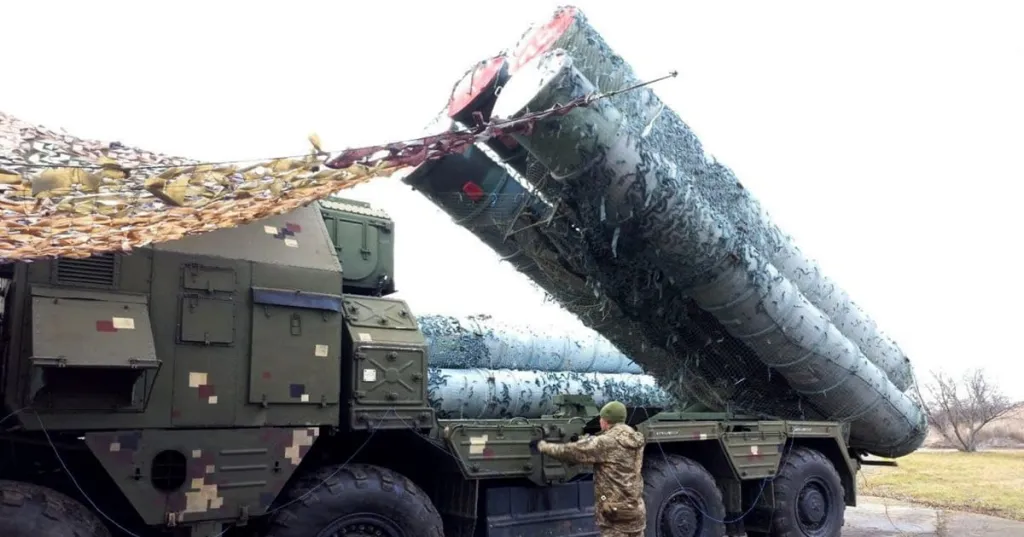
Russia Eyes Balloon Communications System To Fill Massive Gap Left After Losing Starlink
Russia is developing a new balloon-borne system that could provide battlefield access to high-speed data communications at a time when its forces are desperate to keep connected. The testing of the Barrage-1 balloon comes as Ukrainian troops are taking advantage of Russia’s loss of access to the SpaceX Starlink satellite constellation network. Both sides have become dependent on the SpaceX system for daily wartime operations, but the restrictions on Russia’s use of Starlink are allowing Kyiv’s forces to fend off attacks in some areas while advancing in others. You can read more about Russia’s Starlink troubles in our initial story here.
As we previously noted, the introduction of Starlink to the battlefield in Ukraine revolutionized how war is waged, giving users high bandwidth, relatively secure communications basically anywhere, all in a small, off-the-shelf package. Though Elon Musk’s SpaceX company provided them to Ukraine, Russians soon came to rely on them as well. However, earlier this month, the company created a list of verified users, cutting Russia off from the system and throwing its troops into disarray. We will talk more about that later in this story.
The Barrage-1 balloon recently underwent its first test flight, according to Russia’s Foundation for Advanced Studies (FFAS), which is developing the system. It “is designed to carry up to 100 kilograms (about 220 pounds) of payload at an altitude of up to 20 kilometers (about 12 miles),” FFAS recently announced on Telegram. One of the payloads being considered is “a promising 5G NTN terrestrial communication equipment, the testing of which is planned for the near future,” the organization claimed.
While not reaching anywhere near the low earth orbit (LEO) altitudes as the Starlink constellation – between 341 miles to 298 miles – Barrage-1 could still serve as an alternative access point for high-speed data transfer for troops on ground below.
Regardless of FFAS intentions, however, even if it is perfected, the Barrage-1 system will not provide the same level of coverage as Starlink, which is made up of thousands of laser datalink-connected satellites covering the globe. In contrast, Barrage-1 will be guided by “a pneumatic ballast system, which allows changing the flight altitude to utilize wind currents and move in the desired direction.”
“Due to this, the platform can maneuver and stay in a specified area or move along the trajectory required for the payload,” FFAS claimed, despite being in the very earliest stages of testing.
You can read all about how high-altitude balloons can stay on station even in the presence of prevailing winds in this past story of ours.
Even though it wouldn’t be a direct match to Starlink, at 12 miles high, it could provide wide-area connectivity similar to that offered by Starlink, albeit over a much more limited area. A mini ‘constellation’ of these systems spread over a region and mesh-networked together, could help solve the line of sight limitations of a single balloon.
Ukrainian Defense Ministry (MoD) advisor on defense technology and drone and electronic warfare (EW) expert Serhiy “Flash” Beskrestnov sees potential in this system.
“The platform is seen as an accessible and efficient alternative to expensive satellite constellations in LEO,” Beskrestnov explained on Telegram. “One of the priority tasks for ‘Barrage’ will be to test 5G NTN communication. Placing transmitters at an altitude of 20 km will allow providing high-speed internet and communication to vast territories where the construction of ground towers is impossible.”
“In theory and in practice, by controlling the altitude of an aerostat, it can be steered, not precisely, but enough to stay over any territory,” he added.
However, the Barrage-1’s comparatively low altitudes could make them targets for Ukrainian air defense systems and other countermeasures.
“And what’s most important for us? To have the means that can detect such objects over our territory,” Beskrestnov suggested. “And to have the ability to shoot down such targets if they pose a threat. As far as I remember, the S-300 [surface to air missile system] can engage targets at an altitude of 20-30 km (about 12 to 19 miles).”
Still, successfully targeting and engaging a balloon with a small radar signature using SAMs are two different things. Russia worked on this exact problem extensively during the Cold War, which you can read about here.

The balloons could also fall victim to other forms of attack. It isn’t hard to imagine Ukraine producing a drone to specifically hunt for these systems at longer ranges. Their emissions would make them hard to hide. Also, the electronic warfare aspect is worth noting for the same reasons.
The concept of using balloons as communications nodes is far from new. It has been around for many years. The U.S. military continues to eye using balloons to lug communications relays and gateways aloft as well. As we previously noted, the U.S. once even considered sending balloons over Cuba with equipment that would allow citizens to have access after the government cut it off. For homeland applications, high altitude balloons have been eyed to replace cellular towers, especially after natural disasters have wiped-out ground-based communications.

The SpaceX restrictions have impacted everything from Russia’s high-level command and control, to basic communications and data exchange between troops across the entire battlespace. It has also affected Russia’s drone warfare, including interfering with long-range aerial weapons and uncrewed ground vehicles (UGV). The Kyiv Post article claims that some Russian UGVs have relied on Starlink to operate.
“The loss of Starlink has now forced Russian military logistics troops to return to the use of manned trucks, cars, motorcycles or quad-cycle vehicles,” noted Mick Ryan, a retired Australian major general now serving as a military analyst. “These have proven to be more vulnerable to drone strikes.”
Losing Starlink has slowed down Russian offensive actions and increased their casualties while opening up opportunities for Ukraine to advance, Ukrainian military officials have claimed.
“For three to four days after the shutdown, they really reduced the assault operations,” Lt. Denis Yaroslavsky, who commands a special reconnaissance unit for the Ukraine Armed Forces, told the New York Post.
“The disruption comes as Russia suffers its worst death rate since the start of the four-year-old war,” U.S. and Ukrainian intelligence officials told the publication.
Russian sources concurred that restrictions on Starlink use are having major negative effects on the frontlines.
“As a result” of the SpaceX action, “instead of a planned strike against the enemy, where their (meaning ours) communications are instantly cut off while theirs remains operational, we have a hellish mess,” Andrey Medvedev, Deputy Chairman of the Moscow City Duma and Deputy Director General for Radio Broadcasting of the VGTRK television and radio company, stated on Telegram.
Compounding problems created for Russia by the restrictions on Starlink, the launch of its own satellite constellation system has reportedly been delayed by about a year.
“The Russian aerospace company Bureau 1440 announced the postponement of its initial deployment of 16 high-speed internet satellites,” the SatNews media outlet recently reported. “Originally scheduled for late 2025, the launch of the first batch for the ‘Rassvet’ (Dawn) Low Earth Orbit (LEO) constellation has been rescheduled for 2026.”
Seen as a domestic alternative to Starlink, the program has been plagued by manufacturing shortfalls.
“While Roscosmos Chief Dmitry Bakanov stated in September 2025 that deployment of the first 300 satellites would begin by the end of that year, industry sources now indicate that the production line has failed to meet the necessary volume,” SatNews noted. “Despite the delay, Deputy Minister of Digital Development Dmitry Ugnivenko had claimed as recently as December 2025 that all 16 initial satellites were complete. Bureau 1440 currently has only six experimental satellites in orbit, launched during the Rassvet-1 and Rassvet-2 missions to test laser inter-satellite links and 5G signal compatibility.”
Even if it is launched, the Rassvet satellite constellation, which will take years to become operational, is very unlikely to have the same capabilities as Starlink.
Amid all these issues, Russia is struggling to find more immediate ways to overcome the Starlink restrictions.
“There are no alternatives [to Starlink] right now – at least not at the level of today,” the Russian Colonelcassad Telegram channel explained. It added that Russia is looking for workarounds, but nothing appears to be imminent.
The Russian Gazprom Space Systems satellite array is not a viable alternative at the moment, Colonelcassad rightfully noted.
“There is Gazprom’s dish, it works, but, to put it mildly, it lags behind in connection speed and needs development or refinement,” he stated. “Of course, it is technically possible to provide high-speed internet in the fields by other methods, which many are currently working on.”
The long-term effect of the SpaceX decision on Starlink remains to be seen. This war has shown that both sides advance quickly when it comes to battlefield technology and Russia will have to find some kind of a workaround. However, for Moscow, the timing of the Starlink restrictions is not good, considering that the latest round of peace talks are currently underway in Switzerland. Russian President Vladimir Putin is sticking to his stance that Ukraine turn over territory in the eastern part of the country it still holds, something Ukrainian President Volodymyr Zelensky told Axios that the public won’t allow. Losing ground on the battlefield takes away an important bargaining chip for Russia.
Contact the author: howard@thewarzone.com

Mid AI scandal, Hollywood studios threaten ByteDance with legal action
After the fake video of Tom Cruise and Brad Pitt fighting went viral, a surge of AI-generated content from Seedance 2.0 flooded the internet.
Some fans were using the new AI video generator, backed by ByteDance, to refashion the finales for shows like “Game of Thrones” and “Stranger Things.” Others created battle scenes between iconic superheroes like Wolverine and Superman or between a Transformer and Godzilla.
As these Seedance videos amassed millions of views on social media, industry guilds like SAG-AFTRA and the Motion Picture Assn. have criticized the AI platform that was launched last week. Now, many major Hollywood studios are threatening to take legal action against ByteDance, the same Chinese parent that oversees TikTok.
Netflix, Warner Bros. Discovery, Paramount and Disney have all sent individual cease and desist letters, detailing the unauthorized reproduction of each of the studios’ copyrighted intellectual property.
Netflix and Warner Bros. Discovery were the latest studios to send cease and desists letter to ByteDance on Tuesday.
Netflix calls Seedance “a high-speed privacy engine” and says that they “will not stand by and watch ByteDance treat our valued IP as free, public domain clip art,” as stated in the letter. The streamer also cites the illegal use of sets derived from “Squid Game,” costumes from “Bridgerton” and character design from “KPop Demon Hunters.”
Warner Bros. Discovery looks to repurposed content, including characters from the “Harry Potter” and “Lord of the Rings” franchises, as well as superheroes like Batman, as “ blatant infringement” by ByteDance. The studio argues that it’s clear that their AI technology was trained on Warner Bros. copyrighted material “without authorization.”
“But the users are not the ones at the root cause of the infringement; they are merely building on the foundation of infringement already laid by ByteDance as Seedance comes pre-loaded with Warner Bros. Discovery’s copyrighted characters,” wrote the studios’ legal executive vice president Wayne Smith. “That was a deliberate design choice by ByteDance.”
Disney and Paramount were the first of the studios to call out ByteDance, sending their letters last Friday and Saturday. Disney accuses ByteDance of loading its Seedance service “with a pirated library of Disney’s copyrighted characters from Star Wars, Marvel, and other Disney franchises.”
“Over Disney’s well-publicized objections, ByteDance is hijacking Disney’s characters by reproducing, distributing, and creating derivative works featuring those characters. ByteDance’s virtual smash-and-grab of Disney’s IP is willful, pervasive, and totally unacceptable,” Disney’s attorney David Singer wrote, per Axios.
Paramount’s cease and desist letter was reviewed by The Times and makes similar assertions about ByteDance’s unapproved use of copyrighted material.
ByteDance has since pledged to implement more safeguards to protect copyrighted material in response to these letters.
“ByteDance respects intellectual property rights and we have heard the concerns regarding Seedance 2.0,” a company spokesperson said in a statement shared with CNBC. “We are taking steps to strengthen current safeguards as we work to prevent the unauthorized use of intellectual property and likeness by users.”
But with or without the safeguards, Dan Purcell, chief executive of Midnight Labs, an AI-powered company that specializes in IP protection for high-value entertainment, said these letters might be a bit of a delayed reaction from the studios.
“Once synthetic content is generated, it spreads instantly and at a massive scale. By the time lawyers engage, the damage is done,” said Purcell in a statement. “The only path forward is strict licensing, real-time enforcement, and consequences that actually hurt. Reactive letters won’t fix this. The industry needs to move at the speed of AI — not the speed of litigation.”

Anthony Gordon: Why Newcastle forward is firing in the Champions League – analysis
BBC Sport pundit Leon Osman says he can see Anthony Gordon scoring more goals in the Champions League if Newcastle United continue to play him up front with Nick Woltemade in behind, after the Englishman scored four goals in his side’s 6-1 win over Qarabag in the knockout round play-offs.
MATCH REPORT: Qarabag 1-6 Newcastle United
Activist group Extinction Rebellion says it is under FBI investigation | Climate Crisis News
Environment group says FBI is visiting climate activists’ homes as Trump administration rolls back pollution protections.

Published On 19 Feb 2026
Environmental group Extinction Rebellion has said that climate change activists associated with the group are being investigated by the Trump administration, which is also openly working to roll back environmental protections in the United States.
The group’s New York chapter said that at least seven of its activists have been visited by FBI agents since Trump’s second term began last year, including one person who had two special agents from the FBI’s Joint Terrorism Task Force come to their home on February 6.
Recommended Stories
list of 4 itemsend of list
The Department of Justice also opened an investigation into the environmental group Climate Defiance earlier this month in response to what Extinction Rebellion said was a “viral peaceful protest”.
“Trump is weaponising the DOJ to attack peaceful protesters in order to appease a multi-trillion dollar fossil fuel industry that got him elected,” Extinction Rebellion’s New York chapter said in a statement shared on Instagram.
“We can only assume that they are feeling threatened by our movement,” the statement added.
Known as XR, the activist group garnered media attention worldwide through disruption, hitting roads, airports and other public transport networks with direct action protests against climate change in major cities.
The environmental group’s global website says it is a “decentralised, international and politically non-partisan movement using non-violent direct action and civil disobedience to persuade governments to act justly” on the climate emergency.
Activist Greta Thunberg has previously attended actions organised by the group.
‘The single largest deregulatory action in American history’
According to the natural resource monitoring group Global Witness, fossil fuel companies, including Chevron and Exxon, donated $19m to President Donald Trump’s inaugural fund last year, representing 7.8 percent of the total amount raised. A number of fossil fuel companies also donated to Trump’s re-election campaign.
Trump, who has called climate change a “hoax” and a “con job”, has taken several steps to fulfil his campaign promise to “drill, baby, drill” as president, including expanding oil extraction in Alaska’s Arctic National Wildlife Refuge.
The Trump administration also recently revoked a 2009 government declaration known as the “endangerment finding”, which has been used as the legal basis for regulating pollution under the Clean Air Act, which was originally adopted in 1963.
Trump, who described the endangerment finding as “one of the greatest scams in history”, has claimed that repealing it was “the single largest deregulatory action in American history, by far”.
The move has prompted alarm from environmental and health groups, more than a dozen of which filed a lawsuit on Wednesday over the Environmental Protection Agency’s decision to withdraw the endangerment finding, saying removing it will lead to “more pollution, higher costs, and thousands of avoidable deaths”.

Young Palestinian shot, killed by Israeli settlers northeast of Jerusalem | Occupied West Bank News
Attacks by Israeli settlers in the occupied West Bank have intensified recently, backed by Israeli forces.
A young Palestinian man was killed and four other people were injured when a group of Israeli settlers, backed by Israeli forces, opened fire on a village in the occupied West Bank.
The death of the young man on Wednesday evening, identified as Nasrallah Abu Siyam, 19, marks the first killing of a Palestinian by Israeli settler gunfire so far this year, the official Palestinian news agency Wafa reports.
Recommended Stories
list of 3 itemsend of list
During the attack on the village of Mukhmas, located northeast of occupied East Jerusalem, Israeli settlers also stole dozens of sheep from local Palestinian residents, Wafa reports.
The attack on Mukhmas and other Palestinian towns and villages constitutes a “dangerous escalation in systematic terrorism and reflects a complete partnership between the settlers and the occupation forces,” Mu’ayyad Sha’ban, head of the Palestinian Authority’s Colonization and Wall Resistance Commission, told Wafa.
Calling for international protection for Palestinian communities, Sha’ban said that settlers have now killed 37 Palestinians in the occupied West Bank since October 2023, but the escalating violence would not deter Palestinians from holding onto their land.
Mukhmas and the adjacent Bedouin community of Khallat al-Sidra have faced repeated attacks by Israeli settlers, often occurring with the protection or presence of Israeli forces, according to reports.
The governorate of Jerusalem, one of the 16 administrative districts of Palestine, said in a statement that the killing of the young man by Israeli settlers was a “fully-fledged crime… carried out under the protection and supervision of the Israeli occupation forces.”
Translation: Martyr of the town of Mukhmas, Nasrallah Abu Siyam, who ascended after succumbing to his injury from settler gunfire during the attack on the town northeast of occupied Jerusalem.
The governorate said the attack was part of a dangerous surge of violence carried out by settlers in the occupied West Bank, including East Jerusalem, and characterised by the widespread use of live ammunition, direct shooting at Palestinian citizens, as well as burning local Palestinian homes, damaging vehicles and property, and seizing land.
Armed settler violence is being supported by “pillars of the Israeli government”, foremost among them far-right ministers Itamar Ben-Gvir and Bezalel Smotrich, the governorate added, according to Wafa.
According to the United Nations Office for the Coordination of Humanitarian Affairs (OCHA), more than 1,000 Palestinians have been killed by Israeli forces and settlers in the West Bank since 2023, and more than 10,000 people have been forcibly displaced.
Since the start of this year alone, almost 700 Palestinians in nine communities have been displaced due to settler attacks, including 600 displaced from the Ras Ein al-Auja Bedouin community in Jericho governorate, OCHA reports.
Earlier this week, Israel’s government approved a plan to designate large areas of the occupied West Bank as Israeli “state property”, shifting the burden of proof to Palestinians to establish ownership of their land in a longstanding situation where Israel has made it all but impossible to obtain property titles.
Described as de-facto annexation of the West Bank, the Israeli government’s decision has drawn widespread international condemnation as a grave escalation that undermines the Palestinian people’s right to self-determination.
Israel’s attempted land grab and killings by settlers come amid a sharp increase in Israeli military operations across the occupied West Bank, where forces have intensified raids, carried out forced evictions, home demolitions, and other repressive measures in multiple areas.

ITV confirms replacement for Grantchester as season 10 comes to an end
The final episode of Grantchester’s tenth season is set to air tonight, with another show set to replace it.
ITV’s ‘Grantchester’ returns to our screens for a seventh series
The tenth season of Grantchester has been delighting ITV viewers over recent weeks, but it’s set to come to an end tonight (Thursday, February 19).
The British crime drama was first broadcast in 2014 and followed Anglican vicar Sidney Chambers (James Norton), who investigated a series of mysterious wrongdoings in his small Cambridgeshire village. Sidney undertook his sleuthing adventures alongside Detective Inspector Geordie Keating (Robson Green).
Geordie has partnered with several vicars over the years, including Reverend Will Davenport (Tom Brittney), and most recently, Alphy Kottaram (Rishi Nair).
Geordie and Alphy embarked on several new investigations when the show returned to ITV for its tenth season last month. As well as solving cases, there have also been some emotional revelations, including Alphy tearfully reading a letter written by his mother when she gave him up for adoption.
The heartbreaking scenes left viewers in tears, with one person writing on X (formerly Twitter): “What another brilliant, heartbreaking and heartwarming episode of #Grantchester. Top performances from all the cast. I’m absolutely broken.”
Another added: “I’m in absolute bits. Absolutely broke me,” while others have praised the cast’s compelling performances.
“Once again, Robson Green knocking it out of the park tonight,” one person wrote, with another adding: “Honestly #Grantchester is up there with the best on TV with great performances. I have no idea why @ITV @itvstudios @masterpiecepbs are ending it.”
Grantchester has had viewers gripped every week and will likely leave a gaping hole when the last episode airs at 9pm tonight. Ahead of the final season airing sometime next year, ITV bosses have confirmed what will takeover from Grantchester on Thursday nights.
The first episode of True Crime Presents’ second season, Murder on a Knife’s Edge, is set to begin at 9pm on Thursday, February 26.
For the latest showbiz, TV, movie and streaming news, go to the new Everything Gossip website
It will centre around the case of Wayne Coventry, who sought love after 18 years with his childhood sweetheart, but the 37-year-old father-of-three was involved in a toxic relationship, and was sadly murdered in October 2019.
The first series of True Crime Presents aired last year, offering thought provoking and insightful input from victims and witnesses on a series of shocking murders.
The initial ten episodes explored several heartbreaking cases, including the death of EastEnders star Gemma McCluskie and 17-year-old Shafilea Ahmed.
Fans have praised the show since its release, with one IMDb user writing: “Quite a decent documentary series. Experts and witnesses given an in-depth analysis on five different murders… The stories are all engaging, some you may know quite well, while others may be new to you.”
Murder on a Knife’s Edge: True Crime Presents premieres at 9pm on Thursday, February 26 on ITV1, while Grantchester is available to stream on ITVX
Ensure our latest headlines always appear at the top of your Google Search by making us a Preferred Source. Click here to activate or add us as your Preferred Source in your Google search settings

Heathrow Airport £7 fee that must be paid – or travellers face fine up to £80
Visitors can either pay a single fee or pre-pay for multiple online or over the phone

There is a £7 fee that must be paid when accessing certain parts of the airport(Image: Peter Fleming/Getty Images)
London Heathrow has reminded travellers of a fee that must be paid when using a certain part of the airport. Failure to pay this could result in an £80 fine, reduced to £40 if paid within a fortnight.
On X, formerly Twitter, the London airport explained: “Terminal Drop-Off Charge applies to vehicles dropping off passengers on the terminal forecourts. Use short-stay parking for pick-up; free pick-up/drop-off remains available in Park & Ride car parks. No waiting/picking up is allowed in the drop-off area, and any unattended vehicles may be towed. Blue badge holders are eligible for a 100% discount.”
Drop-off zones are situated immediately outside each terminal, providing the most convenient and fastest option for dropping off passengers. Visitors can either pay for a single drop-off or pre-pay for multiple drop-offs online or over the phone.
Nonetheless, anyone who uses a drop-off zone must pay by midnight the next day. Further online guidance from Heathrow adds: “When you pay in advance, your prepayments last for 12 months. Any prepaid funds that remain unused 12 months from the date of purchase will expire.
“You cannot pay for drop-offs at an airport ticket machine or in the terminal drop-off zones. There are no barriers; you incur a charge when you enter the drop-off zone.”
Anyone with questions about the fee or who requires a refund should contact refunds.heathrowdropoff@apcoa.com, chat to an agent via webchat, or call customer services on 0333 200 7459.
London Heathrow’s two-bag policy
You might not realise that the capital’s airport also implements a ‘two-bag policy’ at security to prevent hold-ups. This rule means travellers are permitted to take just two items of hand baggage through the screening zone.
London Heathrow explains: “To avoid delays, Heathrow operates a two-bag policy at airport security. Only two items of hand baggage may be taken through security control, and they must be no larger than 56cm x 45cm x 25cm (22in x 18in x 10in).
“Items larger than this must be checked in as hold luggage – you can check your bag size using the gauges at check-in. Handbags and laptop bags count as a piece of hand baggage.”
Beyond this, it’s important to understand what items are suitable for your hand luggage. For instance, only specific electronic equipment is permitted on flights leaving from the UK.
While individual airlines may have varying requirements, the UK Government outlines nine essential items you’re able to include in both your hand luggage and hold luggage:
- Hairdryers
- Straighteners
- Travel iron
- Electric shaver
- Most cameras
- Mobile phones
- Laptops
- Tablet devices
- MP3 players
Those travelling with e-cigarettes are required to store them in hand luggage rather than checked bags. When going through security checks, electronic items should be positioned in a separate tray, allowing security staff to examine them and ensure no prohibited items are hidden.
Get all the hottest shopping deals, cash saving tips and money news straight to your phone by joining our new WhatsApp Community – The Money Saving Club. Just click this link to join https://crnch.it/eutplxS1
We also treat our community members to special offers, promotions, and adverts from us and our partners. If you don’t like our community, you can check out any time you like. If you’re curious, you can read our Privacy Notice here https://crnch.it/jeQqC872

UCLA must eject Mick Cronin if he can’t respect his players
It was the look on Steven Jamerson II’s face.
That was the toughest thing to watch. That was what seared into the mind. That’s what made you want to fire Mick Cronin on the spot.
It was a look of embarrassment. It was a look of confusion. It was the look of a young man who had just been cruelly pushed around by someone with more power.
Mick Cronin is a classic bully, and the fact that UCLA continues to empower him with new contracts and no questions is misguided malfeasance.
So, he wins games. He doesn’t win enough to compensate for incidents like Tuesday night in East Lansing, Mich., where Cronin became perhaps the first college coach in history to eject his own player from the game and order him to the locker room in the middle of the game.
Yes, Cronin holds players accountable. That’s fine, as long as he also holds himself accountable, but that didn’t happen when, after his team was beaten by 23 points by Michigan State in a second consecutive humiliating loss, he publicly criticized Jamerson for the hard foul that led to the ejection incident and then wrongly assailed a reporter for allegedly raising his voice during postgame questioning.
Cronin has become a walking viral video. He has become a nightly uncomfortable wince. He has become an embarrassment to a university athletic department that prides itself on winning with class.
John Wooden would be ashamed.
Mick Cronin is light years from the aura of Coach, and if UCLA cared a whit about the legacy of its legend, it would care that his flame has been completely snuffed by this unworthy keeper.
Wooden’s home is now decorated with a pyramid of poop, and one wonders how many humiliations will be required to convince administrators to clean things up.

UCLA coach Mick Cronin extends his arms and complains while watching the Bruins lose to Michigan State Tuesday in East Lansing, Mich.
(Rey Del Rio / Getty Images)
Cronin quietly signed a new five-year contract last summer that includes a $22,5 million buyout if he is fired this spring. That figure drops to $18 million, then $13.5 million, then $9 million, then $4.5 million in coming years. No wonder the Bruins didn’t publicize the deal at the time. It was another Martin Jarmond mistake, and now the entire university is going to pay the price.
It’s hard to see UCLA canning Cronin in the next couple of years because of those buyouts, which means this mess of a program is going to be increasingly hard to watch.
What happened Tuesday should scare away any of the remaining top prospects who would want to play for this berating blowhard. His usual postgame rants don’t compare to what happened on that Michigan State court, where he picked on the wrong kid in the worst possible fashion.
By all accounts, Jamerson is a dream player, one filled with resilience and gratitude. The former Crespi High star initially wanted to play for Michigan State, but he couldn’t make the team, even as a walk-on, so he tried to become a student manager, and failed at that, too. After spending a year there as a student, he transferred to University of San Diego, where he spent three seasons strengthening his game before eventually transferring to UCLA. This season he has spent most of his time on the bench, playing about 11 minutes per game for the Bruins while supplying rebounding and defense and energy.
It was this fire that led him to give chase to Michigan State’s Carson Cooper in the final five minutes of a game that UCLA currently trailed by 27. Cooper went up for a fast break dunk and Jamerson knocked him to the floor. It was ruled a Flagrant 1 excessive foul, but not a dangerous Flagrant 2 foul, so Jamerson was not ejected from the game.
At least, that’s what he thought.
Moments later Cronin was grabbing the kid’s shirt and leading him to the baseline, where he ordered an assistant coach to remove him from the court area and banish him to the locker room.
Jamerson’s dreams of a solid return to a school that snubbed him were shattered. His night ended amid a storm of laughing students and obscene gestures.

UCLA coach Mick Cronin shouts toward the bench while sending Steven Jamerson II to the locker room after the player was called for a foul Tuesday at Michigan State.
(Rey Del Rio / Getty Images)
It was just awful, and so avoidable. Why couldn’t Cronin have just sent Jamerson to the end of the bench? Considering it wasn’t a Flagrant 2, why did he even have to take him out of the game? Why did he have to make an example of a player who was understandably overeager on what could have been one of the triumphant nights of his life?
“Steve’s a good kid. He made a bad decision. But if you want to be a tough guy, you need to do it during the game, for a blockout, for a rebound,” said Cronin afterward.
“So, I was thoroughly disappointed; the guy was defenseless in the air. I know Steve was trying to block the shot, but the game’s a 25-point game. You don’t do that.”
That point could have been made without humiliation. But Cronin wasn’t done, later admonishing a reporter for what he considered a dumb question, then scolding the reporter for allegedly raising his voice at him.
The question was about the student section’s harassment of former Spartan Xavier Booker, which seemed like a legitimate query considering Booker had a terrible game. But what was really baffling was Cronin’s claim that the questioner was raising his voice.
Listen to the video. No voices were raised. It was just Cronin once again being a bully. You want a raised voice? Here, I’ll raise my voice in words that Cronin will hopefully understand.
CHILL OUT! SHOW RESPECT! HONOR WOODEN!
If the coach doesn’t grow up and the program doesn’t rapidly improve — for a third straight year they’re barely a tournament team — there needs to be another ejection.
It would be the most expensive firing in UCLA history. It would be worth every penny.

NIS employee’s alleged drone link raises oversight questions

The National Intelligence Service Logo photo taken at the agency’s headquarters in Seoul, South Korea, 01 November 2023. File. Photo by YONHAP / EPA
Feb. 18 (Asia Today) — An alleged financial link between a National Intelligence Service employee and a graduate student accused of sending a drone to North Korea has fueled questions about oversight and accountability within South Korea’s intelligence community, an Asia Today columnist wrote Tuesday.
The case surfaced last month when authorities disclosed that a man in his 30s had allegedly sent an unmanned aerial vehicle to North Korea. Initial investigations focused on possible involvement by the Army Intelligence Command.
However, political and intelligence sources cited in the column questioned why the National Intelligence Service, widely regarded as the control tower of South Korea’s intelligence apparatus, was not initially central to the probe.
The controversy deepened when investigators said an NIS Grade 8 employee had engaged in financial transactions with the graduate student. A joint military-police task force reportedly applied charges including general treason, a serious offense involving harm to national military interests or aiding an enemy state.
The NIS said the matter involved “a personal financial transaction by an administrative department employee” and denied any organizational link to North Korea-related operations. The agency argued that without proof of institutional involvement, the actions of an individual cannot be attributed to the entire organization.
The columnist wrote that regardless of whether the agency was formally involved, sustained contact and financial dealings between an intelligence officer and a suspect in a North Korea-related case raise concerns that go beyond individual misconduct.
The commentary also questioned whether internal control systems functioned properly and whether warning signs were missed. It noted that less than two years have passed since a separate intelligence leak involving a civilian employee at the military intelligence service.
The writer argued that the issue ultimately points to the broader condition of South Korea’s intelligence oversight system and called for a thorough investigation to address public doubts.
— Reported by Asia Today; translated by UPI
© Asia Today. Unauthorized reproduction or redistribution prohibited.
Original Korean report: https://www.asiatoday.co.kr/kn/view.php?key=20260218010005525

Venezuela Urges ‘Good Faith Negotiations’ on Essequibo Territorial Dispute
The territorial dispute flared up over the discovery of massive offshore oil deposits. (Archive)
Mérida, February 18, 2026 (venezuelanalysis.com) – The Venezuelan government commemorated the 60th anniversary of the Geneva Agreement and urged Guyana to engage in “good faith negotiations” to settle the longstanding dispute over the Essequibo Strip.
In a statement published on Tuesday, Caracas celebrated six decades of the agreement and reiterated that the treaty is “the only valid legal instrument for reaching a mutually acceptable solution to the dispute” over the 160,000 square-kilometer territory.
The 1966 accord, signed by Venezuela, the United Kingdom, and British Guiana, a British colony at the time, saw the different parties pledge to find an agreeable solution to the border issue.
The Venezuelan government’s communique noted that the treaty was submitted to the United Nations, arguing that it overruled the controversial 1899 arbitration ruling which awarded the territory to the United Kingdom.
The text also reaffirmed Venezuela’s sovereignty claim over the resource-rich territory and referenced the popular mandate from the December 3, 2023, referendum that saw over 90 percent of respondents back the country’s rights over the Essequibo Strip.
“The only possible solution to the territorial controversy is to engage in good faith negotiations, to achieve a satisfactory arrangement for the two parties that signed the Geneva Agreement,” the declaration concluded.
The Guyanese government responded on Wednesday with its own statement, arguing that the Geneva Agreement did not annul the 1899 Arbitral Award but rather established a framework for resolving the dispute that arose when Venezuela questioned the border’s validity in 1962.
Georgetown likewise noted that, in January 2018, the Secretary-General of the United Nations determined that the “good offices” mechanism had been unsuccessful in resolving the dispute.
“In accordance with Article IV (2) of the Geneva Agreement, the Secretary-General decided to submit the case to the International Court of Justice (ICJ) as the final means of resolution. Both Guyana and Venezuela were bound by that decision.”
Hours later, the Venezuelan government issued a second statement accusing Guyana of attempting to distort the spirit of the Geneva Agreement and reiterating Caracas’ position rejecting the ICJ’s jurisdiction over the border controversy.
“Venezuela will not recognize any decision emanating from the International Court of Justice on the territorial dispute surrounding Guayana Esequiba,” the document read.
Despite rejecting the Hague-based court’s authority on the matter, the Venezuelan government participated in a documentation-gathering process before the ICJ during 2023 and 2024. Acting President Delcy Rodríguez, then vice president, led the country’s legal efforts.
In August 2025, Caracas submitted further evidence backing its Essequibo sovereignty claim and challenging Georgetown’s historical and legal arguments. The case will advance to the oral hearings phase in May 2026.
In January, the Guyanese Minister of Foreign Affairs and International Cooperation, Hugh Todd, claimed that the ICJ’s ruling would be binding for both nations and that the case was now in the hands of “the highest and most respected judicial authority in the world.”
The longstanding territorial controversy flared up in 2015 after ExxonMobil discovered and began exploiting massive offshore oil reserves. Venezuelan authorities have raised their sovereignty claims and criticized Guyanese counterparts for giving drilling permits to multinational corporations in undelimited waters.
Caracas has also criticized the US’ interference in the issue, with successive administrations offering their full backing to Georgetown. Venezuelan authorities have accused Washington of stoking regional tensions amid plans to establish military bases in Guyana.
Edited by Ricardo Vaz in Caracas.

CBS’s Bari Weiss pulls out of UCLA lecture
UCLA has canceled an upcoming lecture featuring CBS News editor-in-chief Bari Weiss.
Weiss was scheduled to give the annual Daniel Pearl Memorial lecture on Feb. 27, about “The Future of Journalism.” But according to the university, the program will not move forward as scheduled, after Weiss’ team withdrew from the event.
A source familiar with the UCLA program said the lecture was canceled due to security concerns from Weiss, despite the public university offering to obtain additional security for the event, the source said. The Daniel Pearl Memorial lecture series honors the late journalist and is considered the capstone of the university’s Burkle Center for International Relations. Previous speakers include journalists Jake Tapper, Anderson Cooper and Bob Woodward.
According to the source, several employees at both the Burkle Center and the International Institute expressed opposition to Weiss speaking on campus. The university was also expecting a large number of students to protest the event.
Neither Weiss nor CBS immediately responded to a request for comment.
Weiss founded the media company, The Free Press, which was purchased in October by Paramount, CBS’ parent company. Following the $150 million purchase, Weiss was installed as editor-in-chief of CBS News.
Two months after taking on the new role, Weiss made the widely panned decision to pull a “60 Minutes” episode that examined the alleged abuse of deportees sent from the U.S. to an El Salvador prison. The decision earned Weiss heavy criticism and accusations that the move was politically motivated.
The canceled UCLA lecture comes at a time of ongoing organizational upheaval at CBS, which this week made headlines amid an escalating battle with its own late-night talk host, Stephen Colbert, over the FCC’s effort to enact stricter enforcement of the equal-time rule.

Champions League: What happened on Real Madrid bench and tunnel after Vinicius Jr racism allegation?
Champions League Match of the Day pundit Guillem Balague, who attended Real Madrid’s match at Benfica on Tuesday, explains the aftermath of the alleged racist incident between Vinicius Jr and Gianluca Prestianni.
READ MORE: Vinicius: Eight years at Real Madrid, 20 cases of alleged racist abuse
Available to UK users only.
UNICEF: A third of Ukrainian children are displaced by war

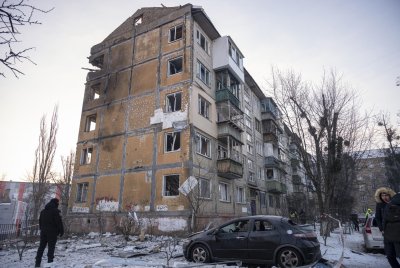
A Russian drone strike on a five-story residential building in Kyiv, Ukraine, shows why a third of Ukrainian children are displaced, as reported by UNICEF on Tuesday. Photo by EPA/Stringer
Feb. 18 (UPI) — As the Ukraine war nears its fifth year, more than a third of Ukrainian children remain displaced following Russia’s invasion of its neighboring nation.
Russian forces invaded Ukraine on Feb. 24, 2022, which has led to the displacement of 2.59 million Ukrainian children, UNICEF reported on Tuesday.
The number of displaced children includes 791,000 who are still inside Ukraine and nearly 1.8 million who are refugees living outside of the country’s borders. Russian forces also have taken many Ukrainian children and relocated them to Russia.
“Millions of children and families have fled their homes in search of safety, with one in three children remaining displaced four years into this relentless war,” said UNICEF Regional Director for Europe and Central Asia Regina De Dominicis.
“For children in Ukraine, safety is increasingly hard to come by as attacks on civilian areas continue across the country,” De Dominicis said. “In many ways, the war is following these children.”
Many children and their families have been forced to flee their homes several times during the war as Russian forces targeted civilian areas.
A recently published UNICEF survey showed that a third of teen respondents between age 15 and 19 said they moved at least two times due to safety reasons so far during the war.
Bombardments by Russian artillery, attack drones and ballistic missiles have killed or injured more than 3,200 children since the war started.
Each year, the number of dead and injured has increased among Ukraine’s children, according to UNICEF.
“Obligations under international humanitarian law must be upheld, and every possible measure to protect children and the civilian infrastructure they rely on must be taken,” De Dominicis said.
“Every child has the right to grow up in safety, and without exception that right must be respected.”
Many of the support services for the country’s children also have been damaged or destroyed, including more than 1,700 schools and other education facilities, which deprives a third of Ukrainian children from attending school on a full-time basis.
Russian strikes on Ukraine’s energy infrastructure have deprived millions of Ukrainian children and their families of the power needed to heat their homes and water during the country’s extremely cold winters.
Babies and young children are especially vulnerable to harm due to a lack of electrical power, which could lead to hypothermia and respiratory illnesses.
More than 200 medical facilities also have been damaged or destroyed in Ukraine over the past year and many more before then.
The stress of the ongoing war is putting a severe mental strain on Ukraine’s children, who often experience a constant fear of attacks that force them to seek shelter in basements and remain isolated while at home.
About a fourth of Ukrainian youth between age 15 and 19 say they are losing hope for the country’s future.
UNICEF officials said they are working with local and national authorities to support Ukrainian children and provide them and their families with safe water, healthcare, food, educational support, mental health services and similar needs.
Russia-Ukraine war: List of key events, day 1,456 | Russia-Ukraine war News
These are the key developments from day 1,456 of Russia’s war on Ukraine.
Published On 19 Feb 2026
Here is where things stand on Thursday, February 19:
Fighting
- Russian forces launched multiple attacks on Ukraine’s Zaporizhia region, killing one person and injuring seven others over the past day, the region’s military administration said on the Telegram messaging platform.
- The attacks involved 448 drones as well as 163 artillery strikes, causing damage to 136 homes, cars and other structures, the military administration said.
- Russian forces also continued shelling Ukraine’s Donetsk region, forcing 173 people, including 135 children, to evacuate front-line areas over the past day, regional governor Vadym Filashkin said on Telegram.
- A 54-year-old man was killed in a Russian attack in the Nikopol district of Ukraine’s Dnipropetrovsk region, Governor Oleksandr Hanzha said on Telegram.
- Russian attacks also left many people without electricity across Ukraine, according to the Ministry of Energy, including more than 99,000 households in the Odesa region.
- In Russia, one person was killed in a Ukrainian drone attack on the village of Aleynikovo in the country’s Bryansk region, Governor Alexander Bogomaz said.
- Russia’s Ministry of Defence said that Russian forces seized the village of Kharkivka in Ukraine’s Sumy region and Krynychne in the Zaporizhia region, according to Russia’s state news agency TASS.
- Ukrainian battlefield monitoring site DeepState said that Russian forces advanced in Nykyforivka in Ukraine’s Donetsk region.
- Russian forces shot down 155 Ukrainian drones, 11 rocket launchers, and two guided aerial bombs in a 24-hour period, Russia’s Defence Ministry said, according to TASS.
Peace talks
- Negotiators from Russia and Ukraine concluded the second of two days of US-mediated talks in Geneva, with both sides describing the negotiations as “difficult”.
- Ukrainian President Volodymyr Zelenskyy said that although “progress has been made … for now, positions differ because the negotiations were difficult”.
- President Zelenskyy later told the Piers Morgan Uncensored current affairs show that Russia and Ukraine were close to defining terms for how a potential ceasefire would be monitored, but progress on “political” issues had been slower, including on the most divisive issue of control of territory.
- In Washington, White House spokeswoman Karoline Leavitt said there was “meaningful progress made” with pledges “to continue to work towards a peace deal together”, and more talks are expected in the near future.
- Vladimir Medinsky, Russia’s top negotiator, said the two days of talks in Geneva were “difficult but businesslike,” telling reporters that further negotiations would be held soon, without specifying when.
- Rustem Umerov, the head of Kyiv’s negotiating team, said that the second day had been “intensive and substantive” and that both sides were working towards decisions that can be sent to their presidents, he said.
Politics and diplomacy
- Ukraine imposed sanctions against Belarusian President Alexander Lukashenko, promising to “increase countermeasures” against Minsk for supporting Russia’s war against Ukraine, including through providing relay stations for Russian drone attacks on Ukraine, Zelenskyy said on social media.
- United States Senator Jeanne Shaheen of New Hampshire along with three other US senators from the Democratic Party visited Kyiv.
- Shaheen told reporters that she “would hope that we would see a stronger effort and some real work when we get back to put pressure on Putin”.
Sport
- Estonian Foreign Minister Margus Tsahkna said in a post on Telegram that “allowing Russian and Belarusian athletes to participate in the Milano-Cortina Paralympics while Russia continues its full-scale war against Ukraine is a disgrace”.
- Estonian Public Broadcasting company Eesti Rahvusringhaaling announced it would not broadcast the games in protest at the decision to allow the Russian and Belarusian athletes to compete under their own flags.

Channel 5 viewers ‘in tears’ as surgeon races against time to save 88-year-old
The new Channel 5 programme follows the lives of working surgeons and left viewers moved

Viewers were impressed by new Channel 5 show The Surgeon(Image: Channel 5 screengrab)
Channel 5 viewers were emotional as a doctor battled to save an elderly lady in new series The Surgeon.
The TV series, which started on Channel 5 on Wednesday (February 18), shines a spotlight on doctors, with episode one focusing on bowel cancer surgeon Daren Francis. His first patient was a retired nurse named Doris, who worked for the NHS for over 50 years, with the narrator explaining that it was a “life-threatening emergency” after a blockage was discovered in her bowel.
The doctor had to operate before the bowel ruptured, admitting it was “a major operation” with increased risks given that Doris was 88.
Doris had said that she was in “excruciating” pain, with her daughter explaining further: “Mum was very sick and we weren’t sure whether to come or not because mum doesn’t like to be a nuisance. She doesn’t like, you know, I think being a retired nurse, I think she just doesn’t want to be a bother.”
Dr Francis told her: “It looks like the bowel’s blocked with a growth or a little lump. And that, we’ve got to consider is potentially a malignant or a cancerous growth.
“The plan is to take you to the operating theatre, general anaesthetic, you’ll be asleep, and make a cut in your tummy up and down. And then remove that piece of bowel, which is blocking the rest of the bowel.”
He continued: “So if we leave it there, the bowel can get stretched and stretched, and then eventually it could pop. Time is of essence. So we need to get on and do this. Otherwise, we’ll be in trouble.”
The programme then documented the successful operation, with viewers impressed by the surgeon’s skill. At the end of the episode, it was announced that Doris was recovering at home.
One viewer posted on X, which was formerly Twitter: “3 mins in and I am crying already! surgeons are so compassionate, skilled and amazing!”
Another shared a crying emoji as they posted “What a bloke. Skill and perfect bedside manner with patients.”
Someone else remarked: “”The Surgeon on 5 is phenomenal TV. Daren is an incredible human being. Amazing.”
Another impressed viewer said the surgeon was “fantastic”, as somebody else commented: “People talk about miracles but people like Daren create them here and now for people using his phenomenal surgery skills. Awe inspiring.”
“Never get tired of watching programmes like The Surgeon,” posted another viewer. “Skills beyond belief.”
For the latest showbiz, TV, movie and streaming news, go to the new **Everything Gossip** website.
Ensure our latest headlines always appear at the top of your Google Search by making us a Preferred Source.** Click here to activate**** or add us as your Preferred Source in your Google search settings.**
The Surgeon airs on Channel 5.
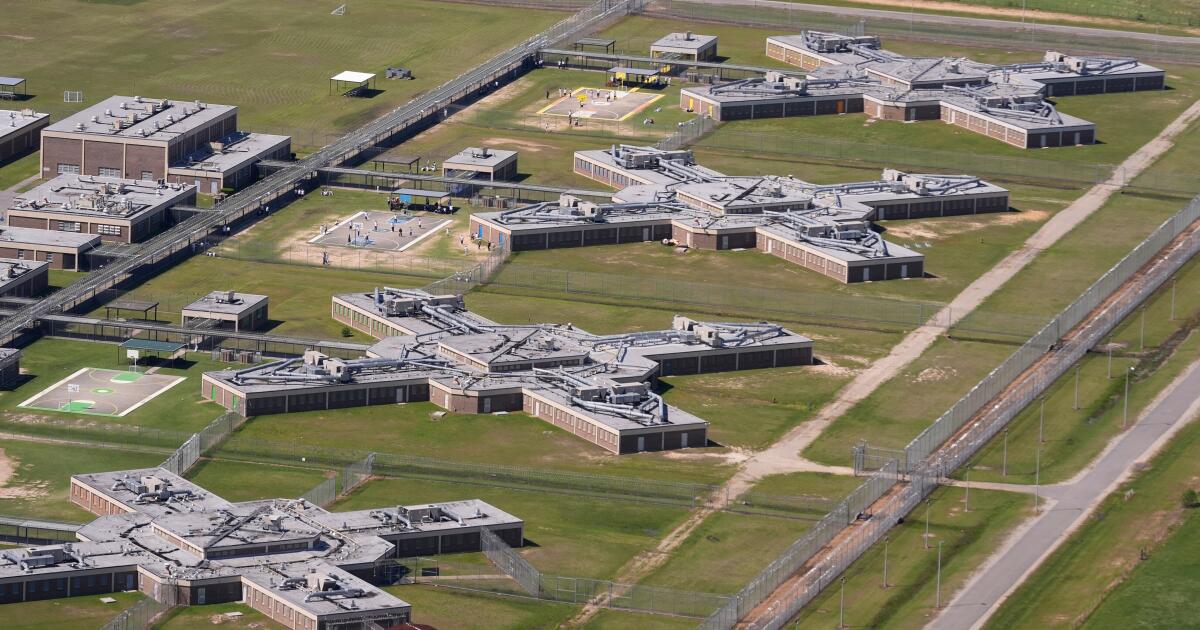
Senators decry surge in ICE detention deaths, cite poor medical care
WASHINGTON — At Immigration and Customs Enforcement detention facilities across the country, detainees go without medicine for serious health conditions, endure miscarriages while shackled and are dying in record numbers, a group of U.S. senators said.
In a letter sent Friday to Homeland Security Secretary Kristi Noem and ICE senior official Todd Lyons, 22 Democratic lawmakers alleged that a “dramatic” surge in deaths in federal immigration custody is a “clear byproduct” of the Trump administration’s mass deportation agenda and rapid expansion of detention.
“Each death in ICE custody is a tragedy and, based on the evidence available from agency records, 911 calls, and medical experts, many could have been prevented if not for this Administration’s decisions,” the senators wrote. The letter, released Tuesday, was led by Illinois Sen. Dick Durbin and signed by California Sen. Alex Padilla.
At least 32 people died in ICE custody in 2025, they asserted. That’s triple the previous year’s total and more deaths than were recorded during the entire Biden administration. ICE has reported seven deaths so far this year, as well as seven in December alone.
In the letter, the senators demanded detailed information about the agency’s death investigations, medical standards and oversight procedures.
The Department of Homeland Security, which oversees ICE, did not respond to the allegations but has repeatedly defended its detention standards. In a statement, ICE said it is “committed to ensuring that all those in custody reside in safe, secure and humane environments,” adding that detainees receive medical, dental and mental health screenings within 12 hours of arrival, full health assessments within 14 days and access to 24-hour emergency care.
The lawmakers’ warning comes amid mounting allegations that detention facility staff have withheld critical medication, delayed emergency responses and failed to provide adequate mental health care.
The agency came under flak recently after a Texas medical examiner ruled the January death of a Cuban immigrant a homicide after witnesses said they saw guards choking him to death.
In Calexico, Calif., Luis Beltrán Yanez-Cruz, 68, died after more than a month in detention, records show; the Honduran national’s family alleged that he repeatedly reported worsening stomach and chest pain but received only pain medication.
The recent rise in deaths coincides with a dramatic expansion of the detention system. Funding for ICE roughly tripled after Congress passed the One Big Beautiful Bill Act. The agency has used the funds to increase detention capacity, holding more than 67,000 people nationwide after reaching a historic high of approximately 73,000, many of whom have no criminal history, the letter says.
Last week, the Trump administration announced $38.3 billion in partnerships with private prison corporations, including GEO Group and CoreCivic, to further scale up detention space. One planned facility near Phoenix will cost $70 million and span the equivalent of seven football fields, according to the lawmakers. ICE has also reopened facilities that were previously shuttered over chronic staffing shortages and medical concerns.
Concerns about conditions have extended to California. Last month, Padilla and Sen. Adam Schiff toured a for-profit detention center in California City after reports of unsafe facilities, inadequate medical care and limited access to attorneys.
“It’s the tragic result of a system failing to meet the most basic duty of care,” Padilla said in a statement, citing reports of mold in food, unclean drinking water and barriers to medical care.
A federal judge recently ordered the administration to provide adequate healthcare and improved access to counsel at the facility, concluding that detainees were likely to “suffer irreparable harm” without court intervention.
In their letter, the senators argued that the rapid growth of the detention system has outpaced oversight and accountability. They cited internal audits documenting violations of detention standards, allegations that ICE failed to pay third-party medical providers for months and analyses of 911 calls from large facilities showing repeated cardiac events, seizures and suicide attempts.
“Rather than accepting responsibility for deaths in government custody and providing detailed facts about the circumstances of each death,” the senators wrote, “the Department of Homeland Security has attempted to smear deceased individuals’ reputations by emphasizing details about their immigration status and their alleged wrongdoing.”
As detention capacity continues to expand, the climbing death tallies underscore the extent to which the Trump administration has overhauled the immigration detention system, and Democrats say the results are fraught.
The opposition party has grown more unified after the fatal shootings of two U.S. citizens by federal agents in Minnesota, which coincided with reports of record high detention deaths in December.
Discord culminated in a partial government shutdown that began Friday when Senate Democrats refused to fund the Department of Homeland Security until the Trump administration agrees to reform at the agency.

Arsenal title race: ‘Bottle word will be used’ for Gunners after Wolves draw
After blowing a two-goal lead to draw against the Premier League’s bottom club Wolves, there will be no dodging the questions on whether Arsenal are mentally ready to end their 22-year wait to become champions.
For the first time really this season, the title race is not completely in the control of Mikel Arteta and his players.
If Manchester City – five points behind in second place – win all of their remaining 12 games, which includes a home meeting against Arsenal, they will finish first.
The same, though, can be said for the Gunners, who have 11 matches left – and they win the April encounter at Etihad Stadium.
But after dropping four crucial points in successive draws against Brentford and Wolves, they are in danger of being haunted by the ghost of past failures.
Three successive runners-up finishes, two of them to Pep Guardiola’s men, provide a constant reminder.
Former Arsenal forward Alan Smith admitted “that word bottle will be used quite a bit in the next few days”.
The scenario seemed a lot different when Piero Hincapie slotted home his first goal for the club in the 56th minute, adding to Bukayo Saka’s fifth-minute opener.
But the Gunners lacked the control and ruthlessness to finish off a Wolves side that had lost their nine previous meetings and are heading for the Championship.
The hosts showed remarkable spirit to fight back with Hugo Bueno’s 20-yard curler giving them hope. Then, in the fourth minute of added time, 19-year-old Tom Edozie – off the bench for his senior debut – pounced on a mix-up between Arsenal pair David Raya and Gabriel and his shot went in off Riccardo Calafiori for a dramatic, dreamy leveller.
Arsenal next face London derbies with Tottenham and Chelsea and they have worryingly started to wobble at a decisive stage in the season.
Arteta knows his side will come under fire and scrutiny.
“Any opinion you have to take it on the chin,” he said. “Any bullet, take it, because we didn’t perform at the level required.
“Anything anyone says can be right because we didn’t do what we had to do. The way to do it is on the pitch on Sunday [against Spurs].”
Wolves boss Rob Edwards said his side “knew there is a massive pressure” on Arsenal at the minute – and they capitalised on that.
The Gunners have not been performing at their best since the start of 2026 and won only two of their last seven league matches, with victories against Leeds and Sunderland.
Arteta added: “Certain basics we have to do, we did them so poorly, one after the other.
“It is better not to judge it. We are all too emotional about it. You have to take the hit because we deserve it. It is very easy with emotion to say things that can damage the team. Everyone wants to do their best.”
Only Crystal Palace and West Ham (both eight) have dropped more points from winning positions in the league in 2026 than Arsenal (seven) and the Gunners have now failed to win from a leading position in three of their last five league games.
This was also the first time in Premier League history that a side starting the day bottom of the table avoided defeat to the leaders, despite trailing by two or more goals.
“It feels like a pivotal moment, a vital one, maybe a turning point,” Smith added on Sky Sports.
“It’s in Manchester City‘s hands now. With their experience and Guardiola’s experience they will really fancy it now. They can almost feel the nerves of the Arsenal team watching that.
“Having been 2-0 up against the team rock bottom on nine points is just not good enough for the team hoping to win the title. It doesn’t bode well for Arsenal to be able to handle the pressure.”

South Korea weighs strategy as U.S.-China rivalry deepens

Fireworks erupt during the launch ceremony of the new 8,200-ton Aegis destroyer Dasan Jeong Yak-yong at the HD Hyundai Heavy Industries shipyard in the southeastern city of Ulsan, South Korea, 17 September 2025. The 170-meter-long, 21-meter-wide destroyer is equipped with advanced stealth features and enhanced detection and interception capabilities against ballistic missiles. File. Photo by YONHAP / EPA
Feb. 18 (Asia Today) — South Korea faces mounting strategic pressure as rivalry between the United States and China intensifies across the Indo-Pacific, raising questions about how Seoul should balance its security alliance with Washington and its economic ties with Beijing.
Analysts say the regional balance of power is entering a new phase. U.S. carrier strike groups continue to patrol the Western Pacific and longstanding alliances remain intact. Yet some experts argue Washington’s long-term strategy integrating economic, diplomatic and industrial policy lacks consistency.
In the March-April issue of Foreign Affairs, U.S. Indo-Pacific strategist Jack Cooper wrote that while American military power remains strong, its broader strategic integration has weakened. In an article titled “Asia After America,” he argued that policy shifts between administrations and the U.S. withdrawal from the Trans-Pacific Partnership have left gaps in regional economic leadership.
Cooper said the issue is not U.S. withdrawal but uncertainty over long-term strategic continuity. For allies, he wrote, the question is who shapes the regional order beyond crisis intervention.
Meanwhile, China has continued expanding its footprint through militarization of artificial islands in the South China Sea and sustained military activity near Taiwan. Beijing is also deepening regional economic integration through the Regional Comprehensive Economic Partnership and the Belt and Road Initiative, often referred to as the New Silk Road.
South Korea sits at the center of these tensions. Its security rests on its alliance with the United States, while China remains its largest trading partner. Key sectors such as semiconductors, batteries and artificial intelligence are directly exposed to U.S.-China competition.
Jung Seong-jang, vice president of the Sejong Institute, said in an interview that a Taiwan contingency could directly affect South Korea by disrupting critical sea lanes of communication.
A 2023 report by the Korea Institute for International Economic Policy found that 33.27% of South Korea’s maritime trade passes through or near the Taiwan Strait. The institute estimated that disruption of major shipping routes in the area could cause economic losses of about 445.2 billion won ($334 million) per day, based on current exchange rates.
Jung cautioned that direct South Korean military involvement in protecting sea lanes could heighten tensions with China, while North Korea might exploit regional instability to escalate provocations.
Joo Eun-sik, head of the Korea Institute for Strategic Studies, outlined several policy recommendations.
First, he called for deeper integration of the U.S.-South Korea alliance, including coordinated planning in maritime security, missile defense, space and cyber domains to strengthen deterrence against so-called gray-zone threats.
Second, he urged a combined economic and security strategy, strengthening supply chain cooperation and expanding investment in strategic technologies. He said South Korea’s defense industry should function not only as an export sector but as part of a broader strategic network.
Third, he emphasized maritime capabilities, describing sea routes from the Strait of Malacca through the South China Sea and Taiwan Strait as vital to South Korea’s economy. Expanding blue-water naval operations, submarine forces, maritime patrol and unmanned systems, he said, is essential.
Finally, he highlighted the need to build strategic autonomy within the alliance framework by investing in independent intelligence, surveillance and reconnaissance capabilities, space monitoring systems and layered missile defense.
Analysts say the Indo-Pacific order remains unsettled. Whether South Korea becomes a passive bystander or an active architect of its own strategy may depend on how effectively it integrates security, industry and technology into a coherent national plan.
— Reported by Asia Today; translated by UPI
© Asia Today. Unauthorized reproduction or redistribution prohibited.
Original Korean report: https://www.asiatoday.co.kr/kn/view.php?key=20260218010005435

ICBM-Guarding Security Forces Will Need Fresh Tactics To Defend New Sentinel Silos
The construction of new silos for the U.S. Air Force’s future LGM-35A Sentinel intercontinental ballistic missiles (ICBM) means that units charged with defending them will have to update their tactics, techniques, and procedures (TTPs). Air Force Security Forces personnel regularly train to protect existing silos housing LGM-30G Minuteman III ICBMs, as well as associated launch facilities, or even recapture them if necessary. The need for totally new silos and other infrastructure has been a major issue for the Sentinel program, contributing significantly to delays and cost overruns that triggered a total restructuring that is still ongoing.
The Government Accountability Office (GAO), a congressional watchdog, highlighted how Sentinel will impact Air Force Security Forces units in a brief report released earlier today. This comes a day after the Air Force put out its own update on the new ICBM program, stating that the current goal is for the restructuring effort to wrap up before the end of the year and for the first launch of a prototype LGM-35A to occur in 2027. The hope now is that Sentinel will begin entering operational service sometime in the early 2030s. The original schedule had called for the missiles to reach initial operational capability in 2029.

“DOD will need to complete Sentinel launch facility test and evaluation activities early in the transition to inform DOD and Air Force security policy updates,” the GAO report says. “Because security forces incorporate these updates into unit-level operating instructions, these policy updates will be needed to train Air Force security forces for the transition.”

The report does not elaborate on the changes that will be required. As noted, Security Forces personnel currently assigned to Air Force Missile wings train to protect the Minuteman III force above and below ground. There are currently 400 LGM-30Gs loaded into silos spread across five states. Sentinel is said to offer greater range and improved accuracy, as well as reliability and sustainability benefits, over the aging Minuteman IIIs, which first entered service in 1970. The development of a new ICBM also offers the opportunity for the inclusion of survivability improvements and other additional capabilities.

An Air Force news release from 2019 describes one potential “recapture and recovery” scenario used in a routine training:
“The training simulated a hostile’s attempt to capture a nuclear asset. Security forces Airmen, who arrived by both Humvee and helicopter, began to combat the threat and worked their way toward retaking control of the launch facility. After neutralizing the threat, recapturing and securing the launch facility, the Airmen performed self-aid buddy care and tactical combat casualty care.”
The video below shows scenes from a recapture and recovery exercise conducted as part of the larger Global Thunder 23 exercise.

91st Missile Wing participates in Global Thunder 23
Terrorists or other hostile actors could also seek to break into silos or launch facilities just to damage or destroy them. Even if they could not trigger a nuclear detonation, blowing up an ICBM inside its silo would have significant operational, environmental, and other ramifications.
The Air Force had originally said it would reuse Minuteman III silos and other existing infrastructure for Sentinel, but subsequently determined that was no longer a viable course of action. As such, new silos and launch control facilities could easily come with substantially different physical layouts that would affect the tactics, techniques, and procedures for securing them. The LGM-35A missiles will also be completely different from the existing LGM-30Gs, and there could be additional notable differences in how the Sentinels are married together with their new ground-based infrastructure. All of this could further impact how Security Forces personnel prepare themselves for a variety of contingencies, including any potential for accidental detonations or launches.


In its update about Sentinel yesterday, the Air Force shared that prime contractor Northrop Grumman is set to start building a prototype launch silo at the company’s facility in Promontory, Utah, this month. “This crucial effort will allow engineers to test and refine modern construction techniques, validating the new silo design before work begins in the missile fields,” according to the release.
There’s a strong possibility that a prototype silo could also be used to help develop and refine new Security Forces TTPs in future, as well.
Site defense is also just one aspect of the elaborate and costly security ecosystem in place now for the Minuteman III force. This includes protection for ICBMs while they are being transported via transporter-erector trucks, as well as loaded or unloaded into silos. All of this will also have to adapt to the future Sentinel missiles and their new facilities. The Air Force has already been modernizing certain aspects of nuclear force protection capabilities, including the acquisition of new MH-139A Grey Wolf helicopters to replace aging UH-1Ns used to provide air support over the silo fields and for convoys on the move. An MH-139A was used to escort a Minuteman III convoy for the first time in January.

In terms of other Sentinel-related infrastructure work, “this summer, prototyping activities at F.E. Warren AFB [Air Force Base, in Wyoming] will validate innovative utility corridor construction methods, which are key to streamlining the installation of thousands of miles of secure infrastructure and fielding the system faster,” the Air Force’s release added. “Meanwhile, foundational construction on permanent facilities is already well underway. The first of three new Wing Command Centers is taking shape at F.E. Warren AFB, and critical test facilities are being erected at Vandenberg SFB [Space Force Base, in California] to support the future flight test campaign.”
So-called Site Activation Task Force (SATAF) detachments are also helping lay the groundwork for the transition from Minuteman III to Sentinel at F.E. Warren and Vandenberg, as well as Malmstrom Air Force Base in Montana and Minot Air Force Base in North Dakota. It should be noted that Vandenberg does not currently host operational ICBMs, and is not set to do so in the future, but is used for routine test launches. The Air Force also says that the planned first launch of a Sentinel in 2027 will be from a pad rather than a silo.

US Air Force launches Minuteman III ICBM from Vandenberg in unarmed test
The Air Force is otherwise hopeful that the ongoing restructuring effort will reduce the chance for further schedule risks to the Sentinel program and, by extension, cost growth.
“We certainly have not lowered the bar, and we certainly have not taken on any risk by doing this,” Air Force Gen. Dale White, the new Direct Reporting Portfolio Manager (DRPM) for Critical Major Weapon Systems (CMWS), told Breaking Defense in an interview published yesterday. The DRPM CMWS role was established last August to create a “single empowered leader” to manage Sentinel and other top-priority Air Force weapon systems programs, including the F-47 sixth-generation fighter and B-21 Raider stealth bomber.
“The restructured program incorporates key lessons learned to ensure maximum efficiency,” the Air Force’s release explained. “The decision to build new silos, for example, avoids the unpredictable costs and safety hazards of excavating and retrofitting 450 unique structures built over 50 years ago, and is a prime example of choosing a path that delivers capability with greater speed and less risk.”
“Sentinel program officials continue to evaluate options to potentially redesign portions of the weapon system for cost reductions and are looking at avenues to minimize further schedule delays,” GAO’s report today also noted. “For example, the Air Force is reevaluating system requirements and evaluating changes to the acquisition strategy – both of which could limit further cost and schedule growth.”
GAO’s report did still highlight continued concerns about potential challenges for Sentinel, including in relation to software development for the missiles and work on the extensive new ground infrastructure. As noted, the need for all-new silos has already been a central factor in delays and cost overruns, despite the hope that this will prove less risky in the long run. There are also concerns about sustaining the Minuteman III force beyond 2036, when the transition to Sentinel was originally supposed to be complete. A seamless replacement process is critical to ensuring that the land-based leg of America’s nuclear triad remains a credible deterrent capability throughout.

“I think Sentinel is going to be a bit easier with some of the things we’re designing into the program, the digital infrastructure, the open architecture,” Air Force Gen. Stephen Davis, head of Air Force Global Strike Command (AFGSC), told TWZ in an interview last month. “I think it will make it easier to upgrade and keep that missile relevant. I don’t have any worries about being able to do that in the future.”
Overall, the Sentinel is categorized as “megaproject” by GAO, defined as something that “costs $1 billion or more, affects 1 million or more people, and runs for years.” Such efforts “are extremely risky ventures, notoriously difficult to manage, and often fail to achieve their original objectives,” according to the Congressional watchdog.
A revised cost for Sentinel has yet to be released. However, when the Air Force announced the restructuring effort back in 2024, the total acquisition costs were projected to rise to approximately $140.9 billion, an 81 percent increase over the original estimates.
Even if the restructured Sentinel plan holds going forward, the program will still be immensely complex and resource-intensive, and have many different facets, including changes to how Security Forces units operate going forward.
Contact the author: joe@twz.com