



Two scenarios for the Yemen war | Houthis
The attacks by the Iran-backed Houthis on Saudi Arabia have pushed the war in Yemen to a new level. The targeting of civilian infrastructure, including airports, which has killed at least a dozen people and injured hundreds, has left no room to maintain the “red lines” that previously outlined the limits of escalation.
This is a reckless gamble by the Houthis which is not in their interest. They are aware that the retaliation will be fierce, yet they continue to attack Saudi Arabia to fulfil Iran’s agenda that seeks heightened tensions before the United States midterms.
Given the motivation to escalate, the present situation has the potential to develop into two scenarios: A major region-wide operation against the Houthis or a war of attrition.
Scenario one: A united front against the Houthis
In response to the Houthi escalation, Saudi Arabia is striving to garner maximum international support while deepening its regional and international alliances. The aim is to come up with a united front capable of taking on what has become a regional threat.
Riyadh is certainly looking to its Gulf neighbours who, themselves, are impacted by the continuing conflict in the region. There is a collective realisation that everyone is in grave danger, not just Saudi Arabia.
Therefore, Gulf states – perhaps with the exception of Oman – will support Riyadh both directly and indirectly in the fighting in Yemen.
Pakistan and Turkiye are also likely to join the front, having signed with Saudi Arabia a defence agreement known as the Mecca Pact. The pact is to be ratified by the Turkish parliament in the next few days, opening the way for Turkish military deployment in support of Saudi Arabia. Meanwhile, indirect involvement by Turkiye and Pakistan, along with logistical and intelligence support, appears to be already well under way.
A US intervention is also possible, although it seems unlikely before the US midterms, as military engagements in the Middle East remain unpopular among US voters.
A region-wide coalition can help support the counteroffensive of the forces loyal to the internationally recognised Yemeni government already under way. This could give the necessary push to retake the western coastal region, including areas beyond Bab al-Mandeb and Dhubab.
Such gains could ease pressure on Red Sea shipping and potentially shift the military balance in favour of the government. The opening of additional fronts across other Yemeni cities and governorates could stretch Houthi forces, disperse their resources, and increase the likelihood of further government advances.
Retaking Sanaa could also be on the horizon. The primary obstacle delaying the Yemeni government’s recapture of the city is internal discord among the various factions within the government itself, compounded by negative external interference that exacerbates these rifts and weakens the collective effort to confront the Houthis.
Recent measures taken by the government, specifically efforts to unify its decision-making and consolidate its military operations command, have yielded noticeable progress on the ground. However, achieving the ultimate objective of retaking Sanaa requires sustained effort and focused determination.
If government forces make substantial gains, that could force the Houthis to offer concessions in exchange for a pause in fighting. They have done that before. Their purpose would not be to seek peace but to get enough breathing room to regroup and eventually go back to fighting. Negotiators should keep that in mind when approaching talks with the Houthis.
Scenario two: A war of attrition
If the Saudi-led coalition and the Yemeni government succumb to internal divisions and disagreements, this may slow progress against the Houthis. This would allow the Houthi fighters to hold on to their positions while increasing their pressure on the strategic town of Taiz and maintaining the campaign against civilian targets in Saudi Arabia.
Such a development could further complicate the conflict, increase civilian casualties and displacement, and prolong the war without producing a decisive military outcome.
This will have a significant economic impact on Saudi Arabia and complicate the implementation of its development goals, as it would have to prioritise defence spending.
The rest of the Gulf economies will also be negatively impacted because Saudi Arabia plays such a central role in the region. What is more, losing ground to the Houthis would mean that the crisis in the Strait of Hormuz would also continue, disrupting energy exports from the region.
In this scenario, there will be “no victor, no vanquished” deadlock in Yemen, but Iran would emerge as winner. A war of attrition along the Red Sea coast would provide Tehran with significant breathing room, allowing it to alleviate pressure on its own war efforts.
This would enable Iran to use the Houthi card as leverage in the intermittent negotiations it conducts with the international community, emboldening it to raise the bar regarding its conditions and demands during those talks.
This means that the only way to resolve the crisis in Yemen is decisive military action led by the Yemeni government and supported by a region-wide coalition. For that to happen, the government has to get its internal affairs and its relations with allies in order.
The views expressed in this article are the author’s own and do not necessarily reflect Al Jazeera’s editorial stance.

Sikorsky Aiming For Black Hawk ‘Nose Jobs’ To Be Available Within The Next Year
Sikorsky is aiming to start offering a new modular and readily swappable nose for the venerable H-60 family of helicopters within the next year or so. The noses will be made available on new-production H-60s, as well as be retrofittable to helicopters in service now. The ‘nose jobs’ will help operators relatively quickly reconfigure their H-60s for very different missions, from cargo-carrying to serving as gunships, as required. It also opens new avenues to integrating autonomous capabilities and other advanced functionality.
Our Howard Altman had a chance to speak with representatives from Sikorsky, now a subsidiary of Lockheed Martin, about the plans for the new nose for the H-60-series at the Association of the U.S. Army’s (AUSA) main annual convention today. This is part of a larger vision for keeping the design operationally relevant into the 2070s, which also includes uprated engines and increased total payload capacity. You can read more about the overall Black Hawk 2070 strategy here.

Inside Sikorsky’s UH-60 “Black Hawk 2070” Plan
Of the different elements of Black Hawk 2070, “the nose is a good one, and it’s one that’s on a pretty accelerated timeline. Within the next, I would say, year or so, the nose will be available to be retrofitted or to be coming off the line,” Jason Wrigley, Sikorsky’s director of business development for Black Hawk, said. “We’ve gone through a design cycle with it.”
As it stands now, the new nose structure will offer roughly double the physical space of the standard nose on current-generation H-60s today.
“We’ve done the design. We then 3D-printed the noses, and we did that so that we can physically interact with it, because the whole point of this is for maintainability and access to be able to integrate these different sensors and comms gear,” he continued. “We’ve gotten some feedback from the engineers, from operators, from maintainers, and that goes back into the next cycle of the design.”
Exploring ways to optimize accessibility to areas of the new nose was a major focus of this ‘test print,’ according to Wrigley. Sikorsky has a scale model on the show floor at AUSA this week that highlights how the current design opens from the top, as seen below. Ensuring that it will be possible to keep any systems inside sufficiently cooled has also been an important design consideration already.

Overall, “we just are kind of confirming, can we reach everywhere we need to? What are the different configurations?” he added. There’s been “a lot of work with the [U.S.] Army around what do you envision potentially could go in here?”
“This is one of those cases also where our whole engineering team gets more comfortable. It’s not something where the Army came to us and said, ‘this is exactly what I want. Here’s my spec,’” he also noted. “It was more, ‘here’s what I want to achieve. Here’s what I want to be able to do.’ And so we went off and designed that.”

“I like to highlight this, because it’s part of the way we’re also changing the way we design and deliver the Blackhawk,” Wrigley added as an aside. “So we’re very much in a model-based environment.”
While Wrigley mentioned sensors and communications equipment as possible payloads to fit into that extra space initially when talking with us today, he made clear later on that these are just some of the potential options.
“It’s using the old term, but it’s open architecture, and so the whole point is whatever the mission requires” can go into these new extended noses, he explained. “There’s always a demand for real estate up front.”
It’s very true that more specialized variants of the H-60, such as the MH-60s operated by the U.S. Army’s elite 160th Special Operations Aviation Regiment, often have modified noses loaded with radars, other sensors, and additional systems. The new HH-60W Jolly Green II rescue helicopters for the U.S. Air Force are another prime example of this, and there are many more.


“There’s a big focus on open architecture and that ability to quickly plug-and-play,” Wrigley also told TWZ earlier this month in the context of the larger Black Hawk 2070 plan. “The new modular nose will change the look of the Black Hawk up front to provide even more space for equipment that will work directly with the new digital architecture.”
In terms of swapping out modular noses on individual helicopters, Wrigley said that it is still too early in the design process to know exactly how that would be done and how long it might take to do so in practice.
“Part of the design process is to also write up the documentation for the retrofit, but we don’t see this one as very invasive,” he explained.
It is not hard to imagine use cases for long-nosed H-60s, especially ones that can then be reconfigured between missions, and not just for the U.S. Army. As Wrigley already underscored, there is long-standing demand for H-60s with longer and larger noses to accommodate additional mission systems. Modular noses, in general, have been becoming more and more common in aviation design for some time now.
The ability to readily swap modular noses could also allow operators of even relatively small H-60 fleets to gain a valuable new degree of multi-mission capability. As one example, cargo-carrying helicopters could be converted into gunships, and back again, as required, using a small common pool of noses with the requisite sensors, laser designators, and other equipment. All of this could offer cost benefits when it comes to sustainment and logistics, as well as added operational flexibility.
The long-nosed Black Hawk model on display at AUSA is notably configured as a gunship. Sikorsky has also talked previously about leveraging the new nose to reconfigure H-60s for search and rescue, airborne drone control, and other missions.

Just being able to install a radar for one series of missions, and then quickly switch over to an electro-optical wide-area surveillance system or another kind of sensor for the next run of sorties, would bring new adaptability to the already very flexible Black Hawk. Defensive systems could also be readily swapped from aircraft to aircraft, as well as more quickly upgraded, as needed.
The modular nose also opens the door to a new way to integrate advanced capabilities, including autonomy packages, which Wrigley said is also driving demand for more space at the front end of the helicopter. Sikorsky has been developing various tiers of autonomous capabilities for the H-60 family for years now, including artificial intelligence-driven ‘copilots’ designed just to help reduce the workload of human crew members and increase safety margins. Autonomous flight capabilities require additional sensors, such as LIDAR and cameras, to help with navigation and to provide additional situational awareness. At least some of those components could be hosted within new modular noses.
At the same time, integrating higher degrees of autonomy could require more substantial modification. Sikorsky is now developing a fully uncrewed version of the H-60, and has been doing so with an eye toward converting older Black Hawks to this configuration as they are retired from service, as you can read more about here.

Introducing the S-70UAS™ U-Hawk™
In line with the Black Hawk 2070 vision, the modular noses could be part of a broader equation for modernizing existing H-60 fleets, as well.
“In our conversations with the Army, I think they’ve been using a phrase that they call targeted modernization,” Wrigley told us, speaking more generally. “There’s a daunting task that says there’s 1,000-1,500 Black Hawks in inventory. If you literally tried to upgrade every one of them, it’s a very expensive proposition, and it probably takes a long time.”
“I don’t think that’s the way they’re thinking about it. I think they’re thinking about it more on a battalion basis or a unit basis,” he continued. “Like, what’s the mission, and maybe certain Black Hawks get upgraded with autonomy, and other Black Hawks get upgraded with sort of the expanded launched effects capability, the engine, the structural upgrades, the [stub] wings, stuff like that.”
“Maybe some of them become ‘Superhawks’ or whatever, [and] get the whole package,” he added.
There is certainly still work to be done on the development of the new modular nose and then actually integrating it onto the H-60 platform. At the same time, Sikorsky clearly already sees demand for this new feature, which could lead to a breadth of new opportunities for new and old helicopters in the H-60 line.
Contact the author: joe@twz.com

Coronation Street legend reveals alcoholism struggle and says bosses saved their life
A beloved Coronation Street star has candidly opened up about their struggle with alcohol

Coronation Street legend reveals alcoholism struggle and says bosses saved their life(Image: ITV/REX/Shutterstock)
A Coronation Street actor has opened up about their alcoholism, and revealed that soap bosses sent them to rehab.
Kevin Kennedy joined the ITV soap in 1983 as Curly Watts, renowned for his hapless romantic endeavours and succession of peculiar employment roles. Throughout his tenure on the enduring show, he featured in numerous major storylines.
From his passion for astronomy to his turbulent love life, his years in Weatherfield were packed with drama. Nevertheless, he was last spotted in 2003 when he departed alongside wife Emma (Angela Lonsdale) for a fresh start in Newcastle.
Following his departure, Kevin has remained active, featuring in programmes including BBC’s Doctors, Mrs Browns’ Boys and Holby City.
And on Wednesday (October 14), he turned up on Good Morning Britain to discuss his latest musical, The Picture of Dorian Gray. Kevin also opened up about his battle with alcoholism, disclosing that he has remained sober for 28 years.
He said: “Well, ITV and Coronation Street, effectively saved my life, sending me into rehab. And I was very, very, I still am very grateful for that. You know, I was in there 4 weeks and came out slightly different.”
When questioned about whether his addiction had been impacting his work on the soap opera, he revealed: “Well, that’s the thing about addicts. They’re very resourceful, intelligent people. They have to be. This is why for the charity [Kennedy Street Foundation] that we do, we promote visual recovery.”
Regarding what guidance he would offer those concerned that alcohol or drugs may be becoming an issue, Kevin said: “Well, the rule of thumb with alcohol or any drug or addiction is if it’s costing you more than money, then maybe it’s time to look at it.
“What I would say to you is, we do recover. We do recover. It’s not all doom and gloom. It’s going to take a lot of hard work and a lot of commitment, and you have to go to various health centres; there’s enough out there.
“And if you do, as you’re told, and if you do, as is suggested, then you will recover. I can guarantee you if you put down that drink and that drug, do what’s suggested, your life will get better.”
While on GMB, Kevin spoke fondly about his time on Corrie, saying: “Oh, I mean, all of it is my favourite, actually. I’m very proud of that body of work, yeah, poor boy [Curly], he went through it!”
Kevin continued: “Even now when people come up and they do and they say, ‘oh, I remember when you did that’. I think that’s really humbling experience and I really love it. So it’s great.”
Good Morning Britain airs Monday to Friday at 6am on ITV1.

Top 10 trending holiday destinations for 2027 – including one in the UK
The top trending travel destinations for 2027 according to Expedia – and one UK location features among the top holiday spots

Discover the top bucket list destinations for 2027(Image: Getty Images)
The hottest holiday destinations for 2027 include South Lake Tahoe in California, Hyogo in Japan and Punta del Este in Uruguay, according to Expedia Group.
The global marketplace has analysed flight and accommodation search data to pinpoint where traveller interest is soaring. Between 1 September 2025 and 27 July 2026, compared to 1 September 2024 to 27 July 2025, searches for “South Lake Tahoe” in California, USA, jumped by 195%.
The resort city nestled in the Sierra Nevada mountains is described as ideal for adventure seekers and outdoor enthusiasts, offering everything from skiing to picturesque hiking trails. Coming in second place is Hyogo in Japan, with searches climbing 95%, while Punta del Este, Uruguay secured third spot, with searches rising 65%.
The destinations form part of Expedia and Hotels.com’s “Unpack’27: The Trends in Travel” report, which details the destinations and travel behaviours expected to shape the year ahead.
Other locations making the top 10 include Sedona, Arizona, USA (up 55%), Busan, South Korea (up 50%) and Holbox, Mexico (up 45%). Perugia, Italy (up 35%), The Tweed, New South Wales, Australia (up 35%), Niagara-on-the-Lake, Canada (up 35%) and Chichester, UK (up 30%) also made the list.
CEO of Expedia Group Ariane Gorin said: “Travel is about creating memories, and Unpack ’27 uncovers the destinations and experiences shaping those moments.
“In 2027, travellers are being more intentional in choosing their next adventure, seeking experiences that are more personal and purposeful to them.”
The report from the global marketplace also surveyed 26,000 respondents worldwide, including 2,000 from the UK, all of whom have previously been on holiday and plan to do so within the next three years.
Adults from 16 countries took part – including the UK, USA, New Zealand, Singapore, Australia, Brazil, Canada, Germany, Denmark, France, Hong Kong, Japan, South Korea, Mexico, Norway and Sweden.
Both the research and search data were used to determine 2027 travel trends, including the ‘2027 Destinations of the Year’, ‘Un-Adulting’, ‘Trip Snacking’, ‘Gothic Getaways’ and ‘The 2027 Set-Jetting Forecast’.
‘Un-Adulting’ emerged as a standout trend, with 57% saying they are “likely” to book an over 18s trip to an amusement park next year, a figure that climbs to 71% amongst Gen Z and Millennials.
For UK travellers in particular, these trips are all about having fun and enjoying a carefree day out (74%) and spending quality time with their partner, friends or other loved ones (64%). Escaping the pressures of everyday responsibilities (60%) also plays a significant role.
The ‘Trip Snacking’ trend has come to light as searches on Hotels.com for one-night stays between Thursday and Sunday soared by nearly 10% over the past 12 months compared to the previous year . The poll revealed that 79% of travellers are planning to book a one-night stay in the coming year, with this figure climbing to 83% amongst Gen Z and Millennials.
The surge in popularity is driven by a desire to attend concerts, shows and sporting events (49%), to mark life milestones (42%) and to enjoy a break between ‘normal’ holidays (23%).
‘Gothic Getaways’ have also emerged as a major trend, with 65% of respondents expressing a specific interest in booking a Gothic-style hotel in 2027 – rising to 71% amongst Gen Z and Millennials. Some 56% have previously chosen hotels purely for their atmosphere or aesthetic.
Amongst the 54% of UK travellers keen on booking a Gothic-style hotel in 2027, 51% favour historic hotels, castles, or properties steeped in a rich past.
Furthermore, 41% are drawn to destinations associated with folklore, legends or the supernatural, while 40% find the dramatic architecture and striking visual atmosphere of Gothic-style hotels particularly appealing.
Finally, ‘The 2027 Set-Jetting Forecast’ comes as searches for Monaco soared by more than 120% in the 30 days after Emily in Paris season six was confirmed to be filming there.
It also emerged that 18% have booked a trip to a destination after seeing it featured on television or in films.
Meanwhile, 46% of those who watch TV or films have researched or booked trips to locations featured in yet-to-be-released shows and films – rising to 58% amongst Gen Z and Millennials. On average, UK respondents said they would splash out £600 to visit a set location – rising to £629 for those with children in tow.
Gorin added: “We’re making it easier to discover, plan, and book the right trip, so travellers can spend less time managing the details and more time enjoying the moments that matter.”

Pain at the pump, calm at grocery checkout: September CPI divide (US10Y:)
Fuel prices flared again in September, driving a sharp rise in headline consumer inflation even as everyday expenses like food, cars and healthcare remained relatively calm.
The U.S. Consumer Price Index accelerated to +0.6% M/M in September from the

Ryanair and Jet2 passengers who need extra document to travel
Ryanair and Jet2 have similar policies

Ryanair and Jet2 both have clear policies(Image: Dominika Zarzycka/SOPA Images/LightRocket via Getty Images)
Passengers flying with certain airlines including Ryanair and Jet2 will need to produce an additional document in order to be allowed to board, according to the terms and conditions outlined on both carriers’ websites.
NHS guidelines state that most women can fly safely well into their pregnancy, providing they take the necessary precautions, such as securing adequate travel insurance. It is advised that travellers ensure their policy covers all potential eventualities, including pregnancy-related medical care during labour, premature birth, and the cost of amending the return journey date should labour occur.
While each airline has its own specific guidance, their policies concerning pregnant women flying at various stages are broadly similar. For example, beyond a certain point in their pregnancy, women travelling with Ryanair and Jet2 will be required to produce a medical document or face being refused boarding.
Ryanair
Ryanair’s guidance states that “you may fly up to 28 weeks of pregnancy” and once a pregnancy reaches week 28 “you will need to carry a completed ‘fit to fly’ letter from your doctor/midwife”. Further details on its website add: “If you have a single pregnancy, travel is not permitted beyond the end of the 36th week of your pregnancy; For a twin/triplet pregnancy, a ‘fit to fly’ letter is required between 28-32 weeks, and travel is not permitted beyond the end of the 32nd week of pregnancy.
“If you have any doubts about your suitability to fly or if you have had any complications while pregnant, please consult your doctor before booking your flights.”
Jet2
Jet2’s policy echoes this, and reads: “We are not able to carry expectant mothers after: the end of the 35th week of pregnancy in the case of a single pregnancy; or – the end of the 33rd week of pregnancy in the case of multiple pregnancies (for example twins).
“After the end of the 27th week of pregnancy, expectant mothers must provide us with a doctor’s certificate confirming their stage of pregnancy and that they are fit to fly, failing which we reserve the right to refuse carriage. This certificate needs to be dated within 7 days of the outbound date of travel and 16 days of the inbound date of travel.”
easyJet
easyJet’s guidance is comparable, noting “you are able to travel until quite late into your pregnancy” while adding: “If you have experienced any complications during your pregnancy, you should consult your medical practitioner before flying with us.
“You can travel up to the end of the 35th week for single pregnancies. If you are expecting more than one baby you can travel up to the end of the 32nd week”.
Expectant mothers wishing to travel with an infant on their lap are permitted to do so.

The Sports Report: Dodgers to start Shohei Ohtani in Game 3
Dodgers will not bench Shohei Ohtani
From Maddie Lee: Shohei Ohtani emerged from the visiting dugout at American Family Field with a bat in his hand, and the mass of media members scattered in foul territory up the third-base line shifted his way, pulled by the magnetic force that is Ohtani’s stardom.
Monday marked the third straight day Ohtani had hit on the field, after a multi-round session off the pitching machine on the workout day and batting practice before each of the first two games of the National League Championship series against the Milwaukee Brewers. But the novelty of the move — Ohtani only took batting practice on the field a few times during the regular season, always in the midst of a slump — had yet to fully wear off.
“The results, take full responsibility,” Ohtani said through interpreter Will Ireton on Tuesday. “That’s all I can really say, why the results haven’t been where I wanted it to be. But I think there’s different approaches to this, whether that be focusing on reducing the symptoms and getting rid of the pain and/or just making sure that I’m moving well in the swing.”
That break of routine for the start of the NLCS did not pay off in terms of results. But after a conversation with Ohtani, manager Dave Roberts said Tuesday that he felt “great” about playing Ohtani in Game 3 of the NLCS, even though Ohtani is still physically compromised by nagging right biceps and left knee problems.
“He’s adamant he feels good enough to be in there,” Roberts said. “He’s close to finding something with his swing. … Yeah, he wants to be in there and help us win a ballgame and win a championship. Great conversation, and I’m excited about having him in there.”
Dodgers should have benched Shohei Ohtani
From Bill Shaikin: The Dodgers never waver in their game plan for the regular season: win enough games to secure a bye in the opening round of the playoffs and, in so doing, afford players all the down time they need during the summer to be in top form come fall. They do not need to hurry anyone off the injured list so they can squeak out another National League West title.
Unfortunately for the Dodgers and their increasingly perilous hope of a three-peat, they did not follow that game plan with Shohei Ohtani. The Dodgers failed Ohtani this summer, and now all that remains is for them to cross their collective fingers and hope for the best.
Hope, as they say, is not a strategy.
The Dodgers should drop Ohtani from the postseason roster.
They won’t. They won’t even take him out of Wednesday’s lineup.
Amid headlines about how the Dodgers might have benched Ohtani for Game 3 of the NL Championship Series, manager Dave Roberts said the thinking was more about coupling Tuesday’s day off with a second consecutive day of rest.
MLB postseason schedule
All times Pacific
NLCS
No. 1 Milwaukee vs. No. 2 Dodgers
at Milwaukee 2, Dodgers 1 (box score)
at Milwaukee 7, Dodgers 4 (box score)
Wednesday at Dodgers, 5 p.m., FS1/FOX Deportes/FOX One
Thursday at Dodgers, 6 p.m., FS1/FOX Deportes/FOX One
*Friday at Dodgers, 6 p.m., FS1/FOX Deportes/FOX One
*Sunday at Milwaukee, 5 p.m., FS1/FOX Deportes/FOX One
*Monday at Milwaukee, 5 p.m., FOX/FS1/FOX Deportes/FOX One
ALCS
No. 1 Tampa Bay vs. No. 2 Cleveland
Cleveland 7, at Tampa Bay 3 (box score)
at Tampa Bay 3, Cleveland 1 (box score)
Thursday at Cleveland, 3 p.m., TBS/truTV/UniMas/HBO Max
Friday at Cleveland, 3 p.m., TBS/truTV/UniMas/HBO Max
Saturday at Cleveland, 5 p.m., TBS/truTV/UniMas/HBO Max
*Monday at Tampa Bay, 2 p.m., TBS/truTV/UniMas/HBO Max
*Tuesday at Tampa Bay, 5 p.m., TBS/truTV/UniMas/HBO Max
* if necessary
World Series starts Friday, Oct. 23
Walker Kessler makes Lakers debut
From Broderick Turner: The plan for the Lakers had been to turn their fourth preseason game into a dress rehearsal for the upcoming season.
But that was not the case.
The Lakers did get the preseason debut of center Walker Kessler on Tuesday night, a good sign for them to see their biggest acquisition of the summer play.
But on the flip side, Luka Doncic didn’t play in the Lakers’ 101-89 loss to the Golden State Warriors at T-Mobile Arena because he was resting.
“He’s not injured, just getting the night off,” Lakers coach JJ Redick said.
Kessler had 11 points, nine rebounds, one blocked shot and one steal.
Rams release kicker Harrison Mevis
From Gary Klein: Less than 24 hours after kicking-game issues led to the Buffalo Bills defeating the Rams in overtime, the team released kicker Harrison Mevis, a team official said Tuesday.
Mevis missed a 50-yard field-goal attempt in the first half, and a had potential 48-yard game-winning field-goal attempt blocked in overtime. The Bills went on to win 37-34 in overtime, dropping the Rams’ record to 2-3.
“Not even close to good enough,” coach Sean McVay said of the field-goal and extra-point units after the defeat. “It cost us the game tonight.”
Rams’ Alaric Jackson is suspended for two games
From Gary Klein: Quarterback Matthew Stafford, the Rams’ most valuable and most important player, will have a new blindside protector when the reigning NFL MVP faces the Arizona Cardinals on Sunday.
With left tackle Alaric Jackson suspended by the NFL for two games for punching an opposing player after the Rams 37-34 loss to the Buffalo Bills on Monday night, coach Sean McVay said Tuesday that veteran David Quessenberry would take Jackson’s spot.
Quessenberry, 36, is a ninth-year pro in his second season with the Rams. He has not started a game since 2023 when he started four times for the Minnesota Vikings.
McVay said the Rams also would open the 21-day window for rookie tackle Keagan Trost to return from injured reserve.
Kings lose to Oilers
Connor McDavid had a goal and two assists in the dynamic first period of his four-point night, propelling the Edmonton Oilers to a 4-1 victory over the winless Kings on Tuesday.
Vasily Podkolzin got his sixth and seventh goals of the season, Leon Draisaitl also scored and Devon Levi made 39 saves for the Oilers, who have won five straight and scored at least three goals in every game of their 5-0-1 start.
McDavid recorded at least three points in a period for the 33rd time in his 11-year career, doing it in the first period for the 10th time. The six-time Art Ross Trophy winner as the NHL’s top scorer has a whopping 16 points already this season with five multi-point games.
Ducks fall to Flames
Martin Pospisil scored the tiebreaking goal with 4:22 left, Yegor Sharangovich added an empty-netter with 1:22 remaining and the Calgary Flames beat the Ducks 4-2 on Tuesday night.
Adam Klapka and Aydar Suniev added goals, and Dustin Wolf stopped 22 of 24 shots as the Flames (1-5) won for the first time this season. Beckett Sennecke and Leo Carlsson scored goals, and Lukas Dostal had 32 saves for the Ducks (4-2).
Pospisil’s decisive goal came after he took a pass from Suniev at the center circle, skated down the left side, deked Ducks defenders Tyson Hinds and Tristan Luneau by faking a shot and snapped the puck past Dostal’s short side for a 3-2 lead.
This day in sports history
1945 — The Chicago Cardinals snap the longest losing streak in NFL history at 29 games with a 16-7 victory over the Chicago Bears.
1949 — Ezzard Charles TKOs Pat Valentino in 8 for heavyweight boxing title.
1951 — Detroit’s Jack Christiansen returns two punts for touchdowns, but the Lions still lose, 27-21, to the Rams.
1962 — Houston’s George Blanda throws six touchdown passes to lead the Oilers to a 56-17 rout of the New York Titans.
1967 — The Kings, led by Brain Kilrea, beat the Philadelphia Flyers 4-2 in their NHL debut. The game is held at Long Beach Arena. Kilrea scores two goals, including the first one in Kings history.
1978 — Darryl Sittler of the Toronto Maple Leafs gets seven assists in a 10-7 victory over the New York Islanders.
1979 — Edmonton’s Wayne Gretzky scores his first NHL goal in a 4-4 tie with the Vancouver Canucks. Gretzky beats goaltender Glen Hanlon with the game-tying power-play goal with 1:09 remaining in the third period.
1990 — Joe Montana passes for career highs of 476 yards and six touchdowns and Jerry Rice ties an NFL record with five scoring receptions as the San Francisco 49ers beat the Atlanta Falcons 45-35.
1991 — New York Rangers right wing Mike Gartner scores his 500th career goal in the first period of a 5-3 loss to the Washington Capitals.
2005 — Ryan Newman sets a NASCAR record by winning his fifth consecutive Busch Series race, the Charlotte 300 at Lowe’s Motor Speedway.
2006 — Mats Sundin scores his 500th career goal, completing a hat trick with a short-handed overtime game-winner and giving Toronto a 5-4 victory over Calgary. The third goal is Sundin’s 15th in overtime — the most in NHL history.
2007 — Tom Brady of New England passes for 388 yards and a career-high five touchdowns in a 48-27 win over previously unbeaten Dallas. The five TDs gives Brady the NFL mark with at least three in each of the first six games of the season.
2011 — Japan’s Kohei Uchimura becomes the first man to win three titles at the world gymnastics championships in Tokyo. Uchimura finishes with 93.631 points in the men’s all-around, more than three points ahead of Germany’s Philipp Boy.
2012 — Green Bay’s Aaron Rodgers sets a career high and ties a franchise record with six touchdown passes, three to Jordy Nelson, and the Packers rout the Houston Texans 42-24. Rodgers completes 24 of 37 passes for 338 yards and ties Matt Flynn’s single-game record for TD passes, set in last year’s regular-season finale against Detroit.
2015 — Sylvia Fowles has 20 points and 11 rebounds as the Minnesota Lynx capture their third WNBA title in five years with a 69-52 victory over the Indiana Fever in Game 5.
2018 — Stephen Gostkowski hit a 28-yard field goal as time expires, and the New England Patriots beat the Kansas City Chiefs 43-40 after blowing a big halftime lead. Tom Brady passes for 340 yards and a touchdown and runs for another score in his 200th victory as a starting quarterback, tops in NFL history. With New England leading 24-9 at halftime, Patrick Mahomes directs an impressive rally by Kansas City in the second half. He finishes 23 of 36 for 352 yards in his first loss as a starting quarterback, with three of his four TD passes going to Tyreek Hill.
2020 — The NFL cancels the Pro Bowl scheduled for January, 31, 2021 due to the COVID-19 pandemic.
Compiled by the Associated Press
This day in baseball history
1973 — 42-year-old future Baseball Hall of Fame center fielder Willie Mays′ last MLB career hit, as N.Y. Mets beat A’s, 10-7 in World Series Game 2 in Oakland.
Compiled by the Associated Press
Until next time…
That concludes today’s newsletter. If you have any feedback, ideas for improvement or things you’d like to see, email me at houston.mitchell@latimes.com. To get this newsletter in your inbox, click here.

Colombia opens embassy in Jerusalem and restores free trade with Israel | Israel-Palestine conflict
Colombia has opened an embassy in West Jerusalem under new far-right President Abelardo de la Espriella, who is reversing his predecessor’s break with Israel by also restoring a free trade agreement.
Published On 14 Oct 2026

Guessing their age, and five other fun little guessing games to play with women at parties
PLAYING a guessing game about them is a great icebreaker with women at parties, probably. But bear these things in mind to avoid being told to f**k off instantly.
Guessing their age
Women are coy about their age, so a complimentary guess is one that’s way too low but not impossible. Try 12 years. And don’t try to be Sherlock Holmes by noting details like her uniformly consistent hair colour and basing a clever guess on that. Really this is just a process of feigning disbelief as she says ‘no’ to your too-low guesses. If you guess her age correctly first time you may find yourself chatting to the wall.
Guessing how many sexual partners they’ve had
Probably best played after a large number of drinks. If you guess high you’re basically calling her a top-drawer slag or a prostitute, and too low sounds like an unflattering assessment of her looks. Guessing ‘seven’ is pretty uncontroversial, even if you don’t believe it for a second, but she may still take umbrage for some reason. Frankly if you’ve initiated this game with a high chance of offence, whatever number you pick won’t be notched up by one tomorrow.
Guessing their dress size
If you’re feeling full of Dutch courage try this. If you don’t guess two sizes below what your actual assumption is, you’re in deep f**king trouble. Never say a number ending in a teen, and if you have to for the sake of basic realism, remember no woman in the UK is larger than a 14. Arguably it’s an unwise subject for a guessing game, but it’s not like you asked her her weight. That would have been rude.
Guessing their nickname at school
Even if they didn’t have a proper nickname, imagining what it would have been is fun, assuming you don’t immediately put your foot in it and suggest ‘ginger minger’. It’s also likely their nickname was based on a physical trait they hated, so don’t say ‘Concorde’ even if it was obviously that. Keep the guesses flattering, because they can guess your nickname as revenge. ‘Specky Bender’ is hurtful, especially if that was your actual nickname until the age of 16.
Guessing the kinkiest place they’ve had sex
Again, this has the potential to be taken as an insult, because what’s daring or kinky to you might be downright disgusting to her. So don’t say: against a pub wheelie bin, in a public toilet or in her parents’ bed when they were downstairs watching The Voice. It’s a fine line between being an entertaining conversationalist and a grubby pervert.
Guessing where they’ll be sleeping tonight
This is pretty obviously trying your luck, so you’d better be sure you’re really hitting it off with her. Unfortunately after being subjected to your guessing game, the correct answer is likely to be ‘Not with you’.

Pope’s cancer diagnosis leaves Catholics questioning what comes next
His predecessor, Francis, once wrote that he had started his papacy thinking he might only have a few years in the role, having already suffered health complications throughout his life.
As such, it was clear that he was intent on making waves quickly and implementing what some saw as fairly radical change in the Church at a swift pace.
While Pope Leo’s papacy has undoubtedly started in what appears to be a comparatively measured way, he has still grown quickly into being a powerful, uncompromising and compassionate moral voice on the world stage.
His messaging in opposition to war, in support of the dignity of migrants and on the dangers of AI in particular has stood out in its clarity.
To some extent, he has already done what many Catholics had feared was barely possible, in starting to bring closer together different factions of a Church that had seemed somewhat divided.
Noticeably, both progressive and traditionalist followers often talking of him as a voice that reflects their own.
But even after successful surgery, and with no details yet about what happens now, speculation has already begun as to whether a cancer diagnosis will mean an evident shift in Pope Leo’s pace in implementing changes he sees as necessary.
On the other hand any dramatic moves, such as on doctrine, would certainly feel out of character for a Pope who for nearly a year and a half has shown himself to be measured, thoughtful and discerning, as well as having a focus on stability.

Romeo Beckham’s girlfriend Kim rushed to medics on holiday after being bitten by wild dog
ROMEO Beckham’s girlfriend Kim Turnbull has suffered a nasty injury after being bitten by a wild dog on holiday.
The model, 24, shared a photo of her getting a rabies vaccination after the unfortunate incident.
She told fans on Instagram: “I just fed this stray dog and it was blowing away from him and I went to fix it and thought I was taking it back and he bit me.”
Kim shared a clip of the four-legged animal standing on the beach, while she also showed off the bite mark.
She wrote over the photo: “Best believe I went back and fed him a second time after he bit me.
“Now he’s back. Is he apologising right now or does he want more food.”
READ MORE ON ROMEO BECKHAM


Kim was then forced to have emergency treatment by getting a rabies jab.
She wrote: “The most on brand move I could have pulled.
“Rabies jab is on the way for all friends messaging concerned.”
Earlier this month, the Beckham family rallied together to support Victoria’s Paris Fashion Week show in a heart-warming family snap.
But as the Beckhams supported Victoria, her eldest son Brooklyn was nowhere to be seen.
Posing for a sweet family snap, the entire clan stood together and smiled, as Victoria gushed over the support she received.
David and Victoria stood in the middle, with youngest child Harper by their side.
Romeo and Kim stood on the left hand side, Cruz and his girlfriend Jackie Apostel stood on the other side.
Victoria shared the snap online, writing alongside it: “To my friends and family, I feel so blessed to have you all by my side xxx.”
The Beckhams were all in attendance for the launch of Victoria’s new clothing collection in the French capital – with Brooklyn the only absent child of the famous couple.
Despite also being in Paris for fashion week, Brooklyn, who has publicly fallen out with his family, has shown no sign of an olive branch, instead attending other events with his wife, Nicola Peltz-Beckham.
Brooklyn let loose on his family in a scathing social media post in January, with things remaining tense ever since.
Brooklyn said at the start of the year that he did “not want to reconcile” with his family, and accused his parents of “controlling” the narrative.
His initial statement read: “I have been silent for years and made every effort to keep these matters private.
“Unfortunately my parents and their team have continued to go to the press, leaving me with no choice but to speak for myself and tell the truth about only some of the lies that have been printed.
“I do not want to reconcile with my family. I’m not being controlled, I’m standing up for myself for the first time in my life.”
He then went on to recall the night of his wedding and how his mother danced in an “inappropriate way”.

UK theme park with no rides or rollercoasters named best attraction in EUROPE
IT might not be a traditional theme park, but Kynren – An Epic Tale of England still has plenty to shout about.
The UK’s first live action show park hosts immersive historical reenactments and its ‘The Storied Land’ has just been named a ‘European Top New Attraction’.
The accolade was given to Kynren in the 2026 Parksmania Awards.
The award is for theme parks that ‘have introduced the finest new attractions during the recently concluded season are selected’ – these include rollercoasters, dark rides, shows and special events.
Parksmania complimented ‘The Storied Lands’ for its five productions that ‘transform history, myth and nature into a full-day experience’.
The five action shows are ‘Legend of the Wear’ which is a water show performed over a lake – it’s inspired by North East folklore.


The Lost Feather is a new show where more than 250 birds fly freely in front of the audience from pelicans, to scarlet ibis, African grey crowned cranes, and birds of prey.
Land of the Vikings takes the audience through a traditional Viking village where they’ll see blacksmiths, fires, fisherwomen – and a jousting tournament.
The Trusty Seed is an equestrian show where there are plenty of daring stunts all performed on horseback.
Victorian Imaginariums is a new show which will launch in July 2027.
Here, visitors will be immersed in Victorian Britain where they’ll discover ‘winding passageways, shadowy alleys and atmospheric cobbled streets’ and meet interesting characters along the way.
There are also night shows and the Pyromusical which is an upcoming 25-minute fireworks display which will return for October 31.

If you’re keen to visit, Pyromusical is the only event until next year as the park is now closed for the season.
It will reopen on July 7 until September 11 – tickets are set to go on sale soon.
The theme park first opened in 2016, but its The Storied Lands first opened in July 2026.
One writer who visited Kynren earlier this year said: “If you love knights on horseback, Vikings fighting with flaming axes, exotic birds swooping overhead, clever aquatic acrobatics and a fireworks finale – this is the experience for you.”
She was particularly impressed by the Lost Feather and added: “This is certainly an ambitious undertaking – the sheer range of animals from ravens to cranes, from macaws to birds of prey, is unlike anything I’ve seen at other falconry shows.
“The stunning set and the theming are quite something to behold, but what I really love is how the whole park feels at one with its surroundings, drawing on the the fields, trees and the 11 arches of the nearby viaduct.”
Here are the list of awards from Parksmania Awards 2026…

EUROPEAN PARK OF THE YEAR
Disney Adventure World – Disneyland Paris Resort
BEST EUROPEAN INITIATIVE
Europa-Park Children’s House Little Heroes – Europa-Park
EUROPEAN TOP NEW ATTRACTION
Astérix et la Potion d’étoiles – Parc Astérix
EUROPEAN TOP NEW ATTRACTION
Cornwall Coaster – Hansa Park
EUROPEAN TOP NEW ATTRACTION
The Storied Lands – Kynren
EUROPEAN TOP NEW ATTRACTION
Fireline Redwood – Fraispertuis City
EUROPEAN TOP NEW ATTRACTION
Konoha Land – Parc Spirou
EUROPEAN TOP NEW ATTRACTION
Valgard – Paultons Park
EUROPEAN TOP NEW ATTRACTION
Dønnervind – Freizeitpark Plohn
Anna Warnecke, Chief Executive of Kynren, said: “To receive international recognition in our very first season is a wonderful moment for everyone who has helped bring The Storied Lands to life.
“We knew when we started that we were attempting something very different. There are extraordinary theme parks across Europe, but our attractions bring the thrills and excitement of live performances directly to audiences.
“To see that recognised alongside some of the best new attractions in Europe is enormously rewarding and a real vote of confidence in what we have created here in Bishop Auckland.”

Santa Margarita vs. St. John Bosco tops terrific weekend of football
Anyone have a helicopter available for Friday night?
This is the weekend when high school football fans and sportswriters across the Southland need air transportation or multiple screens on a computer or cellphone or at a sports bar to watch the many top games during Week 8.
It doesn’t get any better than No. 1-ranked Santa Margarita (7-0) playing at No. 2 St. John Bosco (6-1) in a Trinity League game that will feature big-boy football at its best. The NFHS Network will be streaming the game.
It’s not the only game you’ll want to see.
Let’s review the choices so you can use Google Maps or a TV remote control or just never let go of your phone on Friday night.

Santa Margarita coach Carson Palmer, center, with offensive coordinator Lenny Vandermade, left.
(Craig Weston)
Santa Margarita at St. John Bosco, 7 p.m.
Last week, St. John Bosco avenged last year’s stunning Southern Section Division 1 first-round playoff loss to Orange Lutheran, a team it beat 48-0 in the regular season. This week, the Braves finally get to play Santa Margarita, the school that won the state Open Division championship because St. John Bosco was nowhere to be found. Santa Margarita has a 13-game winning streak since losing to the Braves last October.
This isn’t the same Santa Margarita team. Trent Mosley is now at USC, where he looks like a Heisman Trophy candidate when not injured. The Trojans are off this week, so look for Mosley to be on the sideline supporting brother Grant, an Eagles receiver. Santa Margarita’s strength is running the ball with undersized Adrian Petero (5 feet 5, 175 pounds) to set up the pass for quarterback Fletch Palmer, son of coach Carson Palmer.
St. John Bosco has become more of a running team with Maliq Allen, but quarterback Koa Malau’ulu remains a dangerous weapon with receivers DJ Tubbs and Kuika Moaalii. This game likely comes down to a chess match each play, testing defensive coordinators Steve Fifita (Santa Margarita) and Chris King (St. John Bosco). Both have great respect for each other. Turnovers, penalties and special teams must be watched closely. The pick: St. John Bosco.
Bishop Amat (6-1) at Sherman Oaks Notre Dame (7-0), 7 p.m.
Spectrum 1 chose to televise this game, which will decide who gets to finish second in the Mission League behind Sierra Canyon. Notre Dame is a surprise being unbeaten at this point, but Tahj Skinner has proven to be one of the best athletes at quarterback, and the Knights are filled with fast players on both sides of the field from their successful track program. Bishop Amat must worry about Notre Dame’s speed, but Notre Dame must deal with the Lancers’ physicality. The pick: Bishop Amat.
Mission Viejo (6-1) at San Clemente (7-0), 7 p.m.
Home-field advantage matters in this annual rivalry game in the recently renamed Alpha League. Mission Viejo’s offensive line is elite. Receiver Jack Junker got to play running back last week and showed his big-play skills. San Clemente has its own versatile star in receiver/safety Jaxson Rex. In the end, it’s about which young quarterback can avoid mistakes, with Mission Viejo relying on sophomore Brett Burnor and San Clemente turning to junior Preston Beck. The pick: San Clemente.
King/Drew (4-3) at Crenshaw (5-2), 7 p.m.
King/Drew has been the upstart trying to win the Coliseum League with Crenshaw always standing in the way. Quarterback Gerald Torres has put together a strong season, passing for 1,363 yards and 13 touchdowns. Crenshaw struggled against Palisades’ passing attack this season, so the Cougars’ defense will be tested. Crenshaw has added more balance on offense with quarterback Ethan Grant. The pick: Crenshaw.
Hamilton (3-4) at Palisades (3-3), 7 p.m.
There should be more than 100 passes attempted in a game that will decide the Western League title. Have ice available afterward for the elbows of quarterbacks Robert Holohan III of Palisades and Thaddeus Breaux of Hamilton. The pick: Hamilton.

Do any of these Israeli candidates support a Palestinian state? | News
What do these eight representatives from different Israeli parties competing in the upcoming election agree on?
They all reject the establishment of a Palestinian state.
Published On 14 Oct 2026

Russian strikes leave 600,000 without power in Ukraine, as Starlink restrictions affect front line operations
A source in the Ukrainian defence ministry later told the BBC: “Last night, we detected restrictions affecting Starlink connectivity at speeds above 160 km/h, although we are still verifying the exact speed threshold.
“This situation is significantly complicating operations, particularly logistics, unmanned systems, middle-strike missions, and other activities,” the source said, adding the “root cause” of the issue was being investigated.
The Starlink system has become a vital tool to give troops in Ukraine internet access, allowing them to effectively control drones heading towards Russian targets.
Musk’s SpaceX has not commented on the reported speed restrictions.
Zelensky has said the US threatened to restrict intelligence sharing if he did not sign up to Trump’s energy ceasefire. Trump on Tuesday denied that Washington was withholding intelligence.
Ukraine’s air force said that overnight, Russia had launched 39 ballistic and cruise missiles and 128 drones, and that four of those missiles and 115 drones had been shot down.
It is the second night in a row Kyiv has been hit by Russian missiles, and comes as Zelensky prepares to meet UK Prime Minister Andy Burnham at Downing Street on Wednesday to discuss accelerating air defence supplies to Kyiv.
During the past two nights, ballistic missiles have struck targets in the Ukrainian capital without any warning, before air raid sirens could be sounded.
Ukraine relies on US satellite systems to track Russian missiles in order to issue alerts and to try to shoot them down.

Bringing Austen to life in a new and natural ‘Sensibility’
LONDON — It’s the day after the London premiere of “Sense and Sensibility,” and its stars, Daisy Edgar-Jones and Esmé Creed-Miles, have shed the glamour of the evening before. Both are curled in chairs in an otherwise empty room in an upscale Hyde Park Corner hotel, modestly dressed in jeans, sneakers and casual tops. Each drinks from an enormous glass bottle of water rather than wasting time with a cup.
The spectacle of a blockbuster red carpet is familiar for Edgar-Jones, whose career took off after the 2020 limited series “Normal People” and has since included “Where the Crawdads Sing” and “Twisters.” But last night marked the biggest such occasion so far for Creed-Miles, best known for the Prime series “Hanna.”
“I was a bit nervous with my friends and family all there,” admits Creed-Miles, who plays the more emotional of Jane Austen’s Dashwood sisters, Marianne. “I’m very lucky because Daisy has done it before and she’s so cool about it.”
“Absolutely not,” says Edgar-Jones, who plays the sensible Elinor. She grins sheepishly. “If anything, I think I’m getting more nervous.”
Both actors understood the high stakes of remaking Austen’s 1811 debut novel, most famously adapted in 1995 by screenwriter and star Emma Thompson and director Ang Lee — a movie that became a generational touchstone nominated for seven Oscars. The new version, in theaters Friday, was adapted by Diana Reid and directed by Georgia Oakley, best known for her evocative 2022 feature debut, “Blue Jean.”
Oakley wanted to re-create the emotions of reading the book as a teenager.
“In comparison to other Austen novels, I remember it feeling quite wild,” Oakley says, speaking separately over Zoom. “I also wanted to capture the spirit of the two older sisters as the beating heart of the story. My memory of it was that their story was the main love story of the book.”

Daisy Edgar-Jones, left, as Elinor and Esmé Creed-Miles as Marianne in a new version of “Sense and Sensibility.”
(Focus Features)
Oakley’s “Sense and Sensibility” emphasizes that relationship between Elinor and Marianne. Although they approach the world differently, they find common ground in each other. It was essential to find the right actor for each role, but also to ensure there was both tension and chemistry between them. Edgar-Jones, 28, was cast first without an audition. There was never any question as to which sister she would play.
“I have played a significant Marianne before,” Edgar-Jones says in a nod to affluent, tortured outcast Marianne Sheridan, her role in “Normal People.” “And I love both characters, but I’m moving into my late 20s now. Elinor has a maturity and a wise older soul quality that I really liked and felt I was right to occupy. I have always been attracted to characters who don’t necessarily have the words to express how they feel.”
Oakley appreciated Edgar-Jones’ restraint. “She is able to show so much by seemingly doing very little,” Oakley says. “Elinor has a lot on her shoulders, so I was looking for an actor who could give a sense of that from the very beginning.”
Creed-Miles, 26, faced a more uphill climb to become Marianne. She describes her first audition as awful.
“It was really bad,” she says. “Maybe I was nervous. I can be a bit of a mess. But someone saw something in me, I guess, and they called me back. This time I worked my ass off and spent days preparing the scenes. They liked that audition enough to bring me in for chemistry reads with Daisy and some of the boys.”

“There’s an earthy, undone nature to the world Georgia made,” Edgar-Jones says of director Oakley’s take on Austen.
(Erik Carter / For The Times)
“The first audition didn’t go exactly to plan,” says Oakley, who didn’t expect to see the actor again. “But [the second time] I was so moved by Esmé performance. We have this idea of how we think people are supposed to speak in a period drama, and Esmé seemed to not be affected by any of that.”
Edgar-Jones and Creed-Miles had previously worked together on the 2018 drama “Pond Life,” which was an asset going into “Sense and Sensibility.”
“It’s a summer I have never forgotten,” Edgar-Jones says of the experience, her first film role. “I met Esmé and we fell in love. We watched a lot of ‘Love Island.’ And then COVID happened and we weren’t reunited until our chemistry read.”
Although they hadn’t completely stayed in touch, there was a natural rhythm between them. “We had so much history and nothing was ever overly discussed,” Edgar-Jones adds. “It was instinctual. That level of intimacy takes time to develop and the fact that I already had years with Esmé meant that it felt very lived in.”
“Sense and Sensibility” was filmed entirely on location around England, primarily in the sweeping countrysides and dramatic coasts of Devon and Dorset. Oakley wanted to emphasize nature and to show how the Dashwood women’s emotional landscapes evolved alongside the shifting landscapes around them, both in the countryside at Barton Cottage and in the more confining social landscape of London. There is a naturalistic aesthetic to the film, augmented by the locations, the costumes and the hair and makeup design. The characters wear muted, sweeping gowns, their hair often loose.
“There’s an earthy, undone nature to the world Georgia made,” Edgar-Jones says. “Sometimes there’s distance you can sometimes get from watching a period drama because obviously we no longer wear corsets and bonnets and ride in horse-drawn carriages. But even though this feels very much of the Regency time, it also feels very close.”
“I loved how authentic everything felt,” Creed-Miles adds. “It didn’t feel frilly for the sake of itself. The clothes helped me find a sense of Marianne. I needed the costumes to close that gap.”
“We wore no makeup, even to the point where sometimes I’d put on some lip balm and Georgia would be like, ‘Take it off,’ ” Edgar-Jones recalls.

“The characters started to feel like real people in my life who I knew,” says Creed-Miles. “It was almost like a split personality.”
(Erik Carter / For The Times)
Creed-Miles says the unbuttoned aesthetic felt more true to the time, even if some commenters online have claimed it’s not period accurate.
“We don’t have depictions of women’s internal lives in the way that we do now,” she says. “When you look at a portrait there’s a composure that’s not the same as having a phone picture of someone when they’re getting out of bed in the morning.”
Oakley fills the screen with a palpable yearning. The camera often lingers over the actors’ faces, revealing Elinor’s inner turmoil and Marianne’s dramatic heartbreak. For many scenes, Oakley asked the cast to do silent takes.
“We wanted to tell a story that had space for some quieter moments,” the director says. “The actors were free to speak or make noises, but they couldn’t say the words of the scene.”
“In making this, I realized Elinor isn’t devoid of emotion,” Edgar-Jones says. “She’s full of it, but she’s learned how to govern it. Realizing that she was an extraordinarily passionate person and not a stone was really important for me. By the end, I felt completely marinated in it.”
“The characters started to feel like real people in my life who I knew,” Creed-Miles agrees. “It was almost like a split personality.”

“Circumstances have changed for young women quite drastically over the past 200 years,” director Oakley says. “But the fundamental contradictions around what it means to be a young woman haven’t changed nearly as much as we would like to think.”
(Erik Carter / For The Times)
Oakley’s interpretation of “Sense and Sensibility” has a wistful, almost Brontë-like quality. You can feel each character’s pain and joy and hopefulness. At the premiere, the audience audibly gasped and cheered, even though Austen’s story is well known to many. Oakley didn’t want to make her film overly contemporary, but she feels the story resonates today because Austen is so timeless.
“Circumstances have changed for young women quite drastically over the past 200 years,” Oakley says. “But the fundamental contradictions around what it means to be a young woman haven’t changed nearly as much as we would like to think. There’s this enormous gap between what we tell young women that they can reasonably expect from their lives and what the world is prepared to offer them.”
Creed-Miles admits that she’s recently fought with someone on Instagram about whether Austen was a feminist.“They didn’t have that terminology back then, but she was a rebellious author in that she used these sociocultural structures to explore the trials and tribulations of femininity,” Creed-Miles says. “It was really important to Georgia that we kept that alive. Reading Austin as an adult, I have so much respect and admiration for the themes she was exploring with a really deft hand. It’s never rammed down your throat.”
Edgar-Jones, an Austen fan, agrees that she captured a truth about the human experience. That’s what allows the author’s work to be retold and reimagined over decades.
“The joy of adaptation is that every new person who says these words will bring a piece of themselves and give it new meaning,” Edgar-Jones says. “And every time we explore something again, it will be colored with the context of today. Great art, like this, should be brought to life again and again.”
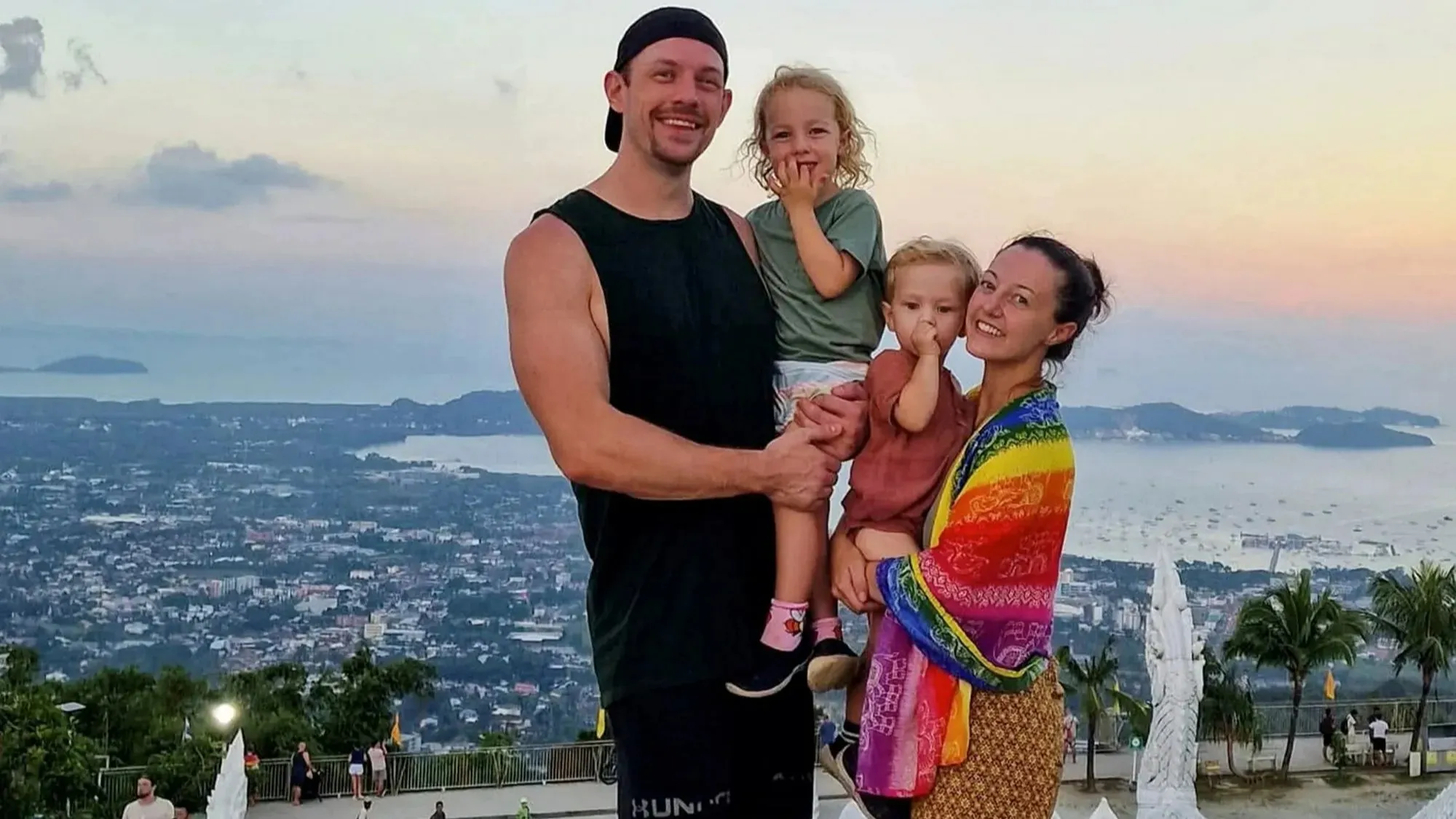
We ditched UK to globe-trot & saved £36k… we live out of suitcases on £30 a day & the kids learn from ‘life experiences’

MANY parents usually spend years saving up for family holidays abroad.
But one savvy couple has managed to swap life in the UK for a full-time travel adventure – all while saving £36,000.
Back in 2023, Ruth and Steven Rowe made a decision which shocked a lot of people after “selling everything they owned” and buying a one-way ticket to Sri Lanka.
They have been globe-trotting ever since on a budget of just £30 a day, and have turned the world into a classroom for their two children Aurora, five, and Atlas, four.
Ruth, 35, and Steven, 36, said they had always dreamed of travelling full-time and, as the moment approached to put the children into a nursery, they felt the time was right.
Ruth said: “We knew those early years were precious and we wanted more time together as a family before school routines took over.”
They flogged all their belongings on Facebook Marketplace or via car boot sales and set off from the village of Eardisley, Herefordshire, with just two suitcases of clothes and a few toys.
The family has already been to 17 different countries, ticking off bucket-list destinations such as Costa Rica, Guatemala, Ecuador, and Indonesia.
They stay four weeks at a time in Airbnbs and have also visited the likes of Thailand, Malaysia, Cyprus, the USA, Colombia, and Peru – all while saving around £12,000 a year.
They currently have no plans to return and want to continue world-schooling in exotic locations – while spending around £2,000 a month, compared to £3,000 back in the UK, as a result of their rent and outgoings being less.
Ruth and Steven had been renting a barn conversion and had both children during the Covid-19 pandemic.
They had travelled extensively before having kids but couldn’t shake the feeling that there was still so much of the world they wanted the children to experience.
Ruth added: “We wanted more time with them as we know those early years are precious, so we thought, why not just do it? So we did.
“Selling everything was an exhilarating experience.
“Our car, furniture and most of our possessions all went through Facebook Marketplace and car boot sales.
“We kept only a handful of memory boxes filled with special items from the children’s early years and a few clothes.
“We set off at the start with two big suitcases, a medium and a small one – and a stroller.
“And since then we’ve downsized to just two suitcases – it is really surprising how little you really need.
“Possessions don’t make you happy, life experiences do.”
They arrived in Sri Lanka with no return ticket and no real plan beyond seeing where life took them.
Ruth added: “And we’re still travelling now. We’ve been travelling full-time ever since, slow-exploring the world as a family, while my husband runs his coaching business remotely and we embrace world-schooling on the road.
“It’s been beautiful, chaotic, challenging and incredibly freeing.”
The couple also support themselves financially via Steven’s online coaching business – which he can still run wherever they are in the world.
However, Steven revealed the lifestyle isn’t always glamorous.
He added: “We use Airbnbs mainly but I’ve been working out of little cupboards in some places – it has been challenging at times but we’re in a fortunate position.
“We aim to live off around £30 a day and we stay in places for a month at a time so I can work Monday to Friday.
“But it can vary greatly; a two-bed apartment in one country can be £800 but a smaller one in another country £1,300.”
The couple say their children are now educated through “life experiences” – be it picking up Spanish in Latin America or learning about volcanoes while hiking in Peru.
And they say giving the kids no screen time whatsoever on their travels has helped them to become more patient and creative.
Ruth added: “They are also learning counting through things like paying a tuk-tuk driver in different currencies and the first time Aurora ever wrote her name it was in sand on a beach with a stick.
“We give them no screen time at all – which I think has taught them patience on their travels and to be more creative when they are bored sitting on a bus.
“They thought the TV back home was a radio as we’d only use it for Spotify and we think that’s allowed their imagination to flourish.
“I have just seen their confidence grow so much, and of course there’s no way of really telling how they would have been at home, but they are just so open and talk to anyone – young and old.
“I will sit down and teach them some reading and phonics and writing – but we’re not rigid with it and it’s still very much about learning through playing.
“It wasn’t a case of we hated the UK – we just love the world. But I was never a fan of the cold and rain so that is something I don’t miss.
“Also, we’ve found children aren’t treated like nuisances like you find in some restaurants in the UK.
“They are welcomed in and looked after, lots of places have playgrounds too to keep them entertained; that was a big difference to the UK too.
“Sri Lanka is just the most welcoming place we’ve ever been – people would invite us to eat in their homes and absolutely loved the kids.
“Costa Rica is beautiful with all the wildlife and jungle, Guatemala is underrated – it is also an incredible place and one of our favourites.”
Ruth was also not a fan of the cold and wet British weather – but admits she misses British chocolate.
She added: “The only thing I miss is friends and family – and also British chocolate.”
Steven also believes the lifestyle has been transformational for the children.
He said: “These positive environments have brought such positive developments so far in our children. Atlas was swimming independently at two.
“This way they get one-to-one without being part of the larger school system, which we have no issue with, we just see the benefits from doing it this way.
“We make sure the children are at the centre of what we do, we always research kids’ clubs and activities wherever we stay.
“They are loving learning about all the wildlife too – we had iguanas and sloths outside our doors in Costa Rica.
“Aurora had surf lessons in Bali and will be sandboarding in the Peruvian desert; it’s magical for them.
“The children have most enjoyed all the swimming they’ve been able to do and all the wildlife has been a massive enjoyment for them too.”
Follow the couple’s travels on Instagram.
Countries the family have visited
Sri Lanka
Indonesia
Thailand
Malaysia
Cyprus
USA
Guatemala
Costa Rica
Colombia
Ecuador
Peru
Bolivia
Brazil
India
Nepal
Portugal
Morocco

Last-minute October half-term foreign holidays you won’t believe the price of

SCHOOL holidays – two words guaranteed to make any parent’s bank account start sweating.
The moment the school gates close, holiday prices normally launch straight into orbit, leaving us staring at a rainy weekend in Morecambe rather than a gloriously sunny break abroad.
But if you know where to look, you can find some mega October half term breaks without having to remortgage your house.
I’ve dug up eight cracking five-night breaks with direct return flights starting at £295pp – and every single one is in October half-term.
We’re not talking about the bottom of the barrel here either – I’ve found Spanish beach favourites, theme-park thrills, Italian lakes and Croatian coastlines, all coming in under £334 each.
So you can get a proper change of scenery for the family without dipping into your overdraft.
1. Alicante, Costa Blanca – from £295pp
If your main mission this October is keeping the kids from tearing the wallpaper off while keeping costs down, this is a strong contender.
Alannia Costa Blanca is inland near Crevillente, where October daytime highs average around 24C – warm enough for spending time outdoors without the fierce summer heat.
You’re staying in cabin-style accommodation with kitchen facilities, (a lifesaver when the little ones demand a third bowl of Weetabix at 5.30am).
And the resort has tropical pools and slides, playgrounds and an indoor pool, plus an on-site supermarket for when you inevitably run out of snacks.
This is my biggest bargain, as I found five nights self catering and direct return flights from East Midlands from £295pp.
It is a good shout for families who want plenty to do around their accommodation and the flexibility to keep some meals cheap.
2. Salou, Costa Dorada – from £297pp
Salou is a must-stay if you want options beyond staring at the same resort pool for five days.
You’ve got broad seafront promenades for a wander, big family-friendly beaches and PortAventura World nearby if you want to brave the big rides.
October daytime highs average around 22C, making it a good time for mixing exploring with beach afternoons when the sun’s out.
And my pick of hotel, Inter2 Apartments, is simple, affordable and practical.
You get kitchen facilities to keep breakfast costs down, a balcony for a quiet drink once the kids are asleep, and you’re around 500 metres from the beach and coastal path.
At £297pp for five nights self catering, including direct return flights from London Luton, it leaves a bit more in the holiday budget for ice creams and days out.
Just remember to budget separately for theme-park tickets.
(Here’s our thoughts on visiting the theme park).
3. Manilva, Costa del Sol – from £298pp
For southern Spanish warmth without staying in the thick of a busy resort, head west along the coast to Manilva.
It’s a quieter option that suits families who want to slow the pace down.
It sits right on the edge of the Costa del Sol, near Gibraltar, so expect great beaches without huge tourist numbers.
October daytime temperatures typically reach the mid-20s, which is comfortable weather for exploring, coastal walks and long lunches outside.
And Pierre & Vacances Terrazas Costa del Sol gives you spacious apartments with balconies or terraces and overlooking the water.
There are outdoor pools, a playground and a sports court, and plenty of options for transport down to the beach and exploring the surrounding area.
The five-night self-catering stay I spotted comes in at £298pp with direct return flights from East Midlands.
It makes for a super-practical option if you want room to spread out without spending a fortune on accommodation.
4. Lloret de Mar, Costa Brava – from £305pp
Lloret de Mar is an absolute staple for October half-term.
You’ve got beaches, coastal scenery and opportunities for days out, including nearby Tossa de Mar and its old town.
Plus, October daytime highs average around 23C, making this a good choice for getting out and exploring with a light jacket to hand.
Condado Apartments gives you equipped kitchens, living space to spread out and balconies.
There are also two rooftop pools, including one for children, and a sun terrace.
Having a kitchen means you aren’t forced to pay restaurant prices three times a day when the kids decide to eat two bites of dinner and declare themselves full.
With five nights on self catering and direct return flights from London Luton from £305pp.
It’s a straightforward way to keep holiday costs down while still getting a proper break.
5. Fuengirola, Costa del Sol – from £310pp
Fuengirola does the familiar Spanish family holiday incredibly well.
There are loads of beaches, a seafront prom and plenty of places to stop for food or coffee.
So you don’t need a complicated itinerary when a walk, some sand and a decent lunch can comfortably fill the day.
October daytime highs average around 23C, so there’s still a good case for eating every meal outside and enjoying the beach every day.
Las Palmeras Affiliated by FERGUS sits on the seafront promenade opposite the marina, with the beach and plenty of restaurants within easy reach.
But the real win: the hotel also has a pool and rooftop sun terrace overlooking the harbour. And it’s gorgeous.
It’s £310pp for five nights with return flights from East Midlands.
A great price and a decent hotel which I’d treat as a base for getting out and enjoying Spanish town life, rather than spending the whole holiday there.
6. Lake Garda, Italy – from £319pp
Here’s the wildcard: swap the sand for lakeside scenery in Italy.
Peschiera del Garda gives you canals, waterfront walks and plenty of opportunities for pizza and gelato, which tend to work well as encouragement when the kids have decided they’ve finished sightseeing.
Late October is a little cooler here, so you might not be out sunbathing.
But Gardaland theme park is nearby if you fancy a bigger family day out, (just make sure to check opening dates and budget separately for tickets).
Residence Eden has apartment accommodation in green surroundings outside the town centre.
Kitchen facilities make it easy to knock together a quick pasta dinner without taking tired children out to a restaurant at 8pm.
And it leaves plenty of time for trips into town and around the lake.
With five nights and direct return flights from East Midlands from £319pp, it’s a wicked alternative to the usual half-term beach break.
7. Cala Galdana, Menorca – from £315pp
Cala Galdana is a proper postcard setting.
It has a curved sandy bay backed by pine-covered surroundings, with coastal walking routes for when you fancy stretching your legs.
It’s a good choice for families who want a slower few days away.
Menorca’s October daytime highs average around 22-25C, so I’d come for beach walks and exploring, with swimming as an added bonus.
Alta Galdana is a simple budget base with a pool and sun terrace.
The bay and surrounding scenery are the main draw here, rather than a big programme of hotel entertainment.
At £315pp for five nights on room only, including direct return flights from London Luton.
It’s definitely worth a look if you’re happy heading out for meals and letting the destination do most of the entertaining.
8. Seget Donji, Croatia – from £334pp
If you fancy something totally different from the usual Spanish escape, Croatia’s Dalmatian coast is well worth a look.
You’ve got Trogir nearby, Split as another option for a day out, and seaside walks around Seget.
October daytime highs around Trogir average roughly 22C, making this more of an exploring-and-long-lunches holiday than a guaranteed week of swimming.
Apartmani Medena is an apartment complex near the beach, around four kilometres from Trogir.
A seaside promenade connects it with Seget’s old fishing village, giving you an easy option for getting out for a walk.
The five-night stay I found comes in from £334pp with direct return flights from London Gatwick.
Food is extra but cheap enough around Seget, and this deal gives you a base for exploring a different stretch of Europe at a very, very reasonable half-term price.
Here are some great all-inclusive half term holidays that we’ve found for you as well.

Newsom should commute 563 death sentences. Here’s why
With not-terrible odds heading into the 2028 Democratic primaries, Gov. Gavin Newsom is getting one shared warning whispered in his ear by roughly 3,729 political consultants right now: Do not mess with the murderers.
Do not, under any circumstance, follow that inner voice that may be telling you to commute the death sentences of the 563 killers on California’s death row to life without parole, as Newsom recently admitted he was considering. Doing so would be a stupid move for an Oval Office wannabe, one already hobbled by the progressive persona of the Golden State.
“I’m getting all those people in my ear,” Newsom said during a podcast conversation with Bryan Stevenson, one of the preeminent death penalty lawyers in the country. “Don’t do it. Politics.”
Newsom already dismantled San Quentin’s execution chamber a few years ago, so the state can’t kill people even if it wanted to. But the governor has made it clear that he opposes the death penalty in principle because every year the evidence mounts that its implementation is flawed and racially biased. As he put it, the decision on commuting the largest death row in the Western Hemisphere may be his “rocking chair test,” a measure of whether he will have lived up to his own ideals when he looks back on his life.
Most other western countries have already banned the death penalty, leaving the U.S. in the company of places including North Korea and Libya when it comes to this punishment. Twenty-three states have abolished it, and three besides California have a moratorium. Nine governors over the years have commuted their entire death row, including one Republican. In 2024, on his way out of office, President Biden commuted the death sentences of 37 federal prisoners, in part, Stevenson said, to prevent the Trump administration from using executions as theater.
But none of that is why Newsom should do it.
He should do it because we, the voters, are exhausted by the venality of politicians whose every move is controlled by politics and self-dealing. We need to believe that conscience is not a relic of America’s past, and roll reality back to a time when, occasionally, leaders acted because they believed in something, even if it wasn’t popular.
He should do it because our president glorifies violence and death (more on that in a moment) and people need a reminder that the America of hope and dreams, the America that always strives to be better, may be down, but she’s not out.
He should do it simply because he thinks it’s right.
“A lot of people in this country want a leader who is not trying to promote themselves, who’s not trying to advance themselves, is not always scheming for the angles and the corners,” Stevenson told me. “That’s not trying to just do what makes them get the most votes.”
Showing mercy to murderers historically has not been popular with voters. The tale of Willie Horton, the convicted murderer whose subsequent felonies tanked the 1988 presidential ambitions of then-Massachusetts Gov. Michael Dukakis, is still invoked like a Biblical lesson about the sin of soft-on-crime.
Horton’s warning happened during what now seems like the benign and civilized days of the President George H.W. Bush era, though. This moment is different, and all the advice about dodging this dodgy issue is now wrong.
America is increasingly in the death business, to steal a phrase from the late Supreme Court Justice Harry Blackmun — or at least our leaders are. Under the Trump administration, brutality, cruelty, corruption and even killings are being used as misguided and ugly proxies for strength and power. Fear is a weapon, death the point — the state can kill you if you make its leaders mad.
“It’s a handful of people whose view of the social order is very violent. It uses power. It abuses power. They think death is good for demonstrating strength,” Stevenson said.
Think that sounds overblown?
Just ask the family of Renee Good. Or Alex Pretti. Both Americans were killed by masked federal officers only 10 months ago. But so many other deaths have happened since then, they’re just ghosts in our collective psyche — haunting reminders that faceless, nameless agents are now empowered to roam our streets.
Most of us can no longer place the name Nurul Amin Shah Alam, the near-blind Rohingya refugee dumped by federal agents in the freezing cold on a February night. He was found dead five days later, his passing ruled a homicide.
Do you remember Lorenzo Salgado Araujo? Or Johan Sebastián Duran Guerrero? That’s what the business of death does, normalizes killings until they blend and fade in significance.
What about the 120 Iranian children, many of them little girls, who were killed when the U.S. bombed their school?
Then there are the roughly 238 people who have been executed by U.S. bombings of boats in the Caribbean and Pacific, allegedly while transporting drugs, though the killings took place with no arrests, no trials and no real evidence. Four of those killings happened in October, though they barely made news.
And there is the profiteering from death — the talk of resorts on the shores of Gaza, the government money saved by Elon Musk cutting off aid to starving children.
Now, if Defense Secretary Pete Hegseth has his way, a year that began with televised footage of the death of Good and Pretti will end with the live-streamed execution of Nidal Hasan, the paralyzed, wheelchair-using former Army psychiatrist who 17 years ago killed 13 and wounded 32 at Fort Hood in Texas. If the grotesque spectacle happens, it will be a throwback to the days of the Roman Colosseum when the business of state-sponsored death was at an apex, combining public violence with propaganda, politics and social control.
Stevenson warns that “we’re in the midst of a narrative struggle, and this struggle is for the soul of America.”
Newsom has the chance to, if not change that narrative, offer an alternative one — an America that rejects killing as the ultimate display of power. An America that seeks justice with dignity and wisdom, not arrogance and gore. An America that feels safe because our leaders act with integrity and honor, not with a slavish, intemperate ego.
Though there is a political risk inherent in striking out in a solitary direction, there can also be reward. As Stevenson told Newsom, that’s the “beauty of struggling for things that are right, struggling for things that are moral, struggling for things that are just — all kinds of people will come along, and when you feel like you just can’t take another step, there’ll be something there. There’ll be somebody there.”
My mercy isn’t for those on our death row, many of whom are guilty of gut-churning crimes. I’m not arguing that they are victims themselves, or even that some may have been unfairly tried, or even innocent, though that may be true. I acknowledge some families of victims may be angry if Newsom commutes sentences, though some will not.
My mercy is reserved for America, and those who are exhausted by the business of death, this business Trump wants us to believe is just American business — necessary and unavoidable.
A commutation of California’s death row sentences would be a rejection of Trump’s manic desire to pull us ever lower; a rejection of our growing cynicism that there is no such thing — Republican or Democrat — as a leader who acts from conscience. An assurance, instead, that it is still possible to heed an internal moral compass that is more powerful than the need for power.
Would voters really reject the leader who offered that?
Would you?

José Ramírez’s error is costly as Guardians lose ALCS Game 2 to Rays
TAMPA, Fla. — José Ramírez’s mental mistake and fielding error cost Cleveland in Game 2 of the American League Championship Series, a day after his bat helped boost the Guardians to an opening win.
He left third base uncovered on Chandler Simpson’s fourth-inning infield chopper, then misplayed Ben Williamson’s grounder for an error that led to three unearned runs as the Tampa Bay Rays evened the best-of-seven series with a 3-1 win Tuesday night.
“It’s a little bit faster here with the surface and I was playing parallel to the base,” Ramírez said through a translator. “The ball bounced right on the edge between the dirt and the turf, and that’s what made it a little more difficult for me. I tried to knock it down.”
“It’s frustrating. I feel bad because I wasn’t able to make that play and after that the runs came in. I feel bad about that,” he added.
A seven-time All-Star who has finished among the top five in MVP voting six times, Ramírez had three hits and scored twice in Cleveland’s 7-3 win in the opener.
Game 2 was 0-0 with Victor Mesa Jr. on first and two out in the fourth when Chandler Simpson beat out a high chopper to shortstop Brayan Rocchio.
Ramírez, shifted toward second base on the left-handed hitter, took a few steps toward Simpson and watched the shortstop throw to first. Seeing third base uncovered, Mesa rounded second and sped to third standing up as Ramírez tried in vain to catch up.
Four pitches later, Williamson hit a two-hopper that struck the edge of where the artificial turf meets the dirt near third. The ball skipped between Ramírez’s legs into left, allowing Mesa to score.
“José kind of got stuck. It looked like he just didn’t move his feet,” Guardians manager Stephen Vogt said. “Just kind of looked like he sat back a little bit with his feet set instead of moving his feet. So tough break right there and obviously they capitalized.”
Liam Hicks pulled Parker Messier’s next pitch, a slider, into right-center for a two-run single and a 3-0 lead.
“They’ve done that all year. When they smell blood, they take it and run,” Vogt said. “We had some sloppy plays in the field that we need to clean up.”
Ramírez homered in Games 4 and 5 of the Division Series as Cleveland overcome an 0-2 series deficit, the first Cleveland player to homer in consecutive postseason games since Francisco Lindor in 2018.
Israeli air strike kills Palestinian woman in Gaza City | Israel-Palestine conflict News
The woman’s young daughter was rescued from a large fire inside the apartment caused by the attack.

Published On 14 Oct 2026
An Israeli air strike on an apartment block in Gaza has killed a woman and wounded two other people, hospital officials said.
Reem Asaad Awad, 33, was killed in the attack early on Wednesday in the Al-Rimal neighbourhood of Gaza City, the Turkish state news agency Anadolu reported, quoting a source at Al Shifa hospital.
Recommended Stories
list of 3 itemsend of list
The source said the strike caused extensive destruction to the targeted apartment and nearby buildings.
The daughter of the woman who was killed was rescued from a large fire that broke out after the attack.
Israel says it is investigating the strike and claims it targeted a member of Hamas, without providing evidence.
Reporting from Gaza City, Al Jazeera’s Ibrahim al-Khalili said the strike happened at 4am (01:00 GMT).
Israel has killed 1,501 Palestinians in Gaza since it agreed a “ceasefire” with the Palestinian group Hamas last October. The truce was part of a wider United States-backed proposal to end Israel’s genocidal war against Palestinians in Gaza.
Talks aimed at advancing to the second phase of the US plan, which includes the withdrawal of Israeli forces and the disarmament of Hamas, have stalled.
The agreement states that 600 trucks of humanitarian aid are to be allowed into Gaza each day, but Israeli authorities have continued to impose severe restrictions on supplies entering the enclave, and reconstruction of the war-shattered territory has not begun.

Inside Paulton Park’s first EVER holiday village with £20million lakeside lodges and treehouses

NEW images have revealed what to expect from Paulton Park’s new holiday resort – the first ever on-site accommodation for the theme park.
Yet to be named, the £20million accommodation will have a range of lodges and cabins to choose from.
Images show lakeside and riverside lodges, treehouses and A-frame cabins.
Suites and ‘burrowed lodges’ that look like grass-covered Hobbit houses are part of the plans too.
The lodges will range from two bedrooms to four, suggesting space for as many eight guests in each.
There will be space for around 600 guests, with 129 lodges to choose from.


Suggestions of a restaurant and supermarket will also be on-site too, so guests will be able to choose from dining or self-catered.
Play areas, indoor entertainment rooms and game rooms will be there too, so there is enough for rainy days as well.
You’ll be waiting a while as they will be built in phases up until 2030.
Plans for the holiday village were first announced back in 2025.
The park’s deputy managing director James Mancey previously said: “Our vision is to deliver 129 units, designed to comfortably accommodate just under 600 guests at full capacity, 100 guests fewer than previously outlined.
“We anticipate it will be several years before our vision for on-site accommodation is brought to fruition; however, we are committed to continually reinvesting in our attraction, providing a world-class experience for our guests, and planning for the long-term.”
In the mean time, Paulton’s Park is also opening a new water coaster called Serpent’s Curse next year.
Or you can visit the Viking-themed Valgard land, which opened back in May.
The Sun’s Head of Travel (Digital) Caroline McGuire was one of the first to visit.
She said: ” I loved Drakon – the park’s first-ever inverting coaster starts with a vertical hill and drop, followed by two great inversion flips at speeds of 44mph.
But for all the speed, drops and twists, I never once felt nauseous – it is easily the smoothest rollercoaster I’ve ever been on and remarkably silent, none of that rattling you get on so many other coasters.
“The second coaster, Raven, was almost scarier despite not going upside down, thanks to its high-speed bobsleigh style, which whips you round tight hairpin turns and was great fun.
“There’s also a very cute new ‘Orchard Playground’ for kids up to the age of 10, the kind that Paultons does so well throughout the park, with treehouses, a lookout tower, net bridges and slides.
“The rollercoaster fan next to me was right, everything felt like the extra quality that you expect of somewhere like Disney.”