



Kasper Schmeichel: Keeper in spotlight after night of gloom for Celtic
With fans protesting against the club’s board at the start of the game and later ironically cheering Schmeichel making a save, the atmosphere at Parkhead was far from harmonious.
“It’s bitterly disappointing,” former Celtic captain and manager Neil Lennon said of the jeers directed at Schmeichel.
“He had a bad night but it still doesn’t warrant that kind of treatment.”
Thursday night was the latest in a string of perceived errors made by Schmeichel, following Joe Hugill’s looping header for Kilmarnock last weekend and Jonathan Rowe’s effort for Bologna last month.
Perhaps unsurprisingly, Celtic closed ranks around their embattled goalkeeper post-match.
“It’s a tough evening for us,” interim manager Martin O’Neill said. “On paper, 4-1 looks pretty poor.
“We were masters of our own downfall in many respects, conceded some poor goals.
“Kasper [Schmeichel] has made some great saves while I’ve been here. This is a collective, there’s no doubt about that.
“We played Feyenoord in a game we probably had to win and he made an unbelievable save, otherwise we wouldn’t be here playing tonight.
“I will think about all sorts of things [before the next game], but Kasper has done really well since I’ve arrived at the football club, in both spells.”
Captain Callum McGregor added: “Everyone makes mistakes.
“Kasper has been amazing since he’s come to the club. He’ll dust that down. We win as a team and lose as a team.
“There’s no blame, he’s made so many big saves for us. He’ll bounce back for sure.”
Russia-Ukraine war: List of key events, day 1,457 | Russia-Ukraine war News
These are the key developments from day 1,457 of Russia’s war on Ukraine.
Published On 20 Feb 2026
Here is where things stand on Friday, February 20:
Fighting
- Russian forces launched 448 attacks on 34 settlements in Ukraine’s front-line Zaporizhia region in a single day, injuring a six-year-old child and damaging homes, cars and other infrastructure, regional governor Ivan Fedorov wrote on the Telegram app.
- Russian drone, missile and artillery attacks on Ukraine’s Kherson region injured five people and damaged homes, including seven high-rise buildings, the local military administration said on Telegram.
- Russian attacks also continued in Ukraine’s Dnipropetrovsk and Sumy regions, but local officials there noted that “fortunately, no people were injured”. According to the Kyiv Independent news outlet, overnight was “unusually quiet” following weeks of “heavy fire” in the two regions.
- A man was killed by shrapnel from a Ukrainian drone attack on Sevastopol, in Russian-occupied Crimea, Governor Mikhail Razvozhayev said on Telegram.
- A Ukrainian drone attack caused a fire at an oil depot in Velikiye Luki in Russia’s Pskov region, local official Mikhail Vedernikov said, according to Russia’s state TASS news agency.
- Russian forces shot down 301 Ukrainian drones, 10 missiles and two guided bombs in a 24-hour period, Russia’s Ministry of Defence said, according to TASS.
Peace process
- United States President Donald Trump’s Board of Peace held its first meeting in Washington, DC, without Belarus participating, despite Trump extending an invitation to the Russian ally.
- Belarus’s Ministry of Foreign Affairs said in a statement that its delegation to the meeting did not receive the necessary visas to enter the US “despite carrying out all the required procedures”.
- The Foreign Ministry questioned, “What kind of peace and what kind of sequence of steps are we talking about if the organisers cannot even complete basic formalities for us to take part?”
-
France’s Ministry of Foreign Affairs spokesperson Pascal Confavreux expressed surprise to see the European Commission had sent a commissioner to participate in Trump’s meeting, noting that it “does not have a mandate from the [European] Council to go and participate”.
- Confavreux also said France would not take part in Trump’s initiative until the Board of Peace returned its focus to Gaza in line with a United Nations Security Council resolution.
- Several European Union member states have said they will not participate in the peace board after Trump extended an invitation to Russian President Vladimir Putin, who launched the invasion of Ukraine in 2022 and is subject to an arrest warrant by the International Criminal Court.
Regional Security
- Dutch intelligence services AIVD and MIVD said on Thursday that European countries, including the Netherlands, were facing increased hybrid threats from Russia, including cyberattacks, sabotage, influence campaigns and disinformation.
Energy
- Ukraine’s Russian-held Zaporizhzhia nuclear power plant is operating on its sole remaining main power line after losing its only backup power line more than a week ago, head of the International Atomic Energy Agency, Rafael Grossi, said in a statement.
- Hungary is considering halting power and gas exports to Ukraine and will take such steps unless Ukraine resumes the flow of crude oil shipments via the Druzhba pipeline, Prime Minister Viktor Orban’s chief of staff told a briefing.
- The Druzhba pipeline, parts of which run through Ukraine, is crucial for the transfer of Russian crude oil to Hungary and Slovakia. Oil flows have reportedly halted since an attack on the pipeline in January, which Kyiv has blamed on Russia.
- France’s Minister of the Economy, Finance and Industry Roland Lescure said his country would provide 71 million euros ($83.5m) in additional funding for Ukraine for services including energy, health and clearing land mines.
Politics and diplomacy
- The head of Russia’s FSB security service accused Telegram messaging app founder Pavel Durov of condoning criminal activity on the platform, in an escalation of Moscow’s rhetoric as it moved to restrict the service that is used by many Russians and Ukrainians to communicate about the war.
-
Dismissing a Russian government allegation that foreign intelligence services are able to see messages sent by Russian soldiers on Telegram, the popular platform said it had not found any breaches of its encryption codes and called Russia’s claims a “deliberate fabrication”, according to the Reuters news agency.
Military aid
- Sweden announced a 12.9 billion crown ($1.42bn) military aid package for Ukraine that will include air defences, drones, long-range missiles and ammunition.

US pays about $160m towards nearly $4bn in UN dues | Donald Trump News
The United Nations announced that the United States has paid approximately $160m towards its nearly $4bn in outstanding dues.
The payment goes towards the UN’s regular operating budget, according to spokesman Stephane Dujarric.
Recommended Stories
list of 3 itemsend of list
But the shortfall comes as the administration of US President Donald Trump has openly questioned its commitment to the UN and has slashed money earmarked for the international body.
Still, on Thursday, Trump appeared to endorse funding the UN during the inaugural meeting of his Board of Peace in Washington, DC.
“We’re going to help them money-wise, and we’re going to make sure the United Nations is viable,” Trump said. “And I think it’s going to eventually live up to its potential. That will be a big day.”
The UN has indicated that the US owes about $2.196bn to its regular budget, including $767m for the current year. Another $1.8bn is owed for the UN’s peacekeeping operations.
A financial crisis
For years, the UN has faced a financial crisis, with a growing shortfall of contributions. Each of the organisation’s 193 member states is required to contribute, based on its economic ability.
Poorer countries could be asked to contribute as little as 0.001 percent of the UN’s regular budget. Wealthier countries could reach the maximum contribution amount of 22 percent.
But unpaid dues have already forced the UN to slash its spending and reduce its services.
In a stark warning last month, United Nations Secretary-General Antonio Guterres cautioned that the international body faces an “imminent financial collapse” unless its financial rules are overhauled or all 193 member nations pay their dues.
Guterres revealed that the UN’s regular operating budget could be depleted as early as July, a scenario that would severely jeopardise its global operations.
The US is the largest donor to the UN, as the world’s largest economy. But it currently owes billions in unpaid dues.
UN officials have stated that the US accounts for approximately 95 percent of the arrears to the organisation’s regular budget.
‘Empty words’
Since returning to the White House for a second term in January 2025, Trump has elevated concerns that US dues might go unpaid.
The Republican leader has repeatedly criticised the UN as ineffective, even articulating that sentiment at September’s UN General Assembly.
“What is the purpose of the United Nations?” Trump asked the assembly. “All they seem to do is write a really strongly worded letter and then never follow that letter up. It’s empty words.”
Throughout his second term so far, he has cut foreign aid spending and withdrawn from international commitments. In January, for instance, his government pulled out of 31 UN programmes, including its democracy fund and a body that works on maternal and child health.
But on Thursday, at his Board of Peace meeting, Trump appeared to take a warmer stance towards the UN, saying he planned to work “very closely” with the organisation.
“Someday, I won’t be here. The United Nations will be,” he said, seeming to endorse its longevity.
Trump also acknowledged the organisation’s financial distress: “They need help, and they need help money-wise.” He did not mention the US arrears.
While the Board of Peace establishment was meant to oversee the Gaza ceasefire, many see it as an attempt by Trump to rival the UN Security Council’s role in preventing and ending conflicts around the world.
Critics have described the board, which Trump chairs, as a “parallel system” that risks undermining the UN’s authority and operations.
Trump himself appeared to position his Board of Peace as an oversight body for the UN in Thursday’s remarks.
The Board of Peace, he said, “is going to almost be looking over the United Nations and making sure it runs properly”.

How ‘The Pitt’ portrayed a rape kit exam with the help of experts
The following article contains spoilers for Episode 7, “1:00 P.M.,” of “The Pitt” Season 2.
The education begins almost immediately. A young woman who has just experienced a sexual assault is in triage, and “The Pitt’s” Dr. Robby (Noah Wyle) enlists Dr. Al-Hashimi (Sepideh Moafi) to assist charge nurse Dana Evans (Katherine LaNasa) with the patient.
“We can call for a SANE,” another nurse suggests when Dana says she’ll be occupied.
“On a holiday? Could be hours,” responds Dana, a veteran who knows better, as the Fourth of July shift enters afternoon hours. “We’re not going to make this patient wait. And since I’m the only SANE on staff …”
A what? The quick reference sets in motion what “The Pitt” aims to shed light on: a sexual assault forensic exam, also known as a rape kit exam. The episode delves into the confidential medical procedure to collect DNA and evidence and gives one of the most detailed depictions of the process for television.
But before cameras venture into the room with the patient, Dana gives recent nursing school graduate Emma (Laëtitia Hollard) — and the audience — an overview. A SANE is a sexual assault nurse; they perform forensic exams, collect evidence and hand it over to the police, if a report is made. They also provide resources, support and may even testify in court.
The storyline serves a dual purpose, according to Kirsten Pierre-Geyfman, who co-wrote the episode with the show’s creator, R. Scott Gemmill. “We wanted to highlight the very important and incredible work of a SANE, especially in the department setting,” she says. “And we also wanted to see the bravery it takes for a survivor to come forward, let alone do a rape kit … It’s not an easy decision for somebody to make, and it’s not an easy process for somebody to go through.”
To help construct a realistic and sensitive portrayal of the exam process, “The Pitt’s” writing team and actors worked with a number of consultants, including the UCLA Health Rape Treatment Center and Pittsburgh Action Against Rape (PAAR).
“I wanted people to understand the extent of the exam, I think that’s a misconception among a lot of people,” said Dr. Kathleen Sekula, a SANE at Duquesne University in Pittsburgh who also consulted the show’s team.

Ilana (Tina Ivlev) arrives at the ER in Episode 7 of “The Pitt.”
(HBO)
The case in Episode 7, “1:00 P.M.,” involves a visibly shaken young woman, Ilana, played by Tina Ivlev. The writing team knew they wanted to detail the process, not the trauma, Pierre-Geyfman said, so the information about what Ilana experienced is minimal: She was at a barbecue with friends when she was assaulted by a male friend.
“The thing that struck me was the fact the other shows might focus on what happened and then dive into that,” Ivlev said. “What I loved about this, the minute she starts talking about it, they cut [away]. There’s so much underneath it. I wanted it to be similar to real life when you have a traumatic situation happen — sometimes you can be hyperfocused on certain details, then other things are cloudy. Her head is spinning. She’s in shock.”
As with many of “The Pitt’s” cases, the story serves to bolster the emotional arc of the show’s healthcare providers, in this case Dana, who assists with the exam from start to finish as the department’s certified SANE nurse. Last season, she was brutally punched in the face by a disgruntled patient while taking a smoke break. That violent attack left her rattled and contemplating an exit from the job, but after taking a few weeks off, she ultimately returned to work — though the assault’s lingering impact has sharpened her edges.
“With Dana’s arc and her own assault last season, she’s definitely calcified a little this season,” Pierre-Geyfman said. “She’s trying to create a little bit of distance between her and her patients, and is really trying to prioritize her nurse’s safety. You see her struggle a little bit with that with this patient. She’s wanting to do more for her.”
On screen, the assessment begins with Dr. Al-Hashimi checking to see if Ilana has any injuries that need immediate attention and getting an intake of prescription medications and any known allergies to medications. Securing two triage rooms to complete the exam as a way to ensure privacy in the busy emergency department, Dana, with help from Emma, begins the evidence collection while carefully outlining the process to Ilana. For starters, once Dana opens the kit, Ilana cannot leave the room but is free to take a break as needed.
To avoid contamination, Dana puts on a face shield and opens the kit, which is a rectangle-shaped box that contains items like paper bags to store evidence and swabs for collecting biological samples. The first step requires Ilana to change into a robe, undressing on top of pads placed on the floor so each item of clothing can be packaged into separate bags and collected as evidence. She’ll be given new clothes, Dana assures her. Dana raises a large piece of cloth to give Ilana privacy as she completes the process.
Eventually Dr. Al-Hashimi returns to examine Ilana, checking for any pain on her body or need for X-rays or imaging — she notes two areas of bruising to be documented by Dana with photos. Dana seals the camera’s memory card in an evidence envelope. Next, with the lights off, Dana runs a black light over Ilana’s body. Dana relays that if there’s a part of Ilana’s skin that glows, she’ll swab it with a wet, then dry, cotton swab. Dana next swabs Ilana’s mouth — the inside of her cheek and along the gum line — and her finger nails. At various points, Dana is careful to assess Ilana’s comfort with each step and uses statements like “This will not define you,” while Ilana shows signs of stress about the length of the process.

Emma (Laëtitia Hollard) assists Dana (Katherine LaNasa), who leads the exam as the SANE (sexual assault nurse) on duty.
(HBO)
At one juncture, an advocate from Pittsburgh Action Against Rape, otherwise known as PAAR, arrives to further detail the resources and assistance they can offer, a service that’s available regardless of whether a patient decides not to complete the rape kit exam. Throughout the process, Ilana is assured that she can complete the exam even if she’s vacillating on whether to file a police report — that decision can be made at a later time and none of it goes on her permanent medical record. But when the exam pivots to external and internal vaginal collection, Ilana panics once she’s instructed to place her feet in stirrups to get into position. Dana suggests a break.
“I don’t want a break, I want to stop,” Ilana proclaims. “He’s my friend. He knows all my friends. It was just a dumb — he was drunk. He didn’t mean — it didn’t mean anything.”
It brings a pause to the process, which will carry over into Episode 8. In trying to show the scope of the exam, the medical drama takes liberties in its completion time. Sekula said it’s rare for an exam to be completed in under three to four hours.
Not all nurses are certified to be a SANE, and certification requirements vary by state, according to Sekula. It’s a role that requires extreme attention to detail and thoroughness, as their work bridges the healthcare and legal systems. While preparing for the episode, Hollard said she marveled at the precise protocols involved and the support that’s provided.
“On a technical level, it’s so meticulous,” Hollard said. “There’s so many parts, so many envelopes. You have to take these swabs and they can’t touch each other. And the legality of it all — the way this kit is happening is how they would do it with PAAR in Pittsburgh, but that’s not the same way they do it in California, or [the way] they do it in different states.”
While “The Pitt” is frequently recognized for its hyperrealistic medical procedures, the episode’s director, Uta Briesewitz, knew she wanted to film the exam in a way that mirrored the sensitivity healthcare professionals strive to exhibit, with shots that weren’t invasive or fixated on Ilana’s body. For example, when Ilana is undressing, the camera is fixed on Dana being mindful to give her privacy even in their close proximity — an out of focus glimpse of Ilana’s bare backside comes only when getting a reaction of Emma taking in the weight of the moment. Later, when the blue light is being run down Ilana’s body, her hospital gown is carefully place to avoid exposure. In addition to a SANE consultant being on set to assist with queries about the process, there was also an intimacy coordinator to help with the comfort level of filming the scenes.

“On a technical level, it’s so meticulous,” said Laëtitia Hollard of the process. “There’s so many parts, so many envelopes. You have to take these swabs and they can’t touch each other.”
(HBO)
“It was a very sensitive line because women can get re-traumatized,” Briesewitz said. “I remember one of our more detailed conversations with our SANE nurse was about when Dana had to look with the black light for bodily fluid. How do we make sure she would not miss anything but, at the same time, give the victim the feeling that they’re still protected? It was super helpful to have our SANE advisor on set to say the way she would do it. ‘One arm comes out of the sleeve, then I hold up her gown this way, and I would do it like that …’”
LaNasa found her time at the UCLA Health Rape Treatment Center crucial to chart both her character’s ease in the room and her sensitivity to the task at hand: “I went back a second time because I knew I was going to have to use the kit … I wanted it to look like I had used the kit many times and I knew what I was doing.”
Reflecting on the case as a mirror to her character’s journey, LaNasa pointed out that Dana never pressed charges against Doug Driscoll, the man who assaulted her.
“It’s different in this situation,” LaNasa acknowledged. “I thought it was great information that we got out of this, which is that you can go and do a rape kit, you can have the evidence collected, and you don’t have to decide on that day when you’re traumatized if you want to press charges or not. I think that part of Dana’s hypervigilance is probably because there was no justice for her. I think why she’s cracked this season is because she didn’t take care of herself. She’s reeling from that. She let him beat her up. At the same time, she doesn’t want Tina’s character to feel any pressure, but I think she wants it for her. She wants her to have the ability to change her mind later.”
“We’re going to hear Dana, later in the season, refer back to this process that these people have to go through, in defense of a sexual assault victim,” LaNasa teased. “It’s big on her mind. She’s been doing it quite a while.”

American Alysa Liu rides wave of joy to Olympic gold medal
MILAN — She flipped her hair. She shrugged. She dusted her hands off.
Alysa Liu makes winning an Olympic gold medal look easy.
The 20-year-old became the first U.S. woman to win the Olympic singles title since 2002, electrifying the crowd at Milano Ice Skating Arena with her “MacArthur Park” program Thursday and overtaking Japanese rivals Kaori Sakamoto and Ami Nakai, who won second and third, respectively.
Liu scored a monster 150.20 points in her free skate, the highest mark for a women’s free skate all season in international competition to win by a total of 1.89 points. Her choreographer Massimo Scali’s jaw dropped when he heard the score read in Italian. A beat later when the screen caught up to the public address announcement in the stadium, Liu nodded confidently and cracked a subtle smirk.

American gold medalist Alysa Liu hugs Japanese bronze medalist Ami Nakai after their final scores were revealed at the Winter Olympics on Thursday in Milan.
(Jamie Squire / Getty Images)
She doesn’t care about the scores.
Liu, who grew up in Oakland, has floated through her second Olympics as if she had not a single care in the world. A two-year retirement during which she climbed Mt. Everest, got her driver’s license and started college at UCLA made skating feel inconsequential. Now so unbothered, Liu spent part of her six-minute warmup cheering on teammate Amber Glenn in the leader’s chair. Minutes before taking the ice, Liu snapped a selfie with her coaches. She gives her coaches a high-five right before taking her starting position.
“She’s not like us,” her coach Phillip Diguglielmo said. “The rest of us here would be like, ‘Oh my God, I’m nervous. Oh, I can’t do this. I have a million voices in my head.’ She has one voice in her head, and it says, ‘I got this.’”
The only emotions Liu felt during her program were “calm, happy and confident.” When she sees the faces in the crowd smile, Liu said she can’t help but smile, too. And there was a lot of smiling. Her Donna Summer disco program had fans clapping within the first minute. Diguglielmo and Scali held their hands overhead to join the roar. Liu’s pre-program message to the crowd on the video board was “Y’all better turn up!”
Liu, who won the 2025 world championship with the same crowd-pleasing program, returned to the sport in 2024 with the sole objective of sharing her art. She wanted to make as many programs as possible. Winning never seemed to matter. With the gold medal hanging around her neck, Liu stopped short of saying she even wanted it. She surely didn’t need it, she said.
“What I needed was the stage,” Liu said. “And I got that.”
Once Liu processed the final scores, she rose to her feet and turned toward Nakai, clapping for the 17-year-old. Nakai, skating in her first Olympics, was shocked. She held up three fingers to Liu, asking if she had finished on the podium. Overjoyed, they hugged. Liu picked Nakai, who had entered the free skate in first place, up off the ground.
Sakamoto was less than a point ahead of Liu entering Thursday’s free skate, but small mistakes from the three-time world champion, in addition to Liu’s strong technique and infectious energy made Liu the first U.S. woman to win the Olympic gold medal since Sarah Hughes in 2002. The United States’ 20-year drought without a medal — since Sasha Cohen took silver in 2006 — was the country’s longest.
Liu held her palms up in disbelief after finishing the program of her life that put her in the lead with two competitors remaining. She leaned into the camera and pointed to the piercing on the inside of her upper lip. She did it herself.
With blond horizontal stripes dyed in her dark brown hair, bold black eyeliner and the smiley lip piercing, Liu has cut an alternative path to the top of a sport that long valued a specific kind of femininity. But the slick back bun, classical music and balletic dress was not Liu’s brand.
Her brand is joy.
And now as just the second figure skater in history to win two Olympic gold medals at the same Olympic Games — joining U.S. star Nathan Chen — Liu has the stage, and the attention, to display her joy for the next generation of athletes.
“People will be able to see how she approaches the sport now versus before and see how much more successful it is now in a healthy way,” Glenn said. “And I’m hoping people can really learn from that.”
Glenn got redemption after the short program, putting up a season’s best 147.52 during her free skate that vaulted her from 13th to fifth with a 214.91 total score. The only blemish was when Glenn put one hand down on her final jump — the same triple loop that cost her in her short program. But as she held one leg behind her during a spiral in her last sequence, Glenn smiled as she looked into the crowd. After the program, she whipped her fist through the air triumphantly.
The performance put a positive punctuation mark on Glenn’s winding Olympic journey. She has faced intense scrutiny at the Games. The same pressure that consumed Glenn and teammate Ilia Malinin could not even touch Liu’s glowing aura.
When asked Thursday if she felt any “Olympic pressure,” Liu smiled.
“You would have to explain what Olympic pressure is,” she said.
Then she bounced away, the gold medal around her neck blending perfectly with her gold dress.

North Korea’s Kim Jong Un launches key party congress held every 5 years | Kim Jong Un News
Kim focuses on improving economic activity in opening speech at Ninth Congress of the Workers’ Party of Korea.
North Korea has kicked off a rare party congress of the ruling Workers’ Party, held once every five years, that will see the leadership in Pyongyang set major policy goals in defence, diplomacy and the economy, state media reports.
The Korean Central News Agency (KCNA) said on Friday that the Ninth Congress of the Workers’ Party of Korea (WPK) was under way, marking the start of the country’s most consequential political event since 2021.
Recommended Stories
list of 4 itemsend of list
“The Ninth Congress of the WPK opened with splendour in Pyongyang, the capital city of the revolution,” KCNA said, reporting that the high-level meeting started on Thursday and observers say it is expected to run for several days.
South Korea’s official Yonhap News Agency said the gathering will be closely followed for any signs regarding North Korea’s development of nuclear weapons or overtures towards the administrations in Seoul and the United States, which the North considers its chief foes.
Yonhap reports that North Korea’s leader, Kim Jong Un, made no mention of relations with either South Korea or the US in his opening speech to the congress on Thursday and, instead, focused on boosting the country’s economy.
“Ahead of our party are heavy and urgent tasks of advancing economic development and improving people’s livelihoods, and transforming all aspects of social life in the country as quickly as possible,” Kim said, according to KCNA.
While the true state of North Korea’s often struggling economy is hard to gauge, The Associated Press news agency reports that outside experts suggest the country has seen a gradual recovery in economic activity, helped by a post-COVID boost in trade with China and the export of weapons to help Russia in its war against Ukraine.
Several thousand North Korean troops have fought on Moscow’s side against Ukraine, and Pyongyang is believed to have exported large amounts of ammunition to help the Russian invasion of its neighbour.

North Korea’s ‘biggest enemy’
South Korea’s spy agency said last week it was monitoring the congress for any sign that Kim will officially designate his teenage daughter, Kim Ju Ae, as his potential successor, formalising her position as heir apparent in a fourth-generation succession of the Kim family as North Korea’s leaders.
At the previous party congress five years ago, Kim declared that the US was his nation’s “biggest enemy”, the AFP news agency reports, and there is deep interest in whether the North Korean leader will soften his rhetoric – or double down – at this year’s congress, particularly amid the US presidency of Donald Trump.
Trump – who met Kim in 2019 when he briefly stepped foot into North Korea to shake Kim’s hand and pose for photos – said during a tour of Asia late last year that he was “100 percent” open to meeting Kim again.
So far, Kim has demurred on Trump’s overtures to meet again.
Observers of North Korean politics are reported to be scouring satellite imagery for any signs of the vast military parades that have accompanied previous congress meetings in Pyongyang.
Such parades will be closely watched for signs of a shift in North Korea’s weapons capabilities, as the country has used previous processions to show off its newest and most advanced weapons.
Kim held a ceremony on Thursday to unveil the deployment of 50 new launch vehicles for nuclear-capable short-range missiles as the congress kicked off.
According to Yonhap, the congress brings together some 5,000 party representatives from across the country, including 200 senior officials from the WPK’s headquarters. More than 4,700 officials from regional and industrial sectors are also in attendance.


I stayed at the beautiful unassuming market town that paved the way for holidays
The unassuming market town in a corner of Herefordshire where Gloucestershire meets Wales was the inspiration behind Britain’s first ever travel guide
Ross-on-Wye – the birthplace of UK tourism
It’s an unassuming market town, nestled in the crook where Herefordshire meets Gloucestershire on the Welsh border.
I’d never have guessed that Ross-On-Wye is the birthplace of British tourism, and THE holiday destination of the late 18th and early 19th century. Nevertheless, given there is some suggestion we are experiencing a revival of romanticism (think Wuthering Heights and Bridgerton rather than the latest rom-com), it wouldn’t surprise me if there’s a surge of soul-seekers retracing the steps of their forbears across the UK’s most beloved natural spaces.
And what better way to explore Ross-on-Wye for myself than from the Hope & Anchor. Located right on the edge of the River Wye, it was just outside this inn that the boats would set off on their tour. So it seemed like the perfect place for my toddler and I to stop for the night as part of a trip organised by Visit Herefordshire.
READ MORE: ‘I was floored by UK village that starred in Hamnet – it’s even more beautiful in real life’READ MORE: Beautiful and underrated beach in UK’s sunniest place added to list of world’s best
Before we checked in for the night, we set off to explore a town peculiarly located on the northern edge of the Forest of Dean, less than 10 miles from the Welsh border, and six miles from Gloucestershire.
Stepping onto the streets of Ross-on-Wye, it doesn’t take a great imagination to be transported through time and see what inspired the Reverend William Gilpin to write Britain’s first ever travel guide. Published in 1782, Observations on the River Wye centres on a boat tour he took down the River Wye from Ross-on-Wye to Chepstow. The words of the pioneer of the “picturesque” adventure were so captivating that mimicking his journey soon became the fashionable thing to do – especially during the Napoleonic Wars, when taking part in the Grand Tour across continental Europe became impossible.
As market towns go, Ross-on-Wye is a fairly well-sized one, with a population of around 11,000 according to the 2021 census. However, 250 years after it was first made famous, it still carries an old-world charm, littered with stunning black-and-white timber-framed buildings and cute little independent shops where you can while away the afternoon browsing.
After working up an appetite, taking in the street scenes surrounding the prominent Market House building in the town centre, we trekked towards the High Street looking for Truffles Deli, which Visit Herefordshire had suggested we nab a quick bite from. Unfortunately, the highly-rated eatery promising delicious sandwiches, soups and cakes is closed on Sundays. Instead we followed directions on a chalkboard pointing us towards Maggie’s Place a few doors down.
Cosy and inviting, incense wafted through the interior as we stepped inside, admiring the open beams and brickwork. The café – which also welcomes four-legged friends – has only been open a number of months, and the owners have just started introducing a more expansive menu, including sandwiches and cakes.
“We’re trying to be completely locally sourced”, the owner tells me, saying the ham in the mouth-watering sandwich I bite into is from the delicatessen around the corner. He says they are working on bringing in crisps made nearby, and the bread has been locally made too.
And if the taste is anything to go by, lunch is terribly under-priced. I cannot get enough of the garlic spread in my ham sandwich, offering a smooth and creamy edge. I’m secretly grateful that my toddler is only interested in the packet of crisps I bought to share.
But the thing that impressed me most about Maggie’s is the coffee. I’m not exactly a coffee snob – my mornings start with instant – but if I’m buying a coffee, I do have certain standards. The owner serves me a Café Au Lait – his version of a flat white – and it’s the first coffee I have bought out in at least two years that I haven’t had to add sugar to. Rich, smooth, and bitter without the burn, I’ve finished it all too quickly.
After lunch, we take a wander up the hill towards The Royal Hotel. Some 200 years ago, this is where we would be staying before embarking on our boat trip as per Gilpin’s guidebook. And it’s easy to see why – the massive historic inn stands proudly above the town, boasting commanding views of the River Wye set to take your breath away.
Built on the foundations of a 13th-century Bishop’s Palace, the Greene King hotel has 42 bedrooms and can host weddings. But for now, we just admire the views before heading around the corner to The Prospect.
Nestled in the pleasure garden at the back of the graveyard of St Mary’s Church, the Prospect was laid out around 1700 by John Kyrle – also known as the ‘Man of Ross’. From here, you can see the famous horseshoe bend in the Wye and as far west as the Black Mountains.
Settling in for the night
If you look directly down from The Prospect, you can see the Hope & Anchor, just a small car park’s width from the water’s edge. Recent rainfall has seen the River Wye swell, pushing against its banks and saturating the paths and borders.
We check into our room for the night, a stunning ensuite with an impressive chandelier-type lighting, which captivates my little girl even more than the cartoons on the television. A little love seat adds a romantic touch to the room, which has gorgeous views of the river. I’d love to come back in the warmer months. After settling in, we wander downstairs to the dining room.
While it appears to be a cosy, neat, and rather unassuming little pub, there is nothing ordinary about what you put in your mouth at the Hope & Anchor. Even the wine I ordered for myself as a little holiday treat far exceeded expectations. I asked for a medium glass of red wine – and instead experienced a blast of rich, powerful flavours echoing with plum and black fruits with a woody finish (Vina Cerrada Rioja, £5.5 a small glass).
I ordered from the specials menu to start – whipped camembert brulee (£8) served on a bed of fig chutney, toasted sourdough and topped with hazelnut and apple. If you’re a fan of Camembert, this is not something to be missed. The tartness of the chutney offset the creamy richness of the cheese, topped with the satisfying crunch of the hazelnuts and apple sprinkled on top. The chutney lent an earthy flavour, and the whipped texture of the camembert offered a delightful change to both its cold and melted states.
This was followed by the garlic-and-thyme-roasted supreme of chicken (£19.50). Out of the kitchen came a massive, steaming plate of a roast dinner, served with garlic and rosemary roast potatoes, braised red cabbage puree, glazed parsnips, roasted heritage carrots, herb and apricot stuffing, seasonal greens, Yorkshire pudding and red wine gravy. I even had a generous bowl of cauliflower cheese on the side.
Now, as everyone knows, the true test of a roast dinner is in its potatoes. After all, no one can ever beat your mum’s, right? Although the Hope & Anchor certainly has given her a run for her money. Rather than the rubbery roasties we regularly forgive pubs for, these were perfectly crispy on the outside, and steaming and fluffy on the inside, representing the gold standard all roast potatoes aim for.
Partnered with beautifully sweet roasted vegetables, offset with the leafy seasonal greens, and one of the biggest Yorkshire puddings I’ve ever seen on a plate, there was no way I was going to finish the meal. The cauliflower cheese also made the perfect addition, not too cheesy, not too creamy, but just perfectly balanced and toasted on top. I couldn’t resist a second helping despite my groaning stomach.
Even the chicken nuggets and chips served with baked beans to my daughter were artistry on a plate. Succulent and juicy chunks of battered chicken served with crisp, hand-cut chips, I regretted not having room to help her finish them.
But what made the meal so truly special is how well we were looked after and attended to. From the forgiving fellow guests who stole smiles from my little girl to the attentive staff, it was a warm and welcoming atmosphere. I was particularly taken with the way staff overlooked the fact that my little gremlin left most of her meal and was more taken with licking tomato ketchup off a spoon. But then again, she is two, and clearly has no taste.
Gilpin’s footsteps
After a restful night, we popped into the neighbouring café for breakfast, eager to stock up for what I hoped would be another active morning. The Pavilion, which is also part of the Hope & Anchor, is a bright, welcome space with a chic, timeless interior.
It was the perfect setting to tuck into my eggs Royale for breakfast – and yes, the yolk was delightfully gooey with a delicious crunch from the toasted muffin.
We then made our way to the river’s edge, determined to follow in Gilpin’s footsteps despite the swollen Wye and saturated paths. I downloaded the Museum Without Walls App – Ross-on-Wye’s virtual museum, which uses AR (augmented reality) to impose pictures showing what a particular location would look like in days gone by. I point the app at the sign just outside the Hope & Anchor, and in an instant I can see the boats from days gone by preparing to set sail down the Wye towards Chepstow.
With determination, we set off, with every intention to at least reach where Wilton Bridge crosses the river some half a mile away, despite my daughter’s insistence on making friends with a couple of rather tame swans, and an alarming game of chase which took her frighteningly close to the swollen banks of the fast-flowing river.
Unfortunately, the path was simply too waterlogged to get even that far. Instead, we turned on our heels, considering taking a stop in the popular Riverside Inn in Wye Street as part of our return. This was the only downside of our trip – but one which sadly could not be helped.
Hopefully, next time, my companion will have long enough legs to make the journey on her own feet, too, perhaps when the weather is slightly less boggy.
What you need to know
- The Hope & Anchor offers lunch and dinner options as well as overnight stays, while next door, The Pavilion restaurant and bar offers breakfast and cocktail masterclasses. There is also The Hut on the river’s edge, serving cakes, hot drinks and ice creams for those on the go. A one-night stay at the Hope & Anchor costs from £90 based on two sharing on a Bed and Breakfast basis. Find out more or book your visit here.
- Find out more about Ross-on-Wye on the Visit Herefordshire website.
- Follow Gilpin’s Wye Boat Tour by downloading the Museum Without Walls App here
- Maggie’s Place at 24 High Street is open 10.30am-4.30pm Monday to Wednesday, Friday and Saturday, and from 12.30pm to 4.30pm on Sundays. Find out more here.
- The Royal Hotel is open all year round with breakfast served between 7am and 11am Monday to Friday and 8am to 12pm on weekends. You can also eat in the evening until 9pm. It’s also dog-friendly. Find out more here.
Ensure our latest lifestyle and travel stories always appear at the top of your Google Search by making us a Preferred Source. Click here to activate or add us as your Preferred Source in your Google search settings.

Live Nation sees strong ticket sales as monopoly lawsuit looms
The entertainment giant’s revenue surged last year as 159 million fans attended its concerts.
Source link
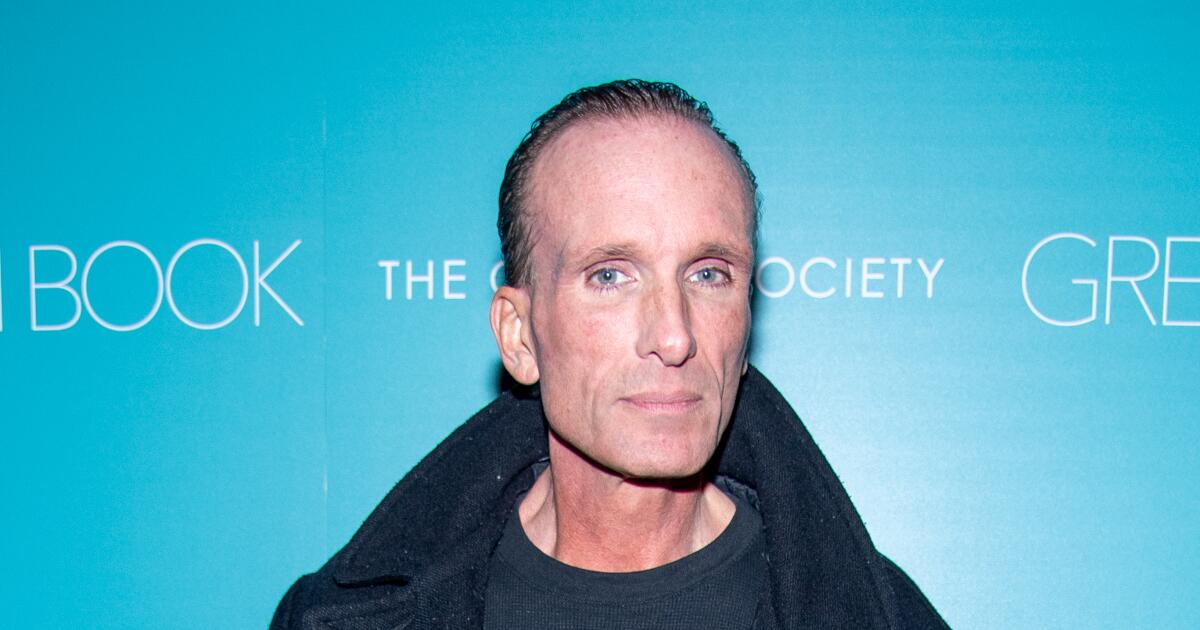
Cause of death revealed for Peter Greene, ‘Pulp Fiction’ villain
The cause of death for Peter Greene, a character actor known for playing villains in movies including “Pulp Fiction” and “The Mask,” has been revealed by New York City’s Office of Chief Medical Examiner.
Police found Greene, 60, dead in his apartment Dec. 12. They didn’t suspect foul play.
His death was ruled an accident, the M.E.’s office said via email. Greene died from a “gunshot wound of left axilla with injury of brachial artery,” the office said. In everyday English, that means he shot himself in his left underarm and injured a significant artery that starts in the shoulder and runs down to the elbow crease.
Police found the character actor in his Lower East Side apartment, Deadline reported, after neighbors heard Christmas music playing for days and one of them called authorities and the landlord for a wellness check.
Greene had a history of addiction, per the New York Post, and attempted suicide in the 1990s. He was scheduled to go in for a procedure to remove a benign tumor near his lung on the day he was found, the outlet said. His manager had talked to him two days before he was found.
“He sounded OK … It was just a totally normal conversation. He was a little nervous about the operation going in, but he said it wasn’t super serious,” manager Gregg Edwards told the Post in December. “He was talking about that and hoping that I was going to be OK and wishing me well as I was wishing him well. We’re good friends. I love the guy.”
Greene’s best-known role was the villain Zed, who was brought in to torture Bruce Willis and Ving Rhames’ characters in Quentin Tarantino’s 1994 classic “Pulp Fiction.” In “The Mask,” also released in 1994, he played mobster Dorian Tyrell, antagonist to Jim Carrey’s Stanley Ipkiss, a.k.a. the Mask.
Those roles came only a couple of years into Greene’s career, which per IMDb included nearly 100 TV and film credits from 1990 to 2026. His TV credits included episodes of “Chicago P.D.,” “Hawaii Five-0,” “Law & Order,” “Justified” and more.
He started out with parts in a couple of TV shows in the early 1990s before landing the lead role in “Laws of Gravity.” In 1995, Times movie critic Kenneth Turan called the 1992 film “independent American filmmaking at its best” and described Jimmy (Greene) as “a small-time street outlaw who, though horrified at the thought of actual work, is stable by local standards” in Brooklyn’s then crime-ridden Greenpoint neighborhood.
The New Jersey native, born Oct. 8, 1965, studied Method acting at the Lee Strasberg Theatre & Film Institute in New York City when he was in his 20s. He told Premiere magazine in 1996 that he ran away from home at age 15 and lived on the streets, using and dealing drugs and hiding from other dealers in theaters, where he got into acting. His drug use overlapped with his early success on screen.
After a 1996 suicide attempt, the actor said, he got treatment for addiction and sobered up.
The Associated Press contributed to this report.

Harvard-Westlake baseball has a lineup ready to score runs
Known for producing first-round draft picks as pitchers, Harvard-Westlake has assembled a group of hitters this season that look capable of producing lots of offense after a 15-1 season-opening five-inning win over Southlake (Texas) Carroll on Thursday at O’Malley Family Field.
Just look at the first five hitters in the lineup: Shortstop James Tronstein is headed to Vanderbilt; outfielder Ethan Price is committed to Santa Clara; center fielder Ira Rootman is a Texas commit; freshman third baseman Louis Lappe is the Little League star from El Segundo; designated hitter Jake Kim is a UCLA commit.

Freshman Louis Lappe of Harvard-Westlake got an RBI double in his first high school at-bat on a 3-and-2 count.
(Craig Weston)
Kim led the Mission League in home runs as a sophomore with seven and hit his first home run of 2026 to right field with a little help from the wind on Thursday. Rootman hit a ball so far over the left-field fence for a three-run home that it might have gone out of a big-league stadium. Lappe, in his first high school at-bat, delivered an RBI double.
“It was cool,” Lappe said. “A lot of pressure came off. I got that weight off my shoulders.”
The Wolverines have been focused on getting stronger in the weight room and no one has benefited more than Rootman, a junior who added 10 pounds and can’t wait to see how his improved strength is going make him a better hitter.
As for first impressions of Lappe, Rootman said, “I think he’s a very special kid and has so much talent it’s unbelievable.”
Justin Kirchner struck out nine in four innings. He’s a junior committed to Yale.
Boys soccer
El Camino Real 1, Palisades 0: Defending champion El Camino Real advanced to the City Section Open Division championship game with a victory in overtime. Jayden de la Cruz scored the overtime goal. El Camino Real will face the winner of Friday’s semifinal between South East and Marquez.

Unification Ministry notes Kim Yo Jong’s swift response on drones

Yoon Min-ho, spokesperson for South Korea’s Unification Ministry, speaks during a briefing at the Government Complex Seoul in Seoul on Feb. 2. Photo by Asia Today
Feb. 19 (Asia Today) — South Korea’s Unification Ministry said Thursday it is taking note of a swift statement by Kim Yo Jong, a senior North Korean ruling party official, after Seoul expressed regret over recent drone incidents and announced steps to prevent a recurrence.
A ministry official told reporters the government “takes note” that North Korea quickly responded to Seoul’s expression of regret and its preventive measures. The official said the steps announced by Unification Minister Chung Dong-young are intended to protect the safety and peace of both Koreas and that the government will “responsibly” implement them.
The remarks came after Kim said earlier Thursday that North Korea “highly appreciates” Chung’s comments acknowledging what Pyongyang called a South Korean drone provocation, expressing regret again and stating an intention to prevent further incidents.
On Wednesday, Chung said Seoul expressed “deep regret” to the North over drone infiltration incidents during the previous Yoon Suk Yeol administration and additional incidents carried out at the civilian level after President Lee Jae-myung took office. Chung also announced measures aimed at preventing a recurrence, including banning drone infiltration into North Korea and strengthening penalties.
— Reported by Asia Today; translated by UPI
© Asia Today. Unauthorized reproduction or redistribution prohibited.
Original Korean report: https://www.asiatoday.co.kr/kn/view.php?key=20260219010005700

Austrian climber found guilty after girlfriend froze to death on mountain
The woman died of hypothermia during a climbing trip on the Grossglockner mountain in January 2025.
Source link

Bridgerton star lands role in ‘perfect’ rom-com fans have read ‘over and over’
An upcoming adaptation of a bestselling rom-com has landed a major Bridgerton star for the leading role

Bridgerton star lands role in ‘perfect’ rom-com fans have read ‘over and over’
Bridgerton sensation Phoebe Dynevor has secured the leading role in Beach Read, the forthcoming film adaptation of Emily Henry’s chart-topping romantic novel.
First released in 2020, the story centres on two authors and former university competitors who cross paths again unexpectedly, embarking on a literary duel whilst vowing to resist any romantic entanglement.
Dynevor, celebrated for her portrayal of Daphne Bridgerton in Netflix’s smash-hit Regency drama’s debut season, will take on the part of romance writer January Andrews.
Within the narrative, January faces off against and ultimately develops feelings for Gus Everett, whose casting remains unannounced.
Devotees of Henry’s work have grounds for enthusiasm regarding the upcoming adaptation, as Yulin Kuang is at the helm. Kuang co-authored Netflix’s recent take on People We Meet on Vacation, featuring Emily Bader and Tom Blyth, reports the Express.
Kuang is also crafting the screenplay, with 20th Century Studios backing the project, ensuring audiences can expect a cinema release.
The complete film synopsis from Deadline states: “Beach Read is a romantic comedy following January Andrews, a successful romance novelist who struggles with grief and writer’s block after her father’s death and the discovery of secrets he’s long kept hidden.”
“While spending the summer in his Michigan beach house to prepare it for sale, she unexpectedly reconnects with Gus Everett, an author who was once her rival in college.
“Both creatively stuck, they agree to a writing challenge over the summer, swapping literary genres while promising that there will be no romance between them. Of course, you know what they say about the best-laid plans.”
Get Netflix free with Sky for Bridgerton Season 4
This article contains affiliate links, we will receive a commission on any sales we generate from it. Learn more
‘Dearest gentle reader’, as the fourth season of Bridgerton follows second son Benedict love story, there’s a way to watch this fairytale-like season for less.
Sky is giving away a free Netflix subscription with its new Sky Stream TV bundles, including the £15 Essential TV plan. This lets customers watch live and on-demand TV content without a satellite dish or aerial and includes the new season of Bridgerton.
Fans will no doubt be thrilled to witness January and Gus’s swoon-worthy romance translated to screen, as Henry’s original novel has garnered glowing reviews from both critics and readers alike over the years.
One five-star Amazon review gushed: “I’ve read this book at least six times now, and somehow, I love it more with each reread.”
They continued: “Everything about this story is perfect. It’s heartwarming, smart, and emotionally rich, but still manages to have me giggling, kicking my feet, and fully rooting for these two. This is such a comforting read I keep the audiobook on standby for whenever I have the chance to replay it.”
For the latest showbiz, TV, movie and streaming news, go to the new **Everything Gossip** website.
Ensure our latest headlines always appear at the top of your Google Search by making us a Preferred Source.** Click here to activate**** or add us as your Preferred Source in your Google search settings.**
Another reader enthused: “Together Gus and January have managed to chip away a piece of my heart to call their own. No romance book has had me screaming, crying, smiling and laughing as much as Beach Read.”
A final admirer declared: “Oh my word, I loved this book so much. I can’t stop recommending it to people, even my guy friends. I’m not sure how anyone can consider this anything but a masterpiece.”
Eager to be captivated by another brilliant Emily Henry adaptation? Stay tuned for further updates.
Beach Read does not currently have a release date.

Lakers will have Big 3 available again when playing Clippers on Friday
The Lakers had just completed practice Thursday with a full and healthy squad when Luka Doncic strolled over to speak with the media.
Doncic had played only five minutes Sunday for Team World in the All-Star Game because of a lingering left hamstring strain. He had missed the previous four Lakers games.
With the Lakers scheduled to start the post-All-Star break against the Clippers on Friday night at Crypto.com Arena, Doncic was asked if he was playing in that game.
“Probably,” he said. “We’ll see. I got to talk to people.”
Since Doncic did practice, he was asked how he was doing and how his hamstring felt.
“I’m good,” he said. “Feeling good.”
But, Doncic was told, he did play in the All-Star Game, even if it was limited time.
“Five minutes. I was on minutes restriction,” Doncic joked.
Lakers coach JJ Redick was the first to speak to the media after practice, his time away from the game leaving him fresh and ready to go.
He was asked if Austin Reaves, who had been on a restriction of about 25 minutes after returning from a 19-game because of a left calf strain, would still be on a minutes restriction and if Doncic would be available for the game against the Clippers.
“Austin won’t have a minutes restriction,” Redick said, “and as of 35 to 45 seconds ago, we’ll have everybody available tomorrow.”
Injuries have been a common thread for the Lakers this season.

Lakers guard Austin Reaves sits on the scorer’s table before entering a game against the Mavericks earlier this month. His minutes restriction since returning from a calf injury has been lifted.
(Gina Ferazzi / Los Angeles Times)
It started at the beginning of the season, when LeBron James missed 14 games because of sciatica. He has recently dealt with left foot arthritis that kept him out of a game.
Center Deandre Ayton missed the last two games with right knee soreness.
“Well, there’s only so much you can control. I mean, you know, as a coach, you have zero control in that. As a player, you know what you do to prepare, and what you do to recover can give you some level of control, but ultimately, the basketball Gods in the game are going to dictate health,” Redick said. “It’s funny, we were talking before the season about building continuity with those three guys, and we’ve had them available together for 10 games. So it’s just the situation we’re in.
“Not the only team that has had a bunch of health issues throughout the season and had to manage that. But I think … my messaging this morning to the players was this is going to be a sprint, these last 28 games. It’s another segment of the season where, starting tomorrow, we won’t have more than a day between games until the end of March. So, we’ve got an opportunity to, I think, play our best basketball after the All-Star break. We’ve got a number of indicators on both sides of the ball that we’re doing some things that are trending in the right direction. And I think it’s coming at a good time, as we’re getting fully healthy.”
Doncic, James and Reaves have played just 10 games together because of health issues.
As a trio, they have combined to average 80.2 points per game, led by Doncic’s NBA-best 32.8 points per game. Reaves is averaging 25.4 points and James 22.0.
Reaves said it is “very important” that the three of them get reps together.
“You have those games from last year, but obviously you still have a learning curve of how to play alongside one another and that’s with everybody else on the team as well,” Reaves said. “Continuing to build that continuity and confidence in every single position. We’re locked in with the five guys on the court. So, very excited.
“I think you can tell throughout the season, even with the unfortunate injuries and stuff, we’ve done a good job of maintaining it. We’re fifth in the West, on pace for a good record and just getting healthy is going to continue to help that. So it’ll be fun to see what that looks like and get to work.”
The Lakers
play four games next week, all against opponents with winning records that are jockeying for position in the playoff race.
So, Thursday’s practice was a good start for the Lakers to get back in gear.
“We only got one practice in so we’re not going to get a lot out of one practice,” Doncic said. “But we definitely like to get up and down a little bit after one week off. So, it was good.”

Friday 20 February Malaysian Declaration of Independence Day in Melaka
Malaya’s independence began after the signing of the Malayan Independence Treaty signed by Tunku Abdul Rahman Putra Al-Haj on 8 February 1956 at Lancaster House, London to represent the Malayan government with Alan Lennox-Boyd, Secretary of the British Colonies on behalf of the British government.
The delegation, known as the Merdeka Entourage, was joined by four representatives of the ruling government and four representatives of the Malay Rulers who managed to obtain British approval to formally grant independence to Malaya on 31 August 1957 after three weeks of negotiations.
After achieving the country’s independence through negotiations, the Merdeka entourage returned to Malaya from London on 16 February 1956 and arrived in Singapore at midnight on 19 February 1956.
Tunku Abdul Rahman had decided not to return to Kuala Lumpur the next day, instead deciding to stop by Malacca first to announce the date of independence of Malaya.
On the next day on February 20th 1956, history was created in Melaka when the Merdeka group left for Melaka and arrived at Batu Berendam Airport by boarding a Malayan Airways plane and was greeted with great fanfare by various levels of society.
The Merdeka entourage was paraded by a group of youths on motorbikes along with dozens of cars accompanying Tunku Abdul Rahman’s entourage and Tunku stopped by to rest at Tan Cheng Lock’s house in Klebang before continuing on to Padang Banda Hilir (now Dataran Pahlawan).
The much-anticipated historic moment of the people who flooded Padang Banda Hilir finally arrived when Tunku Abdul Rahman announced according to the agreement reached in London which decided that the Federation of Malaya would officially achieve independence on 31 August 1957.
Upon finishing the speech, Tunku chanted “Merdeka” three times and simultaneously with the announcement, shouts and chants of independence thundered in the sky of Padang Banda Hilir, Melaka with joy and gratitude.

Evacuations ordered as wildfires burn in Texas, Oklahoma panhandles

Several wildfires in the Texas and Oklahoma panhandles spurred evacuations while firefighters continued battling several on Thursday. Image courtesy of UPI
Feb. 19 (UPI) — Firefighters are battling several conflagrations in the Texas and Oklahoma panhandles, the largest of which burned more than 283,000 acres in Oklahoma’s Beaver County.
The Beaver County fire is located along Ranger Road and was 15% contained late Thursday afternoon, while a nearby Morning Fire started at 10:30 a.m. CST and is situated southeast of Boyd.
Officials for the Booker Volunteer Fire Department said the Morning Fire was under control shortly after noon, but two active fires in Oklahoma’s Texas County were still active.
The Stevens Fire was 50% contained after burning more than 12,000 acres, while the Side Road Fire was 60% contained and had burned 3,680 acres as of Thursday afternoon.
Firefighters in Texas’ Oldham and Potter counties had the 18,423-acre Lavender Fire 20% contained during the afternoon hours, and an evacuation order for Valley De Oro had been lifted.
In Donley County, Texas, the 8 Ball Fire was 50% contained after burning 13,00 acres, while the Canadian Bridge Fire in Hutchinson County was 100% contained after burning 428 acres.
Fire departments in Bartlesville, Ochelata, Oglesby, Oglesby, Tulsa, Barnsdall and Washington County in Oklahoma fought several fires on Thursday, and Ochelata and southern Bartlesville residents were told to evacuate.
Livestock also have been moved out of the fire zones, and many others fled on their own accord as smoke from the fires spread nearby.
No fatalities have been reported, and there are no reports yet regarding structural damage from the many fires.

Lion DNA convicts poachers in world first
After collecting forensic evidence they questioned two men in a nearby village and discovered three sacks of meat, 16 lion claws and four teeth. These body parts would later be tested against the database, with the DNA from all matching the profile of that missing lion.
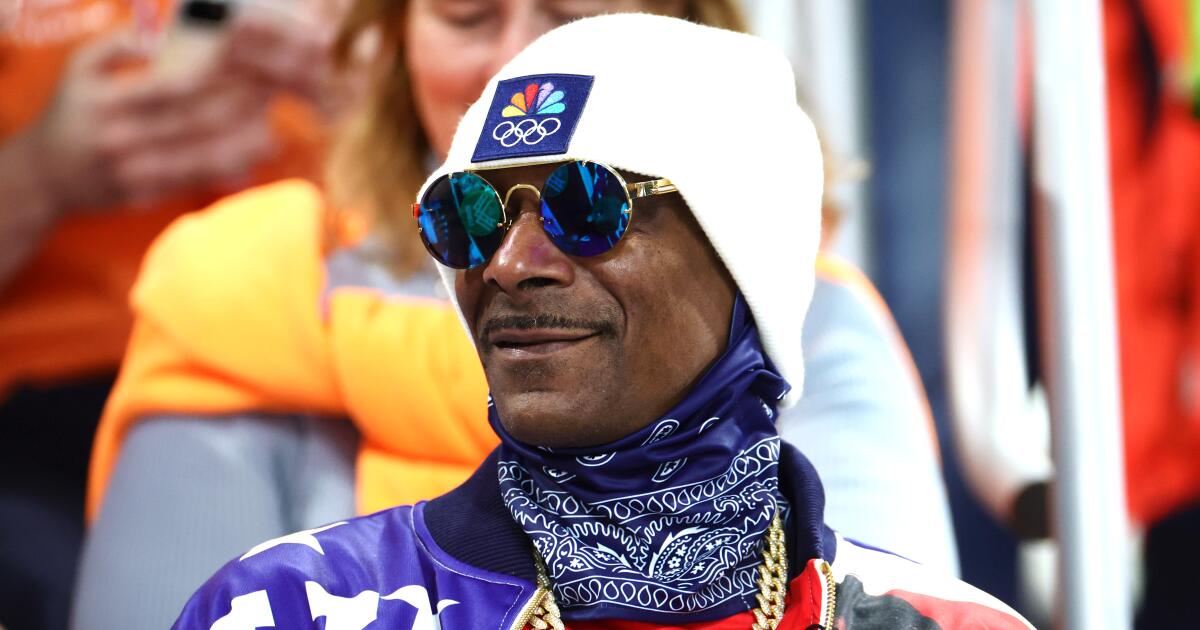
Snoop Dogg sent Olympics tickets to restaurant that covered his dinner
Snoop Dogg is dropping Olympics tickets like it’s hot.
The hip-hop icon has been busy at the Milan-Cortina Games as a special correspondent for NBC as well as an honorary coach for the U.S. team. According to recent reports by NBC and Reuters, he’s also been spreading the Olympics joy to the locals.
The rapper reportedly sent five tickets for the men’s snowboard halfpipe final to the owners of a local restaurant who covered his dinner after there were some troubles with the credit card payment. Sofia Valmadre, whose parents own Cronox in Livigno, Italy, said Snoop had placed an order for a cheeseburger, chicken wings, chicken nuggets and French fries at her family’s eatery. Unfortunately, the credit card the mogul’s staffer tried to use was declined for an unknown reason.
“My mother told him it was OK [to take the food] without paying,” Valmadre told Reuters. “[The next day] he sent us five tickets to see the final.”
The “Gin and Juice” rapper has become a familiar presence at the Olympics, especially since NBC made his involvement official starting with the 2024 Paris Summer Games. In addition to cheering on American athletes including curlers Cory Thiesse and Korey Dropkin, snowboarder Chloe Kim and speedskater Erin Jackson at their events — usually in custom apparel celebrating the sports stars — Snoop has been spending his time in Italy hanging out with bestie Martha Stewart, learning how to ski from Picabo Street and getting chummy with Olympians like “Quad God” Ilia Malinin.
For those curious about Snoop’s dining habits, Stewart recently described him as a “very fussy eater.” She even surprised him with a bowl of spaghetti with meatballs topped with cheddar cheese during a recent fine-dining outing.

Sen. Elizabeth Warren makes first major step toward Democratic White House bid
Reporting from Washington — Sen. Elizabeth Warren took the first major step toward a White House run Monday, announcing a presidential exploratory committee as she attempts to redefine populism for the left in the age of Donald Trump.
“These aren’t cracks that families are falling into. They’re traps. America’s middle class is under attack,” the Massachusetts Democrat said in a 4½-minute video posted online. “Billionaires and big corporations decided they wanted more of the pie, and they enlisted politicians to cut ’em a fatter slice.”
Aside from a few images of Trump and polarizing figures in his administration, Warren’s largely biographical video steered clear of directly taking on the president. Instead, it echoed some of the complaints that brought him to power by asserting that “corruption is poisoning our democracy” and that government has “become a tool for the wealthy and well-connected.”
Warren is the biggest name to take a formal step into a race that is expected to feature a historically large primary field for a party that is eager to displace Trump in the White House.
A fundraising juggernaut who was among the first to tap into the anger of a resurgent left, Warren figures to be a major factor in the Democratic primary with a significant chance of winning the nomination.
Some detractors say Warren would have a hard time in a general election, however, both because some voters see her as too far to the left and because the former Harvard University law professor’s style can appear pedantic and lecturing to some ears. She has also been dogged by controversy over her thin claims of Native American ancestry.
But she has proved adept at capturing the frustrations and aspirations of many on the left. She’s skilled at putting core beliefs about the need for government regulation and income distribution into simple terms on videos that go viral. And she has successfully used her position on Senate committees to grill administration figures from both parties whom she has accused of going easy on big banks and other powerful players — attracting accusations of grandstanding from detractors.
“I’m in this fight all the way,” she said at a Monday afternoon news conference in Cambridge, Mass., using her favorite word, “fight,” multiple times.
The rhetoric puts her at the forefront of an intraparty debate over how best to take on the president. Warren believes in a combative approach based on a left-wing alternative to his right-wing populism.
She has long positioned herself as a fighter — years ago saying she had “thrown rocks” at those in the wrong. She relishes an image as a leader who will not back down, even in occasional battles against her own party.
“She was a pioneer of a lot of the populist themes that are coursing through the veins of Democratic primary voters, and she’s able to channel their frustration at the current administration,” said Colin Reed, a consultant who has run a campaign against Warren and later headed a Republican opposition research group.
Like Trump, Warren attempts to channel the anger in the middle class over the decline in employment in the nation’s industrial base and stagnant incomes for a large share of American workers.
Unlike Trump, she favors more government regulation and spending — including Medicare for all — to lift more people from poverty. She also opposes him on the long list of issues of cultural and ethnic diversity that have become litmus tests for both parties.
Warren, a policy wonk, is also far different from Trump in governing style and temperament.
Other potential candidates say a more uplifting message is needed to counter Trump’s grievance-filled politics. Warren, asked about her polarizing reputation on Monday, was unapologetic, saying those unhappy with her are the drug companies, big banks and others who benefit from the status quo.
In announcing on New Year’s Eve, Warren jumped ahead of several Senate colleagues who are expected to join the race soon, including Sens. Kamala Harris of California, Bernie Sanders of Vermont, Kirsten Gillibrand of New York, Sherrod Brown of Ohio, Amy Klobuchar of Minnesota and Cory Booker of New Jersey. Rep. Beto O’Rourke of Texas and former Vice President Joe Biden are also among the long list of Democrats considering the race.
Warren, who is completing her first term in the Senate, is 69, younger than Trump and other potential front-runners such as Biden and Sanders, but far from the generational change some in her party are urging.
Her early entry into the 2020 primary race, on the last day of 2018 calendar year, demonstrates the eagerness of potential candidates to stake a claim on party support, fundraising and public attention.
She is entering the primaries at a time when the Democratic Party is not only grappling with its economic message; it is also trying to come to grips with its increasing diversity. Hillary Clinton’s failure to energize enough voters of color was one of many reasons she could not defeat Trump, and many Democrats believe that they must make a stronger appeal to minority voters.
Warren, whose base of support in Massachusetts is largely white, signaled her intent to court minority voters in her launch video, which showed clips of her marching in an LGBTQ parade in a feather boa and attacking Trump’s divisiveness while pointing to the harsher effects that economic inequality has had on people of color.
Trump has gone after her repeatedly, mocking her claims to Native American heritage with the nickname “Pocahontas.”
In a Fox interview Monday, Trump continued to belittle her, saying he would “love to run against her” and attacking her mental fitness by saying “you’d have to ask her psychiatrist” whether she could win the election.
Warren’s attempts to put the Native American controversy to rest, including a DNA test this year that showed trace genetic links to Native American peoples, have largely fallen flat, drawing criticism not only from Republicans but prominent Native Americans as well.
Several reviews of her records, including an exhaustive investigation by the Boston Globe, have found that her ethnicity claims played no role in her hiring at a series of law school jobs, including at Harvard.
“Her message is a resonant one, but in terms of the messenger there are questions that weren’t there a few months ago,” said Tracy Sefl, a Democratic consultant who has been involved in many presidential races.
Sefl called the imperative to defeat Trump in 2020 “almost beyond description” and said “Democrats will be less inclined to choose a messenger who’s been called into question.”
Warren has tried to counter another potential liability — her image as part of the coastal elite — by telling her life story, which she also highlighted in Monday’s launch video.
She grew up in Oklahoma to middle-class parents. Her mother took a job at Sears when her father was unable to work following a heart attack.
A champion high school debater, she was able to make it to college and then law school while also starting a family.
Those early struggles fit within her economic argument that middle- and working-class families are often left without a safety net in the face of healthcare emergencies and other setbacks.
As a member of the Democratic minority in the Senate, Warren can’t claim many legislative accomplishments, but has succeeded in commanding attention.
She has kept financial regulation at the center of her message, the issue that brought her to prominence as an academic and allowed her to first make her mark on national politics while serving as a special advisor in the Obama administration. In that role, she advocated for and helped establish a consumer protection agency as part of the financial services and banking overhaul passed in the aftermath of the financial collapse.
Warren, a longtime critic of Wall Street, was passed over by President Obama to lead the agency on a permanent basis after Republicans made it clear they would fight her nomination. She ran for the Senate instead, winning her first term in 2012.
Despite hostility toward her policies from the financial industry, which contributes heavily to many candidates in both parties, Warren has been an especially strong fundraiser since entering politics. In her first Senate race, she raised what were then record levels of donations in both small online contributions and larger sums from the party’s big players.
She is a large draw on the campaign trail, where she gestures emphatically as she talks about what she characterizes as the “rigged” system that favors the wealthy and well-connected at the expense of middle-class people.
Warren stayed out of the 2016 race, believing Clinton was unbeatable in the primary. Since then, other contenders for the White House, including Sanders, have captured much of the attention and energy that had been directed toward her.
Questions intensified about whether her moment had passed after signs of somewhat tepid support cropped up in her home state this year.
She easily won reelection against an unknown candidate, drawing 60% of the vote, but her vote total was lower than that of Gov. Charlie Baker, a Republican, and polls showed the majority of Massachusetts voters did not want her to make a presidential run. Many Democrats preferred former Gov. Deval Patrick, who recently bowed out.
The Boston Globe editorial board, one of the most liberal in the country, urged her to reconsider a bid, saying she had become a “divisive figure” on the national stage.
“There’s no shame in testing the waters and deciding to stay on the beach,” the board wrote.
Follow the latest news of the Trump administration on Essential Washington »
Twitter: @noahbierman

Why Mookie Betts’ spring training is unlike any he’s had with Dodgers
PHOENIX — Dodgers manager Dave Roberts did not hesitate when asked about his expectations for Mookie Betts.
“He will be in the MVP conversation this year,” Roberts said this week. “But again, I think, speaking for Mookie, his main goal is to help us win a championship. So, I think whatever falls out from there, I think that will happen. I just want him to focus on just being healthy, helping us win, and then whatever happens outside of that, will happen.”
Coming off a season that got off on the wrong foot with a stomach virus that caused him to lose 20 pounds and then saw him set career lows for batting average (.258), on-base percentage (.326) and OPS (.732), Betts is eager to move forward. And with a more typical spring training timeline this year — unlike the previous two years when season-opening games in South Korea and Japan sped up preparations — Betts can ease into his seventh season with the Dodgers.
“I haven’t had a regular spring maybe since I’ve been a Dodger,” said Betts, who also won’t be participating in the World Baseball Classic as he did in 2023. “I just know that, being 33 now, I don’t have to hurry up and get here, and be ready to play from day one. So, I can just kind of embrace that. Not everybody’s blessed to have that, so being that I am one of the ones that’s blessed with that, I’ll see what I can make of it.”
One thing that’s not in question for Betts heading into the season: his shortstop play. Despite the nearly unprecedented shift from the outfield to the infield, Betts played 148 games at short last season and was a Gold Glove Award finalist. The work he put in to learn a new position raised questions about whether that was a root cause of his hitting struggles, a point he granted some credence to late last season.
Betts did pick up the pace late in the season, batting .317 and nearly doubling his home run total from 11 to 20 over his final 47 games. But he slumped in the NLCS and World Series, batting a combined .136 and was eventually dropped from second to third in the batting order for Game 5 against the Toronto Blue Jays, then fourth for Games 6 and 7.
Roberts said this week that he intends to slot Betts third in the batting order this season, with Shohei Ohtani still in the leadoff spot. (He added that Freddie Freeman, Will Smith and newcomer Kyle Tucker are all in play for the second and fourth spots in the order.)
“I like [Betts] in the number three in the sense that there’s an on-base component, there’s a ‘get hits’ component, there’s a drive-in-runs component, and you’re more of a Swiss Army knife in the lineup,” Roberts said. “So, I’m not beholden to it, but I like him in the three-hole right now.”
And as a result, Roberts feels bullish about Betts this season.
“I think he had a great offseason,” Roberts said. “He’s in a good headspace. The body’s good, and I think for me, it’s just getting back to being who he is. I just think that last year was an outlier offensive season, and I’m not too concerned about Mookie at all.”
Yoshinobu Yamamoto to start Cactus League opener
Roberts announced Thursday that World Series MVP Yoshinobu Yamamoto will start the Dodgers’ first spring training game Saturday against the Angels at Tempe Diablo Stadium. He did not share how many pitches or innings Yamamoto expects to throw, but he did state that it will likely be Yamamoto’s only Cactus League start before departing to play for Team Japan in the World Baseball Classic.
Roberts also revealed what players may start Saturday’s Cactus League opener.
“I would expect Will Smith to be in there,” Roberts said. “I expect [Teoscar Hernández] in there, and probably Andy [Pages]. I think that’s safe, and then we’ll go from there.”
Roberts plans to hold other veteran players until next week.
“Guys like Mookie and Muncy, I’m going to start those guys a little bit later than this weekend and see where we go,” Roberts said. “Once they get going, then we’ll stagger and give them the ample time in-between. I’ve got to appreciate that it’s a longer spring. So, if they’re going to be here for six weeks, then I don’t want to kind of come in too hot, I want to pace them out a little bit.”
Freeman said Thursday that he will not play in the Dodgers’ first three spring training games.
“I feel good, I’m ready to go, but we are going to slow-play it a little bit,” Freeman said. “I won’t play until I think Tuesday, so the fourth game, and then I’ll get going.”

Workers restore the Philadelphia President’s House slavery exhibit

The names of nine former slaves owned by George Washington appear at the President’s House in Philadelphia, where workers continued restoring a slavery exhibit on Thursday. Photo by Joseph E.B. Elliott/National Park Service
Feb. 19 (UPI) — Workers are restoring a slavery exhibit at the site of the nation’s first presidential mansion in Philadelphia ahead of a Friday deadline to do so.
U.S. District Court of Eastern Pennsylvania Judge Cynthia Rufe on Monday ordered the Interior Department to restore the exhibit, which was removed in January amid the Trump administration’s anti-DEI policy.
The exhibit features nine panel illustrations of nine slaves, whom President George Washington brought with him to the mansion while serving as president.
Rufe likened the slavery exhibit’s removal to author George Orwell‘s novel “1984” and said the exhibit supports “historic truths,” The Hill reported.
The Trump administration on Wednesday filed a motion to stay Rufe’s order to reinstate the exhibit, but workers began reinstalling it on Tuesday.
Philadelphia Mayor Cherelle Parker welcomed the change and vowed to oppose efforts to remove the exhibit.
“Today, we celebrate the return of our history at this important site,” Parker said in a post on X. “We are thankful for all the supporters across the city to get us to this point.”
Parker said the legal challenges have not ended and said they will be handled with “rigor and gravity” as they arise.
The exhibit features panels depicting slavery in the United States from the time of the Revolutionary War through the Civil War and the eventual outlawing of slavery upon the ratification of the 13th Amendment.
The President’s House formerly was the official residence for Presidents George Washington and John Adams when Philadelphia was the nation’s capital and is located at the corner of 6th and Market streets.
Adams did not own slaves, which is why the panels focus on Washington’s ownership and use of slaves while living at the presidential home.
The house was demolished 32 years after the nation’s capital moved to Washington in 1800, but its foundation and footprint remain.
The site been converted into an outdoor exhibit that features the dichotomy of slavery in a nation that was founded on the principles of freedom and equality and is managed by the National Park Service.

Venezuela: Rodríguez Hosts SOUTHCOM Chief, Discusses ‘Bilateral Agenda’ Against Drug Trafficking and Terrorism
SOUTHCOM has spearheaded the lethal strikes against small vessels in the Caribbean and Eastern Pacific. (SOUTHCOM)
Caracas, February 19, 2026 (venezuelanalysis.com) – Venezuelan Acting President Delcy Rodríguez met with US Southern Command (SOUTHCOM) chief General Francis Donovan in Miraflores Palace on Wednesday.
According to the presidential press, the previously unannounced high-level talks also included Venezuela’s interior and defense ministers, Diosdado Cabello and Vladimir Padrino López, respectively.
“During the meeting, both countries agreed to work on a bilateral cooperation agenda to fight against drug trafficking in our region, as well as on terrorism and migration,” a statement released on social media read.
The Venezuelan government argued that the meeting showed that “diplomacy” is the mechanism to address “differences and issues of regional interest.”
Donovan is the latest US high-ranking official to visit Caracas and meet with Rodríguez since the January 3 US military attacks that killed over 100 people and saw special operations forces kidnap Venezuelan President Nicolás Maduro and First Lady Cilia Flores.
The acting president held talks with CIA Director John Ratcliffe on January 15 and hosted Energy Secretary Chris Wright last week at the presidential palace. US Chargé d’Affaires Laura Dogu has been in the country since late January, and Rodríguez has recently reported regular “respectful and courteous” communication with Trump and Secretary of State Marco Rubio.
SOUTHCOM confirmed the visit in a press release, disclosing that Donovan was accompanied by Acting Assistant Secretary of War Joseph Humire and stating that the officials expressed the US’ “commitment to a free, safe and prosperous Venezuela.”
The US military command added that discussions focused on “shared security across the Western Hemisphere,” and the Trump administration’s stated “three-phase plan” for the Caribbean nation: “stabilization, economic recovery and reconciliation, and transition.” For her part, Dogu reported Donovan’s visit on social media, calling it a “historic day” to “advance in the objective of having Venezuela aligned with the United States.”
Donovan took over the SOUTHCOM leadership in February after the resignation of Admiral Alvin Holsey over reported disagreements with US Secretary of War Pete Hegseth on the legality of US lethal strikes against boats suspected of carrying drugs.
Since September, through “Operation Southern Spear,” SOUTHCOM has coordinated over 40 bombings of small vessels that have killed more than 130 civilians. The latest strikes, on February 16, targeted two boats in the Eastern Pacific and one in the Caribbean, killing 11 people in total. Neither Donovan nor Rodríguez mentioned the ongoing attacks in their public readouts following the meeting.
SOUTHCOM has also participated in the seizure of oil tankers accused of violating US sanctions by transporting Venezuelan crude. After seizing seven ships in the Caribbean between December and January, US forces have boarded two tankers in the Indian Ocean this month.
In the months leading up to the January 3 operation, Maduro and other Venezuelan officials consistently denounced the US’ military buildup in the Caribbean Sea and the subsequent naval blockade against oil exports.
Venezuelan authorities likewise blasted Washington’s “narcoterrorism” accusations against Caracas, pointing to specialized reports, including from the DEA, that placed Venezuela as a marginal country for global narcotics flows. Venezuelan officials also recalled the history of US agencies’ involvement in drug trafficking.
However, in the weeks after the January 3 strikes, Washington and Caracas have fast-tracked a diplomatic rapprochement with a view toward reopening embassies. President Donald Trump has publicly recognized the acting government but the official change in policy has yet to be confirmed.
The acting Rodríguez administration also prioritized economic reforms to attract foreign investment, including a pro-business overhaul of the country’s Hydrocarbon Law. National Assembly President Jorge Rodríguez said that the government is “adapting” legislation to attract US corporations and aiming for a “free market economy.”