



Arab News | UN agrees text on lethal autonomous weapons

GENEVA: Nearly 130 countries on Saturday agreed on a text defining lethal autonomous weapons systems (LAWS) — “killer robots” to their critics — a first step toward talks on a possible international treaty to regulate them.
The text agreed upon has not yet been made public — but campaign groups following the talks have already criticized leading countries for dragging their feet on the issue.
Dutch Foreign Minister Tom Berendsen announced the agreement, by 128 countries, on Saturday. The Netherlands has been overseeing the talks.
Countries are already developing and using weapons capable of selecting targets and using force against them without human intervention.
But the International Committee of the Red Cross warned in a statement that “the unconstrained development and use of autonomous weapon systems pose serious legal, ethical and humanitarian challenges.”
The ICRC and several campaigning groups have called for international legally binding rules to restrict and regulate their use.
Nicole van Rooijen, executive director of Stop Killer Robots, an international alliance of campaign groups, accused the United States, Russia and their allies of trying to weaken the agreed text.
Lex International, a Geneva-based philanthropic group funding work on key policy issues, also criticized some nations’ position.
“The United States, Russia, India and Israel are among the key opponents of negotiations,” it said.
“The governments of Brazil, Ireland, and Norway are leading efforts to get such negotiations started in November,” it added.
UN member states will decide at November talks of the Convention on Certain Conventional Weapons whether to move toward an international treaty regulating such weapons.
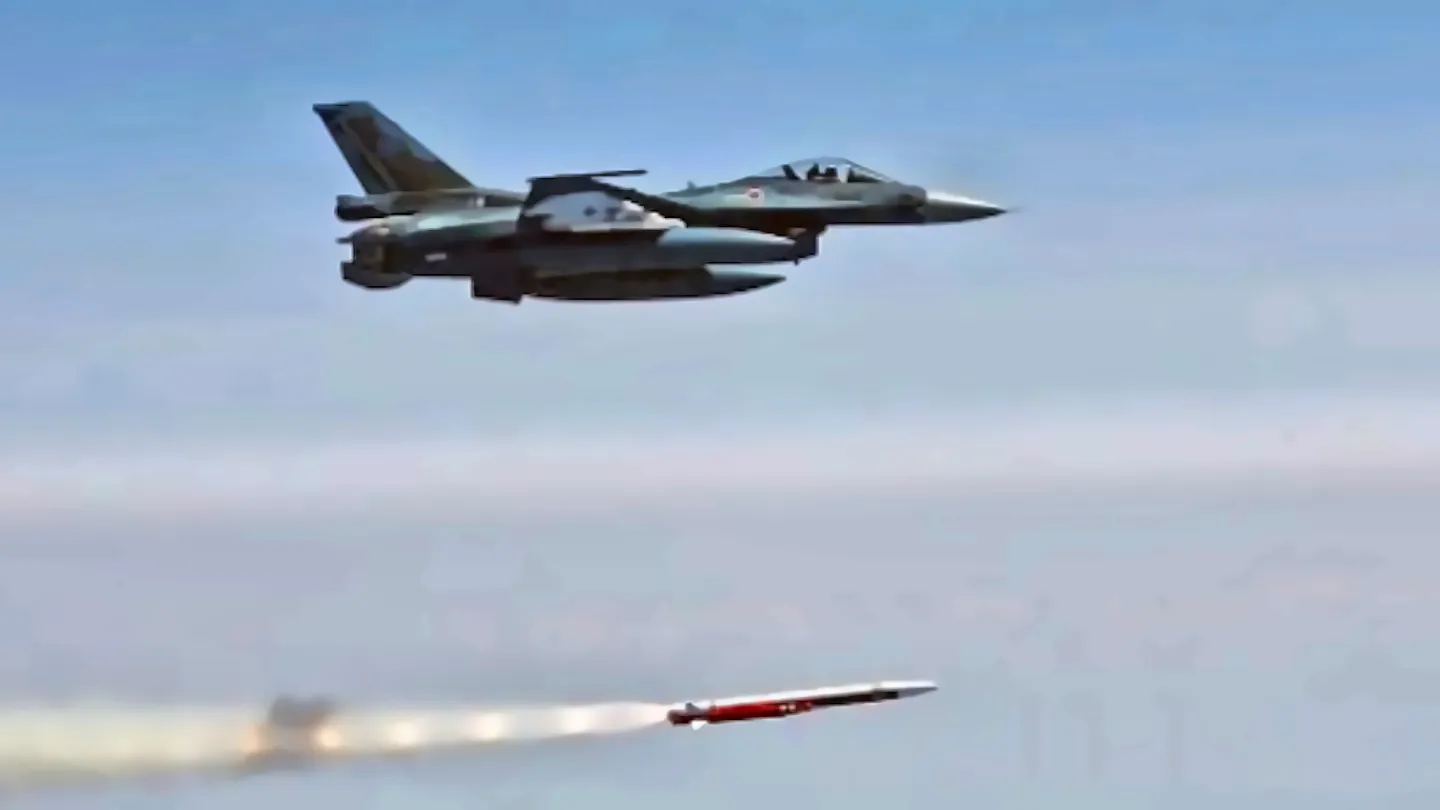
Japan’s ASM-3 Kai Supersonic Cruise Missile May Have An Air-To-Air Capability
Japan’s Ministry of Defense has included an intriguing description of the ASM-3 Kai missile in its record fiscal year 2027 defense budget request, referring to the weapon as an “air-to-surface/anti-air missile.” Until now, the ASM-3 family has been publicly associated with the air-launched anti-ship (anti-surface) mission, and the wording potentially hints at an additional capability or intended role for the upgraded weapon.
The reference appears in Japan’s FY2027 defense budget request, submitted today, which seeks a record ¥8.89 trillion (approximately $56 billion) for the fiscal year beginning in April 2027. The request is part of a broader push by Tokyo to expand standoff strike, air defense, uncrewed systems, and other advanced capabilities.
The reference appears under a sub-section entitled Durability and Resilience, which calls for funds to “secure ammunition and fuel, increase the number of operational units (by addressing parts shortages, etc.), enhance the resilience of facilities (through facility upgrades associated with the formation of new units and the introduction of new equipment, etc.), and strengthen the operational infrastructure (by enhancing manufacturing capabilities, etc.).”
In terms of securing ammunition, the document highlights the breadth of weapons systems involved, ranging from 5.56mm small arms ammunition and 30mm cannon rounds, via 155mm precision artillery rounds, up to advanced missiles including the Type 23 ship-launched air defense missile and the ASM-3 Kai.
The Mitsubishi Heavy Industries (MHI) ASM-3 is Japan’s domestically developed supersonic air-launched anti-ship missile, originally intended to arm the Mitsubishi F-2 fighter. The improved ASM-3 Kai (“Kai” meaning modified or revised) represents a significant evolution of the weapon, although the full nature of its capabilities and performance have not been officially revealed. The missile has already been observed undergoing testing on F-2s.
The ASM-3 program has also gone through a number of different configurations over its development history, with at least five distinct external configurations identified in previous reporting. The existence of multiple iterations leaves open the possibility that the newly identified “anti-air” designation could ultimately correspond to a dedicated air-to-air variant or derivative of the ASM-3 family, rather than simply a secondary capability of the baseline ASM-3 Kai.
Reportedly, the ASM-3 Kai is capable of flying more than 400 kilometers (about 250 miles), although the exact range of the operational weapon remains classified. It is powered by a ramjet engine, giving it sustained high-speed performance — reportedly around Mach 3. If it indeed has an air-to-air capability, this would be an advantage in some scenarios, compared to relying solely on a brief but very powerful rocket boost as many air-to-air missiles do.

The weapon is also understood to employ an active/passive radar seeker, providing it with both an active radar mode for detecting and engaging targets and a passive mode that can home in on their electromagnetic emissions. While an active radar seeker is common on long-range air-to-air missiles, the latter passive capability could also be of extreme value in an air-to-air application.
The ASM-3 is also a substantially larger missile than typical fighter-launched air-to-air weapons. While that imposes obvious carriage and aerodynamic penalties, it also allows for a larger propulsion system, seeker, and warhead than would be practical in a smaller missile.
A weapon capable of traveling hundreds of miles at high speed, while carrying an active/passive radar seeker, could potentially be especially useful against high-value airborne assets such as airborne early warning and control (AEW&C) aircraft. These platforms provide vital wide-area surveillance, battle management, and targeting capabilities. At the same time, their powerful radars are necessarily emitting, potentially making them detectable and trackable by a missile employing a passive seeker.
China’s rapidly expanding AEW&C fleet is an increasingly important part of its ability to generate situational awareness, coordinate fighters, and extend its sensor coverage well beyond its immediate borders. The force, which already numbers dozens of increasingly capable fixed-wing aircraft, is a growing operational challenge for Japan and other regional air forces.

The ability to threaten such aircraft from well beyond the range of conventional air-to-air engagements could force an opponent to operate its AEW&C fleet even further from contested airspace, reducing the effectiveness of its sensors and command-and-control architecture. Although a passive seeker could also offer an avenue for homing in on relevant radar emissions, exactly how the ASM-3 Kai’s seeker would operate against airborne targets is not publicly known. Equally, a different variant of the missile, optimized for anti-air missions, could incorporate both passive and active seekers specially adapted for that mission set, although it is very possible a single configuration can accomplish both missions. As well as AEW&C aircraft, such a missile would be just as relevant for other high-value, non-maneuvering targets at long ranges, including intelligence-gathering platforms, tankers, and other support aircraft.
The budget language by itself falls short of establishing whether the ASM-3 Kai has been tested or validated against aircraft. The designation could reflect a broader classification within the budget documents, or it could point toward a genuine expansion of the weapon’s intended target set.

XASM-3 Supersonic anti-ship missile test launch
Such a weapon would not necessarily be a replacement for Japan’s existing air-to-air missile arsenal. Instead, an “anti-air” ASM-3 Kai could occupy a specialized niche focused on high-value or otherwise particularly important airborne targets at extended ranges.
The possibility is consistent with Japan’s broader effort to expand the flexibility and reach of its air-launched weapons. Tokyo is pursuing a growing family of standoff weapons as part of a major expansion of its counterstrike and deterrence capabilities, including longer-range missiles capable of striking targets well beyond the immediate vicinity of Japan.
Other air-to-air missiles mentioned in the same section of the document comprise the U.S.-made AIM-120 Advanced Medium-Range Air-to-Air Missile (AMRAAM) and the domestically developed AAM-4B, another medium-range weapon, thought to be the first of its kind to be fitted with an active electronically scanned array (AESA) antenna.
The FY2027 defense budget request also mentions another apparently new air-launched weapon for Japan, the AGM-88G Advanced Anti-Radiation Guided Missile-Extended Range (AARGM-ER). Japan has not previously been publicly documented as an international AARGM-ER customer, but the weapon would be an obvious candidate for integration with its F-35 fighters if it wishes to bolster their suppression/destruction of enemy air defenses (SEAD/DEAD) capabilities.

In terms of F-2-related developments, the document calls for the upgrade of an initial 10 of these aircraft to make them compatible with the air-launched version of the Upgraded Type 12 anti-ship guided missile, a significant new weapon that you can read more about here.

TWZ has contacted Japan’s Ministry of Defense seeking clarification on the “air-to-surface/anti-air” designation and what it means for the ASM-3 Kai’s intended capabilities and target set. It could also be the case that the description is an error in the budget document.
However, the emergence of such a capability would also come at a time when very-long-range air-to-air weapons are becoming increasingly important as anti-access/area-denial challenges make it harder for fighters to get close to enemy aircraft and the high-value assets supporting them. China has fielded weapons such as the PL-15 and the much larger PL-17, while the United States is developing the AIM-260 and has just revealed the AIM-424 Malice, a U.S. Navy missile reportedly capable of reaching more than 250 nautical miles. The U.S. Navy is also fielding the AIM-174B, a very-long-range weapon developed very much with the Chinese threat in mind, and which we discuss in the video below.

How The Navy’s New Very Long-Range AIM-174 Will Pierce China’s Anti-Access Bubble
For now, exactly what prompted the “air-to-surface/anti-air” designation for the missile is unclear, but if it reflects a genuine expansion of the ASM-3 Kai’s mission set, it would represent a particularly interesting development in Japan’s rapidly evolving air-launched weapons portfolio.
Hat-tip to Yoshihiro Inaba for bringing this development to our attention.
Contact the author: thomas@thewarzone.com

Tuesday 8 September Feast of Our Lady of Victories around the world
The date of birth of Mary is not recorded in the bible. The earliest writings about her life come from the ‘Protoevangelium of James’ which was written in the 2nd century AD. In this, her father is said to be Joachim, a member of one of the Twelve Tribes of Israel and his wife is Anne.
Though it’s not sure which date was decided first, the nativity of Mary is not surprisingly exactly nine months after the feast of the Immaculate Conception of Mary (December 8th).
This feast day originated in Jerusalem in the 5th century as the feast of the Basilica of Saint Anne, which was said to have been built on the shepherd’s field that was said to have been the home of Mary’s parents.
By the seventh century, the feast was being celebrated by the Byzantines and it was brought to Rome during the 7th century by Eastern monks. It would be a few more centuries before it became a feast day across Western Europe.
Another important feast day for Mary is Assumption Day (August 15th) which marks the assumption of her body into Heaven. This is seen as the most important feast day for Mary and observed in many countries as a public holiday. Due to the closeness of the dates of Assumption and the Nativity of Mary, the latter is not as widely celebrated as it once was.
Christians normally celebrate the day on which saints died to mark the beginning of their eternal life. There are three exceptions – Jesus Christ, the Virgin Mary, and Saint John the Baptist. Their births are also feast days as all three were born without Original Sin.