





Two Syrian pipelines damaged amid spate of attacks on energy infrastructure | Oil and Gas News
Fuel theft cited in Baniyas-Homs leak as gas export line in Hasakah catches fire.

Published On 15 Oct 2026
Two pipelines carrying gas and oil products were damaged in separate incidents in Syria, state media reported, the latest disruptions to the country’s energy infrastructure following a series of suspected sabotage attacks.
The state-owned Syrian Petroleum Company announced the damage on Thursday, according to the Syrian Arab News Agency (SANA). The incidents add to a number of attacks on Syria’s oil and gas network in recent months, as the government tries to revive its energy sector.
Recommended Stories
list of 2 itemsend of list
An explosion struck the Jbessa gas pipeline in southern Hasakah province in the late afternoon, hours after damage to a pipeline transporting oil products from the coastal city of Baniyas to Homs caused a fuel leak.
The company said the gas pipeline had been targeted in a “sabotage attack”, according to SANA.
Neither SANA nor the company named a suspect or group responsible for the attacks.
Repairs under way
Oday al-Satouf, head of the company’s media office, told SANA that a hole was found in the Baniyas-Homs pipeline in the Hadida area, west of Homs. Crews isolated the affected stretch and secured the surrounding area, he said, closing valves on either side of the damaged section. Repairs have begun, while other teams monitor the area for safety. State media said the leak was believed to be linked to an attempted fuel theft.
Al-Satouf said gas would continue to reach power stations through alternative arrangements, and that domestic gas supplies were unaffected, according to SANA.

A string of incidents
More than a week ago, the company said an oil pipeline near Tal Hamis in the northeastern province of Hasakah was damaged in a sabotage attack. It added that authorities had arrested those responsible.
In late September, a fire broke out on a gas pipeline between al-Shoula and Deir Az Zor in the east, halting gas flows from the Jbessa plant to power stations, SANA reported. Hisham al-Saleh, a gas sector official at the company, said gas pressure in the area fell as crews worked to extinguish the blaze.
Syria has been working to restore its energy infrastructure and increase domestic oil production. That includes resuming operations at oil fields in Hasakah to supply refineries in Homs and Baniyas. In January, the petroleum company announced plans to transport crude from recently recovered fields to the two refineries as part of efforts to revive the sector.

Iran war live: Saudi blasts Houthi ‘war crimes’; US warns on Saudi airports
Saudi Arabia calls Houthi attacks 'full-fledged war crimes' while the US warns of possible attacks on Saudi airports.
Source link

The Kelly Clarkson bird saga continues. Molly is worth $15 million
The Kelly Clarkson wooden bird feud continues to soar as the New York City novelty shop accused of disrespecting the “Voice” star sets a whopping $15 million price for the hand-cranked singing automata bird.
The one-of-a-kind chirping bird, known as Molly, is at the center of a media frenzy after shop owners at Art of Play — a high-end “curiosity shop” in Brooklyn that sells luxury playing cards, puzzles and other amusements — refused to part ways with the permanent fixture after a sale inquiry from Clarkson led to an alleged un-pheasant interaction she later called out online.
Now it appears that shop owners are changing their perch — and price point — with shop co-owner Adam Rubin confirming to NBC News that Molly is now valued at $15 million.
Rubin told the news outlet that if the business parts ways with the wooden puppet, store employees will receive a $15,000 bonus and the bird’s artist, Bliss Kolb of Seattle, will receive $1 million. The store would also use the profits to build a display dedicated to Molly.
But it appears that the bickering feud is not over yet.
Rubin was seen speaking to an unnamed individual about the incident in a video obtained by the California Post, originally published Tuesday.
“If it is this intense to be mentioned by Kelly Clarkson, imagine how intense it is to be Kelly Clarkson every single day,” Rubin said of the music artist. “I have sympathy for her … but it’s so hard to forgive her actions after she walked out the door.”
Clarkson did not respond to The Times’ request for comment.
Ruffled feathers
The interaction involving Clarkson first came to light on Saturday after the “Because of You” singer took to social media to call out a distasteful experience she had at Art of Play, which she compared to the scene in the 1990 film “Pretty Woman” where Julia Roberts’ character is treated poorly by retail workers.
“Just drove all the way to Brooklyn to check out this store I thought looked really rad and had a few things in mind to buy and literally was looked at as if I couldn’t afford it and was told he could find something comparable for me,” Clarkson wrote on X. “Wow, dude. You’re an idiot and just lost a huge sale. But y’all should go check out Art of Play in Brooklyn if you enjoy being treated like Julia Roberts character in Pretty Woman. For sure, check it out.”
Many fans sympathized with Clarkson’s shopping experience and took to social media to denounce the actions taken by the shop.
In response, Art of Play later shared in a Sunday Instagram post that the item the “Since U Been Gone” singer had expressed interest in was Molly, a singing and dancing bird which plays an important role in the magic shows hosted at the shop.

“Molly is permanently attached to the wall and isn’t for sale,” the Sunday post on Instagram read. “Imagine our surprise when our small local business was suddenly attacked by 8 million people who have never visited our store. It’s been a surreal experience to be the focus of such widespread outrage after just one mention by a celebrity.”
After the boutique’s statement, Clarkson doubled down on her claims on her Instagram stories with photos featuring a price tag on the bird that contradicted the shop’s first statement.
“Cool, cool. Sure, it wasn’t for sale. That’s the narrative Art of Play is gonna go with,” Clarkson wrote in a post shared to her Instagram Stories Sunday. “[S]o the whole conversation we had when I asked you if it was for sale whilst pointing to the price tag hanging on the wall with the title Singing Bird didn’t happen as you elevator eyed me saying in a condescending tone ‘yes, it’s for sale but it costs 15,000 dollars so if you’d like me to find something comparable for you I can.’ That all never happened and now it’s not for sale.”
“Okay, cool,” the post continued. “So you’re not only rude, you’re also a liar. Got it.”
Although there are some online social media photos that show no visible price tag next to Molly, internet sleuths were able to locate other images with a visible sticker price to the side.
While the singer said that she loves and supports small businesses, she added “but you don’t get a free pass to treat people less than in your store just because you are a small business.”
“It’s not that hard to be kind,” Clarkson wrote. “I never blast people but you my friend were an exception. Your store is really cool. Unfortunately, you aren’t.”
Art of Play responded to the former talk show host by issuing another statement on Instagram Sunday, which included additional details about “the 5 minutes [Clarkson] spent in the store.”
According to Art of Play, it had explained to Clarkson that Molly “is permanently attached to the wall and serves as a de facto mascot” for the shop and while the piece is not for sale, “a nearly identical automaton is owned by the creator of the machines.” Its artist, Kolb, told owners that “he would be willing to part with Molly’s twin for $15,000.”
The shop also claims they offered to show Clarkson another model made by a Germany clockmaking shop that was available to take home the same day for about $2,000 but “[s]he did not stick around long enough to see it.”
“We’ve reached out to Kelly directly to try and clear the air,” the post added. “We really do wish her the best and hope that someday we can all laugh about this misunderstanding.”
Fowl play
Clarkson knew her millions of fans would “weaponize themselves” and “debase themselves on behalf of a millionaire they’d never met,” Rubin said in the video clip published Tuesday.
According to Rubin, online criticisms against the store emerged 15 minutes after Clarkson left the store.
“People way more famous than Kelly Clarkson have come in here and been treated just the same as everybody else,” he added.
The incident is “a perverse distortion of reality” after the store received thousands of hateful online comments and phone calls calling for an apology, Rubin said, who added that the singer’s actions have resulted in online attacks to store employees’ personal social media accounts and the doxxing of neighboring businesses.
“We didn’t know this was going to happen but Kelly Clarkson did it,” said Rubin. “And she needs to be held accountable for her actions.”
Rubin also added that what upset Clarkson was that “she didn’t get special treatment,” and that every person who enters the store is treated equally, even if they are a celebrity.
“The fact that anyone thinks we owe her an apology,” Rubin said, “when she threw a Molotov cocktail into our store and wallets on fire — they’re saying we owe her an apology? This is asymmetrical social warfare.”
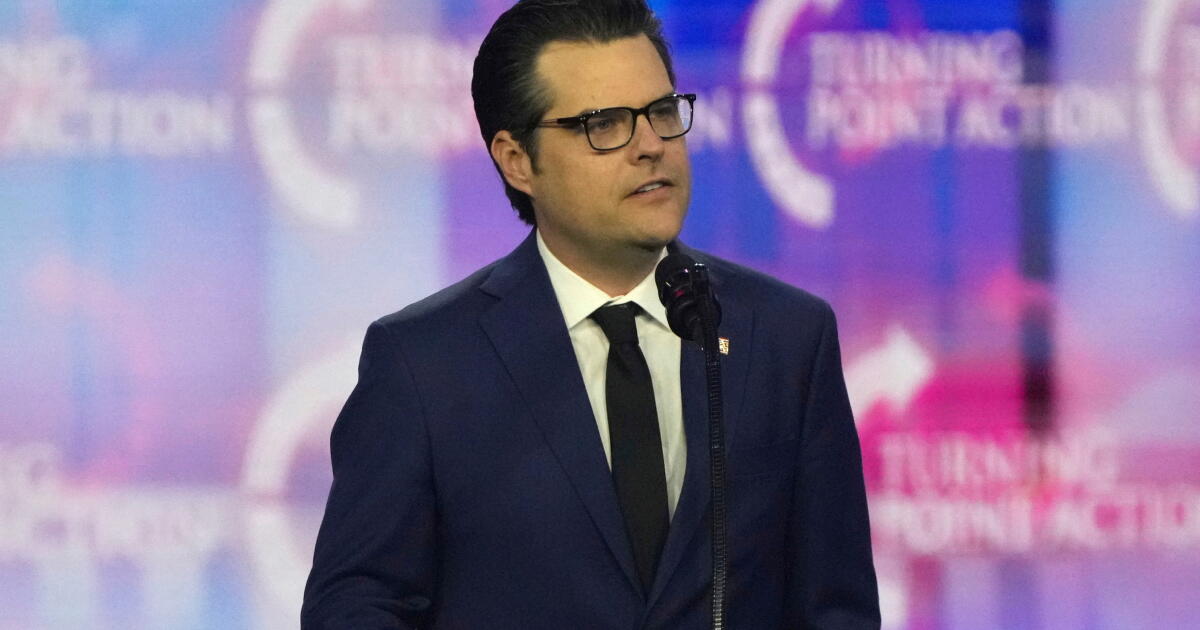
Lawsuit by 2 women accuses ex-Florida Rep. Matt Gaetz of sex trafficking
Two women filed a lawsuit Thursday against former U.S. Rep. Matt Gaetz, saying they were sexually exploited by him and other men in violation of a federal anti-trafficking law.
The lawsuit, filed in federal court in Orlando, Fla., comes nearly two years after the House Ethics Committee said the Florida Republican had regularly paid for sex, including once with a 17-year-old girl, purchased and used illicit drugs, and violated state laws while a member of Congress.
Gaetz had left office when the report was released and denied wrongdoing. But the report helped to tank his nomination to become attorney general in President Trump’s second administration.
Two women said they were in their early 20s in 2017 when they met Gaetz through Joel Greenberg, who was a tax official in Seminole County and is now in prison for a raft of crimes, including a sex crime.
Gaetz provided drugs and paid the women for sex, out-of-state travel, lodging and other expenses, according to the lawsuit.
“Much of the conduct alleged against me is false,” Gaetz said in response.
“The lawsuit relies almost exclusively on a Congressional Committee report that didn’t allow me to confront my accusers. Now I will finally have that chance,” he said in a statement.
Gaetz also appeared to mock the women on the social platform X, sharing a 2018 social media photo of the backs of three women in bathing suits looking at the ocean in the Bahamas.
“I’m shocked nobody responded to their repeated cries for help, posted to instagram,” he said Thursday.
The lawsuit also names Greenberg, another man and businesses tied to Greenberg’s family.
“Every part of this venture ran on an exploitative power imbalance,” the women’s attorney, Spencer Kuvin, said in the lawsuit. “On one side stood a sitting congressman, an elected tax collector, and a former state legislator, men with public office, private homes, and money to spend. On the other stood young financially vulnerable women in their early twenties.”
Gaetz hosts a political talk show on One America News Network. He was recently appointed to the board of Triumph Gulf Coast, which oversees how Florida spends money recovered for damage from the 2010 Deepwater Horizon oil spill.
White writes for the Associated Press.

O’Neill defiant in defeat but Celtic’s ‘flat-track bullies’ fail another big test
Although Celtic conceded four, the scoreline did not flatter Benfica. The Portuguese side created chances aplenty in both halves and hit the woodwork twice in addition to their four goals.
Celtic’s lack of depth in defence was exposed once again in the absence of the injured Cameron Carter-Vickers as Gianluca Prestianni and Duran tormented the visitors’ back four.
However, it is in forward areas where O’Neill perhaps has his biggest headache.
Club record signing Kasper Hogh was hooked at half-time and has now failed to score in 10 of his first 11 outings since joining from Bodo/Glimt in the summer.
Duran shifted inside for the second half and posed far more of a threat than his Danish team-mate.
“If I’m a creative midfield player and I’ve got Duran and Hogh to pick from, I’m taking Duran every day of the week,” former Celtic midfielder Scott Allan said.
“He looks to get off the side of defenders, if you put a ball in the area, he’s more likely to be alive to it.
“Hogh just isn’t firing on all cylinders. I can take that if he’s doing the other side of the game a lot better than he is.
“You can see why Martin O’Neill made the substitution at half-time and there’s no doubt Celtic looked much better going forward.”
O’Neill admitted he sees Duran as being better through the middle, when asked about his Colombian talisman post-match, but given Hogh’s price tag he might not be inclined to pull him out of the firing line just yet.
“[Duran] has played wide at his previous clubs,” O’Neill said. “But I personally feel his best position is through the middle.
“It’s now a matter of us trying to fit him in and I think we can do that. It’s a real battle for places now.”
Trump administration sues California over noncitizens on voter rolls | Donald Trump News
The administration of United States President Donald Trump has sued the state of California after the state missed a deadline to review a list of registered noncitizen voters sent to officials.
In the lawsuit, filed on Thursday in a US District Court in California, Department of Justice (DOJ) officials asked the court to prevent the state from counting mail-in ballots from voters on a list shared with the state that it said contained 20,000 noncitizens. The agency said it had attempted to “work collaboratively” with California to identify noncitizens registered to vote in the state, but “California made no serious effort to do so”.
Recommended Stories
list of 3 itemsend of list
The move follows a 48-hour deadline the DOJ gave California in letters sent to officials in several counties in the state on Tuesday, threatening further action if they did not review lists of allegedly ineligible voters the agency said it had shared.
California Secretary of State Shirley Weber, the top state official tasked with administering elections, responded to the letters, saying in a three-page letter that she wanted to “set the record straight” on events that transpired since July. The senior California official maintains that the administration is demanding “unprecedented measures that threaten thousands of Californians’ right to vote, based on unverifiable information or methodology that you still fail to explain or provide”.
Weber said she was informed that the lists provided to local officials include the names of roughly 20,000 individuals. Weber said no list was ever sent to her office. The department previously said it suspected “thousands” of registered voters of being noncitizens, and a lawsuit filed earlier Thursday by the Justice Department put the number at “tens of thousands”.
“Despite failing to send the list of alleged non-citizens to my office, you demand that we request transmittal of the list, review and confirm the citizenship status of each of the approximately 20,000 individuals on the list on the eve of an election and within a mere 48 hours,” she wrote. “This is an emergency of the DOJ’s creation.”
In a statement on Wednesday, election officials in Los Angeles County, one of the county offices that received the ultimatum from the DOJ, pointed out the threat was issued just 21 days before midterm elections. The county statement said it had received a thumb drive with the letter and a handwritten note with what appeared to be a password, but it would not attempt to access the drive because “we do not consider the device a secure medium”.
The county office said maintaining accurate voter lists was “a fundamental responsibility for our office” and that state laws clearly require that removing individuals be “based on verifiable information”.
Trump has repeatedly levelled the false claim that large numbers of noncitizens, who are legally not eligible to vote in federal elections, are casting ballots in Democratic-led states, including in California. State officials, including in California, have said the number of such voters is negligible and that the scale of the problem does not warrant intervention just weeks before elections, scheduled for November 3.
California Governor Gavin Newsom has sharply rebuked the DOJ lawsuit against his state, calling it a “sad, desperate attempt by” Trump to “suppress California voters just three weeks before Election Day”.
“Courts have made clear the federal government has no role in running state elections,” Newsom said in a statement. “We will defend free and fair elections in the Golden State and call out every authoritarian attempt to undermine our democracy.”
Trump has long falsely claimed that noncitizen voting cost him the 2020 election, blaming it on Democrats, despite the issue being a very rare occurrence.
Courts have pushed back on Trump
Earlier this month, a federal judge in Florida ruled that a federal law criminalising voting by noncitizens was unconstitutional, delivering a major setback for Trump administration efforts to pursue such cases against individuals.
The court ruled that, under the US Constitution, only individual states have the authority to set voter qualifications, and that each one had already criminalised such voting by anyone who was not a citizen. Thus, it was up to the state to prosecute such individuals. The DOJ has at least 45 such cases pending nationwide, where the accused could now raise the same objection brought up in the Florida ruling.
Another federal judge ruled this month that the DOJ unlawfully sought state voter rolls for cross-checking them against a controversial federal immigration database to identify ineligible voters. The Trump administration has often touted the Systematic Alien Verification for Entitlements (SAVE) database, but numerous reports have found it inaccurate and capable of flagging citizens as noncitizens. Forcing states to use such a database would be unconstitutional, the judge said.
In September, the US Supreme Court rejected a Trump administration effort to restrict mail-in ballots for the November 3 elections, which Trump argued were especially susceptible to misuse by noncitizens because states were failing to verify who was sending them.
Two dozen states, led by Democrats, filed lawsuits against the Trump administration over attempts to limit mail-in voting, including an executive order directing federal agencies such as the US Postal Service not to handle mail-in ballots without verifying the eligibility of those casting them.
According to the Election Assistance Commission, a bipartisan government agency, around 30 percent of all ballots cast in the 2024 elections were sent by mail. Mail-in ballots are even more widely used in many western states such as California.

At least 4, including 3 children, killed in US elementary school shooting | Gun Violence News
Authorities have indicated that the shooter was killed by gunfire, though details remain scant about the attack.
Published On 15 Oct 2026
At least four people have been killed, including three children, in a shooting at an elementary school in Oregon, part of the northwestern United States, according to statements from law enforcement to CBS and CNN.
The shooting on Thursday took place at Silver Rail Elementary school in the city of Bend, about 160km (100 miles) southeast of Portland.
Recommended Stories
list of 3 itemsend of list
Authorities have said the shooter is dead, though it is unclear whether he is among the four people included in the initial death toll.
“We’re in the process at this time of going room by room and evacuating each of the people who are in that school,” said Sheila Miller, the communications manager for the Bend Police Department on Thursday. “This is the kind of thing we never want to see happen in Bend. It’s devastating.”
Miller said authorities received a call about a shot fired into a car outside the school at 12:59pm local time (19:59 GMT) and arrived on scene within minutes.
The suspect was shot and killed shortly after, though Miller said she did not know whether police or a bystander had subdued the alleged assailant.
The number and condition of those injured were not immediately known.
Kash Patel, the director of the Federal Bureau of Investigation (FBI), said in a post on social media that the agency was on the scene assisting local law enforcement in the investigation.
“We will make every resource they need available,” he wrote.
Oregon Governor Tina Kotek also said she was closely monitoring the situation.
Jeff Merkley, who represents Oregon in the US Senate, was among the political leaders to offer condolences in the wake of the shooting.
“My heart is with the Bend community and all of the students and families affected. No one should have to fear violence at school,” he wrote in a post on the social media platform X.

Gareth Gates shocks fans as he shares snap with stunning rarely-seen daughter
GARETH Gates has shared a rare photo of his stunning teenage daughter Missy as he proudly revealed she has passed her driving test.
The Pop Idol star, 41, took to Instagram to celebrate the milestone, sharing a picture of his 17-year-old daughter holding up her practical driving test pass certificate.
Alongside the snap, Gareth wrote: “My beautiful (not so little) princess passed her driving test today. Well done @missygates_x Daddy is super proud of you”
The singer, who usually keeps his daughter out of the spotlight, added: “How do I have a daughter that’s 17 and can drive?!”
He also shared a second picture of the pair posing together beside a swimming pool at sunset, with Gareth wearing a white shirt and shorts while Missy opted for a grey top and flowing white skirt.
Fans were quick to congratulate the teenager, with one commenting: “Well done missy”


Another follower recalled meeting Missy as a baby, writing: “I remember the day she was born- I was at your Joseph and the amazing technicolour dream coat show! Congratulated you backstage”
The latest milestone comes just six months after Gareth shared another rare photo of Missy to celebrate her 17th birthday in April.
At the time, he joked: “I must, however, warn the good British public that Missy moo now has wheels so watch out!”
Gareth shares his only daughter with ex-wife Suzanne Mole and has previously spoken about her hopes of following in his footsteps with a career in music.
He revealed that Missy is a talented singer and dancer, explaining: “She’s got a great voice. She’s a great dancer. The more that she gets to be in and around that music world, the more that she learns.”
The singer shot to fame in 2002 when he finished runner-up to Will Young on the first series of Pop Idol, before going on to enjoy a successful music and theatre career.

He is now in a relationship with West End performer Allana Taylor and has been touring the UK with his Boyband in the Buff show.

New White House press secretary Katie Zacharia defends her legal background and short first briefing
WASHINGTON — New White House press secretary Katie Zacharia defended her legal background and justified her truncated inaugural briefing as she navigates a rocky first week as the president’s chief spokeswoman.
Zacharia sat down for an interview Thursday with the conservative Human Events outlet. In it, she said she did not have time to get fully prepared ahead of her first briefing on Tuesday and that it was always the plan to keep it short because President Trump would field questions from journalists later that morning.
“It was absolutely my goal to keep it short, considering he is his own best spokesperson, and he would love — and does love — gaggling with the media as he goes to Marine One,” Zacharia said. “So I wanted to give ample deference and not barge into his time.”
The initial briefing materials were given to Zacharia on Monday evening, then completed on Tuesday at 8 a.m., less than two hours before she would appear before the White House press corps. She had been up since 3 a.m. preparing, Zacharia said.
“I never had a full briefing beforehand, and I went out and I effectuated the briefing,” she said.
As for her legal background, Zacharia said she was preparing to take the bar exam in California at a time that she had just gotten married and was readying a move to China to join her new husband, who had been working in private equity in Beijing.
“I was obviously incredibly distracted and overwhelmed and excited for finally being married to someone who I’d been long distance from for at least a year,” Zacharia said.
She said the results of the bar exam, which she did not pass, were “somewhat inconsequential” because she would not need to be a barred attorney while living in China.
Zacharia, who has been under scrutiny for calling herself a “lawyer,” said she consulted several legal experts to ensure that title was accurate when offering legal analysis.
“It’s unfortunate that people dub this as some kind of conspiracy or want to put me in a camp. The truth is, I was very careful how I executed this, and I never came across as someone who was an attorney-at-law.”
She will not weigh in on legal matters in her White House capacity, Zacharia said.
She also divulged details of how she went about securing the White House press secretary job. Zacharia stressed that she did not want to be seen as lobbying for the position, left vacant when Karoline Leavitt announced she would depart the administration to spend more time with her family.
Zacharia, who was a communications advisor for the company that runs Truth Social, said she closely monitored the president’s social media posts to determine what was top of mind for him, then would go on air to talk about those topics.
“My philosophy is, I’m on TV enough where if he sees me and he likes me, then I will be recruited for the job. I do not believe that lobbying for that job would have been successful, and I wanted to work for it. I wanted to audition for it.”
Then on Oct. 7, as Zacharia was preparing to take one of her children to a pumpkin patch, she received a phone call from Trump about the press secretary position.
She promptly flew out the next day from her home in California to Washington, met with the president about the job on Friday and formally accepted the position later that day.
Kim writes for the Associated Press.

Ziaire Williams looks to continue providing energy boost to Lakers
He made one of the biggest splashes in the Lakers’ first preseason game. Ziaire Williams set the tone of the Lakers’ new defensive style, pressuring the ball the full length of the court and injecting energy into his teammates. The Sierra Canyon High alumnus sank three three-pointers in a stellar debut for his hometown team.
Then came the swelling in his left foot.
After a minor injury slowed Williams’ preseason ascent, the 6-foot-9 forward could be in position to return to the lineup for the Lakers’ preseason finale at 7:30 p.m. Friday against the visiting Denver Nuggets. Williams practiced fully Thursday after missing the last three games. He’ll leave the final call up to the Lakers’ medical staff as the team tries to maximize its preseason preparation.
“It’s important, man, just to get game reps with each other, but health is key,” said Williams, who had 13 points and a steal as a starter in the preseason opener against the Sacramento Kings on Oct. 5. “If you can’t go, you just can’t. It’s not the end of the world. Going back to championship identity, we’re looking ahead at the bigger picture. So it’s not worth [it] to risk your body for a game that doesn’t count and then be out for the real games.”
With nine new players, the Lakers needed training camp and preseason games to build chemistry as a group. Small injuries to several players interrupted the process, but with one fewer preseason game than last year and almost double the total practice days, coach JJ Redick said integrating new players still has “been pretty seamless.”
“We would love to have gotten looks with everybody healthy and everybody good to go,” Redick said, “but we also have to be smart with an 82-game season.”
The Lakers debuted new center Walker Kessler only this week, and the star acquisition who jammed a pinky finger early in training camp still has not played in a game with guard Luka Doncic, who was held out of Tuesday’s game for a planned rest day. Doncic participated fully in practice Thursday, as did forward Adou Thiero, who sat out Tuesday because of “maintenance,” Redick said. Rookie Cameron Carr (undisclosed) remained out of practice Thursday after missing the last two games.
Guard Quentin Grimes has been a preseason iron man. The free-agent signing who is angling for a starting position has played a team-high 97 minutes in four preseason games. With Doncic and Austin Reaves playing together only once in the first four games, Grimes has filled a larger ballhandling role than he might have if the Lakers were at full strength. The 26-year-old guard who is on his fifth team in six seasons credited his journeyman history for helping him get comfortable with a do-it-all role.
“I’ve done a good job of just creating offense, creating opportunities whether that be for myself or for teammates, getting everybody involved,” said Grimes, who is averaging 12.3 points and 2.5 assists on 53.3% shooting in the preseason. “I feel like this team allows me to play on the ball, off the ball in any situation. I feel like I’ve played that kind of [role at] every stop.”
Collin Sexton is the only offseason acquisition who has not made his Lakers debut. Battling a lower leg injury, Sexton participated in all of practice except for periods of live play Thursday. After practice, the guard was seen with kinesiology tape snaking up his right calf while working on the court with assistant coaches.
Sexton’s presence could help stabilize the Lakers’ offense, which is averaging 25.3 turnovers during the preseason.
When Sexton was sidelined at the beginning of the preseason, Redick said he was not worried about the guard’s status for the Oct. 21 season opener against Golden State. When asked Thursday about Sexton’s availability, Redick said simply he was “trending in the right direction.”

Man United’s Martinez apologises for outburst after talks with Carrick | Football
Lisandro Martinez meets with his Manchester Untied manager Michael Carrick before apologizing for criticism of the club.
Published On 15 Oct 2026
Manchester United defender Lisandro Martinez apologised on Thursday for criticising the club’s hierarchy following their Champions League defeat by Atletico Madrid, after holding talks with manager Michael Carrick and senior officials.
Martinez met Carrick and club executives after training, two days after saying the club needed greater investment to help the team compete at the highest level following Tuesday’s 2-0 loss.
Recommended Stories
list of 4 itemsend of list
“Today I met with the club’s leadership and the manager,” Martinez said in an Instagram post, in his second statement since the interview.
“It was a very positive conversation where we were able to exchange views and speak openly about what happened after Tuesday’s game.”
A club source said that any internal disciplinary action would remain private, adding that it had been Martinez’s decision to apologise publicly and that all parties considered the matter closed.
British media, including the BBC, reported that United fined the defender over the outburst.
Martinez acknowledged that his frustration following the defeat had got the better of him and apologised for choosing the wrong moment to air his feelings.
“Everyone knows that I am a passionate person and that I live football with great intensity,” he said.
“The frustration of the defeat led me to express how I felt at a time and place that perhaps were not the right ones, and for that I want to apologise.”
The Argentina international had singled out director of football Jason Wilcox in the post-game interview, saying United needed more signings to compete with their rivals and build a squad capable of challenging in Europe.
Martinez said his comments had not reflected the unity required at Old Trafford and stressed his belief that everyone at the club was working towards the same goal.
“Our club is at its best when we are all united, and I recognise that my words in that moment did not help with that,” he said.
“I know that every single person at Manchester United is doing everything possible to achieve our shared ambition, bringing the success that this club and its supporters deserve.”
Martinez finished his statement by drawing a line under the episode.
“With this situation now behind us, we are fully focused on winning together.”
United are 13th in the Premier League after six games in their worst start in 40 years. They travel to seventh-placed Leeds United on Sunday.
Israel halts commercial goods from entering Gaza; Hamas denies tax claims | Gaza News
The halt to commercial shipments, including fruit and winter clothing, cuts off a key source of critical supplies.
Published On 15 Oct 2026
Israeli authorities say no commercial goods have entered Gaza for two days, citing what they claim is a tax dispute between local merchants and Hamas.
COGAT, or the Coordinator of Government Activities in the Territories, the Israeli military body that “oversees humanitarian affairs” in Gaza, announced the halt on Wednesday.
Recommended Stories
list of 3 itemsend of list
COGAT claimed that local merchants “made the decision in response to a 10,000 shekel ($3,220) fee imposed by Hamas on each truck entering Gaza” as well as a demand for 30 percent of all sales in Gaza to be carried out in cash.
This decision is expected to impact a crucial source of food and goods for the 2.1 million people in the Strip, who are completely reliant on Israel’s border crossings in a territory that is still suffering from famine.
Gaza’s government media office refuted the claims on Thursday and condemned the “blatant disinformation campaign and false statement”.
The media office instead said it was an attempt “to hold the government apparatus in Gaza responsible for the disruption of truck entry” and that the fee was a voluntary payment to a fund providing aid for those in need, such as widows and orphans.
It also said that cash payments were encouraged due to what it described as an acute cash shortage in the war-torn territory, but were never a mandatory requirement.

An already dire humanitarian crisis
The halt to commercial shipments, including fruit and winter clothing, cuts off a key source of food and other critical supplies as fears mount ahead of the encroaching winter.
Aid groups generally bring in staples such as flour, while merchants import more perishable foods like fruits and meat, according to data released earlier this year by COGAT.
The suspension is raising fears about affordability, with humanitarian workers saying a combination of aid and a robust commercial market is needed to keep prices under control.
“The humanitarian sector on its own cannot meet the needs of all the people,” said Shaina Low, a spokesperson for the Norwegian Refugee Council. “The markets need to be functioning.”

Local merchants step in
The head of Gaza’s private truckers union, Nahed Sheheiber, denied the Israeli narrative, saying: “The Israeli coordinator is claiming that Gaza’s merchants are responsible, but the truth is that the Israelis are the ones who imposed the restrictions.”
Following COGAT’s announcement, Sheheiber’s union met with Gaza’s Ministry of Economy to express concern and say Israel was citing fees levied by the ministry as a pretext to cut off commercial goods.
A global hunger monitor in July warned that more than two-thirds of people in Gaza could face acute hunger by the year-end.
Israel is obliged under a US-mediated agreement to allow a minimum of 600 trucks carrying humanitarian aid to enter Gaza each day.
Diplomats say that far fewer than 600 trucks normally enter Gaza each day. Sheheiber said the figure was closer to 300, with two-thirds carrying commercial goods.

Big Brother housemate sparks ‘game player’ backlash after ‘turning on friend’
Big Brother fans weren’t impressed with one star’s actions during the latest episode

Philip sparked backlash on Thursday(Image: ITV)
One Big Brother star has sparked backlash after their comments in the house.
The hit reality series returned to screens on Thursday (October 15), ahead of the next eviction. Yasmin, Twinks and Rob will all face the public vote on Friday night (October 16). Yasmin notably received a killer nomination this week, while Twinks and Rob each received six nominations from their fellow housemates.
The housemates tackled another shopping task during the latest episode, as the house transformed into Big Brother’s body. The teams were given various challenges to determine who would be awarded the luxury shopping budget, while the losing side had to face basic rations.
Drama quickly ensued when Rochelle upset Harry during the task, leading to him storming out of the living area. Harry was supported by his fellow housemates as he broke down in tears in the bathroom.
But the tension didn’t end there, as Philip later shared his true feelings about Rochelle, who he has appeared to be close with in the house. During a whispered conversation in the garden, Philip told Lynx: “Lynx, I have wished for her to go.
“So, if she f****** goes, because it’s got that way now. I haven’t got no time for her. I haven’t, I’m telling you, I’m speaking honest with you. That’s why I have time in bed, because I want to stay away from her. And that’s no word of a lie that.”
Ensure our latest Big Brother stories always appear at the top of your Google Search by making us a Preferred Source. Click here to activate or add us as Preferred Source in your Google search settings
Philip went on: “Rochelle has said too much… And it’s funny what she kept saying to me and all. She’d say, ‘You’re my best friend in here.’ She said, ‘You’ll never turn on me, will you? Never turn on me.’ She kept saying that to me. She’s got too f****** much to say.”
Lynx added: “And it’s never-ending. And like you make such a pure soul like Harry get like that today, and then you come in the bathroom and make it about you. It’s just sometimes you just have to think about what you say.”
Philip continued: “See, she’s had a very privileged [life] from a child. I think she’s been spoiled, and I think she’s got away with everything. Everything she wants, she got. She never wants to listen about you, about your life, about your things. And do you know what? I’m not really interested and I don’t want to tell her.”
Lynx then said: “Since Sam went or like, when he was giving his reason to vote her, he was like, ‘All you talk about is me, me, me.’ God that stuck with me.”
Philip shared that Sam was “f****** right” about what he said, before concluding: “This is what she’s like. And come on, Lynx, she’s got on everyone’s [nerves]. She has. The ones [that have] gone and the ones [that are] here, she f****** has.”
Viewers were left speechless after hearing Philip’s comments, with many sharing their shock on social media. “Not a good look,” one person wrote on X.
Another added: “Wow can’t believe Philip’s now turning on Rochelle. I sense a downfall coming.” A third said: “Not Philip showing his true colours after that chat about Rochelle!”
A fourth viewer echoed the sentiment, saying: “Philip is giving game player, sorry not sorry.” Someone else similarly shared: “Philip turning on his ‘best friend’ is not what I expected.”
Big Brother is available to stream on ITVX
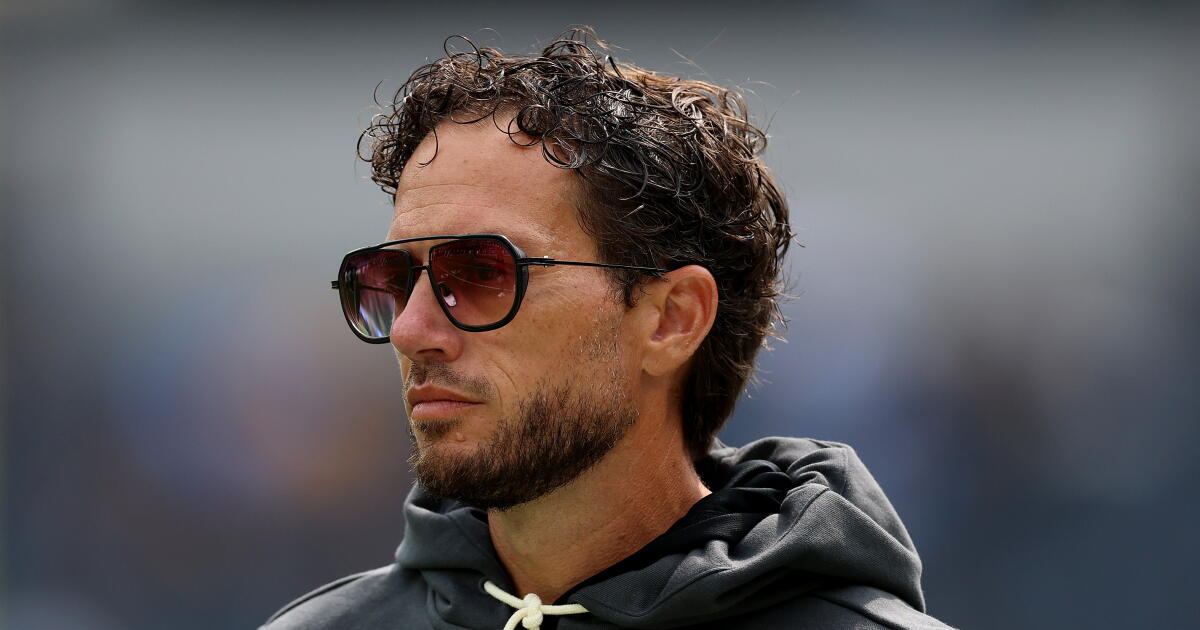
Mike McDaniel knows he’s coaching for his job amid Chargers’ 0-5 start
Chargers offensive coordinator Mike McDaniel didn’t shy away from discussing his job security Thursday amid a frustrating 0-5 start to the season.
“I feel like it’s core to my job to always feel that way,” McDaniel said when asked if he’s coaching for his job. “I need to do the very best I possibly can, all the time, because [of] the players, the organization, the fans.
“So, that’s second nature. … I think it’s disrespectful to all those that choose to invest in our game and our team to not look at things that way. The second you get comfortable in this league, it’s a wrap; it’s too good. I will be doing my very best, because from an integrity standpoint, I think it’s really insulting to do anything else. And that won’t change.”
McDaniel says his determination is unwavering. His place in the Chargers’ organization, however, might not be if things don’t change soon.
The Chargers, who rank 10th in total yards allowed per game on defense (311.6), enter Sunday’s road game against the undefeated Kansas City Chiefs averaging just 16.8 points per game, the third-lowest mark in the NFL above just the also-winless Miami Dolphins (14.0) and Tennessee Titans (11.6). Quarterback Justin Herbert ranks 22nd in passing (937 passing yards) and is last in the NFL in total quarterback rating (26.6).
Injuries have played a significant role in the Chargers’ offensive struggles. Eight offensive players either didn’t practice or were limited in practice because of injuries on Wednesday. Four rookies started on the offensive line in Sunday’s loss to the Denver Broncos and wide receivers Ladd McConkey, Quentin Johnston and Brenen Thompson, didn’t play.
McDaniel insists that he’s been giving the franchise all he has.
“I would be so embarrassed if I told you, ‘Well, now I’m going to try harder,’” McDaniel said. “Like, what? What have you been doing? I’m confident in the players that we have. The improvement that I see before the results generally lead to good things. But talk is cheap. We got to do.”

Israeli ‘ad’ firm helped infect spyware into Al Jazeera devices | Technology
An Israeli spyware disguised as a digital advertisement firm has targeted journalists’ devices at Al Jazeera and other companies. Here is what we know.
Published On 15 Oct 2026

Several people dead or missing after Istanbul floods | Newsfeed
At least three people have died and several are reported missing after torrential rain triggered severe flooding across Istanbul, inundating homes, businesses and streets. Residents and businesses are now grappling with power and water cuts, disrupted supplies and an extensive clean-up operation.
Published On 15 Oct 2026

Big Brother housemates forced to step in as ‘meltdown’ leaves fans in tears
The drama continued in the Big Brother house on Thursday, as one star struggled to control their emotions

Tensions rose in the Big Brother house on Thursday(Image: ITV)
Emotions ran high during the latest episode of Big Brother.
It’s been a tense week in the house, following the results of the latest nominations. Yasmin was instantly put up for eviction after receiving a killer nomination this week. It was soon revealed that Twinks and Rob would be joining Yasmin in facing the public vote, after they each received six nominations from their fellow housemates.
During Thursday’s (October 15) episode, the house was transformed into Big Brother’s body, as part of this week’s shopping task. The housemates, who remained in their two teams, were tasked with keeping Big Brother’s body healthy and happy.
Team captains Rob and Samuel became Big Brother’s brain, and were able to hold all the power. All the other housemates became blue and red blood cells, and had to obey every command given by their side of the brain. The team that performed the best would be rewarded with a luxury shopping budget, while the other team would have to make-do with basic rations.
It later became too much for Harry, as he started to feel the pressure of being in the house. “I feel like all our lot have f***** off. I feel like we’re just left and even then, Rochelle just said, ‘What did you do to stand out?'” he said.
Rob tried to comfort his friend, saying: “This process is hard enough without people making it harder for each other. You can tell me to shut up if this is an overreach, but from a couple of people it feels there’s an assumption that you can’t do a challenge.”
Ensure our latest Big Brother stories always appear at the top of your Google Search by making us a Preferred Source. Click here to activate or add us as Preferred Source in your Google search settings
Several jibes from his fellow housemates later proved too much for Harry. During the task, Rochelle told Harry to “f****** concentrate”, adding: “It’s really annoying. He won’t be laughing when he’s got no f****** thing to eat next week.”
Harry didn’t take too kindly to Rochelle’s comments, as he was soon seen slamming the bedroom door and rushing into the bathroom. Philip and Lynx stepped in to try and calm Harry down by getting him to take a moment in the toilet cubicle.
Harry soon emerged in tears, saying: “I feel s*** man. Just can’t be a****.” Rochelle later apologised to Harry, and became emotional as she reflected on her behaviour.
“I’m desperate to get home and just hope that I’m more patient and just different. I can just be horrible and I have to be better,” she tearfully said to Yasmin and Rhianna. Meanwhile, in the kitchen, Rob and Samuel acknowledged that they needed to support Harry more during their time in the house.
After watching the emotional scenes, viewers were quick to share their concern on X, with one person writing: “That is my worst nightmare – having a meltdown and like 6 people surrounding me. LET HIM BREATHE.” Another added: “Harry has a beautiful soul. Rochelle needs to leave.”
A third said: “Sad to watch Harry be so emotional, he’s clearly hurting.” Someone else echoed the sentiment, saying: “Seeing Harry sad has genuinely upset me.”
Big Brother is available to stream on ITVX
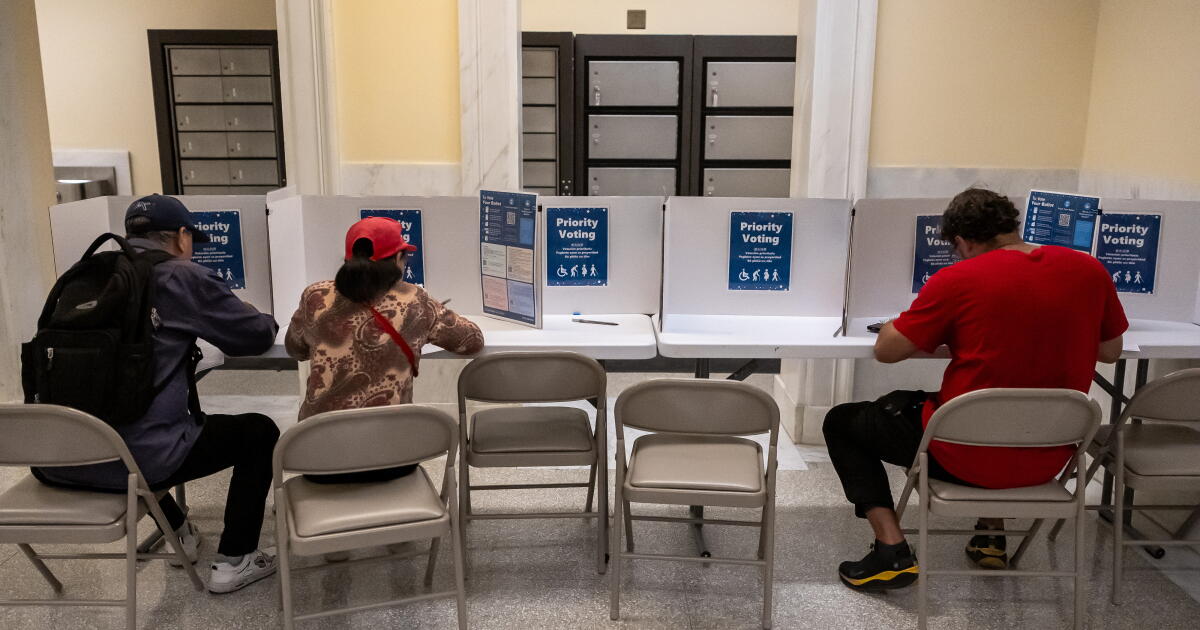
Justice Dept. sues California, seeks to stop state from counting 20,000 ballots
The Trump administration on Thursday sued California over its handling of voter fraud claims, asking a federal court to immediately bar the state from counting ballots from about 20,000 voters statewide — many in Los Angeles County — whom the administration alleges are “likely noncitizens.”
The lawsuit is highly unusual, particularly given that California voters have already begun voting in the Nov. 3 midterms via mail ballots, experts said.
It’s also highly inappropriate and based on questionable federal data that have proved wildly inaccurate in other states, state officials said.
“This is a sad, desperate attempt by Trump to use his politicized Justice Department to try to suppress California voters just three weeks before Election Day,” Gov. Gavin Newsom wrote on X. “Courts have made clear the federal government has no role in running state elections. We will defend free and fair elections in the Golden State and call out every authoritarian attempt to undermine our democracy.”
U.S. Atty. Gen. Todd Blanche, in his own statement, defended the lawsuit.
“State-facilitated voter fraud is unacceptable in the United States of America,” he said. “If found responsible in a court of law, the State of California will have seriously undermined confidence in our electoral system and violated laws that protect our nation’s representative system of government.”
The lawsuit states that “as part of an investigation into unlawful voting,” U.S. Citizenship and Immigration Services conducted a “multiagency and multilevel review” of state voter and federal citizenship data and determined with “high confidence” that around 20,000 “likely noncitizens” are registered to vote in the state.
It then forwarded those names to Homeland Security Investigations, which conducted its own investigation and concluded the same, the lawsuit says.
“This means that, consistent with state law, nearly 20,000 noncitizens in California have been sent a vote-by-mail ballot to participate in the federal election (or will receive one), with many addresses listed in Los Angeles County,” the lawsuit alleges.
The lawsuit comes two days after Acting Deputy Atty. Gen. Trent McCotter wrote to California Secretary of State Shirley Weber and Dean Logan, head of the L.A. County Registrar-Recorder/County Clerk’s office, giving them 48 hours to set aside the same ballots in order to investigate those voters’ citizenship status.
McCotter had said the Trump administration would be forced to file for emergency relief in the courts if Weber and Logan did not comply.
The lawsuit comes about three months after Homeland Security Secretary Markwayne Mullin wrote his own letter to Weber, alleging that there may be more than 190,000 noncitizens registered to vote in California.
The lawsuit makes no mention of that prior estimate, or why Homeland Security’s initial estimate was so much larger than its current estimate. It does say that USCIS identifying with “high confidence” that a voter is a likely noncitizen “means that the match between voter information on the voting roll and USCIS’ internal records is strong and consistent based on multiple identifiers that support a strong identity link.”
It also said, “The Federal Government notified California months ago that numerous noncitizens may be registered to vote in California. Despite knowing that California must send vote-by-mail ballots to every registered voter, the State made no serious attempt to work with the Federal Government to determine whether noncitizens are registered to vote.”
The Department of Homeland Security did not immediately respond to a request for more information as to how the 190,000 figure dropped to 20,000.
In a letter back to McCotter, Weber noted both figures and accused the Trump administration of pushing forward to disenfranchise voters at the last minute before the midterms based on shoddy data work and no certainty that those voters are ineligible.
“Nowhere has the federal government clarified the basis for suspecting — not even confirming with any level of certainty — the listed individuals are non-citizens. And as one court recently noted, the federal government’s citizenship records are ‘known to be unreliable,’” Weber wrote, referring to a case brought against the Justice Department by the organization Common Cause. “To give just one example, in a similar incident in the State of Nevada, DHS initially alleged that Nevada’s voter roll included nearly 16,000 potential non-citizens. However, after working with the State of Nevada, DHS officials failed to establish that a single non-citizen was on the voter rolls.”
Weber called it “remarkable” that the Justice Department would demand that her office “review and confirm the citizenship status of each of the approximately 20,000 individuals on the list on the eve of an election and within a mere 48 hours” despite providing no clear evidence that those individuals are wrongly registered.
“This is an emergency of the DOJ’s creation,” Weber wrote. “California’s election administration will continue to be governed by applicable federal and state law, not by unsubstantiated claims and outrageous demands.”
First Assistant U.S. Atty. Bill Essayli, the lead federal prosecutor in Los Angeles, posted about the lawsuit on X, noting the 48-window given to Weber and Logan had lapsed and writing, “Time is up for California.”
“This is not political or controversial,” he wrote. “We will not allow California to dilute the votes of American citizens.”
The Trump administration’s lawsuit says that while the U.S. “actively investigates and prosecutes incidents of unlawful voting,” it “is not practicable or feasible for the United States to investigate before the 2026 election concludes thousands, let alone tens of thousands, of individuals that two federal investigative offices identified on the California voter roster as likely being sent vote-by-mail ballots.”
Because of that, it argues, “California is thus knowingly imposing an obstacle on the United States’ ability to enforce [federal election law] by facilitating unlawful voting rather than working with the Federal Government to prevent it,” and the state is therefore legally barred from sending mail ballots to the 20,000 voters Homeland Security has flagged.
It asks the federal court in the Central District of California to declare the state’s actions — including providing and counting ballots for those 20,000 people — to be barred by law and in violation of the Supremacy Clause, and to issue an injunction barring the state from counting those ballots in federal elections “until those individuals’ citizenship status can be verified.”
The Trump administration’s attempts to use immigration data to reach conclusions about California voter rolls and intervene in California’s election is already being challenged in a separate federal case in the district of Washington, D.C., brought by attorneys with the UCLA Voting Rights Project on behalf of the Coalition for Humane Immigrant Rights, or CHIRLA, and a California voter named Pedro Trujillo.
The UCLA attorneys filed their own emergency petition Thursday to preclude the Justice Department from moving forward with such actions against California, citing the letters McCotter sent to Weber and Logan.
A judge in that case ordered the parties to meet and file a status report with the court by Friday as to when each side would be able to brief the court on the issue.
Times staff writer Brittny Mejia contributed to this report.

Rugby League World Cup highlights – Australia 24 – 22 New Zealand
Australia beat New Zealand 24-22 in a dramatic Rugby League World Cup opener in Sydney, with debutant Jack Bostock scoring a hat-trick to see the hosts snatch victory late on.
READ MORE: Australia edge New Zealand in epic World Cup opener
Available to UK users only.

At least 7 crew members missing after drone attacks on ships in Black Sea | Russia-Ukraine war
Emergency teams are searching for 7 missing crew after two chemical tankers were attacked in the Black Sea. Fires broke out on the ships after they were hit by suspected Russian drones.
Published On 15 Oct 2026
Poll shows Bolsonaro with slight lead over Lula ahead of Brazilian run-off | Elections News
Poll shows right-wing candidate with two percent advantage over Lula going into second round of voting on October 25.
Published On 15 Oct 2026
A new poll has found that right-wing Senator Flavio Bolsonaro maintains a slight lead over President Luiz Inacio Lula da Silva as the two candidates seek an edge ahead of Brazil’s tense October 25 run-off vote.
A Quaest poll released on Thursday found that Bolsonaro, son of former far-right President Jair Bolsonaro, would receive 46 percent of the vote compared to Lula’s 44 percent, a difference within the two-percent margin of error.
Recommended Stories
list of 3 itemsend of list
Bolsonaro outperformed expectations during the first round of voting on October 4, beating Lula by less than two points despite most polls suggesting that the leftist president was on track for a marginal first-round win. Neither candidate secured a majority that would have avoided a run-off.
The poll, the first released by Quaest since the initial round of voting, shows that Bolsonaro has held onto his lead and remains the favourite heading into the second round.
Lula has sought to rally his supporters after the October 4 loss, holding large rallies that have drawn millions of people onto the street.
While Bolsonaro has remained ahead in the polls, analysts have pointed out that he has not benefitted as much from the elimination of several conservative candidates, whose supporters would presumably prefer him to Lula, as might have been expected after the first round.
Bolsonaro has made progress securing endorsements from right and centre-right parties, however, seeking to consolidate support from conservatives and build a coalition friendly to business interests and a policy agenda sought by investors.
Brazil’s Senate approved a constitutional amendment on Wednesday reducing the country’s maximum workweek from 44 to 40 hours per week without a reduction in pay, delivering a key priority for Lula as the president presses his case to an electorate that is anxious about cost-of-living issues.
“Today is a day to celebrate a historic achievement for millions of workers,” Lula said in a statement. “This means having more time to live, rest, be with family, watch your children grow up, take care of yourself, and enjoy life. Those who work so hard to build Brazil also deserve to have time to live.”
The president also recently banned sports betting, which had caused an explosion of gambling addiction and contributed to surging household debt across the country.

Is THIS Hollywood’s most bitter custody battle? Halle Berry’s ‘traumatised’ son testifies amid Oliver Martinez split

MOVE over Brad and Angelina – Hollywood has another bitter custody war on its hands, and this one is about to get even messier, with a 13-year-old boy preparing to give evidence against his own parents.
Oscar-winner Halle Berry and her ex-husband Olivier Martinez are locked in an explosive legal battle over their son Maceo after allegations of physical abuse plunged their already turbulent relationship into fresh crisis.
Today Maceo will appear in court to give evidence in a hearing over a restraining order sought by his dad, who has accused 60-year-old Halle of attacking the teenager during an argument at her home in September.
The judge has ruled that Maceo will testify, despite Halle’s objections, although his evidence is limited to the restraining order request and he will appear in a closed courtroom.
It marks a dramatic new chapter in a custody battle that has dragged on for years since the couple’s disastrous marriage collapsed in 2015 after just two years.
And while French actor Olivier insists his son deserves to have his voice heard, Halle claims the boy has been “coached and manipulated”.
The latest showdown erupted after Olivier, who is also 60, obtained a temporary domestic violence restraining order against Halle this month, accusing her of physically abusing Maceo on September 26 this year.
In the court filings, he alleged she jumped on their son, put her hands around his neck and choked him.
He claimed the row erupted after Halle called Maceo “stupid” over a game involving virtual reality glasses, and that afterwards a “traumatised” Maceo begged Olivier to pick him up.
Halle has vehemently denied the allegations, insisting the pair were “roughhousing”.
She says the incident arose as she tried to enforce boundaries, claiming Maceo had been physically aggressive towards her.
In a statement, she said: “I have never physically, emotionally, or otherwise abused Maceo. I am a victim of domestic violence, and I help victims of domestic violence . . . I am not a perpetrator of violence. I would never hurt our child.”
Halle has found a fierce ally in 18-year-old Nahla, her daughter by former partner Gabriel Aubry, who leapt to her mum’s defence in a sworn declaration.
She said: “I have never seen my mom hit, slap, choke, grab or physically abuse Maceo in any way.
“I have never seen my mom place her hands around Maceo’s neck, put him in a choke hold, restrict his breathing or engage in any conduct remotely resembling the allegations that have been made against her.”
Nahla described Halle as a “loving and devoted parent”.
It is a far cry from how it all began.
Halle and Olivier met in 2010 in South Africa on the set of the horror film Dark Tide, shortly after she had split from French-Canadian model Gabriel.
They got engaged in 2012 and married in France in July 2013, and Halle gave birth to Maceo that October.
For a time they appeared to have found happiness together, with Maceo’s arrival completing the family.
Now Halle’s lawyer Marina Beck has branded the court filing “entirely meritless and deliberately misleading”.
She claimed Olivier had repeatedly violated court orders, “misconduct for which Mr Martinez has already been legally sanctioned”, and alleged he has a history of “erratic, possessive and violent behaviour”.
Halle also accuses Olivier of ignoring evidence which she says contradicts his version of events, including statements from her now-fiancé Van Hunt, who was present, and what she describes as contemporaneous video evidence.
Her filing reads: “Van Hunt was physically present during the incident and is the only adult third-party eyewitness to the events at issue.”
She argued that Maceo has “a personal interest in minimising his own conduct”, claiming he has behaved similarly at school.
Halle told the court that making him testify would place him “directly in the middle of a highly contentious dispute between his parents” and risk harm to his wellbeing.
She added that he has spent the past two weeks mainly in Olivier’s care, discussing the allegations and the litigation.
But Olivier has launched a blistering counter-attack, insisting his son is the real victim.
His lawyer Patrick Baghdaserians said: “We vehemently deny such allegations. The child is the primary victim here. Victims of abuse should be able to testify regarding the abuse inflicted upon them.”
He added: “We are not surprised that the opposing party does not want the child Maceo to testify.
“The opposing party is seemingly scared of what the child will say.”
Olivier said Maceo “was concerned that no one will believe him over his mother” and “wants to speak with the court to provide his side of the story”.
He continued in his declaration: “Given that our son is 13 years old, I believe it would certainly be in his best interest for him to address the court.
“I believe that our son’s testimony will be the key to the Court learning the full truth about the events that occurred on September 26.
“I am the parent who wants the truth to come out. I am the parent who does not want to suppress Maceo’s voice.”
Mr Baghdaserians warned that if their son was stopped from speaking, Olivier “fears that [Maceo] would be dissuaded from reporting problems or potential abuse in the future”.
The team also expected Halle “will try to prevent Maceo from addressing the court directly”.
Los Angeles Superior Court Judge Shelley Kaufman ruled that “the minor child shall not be coached” and reminded both parents that existing orders remain in force, including not discussing custody issues or court papers with him.
But Olivier has hit back by asking the judge to block Nahla from testifying, claiming she is “unquestionably biased” and has “no significant bearing” on the case.
He said it was not appropriate for Halle to “insert her daughter into litigation that does not involve her”.
The hearing is set to be an agonising showdown for two exes who have been trading blows in court for years over how to raise Maceo.
The marriage was short-lived. The couple’s wedding took place in France on July 13, 2013, but cracks soon began to show.
In January 2015, showbiz news service TMZ reported that Olivier had appeared to push a worker at Los Angeles airport with a child car seat as photographers closed in.
He was named a suspect in a battery investigation but no charges followed.
By October 2015 the couple had confirmed their split, saying in a joint statement they were divorcing “with a heavy heart” and wished each other “nothing but happiness in life”.
Yet the bitter legal wrangling rumbled on for the best part of a decade, with their divorce not finalised until August 2023.
The settlement required Halle to pay £6,000 a month in child support, cover Maceo’s private school tuition and contribute more than £41,500 towards Olivier’s legal fees, with the pair sharing joint custody of Maceo.
But the courtroom clashes did not stop there. In 2024 the pair were back in front of a judge over co- parenting therapy, with Halle accusing Olivier of trying to delay it by taking “the summer off” to travel.
She then sought sole custody, claiming Maceo had “serious behaviour and learning problems” and that Olivier refused to get a tutor because it could interfere with their son’s football schedule.
Olivier disputed the claims. Halle also said she had spent more than £150,000 trying to “work with” her ex, and swiped at him over child support.
“As Olivier has advised this court, he lives off my child support,” she wrote.
Now Olivier has filed for sole custody and has been granted primary custody, along with a restraining order barring Halle from coming within 100 yards of him.
She has been given two days a week of court-ordered visitation and every other weekend with Maceo.
She has also completed a court-mandated parenting programme.
For now, the battle lines are firmly drawn, with Halle fighting to protect her reputation and relationship with her son, while Olivier insists Maceo’s account of events must be heard.
And with Maceo due to take the stand today, the latest chapter in one of Hollywood’s most vicious custody disputes is set to unfold in a courtroom far removed from the glitz and glamour of the world that the former couple once shared.
The Sun has approached representatives for both Halle and Olivier for comment.