


Rubio presses Lebanon on confiscation of weapons from Hezbollah | Hezbollah News
Lebanon’s president reaffirms the commitment to bring all arms under state control.
Published On 16 Oct 2026
Lebanon’s President Joseph Aoun has discussed the confiscation of explosives intended for use against Israel during a telephone call with United States Secretary of State Marco Rubio, the Lebanese Presidential Palace has announced.
Aoun received the call on Thursday, assuring Rubio that Lebanese security forces are fully carrying out their duties in confiscating illicit arms across the country.
Recommended Stories
list of 3 itemsend of list
Last week, an explosive-laden truck carrying 780kg (1,720lb) of explosives was intercepted on a highway between Beirut and the eastern Bekaa Valley.
On Thursday, Hezbollah lawmaker Hassan Fadlallah acknowledged the group’s connection to the shipment, stating that the materials were intended for operations against Israel.
Speaking to reporters at the Lebanese parliament, Fadlallah said Hezbollah had immediately contacted security agencies to clarify ownership of the vehicle and cargo, demanding the materials be returned and detained personnel released.
Rubio urged Aoun to hold accountable those who ordered, financed, and directed the shipment, warning that “returning explosives to [Hezbollah] should be out of the question,” a State Department official told US media.
The official added that Rubio also advocated for direct military-to-military communication between Lebanese and Israeli forces “for deconfliction”.
In response, the Presidential Palace reported that Aoun asked Rubio to press Israel to halt its attacks and destruction in southern Lebanon.
Separately on Thursday, Rubio spoke with Israeli Prime Minister Benjamin Netanyahu regarding Iran, according to Israeli media reports.
The explosives-laden truck
On Monday, Prime Minister Nawaf Salam confirmed that Lebanon would conduct an investigation to track down members of Hezbollah linked to the incident.
Judicial officials told The Associated Press news agency that the truck was carrying 780kg (1,720lb) of explosives, including 250kg (550lb) of TNT and 550lb of C4 plastic explosives.
Salam described the transport as a “criminal operation” and praised security forces for intercepting the vehicle along the strategic highway linking Beirut with the Bekaa Valley.
For years, Hezbollah moved weapons freely across parts of the country. However, in March, the Lebanese government declared all military activities by the group illegal. Despite the government’s pledge to bring all weaponry under state control, the group has stated its intention to continue transporting arms in its confrontation with Israel.
Earlier this spring, Lebanese and Israeli envoys met in Washington under the auspices of US Secretary of State Marco Rubio, marking the first direct diplomatic contact between the two nations in decades.
Despite that diplomatic push from Washington, Israel has repeatedly violated the November 2024 ceasefire deal between it and Hezbollah, with Lebanon frequently reporting civilian casualties.
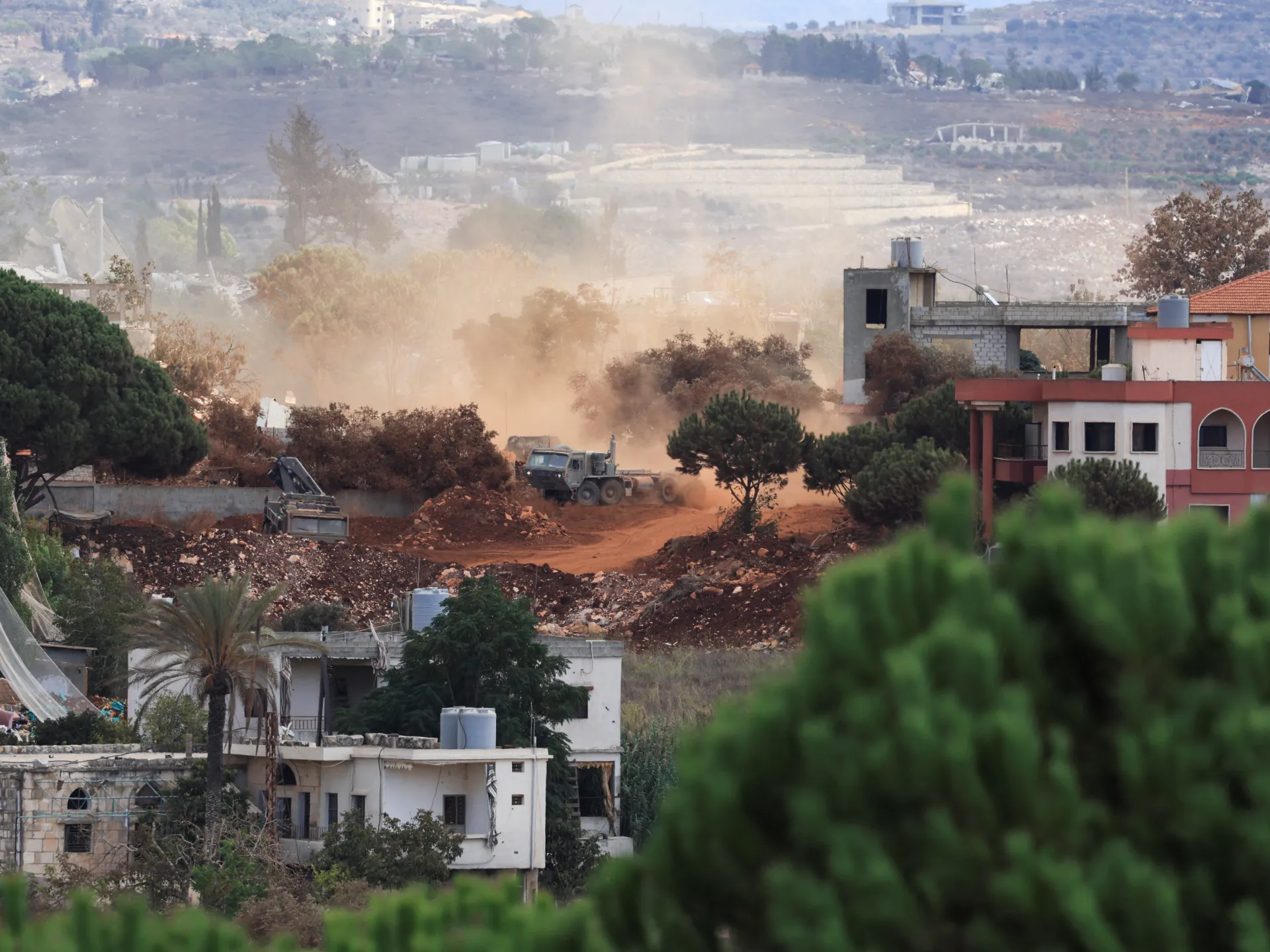
The renewed diplomatic friction comes as heavy Israeli attacks continue across southern Lebanon, where dozens of villages have been systematically demolished and large areas remain under Israeli military occupation, despite a framework agreement signed in June.

‘A haven of soft light, warm sunshine and sandy beaches’: readers’ favourite autumn escapes | Winter sun
Collioure is a Mediterranean dream
Last October, while I was cycling around south-west France, near the Spanish border, a tip from a local waiter led me to Collioure, near Perpignan. The town was like a Mediterranean dream, where the summer crowds had faded, leaving behind a peaceful, artistic haven of soft light, warm sunshine, cobbled streets, sandy beaches – and the Pyrenees as a backdrop. In the early evening, the still balmy autumn air was perfect for wandering through the quiet, pastel-coloured alleyways of the Le Mouré district to enjoy €5 off-season happy hour wine with fish tapas. I had planned to stay a weekend but ended up staying a week, seduced by Collioure’s perfect autumn cocktail of chilled Catalan culture and sunkissed seaside sensuality.
April
Peaceful Portuguese sunsets
Sitting outside in T-shirt and shorts on the deck of a boat gliding along the Tagus River in Lisbon, sipping a glass of crisp Portuguese wine as the setting autumn sun illuminated the pastel-coloured hills, is a lasting travel memory for me. October temperatures were still in the mid-20s, perfect for exploring fascinating areas on foot, or hanging out of trams as they rattled up and down the cobbled streets. In the evenings, I joined local people basking in the remaining warmth of the year at outdoor cafes or waterside tavernas like Ponto Final, enjoying coffee and pastries, or anchovies and beer, while watching magnificent sunsets without the summer masses.
Nicoletta
Wild times in St Davids, Pembrokeshire
My autumn escape is St Davids on the Pembrokeshire coast. Once the summer crowds disappear, it feels wonderfully wild and tranquil. We walk the coast path towards Whitesands, stopping to watch for seals below the cliffs, before heading back into tiny St Davids for something warm to eat. The beaches are often almost empty and, even when the weather turns, the dramatic sea and windswept coastline are part of the charm. My tip is to visit in early autumn; pack proper walking boots and layers, and embrace the weather – you get one of Britain’s loveliest coastlines almost to yourself.
Tess
Baroque beauty in eastern Germany
Görlitz makes for a fascinating autumnal base, with its location on the German-Polish border to the east of Dresden. The highlights were day excursions to Bad Muskau, where there is a wonderful baroque palace, and the Rakotzbrücke (Devil’s Bridge), reached by a narrow gauge forest railway (waldeisenbahn.de). It’s a part of Germany rarely visited, but those who go there will be rewarded with amazing photographs.
Martin
Bliss on a lesser-visited Canary island
The Canary Islands are well-trodden choices for autumn sun, but the island of El Hierro remains a wilder alternative to Tenerife or Lanzarote. The scenery is beautiful and bizarrely varied: from pine forests to black volcanic lava flows – most of which you’ll have to yourself. You can pass hours exploring the rugged coastlines, where volcanic swimming holes such as Charco Azul can be found. We spent a blissful few hours there, relaxing on the rocks and looking out at the Atlantic. There are no big resorts but plenty of guest houses and smaller hotels, and sunshine is almost guaranteed into November.
Leo Mark
Profile
Readers’ tips: send a tip for a chance to win a £200 voucher for a Coolstays break
Show
Guardian Travel readers’ tips
Every week we ask our readers for recommendations from their travels. A selection of tips will be featured online and may appear in print. To enter the latest competition visit the readers’ tips homepage
–
Dramatic Devon walks
We stayed in Woolacombe, north Devon, with our three-year-old in October 2023 and the off-season suited us well. The three-mile beach gave us room for proper sandcastle engineering, and the Atlantic offered drama rather than deckchair weather. We watched the sunset turn the sea orange and purple from the hill above the bay. We could walk into the village, then use Woolacombe as a base for Mortehoe and the South West Coast Path. Pack waterproofs as well as sunglasses: north Devon makes no promises. But on a bright autumn day, those enormous sands feel almost privately hired.
Katharina Parsons
after newsletter promotion
Coast, culture and cable cars on Madeira
Funchal on Madeira is my pick for an autumn escape because it still feels properly alive after summer. The seafront is made for slow walks in the sunshine, with cafes and gardens open year-round. You can browse the colourful Mercado dos Lavradores, ride the cable car for views over the terracotta rooftops and Atlantic, then cool off at one of the city’s lidos. The weather is pleasantly warm rather than overpowering, while the mountains and levada (aqueduct) walks are within easy reach. It combines coast, culture and dramatic scenery without feeling like a resort that closes down for winter.
Bernice
Clifftops and crab rolls in the Scottish Borders
If you’re looking for a cracking wee coastal escape, head straight to St Abbs in the Scottish Borders. My wife and I absolutely fell in love with its rugged charm and bonny views. First off, Marvel fans will know it as New Asgard from Avengers: Endgame, and taking a selfie by the official sign set the right tone. Beyond the film fame, the dramatic clifftop walk up to St Abb’s Head is brilliant, packed with seabirds and proper fresh sea air. Afterwards, grab a fresh crab roll down at the harbour cafe – nae hassle, just proper good cheer.
Craig
Nonstop sun in a Cretan haven
Autumn came brutal and early to Crete this month. But the ferocious northerly that drenched the northern coast got stuck on the White Mountains. And on just one tiny south-west speck of the island, the sun shone all and every day. Palaiochora is a year-round magic place anyway. No big hotels. Still proudly Greek. A place where the town’s rhythms are set by the comings and goings of the Loutro ferry. But this past week, while thunder stalked the mountains, we swam and walked every day. “We’re unique,” said the man at the cafe. “Please don’t tell anyone.” What have I done?
Kay Jones
Winning tip: Fiestas and feasts in Zaragoza, Spain
For an autumn city break, Zaragoza comes alive during the Fiestas del Pilar in October. We spent a week there, wandering bustling streets lined with people, many in traditional dress, queueing to lay flowers at the vast floral tribute to the Virgin Mary in Plaza del Pilar. Along the river, food stalls served Aragonese specialities, from chistorra (sausage) and stews to roast chestnuts and sweet wine. Between festivities, we explored the stunning Aljafería Palace and discovered tiny tapas bars tucked down side streets. The city felt wonderfully local, lively and full of surprises.
Carrie
The ‘Biggest Oil Deal in History’ Is Turning Off the Lights in Venezuela
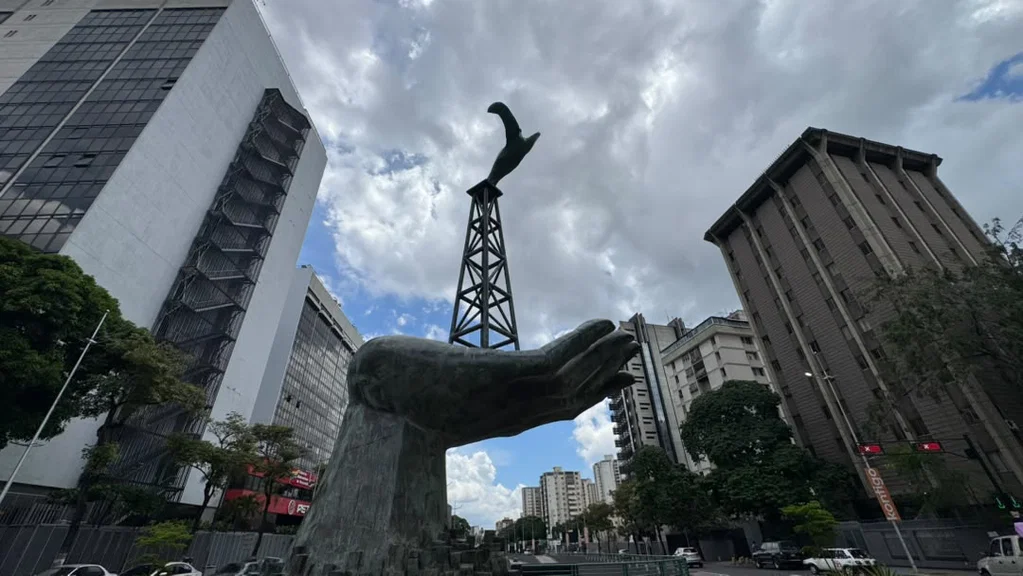
A woman holds a sign that reads in Spanish, “Corruption has left us in the dark,” during a protest against power cuts in Valencia, Venezuela, on Oct. 2, 2026. (Graphic by Truthdig; images by AP Photo, Adobe Stock)
The “biggest oil deal in history” was announced almost simultaneously by acting Venezuelan President Delcy Rodríguez and U.S. President Donald Trump on Aug. 28. However, many Venezuelans didn’t find out until the next day because massive blackouts — up to 16 hours a day and partly caused by increased oil production — kept them from scrolling the news.
At the United Nations a month later, Trump bragged that he had taken Venezuela’s “spoils,” while Rodríguez said the deal with the U.S. would contribute to resolving the energy needs of “the hemisphere and the international economy.” Venezuelans then asked: What about our energy needs and economy?
The oil deal, the legal and operational details of which are still unknown, covers the exploitation of 17 fields and 65 billion barrels, which equates to 20% of Venezuela’s total reserves — the world’s largest, at an estimated 303 billion barrels. U.S. companies will invest $100 billion in exploiting the fields, a figure which — according to Venezuelan government projections — would translate into more than $209 billion in tax revenue for Venezuela over the years of the contract.
The announcement sparked questions and criticism from different sectors of the country, with concerns about the lack of information and the impact on sovereignty. In response, Rodríguez tried to explain the deal’s benefits in a nationally televised address, noting, “How much does Venezuela receive? Based on a barrel price of $65 … revenue would reach $209.3 billion for the state. In concrete terms, this means that for every barrel produced and sold, about $19 goes to [Venezuela].”

Oil drives the Venezuelan economy. Currently, it accounts for 71% of the nation’s total exports, but now much of that revenue goes to the U.S. In the first quarter of this year, out of a total of $7.76 billion in exports, $5.5 billion came from oil activity. As the acting president’s address went on, many of us only had more doubts.
A few hours later, Venezuelan economist Francisco Rodríguez summed up some of the nation’s concerns: “Do the projected tax revenues … correspond to nominal amounts, inflation-adjusted amounts, or net present values? A nominal amount of $19 per barrel in 2051, the project’s final year, would correspond to a real value of about $9 today.”
“The $209 billion equates, over 25 years, to about $8.4 billion annually, a relatively low amount compared with the tax revenue Venezuela has collected in the past at similar production levels. The amount would be even lower if it corresponds to a nominal total.” According to Central Bank of Venezuela data, Venezuela took in a record $82.8 billion in 2008 alone from oil sales.
Contradictions
Trump later contradicted Delcy Rodríguez’s 25-year timeline, saying the deal would involve a century of concessions. Francisco Rodríguez, the economist, noted that extracting 65 billion barrels in 25 years would be impossible, due to lack of infrastructure.
“What rights does the U.S. acquire over these resources after 25 years? Can a future Venezuelan government decide to withdraw from this deal if it doesn’t like it?” he asked.
And why wouldn’t they like it? Trump said on Truth Social that Venezuela will begin supplying the U.S. strategic oil reserve immediately through “a gift.” Nobody knows what that means exactly, but since the military intervention on Jan. 3, the revenue generated by the sale of Venezuelan oil — we don’t know how much that is either — is already “in the custody” of the U.S. Treasury.
“It doesn’t look like Venezuela will benefit broadly in the long term. It’s like being on floor minus-18 and going up to minus-10,” Venezuelan researcher Blas Regnault, who specializes in energy policy and oil governance, told Truthdig from The Hague, Netherlands.
“There could be an indirect reactivation of the economy because of the indirect jobs that may emerge in some regions. But let’s also keep in mind that the country has been 100% blockaded, suffocated, so any door that opens will bring some benefits, but this is not the benefit one would expect for a sovereign country,” he said.
“That’s the other problem: There’s no sovereignty of any kind over the resource itself, over what’s being sold. On top of that, there’s a lot of opacity — you’re analyzing blind.”
This “opacity” is also illegal. Articles 150 and Article 187, Paragraph 9, of Venezuela’s Constitution state that contracts of national public interest with foreign states or entities require approval from the National Assembly. However, although the Assembly endorsed the announcement of the deal on Sept. 1, its president, Jorge Rodríguez, said it had not yet been “submitted” to the legislature. Then, a month later he said that “according to some legal experts, it doesn’t need to be reviewed.”
It’s clear that Venezuela is once again, as it was for much of the 20th century, a kind of “U.S. oil province,” Regnault says, “Recovering sovereignty won’t be easy because Venezuela is strategic to U.S. interests.”
“On top of that, the other side of the coin is that China has become a key player [globally]. Today the Chinese do what Saudi Arabia used to do when it cut production and pushed prices up. With this Strait of Hormuz crisis, after the naval blockade of Iran, it was discovered that China had more reserves than previously thought, and that kept the crisis from being bigger and the price from reaching $150.”
That is precisely why U.S. Secretary of State Marco Rubio celebrated the fact that several of the oil fields included in the deal were once “dominated by China and Russia and Iran.” At the same time, the U.S. government has decided to maintain sanctions against Venezuela, thereby preventing any new economic players. In fact, the U.S. Treasury Department, through its Office of Foreign Assets Control, updated its oil licensing policy for Venezuela in late September through Orders 46E, 48D and 49B, which benefit U.S. businesses but maintain an absolute ban on Russia, Iran, Cuba, North Korea and China.
“The [Venezuelan] government has already amended the Hydrocarbons Law to try to create more favorable conditions for investors in the oil and gas sector, but … the [U.S.’] problem isn’t domestic supply. They need to monopolize the world’s energy reserves, markets and prices in order to prevail in the rest of their economic activities,” oil expert David Paravisini explains to Truthdig from Caracas, referring to a legal reform that was passed on Jan. 29 and created the possibility of technical and operational management and direct commercialization by private companies. He believes that for Venezuela, the deal is a diplomatic “quest” to survive.

Trump is also maintaining some of his domestic support by presenting Venezuela as the great economic and geopolitical victory of his administration, especially after the war against Iran — which was supposed to last “only a couple of weeks” — reached the six-month mark and cost more than $37.5 billion through the end of July. In fact, Trump has claimed again and again that this oil deal will lower fuel costs inside the U.S. and come “at no cost whatsoever to the American taxpayer.””
Does this mean the $100 billion investment will come from private companies? The deal also aims to exploit eight greenfield blocks, areas where crude has been identified but which have not yet been developed. But what happens if that investment does not materialize? Since Jan. 9, Trump has been trying, without success, to persuade U.S. oil companies to invest in Venezuela.
Corruption is fine if the U.S. profits
So far, the only company we’ve heard about is North American Blue Energy Partners (NABEP), which was selected on Aug. 31 by the Trump administration to lead oil extraction projects in the 17 Venezuelan fields.
According to the White House, the Department of Defense will hold a 35% equity stake in NABEP and, in addition, the Barbados-registered company will grant Washington the right to buy 20% of the oil it produces at the cost of production.
NABEP, which has only operated in Venezuela for two years, was awarded the deal without a prior bidding process. The company belongs to Venezuelan businessperson Alejandro Betancourt, who was under investigation by federal prosecutors in Florida until January 2026 for allegedly laundering more than $1 billion from the state-owned Petróleos de Venezuela (PDVSA). The case was then closed suddenly under the orders of U.S. Deputy Attorney General Todd Blanche (now the attorney general), after a decade-long investigation. He is still the subject of open investigations in Switzerland and Spain.
Betancourt comes from a middle-class family but studied at the private religious school Instituto Cumbres de Caracas, where he befriended Javier Alvarado Pardi, son of Javier Alvarado Ochoa, who later became president of Electricidad de Caracas, deputy energy minister and a PDVSA executive.
Back in 2009, Alvarado Ochoa presented Betancourt and his engineering firm, Derwick Associates, as the best solution to Venezuela’s power generation crisis. Betancourt went on to receive 12 government contracts, awarded without competitive bidding, worth a total of $5 billion, which were either never completed or were implemented improperly, according to Transparency Venezuela and the Organized Crime and Corruption Reporting Project (which is funded by the U.S. government, among other countries).
So why Betancourt? Rubio said that he is no longer under investigation by the U.S., has supported the Venezuelan opposition and he has demonstrated his ability to produce oil. In that vein, NABEP claims it produces 200,000 barrels of crude a day, just behind Chevron.
However, Victor Hugo Majano, a Venezuelan investigative journalist and director of the well-known outlet La Tabla, told Truthdig that Betancourt overbilled the Venezuelan state by billions of dollars for power plants that never worked. He cited information from Thor Halvorssen, an anti-Chavista activist and cousin of Venezuelan opposition leader Leopoldo López. With that money, Betancourt bought a Dassault Falcon private jet and the historic Alamíin Castle in Spain.
Halvorssen also says Betancourt, who is also linked to 50 companies spread across 15 countries, paid former New York prosecutor Adam S. Kaufmann to halt prosecutions; former Wall Street Journal reporters to discredit whistleblowers; and former New York City Mayor Rudy Giuliani to bring the U.S. Justice Department over to his side.
“Despite this, the U.S. still doesn’t attack Venezuelan corruption. They want to protect the dollar and the U.S. financial system. They are only worried about securing capital flow, money that is not controlled by the state, the [Venezuelan] government,” Majano said.
More oil for the U.S., less electricity for Venezuela
Meanwhile, Venezuelans are paying the price for both Betancourt’s alleged corruption and the oil deal. So far this year, oil production has increased by 29.9%, going from 924,000 barrels per day (bpd) in January to an average of 1.2 million bpd. The increase has been driven by the need to deliver oil to U.S. companies, and it has directly worsened the nation’s electricity crisis.
Authorities acknowledge this; Venezuela’s interior minister, Diosdado Cabello, said in May the country is seeing higher electricity demand due to the growth in oil production, which “is a very serious problem.” The Ministry of Electrical Energy also noted that demand has reached 15,625 megawatts (MW), “the highest energy consumption figure in the last eight years, an increase of 3.6% compared with the peak reported in 2025.”
However, this statement omits that Venezuela actually has a nominal installed capacity of approximately 35,000 MW, double the country’s peak demand, but stable real generation barely reaches 11,000 MW. This shortfall is a result of both U.S. sanctions and domestic corruption, which together have led to disinvestment, lack of maintenance, fuel shortages (plants designed to run on natural gas have been forced to use low-quality diesel) and transmission problems.
Where does oil production come in? Víctor Poleo, an electrical engineer and former vice minister of Energy and Mines from 1999 to 2001, told Truthdig that “the national oil industry uses up about 1,500 MW, of which about 250 MW is self-generated, but another 1,250 MW is taken from the national interconnected system. This draw is 24/7 and must be continuous in order to carry out crude extraction, transport, pumps and compressors and refining.”

Poleo, who bases his analysis on studies by fellow electrical engineer Nelson Hernández, says light, medium and heavy crudes are estimated to require between 9 kilowatt-hours and 15 kilowatt-hours per barrel to produce. For extra-heavy Orinoco crudes, the estimate is 24 kilowatt-hours per barrel. “As a result, citizens lose their quality of life so that oil can be produced.”
This deterioration is particularly notable in Zulia state, Venezuela’s so-called oil cradle, where production has risen to between 350,000 and 370,000 barrels per day of light and medium crude — far below the historic peak of 1.5 million bpd in 2004, but a figure that, for its residents, has translated into daily blackouts exceeding 12 hours.
From the Isla Dorada residential complex in northern Maracaibo, capital of Zulia, José Javier León tells Truthdig that power failures “have worsened dramatically.” In his area, outages used to last four hours but now exceed seven.
“In many places there are double rounds, meaning the power goes out in the morning and at night, or at night and then before dawn. All the problems have gotten worse, and we don’t know the real reasons. In the suburb of Cuatricentenario, one of the most working-class areas and where the government had the most electoral support, the cuts are the worst,” he says.
León complains that residents are not alerted when the outages will happen. There is nothing like the electricity rationing schedules of the past, which would at least let them plan better. “In my area, there is no domestic gas, so we have electric stoves. Also, these are apartment buildings, where we have to turn on pumps to get water.” To make matters worse, the temperature in Zulia often reaches 39 degrees Celsius (102 Fahrenheit) because of the humidity.
In the Andes, outages add up to as many as 12 hours a day, and 16 hours in rural or border areas. From La Hechicera, an urban neighborhood in the city of Mérida, Silvana Solano tells Truthdig that the power used to go out for seven to eight hours, once a day, “but for the past two months, it goes out twice a day, the first time for seven hours and the other for around five hours, and we can’t predict the schedule. This also affects phone signals, which keeps us from communicating, making payments, etc.”
Some government institutions, including the Mérida mayor’s office, are open only from 8 a.m. to noon. Solano says she is worried that public schools, which operate until 3 p.m., will also adopt this schedule, in turn affecting parents’ working hours. Throughout September, residents of the towns of Caja Seca (Zulia state) and Nueva Bolivia (Mérida state) blocked the Pan-American Highway to protest the power outages.
To Venezuela’s north, on the famous Margarita Island, Alejandro Pérez tells Truthdig there are areas that have gone seven to eight months without water service. “Here we pay for water trucks, $50 for 10,000 liters of water, sometimes with $60 we get 13,000 liters, but you have to pay in foreign cash or at the parallel rate because the Central Bank of Venezuela exchange rate isn’t accepted here.” The black market or informal exchange rate is worth more, for those with foreign currency, than the official exchange rate.
Unlike other Caribbean islands, Margarita doesn’t have significant natural sources of fresh water. Some 90% of the area’s water comes from the mainland, crossing the sea through underwater pipelines that require gigantic pumping stations.
The contradictory rhetoric and the endless problems we face daily mean that, according to the latest AtlasIntel poll conducted for Bloomberg News, only 10% of Venezuelans believe the country will benefit from the oil pact with the U.S. — data that also aligns with the most recent study by the firm Meganálisis, the same one that after Jan. 3 said 92.2% of Venezuelans loved Trump. Emotions change, social problems persist, and without electricity, no economic improvement will be possible.
The views expressed in this article are the author’s own and do not necessarily reflect those of the Venezuelanalysis editorial staff.
Source: Truthdig

Strictly’s Emma Willis shares Delta Goodrem update saying ‘we knew something wasn’t right’
Emma Willis has shared an update on Delta Goodrem after she was forced out of Strictly Come Dancing and admitted she could tell “something wasn’t right” with the pop star

Emma Willis ‘knew something wasn’t right’ with Delta Goodrem before she was forced out of Strictly with an injury(Image: BBC)
Emma Willis has shared an update on Delta Goodrem after she was forced out of Strictly Come Dancing.
Pop singer Delta is currently in the lineup of celebrities trying their luck on the dancefloor. Whilst she and Kai Widdrington managed to top the leader board last week with their Salsa, it quickly emerged that the singer had done the show in “absolute agony” and on the Sunday, she went to hospital with a rib injury.
Appearing on Thursday’s edition of It Takes Two, Emma told host Ellie Taylor that it was somewhat obvious that something was amiss with Delta’s health at the time. She said: “It’s such a shame. I think it became quite apparent after the show that last week that something wasn’t right.”
Delta has been given a free pass – or bye – to the next round of the competition and, even though she will miss out on Icons Week, Emma said the cast and crew are hopeful this will mean she will be back and fighting fit.
She added: “We’re just hoping that because she has this bye week, by the week after, she’ll be good to get back. Fingers crossed!”
The TV presenter Emma, 50, took the reins of the new series of the BBC Saturday night favourite along with Johannes Radebe and Josh Widdicombe when Tess Daly and Claudia Winkleman left at the end of last year.
Delta, who is best known for starring in Australian soap Neighbours and released hits such as Innocent Eyes before representing her home country at Eurovision earlier this year, has broken her rib but is hoping to recover in time for next week and – following her doctor’s order – has been getting rest at home.
Taking to social media, she wrote: “Just wanted to come on here and say a big Thank you to everyone who has sent messages and wrote lovely comments the last couple of days, I see them all.
“Not the start to the week I’d hoped for but your support has meant the world. Also special big thank you to my amazing dance partner @kaiwidd who I will miss dancing with this weekend but I am so beyond grateful for his guidance and friendship through it all.. as well as the wonderful Strictly team!!”
She added: “Resting and recovering at home and will be cheering everyone on from my couch on Saturday night xx.” Delta had previously said she was “absolutely gutted” to be out the show for the week, and hoped she’d be back the following week.
It was revealed today that Delta’s planned dance to Dolly Parton’s Jolene with Kai Widdrington will be performed instead by Amy Dowden.
A spokesperson for the show had said: “Due to injury, Delta Goodrem has been advised by doctors to rest and, as a result, will not dance on this weekend’s Strictly Come Dancing.
“In line with the rules of the show, Delta and Kai will receive a bye through to next week when it is hoped they will be able to dance again. We wish Delta the very best as she continues her recovery.”
Delta added: “I’ve been loving every second of this experience, so having to sit this one out is heartbreaking – especially after the high of Saturday night.” “I cannot tell you how much I love being a part of this magical show. I’m going to focus on resting and recovering, and hopefully I’ll be back on that dancefloor very soon. Thank you so much to everyone for all the love and support. It’s so appreciated. I’ll be cheering everyone on from the sidelines this week!”
Sources revealed that Delta’s rib injury “deteriorated” and she was “in absolute agony” performing. She was later rushed to hospital to undergo tests but is now resting at home.
A source said: “Delta has been pushing herself as far as possible to impress Strictly viewers. A small injury at the start of last week has quickly deteriorated. On Saturday night, despite putting on a brave face and smiling, she was in absolute agony.
“Filming didn’t wrap until late Saturday night and she was exhausted. The plan was to go home and get some rest but she could hardly sleep. On Sunday morning she was raced to A&E and then spent most of Monday also at the hospital.”
Like this s tory? F or more of the latest showbiz news and gossip, follow Mirror Celebs on TikTok , Snapchat , Instagram , Twitter , Facebook , YouTube and Threads .

High school flag football: Wednesday and Thursday scores
WEDNESDAY’S RESULTS
City Section
Birmingham 32, Taft 0
Eagle Rock 26, Lincoln 0
El Camino Real 34, Chatsworth 0
Franklin 27, Los Angeles Marshall 6
Fremont 8, Crenshaw 0
Fremont 34, Dymally 0
GALA 30, Port of Los Angeles 0
GALA 12, Washington Prep 0
Jefferson 36, Foshay 0
Manual Arts 13, Los Angeles 0
Monroe 26, Smidt Tech 13
San Pedro 27, King/Drew 0
Sun Valley Magnet 27, AMIT 0
Verdugo Hills 32, Arleta 7
View Park 24, Stella 12
Washington Prep 28, Port of Los Angeles 0
Southern Section
Antelope Valley 27, Highland 18
Aquinas 32, Woodcrest Christian 0
Arroyo 25, El Monte 6
Ayala 7, Glendora 6
Azusa 25, Garey 9
Bishop Diego 7, Cate 6
Brentwood 13, Windward 6
Burbank Burroughs 20, Monrovia 18
Cantwell-Sacred Heart 34, Whitney 12
Capistrano Valley Christian 51, Legacy College Prep 0
Castaic 13, West Ranch 0
Chino 14, Montclair 6
Compton 19, Long Beach Cabrillo 16
Compton Early College 44, Compton Centennial 0
Crean Lutheran 19, Cypress 2
Edison 19, Western Christian 7
El Modena 13, Sonora 6
El Rancho 13, Santa Fe 0
Gabrielino 39, Temple City 20
Gardena Serra 33, St. Mary’s Academy 0
Hawthorne 13, Beverly Hills 0
JSerra 19, Orange Lutheran 12
Keppel d. San Gabriel, forfeit
La Canada 14, San Marino 13
Laguna Beach 28, San Juan Hills 7
La Habra 32, Troy 0
Lakewood St. Joseph 40, Anaheim Canyon 12
Lancaster 13, Knight 6
La Sierra 21, Norte Vista 0
Linfield Christian 40, Riverside Notre Dame 12
Loma Linda Academy d. United Christian Academy, forfeit
Long Beach Poly 48, Long Beach Jordan 0
Long Beach Wilson 26, Bishop Montgomery 0
Marina 24, Corona Santiago 12
Montebello 13, Rosemead 0
Mountain View 26, Alhambra 7
Ontario Christian 42, Arrowhead Christian 28
Palmdale d. Littlerock, forfeit
Quartz Hill 13, Eastside 0
Rancho Verde 13, Orange Vista 6
Redlands Adventist Academy 30, Public Safety 0
Redlands East Valley 31, Temecula Valley 7
San Jacinto Valley Academy 6, Hemet 0
San Marcos 13, Ventura 12
Santa Ana Foothill 30, Fullerton 13
Santa Ana Valley 14, Magnolia 6
Schurr 36, South El Monte 0
Shalhevet 12, Animo Leadership 6
Shalhevet 48, Environmental Charter 12
St. Bonaventure 36, Fillmore 6
St. Lucy’s 42, Sierra Vista 6
St. Margaret’s 40, Rosary 6
St. Monica 71, Mary Star of the Sea 0
Village Christian 40, Chadwick 7
Workman 31, Edgewood 6
Xavier Prep 13, Banning 7
Yucaipa 21, Arlington 7
Intersectional
Granada Hills Kennedy 19, Golden Valley 18
Vasquez 7, Panorama 6
THURSDAY’S RESULTS
City Section
Angelou 25, Diego Rivera 6
Bernstein 35, Mendez 0
Carson 62, Gardena 0
Contreras 19, Roybal 0
Contreras 7, Hollywood 0
Garfield 42, South Gate 0
Los Angeles Hamilton 12, Palisades 7
Manual Arts 6, Foshay 0
Maywood CES 12, Elizabeth 0
Narbonne 20, King/Drew 6
Orthopaedic 30, Belmont 20
RFK Community 33, Mendez 0
RFK Community 14, Bernstein 0
San Pedro 20, Wilmington Banning 19
Santee 37, West Adams 0
Torres 7, Sotomayor 6
Venice 35, WISH Academy 0
Westchester 7, Fairfax 6

Peshawar mourns children killed in school roof collapse | Infrastructure News
Thousands gather for funeral prayers in Pakistan’s Peshawar after a school rooftop collapse killed at least 34 children and a teacher and injured more than 50 people. Police have attributed the collapse to weak infrastructure.
Published On 16 Oct 2026
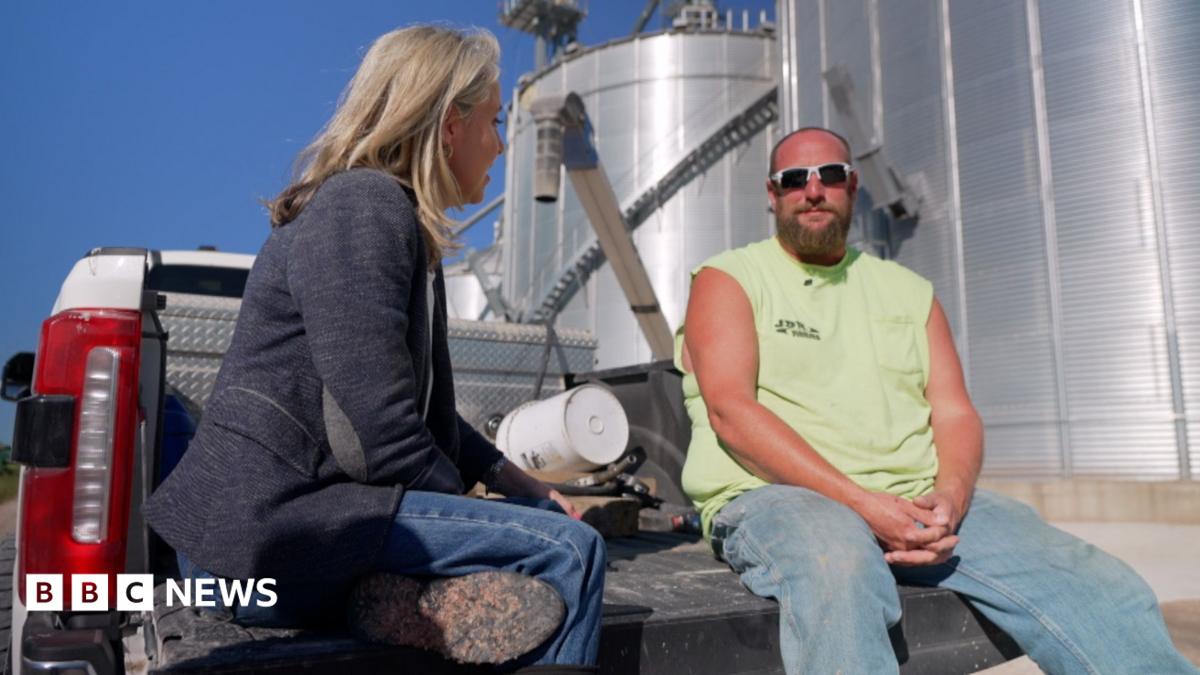
Watch: Will disenchanted Iowa Republicans reject Trump in the midterms?
There are just weeks to go until the US midterm elections that will decide control of Congress, with campaigning in full swing around the country and voters weighing who to back at the ballot box.
The elections will have a potentially major impact on the remainder of President Donald Trump’s time in office. He is facing challenging political headwinds with concerns over rising costs and the war in Iran high on the minds of voters.
Ahead of the elections, the BBC’s Sarah Smith travelled across Iowa to speak to voters in the predominately Republican state.
Produced by Cai Pigliucci, filmed by John Landy and edited by Blanca Estrada

Celebrity Traitors’ Rob Beckett laughs off murder while Hannah Fry calls herself ‘rubbish’ baddie
Rob’s murder left all the Faithful confused while banished Hannah admitted her spreadsheets hadn’t helped her as a Traitor

Beckett’s kicked the bucket – as Claudia described his murder
While comedian Rob Beckett found being murdered funny in The Celebrity Traitors, Professor Hannah Fry said she’d cried more during her five days of playing the game than at any other point in her life.
Hannah was banished at the round table last night with 12 of the 15 remaining players writing her name on the slate – giving them a landslide 80% victory. Speaking straight after leaving the castle, she admitted that she’d found her time there to be a rollercoaster of emotions. “I laughed more, cried more and got more excited than I ever have in the entirety of the rest of my life combined,” she explained.
“I really preferred being Faithful. I think it’s just a much more authentic experience,” she added, saying that one of the lessons learned was that she hated “lying to people’s faces”. “I think there’s actually some pride in being a rubbish Traitor.”
The maths guru, who has two daughters aged eight and six with her ex-husband, said that being a Traitor had been far harder than playing as a Faithful – which is what she’d gone into the game to do. “One of the reasons why I didn’t want to be a Traitor is because the only way your game ends is by being banished or winning – having people vote for you and having heat on you is part of the role of being a Traitor.”
Hannah confessed she’d avoided voting for Julie Hesmondhalgh out of guilt because the actress was “lovely” and had instead gone for Jerry Hall as “the one person on that whole table who could handle being voted for”.
The 42-year-old said she always knew she might not last long in the game. “On the first day, I asked Michael Sheen who he would murder, and he said, ‘You’. At that point I knew I was really in trouble.”
And the BBC presenter also confessed that getting the roman numerals right in her final mission – to help with the group £8,000 – had been far tougher than it looked. “I knew that everyone was going to expect me to be the one to solve it, but I think people have this image in their heads that mathematicians just sit around thinking of big numbers all day – it couldn’t be further from the truth. I haven’t used a number since I was about 16, I’m all about the x’s and y’s.”
Along with the trickier moments, there was also some highs. “Killing Rob Beckett was one of the best evenings I’ve had in my entire life,” she laughed. “I was running through the woods in the middle of the night, opening the door to Rob’s face. It was delightful.”
Speaking after being killed face-to-face with the traitors, dad-of-two Rob said that he cared less about the game and more about the juicy stories the other celebs were sharing in the castle. “What I loved most was meeting everyone and talking to them,” he explained. “When you have Michael Sheen, Richard E . Grant, Jerry Hall, James Blunt, I don’t care who’s a Traitor. Give me the anecdotes, I want the gossip. So everyone was going back to the hotel writing ideas of who it might be in their notepad, and I’ve got a notepad full of anecdotes that they told me that can only get wheeled out when I’m drunk at a party.”
When The Traitors arrived as his crypt to tell him he’d been murdered, he responded jovially: “Thank you very much James Acaster!” But he did say he expected comedy sidekick Romesh Ranganathan to “avenge my death”.
Rob, 40, reckoned the only Traitor he’d potentially identified at the start was Richard E Grant – so was “gutted” when the actor blurted it out. But the funnyman realised too late how James Acaster had been giving him a wide berth. “I gave James the benefit of the doubt because he desperately wanted to be a Faithful, but then that’s the oldest trick in the book, saying that. He had been really quiet, and on reflection, he’d avoided me a lot which makes sense, because I know him quite well. And then Maya Jama does not change her personality, whatever’s happening. So she’s going to be a great Traitor, I think she could win it.”
Confessing he was happy to go home because he’d been missing his kids, aged eight and 10, Rob said his highlight in the castle has been hitting it off with Jerry Hall. “I love her. She’s got such an amazing energy. She’s just so chilled. We just floated on together. She tells me her life motto probably every eight minutes, and that is ‘what will be, will be’.”
He now wants Jerry, 70, to win – along with his close pal Romesh. “Jerry Hall’s my pick, a rank outsider, but she’s my pick. The ultimate finale would be Leigh-Anne, Jerry and Romesh staring down Acaster. Three on one and they take his sorry ass to the cleaners.”
He believes his relaxed way of playing the game far outweighs the high-pressure path that Hannah had been forced down. ”I’d say, don’t stress yourself about it. All the money goes to charity. Have a good time for a long time.”
One of the surprising things Hannah discovered in The Celebrity Traitors was that she is actually related to Irish comedian Joanne McNally because their cousins are married. “We’re basically sisters,” she laughed. “I really loved her so much. She described herself as coming out of the womb as a show pony – that’s the perfect description of that woman. She is phenomenal. She knows exactly who she is, and she is totally unapologetic about it. I cannot tell you how much I admire her.”
While she’d like to see Joanne win, Hannah now thinks that fellow Traitor Maya or Faithful Leigh-Anne are the most likely to reach the final. “I think Maya is playing the most amazing game. When someone looks like that, I think that you expect her to have a bit of a chip on her shoulder because she’s one of the most beautiful women alive, but she’s also just so much fun. No airs and graces, totally delightful to be around.”
She also believes that Leigh-Anne has a great chance in the game, because she’s been woefully underestimated. “My God, that woman hasn’t got a single thing wrong. She’s the most perceptive person I’ve ever come across in my entire life. Is she psychic?
“Leigh-Anne needs to keep quiet about how good she is because I don’t think people have necessarily noticed. As soon as Maya notices that Leigh-Anne is that good, she’s going to kill her.”
Last night’s episode ended with boxer turned YouTube star King Kenny being recruited into the turret – much to his enormous surprise. “Being a Faithful was fun, but being a Traitor is going to be better,” he declared.
Urging Maya Jama and James Acaster not to double-cross him, he admitted he had concerns about joining them halfway through the game. “I worry the Traitors can switch on me at any time.”
Like this story? For more of the latest showbiz news and gossip, follow Mirror Celebs on TikTok, Snapchat, Instagram, Twitter, Facebook, YouTube and Threads.
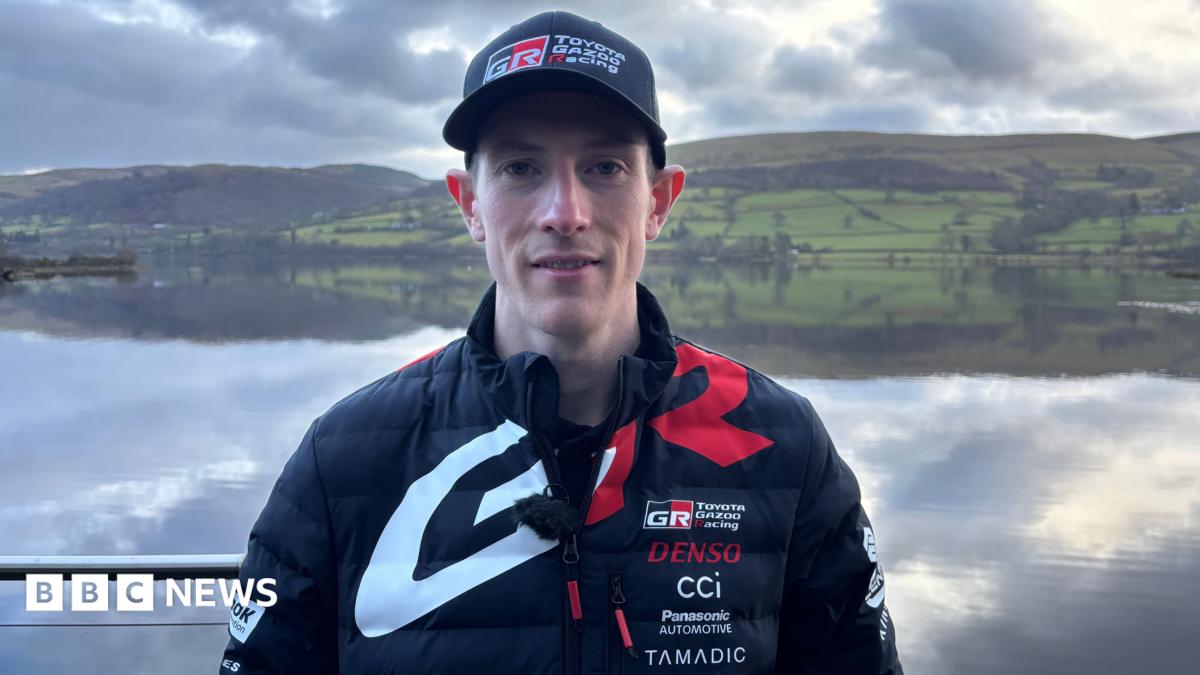
Rally champion Elfyn Evans gets hero’s welcome in home village of Dolgellau
The school visit was followed by the event in Dolgellau’s Eldon Square, where crowds had gathered despite the persistent rain.
Most of the supporters were local, but some had travelled significant distances to be at the event.
When Elfyn Evans spoke from the podium, he thanked his family for supporting him throughout his career, saying his grandfather had “taught me to drive probably far too early”.
Wyn Williams from Llanrwst and Neil Pringle from Betws-y-Coed were in Sardinia when Evans clinched the championship.
Williams said the celebration was “the icing on the cake after being in Sardinia”.
Pringle added that the evening was “fantastic” and that the first minister’s presence “shows what this means to Wales”.
“This is for Elfyn, his family and the country.”
Heledd Edwards travelled from Talerddig to Dolgellau and described Elfyn’s perseverance as an inspiration.
Several members of Elfyn’s family were also in the crowd. His aunt, Lowri Edwards, had travelled from Glan Conwy, saying she was immensely proud to have a world champion in the family.
“We’re absolutely thrilled, to be honest. He’s come so close and been terribly unlucky, finishing second five times – we’re absolutely thrilled.”
Dolgellau Town Council helped organise the celebration, with Deputy Mayor Nia Wyn Evans, saying: “We are absolutely thrilled and delighted to be able to welcome Elfyn back as a world champion; there’s a real buzz in the town.”

Residents douse workers with flaming gasoline during eviction in Peru | News
A bystander has filmed residents of a condemned building in Peru’s Huancayo throwing flaming gasoline on officials trying to evict them. Nine workers suffered severe burns in the attack.
Published On 16 Oct 2026
China tells Israel to stop ‘forced establishment’ of West Bank settlements | Israel-Palestine conflict News
“The Palestinian question is the greatest historical injustice of this century,” China’s foreign minister said.

Published On 16 Oct 2026
China’s Foreign Minister Wang Yi has told Israeli President Isaac Herzog during a meeting in Azerbaijan that Israel should stop and reverse its “forced establishment” of West Bank settlements, China’s foreign ministry said in a statement.
Wang told Herzog that China has consistently viewed the Palestinian question as the greatest historical injustice of this century, the ministry said in the statement on Friday.
Recommended Stories
list of 3 itemsend of list
Wang emphasised that the “two-state solution” is the right path to a resolution and said the immediate priority is to fully open access to the Gaza Strip so a humanitarian “catastrophe” is not allowed to spread.
Wang added that China is willing to work with the international community to push all parties to return to dialogue as soon as possible and seek a political settlement.
Wang is attending the Seventh Summit of the Conference on Interaction and Confidence-Building Measures in Asia, held in Baku, Azerbaijan, as the special representative of President Xi Jinping, China’s state news agency Xinhua reported.
China urges new Middle East framework
In September, Chinese President Xi Jinping visited Cairo for the first time in a decade and called on Middle East countries to oppose external influence and consider reshaping the region’s security order.
Xi’s rare visit arrived as Beijing seeks to expand its influence in the region amid the US-Israel war on Iran.
The talks covered the US-Israel war on Iran, with both presidents urging “diplomatic solutions” to reach a “comprehensive agreement to end the war”, according to a statement from Egyptian President Abdel Fattah el-Sisi’s spokesperson.
In March, China criticised the US and Israeli attacks on Iran, with Beijing demanding an immediate halt to the joint attacks. Wang told his Israeli counterpart, Gideon Saar, that the attack on Iran came as negotiations between Washington and Tehran had “made significant progress, including addressing Israel’s security concerns”, China’s foreign ministry said in a statement following the start of the war.
China was Iran’s largest trading partner, buying up to 90 percent of its oil, according to the US-China Economic and Security Review Commission. In 2021, Beijing signed a 25-year “comprehensive strategic partnership agreement” with Tehran.
At the same time, Beijing has spent the past decade cultivating closer ties with Gulf countries, including Saudi Arabia, Qatar and the United Arab Emirates, and remains a top trade partner of both the US and Israel.

Celebrity Traitors review: James Acaster is playing the weirdest game ever but it can’t last
REVIEW: The recruited comedian has bragged that he hasn’t told one lie during his time in the game but surely he’ll come unstuck soon?

James never wanted to be a Traitor and so it’s fair enough that he is struggling to behave like one
James Acaster is playing Celebrity Traitors in a brand new way, having been recruited to the dark side very much against his will. But against all expectation, he’s acing it.
The comedian, who told host Claudia Winkleman that he had no desire to be a Traitor at the start of the show, was picked to be one anyway, by Maya Jama and short-lived eejit Richard E Grant.
And while it was almost annoying when he simply refused to join in with Maya’s murderous glee as they pulled the plug on Bella Ramsey, I’ve come around to the idea so much that I’m finding his gameplay quite admirable.
Somehow James is managing to succeed as a Traitor while playing as a Faithful. Yes, it’s quite weird, but against the odds he’s making it work. And watching him try to justify every little thing he does – presumably so he can sleep at night and also so he can point this out to everyone afterwards – is fascinating.
In tonight’s episode he told King Kenny, the latest Faithful to make it through the turret’s revolving door: “I’m basically playing the game as a Faithful – I haven’t told a single lie yet, but I’m protecting Maya.”
He seemed almost happy, presumeably on the back of the previous night’s murder having gone so well. Because while Ross Kemp would have been FURIOUS to get murdered, and Romesh Ranganathan might have been a bit miffed too, Rob Beckett just laughed at them.
Afterwards James said he wished ALL the murders could be done face to face, because it had helped to ease his conscience when he saw that Rob, at least, was very much remembering it was all just a game.
Because he’s more Faithful than Traitor James has had no qualms about voting out two fellow baddies so far – Richard E Grant and Hannah Fry. So Kenny is right to be worried about being double crossed by him or Maya Jama, but for now James is genuinely delighted to have the fellow avid Faithful on board. “I’m feeling much more relaxed now that Kenny’s on the case,” he said. “You know when you get someone who comes in at work who you know will actually do all the jobs – and you can just hold a broom and look like you’re doing something.” Yup, James is going to hide behind Kenny for all he’s worth.
Meanwhile Maya is having a tough time of it because the Traitors are dropping like flies. I mean yes, she does keep voting for them too. But still, she must be feeling a bit lonely.
Now the Faithful are all pumped up again and Bash (Sebastian Croft) keeps mentioning James Acaster as a potential Trator so it might not be long before he’s forced to defend himself.
I wish someone would just ask him: “Are you a Traitor?” because if he can’t lie, it’ll be Richard E Grant all over again. Roll on tomorrow’s episode…
ike this story? For more of the latest showbiz news and gossip, follow Mirror Celebs on TikTok, Snapchat, Instagram, Twitter, Facebook, YouTube and Threads.

Sean McVay backs Rams’ special teams coach amid criticism
It was already going to be a short week, but Sean McVay navigated unexpected business that affected the start of preparation for Sunday’s game against the Arizona Cardinals.
After Monday night’s defeat by the Buffalo Bills, the Rams on Tuesday released struggling kicker Harrison Mevis, and signed Blake Grupe. Then left tackle Alaric Jackson was suspended by the NFL for punching a Bills player on the field after the game.
“You’re always ready for inevitable things to come up,” the Rams coach said Thursday.
McVay referenced a congratulatory phone call he received from then-Pittsburgh Steelers coach Mike Tomlin after the Rams hired McVay in 2017.
“He says, ‘How’s that tube?’” McVay recalled. “I said, ‘What do you mean?’
“He said, ‘That tube of [s—] that never stops coming down over your head when you’re a head coach.’
“But honestly, it’s part of it.”
The Rams hope that Grupe can clean up the kicking game and relieve criticism of the Rams’ struggling special teams. McVay said this week that he has “a lot of confidence” in special teams coordinator Bubba Ventrone, and that “no changes” are going to be made to that staff position.
“You’re continuing to figure out some of our identity,” McVay said Thursday, adding, “I have seen the intentionality from the group that I’m looking for.”
Grupe was signed off the New York Jets practice squad. Last season, he was released by the New Orleans Saints in late November after he made only 18 of 26 field-goal attempts. The Indianapolis Colts signed Grupe and he made all 11 of his attempts.
“For these last five weeks, I’ve been staying ready, been doing what I need to do to take advantage of an opportunity,” Grupe said.
Veteran David Quessenberry is on track to start in place of Jackson, who was initially suspended for two games without pay for striking Bills linebacker Bradley Chubb in the face after the Rams’ 37-34 overtime defeat. Jackson appealed the suspension and the league reduced it to one game on Wednesday.
Quessenberry, 36, is a ninth-year pro. But he has not started a game since 2023, when he played for the Minnesota Vikings.
Quessenberry played only 18 snaps on offense last season, none this season.
But McVay said Quessenberry was a “consummate pro” who has played “a lot of meaningful snaps” in his career and worked with the Rams’ first-team offense when Jackson has been held out while managing blood-clot issues.
“This is kind of why I’m here, when things like this happen,” Quessenberry said. “So I’m ready to go. This is what I’ve worked for. I’ve played this position my whole life. Go out there on Sunday and play ball. I’m fired up.”
This will be the first game without Jackson since last season’s late December game against the Atlanta Falcons. With D.J. Humphries starting at left tackle, the Falcons swarmed Matthew Stafford. Humphries was called for two crucial penalties, the Falcons sacked Stafford three times and intercepted three passes.
“He’s proven himself in this league,” Stafford said, adding, “ton of trust in what he’s capable of.”
Rookie lineman Keagen Trost practiced Thursday for the first time since he was placed on injured reserve before the season because of a hamstring injury suffered in the preseason opener against the Kansas City Chiefs.
Trost, a third-round draft pick out of Missouri, could be activated to the roster.
“It’s been a little bit of time since he’s played football,” McVay said. “But if he’s feeling good, expect him to be up for the game.
“But not at the expense of putting him in a situation that, if he did have to play, wasn’t good for him.”
Offensive lineman Justin Dedich, who has been on injured reserve because of a hand injury, also is eligible to return. But interior linemen such as guards Kevin Dotson and Steve Avila have remained physically sound.
“We’ll pray that we stay healthy,” McVay said, “but at some point we’ll start his clock and get him in there.”
Argentine students protest on campus over Milei’s austerity | Education News
Judge fines government for failing to fund universities as protests over Milei’s cuts turn violent.

Published On 16 Oct 2026
“This cannot go on!” students shout during an assembly in the middle of the central hall of the University of Buenos Aires Exact and Natural Sciences building.
It is part of Argentina’s prestigious public university system.
Recommended Stories
list of 3 itemsend of list
The faculty’s central hall is covered with dozens of banners protesting President Javier Milei’s spending cuts. Students have called an assembly to announce the occupation of the university, a traditional form of protest in Argentina meant to raise public awareness and pressure the government.
They say they will take over the building for a day. Many students and professors here are concerned about the impact of Milei’s austerity policies on public universities and say the future of free higher education is at risk.

“Our best professors are leaving en masse. With salaries that cannot cover their basic needs, they are leaving for private universities,” Emiliano Gato, a physics student who is part of the group, told Al Jazeera.
“I dream of doing research and teaching at the public University of Buenos Aires. It’s a prestigious school. But now, with this austerity plan, I don’t know what will happen.”
Public universities in Argentina have become a major battleground of Milei’s austerity plan. Students and professors are protesting the lack of funding and the erosion of salaries, which they say is a major threat to the country’s public education.
Milei is implementing one of the harshest austerity plans in Argentina’s history.
Since taking office in 2023, he has laid off thousands of state employees, shut down ministries, reduced subsidies and cut government-funded programmes. The measures were meant to fight high inflation, which was a major problem in Argentina. Almost three years later, inflation has fallen to around 2 percent a month. Milei says his plan is going well.
“Argentina is growing at a remarkable pace. We have now recorded 27 consecutive months of sustained growth, and today the country is expanding at four times its historical rate. This growth is being felt across almost every sector of the economy,” said Milei during a recent visit to Washington.
Ripple effects
But not everyone agrees. His plan is also having a profound impact on public education, welfare plans for people with disabilities, pensioners and others who depend on state support. The opposition has tried to block many of Milei’s reforms.
Last year, Congress overturned presidential vetoes and approved two laws, one increasing funding for public universities and another declaring a disability emergency. But Milei’s government has refused to implement them, arguing that Congress failed to identify how they would be financed.
A federal judge has now begun fining the government 100,000 pesos (around $70) a day for failing to implement parts of the financing law, which requires Milei’s government to restore university salaries and student scholarships lost to inflation, regularly update budgets and provide funding for research, hospitals and infrastructure.
And that’s why thousands of people took to the streets on Thursday to demand that the government implement it. All around Buenos Aires, long columns of people blocked the centre of the city as they called for a general strike. Although the protest was meant to be peaceful, it soon turned violent. Police fired tear gas and rubber bullets as protesters threw rocks.
The plaza in front of Congress resembled a battleground. At least 25 people were detained, and several others were injured, including members of the security forces.
Maria Teresa de Jesus is a professor in the University of Buenos Aires chemistry department. She says she makes around $700 a month and it has become difficult to make ends meet. “I have come to this protest as a last resort. I am professor. I love teaching, doing research. I shouldn’t be here,” she told Al Jazeera. “Public education is crucial in this country, to make education accessible to all. And the government is ignoring it.”
Many in Argentina continue to support Milei’s economic plan. They are hoping the government’s plan to exploit the country’s vast natural resources will pay off and translate into more jobs, higher wages and improved living standards.
But many others have stopped believing and are prepared to raise the stakes. They accuse Milei’s government of protecting the interests of a privileged few while asking the rest of the country to bear the cost of his economic plan.
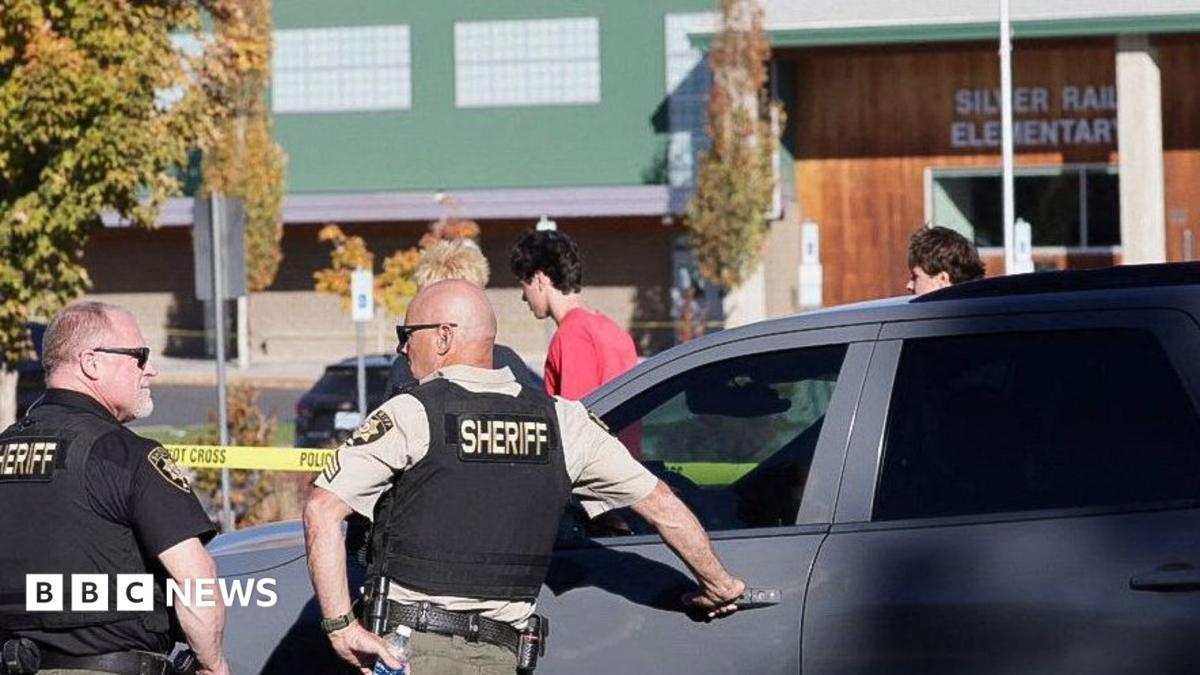
Three children and a teacher killed by 16-year-old at Oregon primary school
“We are stunned and heartbroken by this senseless tragedy,” Bend-La Pine Schools Superintendent Steven Cook said in a statement.
“No words can adequately express the grief our community is experiencing.”
Local law enforcement responded to reports of an active shooter at Silver Rail Elementary in Bend, Oregon, at 12:59 local time, Bend Police Department spokeswoman Sheila Miller told reporters.
The first call indicated that an unknown suspect had shot into a car, she said. Photos released from the scene show a red truck with bullet holes.
Minutes later, the local county dispatch received a flood of 911 calls and law enforcement were sent to the scene.
The suspected shooter was shot dead at around 13:02pm, Miller said.
While police said the shooter was a local 16-year-old boy, they declined to add further details pending the ongoing investigation.
Celebrity Traitors fans ‘work out’ Joanne McNally’s fate after gameplay ‘mistake’
Celebrity Traitors fans think that comedienne Joanne McNally will be banished from the castle next after she made something of a huge mistake during the roundtable

Celebrity Traitors fans think Joanne McNally will be banished from the castle next(Image: CREDIT LINE:BBC/Studio Lambert/Cody Burridge/BBC Creative)
Celebrity Traitors fans think Joanne McNally will be banished from the castle next.
The Irish comedienne, 43, is currently playing as a Faithful on Claudia Winkleman’s hit BBC game show but one tactic she seems to have employed at the roundtable has seemingly sealed her fate. During Thursday’s episode of the programme, she voted for actor Sebastian Croft to be banished, thereby claiming she believed he was a Traitor.
But the majority of the players had correctly guessed that scientist Dr Hannah Fry was in fact a Traitor, and this was not the first time Joanne had gone against the status quo. She said: “I feel like we’re getting into the habit of punishing vocal Faithfuls, and, at the roundtable, you cannot.”
In the turret, Maya told fellow Traitor James Acaster: “She could blow the whole thing up but no one is expecting her because she’s so all over the place.”
Ensure our latest headlines always appear at the top of your Google Search by making us a Preferred Source. Click here to activate or add us as your Preferred Source in your Google search settings.
Earlier in the episode, Joanne seemed to raise suspicion that she was a Traitor, accidentally claming that she had been the Hide & Seek game when Ross Kemp said: “I looked at everybody when we got out of those cars and I thought I was going home, and it was honestly, an awful experience.”
It was then that Joanne bizarrely chimed in with: “It was horrible…it was…I wasn’t there I mean but I was watching.”
At the roundtable, Hannah had claimed that Traitors tend to deflect attention from themselves by voting against the grain.
Reacting to the apparent tactic, one fan wrote on X: “Hannah bringing up traitors voting for random people followed by Joanne voting for Bash… babes.”
Another said: “i do fear joanne is absolutely f***** at the next round table though, especially after throwing out a random vote for bash when almost everyone else had gone for hannah, even the actual traitors. it’s not looking good for her.”
A thrid wrote: “Joanne on another planet because her logic is nonexistent lmao,” and another said: “One of the traitors could wear their traitors cloak to the roundtable and Joanne would somehow vote Claudia.”
A fifth said: “Hannah’s point about traitors not voting for who everyone else seems to vote for is a good point, but why is Joanne not being questioned when she keeps doing exactly that.”
Like this story? For more of the latest showbiz news and gossip, follow Mirror Celebs on TikTok , Snapchat, Instagram , Twitter , Facebook , YouTube and Threads .

Heidi Burge Horton dead: WNBA player inspired a Disney movie
Heidi Burge Horton, a former WNBA player who started her basketball career alongside her twin sister at Palos Verdes High School and inspired a Disney Channel Original Movie, has died. She was 54.
Horton died Oct. 5 after a battle with gliobastoma, a type of brain cancer, according to an online obituary. The former University of Virginia standout was reportedly diagnosed with the Grade 4 cancer last year and briefly went into remission, but the tumors returned in July, according to Houston news site Chron.
“We are deeply saddened by the passing of Heidi Burge Horton,” the Virginia women’s basketball team said in a statement posted last week on X. “Heidi was a cherished member of the Virginia Women’s Basketball family, her legacy will forever be a part of Virginia Athletics.”
Horton and her identical twin, Heather Burge, played four seasons at Virginia, where they helped the team win three Atlantic Coast Conference titles and make three NCAA Final Fours under future Hall of Fame coach Debbie Ryan. Among their teammates at college was Dawn Staley, the Hall of Famer and Olympian who coaches the University of South Carolina.
“We are all heartbroken!” Staley wrote on X following Horton’s death. “We love you Heidi. May your soul rest in peace and your body pain free.”

The University of Virginia’s Heidi Burge, right, with sister and teammate Heather Burge during the 1991 NCAA women’s championship game against Tennessee.
(Jim Gund / Getty Images)
After graduating from college, Horton and her sister headed overseas to play professionally in Europe. When the WNBA was formed in 1996, she joined the Sparks to play in the inaugural season alongside a familiar face, Lisa Leslie.
“I played with the twins since we were 14 years old,” Leslie wrote, along with a broken heart emoji, in the comments of the WNBA’s Instagram post announcing Horton’s death. “I’m so sad to hear this! I pray for the whole family.”
Heidi Ann Burge was born six minutes after her twin sister, Heather Marie, on Nov. 12, 1971, in Harbor City. She grew up in Redondo Beach before her family moved to Palos Verdes so the sisters could attend the high school there, according to a notice by Eickenhorst Funeral Services.
The twins didn’t grow up playing basketball but were recruited by Palos Verdes High‘s coach, who noticed their towering height. Both sisters were 6 feet 1 by ninth grade and would grow to be 6-5.
Horton was more resistant to trying out than her sister, and both were novices when they joined the team. The sisters would become star players over the course of their high school careers, but they were praised more for their character and work ethic than their impact on the court.
“I don’t think they’ve had a weekend off in three years,” their coach, Wendell Yoshida, told The Times in 1989. “They’ve practiced when they didn’t want to practice. They’ve worked through the tears, the sweat, the hurt, the pain. That’s what made them special. They didn’t make it just because they’re tall.”
Horton was known as the more outgoing and gregarious of the pair, but both sisters were described as being inquisitive, opinionated, fiercely loyal and competitive.
The adjustment to the college game was a bit rough for them at first, and the sisters did not get much playing time together until their junior year. They developed a reputation for being prone to mistakes and turnovers and were considered a bit soft. But once again, the sisters put in the work to improve and became key pieces for their team.
“When we did cry it was mostly out of frustration,” Horton told The Times in 1992. “Just not being able to do the things the other players could do. … Our defense wasn’t effective enough for us to deserve to be out there together. Now, we’ve proved offensively and defensively that we are an unstoppable pair when we get to play together.”

Heidi Burge, right, rises up to block Houston Comets guard Kim Perrot during a game on July 16, 1997.
(Mark J. Terrill / Associated Press)
After graduating with degrees in Spanish and rhetoric and communications studies, Horton played basketball professionally in Europe. After the establishment of the WNBA, she played for the Sparks in 1997 and the Washington Mystics in 1998 before retiring after two seasons.
Horton and her sister inspired the 2002 Disney Channel Original Movie, “Double Teamed.” The movie told a fictionalized account of the twins’ time at Palos Verdes High School. Horton was portrayed by Annie McElwain.
After retiring from playing, Horton moved to Houston, where she briefly served as a commentator for the Comets. She later became involved with Hoops-School, a youth basketball camp where she served as a coach and mentor.
“When you had the kind of coaching I did, you have to work really hard,” Horton told the Buzz Magazines in 2024. “But I also want to give a lot of credit to my coaches. Now I get to give the golden nuggets of wisdom to the kids I coach.
“Second graders, fifth graders, they listen,” she added. “That’s the biggest reward in your whole life. I had so many people pour into me, and I get to just pour it right out. That’s the torch.”
Horton is survived by her husband, Patrick; their children, Jonathan and Holly; her twin sister, Heather Quella, and other loved ones.
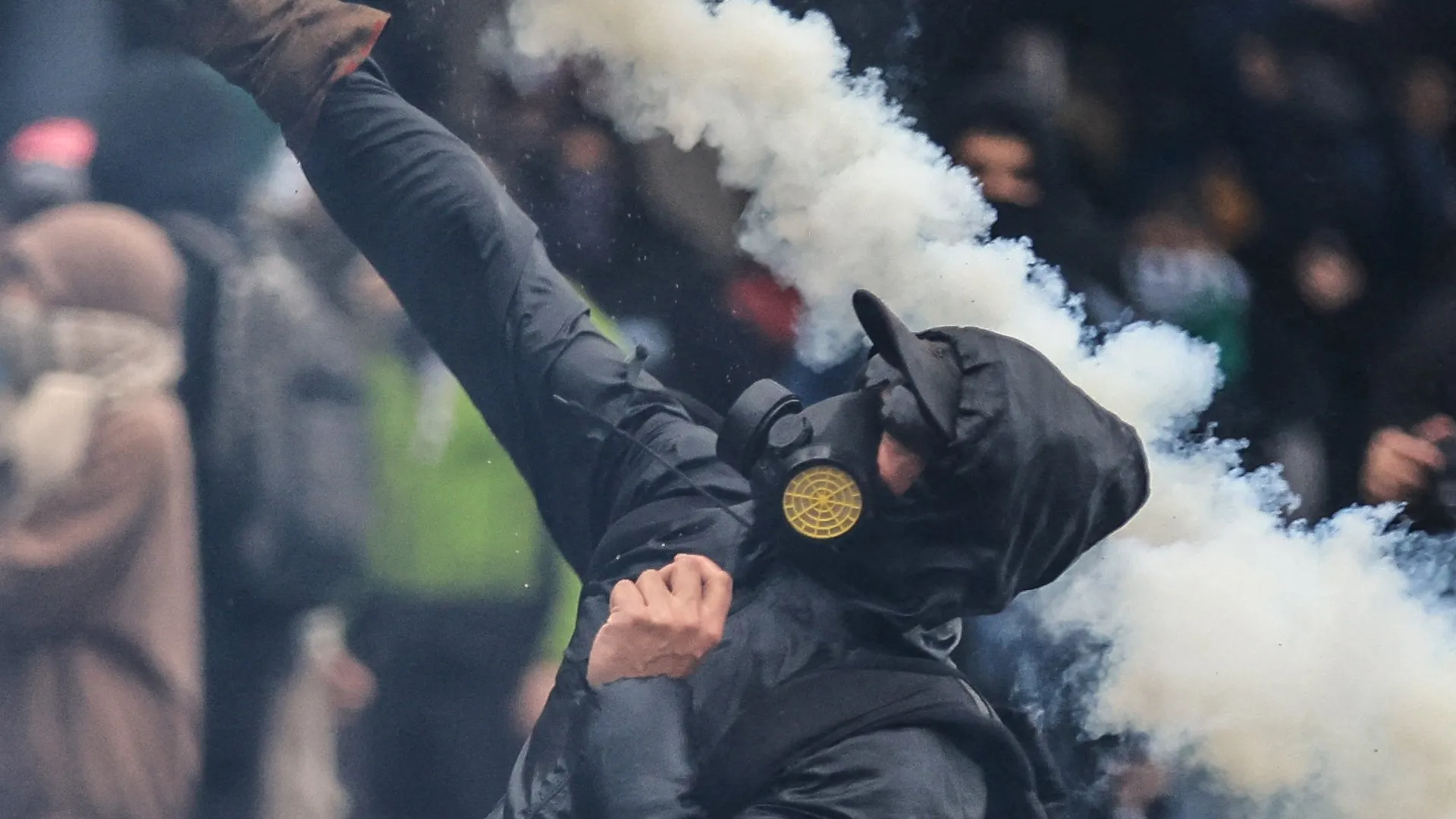
Clashes erupt at protest over university funding law in Argentina | Protests News
Protesters clashed with police in Buenos Aires as students and teachers vented fury at the government’s refusal to enact a law to boost education funding. President Javier Milei says implementing the law would threaten his budget-balancing plan.
Published On 16 Oct 2026
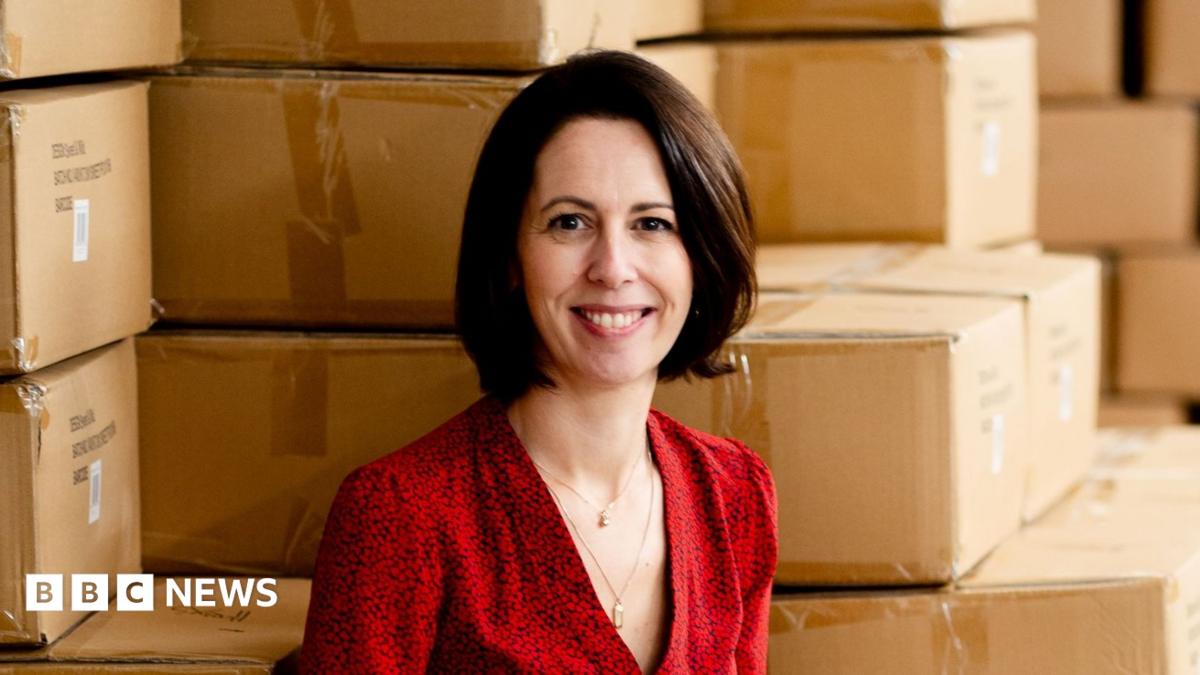
Is women’s health content being ‘shadowbanned’?
When Irene Breen got a notification in January 2025 that Instagram was removing adverts for her company’s pregnancy pillows, she was confused. What was so offensive about a pillow?
She was later told on a call with Meta that the problem was the word “pregnancy”.
“We had to scrub the word from our entire website… from the product name,” Breen said. “We had to remove all our URLs which had pregnancy in them and rename them all.”
The restrictions were eventually lifted but, she said, it took 10 months of conversations with Instagram’s parent company Meta – by which time her business had suffered a significant financial hit.
Meta, which also owns Facebook, declined to comment on specific cases, but told the BBC that while businesses can run adverts that promote wellness, sexual health and reproductive products and services, there are restrictions to avoid users across countries and cultures having a negative experience.
It’s not just businesses taking out paid adverts who claim their content has been unfairly restricted.
Women’s health creators and charities have told us their content has been removed, had sensitivity filters added, or had its reach suppressed – a practice known as “shadowbanning”.
The campaign group CensHERship monitors claims that women’s health content is being suppressed.
In a report last month, it surveyed nearly 200 creators, clinical providers, health brands, charities, and educators – 96% of whom said they had experienced restrictions in some form.

Los Tigres Del Norte’s Tiny Desk performance is radical Latinidad
Los Tigres Del Norte will perform this Saturday at Anaheim’s Honda Center. Ahead of rocking the Pond with its classic hits, the famed norteño band brought its signature sound and activism to NPR’s Tiny Desk Concert. The performance closed out the series’ Hispanic Heritage Month celebration, dubbed as “El Tiny.”
Composed of the Hernández brothers (Jorge, Hernán, Eduardo and Luis) and cousin Óscar Lara, Los Tigres Del Norte was founded in the late 1960s in the Sinaloan town of Rosa Morada and settled in San José. It has sold millions of records worldwide with songs about the drug trade, unrequited love and immigrant life in this country.
That theme of immigrant struggle within the U.S. was top of mind when the group performed at NPR’s Washington, D.C., offices.
The group was recently honored by the city of Minneapolis in September for defending the rights of immigrant communities for decades, and for standing in solidarity with the city following the large-scale immigration enforcement campaign that took place there earlier this year. Minneapolis Mayor Jacob Frey proclaimed Sept. 9 Los Tigres del Norte Day.
“[Following the Immigration and Customs Enforcement raids], they told the people of Minneapolis, the Latino American community that we are one, that we are united and that we’re going to do everything possible for the people that we love,” Frey said in a September news conference.

Los Tigres’ director and lead vocalist Jorge Hernández told The Times the honor came as a surprise to the group, who was in town for the 39th annual Hispanic Heritage Awards to present the people of Minnesota with the Humanitarian Award for their collective acts of solidarity with the immigrant community throughout the ICE raids.
The frontman said he was humbled by the action and was touched to spend time with members of the Minneapolis community who worked on the front lines during the ICE surge.
“There were Latinos present who set an example for how to support people in [a time of chaos],” Hernández said. “Those who were documented brought food to families who were undocumented so that they didn’t have to go outside to face the problems that were made possible due to [the Trump administration]. It’s because of action like those that we showed up for the city.”
Immediately after its time in Minnesota, the band flew out to film the Tiny Desk set.
The performance was a long time coming, according to Hernández.
“It was something beautiful and historic for us which should’ve happened 10 to 15 years ago,” he said, blaming conflicting schedules for the delay.
Though postponed, the 73-year-old musician knew the band’s messages would land with as much timeliness as ever.
In his introduction for Los Tigres Del Norte, NPR’s “Alt.Latino” host and “El Tiny” coordinator Felix Contreras spoke about why he wanted the band to perform as part of Tiny Desk’s month-long celebration of Latinidad.
“Our community is under attack and it’s not the first time … and it takes away our humanity,” Contreras said before Los Tigres kicked off the set with their hit “Somos mas Americanos.” “And for as long as I can remember, these gentlemen have been giving us back our humanity.”
Opening with the 2001 track was notable as the song flips jingoist U.S. narratives about who can call themselves American. The lyrics assert that Mexicans are more American than “gringos” and highlight how a large swath of the U.S. once belonged to Mexico.
Los Tigres let their songs do all the talking as they played straight through a series of tunes from across several decades, including 1995’s “Golpes en el Corazón,” 1997’s “Quiero Volar Contigo,” 1989’s “Ni Parientes Somos” and the 1986’s bittersweet single “La Puerta Negra.”
Hernández said the group wanted to use the platform to bring further awareness to the struggles immigrants continue to face in this country with an audience that notably skews more American than Los Tigres is accustomed to.
“We performed songs that talk about the problematic systems [in the U.S.] that have been around for years, but that are right now worse than ever before,” Hernández said. “The songs we sang [for Tiny Desk] have a lot to do with our society. I hope the wider public can listen to it and translate the songs to English so that they can connect to the lyrics.”
He said he hopes that the band can set an example for younger people that political messaging through music can empower artists, not hinder them.
“We’ve been singing songs since the ’70s about immigration and problems our community faces,” Hernández said. “As an artist, if you see a problem that affects your community, no matter how much you ignore it, you must realize that you are an active participant. You can’t stay quiet, your songs should talk about your problems so that through your work you can connect with and inform people.”
One thing that has continued to surprise and inspire Hernández over the last few years is seeing younger generations of fans celebrate his group’s music.
“They are the future and we sing our songs to them so that they can hear about the problems in our community that have existed and that persist,” he said. “At some point in life you will face big problems and it will be important that you know your history, what you stand for and how to defend yourself. We want to help people know their rights and be prepared to know how to act in difficult times like right now.”
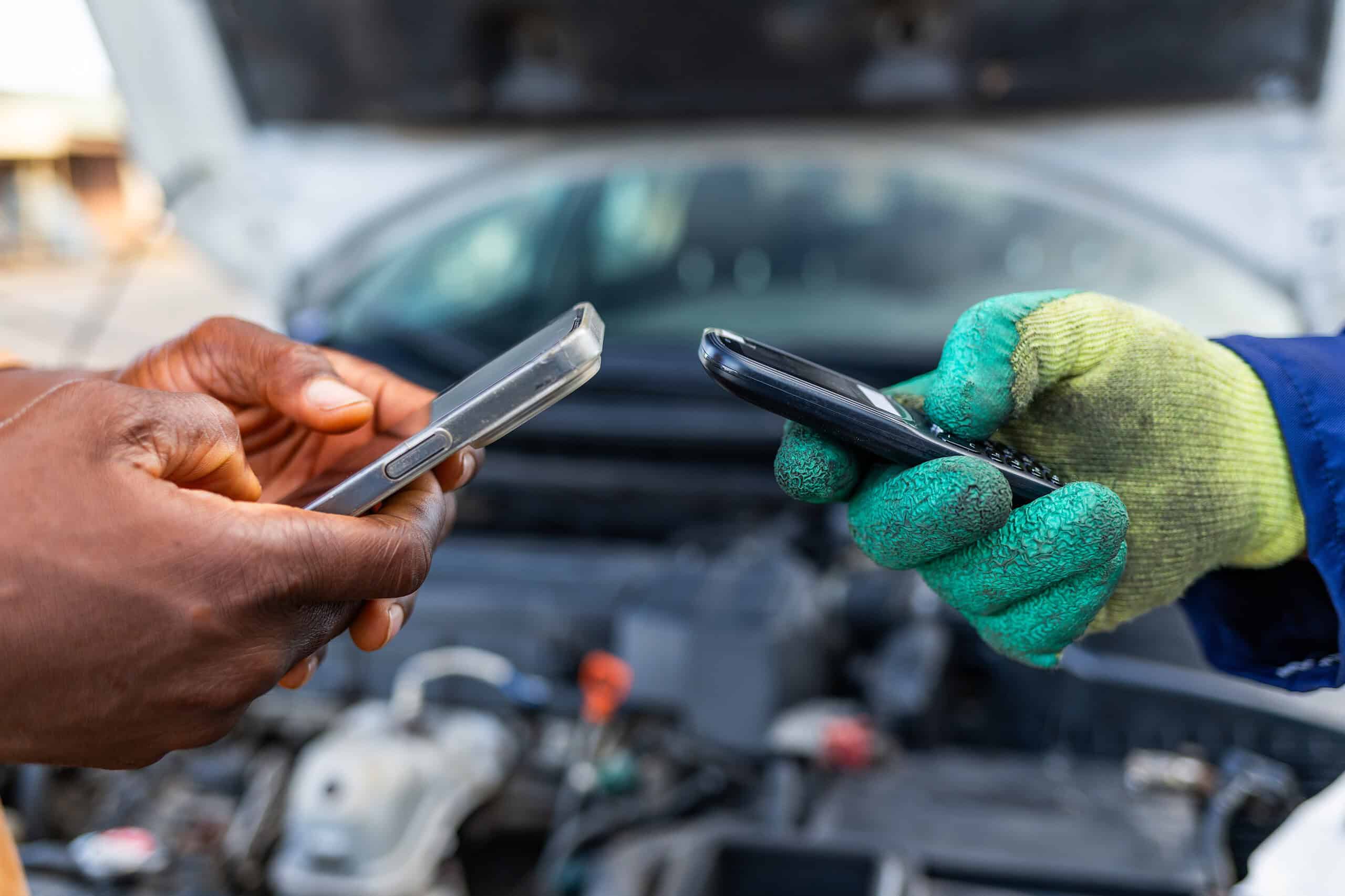
Rwanda’s eKash Instant Payment System Sees Explosive Growth
Investments in instant and cross-border payment systems fuel adoption.
From the start of August to the end of September, the National Bank of Rwanda saw transactions on its eKash instant digital payment system jump from 140,000 to 1 million per month.
The value of transactions also rose sharply, from about $7 million per month to around $1.5 billion per month.
The Rwandan government considered payments a public good and invested in eKash as part of the digital public infrastructure, provided that the new platform ensured a level playing field between mobile money operators and banks, said Soraya Munyana Hakuziyaremye, the Governor of the National Bank of Rwanda, during a Governor Talk at the IMF and World Bank annual meetings in Bangkok.
eKash Takes Flight
The central bank, taking a page from leading operators of instant payment systems like India’s UPI and Brazil’s PIX, decided to eliminate existing bilateral relationships that mobile money providers had with banks and microfinance institutions and mandated that all person-to-person transactions take place on eKash. It also capped transaction fees at a hundredth of what users might have previously paid.
“For transactions that were above a million [Rwandan] francs [about $679], you could pay up to the equivalent of a $2 fee for a transaction,” Hakuziyaremye said. “Today, the transfer fee is capped at 20 francs, or less than $0.02.”
Without the mandatory routing requirement, she added, the central bank could not have reduced transaction costs.
To soften the blow the mandate had on the bottom lines of the affected banks, mobile money providers, and microfinance operators, the central bank showed them possible new revenue streams from offerings that leveraged the transaction data collected by eKash.
“They can negotiate with our national switch for the data they need at an aggregated level to offer more lending to their clients, since they have the history of their transactions, and use alternative credit scoring instead of asking for collateral for every single loan they give,” said Hakuziyaremye.
Access to credit remains a major concern for the National Bank of Rwanda, or NBR, as 92% of people have bank or mobile money accounts, but only 20% have access to credit or microcredit.
“It is still a very huge gap,” she said. “So, tracking the financial health indicators will help us improve the financial well-being of citizens.”
Cross-Border Integration
The East African country is also experiencing rapid advancements in cross-border payment integration at the regional and continental levels.
The NRB is seeing the East African Payment Master Plan, adopted by the East Africa Community, or EAC, in 2025, begin to bear fruit. The central bank launched a pilot that integrates eKash with its eastern neighbor’s Tanzania Instant Payment System, or TIPS.
“We want to use this as a blueprint for a framework to integrate payment systems in the region,” said Hakuziyaremye.
At the same time, the country is part of the Common Market of Eastern and Southern Africa (COMESA), which has its own regional payment system, the COMESA Clearing House.
The NRB is actively integrating its payment systems with the African Continental Free Trade Area’s Pan-African Payment and Settlement System (PAPSS), which seeks to deliver instant payments to beneficiaries in their local currency anywhere in Africa.
When faced with regional cross-border instant payment transactions, NRB agreed to route all of its intra-EAC payments through the regional EAC payment system and to route transactions outside the EAC through PAPSS.
“I believe that this is the approach to take,” she said. “It’s not duplicating the regional payment system, but allows cross-regional payments for regions that already had regional payment systems.”
Rob Daly covers fintech and the economy. Contact him at rdaly@gfmag.com.

Friday 16 October Malaysia Day in Malaysia
It commemorates 16 September 1963, when the former British colony of Singapore and the East Malaysian states of Sabah and Sarawak, joined the Federation of Malaya to create the Malaysian Federation.
Singapore only remained in the federation for two years, leaving on 9 August 1965.
Originally this date was planned for 1 June 1963, but it was delayed twice; once to 31 August to make it coincide with an older national day, and then delayed again to allow referendums to take place in certain regions.
Malaysia Day has only been a national holiday since 2010. On announcing this holiday, Prime Minister Datuk Seri Najib Tun Razak said the day would involve activities that would foster the Malaysia spirit and would be celebrated with formal events such as a parade to commemorate the historical moment. He added that it should remind the Malaysian people about their struggle in achieving independence.
On 31 August, Malaysians celebrate Independence Day (Merdeka Day), so it is unusual for a country to effectively have two independence day holidays.