



Israeli forces blow up mosque minaret in southern Lebanon | Israel attacks Lebanon
Video shows Israeli forces blowing up a mosque’s minaret in Khiam in southern Lebanon. Israel says it is fighting Hezbollah but has forcibly displaced more than a million people and stands accused of trying to depopulate the entire south of the country.
Published On 24 Mar 2026

Royal Caribbean ‘cancels multiple scheduled cruises for 2027’ & offers refunds to customers with already booked trips

ROYAL Caribbean has reportedly canceled a number of scheduled cruises out of Miami this summer.
The cruise ship operator is said to have told guests with already booked trips they are eligible for full refunds if offered alternatives do not work.

In an email seen by Royal Caribbean Blog, the company tells customers: “As part of our ongoing itinerary planning process – which sometimes requires flexibility due to scheduling, port agreements, or operational needs, Freedom of the Seas will be redeployed for our Summer 2027 season.
“We know how much effort goes into planning your vacation and apologize for the inconvenience.”
It is understood the liners will be redeployed to Southampton in the United Kingdom.
A spokesperson for Royal Caribbean told The New York Post: “Freedom of the Seas will sail from Southampton for the 2027 summer season, reflecting the continued strength of the UK & Ireland market.
“The move represents an upsizing of capacity and brings a Freedom Class ship — long regarded as a favorite among British and Irish guests — back to the region.”
Upwards of 20 voyages on Freedom of the Seas between May and September are thought to have been moved.
The trips were scheduled to depart from Miami to the Bahamas, Aruba and Curaçao.
The decision comes just weeks after Carnival Cruise Line pulled the plug on 11 routes.
The scrapped trips were aboard Carnival Firenze, the line’s Italian-themed ship that sails from Long Beach, California in short runs.
Carnival said the affected departures were scheduled between October 12, and November 16.
The change in Caribbean’s schedule means customers have been invited to rebook on alternative sailings or claim full refunds.
The email to customers adds: “Regardless of the sailing length of the cruise you move to, if your booking was already paid in full and your cruise fare decreases, we’ll provide you with a refund for the difference.”

Latest cruise line news
- Norwegian and Carnival previously cancelled all sailings to a popular tourist spot
- One major cruise line was blasted for quietly introducing a mandatory fee for all its restaurants and experiences
- Royal Caribbean added America’s Got Talent stars to the entertainment roster
- One trip was deemed the ultimate family cruise as it offers water roller coasters and a private island
- Major US cruise operator suddenly cancels scheduled voyages and offers passengers full refunds

Accountability for international humanitarian law is a ‘thing of the past’ | Human Rights
Former prosecutor at the International Criminal Court Geoffrey Nice says that the US-Israel war on Iran was not based on imminent threat and warns that holding powerful states accountable is ‘unrealistic.’
Published On 24 Mar 2026

Chappell Roan says she has ‘zero tolerance for aggressive behaviour’ after Jude Law’s daughter left in tears
CHAPPELL Roan has spoken out again in the war of words between her and the famous family who accused her of being rude to fans.
A storm of controversy was sparked when ex-Chelsea and Arsenal footballer Jorginho accused the singer of sending her “aggressive” security over to his step-daughter and allegedly berating the child and her mother at a hotel in Sao Paulo.
Jorginho is married to Catherine Harding who shares the 11-year-old girl, named Ava, with her ex, British actor Jude Law.
After the footballer lambasted Chappell on Instagram, the Pink Pony Club singer posted a video saying she had not noticed the young girl and did not send security over to speak to them.
But then Catherine weighed in on her own social media saying the security was very aggressive and left Ada in tears.
Now that the incident has gone viral, Chappell has issued another statement through her spokesperson.
“Chappell was not aware of any interaction between this mother/daughter and a third-party security office,” the spokesperson said.
“She did not see them at breakfast in her hotel, as she said in her video. She did not direct her personal security or anyone on her team to interact with them.”
The statement continued: “Chappell holds her own teams to the highest standards and has zero tolerance for any kind of aggressive behaviour towards her or her fans.”
Catherine and Ada had planned to attend Chappell’s set at the Lollapalooza festival as part of the child’s birthday present, but skipped it after the interaction with the security guard.
The furore kicked off when Jorginho put Chappell on blast when he wrote about an “upsetting situation” that had occurred at the hotel.
“My wife (@catcavelli) is in Sao Paulo for @lollapaloozabr. This morning, my daughter woke up incredibly excited, she even made a sign because she was so happy to see an artist she really admires, or used to admire.”
He continued: “By coincidence, they’re staying at the same hotel as this artist.
“During breakfast, the artist walked past their table. My daughter, like any child, recognized her, got excited, and just wanted to make sure it was really her.
“And the worst part is she didn’t even approach her. She simply walked past the singer’s table, looked to confirm it was her, smiled, and went back to sit with her mum. She didn’t say anything, didn’t ask for anything.
“What happened next was completely disproportionate.”
After Jorginho’s post blew up, Chappell filmed a video from her bed to refute his claims.
“I did not ask the security guard to go up and talk to this mother and child. I did not. They did not come up to me. I did not do anything. It’s unfair for security to just assume someone doesn’t have good intentions when they have no reason to believe it as there’s no action been taken,” she said.
“I do not hate people who are fans of my music. I do not hate children, like that is crazy. I am sorry to the mother and child that someone was assuming something.
“If you felt uncomfortable that makes me really sad. You did not deserve that.”
Jorginho and Catherine now live in Rio de Janeiro where he plays for the club Flamengo.
In 2014, Catherine was briefly in a relationship with Hollywood A-lister Jude Law.
Catherine fell pregnant during their time together, and the singer-songwriter gave birth to daughter Ada.
She and Jorginho started dating in 2019 and the pair welcomed their first child, son Jax, to the world in September 2020.
Jorginho and Catherine tied the knot in a stunning ceremony in Lake Como in 2025.
The Irish-born singer, 32, appeared on the 2020 edition of The Voice UK – under the name Cat Cavelli.

I went to the Caribbean island soaring in demand
THERE’S a Caribbean island that is booming in demand but barely any Brits go.
New research conducted by TravelSupermarket has seen a number of Caribbean destinations surge in demand, caused by the ongoing conflict in the Middle East.
And the research found that searches to Turks & Caicos were up 119 per cent, when looking at the first two weeks of March compared to the previous two weeks.
Not only that, but British Airways said searches for the Turks & Caicos were up 22 per cent this year, compared to 2025.
The islands are lesser visited by Brits, with the majority of tourists being Americans, with famous as celebs such as Kylie Jenner, Will Smith and Bill Gates visiting too.
This is likely to due to the lack of direct flights.
Read more on the Caribbean
However, I visited the island back in 2024 when Virgin Atlantic launched direct routes from the UK (which were sadly scrapped last year).
One of the main draws are the stunning beaches – so beautiful in fact they are often named some of the best in the world.
I spent my jet-lagged mornings walking the length of Grace Bay, with powder soft sand and quiet sunrises.
Even in the evening they were just as beautiful with pink sunsets ending the day.
And there is not just one, but two floating bars.
One of the most popular is Captain Oak’s Tiki Bar, which has even welcomed celebs such as Drake and Jake Harlow.
Tourists have to pay $20 to get there by boat or jet ski.
Otherwise there is the more vibey Noah’s Ark, which has a floating dance floor as well as sea swings.
If you want to stay on land, head to Da Conch Shank on a Wednesday (also named one of the world’s best beach bars) to join the 14-man marching band playing live music throughout the tables.
I recommend staying at Wymara Resort and Villas, with rooms that overlook the beach.
Our favourite Caribbean holidays
If you click on a link in this box, we will earn affiliate revenue.
Hotel Capriccio Mare, Dominican Republic
Facing the calm, crystal waters of the Caribbean Sea, Hotel Capriccio Mare looks like a bright white island villa. The hotel’s position on Bavaro’s coastline is perfect for exploring the popular resort town of Punta Cana. Whether it’s strolling the sands to grab a fresh coconut with a straw, or venturing out on a catamaran trip to Saona Island, this dreamy Caribbean resort is not one to miss.
Coconut Court Beach Hotel, Barbados
This friendly, family-run hotel is a slice of Caribbean paradise. This hotel sits smak-bang on a sugar-white beach with warm turquoise waters. Enjoy both the beaches of Barbados and its plethora of rum bars – there are about 1,500 of them on the island.
Sugar Bay Club, St Kitts
Set on the quiet side of St Kitts’ Frigate Bay, the boutique Sugar Bay Club offers superb value and wonderful views of the Atlantic Ocean. Staff are on hand to assist with island tours, from catamaran cruises to scenic railway excursions.
Antigua Yacht Club Marina Resort, Antigua
Amazing Antigua has 365 beaches – one for every day of the year – as well as a fascinating history. This resort in Falmouth Harbour is perfect for exploring the beautiful local area, including Pigeon Point, Nelson’s Dockyard and English Harbour.
Splash out on the Selling Sunset-esque villages if there is a group of you, complete with slides into the ocean and access to the Caribbean’s first ocean-water pool.
(Seven-night deals can be found for just under £3k each if travelling later this year).
The best way to get there is changing in the US with Virgin Atlantic, with flights around 12 hours.
Other airlines including Finnair, American Airlines and JetBlue also have connecting flights.
Otherwise we’ve found seven night holidays with return flights for as little as £1,569 each with loveholidays.
Here’s another cheap Caribbean island where you can find £2 beers.
And we explain why a holiday to Puerto Rico should be on the cards this year.
Spain’s hottest city has £2.50 wine and £15 flights
THERE’s a Spanish city that is set to be nearly 30C this week – and luckily for Brits it’s less than three hours from the UK.
Seville’s got everything Spain has to offer from affordable wine to beautiful plazas and free flamenco performances.
This week, temperatures in Seville are set to soar with highs of 27C, according to the BBC.
Thanks to its location in southern Spain, Seville often sits 17C and higher – even in the winter months.
It’s very easy to get to as well with direct flights from all over the UK although the cheapest is with Ryanair, who has £14.99 flights from London Stansted next month.
When it comes to what to do there, you’ll be spoiled for choice at the riverside city with lots of beautiful sites and great food for affordable prices.
On average, a meal at an inexpensive restaurant start from £10.50.
As for wine, it tends to sit between £2.50 and £3 – depending on where you go within the city.
Plaza de España is one of the biggest and most well-known landmarks in Seville.
It’s a huge semi-circular plaza stretching over 50,000 square metres with four bridges sitting over a canal decorated with brightly coloured mosaic.
It’s a favourite spot within the city for pretty pictures, and if you’re lucky, you might even spot a free flamenco dance.
If you want to get out onto the water, you can rent pedalos for a few euros.
The square even doubled as the planet of Naboo in the second Star Wars film.
In the middle of the city is the enormous Seville Cathedral – which is the biggest Gothic cathedral in the world.
You can choose to go inside if you wish, but as someone who has been you can see plenty of its grandeur from outside.
But if you want to head inside a standard ticket costs €13 (£11.25).
Other hot spots include the Real Alcázar palace and La Giralda tower.
Travel Reporter Alice Penwill visited the city two years ago. She said: “I loved strolling about Seville, particularly the Alfalfa neighbourhood.
“It’s got plenty of pretty little cafes and restaurants to explore – one of my favourites was Casa Toni which cooks up tasty paella.
“Salvador Square is beautiful in the morning time, take a stroll there and make sure to pick up some brunch from Sagasta.
“It has outdoor seating too so you can bask in the spring sunshine.”
Deputy Travel Editor Kara Godfrey has also visited the city and has some top tips on how to see its main attractions for free.
She said: “The Royal Alcázar of Seville, a palace dating back 1,000 years, offers limited free tickets on Mondays between 6pm and 7pm.
“Or for Seville Cathedral, there are 100 free tickets a day between 2pm and 3pm.”
Kara’s favourite bar is El Rinconcillo which is the city’s oldest tapas bar which dates back to 1670.
And you can get a huge glass of wine for £3.
Our favourite Spain holidays
*If you click on a link in this box, we will earn affiliate revenue.
Hotel Best Punta Dorada, Salou
The Spanish resort is a popular destination near PortAventura World, a theme park with over 40 attractions and huge rollercoasters. It’s also close to sandy beaches like Platja de Llevant, and the scenic Camí de Ronda coastal walk.The hotel itself has an outdoor swimming pool to enjoy, as well as two bars along with evening entertainment and shows.
Sun Club El Dorado, Majorca
With its palm tree-lined pool and Mediterranean backdrop, it’s a miracle this Majorca resort is so affordable. Expect a classic family holiday feel – where days revolve around soaking up the Spanish sunshine, chilling by the spacious pool and sipping on frozen cocktails. Set away from the busier resorts, it’s a good option if you’re after a more out-of-the-way escape.
Magic Aqua Rock Gardens, Benidorm
The Magic Aqua Rock Gardens Hotel is African-themed and less than a mile from the beach. It has two outdoor pools, including a children’s freshwater pool with a waterfall and a tipping water bucket for the little ones. There’s also an aquapark with slides, and a kids club for both younger children and teens.
Globales Montemar, Ibiza
For a calmer side of Ibiza, this hillside resort has two pools, a kids’ splash zone, and an all-inclusive buffet with a poolside bar. It’s a 10-minute walk from Cala Llonga’s shallow turquoise bay, offering a scenic, family-friendly base away from the island’s main party zone.
For more on Spain, here are last minute deals at four-star hotels in 30C temps from £249pp.
And this European city with 3,000 hours of sunshine a year named best destination to visit in 2026.

Contributor: Kamala Harris is polling well, which signifies nothing
When I read all the hype being heaped on Kamala Harris’ lead in early polls for the 2028 Democratic nomination, I have to chuckle to myself.
The release of a Rasmussen Reports poll in February was titled, “Kamala Harris Still Leads 2028 Field for Democrats.” One headline in the Hill predicted, “Kamala Harris may yet be the Democratic nominee in 2028.” A Washington Examiner piece about polling warned, “Democrats won’t get rid of Kamala Harris that easily for 2028.”
I chuckle not because I don’t believe the numbers, but because I don’t believe any poll this far out in an open contest is meaningful, let alone determinative. I’ve seen this movie before, and it didn’t end well.
In 2003, after managing the successful 2002 reelection campaign of California Gov. Gray Davis, I signed on as an advisor to the presidential campaign of Connecticut Sen. Joseph Lieberman — who, I needn’t remind anyone, had been the Democratic nominee for vice president in the 2000 election, which he and Al Gore lost in a nail-biter to George W. Bush.
Based simply on his high name identification from that hellzapoppin’ race, and the fact his name had been on the ballot in all 50 states just two years before, Lieberman initially led the Democratic field quite handily in almost every national poll.
An ABC News/Washington Post survey in January 2003 found Lieberman leading the Democratic field with 27%. A Gallup poll from that same month also placed him first, ahead of both John Kerry and Richard Gephardt.
A Pew poll in the summer of 2003 also found Lieberman atop the field, as the best-known candidate at 85% name recognition, and 58% support, ahead of Kerry, Gephardt and Howard Dean.
Boy, did we brag about Lieberman’s lead at every stop and in every press release. But in the end, the promising early numbers meant nothing. When actual votes were cast, Lieberman totally flamed out, receiving a measly 8.9% of the vote in the critical first primary in New Hampshire, finishing dead last, and dropping out of the race in February 2004, having lost every primary and caucus up to that point.
Why? A lot of reasons, including mistakes made by the candidate and campaign. But fundamentally because, when Democrats started to take a close look at and assess the full field, they relegated Lieberman to the status of a loser, and they wanted to move on. We heard a lot of, “He had his chance and lost.” Does Harris come to mind?
The fact is, we Democrats tend to put defeated presidential nominees in the rear-view mirror pretty quickly. Think of Michael Dukakis, Gore and Kerry. And let’s not forget, Harris obtaining the nomination in 2024 was a fluke; she didn’t compete in one primary or receive one primary vote. The first time she ran for president, in the 2020 cycle, she also didn’t win one primary or receive a single primary vote, because she ran a bad campaign and hightailed it out of the race before a single vote was cast. Two strikes and you’re out?
We Democrats just don’t renominate losers. The last time we did it was exactly 70 — yes, 70 — years ago, with Adlai Stevenson in 1956 after he had lost the 1952 presidential race to Dwight Eisenhower. Stevenson rewarded Democrats for this recycling effort by losing to Eisenhower a second time — by an even worse margin. Democrats learned their lesson: Reheating doesn’t work with failed candidates.
And, come on, Harris not only lost to Trump, not only lost all seven swing states, but was the first Democratic presidential nominee in 20 years to lose the popular vote. And her weak showing also helped Republicans wrest control of the Senate from Democrats. We’re supposed to imagine that’s a credible record on which to run again for the nomination?
All of these breathless stories about Harris leading the field nationally also never mention her perilous standing in her own home state of California. A Berkeley IGS survey in August revealed that by a margin of 18 percentage points, even her fellow Democrats in California did not want her to run again. A Politico poll this month showed Gov. Gavin Newsom with a 2-to-1 lead in California among voters leaning toward voting in the 2028 Democratic primary.
So have fun, Kamala Harris, enjoying your name-ID high while it lasts (although maybe a mite longer than your 107-day presidential effort).
Garry South is a Democratic strategist who has managed four campaigns for governor of California and played significant roles in three presidential campaigns, including that of Al Gore.

USC women blown out by No. 1 South Carolina in NCAA tournament
No. 9 USC struggles to contain Joyce Edwards and Madina Okot and commits 27 turnovers in a 101-61 loss to South Carolina in the second round of the NCAA tournament.
COLUMBIA, S.C. — Monday night served as a litmus test for ninth-seeded USC to see how a program on its way back to prominence measured up against top-seeded powerhouse South Carolina.
The Trojans were no match in the frontcourt against South Carolina, suffering 101-61 season-ending loss in the second round of the NCAA tournament.
South Carolina’s Joyce Edwards and Madina Okot got going early, scoring nine of the Gamecocks’ first 11 points. South Carolina would finish the game with 60 points in the paint. Edwards finished the game with 23 points and 10 rebounds and Okot had 15 points and 15 rebounds.
USC freshman Jazzy Davidson, who scored a phenomenal 31 points in her NCAA tournament debut Saturday against Clemson, missed her first two shots. But she recovered and found some offensive rhythm, finishing with 16 points. Kennedy Smith picked up the slack in the first half, scoring nine of USC’s first 15 points. Unfortunately, she struggled after that and finished four for 15 from the floor.
Londynn Jones was a spark off the bench for USC, finishing with 20 points to lead the Trojans.
South Carolina, meanwhile, will play No. 4 Oklahoma in the Sweet 16 on Saturday.
Davidson hit a three with 3:54 left in the first half that seemed to give the Trojans some life despite a 14-point deficit. However, things just got worse — USC (18-14) turned it over six times before halftime. South Carolina (33-3), meanwhile, went on a 16-0 run to take a 51-21 halftime lead.
“You know, you can lose, you can not necessarily be as good as a team, but I thought we were conceding,” USC coach Lindsey Gottlieb said after the game. “You don’t need to throw the ball away to the team. We had some careless things that I wasn’t pleased with and just wanted to see a different competitive level in the second half.”
The second half was not easy on USC, with South Carolina forcing three more turnovers in the first three minutes. The Trojans finished with 27 turnovers, which South Carolina converted into 29 points.

USC guard Jazzy Davidson battles South Carolina guard Raven Johnson for a loose ball during the first half of the Gamecocks’ win Monday in Columbia, S.C.
(Nell Redmond / Associated Press)
“They’re an elite defensive team, there’s no doubt about that. They have been all season. That’s definitely a huge part of their identity,” Davidson said of the Gamecocks. “We just had to be tougher with the ball throughout the game. The turnovers were another big thing for us just as a group.”
South Carolina also won the rebound battle 43-27, which compounded USC’s problems.
“I think we needed just a little bit better ball pressure. We just really didn’t box out well, either,” Smith said. “They had a lot of o-boards, I think Okot had about seven in the first quarter, so just trying to limit that is something I don’t think we did very well. I feel like going into the third and fourth quarter we did a little bit better, but we were in a little too deep.”
A tearful Davidson spoke about the influence Kara Dunn and Jones had on her as a player and a person during a short time. She added that said she’s excited to get back in the gym and return next season as an improved player.

USC guard Kennedy Smith drives under pressure from South Carolina guard Ayla McDowell Monday in Columbia, S.C.
(Nell Redmond / Associated Press)
“I need to get better. That’s kind of the bottom line,” Davidson said. “I think, obviously, it’s hard to lose in general, but losing this way really sucks, and I think I could have done a lot better for my team today.”
Gottlieb said there’s no doubt in her mind that Davidson will bounce back. She’ll have the benefit of playing alongside star JuJu Watkins, who sat out this season while recovering from a torn anterior cruciate ligament.
“Jazzy has, in particular, taken on every single thing this season and grown from it. That’s going to be part of her greatness,” she said. “I think she and I will look back at this day when we took a butt-kicking her freshman year in an NCAA tournament, and it will be very, very different at some point. And I think that’s because of how she’s handled every single situation.”


D.C. authorities hunt for two suspects after U.S. Park Police officer shot

March 24 (UPI) — Authorities in Washington, D.C., are hunting for at least two suspects after a U.S. Park Police officer was shot while on undercover duty in the nation’s capital.
The shooting occurred at about 7:30 p.m. EDT Monday near the 5000 block of Queens Stroll Place SE and the 4600 block of Hillside Road SE, the Metropolitan Police Department said in a statement.
U.S. Park Police Deputy Chief Scott Bretch told reporters in a press conference that the officer was riding in an unmarked police car as part of an ongoing U.S. Park Police investigation when the office was “ambushed” by at least two gunmen.
The officer was struck by gunfire, he said. Authorities said police did not return fire.
Bretch said the police vehicle continued down the street until it pulled over, where the wounded officer received first aid before being airlifted to the hospital with non-life-threatening injuries.
Bretch would not say what kind of investigation U.S. Park Police was working on or how the suspects fled the scene. It was unclear how many police officers were in the targeted police car.
Interim Metropolitan Police Chief Jeff Carroll said that they believe the suspects had targeted the U.S. Park Police officer in the vehicle for being law enforcement.
Authorities are searching for two suspects both described as Black males. One was dressed in a white hoodie with blue jeans, and the other was dressed all in black with a white stripe down his sleeves and pant legs.
D.C. Mayor Muriel Bowser said she had been briefed on the shooting.
“Our prayers are with the officer for a quick recovery and we are grateful for all our law enforcement officers and first responders for their quick response,” she said in a statement.
Attorney General Pam Bondi said she was also briefed on the shooting by Bowser and Carroll, stating the FBI and other federal law enforcement agencies will assist the Metropolitan Police Department “in any way we can.
“Please pray for the officer’s recovery,” she said.

Iran launches waves of missiles towards Israel | US-Israel war on Iran News
Published On 24 Mar 2026
Iran has launched a round of missiles targeting Israel, causing damage and injuries in Tel Aviv, as uncertainty swirled over possible talks to end the three-week US-Israel war on Iran.
The missiles triggered air raid sirens in Israel on Tuesday, including in Tel Aviv, where gaping holes were torn through a multistorey apartment building. It was not immediately clear whether the damage was caused by a direct hit or debris from an interception.
Israel’s Magen David Adom emergency medical service said: “Six people were lightly injured at four different sites.”
Police in Tel Aviv said they were dealing with “several impact sites of munitions”.
Israel’s National Fire and Rescue Authority said the search was on for people trapped in one building in Tel Aviv, adding that civilians were found in a shelter in another damaged building.
Meanwhile, the Israeli military said on Tuesday that its jets carried out a wave of strikes in central Tehran on Monday, targeting key command centres, including facilities associated with the Islamic Revolutionary Guard Corps’ intelligence arm and the Iranian Intelligence Ministry. It said more than 50 additional targets were hit overnight, including ballistic missile storage and launch sites.

Jane Fallon undergoes surgery after shock breast cancer diagnosis and reveals when she’ll get the all clear
JANE Fallon has revealed she has undergone surgery following her shock breast cancer diagnosis.
The author, who is the partner of Ricky Gervais, told fans earlier this month that she was suffering with breast cancer, despite having no symptoms before the diagnosis.
Now, Jane has confirmed that her operation is over and assured fans she is feeling in high spirits after the procedure.
Sharing some snaps of herself from hospital, Jane wrote to X: “So… I had my op today.
“I’m feeling remarkably fine, which is possibly the drugs & that might also explain why I’m cross eyed in pic 4).
“I had quite a lovely couple of hours drinking tea & reading the brilliant @CatSteadman ‘s new one (more on that later).”
Jane also shared an update on when she will get the all clear, explaining that it will be at least a further week.
She said: “The popsox have to stay on for 48 hours so that’s nice.
“Then 8-10 days wait for confirmation that they’ve got it all & the margins are clear (small % chance of more surgery if not).”
She is now resting up at home with the support of cat Pickles.
Jane has been with comedian Ricky for over 40 years, with the couple meeting back in 1982.
She is known for career as an author, having penned books such as Getting Rid of Matthew, Got You Back, Queen Bee, Worst Idea Ever, and Faking Friends.
Revealing her breast cancer diagnosis earlier this month, Jane assured fans not to “panic” and said her prognosis was “excellent”.
She said on Instagram: “About a month ago I was diagnosed with breast cancer – very early stage thankfully & the prognosis is excellent.
“I had a routine mammogram a week before Christmas. I had no symptoms but the brilliant radiographer spotted something iffy & sent me for further tests & eventually a biopsy.
“Since then I’ve had more mammograms, more biopsies and an MRI so they can pinpoint the problem area precisely. It’s been a lot, I’m not going to lie.”
The star added that she has been under “incredible” care.

15 Gen Z spots for shopping, eating and relaxing in Palm Springs
If you find yourself surrounded by towering palms, mod furniture, vintage-looking neon signs, a 26-foot Marilyn Monroe statue and a backdrop of bare desert mountains, chances are you’ve landed in Palm Springs.
Look, I get it: Palm Springs doesn’t exactly scream Gen Z. It’s long been known — and still functions — as a retirement haven. A place where older adults trade in puffer jackets for gallery strolls, pool lounging and taco sampling under cloudless skies.
But I, a Gen Z reporter, am here to say Palm Springs can be really fun, and it actually aligns with my generation more than you might expect.
“If you’re going to Palm Springs and you’re our age, you’re looking for spots that are content-creatable,” said Ava Bostock, a 25-year-old L.A.-based public relations professional who researches the intersection of media and youth consumer behavior. “We need the picture to prove we were there.”
Palm Springs doesn’t shy away from its past, and that’s exactly what makes it feel so current.
Gen Z, which covers those who are 14 to 29 years old, is fluent in the digital world, but we romanticize the analog: the grainy film photo, the thrifted wardrobe, the rotary-phone energy of another era. Palm Springs leans into that fantasy: sun-faded signage, bubblegum-colored motels, midcentury homes with breeze blocks and Old Hollywood flair. It’s a time capsule built for our aesthetic eye and our camera roll.
“When I revisit the past, the ’60s were so focused on the future and space age and what comes next,” Bostock said. “I don’t think our generation has that. It feels like we’re walking into the future backwards — like we’re so enchanted with the past.”
That fixation shows up in our Pinterest boards, photo filters and travel decisions. “The most iconic images of decades past are at your fingertips,” she said.
In a place like Palm Springs, where roadside signs, retro motels and Old Hollywood architecture are preserved like set pieces, Gen Z can find a slowed-down, stylized version of the past we’ve only ever seen online.
It’s not just about visuals. “The way we consume and vacation and travel is really dictated by content,” Bostock said.
That’s part of what makes Palm Springs feel uniquely Gen Z. It satisfies a generational paradox: a destination that’s hyper-photogenic yet relaxed and immersive. It’s a place where you can stage the perfect coffee photo, then put your phone down and just be.
So whether you’re tagging along with your desert-retreating parents or planning a weekend getaway with friends, here’s your Gen Z-approved guide to Palm Springs, from where to caffeinate and vintage shop to the best spots for dancing, wellness walks and content-worthy photo ops.

‘We booked a £99 mystery holiday and ended up outside Malta near a corner shop’
The pair paid extra to upgrade their stay, more for a city centre break and even more for transfers, food and tourist tax

Lauren booked a trip for two to Malta in January
A travel lover who tried a £99 mystery holiday bargain soon regretted it when it ‘turned into a nightmare’. Lauren Kirby and her friend each paid £99 for a trip, plus an extra £20 to change from Venice to Malta and then an extra £12 for a city centre hotel.
On top of that, there was another €3 tourist tax and €100 for transfers and food. But despite the extra outlay, they say the destination was ‘not worth it’. Lauren, 22, from Maidstone, Kent, says she will think twice before doing it again.
“We bought our ticket in August 2025 and went on the trip in January 2026,” she said. “We didn’t expect a five-star hotel for £99 but we did expect a basic level of customer service, which we don’t believe we received.
“Initially, we got Venice and paid £20 each to upgrade to Malta as we had been to Venice before, but hadn’t been to Malta. We changed this when we found out there was an option to do so and were really excited.
“But when they rang us to confirm the booking, that’s when the problems started. We were told we couldn’t go to Malta, even though we paid specifically to go there and then we were told we could go to Prague or Venice instead but wouldn’t get the £20 back.
“Which didn’t make sense when we’d already paid £20 not to go to Venice. After a lot of toing and froing and swapping agents, it was reluctantly agreed that we could still go to Malta. But after that point, my trust in them disappeared.
“The hotel itself was OK and the hotel staff were very nice. But we had paid £12 each on top of the £20 we already paid to stay in the city centre. “And our hotel turned out to be located a 30-minute drive away from the centre.
“Not what we paid for. It would have been significantly cheaper to book it ourselves. On top of this, the travel agents asked us for our login details to easyJet to be able to complete the booking – we were told that we could change the password afterwards.
“I think a reputable travel service would be able to do that themselves without needing to log into our accounts. The whole thing was highly disappointing as it was not what we had paid for. There wasn’t anything within walking distance apart from a corner convenience shop, so we were very annoyed that we had paid extra but didn’t feel we received anything for it.
“I don’t think I would do it again. So in future if I want a mystery holiday, I’d prefer putting a list of destinations in a hat myself and doing it that way.”

High school baseball and softball: Monday’s scores
Monday’s Results
BASEBALL
CITY SECTION
Angelou 14, Diego Rivera 0
Chavez 7, Grant 2
Cleveland 6, Chatsworth 2
Community Charter 21, Bert Corona 11
Eagle Rock 20, Contreras 0
Garfield 10, Huntington Park 0
King/Drew 4, Fremont 1
LA Hamilton 12, Westchester 2
Marquez 15, Maywood Academy 3
Maywood CES 5, Sotomayor 1
Mendez 7, RFK Community 1
North Hollywood 7, San Fernando 0
Northridge Academy 16, Reseda 6
Palisades 13, LA University 3
Port of LA 15, Dorsey 1
Santee 12, Los Angeles 2
SOCES 10, Arleta 0
Sun Valley Magnet 14, Lakeview Charter 3
Sylmar 6, Granada Hills Kennedy 4
Torres 20, Elizabeth 0
Verdugo Hills 2, Sun Valley Poly 0
SOUTHERN SECTION
Alta Loma 3, Colony 0
Arroyo 14, El Monte 0
Calvary Baptist 20, Packinghouse Christian 0
Canyon Country Canyon 11, Oak Park 3
Corona Santiago 6, Corona 2
Culver City 6, North Torrance 2
Downey 8, Santa Fe 6
Etiwanda 19, Los Osos 5
Garey 2, Sierra Vista 1
Indian Springs 3, San Jacinto 1
Knight 12, Golden Valley 6
La Quinta 12, Xavier Prep 2
Lennox Academy 21, HMSA 6
Linfield Christian 5, Ontario Christian 2
Long Beach Poly 10, St. Anthony 2
Loyola 12, Paramount 2
Moreno Valley 2, Long Beach Wilson 0
Ocean View 9, Sonora 6
Orange County Pacifica Christian 26, Horizon Christian 0
Oxnard 6, Grace 1
Palm Desert 5, Palm Springs 1
Paraclete 20, Trinity Classical Academy 6
Riverside North 9, Vista del Lago 8
Rosemead 3, Gabrielino 1
Shadow Hills 6, Rancho Mirage 5
Sherman Indian 18, California Military Institute 8
South Hills 4, San Dimas 1
South Pasadena 4, Alhambra 2
St. Bonaventure 10, Channel Islands 0
INTERSECTIONAL
California 12, Nevada Spanish Springs 6
Highland 5, Oregon Canby 5
Oregon Central Catholic 8, Quartz Hill 3
Oregon Lincoln 13, South Gate 0
Summit 4, Oregon West Linn 2
SOFTBALL
CITY SECTION
Animo Robinson 23, Stella 9
Bernstein 25, Mendez 24
Chatsworth 8, Eagle Rock 0
East Valley 28, Grant 9
Harbor Teacher 17, Dorsey 3
Jefferson 25, Santee 15
King/Drew 23, Locke 7
LACES 10, Westchester 2
Lakeview Charter 18, Bert Corona 1
LA Roosevelt 11, South Gate 9
LA University 28, Fairfax 0
Legacy 13, South East 0
Lincoln 17, Bell 2
Middle College 34, AHSA 17
Orthopaedic 16, Torres 4
Port of LA 15, Fremont 0
RFK Community 21, Belmont 9
San Pedro 4, Garfield 3
SOCES 17, VAAS 0
Triumph Charter 26, Valor Academy 5
Van Nuys 23, Franklin 8
Venice 20, Palisades 0
SOUTHERN SECTION
AAE 10, ACE 9
Anza Hamilton 8, United Christian Academy 7
Aquinas 7, Upland 6
Arroyo 7, El Monte 3
Azusa 5, Sierra Vista 3
Beckman 11, Irvine 0
Bishop Conaty-Loreto 14, Immaculate Heart 4
Burbank Burroughs 12, Vasquez 2
California Military Institute 27, Sherman Indian 13
Calvary Baptist 27, Packinghouse Christian 2
Capistrano Valley Christian 15, Ocean View 10
Chaparral 3, Elsinore 1
Corona Centennial 5, Edison 3
Gabrielino 10, Rosemead 9
Hacienda Heights Wilson 8, Bell Gardens 7
JSerra 8, West Torrance 0
La Salle 8, Rio Hondo Prep 1
Los Altos 1, San Juan Hills 0
Mayfair 4, Garden Grove 3
North Torrance 7, Hart 2
Ontario Christian 13, Linfield Christian 3
San Jacinto 11, Lakeside 7
Shadow Hills 10, Rancho Mirage 1
Sherman Oaks Notre Dame 5, La Canada 2
South El Monte 25, Mountain View 0
South Pasadena 10, Duarte 8
Temecula Valley 15, Temecula Prep 0
Valley Christian 7, Heritage Christian 3
Westminster La Quinta 15, Samueli Academy 5
INTERSECTIONAL
Animo Watts 29, Animo Leadership 28
Beaumont 9, Oregon Marist 0
El Camino Real 10, Peninsula 0
Lynwood 6, Rancho Dominguez 4
Marquez 13, Firebaugh 0
Mira Costa 10, Wilmington Banning 9
Oak Park 11, Granada Hills Kennedy 1

Al Jazeera reports from scene of attack on Tehran residential area | US-Israel war on Iran
The US-Israeli war on Iran has destroyed over 80,000 civilian units leaving many causalities, according to Iranian officials. Al Jazeera’s Tohid Asadi reports from a residential building hit in a recent attack.
Published On 24 Mar 2026

Deadly air attack hits pro-Iran Popular Mobilisation Forces in Iraq | US-Israel war on Iran
Video shows the aftermath of an airstrike in Iraq’s Anbar province on a headquarters of the pro-Iran Popular Mobilisation Forces, where at least ten people were killed during a commanders’ meeting.
Published On 24 Mar 2026

Peaky Blinders boss almost brought back Tom Hardy for huge Immortal Man twist
Peaky Blinders: The Immortal Man is Netflix’s number one film and writer Steven Knight has revealed a fan-favourite character nearly made a surprise comeback

Peaky Blinders film almost brought back Tom Hardy for massive twist(Image: BBC)
Peaky Blinders creator Steven Knight has revealed he scrapped a massive twist that would have brought back Tom Hardy’s iconic character Alfie Solomons.
The Venom star portrayed the Jewish cockney crime lord of Camden from the hit drama’s second season on and had a complex relationship with the Birmingham gangsters.
After being shot in the head by Tommy Shelby (played by Cillian Murphy) on Margate beach, Alfie makes brief appearances in the fifth and sixth seasons of the hit BBC series.
Some fans may have been disappointed that Hardy didn’t make an appearance in Netflix’s new film The Immortal Man, which sees Tommy returning to Small Heath to take on his estranged son, Erasmus ‘Duke’ Shelby (Barry Keoghan), who has taken over the gang.
However, Knight has since revealed he originally considered the possibility of Alfie making an appearance – and it would have been a massive twist on the fate of the character.
“I had an idea, which I haven’t really spoken about,” he shared with the Hollywood Reporter.
“Ever since he was shot on the beach at Margate [in season four], you’ve only ever seen Tommy and Alfie together alone.”
The fifth season reveals that Alfie had actually survived the gunshot wound to the face after Hardy lobbied Knight to bring him back.
But, as Tommy regularly glimpses the ghosts of his past, including the lingering image of his first wife Grace (Annabelle Wallis), Knight briefly considered revealing that Solomons was simply another apparition Tommy had been communing with.
“I thought, maybe [Alfie] appears, and we realise he’s been dead all that time,” Knight went on.
“Now, I nearly did that, and I didn’t do it, but that was a thought.”
Hardy’s demanding schedule may have also contributed to Knight’s decision not to bring him back, as the star has recently been filming the Paramount+ crime drama MobLand since the end of Peaky Blinders.
Get Netflix free with Sky for Bridgerton Season 4
This article contains affiliate links, we will receive a commission on any sales we generate from it. Learn more
‘Dearest gentle reader’, as the fourth season of Bridgerton follows second son Benedict love story, there’s a way to watch this fairytale-like season for less.
Sky is giving away a free Netflix subscription with its new Sky Stream TV bundles, including the £15 Essential TV plan. This lets customers watch live and on-demand TV content without a satellite dish or aerial and includes the new season of Bridgerton.
Thankfully, there is still a chance, albeit a slim one, that fans could see Alfie return alongside some other Peaky favourites as the series will be returning for at least two more series on Netflix and the BBC.
Knight confirmed that Duke will be appearing in the upcoming follow-up, which is set in post-WWII Birmingham, though it’s currently unknown if Keoghan will be reprising the role.
He also teased: “Some of the characters that are in [The Immortal Man] will appear in that. But I’m under strict instructions not to talk about it except to say that it’s happening.”
Peaky Blinders: The Immortal Man is available to stream on Netflix.

EasyJet to launch new seats with even more legroom for economy passengers
NEW economy seats being rolled out on easyJet flights will give passengers even more legroom, in a rare move.
More than ever, budget airlines are trying to squeeze in more passengers in an attempt to keep costs down.
But easyJet has reveals the “next generation” seats which will actually give you more space.
Designed by Mirus Aircraft Seating, the new Kestrel seats are much slimmer then standard seats as they’re made from carbon fibre rather than plastic.
They also weigh less, coming in at just under 7kg per seat which is 20 per cent lighter than current seats.
And the slimmer seats mean passengers will get an extra two inches legroom too.


EasyJet currently offers around 28-29 inches of legroom, so the additional two inches will take it up to 31 inches.
Hate passengers who recline? The seats have a fixed 22 degree recline that don’t move or go back.
The Mirus website states: “Designed for airlines operating short to medium-range flights of around 5 hours in standard specification, but available in ‘Enhanced Comfort’ specification to comfortably open up longer routes — the Kestrel transforms travel for passengers through unbeatable levels of legroom.”
They’re set to be rolled out across the Airbus A320neo and A321neo fleet in 2028.
David Morgan, chief operating officer, said: “The additional legroom and enhanced comfort these seats will provide will also deliver an improved onboard experience for our customers which we know they’ll love.”
EasyJet isn’t the only airline making the economy experience better.
Air New Zealand is launching bunk beds which economy passengers can rent for up to four hours to get some sleep.
Last year, Thai Airways announced they would be launching lie-flat beds in premium economy.
Emirates is rolling out “gamechanger” new cheap seats, although little else has been revealed.
And a new economy seat design called the Skynook has been compared to business class, with a private sliding door
F1 Q&A: Verstappen and Red Bull, Newey and Aston Martin, Audi, Cadillac and F1’s sustainable fuel
The simple answer is that the top management of Aston Martin and Audi have felt things were not working at various junctures and decided to act.
As far as Audi is concerned, it was clear some time ago that not enough investment was being put into Sauber early enough for the team to be in good shape when Audi officially entered F1 in 2026.
Andreas Seidl, the first chief executive officer, had been concerned about that for a while, and there was a bit of a power struggle between him and Oliver Hoffmann, the chairman of the boards of all Sauber companies, through 2023 and 2024.
It was expected one would win out. In the end, Audi decided to remove them both, and appoint Mattia Binotto and Jonathan Wheatley in a dual leadership role, Binotto as chief operating and technical officer and Wheatley as team principal.
Many in F1 raised their eyebrows at that – dual leaderships rarely work. Add in that at Audi there was another senior figure, in chief executive officer Adam Baker, and many felt the leadership of Audi looked unwieldy.
So it was not a massive surprise when that structure was streamlined, with Baker removed, and Binotto made head of the Audi F1 project under Audi CEO Gernot Dollner.
That was supposed to be that. Binotto was in overall charge, Wheatley ran the race team.
But when Wheatley decided that he wanted to come back to the UK, his talks with Aston Martin leaked, and he and Audi agreed to split with immediate effect.
As for Aston Martin, Lawrence Stroll is an ambitious man, he wants success, and he has invested a lot of money in it.
So it’s hardly a surprise that, when he feels things are not working, he takes action.
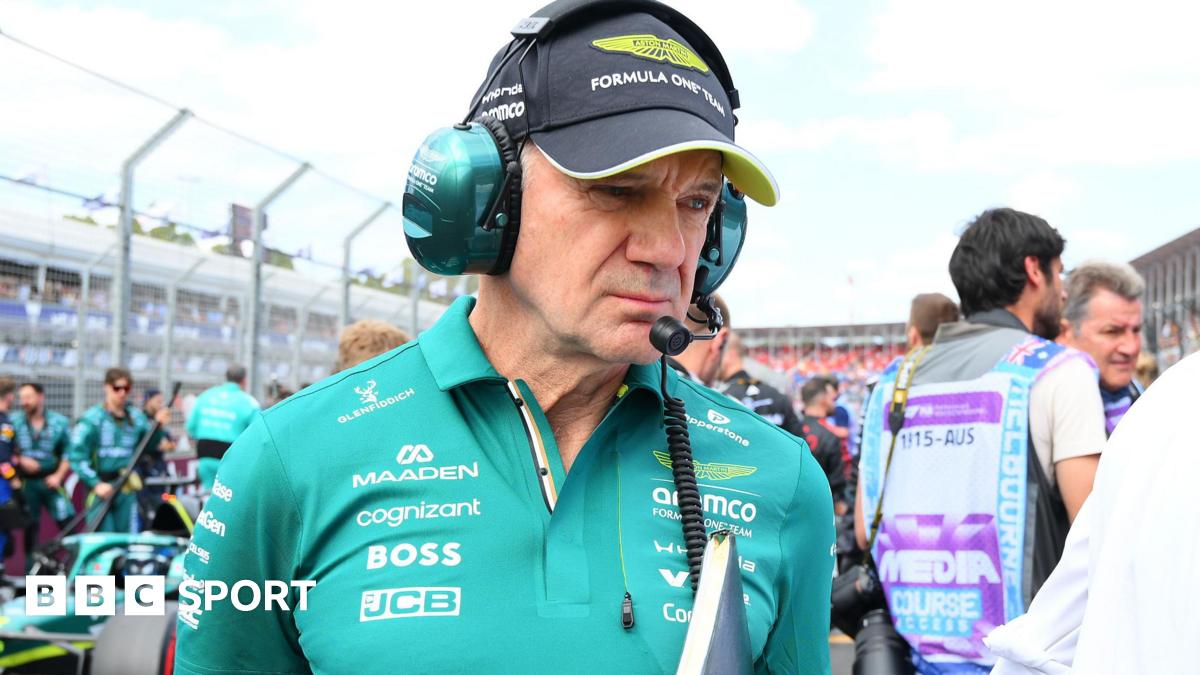
All the changes he has made have seemed logical on one level or another. There was clearly a problem with car design – after they made a big leap forward in 2023 under new technical director Dan Fallows, the team failed to develop the car effectively in season. They started 2024 less competitively and fell backwards again.
At the same time, Stroll was recruiting Newey. Why wouldn’t he, given he was available having left Red Bull? And with Newey on board, and the team stumbling under Fallows, it’s hardly a surprise Fallows would be considered surplus to requirements.
Same with the leadership. Mike Krack became team principal but the team was not moving in a convincing direction. Hence Stroll looked for change. Andy Cowell is highly regarded; his recruitment made sense.
Stroll would not have expected a clash between Cowell and Newey, but he got one, so another change was made.
Each change is understandable in isolation. But success in F1 is founded on stability not disruption and there has been little evidence of that at either team for the past two or three years.

Prosecution reform bills approved at Cabinet in significant overhaul

President Lee Jae Myung (2nd from L) speaks during a Cabinet meeting at the presidential office Cheong Wa Dae in Seoul on Tuesday. Photo by Yonhap
The Cabinet on Tuesday approved two prosecution reform bills that would dismantle the current prosecution service later this year to separate its exclusive power to both initiate criminal probes and indict suspects.
When promulgated, it would mark a sweeping overhaul of the nation’s prosecution system. Under the new laws, the prosecution office will be shut down in October, 78 years after its establishment in 1948, and two new agencies will exercise indictment and investigate roles, respectively.
The bills on establishing the so-called serious crimes investigation agency and the indictment agency, pushed by the ruling Democratic Party (DP), were passed at the National Assembly last week in a plenary session boycotted by the main opposition People Power Party (PPP).
Under the laws, the new indictment agency will handle only indictments, while investigative powers will be transferred to the newly established serious crimes investigation agency.
The new investigative body will be established under the Ministry of the Interior and Safety and will be responsible for probing six major crimes, including corruption, economic offenses, defense industry-related crimes and drug offenses.
The government has been seeking to separate the prosecution service’s authority over both indictment and investigation amid longstanding criticism that the prosecution has abused its exclusive powers by carrying out politically motivated investigations.
The DP has argued that the reform is needed to curb potential political abuse of prosecutorial power, while the PPP has warned it could weaken checks on investigators and increase the risk of political influence.
The two new agencies are set to be established after the abolition of the prosecution office.
Copyright (c) Yonhap News Agency prohibits its content from being redistributed or reprinted without consent, and forbids the content from being learned and used by artificial intelligence systems.

Venezuela: Rodríguez Announces Electricity Rationing Ahead of Heatwave, Drought Forecast
The Venezuelan acting president called for a rational use of electricity in the coming weeks. (EFE)
Mérida, March 23, 2026 (venezuelanalysis.com) – The Venezuelan government announced a 45-day electricity saving plan as extreme temperatures and regional outages impact Venezuela’s power grid.
The announcement, made by Acting President Delcy Rodríguez on Saturday, comes on the heels of recurring blackouts, particularly in western states.
“We are entering a period where solar radiation will impact our territory directly, intensifying heat and drought across the country,” Rodríguez stated during a televised cabinet meeting with officials responsible for the electricity and infrastructure portfolios.
She explained that the “perpendicular passage” of solar rays would significantly increase energy demand for cooling. Alongside drought forecasts, officials expect a greater strain on Venezuela’s electricity generation and transmission infrastructure.
As part of the contingency plan, the Ministry of Electric Energy is set to publish a protocol urging reduced air-conditioning use other rationing measures. In addition, the government has authorized the deployment of thermal drones to monitor high-temperature areas and prevent forest fires from compromising transmission lines.
In March 2025, the Nicolás Maduro administration implemented a similar electricity-savings plan and was compelled to reduce public sector work hours to half a day to ease demand. While the 2025 measures were temporary, the recurrence of shortages underscores the systemic vulnerabilities of the electric grid.
Last Friday, residents in Zulia, Táchira, Mérida, and Trujillo experienced widespread power outages lasting several hours. Local media outlets in the Andean region reported that some sectors are facing daily rationing of up to four hours. Nationwide electricity fluctuations were likewise registered on Monday, with parts of Caracas suffering temporary outages.
The origins of Venezuela’s electrical instability extend over a decade, culminating in the 2019 widespread nationwide blackouts that authorities blamed on “cyber-sabotage.” The alleged attacks compounded infrastructure hard-hit by years of economic sanctions, as well as underinvestment, inadequate maintenance, and the departure of skilled personnel.
Venezuela’s electric grid remains heavily dependent on the Simón Bolívar Hydroelectric Plant, also known as the Guri Dam, in southeastern Bolívar state, which provides approximately 80 percent of the nation’s power.
However, the transmission lines stretching from the southeast to the western border are often unable to handle the load, with thermoelectric plants in the region unable to cover the additional demand. Current estimates indicate that while Venezuela has an installed generation capacity of approximately 34 gigawatts (GW), only around 12 to 14 GW are currently operational.
Sanctions and push for private investment
In her Saturday address, Rodríguez reiterated the damage caused by US-led unilateral coercive measures and called for their removal. The Venezuelan acting president argued that sanctions hampered the state’s capacity to procure essential technology and components from international suppliers.
“The blockade has impeded the full recovery of this essential service,” Rodríguez said. “Though we have recovered capacity through our own efforts, sanctions limit our response to a demand that grows alongside the economy.”
The Venezuelan government has also announced plans to scale back state control over the electricity sector in order to attract private investment. Earlier this month, authorities unveiled a “pilot plan” to promote foreign investment into the electric grid, following similar blueprints from the oil industry.
Under the proposed framework, the government aims to update the Organic Law of the Electricity System (LOSSE) to allow private companies to assume control of generation and distribution through joint ventures.
According to the Venezuelan Chamber of Construction (CVC), a preliminary investment of US $1.29 billion could lead to the reincorporation of over 6,300 MW to the grid in two phases. The CVC is specifically promoting a project with the Latin America Development Bank to stabilize 2,000 MW in the central industrial region.
The new electricity management model would allow private actors to take control of specific “industrial nodes,” ensuring a reliable supply for manufacturing while retaining a portion of the proceeds to cover maintenance costs.
However, the immediate focus for the Venezuelan executive remains on electricity rationing. Rodríguez concluded her address by calling for “national consciousness,” urging the public to see energy saving not just as a government mandate, but as a collective necessity to navigate the coming weeks of extreme heat and drought.
Edited by Ricardo Vaz in Caracas.

Rio and Kate Ferdinand flee £6.5m mansion in Dubai for Portugal after sleeping in basement amid missile strikes
RIO and Kate Ferdinand have fled Dubai for their holiday home in Portugal after being left “scared” by missile strikes on the UAE.
Former Towie star Kate, 34, relocated to the celeb favourite hotspot last year with her hubby and football pundit, Rio, 47, and was one of countless Brits caught up in the conflict.
Previously, she told how the family had been forced to sleep in their basement after Iran launched a barrage of rockets at nations across the Middle East.
In the terrifying situation, which is still ongoing, Iran vowed revenge for the US and Israel’s huge blitz on the regime.
Now the celebrity couple and their children Cree, five, and Shae, two, and Rio’s 14-year-old daughter, Tia, from his first marriage, have headed to their European retreat.
Former Manchester United player Rio has uploaded a snap showing him swigging a Super Bock beer in the surroundings of their Portugal home.


In his caption he referred to the weekend’s football scores and wrote: “That feeling when Liverpool + Chelsea drop points in the race for the top 4!
“Happy Saturday People!”
He sat against the white walled terrace of the stunning villa in the Algarve near Quinta do Lago, with bright sunshine and trees in the background.
Liverpool had lost at Brighton 2-1 while Chelsea suffered a 3-0 hammering at Everton.
Kate has not addressed the location change on her social media, with the most recent upload being a clip from her Blended podcast.
Previously, on her show, she had opened up on the family’s actions amid the missile strikes.
As the United Arab Emirate’s top holiday hot spot, Dubai has become a sought after travel destination for celebrities and influencers.
Kate previously told her fans they spent “a very scary night” sleeping in their basement.
“Thank you for all of your messages and sorry for the silence, I haven’t wanted to worry you all I just haven’t been able to find the words. We are safe,” she said on Instagram.
“The government are doing an amazing job of keeping it that way and despite my nerves I feel we are in very safe hands.”
She added: “We are hoping for a calmer evening tonight, last night was very scary. Although Cree and Shae loved it as they couldn’t believe we all got a sleepover in the basement.
“Thank you for all of your prayers, this whole experience is very eye-opening and I am praying for anyone affected. Lots of love to everyone.”
Rio’s sons Lorenz, 19, and Tate, 17, did not move over when they relocated from the UK last year to focus on their football careers.
Previously, Rio also admitted he had been “scared” when the pair were trapped in Dubai during the Covid-like lockdown.
Speaking on his show Rio Ferdinand Presents, the former Manchester United and England defender said: “Been a different week for me, not going to lie.
“Firstly, I’m in great condition this morning as the whole family did a workout.
“A bit like in Covid, the whole family is doing things we wouldn’t usually be doing together.
“Home-schooling a bit today.
“It’s frightening when you hear missiles, planes and fighter jets – I don’t know what it is – going above us, and you’re hearing big bombs, and what that is we don’t know as we don’t know the details of what they are.
“It’s telling your kids what it is and helping them navigate through this moment, which is important especially as the dad of the house.
“You want to try and remain calm and keep everybody as calm as possible.”
Ferdinand added: “I’ve got to be honest guys, it’s been a bit of a scary situation.”