



Ashley Beck named as Wales attack coach for Women’s Six Nations
“Playing for Wales is the highest honour you can get when you are a player and it’s the same when you are a coach,” said Beck.
“To be asked by Sean to join the set-up for the Women’s 2026 Six Nations is a real privilege and I am excited by the challenge of coaching at Test match level.
“Having worked with a host of the players in the Celtic Challenge, I know the talent we have in Wales and the challenge for the players is to believe they can compete at this level.”
Wales kick off their Six Nations campaign at home to Scotland at Principality Stadium on Saturday, 11 April.

Moment rescuers find man alive under the rubble in Tehran | US-Israel war on Iran
Rescuers have pulled a man alive from the rubble after US-Israeli strikes hit a residential area on the outskirts of Tehran, the Iranian Red Crescent said. The US and Israel have continued to strike Iran, despite President Trump’s claims of diplomatic progress.
Published On 24 Mar 2026

The tiny UK island with ‘upside down lighthouse’ and a beachfront pub to get more ferries
IF you fancy a quiet escape off the coast of the UK, then an island is about to become much easier to get to.
The L-shaped Rathlin Island is six miles off County Antrim in Northern Ireland and is home to just 140 residents.
It does get busier during tourist season with holidaymakers hopping over on the ferry – which will relaunch for spring.
And there’s even more on offer with new weekend sailings starting up.
Once on the island, the main port and beach is where you’ll arrive.
Called Church Bay, it’s a small harbour with a gravel shoreline where visitors can spot seals and also check out the island’s only pub.
McCuaig’s Bar sits opposite the bay with an adjoining Ebb and Flow Cafe.
The walls of the bar are decorated with name places from ships that have been wrecked around Rathlin.
In total, there have been over 40 shipwrecks off the coast of Rathlin Island.
The island itself has three lighthouses which are needed because of Rathlin’s unique shape.
It’s on the western tip of Rathlin Island where you’ll find the ‘upside down’ lighthouse.
It was built into the cliff face back in 1912 and has been there to guide in boats and ships ever since.
While it’s not actually upside down, the lighthouse has its lantern room at the bottom of the tower rather than the top – which is traditional.
The reason is that when it guides ships in, the light isn’t obscured by fog that usually settles at the top of the cliff.
The island isn’t just popular for tourists seeking a quiet getaway as it’s also a nature reserve for seabirds.
So you’ll be able to spot razorbills, kittiwakes and puffins.
During the spring and summertime, some of the most popular activities include heading to Knockans viewpoint.
On a clear day, from here you can see across to Donegal.
Seals will be sunbathing at Church Bay and Mill Bay – which is on the east side of the island.
For those who don’t just want a day trip to the island, there is a hotel too.
The Manor House is an 18th century guesthouse with 12 rooms, a restaurant, bar and café.
It has a rich history as the house was built in 1756 for the Gage family, who bought the island 10 years earlier.
The last member of the Gage family to live at the Manor House was Brigadier Rex Gage who died in 1973.
Now, the hotel is owned by the National Trust – single rooms start from £80 and doubles from £140.
Come spring, there will be daily crossings from Ballycastle Harbour to Rathlin Island.
The ferries will run from April 3 to September 20, 2026 with an extra return journey every Saturday and Sunday morning.
The additional return crossings will leave Rathlin at 8.30am and Ballycastle at 9.30am.
It has two ferries, one that’s passenger-only and another that can take larger luggage cases and even pre-booked vehicles onto the island if you fancy driving around.
The quickest ferry takes just 25 minutes.
For more on Northern Ireland, this pretty city has unique black cab tours, and waterfall walks.
And this quirky UK city was named one of the top foodie destinations for 2025 with historic pub crawls and cheap hotels.

Keir Starmer’s policy on the Iran war is a recipe for catastrophe | US-Israel war on Iran
In March 2003, a million people took to the streets of London to oppose the illegal invasion of Iraq. Seeing straight through the lie that Iraq possessed weapons of mass destruction, protesters warned the British government in no uncertain terms: This action would trigger a spiral of misery, hatred and death.
More than 20 years on, most people now recognise the Iraq war for what it was: a catastrophic mistake that fuelled a string of subsequent conflicts and instability. The United Kingdom had followed the United States into an illegal war – and more than a million Iraqi men, women and children paid the price.
Unfortunately, not everybody has learned the lessons from the past. It has been almost a month since the US and Israel launched their attacks on Iran. More than 1,400 Iranians and more than 1,000 Lebanese people have been killed.
In seeking to justify the bombing, US President Donald Trump spoke of the need to eliminate “imminent threats from the Iranian regime”, whose “menacing activities directly endanger the United States, our troops, our bases overseas and our allies throughout the world”. He said the goal was to make sure Iran “will never have a nuclear weapon”. Sound familiar?
The first casualty of war is the truth, so let us get the facts straight: These are lies that have been peddled to justify an illegal and unprovoked war. As the National Counterterrorism Center Director, Joe Kent, said in his resignation letter last week, Iran “posed no imminent threat to our nation” and that it was “clear that [the US] started this war due to pressure from Israel and its powerful American lobby”.
There is only one nuclear-armed state in the Middle East: Israel. Next month’s UN Conference of the Parties to the Treaty on the Non-Proliferation of Nuclear Weapons would have been the perfect place to call for an end to the nuclear arms race. A diplomatic solution was possible, but the US and Israel chose war instead. In doing so, they have jeopardised the safety of humankind around the world. So, too, have those nations that have decided to lend support to their war of aggression.
Shortly after the attacks on Iran began, British Prime Minister Keir Starmer gave the US permission to use British military bases for strikes on Iranian missile sites. Last week, his government agreed to let the US use British bases to strike Iranian sites targeting the Strait of Hormuz.
The UK could have followed in the footsteps of Spain and said, “No way, absolutely not. We will not be involved in this illegal war in any way whatsoever.” Instead, it has dragged itself into another catastrophic conflict.
Astonishingly, the prime minister still maintains that the British government is not involved – a line that has been regurgitated by many across our media. He says the UK is allowing its sites to be used only for “defensive” strikes. What nonsense.
The reality is, if a bomber takes off from Royal Air Force base Fairford and bombs targets in Iran, we are involved in that act of aggression. If civilians die, will their families stop mourning when they are told that they were bombed for “defensive purposes”? No matter how Starmer dresses it up, he cannot change the truth: The UK is directly involved in this war.
Mark my words: This is a historic mistake that jeopardises the safety of us all. That’s why, earlier this month, I tabled a bill in the House of Commons that would require parliamentary approval for any British involvement in military action. That includes the use of British bases by other nations.
So far, the prime minister has refused to pass this legislation. With no debate, no discussion and no vote, he is dragging Britain into another disastrous illegal war.
Just like with the invasion of Iraq in 2003, today, those of us who oppose the war on Iran are accused of giving succour to authoritarian regimes and leaders. Whatever one thinks of the governments of various places, there is no basis in law for an attack to bring about regime change. There is no basis in history that bombing from the sky would bring about human rights either.
Trump couldn’t care less about people’s human rights. Whether it’s in Iran, Venezuela or Cuba, he is interested in one thing and one thing only: seizing resources and political control around the world.
If the UK cares about international law, it would be standing up to Trump, not bending over backwards to appease him.
The story of US-led foreign interventions is a story of chaos, instability and misery. How many more of these catastrophic failures do we need before we learn the lesson? And what will it take for the UK to finally defend a consistent, ethical foreign policy based on international law, sovereignty and peace?
The views expressed in this article are the author’s own and do not necessarily reflect Al Jazeera’s editorial stance.

Mel Schilling’s ‘devastated’ MAFS co-star Charlene Douglas opens up on ‘final days’ spent with late friend before death
MAFS star Charlene Douglas has revealed the heartbreaking “final days” she spent with her late friend Mel Schilling following her tragic death.
The relationship expert said she was left “devastated” as she opened up about their last moments together.
Mel Schilling has tragically died aged 54 after a brave battle with colon cancer.
The much-loved dating coach was known for her invaluable work on both the Married At First Sight Australia and UK versions of the show.
She worked alongside Charlene Douglas on Married At First Sight UK.
The TV star shared an emotional tribute, reflecting on their close bond and the impact Mel had on her life.
Taking to Instagram, she wrote: “I’m both devastated and heartbroken to hear of the passing of my MAFS queen and friend Mel.
“I had the pleasure of spending time with Mel in her last days and will forever treasure the laughter, the memories and love we had for each other.
“Mel’s love for life, jokes and of course dancing will forever stay in my heart. What I wouldn’t give to be dancing to Beyoncé with you right now.
“Sleep in perfect peace Mel. Love you ♥️”
Mel was previously diagnosed with colon cancer in 2023, which later spread to her lungs and brain.
Her husband Gareth Brisbane announced the heartbreaking news today in an emotional Instagram post.
Alongside touching pictures of Mel, he said: “Melanie Jane Brisbane-Schilling passed away peacefully today, surrounded by love.
“In her final moments, when I thought cancer had taken away her ability to speak, she ushered me closer and whispered a message for Maddie and me that will sustain me for the rest of my life.
“It took all of her remaining strength, and that gesture summed up our wee Melsie perfectly. Even then, her only thought was for Maddie and me.”
He continued: “This is a woman who became a new mum and a TV star at 42 — and nailed both.
“This is a woman who, through two years of chemotherapy, when she could barely lift her head from the pillow, never complained and never stopped showing courage, grace, compassion and empathy, and never missed a day of filming.
“To most of you, she was Mel Schilling — matriarch of MAFS and queen of reality TV. To Maddie and me, she was our wee Melsie: an incredible mum, role model, and soulmate.”
Tributes have poured in for the TV star since the tragic announcement.
Channel 4 hailed Mel as a friend who “radiated joy, warmth and optimism”.
Issuing a statement, it said: “Our thoughts and condolences are, first and foremost, with her family and loved ones.
“We’re privileged to be the channel that is home to Mel’s work, which was at the heart of Married At First Sight‘s phenomenal success, both in the UK and Australia.
“It reflected so much about her – her fierce advocacy for other women, her passion for healthy relationships and her mission to unite people in love.
“For many who work for Channel 4, Mel was not just a colleague but a friend, someone who radiated joy, warmth and optimism, who energized every room she walked into, with humour and positivity.
“Everyone who knew her will miss all this about her and much more. We share in the sorrow that we’re sure many viewers will now feel at this terrible loss.”

The ‘secret’ attraction that lets you step into your favourite movies and TV shows set for huge permanent venue in UK
HAVE you ever wanted to live out your favourite movie? Well, there actually is an attraction in the UK that lets you do this.
Secret Cinema is known for hosting immersive movie experiences in the UK’s capital.
Previous venues have included Battersea Park, Alexandra Palace and London Fields with shows including Grease, Stranger Things, Casino Royale, Guardians of the Galaxy, Dirty Dancing and even Bridgerton.
And now, Secret Cinema plans to create a permanent venue in Greenwich.
The purpose-built venue in North Greenwich, if approved, would open by the end of the year.
And the venue would be close to other popular destinations in Greenwich such as The O2 and the Troubadour Theatre, due to open in late 2026.
Read more on travel inspo
Merritt Baer, Artistic Director & Producer of Secret Cinema said: “Greenwich Peninsula is the perfect location for Secret Cinema’s long-term flagship home.
“We are committed to bringing world-class immersive experiences to London audiences and are thrilled to work with local businesses and partners to make this happen…
“We are looking forward to breaking ground on this venue and continuing to bring entertainment’s most loved stories to life.”
Secret Cinema hopes that Greenwich will become its permanent home “for up to 10 years”.
In addition to the potential permanent site, Secret Cinema has also announced that it is bringing back last year’s hit, Grease: The Immersive Movie Musical.
The experience will return to Battersea Park from July 22 to September 13.
Travel reporter Cyann Fielding visited last year’s Grease experience and said: “Secret Cinema’s Grease: The Immersive Movie Musical had immediately transported me out of London in 2025 and landed me in the world of Sandy and Danny in the 1950s.
“It felt like a time machine had dropped me into the world of Sandy and Danny, more than 65 years in the past.
“Guests can purchase carnival tokens, just like at a real fair, to enjoy the attractions at the experience.
“There was a Ferris wheel, flying chairs, hook-a-duck and even the iconic fun house from Sandy’s unforgettable transformation scene.
“Inside, the school’s gymnasium dominated the room, serving as the central stage for the night’s performance.
“Around the edges, themed bars and seating areas were scattered – each also playing a role in the experience.
“Rows of vintage cars had been converted into tables, the auto shop was slick with oil and the bleachers were ready for Patty Simcox to screech about school spirit.
“The experience kicks off with the film itself, but as key scenes played out, actors took to the stage to bring them to life, all before cutting back to the movie.
“My only criticism would be that at times it felt a little overwhelming to the senses – I found myself on occasions unsure where to look or what to listen to as the sound from the film, orchestra and actors sometimes battle against each other.
“Yet, the entire time my feet tapped and I couldn’t help but sing along.
“Both the dancing and singing throughout the experience was breathtakingly flawless.”
Unlike the usual West End shows in London, the Secret Cinema experience allows guests to stand and move around freely.
As you move around, so do the actors and they interact with you too, chatting while in full character.
Cyann added: “One student dropped by our table to rant about being ‘left out of Frenchy’s sleepover’ – dragging us directly into the drama.
“For the finale, the audience was led back outside to the carnival.
“Sandy’s final transformation scene with song ‘You’re the One That I Want’ really did bring the house down complete with leather trousers and Shake Shack.”
In other attraction news, a free London attraction has been named the UK’s most popular for first time, so our experts have shared all of their faves that also cost nothing.
Plus, a historic tourist attraction with 250k visitors a year could start charging an entry fee for first time.
Why the best UCLA women’s basketball team ever might not win a title
Absolutely, this is the best team in UCLA women’s basketball history.
Not the best team in the country this year, but truly a testament to teamwork and hard work and talent retention.
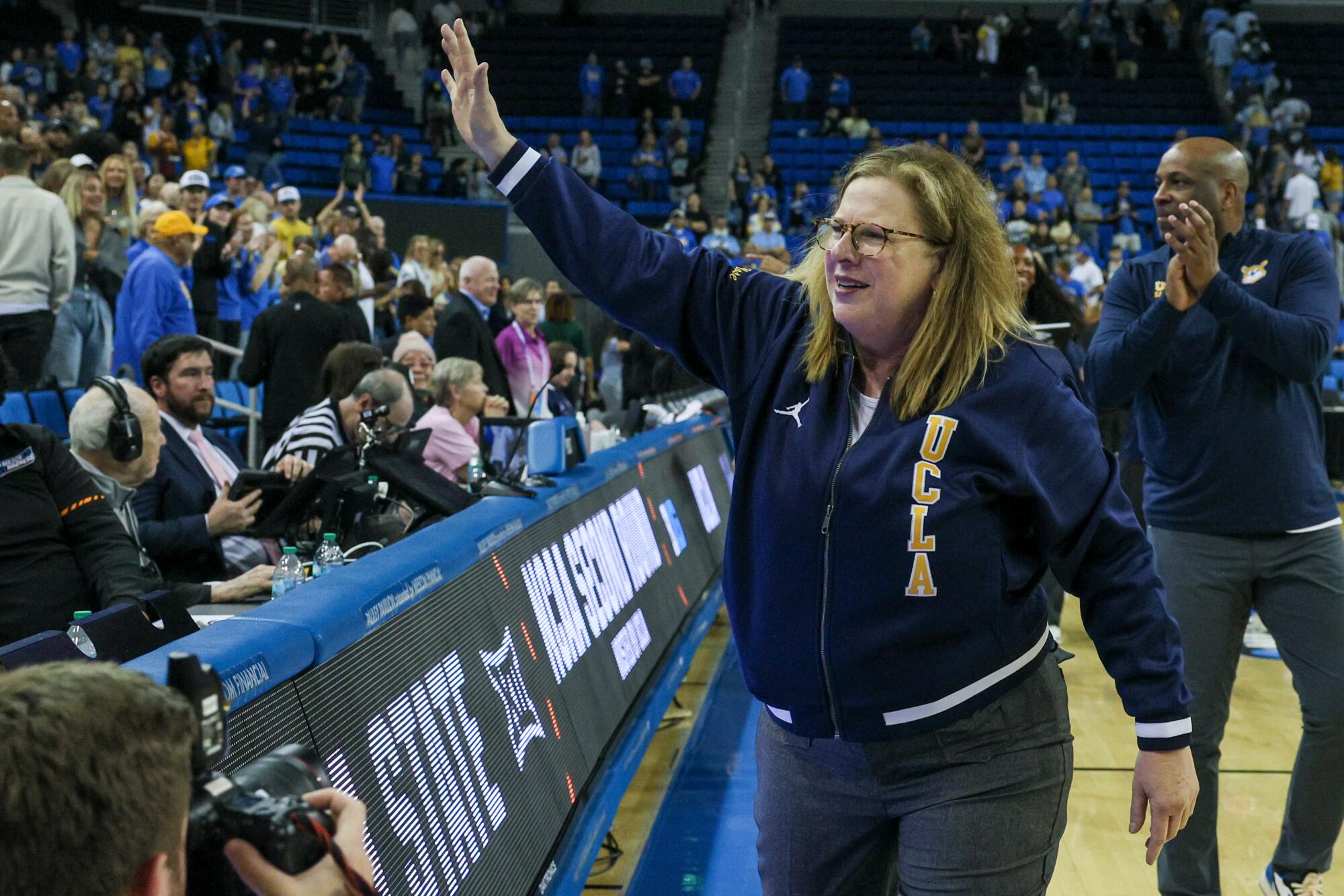
Whether UCLA wins it all this season or not, the Bruins are the envy of teams everywhere, including Oklahoma State, whose season they ended with an 87-68 second-round victory Monday. Afterward, UCLA’s six seniors joined their teammates in one last victory lap around the court, waving to fans, soaking in the adoration, on their way to the Sweet 16 for the fourth consecutive season.
“Seeing a team who gets to host, a team who has stayed together, for the most part, they get to experience all the things that all of us want, and that is so incredibly rare and hard and special,” Oklahoma State coach Jacie Hoyt said.
But how much further those things will take these Bruins in the NCAA tournament after they fought off Oklahoma State?
Maybe all the way, but maybe not.
The road ahead is treacherous. And the Bruins aren’t barreling toward it with the same momentum as the teams they’re likely to face. This deep UCLA team will need to dig even deeper.
They will have Lauren Betts, though, and no one else will. UCLA’s great 6-foot-7 center and cheat code saved the day Monday, scoring 21 of her career-high 35 points in the second half, when the Bruins got tight and the Cowgirls got closer.
Not close, but closer. Much closer than UCLA’s fellow top seeds’ opponents did.
UConn beat ninth-seeded Syracuse 98-45 in a second-round game that featured a killer 31-0 run by the defending champion Huskies.
South Carolina dismissed ninth-seeded USC, 101-61.
Texas blew out eighth-seeded Oregon like a candle, 100-58, on Sunday.
Even the second-seeded Louisiana State Tigers — likely UCLA’s Elite Eight date if both teams win their way to a third consecutive NCAA tournament meeting — got in on the demolition derby Sunday. They routed seventh-seeded Texas Tech 101-47 while setting an NCAA record by scoring 100 points in their 16th game this season.
But this is not a tournament that takes into account point differential. So no harm and no foul when it comes to the scores of the Bruins’ first two wins — and the first round against California Baptist turned into a rout, 96-43, after the Bruins woke up and outscored their guests 52-9 in the second half.
What might matter is that while UConn and South Carolina, Texas and LSU delivered their best spirit- and soul- and confidence-crushing blowouts, the Lancers and the Cowgirls left Pauley Pavilion feeling good about themselves.
The 16th-seeded Lancers can tout that they trailed a top seed by just 10 at halftime. The eighth-seeded Cowgirls (24-10) can crow about outscoring the Bruins 42-41 in the second half.
“UCLA has lost one game all season, right? The majority of those wins were blowouts, like, real blowouts, and it would have been really easy for us to fold after that first quarter,” said Hoyt, referencing the fact that UCLA beat teams by an average of 28.9 points per game this season, fourth-best in the nation.
“But we never did. They were tough and had a resilience and a grit to them that I was really proud to coach.”
That the Bruins (33-1) couldn’t put more significant distance between themselves and a physical Cowgirls team posed some questions about why adjustments didn’t come quick enough, UCLA coach Cori Close said, taking accountability for her part of that. She also saw her players start to let calls and miscommunications frustrate them: “I didn’t think our next-play speed was as good as it has been, and it affects you,” she said.

UCLA coach Cori Close waves to the crowd after Monday’s win over Oklahoma State in the second round of the NCAA tournament.
(Ronaldo Bolanos / Los Angeles Times)
That doesn’t inspire additional confidence in the Bruins’ path forward. It’s a thorny gauntlet created by seeding rules that bar conference opponents from playing in the Elite Eight — and that could require UCLA, as the No. 2 overall seed, to beat three of the top-five seeded teams if it’s going to win a national championship for the first time since the Bruins won the AIAW title in 1978.
Close hasn’t quibbled with her team’s seeding despite its impressive 31-1 regular-season record against a loaded schedule. But she said Monday she doesn’t like the route that’s been drawn up for her team.
In Sacramento on Friday, the Bruins will play Minnesota, a familiar foe from the Big Ten — one of a dozen conference teams that earned NCAA tournament bids — whom they defeated 76-58 on Jan. 14.
But after that, to reach the championship game the No. 2 team in the nation could meet LSU (the fifth overall seed in the tournament), followed possibly by Texas (No. 3 overall). And then, of course, they’d likely meet No. 1, undefeated UConn in the final, where the Huskies would be trying to win a second consecutive title.
An unenviable assignment, even for a team that seems to have it all.
“You know what does bother me?” Close said. “That the No. 1 and No. 2 overall seeds are not being rewarded because of a guideline that you can’t play a person in your conference in the regional finals. That is an antiquated, poor rule that advantages the wrong teams and the people who haven’t done the work.”
But on Monday, while saying a victorious goodbye to Pauley Pavilion, the Bruins were still mostly unbothered.
“I told ‘em in the locker room,” Close said, “we can talk about your wins and losses all day, but that will always pale in comparison to the way that you’ve affected this community, the way that you’ve touched people’s hearts, the way that you’ve grown as young women.”

Flight misery over for tall passengers as easyJet shares new seats with extra legroom
The new seat will be installed from 2028 on hundreds of easyJet’s new aircraft, providing an extra two inches of improved knee and shin clearance

The new measure will be introduced in a few years(Image: PA)
As budget airlines attempt to cram more and more passengers onto flights, it can feel as if the seat in front edges slightly closer each time you board a plane.
However, a “next generation” economy seat is on the horizon, which its creators claim will provide travellers with additional legroom without compromising space for airlines.
The Kestrel seat from Mirus Aircraft Seating, a British manufacturer, will be fitted from 2028 on hundreds of easyJet’s new aircraft, delivering an extra two inches of “improved knee and shin clearance” for passengers. It will enable easyJet to provide more legroom than most of its short-haul budget rivals.
READ MORE: Britain’s biggest car park operator to close 22 sites within days – full listREAD MORE: Warning as tourist is detained for going on a walk in holiday hotspot
The seat reshapes a passenger’s back, enabling their hips and spine to sit further back on the cushion so their knees and legs gain additional space at the front.
The back is constructed from carbon fibre rather than the traditional moulded plastic, producing a slimmer seat that provides crucial extra inches for the person behind.
A “fixed recline” of 22 degrees naturally shifts the passenger to the most efficient position in the seat, Mirus claims. Customers cannot manually recline the seat to annoy the passenger behind them.
A standard easyJet seat typically provides between 28 and 29 inches of room, meaning anyone who is six foot or taller will touch the seat in front with their knees. Some airlines on longer haul economy flights offer up to 34 inches of space.
“We’ve always had very comfortable leg room in easyJet,” said Kenton Jarvis, the airline’s chief executive. “This product is exceptionally comfortable, exceptionally light and allows a configuration that creates more space for the customer in the cabin.”
He explained easyJet wouldn’t be retrofitting any of its estimated 350 aircraft, stating: “There’s an expense to ripping off perfectly good seats and putting in and buying new ones.” The seats will instead appear in new orders of the Airbus A320neo and A321neo from 2028.
Research conducted this year by consumer group Which identified the short-haul carriers offering the tightest economy-class seat layout, or pitch, as Jet2, KLM, Lufthansa, Ryanair, SAS, TAP Air Portugal, Vueling and Wizz Air. All featured at least some seats with a 28-inch pitch.
The group noted that seat comfort also hinged on quality factors such as padding. By that measure, easyJet’s current seats achieved two out of five.
David Morgan, easyJet’s chief operating officer, commented: “We are delighted to be introducing the Mirus Kestrel seat across our future fleet.
“On top of the sustainability benefits, the additional legroom and enhanced comfort these seats will provide will also deliver an improved onboard experience for our customers, which we know they’ll love.”
READ MORE: ‘Text four letters to five-digit code’ this week if you have a mobile phone

Oil price hikes as White House says plans for Iran talks still ‘fluid’
March 24 (UPI) — The price of oil climbed back above $100 per barrel on Tuesday as hopes for de-escalation in the Iran war faded after Washington said the situation remained “fluid,” Tehran denied there had been any negotiations and a fire put a major Texas refinery out of action.
Claims by President Donald Trump of “major” progress in talks to halt the conflict on Monday sent oil prices tumbling and rallied stock markets, but benchmark Brent crude futures rebounded to more than $103 a barrel on Tuesday after the White House appeared to walk it back, saying no high-level formal meetings were scheduled and denying reports Vice President JD Vance may attend Pakistan-brokered talks.
“These are sensitive diplomatic discussions and the United States will not negotiate through the press. This is a fluid situation, and speculation about meetings should not be deemed as final until they are formally announced by White House press secretary Karoline Leavitt told the BBC.
Iran has, however, acknowledged there had been some contact between the sides regarding talks, with an Iranian foreign ministry official telling CBS that the regime had “received points from the United States.”
“We received points from the United States through mediators and they are being reviewed,” said the official.
The confirmation came amid claim and counterclaim after Trump walked back an ultimatum to destroy Iran’s power plants and energy infrastructure unless it allowed shipping to flow freely again through the Strait of Hormuz by Monday night.
Trump said he was giving Iran a five-day reprieve after “very good and productive” discussions with Tehran on Sunday and Monday but Iranian Parliament Speaker Mohammad-Bagher Ghlaibaf, who has been named as an interlocutor, described it as “fake news” and said there had been no talks.
With a blaze at the Velero Port Arthur refinery still burning after an explosion on Monday at the plant, 90 miles east of Houston, wholesale gasoline and diesel prices were up 10 cents and 16 cents per gallon, hikes Lipow Oil Associates president Andy Lipow said were due almost entirely to the incident, rather than the war.
The affected part of the plant makes diesel fuel and was likely to be out for an extended period, exerting pressure on diesel prices but gasoline production could come back online in the next few weeks as it was in a different area of the refinery, added Lipow who stressed he believed the incident was an accident and that there was no evidence of terrorist sabotage.
Analysts said the market remained fearful of the risk the Iran conflict could be an extended one with knock-on energy supply disruption impacts caused by associated strikes on critical energy production and storage facilities and shipping being unable to leave or enter the Persian Gulf.
“Despite the exuberance on Wall Street, ladies and gentlemen, oil is well off its lows after Tehran denied conducting any weekend negotiations with Washington,” Interactive Brokers senior economist Jose Torres wrote in a note.
“Additionally, in consideration of the vast number of attacks that have affected critical energy in the Middle East … there’s nervousness that there could be capacity and transportation disruptions that keep costs higher than at the beginning of the year even if there’s a deal,” added Torres.
Gulf oil-producing nations meet a large proportion of global oil and natural gas demand, about 20% of which — 20 million barrels a day — is exported on tankers that pass through the narrow Strait of Hormuz, a natural chokepoint effectively closed by Iran since the United States and Israel launched their airborne offensive on Feb. 28.

President Donald Trump presents the Commander in Chief’s Trophy to the Navy Midshipmen football team during a ceremony in the East Room of the White House on Friday. The award is presented annually to the winner of the football competition between the Navy, Air Force and Army. Navy has won the trophy back to back years and 13 times over the last 23 years. Photo by Bonnie Cash/UPI | License Photo

EasyJet launches huge sale on millions of seats
EASYJET has launched a huge sale with millions of seats on offer for winter 2027 including the February half-term.
The budget airline’s Big Seat Release has over seven million seats on flights to and from the UK on sale for between February 1 and March 21, 2027.
Travellers can choose from over 140 destinations across Europe and North Africa from 22 UK airports.
Flight offers include one-way flights to Paris from London Gatwick, costing £31.99 on February 2, 2027.
You could also travel to Dusseldorf in Germany, Geneva in Switzerland, and Grenoble and Nantes in France for the same price.
If you fancy travelling further afield, you could fly to Agadir in Morocco from London Gatwick on February 23, 2027, for £37.99 one-way.
Read more on travel inspo
Agadir was recently named the most affordable break for summer 2026 by loveholidays, with a week holiday to the seaside city costing as little as £24 per person per night between June and August.
The Moroccan city is surrounded by mountains and also boasts a six-mile long golden beach.
Deputy Travel Editor Kara Godfrey recently visited the city and said: “The Moroccan city is home to the country’s largest market, Souk El Had, as well as a bustling harbour and modern marina.
“Rebuilt following a devastating earthquake in 1960, the sprawling city nestles against the Atlantic Ocean and its palm-lined wide roads feel more Miami than Morocco.”
Other bucket-list destinations include Reykjavik in Iceland, with flights costing from £44.17 per way and Thessaloniki in Greece, costing from £48.99 per way.
To find easyJet‘s lowest fares, head to the low fare finder section of the easyJet website where the best value fares are shown.
EasyJet holidays also has thousands of package holidays available, including to destinations such as the Canary Islands, Morocco and Tunisia.
All of the holiday packages include flights and a hotel, with a 23kg luggage allowance and transfers for beach getaways.
Kevin Doyle, UK Country Manager for easyJet, said: “Putting millions more seats and package holidays on sale today for next winter means our customers across the UK can book early and enjoy great value to Europe’s most popular leisure destinations, including firm favourites such as Amsterdam, Paris, Alicante, Tenerife, and Malaga.
“With hundreds of routes available from 22 UK airports, our short-haul network offers unrivalled choice for those planning their holidays for next year, to book with ease, and we can’t wait to welcome them on board.”
In other flight news, one of the world’s best cities is getting more flights and TUI holiday packages – with mega cheap food and island beaches.
Plus, one of Europe’s cheapest city break destinations has £2 beers and a massive waterpark and now has new UK flights.

Tuesday 24 March Truth and Justice Memorial Day in Argentina
Every year on March 24th, Argentina observes Truth and Justice Memorial Day to honor the victims of the 1976 military coup that ousted President Isabel Perón. This public holiday serves as a solemn remembrance of the violent dictatorship that followed, characterized by a campaign of state terrorism against political dissidents and activists. During this dark era, thousands of citizens were kidnapped, tortured, and killed, with many individuals still officially classified as disappeared. Although the commemorative law was passed in 2002, it was not officially recognized as a national holiday until 2006. Today, the occasion is marked by massive peaceful demonstrations in Buenos Aires, where citizens gather to deman …
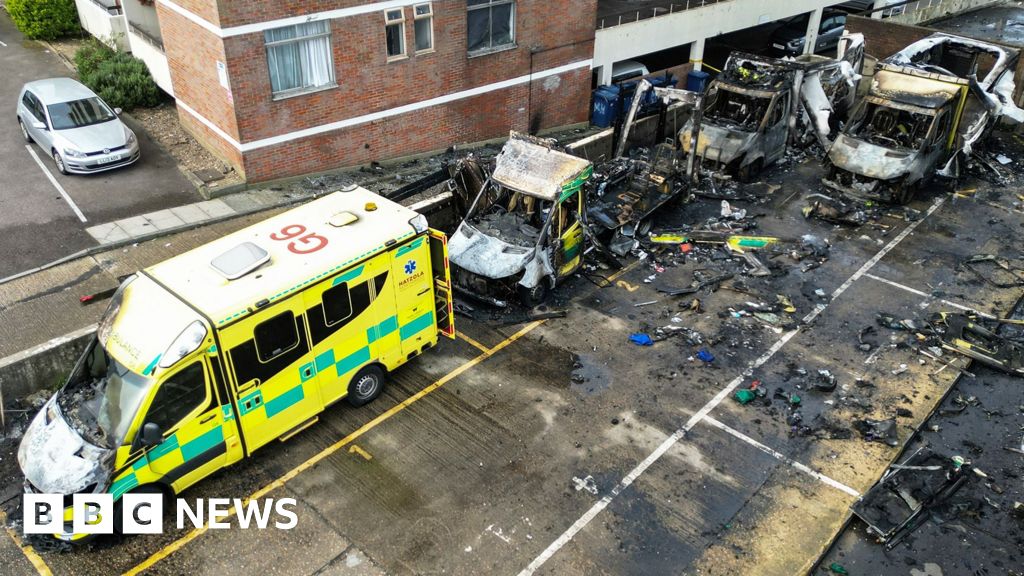
Police investigating possible Iran link to attack on Jewish charity ambulances
Met Police chief Sir Mark Rowley says the force is looking at “an online claim of responsibility by an Islamist group”
Source link

BAFTA TV nominations in full with shortlist dominated by Stephen Graham dramas
Multiple award chances for Adolescence and A Thousand Blows plus Amandaland, Celebrity Traitors, Blue Lights and Last One Laughing

124 programmes were nominated across the board in what was said to be “an exceptional year”(Image: PA)
Stephen Graham came out on top of the BAFTA TV nominations with a total of 11 for his Netflix drama Adolescence and another seven for his Disney+ series A Thousand Blows. If both dramas win in all the categories in which they are nominated the actor, who both stars and executive produces both shows, could come away with a share in 18 gongs.
Adolescence, about the online influence of toxic masculinity on youngsters, was shortlisted in the limited drama category and saw Graham nominated as leading actor plus Owen Cooper and Ashley Walters for best supporting actor and Christine Tremarco and Erin Doherty for supporting actress, with the other nominations coming in the craft awards which reward technical excellence.
A Thousand Blows, about boxing during the Victorian era, was nominated for best drama series and also got a nod for Erin Doherty in the leading actress category, plus five more in the craft sections.
It was also a good day for Amandaland, which received multiple nods including in the best actress category for Jennifer Saunders, Lucy Punch and Philippa Dunne, along with The Celebrity Traitors, nominated as the best reality show and in the entertainment performance category for Claudia Winkleman.
But the main BBC series, The Traitors, did not get a look in. And there are also no gongs on the horizon for Emmerdale – missing from the soap category – Strictly Come Dancing, snubbed in the entertainment list, and This Morning, missing from the daytime section.
New series Last One Laughing, on Prime Video, has landed Bob Mortimer with his first performance Bafta nomination, with the show also nominated in the entertainment catetory, where it faces competition from Graham Norton’s chat show and Rob Brydon’s panel series Would I Lie to You – but not from juggernauts Strictly on BBC1 or ITV’s I’m a Celebrity Get Me Out of Here.
Amanda Holden is also up for her first Bafta in a performance category, alongside Alan Carr, for their BBC renovation series The Spanish Job.
Overall, in the performance categories 21 of the 44 nominees were receiving their first BAFTA nomination, including Walters, Cooper and Tremarco for Adolescence, Punch and Dunne for Amandaland, Doherty for Adolescence and A Thousand Blows plus James Nelson-Joyce for This City is Ours, Jim Howick for Here We Go, Jodie Whittaker for Toxic Town, Rose Ayling Ellis for Reunion and Sian Brooke for Blue Lights.
BBC comedy Here We Go landed two nominations in the main awards for leading actors Jim Howick and Katherine Parkinson, who play husband and wife. Police drama Blue Lights, set in Belfast, is nominated for best drama along with a best actress chance for Brooke, who plays social worker turned cop Grace.
Romesh Ranganathan found he was competing against himself in the entertainment performance category, where he is listed for both his series Rob and Romesth Vs plus his other show for Sky Max Romesh – Can’t Knock the Hustle. And Aimee Lou Wood also found herself nominated twice, in the best supporting actress category for The White Lotus and also in the leading actress category for BBC3’s Film Club, which she also co-wrote.
While the BBC dominated the nominations at the 2026 BAFTA Television Awards with P&O Cruises with a total of 73 across both the TV and craft awards, there was also 28 for Netflix, 25 for Channel 4, 17 for Disney+, 16 for ITV, and 15 for AppleTV+. The ceremony will be hosted this year by Taskmaster’s Greg Davies, on Sunday 10 May.
BAFTA CEO Jane Millichip said last year had been an “exceptional year for television” which was reflected in the 124 nominated programmes nominated across the board. “They highlight the strength and originality of British storytelling – from powerful documentaries and standout comedy to homegrown drama and the international series that captured global attention, this year’s nominees demonstrate a medium at its creative peak,” she said. “It’s especially exciting to see so many first-time performance nominees, showcasing the vibrant new talent shaping the future of our industry.”
THE TV AWARD NOMINATIONS:
ACTOR IN A COMEDY
- Jim Howick, Here We Go – BBC Studios Comedy / BBC1
- Jon Pointing, Big Boys – Roughcut TV / Channel 4
- Lenny Rush, Am I Being Unreasonable? – Boffola Pictures / BBC1
- Mawaan Rizwan, Juice – Various Artists Limited / BBC3
- Oliver Savell, Changing Ends – Baby Cow Productions / ITV1
- Steve Coogan, How Are You? Its Alan (Partridge) – Baby Cow Productions / BBC1
ACTRESS IN A COMEDY
- Diane Morgan, Mandy – BBC Studios Comedy / BBC2
- Jennifer Saunders, Amandaland – Merman Television / BBC1
- Katherine Parkinson, Here We Go – BBC Studios Comedy / BBC1
- Lucy Punch, Amandaland – Merman Television / BBC1
- Philippa Dunne, Amandaland – Merman Television / BBC1
- Rosie Jones, Pushers – Merman Television, 2LE Media / Channel 4
CHILDREN’S: NON-SCRIPTED
- A Real Bugs Life, Production Team – Plimsoll Productions, National Geographic / Disney+
- Boosnoo!, Production Team – Visionality Media, Mackinnon and Saunders / Sky Kids
- Deadly 60 Saving Sharks, Production Team – BBC Studios / CBBC
- World.War.Me (Sky Kids Investigates), Matt Peacock, Marshall Corwin, Nicky Cox – Fresh Start Media / Sky News
CHILDREN’S: SCRIPTED
- Crongton, Production Team – New Pictures / BBC iPlayer
- Horrible Science, Production Team – Lion Television / BBC iPlayer
- Shaun the Sheep, Seamus Malone, Danny Gallagher, Anna Leong Brophy – Aardman / CBBC
- The Wonderfully Weird World of Gumball, Production Team – Hanna Barbera Studios Europe / Cartoon Network
CURRENT AFFAIRS
- Breaking Ranks: Inside Israel’s War (Exposure), Benjamin Zand, Matan Cohen, Maya Rostowska, Josh Reynolds, Rhiannon Mayor, Mel McCowan – Zandland / ITV1
- The Covid Contracts: Follow The Money, Davina Bristow, Jenna Weiler, Will Hecker, Russell Scott, Einav Leshetz Lovatt, Brian Woods – True Vison Productions / ITV1
- Gaza: Doctors Under Attack, Ramita Navai, Karim Shah, Ben De Pear, Mel Quigley, Menna Hijazi, Jaber Badwan – Basement Films / Channel 4
- Undercover In The Police (Panorama) Karen Wightman, Leo Telling, Joe Plomin, Rory Bibb, Adrian Polglase, Gary Beelders – BBC Panorama / BBC1
DAYTIME
- The Chase, Martin Scott, Helen Tumbridge, Caroline Sale, John L Spencer, Mick Thomas – Potato, ITV Studios / ITV1
- Lorraine, Production Team – ITV Studios Daytime / ITV1
- Richard Osman’s House of Games, Tamara Gilder, Breid McLoone, John Smith, Anna Blakemore, Tom Banks, Abby Brakewell – Remarkable Entertainment / BBC2
- Scam Interceptors, Production Team – BBC Studios / BBC1
DRAMA SERIES
- A Thousand Blows, Production Team – The Story Collective, Matriarch Productions, Water & Power Productions / Disney+
- Blue Lights, Stephen Wright, Louise Gallagher, Declan Lawn, Adam Patterson, Jack Casey, Amanda Black – Two Cities Television, Gallagher Films / BBC1
- Code Of Silence, Catherine Moulton, Diarmuid Goggins, Joe Shrubb, Chanya Button, Benji Walters, Will Truefitt – Mammoth Screen / ITV1
- This City Is Ours, Stephen Butchard, Simon Maloney, Saul Dibb, Rebecca Hodgson, Sian McWilliams, Andy Harries – Left Bank Pictures / BBC1
ENTERTAINMENT*
- The Graham Norton Show, Graham Norton, Graham Stuart, Jon Magnusson, Toby Baker, Catherine Strauss, Pete Snell – So Television / BBC1
- Last One Laughing, Production Team – Initial, Zeppotron / Prime Video
- Michael McIntyre’s Big Show, Production Team – Hungry McBear / BBC1
- Would I Lie To You, Peter Holmes, Rachel Ablett, Jake Graham, Zoe Waterman, Barbara Wiltshire, Debra Blenkinsop – Zeppotron / BBC1
ENTERTAINMENT PERFORMANCE
- Amanda Holden, Alan Carr, Amanda & Alan’s Spanish Job – Voltage TV Productions / BBC1
- Bob Mortimer, Last One Laughing – Initial, Zeppotron / Prime Video
- Claudia Winkleman, The Celebrity Traitors – Studio Lambert Scotland / BBC1
- Lee Mack, The 1% Club – Magnum Media / ITV1
- Rob Beckett, Romesh Ranganathan, Rob & Romesh Vs… – CPL Productions / Sky Max
- Romesh Ranganathan, Romesh: Can’t Knock the Hustle – Ranga Bee Productions / Sky Max
FACTUAL ENTERTAINMENT
- The Assembly, Michelle Singer, Stu Richards, Holly Ritchie, Cein McGillicuddy, Linton Davies, Mary Lynch – Rockerdale Studios / ITV1
- Go Back To Where You Came From, Liam Humphreys, Dave Sutton, Emma Young, Guy Simmonds, Nicky Hammond – Minnow Films / Channel 4
- Knife Edge: Chasing Michelin Stars, Production Team – Studio Ramsay Global / Apple TV
- Race Across The World, Production Team – Studio Lambert / BBC1
FACTUAL SERIES
- Bibaa & Nicole: Murder in the Park, Production Team – True Vision / Sky Documentaries
- Educating Yorkshire, Production Team – Twofour / Channel 4
- See No Evil, Production Team – Passion Pictures / Channel 4
- The Undercover Police Scandal: Love and Lies Exposed, Lucy Wilcox, Charlie Webb, Kelly Nobay, Rebecca North – Raw / ITV1
INTERNATIONAL
- The Bear, Christopher Storer, Joanna Calo, Josh Senior, Tyson Bidner, Matty Matheson, Cooper Wehde – FX Productions / Disney+
- The Diplomat, Debora Cahn, Janice Williams, Alex Graves, Keri Russell, Melissa Gelernter, Pam Roberts – Well Red, Let’s not turn this into a whole big production / Netflix
- Pluribus, Production Team – Sony Pictures Television / Apple TV
- Severance, Production Team – Fifth Season / Apple TV
- The Studio, Seth Rogen, Evan Goldberg, Alex Gregory, Pete Hyuck, Frida Perez, James Weaver – Lionsgate Television / Apple TV
- The White Lotus, Mike White, Mark Kamine, David Bernad – HBO, Rip Cord, MC Pictures / Sky Atlantic
LEADING ACTOR
- Colin Firth, Lockerbie: A Search for Truth – Carnival Films, Universal International Studios, Sky Studios / Sky Atlantic
- Ellis Howard, What it Feels Like for a Girl – Hera Pictures / BBC3
- James Nelson-Joyce, This City is Ours – Left Bank Pictures / BBC1
- Matt Smith, The Death of Bunny Munro – Clerkenwell Films, Sky Studios / Sky Atlantic
- Stephen Graham, Adolescence – Warp Films, Matriarch Productions, Plan B Warp Films, Matriarch Productions, Plan B / Netflix
- Taron Egerton, Smoke – truth.media, Crime Story Media, Imperative Entertainment, EDEN Productions, Hans Bubby / Apple TV
LEADING ACTRESS
- Aimee Lou Wood, Film Club – Gaumont / BBC3
- Erin Doherty, A Thousand Blows – The Story Collective, Matriarch Productions, Water & Power Productions / Disney+
- Jodie Whittaker, Toxic Town – Broke & Bones / Netflix
- Narges, Rashidi, Prisoner 951 – Dancing Ledge Productions / BBC1
- Sheridan Smith, I Fought The Law – Hera Pictures / ITV1
- Sian Brooke, Blue Lights – Two Cities Television, Gallagher Films / BBC1
LIMITED DRAMA
- Adolescence, Stephen Graham, Jack Thorne, Philip Barantini, Jo Johnson, Mark Herbert, Hannah Walters – Warp Films, Matriarch Productions, Plan B / Netflix
- I Fought The Law, Liza Marshall, Charlotte Webber, Erik Richter Strand, Jamie Crichton, Mark Hedges – Hera Pictures / ITV1
- Trespasses, Amanda Posey, Maria Mulhall, Dawn Shadforth, Ailbhe Keogan – Wildgaze Films / Channel 4
- What It Feels Like For a Girl, Liza Marshall, Ron O’Berst, Brian Welsh, Paris Lees, Frances du Pille – Hera Pictures / BBC3
LIVE EVENT COVERAGE
- Holocaust Memorial Day 2025, Production Team – BBC Studios / BBC1
- Last Night of the Proms: Finale, Production Team – Livewire Pictures / BBC1
- VE Day 80: A Celebration To Remember, Production Team – BBC Studios / BBC1
NEWS COVERAGE
- BBC Newsnight: Grooming Survivors Speak, Production Team – BBC Newsnight / BBC2
- Channel 4 News: Israle-Iran: The Twelve Day War, Production Team – Channel 4 News / Channel 4
- Sky News: Gaza: Fight For Survival, Production Team – Sky News / Sky News
REALITY
- The Celebrity Traitors, Production Team – Studio Lambert Scotland / BBC1
- The Jury: Murder Trial, Production Team – ScreenDog Productions / Channel 4
- Squid Game: The Challenge, Production Team – Studio Lambert, The Garden / Netflix
- Virgin Island, Rob Davis, Tom Garland, Joe Wildman, Matt Bailey, Sarah Carnie, Mel Walden – Double Act Productions / Channel 4
SCRIPTED COMEDY
- Amandaland, Production Team – Merman Television / BBC1
- Big Boys, Jack Rooke, Bertie Peek, Jim Archer, Ash Atalla, Alex Smith, Tim Sealey – Roughcut TV / Channel 4
- How Are You? It’s Alan (Partridge), Steve Coogan, Rob Gibbons, Neil Gibbons, Joe Fraser, Rupert Majendie, Sarah Monteith – Baby Cow Productions / BBC1
- Things You Should Have Done, Lucia Keskin, Jack Clough, Steve Monger, Ash Atalla, Alex Smith – Roughcut TV / BBC3
SHORT FORM
- Donkey, Production Team – Mighty Pebble Pictures, The Story Collective / BBC3
- Hustle and Run, Jonny Madderson, Jono Stevens, Sara Conlon – JustSo / Channel 4
- Rocket Fuel, Jordon Scott Kennedy, Leah Henry, Casey Shaw – Fully Focused Productions, Slick Films / BBC iPlayer
- Zoners, Production Team – BBC Studios Comedy / BBC3
SINGLE DOCUMENTARY**
- Grenfell: Uncovered, Olaide Sadiq, Samuel R. Santana, Sandy Smith, James Rogan, Emma Scott, James Saville – Rogan Productions / Netflix
- Louis Therous: The Settlers, Louis Theroux, Arron Fellows, Joshua Baker, Matan Cohen, Sara Obeidat, Fiona Stourton – Mindhouse / BBC2
- One Day in Southport, Dan Reed, Bruce Law, James Parris – Amos Pictures / Channel 4
- Unforgotten: The Bradford City Fire, Andy Worboys, George Grafton, Jaimie D’Cruz, Luke A. Flight, Miriam Walsh, Oliver Schofield – acme / BBC2
SOAP
- Casualty, Production Team – BBC Studios / BBC1
- Coronation Street, Production Team – ITV Studios / ITVX
- EastEnders, Production Team – BBC Studios / BBC1
SPECIALIST FACTUAL***
- Belsen: What They Found, Sam Mendes, Simon Chinn, Jonathan Chinn, David Baddiel, Pippa Harris, Andy Worboys – Lightbox, Neal Street, Imperial War Museum Lightbox, Neal Street, Imperial War Museum / BBC2
- Simon Schama: The Road To Auschwitz, Hugo Macgregor, Jyoti Mehta, Richard Wilkinson, Venita Singh-Warner, Nicolas Kent, Charlotte Sacher – Oxford Films / BBC2
- Surviving Black Hawk Down, Jack Macinnes, Dominic Crossley-Holland, Jamal Osman, Tom Pearson, Sam Hobkinson, Clare Keeley – RSA / Netflix
- Vietnam: The War That Changed America, Mark Raphael, David Glover, Rob Coldstream, Caroline Marsden, Mike Davey, Sam Bergson – Apple, 72 Films / Apple TV
SPORTS COVERAGE
- The 2025 Ryder Cup, Production Team – Sky Sports, European Tour Productions / Sky Sports Main Event
- The FA Cup Final, Richard Hughes, Sarah Williams, Nicola Kirk, Stephen Lyle, Andrew Clement, Andy Underhill – BBC Sport / BBC1
- UEFA Women’s Euro 2025, Production Team – Sunset+Vine Scotland / BBC1
- Wimbledon 2025, Production Team – BBC Sport, Wimbledon Broadcast Services / BBC1
SUPPORTING ACTOR
- Ashley Walters, Adolescence – Warp Films, Matriarch Productions, Plan B / Netflix
- Fehinti Balogun, Down Cemetery Road – 60Forty Films / Apple TV
- Joshua McGuire, The Gold – Tannadice Pictures / BBC1
- Owen Cooper, Adolescence – Warp Films, Matriarch Productions, Plan B / Netflix
- Paddy Considine, MobLand – MTV Entertainment Studios, 101 Studios, Hardy Son & Baker, Easter Partisan Films, Toff Guy Films / Paramount+
- Rafael Mathe, The Death of Bunny Munro – Clerkenwell Films, Sky Studios / Sky Atlantic
SUPPORTING ACTRESS
- Aimee Lou Wood, The White Lotus – HBO, Rip Cord, MC Pictures / Sky Atlantic
- Christine Tremarco, Adolescence – Warp Films, Matriarch Productions, Plan B / Netflix
- Chyna McQueen, Get Millie Black – Motive Pictures / Channel 4
- Emilia Jones, Task – HBO, wiip, The Low Dweller Productions Inc., Public Record / Sky Atlantic
- Erin Doherty, Adolescence – Warp Films, Matriarch Productions, Plan B / Netflix
- Rose Ayling-Ellis, Reunion – Warp Films / BBC1
P&O CRUISES MEMORABLE MOMENT AWARD (voted for by the public)
- Adolescence, Jamie Snaps at the Psychologist – Warp Films, Matriarch Productions, Plan B / Netflix
- Big Boys, I didn’t make it, did I? – Roughcut TV / Channe
- Blue Lights, The police are warned of an ambush to plot to silence a key witness – Two Cities Television, Gallagher Films / BBC1
- The Celebrity Traitors, Alan Carr wins The Celebrity Traitors – Studio Lambert Scotland / BBC1
- Last One Laughing, Bob Mortimer and Richard Ayoade’s speed date – Initial, Zeppotron / Prime Video
- What It Feels Like For a Girl, Byron leaves for Brighton to start Uni, where she introduces herself as Paris – Hera Pictures / BBC3
Families face £1.6bn tax hell on ‘great British holiday’ as 33,000 tourism jobs could be axed

FAMILIES are facing a whopping £1.6billion tax blow on the “great British holiday”, a new report has warned.
The findings from industry body UKHospitailty, with figures crunched by Oxford Economics, show that a proposal to slap a five per cent levy on accommodation could “decimate” the industry.

It comes as Labour Government has been proposing to allow local authorities the right to tax overnight stays in holiday parks, campsites, B&Bs and hotels as part of a new holiday tax.
UK Hospitality claim the proposed levy would slash GDP – a benchmark for the country’s economic health – by £2.2billion.
It also warned it would result in a £1.8billion reduction in hospitality spending.
The group also claimed that it would lead to the loss of 33,000 job roles in areas of the UK where there are few alternative employment opportunities.
Allen Simpson, chief Executive of UKHospitality, said the tax would make staycations “more expensive and decimate tourism.”
“There are no winners from a holiday tax. From coastal communities and city centres to local guesthouses, pubs and taxi firms, the impacts are stark and indiscriminate.
He added: “Taxes up, jobs lost and our high streets hit once again. Holidays are for relaxing, not taxing. The government should keep it that way and stop the holiday tax.”
The charge, which could be applied to hotels, Airbnb-style accommodation and short lets, could amount to a whopping £1.6billion holiday tax on tourists by 2030, according to the figures
Meanwhile, Simon Palethorpe, chief of Haven, said it would mean fewer UK holidays resulting in “less investment and fewer jobs, often in areas where there are few alternative employment opportunities”.
He added: “In the UK, visitors are already paying double the VAT rate of the most popular overseas holiday hotspots. The UK is a great place to visit and we should be encouraging people to do so, not adding extra taxes.”
The government launched a consultation on the tax, with final views submitted last month.
Other measures that also could be introduced include a £2 tax per person per night on staycations.
However, it is worth noting that it will be up to individual mayors to decide whether or not to propose a charge for visitors to their towns or cities.
Government has previously said the charge will help improve local tourism infrastructure, public services.
But it has faced major pushback, with a Labour MP warning last week it will hit family breaks in the UK.
Emma Lewell wrote to Chancellor Rachel Reeves raising “serious” concerns about the proposals.
The South Shields MP said: “When households are already under pressure with the cost of living rises, this is demoralising and unaffordable.
“Families need a break. Taxing their break is a step too far.”
Major firms including Butlin’s, Hilton and Travelodge have responded to the proposals.
They say the plans would drain cash from local businesses and make the UK less competitive.
A Government spokesperson previously said it expect any new charges to be modest, and for mayors to consider the “right level for their area.”
The Sun has launched a campaign to show how the tax could affect YOU, to show your support go to our website at StopTheHolidayTax.uk.


California governor candidate Matt Mahan unveils government reform plan
When he entered the race for California governor, San José Mayor Matt Mahan pitched himself as a pragmatic Democrat who would prioritize improving residents’ quality of life and government efficiency.
He unveiled a key part of that promise on Tuesday with an expansive plan to reform state government, including tying pay raises for elected officials and other top leaders to improvements on key issues, and pledging not to approve any tax increase until the state proves “that we can deliver better outcomes with the dollars we already have.”
Mahan also delivered a blistering rebuke of ballooning state spending — which, as he often points out on the campaign trail, has increased nearly 75% over the last six years. In 2020, amid the COVID-19 pandemic and accompanying economic uncertainty, California lawmakers approved a no-frills state budget that came in at $202 billion. Gov. Gavin Newsom’s latest spending proposal is nearly $349 billion.
“We have fallen into this lazy, reflexive mindset of always going back to voters and telling them that the only solution to every problem is a tax increase or a new bond or a new rule coming down from Sacramento,” Mahan said in an interview. “We need to step back and take a really hard look at our existing spending and increase the level of transparency and accountability in government.”
His eight-page plan includes ways to measure and track accountability, some of which are drawn from policies in other states. They include lobbying reforms, following up on audit recommendations and overhauling the state’s digital infrastructure and its procurement process — services Mahan described as “clunky and cumbersome.”
He also proposed a “California Performance Review,” inspired by a similar effort in Texas throughout the 1990s, that would review state agencies and solicit input from employees to eliminate waste and inefficiencies.
But near the top of the list is a proposal to tie pay raises for state officials including the governor, lawmakers and thousands of gubernatorial appointees to “measurable outcomes” in areas such as reducing homelessness and unemployment.
“People in the real world don’t get raises if they don’t do a good job,” Mahan said, “and I think it should be the same for the politicians and senior administrators who are allocating budgets, leading projects, making the big decisions on behalf of the people of California.”
Though the benchmarks would be created with input from the state Legislature, Mahan floated one example: reducing unsheltered homelessness by 5% to 10% within one year, something he said he’s accomplished three years in a row in San José.
It’s a solution one might expect from a former entrepreneur and mayor of a city in the heart of Silicon Valley. Mahan made a similar proposal at the local level last year, but it was rejected by the City Council.
“Tying pay to performance is nothing short of revolutionary in government. It’s a private-sector model that is overdue,” said former state Sen. Steve Glazer (D-Orinda), a Mahan supporter who sponsored several bills aiming to increase transparency in government.
Dozens of tech company executives are backing Mahan in the race for governor and have collectively donated millions to his campaign, as well as two independent expenditure committees supporting him.
That has raised concerns from some voters, and criticism from some of Mahan’s opponents, that he would be beholden to their interests and veto future regulations on tech or artificial intelligence companies.
Mahan has sought to dispel those concerns, arguing that he believes AI and social media platforms should be regulated. Of his plan to overhaul state information technology systems and infrastructure, he said that “whenever we spend public dollars, we have to run open, transparent and competitive procurement processes that ensure best value for the taxpayers.”
Though Mahan did not specify how he would link government outcomes to pay raises, state lawmakers have largely panned his campaign and are unlikely to get on board. The change probably would also require voter approval.
Currently, annual raises for elected officials are determined by a citizen commission that was added to the California Constitution in 1990. Changing how that panel works or imposing limits on when it can approve raises would require a constitutional amendment, which requires voter sign-off.
But Mahan contended it would be one of the fastest ways to fix a system that he says works for special interests at the expense of working people.
“I’m under no illusion that this will be easy, but I think it’s a necessary realignment of incentives,” he said. “We have to make ourselves as accountable to the people as we possibly can be.”

AL West preview: Mariners looking for first World Series title
The Astros had been a mainstay atop the AL West for eight years — claiming seven division titles during that time — but now the division appears to be under new management.
Last season, the upstart Mariners finally broke through after years of promise, winning 90 games and claiming their first division crown since 2001. This season, the club hopes to take the next step forward and reach the World Series for the first time in franchise history. Seattle locked up cleanup man Josh Naylor to a five-year, $92.5-million contract, solidifying their lineup. The M’s also traded for super utilityman Brendan Donovan, who, as a member of the St. Louis Cardinals, was named an All-Star for the first time in his career last season.
The Astros, in their third year under manager Joe Espada, are hoping to return to the top of the division. They’ll have their work cut out for them, with just seven players remaining from the Astros’ 2022 World Series team.
Even after a pair of mediocre seasons, the Rangers remained aggressive this winter, making a pair of blockbuster trades, acquiring frontline starter MacKenzie Gore from the Nationals and outfielder Brandon Nimmo from the Mets. Ex-Marlins manager Skip Schumaker will take the reins from four-time World Series champion Bruce Bochy, who did not return as the club’s skipper.
Entering their second season playing in Sacramento, the Athletics grabbed veteran Jeff McNeil from the New York Mets in a trade, while locking up promising youngsters Tyler Soderstrom and Jacob Wilson to long-term extensions. The Angels installed rookie manager Kurt Suzuki, replacing Ron Washington.
1 | Seattle Mariners
2025 | 90-72, 1st in West
Last year in playoffs | 2025
After bidding farewell to Eugenio Suárez and Jorge Polanco, the Mariners are betting on young infielders Cole Young and Colt Emerson. Newcomer Brendan Donovan should provide a nice spark to the M’s lineup. 26-year-old Bryan Woo emerged as the club’s ace last season while George Kirby missed the first two months with shoulder inflammation and was never quite right. A healthy Kirby could make a huge difference this season for an already formidable M’s rotation.

2 | Houston Astros
2025 | 87-75, 2nd in West
Last year in playoffs | 2024
Even after an offseason in which the Astros lost stars Kyle Tucker, Alex Bregman and Justin Verlander, the team still led the West for most of the season in 2025. One player to watch will be second-year outfielder Cam Smith, who the Astros acquired as the centerpiece of the Tucker trade. It was a tale of two seasons for Smith, who dazzled with a .297/.357/.443 slash line through his first 75 big league games, but hit a snag over his next 59 games, slashing just .153/.248/.232.

3 | Athletics
2025 | 76-86, 4th in West
Last year in playoffs | 2020
Two years after losing 112 games, the A’s showed encouraging progress in their first season in Sacramento. First baseman Nick Kurtz ran away with AL rookie of the year honors, winning the award unanimously, with shortstop Jacob Wilson placing second. Between Kurtz (36), catcher Shea Langeliers (31), designated hitter Brent Rooker (30), left fielder Tyler Soderstrom (25) and right fielder Lawrence Butler (21), the A’s had five players hit for 20 or more homers last season.

4 | Texas Rangers
2025 | 81-81, 3rd in West
Last year in playoffs | 2023
The Rangers have posted just one winning season over the last 10 years, and it came in 2023, the same year that the club won its first-ever World Series. In order for new manager Skip Schumaker to return the Rangers to form, he’s going to need his position players to bounce back in a big way. Freshly-acquired MacKenzie Gore should add length to the Rangers’ rotation, while former Vanderbilt teammates Jack Leiter and Kumar Rocker will have an opportunity to establish themselves as formidable major league starters.

5 | Angels
2025 | 72-90, 5th in West
Last year in playoffs | 2014
The Angels upped their win total by nine games from 2024 to 2025, and the club could continue to progress in its first season under rookie manager Kurt Suzuki. General manager Perry Minasian enters the final year of his contract, after the Angels failed to post a winning record in each of his first six seasons.

Transparency in war spending lacks as Pentagon asks for $200 billion
March 24 (UPI) — Secretary of Defense Pete Hegseth plans to request $200 billion in funding from Congress as the cost of the United States’ war with Iran grows.
The request comes on top of an already record-setting Pentagon budget passed by Congress last year. Transparency over how funds are being spent continues to dwindle, experts told UPI.
As of March 15, 16 days into the war, it had cost the United States about $12 billion, Kevin Hassett, director of the National Economic Council, said in an interview on Face the Nation.
Linda Bilmes, a Harvard Kennedy School professor and former assistant secretary and chief financial officer of the U.S. Department of Commerce under the Clinton administration, told UPI the reported cost is “just the very tip of the huge iceberg.”
“The $11 billion or whatever it is that they’re quoting is just the immediate operational spend in terms of munitions and fuel and such in the first couple weeks,” Bilmes said. “That doesn’t cover any kind of medium-term expenditures around reset, repair, resupply, replenishment of weapons and systems and munitions and so forth, which is a much bigger number.”
“We’ve probably spent at least $40 billion if you bring into account already everything that has been spent and the fact that it needs to be restocked in the inventory,” Bilmes said.
There are also longer-term costs yet to come, such as the lifetime disability benefits that some 50,000 U.S. troops stationed in the Middle East will be eligible to receive.
“The vast majority of them have been exposed to toxins, contamination from oil fumes, formaldehyde, benzine, all of these things that are in the air,” Bilmes said.
In a 2011 study, Bilmes estimated that the U.S. Department of Veterans Affairs would pay up to $1 trillion in benefits to veterans of the wars in Iraq and Afghanistan in the subsequent 30 to 40 years. In 2021, that estimate increased to $2.5 trillion as the war in Afghanistan continued until August of that year.
During a press briefing last week, Hegseth said the $200 billion request to Congress would be to “ensure that our ammunition is refilled and not just refilled but above and beyond.”
“That’s like the [gross domestic product] of Hungary, the GDP of New Zealand. Medium-sized countries have GDPs the size of just this increase,” Bilmes said. “That’s $1,500 for every household in America.”
The cost of war continues to increase for U.S. taxpayers. The U.S. military is using some advanced weapons technologies, such as AI-powered systems in combat for the first time in the Iran war. Defense contractors are preparing to increase their production of weapons for the United States four times over, President Donald Trump said following a meeting with several earlier this month.
“They have agreed to quadruple production of the ‘Exquisite Class’ weaponry in that we want to reach, as rapidly as possible, the highest levels of quantity,” Trump posted on social media on March 6. “Expansion began three months prior to the meeting and plants and production of many of these weapons are already underway.”
Trump did not clarify which companies were a part of the meeting, nor did he define what “exquisite class weaponry” is.
Bill Hartung, senior research fellow at the Quincy Institute for Responsible Statecraft, told UPI it is becoming increasingly challenging to analyze defense spending as the Pentagon has become less transparent.
Hartung’s research focuses on the arms industry and the U.S. military budget. He is the former director of the Arms and Security Program and the Center for International Policy and co-director of its Sustainable Defense Task Force.
When the United States began sending defense aid to Ukraine in 2022, the government would periodically report what weapons it was sending and the types of training missions it was involved in. That is yet to take place for the war in Iran.
“In this war, really other than a leak, they really haven’t put out much in the way of justification or what exactly is being spent,” Hartung said. “They haven’t put out even a detailed budget this year the way they normally would. Normally an administration that’s been in power a while puts it out in early February. Now, we’re kind of flying blind as to what it’s exactly all going to.”
Transparency has waned from the Pentagon over the course of years. Funding put toward defense in last year’s budget reconciliation was marked in broad categories, rather than a more detailed, itemized budget.
Hartung said it was not the “normal budget process” and that hearings over the Pentagon’s budget lacked the same level of substance and oversight of years passed.
In July, the Office of the Under Secretary of Defense published its budget request for program acquisitions for the 2026 fiscal year. It requested $179.1 billion dedicated to research, development, test and evaluation of major weapon systems, $205.2 billion for procurement and $961.7 billion for total Department of Defense research and procurement. This accounts for about 40% of the department’s total funding.
The reconciliation bill passed by Congress added $150 billion in new defense spending, increasing the department’s total budget to more than $1 trillion.
Among the biggest expenditures approved by Congress were more than $25 billion for munitions and supply chain resiliency, $24 billion for integrated air and missile defense, $29 billion for shipbuilding, and $14 billion for enhancing resources for nuclear forces.
About $10 million was approved for department oversight.
The longer the war continues, the greater the cost will be to the United States. Then comes the matter of reconstruction.
The United States has historically been involved in reconstruction efforts following wars it was engaged in, including World War II and the Iraq and Afghanistan wars.
The U.S. government spent about $141 billion on reconstruction in Afghanistan between 2002 and 2021, the U.S. Government Accountability Office reported.
The war with Iran has spread beyond its borders already. As of Monday, Fatih Birol, head of the International Energy Agency, said that at least 40 energy sites have been damaged in the war, including sites belonging to U.S. allies.
Whether and to what extent the United States would be involved in reconstruction efforts in Iran and among affected allies is another variable that will not be known until the fighting stops.
Beyond the budget implications is the human cost of war. Hartung said, depending on the decision to put U.S. troops on the ground in Iran, the toll paid by service members could be larger yet. At least 13 U.S. troops have already been killed in action.
The Iran Health Ministry reported earlier this month that more than 1,200 civilians have been killed. Among them are at least 165 people killed in a strike on an elementary school for girls in Minab, Iraq. Many of the victims in the school bombing were children.
A preliminary investigation by the U.S. military has found that the United States is likely responsible for the deadly strike on the school by a Tomahawk missile on Feb. 28. The United States is the only country involved in the war that uses Tomahawk missiles.
The cost of the operation that killed the victims at the elementary school likely exceeds $1 million. A Tomahawk missile costs about $2 million.
“It could have been a million or two to hit that one target,” Hartung said. “They do have a small drone-like system they’ve been using that’s like $35,000 each but I don’t know exactly what they used. A cruise missile’s $2 million but then some of the other bombs could be a few hundred thousand but it’s remarkable how much even one strike can cost. Some of the planes are thousands or tens of thousands an hour.”
Unlike the Vietnam and Korean War and those that preceded them, the United States does not pay for its modern war efforts by raising taxes. Instead, it incurs an ever-growing debt that now accounts for about 17% of the government’s budget in fiscal year 2026.
Bilmes is writing about the changing approach to funding war in her upcoming book The Ghost Budget: Paying for America’s Wars. It is due to be released in the fall.
“We’ve borrowed every penny that has been spent right now. We’re just adding to the debt,” Bilmes said.
As the United States takes on more debt to fund a growing defense budget, it has also cut taxes, reducing revenues.
“Arguably, our approach to this, in engaging in another war of choice, is positioning us closer to another major economic crisis,” Bilmes said.
President Donald Trump presents the Commander in Chief’s Trophy to the Navy Midshipmen football team during a ceremony in the East Room of the White House on Friday. The award is presented annually to the winner of the football competition between the Navy, Air Force and Army. Navy has won the trophy back to back years and 13 times over the last 23 years. Photo by Bonnie Cash/UPI | License Photo

Warning as tourist is detained for going on a walk in holiday hotspot
The tourist reportedly admitted that he walked from a villa in the Ubud area because his stay there had come to an end and he’d been unable to find a driver to take him to a new accommodation

Karl Adolf Amrhein was reportedly confronted by officers in the village of Sukawati(Image: Gianyar Police Department)
A tourist was detained while out on a walk on holiday.
The American citizen, Karl Adolf Amrhein, was detained at 7.15 am on March 19 while walking with bags along Jalan Raya Sukawati in Gianyar Regency, Bali, Indonesia’s police force said in a press statement.
The Pecalang officers patrolling the area discovered the foreign national traveling on foot.
“After initial communication failed, he was escorted to the Sukawati Police Station for clarification,” said Superintendent Chandra Citra Kesuma, the Chief of Gianyar Sub-regional Police.
According to Antara News, the tourist admitted that he walked from a villa in the Ubud area because his stay there had come to an end and he’d been unable to find a driver to take him to a new accommodation.
READ MORE: ‘I’ve been to every country in the world and my favourite was so good I moved there’READ MORE: ‘We booked a £99 mystery holiday and ended up outside Malta near a corner shop’
“Upon receiving this acknowledgement, Sukawati Police personnel, assisted by the Pecalang of Sukawati Traditional Village, explained that currently there is a Nyepi celebration on the island of Bali, where there is no activity for one day,” said Superintendent Chandra.
Mr Amrhein was told that all activities in Bali were temporarily suspended for Nyepi Day, it was reported. He was offered the opportunity to rest at the Sukawati Police Headquarters until the next day, but he reportedly asked for accommodation in a holiday villa, which was granted.
A mandatory stay-at-home order is in place across Bali during the Nyepi Day of Silence celebrations, during which all outdoor activities and public transport are banned.
The celebrations mark the start of the new year. However, unlike in other parts of the world, Balinese Hindus don’t mark the new year by having a huge booze-soaked party or letting off fireworks. Instead, they embrace the silence.
From 6am on March 11 until the same time the following day, adherents switch off their electrical devices, fast, meditate, and stay home with their families. Outside a group of specialist security officers patrol the street, ensuring that no one is outside causing a ruckus.
Although 8% of Bali’s population is not Hindu, the entire island is impacted by the holiday, which sees the roads completely cleared of vehicles aside from the occasional ambulance and all tourist attractions closed. Hotels do not check anyone in or out during the period. If you do find yourself on the island over the holiday, then you’ll be treated to an experience like no other.
The day before Nyepi is Ngrupuk, which is essentially a time to get all of the noise out of your system. Children parade effigies of evil spirits made out of papier-mâché around the streets before torching them, while men launch burning coconuts at one another. Carrying torches while yelling and spitting spice into the corner of homes is another common custom on the day.
Many hotels such as the Viceroy Bali do not allow customers to book in over Nyepi. Those who are already checked-in cannot leave the hotel grounds but are able to use the pool, spa and gym there. The Wi-Fi is also kept on.
“We respect our culture, but we also respect our guests. They are not the same religion as us, so that means our hotel is still operating normally,” resort manager Jero Mangku Tindih told CNN. On Ngrupuk guests of the hotel can head on an arranged trip to a nearby village to watch the flaming coconut battle and masked parade.
Chief Chandra urged all international visitors to respect Balinese customary laws to maintain communal harmony during high-level cultural observances.

UK’s ‘best all-inclusive’ resort has unlimited drinks and is right by beautiful beach
A sprawling all-inclusive resort along the scenic coast has often been ranked as the ‘best in the UK’, with remarkable facilities that will keep everyone of all ages entertained

The all-inclusive resort has often been ranked among the ‘best in the UK’(Image: Potters Resorts Hopton-on-Sea)
You don’t need to travel far to lap up the benefits of an all-inclusive resort, as one of the ‘best in the UK’ offers incredible facilities, ‘West End’ shows and unlimited drinks.
When we think of an all-inclusive resort, it’s easy to turn our minds to those in Europe, sipping cocktails around the pool by day, and watching lively entertainment by night. But why not ditch the cost of a flight for an all-inclusive escape in the UK, perfect for families during the school holidays or adults looking for a serene escape?
Situated between Great Yarmouth and Lowestoft on the Norfolk coast is the luxurious five-star, all-inclusive holiday resort, Potters Resorts Hopton-on-Sea, set across 65 acres.
Just a stone’s throw away from the golden sands of Hopton Beach, the resort has “something for everyone, and it’s all included”, and they mean everything, from its accommodation, drinks, meals, to entertainment, activities and facilities.
It’s been so highly praised and loved by visitors that Which? named it among the ‘best UK holiday parks & resorts’, while it was also highlighted as a TripAdvisor Travellers’ Choice. It’s not surprising, given the impressive facilities on offer.
The resort not only boasts two heated indoor swimming pools, a sauna, a steam room, and a whirlpool, but there’s also a spa where guests can pamper themselves with a massage or beauty treatment for an additional cost, but there’s so much more included in the price.
There are a bundle of fun activities, from their climbing wall and virtual reality experience, to pilates, yoga, nordic walking and dance classes. For those into sports, there’s certainly enough to keep you busy with badminton, tennis, pickleball, table tennis, air rifle shooting and archery all accessible.
Additionally, there’s a fully equipped gym, adventure golf, and bowls on the lawn of the World Indoor Bowls Championship. And if that wasn’t enough, there are traditional pub games and classic board games for those quieter afternoons, alongside snooker, pool, shuffleboard and darts, whatever your niche might be!
Best UK holiday cottage deals
Sykes Cottages offers a wide range of handpicked holiday homes across the UK and Ireland, from cosy countryside retreats to stunning coastal escapes. Prices start from £27 per night
While the resort is predominantly for adults, it welcomes families and people of all ages during the school holidays, offering a host of fun-packed activities for kids, alongside its standard facilities. From KMX bikes and bungee trampolines to the inflatable assault course, football skills, and last man standing, the kids are bound to be entertained.
During the evenings, there is a packed programme of live music, dance, comedy, quizzes and cabaret, along with “West End-quality shows”.
Like any good all-inclusive, there’s plenty on offer food wise, with four meals a day for guests, as well as all-inclusive drinks covering teas and coffees, soft drinks, and a vast selection of beers, wines, and spirits.
For accommodation, the resort offers everything from a bungalow near the sea to hotel rooms near the main facilities, and penthouses with panoramic views of the scenic Norfolk coast. And when visitors can tear themselves away from the resort, there’s the sprawling Hopton Beach to explore, alongside the nearby town of Lowestoft and Great Yarmouth.
Following a visit in March this year, one visitor shared on TripAdvisor: “Just returned home from Potters, this was our 3rd visit in 8 months, and as always it was first class all the way. Food and entertainment were superb, our accommodation was a bungalow plus, which was very comfortable, tried various activities which we haven’t done on our previous visits, absolutely loved Mark Brewer and his team, they are all so funny and friendly, can’t wait to return again, which I’m sure will be very soon.”
“First time for myself, daughter, granddaughter & two great granddaughters aged 5 & 3, half term week, loved every minute, plenty to do for all ages, food varied & so plentiful! Will definitely be back!” another shared.
The brand also has Potter’s Resorts Five Lakes in Essex, offering a similar experience set among a whopping 333 acres in the heart of the countryside. For more information on Potters Resorts, or to book your break, you can visit their website. Of course it’s not the only offering in the region. Holiday firms including Haven and Parkdean Resorts also offer a plethora of stays in the area, complete with plenty of entertainment options.
Do you have a travel story to share? Email webtravel@reachplc.com

Could this Airbnb BE any cooler? The £35pp a night holiday rental that looks exactly like Monica’s apartment in Friends
FRIENDS fans don’t have to go all the way to New York to live out their dream of staying in Monica’s apartment.
A holiday rental in France has been designed to look exactly like her apartment – complete with purple walls and even Ross’s keyboard.
Guests walk into the main living room which is replica of the iconic Friend’s flat including the same artwork, sofas and lamps.
Make sure to try out the keyboard, complete with a picture of Ross on it.
The open plan kitchen on the left includes similar styles as well as the main table and exposed brick walls.
On each side of the TV are also doors to both bedrooms, although these are in a more generic style rather than looking like Monica’s and Rachel’s.


It sleeps up to eight people, with two bedrooms each having a double bed and 2 bunk beds, although a cot can also be requested.
Something it has that Monica’s apartment didn’t is a private garden terrace with sofas and table football.
There are also Friends games including Wheel of Mayhem and Trivia games to try out while in the flat.
A tiny ‘Central Perk’ bar has even been installed on the ground floor, with comfy sofas and similar artwork.
And when you want to leave, you can check out the famous yellow picture frame on the door, which featured in the final ever scene of the series.
People on social media have been raving about the unusual Airbnb.
One said: “This is so amazing omg. Bucket list for sure.”
Another agreed: “Omg one ticket to France please.”
A third wrote: “The picture of Ross on the keyboard has me wheezing.”
The holiday home is near La Rochelle, which is less than an hour away.
Stays start from £552 for a two night minimum stay, which works out to around £35 each a night if staying as a group of eight.
And if you want to do something exciting outside of the house there is the Futuroscope de Poitiers theme park (named one of the best in Europe) just 45 minutes away.
Or 90 minutes away is Puy du Fou, one of France’s most popular attractions that is set to open in the UK.
If you don’t want to go that far, there was The Friends Experience in London where you can pose in some of the iconic sets, although future dates are yet to be announced.
We’ve rounded up some other holiday homes you can rent from TV shows and films.

Retired Patriot Battalion Commander On The Challenges Of Defeating Iran’s Barrages
When it comes to understanding air and missile defense, especially in the Middle East, David Shank has few peers. The retired Army colonel served as Commandant of the Air Defense Artillery School at Fort Sill, Oklahoma and as the 10th Army Air Missile Defense Commander in Europe, back when Israel was defended by U.S. European Command. He also commanded a Patriot battery that deployed to Qatar, Bahrain and Jordan.
In an exclusive, hour-long, wide-ranging interview on Sunday, Shank offered some unique insights into the challenges faced by the U.S. and its partners in the region after four weeks of defending against Iranian missile and drone barrages. He is now a consultant for Orion 360 Consulting, his family-owned company which works with prime contractors on counter missile and drone capabilities.
Some of these questions and answers have been edited for clarity.

Q: Are you surprised with how many drones and ballistic missiles are getting through U.S. and allied defenses in the region?
A: I am not surprised based on Iranian overmatch with regards to the vast numbers of ballistic missiles, cruise missiles, long range rockets and unmanned aerial vehicles (UAVs). The only surprise to me were the attacks on Gulf nations’ population centers and the reported 1,500-plus [missiles and drones fired at] the UAE.
There’s no system that’s 100% guaranteed. As a former U.S. Army air defender, we’ve planned, we’ve studied, we’ve exercised against an Iranian threat, where we clearly understood that they possessed thousands of long range ballistic missiles, long range rockets, cruise missiles. And then, of course, in the last 10-plus years, the use of unmanned aerial systems. It’s not just the Iranians, but their proxies also, which are across the region from Iraq to Hezbollah and Lebanon to Hamas that we’ve seen recently, down to Yemen and the Houthis.
Q: There have also been a lot of drone attacks in Iraq from Iranian proxies there.
A: Yes, they’ve targeted some U.S. footprints in Iraq and across the region. And on that note, across the Middle East, we’ve had U.S. and coalition forces forward deployed for decades. They didn’t just show up there last week or two months ago. We’ve been occupying some of the same terrain for decades. And so this goes back to one of your initial questions of, why do we think Iran is able to penetrate the U.S. and Israeli and other coalition defenses. It is because 1.) they’re known targets for the Iranians, and 2.) because of the vast number of missiles and now drones and long range rockets they possess along with their proxies.
Q: What is your observation of how these systems and personnel are performing?
A: Well, you know, the American soldiers are the very best. And as a former air defender, yeah, I’m a little biased. I think they’re performing extremely well. From an Israeli perspective – and I’ve spent many, many days and weeks on the ground in Israel during my time as the 10th Army Air Missile Defense Commander from 2017 to 2019 while stationed in Europe. U.S. European Command at that time had the responsibility for the defense of Israel, and so I’ve made a number of trips in and out of Israel during that two-plus-year period. I’ve walked the ground. We exercised. We deployed Patriot capabilities. We deployed [Terminal High Altitude Area Defense] THAAD capabilities during that time frame, primarily as an exercise, but it was a rehearsal for what’s taking place today.
So while some of the war plans have changed and been adjusted, as we do over time, the outcome remains the same. That’s U.S. forces standing shoulder to shoulder with the Israelis in the State of Israel on ground. As for the rest of the region, we’ve had Patriot battalions and THAAD batteries rotating in and out for probably going back to the mid-to-late 2000s. I was a Patriot battalion commander in 2013. I deployed with my battalion to Qatar, Bahrain, and then was tasked to put Patriot capability in Jordan at the time, because of what the Assad regime was doing to the civilian population – those chlorine gas bombs. That was under the Obama administration. So this has been ongoing for decades.

Q: What makes you say these systems and personnel are performing well?
A: The Army has rehearsed this. We’ve exercised these requirements for decades. The Israelis fight every day against proxies who consistently lob or launch long-range rockets or some type of device, either from the north or from the south, or even by the Houthis. It’s been a constant. So it’s easily, if not every day, at least once a week. And Israel has been enduring this for decades.
And so we are a trained force. We’re a capable force. The forensics continues, battle-tracking continues, the number of interceptors launched, the number of hits to kill, what that battle damage looks like. And then, of course, when, when a ballistic missile or cruise missile or even a drone is able to penetrate the defenses, at least from an American perspective, we roll up our sleeves and we determine, ‘Okay, why did that happen’?
When a ballistic missile or cruise missile or even a drone is able to penetrate the defenses, we conduct these very detailed and sometimes challenging after-action reviews to do our very best to ensure that that doesn’t happen again.
Q: Speaking of which, Israeli media outlets are reporting that a THAAD system failed to intercept ballistic missiles that attacked the southern Israeli cities of Arad and Dimona, the site of Israel’s unacknowledged nuclear weapons program. These claims are unverified, with suggestions that it could have been an Israeli David’s Sling system that missed, but what would the U.S. after-action investigation into a potential THAAD failure look like?
A: The investigators will try to determine whether it was a system malfunction. It starts with the network. It starts with the communications piece, both voice and data. All part of this integrated network. It starts with sensing. There are sensing radars for long range specifically, and how they’re interconnected on this network. And then, of course, passing those tracks to an effector. And then there’s the human in the loop, the decision maker. There’s a decision maker that ultimately directs a subordinate echelon to engage a specific target. So the investigation will look into all these aspects. It could be human error, or it could be a technical glitch. And they’ll determine that.

Q: What makes drones like the Shahed-136 so hard to target and successfully engage?
A: Radar cross section. Let’s look at one radar versus one Shahed-136. If you’re not looking for that size and that speed of a target, you’re not going to see it. And so you’ve heard the cliche, there’s no silver bullet, right? And this drives the importance of a layered defense, and that layered defense includes radars. So very elementary nonetheless, but it’s radar cross section.

Q: What’s being done to calibrate sensors to be able to pick up these Shaheds? And is it working?
A: I think we’ve had a great deal of success against some of these Group-3 drones, specifically the Shahed-136s. From a technical standpoint, the industry is continuing to work and make adjustments to their sensors, especially those that are programs of record, but also sensing capabilities that are non-programs of record to the Department of War and U.S. forces. So yes is the answer. And again, it goes back to layering.
And one other point worth mentioning – you can probably tie this into some of the other comments I made. From a U.S. air defense perspective, and really, probably any coalition or friendly force, we’re not defending dirt. If a ballistic missile is going to land somewhere in the desert – if it’s uninhabited – it’s not an area that we need to be concerned with defending. We’re going to let it impact. And so sometimes people get lost in those types of impacts.
Now turn around, and we talked a little bit earlier about Dimona, right? Whether the Israelis have nuclear capability or not, when you know if a ballistic missile is targeting a population center – or, let’s say, an air base, a logistics center, or maybe even oil or naturl gas fields – those are deemed critical assets and would have some type of defensive capability to prevent any type of strike against those assets. Hope that helps.
Q: What Iranian ballistic missile technology have you seen during this conflict that is concerning in terms of Iran’s ability to penetrate even the best defense?
A: Well, I think that [attempted] strike against Diego Garcia got everyone’s attention because of the range. Reports were that there were two ballistic missiles, one broke up in flight. I think [the other missile reached a distance of] 3,800 kilometers [about 2,400 miles], and our expectation was that they had a ballistic missile they could travel 2,000 kilometers [about 1,240 miles]. Maybe they decreased the size of the warhead in order to travel further. I’m not an engineer. I own a set of post hole diggers, and that’s my PhD, by the way.
We’ve known for decades that Iranians have possessed thousands of ballistic missiles, long-range rockets and cruise missiles. And in the last 10 to 15 years, the evolution of drones has changed the character of war. It’s clearly evident that Russians are assisting the Iranians, not just with missile technology, but now with drone technology. And so the Russians have a lot of lessons learned. Ukrainians have a lot of lessons learned unless you’ve had your head in the sand. The Ukrainians are also assisting in the region to provide not just awareness but expertise in both offensive and defensive actions, using drones and defeating drones.

Q: The U.S. and allies are expending a large amount of interceptors, batting down a variety of missiles and drones. How concerned are you about America’s magazine depth of these critical defensive weapons?
A: Very, very concerned. Clearly, I recognize the efforts, at least in the last several months, of increasing production, for example, of the Patriot interceptor. And we haven’t talked about the cost curve, but Patriot PAC-3 interceptors are not cheap. You know, $3 million, $4 million, $5 million each. That THAAD interceptor, I’ve heard numbers anywhere between $8 million and $12 million per and that’s just from a U.S. perspective. So not cheap at all, especially when you’re engaging potentially a $200,000 target. So you can recognize the cost curve very quickly.
And these munitions are limited, hence, the aggressive movement towards effectors that have an unlimited magazine, or a very deep magazine, such as directed energy. Are we moving fast enough to get to directed energy? Maybe, maybe not. There are some use cases and the one in El Paso was not so well coordinated. In fact, it wasn’t coordinated at all, in my opinion. And it showed a very concerning disconnect between departments here in the U.S. But, the US Navy possesses some directed energy capability.

Q: From what you’re seeing on this conflict, do you think the proper planning was in place in terms of magazine depth of defensive weapons?
A: My experience is the number of interceptors were always factored into the war plans, and so recognizing that based on the number of whether it’s Patriot or THAAD or both interceptors on hand, clearly, we would war game. We would rehearse. We would recognize, okay, through modeling and simulation, certain Patriot locations would go what we call Winchester (out of ammo in military parlance). You’re out of ammunition by a specific day in a conflict. That drives the importance of air power and nowadays, cyber strikes, and even the potential for ground warfare. All of that is factored in. I’m sure additional munitions, potentially from other combatant commands around the globe, were moved to the region to prepare for what’s transpiring now.

Q: In addition to interceptors, the U.S. has shipped a lot of air defense systems from Europe and the Pacific to the Middle East. How concerning is that for other regions, specifically Pacific? If a fight broke out in the Pacific tonight, do we have enough systems and munitions there to defend us assets?
A: It’s a really good question. And so hence the importance of our allies and partners possessing their own capability, because it alleviates some of the stresses on the U.S. force and other nations for that matter. And so to answer your question, if a second conflict were to take place today in another part of the world, there’d be some challenges, but there’d also be some reliance on our allies and partners. They provide their capability and become part of whether it’s a coalition or multilateral bilateral agreement, but it would definitely require additional capability from other nations.

Q: Pacific allies have expressed concerns about U.S. air defense assets heading to the CENTCOM region. How much does that concern you?
A: The State Department is heavily engaged when it comes to having those difficult conversations with some of our allies and partners and explaining why, for example, we need to move a Patriot from the Pacific to the Middle East. I’m sure they’re receiving push back. Because there is a concern, whether it’s PRC, or whether it’s the DPRK, there’s always that concern [about being properly equipped].
Q: You mentioned moving air defense assets. What does it take to move a Patriot battery, which can have up to eight trailer-mounted launchers, as well as an AN/MPQ-65 multifunction phased array radar and other fire control, communications, and support equipment, operators and maintenance personnel?

A: It’s very taxing on the airlift, the C-17s and C-5s. One Patriot battery would take eight to 10 C-17s, it’s a lot. And that was just for an initial deployment. So potentially not the full complement of launching stations. These are very large trucks, very large pieces of equipment. You ship the interceptors in a different airframe, because of the munitions aspect. So there’s some synchronization involved as you think through this. If you put a Patriot battery on the ground, and the radar comes in last, it’s no good. You’ve got to synchronize the flow.
Q: How many flights would it take for a whole battalion, which includes a headquarters element, along with between three and five firing batteries?
A: I’d say about 70 to 75 aircraft. This is why the Army Prepositioned Stocks (APS) stored at a number of locations around the world are so important.
Q: Based on the information at hand, it appears that Iran has been able to destroy one U.S. AN/TPY-2 radar in Jordan and damage the massive American-made AN/FPS-132 phased array radar in Qatar. Reportedly, Iran has hit 12 US and allied radar and SATCOM terminals since the start of the war. How difficult are they to replace and how do their losses affect the overall situational awareness, command and control, reaction time and the overall ability to identify and destroy threats?
A: It’s no different than what we do to an adversary. We conduct some type of air campaign. First thing we want to do is we want to blind, right? We want to take out their communications. We want to take out their air defenses radars so our aircraft can get deep into a country, and strike strategic-level targets initially. The Iranians are doing the same.
If they can take out our sensing capability, or how we see air threats thousands of kilometers away, that’s one of their targets. A high payoff target for the Iranians is to destroy a THAAD radar like the AN/TPY-2 you mentioned. The AN/FPS-132 that you mentioned. If they can destroy these types of long range sensors, that benefits the adversary.
Patriot radars are a target. They emit a signal, and so it drives the importance that they’re not easy to move. It drives the importance of emissions control. When you turn on a radar, when you turn it off, how long is it operating for? Again, you’re not just going to pick up a Patriot, but this is very difficult for some – even American leaders – to understand. You don’t just move a Patriot battery on a dime. I mean, it’s not a tank. And so I know during my career, it was challenging to explain that to senior leaders who were not air defenders.

Q: How difficult are these radars to replace how are these losses affecting the overall situational awareness, command and control, reaction time and ability to identify and destroy threats?
A: Well, you only have so many radars. There are no radars just sitting around in a motor pool, not being used, except at Fort Sill, Oklahoma, where they do the training. That’s the first point. So they’re limited in number. If and when a radar is destroyed, it goes back to that integrated network where there’s potential, depending on proximity and range, that one Patriot battery could actually sense for another Patriot battery. For example, if a radar is destroyed or non-mission capable, say, a technical issue, depending on range, one radar could sense for another battery.
Same at the battalion level. If you have loss of capability there’s capability where one battalion could provide sensing for another battalion’s launchers. And again, it’s all about being on the network as well – an integrated network of sensors. Coupled with what you’ve probably written and talked to people about – launch-on-remote, engage-on-remote – we have done a lot of that testing and experimentation within the last 10 years. So that is supporting the loss of sensors.

Q: Is there anything we can do to improve defending these systems?
A: Get more systems. We’ve learned so many lessons with what’s going on in Ukraine when it comes to a drone war. There’s persistent surveillance, 24/7. Now you can expect to have eyes on your location if you’re a Ukrainian soldier. Now bring that to the Middle East. You know Ukrainians are producing thousands of drones and counter system capabilities a month and now we’re seeing how that’s impacting the Middle East and the requirements for us and partner nations.
So that’s what we need. We need more capability. There’s always someone that says we need more Patriot. We need more THAAD, we need more Aegis, we need more SM-6s. We need more defensive counter air airframes. I do work in and out of the Middle East. And when you talk to those service members and their leadership, their greatest concerns are Group 3 drones, and we’re seeing it play out in real time.
Q: Do you see higher headquarters pushing to get more defenses for the air defense systems?
A: Yes. Just last week, was the activation of the first divisional counter UAS battery in the First Armored division. That’s been a long time coming of having U.S. Army divisions possessing a counter UAS battery. Doesn’t sound like a lot, but that’s in addition to the ongoing activations of short-range air defense battalions across U.S. Army divisions.
Activation are taking place with capability, with trained soldiers, and you don’t have to look very far back in 2004-2005 timeframe, when decisions were made by senior leaders at the time based on the [Counter Insurgency] fight to inactivate short-range air defense battalions. Well, now we’re bringing them back. So the challenge is that generational gap. It’s a crash course on short-range air defense operations. How do you integrate with maneuver forces? How you defend maneuver forces, both in the offense and in the defense? And again, I’m just speaking from an Army perspective.
Contact the author: howard@thewarzone.com

Bridgerton fans fume ‘big mistake’ as Netflix confirms season 5 leads
Netflix has confirmed Bridgerton’s fifth season is currently in production but fans aren’t happy about the direction of the hit period drama

Bridgerton fans fume ‘big mistake’ as Netflix confirms season 5 leads(Image: NETFLIX)
Bridgerton season five will officially focus on middle daughter Francesca with Hannah Dodd taking the lead in Netflix’s popular period romance drama.
Dodd will be starring alongside Masali Baduza as Michaela Stirling, marking the first time the hit streaming series will spotlight a same-sex couple.
The upcoming instalment, which is currently in production, will be set after the death of Francesca’s husband John Stirling (played by Victor Alli) as she begins to explore her complex feelings for his outgoing cousin.
A synopsis confirms: “The fifth season of Bridgerton spotlights introverted middle daughter Francesca.
“Two years after losing her beloved husband John, Fran decides to reenter the marriage mart for practical reasons.
“But when John’s cousin Michaela returns to London to tend to the Kilmartin estate, Fran’s complicated feelings will have her questioning whether to stick to her pragmatic intentions or pursue her inner passions.”
A first-look teaser for the upcoming season has given fans a tantalising glimpse of the pair together, giving each other a tender glance as inspiring music swells.
While countless fans are thrilled to see Fran and Michaela’s romance develop, others have criticised the decision to delay Eloise Bridgerton’s (Claudia Jessie) storyline to season six.
In Julia Quinn’s original novels, 28-year-old Eloise finds love in the fifth book, To Sir Phillip, With Love, after exchanging letters with widower Sir Phillip Crane, played by Chris Fulton in the TV adaptation.
“Big mistake it should have been Eloise next, no buzz here l’m sorry to say,” one viewer fumed on X, adding a shrug emoji.
Someone else exclaimed: “BIG Mistake! should’ve been Eloise first, Fran should’ve had time to grieve.”
Another said: “im actually mad because wdym im not seeing [Eloise’s] season till 2030.” A third wrote: “THEYRE DOING FRANCESCA BEFORE ELOISE?? WHATTT.”
The conversation continued on Reddit, where one user reasoned: “I’m not sure how to feel about this I’m excited for them and their story but honestly what are they going to do with Eloise for another season, i just can’t see what they do with her.”
Watch Bridgerton on Netflix for free with Sky
This article contains affiliate links, we will receive a commission on any sales we generate from it. Learn more

Sky is giving away a free Netflix subscription with its new Sky Stream TV bundles, including the £15 Essential TV plan.
This lets members watch live and on-demand TV content without a satellite dish or aerial and includes hit shows like Bridgerton.
“I mean great but I have mixed feelings. I just really wanted Eloise to be the next,” another agreed.
Though someone else argued: “Ayyy, my girls!! So excited to see them lead, I know it’s going to be a fantastic season! Hopefully they can advance Eloise’s plotline as well, like how Fran’s story got a headstart in S3.”
Production starting this spring indicates the next season should arrive on Netflix at some point in 2027.
Hopefully that also means fans won’t be waiting too long before Eloise finally gets her time to shine.
Bridgerton is available to stream on Netflix.