


DR Congo protests Formula 1’s ‘indefensible’ decision to race in Rwanda | Motorsports
Formula One returns to Africa for the first time in more than three decades, but DR Congo slams decision to race in Rwanda.
Published On 15 Oct 2026
Formula 1 will “polish the image of an authoritarian leader” if it goes ahead with plans to hold an African Grand Prix in Rwanda, the foreign minister of neighbouring Democratic Republic of Congo, Therese Kayikwamba Wagner, said Thursday.
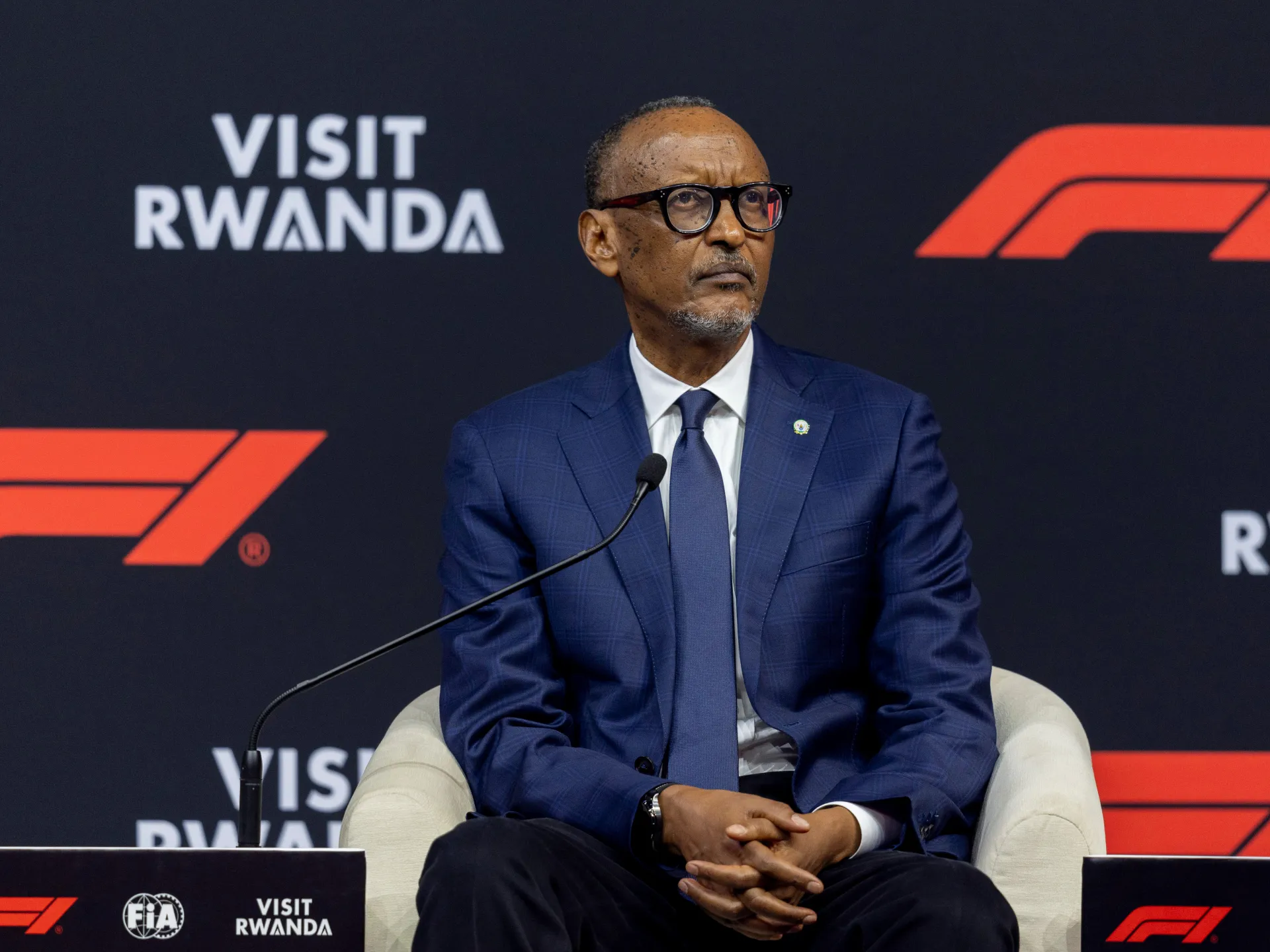
Rwandan President Paul Kagame joined F1 Chief Executive Stefano Domenicali and FIA President Mohammed Ben Sulayem on Tuesday to announce the race. It will be held at a circuit yet to be built at Bugesera, near Rwanda’s capital Kigali, in “the early 2030s,” F1 says. The series last raced in Africa in 1993.
Recommended Stories
list of 4 itemsend of list
The DRC, the United States and UN experts accuse Rwanda of backing M23 rebels in eastern DRC. Rwanda says its security measures are intended to protect it against threats from armed groups operating across the border.
“In February 2025, I warned Stefano Domenicali and the F1 authorities that allowing Rwanda to host a Grand Prix would be morally indefensible,” Kayikwamba Wagner said in a statement. “[The DRC] welcomes Formula 1’s return to Africa, but giving Paul Kagame this platform would help polish the image of an authoritarian leader whose government has helped fuel a devastating war in our country.”
Kayikwamba Wagner said the DRC backs rival efforts from South Africa to host a race instead.
“This is also an opportunity for F1 to show its audiences and supporters what the sport truly stands for,” she added. “It should require credible, independent guarantees that no money used to host the race comes from conflict-linked minerals or the exploitation of Congolese resources.”
The DRC has previously objected to other Rwandan efforts to promote its brand through sports, especially a string of high-profile sponsorship agreements with leading European football clubs.
The US imposed sanctions on Rwanda’s military and four senior officers in March over their support for M23 rebels in eastern DRC. Rwanda rejected the sanctions as one-sided and said they misrepresented the conflict.
Banks expect tax increase in Healey’s first Budget
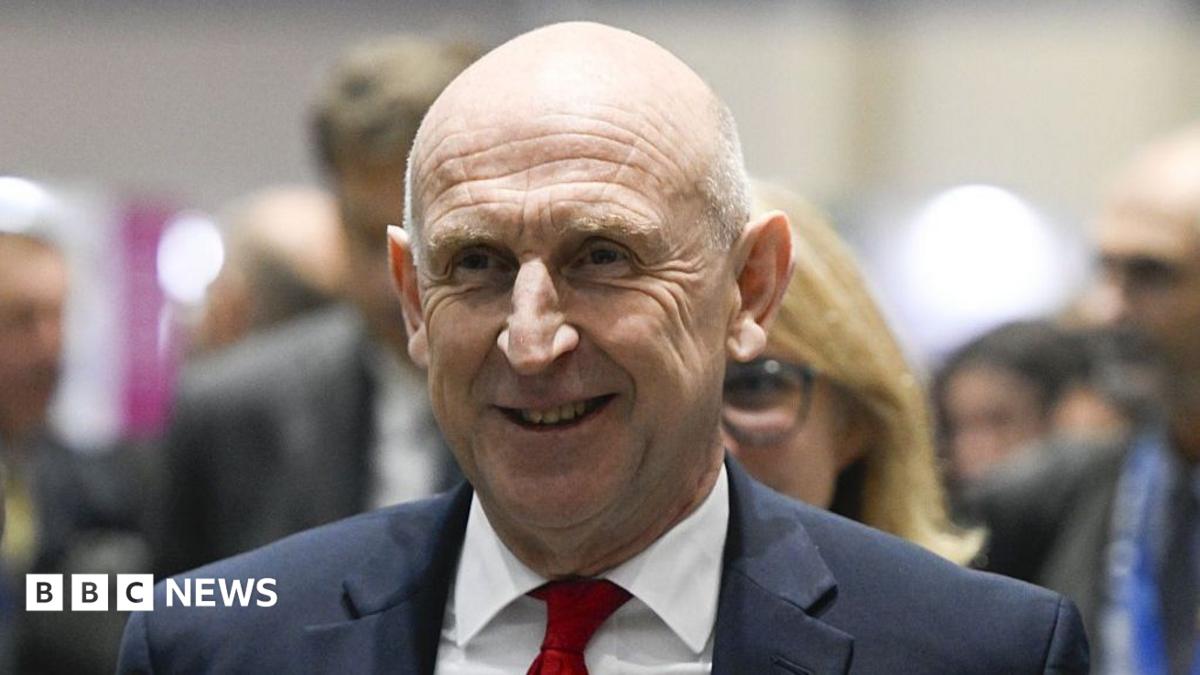
Senior banking executives have told the BBC they expect the sector to be “on the menu” when the chancellor announces his Budget in two weeks’ time.
John Healey has described the banks as part of “the crown jewels” of the UK economy, yet has refused to rule out a raid on the sector.
The biggest four banks collectively made around £15bn profit in the first six months of this year, leading to calls from trade unions and others for additional taxes.
However, the banking sector trade body, UK Finance, warned that “further increases in bank taxes would weaken competitiveness, discourage investment and job creation, and work against the government’s ambition to deliver growth in every postcode”.
The UK’s biggest banks and building societies currently pay a surcharge of 3% on top of the baseline 25% rate of corporation tax, plus a levy on the assets held on their balance sheets.
The sector contributed nearly £40bn to the Treasury last year, if income tax on employees is factored in.
The bank levy generated £1.4bn last year and the surcharge a further £1.2bn.
There are a number of ways the chancellor could extract more money from the sector.
The 3% surcharge was reduced from 8% under Rishi Sunak when he was chancellor, at the same time as he raised corporation tax from 19% to 25%. Returning the surcharge to its previous level could raise around £2bn a year.
The bank levy currently charges 0.1% on outstanding short-term loans and 0.05% on longer-dated loans, although mortgages are excluded from the calculation.
In the past banks have successfully argued that higher taxes would risk making the UK uncompetitive with other jurisdictions and would reduce their ability to lend, and therefore be anti-growth.
In truth, banks were pleasantly surprised they were not hit at the last Budget, given the large profits they have been making in recent years. Rising interest rates have expanded the margin between the rate at which they lend to customers and the rate they pay savers.
There is another option that has been discussed with Treasury officials. Currently banks can use losses from the past to offset against profits – thereby reducing their tax bill in any given year. Lloyds in particular has been a beneficiary of this policy, as large losses from the financial crisis have been used to lower tax bills ever since.
Some analysts and bank executives have pushed the idea of a moratorium on this practice for a few years, which would yield an estimated extra £1bn per year for the Treasury. That would provide a windfall while being “a lot more bearable”, in the words of one bank executive.
It would also spare foreign banks from an additional hit, including JP Morgan, whose chief executive Jamie Dimon has warned that the UK already has one of the highest tax burdens on banks in the world. He warned that adding further sector-specific taxes could discourage investment and damage competitiveness.
However, industry leaders say any form of tax rise that hits UK banks and exempts foreign banks’ operations in the UK would be hard to square with the government’s push to back British business.
Whatever form it takes, banks believe the chancellor now has much more of an appetite to take a larger slice of their pie.

I’m A Celebrity 2026 cast rumours from axed Strictly star to Wayne Rooney and Jesy Nelson
I’m A Celebrity…Get Me Out of Here! will be back on screens from November 2026 and, as always, several huge names from the world of showbiz have been rumoured to be entering the jungle

Ant and Dec will soon be back with I’m A Celebrity…Get Me Out Of Here!(Image: James Gourley/ITV/REX/Shutterstock)
It’s that time of year again when, in the build-up to Christmas, Ant and Dec’s reality TV juggernaut I’m A Celebrity…Get Me Out Of Here! dominates the nightly schedules.
From November, the Geordie duo will come live from Australia with a fresh batch of stars braving all that the outback has to offer in a bid to become the latest King or Queen of the Jungle. Over the years, the programme has bolstered the careers of TV favourites like ex-Atomic Kitten singer Kerry Katona, Geordie Shore’s Vicky Pattison and former X Factor star Stacey Solomon.
Others to have worn the crown include Gogglebox star Scarlett Moffatt, footballer Harry Redknapp and, last year, YouTuber Angryginge ended on top. There is almost always a soap star in the camp too, with Coronation Street legends like Beverley Callard and Sue Cleaver both having taken part.
Last year, Emmerdale star Lisa Riley, who plays Mandy Dingle, just missed out on a place in the final. As the nation prepares for the 2026 series, The Mirror takes a look at the stars who could be heading into the jungle this time around…
Wayne Rooney
Two years ago Wayne’s wife Coleen entered the jungle, which came on the back of her infamous Wagatha Christie trial against Rebekah Vardy and saw her bag what was reported to be one of the highest paycheques in the history of the show,
Now the football legend himself could be about to sign up for I’m A Celeb. It was recently claimed that bosses had been in “negotiations with him for some time,” but on a recent appearance on This Morning, he simply said fans would “have to wait and see.”
In other words: he did not deny it!
AJ Odudu
AJ is currently fronting Big Brother with Will Best but, like her co-host, currently competing on Strictly Come Dancing, she could also be about to become a contestant on one of the nation’s biggest reality shows.
A source said: “She’s had early conversations about taking part and has made it clear she can absolutely make the dates they need her to.”
Jesy Nelson
Best known as part of Little Mix, Jesy, 35, last year gave birth to their twin daughters Ocean and Story. both born with Spinal Muscular Atrophy (SMA) type 1.
She successfully lobbied the government and joined forces with the Mirror to campaign to have all newborns tested for spinal muscular atrophy (SMA) when her twin girls were diagnosed too late after irreversible nerve damage.
Speaking to The Sun, a source said: “Continuing to raise awareness around SMA for her girls is something Jesy is very keen to do, and she knows she can use a platform like I’m A Celebrity to reach millions.”
Ade Adepitan
Paralympian Ade, 53, could be the first star in a wheelchair to enter the jungle. A couple of months ago, it was reported that he could be about to head into the jungle, with show bosses working to ensure the camp is adapted to accommodate him.
Nadiya Bychkova
Along with Luba Mushtuk, Karen Hauer, and Michelle Tsiakkas, Nadyia fell victim to the so-called Strictly Come Dancing bloodbath last year after serving as a professional for a number of series.
It was said at the time that TV offers had been “coming in thick and fast” for the star, and she had been “in talks” with show bosses for a turn in the I’m A Celeb jungle.
Olivia Attwood
Olivia Attwood has enjoyed quite the TV career since she shot to fame on Love Island in 2017. Over the last few years, she has become a Loose Women panellist and fronted a number of investigative documentaries for ITV2.
She first entered the jungle in 2022 but had to withdraw on medical grounds after just 24 hours. She has previously said she would be open to the idea of a return if she could fit it into her pack schedule.
Su-Elise Nash
Su-Elise could be about to become the second member of Mis-Teeq to enter the jungle, after her bandmate Sabrina Washington competed in 2009 and has apparently been in early talks with I’m A Celeb bosses, especially after the Scandalous hitmakers reunited at Capital Summertime Ball.
Ricky Wilson
Ricky Wilson is known for huge hits like Ruby and I Predict a Riot as part of the Kaiser Chiefs. The Sun previously reported that he had “always politely declined” the jungle before, but could now have changed his mind.
Ben Stokes
Legendary cricketer Ben announced his retirement from the sport earlier this year, and could just be about to head into the I’m A Celeb jungle a matter of months later. Alex Apati of Ladbrokes said: “Ben Stokes could soon be swapping cricket for crickets, if the latest odds are anything to go by.”
Follow Mirror Celebs and TV on TikTok , Snapchat , Instagram , Twitter , Facebook , YouTube and Threads .

Authorities investigate letters with ‘suspicious substances’ sent to congressional, election offices
WASHINGTON — Federal authorities are investigating letters with “suspicious substances” that have been mailed to congressional and election offices nationwide and are urging recipients to treat the mailings as “potentially hazardous.”
The investigation by the FBI, U.S. Postal Inspection Service and U.S. Capitol Police was first disclosed in a message from the Senate Sergeant at Arms obtained Thursday by The Associated Press. The notice, sent to Senate offices, said that law enforcement officials were working to intercept any additional letters, but “it is possible that some letters may reach their destinations.”
In Congress, the threat appeared limited to the Senate, though the House was monitoring the situation, according to a person familiar with the matter who was not authorized to discuss the investigation publicly.
An FBI statement said the bureau and the Postal Inspection Service were “investigating a series of suspicious mailings sent to various addresses nationwide, including Secretary of State offices and their related election offices.”
“Some of the letters contained an unknown substance and we are working closely with our law enforcement partners to respond to each incident,” the statement read. “We are also working with our partners to identify the individual or individuals responsible for the letters.”
Mailed packages containing a powdery substance led to the evacuation this week of election offices in at least two states, Louisiana and Oklahoma. The Ohio secretary of state said the Postal Service intercepted a package containing a white powder intended for its office and noted that similar mailings had been sent to election officials in multiple states.
News of the letters comes just three weeks before Election Day and is reminiscent of a similar threat in 2023, when election offices in six states received mailings that contained a white powder. In some cases, the incidents disrupted work around local elections.
Some of those letters contained threats and traces of the powerful opioid fentanyl, leading some election offices to stock up on the overdose reversal medication naloxone.
The National Association of Secretaries of State and the National Association of State Election Directors issued a joint statement condemning what they said were threats against election staff.
“Those who administer our elections should never fear for their safety while carrying out their essential duties,” they said in their statement.
Deputy Postal Inspector Brendan Donahue told reporters Thursday that “any threat or attack on election officials is unacceptable” and that “we are also working with our partners on identifying the individual or individuals responsible for the letters.”
Mascaro and Cappelletti write for the Associated Press.
Dodgers Dugout: Random thoughts on Game 3 of the NLCS
Hi, and welcome to another edition of Dodgers Dugout. My name is Houston Mitchell. Game 3. What will happen? Let’s find out together.
Game 3 thoughts
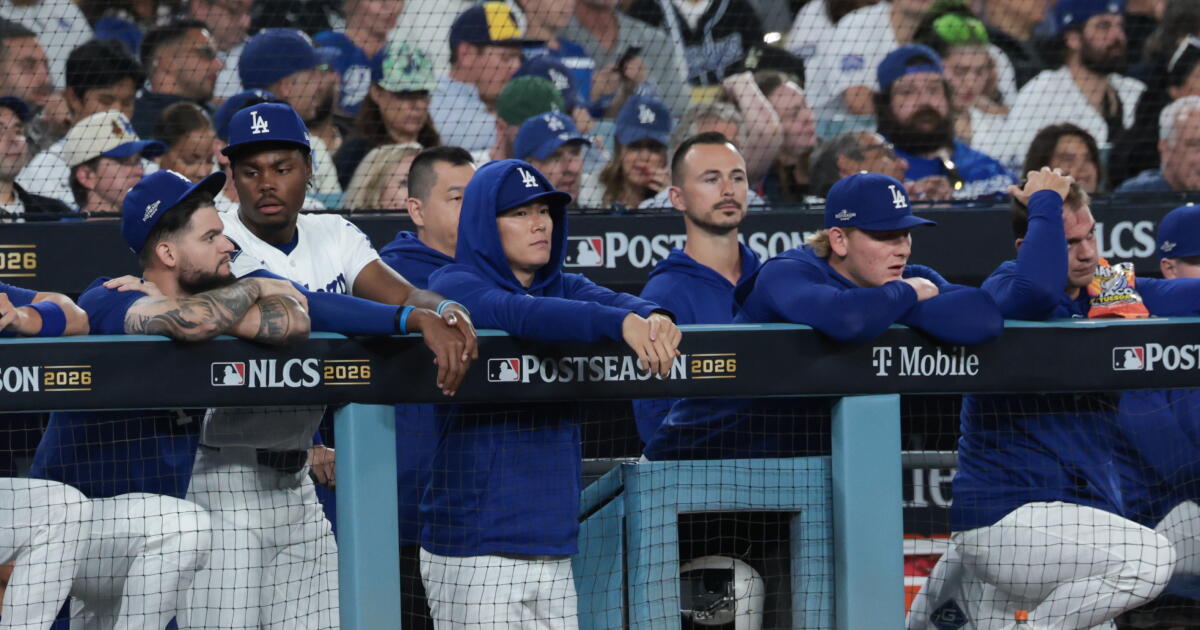
—Well, Shohei Ohtani is in the lineup and batting sixth. How will he do tonight? Who knows. My feeling has always been this: Great players always want to play. It’s the job of the front office and manager to protect the player from himself. If Ohtani was just in a normal slump, I’d play him. But if he’s injured so badly it is hurting his swing, which appears to be the case, he needs to sit. No player, even as great as Ohtani, is bigger than the team.
—Will Smith is batting seventh. He’s in a worse slump than Ohtani.
—Many people are calling this a must-win game. The only must-win game is an elimination game.
First inning
—That is not the start the Dodgers were looking for. Brewers 1, Dodgers 0.
—Home run, then three straight strikeouts. Did the homer make Snell angry?
—Never thought I would see a Corey Seager hair ad.
—The Dodgers have solid warning-track power in this series so far.
Second inning
—First and second, one out. This is not the start the Dodgers were looking for.
—Someone needs to tell Will Smith that’s it’s OK to use an ABS challenge early in the game occasionally.
—And Snell gets out of it.
—Some of these TV ads make no sense at all.
—Kyle Tucker batting cleanup in the postseason. Who would have believed it?
—”Shohei was adamant that he could play!” That doesn’t mean that he should.
—Ohtani and Smith are now a combined four for 45 in this postseason.
Third inning
—Snell seems locked in now. It’s time for the Dodgers to make the Brewers pitchers feel unlocked in.
—That’s the kind of sterling analysis that you only get here.
—I was just getting ready to wonder why Miguel Rojas is starting over playoff Kiké when Rojas singled. Never mind.
—First and second, one out. Really need to score a run here. Especially with Freddie Freeman and Teoscar coming up.
—Every overhead shot shows a bunch of empty seats. This happens when you outprice the regular fan.
—And the Dodgers don’t score.
Fourth inning
—Will Smith made an early ABS challenge and won! Stop the presses! Bring me the finest muffins and bagels in all the land!
—Ohtani got on base!
—Smith challenged another call! What’s going on?
—And then he struck out anyway, taking all of the joy out of the successful challenge.
Fifth inning
—Just think if Snell could stay healthy a full season. He’d probably have six Cy Youngs.
—Somewhere in America, a child to his father during the Megan Fox ad: “Hey dad?” “Yes son?” “What’s Viagra? And why does that woman have red skin and make me feel all tingly inside?”
—Our version of Front Row Amy, Mary Hart, is in her traditional spot, looking bored as ever.
—Rojas walks. Dodgers really need to score a couple of runs.
—Tommy Edman swings at the first pitch after the previous batter drew a walk. Things that make you go hmmmm.
—The Brewers outfielders dive for a lot of catches that they don’t need to dive for.
—And the Dodgers strand another leadoff runner.
Sixth inning
—Ad begins “You never know how many days there are in October.” Well, yes I do. 31.
—You really have to score when the first two batters walk.
—They pitched Ohtani like he was MVP Ohtani.
—I probably wouldn’t have hit for Pages, the only guy with a hit with runners in scoring position this series.
—The Dodgers finally get a clutch hit. And it’s Will Smith. He’s on a roll! Dodgers 2, Brewers 1.
—Abner Uribe was struggling. You had to foresee them going with Hall, the left-hander, next. Wasted Josue De Paula, who is on the roster only for his bat. Better to see Rojas or Kiké against a struggling Uribe. And then, if they bring in Chad Patrick to face Rojas or Kiké, then you go with De Paula.
—But they should have scored at least one more. This may become important later.
Seventh inning
—Snell still in the game. Good.
—Leadoff walk. Bad.
—Dodgers only have one bench player left, Hunter Feduccia.
—Jake Bauers is pesky. Every team needs a guy like Bauers.
—Snell up to 97 pitches, Bauers could be his last batter.
—And Bauers homers. Brewers 3, Dodgers 2.
—See, if Dave Roberts had taken Snell out, people would have said “Why didn’t they leave him in? He was doing so well.” And now people are saying “They should have gone to the bullpen!”
—And there’s another home run. Brewers 4, Dodgers 2.
—It might be time to remove Snell now.
—Here comes Evan Phillips, who has pitched 17 scoreless innings in his postseason career. Yet he has been relegated to mop-up duty.
—And the Dodgers go down quietly. In this series, the Brewers always answer back when the Dodgers score. The Dodgers don’t answer back when the Brewers score.
Eighth inning
—Brewers feel like the Team of Destiny right now.
—The other thing that needs to be remembered: It’s easy to say “Dodgers hitters are just terrible, they are slumping at the worst time.” But sometimes you just tip your cap to the other team and say “Your pitchers beat us.” The Brewers look like the Dodgers of the last two seasons.
—Max Muncy made a nice play on that ball, even if it turned into an infield single. And Muncy was named a finalist today at third base for the Gold Glove award. I would have never thought that possible as little as two years ago.
—Justin Wrobleski now in the game. Where’s Jack Dreyer?
—Wild pitch. Brewers 5, Dodgers 2.
—Oh no, it’s Bauers again. I wonder if he knows Brian Doyle.
—Hey, Ohtani hit the ball hard!
—I’m picking on Ohtani far too much. They don’t win two World Series without him. He gave them the swagger they were missing. That shouldn’t be forgotten. And as I’ve mentioned, it’s the team’s job to bench the player, not the player’s job. What great player would say “I don’t want to play?”
—And the Dodgers go down quietly. I have that phrase saved so I just have to paste it in. Saves me a lot of time.
Ninth inning
—Why do people get seats behind home plate and then spend most of the game on their phone?
—And the Brewers add on an insurance run. Brewers 6, Dodgers 2.
—And the Dodgers go down quietly.
—So the Dodgers are down 3-0. Only once in postseason history has a team rallied from a 3-0 deficit, the 2004 Boston Red Sox in the ALCS. Dave Roberts had an important stolen base in that series.
—It’s not impossible for the Dodgers to come back from this, but it is improbable. They have been outplayed in every aspect of the game. Offense, pitching, managing, energy, clutch ability, the list goes on.
—We’ll just have to wait and see what Game 4 brings us. Remember, game time changed from 6 p.m. to 5 p.m. In the meantime, enjoy life.
Up next
Thursday at Dodgers, 5 p.m., FS1/Fox Deportes/Fox One
*Friday at Dodgers, 6 p.m., FS1/Fox Deportes/Fox One
*Sunday at Milwaukee, 5 p.m., FS1/Fox Deportes/Fox One
*Monday at Milwaukee, 5 p.m., Fox/FS1/Fox Deportes/Fox One
All times Pacific
*-if necessary
In case you missed it
Shaikin: Here’s how Dave Roberts explained all the Dodgers’ moves that backfired
‘We just need to win tomorrow’s game.’ Dodgers remain optimistic despite 3-0 hole
Dodgers Debate NLCS GAME 3: Dodgers stare down a sweep
Plaschke: The Dodgers are done. After putting up a fight, the champs are out of gas
‘How do we bounce back?’ Dodgers collapse and fall into 3-0 NLCS hole vs. surging Brewers
Shaikin: Dodgers should have taken Shohei Ohtani off the postseason roster
Shohei Ohtani talks playing in the NLCS through injuries
Dave Roberts says Shohei Ohtani is adamant he feels good enough, will remain in lineup
Shaikin: Dodgers send SOS to Blake Snell and Tyler Glasnow: Save our season
And finally
Vin Scully receives the Presidential Medal of Freedom. Watch and listen here.
Until next time …
Have a comment or something you’d like to see in a future Dodgers newsletter? Email me at houston.mitchell@latimes.com. To get this newsletter in your inbox, click here.
Israeli ad-tech firm helped place spyware on Al Jazeera devices | Espionage News
Citizen Lab investigation says dozens of Al Jazeera devices were infected by malware planted through advertisements.

Published On 15 Oct 2026
Israeli advertising technology company Discover-Tech helped place spyware on dozens of devices used by Al Jazeera and other companies, a Citizen Lab investigation prompted by Al Jazeera’s own initial internal probe has confirmed.
Al Jazeera Media Network on Thursday said it “condemns the targeting of devices belonging to several of its employees with spyware”.
“The network voluntarily collaborated with the researchers, and this cooperation, according to the report, contributed to verifying these attacks and publicly documenting them.”
Al Jazeera will continue to “protect its employees and systems”.
The network said targeting journalists is an “assault on press freedom and the public’s right to knowledge” and called for those responsible to be held accountable.
Spyware from Candiru, a firm blacklisted by the United States government in 2021 for its malicious cyber activities, was planted on these devices, using what Citizen Lab described as the first-known instance of “zero-click” targeted advertising.
The Citizen Lab, an interdisciplinary research unit at the University of Toronto, concluded in its report that Discover-Tech purchased the advertisements that had the spyware built in. It then directed devices to Candiru’s malware through these advertisements. The millions of devices that were pointed to the malware include several that belonged to Al Jazeera’s journalists – including several who reported on sensitive subjects.
Al Jazeera’s internal technology team first discovered unusual patterns on devices used by some journalists in 2024. The pattern continued into 2025. Al Jazeera reached out to Citizen Lab for a more detailed investigation into its suspicions that spyware was responsible.
“Analysis of network logs provided to the Citizen Lab by Al Jazeera collected during the attack period provides a clear temporal signature of how the attack was executed,” the University of Toronto-based team said ints report published Thursday.
The “zero-clock” nature of installing this spyware means that once an infected advertisement appears on a device, that device, too, is infected — spying on, and feeding, all the data and information available on that platform to those stealing it.
Meanwhile, New York-based security firm Confiant said in a separate report that some of Discover-Tech’s advertisements also appeared in critical networks used by the Pentagon, the International Atomic Energy Agency and the International Criminal Court.
Candiru’s spyware has previously been used to carry out surveillance on at least 100 journalists, dissidents and others in several countries.

What is the ‘Mother of All Bombs’ US could use in Iran? | US-Israel war on Iran News
The United States has developed plans to strike Iran with the largest non-nuclear bomb in its military arsenal on Iran’s energy infrastructure and nuclear sites if President Donald Trump orders renewed combat operations, according to US officials cited by CNN.
Deploying the GBU-43/B Massive Ordnance Air Blast Bomb (MOAB), nicknamed the “mother of all bombs”, could significantly escalate the ongoing conflict at a time when fighting has lulled, experts say.
Recommended Stories
list of 4 itemsend of list
Concerns are also being raised, including within the Trump administration itself, over what such a move would even achieve. Officials familiar with military planning discussions told US news outlet CNN and Al Jazeera that deploying the MOAB would be unlikely to help the US achieve its stated strategic goals, including to destroy Iran’s nuclear capabilities.
Brussels-based military expert Elijah Magnier told Al Jazeera that using the MOAB would not even guarantee the destruction of Iran’s deeply buried underground nuclear installations and that such a strike would likely amount to little more than “political theatre”.
Here’s what we know:

What is the MOAB?
The GBU-43/B Massive Ordnance Air Blast Bomb (MOAB) is a massive munition containing about 8,500kg (18,000 pounds or 8.5 tonnes) of high explosives. It weighs 9,800kg (21,605 pounds or nearly 10 tonnes) – about the same as four saloon cars – and is as long as a small yacht at just over 9 metres (about 30 feet).
The MOAB is typically deployed from the Lockheed C-130 Hercules cargo aircraft because it cannot fit in a stealth bomber.
The bomb, which was first manufactured between 2002 and 2003, has undergone 12 detonation tests.
Its name is a reference to former Iraqi President Saddam Hussein’s comments during the 1991 Gulf War when he invoked the “mother of all battles”.
The US has only deployed the MOAB once before – during its 2017 attacks on an Islamic State Khorasan Province (ISKP) cave and tunnel complex in Afghanistan. Afghan authorities claimed that while 94 Islamic State-Khorasan Province (ISKP) fighters were killed in the blast, no civilians were hurt. However, there were unconfirmed, local reports of civilian casualties and many homes were destroyed.
What is the ‘mother of all bombs’?


The GBU-43/B, the US’s most powerful non-nuclear bomb, was used once, against Islamic State-Khorasan…

GBU-43/B
Pallet is deployed from rear cargo door of MC-130H or C-17aircraft.
-
Released from the aircraft.
-
Cradle separates; GPS and fins guide it.
-
H6 explosives detonate.
-
A powerful shockwave spreads.
-
Hot gases, smoke and debris rise in a mushroom cloud.
1 of 4
What kind of damage can it cause?
Designed to explode a few feet above the ground, the MOAB sends out lethal waves of fire when it detonates, blasting away buildings, cave openings and other hard-surface structures.
“Its purpose is to generate an exceptionally powerful blast across a surface area,” Magnier said.
Military expert Colonel Nidal Abu Zeid told Al Jazeera the bomb does not require impact in order to detonate and that its massive blast will destroy everything above ground within a 1km (0.6-mile) radius.
It is likely that the US would aim to use the high-explosive MOAB to completely destroy Iran’s ground-force positions above ground, and to reach its underground facilities, including Pickaxe Mountain, which Trump has previously threatened to attack, Abu Zeid said.
However, Magnier said the bomb’s radius and level of destruction would depend greatly on the terrain it is used within and how populated the area is. He added that it may not be particularly effective against targets buried deep underground.
Some of Iran’s nuclear sites which the US may wish to target, such as the Fordow complex and an under-construction site at the Pickaxe Mountain, are heavily fortified and deeply buried.
“Its large explosive charge can produce devastating blast effects against exposed personnel, equipment and vulnerable structures,” Magnier said. “The Afghanistan operation demonstrates its intended application against a cave-and-tunnel position; it does not demonstrate an ability to destroy every kind of underground installation.”
While its blast can reach underground, the MOAB is not especially designed to punch through deep concrete or mountain rock in the way that a “bunker buster” bomb is. The US military’s most powerful bunker buster is the GBU-57 Massive Ordnance Penetrator. Weighing about 30,000 pounds (13,600kg), including a 2,700kg (6,000 pound) warhead, this precision-guided bomb is made of high-strength steel and built to penetrate up to 200 feet (61 metres) underground before exploding.
Would the US really use an MOAB?
It already has done – in Afghanistan in 2017.
However, besides not being guaranteed to hit underground targets effectively, Magnier told Al Jazeera it could be difficult to deploy the necessary aircraft in the regions of Iran where nuclear sites are located. Stealth bombers which are better suited to this terrain are not able to carry this size of bomb.
Using the bomb could also destroy infrastructure without inducing Iran to make any concessions, he added, noting that its deployment would risk turning “a spectacular event” into one that ultimately delivers few political results for Washington.
“The question I would put to any commander advocating its use is straightforward: What will this weapon accomplish that another available weapon cannot, and how will that result advance an achievable political settlement?,” Magnier said.
“If the answer centres on the spectacle of the explosion, the proposal is stronger as political theatre than as military strategy,” he added.
CNN reported that Trump, in private discussions, has been seeking a “definitive” end to the war that will prove Washington has been undefeated.
How might Iran respond?
A MOAB strike would likely prompt a major reaction from Iran, experts say, warning that Tehran could even invade its neighbours who host US military assets in response.
Iranian security officials have for months made comments regarding a possible invasion of countries like Kuwait to capture US troops and force Washington to surrender.
In May, during a pause in hostilities, Kuwait alleged that sailors from Iran’s Islamic Revolutionary Guard Corps (IRGC) infiltrated its Bubiyan Island, leading to an exchange of fire between Iranian and Kuwaiti forces. One Kuwaiti was injured and four Iranian soldiers were captured.
Iran denied that it had invaded the island and said the troops’ navigation system had malfunctioned.
On Tuesday, IRGC security adviser Mohammad Reza Naghdi warned that Iran could capture troops if Washington were to launch ground attacks, although military experts have long dismissed Trump’s earlier threats of an invasion due to Iran’s mountainous terrain.
“If the United States launches a ground attack, so many of its troops will be captured that it will be forced to raise the white flag,” he said.
Experts say Iran has been preparing for another round of war by stockpiling weapons, fortifying key nuclear and defence locations, and rallying its supporters.
In a television broadcast on Sunday, National Security Council chief Mohsen Rezaei threatened that Iran would attack regional digital infrastructure, including communication cables, data centres and artificial intelligence facilities in the United Arab Emirates and others, if American strikes resume.

James Acaster says Celebrity Traitors bosses edited out scene showing why Julie had to go
James Acaster has revealed the real reason Julie Hesmondhalgh was banished from the Celebrity Traitors castle and claimed it was edited out of the final broadcast.

James Acaster has opened up about an unseen moment on Celebrity Traitors
James Acaster has revealed the real reason Julie Hesmondhalgh was banished from Celebrity Traitors – and said it was not shown in the final edit of the show.
The actress, best known for previously starring as Hayley Cropper in Coronation Street, was the latest victim of the round table in the hit BBC series, after a campaign led by singer James Blunt, and revealed she had been a Faithful the whole time.
However, reluctant Traitor James has said the real reason the group turned on the Broadchurch actress and voted her out was not shown in the episode.
He told The Times: “In the edit James Blunt’s reason was that Julie was given the first shield. What actually happened is that when they did the shoulder tap for the Traitors ’ pick at the beginning, James told Julie who he thought was acting suspiciously around the table.”
To see more of the stories you love from The Mirror and to find them easily in Google then make us your preferred source. Free and easy-to-do, just click on the link here to find more from The Mirror at the top of your feed.
James spoke to Julie soon afterwards and told her that at that stage in the game, before the traitors knew who each other were, they would not be sharing theories because they might inadvertently incriminate an ally. He suggested that they should take note of who was not being forthcoming.
He continued: “Then Julie went into the room where James [Blunt] was, puts this to everyone, and says, ‘Like you, James. You’re not sharing your theories with anyone’, and James is thinking, ‘Well that’s not true, because I just shared mine with you at the table’.”
James said that when Julie was voted out, the You’re Beautiful singer presented this as evidence of lying. He added: “That’s why Julie got voted off. Which isn’t in the edit. If I was him, I’d be pretty gutted.”
Comedian James also revealed some behind-the-scenes detail about the filming of the hit show, saying contestants stay in a “Travelodge-level hotel about an hour from the castle in the Scottish Highlands, which is a bit of a trek each morning and night”.
They cannot leave the hotel without being chaperoned and have ten minutes each morning to FaceTime a friend or family member. He added: “A member of the production team is there with you, so you can’t have an authentic conversation because you can’t tell them anything that’s happening.
“At one point my partner said, ‘Have you caught the sun?’ I was saying, ‘Oh yeah, we were outside for one of the missions’. I was told I couldn’t even tell her that.”
A spokesperson for The Celebrity Traitors said: “Everyone experiences their own game in their individual way with many differing theories, opinions and multiple discussions throughout the day.
“Naturally, we could never include every minute of a day’s filming in any one episode where we need to focus on the key story moments.
“The round table offers an open forum for all of those theories to be presented and it is there that we see the most salient points come to the fore that succinctly convey how players reach the decision on who to banish in that moment.”
Celebrity Traitors continues on BBC One on Thursday at 8pm.
Follow Mirror Celebs and TV on TikTok , Snapchat , Instagram , Twitter , Facebook , YouTube and Threads .

How China Plus One Is Transforming ASEAN Trade
Supply-chain diversification fuels a growing Southeast Asian financial ecosystem.
This article appears in the October issue of Global Finance Magazine.
China Plus One (C+1) is a supply-chain-focused strategy in which companies retain substantial manufacturing and sourcing in China while adding at least one other country. The C+1 strategy is rapidly shifting manufacturing to countries in the Association of Southeast Asian Nations (ASEAN), boosting foreign direct investment (FDI), expanding trade surpluses, and driving GDP growth.
At the same time, the Regional Comprehensive Economic Partnership (RCEP)—a free trade agreement among 10 ASEAN member countries plus Australia, China, Japan, New Zealand, and the Republic of Korea—is boosting intraregional trade and the cross-border use of local currencies, thereby germinating a potentially formidable Southeast Asian financial ecosystem.
China’s unmatched supplier density, scale, and infrastructure are retained, but concentration risk is mitigated by building capacity in ASEAN (or elsewhere). If a manufacturing site or supplier faces a tariff hike, lockdown, or political shock, production can shift rather than halt. Even without these factors, costs are substantially reduced.
A clear example of C+1 in action is Taiwan’s Foxconn, which operates factories in Bac Ninh Province in northern Vietnam, where its plant assembles Apple’s AirPods and MacBooks using high-value parts manufactured in China.
The industrial base remains in China, with ASEAN serving as a tariff and resilience hedge. Vietnam has benefited from a cumulative $5 billion in Foxconn’s FDI in the country from 2007-2026—according to Taiwan Stock Exchange and Bac Ninh local government data—to create manufacturing capacity and more than 100,000 jobs in Vietnam.
The FDI story exemplified by Foxconn has been echoed across ASEAN. “Since 2021, FDI in the region has been exceptionally strong, with annual inflows exceeding $200 billion, compared with an annual average during the last decade of less than $130 billion,” according to the ASEAN Investment Report 2025, published last October by the ASEAN Secretariat and the UN Conference for Trade and Development (UNCTAD).
That report tallies 2024 inflows at $226 billion. Underlining the ASEAN dynamic in relative global terms, FDI was up by 8.5% that year while global FDI fell 11%.
“The strategic importance of ASEAN in global supply chains has strengthened significantly over the past decade, catalyzed by the China Plus One strategy, which aims to mitigate risks arising from geopolitical tensions and search for more-resilient production networks,” said Han Teng Chua and Radhika Rao, senior economists at DBS.
“The region’s open and foreign-investor-friendly policies, coupled with companies’ efforts to expand markets, diversify risks, and optimize costs, could drive ASEAN-6’s FDI inflows to grow at a robust CAGR of 7% over the next decade.” ASEAN-6 is a bloc comprising Indonesia, Malaysia, the Philippines, Singapore, Thailand, and Vietnam.
Funding the Trade Finance Gap
Alongside the FDI narrative sit two burning issues: the pressing need to finance ASEAN trade, which is characterized by an “unmet gap” between demand and trade finance; and the underpinning of the region’s economies by micro, small, and midsize enterprises (MSMEs) and SMEs.
A joint assessment by the U.K. Growth Gateway and Boston Consulting Group, dated February 2024, puts the ASEAN-specific unmet gap at roughly $350 billion to $400 billion and estimates that closing even 10%-20% of that gap could unlock $85 billion to $105 billion in “trade value uplift” and about 6 million jobs in the region’s trade-related industries.
But a big reason for the region’s unmet gap is the preponderance of SMEs and MSMEs. According to the ASEAN Secretariat, these account for 97.2% to 99.9% of all business establishments. Collectively, SMEs and MSMEs generate about 85% of employment, contribute 44.8% of GDP, and supply 18% of national exports, making them central to job creation, inclusive growth, and value-added activity across both urban and rural areas.
The sobering fact is that about 40% of these companies’ trade-finance applications are rejected, according to the Asian Development Bank (ADB), often because applicants lack sufficient collateral, complete documentation, or an established credit history.
This is compounded by ASEAN’s fragmented nature and the urgent need to fully digitize trade and trade finance in a region that still relies on paper documentation. The Model Law on Electronic Transferable Records (MLETR) is the solution: a legal template that ASEAN countries can incorporate into law so that a digital original of trade documents has the same legal status as a paper original.
Singapore implemented MLETR in 2021, and the hope is that ASEAN’s Digital Economy Framework Agreement will push the rest of the region to align with it.
“Carbon copies still choke ASEAN trade—slow ships, costly credit, shut-out SMEs. MLETR is the legal unlock. Singapore is live. Mass uptake isn’t guaranteed, but the shift would be seismic,” said Alicia Garcia-Herrero, chief economist for Asia Pacific at Natixis, in Hong Kong.
Singapore’s move came in preparation for the RCEP, which came into force in 2022 for the first 10 ratifying countries. The 15 RCEP member countries represent the world’s largest trade bloc by population and economic size—about 30% of global population and GDP.
The RCEP aims to cut tariffs on more than 90% of goods traded among its members by 2042 and also covers services, investment, e-commerce, and intellectual property. Intra-RCEP trade rose sharply in 2022 to around $1 trillion and stood at around $6 trillion last year. The agreement has positively impacted trade for Cambodia, Laos, Myanmar, and Vietnam with other RCEP partners—exports from Cambodia to RCEP countries account for more than 60% of the country’s total trade.
Rebuilding ASEAN’s Trade Plumbing
Digitalized supply-chain finance—anchored in distributed-ledger technology—and local-currency settlement can rebuild ASEAN’s trade plumbing around firms, not just banks. Anchor buyers channel liquidity to SME and MSME suppliers, bypassing the need for collateral and thereby helping to fill the unmet gap.
The ADB’s Trade and Supply Chain Finance Program (TSCFP) helps close the unmet gap in SME trade finance by issuing AAA-rated guarantees and loans through more than 250 partner banks, enabling smaller firms in developing Asia to import, export, and access supply-chain working capital that private lenders would otherwise typically withhold.
In August, Steven Beck, TSCFP director, relocated to Singapore, in a move that reflects the city-state’s preeminence as an ASEAN supply-chain and trade-finance hub. “Being here means we can work much more closely in this energized ecosystem, feeding off the energy and exchanging ideas in a way you just can’t do remotely,” he said.
“It’s been a remarkable year,” Beck added. “Our business is up over 60% compared to the same period last year, which is a huge jump for a program that already supports about 20,000 transactions worth over $5 billion annually. Part of that is just persistent, unmet demand for trade finance in markets that have historically been underserved.”
Settling invoices through ASEAN’s Local Currency Transaction Framework alleviates dollar scarcity that bedevils the trade arena in smaller ASEAN economies and reduces foreign exchange spreads and correspondent-bank delays that hinder SME and MSME exporters. Linked digital platforms—e-invoicing, QR-code payment networks, and regional payment connectivity—convert those flows into reusable credit data. The result is a tighter, cheaper intra-ASEAN financial ecosystem in which trade transactions themselves become the collateral.
Jonathan Rogers is a contributing writer based in Vietnam.
Chavismo Isn’t the Only One Interested in Postponing Presidential Elections
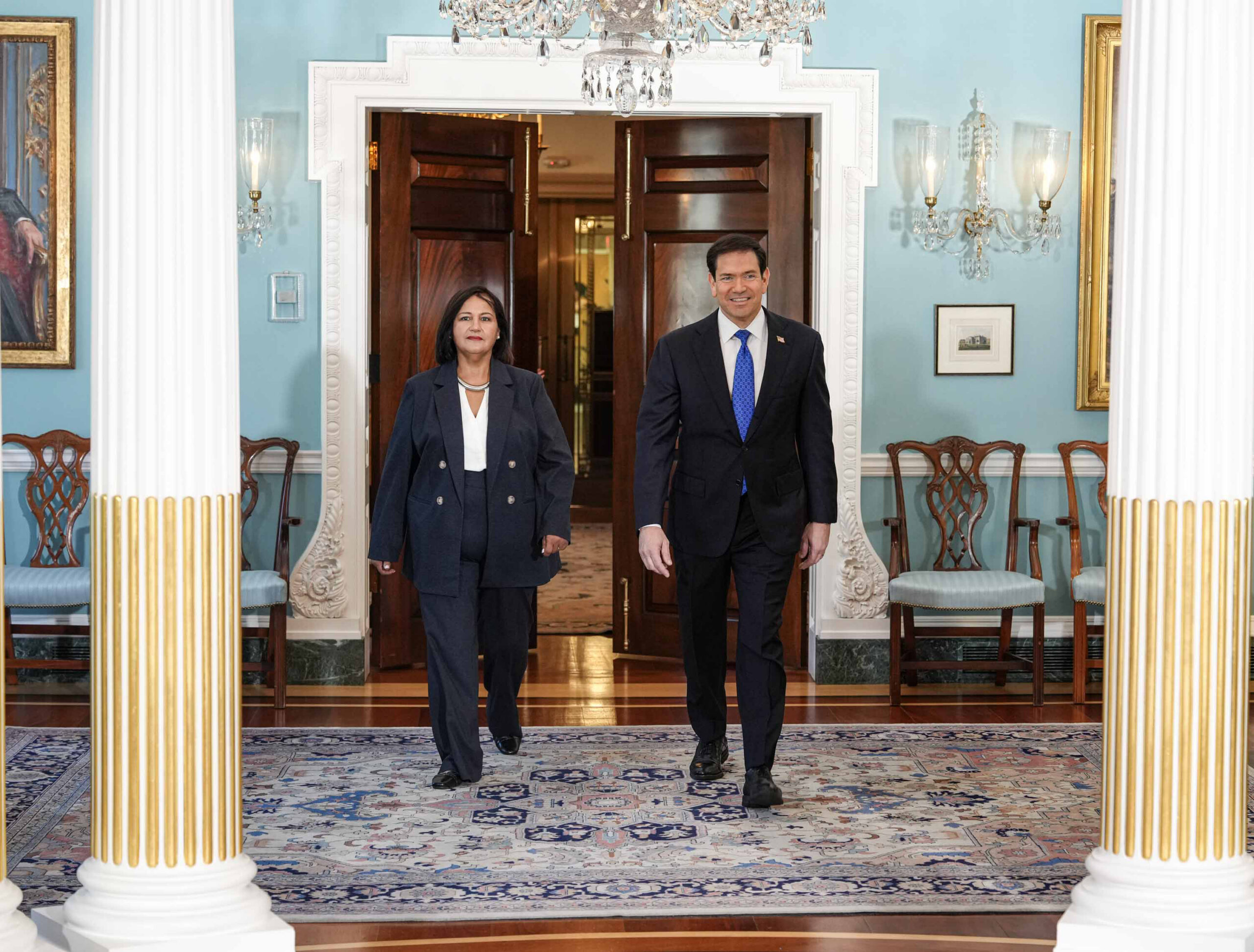
President Trump has recently developed a renewed appreciation for the importance of elections. Unfortunately for Venezuelans, he seems to have discovered it in Ukraine. Last week, he called for Volodymyr Zelensky to face voters, apparently unconvinced that an ongoing Russian invasion and martial law constitute sufficient reasons to postpone an election. In Venezuela, where his administration removed Nicolás Maduro nine months ago, elections would apparently be premature.
There are legitimate reasons to prepare carefully for elections, particularly given the condition of Venezuela’s electoral institutions. But nine months into the transition, the more interesting question is no longer simply why Delcy Rodríguez and Washington might prefer to postpone them. It is whether other actors, including some of those who have spent years demanding political change, are developing reasons to prefer the current arrangement as well.
Results amid uncertainty
Every additional month gives the ruling elite more time to influence the terms under which its own future will be decided. Cooperation in the oil industry is advancing, economic relations are being restored, and American companies have opportunities that were largely unavailable before Maduro’s removal. An election would introduce uncertainty into a relationship that has become increasingly useful to the Trump administration. That does not mean Washington has abandoned the idea of elections, but it does mean that postponing them carries fewer immediate costs than it otherwise might.
The calculation is not limited to governments and foreign investors. Venezuelan businesses are also beginning to see opportunities in the new environment. The prospect of renewed oil production, investment in electricity infrastructure, fewer financial restrictions, and improved international connections offers reasons to invest in a country that many had spent years trying to leave.
What happens if Venezuelans begin to associate the present arrangement with the prospect of economic recovery?
For a sector of Venezuelan society, the appeal may be even simpler. After years of economic collapse, shortages, political confrontation, and mass emigration, the possibility of a more normal life matters enormously. People want reliable electricity, decent wages, functioning businesses, and the ability to travel, save, and plan for the future.
What happens if Venezuelans begin to associate the present arrangement with the prospect of economic recovery? A Venezuelan can continue supporting María Corina Machado while becoming increasingly reluctant to jeopardize the economic opportunities that Washington’s accommodation with Delcy appears to offer. And those opportunities do not even have to materialize fully for the calculation to change. Businesses make investments based on expectations, families make plans around the possibility of better incomes, and people who have spent years waiting for conditions to improve may be understandably hesitant to embrace another period of uncertainty. Their political preferences may remain exactly where they were, even as their willingness to bear the costs of political change begins to diminish.
The model of a tolerable status quo
This creates a peculiar possibility for Venezuela’s transition. The government could become more difficult to dislodge without becoming more popular. Economic normalization could make the existing arrangement increasingly tolerable to people who would still vote to replace it if given the opportunity. And the longer elections are postponed, the more time those expectations have to develop into economic interests that depend, or appear to depend, on the continuation of the status quo. Supporting political change and accepting the practical benefits of the present arrangement are not mutually exclusive.
This distinction matters because Delcy does not need to become popular for her government to become easier to live with. Nor does chavismo need to recover the support it enjoyed under Hugo Chávez. It may be enough that Venezuelans who would prefer a different government become increasingly reluctant to risk the improvements they are beginning to anticipate.
For traditional opposition parties, parliamentary, regional, and municipal elections offer opportunities that a presidential contest does not.
That creates a problem for the opposition. Machado may retain considerable popular support, but popular support does not automatically translate into pressure for an election. People can agree about who they want to govern them while disagreeing about how urgently the question needs to be settled, particularly when the alternative appears to involve another period of uncertainty.
The negotiating opposition may have reasons of its own to be comfortable with a slower timetable. For traditional opposition parties, parliamentary, regional, and municipal elections offer opportunities that a presidential contest does not. These are elections in which established party organizations, local networks, and political machinery matter considerably more than the popularity of any single national leader. Holding them before a presidential election could allow those parties to rebuild their institutional presence and strengthen their negotiating position within the opposition, including in relation to Machado. That does not mean they necessarily oppose her becoming president, or that they are deliberately working to postpone an election. But the order in which elections are held could have significant consequences for the balance of power within the opposition itself.
A frozen trip to democracy
There is, of course, another possibility. Economic recovery could strengthen civil society, give independent businesses more room to operate, and make a democratic transition easier. The return of investment and international connections need not come at the expense of political freedom.
The trouble is that nothing about economic normalization guarantees democratization, particularly when the institutions that determine whether elections take place remain under the control of the existing government.
Today’s Venezuelan authorities have taken a different approach. Elections are something to be held after the necessary reforms, agreements, and guarantees have been secured. Some of those conditions are reasonable, but without a deadline there is little to prevent the process from continuing indefinitely. The government can always identify another problem to resolve, Washington can always find another reason to prioritize stability, and some businesses and private sector leaders can always argue that the country needs more time to consolidate its recovery.
The danger is not necessarily that Delcy Rodríguez herself intends to remain interim president forever. It is that an arrangement nobody originally expected to last may become sufficiently useful, or simply tolerable, that ending it stops being an urgent priority.
Venezuelans do not have to choose between economic recovery and democracy. But unless elections become a concrete part of the political process, they may find themselves enjoying some of the benefits of a transition without ever reaching its intended destination.

Rafael Camara: Haas sign Brazilian for F1 debut in 2027 season
Brazilian Rafael Camara will join the US-based Haas team for his debut Formula 1 season in 2027.
The 21-year-old, who is leading the Formula 2 championship, has been chosen after a selection process including a total of four drivers.
Camara was picked over the reigning F2 champion Leonardo Fornaroli and Haas reserve drivers Jack Doohan and Ryo Hirakawa after they were assessed in tests in previous years’ F1 cars.
Camara, Fornaroli and Hirakawa were all assessed at a test at Portugal’s Portimao track in August, Doohan separately.
Haas team principal Ayao Komatsu said that Camara had been the quickest driver at the tests.
“I always said we would choose driver by performance. He showed incredible speed. That was the fully overriding factor above everything else,” Komatsu said.
“In Portimao, he was just simply outstanding. We really wanted to go for someone who had that natural speed.
“He showed that he could handle himself very well with not a huge amount of time to learn the car. He showed us more than just raw speed.”
Komatsu added that all the drivers tested came with financial backing, adding: “But it was clear he was the quickest guy, so we took him purely based on that.”
Haas have not said who will race their other car next season, but it is considered only a matter of time before Briton Oliver Bearman is confirmed in the seat for a third season.
Komatsu said: “It is our intention to continue with Ollie. It is just a matter of timing and finalising certain details.”
Bearman and Camara are both members of the Ferrari driver academy.
Frenchman Esteban Ocon will leave the team at the end of the year after two seasons alongside Bearman, Haas confirmed at the end of last month.
Camara said: “It’s an important step in my career and I want to thank (owner) Gene Haas and Ayao Komatsu for the trust they have placed in me.
“Now my focus is on preparing myself in the best possible way for this new challenge.
“There will be a lot to learn, and I’m looking forward to working closely with the team, understanding the car and continuing to develop as a driver.”

French football body urges fans and students to keep politics out of stadiums | Football News
French Football Federation’s ethics body calls on fans to keep politics out of stadiums amid student protests.
Published On 15 Oct 2026
The ethics body of the French football federation is urging fans to stay neutral amid the nationwide student protests that are drawing international attention.
The police response to the largely peaceful demonstrations has prompted widespread accusations of brutality, and football fans in stadiums have expressed their support for students.
Recommended Stories
list of 4 itemsend of list
Officers have made extensive use of tear gas and batons to disperse crowds. More than 6,600 arrests were made nationwide as of last week, an unusually high number for a French protest movement.
A police tear gas grenade shattered a 14-year-old’s jaw and many of his teeth, while a 15-year-old lost a hand in an incident involving a stun grenade. Other teenagers have also suffered life-changing injuries blamed on police weaponry during protests.
During a Ligue 1 match between Lens and Lyon last week, the home fans unfurled a banner calling for an end to the “disproportionate and systematic police violence,” according to the National Council for Football Ethics (CNE).
The CNE also noted that at the half-hour mark of the match between PSG and Le Mans, supporters displayed a banner reading: “Your militias repress; our youth resists.”
The ethics body said in a statement that it was easy to understand why young supporters, who are often students, might take advantage of matches to publicly express their support for the demonstrators.
However, it added that the principle of political neutrality is “enshrined” in the laws of sport, both internationally through the Olympic Charter and FIFA statutes, and at a national level.
The CNE recalled that any speech or display of a political, ideological, religious or trade union nature are prohibited, as is the wearing of symbols or clothing that expresses political, philosophical, religious or trade union affiliation.
“Sport should unite, not divide,” it said. “The National Council for Football Ethics therefore calls on all supporters, who are an integral part of the football family, to uphold the principle of neutrality in all circumstances.
“The aim is to ensure that the stadium does not become a political or trade union battleground, but remains a place of celebration and shared enjoyment centred on sport.”

Beautiful little town looks so stunning in the autumn they’ve had to ban influencers
This picturesque town attracts thousands of visitors every autumn for its stunning foliage — but residents are fighting back against a surge of influencers with calls to restore peace and safety to their quiet community

People flock to this town every year for the amazing autumn colours – but not everyone is happy about it (file image)(Image: Getty Images)
Autumn is one of the most beautiful times of year, as trees turn from green to a stunning red, brown, orange, and gold. Getting out to see the seasonal colours is one of the most enjoyable things to do at this time of year – as long as you wrap up warm – and you can get some incredible pictures and video for social media while you’re at it.
But people living in one town which has become world-famous for its spectacular autumn displays have become so fed up of people flocking to their quiet community that they’re putting measures in place to ban influencers entirely. Pomfret in Vermont, in the north-eastern United States, is a peaceful, tranquil community, home of only slightly more than 900 people.
But in recent years it has become a hive of activity every autumn as crowds of people attracted by beautiful pictures of the autumn colours – known to some as ‘leaf-peepers’ – come by to see for themselves. And this has become a real problem for some residents.
‘Rude’ social media influencers
Some have said they have experienced visitors being rude, disrespectful, or downright selfish in their pursuit of the perfect snap or video, with little regard for those around them. According to news.com.au, local farmer Cathy Emmons said she and her husband Bill had witnessed one visitor wander onto private property and set up a portable changing booth, before emerging in different outfits for her selfies.
She has also witnessed tourists brazenly wandering onto her farm and stealing her tomatoes, while another resident described a drone hovering just a few feet above his head as he dined outdoors with his family. In a separate incident, a visitor parked unlawfully in a local’s driveway and used her garden shed as a toilet.
Problems on the roads
The picturesque Sleepy Hollow Farm on Cloudland Road is one of the most popular locations. But the road is not equipped to deal with the amount of traffic it is experiencing, and concerns have been expressed about visitors blocking lanes as they pull over to take photos.
Various measures have been introduced in an attempt to tackle the problem – but with limited success. In 2023, local officials shut the road to non-residents during the peak foliage season, from the middle of September to the middle of October, reports the Express.
The measure has been repeated in subsequent years, and will once again be enforced from Saturday, September 26, to Tuesday, October 13 this year. In a notice confirming the plans, issued in August, the Town of Pomfret Selectboard acknowledged the measures “cannot fully address the significant issues created by fall foliage traffic”.
It went on to say: “We also appreciate these steps may inconvenience area residents, their guests and others. Nonetheless, we believe these actions will significantly improve safety and quality of life for residents most severely affected by increased foliage season traffic, as they did the last several years.”
Fundraiser for road closure
Last year locals established a fundraising page called ‘Save Cloudland Road’, designed to raise sufficient funds to cover road closures and traffic enforcement to tackle the flood of visitors. A message on the page reads: “Over the past several years, Cloudland Road (and the small roads leading to Cloudland Road) have experienced an unprecedented surge in Instagram and TikTok-fueled tourist ‘influencers’.
“During fall foliage season, crowds commonly surge to hundreds of people at one time, and tour bus companies have even joined the fracas. Cloudland and surrounding roads can become impassable during the fall, and poorly behaved tourists have damaged roads, had accidents, required towing out of ditches, trampled gardens, parked in driveways, and verbally assaulted residents.”
The page pleads with people in the community to band together to raise enough money – estimated to be more than $12,000, or around £9,000 – to pay for signs and sheriff deputies to man temporary closures. It says the measures are needed “to bring peace, safety, and civility back to the families who live here”.
Ensure our latest headlines always appear at the top of your Google Search by making us a Preferred Source. Click here to activate or add us as Preferred Source in your Google search settings
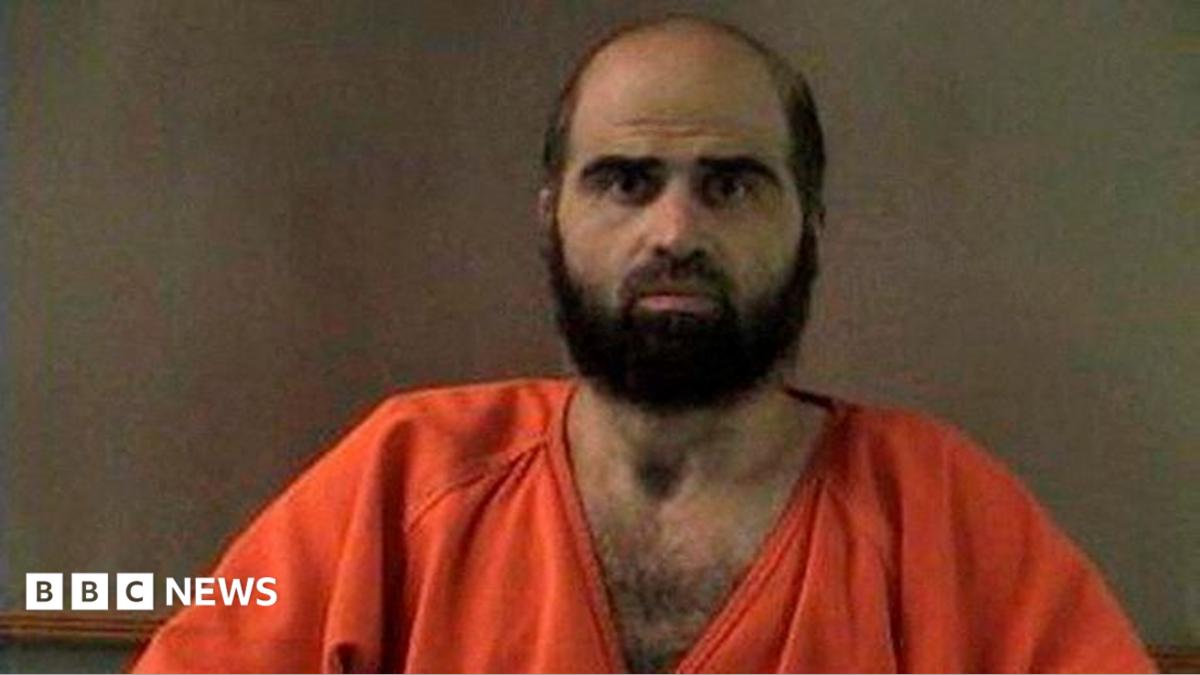
Trump calls off livestream of Fort Hood attacker’s execution by firing squad
The Pentagon announced last week it would execute Hasan on 3 December 2026 by firing squad.
Hegseth then said the execution would be livestreamed for the public to watch, adding that “people need to understand that there’s serious consequences for these types of things”.
Trump last Friday called Hasan “totally nuts”, adding: “I really don’t care how he goes, as long as he goes, and I think that the death penalty is a very worthy way of going for him.”
He also said he “absolutely” approved the livestream plans but said the Pentagon was still “making a determination” on it.
Hasan opened fire in a crowded medical building where deploying soldiers were awaiting check-ups and vaccines.
He later admitted in court that he was the gunman and apologised for “any mistakes”. He said during his court-martial in 2013 that he believed he was protecting Muslims and the Taliban in Afghanistan from the US military.
The killings on 5 November 2009 were the deadliest ever non-combat attack on an American military base.
US military law requires that a military execution be approved by the US president. It also requires appellate review, when a higher court inspects the decision and gives a final judgement on its legality to move forward.
While there were more than 2,700 executions across 17 countries last year, only two nations carried them out publicly. According to Amnesty International, 11 public executions were known to have been carried out in Iran in 2025 and another six in Afghanistan.

Celebrity Traitors live updates – start time tonight as finalists ‘revealed’ in huge clue
If you’re one of the (very rare) people who haven’t seen the first few episodes of the Celebrity Traitors, here’s what happened at the end of the last episode…

(Image: BBC)
The three Traitors – James Acaster, Maya Jama and Hannah Fry – had a big decision to make. They chose to play a fatal game of Hide and Seek with four of the Faithfuls. They were allowed to put themselves amongst the four but chose not to, hoping suspicion might fall on one of their chosen Faithfuls and they can safely slip under the radar…
They chose four stars – Leigh-Anne, Ross, Rob and Romesh – and will ‘kill’ one. However, they don’t know that Leigh-Anne has a special key which protects her from being murdered…

Another UK train station could soon be made international in £1.3BILLION tourism boost
ANOTHER UK train station could soon be made international in a predicted £1.3billion tourism boost.
There are now plans to put Stratford on the map by making it the second international stop in London, along with St Pancras.


Despite its name, Stratford International currently only operates domestic services.
The move would make Stratford the second international rail stop in London, along with St Pancras.
An application has now been submitted for a Business Rate Retention Zone (BRRZ) in the area.
A Business Rates Retention Zone allows local councils to reinvest money into local economic development, like expanding the train station.


The London Mayor’s officials are meeting with train operators, authorities in Paris and commercial bodies to get backing for the plan.
Speaking to The Standard, Sadiq Khan said: “The case for creating a Stratford International worthy of the name is clear and compelling.
“The popularity of international rail continues to grow in London, which is why my team and I have been lobbying for cross-channel rail services from Stratford for many years – and I’m hoping that our efforts are close to paying off.”
He explained further: “Over the last few months, we’ve been working closely with this new Government to make Stratford International truly ‘international’ for the first time and we’re now within touching distance of getting our plans over the line.
“The data shows that bringing international services to Stratford would bring in an additional £1.3bn in tourist spending for the UK.
“Stratford has become one of Europe’s largest and most successful regeneration projects, and I believe with the arrival of cross-Channel services, the future of East London will be even brighter still.”
This is not the only proposal that has been made for Stratford – Sir Richard Branson‘s rail company Virgin Trains have confirmed they are interested in the station too.
A Virgin Group spokesperson previously said the company is: “looking forward to exploring additional stops, including Stratford International.”

Revolution Medicines’ Rasonque gains positive CHMP opinion

Mahir Asadli/iStock via Getty Images
- The European Medicines Agency’s Committee for Medicinal Products for Human Use issued a positive opinion for Rasonque (daraxonrasib) as a second-line monotherapy treatment for adults with metastatic pancreatic adenocarcinoma.
- The positive opinion was supported by data from the phase 3 RASolute
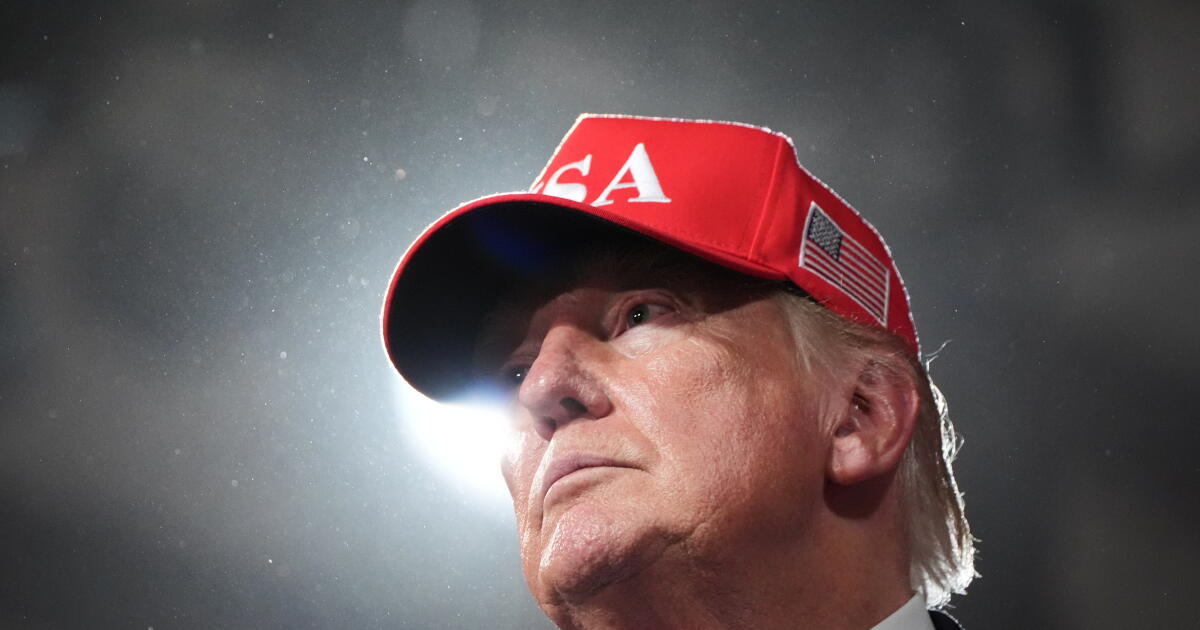
Trump, after bipartisan backlash, says Pentagon won’t livestream execution of Fort Hood shooter
WASHINGTON — President Trump said Thursday that the Pentagon will not livestream the firing squad execution of Fort Hood shooter Nidal Malik Hasan, after the announcement faced bipartisan criticism and Vice President JD Vance said he wouldn’t watch it.
Trump said on social media that publicly airing the execution “might have been a strong deterrent for the World to witness how America deals with Terrorists and SCUM like Hasan.”
But, he continued, “any very good and well meaning people would rather not watch him die, through streaming, or through any other visual device.”
The Pentagon has said Hasan’s execution is scheduled for Dec. 3. Trump said the execution can be viewed in person by immediate families of the victims, “if they so choose.”
The announcement earlier this month from Defense Secretary Pete Hegseth that Hasan’s execution would be public — and subsequent confirmation from the Pentagon that it would be livestreamed — prompted significant blowback from both Republicans and Democrats, with many pointing out that the images could be used to fuel radicalization.
When asked how the public execution comported with his Christian faith earlier this month, Vance said “I don’t know that that’s actually going to happen.”
“So whatever the controversy is about the method of the execution, I hope that people don’t forget that this is a guy who brutally murdered a lot of innocent people,” Vance said.
But he continued: “Now, that said, I mean, look, if it’s ultimately livestreamed, I’m not going to be watching it.”
Hasan, an Army psychiatrist who held the rank of major, walked into a medical building on Nov. 5, 2009, where soldiers were waiting in long lines to receive immunizations and medical clearance for deployment. He shouted “Allahu akbar” — Arabic for “God is great!” — and opened fire with a laser-sighted handgun. He also shot at the backs of soldiers fleeing toward the parking lot.
Hasan said it was an effort to stop them from going to Afghanistan and killing his fellow Muslims. A military judge barred him from presenting that as a defense during his 2013 trial. Hasan was left paralyzed from the waist down after being shot in the back by law enforcement, and he now uses a wheelchair.
Hasan could seek a lengthy delay of his execution, though given his behavior at trial, he may not want to.

Fifa: Gianni Infantino apologises over World Cup move but told he must do more
President Gianni Infantino has apologised to the Fifa Council for his World Cup sell-off plan – but has been told he is not fit to lead unless he releases all of the documents and answers key questions.
The Fifa Council met in Zurich on Thursday for the first time since Infantino’s secret Fifa Forward Enterprise (FFE) proposal emerged.
Under FFE, which Infantino scrapped within days, a portion of the commercial rights of football’s world governing body would have been given to a private investment firm.
In a three-and-a-half-hour meeting, Infantino also faced questions about US striker Folarin Balogun’s suspended red-card ban, the Fifa Peace Prize and funding for national associations.
Football Association chair Debbie Hewitt – a Fifa vice-president – said afterwards that many questions remained unanswered.
“One of the disappointing things is that we didn’t get answers to anything that we had specifically requested – for example getting the papers from FFE,” Hewitt said.
“I asked the question ‘why not?’ – and we were asked to submit those questions in writing.
“I think the man has to answer those questions and if he doesn’t answer those questions now, he’s not fit to be Fifa president – and that was what was shared in the meeting.”
Hewitt acknowledged there had been “some contrition” in Infantino’s apology.
“Then there were no holds barred in terms of what we felt about what had happened,” she added.
“What he really apologised for was not bringing it to the council. If you regret it that deeply, share it with us.”
Uefa – European football’s governing body – has been one of Infantino’s fiercest critics and has repeatedly called on him to stand down.
It has prepared criminal legal proceedings against Infantino and lodged a claim in three US courts for all documents related to FFE to be released.
Asked if there was any change in stance from Uefa about Infantino, Hewitt added: “From my position, nothing has shifted. I’ve no new information that makes me feel any differently, other than we do have a president who is apologetic.”

‘Boiling point’: Why students are protesting against Albania’s Edi Rama | Protests News
Student protests against poor conditions in Albania’s education system have continued for a third day in the capital, Tirana, as Prime Minister Edi Rama insists he will not resign.
Demonstrators have called on Rama to quit in often violent protests since Tuesday. They have set fire to several buildings across the city, including the prime minister’s office, ministry buildings and branches of several banks.
Recommended Stories
list of 4 itemsend of list
Dozens of police officers and protesters have been injured amid attempts to disperse the crowds using water cannon and tear gas.
“What you are seeing is the boiling point of months of suppressed grievances,” Albanian journalist Arlis Alikaj told Al Jazeera.

Students have complained for months about the high cost of education and their limited employment prospects after graduation.
Afrim Krasniqi, a professor and researcher at the Institute for Political Studies in Tirana, told Al Jazeera that students and young people protested peacefully for nearly three months, “yet their demands were largely ignored, while the government often responded with discrediting campaigns rather than genuine dialogue”.
He added that the current escalation reflects “frustration not only with the government itself, but also with the lack of institutional accountability and responsiveness.”
The protests represent one of the most serious waves of public discontent directed at Rama, who won a fourth term last May but has since faced public anger over corruption allegations involving senior officials.
The unrest in Tirana coincides with a broader wave of student protests across Europe. In France, secondary school students have spent weeks protesting and blockading schools, demanding more teachers and better learning facilities. They have warned that deteriorating school buildings and overcrowded classrooms are undermining the quality of education.
Protests against Rama’s government began a few months ago, fuelled by plans to build a luxury resort along Albania’s largely unspoilt southern coast. Jared Kushner, US President Donald Trump’s son in law, is involved in the project.
Local media reported that the protests spread from Tirana to universities in Elbasan and Shkoder on Wednesday.
Albania is among the economies of the Western Balkans seeking to catch up with European living standards. However, the gap with the European Union average remains evident in purchasing power, wages, productivity and the quality of public services. Despite economic progress, the country continues to face challenges including emigration, regional inequalities and the need for stronger institutions and the rule of law.
After Montenegro, Albania stands out as one of the countries that has made the most progress towards full EU membership. However, behind the optimistic political rhetoric, frustration is growing among citizens over the slow pace of European integration and the lack of tangible improvements in their daily lives.

While opposition groups seek to support the demonstrators and capitalise on the moment to strengthen their own position, Alikaj said the protests are being driven by young people and students demanding systemic change.
On Thursday, Rama – who has been PM since 2013 – told Reuters, “As for calls for my resignation, governments change through democratic elections. Last year, we had elections, not a revolution.”
Sokol Lleshi, a lecturer at the University of New York Tirana specialising in political science and international relations, said social change is more likely to emerge from a broader coalition of different social groups, rather than mass mobilisation limited to university and secondary school students.
“Elite defection from the current ruling political elite could enable the institutional means to channel societal dissatisfaction or resentment into political and policy changes. Yet, the current student protest does not seem to replicate the December 2018 mass movement of university students and its effects”, Lleshi said.
The student protests that shook Albania in December 2018 began over rising education costs and forced Rama to dismiss eight ministers as part of a cabinet reshuffle and announce a package of measures known as the “Pact for the University”.
But some of the students’ demands remained unmet.
Lleshi drew some more positive conclusions from Albania’s past experience of social unrest.
Albanian society is polarised and unequal, “with hollowed intermediary political institutions”, he said, but the legacy of unrest and political confrontation will serve as a “warning to avoid destabilisation”, he said.

The Rebel Tours: Money or morals? | Digital Series
Would you break one of sport’s biggest boycotts for life-changing money? In the 1980s, some West Indies cricketers toured apartheid South Africa, sparking outrage. Al Jazeera’s Samantha Johnson explores the money, morals and consequences behind the controversial tours.
Published On 15 Oct 2026

After nearly buying Warner Bros., Netflix is laying off 1,000 workers. What happened?
It was a crowning moment. Netflix appeared to have prevailed in an audacious $82.7-billion deal to scoop one of the industry’s most prestigious studios: Warner Bros. The move seemed to cement Netflix’s status as the ultimate Hollywood gate-crasher and its dominance as the leading new player in media.
Now, nearly a year later, the plotline for Netflix has dramatically changed. The streaming giant lost out to Paramount Skydance in its bid for Warner Bros. Discovery and is facing headwinds on multiple fronts.
That was underscored this week when the streaming giant Netflix began shedding 6% of its workforce, or about 1,000 jobs — believed to be the largest layoff in the company’s history and exceeding the last round of job cuts in 2022, when it reported subscriber declines.
On Wednesday morning, Ted Sarandos and Co-Chief Executive Greg Peters sent a note to employees confirming the job losses, adding that the bulk of the cuts would affect the tech, product, legal and human resources teams.
“Our mission — to entertain the world — is ambitious, and delivering on it requires us to be disciplined about where we prioritize our people and resources,” wrote Sarandos and Peters in the memo obtained by The Times.
The cuts mark the latest reductions across the film and TV industry. Other entertainment and media companies have slashed their payrolls, including Walt Disney Co., Paramount and Sony Pictures Entertainment during a period of economic uncertainty in Hollywood.
But the scale of such downsizing is unusual for Netflix. Industry analysts and insiders chalk up the reversal of fortune to several factors. Although it still dominates the television business, the Los Gatos company hasn’t been able to produce enough new hit franchises to replace culture-defining shows from years past such as “Stranger Things” and “Squid Game.”
At the same time, Netflix faces rising competition from rivals such as HBO Max, Apple TV, Hulu and others that have upped their game. Free, ad-supported streaming platforms such as YouTube are increasingly taking a larger slice of consumer streaming hours. And Netflix’s efforts to diversify its business into new areas such as games have yielded mixed results.

A Netflix building on Sunset Boulevard in Los Angeles in 2025.
(Myung J. Chun / Los Angeles Times)
The upshot: Netflix continues to be the dominant video subscription streaming player with more than 325 million subscribers, but the time that consumers spend on the platform is growing at a slower pace than what investors want. In the first half of this year, consumer watch time on Netflix increased only 2% compared with a year earlier, even as content spending increased 11% to $20 billion this year. Netflix also narrowed its annual revenue forecast last summer, disappointing some investors.
“Netflix’s layoffs show that even the top streaming companies are not immune to stagnation and financial difficulties,” said Ross Benes, senior analyst at research firm Emarketer.
Amid the sobering signs, investors have grown restless. Netflix shares, which closed at $70.57 on Wednesday, have plummeted 42% in the last year. Part of that decline was fueled by anxiety among investors over Netflix’s deal to buy Warner Bros. Discovery, but the share price hasn’t rebounded even after that deal fell apart.
“They need to better prepare their balance sheet and economics since engagement has plateaued,” said Brandon Katz, director of insights and content strategy at Greenlight Analytics.
Katz said that Netflix’s five most-watched English-language scripted summer movie releases in their first eight weeks posted the lowest average hours watched compared with the streamer’s top five summer releases in 2025, 2024 and 2023, citing Nielsen data.
Sarandos acknowledged concerns about engagement at a Bloomberg Screentime event Sept. 30.
“Overall we’re not growing as fast as I want us to, and we’re working on making that move faster,” Sarandos said.
Netflix declined to comment on the layoffs.
“We’ll continue to invest aggressively in high-impact areas to improve our service and further drive growth and innovation,” Sarandos and Peters said in their memo to employees.
In some ways, Netflix has been victim of its own success. It has produced a string of shows and movies that have hit the cultural zeitgeist such as “KPop Demon Hunters” and “Squid Game.” But finding enough new popular shows that continue to drive subscriptions has been a challenge.
“A lot of these major hits are coming to an end at similar times, and they don’t yet really have heir apparents to replace them,” Katz said.
Sci-fi hit “Stranger Things” released its finale last year, followed by the young-adult drama “Outer Banks” and “Emily in Paris,” which ends this year. Netflix also announced that “The Witcher” and “The Lincoln Lawyer” will wrap after their next seasons.
What’s more, the second seasons of some shows with big followings have seen large view drop-offs compared with their first seasons. For example, the fantasy series “Avatar: The Last Airbender” season 1 debuted with 21.2 million views, but views for its second season dropped 59% to 8.7 million, according to Netflix data.
New series from Netflix also haven’t captured as much consumer demand as other competing shows from rival streamers, according to Parrot Analytics.
Last year, Netflix had just one show — the Japanese anime and manga series “Sakamoto Days” — that made it in Parrot’s top 10 list of first season original series on streaming platforms. Parrot’s ranking measures consumer demand in the U.S. and is based on digital interactions such as social media chatter and Google searches. By comparison, Netflix had three titles in 2022 alone: the true crime show “Monster,” the documentary series “Harry & Meghan” and the sci-fi mystery show “1899,” Parrot said.
Sarandos told investors in July that such declines are typical and that second season falloff is slightly improved this year. But popular shows on rival streaming services such as the medical drama “The Pitt” on HBO Max have not seen such declines. “The Pitt” drew even more viewers in its second season than the first.
To diversify its business, Netflix has expanded its programming offerings beyond TV shows and movies to include live sports, such as football and baseball games.
Although live programs have helped to spur significant subscription sign-ups, they still represent just 1% of watch time on Netflix while costing 5% of the company’s content budget, Sarandos has said.
Netflix also has added video podcasts that have helped to boost daytime viewing on the platform, and has made deals with YouTube creators to bring their content to the streaming service.
But some of the new content hasn’t clicked, particularly in games, analysts said. In August, Netflix shut down Hollywood-based Night School, the maker of supernatural adventure game “Oxenfree,” and said it was closing a Helsinki-based games studio.
“They are spending on a lot of things that haven’t necessarily proven to be effective yet,” said Rob Rosenberg, a partner at law firm Moses & Singer and former Showtime Networks general counsel. “It feels a lot like they’re trying to send a message to Wall Street that ‘we’re re-examining how we do business.’”
Meanwhile, Netflix continues to face more competition from rivals such as YouTube, which offers a free, ad-supported version of its video library.
Unlike Netflix, YouTube does not pay for the creation of many of the videos on its platform. Instead, creators or companies upload and produce the programs themselves and YouTube shares ad and subscription revenue.
YouTube’s share of streaming watch time in the U.S. on TVs has steadily increased. In July, YouTube represented 14.2%, compared with Netflix’s 7.8%, according to Nielsen.
The pressure to boost engagement on Netflix has caused tension within the company, particularly between the teams of people responsible for how programs are promoted on the platform and the employees responsible for bringing shows and movies on Netflix, according to people familiar with the matter who were not authorized to speak publicly.
Some blame the content for not being enticing enough, while others contend that the programs could be promoted better on Netflix.
“It’s a bit of a quagmire,” said one of the sources familiar with the matter. “There is a tension when things aren’t working. People tend to point fingers.”
In their staff memo, Sarandos and Peters said Netflix is on track to deliver its full-year forecast and will continue to invest in areas that improve its service and drive growth and innovation.
“Doing that means making focused choices across the business so we can keep delivering for our members, partners, employees, and investors,” they wrote.
Despite the downsizing, Netflix remains highly profitable. In the second quarter, the company generated $3.4 billion in net income, up 9% from a year earlier. Revenue rose 13% to $12.6 billion last quarter, including double-digit revenue growth in all of its regions. Next week, the company will share its third-quarter results.
The streamer is expected to get a boost from new seasons of popular shows — including season 4 of the political drama “The Diplomat” and spy series “Lupin: Part 4,” as well as Thanksgiving Eve and Christmas Day NFL games.
Having new seasons of popular shows such as “Lupin” and “The Diplomat” will help boost Netflix’s engagement, said Alejandro Rojas, vice president of applied analytics at Parrot Analytics.
“The new season is like a catalyst for people to watch the previous seasons,” Rojas said.
On the theatrical side, Netflix also has high hopes for upcoming movies including La Bola Negra, starring Penelope Cruz; and “The Further Mis-Adventures of Cliff Booth” featuring Brad Pitt. Next year, Netflix will release the Greta Gerwig-directed film, “Narnia: The Magician’s Nephew” on Imax screens.
Netflix has not signaled any changes to its strategy for releasing movies or TV shows. But some analysts said it could benefit from having more theatrical releases and by dropping episodes of shows once a week, instead of all at once, to generate more buzz for programs. They also expect that Netflix will be more disciplined in its content spending.
“While the company will expand its sports roles, it’s cutting back at a time when revenue matters much more than subscriber additions,” said Benes of Emarketer. “With pressure mounting, Netflix will look to turn the tide by getting a boost from low-cost content. The battle for top creators will become more pitched.”
Times staff writer Samantha Masunaga contributed to this report.