


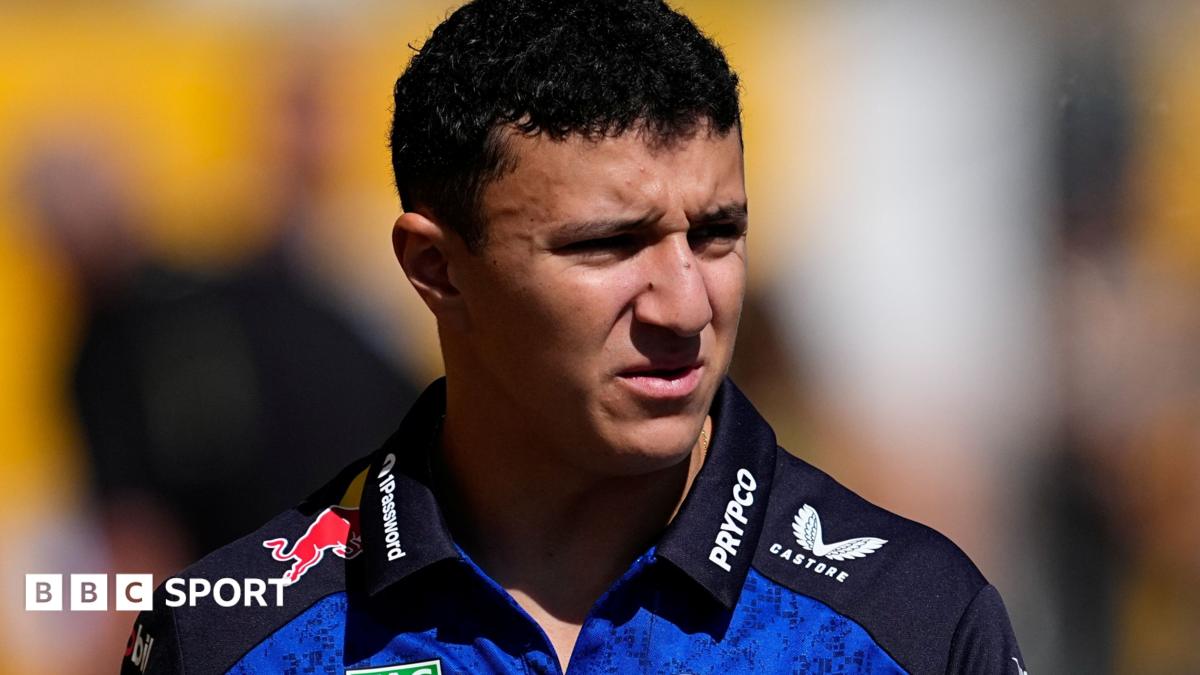
Isack Hadjar to remain Red Bull driver in 2027
Frenchman Isack Hadjar is to stay at Red Bull as Max Verstappen’s team-mate for the 2027 season.
The 21-year-old was promoted to the senior team this season after a rookie year with Racing Bulls and has managed to be closer to Verstappen on pace than any team-mate since Daniel Ricciardo in 2018.
His best result this season came with a third place at the Monaco Grand Prix.
Red Bull team principal Laurent Mekies described the move as “an easy decision”.
Mekies said: “Since joining us at the start of the year, Isack has been superb on and off track, especially considering this is only his second F1 season.”
Hadjar returns to Red Bull for this weekend’s Azerbaijan Grand Prix after missing the past three races with a broken wrist, an injury sustained while boxing as part of his training programme.
Mekies added: “You could see from his first weekend in Melbourne that he handled the step up with remarkable composure and had earned his place in this seat.
“The period since his injury has been a difficult one for Isack, but this extension shows how much we believe in him.”
Hadjar said: “I came to this team eight months ago and immediately understood the scale and ambition of this organisation.
“There are so many talented people at the factory, and you’re aware of the privilege of driving for such an incredible team alongside a four-time world champion like Max.
“I’m constantly looking to listen, learn and push myself further every single day, which only makes me more excited about what lies ahead.”
Over the first half of the season, Hadjar was 0.239 seconds slower than Verstappen on average in qualifying and has managed to out-qualify the Dutchman three times, in Australia, Japan and Britain.
In Silverstone Verstappen had a down-on-power engine and in Australia the Dutchman crashed at the start of qualifying.
Verstappen signed a two-year extension to his contract, that now runs to the end of 2030, in August.
Pakistan’s new drone deal is with Trump-backed firm also selling to India | Military News
Islamabad, Pakistan – On September 16, a delegation from Powerus, a year-old United States drone company backed by two sons of President Donald Trump, was received by Pakistan’s military chief, Field Marshal Asim Munir, at military headquarters in Rawalpindi.
A day later, the company announced it had received a “limited procurement order” from Pakistan’s Ministry of Defence for unmanned aerial systems. It also said it had signed a separate memorandum of understanding (MoU) with senior Pakistani defence officials.
Recommended Stories
list of 4 itemsend of list
Neither the value of the order nor the systems involved have been disclosed. But for analysts studying Pakistan’s venture in drone technology, even bigger concerns have arisen from information that has since emerged.
Less than three months earlier, the same company had given an Indian defence manufacturer the exclusive right to make and sell its drone interceptor technology in India. And one of the cofounders of Powerus is an Israeli military veteran. Pakistan does not recognise Israel and accuses it of carrying out a genocide in Gaza.
Analysts are questioning why a country that already builds its own drones and buys others from China and Turkiye would turn to a company that was founded only last year – and has links to Israel and sells drones to India too.
“Pakistan technically already makes or is capable of making each of the drones shown by Powerus,” Bilal Khan, founder of the Quwa Group, a Toronto-based defence news and market intelligence platform, told Al Jazeera. “It’s unclear where Powerus fits in the long term [from Pakistan’s perspective].”
What did Pakistan sign?
In its statement on the meeting, Inter-Services Public Relations (ISPR), the Pakistani military’s media wing, said the two sides discussed cooperation in defence procurement, production and capacity building.
The statement did not mention the MoU.
But Powerus told Al Jazeera which institutions were involved. “The MoU was signed with the Pakistan army. The related procurement order was placed by Pakistan’s Ministry of Defence,” a company spokesperson said.
In its own statement, Powerus said the memorandum was not a definitive agreement, created no purchase obligation and would be subject to US laws and government approvals.
“We are proud to support Pakistan’s Ministry of Defence, and the memorandum gives both sides a strategic framework to build upon,” Brett Velicovich, the company’s cofounder, said in the statement.
According to media reports, Velicovich has also said the company is exploring ways to build technology in Pakistan.
The ISPR, the Ministry of Foreign Affairs and the Ministry of Information and Broadcasting did not respond to Al Jazeera’s requests for comment.
Founded in 2025 and based in Florida, Powerus is set to merge with Aureus Greenway Holdings, a Nasdaq-listed company that owns golf courses in the US state, in a deal expected to close in the final quarter of this year.
![Powerus' Guardian Interceptor is a counter-drone interceptor. [Courtesy Powerus]](https://i0.wp.com/occasionaldigest.com/wp-content/uploads/2026/09/guardian-fieldhero-1790078758.jpg?w=640&ssl=1)
Donald Trump Jr and Eric Trump, President Trump’s oldest sons, are investors in Powerus through a vehicle called American Ventures, which is expected to hold a 9.9 percent beneficial stake in the combined company, according to US regulatory filings.
A spokesperson for Donald Trump Jr has told media outlets that he is a passive investor with no role in the company’s operations or contracts and had no prior knowledge of the Pakistan deals.
The White House has said there are no conflicts of interest.
The company makes about 3,000 interceptor drones a month, according to media reports, and last month won a US Air Force contract with a ceiling of up to $90m.
Asked how it addresses conflict of interest questions while pursuing government defence work in the US and abroad, Powerus said the Trump brothers played no part in its operations.
“Trump’s sons are not advisers to Powerus and have no involvement in how the company runs its business or structures its defence relationships, domestically or internationally. They hold no corporate-governance role. Our government relationships are pursued on their own merits,” the company told Al Jazeera.
The India question
Powerus’s first deal in South Asia, however, was not in Pakistan.
It was in India, Pakistan’s archrival, with which Pakistan fought a brief but intense conflict in May last year, one in which drones were used by both sides.
In a June 30 filing to India’s stock exchanges, Paras Defence and Space Technologies said Powerus had granted it an exclusive licence to manufacture and sell its Guardian-1 interceptor technology in India.
Mansoor Ahmed, an honorary lecturer at the Australian National University’s Strategic and Defence Studies Centre, said Washington has long armed rival states.
“The US has previously sold F-16s to Greece and Turkiye and Egypt and Israel and is now selling F-35s to Saudi Arabia, which Israel already operates,” he told Al Jazeera.
A former Pakistani government defence analyst who spoke on condition of anonymity said Pakistani planners had probably known about the Indian deal.
“Pakistan’s defence planners were likely aware of Powerus’s engagement with India,” he told Al Jazeera.
This isn’t the first time that Pakistan and India have ended up buying military equipment from the same company, the defence analyst pointed out. He cited the build-up to the conflict over the Siachen Glacier, where India launched Operation Meghdoot in April 1984 to take control of the heights.
“In 1983, Pakistan ordered high-altitude warfare gear from a London supplier, unaware that the same firm also provided gear to the Indian army, and subsequently, India learnt of it and planned Operation Meghdoot in 1984,” he said.
The analyst said the burden now lies with the company.
“In the present case, the challenge is more for Powerus than Pakistan or India as Powerus’s management must ensure it can manage and meet the requirements of two adversaries without jeopardising either side’s operational security.”
A retired Pakistan air force air marshal who spoke on condition of anonymity because he was not authorised to speak publicly said the arrangement carries risks for Pakistan.
“Two adversary countries procuring from the same source has its pitfalls, especially when one of the adversaries has taken the lead as well as has a larger financial capacity,” he told Al Jazeera.
An Israeli link
The company’s leadership also has links to Israel, a country Pakistan does not recognise.
Powerus’s website described one of its cofounders, Ziv Marom, as a veteran of the Israeli military and said he founded Kaizen Aerospace, now a Powerus subsidiary.
Another senior executive, Justin Gans, the company’s vice president for mergers and acquisitions and a former member of the US Navy SEAL special forces, served as a vice president at Elbit Systems of America, the US arm of the Israeli defence company Elbit Systems, from 2018 to 2019.
A retired three-star army Pakistani general who served in senior roles before retiring in 2019 and requested anonymity because of the sensitivity of the subject said such a background would normally draw attention during vetting.
“So under normal circumstances, a cofounder’s service in the Israeli military would be flagged as a sensitivity marker, even if the company itself is American,” he told Al Jazeera.
“In other words, for a serious acquisition, this background would be scrutinised carefully. For a political MoU, it may not have been a decisive factor.”
Quwa’s Khan, however, said Pakistan has long accepted Israeli components inside US or European systems.
“We can see that, generally, as long as there’s a country in the middle, Pakistan does not have qualms being in close proximity to Israel,” he said. “However, the two sides very, very rarely talk to each other.”
What drone technology does Pakistan already have?
Beyond questions over who else Powerus works with, analysts said the more fundamental issue is what Pakistan actually needs from the company.
Pakistan’s air force has publicly displayed Turkish-made Bayraktar TB2 and Akinci drones, Chinese-made Wing Loong II drones and the domestically developed Shahpar-II.

China supplied 80 percent of Pakistan’s arms imports from 2021 to 2025, according to the Stockholm International Peace Research Institute.
This month, the Pakistan air force revealed in a video that it had incorporated into its forces China’s HQ-17AE air defence missile system and Turkiye’s Korkut anti-aircraft gun and Sahin counterdrone system, all built to take on drones and other low-flying threats.
Khan said the state-owned Heavy Industries Taxila was also working with private firms to develop interceptor drones.
“So as it stands, Pakistan is following all the right best practices to build its C-UAS posture,” he said, referring to counterdrone systems.
“For Pakistan, the challenge isn’t whether it can get the designs but whether it can produce or induct these in large enough numbers fast enough.”
An official at a private drone manufacturer in Rawalpindi who requested anonymity because he is not authorised to speak to the media said Pakistan’s drone market has grown well beyond state-run firms.
Dozens of private companies and more than half a dozen state-owned enterprises now make drones besides the army’s own production facilities, he said. According to him, Powerus would have to compete with all of them on the quality of its products.
The retired general offered a different reading of why Pakistan might be interested in a tie-up with a US firm.
“The gap is not drone manufacturing. It is electronics, integration and systems-level capability, which is where American firms traditionally dominate,” he said. “How far this particular company can help in this regard is a million-dollar question.”
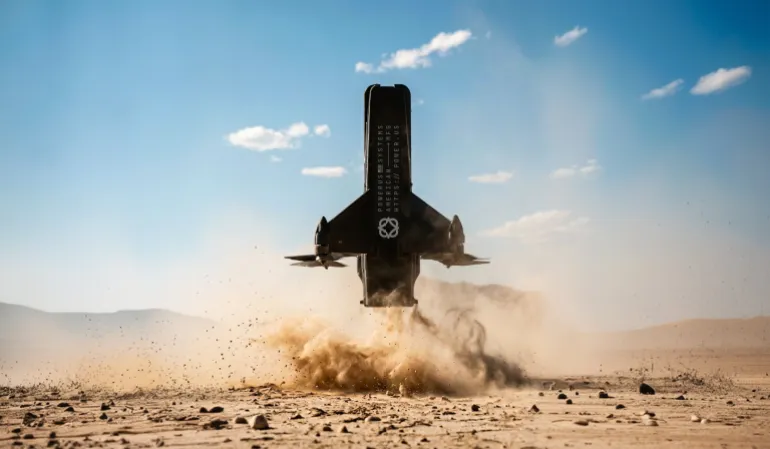
Powerus’s Guardian interceptors are small, low-cost drones designed to knock down incoming drones. They are a weapon widely used by both sides in the war in Ukraine.
Hammad Waleed, a research associate at the Islamabad-based Strategic Vision Institute, said such systems fill a cost gap that conventional air defences cannot.
“Traditional air defences use costly missiles against incoming cheaper drones,” he told Al Jazeera. “Interceptor drones are way cheaper and easier to operate than traditional air defences.”
Capability or signalling?
The retired Pakistani general, who has experience with defence production, said a supplier of this kind would normally face financial, technical and security checks as well as a review of its track record.
“A company less than a year old, not yet listed and without a delivery record would not usually clear these checks for a strategic defence partnership,” he said.
“Such firms are typically considered too immature unless the MoU is political signalling rather than a procurement decision.”
Khan agreed that the process has been unusual.
“Yes, the way this deal came about is not generally in line with how the procurement heads of the tri-services typically operate,” he said, referring to the three branches of Pakistan’s military.
The Powerus agreements were made as Munir has built close ties with President Trump, who has called him “my favourite field marshal” and praised him on several occasions during the past 15 months.
In September last year, weeks after Pakistan signed a $500m critical minerals agreement with a US company, Munir and Prime Minister Shehbaz Sharif met President Trump at the White House, where the Pakistani leaders presented him with samples of Pakistani minerals.
In January, Pakistan also signed an MoU with an affiliate of World Liberty Financial, the Trump family’s main cryptocurrency business.
![US President Donald Trump examines a box of rare-earth mineral and gemstone samples presented by Pakistan's Chief of Army Staff Field Marshal Asim Munir (center), alongside Pakistani Prime Minister Shehbaz Sharif (left) last year in September at the White House. [Courtesy White House]](https://i0.wp.com/occasionaldigest.com/wp-content/uploads/2026/09/Pakisatn-Minerals-WH-1790079007.jpg?w=640&ssl=1)
Khan said Pakistan’s security establishment needs to ask what it is getting in return for that closeness.
“There was a time when such gains were measured in F-16s and the billions in US financial assistance, yet today, we are seeing more photo ops and supposed pacts that obligate the armed forces, but are they helping the armed forces as a fighting force?”
He also offered what he called a “less cynical take”.
Pakistan has a growing number of drone start-ups that lack the capital to build production facilities, he said, and ties with Powerus could draw US investment into them.
“So there is an argument that building rapport with Powerus and its backers can lead to that capital,” Khan said.
Ahmed said Pakistan is looking beyond a single purchase.
“Pakistan’s primary interest appears to be the acquisition of state-of-the-art drone technologies that also allow for local production and indigenisation,” he said.
What about China and Turkiye?
The retired Pakistani general said bringing in a foreign private company could overlap with Pakistan’s existing Chinese and Turkish partnerships.
“It has the potential of being seen by Turkiye and China as Pakistan hedging politically,” he said.
Khan, however, disagreed.
“There’d be no issue with the Turks as they work with US companies all the time and the drones on offer by Powerus don’t overlap with the ones NASTP is designing with Turkiye,” he said, referring to Pakistan’s National Aerospace Science and Technology Park.
He added that any Powerus designs built cheaply in Pakistan would still rely on Chinese parts.
“With the Chinese, it’d be less of an issue because, ultimately, the only way to make these Powerus designs at a low enough cost for the Pakistani armed forces to induct is to literally import the upstream subassemblies from China.”

Waleed said the deal would not dent Pakistan’s defence ties with Beijing and Ankara.
“Pakistan is prioritising China and Turkiye for the sophisticated and modern combat systems in the drone and counterdrone domain. That relationship is not only unaffected and is going upwards in trajectory,” he said.
For now, Khan said, the real test of the Powerus deal would be what follows it.
“I would not pass judgement on the Powerus deal yet, but we can track whether it’s serious by seeing if the MoD [Ministry of Defence] signs similar deals with other foreign and local vendors in the coming months,” he said.
“Basically, will we see a consistent pattern moving forward, or will this be a one-off?”

Dramatic moment UK police escort passengers off easyJet flight caught on camera
After the aircraft touched down in Birmingham, airport police boarded the plane and escorted the four adults off
Moment police escort passengers off UK easyJet flight
A group of adults were escorted off an easyJet flight by police after allegedly vaping throughout the five-hour journey. Passenger Annalise Galstaun captured the moment four adults were removed from the plane by airport police after it landed at Birmingham Airport.
Annalise was travelling from Larnaka International Airport in Cyprus to Birmingham on the evening of September 16 when the incident unfolded. Sitting just two rows behind the group, she said she saw EasyJet cabin crew warn them multiple times to stop vaping during the flight.
But despite the repeated warnings, Annalise claimed the passengers continued to vape discreetly, hiding the devices behind their legs while sitting in their seats.
After the aircraft touched down in Birmingham, airport police boarded the plane and escorted the four adults off, causing a 25-minute delay on the tarmac.
Annalise said: “They were warned a few times by EasyJet staff but continued to vape on the sly throughout the journey, hiding the vapes behind their legs on the seat.
“I felt quite annoyed as we were delayed around 20/25 mins grounded on the floor waiting for them to be escorted.
“There were children on board crying as it was about 11pm and we were just stuck on the tarmac.”
EasyJet said in a statement: “Flight EZY6610 from Larnaca to Birmingham on 16 September was met by police on arrival due to a group of passengers behaving disruptively onboard.
“Our cabin crew are trained to assess all situations and to act quickly and appropriately to ensure that the safety of the flight and other customers is not compromised at any time.
“We take these incidents seriously and do not tolerate disruptive behaviour onboard.
“The safety and wellbeing of our customers and crew is always easyJet’s highest priority.”
Every American Aircraft Lost Or Damaged During The Iran War, Visualized
Two reports released last week by the U.S. government shed light officially, for the first time, on the damage Iran has inflicted on the Pentagon’s aerial fleet since the war began almost seven months ago. TWZ has combined their accounting with open-source intelligence (OSINT) reporting and our own tracking to produce a comprehensive graphic visualizing what the U.S. has lost – and what it will cost to replace. The picture it paints is not a pretty one, with implications should the U.S. trade blows with a peer adversary in the Pacific.
On September 14, the Pentagon’s Lead Inspector General (IG) released its first quarterly report to Congress on Operation Epic Fury (OEF), which included aircraft casualties suffered by the U.S. from the beginning of the war on February 28, 2026, through June 30. The Congressional Budget Office (CBO) followed the next day with even more detail, assessing the costs incurred during combat operations against Iran with an overview of aircraft losses through August 1, as well as the estimated replacement cost in 2026 dollars. TWZ went a step further, continuing where both reports left off with the help of the OSINT community, to update our previous visualization and tally losses through September 18, incorporating damage from attacks by the Islamic Revolutionary Guard Corps (IRGC) on American bases in the Middle East over the past two months. The final accounting can be viewed in the high-definition graphic below.

Drone Fleet Takes The Brunt Of The Blow
America’s MQ-9 Reaper drone fleet has absorbed the bulk of the damage and accounts for the largest single line-item expenditure in the CBO’s letter to the ranking member of the House Budget Committee. According to the Lead IG, “as many as 30” MQ-9A Reaper drones were destroyed in “various circumstances,” while the CBO booked 24 at a unit cost of $30 million (based on the Foreign Military Sales program), which totals $720 million to $900 million in lost equipment. The cost of a fully kitted-out Reaper can approach $50 million, depending on the sensors, weapons, and other mission equipment it carries. The Air Force Chief of Staff, Gen. Kenneth Wilsbach, told the House Armed Services Committee in May that the Reaper was the war’s “most valuable player.”

But both numbers are stale. The Washington Post reported in August that at least 45 Reapers, approximately a quarter of the pre-war fleet, were shot down, crashed, or destroyed on the ground, citing three U.S. officials familiar with the matter. That figure covers MQ-9s lost across the Middle East, including those downed over Iran and by the Houthis in Yemen. The Air Force is on record admitting that the Reaper fleet shrank to 135 airframes as of May, down from an official total of 165 at the start of fiscal year 2026. Another two have been shot down since the Post’s report, according to open-source intel, bringing the total to 47, or more than $1.4 billion based on the CBO’s methodology. While every Reaper lost is expensive, in some cases at least, each would represent a soul, or crew, that may have been at risk in a previous era’s conflict, and no dollar figure captures that trade-off.

General Atomics’ iconic MQ-9A is no longer in production, and the service does not view the newer, in-production MQ-9B as a platform to meet its current needs and cost demands. Instead, it is targeting a replacement with a unit cost of around $10 million (excluding sensors) and pushing to accelerate the program to acquire these lower-cost platforms, dubbed the Massed Modular Aircraft (MMA). “If you don’t like losing an MQ-9A that cost on the order of $50 million, with the sensors, you’re probably not going to like losing an MQ-9B at a higher price point,” Lt. Gen. Christopher Niemi, the Air Force’s Chief Modernization Officer, said at a roundtable in September, according to a report from Air & Space Forces Magazine.
In June, the USAF confirmed to TWZ that after a relatively frantic hunt for additional airframes, it was planning to purchase a number of unused Reapers from General Atomics, which turned out to be fewer than 10. There is no easy answer to this problem, as cheaper alternatives cannot replace all the capabilities provided by pricier platforms. There are several more attritable alternatives in development, such as the General Atomics Wildfire, which the company is building specifically to meet the needs outlined in the MMA program. Swarm Aero’s Gamera is another possible contender.

The Reapers were not the only aerial drones lost. An MQ-4C Triton went down over the Persian Gulf in April after squawking a lost-link code and general emergency on its way back to Naval Air Station Sigonella in Italy. The Navy logged it as a Class A mishap and the cause remains unknown. There are only 20 in the fleet, and at $150 million a pop, the loss represents a significant outflow. Navy budget documents place the unit price higher at $238 million. And, in late May, U.S. Central Command (CENTCOM) announced that Iran shot down an MQ-1 over international waters. CENTCOM declined to tell TWZ whether it was an Air Force Predator, which is officially out of service, or an Army Gray Eagle platform, and neither appeared in the government reports.
The Crewed Aircraft Tally
In terms of manned aircraft, the KC-135 Stratotanker fleet took the biggest hit. The workhorse aerial refueling tanker is primarily tasked with keeping America’s fighters, bombers, and cargo haulers airborne, and crews have been flying nearly nonstop sorties to support active operations in the CENTCOM area of responsibility (AOR). Two were destroyed and up to seven have been damaged, although the Air Force has become relatively efficient at repairing the damaged aircraft enough to fly them home. In a tragic incident on March 12, a collision between two Stratotankers that was “not due to hostile fire or friendly fire,” according to CENTCOM, resulted in the loss of six airmen after one of the aircraft went down over western Iraq.


Three F-15E Strike Eagles were destroyed early in the conflict due to friendly fire over Kuwait, and one was shot down over Iran on April 3, leading to a massive combat search and rescue (CSAR) operation. “Roughly eight” more were damaged in a recent salvo of ballistic missile fire on Muwaffaq Salti Air Base in Jordan, first reported by CBS News and confirmed by Air & Space Forces Magazine, both citing unnamed U.S. officials. President Donald Trump dismissed the reports, telling NewsNation there was “no damage, no nothing.”
The daring CSAR mission to save the two F-15E crew members who ejected inside Iran, one of whom 60 Minutes interviewed on September 13, took place between April 3 and 5. While no American lives were lost during the operation, several aircraft were destroyed, including two MC-130J Commando IIs and four Night Stalker MH-6 Little Bird helicopters (which TWZ was first to report), representing, at north of $400 million, the costliest single operation of the war for aircraft inventory. The mission reportedly included more than 150 aircraft and 92 special operators on the ground deep in enemy territory. The MC-130Js became stuck on a temporary remote airstrip and were deliberately destroyed by American forces to prevent capture, along with the Little Birds operated by the 160th Special Operations Aviation Regiment (SOAR). An HH-60W Jolly Green II was also struck but continued flying. The CBO booked the MC-130Js at $300 million, and the five helos at $122 million.
Two A-10C Warthog close air support jets also took hits. The first, while flying in a “Sandy” escort role during the rescue operation, was hit by enemy fire. “This pilot continued to fight, continued the mission, and then upon exit, flew his aircraft into another country and determined that the airplane was not landable,” Chairman of the Joint Chiefs of Staff, Gen. Dan Caine, said during a presser in April. “The pilot then made the decision to eject over friendly territory, and was quickly and safely recovered.” The second Warthog sustained damage on the ground in Jordan during the IRGC’s latest round of strikes referenced above.
The most expensive single crewed loss was an E-3G Sentry, which is out of production and can only be replaced by the E-7A Wedgetail, a program that the Pentagon recently revived, at a unit cost the CBO estimates to be half a billion dollars. The jet, serial number 81-0005, was struck on the taxiway at Prince Sultan Air Base in Saudi Arabia on March 27, one of just 16 Sentries the service had left after initially deploying six to the theater before the conflict kicked off. The IG report lists it as damaged, but that is generous, considering that photographs and satellite imagery show the plane cut in half with the rear fuselage destroyed. The CBO report is more candid, categorizing the Sentry as lost in battle and assigning a $500 million replacement value. The Pentagon tried to cancel the E-7 program last year, but has since reversed course, after Secretary Pete Hegseth said the department’s mindset “completely changed.”

A handful of other hits round out the tally. A 5th-generation F-35A Lightning II Joint Strike Fighter (JSF) was struck by Iranian fire in mid-March and forced to make an emergency landing. As far as we know, this was the first time an F-35 took hostile fire in combat. The following week, a first-person-view (FPV) short-range kamikaze drone successfully targeted a U.S. Army Black Hawk parked at a base outside Baghdad, Iraq. The next month, images circulated by Iranian state media, which TWZ did not independently verify, showed a CH-47F Chinook wrecked on the ground at Camp Buehring in Kuwait. And, in June, an AH-64 Apache was shot down near the Strait of Hormuz.
Recent retaliatory attacks by IRGC forces on U.S. bases have damaged additional aircraft in the weeks following the CBO’s cutoff date. Another four helicopters were hit since September 10, @DefenceGeek, a UK-based OSINT researcher and flight tracker, told TWZ. His team at @MATA_osint reviewed open-source videos and identified them as H-60 models, likely UH-60M/L variants.
The True Cost Explained
Through August 1, the CBO estimated that the losses represented nearly $1.9 billion in 2026 dollars, but that figure only counts hardware the Pentagon “would have to change its plans to replace.” If the department sought funding to replace everything it lost with platforms available today, the true cost rises to $3.3 billion. For example, the A-10C Warthog is no longer being built, and the CBO assesses that if it were to be replaced with an F-35A instead, the price balloons from $0 to $120 million. Similarly, since the F-15E has no active production line, the replacement cost of four F-15EX would total $400 million, compared to $0 on paper. The CBO figure also includes a $500 million charge for a lost THAAD AN/TPY-2 radar, a prized air defense asset, one of only eight radars the Army has for its THAAD batteries. It is (obviously) not an aircraft but counted in the report’s accounting.

Taking into consideration the losses suffered since the CBO’s assessment on August 1, and the cost to repair damaged aircraft, which is not included in the table above, the $3.3 billion figure could top $4 billion. Additionally, CENTCOM told the IG that “hundreds of buildings and structures” were damaged and destroyed at various bases across the AOR, in addition to miscellaneous equipment, sensors, and other installations that were targeted but not included in the estimates. However, these are rough calculations, and the actual outlays will likely differ substantially.
Reports Highlight Strain On America’s Munitions Stockpile
The Lead IG and CBO both address the precarious state of America’s munitions stockpile, which contradicts recent commentary by some senior military officials. The IG reiterated that the Office of the Under Secretary of War for Acquisition and Sustainment said the “munitions expenditure in OEF has resulted in strategic inventory shortfalls and revealed industrial base bottlenecks for munitions resupply.” The CBO report goes further, concluding the U.S. has “probably used between one-half and two-thirds of its inventory” of Patriot, THAAD, Standard Missile 3 (SM-3), and SM-6 missiles since June 2025, and states that rebuilding those stocks “would probably take at least five years, even if production was increased.” These numbers generally align with a report earlier this year from the Center for Strategic and International Studies (CSIS) that highlighted the rapid expenditure of critical munitions and how it could affect a future fight against China.

CENTCOM commander Adm. Brad Cooper, who is responsible for executing the day-to-day operations against Iran, said he was “not concerned at all” when asked about America’s munitions stockpile during the 60 Minutes segment mentioned above. “We’re well armed and ready for any contingency,” he told Norah O’Donnell. This may be sincere, as the commander overseeing an active war tends to get whatever is required, but other theater-level commanders don’t necessarily share the same sentiment.
Last month, the heads of U.S. European, Pacific, and Southern Commands, as well as the Chief of Naval Operations, each registered a formal “non-concur” in the August 14 Secretary of Defense Orders Book (SDOB), warning that extending their forces’ commitment to the Iran fight risked draining America’s combat power, especially in the Pacific. In an exclusive citing people familiar with the assessment, the Washington Post reported that Adm. Samuel Paparo, the commander of U.S. Pacific Command, “disagreed with the level of support he was ordered to continually provide, including an aircraft carrier strike group and naval destroyers.” On social media, the Pentagon’s chief spokesman called the story inaccurate but stated, “Non-concurs are standard. The Secretary sees them constantly.”
Back in 2024, prior to Operation Rough Rider, the Twelve-Day War, Midnight Hammer, and Epic Fury, Adm. Paparo voiced concerns about munitions expenditures, saying, “With some of the Patriots that have been employed, some of the air-to-air missiles that have been employed, it’s now eating into stocks, and to say otherwise would be dishonest.” He continued, “Inherently, it imposes costs on the readiness of America to respond in the Indo-Pacific region, which is the most stressing theater for the quantity and quality of munitions, because the PRC [People’s Republic of China] is the most capable potential adversary in the world.”
The math does not bode well should the U.S. get into a dust-up with China before stockpiles can be replenished. The CBO notes China “has many more ballistic and cruise missiles than Iran had at the onset of Operation Epic Fury,” with a “significantly larger economic base” that “can produce such missiles more rapidly.” As Iran has shown, stationary bases make for easy targets, and U.S. installations in the Pacific that fall under the PRC’s ballistic missile umbrella are exposed, unhardened, and require a high volume of interceptors to defend. “Having used a large portion of its missile defense inventory in combat operations against Iran, DoD now has fewer interceptors on hand to use in a potential conflict with the PRC,” the CBO concluded.
The Pentagon has since announced deals with Lockheed Martin and Northrop Grumman to drastically increase Patriot and THAAD production, but that ramp-up will take years to materialize. According to the CBO, “Boosting missile production has historically been a slow process with lags of three to five years between the placement and delivery of new orders. After production was increased, several more years would be required to replace the missiles that have been used in the conflict with Iran.”

The Impact On Deterrence
Aircraft casualties are to be expected in any conflict, especially considering the intensity, scope, and length of operations against a formidable opponent with home-field advantage. Airframes can be rebuilt and stockpiles replenished. But such dynamics impact deterrence in other regions, as America’s own military leaders have said on the record in the past.
“Deterrence is achieved by that ability to demonstrate capability and will, and it comes down to your ability to either impose costs on an adversary or including in response to aggression. And it’s also a big part of defending yourself against missiles and so China is building 800+ missiles per year,” Adm. Paparo explained in a recent interview with Hawaii News Now. “And so the ability to defend that, the ability to impose costs, this gets back to the changing character of warfare with information operations, drone operations, and deep precision strike are much more salient instruments of national power than they’ve been in the past. And to be able to deter is to be able to demonstrate that the risk of armed conflict far outweighs the benefits and part of that is imposing costs and part of that is defending ourselves against those costs.”
TWZ noted many of these questions in February, before the first Tomahawk was fired, and has been reporting on stockpile concerns for years. Now, the Pentagon’s bill for the conflict conservatively sits at over $38 billion, America’s fleet of Reapers is down a quarter, and its bases in the Middle East are battered and could still be targeted. The interceptors that kept the number of aircraft depicted on our graphic from being higher are, by the CBO’s own estimate, years from being replaced – a notable dynamic considering military leaders have suggested China, with a much larger missile arsenal than Iran, could be prepared to move on Taiwan by 2027.
Contact the author: ian.ellis-jones@recurrent.io or @ianellisjones
Author’s note: Special thanks to @DefenceGeek and the team at the Military Air Tracking Alliance (MATA) for assisting with the open-source analysis and battle damage assessment. Be sure to follow them on X at @DefenceGeek and @MATA_osint.

Rock star Gary ‘Angry’ Anderson dies aged 79 as heartbroken Rose Tattoo bandmates pay tribute to ‘much-loved’ artist

AUSTRALIAN rock legend Gary ‘Angry’ Anderson has died at 79.
The rocker was known for as the frontman of the band Rose Tattoo.

His bandmates and family released an emotional tribute to the star.
An emotional statement described the musician as a “devoted father, and much-loved bandmate”.
More to follow… For the latest news on this story keep checking back at The Sun Online
Thesun.co.uk is your go-to destination for the best celebrity news, real-life stories, jaw-dropping pictures and must-see video.
Like us on Facebook at www.facebook.com/thesun and follow us on TikTok @TheSun.

FBI chief Comey says he has no regrets about his preelection letter on Hillary Clinton’s emails
Reporting from Washington — FBI Director James B. Comey said Wednesday he has suffered anguish but does not regret his decision to inform Congress in late October that the bureau would reopen its inquiry into whether Hillary Clinton had mishandled classified emails, a disclosure that roiled the presidential race in its final days.
In his most detailed public comments on the explosive episode, the FBI director told the Senate Judiciary Committee that his decision to disclose the preliminary investigation into newly discovered Clinton emails 11 days before the election was “one of the world’s most painful experiences,” but that he would do it again.
“It makes me mildly nauseous to think that we might have had some impact on the election, but honestly, it wouldn’t change the decision,” Comey said.
“I’ve gotten all kinds of rocks thrown at me, and this has been really hard, but I think I’ve done the right thing at every turn,” he added.
Comey testified a day after the unsuccessful Democratic presidential nominee said that she believed Comey’s unusual letter to Congress on Oct. 28 had essentially tilted the close race to her rival, Donald Trump.
“If the election had been on Oct. 27, I would be your president,” Clinton said in a CNN interview at a women’s conference in New York. She blamed her loss on Comey’s disclosure, Russian hacking of Democratic Party emails and her own flaws as a candidate.
In response, President Trump said on Twitter that Comey “was the best thing that ever happened to Hillary Clinton in that he gave her a free pass for many bad deeds!”
“The phony Trump/Russia story was an excuse used by the Democrats as justification for losing the election,” Trump tweeted.
Comey repeatedly rebuffed questions Wednesday about the ongoing FBI counterintelligence investigation into whether any of Trump’s current or former aides cooperated with Russian intelligence agencies during the presidential race.
Comey only disclosed that investigation to a House hearing in March and said it had begun last July, during the heat of the campaign. After the election, U.S. intelligence agencies concluded that Russia had deliberately sought to interfere in the race to aid Trump and to undermine Clinton.
On Wednesday, Comey said he did not think he was inconsistent last fall when he disclosed that the FBI had obtained new evidence that might lead it to reopen its investigation of Clinton’s use of a private email server when she was secretary of State — but did not disclose a separate FBI investigation into whether members of Trump’s inner circle colluded with a foreign intelligence service.
He said he only announced the Clinton email inquiry, which the FBI had code named Midyear Exam, when it was formally closed in July. He said he felt obliged to inform Congress in October when new Clinton emails were found in an unrelated investigation.
Comey sent a follow-up letter two days before the election to say the additional emails did not change his earlier conclusion that charges against Clinton were not warranted.
Comey’s many critics say his news conference in July — when he called Clinton’s handling of classified material “extremely careless” but said that she would not be charged — and then his disclosures to Congress at the end of a bitter national election campaign were improper since the FBI is not supposed to discuss cases unless charges are filed.
In January, the Justice Department’s inspector general said he would investigate whether Comey violated department guidelines in his handling of the case.
Comey said Wednesday that he welcomes the internal inquiry. “If I did something wrong, I want to hear that,” he said.
He specifically declined to say whether the White House is cooperating with the Russia investigation, or whether the FBI has sought to examine Trump’s tax returns for evidence of ties to Russia. Trump has refused to release his tax returns to the public.
The FBI chief said Russia is still interested in trying to affect U.S. politics, and he believes it “a certainty” that Moscow will try to influence the elections in 2018 and 2020.
In a detailed, at times emotional explanation of his actions, Comey laid out the sequence of events that he said led to his July 5 news conference, his Oct. 28 letter to Congress and a follow-up letter three days before the election.
Comey said he decided the Justice Department was too compromised in July to publicly explain why Clinton would not be charged without “grievous damage to the American people’s confidence in the justice system.”
A big reason, he said, was because Atty. Gen. Loretta Lynch had met privately with former President Clinton in June in what both later described as a social visit because they were both at the same airport.
Under heavy criticism for meeting the former president while his wife was under an FBI investigation, Lynch recused herself from a direct role in the case. That gave Comey the authority to hold the politically sensitive news conference on his own, he said.
He said he sent the Oct. 28 letter after FBI agents found emails from Hillary Clinton on a laptop computer used by former Rep. Anthony Weiner, the husband of Clinton aide Huma Abedin, and thought they might include what he called “golden missing emails” from Clinton’s first months at the State Department. The FBI had seized Weiner’s laptop in an investigation of sexual texts he had exchanged with a teenage girl.
Agents found evidence that Abedin had passed classified emails to Weiner, who would print out emails for her to read, Comey said. But no charges were filed because the FBI could not “prove any sort of criminal intent,” he said.
Comey said he and his top staff debated whether to go public, mindful of long-standing Justice Department policies that seek to avoid actions that could sway elections.
Breaking that policy would be “really bad,” Comey said. But he said the only other choice, “concealment,” would have been “catastrophic.”
“We’ve got to walk into the world of really bad,” he said he concluded. “We’ve got to tell Congress we are restarting this.”
He said he made the decision even though a deputy said that might help elect Trump. Comey said he couldn’t consider that when making the call.
“Down that path lies the death of the FBI as an independent institution in America,” he said.
Twitter: @jtanfani
UFC: Britain’s Callum Connor earns contract despite Contender Series defeat
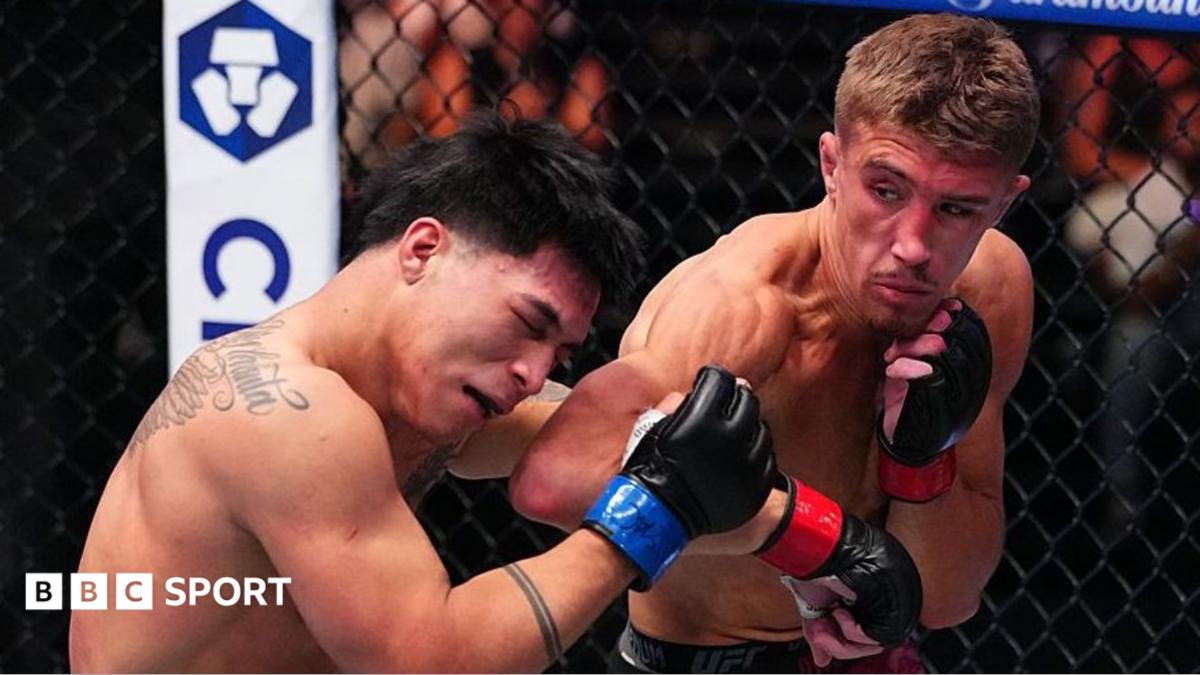
Britain’s Callum Connor was given a UFC contract despite losing in Dana White’s Contender Series, but Norbert Novenyi Jr missed out despite winning.
Six fighters from Tuesday’s five fights earned contracts in MMA’s leading promotion – four of the winners plus two losers, including 26-year-old Connor.
Peru’s Piero Guaylupo earned a unanimous decision over lightweight rival Connor, who suffered the first professional loss of his career.
UFC president White said it could be a fight of the year contender because it contained more significant strikes than any UFC lightweight three-round bout.
“Both of these guys are in the hospital right now, as they should be,” said White.
“One of the greatest fights you’ll ever see on Tuesdays or Saturdays or any other day.
“For Piero to be 21 years old and fight the way he did, the fight was incredible. But it takes two guys to make a great fight. I’m taking them both.”
Connor, from Manchester, now has a pro record of 8-1 and has a four-fight win streak on UK promotion Full Contact Contender.
Middleweight Novenyi, who was born in Hungary but fights out of London, earned a unanimous decision over American Theo Haig to improve his pro record to 11-1.
But the 26-year-old was the only fighter who won on Tuesday not to be given a contract. He was told by White that “tonight’s not your night, my friend”.
“Norbert, both of you guys have great records,” White said. “You came in, fought a good fight.
“Unfortunately, I didn’t see anything tonight that makes me say, ‘I got to have this guy in the UFC’.
“Whatever you decide to do here, we would like to take another look at you.”
Major gas leak by train tracks causes rush hour chaos as passengers warned ‘do not travel’ & disruption expected all day
MAJOR railway lines are closed due to a gas leak leaving commuters stranded in rush hour – with the disruption expected to last all day.
Passengers are urged not to travel between Reading and Swindon as engineers frantically attempt to fix the issue, while other routes are seeing significant delays.


The gas leak close to railway land at Didcot Parkway in South Oxfordshire is expected to cause severe disruption throughout Wednesday.
The Reading-Didcot section of the route is the gateway from Paddington towards Swindon, Bristol, Bath, South Wales, Cheltenham and other parts of the West Country.
Diversions are in place but Great Western Rail is cancelling some services outright because trains can’t get through Reading-Didcot.
A total of 72 services to and from Didcot are cancelled, while 39 have been axed at Oxford and 45 at Reading.


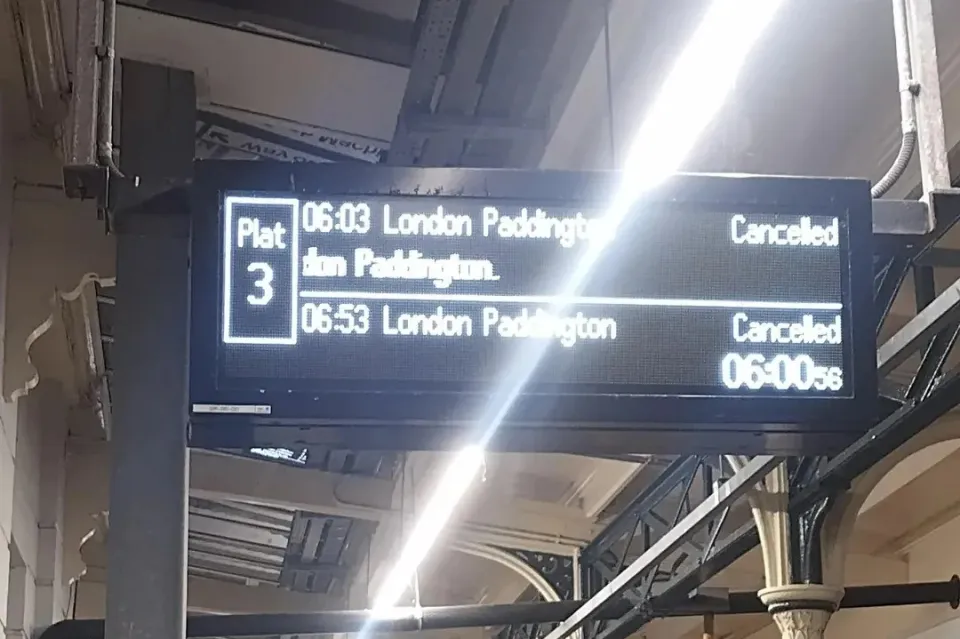
One social media user posted a photo from Swindon showing trains to Paddington cancelled at 6am.
They wrote: “Apparently there’s been a gas leak around Didcot Parkway so they’ve cancelled most of the services, and no replacement bus services running either.
“The staff at Swindon reckon this will last all day and probably tomorrow.”
Another person responded: “Absolutely ridiculous… not good enough.”
GWR is running roughly one train an hour Paddington-Bath/Bristol via a diversionary route – a fraction of the normal capacity.
It has warned only to travel if absolutely necessary.
Replacement buses are running between Swindon, Didcot and Reading but Network Rail says capacity won’t be enough for everyone.
CrossCountry is also telling passengers not to travel between Reading and Oxford – with one person responding to the company’s X post with: “Thanks for ruining my whole day.”
Network Rail said: “Engineers from gas distribution company SGN are on site working to rectify the problem as quickly and safely as possible.
“Network Rail and train operators are working together to manage the impact on passengers, but normal services cannot operate until the leak has been repaired because the railway falls within the safety exclusion zone.
“Severe disruption is expected to long-distance services that would usually travel through Didcot, and passengers are being warned that trains able to run either side of the affected area will be extremely busy.
“GWR will continue to operate as many trains as possible either side of the incident.”
GWR expects to be able to operate services between:
- Reading and London Paddington
- Swindon and Cheltenham Spa
- Swindon and Chippenham/Bath/Bristol
- South Wales to Bristol Temple Meads
- Worcester and Oxford
- An hourly service between London Paddington and Bath/Bristol via an alternative, diversionary route
- Oxford and Didcot
- An hourly service Bristol Temple Meads and Didcot
- Usual timetabled services that do not run between Reading and Didcot
- A limited bus replacement service will operate between Swindon, Didcot and Reading
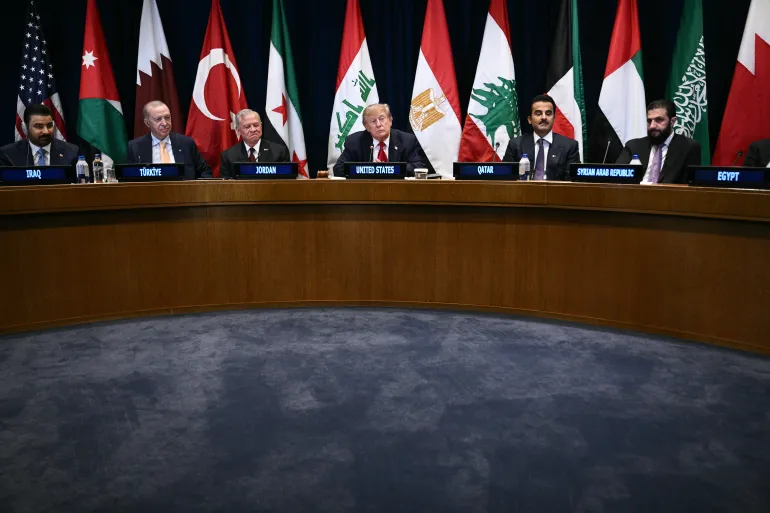
US, Iran hold mediated UNGA talks on ending war, opening Strait of Hormuz | US-Israel war on Iran News
The United States and Iran have engaged in hours of indirect talks through mediators on the sidelines of the United Nations General Assembly (UNGA) in New York, but accounts differed over whether officials from the two countries met directly.
US special envoy Steve Witkoff said mediators had “shuttled between” the American and Iranian delegations throughout Tuesday.
Recommended Stories
list of 4 itemsend of list
“Today, on the sidelines of the United Nations General Assembly, we engaged in lengthy talks with the Iranian delegation through the mediators, who shuttled between the two sides throughout the day,” Witkoff said in a post on X.
“They successfully completed a round of discussions that we hope will prove constructive and promising. The mediators will continue their work.”
US President Donald Trump gave a more direct account, saying Witkoff and Jared Kushner had held a three-hour meeting with Iranian officials.
“They had a very good meeting, a very productive meeting,” Trump told reporters at the UN, adding that he believed there was “a lot of momentum” towards an agreement. Trump later said talks were continuing and that he believed a settlement would eventually be reached.
Al Jazeera’s Kimberly Halkett, reporting from Washington, said Trump’s initial comments had created confusion over who had participated. She said the White House later clarified that Trump had not attended and that Witkoff and Kushner represented the US side.
Al Jazeera’s Tohid Asadi, reporting from Tehran, said state media had confirmed a meeting between Iranian Foreign Minister Abbas Araghchi and Witkoff after weeks without direct contact.
“This latest meeting was held at the request and insistence of the American side, and was aimed at conveying Iran’s messages and conditions, particularly around reopening the Strait of Hormuz,” Asadi reported.
Iranian state media said those conditions included lifting the US naval blockade, releasing frozen Iranian assets and ending the war on what Tehran describes as the “resistance” fronts.
Asadi also reported that an Iranian security source told Al Jazeera there could be room for further diplomatic engagement if Washington met Iran’s conditions and commitments.
The contacts came after a senior Iranian official told the Reuters news agency that Tehran’s delegation in New York had full authority to pursue diplomacy and described the UN gathering as a “golden opportunity” for Washington to return to negotiations.
The official said Iran had submitted its latest proposal to Washington through mediators on September 16 and that details of a possible agreement to end hostilities could be discussed in New York.
The official also said Iran could reopen Hormuz within seven days if the US eased military pressure and lifted its blockade of Iranian ports.
Regional powers push for de-escalation
The indirect talks have been accompanied by a broader diplomatic effort involving the Gulf and other regional states.
Qatar said it was working with Pakistan to reduce tensions between Washington and Tehran, safeguard freedom of navigation through the Strait of Hormuz and promote regional stability.
Qatar’s Prime Minister and Foreign Minister Sheikh Mohammed bin Abdulrahman bin Jassim Al Thani also met Araghchi in New York on Tuesday.
Qatar’s Ministry of Foreign Affairs said they discussed developments in the region, efforts to de-escalate tensions and ways of creating conditions for dialogue.
Oman has also been involved in maritime diplomacy over the waterway, having previously discussed maritime arrangements with Tehran aimed at facilitating navigation through the strait.
Trump also met leaders and senior officials from Gulf Cooperation Council states, Turkiye, Jordan, Syria and Iraq on Tuesday to discuss Iran and regional security.
Reuters reported that a Qatari proposal for a common security framework involving Iran and Gulf states was among the issues under consideration, with one regional source saying Tehran was reviewing it.
Qatar has not made the proposal public.

Talks follow Trump’s warning
The indirect talks came hours after Trump used his UNGA address to combine the possibility of an agreement with another warning of military escalation.
Trump said he faced a “big decision” between reaching a deal that would allow Iran to rebuild and moving to “annihilate the Islamic Republic”. He also said Washington had previously offered Tehran “full economic cooperation” in return for ending its nuclear programme and what the US describes as Iranian support for terrorism.
Iran’s General Staff of the Armed Forces and Khatam al-Anbiya Central Headquarters responded in a statement carried by Iranian media, describing Trump’s threats as evidence of “strategic weakness” and saying Iran was ready to deliver “more severe, crushing, and unpredictable blows” in response to further attacks.
US officials have repeatedly suggested that negotiations were making progress following the collapse of the June memorandum of understanding. In early August, Trump said the sides had reached parameters for a possible agreement and later described talks over Hormuz as “moving along nicely”, although significant differences remained. Earlier this month, he again said he hoped the war was “towards the end”.
Tehran continues to condition the reopening of the Strait of Hormuz on the US easing military pressure and lifting its blockade of Iranian ports, while Witkoff said mediators would continue their efforts following Tuesday’s mediated exchanges.

Six-year-old sets Rubik’s Cube world record twice in three days | Women
Six-year-old Lian Yunzhi from China broke the women’s 3x3x3 Rubik’s Cube world record, and then broke her own record days later. She also became the only female cuber in the world to have an average time under 4.5 seconds.
Published On 23 Sep 2026
Martin Lewis tells OVO E.ON Octopus EDF customers ‘make sure you do it’
Need to know
All you need to know as personal finance expert reacted to ‘£427’ warning about major change coming as fuel situation gets worse

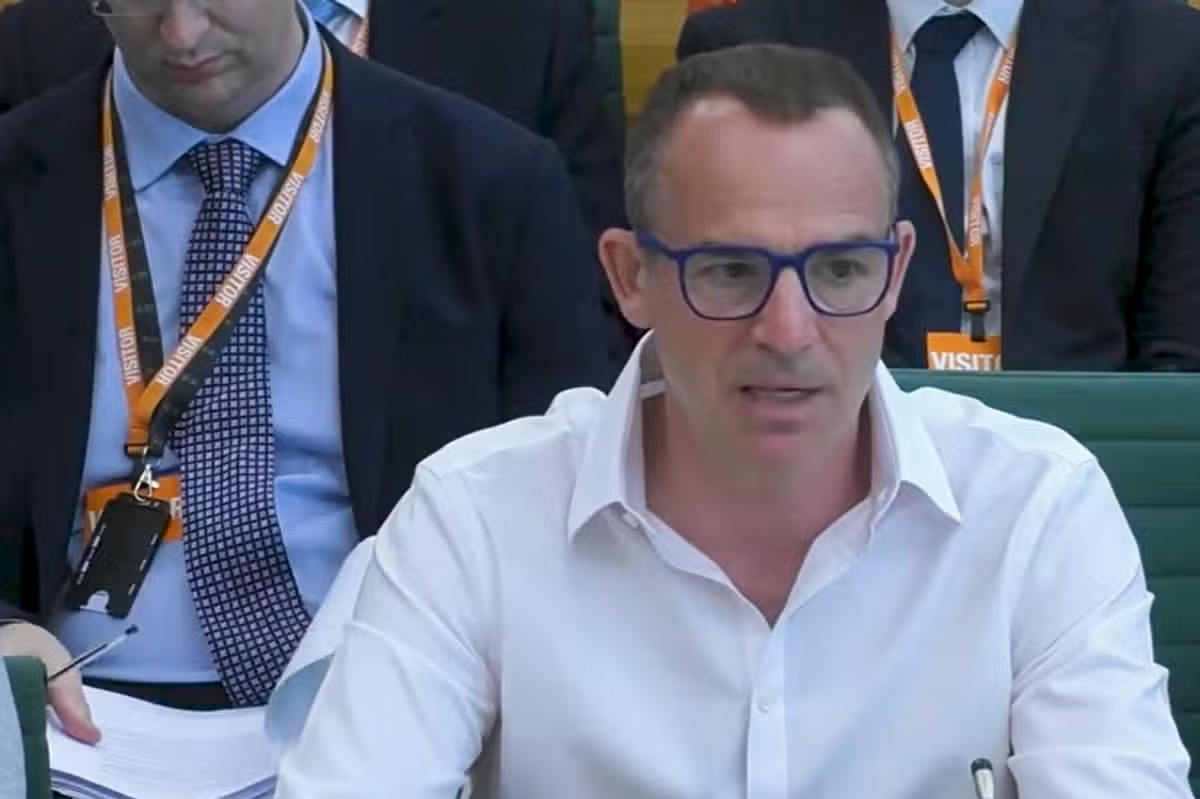
Martin Lewis gave advice to anyone not on a fixed rate or coming up to the end date(Image: Parliament TV)
Energy bills need to know: 25% surge forecast for January amid US-Iran tensions
- Energy bills are set to soar by 25% in January, adding an extra £427 to household costs and pushing the price cap to £2,150.
- The dramatic increase is being blamed on Donald Trump’s escalating conflict with Iran, which has driven up wholesale gas and electricity prices across the economy. Bloomberg Economics forecasts predict the bitter blow will hit millions of families already struggling with the cost of living crisis.
- Personal finance expert Martin Lewis has urged customers of major suppliers including British Gas, Octopus Energy and ScottishPower to take immediate action. He warned that fixed tariffs could offer protection, saying: “I cannot say fixing if you’re on the price cap will definitely save you, but it is absolutely the risk-averse thing to do.”
- The cheapest fixed deals currently available include Sainsbury’s Energy at £1,646 per year and Outfox Energy at £1,676. If predictions prove accurate, these tariffs could save households roughly £500 annually compared to the January price cap.
- However, energy expert Sabrina Hoque from Uswitch.com cautioned that fixed deals lock customers in for 24 months. She warned they “may look far less competitive in a year if the US-Iran conflict de-escalates.”
- Martin Lewis advised consumers to use whole-of-market comparison sites to find the best deals available. He predicted energy prices will remain high, stating: “It’s definitely going to rise. It’s probably going to rise quite substantially.”
- READ THE FULL STORY: Martin Lewis September ‘make sure you do it’ for OVO E.ON Octopus EDF customers

Casino Sued Over Alleged Contributions
The Fair Political Practices Commission is suing California’s largest poker casino, the Commerce Club, over political contributions the club allegedly made last year to defeat a ballot measure that would have established a rival casino just a few miles away in Pico Rivera.
The lawsuit alleges that the club failed to report “independent expenditures” on a campaign and that it was late in disclosing other contributions to two committees.
Southern California’s card clubs have dabbled in local and state politics for years, typically with campaign contributions to an array of candidates involved with regulation of the gambling industry.
But rarely have the clubs faced such a dangerous political climate as they did last year. Five Southern California cities considered ballot measures that would have established competing card parlors–and a possible loss of market share for the dominant clubs, the Commerce Club in Commerce and the Bicycle Club in Bell Gardens.
The two southeast Los Angeles card casinos poured hundreds of thousands of dollars into efforts to defeat the measures. After a series of bitter campaigns, the only measure to win approval was in Hawaiian Gardens. The Pico Rivera measure was defeated by 267 votes out of 8,475 cast.
State officials and attorneys for the Commerce Club are in settlement talks, according to the commission. Club President George Tumanjan did not return repeated phone calls, but club attorney Andy Schneiderman said: “We deny that we violated [the Political Reform Act]. We’re trying to resolve this with the FPPC.” He would not discuss the specific allegations in the state’s complaint.
The Commerce Club’s local political campaign last was spearheaded by its own committee, the Southern California Voter Education Project, run by Don Wilcox, the club president’s son-in-law. Campaign documents filed last year showed the committee spent $296,000 to battle ballot measures in Azusa, Irwindale and Hawaiian Gardens.
But in documents filed months after the elections–and, the commission alleges, in apparent violation of its filing deadlines–that the Commerce Club disclosed that it made $39,120 in “nonmonetary” contributions to a Pico Rivera committee run by Richard Ochoa, a local pastor who scorned the supporters of a new club as “up to their necks in deception.” Nonmonetary contributions can include a range of materials and services, such as printed signs or legal work.
The committee, Just Say No to Casinos, organized citizens to staff a phone bank and handed out literature (“Don’t let the casino promoters deceive us any more,” one flier read).
But the committee did not report any contributions from the club, and its founder denies any affiliation with the casino.
“Just to set the record straight, I have never had any dealings with the Commerce Club or any other card club,” Ochoa said in an interview. “For me to receive contributions would be hypocritical.”
The lawsuit also alleges that the Commerce Club did not disclose that it contributed to another Pico Rivera committee, Save Our City, which sent mailers warning of the “wicked web” of narcotics traffic and loan-sharking that would ensnare the city if a casino was approved. Commerce Club documents don’t show any contributions were made to the committee, and Save Our City’s documents don’t show that any money was received from the club.
However, Hal Mintz, who has worked as a consultant for the Commerce casino, contributed $3,000 to Save Our City. After inquiries from The Times, the committee filed an amended statement showing that Mintz’s firm, Stateside Communications, actually contributed a total of $19,360 to the campaign, most of it in nonmonetary forms.
Mintz, citing advice from his attorney, declined to comment on the case. Save Our City officials were not available.
Supporters of the Pico Rivera casino measure have said they were puzzled by the fact that the Commerce Club reported spending so little to defeat the initiative, while the Bicycle Club of nearby Bell Gardens spent more than $97,000 through two committees.
Real estate developer Michael E. Macke, who planned to develop a Pico Rivera casino, has sued the Bicycle Club over alleged unfair political practices in the campaign. Because the commission has filed suit against the Commerce Club, Macke is precluded from suing it for campaign-reporting violations.
The club paid tens of thousands of dollars to organizations that warned voters that gambling was a sin. Records show the club spent $43,202 on legal services for Bell United to Regulate Card Clubs, a committee that fought unsuccessfully to pass a city ordinance that would limit the number of casinos allowed in Bell. The Rev. Martin Garcia, who ran the committee, said he did not know his lawyer was paid by the Commerce Club, and wouldn’t have accepted legal assistance had he known.
The club also paid $20,000 to the Rex Company, a political consulting firm that helped defeat a casino ballot measure in Irwindale. The Rex Company is owned by Stephen R. Sheldon, the son of the Rev. Lou Sheldon of the Anaheim-based Traditional Values Coalition.
The Commerce casino was first thrust into controversy in 1984, just one year after it opened. Four officials from the city of Commerce pleaded guilty to charges that they granted the license to open the club to a Las Vegas executive who had bribed them with secret shares of the business.
In 1993, an internal audit by the club found that board members received kickbacks, and employees said they had been reimbursed by the casino for contributions they had made to the campaigns of Gov. Pete Wilson and Lt. Gov. Gray Davis.
Today, with a Sacramento lobbyist on its payroll and tens of thousands of dollars in contributions to candidates from San Francisco Mayor Willie Brown to county Supervisor-elect Don L. Knabe, the Commerce Club has built a name as a powerhouse in casino politics.
In Sacramento, its focus has been on issues such as which card games should be allowed and whether to fund a state gambling commission.

Flex your football brain with our daily quizzes
Test your ball knowledge against today’s Who Am I?, Five in Five and Brainteaser.
Source link

Bolognina: make tracks for Bologna’s bustling former rail workers’ quarter | Italy holidays
Why go now?
Located just north of the Centrale train station, Bolognina neighbourhood is more than just a Little Bologna. It is a completely different world from the medieval maze of palaces, churches and towers that define the city’s “Centro Storico”, which is increasingly filled with crowds of tourists as Bologna joins the big league of Italian getaway destinations.
There is an immediate visual difference as narrow cobbled lanes give way to wide, tree-lined avenues, pastel-coloured low-rise apartment blocks, spacious parks and piazzas. Bolognina sprang up at the beginning of the 20th century, initially to house families of workers from the railway, then from nearby manufacturing industries.
Today, the quarter is home to a diverse multi-ethnic population and remains a stronghold for militant leftwing politics, with the local community committed to avoiding gentrification. Tourists are certainly made welcome, and it is a delight to feel part of genuine local life.
Where to eat and drink
Eating out here makes a refreshing change from the city centre. Of course there are still spots serving traditional freshly made tagliatelle al ragù such as the atmospheric old-school trattoria La Golosità di Nonna Aurora. But you can also sample Georgian cuisine at Pane Georgiana, a sharing plate of Ethiopian and Eritrean dishes at Ristorante Africano Adal, spicy Sichuan cooking at Ba Hot Pot, or handmade tortellini and tortelloni stuffed with halal meat at the innovative Brodellini.
For vegetarians, the perfect spot is Piazza Martino, a cantina and deli owned by a nearby farm in the Bolognesi Hills that practises a “first we grow, then we eat” philosophy, transforming their organic produce into delicious aubergine parmigiana, vegan pepperoni lasagne, and courgette and potato polpette (balls).
Bolognina’s prime foodie street is Via Luigi Serra, symbolised by the fiercely independent Trattoria di Via Serra. The restaurant’s three small, rustic salons are always packed and getting a reservation isn’t easy as they don’t take bookings through social platforms and rarely answer the phone or emails. Chef Tommaso Maio and co-owner Flavio Benassi used to have a restaurant up in the hills nearby, but 13 years ago decided to come to the city, choosing Bolognina rather than the city centre for their new venture. “Our aim then, and still today, is to offer the locals here an old-fashioned neighbourhood trattoria where they can still order a comforting bowl of tortellini in capon broth, lasagne and freshly baked crescenti biscuits,” they explain.
If there is no free table at the Trattoria, then the street offers plenty of options, from hearty plates of cold cuts and cheeses at the deli-diner La Vecchia Bottega, cocktails, spritz and craft beers at the hip Fermento bar, or local wines at La Petite Enoteca. To finish the evening, there is often live music at the bars in Piazza Lucio Dalla, named after Bologna’s local hero, an iconic Italian singer-songwriter.
Cultural experiences
Leave historic Bologna behind by walking from the central train station across the Matteotti bridge and you immediately come face to face with a striking Holocaust memorial, an austere, minimalist monument of two narrowly separated 10-metre high steel walls. Just opposite stands the massive Chiesa del Sacro Cuore di Gesù, dating back to 1912 when Bolognina was first being built. It is worth visiting just to marvel at the soaring 60-metre-high dome.
Hidden away in the backstreets in a former tram shed, La Memoria di Ustica Museum is a unique homage to a commercial flight between Bologna and Palermo that was mysteriously shot down in 1980 with no survivors. French artist Christian Boltanski has meticulously reconstructed the wreckage of the downed airliner and assembled the personal items belonging to the victims, creating an immense, intensely moving installation.
Checkpoint Charly is a thriving alternative art and artisan cooperative occupying a former lingerie warehouse. Workshops include ceramics, printmaking, photography, graphics and music, with a dozen cultural events presented each year. The DLF – Dopo Lavoro Ferroviario – is a sprawling park behind the station originally created in the 1920s for after-work activities for railway workers. This green lung has been saved from abandonment and now houses the laid-back all-day Kinotto Bar, the Vecchia Orsa DLF craft brewery and beer garden, a pizzeria, the Puccini concert arena and the Locomotiv Club, a live indie music venue.
after newsletter promotion
Where to shop
Although this essentially residential neighbourhood may not be a shopping paradise, bargain hunters should plan to visit on the first Sunday of the month when the Piazza Lucio Dalla is transformed into a huge flea market. Over in the daily Mercato Albani, Ilario di Lorenzis has recently opened Intelligenza Artigianale, an atelier showcasing his funky hand-crafted bags, T-shirts and caps, while cycling fans should head for Bolognina Bike Shop, whose friendly owner, Dario Brunetto, repairs bikes and recycles vinyls, retro decor and collectible vintage cycling jerseys.
Don’t miss
Since opening in 1934, Mercato Albani has been the beating heart of Bolognina. Running down the middle of a shady tree-lined avenue, locals gather each morning for their daily shopping from bustling stalls selling Bologna’s speciality mortadella (pork salami) and prosciutto, fish, cheese and organic veggies. Then there is a complete change of personality from 5pm till around midnight when shuttered stands open up as lively cocktail and craft beer bars, the natural wine enoteca, Vineria Punk, plus casual diners serving pizza and pasta, vegan dishes and Greek cuisine. Giuseppe Agrello the owner of Bollore, a cool vermouth bar, explains that “when we were invited to open in the mercato, we insisted that during the day it should stay as it is and not become just another tourist food court. So we only begin in the evening and also organise concerts, art exhibitions and cultural events for the community.”
Where to stay
Hotel Il Guercino is a delightfully quirky, family-owned hotel, extravagantly decorated with a mix of baroque and Asian influences, with a spa featuring sauna, hot tub and steam bath. Doubles from €150.
This trip was provided by Bologna Welcome and Emilia Romagna Turismo

Trump rallies Shield of the Americas coalition against drug cartels | United Nations News
US-led anti-cartel alliance backs sanctions against crime groups after Trump urges stronger action.
United States President Donald Trump has pledged to use “unmatched military might” against drug cartels in the Western Hemisphere during a meeting of the Washington-led Shield of the Americas coalition in New York City.
In a meeting with leaders and foreign ministers from the anti-cartel alliance, Trump on Tuesday urged member countries to join the US in targeting 24 criminal organisations, which he earlier described as the “ISIS of the Western Hemisphere”.
Recommended Stories
list of 3 itemsend of list
He said he was asking “all nations in the Shield of the Americas to formally designate narco-terrorists as common threats to stability and apply crushing sanctions” against all of the groups. The meeting took place on the sidelines of the annual United Nations General Assembly (UNGA) in New York City.
The coalition’s 15 governments later issued a joint statement saying they intended to impose asset freezes and visa restrictions on members and supporters of the groups and to pursue criminal charges against them.
At the top of the list are two groups that have been declared “terrorist” organisations by Washington: Mara Salvatrucha (MS-13) – one of Central America’s most powerful criminal gangs – and Tren de Aragua, a Venezuelan gang that is also active in Colombia, Peru and Chile.
The list also includes major Mexican cartels, Colombian armed groups such as the National Liberation Army, Brazil’s Primeiro Comando da Capital and Comando Vermelho groups, and Peru’s Shining Path.
Al Jazeera’s Alessandro Rampietti, reporting from Bogota, Colombia, said the statement was largely symbolic for now, because each country must follow its own legal procedures.
“For example, here in Colombia, it will require a law to pass in Congress. We understand that the government here has asked Congress to move forward in drafting such a law. So while the consequences may not be immediate, this is clearly an important step towards building what the US has been trying to do in Latin America [through] this alliance,” he added.
The coalition is made up of governments closely aligned with Trump, including Argentina, Ecuador and El Salvador, whose leaders he has praised or endorsed. Colombia and Peru joined after Trump-aligned presidents took office in recent months.
Brazil and Mexico have not joined.
US Secretary of State Marco Rubio, who also attended, praised “the emergence of strong leaders who are committed to the challenge of taking on transnational terrorism”.
The gathering was the administration’s latest effort to rally the region behind a more aggressive approach to drug trafficking. Since returning to office last year, Trump has designated cartels as foreign terrorist organisations and ordered dozens of strikes on boats in the Caribbean and eastern Pacific that US officials say were carrying narcotics bound for the US.
The strikes have killed more than 223 people, and UN experts say they violate international law and could amount to crimes against humanity.
The Trump administration’s National Security Strategy, released late last year, laid out plans for a revamped Monroe Doctrine, the 19th-century policy asserting US primacy in the hemisphere that critics associate with decades of US intervention.
Trump has also spoken of retaking the Panama Canal and annexing Greenland and Canada. On Tuesday, he signed an agreement on Greenland that stopped short of his demand that the island become US territory.
The focus on the hemisphere has raised concerns across the region.
Brazilian President Luiz Inacio Lula da Silva, in his UN speech, bristled at the approach, warning countries in Latin America and the Caribbean of “renewed hegemonic temptations”.
“Brazil is nobody’s back yard,” Lula said.

Cooperation is the goal at the UNGA, but is it possible? | United Nations News
Debate opened at the UN General Assembly and leaders from across the world made their arguments for making the world a better place. International cooperation seems to be the central goal, but as Al Jazeera’s Emma Withrow explains, only a handful of countries hold the cards.
Published On 23 Sep 2026

Dolly Parton’s manager reportedly embroiled in feud with the late singer’s nephew
Dolly Parton’s estate has reportedly accused the late singer’s nephew of extortion and threats against staff.
On Tuesday, Parton’s estate, She’s Alive, LLC, requested a restraining order against Parton’s nephew Bryan Seaver, court records show. The request came after he was fired from his job as head of security, as TMZ reported.
She’s Alive is run by Parton’s former manager Danny Nozell.
The New York Times reviewed court records containing allegations that Seaver began making demands shortly before Parton died. The demands grew into more serious threats, according to the records the news outlet cited, which the plaintiffs saw as an attempt to obtain money from the Parton estate.
Here’s what to know.
Who is Bryan Seaver?
Parton’s nephew, Bryan Seaver, shared the news of his aunt’s death in a video posted to her Instagram account on Aug. 25.
In the video, Seaver, standing in front of a black background, introduces himself as the the son of Dolly’s sister Cassie Parton and says he is representing the Parton and Owens family in announcing his aunt’s death. The Owens are the maternal side of the country star’s family.
“This video announcement is something Dolly asked of me years ago, before I fully absorbed it as a future reality,” he says in the video.
Seaver adds that he followed in his father Larry’s footsteps in becoming Parton’s head of security, a post he held for more than 20 years.
Seaver and his company, Squadron Augmented Protection Services, LLC, are the defendants in the lawsuit. They were reportedly terminated about three weeks after the country icon’s death.
Seaver did not immediately respond to The Times’ request for comment.
According to the New York Times’ reporting on the court records, the restraining order request, filed in Davidson County Chancery Court in Nashville, sought to keep Seaver away from Parton’s properties and staff.
Who is Danny Nozell?
Nozell was Parton’s longtime manager. He has claimed credit for helping revive Parton’s international touring career.
He told The Times last month that Parton “worked up until the day she died” on multiple projects.
“She loved seeing her dreams come to life, and loved knowing her work brought people joy,” Nozell said in the statement. “Ever the planner, Dolly worked with the team that she handpicked, for the past several years to build a project roadmap that will guide us for decades to come.”
Nozell’s website described his work with Parton as “arguably his most notable achievements.”
What are the allegations?
The court records, according to the New York Times, include allegations that Seaver sent a profane threat to a Dollywood business partner, and that, separately, he referred to himself as a “killer” and “not an entertainment person” while corresponding with one of Parton’s longtime lawyers.
According to TMZ, Seaver and his team said in a statement that they were “dismayed by the … unexplained actions” following Parton’s death and “[w]e remain unshakably resolved to fulfill her final directive to protect her family, and we refuse to be intimidated by those whose actions we believe are being taken in bad faith and with the intent to profit from the life of someone who willingly gave so much.”

Private credit eyeing piece of JPMorgan’s credit card portfolio: WSJ
Private credit eyeing piece of JPMorgan’s credit card portfolio: WSJ
Source link

Sons, mothers of people killed by ICE agents demand answers: ‘We still have so many questions’
WASHINGTON — Lorenzo Salgado Araujo’s wife used to spend her evenings cooking a big meal for her husband and waiting for him to return home from his job as a home builder. Now, his son told members of Congress, Salgado Araujo’s wife spends those evenings visiting her husband’s grave at the cemetery.
In a packed Senate hearing room, a rapt audience of dozens listened to the sons of Salgado Araujo, the mothers of Ruben Ray Martinez and Renee Good, as well as the woman who video-recorded the death of Alex Pretti and the lawyer for the family of Johan Sebastián Durán Guerrero.
Salgado Araujo, Martinez, Good, Pretti and Durán Guerrero were shot and killed by federal agents since the start of the Trump administration’s crackdown on immigrants. Some were U.S. citizens; others were immigrants.
“We still have so many questions,” said Lorenzo Salgado, one of Salgado Araujo’s sons. “What are the names of the ICE agents who killed our dad? Why do they get to be protected behind anonymity, while my brother and I stand before cameras, showing our faces, proudly saying our first and last name?”
The forum on Tuesday was led by Rep. Robert Garcia (D-Long Beach) and Sen. Richard Blumenthal (D-Conn.). It was the fifth such event that the two lawmakers have hosted since December, forums aimed at shedding light on what the lawmakers call the “lawless and abusive tactics” by immigration agents.
The forums are not official hearings because they have been organized without Republican support. Nothing has changed since the first forum, the lawmakers said, accusing the Department of Homeland Security of failing to fully investigate the deaths and prevent further ones.
Blumenthal noted that two days prior in Austin, Texas, another man was shot by ICE agents. Wilber Rafael Garces Perez, a Venezuelan who was making a DoorDash delivery when ICE agents sideswiped his car, was seriously injured and placed in ICE custody with a bullet still lodged in his back.
Garcia said that, as of this month, Democrats on the House Oversight Committee have verified more than 1,000 instances of abuse by immigration agents under this administration.
“Every community in America should be asking itself: How long will it be until ICE is in our city?” Blumenthal said. “How long will it be until we have a grieving family, until another loss of life?”
Rachel Reyes sobbed as she recounted the moments leading up to the death of her son, Martinez. She said his death came nearly a year before Good’s and Pretti’s “yet far fewer people know his name” because the family was denied access to investigative reports and video evidence showing he had been shot by an immigration officer.
“It’s deeply distressing to know that Ruben’s final moments were consumed by confusion, fear, pain and disregard for his life,” she said. “Though the circumstances surrounding his death and these other victims are distinctly different, the pattern is the same: lives cut short by the same agency, agents without body cameras, no warnings, no attempt to de-escalate, excessive force followed by deflection, and a lack of accountability after the fact.”
Donna Ganger, the mother of Good, said her daughter should still be alive. Ganger described herself as a Republican and a Christian. While Jesus teaches forgiveness, she said, she deserves accountability too.
“I voted for President Trump under the impression that these agents were here to protect the citizens of the United States,” she said.
“This is madness,” Ganger added.
Stella Carlson said that when she saw Pretti, she decided to become “his backup.” Instead, she watched him die and then watched the agents who shot him flee. Two masked agents returned “and began to manipulate his dead body, ripping open his clothes as if to provide aid, but instead moving him around like a rag doll.”
Later, Carlson said, she witnessed top government officials lie about Pretti, calling him a domestic terrorist who wanted to “massacre law enforcement.”
“I am just a regular person, but I care deeply about my community, my state and my country,” she said. “I believe there is power in ordinary people speaking the truth.”
Good and Pretti were killed within weeks of each other in January during a period of increased immigration enforcement in Minneapolis.
Sean Murphy, who represents the family of Durán Guerrero, said he and Durán Guerrero’s widow recently attended a meeting with representatives of the Maine attorney general’s office to retrieve some of his property that isn’t considered evidence.
One item that wasn’t returned was his 3-year-old daughter’s car seat, which had been pierced by a bullet.
Sen. Alex Padilla (D-Calif.) asked each speaker what they think justice would look like.
Reyes said an independent investigation. Brent Ganger said that true justice isn’t possible because his sister can’t come back, but that accountability is possible if federal agents are held to the same accountability standards as local law enforcement.
To Carlson, justice would mean getting ICE off the streets and letting detainees return home. Murphy called for prosecution for the agent who killed Durán Guerrero.
For Lorenzo Salgado, justice would take another form: getting to see his mom heal and finally getting a full eight hours of sleep.
The forum came as congressional Democrats are seeking to edge out Republicans in the Nov. 3 election, and at times the Democrats seized it as a way to criticize the other party.
Rep. Jasmine Crockett (D-Texas) asked members of the audience to stand up if they’ve been affected detrimentally by ICE. Ronaldo Salgado looked around the room as about a dozen people stood.
“The reality is that there are so many more stories. There are so many more names that you will never hear,” she said. Later, referring to Republicans, she added, “It’s time to vote them out.”
Rep. Suhas Subramanyam (D-Va.) noted that Reyes voted for Trump and asked her to say anything she would want him to hear now. Reyes said that, like many Latinos, she deeply regrets her vote.
“I haven’t heard anything from any Republican whatsoever,” she said. “I’m very disappointed, and he lied.”
Good’s brother Brent Ganger said his family has waited long enough for accountability for the damage caused by ICE. As a moderate, he said, he hoped that all members of Congress — even those not in attendance — were listening.
“We will not be quiet, and we will not go away,” he said.

Girls’ flag football: Tuesday’s scores
HIGH SCHOOL FLAG FOOTBALL
TUESDAY’S RESULTS
City Section
Palisades 14, LACES 7
Southern Section
Agoura 18, Thousand Oaks 6
Banning 18, Rancho Mirage 6
Beaumont 55, Redlands 21
Brentwood 40, SEED LA 7
Cajon 19, Yucaipa 0
California Military 6, Peninsula 0
Camarillo 35, Oak Park 14
Castaic 25, West Ranch 13
Chaparral 41, Norco 0
Colton 6, Bloomington 0
El Segundo 21, Vistamar 6
Etiwanda 24, Chino Hills 7
Grand Terrace 34, Carter 6
Great Oak 27, Valley View 6
Harvard-Westlake 39, Louisville 0
Hemet 27, Canyon Springs 24
Highland 12, Antelope Valley 6
Indian Springs 33, Arroyo Valley 26
JSerra 38, Orange Lutheran 0
Jurupa Valley 27, Rubidoux 0
Kaiser 19, Jurupa Hills 12
Lancaster 19, Knight 0
Moreno Valley 18, Vista del Lago 0
Oaks Christian 37, Calabasas 6
Oxnard 18, Ventura 13
Pacific 19, San Bernardino 6
Paloma Valley 47, Citrus Hill 6
Pasadena Poly 33, Rio Hondo Prep 12
Quartz Hill 32, Eastside 13
Ramona 20, Norte Vista 0
Rancho Cucamonga 24, Los Osos 0
Rancho Verde 41, Perris 6
Redlands Adventist 25, Loma Linda Academy 0
Redlands East Valley 31, Citrus Valley 0
Rialto 12, San Gorgonio 6
Rim of the World 19, Eisenhower 18
Riverside Poly 55, Riverside North 6
Santa Monica 24, Sunny Hills 0
Santa Paula 24, Fillmore 7
Saugus 18, Canyon Country Canyon 6
Segerstrom 32, San Dimas 6
Sherman Oaks Notre Dame 38, Immaculate Heart 6
Simi Valley 14, Moorpark 12
South Hills 21, Colony 13
St. Bonaventure 14, Cate 0
Temescal Canyon 27, Elsinore 0
Tesoro 28, San Clemente 20
Torrance 22, North Torrance 0
Valencia 19, Hart 7
Westlake 55, Newbury Park 12
Westminster 14, Laguna Hills 7
MONDAY’S RESULTS
City Section
Camino Nuevo 6, Smidt Tech 0
Collins Family 19, Rise Kohyang 8
New Designs University Park 12, Stella 6
Stern 26, De La Hoya 0
View Park 7, Locke 0
Southern Section
Adelanto 21, Victor Valley 0
Alhambra 25, El Monte 19
Alta Loma 12, Colony 6
Anaheim Canyon 34, Corona 18
Arroyo Valley 39, Fontana 0
Azusa 21, Garey 0
Baldwin Park 25, Nogales 0
Bell Gardens d. South El Monte, forfeit
Bellflower 12, California 6
Bishop Amat 12, Serra 7
Bolsa Grande 32, Magnolia 0
Bonita 40, Claremont 0
California Military 46, Nuview Bridge 0
Cantwell-Sacred Heart 20, Mary Star of the Sea 6
Canyon Springs 26, Tahquitz 6
Canyon Springs 12, Arlington 12
Carter 18, Bloomington 13
Cathedral City 33, Jurupa Valley 0
Century 24, Western 6
Cerritos Valley Christian 52, Fairmont Prep 17
Chaparral 40, Temecula Valley 0
Chino 26, Chaffey 0
Chino Hills 19, Los Osos 0
Corona del Mar 18, Fountain Valley 8
Corona Santiago 26, Norco 13
Costa Mesa 30, Ocean View 0
Covina 33, Charter Oak 12
Crean Lutheran 21, Esperanza 7
Desert Hot Springs 20, Palm Springs 6
Dominguez 48, Compton Centennial 6
Don Lugo 13, Montclair 2
Downey 60, Mayfair 0
Edgewood 19, Bassett 0
Edison 32, Marina 0
Eisenhower 14, Colton 8
El Monte Arroyo 7, Rosemead 6
El Rancho 25, Keppel 0
Etiwanda 29, St. Lucy’s 6
Flintridge Sacred Heart 20, Immaculate Heart 8
Fullerton 44, Laguna Hills 13
Gabrielino 26, Temple City 0
Garden Grove Pacifica 21, Troy 12
Garden Grove Santiago 19, Los Amigos 2
Glenn 27, Oxford Academy 0
Godinez 20, Katella 14
Hemet 20, Riverside North 6
Huntington Beach 46, Los Alamitos 21
Indian Springs 44, Jurupa Hills 13
Irvine 12, Newport Beach Pacifica Christian 6
Kaiser 6, Rialto 0
La Habra 28, Brea Olinda 0
Lakewood St. Joseph 48, St. Mary’s Academy 0
La Mirada 13, Artesia 7
La Quinta 24, Xavier Prep 0
Liberty 27, Citrus Hill 0
Loma Linda Academy 47, Public Safety Academy 0
Long Beach Cabrillo 6, Compton Early College 0
Long Beach Poly 41, Lakewood 0
Long Beach Wilson 42, Long Beach Jordan 12
Mater Dei 39, Santa Margarita 13
Miller 6. Norte Vista 0
Millikan 20, Quartz Hill 13
Monrovia 26, Burbank Burroughs 9
Montebello 6, Mountain View 2
Moreno Valley 32, Lakeside 6
Murrieta Mesa 19, Great Oak 7
Murrieta Valley 6, Vista Murrieta 0
Northview 25, Hacienda Heights Wilson 24
Norwalk 26, Whitney 0
Ontario Christian 33, Woodcrest Christian 14
Orange 37, Estancia 0
Orange Vista 38, Perris 14
Paloma Valley 39, Heritage 6
Patriot 20, Ramona 7
Placentia Valencia 24, Garden Grove 0
Portola 12, Northwood 6
Ramona Convent 59, Sacred Heart of Jesus 0
Rancho Cucamonga 20, Upland 6
Rancho Verde 41, Rancho Christian 0
Redlands 12, Palm Desert 7
Rim of the World 12, Grand Terrace 7
Riverside King 33, Corona Centennial 12
Riverside Poly 40, Hillcrest 0
Rosamond 27, Littlerock 12
Saddleback 32, Savanna 0
Sage Hill 25, Irvine University 14
San Gorgonio 13, Summit 7
San Marino 13, La Canada 8
Santa Fe 6, Paramount 0
Saugus 6, Village Christian 0
Schurr 33, San Gabriel 12
Sierra Vista 32, Duarte 0
St. Margaret’s 32, Laguna Beach 6
St. Paul 40, St. Bernard 0
Trabuco Hills 27, Beckman 13
Tustin 18, Buena Park 0
Valley View 19, Vista del Lago 0
Villa Park 14, Sunny Hills 7
West Covina 19, Rowland 0
Westminster 37, La Palma Kennedy 20
Whittier 26, Pioneer 7
Woodbridge 38, Tesoro 33
Workman 20, La Puente 14
Yorba Linda 28, Cypress 6
Intersectional
Compton 26, King/Drew 6
UK Prime Minister vows not to ‘stand by’ as Palestinians suffer | United Nations
UK Prime Minister Andy Burnham condemned Israel’s genocidal war on Gaza during his UN General Assembly address. He also said continued Israeli military action had led the UK to impose sanctions on illegal Israeli settlements in Palestinian territory.
Published On 23 Sep 2026
Sri Lanka convicts 15 people over 2019 Easter Day bombings | News
Fifteen people have been convicted over Sri Lanka’s 2019 Easter Sunday bombings, which killed 279 people at churches and luxury hotels. The verdict comes amid continued scrutiny over intelligence warnings received before the attacks and whether officials failed to act.
Published On 23 Sep 2026