



The war on Iran faces a MAGA backlash | US-Israel war on Iran
Four weeks into the war on Iran, the White House continues to confuse the public and the press with constant pivots and contradictions.
Now the administration faces even more pressure as many of its own supporters have started to turn against it. This war has split up the MAGA movement, with an intriguing debate currently happening outside the mainstream and in the midst of their own media sphere.
Contributors:
Jamal Abdi – President, National Iranian American Council
Jude Russo – Managing editor, The American Conservative
Ben Lorber – Senior research analyst, Political Research Associates
On our radar
This week, the Israeli parliament approved the first vote on a bill that introduces a mandatory death penalty by hanging. This applies to any Palestinian convicted of killing Israelis in attacks defined as “terrorism” or motivated by “hatred”. Ryan Kohls reports on how this bill has been promoted in the media.
Memes, trash talk and AI – the online war between Washington and Tehran
The propaganda war in the ongoing war on Iran has taken a new form.
Beyond the traditional tactics, both the US and Iran are increasingly using memes and trash-talk mockery of the adversary through AI-driven animations, designed with virality in mind. We look at the strategies behind the different messaging coming out of Washington, Tel Aviv and Tehran.
Featuring:
Meredith Clark – Professor, University Of North Carolina
Roger Stahl – Documentarian and author, Militainment, Inc.
Marc Owen Jones – Associate professor, Northwestern University In Qatar
Published On 28 Mar 2026

Coronation Street George actor’s life from his family to heartbreak over co-star’s death
Tony Maudsley is best known for his role as George Shuttleworth on Coronation Street and away from the soap he lives a far less dramatic life

Coronation Street George actor’s life from his family to heartbreak over co-star’s death
Tony Maudsley is a beloved figure on Coronation Street – but what do we know about his life off the set?
Tony joined the ITV soap in 2020, portraying George Shuttleworth, the son of the late funeral director Archie (Roy Hudd). Since then, he’s won over viewers and has been involved in numerous major plotlines.
Particularly now, as George is inching closer to uncovering the truth about wicked Theo Silverton (James Cartwright), who has been tormenting Todd Grimshaw (Gareth Pierce) for several months, reports the Daily Star.
Off-screen, actor Tony leads a far less dramatic life. Here, we delve into the accomplished star’s personal world.
Tony’s Hollywood Stardom
In addition to Corrie, Tony has featured in Queer As Folk, Emmerdale and also starred in the popular ITV sitcom Benidorm, playing hairdresser Kenneth Du Beke from 2011 to 2018.
Moreover, Tony made an appearance in the Harry Potter series in Harry Potter and the Order of the Phoenix, portraying Hagrid’s half-brother, Gawp.
Reflecting on his time in Harry Potter, Tony remarked: “It was one of the hardest jobs I’ve ever done. I was weighed down with these huge monster feet that were so heavy, that I could never get into the canteen and back in time.”
Tony also shared screen space with Johnny Depp in the film Sleepy Hollow – but had an awkward encounter with the Hollywood icon. He revealed to Soap Inside magazine: “Very early on in my career, I worked with Johnny Depp on the film Sleepy Hollow.
“At the time, I’d stopped smoking for three years – but Johnny invited me for a roll-up round the back of the set, and I couldn’t say no! So, there I was trying to look cool with Johnny, while choking on a cigarette. It’s been a pretty lovely career.”
Tony’s private family life
Tony regularly keeps his devoted following of 77,000 Instagram fans informed about his daily activities. Earlier this year, he offered supporters an uncommon glimpse into his personal world when he posted multiple pictures of his beloved dog following a grooming session.
He wrote alongside the post: “Took Bosie to a new groomers today in Worsley Village and they did a great job! They even cleaned his teeth (well the few he’s got left!)”
And in March, Tony honoured his seldom-seen mother after sharing a photograph of them together for Mother’s Day. In the image, Tony appeared delighted standing next to his mum. He wrote with the post: “Happy Mother’s Day from me and mine.”
Tony’s grief following tragic loss
In January 2024, Tony expressed his devastation after his friend Michael McGarrigle – who collaborated with Tony on ITV’s Benidorm – had died.
Tony initially requested assistance from his followers to locate costume supervisor Michael who had disappeared, but days afterwards he confirmed the tragic news that Michael had passed away.
Posting a photo with Michael, Tony shared a heartfelt tribute to his mate: “Thank you so much to everyone for all your efforts in reposting our appeal to find Michael yesterday. I’m so sad to say that we found out late last night that we’ve lost our beautiful friend.
“Our whole Benidorm family is devastated and we’ll miss him hugely. RIP Michael.”
In addition to Benidorm, Michael served as the costume supervisor on programmes such as Prisoners Wives Maternal, The Larkins, DCI Banks, Whitechapel, Mrs Biggs, Annika and The Fear. He was also the co-owner of a musical theatre and cabaret bar in Brighton, Bar Broadway.
Coronation Street airs Monday to Friday at 8:30pm on ITV1 and ITVX

Jordan Henderson: Ben White will have support of England players
John Murray, BBC Radio 5 Live football correspondent
What that match will be remembered for is Ben White.
That’s the only match I have ever seen when an England player has scored his first international goal for England at Wembley and was booed by, I would say, a sizeable minority of the crowd.
When he left the squad in Qatar and went home for what was described as personal reasons – we’ve never really got to the bottom of what it was.
There were stories that there was a fall-out, something happened involving Steve Holland, Gareth Southgate’s assistant. But that was never confirmed by Gareth Southgate.
I thought last night might have been the perfect opportunity for Ben White to put his head above the parapet. He’s made his comeback, he’s just scored his first goal. But, as Thomas Tuchel was saying in advance of the match – and we kind of know this already – he described him as quite introverted, quite shy, and maybe he just doesn’t feel comfortable to do that.
But probably at some stage he will have to grasp the nettle and talk about it.

Lee says peace mission honors South Korea’s West Sea dead

South Korean President Lee Jae Myung (3-R) offers a silent prayer at a national cemetery in Daejeon, South Korea, 27 March 2026, during a ceremony to mark the 11th anniversary of the commemoration day for 55 troops who died in three major clashes with North Korea in the West Sea, comprising an inter-Korean naval skirmish in 2002, North Korea’s torpedo attack on the corvette Cheonan in 2010 and its shelling of the border island of Yeonpyeong in the same year. Since 2016, the government has designated the fourth Friday of March as the commemoration day, known as the West Sea Defense Day. Photo by YONHAP / EPA
March 27 (Asia Today) — President Lee Jae-myung said Friday that building a peaceful Korean Peninsula while maintaining a strong defense is the historic mission left behind by South Korea’s fallen West Sea heroes.
Speaking at the 11th West Sea Defense Day ceremony at Daejeon National Cemetery, Lee said the 55 service members honored each year had protected not only a maritime boundary, but also the everyday peace South Koreans enjoy and the future their descendants deserve.
“Our task is to firmly protect our people and the territory of the Republic of Korea with strong national defense capabilities, while also building a peaceful Korean Peninsula free from the worries of war and hostility,” Lee said.
He said the waters defended by the fallen should no longer remain a symbol of conflict, but be turned into “a foundation of peace and prosperity.”
“Peace is our livelihood, and peace is the greatest security,” Lee said. “Winning a fight matters, but winning without fighting matters even more. More important still is a peace in which there is no need to fight.”
Lee said his government would work to end the legacy of confrontation and tension in the West Sea and open a new chapter of shared growth and prosperity.
He also paid tribute to the bereaved families, saying the government would remember the dead, preserve their record and honor them properly.
Lee said his administration was trying to close gaps in veterans support under the principle that special sacrifice deserves special compensation.
Beginning in May, spouses of financially struggling war veterans will receive monthly living support payments, he said.
Lee also said the government plans to expand the number of designated veterans medical institutions nationwide to 2,000 by 2030 so national meritorious persons can receive treatment more easily at nearby hospitals.
He said mandatory military service should be recognized as a legitimate social asset so former service members can take pride in their time in uniform.
To that end, Lee said the public sector will be required to count mandatory service periods when calculating pay grades and wages for discharged veterans.
West Sea Defense Day is a national commemoration honoring those killed in the Second Battle of Yeonpyeong on June 29, 2002, the sinking of the Cheonan on March 26, 2010, and the shelling of Yeonpyeong Island on Nov. 23, 2010.
Before the ceremony, Lee and first lady Kim Hye-kyung paid respects at the graves of those killed in the Second Battle of Yeonpyeong, the Yeonpyeong shelling, the 46 sailors killed in the Cheonan sinking and the late warrant officer Han Ju-ho.
— Reported by Asia Today; translated by UPI
© Asia Today. Unauthorized reproduction or redistribution prohibited.
Original Korean report: https://www.asiatoday.co.kr/kn/view.php?key=20260327010008430

Major fire tears through town's historic mill
The former silk mill has been derelict since 2007 and has attracted anti-social behaviour.
Source link

TV legend confirms show break on BBC Breakfast in major shake-up
A broadcaster has confirmed during BBC Breakfast that a schedule shake-up is happening soon on the long-running programme

A TV legend has confirmed a show break on BBC Breakfast in major shake-up(Image: BBC)
A major schedule shake-up has been announced on BBC Breakfast and fans will not be best pleased about it.
The long-running morning show returned to TV screens on Saturday (March 28) for another instalment. Naga Munchetty and Ben Thompson were back at the helm, to discuss some of the biggest stories hitting the headlines from around the globe.
During the broadcast, Ben and Naga passed over like normal, to Newswatch host Samira Ahmed, who delved into viewers’ thoughts on recent BBC News coverage.
BBC Newswatch is a weekly show offering viewers and listeners the opportunity to respond to BBC News.
The segment sees Samira presenting viewer feedback on the BBC’s reporting of major stories, with audiences either praising or critiquing the coverage. The programme airs on Saturday mornings at 7:45am on BBC One during BBC Breakfast, or can be watched online.
However, at the end of the latest segment, Samira announced that Newswatch would be off air for several weeks, but reassured viewers that it would return to screens.
“We are off air next weekend over Easter but we will be back to hear more of your thoughts about how the BBC covers the news, in a fortnight,” Samira told viewers.
This is not the first time Newswatch has taken a break from screens. Last year in September, Samira announced the show would be off air for several weeks.
And viewers at the time were not too happy and voiced their opinions on X, regarding the hiatus, with some expressing dissatisfaction with the content of the programme. One viewer commented: “Well, that was a waste of 10 minutes,” while another said: “Disappointing….and last one too.”
A third remarked: “Not this again,” and yet another echoed the sentiment, stating: “Newswatch spending way too long on one little whinge.”
Journalist and broadcaster Samira has 20 years’ experience in print and broadcast and has hosted Newswatch since 2012. In 2020, Samira was named British Broadcasting Press Guild audio presenter of the year.
She has presented many news and arts programmes over the years for BBC TV and radio, including The World Tonight, PM, Sunday Morning Live on BBC One, Night Waves on Radio 3 and The Proms on BBC Four.
BBC Breakfast airs Monday to Friday at 6am on BBC One.
I visited the Italian ski resort that once hosted the Winter Olympics
HAVE you ever dreamed of becoming a famous Olympian?
It might be out of reach for most of us mere mortals.
But at one resort in Italy, you can feel pretty close to it — especially if you’re skiing alongside one of Britain’s greatest Olympic snowboarders.
I joined two-time Winter Games star and World Cup winner Jamie Nicholls on the slopes of the dreamily named Milky Way (Via Lattea) ski area in the Italian Alps.
The snowy realm played host to the stars of the Turin Winter Olympics in 2006 and you can feel like a hero as you ski off from the original starting huts of the giant slalom or downhill black runs.
Remnants of the Games can be seen everywhere from the former bobsled track — a giant concrete cobra now disused and frozen in time — to the vertigo-inducing ski jump, as well as the downhill slopes.
The main athletes’ village — now a four-star hotel — dominates the village of Sestriere, from where more than 400km of pistes stretch all the way to Montgenevre in France.
I was staying at a smaller former athletes village in Pragelato, which is now owned and run by the all-inclusive holiday giant, Club Med.
It is the company’s only village concept, with the many chalets housing 350 rooms and surrounding a main hotel building to give it a cosy feel.
Club Med celebrated its 75th anniversary last year and the mantra from its founder, Belgian Gerard Blitz, is: “The purpose of life is to be happy. The place to be happy is here. The time to be happy is now.”
The always smiling, helpful and friendly staff try their best to make this true every day.
Every evening, a show including music, dancing and theatre is performed for both children and adults in the main bar, and the partying goes on long into the night.
Club Med was the original all-inclusive holiday company and packages include ski passes, ski lessons and all food and drink from a main buffet restaurant serving delicious local pasta, meats and cheeses, as well as a pizza trattoria and a fine dining option.
And what is exceptional about Club Med Pragelato is that it also has four restaurants on the mountain where you can eat out and drink for free as part of your package.
This means you can make the most of your day’s skiing as you don’t have to trek back to your hotel for lunch.
Olympian Jamie is a convert and regularly takes his family — wife Jenny and their two young daughters, Lily and Rosie.
He said: “It’s just very easy. You don’t have to think — everything is done for you.
“You drop the kids off at the kids’ club, they get them dressed, they get their ski boots on, they get them off to ski school . . . it’s no faff for you.
“They really put the kids at ease. They’re very energetic, very fun, so it takes their mind off them leaving their parents.
“My eldest has always been a bit scared of doing stuff on her own, but they are really good at making sure that they feel happy and OK.
“They’re very flexible in terms of when you want to pick your kids up after ski school.
“You can go and eat lunch with them and then bring them back, or you could just leave them there the whole day at the kids’ club.
“For family holidays I’ve not experienced a better one.”
Access to the slopes is also simple — just a one-minute walk to the cable car up the mountain. The skiing at Pragelato offers everything from beginners to the most hardcore advanced.
Avalanche kits are also available for those who want to do some of the endless back-country woodland routes and mountain-top off-piste adventures.
Ski lessons are included for free and there is a kids’ club all day and in the evening so you can enjoy supper in peace.
And while the children are being entertained, the adults can slip off to the spa for a massage and to chill and repair tired limbs in the hammam steam bath and sauna.
With so much included, the price is definitely not cheap.
In fact, you might need some of that Olympic gold and silver to afford a family holiday here.
However, if you value the stress-free convenience, it’s definitely worth it.
Some of that Olympian spirit could even rub off on you and who knows, your dreams of becoming an Olympian might just come true.
GO: ITALIAN ALPS
GETTING / STAYING THERE: Seven nights all-inclusive at Club Med Pragelato Sestriere is from £2,005pp including all-inclusive food and drink, lift pass and ski lessons as well as flights from Gatwick on January 10, 2027 and transfers.
To book, go to clubmed.co.uk/r/pregelato-sestriere/w or call 03453 676767.

Alex Freeland shows why he made Dodgers’ roster in win over Arizona
The Dodger Stadium crowd roared at the sound of contact, cheers growing louder as Kyle Tucker’s single made it through the right side of the field and Alex Freeland trotted home to finally break a persistent tie.
In the Dodgers’ 5-4 win on Friday night, Freeland scored the go-ahead run in the eighth inning, jump-started the Dodgers’ offense in the third inning, and showed off his arm strength in a pair of momentum-changing plays.
“I’m just happy that we’re starting off on a good note, and everybody feels like we’re one,” Freeland said. “It’s just exciting to play for this team and in front of all these fans. I’m just enjoying it.”
The Dodgers fell behind 1-0 in the second inning, but the damage could have been worse. With two runners on and two outs, the Diamondbacks’ Alek Thomas lined a double off Dodgers starting pitcher Emmet Sheehan, into the right-field corner.
One run was guaranteed Tucker chased down the ball. Then he turned and fired to second, starting a smooth relay through Freeland to throw out Pavin Smith at home to end the inning.
The next inning, after Sheehan surrendered a solo homer to Ketel Marte, Freeland showed off his bat.
Coming off a middling spring training from a surface-level results perspective, Freeland immediately fell into a two-strike count in his first at-bat of the season.
Then he displayed the plate discipline that helped him make the opening day roster.

Dodgers shortstop Mookie Betts celebrates after hitting a three-run homer against Arizona Diamondbacks in the third inning Friday.
(Gina Ferazzi / Los Angeles Times)
Freeland worked the count back even and then crushed an inside fastball over the right-field fence to end the Dodgers’ scoreless stretch.
“I just tried to have a long at-bat, get some more pitches for that inning,” Freeland said. “And it led to that.”
Two batters later, Mookie Betts followed with a three-run homer to put the Dodgers up 4-2.
In the fourth, the Diamondbacks tacked on two more runs, but again fell prey to a Tucker-to-Freeland relay.
The Diamondbacks again had two runners on for Thomas, and the Dodgers made a pitching change. It didn’t make a difference. Against left-hander Jack Dreyer, Thomas again hit a line drive into the right-field corner.

This time, two runs scored easily, tying the score. But Tucker and Freeland relayed the ball to third baseman Max Muncy to get Thomas as he tried to stretch his hit into a triple. Dreyer then got out of the inning with a strikeout.
With those fourth-inning runs charged to Sheehan, he wrapped up his season debut with four earned runs and five hits in 3⅓ innings. His average fastball velocity was down 1.6 mph compared to last season, according to Statcast.
“I felt pretty good early, and then I think [my stuff] ticked down a little towards the end,” Sheehan said. “But still working to try to get the delivery in the right place.”
In the eighth inning, Freeland lined a double into center field to give the top of the Dodgers’ batting order a runner in scoring position with the score still tied 4-4.
Shohei Ohtani grounded out to second base to move Freeland to third. Then Tucker sent him home to give the Dodgers the lead.

That set up closer Edwin Díaz to make his Dodgers debut. His infamous walk-in music, Timmy Trumpet’s “Narco,” was accompanied by a light show and a live trumpet performance. He recorded the save.
“I was surprised a little bit,” Díaz said after recording the save. “I heard a trumpet sounding before I was coming out. I said, ‘No way, they got a live trumpet.’ It was pretty fun. I enjoyed it, and I know fans enjoyed it, too.”
Vesia makes his season debut

Dodgers relief pitcher Alex Vesia reacts after striking out Arizona’s Geraldo Perdomo to retire the side in the seventh inning Friday.
(Gina Ferazzi / Los Angeles Times)
Left-hander Alex Vesia received a loud ovation as he ran to the mound from the bullpen in the seventh inning. He pitched for the first time in the regular season since his newborn daughter died in October.
Dodgers relievers honored Vesia and his family during the World Series by writing his number on their caps.
On Friday, Vesia threw a scoreless inning. And as he walked off the field, he appeared to acknowledge the crowd and put his hand over his heart.
“The fans have been waiting a long time to show their love for him and [his wife] Kayla, and it meant a lot to him,” Roberts said. “He’s an emotional guy. I know fans get it.”
Stewart throws in batting practice
Right-hander Brock Stewart (shoulder surgery recovery) threw the first live batting practice session of his rehabilitation Friday. He estimated he threw 18 pitches.
“Command hasn’t been perfect with the bullpens, but it’s coming around,” Stewart said. “And today it was another step in the right direction with the command. Velocity was fine, and execution was pretty good. Really I just wanted to feel good, and I did feel good. So, main objective cleared.”
He said he has another live batting practice scheduled for Tuesday in Phoenix and then could begin a rehab assignment, which he expects to be at least two to three weeks long.

Doncic faces one-game ban after technical foul in Lakers win against Nets | Basketball News
Luka Doncic’s 41 points against Nets was soured by his 16th technical foul of the season, triggering a one-game ban.
Published On 28 Mar 2026
Luka Doncic had a game-high 41 points and eight rebounds while also picking up his suspension-triggering 16th technical foul during the Los Angeles Lakers’ 116-99 victory over the Brooklyn Nets on Friday night.
Austin Reaves scored 15 of his 26 points in the fourth quarter, while the Lakers finally pulled away from the young Nets to secure their 11th victory in 12 games. LeBron James added 14 points and eight assists for the Lakers in their return from a 5-1 road trip that has put them in third in the Western Conference standings.
Recommended Stories
list of 4 itemsend of list
Josh Minott had 18 points and six rebounds in Brooklyn’s 10th consecutive loss. Nic Claxton and Ziaire Williams scored 16 points apiece while leading the Nets’ lively effort, but both starters were kept on the bench for the entire fourth quarter, along with Noah Clowney.
The young Nets still hung with the road-weary Lakers until the final minutes, erasing an early double-digit deficit and leading in the fourth quarter of their 20th loss in 22 games overall.
Doncic hit five 3-pointers during his 15th 40-point game of the season, but the Slovenian superstar found trouble when he and Williams were whistled for double technical fouls in the third quarter.
Williams was celebrating an offensive foul called against Doncic by gleefully screaming in Doncic’s personal space. When Doncic reached out to shove Williams’ arm, Williams responded with a backhand swipe across Doncic’s face.
Unless Doncic’s technical is rescinded, he will be suspended for a game. He already had a technical rescinded last week after he was whistled for a verbal altercation with Orlando’s Goga Bitadze.
Bronny James played alongside his famous father for the second straight game, with LeBron getting the first father-son assist in NBA history on Bronny’s 3-pointer in the second quarter. Bronny has been limited largely to mop-up action in his first two NBA seasons, but he has earned rotation minutes this week in the injury absence of Marcus Smart.
Bronny and Williams played together in high school at Sierra Canyon School in suburban Los Angeles.

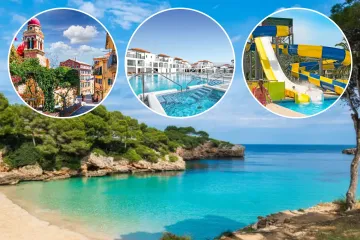
The ‘Venice of the North’ European village where cars are banned
BUSY waterways, beautiful cottages and riverside hotels – this might sound like Venice, but it’s not.
Giethoorn has been compared to the ‘floating’ Italian city but in fact it’s over 800 miles away, and much smaller.
Two hours from Amsterdam in the Netherlands is the village of Giethoorn, a car-free village which has been called a ‘fairytale’ by visitors.
It’s also known as the ‘water village of the Netherlands‘ and has over 55 miles of waterways to explore.
One visitor called it a “beautiful and fairytale village in the Netherlands” and another even said it was “too perfect to be real”.
Another said: “Giethoorn is a dream place that looks like it came straight out of a picture book.”
There are multiple hotels in the village to choose from. One of the most popular is the Giethoorn Old Art Hotel.
With rooms starting from £70, guests can even rent boats to take to the water themselves.
Another is Hotel Giethoorn, where guests can get a very authentically Dutch breakfast with fresh bread and toppings like hagelslag (which are chocolate sprinkles), cheese, or sliced meats.
No cars are allowed in the village, but it can be navigated by foot, or via boats – of which there are many.
These vary from large tour boats which you can hop on, or if you fancy being a captain yourself, self-navigated Whisper Boats can be hired out, as can Sloops, from €17.50 (£15.23) per hour.
Anyone taking the wheel doesn’t need a boating licence, just to be over the age of 16.
There are rules though, and one is that if you’re navigating your own boat and come across a tour boat – you must move out of the way as they have a VIP pass.
Like on the tube, there’s a certain side to stick to, and this is the right.
And anyone on the water cannot be too noisy – there are water police around.
Those wanting to avoid the water, or wanting to see the village at a different angle, can see it by foot.
There are around 180 narrow wooden bridges across the water and from here you can see more of the village’s pretty thatched cottages.
The village is usually quite busy with tourists and is a popular daytrip destination from the city of Amsterdam.
For those who want to stay a little longer without the crowds, the village tends to be quieter after 4pm.
If you fancy a similar experience but with fewer crowds, the nearby village of Dwarsgracht is also navigated via canals but is considered much-less busy than Giethoorn.
To explore both is possible as the villages are just a 10-minute cycle apart.
For more on the Netherlands, here’s the European city that one writer returns to every year and is reachable without having to fly.
US-Israel war on Iran: What’s happening on day 29 of attacks? | US-Israel war on Iran News
Tensions continue to rise with Iran warning a ‘heavy price’ will be paid after Israeli attacks on nuclear and industrial sites.
Published On 28 Mar 2026
President Donald Trump said he is “very disappointed” with NATO’s response to the United States-Israeli war on Iran, accusing the alliance of failing to support Washington despite years of US military spending on its allies.
Meanwhile, Iran warned a “heavy price” will be paid after Israeli attacks on nuclear and industrial sites, with Tehran accusing the US and Israel of “playing with fire” by targeting energy infrastructure. Iran also said there was no radioactive leak following attacks on two nuclear facilities.
The warnings come as fighting and tensions continue to escalate across the Middle East, with growing fears of a wider conflict.
Here is what we know:
In Iran
- Israel hits Tehran: Israel’s military said it launched attacks on Iranian “regime targets” early Saturday.
- Hopes for Iran talks this week: US envoy Steve Witkoff said he expects meetings with Iran “this week” and is waiting for Tehran’s response to a 15-point peace plan.
- Iran pledges “heavy price” for plant strikes: Iran’s Foreign Minister Abbas Araghchi said Tehran would exact a “heavy price for Israeli crimes” after attacks on nuclear sites and two of the country’s largest steel factories.
- Iran feels “forced” into talks: Al Jazeera’s Mohamed Vall, reporting from Tehran, said many Iranians believe they are being pushed into negotiations that are not in their favour, with the sense that “the Americans are bombing their way towards a negotiation table.” Rather than relying on US or Israeli promises, he said Iran is relying on “its missiles, its drones, and the resolve of its soldiers”.
- Russia likely aiding Iran with satellite intelligence: Al Jazeera’s Mansur Mirovalev reported Iran is likely receiving data on US military assets from Russia’s Liana spy satellite system, according to a space programme expert.
War diplomacy
- Trump criticises NATO over Hormuz: Trump said NATO allies “weren’t there” when asked to help secure the Strait of Hormuz, despite the US spending “hundreds of billions” protecting them. “I’ve always said NATO is a paper tiger. And I always said we help NATO, but they’ll never help us.”
- Possible Pakistan meeting: Turkiye said talks with Pakistan, Saudi Arabia, and Egypt could take place in Pakistan this weekend as Islamabad mediates between Iran and the US.
- UN nuclear watchdog urges “restraint”: The International Atomic Energy Agency repeated its call for “restraint” in the Middle East war after Israel struck two Iranian nuclear facilities, including a uranium processing plant.
- “Regime change” unlikely: The war is unlikely to lead to “regime change” in Iran, said German Chancellor Friedrich Merz. “If that’s the goal, I don’t think you’ll achieve it. It’s mostly gone wrong” in past conflicts, he said, pointing to the Afghanistan war.
In the Gulf
- Saudi Arabia intercepts missile: Saudi Arabia said it “intercepted and destroyed” a missile targeting the capital Riyadh. Meanwhile, at least 12 US military personnel were wounded, including two seriously, in an Iranian attack on an airbase in the kingdom, The Associated Press and Reuters news agencies reported on Friday.
- United Arab Emirates: The UAE’s Ministry of Defence reported that air defence systems and fighter jets intercepted and shot down incoming missiles and drones from Iran.
- Kuwait: Though experiencing some slower nights recently, residents in Kuwait say they have grown accustomed to the disruption of alarms sounding throughout the night.
In the US
- US aims to finish war in “weeks”: Secretary of State Marco Rubio said Washington expects to complete its Iran war objectives in the “next couple weeks”, leaving Iran “weaker”.
- US soldiers wounded: More than 300 American soldiers have been wounded since the start of the war on February 28, US Central Command said.
In Israel
- Direct attacks: Israel continues to face significant incoming fire on multiple fronts. Iran launched a missile salvo that struck a busy commercial street in Tel Aviv.
- Man killed: Israeli emergency responders said a man was killed in Tel Aviv on Friday, and several others were wounded across the country after the military reported missiles fired from Iran.
In Lebanon, Yemen, occupied West Bank
- Houthis warn they’ll join the fight: Yemen’s Houthi rebels warned they would enter the war if attacks on Iran continue or if more countries join the conflict. The Houthis have in the past attacked shipping in the Red Sea in response to regional conflicts, but have so far not intervened in this war.
- Israel expands ground war in Lebanon: Israeli troops entered Khiam and clashed with Hezbollah near Tyre as Israel pushes to create a “security zone” up to the Litani River. Hezbollah said it attacked Israeli tanks and fired at a warplane over Beirut.
- Israel cites Hezbollah threat: Al Jazeera’s Rob McBride, reporting from Amman, said Israel is using the threat from Hezbollah in the north to justify expanding its ground incursion into southern Lebanon to push Hezbollah back and create a “buffer zone”.
- Hezbollah escalation: Hezbollah forces have fiercely resisted the Israeli advance, claiming to have carried out 82 operations against Israeli troops within 24 hours.
- West Bank violence continues: Israeli forces killed three Palestinians in the occupied West Bank, including a 15-year-old boy in Dheisheh refugee camp and two men in Qalandiya.
Oil, food, and gas crises
- Strait of Hormuz: To prevent a “massive humanitarian crisis”, the United Nations has established a new task force led by Jorge Moreira da Silva. It aims to ensure ships carrying fertiliser and raw materials can safely cross the strait, warning that maritime trade disruptions could severely affect global agricultural production and humanitarian needs.
- Egypt imposes business curfew: Egypt has ordered shops, restaurants, and shopping malls to close at 9pm (19:00 GMT) from Saturday, hoping to curb energy bills that have more than doubled because of the Iran war.
- Overnight queues in Ethiopia: Many Ethiopians slept in their cars in hours-long queues for petrol as shortages caused by the war began to take their toll. The Horn of Africa country is particularly vulnerable as it imports all its petrol, primarily from the Gulf.
- Tea stuck in Kenya: Between 6,000 and 8,000 tonnes of tea worth $24m is stuck at Kenya’s port of Mombasa because of the war, trade officials said. About 65 percent of the East African tea market has been affected by the war that began on February 28. This is happening because the war is disrupting shipping routes through the Red Sea and the Strait of Hormuz, which are key routes for trade between Asia, the Middle East and Europe.

What happened to Lizzie in Peaky Blinders?
Peaky Blinders fans are curious about the fate of Tommy Shelby’s second wife

Lizzie Shelby doesn’t feature in Peaky Blinders: The Immortal Man(Image: BBC)
Peaky Blinders: The Immortal Man arrived on Netflix recently, however, fans have been left confused by some notable absences.
The movie focuses on Tommy Shelby (played by Cillian Murphy) coming out of exile to save his son Duke Shelby (Barry Keoghan) from a Nazi plot to win WWII.
But missing from Peaky Blinders: The Immortal Man is Arthur Shelby (Paul Anderson), Finn Shelby (Harry Kirton), and Lizzie Shelby (Natasha O’Keeffe) among other major characters. Here’s a look at Lizzie’s fate in Peaky Blinders.
What happened to Lizzie in Peaky Blinders?
WARNING: This article contains spoilers from the Peaky Blinders TV show
Season 6 of Peaky Blinders saw Lizzie finally leaving Tommy after the death of their daughter Ruby (Heaven-Leigh Clee) proved too much. Tommy was nowhere to be found as Ruby lay dying in hospital from consumption.
The gangster was off trying to lift a curse he believed had been put on Ruby after Tommy had given away a cursed sapphire, which was believed to be responsible for the deaths of Grace Shelby (Annabelle Wallis) and another child.
When Tommy returned to Birmingham, he believed he’d managed to lift the curse, but Ruby was already dead. A devastated Lizzie wondered where her husband had been.
Get Netflix free with Sky
This article contains affiliate links, we will receive a commission on any sales we generate from it. Learn more
Sky is giving away a free Netflix subscription with its new Sky Stream TV bundles, including the £15 Essential TV plan.
This lets members watch live and on-demand TV content without a satellite dish or aerial and includes hit shows like Stranger Things and The Last of Us.
To make matters worse, Lizzie was also heartbroken after Tommy slept with Diana Mitford (Amber Anderson). The move saw Tommy trying to win the trust of fascist MP Oswald Mosley (Sam Claflin), but it meant infidelity on his part.
In her parting words, Lizzie said: “You are cursed Tommy. Never to understand the limits that other people will accept.
“Never to be allowed in where everybody else is. Cursed never to be lifted.”
When Tommy said he would be gone for a while, Lizzie showed him her hands empty of wedding rings and said she was “already packed”.
She told him so just wanted to “say goodbye to Ruby”, before she finally left him forever.
Lizzie couldn’t take son Charles Shelby either and told the boy that Tommy wouldn’t allow it. In the movie, it’s revealed that Charles is fighting on the frontline in North Africa.
Peaky Blinders: The Immortal Man is streaming on Netflix now

I doubled the fun on my Italian city break with two incredible cities, just a train ride apart
Why limit yourself to one beautiful, romantic Italian city when you can pack two into the same break and see, discover, enjoy and eat twice as much?

A tale of two cites: how to cover Milan and Venice in one romantic city break(Image: Getty)
Italy has so many fascinating cities to explore and it’s incredibly easy to hop between them, and that’s exactly what I found out on a dual-destination interrail trip to Milan and Venice, reports Abby Wells
With its biannual fashion weeks and designer shops galore, Milan is known as the fashion capital of the world – and as something of a seasoned shopaholic, I was looking forward to discovering its glamorous side. Our base while in Milan was Avani Palazzo Moscova, a historic hotel in the Porta Nuova district that housed the city’s first railway station back in 1840.
Its rooms are chic and modern, with everything you need for a comfortable stay.
READ MORE: This champagne-soaked city is the perfect train-travel alternative to a Paris mini-break
How to cover the classic sights of Milan
A number of experiences can be booked through the hotel, helping to make your stay an unforgettable one. First up for us was a two-hour tour of the city in a vintage Fiat 500, during which our driver, Milan-born Federico, took us to places you wouldn’t normally see.
One hidden gem was Villa Invernizzi, a serene oasis in the middle of the bustling city where you can catch a glimpse of flamingos roaming in the gardens. It was great fun whizzing around with the car’s sunroof open, and a must to get a feel for the city.
The next day we had a personalised cosmetics experience at City Lab Cosmetics, where we got to make our own lipstick. Here experts help you discover a shade suited to your skin colour, and you get to choose the finish, formula, scent and even the shape of your lipstick, and see it being made from scratch in the lab – a unique experience.
Then, finally, we got to do some shopping, courtesy of an expert-led tour around some of Milan’s best vintage boutiques. It started with the bargain ones, where I picked up a gorgeous little black bag for five euros, before finishing in a more upmarket store filled with Chanel dresses and Gucci bags (sadly out of my price range).
All the sightseeing certainly helped me work up an appetite and the food I had in Milan was delicious. I mainly stuck to the Italian staples of pasta and risotto. Avani Palazzo Moscova’s restaurant specialised in fish, but our tiramisu, made at the table, was a particular highlight.
Another restaurant definitely worth a visit is Osteria del Gambero Rosso, barely a five-minute walk from the hotel and where the friendly atmosphere made for a really special evening.
Fitting Venice into the same trip
Then it was on to our next stop, Venice, a speedy and easy two-hour train ride away. We walked out of the station to a postcard-worthy view of the canal in all its glory, with gondolas and water taxis going up and down the waterways. It felt like walking onto a film set.
A short walk away was our hotel, Avani Rio Novo Venice, which is tucked away in a sought-after neighbourhood where Venetians actually live, away from the main tourist drag. Here I enjoyed kicking back and enjoying the views of the canal through my room’s floor-to-ceiling windows.
How to cover the classic sights of Venice
As it was my first time in Venice, a gondola ride was top of my hit list and it didn’t disappoint. Our gondolier was lovely, happily entertaining us with facts and answering all our questions. One top tip is to make sure you have cash on you, as it’ll often mean you pay a bit less – and the more of you there are, the cheaper it is. As in Milan, the Avani hotel here can book various experiences to show off the best of Venice.
First, we paid a visit to Lunardelli Venezia, a workshop specialising in making wooden furniture and objects. Here we saw the intricate processes behind creating the exceptional designs and also had a go at crafting a piece ourselves.
The hotel also arranged a water taxi to the interconnecting Murano islands, an area known for its glass-making workshops.
The one we visited even supplies beads for Milan Fashion Week. Here we learnt to make our own beads to take home as a one-of-a-kind souvenir. I couldn’t wait to wear mine on a necklace.
Another must-visit in Venice is St Mark’s Square and we made our way there through narrow alleys and over the historic Rialto Bridge, which crosses the Grand Canal at its narrowest point. Obviously popular, it was very busy, but getting to St Mark’s Square as the sun was setting had a magical feel.
Both of these iconic cities exceeded all my expectations, and the country’s excellent rail network makes city-hopping a smart option when planning your next Italian escape.
Booking the two breaks
Single rooms at Avani Palazzo Moscova Milan Hotel start from £205 per night. Standard rooms at Avani Rio Novo Venice Hotel start from £167 per night.

High school baseball and softball: Friday’s scores
Friday’s Results
BASEBALL
SOUTHERN SECTION
AAE 14, Silver Valley 0
Alhambra 4, Bell Gardens 1
Arcadia 5, Pasadena 0
Arlington 6, Heritage 2
Ayala 9, Glendora 2
Baldwin Park 6, Duarte 5
Banning 9, Desert Hot Springs 0
Bishop Amat 3, St. Bernard 0
Buena 9, Ventura 7
Buena Park 5, Segerstrom 4
Burbank Burroughs 6, Muir 2
Camarillo 4, Moorpark 2
Cantwell-Sacred Heart 10, Bosco Tech 0
Canyon Springs 17, Perris 0
Capistrano Valley 5, El Toro 4
Castaic 2, Golden Valley 1
Cerritos 5, Artesia 1
Citrus Hill 2, Lakeside 0
Compton 3, Long Beach Jordan 2
Cornerstone Christian 11, Packinghouse Christian 0
Corona 8, Corona Santiago 3
Costa Mesa 7, Laguna Hills 1
Crespi 3, Hart 1
Cypress 5, Santa Ana Foothill 3
Desert Christian Academy 8, San Jacinto Leadership 2
Diamond Bar 6, Garey 0
Downey 5, Claremont 1
Downey Calvary Chapel 15, Fairmont Prep 1
Edgewood 15, Bassett 0
El Segundo 21, South Torrance 2
Estancia 8, Westminster La Quinta 0
Firebaugh 8, Lynwood 3
Fountain Valley 1, Corona Del Mar 0
Fullerton 7, Ocean View 4
Garden Grove 11, Westminster 4
Garden Grove Santiago 15, Santa Ana Valley 12
Glenn 14, Whitney 0
Grace 12, Cate 3
Great Oak 7, Vista Murrieta 7
Hesperia 10, Serrano 3
Hillcrest 3, Orange Vista 2
La Habra 5, El Dorado 4
Lakewood 3, Long Beach Wilson 2
La Mirada 5, Gahr 3
La Salle 4, Gardena Serra 0
Los Alamitos 2, Marina 0
Los Amigos 2, Western 1
Lucerne Valley 14, Victor Valley Christian 3
Malibu 9, Nordhoff 0
Maranatha 12, Heritage Christian 0
Millikan 7, Long Beach Poly 0
Mira Costa 6, Sherman Oaks Notre Dame 2
Monrovia 4, La Canada 1
Montebello 10, Mark Keppel 0
Murrieta Mesa 15, Murrieta Valley 2
Newbury Park 7, Oaks Christian 6
Newport Harbor 2, Edison 1
Nogales 17, Azusa 5
Norco 10, Bonita 0
Oak Hills 16, Apple Valley 7
Orange 13, Saddleback 1
Oxnard 5, Santa Barbara 3
Palm Springs 20, Glendale 0
Paloma Valley 7, Liberty 2
Palos Verdes 6, West Torrance 1
Paraclete 12, St, Anthony 2
Paramount 14, Dominguez 0
Pasadena Marshall 14, Mountain View 4
Placentia Valencia 14, Godinez 0
Pomona 15, La Puente 5
Rancho Christian 11, Valley View 4
Rancho Verde 12, Hemet 2
Redlands East Valley 8, Kaiser 1
Redondo Union 3, Torrance 2
Ridgecrest Burroughs 13, Sultana 8
Rim of the World 5, Excelsior Charter 3
Rio Mesa 2, Oxnard Pacifica 0
Riverside Poly 9, Moreno Valley 2
Rosemead 27, El Monte 0
Rowland 7, Montclair 2
Royal 17, Oak Park 0
San Juan Hills 3, Mission Viejo 1
San Marcos 6, Dos Pueblos 3
Santa Monica Pacifica Christian 8, Animo Leadership 0
Santa Paula 12, Channel Islands 1
Servite 5, Santa Margarita 4
Shalhevet 16, Valley Torah 3
South El Monte 3, Gabrielino 1
South Pasadena 4, West Covina 3
St. Pius X-St. Matthias Academy 11, Verbum Dei 1
Sunny Hills 4, Troy 3
Temecula Valley 8, Chaparral 3
Tesoro 3, Aliso Niguel 3
Thousand Oaks 16, Calabasas 4
Trabuco Hills 11, San Clemente 4
Valencia 15, Saugus 3
Valley Christian 12, Village Christian 1
Westlake 2, Agoura 1
West Ranch 7, Canyon Country Canyon 5
Whittier 8, Pioneer 4
Yorba Linda 14, Esperanza 5
INTERSECTIONAL
Capistrano Valley Christian 14, Layton 9
Douglas 6, Citrus Valley 5
Garfield 4, La Serna 3
Grand Terrace 6, Douglas 4
Orange Lutheran 2, Casteel 1
Sierra Canyon 10, Granada Hills 2
St. John Bosco 11, Trinity Classical Academy 6
Viewpoint 10, Monroe 0
Wilsonville 2, Katella 1
SOFTBALL
SOUTHERN SECTION
Bolsa Grande 15, Westminster La Quinta 8
Cathedral City 25, Desert Mirage 7
Colony 1, Ontario 0
Dos Pueblos 8, San Marcos 0
Edgewood 16, Bassett 0
El Monte 10, Rosemead 0
Estancia 2, Saddleback 0
Garden Grove Santiago 10, Los Amigos 9
Mira Costa 10, Peninsula 6
Nogales 19, Baldwin Park 7
Orange Lutheran 11, Mater Dei 1
Paloma Valley 22, Moreno Valley 2
Rancho Alamitos 6, Orange 1
San Marino 19, Immaculate Heart 0
Santa Ana 8, Godinez 0
Santa Margarita 1, JSerra 0
Segerstrom 6, Placentia Valencia 0
South Torrance 15, Bishop Montgomery 1
Ventura 8, Buena 7
Villa Park 12, Don Lugo 2
Vista del Lago 25, Perris 6

US Secretary of State says war could conclude in ‘weeks, not months’ | US-Israel war on Iran
After attending a meeting of the G7 in France, US secretary of state Marco Rubio told reporters that the US is seeking to achieve key war objectives and conclude the war in a matter of weeks rather than months.
Published On 28 Mar 2026

Trump claims Iran wants to ‘make a deal’ | Donald Trump
US President Donald Trump said Iran is ‘being decimated’ and signaled that talks are underway, claiming Tehran is seeking a deal while praising the strength of the the US military.
Published On 28 Mar 2026
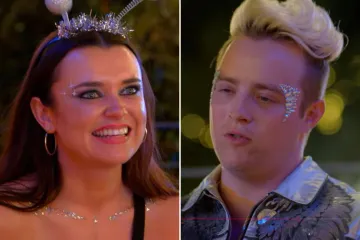
Jedward singer hard launches romance with stunning new girlfriend ahead of Celeb Ex on the Beach stint
JEDWARD star John Grimes hard launched his new girlfriend on social media today, and she’s absolutely stunning.
It comes just before the singer is due to appear on Celebrity Ex On The Beach.
Taking to the official Jedward Instagram page that he shares with twin brother Edward, John shared some cosy snaps of himself with his lady on a day out in London.
In the photos the loved-up duo are standing in front of the iconic Tower Bridge.
The beautiful brunette rests her hand on John’s chest while he wraps his around her waist.
The happy couple beam at the camera, both dressed up with sparkles as the sun sets.


John is wearing a pair of silver sequin trousers with a matching black jacket with silver accent details.
Meanwhile his girlfriend is wearing a pretty pastel blue dress with large round sequins clinging to the skirt.
Penned sweetly in the caption, John romantically said: “Here’s to a new chapter and making memories with the best girl xxx.”
Fans of the star rushed to the post’s comments section to share their congratulations and wish the pair lots of happiness.
One user said: “So happy for you.”
A second shared: “Wishing you both all the best!,” followed by emojis of a heart and a sparkle.
A third added: “Congrats! Wishing you and this lovely lass all the best!”
A fourth said: “10 year old me would’ve cried my eyes out at this back in 2009.”
John’s time on Celeb Ex On The Beach will mark his first professional project away from his twin brother.
In the first-look at the new episodes, John is stunned to be reunited with former flame Sarah Carragher – but it’s not long before they pick up where they left off.
He tells her: “No one really ever came close to what we had.”
John and Sarah are then seen kissing, suggesting the shock reunion was a successful one.
While he’s never publicly spoken about his relationship with Sarah, John previously revealed he prefers to keep his private life separate from his work after shooting to fame on The X Factor in 2009.
He said in 2017: “I’ve had two long-term relationships that were private. That wasn’t part of my career.”

The EU’s recipe for trade deals : easy on beef, tough on wine
Three deals across three key regions : Mercosur, India and Australia.

ADVERTISEMENT
ADVERTISEMENT
While the Commission hailed the Australia agreement as a new geostrategic win, EU farmers continue to express deep discontent stemming from the Mercosur deal.
In practice, the backlash around the agreement with Argentina, Brazil, Paraguay and Uruguay has done little to shift the Commission’s dual approach in its negotiating line. On the one hand, the commission kept making concessions on entry-level or mid-range farm goods such as beef, while on the other hand, it pushed for market access for high value-added exports —like wine, Geographical Indications (GI) and cars— with mixed results.
“The EU has all the assets to be an agri-food power,” Luc Vernet, from the export-focused brussels think tank Farm Europe, told Euronews, adding: “We should develop a broader strategy beyond high value-added products, covering all sectors and all levels of quality, because the European model delivers exceptional quality not just in luxury products.”
Yet the opposition to the Latin America deal — which triggered a legal challenge suspending its ratification — crystallised among EU farmers over fears of unfair competition from meat imports.
The Mercosur agreement granted quotas of 99,000 tonnes of beef per year, 25,000 tonnes of pork and 188,000 tonnes of poultry. Despite conditions added to new quotas in the Australia deal, EU farmers complain of imports piling up across successive agreements.
Concessions made on beef
Over eight years of talks with Canberra—the world’s second-largest beef exporter—Australia pushed hard for greater access for beef and sheep meat. Tensions intensified in 2023, when negotiations broke down after the EU rejected Australia’s demand for 40,000 tonnes of beef per year, offering no more than 30,000 tonnes instead.
The final deal agreed Tuesday allows 30,600 tonnes of beef annually into the EU. For sheep and goat meat, Brussels accepted a 25,000-tonne duty-free quota, while sugar was limited to 35,000 tonnes of raw cane for refining and rice to 8,500 tonnes a year.
However, perhaps drawing lessons from Mercosur, Brussels imposed multiple conditions on the quotas. Beef imports, which will have to be from grass-fed cattle, will be phased in over 10 years, sheep meat over 7 years, and rice over 5 years. Sugar will also be subject to certification under a private sustainability scheme.
Safeguard clauses, allowing both sides to react to market disruption, will apply for seven years – but are extended for sensitive farm goods : 15 years for beef, 12 for sheep and 10 for rice.
But a farmers’ representative told Euronews there were serious doubts about the effectiveness of the safeguard mechanisms: “Our experience in general with safeguards is that they are extremely difficult to activate because the burden of the proof is on us, farmers.”
The offensive agenda of the Commission
By contrast, agriculture was far less contentious in the India negotiations, where New Delhi itself resisted opening its market due to domestic farm sensitivities, particularly in dairy. EU sensitive products were largely excluded.
But wine featured prominently on Brussels’ offensive agenda, with Indian tariffs cut from 150% to 20% for premium wines and 30% for mid-range products over seven years. Tariffs for cars will also fall from 110% to 10% but under a quota of 250,000 vehicles a year after a decade – by which point Chinese manufacturers have great chances to have strengthened their position.
In negotiations with Australia, the EU again sought greater access for its wine but encountered strong opposition from domestic producers. In the end, the deal protects more than 1,600 EU wine GIs, plus over 50 new ones from 12 member states.
On Prosecco, Australian producers will still be allowed to use the term domestically to designate a grey grape variety, provided it is linked to Australian GI, with Canberra agreeing to stop exporting such wines after 10 years.
The EU also secured protection for 165 agri-food GIs and 231 spirit drink GIs. But it failed to remove Australia’s luxury car tax, securing instead preferential treatment for EU electric vehicles. But Brussels won improved access to critical raw materials – a key EU demand, that may have lead to more concessions on meat.

Japanese Grand Prix: Kimi Antonelli beats George Russell to Suzuka pole
Antonelli’s first lap in the final session was 0.298secs quicker than Russell’s. He was on course to improve on his final run but locked up into the hairpin and lost time.
The 19-year-old Italian said: “Super happy with the session. It was a good one, a clean one. And I felt very good in the car and every run I was just improving and improving.
“Shame about the last lap after a lock-up in Turn 11 but it was a good one before that.”
Antonelli became the youngest driver to take pole position in history in China and is emerging as a serious threat to Russell in the championship – they start the race separated by four points, less than the margin between first and second places in a grand prix.
Russell, who was complaining of a lack of rear grip throughout qualifying, was quicker than Antonelli in the difficult first sector of the lap but lost out over the rest.
“Really strange session,” the Briton said. “We were both very fast all weekend. We made some adjustments after final practice and in this qualifying we were nowhere so we have to try and understand.”
Piastri, meanwhile, was pleased with the obvious progress McLaren have made this weekend, during which they have for the first time been in the mix with Ferrari as the closest challengers to Mercedes.
“We have looked good all weekend,” said the Australian, who is yet to start a grand prix this season after a crash on the reconnaissance lap in Australia and a battery failure in China before the start.
“We don’t have the pace to match Mercedes still but we are getting closer.”

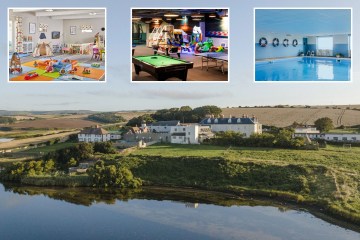
Five UK destinations with loads of cheap and FREE family attractions
WHEN you book a £9.50 Holiday, you get the added bonus of all the fun family events and activities available on-site.
But sometimes you fancy venturing out as a family to explore the area, and luckily, these resorts have plenty to see and do out and about.
Plus you don’t have to blow the budget by leaving the park – there’s loads of free and cheap things to do as a family.
Hols from £9.50 are set to be restocked this Tuesday, with thousands of new holidays AND new holiday parks – and you can get priority access with Sun Club.
If you fancy signing up to Sun Club to access the £9.50 Hols deals early, head to thesun.co.uk/club and join for £1.99 a month or £12 for a year.
Once you’re a member, go to the Sun Club Offers hub and find the Hols From £9.50 page.
Read more on £9.50 holidays


Follow the link from the offers page, and you can book your break from midnight on Tuesday, March 31.
Whether you’re a family full of mini outdoor explorers, rail enthusiasts or older teens who love a thrill ride, we’ve rounded up some of the most affordable family days out at top £9.50 UK holiday destinations.
Here’s our pick of UK holiday spots with plenty of affordable attractions and day trips to enjoy, close to £9.50 holiday parks.
Kent
Kent makes for a fantastic family holiday destination, not just for its beautiful beaches and unspoilt outdoors, but for the range of cheap attractions and museums it offers, too.
If you holiday at Harts on the Isle of Sheppey, you’ll have some of Kent‘s most unspoilt nature on your doorstep.
What better place to re-wild with the kids than by taking a walk over saltwater marshes that are home to local wildlife.
The Swale National Nature Reserve fills the southeast of the Isle of Sheppey, with flat landscapes that make cycling its routes a breeze for the whole family.
Stop to take in the views of coastal marshland home to creatures such as rare butterflies, and birds of prey like Marsh Harriers.
The reserve is completely free to enter.
Over in Dymchurch, families can stay at Romney Sands, Marlie or New Beach – three seafront resorts that are built for families.
Dymchurch beach make for the ideal afternoon walk full of fresh sea air. Kids can enjoy rockpooling, building sandcastles and perhaps finding a buried fossil.
Over in Whistable, Alberta is a £9.50 holiday park with plenty to do nearby.
For an affordable indoor option, the Whitstable Community Museum is a family-friendly attraction bursting with hands-on activities for kids.
Dedicated volunteers show kids the ‘wonders of Whitstable’, like the invention of the diving helmet.
Adult tickets are only £3 each and children are free with an accompanying paying adult.
Or if it’s a sunny day, what nicer activity than a family picnic?
At the top of a winding hill overlooking the sea, Whitstable Castle provides the perfect backdrop to lay out the picnic blanket.
Enjoy a leisurely stroll through the perfectly-manicured gardens, and let the kids sail the high seas in the hidden gem pirate-themed play area, Dollar Dan’s Tankerton Cove. Sometimes the castle even puts on events.
Best of all, entry to the grounds is completely free!
And if you fancy checking out New Romney, train enthusiasts are in for a real treat at New Romney Station.
Not only can they watch the collection of traditional steam locomotives come and go, the station itself is home to a massive interactive model railway exhibition.
Construction of the model railway started in 1973, and has been running for 270 days each year since.
Kids will love watching these tiny trains travel a remarkable 3.5 miles a day. Entry for children is only £2 and £4 for adults.
Take your pick from five £9.50 holiday resorts in Kent.
Lincolnshire
Lincolnshire boasts a wide range of attractions and activities that the whole family will enjoy.
Budding naturalists in the family will love exploring some of Lincolnshire’s wildlife attractions.
Sun reader Linda McDonnell, 71, from Lincoln, recommends the Mablethorpe Seal Sanctuary and Wildlife Centre, saying: “It’s very interesting – and there is more than seals to see.
“You also have other animals like parrots (Australian cockatiels), lemurs and reptiles.”
If you fancy getting outdoors in nature, Hubbard’s Hills is a fantastic free option for families holidaying in Lincolnshire.
The outdoor area of natural beauty is just under 30 minutes from £9.50 resorts Southview Holiday Park and Parkdean Sunnydale.
Sarah Al-Aidi, General Manager at Southview Holiday Park said: “Woodhall Spa is a former spa town with a really beautiful place called Hubbard’s Hills.
“It’s a real beauty spot with great picnic areas, dog walking trails and nature walks“.
Here, families can while away the day by splashing in rivers, taking nature walks or visiting the cafe, which has a play area for kids.
There are also plenty of hills for kids to burn off their energy by climbing and playing.
Hubbard’s Hills is totally free to visit, so if you take a picnic you can enjoy a free family day out. However if you’re driving, parking costs £1.
Of course no trip to the Lincolnshire seaside would be complete without a visit to Skegness.
Sun Hols from £9.50 offers four affordable resorts in the area: Southview, The Chase, Golden Anchor and Golden Palm Resort.
Simply enjoy a free day out on the beach and strolling the bustling promenade, or if you have pocket money to spend, load up an iCard with £5 to use the tokens on rides at Fantasy Island.
The park has thrilling rides for the whole family, from white-knuckle roller coasters to Dodgems, water flumes and carousels.
There’s also ten-pin bowling and crazy golf to help keep your whole brood entertained all day.
For some nature away from the noise, a fantastic free-to-visit option is the unspoilt Gibraltar Point Nature Reserve.
Here there’s walking trails, dunes, and bird watching, all located just a short drive south of the town.
Take your pick of from 9 Hols from £9.50 resorts in Lincolnshire.
Sussex
If you’re eyeing up a £9.50 family holiday to Sussex, you’ll be happy to hear that there’s plenty to keep the whole crew entertained.
Of course, you can easily spend your time on the beautiful beaches, which don’t cost a penny to visit.
Camber Sands in East Sussex is a perfect pick for families, the Blue Flag rated beach being home to calm waters and soft sands practically made for buckets and spades.
Plus with Parkdean Resorts Camber Sands on the seafront, you’ll only be steps away from your lodge or caravan down to the shore.
But if you’ve already had your fill of beach trips, then there’s a whole raft of family-friendly activities nearby.
Georgie Radford-Brown, Assistant Guest Experience Manager at Camber Sands Holiday Park recommends Rye Water Sports.
She said: “It’s an action water park that’s really close to us. They have a variety of water sports, like sailing, kayaking and stand-up paddle boarding.”
The location will also put parents’ minds at eas, as lessons take place on a safe inland lake between Rye and Camber Sands.
The centre runs everything from board hire (from £20) to holiday clubs for children aged eight to 15 (one day from £85 including sailing, windsurfing and paddle boarding).
Meanwhile, in West Sussex, Hols from £9.50 resort Chichester Lakeside has practically more water than land, with 10 fishing lakes spread across 150 acres.
But if that’s not enough, it’s only an 8-minute drive from the resort to Chichester Watersports.
Here there’s an aqua park complete with inflatable slides. Suitable from age seven, a 50-minute session costs £20.
For another activity that will burn energy without burning a hole in your pocket, head to one of the brilliant cycle paths in Sussex.
If you have your own bike, they are also completely free to explore, and the traffic-free terrain also works well for families with prams.
The South Coast East route takes you along the seafront – you could start at Worthing and extend it to Shoreham, Lancing or Brighton depending on how far you want to go.
Alternatively, start at Shoreham-by-Sea and head inland past woods, streams and rivers on the Downs Link.
If you can’t bring your own bikes, hire a Donkey Bike via the app (from £1.80 for 30 minutes), or try Riverside South Downs who rent bikes from £20 for two hours.
Take your pick from six £9.50 holiday resorts in Sussex.
All the ways to book a holiday from £9.50
There are five routes to book our Hols From £9.50
Book online: Simply collect codewords printed in The Sun paper up until Wednesday, April 1. Then enter them at thesun.co.uk/holidays to unlock booking from April 1.
Book with Sun Club: Join Sun Club at thesun.co.uk/club for £1.99 per month or £12 for the year. Go to the Sun Club Offers hub and click through to the Hols from £9.50 page. You do not need to collect any codewords or Sun Savers codes. Booking opens for Sun Club members on Tuesday, March 31.
Book with Sun Savers: Download the Sun Savers app or register at sunsavers.co.uk. Then go to the ‘Offers’ section of Sun Savers and click ‘Start Collecting’ on the ‘Hols From £9.50’ page. Collect TWO Sun Savers codes from those printed at the bottom of the Sun Savers page in the newspaper up until April 1. Then enter or scan the codes on Sun Savers to unlock booking.
Book by post: Collect TWO of the codewords printed in The Sun each day up until Wednesday, April 1. Cut the codeword out and send it back with the booking form – found in paper on April 1 or online at thesun.co.uk/holidays.
Book with The Sun Digital Newspaper: Sign up to The Sun Digital Newspaper at thesun.co.uk/newspaper. Then download the Sun Savers app or sign up at sunsavers.co.uk, log in to Sun Savers with your Sun account details (the same email and password you use for your Digital Newspaper) and enjoy automatic access to Hols, without the need to collect Sun Savers codes daily. Booking opens on April 1.
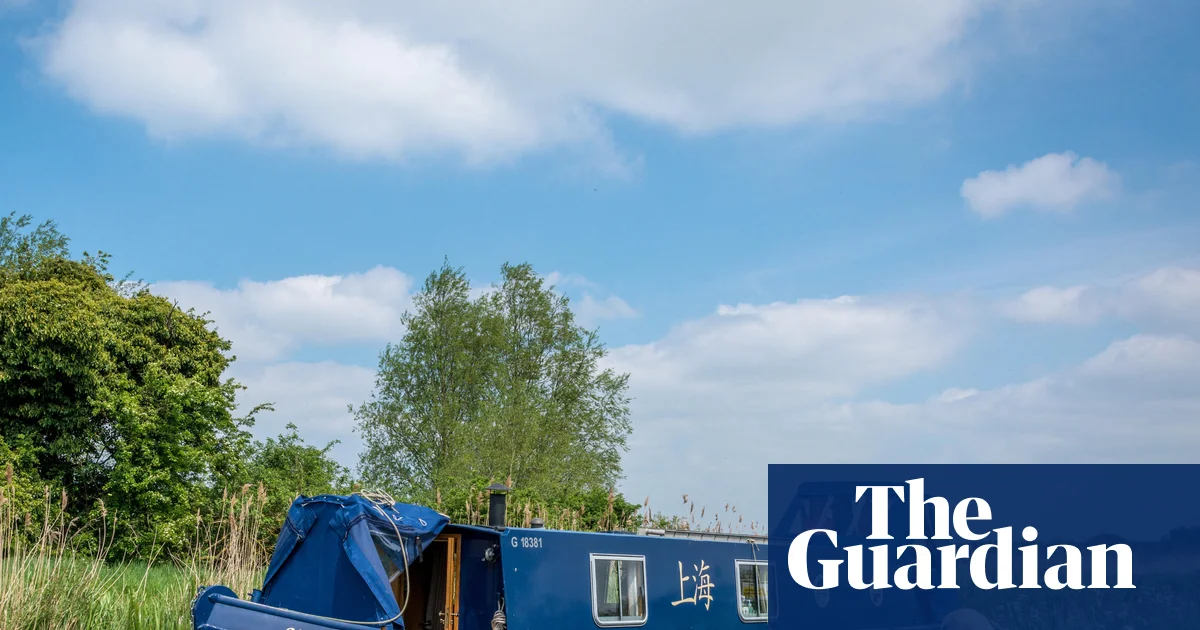
20 fabulous family spring days out in the UK | Day trips
Birding in the fens near Ely
Spring has arrived at Wicken Fen, one of Europe’s most important wetlands, and with it the first summer migrants. Chiffchaffs are usually the earliest, with their rhythmic song ringing out across the fens. Then, if the weather is mild, blackcaps and willow warblers might join them. Listen closely, especially early morning or at dusk, for the foghorn-like calls of the booming bittern across the reedbeds. There’s a pushchair- and wheelchair-friendly boardwalk around Sedge Fen, and wheelchair-accessible wildlife hides. Look out for the electric blue flash of a kingfisher, and male marsh harriers performing their dramatic sky-dancing flights as the breeding season gets under way, before the cuckoos arrive in late April.
From £10 adults, £5 children (under-5s free), nationaltrust.org.uk
Artful planting in East Sussex
When Dan Pearson created the landscape design at Goodwood Art Foundation sculpture park, which opened last May, he planned 24 seasonal moments to complement the art-dotted trails through woodland, glades and meadows. This is the first spring visitors will see his graphic plantings of daffodils and bluebells, cherry blossoms and the katsura grove coming into copper-coloured leaf. Over the Easter holidays, children can pick up a free Art in Nature pack to create rubbings and collages inspired by the shapes and textures.
There is artful nature of a different kind at nearby Petworth’s spring festival, with more than 100 pots of spring bulbs in flower, willow foraging and basket making workshops, and other garden-themed kids’ activities.
Goodwood Art Foundation, £15 adults, under-18s free, goodwoodartfoundation.org. Spring festival at Petworth, from £21 adults, £10.50 children (under-5s free), 4-19 April, nationaltrust.org.uk
Feast by the sea in Kent
From Italian small plates in Margate to Japanese ramen in Deal, the Kent coast has upped its foodie credentials. Dig in at the Broadstairs food festival, which pops up on the seafront over Easter (3-5 April). There’s a delicious lineup of chefs, street food stalls and local artisan producers, plus food-themed arts and crafts workshops, from chocolate lollipop making to screen printing napkins with fig, oyster, crab or seaweed designs. Broadstairs is a treat to eat your way around anytime, with seafood at Kebbells, tapas at Bar Ingo and, of course, a sundae at Morelli’s Formica-tastic ice-cream parlour.
Free entry, 3-5 April, broadstairsfoodfestival.org.uk
Treetop thrills and stargazing in the Lake District
The deep dark woods at Grizedale Forest in the Lake District offer an action-packed day out for families, with Go Ape treetop thrills, adrenaline-pumping mountain biking and sculpture-filled walking trails (including a Gruffalo orienteering route and a Room on the Broom nature walk for Julia Donaldson fans). Now you can add stargazing to the list. The new Grizedale Observatory opened last May, the Lake District’s first public observatory and planetarium. There are family sessions every Saturday at 4pm, where budding astronomers can touch real meteorites and watch a show in the planetarium. Easter holiday events include Jupiter viewings, aurora nights and afternoon planetarium shows.
Grizedale Forest, free (bar Go Ape), forestryengland.uk. Observatory events, from £13 adults, £8 children, grizedaleobservatory.com
See grand designs and baby lambs in North Yorkshire
Sir John Vanbrugh was a playwright with no architectural experience when he was commissioned in 1699 to build a massive new house for a fellow Kit-Cat Club member, the Earl of Carlisle. It would be fair to say that Castle Howard was a decent first stab. In celebration of the tercentenary of its creator, there are new tours giving unprecedented access to areas of the house, follies and monuments not usually open to the public. Plus you can meet baby lambs born on the estate at the magical Skelf Island adventure playground (4 and 5 April).
Garden tickets, which include Skelf Island, from £17 adults, £8.50 children (under-3s free), castlehoward.co.uk
Woodland blooms in Cornwall
Each year, six champion Magnolia campbellii are eagerly watched in six of the Great Gardens of Cornwall, including the Eden Project. The moment they come into full bloom (counted as 50 flowers), spring is declared to have officially arrived in England. This year it happened on 27 February. The Gulf Stream helps hurry the start of the season along here, and means you may see a few bluebells popping their heads up in the Easter holidays. Tehidy woods is famous for its carpets of bluebells – the first were spotted in early April last year. That will be just in time for fantastical theatre company Rogue Otherworld’s Wild Awake show, which weaves between the trees telling the story of the forest awakening, guided by the Wild Spring Hare.
Wild Awake show, £10-£15 adults (pay what you can; under-3s free), 3-6 and 8-12 April, rogueotherworld.co.uk
Poohsticks in Ashdown Forest
It’s the 100th anniversary of AA Milne’s Winnie-the-Pooh this year, so good reason to follow the honey-loving bear and his friends down to the real-life Hundred Acre Wood in Ashdown Forest. Milne wrote the children’s classic at Cotchford Farm (now a holiday rental) on the edge of the forest, where he lived with his wife and his son, Christopher Robin. Follow the Pooh Walks (0.6 or 2 miles) from Gills Lap to trace out spots from the book, including The Enchanted Place, the Heffalump trap and Roo’s sandy pit. Don’t leave without playing a game of poohsticks on the Poohsticks Bridge. Pooh fans can plot a return trip for the summer holidays to catch The Big One Hundred celebration, which will include a giant puppet roaming through the woods, interactive performances and five new walking routes.
Free, ashdownforest.org
A wild coastal walk in County Antrim
The walkways, bridges and steps that make up the Gobbins cliff path cling to sheer basalt rock, the waves crashing below. This elemental trail was built by the railway engineer Berkeley Deane Wise in 1902, and now can only be followed on 2.5hr guided tours, which have been paused since last year due to rockfall. They are due to restart on 20 March, and it’s a thrilling stop on the Causeway Coastal Route. Alternatively, the Blackhead Path is almost as dramatic and free, starting at nearby Whitehead. The route hugs the coast past smuggler’s caves and rocky coves, before taking the steep steps up to the clifftop Blackhead Lighthouse. A Mauds ice-cream at Coastal Coffee back in Whitehead is just reward for the climb.
£22.75 adults, £16.50 under-16s (minimum 4ft tall, roughly seven years old), thegobbinscliffpath.com
Relive Springwatch in the Peak District
Last year, BBC’s Springwatch was based at the Peak District’s Longshaw Estate. Over the weeks of live broadcasts, Chris Packham and Michaela Strachan spotted short-eared owls feeding voles to their chicks, kept an eye on pied flycatcher nests, and tracked hares, deer and a host of other wildlife across the estate’s habitats. The Padley Gorge and Burbage Brook walking route is particularly good in spring, winding past the pond to the ancient woodland of Padley Gorge, with its twisting oak trees and moss-covered boulders. Back out on the meadow, watch for birds of prey overhead – buzzards, red kites, peregrine and kestrels – and adders emerging from hibernation in the grass (so dogs need to stay on leads).
Free, nationaltrust.org.uk
Go mudlarking on the Thames
For a hands-on dig into London’s history, try one of the Thames Explorer Trust’s In the Footsteps of Mudlarks tours. Normally anyone searching the river’s foreshore needs a permit from the Port of London authority, which has a waiting list running into the thousands. These two-hour guided tours give combers the chance to temporarily jump the queue, with archaeology experts on hand to help find and identify surface artefacts – maybe smoking pipes, pottery or even bones. Children over eight can join regular scheduled tours, while during the school holidays there are special family sessions (aimed at ages 5-12) meeting at the Brunel Museum in Rotherhithe.
Children’s Footsteps of Mudlarks tour, £30 adults, £17 under-12s, on 4, 7, 9 April, thames-explorer.org.uk
Take a seabird safari in North Berwick
Off the coast of North Berwick, the Bass Rock is home to the world’s largest colony of northern gannets. After spending the winter in warmer seas, the birds, with their distinctive black wingtips and yellow heads, return in February. Boat trips from the Scottish Seabird Centre restart in late March, and range from exhilarating RIB “seafaris” to gentler catamaran cruises, which loop around Craigleith (home to almost 10,000 breeding puffins) and Bass Rock, sometimes accompanied by dolphins and seals. Back on dry land, the centre has live wildlife cameras, as well as exhibits, games and films, or join a spring beach clean (10 April) along the sand.
Boat trips, from £32 adults, £15 children (3 and under free); Scottish Seabird Centre Discovery Experience, £13.50 adults, £9 children (under-3s free), seabird.org
Join the Famous Five in Dorset
“In the very middle … on a low hill, rose the ruined castle,” wrote Enid Blyton in the first Famous Five adventure, Five on a Treasure Island. Blyton holidayed for decades on Dorset’s Isle of Purbeck, and the imposing remains of Corfe Castle are believed to be the inspiration for Kirrin Castle. The most storybook way to arrive is in the vintage carriages of the Swanage Railway, which the author herself took, chugging through the countryside in a plume of smoke and steam. Try to catch the new Magic Faraway Tree film (out now) at a cinema to complete the Blyton jolly.
Swanage Railway, from £14 adults, £7.50 children (under-5s free) one way, swanagerailway.co.uk
Iron age living at Loch Tay
Back in the iron age, crannogs – roundhouse settlements built on artificial islands of stone and timber – would have been a common sight on lochs across Scotland. Their remnants have been remarkably preserved thanks to being buried beneath the cold, dark, peaty waters. The remains of 17 have been found in Loch Tay alone, and on its shores the Scottish Crannog Centre reconstructed these ancient structures in an immersive living museum, until it was destroyed by fire in 2021. It reopened nearby in 2024, and this spring will complete its first new crannog. To celebrate, join The Crannog is Hatching event on 4-5 April, exploring the traditions of birth and renewal, with springtime foods in the Feasting Hall.
£15 adults, £10 children (under-5s free), crannog.co.uk
Dive into art near Edinburgh
At the Scottish sculpture park Jupiter Artland, you can get a unique perspective on two of its works of art – by swimming in them. Joana Vasconcelos’s wiggling, vibrantly coloured Gateway pool and Charles Jencks’s Teletubbyland-like Cells of Life are open to bathers. Gateway is created from 11,366 hand-painted Portuguese tiles, and is bookable for half hour sessions from 2 April. Jencks’s lakes, surrounded by undulating grassy landforms, are open for swimmers every Sunday from 11am to 12pm (both over-3s only). There are pieces by Tracey Emin, Antony Gormley, Anish Kapoor and Andy Goldsworthy elsewhere in the 120-acre park, which is a half-hour drive from Edinburgh. Budding artists can also give it a go in the Make Studio, filled with materials – an invitation to get messy with paint, clay and more.
From £11.80 adults, £7.50 children (3 and under free; swims included in ticket price but must be prebooked), jupiterartland.org
Find dragons in Caerphilly
Wales’s largest castle, Caerphilly, reopened last July after a two-year, £8m renovation by Cadw, the Welsh government’s historic environment service. Built in the 13th century, the whole stronghold covers about 12 hectares (30 acres), with wide water defences, hulking great walls, stern-looking gatehouses and a leaning tower that’s even more leaning than Pisa’s (reputedly the result of gunpowder damage during the civil war). The most head-turning of the recent upgrades is the Great Hall dining room, now dressed for its medieval heyday. Elsewhere interactive exhibits bring the castle’s long history to life, and a family of giant, smoke-snorting (animatronic) dragons live in a lair beside the moat.
£12.90 adults, £9 children (under-5s free), cadw.gov.wales
Ride a carousel in Flintshire
On Saturday 4 April the grounds of the Hawarden Estate will be filled with vintage fairground rides for its Great Easter Show – the ferris wheel spinning, the carousel cranking out the waltz and squeals coming from the red-and-white-striped helter-skelter. Alongside there are circus skills workshops, a dog show, craft sessions and an egg-and-spoon race. If you miss out on the fete do not fear – the fun continues all season with a kids’ Explorer Club every Saturday and classes at the Walled Garden School (how to build a birdhouse on 7 April; a spring foraging walk on 11 April). There is also a self-guided explorer trail from the farm shop, with a 10-metre trumpet to blast and secret mirrors to spot among the trees.
The Great Easter Show, £18.50 adults, £12.50 children (under-5s free; tickets include unlimited rides). The Walled Garden School events, from £30 a person; Explorer Club, £10 a child (accompanying adults free), hawardenestate.co.uk
Highland tales in Inverness
Sitting grandly on the banks of the River Ness, the red sandstone Inverness Castle isn’t really a castle at all: it was built in 1836 as a court and prison. There have been plenty of “real” castles on the strategic site since the 11th century, destroyed by everyone from Robert the Bruce to Bonnie Prince Charlie. This January, after a £47m redevelopment, it opened as the snazzy new Inverness Castle Experience, where visitors follow the voices of the seanchaidhean (Gaelic storytellers) to learn about Highland history and culture. Sure, there are clans and tartan, but also Celtic music, the sport of shinty and a tapestry created by more than 600 stitchers from across the Highlands and Islands. Finish on the rooftop platform looking out towards Ben Wyvis and the Highlands.
£20 adults, £14 children (under-5s free), invernesscastle.scot
Cruise the world’s highest canal aqueduct in the Dee valley
Standing 39 metres above the Dee valley in north Wales, the Pontcysyllte Aqueduct is the highest canal aqueduct in the world and, at 307 metres, the longest in Britain. It’s described in its Unesco World Heritage listing as “a masterpiece of creative genius”. See it up close on a 45-minute trip on board the Little Star, which departs from close to the Canal & River Trust’s Trevor Basin Visitor Centre five times a day from 1 April. Alternatively, walk across the towpath for free (you will need a good head for heights, although there are railings) and continue along the Llangollen canal to Llangollen. There, hike up to the ruins of Castell Dinas Brân overlooking the town, then pick up some homemade butter fudge at Cottage Cream’n’Candy.
Trips on AngloWelsh’s Little Star, from £10.48 adults, £6.29 children, anglowelsh.co.uk
Hike the new Teifi Valley Trail
West Wales has plenty of stunning walks, and these will be joined in April by a new waymarked route: the 83-mile (134km) source-to-sea Teifi Valley Trail. Designed as an eight-day hike, the route starts up at Strata Florida Abbey and follows the River Teifi downstream. For a lovely day walk, join it for the final leg at Cilgerran Castle, perched dramatically above the Teifi gorge. The path wiggles almost 8 miles through the Teifi Marshes Nature Reserve (kids can have a whiz around the willow maze), past Cardigan (lunch stop at Crwst), to the quaint village of St Dogmaels with its ruined Tironensian abbey. The finishing line is the dunes at Poppit Sands, where you can unlace boots and treat tired feet to a chilly dip.
teifivalleytrail.wales
Car-free Cotswolds garden tour
The lively market town of Moreton-in-Marsh is the ideal jumping off point for a car-free Cotswolds jaunt – it’s only 1h 30min direct from London’s Paddington, or one change from Birmingham or Bristol. From there, strike out along the Monarch’s Way about 1.7 miles to Batsford Arboretum, home to the UK’s national collection of Japanese flowering cherry trees, with more than 120 covered in frothy blossom. Continue on to Bourton House Garden, which reopens for the season on 7 April, for perfectly clipped topiary and cakes in the tearoom. Finish the loop at Sezincote House and Garden, a little slice of India in the English countryside, with its water garden, elephant statues and stepping stones across a winding stream.
Batsford Arboretum, from £10.90 adults, £3.15 children (under-4s free), batsarb.co.uk. Bourton House Garden, £10 adults (under-16s free), bourtonhouse.com. Sezincote House and Garden, from £9 adults (garden only), £3 children, sezincote.co.uk
Uproar in Bahrain after detainee dies in police custody | US-Israel war on Iran
Rights groups in Bahrain say a 32-year-old man, arrested for opposing the war on Iran, was killed in police custody. Bahraini authorities dispute the account, but activists say the incident is part of a widening crackdown on opposition to the war.
Published On 28 Mar 2026