



U.S.-NATO Rift Over Greenland Keeps Getting Worse
The rift between the U.S. and NATO allies continues to grow over President Donald Trump’s repeated insistence on subsuming Greenland. Denmark is sending more troops and the head of its army to the strategically important, mineral-rich island, over concerns about Trump’s rhetoric. Meanwhile, Europe debates economic responses to Trump’s rhetoric and the U.S. military appears to be making some moves of its own, although the exact reasons behind them remain murky.
The strain on the alliance was exacerbated by Trump’s Sunday message to Norway’s prime minister, in which he linked his interest in Greenland to his not receiving the Nobel Peace Prize.
Amid the growing tensions, the North American Aerospace Defense Command (NORAD) announced on X that it was sending troops and aircraft to Greenland to “support various long-planned NORAD activities.” When asked if the deployment was related to current events, a NORAD spokesperson emphasized that it had been in the works “for a while” and is “routine.” Regardless of how long ago these movements were planned, the optics can’t be denied.
At issue is Trump’s assertion that Greenland needs to be under U.S. control to protect the homeland from China and Russia. Greenland and Denmark — of which the island is an autonomous territory — have both repeatedly said the island is not for sale and have expressed alarm about threats of the potential use of U.S. military force to acquire Greenland.
In a short interview with NBC News on Monday, Trump was guarded when asked about his intentions to take military action against Greenland. He also confirmed that he will impose tariffs on Denmark and seven other nations until they agree to turn over the island.
“Asked if he would use force to seize Greenland, the president said, ‘No comment,’” the network reported.
Last week, we noted that some European nations were sending a small, relatively symbolic force of about two dozen troops to Greenland. The deployment of troops for an exercise known as Arctic Endurance was being held outside of NATO’s auspices. In addition to Denmark, France, Germany, Sweden, Norway, Finland, the Netherlands, and the U.K. were taking part. Germany and the Netherlands ended their participation after just a few days.
On Monday, the Danish TV 2 news outlet reported that Copenhagen is substantially boosting its military presence there.
“A large number of Danish combat soldiers, described as ‘a substantial contribution,’ are expected to arrive in Kangerlussuaq, Greenland on Monday evening,” the television station reported. “Army Chief Peter Boysen is arriving with the group.”
The new deployment “will contribute to the troop buildup of Danish soldiers that is currently taking place,” TV 2 added.
They will join 200 Danish troops previously deployed to Greenland, divided equally between Nuuk and Kangerlussuaq for Arctic Endurance, “which has been accelerated and intensified as a result of the latest statements from U.S. President Donald Trump,” the station noted.
Meanwhile, Copenhagen on Monday asked for a NATO mission to Greenland, Danish Defense Minister Troels Lund Poulsen said, after a meeting with alliance chief Mark Rutte at NATO headquarters in Brussels.
“We have proposed that, and NATO’s secretary-general has also noted that,” he told reporters.

Trump’s message to Norway’s prime minister Jonas Gahr Støre fueled growing concerns about Trump’s designs on Greenland.
“Considering your Country decided not to give me the Nobel Peace Prize for having stopped 8 Wars PLUS, I no longer feel an obligation to think purely of Peace, although it will always be predominant, but can now think about what is good and proper for the United States of America,” Trump said in the message.
“The World is not secure unless we have Complete and Total Control of Greenland,” Trump added.
Store on Monday confirmed the message and said it was in response to Norwegian and Finnish concerns over Trump’s announcement that he would impose a new 10% tariff on Denmark and seven other European countries until “a Deal is reached for the Complete and Total purchase of Greenland.”
The other countries affected would be Norway, Sweden, France, Germany, the United Kingdom, the Netherlands and Finland.
Trump said the duties would increase to 25% if a deal is not reached by June 1.
“’I can confirm that this is a text message that I received yesterday afternoon from President Trump,” Store announced. “It came in response to a short text message from me to President Trump sent earlier on the same day, on behalf of myself and the President of Finland, Alexander Stubb. In our message to Trump, we conveyed our opposition to his announced tariff increases against Norway, Finland, and select other countries. We pointed to the need to de-escalate and proposed a telephone conversation between Trump, Stubb and myself on the same day.”
“Norway’s position on Greenland is clear,” Store added. “Greenland is a part of the Kingdom of Denmark, and Norway fully supports the Kingdom of Denmark on this matter. We also support that NATO, in a responsible way, is taking steps to strengthen security and stability in the Arctic. As regards the Nobel Peace Prize, I have clearly explained, including to President Trump, what is well known, the prize is awarded by an independent Nobel Committee and not the Norwegian Government.”
Trump’s stance on tariffs has European nations considering economic countermeasures. It “triggered an emergency meeting of European countries’ representatives Sunday,” CNN reported. French President Emmanuel Macron reportedly asked the European Union “to activate its so-called anti-coercion instrument, colloquially known as a ‘trade bazooka,’” the network added. “The trade bazooka could block some of America’s access to EU markets or impose export controls, among a broader list of potential countermeasures.”
European Commission Vice President Kaja Kallas said Europe will stand its ground.
“Arctic security is a shared transatlantic interest, and one we can discuss with our US allies,” she stated on X. “But tariff threats are not the way to go about this. Sovereignty is not for trade. We have no interest to pick a fight, but we will hold our ground. Europe has a slate of tools to protect its interests.”
The growing tension has reportedly spurred Danish intelligence to issue a warning against using Bluetooth devices.
“It has been known among cyber experts for many years that there are vulnerabilities in the Bluetooth technology that many Danes use for headphones and all kinds of electronics,” the Danish Ingeniøren tech news outlet reported. “But in the midst of the highly tense situation with US President Donald Trump’s claim to Greenland, the Danish Defense Intelligence Agency (DE) specifically warns authorities, agencies and the country’s police forces against using Bluetooth headphones and AirPods in the service.”
Though U.S. relations with Europe are at a lowpoint over Greenland, Trump’s interest in the island is hardly new. Back in 2019, TWZ reported on Trump’s claim that his administration was considering attempting to purchase Greenland from Denmark, the U.S. leader noting at the time that the idea was “strategically interesting.”
Still, the U.S. maintains just a small presence of about 200 in Greenland as of now, according to Danish Foreign Minister Lars Lokke Rasmussen.
However, the U.S. operates one of its most strategic military outposts in Greenland. This is spearheaded by Pituffik Space Base, the U.S. military’s northernmost installation, a critical node in the U.S. ballistic missile early warning system, and also the world’s northernmost deep-water seaport. The installation also features a sprawling airbase. You can read in more detail about the U.S. military presence on the island here.
Our colleagues at Task & Purpose reported that the Pentagon “wants to spend as much as $25 million in major infrastructure improvements to Pituffik Space Base’s runways in Greenland. The overhaul of its airfield is part of other work planned for the installation.”

The Pentagon has ordered about 1,500 active-duty soldiers to prepare for a possible deployment to Minnesota, defense officials told The Washington Post late Saturday, after Trump threatened to invoke the Insurrection Act in response to unrest there.
The soldiers are assigned to two infantry battalions with the Army’s 11th Airborne Division, which is based in Alaska and specializes in cold-weather operations. Spinning up troops from the 11th has some on social media speculating that the order is really in preparation for sending troops to Greenland, though there is no indication of that being the case.
Amid the festering controversy over Greenland, Russia is relishing how it is playing out at a time when it stands to benefit from a splintering of the NATO alliance and any reduction in support to Ukraine by the U.S. and its allies.
“The Kremlin said Trump would go down in history if he took control of Greenland,” Reuters noted. “President Vladimir Putin’s special envoy Kirill Dmitriev hailed the ‘collapse of the transatlantic union.’ Former President Dmitry Medvedev joked about Europe getting poorer.”
The media in Russia is also gleeful, with one publication calling the situation “a pleasure to watch.”
The situation is accelerating and it has the potential to fracture NATO in such a way that the alliance has never had to confront before.
We will keep you updated as all this unfolds.
Contact the author: howard@thewarzone.com

Netflix fans uncover ‘best Stephen King adaptation’ 10 years after debut
The 2016 period drama was hailed as the ‘best series in a long time’.
Netflix viewers can’t believe they didn’t know about a 2016 thriller hailed as ‘the best Stephen King adaptation’.
The celebrated horror author published his time travel drama, 11.22.63, back in 2011 and it was adapted into a limited series in 2016.
It follows English teacher Jake Epping, who is given the opportunity to travel back to the 1960s in order to prevent the assassination of former US president John F. Kennedy.
American Reddit users have just stumbled upon the eight-episode show a decade after its premiere, and they thoroughly recommend it. Posting on the platform, one fan raved: “11.22.63 IS SOOO Good!!! Highly recommended.”
They continued: “How did I not know about this until now, 10 years later after it came out? Hulu did not do a good job at promoting it, Netflix put this at the top.”
While it originally aired on Hulu, the historical drama recently landed on Netflix in the US. However, UK audiences can currently purchase the boxset on Prime Video for £5.99.
Oscar nominee James Franco leads the cast as small-town teacher Jake. He sets out to gather as much information as possible in the days leading up to the November 22 assassination, all while building a new life in the 1963 to avoid suspicion.
But his mission to change history quickly turns dangerous.
Get Prime Video free for 30 days
This article contains affiliate links, we will receive a commission on any sales we generate from it. Learn more
TV lovers can get 30 days’ free access to tantalising TV like The Boys, Reacher and Clarkson’s Farm by signing up to Amazon Prime. Just remember to cancel at the end and you won’t be charged.
The period drama won over critics and casual viewers upon its debut, bagging an impressive 83% score on Rotten Tomatoes.
One fan praised the drama, penning: “11.22.63 is a smart, emotional time travel story that hits far more highs than lows. It blends romance, suspense, and historical drama into a bingeable ride that keeps you hooked through atmosphere and character rather than flashy twists.”
While someone else said: “I just watched the series for the second time, having read the book first. I have to say, this was the best adaptation of a Stephen King novel I have seen, and the best of any films from a book I have ever seen where I read the book in advance.”
For the latest showbiz, TV, movie and streaming news, go to the new **Everything Gossip** website.
And a third viewer raved: “I’ve just finished watching 11.22.63 and it’s by far one the best series I’ve watched in a long time. The plot was amazing. I’ve watched a lot of James Franco films and to see him act in a different way compared to his usual comedy type of acting is so bizarre. But yet, he was incredible. I wish this series never ended.”
11.22.63 is available to purchase now on Prime Video

Independent football regulator to review parachute payments as part of State of the Game report
The report will consider the Premier League’s controversial multi-million pound parachute payments that are given to relegated clubs over a three-year period.
The English Football League (EFL) believes the payments – worth tens of millions of pounds to relegated clubs – distort competition and has wanted them scrapped so it gets a greater share of the wealth generated by the top flight.
But the Premier League says the payments are essential to give club owners the confidence to invest.
The disagreement is among the reasons the two leagues have been unable to reach a new financial settlement that would see more money make its way down the football pyramid, despite years of negotiations and pressure from politicians.
The regulator will have ‘backstop powers’ to mediate a financial settlement if the Premier League and EFL continue to fail to reach an agreement, with the findings of the State of the Game report helping it to form a view on how much the Premier League should redistribute.
David Kogan, chair of the independent football regulator, said: “The game has never been examined like this before… The State of the Game report will give football the clarity it deserves, so decisions by the IFR can be made with confidence and for the long-term.”
The regulator will be able to use statutory powers to access information from clubs and competition organisers.
The State of the Game’s terms of reference will be subject to a four-week consultation, with a final report set to be published in 2027.
It will also examine Equality, Diversity, and Inclusion (EDI), fan engagement and heritage, including a review of existing protections for club stadiums, crests and colours.
However, ticket prices and the video assistant referee (VAR) system are outside of its scope.

Geomagnetic storm may make Northern Lights visible in U.S. Monday, Tuesday

Jan. 19 (UPI) — A geomagnetic storm that occurred on Sunday may make the Northern Lights visible on Monday or Tuesday, the National Oceanic and Atmospheric Administration says.
The NOAA has placed a severe geomagnetic storm watch in effect for Tuesday as the effects of Sunday’s coronal mass ejection is set to reach Earth.
A coronal mass ejection is a burst of solar material and magnetic field from the sun’s outer atmosphere. The event creates conditions that may make the Northern Lights visible as far south as Alabama and California, further south than they can usually be seen.
The solar flare may reach Earth as early as Monday night. The conditions that make the Northern Lights visible will likely weaken later in the day on Tuesday, NOAA says. Minor geomagnetic storm related effects may still be present on Wednesday.
“Forecasters have a fair measure of confidence in timing and of CME arrival at Earth,” NOAA said.
The visibility of the Northern Lights will depend on a few factors, including local cloud cover and how the solar flare interacts with Earth’s upper atmosphere.
Sunday’s geomagnetic storm was given a G4 rating, the second highest rating possible. Storms of this rating can cause satellite navigation and low-frequency radio navigation problems.
Russia-Ukraine war: List of key events, day 1,426 | Russia-Ukraine war News
These are the key developments from day 1,426 of Russia’s war on Ukraine.

Published On 20 Jan 2026
Here is where things stand on Tuesday, January 20:
Fighting
- Explosions have been reported in the Ukrainian capital, Kyiv, amid warnings from the country’s air force that Russia had launched ballistic missiles early on Tuesday morning.
-
Russia launched a barrage of drone attacks on Ukraine’s energy infrastructure, cutting off power in five regions across the country amid freezing temperatures, Ukrainian officials said.
-
The Ukrainian Air Force said that Russia’s military had launched 145 drones at targets in Ukraine and that 126 were successfully intercepted.
-
In an attack on the southern Odesa region, energy and gas infrastructure were damaged, the regional governor said, adding that one person was hurt.
-
DTEK, Ukraine’s largest private energy company, said its facility in Odesa was “substantially” damaged, knocking out power to 30,800 households.
-
Russia also hit Ukraine’s second-largest city of Kharkiv with missiles on Monday, significantly damaging a critical infrastructure facility, the city’s mayor, Ihor Terekhov, said on the Telegram messaging app. Terekhov did not provide details about the type of facility that was struck.
-
Russian forces have taken control of the settlements of Pavlivka, in Ukraine’s Zaporizhia region, and Novopavlivka, in the Donetsk region, Russia’s Ministry of Defence said. The ministry’s claims could not be independently verified.
- Ukraine’s armed forces are introducing a new approach to air defence, involving small groups of interceptor drones, Ukrainian President Volodymyr Zelenskyy said in his nightly video address.
- The Kyiv Independent media outlet reported that Ukraine’s SBU secret service captured a Russian soldier suspected of executing nine Ukrainian prisoners of war in 2024.
Military aid
-
The Czech Republic will not sell or donate to Ukraine light combat planes that could shoot down incoming Russian drones, the country’s prime minister, Andrej Babis, said, rejecting a plan outlined by President Petr Pavel. Pavel earlier said that Ukraine had offered to buy some of the country’s subsonic L-159 jets.
Peace talks
- Ukraine’s top military commander, Oleksandr Syrskii, said Moscow is showing no signs of interest in talks leading to a peace deal with Kyiv. It is instead boosting arms production, including a target of 1,000 drones per day, he added.
- Kyiv has held “substantive” talks on security and economic issues with US President Donald Trump’s son-in-law, Jared Kushner, and envoy Steve Witkoff, with more discussions expected at the World Economic Forum (WEF) in Davos this week, Ukraine’s security chief and top negotiator, Rustem Umerov, said.
- Zelenskyy said he hopes to sign documents with the US on post-war security guarantees for Ukraine at Davos this week, adding that his team of negotiators had held several rounds of talks in the US.
- Russian President Vladimir Putin’s special envoy, Kirill Dmitriev, will travel to Davos this week and hold meetings with members of the US delegation on the sidelines of the World Economic Forum, the Reuters news agency reported, citing two sources with knowledge of the visit.
Politics
-
Ukraine will face enormous challenges to organise its first elections since Russia’s 2022 full-scale invasion, with its infrastructure shattered and millions of people displaced by war, the country’s election chief, Oleh Didenko, said, responding to Trump’s demand for Ukraine to hold the vote.
- Russia jailed an American man for five years for illegally transporting weapons, a court announced, saying that a rifle was found on his yacht after it docked in the port city of Sochi last June. It identified the man as Charles Wayne Zimmerman, and said he “admitted his guilt in full”. It did not mention when exactly the man was sentenced, but said an appeal against the conviction had been rejected.
Energy
-
The International Atomic Energy Agency (IAEA) announced that the 330-kilovolt (kV) Ferosplavna-1 power line has been reconnected to Ukraine’s Zaporizhzhia nuclear power plant. The power line is one of two high-voltage lines supplying electricity that powers the Russian-controlled nuclear power plant in Ukraine, and was disconnected earlier this month.
-
Ukrainian Energy Minister Denys Shmyhal announced on Telegram that he had informed the head of the IAEA about Russian preparations for more strikes on Ukrainian energy facilities, including those that ensure the operations of nuclear plants.
-
Russia’s federal budget proceeds from taxes on oil and gas are expected to drop by 46 percent in January from the same month in 2025 due to weaker oil prices and a stronger rouble, according to an analysis by Reuters. Oil and gas revenue are key to funding Russia’s war on Ukraine.
-
Polish pipeline operator Gaz-System will increase gas transmission capacity to Ukraine between February and April, the company said in a statement, as Russia continues to attack Ukraine’s energy sector.

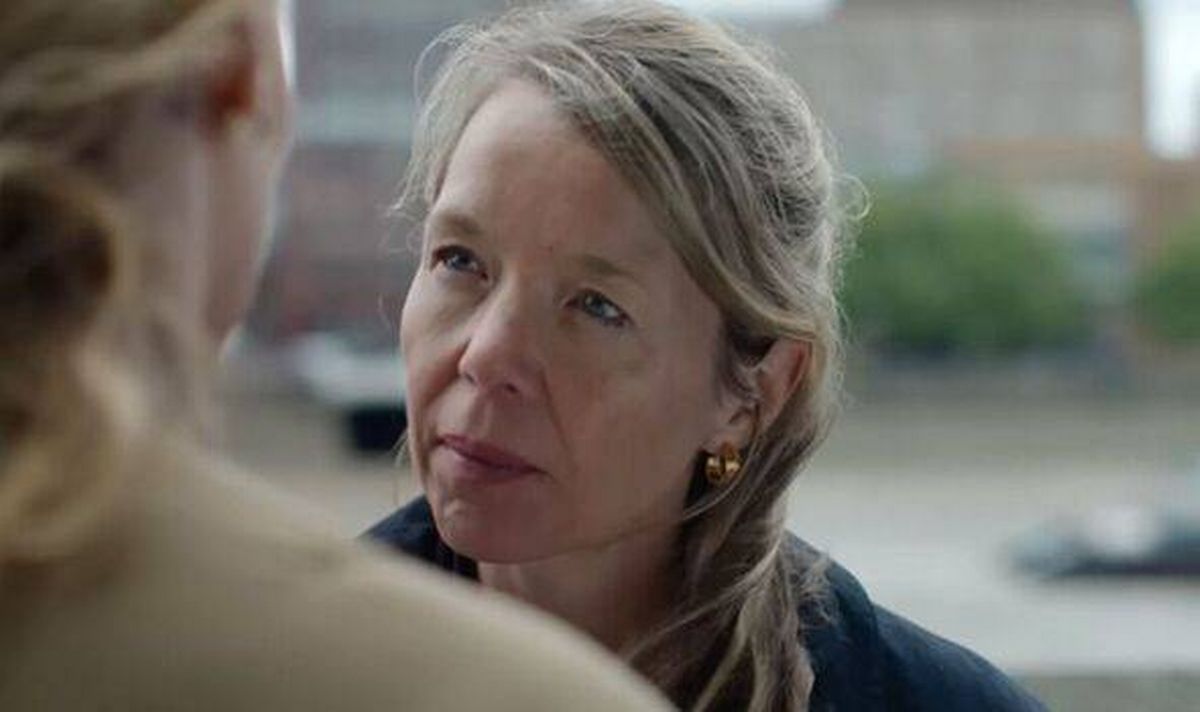
Anna Maxwell Martin’s new role for series hailed a ‘uniquely thrilling ride’
Motherland star Anna Maxwell Martin teams up with Sophie Turner in Prime Video’s new thriller
Thriller enthusiasts are set for a real treat as acclaimed actress Anna Maxwell Martin, renowned for her performances in Motherland and Until I Kill You, is appearing in a fresh Prime Video thriller launching imminently. Arriving on January 21, the series boasts major stars and is headlined by Game of Thrones legend Sophie Turner.
All six episodes will be released simultaneously, allowing viewers to binge-watch the entire series, entitled Steal. This high-octane thriller, already generating considerable buzz amongst fans, centres on ordinary office worker Zara (Turner), who becomes embroiled in the “heist of the century”.
While employed at pension fund investment firm Lochmill Capital, her routine day is shattered when a gang of brutal thieves storms in demanding billions in cash. Zara and her closest friend Luke (Archie Madekwe) are forced to comply with the gang’s orders.
DCI Rhys (Jacob Fortune-Lloyd) is brought in to apprehend the criminals, but as a recently relapsed gambling addict, he must manage to keep his personal financial troubles in check. Meanwhile, Zara decides to take control when the investigation raises more questions than it answers, reports the Express.
Anna Maxwell Martin’s character is shown speaking to Zara in the trailer, demanding she “tell us what you know”, or MI5 “could kill you”. Specifics about her role remain confidential, though she appears to be some form of detective.
Whilst the series isn’t rooted in actual events, Good Housekeeping has described its premise as “scarily real”. Vernon Sanders, Head of Television at Amazon MGM Studios, hailed it as a “uniquely thrilling ride”.
When Prime Video posted the trailer on Facebook, fans rushed to the comments section after spotting the Motherland and Line of Duty star. Shelley Griffiths declared: “Well, if Anna Maxwell Martin is in it, I’ll be watching!”
The actress is particularly renowned for her crime drama performances, having starred in A Good Girl’s Guide to Murder, Ludwig and Until I Kill You. In the latter, she portrayed real-life victim Delia Balmer, who endured an abusive relationship with serial killer John Sweeney.
She deliberately avoided speaking to the actual Delia before shooting, ensuring her interpretation remained entirely her own. She revealed in an interview: “I’ve played quite a few real people and I have never met them before. I don’t choose to do that, that’s how I work.
“Our writer filmed a lot of footage of his meetings with Delia, which I had access to. I did meet her very briefly during filming, but only because she wanted to visit the set and of course I was respectful of that.
“I didn’t do lots of research into abusive relationships either, instead I just focused on the character, on who she was, how she responded to things, and what I could gauge about how she interacted with people.”
Her powerful performance as Delia earned her three prestigious awards.
Fans flocked to the Steal trailer’s comments section on YouTube to voice their enthusiasm for her latest project.
@PozoBlue remarked: “Ohhhh this actually looks original and exciting! Looking forward to this!”
@Glasweg1an wrote: “Oooooh Prime video comes through clutch, this looks exciting. Don’t let me down, I`m gonna start this on the 21st.”
@genedeangelo3800 added: “Wow, I’m not impressed easily, this looks amazing. WTF!”
Steal premieres on Prime Video on January 21.
**For the latest showbiz, TV, movie and streaming news, go to the new Everything Gossip website**

USC freshman Alijah Arenas likely to debut Wednesday vs. Northweatern
Five-star USC freshman Alijah Arenas is likely to make his long-awaited debut for the Trojans this week against Northwestern.
Arenas is considered “probable” for Wednesday’s game, a person familiar with his status but not authorized to speak publicly told The Times.
The addition of the five-star freshman, who has yet to play at USC since injuring his knee in the summer, comes at a critical time for the Trojans. USC has lost three of its last five since the start of its Big Ten slate.
Arenas is the highest-rated recruit to join USC in Eric Musselman’s two-year tenure with the Trojans. Before he injured his knee during practice, he was involved in a fiery single-car accident in his Tesla Cybertruck in the spring. He was hospitalized and put into an induced coma because of smoke inhalation.
Arenas returned to practice last month and was initially expected to debut last week. Now he joins the Trojans with 13 games left in the regular season and a critical stretch ahead.
Could events in Syria have a wider impact for Kurds? | Syria’s War
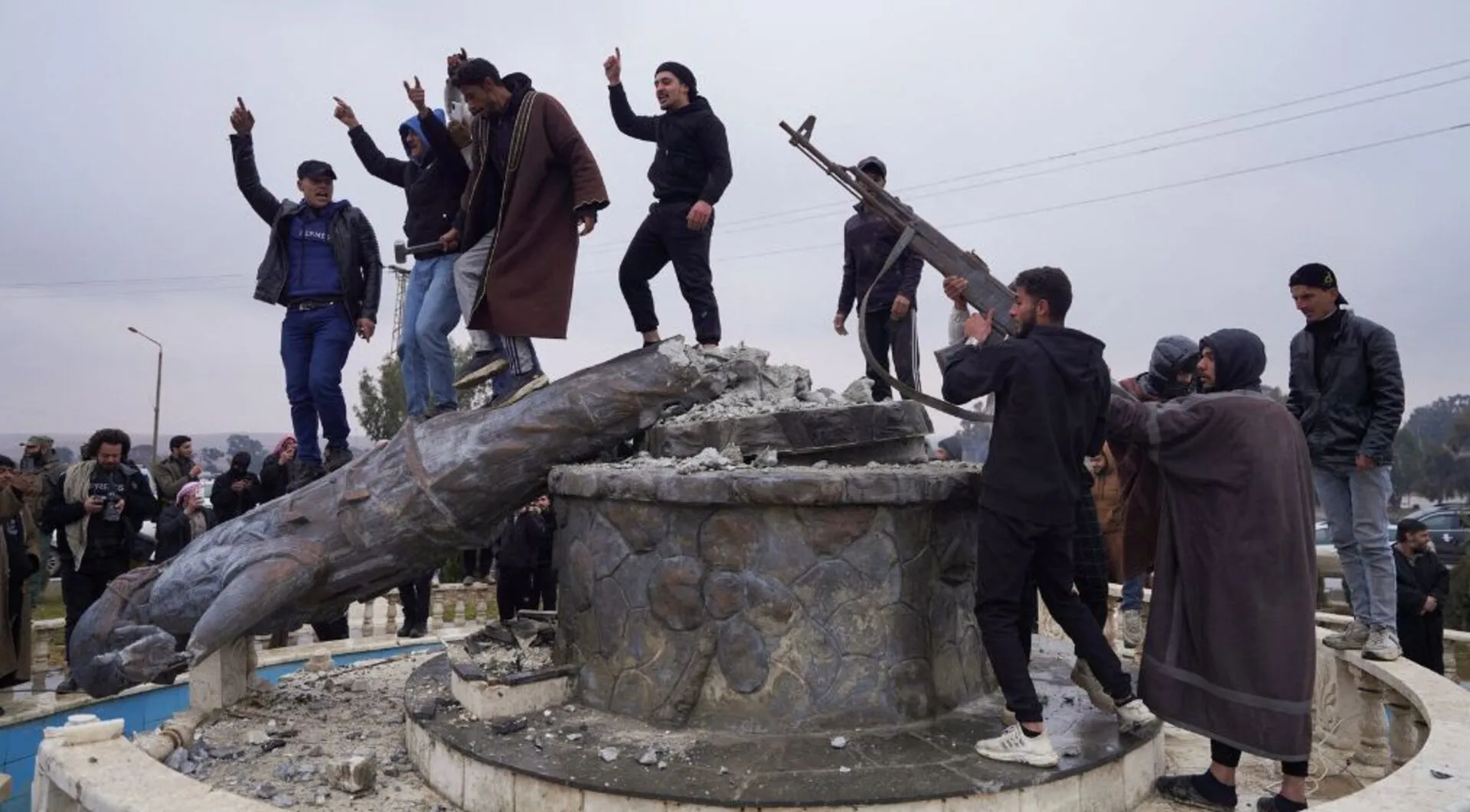
The Syrian army has taken territory long held by Kurdish-led forces, before declaring a ceasefire.
The lightning offensive changes the balance of power in the country.
Are there wider implications for Kurds beyond Syria?
Presenter: Maleen Saeed
Guests:
David Des Roches – Professor at the Thayer Marshall Institute
Mohammed Salih – Non-resident senior fellow at the Foreign Policy Research Institute
Elijah Magnier – Military and political analyst
Published On 19 Jan 2026
Bulgaria’s President Rumen Radev says he will resign ahead of snap election | Elections News
Radev is widely expected to form his own political party prior to the upcoming snap vote.
Published On 19 Jan 2026
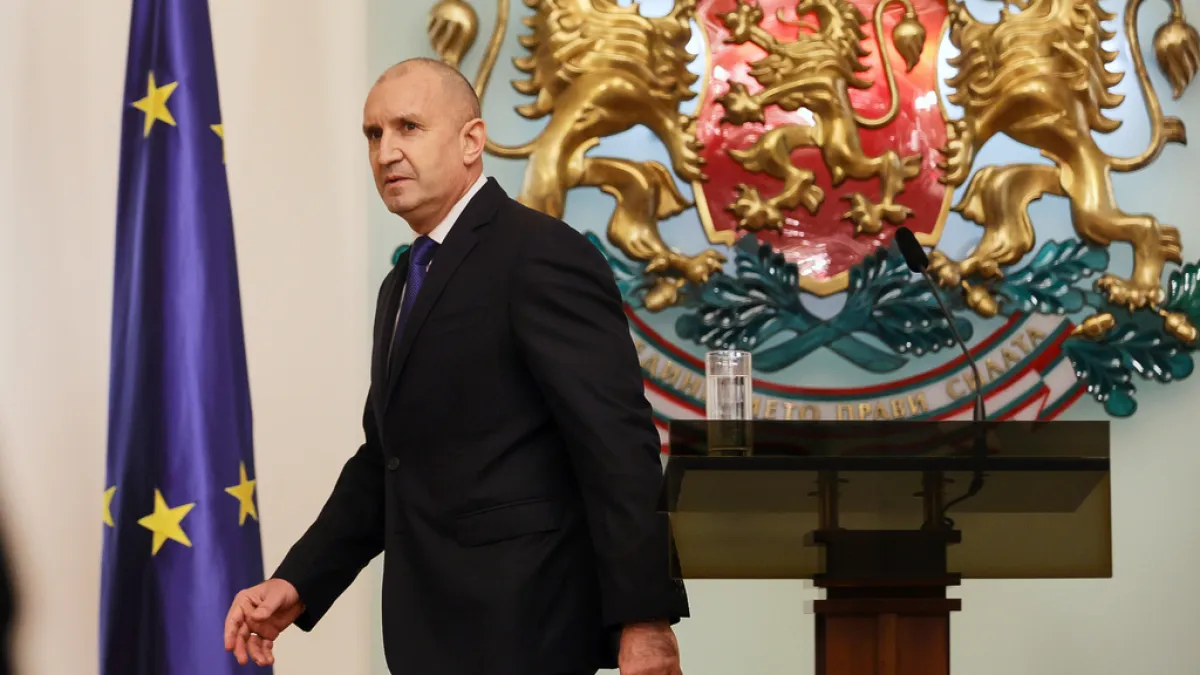
Bulgarian President Rumen Radev has said that he will resign, stoking speculation that he will form his own political party ahead of snap elections expected to take place in the months ahead.
Radev said on Monday that he would submit his resignation to the country’s Constitutional Court the following day. He will be replaced by Vice President Iliana Iotova if the court grants approval.
Recommended Stories
list of 3 itemsend of list
“Today, I am addressing you for the last time as president of Bulgaria,” the 62-year-old Radev said during a televised speech, adding that he was eager to participate in the “battle for the future” of the country.
His resignation, the first by a head of state in Bulgaria’s post-communist history, comes as the country – which is a member of the European Union and NATO – struggles to overcome a prolonged political crisis.
Bulgaria’s last government was swept out of power in December amid widespread anticorruption protests, of which the left-leaning Radev was an outspoken supporter. The upcoming snap election will mark Bulgaria’s eighth round of voting in five years.
Large anticorruption protests last month forced the resignation of the governing coalition, led by the centre-right GERB party. Attempts to form a new government within the current parliament have subsequently failed, and the country is headed towards its eighth parliamentary election since 2021.
Radev, whose second mandate ends in 2026, has repeatedly indicated that he may take part in new elections. The former Air Force general has been a vocal opponent of the leader of the GERB party, Boyko Borissov.
Radev has also opposed politician and oligarch Delyan Peevski – under sanctions from the United States and United Kingdom over alleged bribery, corruption and media manipulation – whose MRF New Beginning party has repeatedly backed the outgoing GERB-led coalition.
The former president has expressed doubt about Bulgaria’s decision to join the eurozone and is opposed to sending military aid to Ukraine, chastising European leaders for not doing enough to support the efforts of US President Donald Trump to facilitate a negotiated peace.
Radev did not mention on Monday what his plans are. Asked recently about forming a new party, he said there was a need for a party that “unites all democrats – left and right – regardless of where they belong or whether they are politically active at all, because we all need fair elections and democratic, free development”.
A recent Market Links poll found that Radev has an approval rating of 44 percent.
“His goal is to be close to the majority so that he doesn’t have to negotiate,” Parvan Simeonov from the Myara polling agency told the news agency AFP, adding that a solid result for Radev could be “a way out” of the country’s political crisis.
Green Day to open 60th Super Bowl by celebrating generations of MVPs
LOS ANGELES — The NFL is marking the 60th anniversary of the Super Bowl with a hometown opening act.
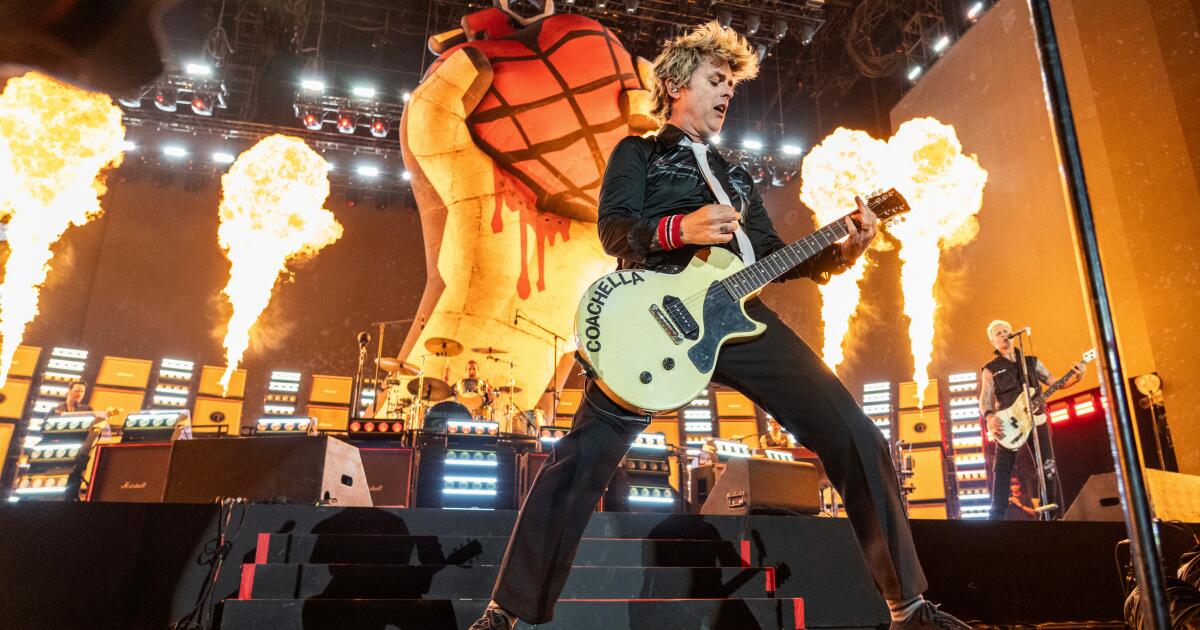
Green Day will kick off the big game with an opening ceremony Feb. 8 at Levi’s Stadium in Santa Clara, the league announced Sunday. The performance will celebrate six decades of the championship’s history, with the band helping usher generations of Super Bowl MVPs onto the field.
The trio, formed in the East Bay and made up of Billie Joe Armstrong, Mike Dirnt and Tré Cool, is expected to perform a selection of their best-known anthems as part of the tribute.
“We are super-hyped to open Super Bowl 60 right in our backyard!” lead singer Armstrong said. “We are honored to welcome the MVPs who’ve shaped the game and open the night for fans all over the world. Let’s have fun! Let’s get loud!”
The ceremony airs live at 3 p.m. Pacific on NBC, Telemundo, Peacock and Universo.
“Celebrating 60 years of Super Bowl history with Green Day as a hometown band, while honoring the NFL legends who’ve helped define this sport, is an incredibly powerful way to kick off Super Bowl LX,” said Tim Tubito, the league’s senior director of event and game presentation. “As we work alongside NBC Sports for this opening ceremony, we look forward to creating a collective celebration for fans in the stadium and around the world.”
The opening ceremony will take place ahead of the pregame entertainment, during which Charlie Puth is to perform the national anthem, Brandi Carlile will sing “America the Beautiful,” and Coco Jones will deliver “Lift Every Voice and Sing.”
Jonathan Landrum Jr. writes for the Associated Press.

Tuesday 20 January National Heroes’ Day around the world
Amílcar Lopes Cabral was born in Portuguese Guinea in 1924. Educated in Cape Verde and Lisbon, he developed his political theories regarding colonialism, becoming a leading figure in the liberation movement in West Africa.
In 1956, Cabral established the African Party for the Independence of Guinea and Cape Verde (PAIGC). At first, the PAIGC pushed for independence through peaceful means. In 1963, disillusioned by Portugal’s use of force to suppress local demonstrations, the PAIGC launched a military campaign beginning the war of independence.
On 20 January 1973, Cabral was shot dead by a disgruntled former PAIGC rival Inocêncio Kani.
Cabral died before seeing his country achieve independence only a few months later, with his brother becoming President. Cape Verde followed with independence in July 1975.
The two countries chose 20th January as their National Heroes’ Day because it falls on the anniversary of Cabral’s death and although the day is to honour all national heroes, choosing this date is a fitting way to celebrate and commemorate the life of an important figure in the independence of both countries.
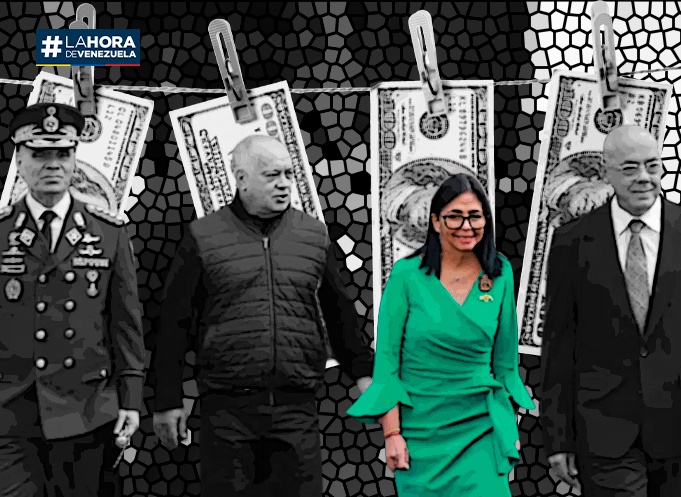
How Delcy Rodríguez Propped Up the Maduro Regime
On July 2, 2024, a mamón tree fell on Delcy Rodríguez. The accident caused injuries to her right arm, which she frequently wore bandages on. That day, Rodríguez was in Cumanacoa, in eastern Venezuela, overseeing the damage caused by Hurricane Beryl, a gust of wind brought down the enormous tree on top of her and some of her equipment.
The accident was announced by Nicolás Maduro at a public event, in the midst of the campaign for the presidential elections of July 28 of that year. With a discordant sense of humor that has aged poorly, he said: “Delcy, while working in Cumanacoa, was hit by a missile. But she recovers from everything.”
And the statement seems true. Because a year and a half later, we see her—quite recovered—being sworn in as acting president of Venezuela after, indeed, American bombs fell on Caracas to remove Maduro and his wife, Cilia Flores.
Delcy Eloína Rodríguez Gómez, the woman who occupies the presidential seat in Miraflores with the unexpected backing of the United States, is one of the figures with the greatest accumulation of power within the Venezuelan ruling party and a key operator of the state’s political, repressive, and economic apparatus.
Delcy Rodríguez has been presented as a moderate, a technocrat, a “different” chavista because of her studies in France and England and her fluent English. The first is not true. This is confirmed by American columnist Eva Golinger, who spent several years in Venezuela alongside Hugo Chávez, and by former Turkish diplomat Imdat Oner, who served in Caracas and recalls a meeting with ambassadors in 2015 when Rodríguez was foreign minister: “She arrived two hours late and started yelling at the US and European diplomats. She is a radical chavista, in terms of ideology,” he told La Hora de Venezuela.
What Delcy Rodríguez is, observers and analysts agree, is pragmatic. In fact, her greatest rise within the chavista power structure has occurred since she began to pull the strings of the economic agenda. Over the years, she has become more than just the vice president: she is a central operator of the system, the figure to whom is called upon when it is necessary to confront, execute, close ranks, and secure economic lifelines.
Delcy Eloína Rodríguez Gómez was born in Caracas on May 18, 1969. Her political biography cannot be understood without a later date: July 25, 1976, when her father, Jorge Antonio Rodríguez, died in police custody after being arrested for his involvement in the kidnapping of American businessman William Niehous. The death—attributed to torture and mistreatment—became a breaking point for the family and, over time, a key element of the chavista narrative about the 1958-1998 governments. For Delcy and her brother Jorge, that history of victimization served as both a wound and a compass: politics as reparation, as justice, as revenge. In fact, she once uttered on television: “The Bolivarian Revolution, the arrival of our Commander, was our personal revenge.”
In a government where trust is managed as a scarce resource, Delcy has remained for a fundamental reason: she serves to hold the edifice together when it creaks.
Furthermore, Delcy is not just Delcy. She is part of a duo that, for years, has operated as the backbone of the revolutionary government: alongside her brother Jorge Rodríguez, president of the National Assembly, they have both been described as “political twins” of chavismo. They share origins, narratives, and ambitions.
This family alliance explains their strength. In a government where trust is managed as a scarce resource, Delcy has remained for a fundamental reason: she serves to hold the edifice together when it creaks.
That’s why, when the economy hit its lowest point and needed a boost, Rodríguez became the only high-ranking official attending business meetings, while a vast network of private initiatives was being built under her wing. Investigative journalism platforms like Armando.info have uncovered the now-acting president’s connections to a “business entourage” with ramifications in the construction, tourism, real estate, food import, and packaging sectors.
Domestically, government officials describe her as a reserved, quiet, and low-profile figure with a small but highly loyal circle of allies—allies who now stand by her in what could be the greatest paradox of her life: denouncing the American capture of Nicolás Maduro in her speeches, while in practice allowing the Trump administration to exert control over political decision-making and resuming oil sales agreements with the US.
However, the hand Delcy Rodríguez is currently wielding lacks, by far, the legal certainty, reliability, and constitutional guarantees that oil executives demand. She and her inner circle are burdened by a long history of human rights violations, economic hardship, over 800 political prisoners still incarcerated, and internal disputes.
A pillar of the dictatorship
Rodríguez served as Minister of the Presidency (2006), Minister of Communication and Information (2013-2014), Minister of Foreign Affairs (2014-2017), President of the National Constituent Assembly (2017-2018), and, since June 2018, Executive Vice President. However, one of the turning points in her career was her presidency of the National Constituent Assembly, a body created without a prior referendum and not recognized by the international community.
From her position as president of the National Constituent Assembly (ANC), she spearheaded a process that effectively nullified the National Assembly elected in 2015, concentrating legislative, judicial, and political oversight functions in a body dominated exclusively by chavismo. Under her leadership, legal instruments widely criticized by human rights organizations were approved.
This was also the period when Delcy Rodríguez held the pro tempore presidency of Mercosur, and when Venezuela ceased to be a member of the organization for violating the Accession Protocol.
In this context, the then Foreign Minister was involved in an unforgettable incident: In December 2016, she was denied entry to the organization’s meeting held in Buenos Aires, but she made headlines by appearing with her arm in a sling, allegedly due to injuries she suffered when she was prevented from entering the meeting. “I was beaten by a police officer (…) the offenses and physical abuse that can occur within Mercosur against a nation and its foreign minister are shameful,” Rodríguez stated at the time.
Investigations indicate that, days before the ‘Delcygate’ trip, Delcy Rodríguez facilitated the sale of 104 Venezuelan gold bars valued at more than $60 million to Spanish businesspeople.
Delcy Rodríguez’s record on human rights ranges from her participation in the creation of a repressive legal framework to her role as one of the main perpetrators of one of the most intense waves of repression during the chavista era. During her tenure in the National Constituent Assembly, regulatory frameworks and decisions were promoted and consolidated that facilitated the repression and criminalization of dissent.
Among them are the Constitutional Law Against Hatred (2017), systematically used to criminally prosecute opposition members, journalists, activists, and citizens for expressions on social media, with sentences of up to 20 years in prison. She provided critical support for permanent states of emergency, which suspended constitutional guarantees and allowed for arrests without a warrant. Delcy Rodríguez also helped to legitimize civil-military control of public order, consolidating the use of military courts and intelligence agencies against civilians.
As Executive Vice President of the Republic, she had direct authority over Ministries and security agencies. Between 2018 and April 2021, under her chain of command, the Bolivarian National Intelligence Service (SEBIN) was documented as responsible for arbitrary detentions, torture, enforced disappearances, and mass surveillance.
The UN Human Rights Council’s Fact-Finding Mission concluded in 2020 that there were “reasonable grounds to believe” that Rodríguez knew or should have known about crimes committed by the State and failed to act to prevent them, despite her position of authority. These conclusions were reiterated and expanded in subsequent resolutions that kept the international investigation into Venezuela active.
Corruption, gold, and international schemes
Beyond her role in the chain of command of human rights violations, Delcy Rodríguez has been linked to transnational corruption schemes involving gold, foreign businesspeople, and opaque financial circuits.
On January 20, 2020, Rodríguez (sanctioned by the European Union from 2018) entered Spain despite the existing travel ban and met with then-Minister José Luis Ábalos (currently in jail), triggering the scandal known as Delcygate. Investigations indicate that, days before the trip, she facilitated the sale of 104 Venezuelan gold bars valued at more than $60 million to Spanish businesspeople. The Civil Guard found communications between Rodríguez and businessman Víctor de Aldama that directly link the vice president to this transaction.
This case is part of a broader pattern of illegal extraction and international money laundering of Venezuelan gold through shell companies, a scheme that reinforces corruption and the evasion of financial controls. In the political and media sphere, the Delcygate scandal has also been linked to other controversies in Spain, such as the state bailout of the airline Plus Ultra, which has ties to figures associated with Chavismo, although there is no direct legal evidence implicating Rodríguez.
It is impossible to forget that Venezuela’s current interim president spearheaded a scandalous pact with dangerous gang members in 2017.
Another key figure is Jorge Giménez. This Venezuelan businessman and president of the Venezuelan Football Federation (FVF), is the subject of an investigation by Armando.info, which exposes him as an operative for the chavista regime and a trusted associate of Rodríguez. He is implicated in opaque contracts linked to the CLAP program and PDVSA, with debts and irregular agreements exceeding $1.2 billion. Furthermore, he appears in chats related to the Spanish case as a direct interlocutor of his “boss,” solidifying the connection between Venezuelan political power and international corruption networks.
The Associated Press recently published a report revealing that the DEA has been investigating Rodríguez for years. “Rodriguez has been on the radar of the US Drug Enforcement Administration for years, and in 2022 she was even labeled a ‘priority target,’ a designation the DEA reserves for suspects believed to have a ‘significant impact’ on drug trafficking, according to records obtained by the AP and more than half a dozen current and former US law enforcement officials,” the publication states.
Although the same publication clarifies that the United States has never accused Rodríguez of any crime and notes that she “is not among the more than a dozen Venezuelan officials—from Maduro’s inner circle—accused of drug trafficking along with the ousted president,” it is impossible to forget that Venezuela’s current interim president spearheaded a scandalous pact with dangerous gang members in 2017.
That year, while dozens of students protesting against the repression of Nicolás Maduro’s government were being killed in the streets of the country’s main cities, Rodríguez, then president of the National Assembly, led the task of negotiating with criminal groups to keep them calm and prevent them from rising up against the government.

Super Bowl 2026: Would Matthew Stafford retire if Rams win it all?
CHICAGO — We’ve seen these movies before, or at least most of them.
With the NFL’s conference championship games set — the Rams at Seattle following New England at Denver — three of the four possible Super Bowl permutations are rematches.
Rams-Patriots? There have been two of those, at the end of the 2001 and 2018 seasons.
And Seattle has played both combinations, beating the Broncos in the 2013 season and losing to the Patriots a year later.
Of the four possibilities, the only one that hasn’t happened is Rams-Broncos.
There are strong ownership ties binding those two franchises. Among his many sports holdings, Rams owner Stan Kroenke also owns the Denver Nuggets and Colorado Avalanche. Although he built his empire with real estate and as a developer, he’s married to Ann Walton Kroenke — of the Walmart family — who is a first cousin of Rob Walton, who led the group that purchased the Broncos in 2022.
The Broncos last won the Super Bowl 10 years ago, weeks after the Rams were approved to move back to Los Angeles, and it happened at Levi’s Stadium, site of this year’s game. That was when Peyton Manning won his second ring, with his second franchise, then called it a career.

-
Share via
Gary Klein breaks down what went right for the Rams in their 20-17 overtime victory against the Chicago Bears in the NFC divisional playoffs at Soldier Field.
There’s a possibility that Rams quarterback Matthew Stafford could follow that blueprint. He’s on his second team, having spent the first part of his career with Detroit, and he already has one ring. But whereas Manning was clearly in the sunset of his storied career, Stafford remains at the top of his game, and likely will be this season’s NFL Most Valuable Player.
Still, Stafford will turn 38 the day before the Super Bowl, and it wouldn’t be much of a curveball if that were his last game, especially if the Rams were to win.
Rams tight end Terrance Ferguson is from Littleton, Colo., a suburb of Denver, and Broncos general manager George Paton is from La Cañada and played football at Loyola High and UCLA.
If the Seahawks were to win the NFC — and oddsmakers have them as 2½-point favorites — they would look to repeat against Denver or atone for that painful loss to New England.
It was at MetLife Stadium in New Jersey, remember, that Seattle rolled over Manning and the Broncos, 43-8, behind a smothering defense. Pete Carroll’s team looked unbeatable.
A year later in Arizona, one of the most excruciating moments in Seattle sports history.
With 20 seconds left and the Seahawks a yard away from the go-ahead touchdown, Patriots rookie Malcom Butler picked off a goal-line pass by Russell Wilson. Seattle inexplicably decided to throw instead of handing off to battering ram Marshawn Lynch, who was all but automatic in short-yardage situations.
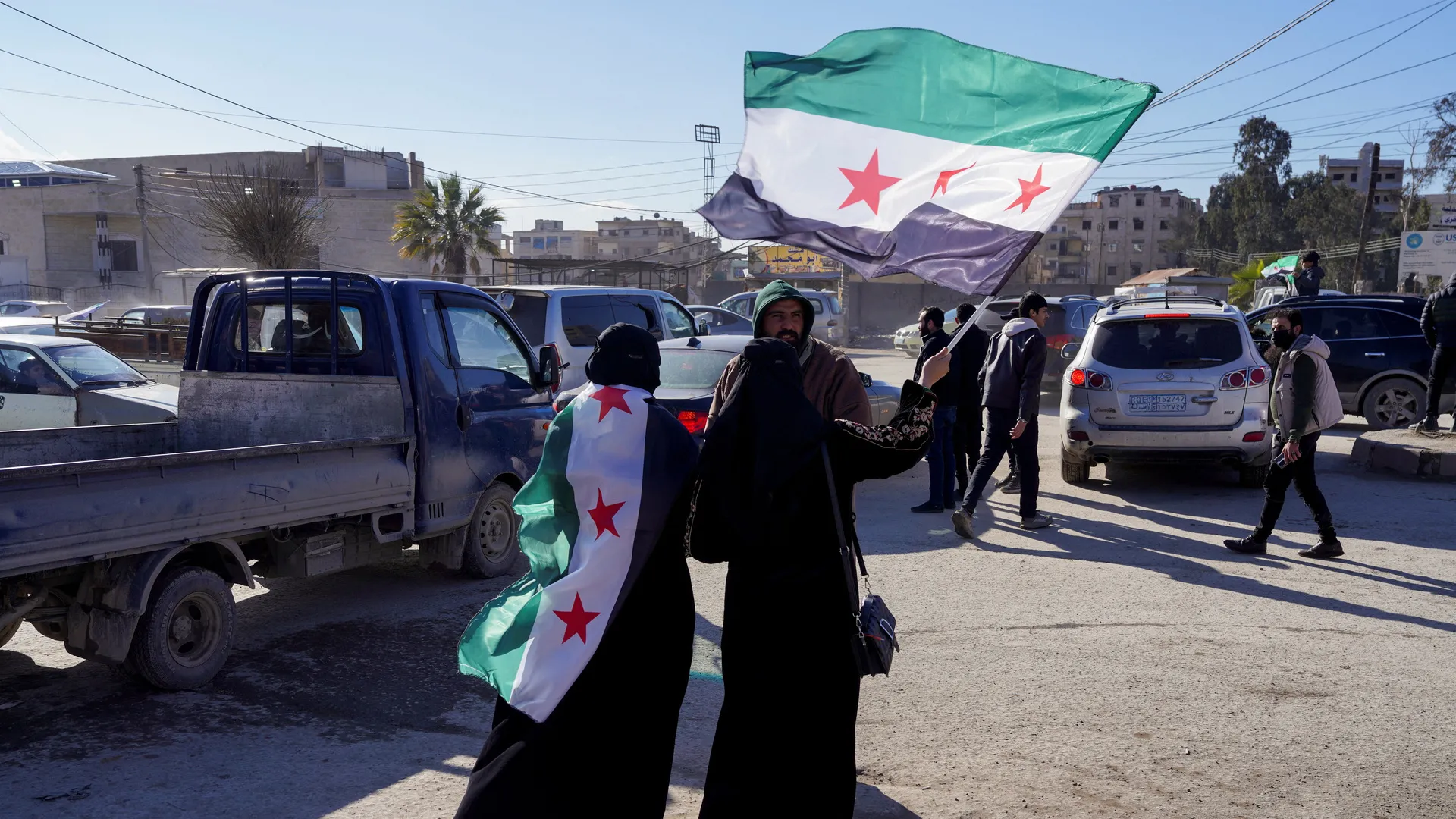
Syrian army, SDF start implementing ceasefire despite clashes | Syria’s War
Despite some reported clashes, the Syrian army and the Syrian Democratic Forces (SDF) are implementing their new ceasefire agreement. The SDF is expected to integrate its fighters into the Syrian army and place public infrastructure and services under federal government control.
Published On 19 Jan 2026
A Year of Anarchy and the South and Central Asia
No sooner had 2026 begun than dramatic events in world politics followed one after another. The problem is not even the speed of these events but the difficulty of systematizing them. Forecasting is a thankless task. And the issue is not only the high probability of error. The conditions of the current transitional international system and the turbulent world make forecasting a process far from scientific. We lack the necessary tools, theory, and sufficient input information. It is very difficult to predict which events will be of central importance, which regions will be at the center of world attention, and where conflicts will begin and end.
Despite the enormous attention focused on the conflict in Ukraine and the events surrounding Iran, Palestine, and Venezuela, it can be assumed that the center of Eurasia will be one of the key regions in terms of conflict potential and world politics. Important political processes and, possibly, various actions should be expected due to the high conflict potential between India and Pakistan and the increased tensions between the United States and Taliban-controlled Afghanistan.
Anarchical Year? The brilliant Oxford University professor Hedley Bull published his book “The Anarchical Society” in 1977, arguing that “international society is a society without government, and in this respect it resembles primitive or archaic societies.”
One can expect an obvious archaization of international life. Classical realists, theorists of international relations, have led us to believe that the world is in a state of eternal and unchanging anarchy. Unlike domestic relations, there is no policeman in the world of global politics. The monopoly on force belongs to the state, but only within the borders of that state. This restrains members of society from using force for their own interests. In relations between countries, there is no such policeman. Liberal theorists believed that anarchy is a negative thing and should be combated through collective methods, especially through the use of various international organizations. They believed it was possible to create an international system in which a global policeman could emerge.
But what is to be done when a potential contender for the role of world policeman does not want such a fate, and the others do not possess sufficient resources and capabilities? What is to be done when the world has become so complex and the number of ambitious, influential powers has become so high that there is no single powerful force capable of restraining everyone? And what if the great military powers themselves have concluded that expanding the field of anarchy is beneficial to them?
Symbolically, in the prestigious Anglosphere journal International Organization, Alexander Wendt suggested that the level of anarchy will be determined by the great powers themselves. That is, he refuted the liberal view that anarchy is something that has a beginning and an end: “Anarchy is what the great powers make of it.”
It can be assumed that 2026 will be a year of expanding anarchy. Trumpist America will be the leading political actor whose actions will expand the field of anarchy and, in parallel, break down what remains (and much remains) of the current international system. Powers will be self-serving. The very concept of alliances will be rethought. Militarization processes will be widespread. Everyone who can afford it will arm themselves. The increase in the sphere of anarchy will lead to an expansion of conflict potential. There will be many conflicts. Military potential will determine the balance of power in international life. The technological race will reach a new level, blurring the line between the military and civilian spheres. Apparently, diplomatic agreements will remain overshadowed by military capabilities. It can be assumed that 2026 will break records for spending on armaments.
South and Central Asia
As I have already said, the Central and South Asian region will remain in the focus of world media attention. The conflict potential between the leading players in the political and economic life of the region is too high.
The US National Security Strategy, published at the end of 2025, pays extremely limited attention to the South and Central Asian regions. The document, developed during Donald Trump’s second presidential term, represents, in many ways, an atypical and, to a certain extent, innovative approach to strategic planning. It is noteworthy that Afghanistan is not mentioned at all in Trump’s strategy, and Pakistan is mentioned only once, exclusively in the context of the Indo-Pakistani settlement. Nevertheless, this arrangement of priorities is difficult to interpret as evidence of Washington’s withdrawal from an active role in the region.
Donald Trump, in turn, quite clearly and unambiguously outlined the priority interest of the United States—the Bagram airbase. In September 2025, Trump stated that if Afghanistan refused to return the Bagram airbase, the United States, which built it, would face “bad consequences.” A legitimate question arises: why does this facility remain so important to the US? Bagram has exceptional strategic and symbolic significance. According to Afghan legends, it was founded by Alexander the Great and is located near the Afghan-Chinese border, essentially in the geographical center of Eurasia. Trump himself emphasized that one of the key reasons for interest in the base is its proximity to facilities connected with China.
Another potential conflict is linked to the “eternal” military, political, and economic confrontation between two hostile countries—India and Pakistan. In May 2025, a real war broke out between Delhi and Islamabad, lasting several days. Indian artillery and air force struck military targets in Pakistan on May 7. The operation, codenamed “Sindhur,” was allegedly aimed at the “terrorist infrastructure” of pro-Pakistani terrorist groups that have certain ties to some military circles. Pakistan, in turn, denied all these accusations and launched a military operation in response to India’s actions.
The reason for the conflict was a horrific terrorist attack in the Indian part of the disputed territory of Kashmir on April 22. Islamists from a Pakistani terrorist organization opened fire on tourists in Pahalgam, killing several dozen people. Indian authorities claimed Pakistan’s involvement in the attack. Donald Trump stated that he was the one who managed to stop the conflict between the two warring countries. Furthermore, many observers and analysts believe that a significant recalibration of U.S. strategy in South Asia is signaling a deliberate warming of relations with Pakistan after years of prioritizing ties with India.
Thus, 2026 is unlikely to be a year of universal peace, cooperation, and prosperity. Unfortunately, we may face a very tense year with a number of complex conflicts.

Julia Bullock’s ‘From Ordinary Things’ is anything but ordinary
The art of the so-called art song is a thriving business. Singers galore are monthly recording songs from the rich 19th century classical repertory, while composers are busy making new ones. But what was once known as the Lieder recital — the German title for songs in a genre once dominated by Schubert, Schumann, Hugo Wolf and Richard Strauss — has approached its sell-by date.
The smart shopper will already note signs of staleness and mold in the old practice of a singer in stiff white tie and tails or gaudy gown, standing, arm propped on piano, of the second banana accompanist. Attention here was meant to be drawn not to the singer but the marvels of song, as you followed the text in your program book. The recital acted like a religious experience in which a rarefied atmosphere befits radiance.
A new generation of singers, however, has been strikingly upending the song recital, turning to songs from a wide variety of sources old, new and genre fluid. Singers think thematically and theatrically. Pianists become welcoming creative partners. Other musicians, stage directors, choreographers and dancers may be invited in.
“From Ordinary Things,” which had its premiere as part of CAP UCLA’s series at the Nimoy Theater on Thursday night, is the latest project of one of the least ordinary and most compelling singers of this new generation, Julia Bullock. A rivetingly theatrical soprano, Bullock, in collaboration with percussionist/composer Tyshawn Sorey and director Peter Sellars, has developed a full-scale operatic evening, “Perle Noir: Meditations for Joséphine,” about the chanteuse Josephine Baker and slated next for Australia’s Adelaide Festival in March. Another project has been Bullock’s riveting staging, with dance, of Olivier Messiaen’s mystical, Amazonian, sex-love-death song cycle, “Harawi,” which came to the Wallis in October 2024.
Conor Hanick, a partner of Bullock’s in the experimental collective American Modern Opera Company (AMOC), was the pianist for “Harawi” and is again for “From Ordinary Things.” They are further joined by the equally versatile cellist, Seth Parker Woods. The title comes from the last line of “Shelter,” a song by André Previn with a text by Toni Morrison. “In this soft place/Under your wings/I will find shelter/From ordinary things.”
That leaves us Bullock with extraordinary things, and her program is surprising in all things. She begins in shock, singing unaccompanied, on a dark stage in a darkened hall, performers illuminated by powerful spotlights.

Julia Bullock performs at the UCLA Nimoy Theater on Thursday in Los Angeles.
(Carlin Stiehl/For The Times)
Stark, discomforting amplification diminishes intimacy and the luxurious richness of Bullock’s soprano, which easily fills a room on its own, suggests quiet terror, the lonely state of Nina Simone’s “Images.” The unaccompanied solo about a woman who “thinks her body has no glory” gets it from Bullock. That progresses without a break into the first song, “Nahandove,” from Ravel’s “Songs of Madagascar,” with piano and cello but not the flute in Ravel’s original setting. Here beauty is celebrated with voluptuous rapture, setting the mood for “Oh, Yemanja,” a mythic, watery mother’s prayer from Tania León’s opera “Scourge of Hyacinths.”
A highlight was to have been a pair of songs by León, with texts by Kevin Young, written for the recital, but they were apparently not yet ready. A line from one of them is “All light wrong?” With the program and song texts only available to download on the cellphone, the audience was left in the dark without texts and, with amplification obscuring diction, not knowing what’s what.
Another Young line — “are my chief complaints” — suited the blowsy loudspeakers that messed up balances, which extended to a performance of George Walker’s rarely heard Sonata for Cello, that ends the first half, for no apparent reason other than it gives the spotlight to the instrumentalists and it is a score that begs to be heard.
Parker has been a glowing advocate of the early work, written in 1957, by the late composer whose music is only in the past few years beginning to find its way to the public thanks to the efforts of reviving neglected Black composers. The sonata does not have the vibrant complexity of Walker’s commanding later works, but it is tight, strong, accessible and with an inspired slow movement that it would be hard to get enough of.

Cellist Seth Parker Woods and pianist Conor Hanick at the UCLA Nimoy Theater on Thursday in Los Angeles.
(Carlin Stiehl/For The Times)
The strange second half brought fewer complaints. An intermission bought time to familiarize oneself with text squeezed onto the cellphone screen. Amplification proved less objectionable. Bullock announced that while putting the program together she had come across songs by Robert Owens, a little-known American composer who lived in Munich, Germany, and died in 2017 and who wrote songs in the style of Richard Strauss to texts by the 19th century poet Joseph von Eichendorff. If not a find, a curiosity.
From there to the avant-garde. “Ultimate Rose” from Salvatore Sciarrino’s 1981 opera, “Vanitas,” turns early music, along with vocal and cello production, marvelously inside out. More Nina Simone, the harsh “Four Women,” then Previn. Along with “Shelter,” Bullock sang a song he wrote with Dory Previn (“It’s Good to Have You Near Again”) and arrangements he made of standards (The Gershwins’ “Love Walked In” and Rogers’ and Hart’s “Nobody’s Heart Belongs to Me”) for his album with Leontyne Price. The encore was Massenet’s “Elégie.”
Each song seems to exist for reasons of its own. Each song creates a different dynamic among the three performers. You listen, left in the dark, wondering but also in wonder, as Bullock asks you a question why each song mattered as much as it did.
You go home and read the texts and find there are no ordinary things.
Skyscanner makes HUGE change to its website

FORGET flights – you can now book a package holiday with Skyscanner.
The comparison website has long been used by holidaymakers looking to find the cheapest flight options.
And from today, Skyscanner has launched its own Package Holidays search option.
Scouring the internet, it compares 25million holiday packages a day which includes all the big names like TUI, Jet2, easyJet, Loveholidays and OnTheBeach,
For example, we found bargain deals such as seven nights in Benidorm with hotels and flights for just £226 with Lastminute, using the new serch tool.
There’s also a week in Marrakech for £195 next month, with flights and hotels bookable via Expedia.
Read more on travel deals


The search options let you choose everything from board, such as self-catered or all-inclusive, as well as star rating of the hotels you want to stay at.
The tour operator and airline can be chosen as well as whether you only want direct flights.
It isn’t quite as advanced as their flight search just yet – there isn’t an option for ‘Everywhere‘ or ‘Cheapest Month’ just yet.
So as long as you know where you want to go, and when, you can find a bargain.
The new search tool has been launched due to a boom in package holiday demand.
New data released by Skyscanner found that demand has increased by 113 per cent since the beginning of the year.
Not only that, but 52 per cent of Brits said they were looking at booking a package holiday.
Once seen as a more expensive option, bargain deals are now available which aren’t much more expensive compared to booking flights and hotels separately.
Not only that, but all of the holidays are ATOL protected, meaning your money is safe if the operator goes bust.
Laura Lindsay, Skyscanner’s Travel Expert, said: “Our research shows that for many, finding that perfect holiday can feel overwhelming, with value for money top of mind.
“We’re excited to bring our industry leading price comparison tech to packages.
“With more and more choice in how package holidays are constructed, travellers need an easier way to compare all of the options in one place, to find great deals without the hassle.”
Last year, Skyscanner also launched a new price drop tool.
And here are the 10 cheapest places to fly to this year, according to Skyscanner.