



Inside Ukraine’s First Combat Deployment Of Robotic Amphibious Vehicles
Taking a break from fighting Russians in the Kostiantynivka sector of the eastern Donetsk region, the commander of a Ukrainian uncrewed ground vehicle (UGV) unit spoke with us about innovations in the use of these systems. One was the first deployment of a UGV specifically designed for amphibious operations to deliver supplies to frontline troops in areas impeded by water obstacles. Large areas of the front line are bisected by rivers and wetlands, and the country has many other small waterways and marsh areas. As we have frequently reported, the use of UGVs by both Ukraine and Russia has exploded as the ubiquity of aerial attack drones makes it far too dangerous for human battlefield movements.
In an exclusive interview with TWZ, the commander of the 93rd Separate Mechanized Brigade’s “Alter Ego” UGV unit, who goes by the call sign “Electric,” offered us unique insights into the challenges of developing amphibious UGVs and how they were deployed.
In the first of two parts, Electric talks about why Alter Ego developed amphibious UGVs – including modifying a Triton variant for this – and how the unit made them work. The second part features his insights into using heavy ‘bomber drones’ to drop UGVs behind enemy lines for kamikaze raids. In addition, a representative of Brave1, Ukraine’s weapons technology accelerator, spoke about developing these systems at scale.
Some of the questions and answers have been slightly edited for clarity.
Q: How did the need for amphibious UGVs for logistics operations first come up?
A: We had this idea for a long time, but recently one of the departments of the Ministry of Defense asked for our help to solve this problem, so that the UGV could overcome water obstacles.
There was a crucial need for this kind of means at certain parts of the front, but the units that are located there didn’t have the capacity by themselves to solve this task. So our battalion was asked to solve this problem because we are one of the most experienced units in terms of UGVs.
Q: How long did it take to design and test the amphibious UGV, and what went into that process?
A: The whole process from development to battle deployment took less than three months.
Q: What did you have to do to make this work?
A: First of all, we looked at amphibious solutions that were on the market, not only in Ukraine, but in the world, and we took two separate approaches. One was taking one of the main UGVs that our unit is using on the ground, and we made it amphibious. And the other approach was that we took one of the solutions that was on the market that already had amphibious capabilities, and we solved several disadvantages that it had. And at the moment, we are using both.
Q: What did you have to do to make the UGV amphibious, and then what were some of the obstacles that had to be overcome to get this operational?
A: First of all, we have to explain that there are different solutions on the market that kind of work on the testing ground — like they can swim, they can drive on the ground, and in the vision of the manufacturer, they are working. But the fact is that these solutions are not ready for the reality on the front line, which is often very different from what is on the testing ground.
And the second point is that the unit has its own workshops where people work near the front line, and the experts, the engineers that work there, they have a very high level of competence to evaluate different solutions and select the one that has potential. And that’s what’s completely different between this unit and everyone else, like manufacturers and others who are working on these solutions, because they don’t understand what’s needed on the battlefield.

Q: So what did you have to change to make it work?
A: Regarding the amphibious one, basically the unit changed almost everything that that UGV had, starting from electronics, the software, the waterproofing, the communications – we basically changed everything. Regarding the one that we already used on the ground, we basically tried to retain what was allowing it to be an effective UGV on the ground, and we added waterproofing and specific mechanics, so that it can work in the water environment.
Q: You mentioned communications. What kind of communications did you add?
A: The communication means that was installed on the UGV by the manufacturer was not sufficient at all. Basically, it didn’t have enough quality for the battlefield situation. It was not working. But we already have our own communications that we were working on, and we have a lot of experience because we have been working for a long time in this UGV area. So we basically helped to install a sufficient level of communications on this UGV.
Q: So how does the amphibious UGV communicate with the controller? Does it use Starlink or some other satellite communications system for navigation?
A: This is satellite navigation, but not only. Satellite navigation is a part of this communication system.
Q: What are the other parts?
A: It’s better not to talk in detail about the other part of the communication system.

Q: There were probably a lot of different missions that could have been used for this first amphibious UGV logistics delivery. Why was this particular mission chosen?
A: The Alter Ego unit has so much experience in terms of UGVs, and not just experience of using UGVs, but the experience of being the first in the world. We had one of the first evacuation missions, we had one of the first strike missions using UGVs, the paratrooper UGV, and now the amphibious UGV. So basically, we have the systems to make it work for the first time when nobody knows how to conduct this mission.
Q: No, I mean why did this particular mission get chosen to be the first one?
A: There are certain places on the front line where we have water obstacles that prevent logistics from being done by UGV. At the moment, UGVs are carrying hundreds of tons of logistics, probably the most compared to any other means on the front line, but before this, these water obstacles would prevent UGVs from providing logistics for those parts of the front, and that need can’t be fully satisfied by UAVs or other means. That’s why we did this mission with the amphibious UGV, and now our task here is to scale this technology and provide this logistics system for other similar parts of the front where there are water obstacles.

Q: Tell me about where and when this mission took place and what it was like to watch it unfold.
A: So unfortunately, we can’t provide information about when and where this operation took place. But regarding how it went and what we felt, this was another big challenge, because this is something that wasn’t done before, and nobody thought this is real. So this was quite difficult, and to tell the truth, the mission didn’t succeed on the first try, actually, and it required a lot of effort in terms of planning, preparing, engineering, and basically it required 100% effort from everyone involved in that mission.
Q: How many times did it fail before, and what went wrong?
A: We had one failed attempt. The reason for failure was a certain technical problem. After that, we analyzed what went wrong, and we worked on solving those issues. Basically, it’s something that nobody had tried to do, it’s kind of hard to know what can go wrong before you actually try it. So the best way to find a solution like that is to try and then iterate on that attempt and make it better and better and better.
Also, I would like to add that although this was the first successful mission regarding an amphibious UGV, it’s not that there was no work on that before that. We were actively talking to and collecting the experience of everyone who was working on these kinds of missions before, and that was also a reason why this mission succeeded.
Q: How far did the amphibious UGV go for this mission?
A: So the UGV went 40 kilometers one way, and then it returned. So probably around 70 kilometers in total, and it carried food and other supplies.
Q: Did this UGV come under Russian fire on this mission?
A: Yes, and it survived.
Q: How does the UGV switch from water to land operations?
A: So the UGV has two separate control systems, one for water and one for land, and basically it switches to the one that is required at the moment. That’s how it can operate in both environments.
Q: Is that autonomous, or is that something that the controller at the base has to do as they watch the UGV on its mission?
A: At the moment, the operator fully controls the UGV manually. And basically, before, the operators of UGVs only knew how to move them on land, but now they also had to learn how to move them in the water. So not only was the technology itself developed, but we also had to prepare the operator and come up with tactics for this UGV.
Q: Did you use AI on this mission in any way, and if so, how?
A: We didn’t use AI.
Q: Have there been other missions using amphibious UGVs?
A: Yes.
Q: Can you say how many and what was delivered?
A: No.
Q: Is this designed only for logistics missions, or will it be used in the future for strike missions, either as a one-way attack system or as a platform for machine guns or other weapons?
A: We can use it in different ways in the future.
Q: Mud season is fast approaching, when much maneuvering becomes impossible or severely degraded because of how difficult it is to move in the thick, oozing slop. Will your amphibious UGVs work in the mud?
A: I think it can operate in the mud in the same way it operates in the water.
In the next segment of our interview, Electric talks about using bomber drones to deliver UGVs behind the lines, and a Brave1 representative talks about how the organization is working to develop these systems at scale for wider use.
Contact the author: howard@twz.com

Rosie Huntington-Whiteley ENDS her lingerie link-up with M&S after 14 years leaving fans gutted
MODEL Rosie Huntington-Whiteley has ended her long-running lingerie link-up with Marks & Spencer.
But the move has left fans of her fancy frillies forlorn.
Rosie’s most recent M&S collection has already been removed from stores and the retailer’s website.
One woman posted online: “That’s a shame — it’s the only underwear I buy and have bought it since it was launched.”
Rosie for Autograph launched in 2012, selling more than three times the expected numbers.
It is estimated that one in every 50 women now owns a bra from the range.


M&S said the decision to end the deal was mutual as it was “evolving, modernising and broadening” lingerie lines.
A spokesman said: “We’re incredibly proud of what we built with Rosie.
“We wish her continued success in all that follows.”
Rosie previously said of the range: “I wanted to create a line that’s for everybody, that’s inclusive and accessible, but still felt elevated and luxurious.
“Sometimes I’ll be in London and some lady will stop me in the lift and say, ‘I love your lingerie, it makes me feel fantastic’.
“That’s really the most rewarding part of the job.”
Rosie, 39, who has two children with actor Jason Statham, confirmed the move.

U.S. shipping 9,000 troops to Mideast as Trump weighs strikes on Iran
WASHINGTON — The U.S. military is dispatching roughly 9,000 troops aboard a group of ships to the Middle East, a U.S. official said Thursday. The bolstering of the American military presence comes as President Trump warned anew that new strikes against Iran could be on the horizon.
He also said early indications suggest that Iran is linked to the co-pilot who stabbed his captain and tried to crash an Israel-bound flight on Wednesday.
In an exchange with reporters at the White House, Trump raised the connection when asked by a reporter if there were any links between the pilot behind the attack and Tehran.
“I would say the answer, based on what I’m hearing, is ‘yes,’ but we’re working on it right now,” Trump said, without offering details.
Trump also warned that if the link is established to Iran, the United States would retaliate.
“Oh they’ll be hit, very hard, don’t worry,” Trump said. “You just ask them. They know what happened. They’ll be hit very hard.”
Meanwhile, the group of ships now en route to the Middle East together carry over 7,000 sailors and 2,000 Marines.
It includes the USS Theodore Roosevelt carrier strike group, which recently deployed with the cruiser USS Chosin, and the USS Makin Island amphibious readiness group, which includes the USS John P. Murtha and USS Anchorage amphibious landing ships.
It could mean that three carriers are in the region as early as the end of October, according to the U.S. official who spoke to the Associated Press on condition of anonymity to discuss sensitive military operations.
Given the personnel already in place in the Middle East, the move would bring the U.S. naval presence to an unusually high number of more than 20,000 sailors and Marines and hundreds of aircraft. The Navy previously had three carrier strike groups in the Middle East in April for the first time since 2003.
The carriers USS George H.W. Bush and the USS George Washington are in the region now, along with the USS Boxer amphibious readiness group. The Washington is typically deployed to Pacific Ocean but it was moved to the Middle East to relieve the USS Abraham Lincoln, whose arduous deployment resulted in the crew being at sea for more than 260 days straight.
Trump, in a Time magazine interview published Thursday, also raised the prospects of new strikes, saying it is “possible” that he will ramp up bombing in Iran after the Nov. 3 elections in the United States.
When pressed, Trump said he could not go further in detailing his strategy.
“I can’t tell you that because look, you know, you’re asking, where are you going to bomb?” Trump said.
He said in the interview, conducted Monday, that he rejected the latest ceasefire proposal from Iran because “things that I wouldn’t have approved a year ago I wouldn’t have today.”
Trump cited as an example an offer from Iran to “open up” the Strait of Hormuz, the key energy shipping corridor, but said the overall proposal was “not good enough.”

Members of the military listen as Defense Secretary Pete Hegseth gives a State of the Force address at Marine Corps Base Quantico.
(Alex Wong / Getty Images)
Asked if the increasingly unpopular war would threaten Republican Party chances in November, Trump at first responded, “It’s possible.” But then he added, “It should help, because Iran will not have a nuclear weapon.”
The president said “100% of the people” oppose Iran having nuclear attack capabilities “including worldwide.”
“So, when you say it that way, It would help,” Trump added. “If you don’t say that, it could hurt.”
Toropin and Price write for the Associated Press. AP writers Seung Min Kim, Will Weissert and Aamer Madhani contributed to this report.
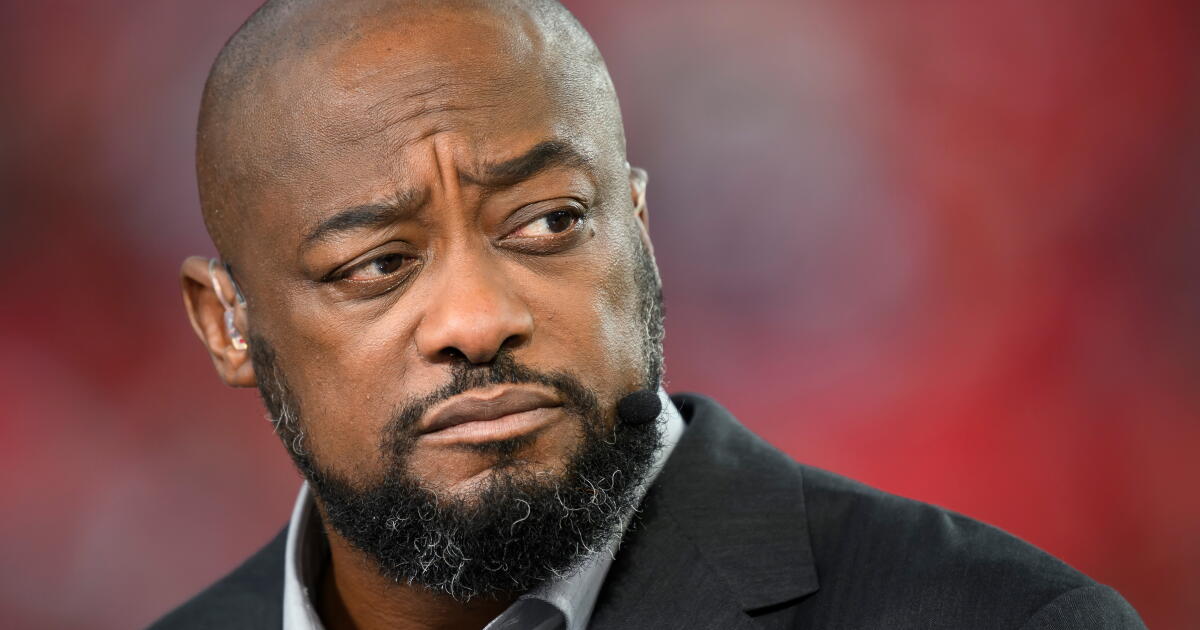
Mike Tomlin’s ‘Minecraft’ obsession has one ex-Steelers star stunned
Mike Tomlin’s YouTube video detailing his labor of love of more than a decade is well on its way to a million views in less than 24 hours. His tweet about it has accumulated more than 20 million views.
No, it’s not a deep dive into Tomlin’s 19 years as head coach of the Pittsburgh Steelers, a reign that produced a Super Bowl title, zero losing seasons and a 193-114-2 overall record.
It’s about his obsession with “Minecraft,” the immensely popular video sandbox game that takes place in a world of 3D cubes representing raw materials such as wood, ores, stone and dirt. Players craft elaborate structures and — certainly in Tomlin’s case — full-blown cities.
At least one of Tomlin’s former players is astonished that he was able to construct a sprawling “Minecraft” community in the limited spare time enjoyed by an NFL head coach.
“we were tryna to win super bowls and coach T was on minecraft building cities,” former Steelers running back Le’Veon Bell wrote on X, adding a crying emoji.
Countless adults were introduced to the game by taking their kids to “A Minecraft Movie,” the 2025 film starring Jack Black, Jason Mamoa, Sebastian Hansen and Emma Myers that brought in a worldwide box office total of nearly $1 billion.
Tomlin got an earlier start, watching his middle school-age sons spending weekends playing the game in 2014, the same year the Steelers went 11-5 to begin a four-year streak of double-figure wins. His sons, Dino and Mayce, eventually outgrew the game, but Tomlin’s interest increased.
“At different times over the course of a 12-month calendar, I would have different levels of fixation on this, but it’s been a project that’s been ongoing for 12-plus years,” he said on the 19-minute video titled “Rooftops, Penthouses, and Urban Living.”
Tomlin said he preferred playing in creative mode, as opposed to survival, hardcore or adventure modes. He also said getting his mind off of football was good for his mental health.
“I kind of remember when I was building communities, neighborhoods, buildings, etc.,” he said. “But more than anything, it was therapeutic for me, some mindless entertainment. I’m not a big TV watcher. [“Minecraft”] allowed me to detach from the realities and pressures of life.”
The realities and pressures of coaching in the NFL include a 24/7 work mentality. Watching film and diagramming plays deep into the night. Sleeping on a cot in the team facility.
The attention to detail he brought to his day job was evident in his “Minecraft” creations.
“I was always really conscious of appropriate amenities,” Tomlin said. “You’ll find, you know, an appropriate number of public restrooms and stuff throughout all my public facilities. Not anything over the top in terms of detail: sink areas, stalls, etc. It was important that I represented that.”
Tomlin’s younger son, Mayce, a 24-year-old Columbia graduate, is having a kick on social media posting reactions to his father’s “Minecraft” reveal.
“Bro I used to come home sometimes and my PlayStation would just be gone. And I wasn’t in trouble😭😭😭” Mayce wrote on X.
Tomlin retired from coaching after the 2025 season and now works as an NFL studio analyst for NBC Sports on the pregame show “Football Night in America.” Presumably he has more time to devote to “Minecraft.”
“I like to build, I’ve always had an interest in architecture and so forth,” he said. “So I started doing this creative city. It was a means of spending time with [my children]. They participated. All over this city, all my kids have got buildings.
“Over the course of time, they got disinterested in the game. They were going to high school and off to college, and their participation became less and less over the years. My participation probably at times increased.”

Most Americans say US-Israel war on Iran not worth fighting: Poll | News
Nearly 70 percent of Americans say the US-Israeli war is not worth fighting, marking a significant spike since July.
Published On 1 Oct 2026
Approximately 70 percent of US adults in a new nationwide poll say the US-Israeli war has not been worth fighting, a five-point spike since July.
“Seventy-one percent of adults disapprove of how Trump is handling Iran and 69 percent say the war in Iran has not been worth fighting,” said the survey released on Thursday by The Associated Press-NORC Center for Public Affairs Research.
Recommended Stories
list of 3 itemsend of list
The poll, which surveyed more than 2,000 adults in the US, also suggested that Americans are deeply frustrated with US President Donald Trump’s handling of the economy and rising prices, with only 17 percent of US adults polled approving of his handling of the cost of living. Just 26 percent approved of his handling of the economy overall, marking a new low.
Public angst over fuel costs has surged, with about half of respondents now deeply concerned about being able to fill their tanks —up from 39 percent in July. Roughly half of respondents are also highly concerned about being able to afford food.
The data comes as Trump kickstarts his midterm campaign trail in an all-in effort to galvanise the Republican base, stumping first in Texas and Oklahoma amid widespread voter anxiety surrounding the war on Iran’s mounting economic fallout.
The poll also indicated that, despite their frustration, two-thirds of Republicans surveyed said that higher than usual prices are due to factors outside of Trump’s control, with about one-third saying it was directly related to Trump’s policies.
The sombre numbers suggest the president remains deeply unpopular nationally, with some Republicans also faulting him for failing to deliver on promised relief.
‘Pollsters are corrupt’
Overall, more than half of adult respondents said the national economy and the country as a whole are worse off since President Trump took office again in 2025.
In an interview with TIME magazine, published on Thursday, Trump was asked if the deeply unwanted war would threaten his party’s chances in November, to which he initially responded, “It’s possible,” before adding that “it should help, because Iran will not have a nuclear weapon.”
Confronted with sliding poll numbers, Trump said that the “pollsters are corrupt” and that the bad polls “are fake”, adding that he would beat anybody running today “by 20 points”.
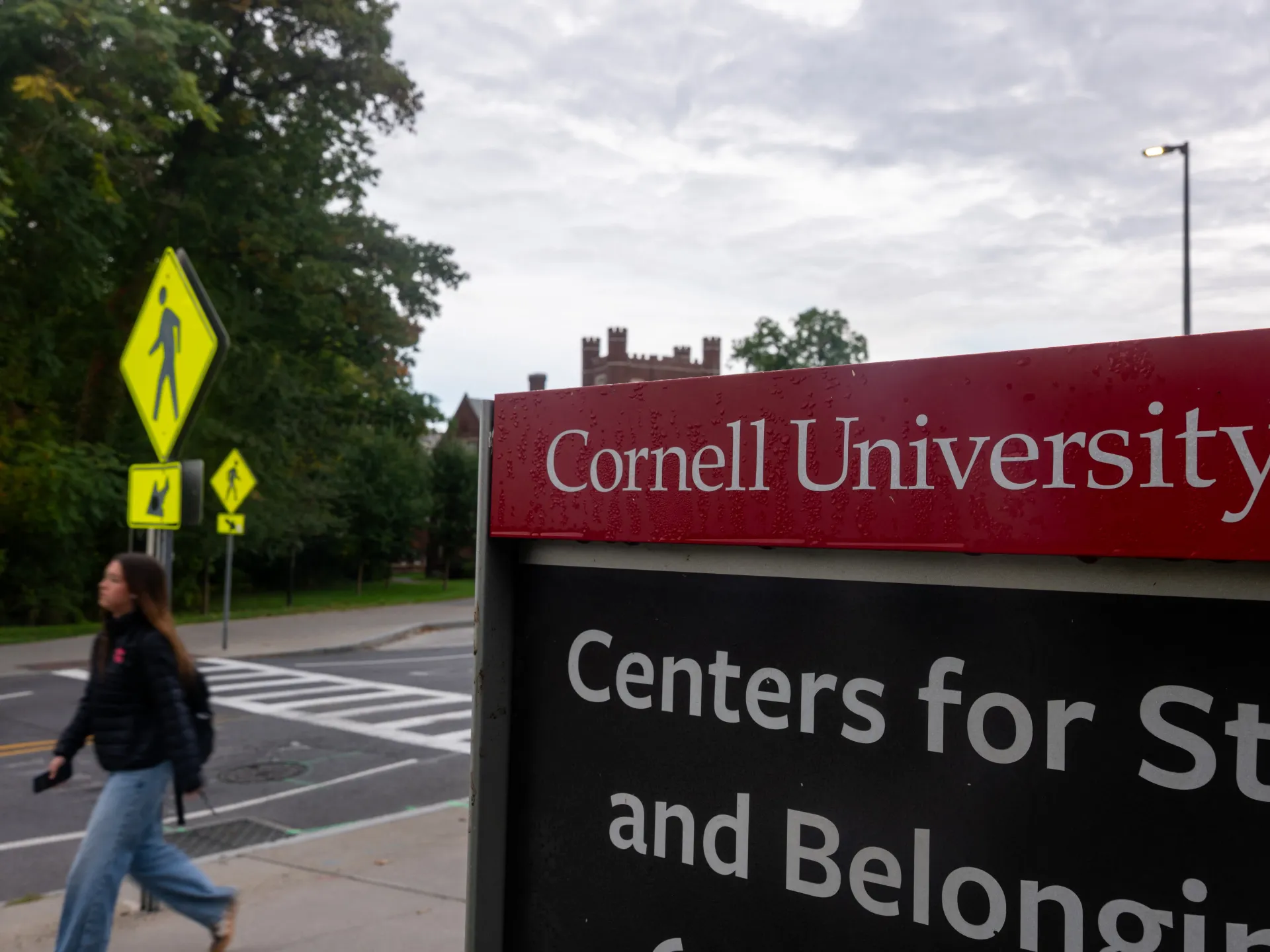
Cornell rape allegations renew push to change New York sexual assault law | Courts News
New York lawmakers are renewing a push to change the state’s sexual assault laws after prosecutors in the United States said the current rules made it difficult to bring charges for an alleged gang rape at a Cornell University fraternity house.
At issue is whether someone who willingly becomes intoxicated can be considered mentally incapacitated and therefore unable to consent to sex.
Recommended Stories
list of 4 itemsend of list
Under current New York law, only someone who was drugged or given alcohol without their knowledge can be considered “mentally incapacitated” because of intoxication and unable to consent. The same does not apply to someone who willingly consumed alcohol or drugs.
State Assemblyman Jeffrey Dinowitz and State Senator Nathalia Fernandez are sponsoring bills in their respective chambers that would change that.
In the state Senate, the bill is known as S10632, and in the New York Assembly, it is filed as Assembly Bill A101.
In a post on the social media platform X, Dinowitz said the proposed law would allow prosecutors to focus on whether someone was capable of consenting, rather than how they became intoxicated, and whether the accused “knew or should have known” that the person was unable to consent.
He said people who voluntarily drink or take drugs currently face significant barriers in sexual assault cases, particularly if they remain partly conscious or responsive during an alleged assault.
“The fact that someone made the choice to consume alcohol or another intoxicating substance should never be used to undermine their experience or shift responsibility onto the survivor when they’ve been sexually assaulted,” Dinowitz wrote.
The years-long reform effort has gained new momentum after Tompkins County District Attorney Matthew Van Houten said the existing law was one reason his office initially declined to pursue charges against several Cornell students accused of sexually assaulting a woman on October 19, 2024.
The woman, identified only as Jane Doe, was 20 at the time. She has since filed a civil lawsuit against seven members of the Chi Phi fraternity, as well as Cornell University and several other defendants.
The lawsuit alleges fraternity members gave her alcohol and ketamine and sexually assaulted her after she became incapacitated.
Doe also reported her allegations to campus police in November 2024.
In a statement explaining why his office did not pursue charges afterwards, Van Houten said Doe never claimed at the time that she had been involuntarily intoxicated, physically forced or unconscious. He also said she did not clearly express that she did not consent.
Any of those circumstances could have provided grounds for prosecutors to pursue rape charges under New York law, according to the district attorney.
“On the contrary, Jane Doe’s statement described her participation in drug use and sexual conduct as voluntary, conscious, and consensual,” Van Houten wrote.
“In this case, multiple prosecutors and criminal investigators reviewed Jane Doe’s statement and correctly determined the alleged facts as set forth in the statement do not constitute a crime.”
Since the lawsuit was filed, Van Houten’s office has faced intense scrutiny. It said on Monday that it will reopen the investigation and bring the case before a grand jury, which will consider whether there is enough evidence to indict anyone.
Van Houten also told CBS News on Wednesday that he had not seen a transcript of a campus police interview conducted three weeks after the alleged assault in which the woman said: “I can say with 100% confidence I was raped.”
Cornell has defended its handling of the case, saying it investigated the allegations and disciplined the accused students, with penalties ranging from suspension to expulsion.
On Wednesday, New York Governor Kathy Hochul said the university had agreed to her request to bring in an outside law firm to conduct a new investigation into its handling of the case.
Previous efforts to change New York’s sexual assault laws have foundered in the state legislature. Senate bill S10632 has passed its chamber but has never received a vote on the Assembly floor.
“Rape is the only crime that I’m aware of where, if the victim was drunk, they may not get justice,” Dinowitz, the assembly member, said in an interview with Reuters. “There shouldn’t be any difference in terms of the survivors of sexual assault between the people who are voluntarily intoxicated and who are involuntarily intoxicated.”
New York is one of 19 states where a person can be considered mentally incapacitated because of intoxication only if they did not willingly become intoxicated, according to Elizabeth Jeglic, a professor at John Jay College of Criminal Justice who studies sexual abuse.
“It doesn’t make sense,” Jeglic said. “If you’re incapacitated, you’re incapacitated, regardless of whether you consumed it yourself or somebody else gave it to you without your consent.”

Glastonbury punters fume over ‘s*** show’ website chaos as first set of 2027 tickets go on sale

GLASTONBURY punters have fumed over the ‘s*** show’ website chaos after the first set of 2027 tickets went on sale tonight.
Those who have managed to get their hands on them will travel to Worthy Farm in Somerset and dance away to their favourite tunes between Wednesday 23 June to Sunday 27 June next year.
Festival-goers logged online just before 6:00pm this evening (Thursday 1 October) to try and get their hands on ticket + coach passes for the five day music event.
They were told to enter the website at 5:50pm, and those who were on the page were given a place in the queue.
This was followed by a progress bar which showed how close you were to purchasing.
It comes as no surprise that they sold out within 30 minutes – meaning that loads of people have sadly gone without.


Those took to X, formerly known to Twitter, to complain about the system which made them miss out.
One fan fumed on the social media app: “Shit show.”
Another wrote: “Think I would have preferred to be stuck on two bars than get right to the end as they sold out.”
A third chimed in: “These 2 bars are going to give me nightmares for the rest of my life I fear.”
A fourth asked: “Anyone even get past 2 bars? On to Sunday.”
“TRAPPED at the abysmal two green bars…,” a fifth tweeted.
Hopefuls will be able to log back on this Sunday to try and purchase general admission tickets at 9:00am.

New restaurants to visit in Los Angeles in October 2026
Last year chef Debbie Lee debuted her long-awaited pocha in Highland Park: Yi Cha, one of L.A.’s best new bars, where Lee serves modern Korean bites that pair with artful cocktails and imported soju. Now she’s opened Mokja, a tandem cafe and market for Korean-leaning coffees, sandwiches, pastries and pantry goods. Enter Mokja through Yi Cha’s back alley and find sweet corn iced lattes, coffees topped with misugaru cold foam, and banana matcha lattes served alongside oxtail hand pies, Seoul-style breakfast plates, gochujang short rib onigiri, tomato-muchim pork belly BLTs, and a DIY ramyun station. In a hurry? Grab Lee’s premade bibimbap, mayak eggs, mandu, japchae and more from the refrigerators. If you’re shopping for your home, find coffee, mochi mixes, ice cream, hot sauce, black sesame spreads and other goods from local makers, plus imported Korean Oreos and chips, on the shelves around the cafe.
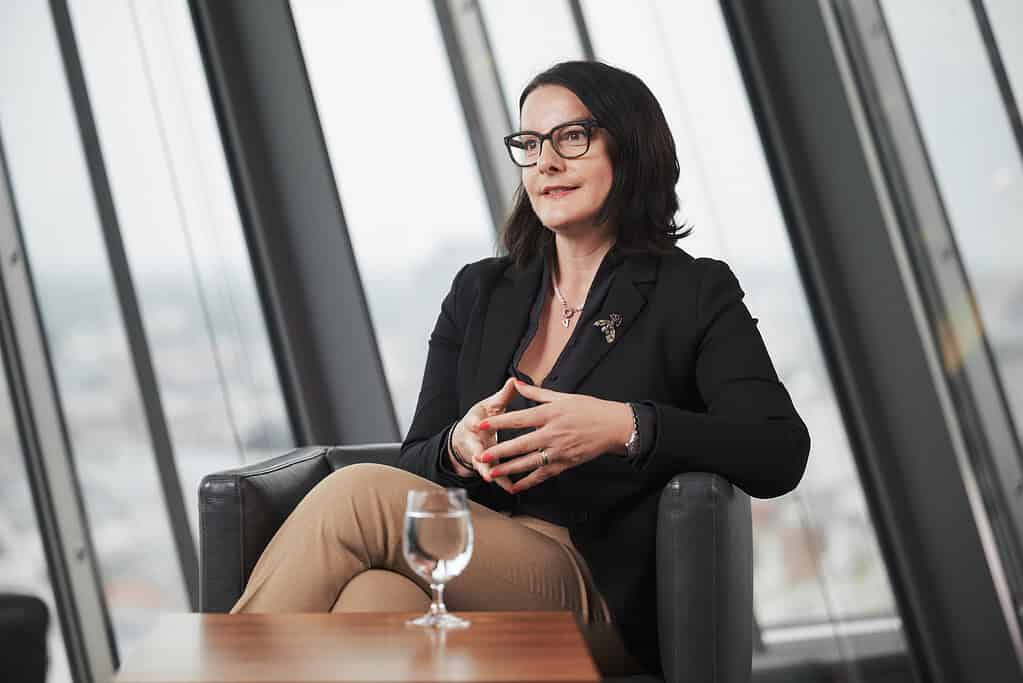
How RBI Is Using AI to Strengthen Relationship Banking
AI is rapidly changing banking. What are the biggest challenges and opportunities for clients and financial institutions?
Elitza Kavrakova: The biggest question for organisations today is no longer whether they should adopt AI, but rather how to do so responsibly and effectively.

Financial institutions and corporates face multiple challenges. They need to strike the right balance between innovation, regulatory compliance, cybersecurity and data governance. At the same time, there is a genuine risk of becoming overly reliant on AI.
While AI can significantly improve efficiency and decision making, it should remain a co-pilot rather than an autopilot. Human judgment, accountability and critical thinking remain indispensable, especially in areas such as risk management and compliance.
Clients also continue to value human interaction. Technology can enhance the client experience, but trust-based relationships remain at the core of banking.
How are client expectations changing and what does this mean for relationship banking?
Elitza Kavrakova: Clients increasingly expect real-time access to information, faster execution, greater transparency and more proactive services from their banking partners.
They are also looking for actionable intelligence that helps them anticipate developments and make better decisions. This is where AI has the potential to fundamentally change the role of relationship managers. AI will elevate relationship managers from being information providers to becoming strategic advisors.
At RBI, we already use data-driven insights to support client engagement. AI can help relationship managers better interpret and understand client needs, identify opportunities earlier and provide more relevant solutions to navigate increasingly complex environments. This can include next-best-offer recommendations, data-driven pricing decisions, more effective meeting preparation and stronger post-sales engagement.
AI can also help identify relevant developments earlier, enabling relationship managers to engage with clients in a more informed and meaningful way.

How is technology transforming transaction banking and client connectivity?
Sabine Zucker: Customers are increasingly interested in a smooth and seamless interaction with their bank. This requires strong connectivity between banking platforms and clients’ treasury or bookkeeping systems. APIs play a major role here, as they provide the basis for straight-through connectivity and support increasingly tailored client experiences.
Looking ahead, the integration of AI into transaction banking could drive a new wave of innovation, including smarter liquidity management, predictive cash-flow forecasting and advanced fraud prevention capabilities.
This will help banks meet rapidly changing client expectations. For example, a few years ago, corporates rarely used instant payments. Today, companies expect instant information on their liquidity position at any point in time, enabling them to make faster and better-informed decisions.
What will define successful AI adoption in the years ahead?
Sabine Zucker: There is no doubt AI will change the way we work and support us a lot day-to-day.
The challenge will be to use all the benefits AI offers without losing sight of the importance of maintaining personal relationships and human judgment.
Elitza Kavrakova: Successful adoption requires robust governance frameworks that address transparency, accountability, data protection, model validation and human oversight. AI can support decision-making, but responsibility must always remain with people.
We are particularly excited about developments in generative AI, predictive analytics, ecosystem banking through APIs and the continued digitisation of trade finance and cross-border transactions. These technologies are helping institutions move from reactive to predictive service models.
Ultimately, the institutions which will be most successful are those able to combine innovation with trust, responsible leadership and a strong understanding of clients’ needs. The winning model will blend human judgment, trusted relationships and AI-powered intelligence.
Discover practical insights and solutions for streamlining payment processes and driving operational efficiency. Click on the logo below

Supreme Court grants review of Trump administration’s mandatory detention policy for immigrants
WASHINGTON — The Supreme Court on Thursday agreed to review a Trump administration policy denying bond hearings for immigrants as the government carries out a sweeping crackdown.
The justices will consider whether immigrants who have been living in the U.S. have a right to a hearing to determine if they should remain detained while challenging their possible deportation.
The case will test a key pillar of the Trump administration’s hard-line immigration agenda.
Most appeals courts to have considered the issue have found that it violates federal law to detain immigrants, including those living in the U.S. illegally, without a bond hearing. Those decisions conflict with rulings by the 5th and 8th circuits, which held that immigrants accused of illegally entering and remaining in the U.S. must be detained while their deportation cases are pending.
The high court agreed to hear the case of Ricardo Aparecido Barbosa da Cunha, a citizen of Brazil. Authorities say he entered the United States illegally two decades ago and applied for asylum in 2016. He sought a bond hearing after an immigration judge determined that his detention was mandatory following his September 2025 arrest.
He has never been charged or convicted of a crime, his attorneys said. The court is expected to hear the case in the coming months.
President Trump’s administration had urged the high court to take up a different but related case that involves the broader constitutional implications of the new policy.
Attorneys from the Republican administration argue the circuits’ split is “disrupting the orderly administration of immigration law.” They say the nation’s courts have been inundated with thousands of petitions filed by immigrants challenging the government’s legal interpretation.
“The result is an unworkable patchwork of inconsistent immigration enforcement, where aliens present without admission are subject to mandatory detention in some circuits but are entitled to bond hearings and often released in others,” lawyers for the administration wrote.
The plaintiffs are immigrants represented by the American Civil Liberties Union, which says hundreds of district court judges have joined most circuits in rejecting the Trump administration’s new reading of the statutes. Plaintiffs’ lawyers say the administration is trying to deny bond hearings for immigrants apprehended anywhere in the U.S. — no matter how long they’ve lived in the country — rather than limiting the restriction to noncitizens stopped at the border.
“Millions of noncitizens could be affected by the government’s new interpretation,” ACLU attorneys wrote.
The Trump administration says its new mandatory detention policy is legal under a 1996 immigration law. The policy change departs from the practices of prior administrations, which typically allowed most noncitizens without criminal records to request a bond hearing if they were arrested away from the border.
Kunzelman writes for the Associated Press.

Football gossip: Quansah, Mora, Olmo, David, Endrick, Jeltsch
Real Madrid are keen on Bayer Leverkusen’s Jarell Quansah, Liverpool are monitoring Club Tijuana’s teenage midfielder Gilberto Mora and Roma remain keen on signing Real Madrid striker Endrick.
Real Madrid are showing an interest in Bayer Leverkusen’s 23-year-old England defender Jarell Quansah, who Arsenal made a bid for in the summer and was subject of an enquiry from Chelsea. (Bild – in German), external
Mexico’s teenage star Gilberto Mora, 17, is on Liverpool‘s radar although Borussia Dortmund and Benfica are also keen on the Club Tijuana midfielder. (Teamtalk), external
Spain and Barcelona midfielder Dani Olmo, 28, wants to finish his career with Dinamo Zagreb. (Fichajes – in Spanish), external
Canada forward Jonathan David, 26, is starting to convince Atletico Madrid that they should make his loan from Juventus a permanent £21m transfer. (Fichajes – in Spanish), external
Inter Milan are keen on Italy midfielder Alessandro Romano and might make a move for the 20-year-old, who is on loan at Calgliari from Roma, if Turkey international Hakan Calhanoglu, 32, leaves the club at the end of his contract next summer. (Gazzetta dello Sport – in Italian), external
Roma missed out on a loan move for Real Madrid striker Endrick, 20, in the summer but remain interested in signing the Brazil international in January. (Gazzetta dello Sport – in Italian), external
Barcelona made an enquiry about Croatia defender Josko Gvardiol last season but it was clear the 24-year-old did not want to leave Manchester City. (Mundo Deportivo – in Spanish), external
Barcelona and Inter Milan are monitoring Stuttgart defender Finn Jeltsch, with the 20-year-old German also attracting interest from Premier League clubs. (Sky Sports Germany), external
Bologna have agreed a deal to sign former Manchester United defender Matteo Darmian, 36, on a free transfer after the Italian left Inter Milan at the end of last season. (Fabrizio Romano), external

Who is Capt. Smit, Machchhar, the pilot of the Flydubai flight?
Captain Smit Machchhar from India is recovering from stab wounds he suffered in a Flydubai flight altercation.
Source link
School protests spread as fires, blockades deepen unrest in France | Protests News
Police have detained hundreds as students protest overcrowded classrooms, teacher shortages and crumbling facilities.
Published On 1 Oct 2026
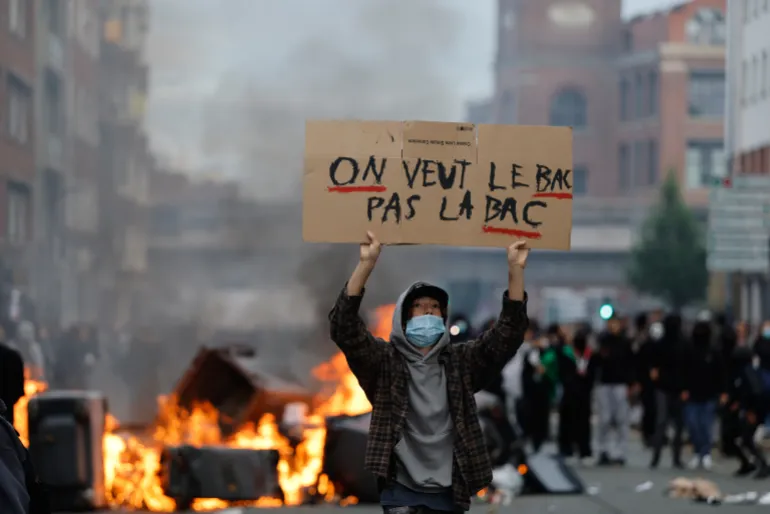
French students have set fire to bins and erected blockades outside schools in several cities, protesting overcrowded classrooms, teacher shortages and crumbling facilities.
Several school principals were injured, harassed or assaulted during blockades at high schools on Thursday, according to reports from regional education authorities, prefectures and union representatives.
Recommended Stories
list of 2 itemsend of list
Police have already detained hundreds of protesters at the lycees, which students aged 15 to 18 attend for their final three years of secondary education in France.
At Marseille’s Victor Hugo high school, the teachers were inadvertently splashed as a student attempted to throw petrol into a rubbish bin, local authorities said. Earlier, the prosecutor’s office had said the teachers had been assaulted and “doused in petrol”.
At another school in the city, Saint-Exupery high school, hundreds of young people surrounded a firetruck that had arrived to put out a blaze in the morning, police said. The attackers forced the firefighters to flee the vehicle, then set it alight.
In Nantes, firefighters extinguished a fire at a high school entrance following what regional education officials called a gathering “marked by violence towards staff”. In Strasbourg, trams were halted to “restrict the movements of rioters and demonstrators”, and students burned barriers on tram tracks, authorities said.
“There are 35 of us per classroom. With 35 degrees Celsius [95 degrees Fahrenheit] in summer, it’s unbearable. There aren’t enough toilets, and there are water leaks in some rooms,” Raphael, a 17-year-old who withheld his surname for fear of reprisals, told the AFP news agency outside a protest in Strasbourg.
“The building is falling apart, the cafeteria is too small. There’s zero budget, zero resources, not enough supervisors.”
His frustration echoes a wave of student anger that has spread across France since last week, as high school pupils protest and grievances snowball into nationwide unrest.
Some 340 demonstrations were under way outside high schools by mid-morning on Thursday, with more than 160 schools shut down as a result, police said.
University students joined in, blocking access to about 30 campuses, including in Paris and Marseille, according to a student union.
Authorities have reported many dozens of injuries – some from thrown objects, others reportedly from police riot-control projectiles.
Interior Minister Laurent Nunez said police have opened internal investigations into brutality allegations involving three students.
Prime Minister Sebastien Lecornu convened a crisis meeting and asked ministers to cancel upcoming official travel so authorities could focus on the demonstrations, his office said.
French Education Minister Edouard Geffray said that he would successively meet representative staff unions and parent and student associations on Friday.
The unrest has become entangled in the race to succeed President Emmanuel Macron next May. The government has accused the far-left France Unbowed party of encouraging the protests. Presidential candidate Jean-Luc Melenchon said Wednesday that his party “called for nonviolent methods of struggle” and criticised the government’s response as repressive.

Truth behind Celebrity Traitors’ Jerry Hall’s bonkers Bonnie and Clyde admission
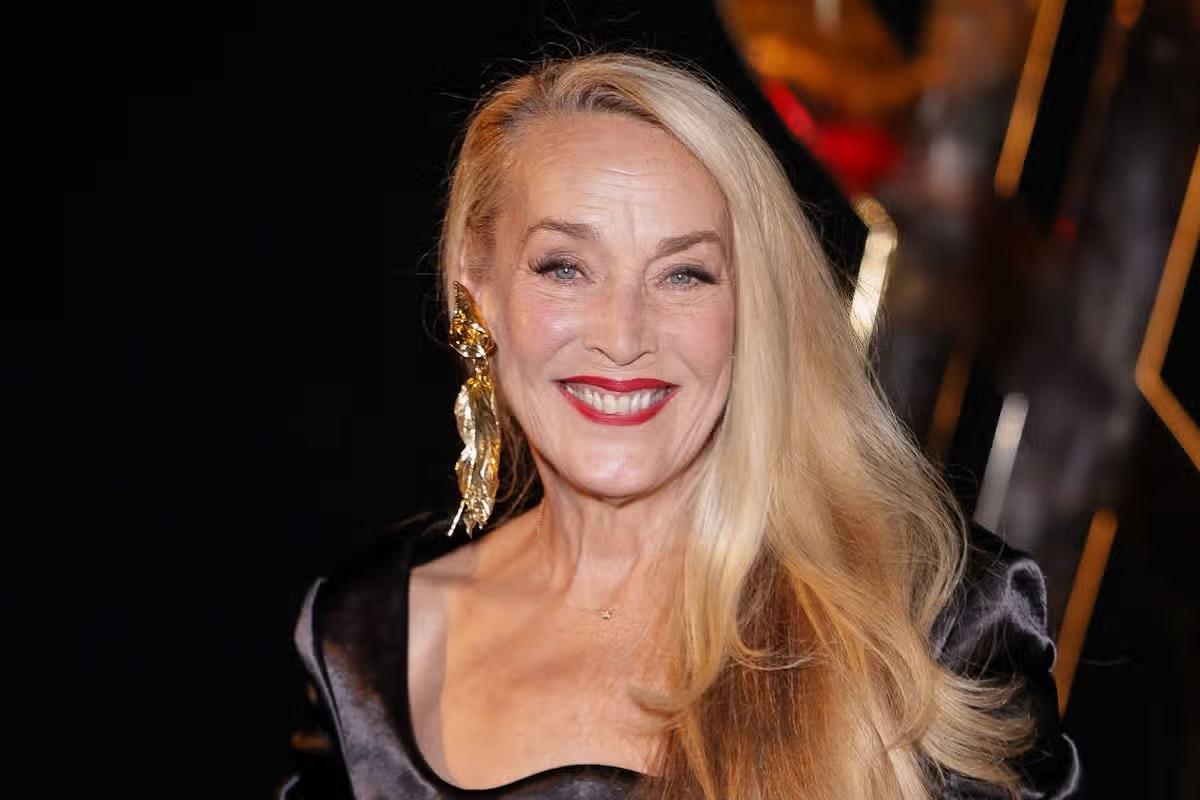
Jerry Hall might be one of the most recognisable faces in modelling, but tonight, the Celebrity Traitors star has claimed her uncle was responsible for the capture of Bonnie and Clyde

Jerry Hall is ready for her latest role as Traitor catcher(Image: Laurent VU/SIPA/Shutterstock)
Jerry Hall insists being the perfect Faithful is in her blood as she joins the cast of The Traitors – but just how accurate are her claims?
The fabulous Texan supermodel tells the cast of the BBC show that her uncle was responsible for capturing infamous American outlaws Bonnie and Clyde. The couple roamed the United States with their gang during the Great Depression between 1932 and 1934 indulging in a spree of criminal acts kidnapping, bank robberies and even murder.
They were eventually ambushed and killed by a law enforcement posse, led by retired Texas Ranger Frank Hamer. Jerry, 70, proudly tells her co-stars her uncle was in the group that finally caught the on the run lovers.
To see more of the stories you love from The Mirror and to find them easily in Google, make us your preferred source. Free and easy to do, just click on the link here to find more from The Mirror at the top of your feed.
“My relations were all law enforcement officers,” Jerry says. “My uncle was a Texan Ranger – he caught Bonnie and Clyde. So beneath this dumb blonde is a smart brunette.”
Bonnie and Clyde’s reign of terror came to a dramatic end on May 23, 1934, when law enforcement killed them in Bienville Parish, Louisiana. The six men who were responsible for the capture of Bonnie and Clyde were Texas Ranger Captain Frank Hamer, Texas Ranger Maney Gault, Dallas County Deputy Bob Alcorn, Dallas County Deputy Ted Hinton, Bienville Parish Sheriff Henderson Jordan and Bienville Parish Deputy Prentiss Oakley.
Only two of Jerry’s uncles are publicly named – Walter Zane Sheffield and Gerald W. Hall. However, it is possible that Jerry had more uncles on both her maternal and paternal sides, who were not publicly shared. Jerry was born and raised in Texas, where Bonnie and Clyde ran their crime ring. But while no direct link is known, Jerry and her sister, Cyndy, made a cameo appearance in the 1980 movie Urban Cowboy, which featured southern culture associated with the area.
Although The Traitors is filmed well in advance, in the Scottish Highlands, Jerry recently revealed that her children, daughters Georgia and Elizabeth, as well as sons Gabriel and James, with former partner, Mick Jagger, expressed their concerns.
Jerry said they told her age was not on her side if she participated in the show, which often involves gruelling and tiring challenges. “I did tell my four children, and I told Mick that if any of the children had a problem, they were to call him because I was busy,” she said.
Speaking to The Telegraph, Jerry went on to add: “They worry. They’re like, ‘You think you’re younger than you are. You and Dad are always doing things that you did in your twenties that maybe you shouldn’t be doing now.'”
However, while her children have warned her to slow down, Jerry is not taking any notice. Instead, she says she is “very competitive” and always wants to win during family games, as does her former husband, Mick, with whom she maintains a close relationship.
Like this story? For more of the latest showbiz news and gossip, follow Mirror Celebs on TikTok , Snapchat , Instagram , Twitter , Facebook , YouTube and Threads .

SA Asks: Does AMD still have upside after its latest rally? (AMD:NASDAQ)
To ensure this doesn’t happen in the future, please enable Javascript and cookies in your browser.
Is this happening to you frequently? Please report it on our feedback forum.
If you have an ad-blocker enabled you may be blocked from proceeding. Please disable your ad-blocker and refresh.

CNN chief Mark Thompson in talks to remain in role after Paramount takes over network
CNN Chairman and Chief Executive Mark Thompson could remain in his role at the news network after Paramount completes its deal to acquire the news network’s parent company, Warner Bros. Discovery.
Thompson, 69, is said to be in early stages of a discussions with Paramount Skydance Chief Executive David Ellison about continuing in the job he has held since April 2023, according to two people familiar with the matter who were not authorized to discuss it publicly.
The Wall Street Journal was first to report Thursday that Thompson has been approached by Ellison about staying with the network. A representative for Paramount declined to comment.
Retaining Thompson in his role would provide short-term relief to CNN staffers who are concerned about the change in ownership. As Paramount pursued its $111-million deal to acquire Warner Bros. Discovery — which is moving forward following a judge’s decision to settle an antitrust suit filed by state attorneys general who wanted to block the deal — the Ellison family have reportedly had discussions with President Trump about altering the network’s coverage, which he has often deemed as unfair.
As part of the settlement, Paramount agreed to the formation of an editorial oversight board that will monitor adherence to editorial independence from its owners and shareholders. The editorial board is part of an agreement to end the states’ antitrust fight that threatened to delay the completion of the deal for months.
Keeping Thompson at CNN raises questions of how CBS News Editor-in-chief Bari Weiss will be integrated into the new company.
Weiss, who joined the storied news division after Paramount acquired her contrarian digital news site the Free Press last year, has made major changes at “CBS Evening News” and the top rated newsmagazine “60 Minutes,” with no audience gains to show for it.
CNN insiders have been skeptical over how Weiss could take over the vastly larger and more profitable news organization based on her CBS track record so far.
CNN and CBS News are expected to consolidate some of their operations, such as its overseas bureaus. But there are obstacles to a rapid consolidation, as many CBS News employees work under union contracts. Most of CNN is not unionized.
But if Thompson remains, its likely he we will have the task of reducing costs, as the traditional TV audience that provides the bulk of revenues for both CNN and CBS News continues to shrink.
Thompson has been behind a major effort to generate more revenue from CNN’s digital operations, which now include a subscription streaming service that makes the channel available without a cable or satellite TV package. He oversaw the New York Times’ successful transformation into a dominant digital news product during his run as president and chief executive from 2012 to 2020.
The Paramount-Warner deal will close soon after a judge signed a settlement that ended the antitrust lawsuit brought by Calif. Atty. General Rob Bonta and 11 other attorneys general. The detente , however, has not cooled tensions between CNN and the White House.
CNN was scheduled to provide press pool coverage of Trump’s trip to Texas and Oklahoma on Thursday. But the White House removed the network from the pool, despite a judge’s order last week to block the administration’s attempt to ban access for some media outlets.
Last week, CNN, MS NOW and Politico were banned from White House grounds. Trump cited the outlets’ ongoing negative coverage of him as the reason for the ban. The administration later tried to argue in court that their coverage was a threat to national security.

Man City: HMRC urged to scrutinise tax implications of verdict revealed by Premier League
Manchester City will claim as part of their appeal that key sponsorship deals were funded by the Abu Dhabi government, rather than the club’s owners.
Owners Abu Dhabi United Group (ADUG) – a private investment company belonging to United Arab Emirates vice-president and deputy prime minister Sheikh Mansour – are said to have topped up the value of commercial deals as part of a “disguised funding scheme” to the scale of £830.69m.
This, it was argued, enabled the club to appear to comply with Premier League and Uefa financial rules.
However, as first reported by the Daily Mail and Times, sources have told BBC Sport that City are expected to tell an appeal board that they have evidence showing the money directed to sponsors came from the Abu Dhabi government, rather than from ADUG.
Premier League rules allow state-owned bodies to sponsor clubs.
The independent commission detailed how City had “denied there had ever been any disguised funding scheme of the type alleged by the Premier League. Its case was that [it] had misunderstood how Abu Dhabi sponsorship agreements had been funded… The reality was [the club contested] that Abu Dhabi sponsors had always been liable for all recorded sponsorship fees and all had in fact been paid to the club by Abu Dhabi sponsors from their own funds/resources.
“No part of any recorded sponsorship fee had been paid by ADUG or from using ADUG funds. Abu Dhabi sponsors had from time to time applied for financial assistance from the Abu Dhabi government toward their liability to pay the recorded sponsorship fees – such applications had been granted…”
The independent commission rejected this submission as “untrue”, saying: “We concluded that it was an ‘explanation’ that the club had concocted well after the event in an attempt to obscure and conceal the realities of the disguised funding scheme.”
City’s argument is likely to lead to renewed debate over the extent to which City’s ownership is separate from the Abu Dhabi state, and over the ramifications of club ownership with state connections.
Mansour is a member of the ruling family of Abu Dhabi, and the brother of UAE President Sheikh Mohamed bin Zayed Al Nahyan.
Since the takeover in 2008, City have insisted the club is a completely private enterprise, and not state-owned. However, some critics have questioned the distinction, with human rights campaigners claiming the ownership of City has been used to “sportswash” the UAE.
On Saturday, City chairman Khaldoon Al Mubarak referred to “irrefutable evidence” that he claimed supports the club’s claims of innocence. City have claimed the commission’s decision contained “clear material errors, of law, principle and fact, and is unsafe”.
It has emerged that Al Mubarak, who was appointed chairman of City following the takeover in 2008, is named as an Emirati diplomat on the UK government’s current directory of all foreign representatives.
Representatives of foreign states and their diplomatic staff “enjoy privileges and immunities under the Diplomatic Privileges Act (1964)”, giving diplomats immunity from prosecution under criminal, civil and administrative laws.
City’s principal sponsor Etihad Airways has said it is considering legal action against the Premier League, claiming the release of the commission findings had “damaging implications… despite the airline not being named in the redacted published findings”.
The UAE’s state-owned national airline said it “categorically rejects any finding, conclusion or implication that suggests the airline has ever been involved in improper commercial arrangements”.
Etihad is owned by sovereign wealth fund L’Imad which is chaired by the Crown Prince of Abu Dhabi, the son of the UAE president.
The Premier League declined to comment when contacted by BBC Sport.
Additional reporting from James Landale, diplomatic correspondent for BBC News.
Canada to fast track oil pipeline meant to diversify economy away from US | Business and Economy News
Carney declared the pipeline a project of national interest, smoothening its way to a single federal regulatory review process.
Published On 1 Oct 2026
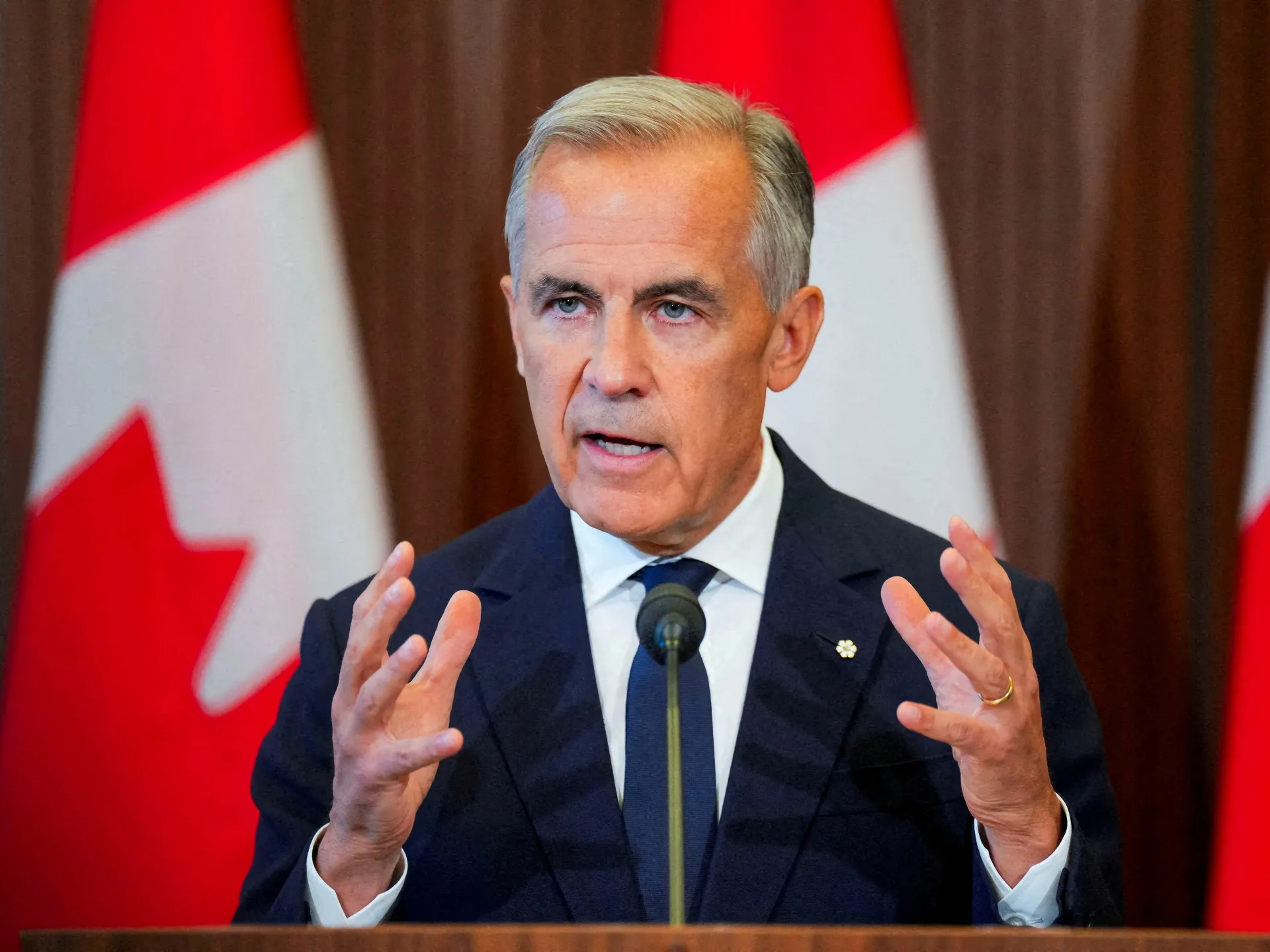
Canada will fast track the approval process for a new proposed crude oil export pipeline to its west coast that could generate billions in revenue and boost economic growth, Prime Minister Mark Carney has said.
Carney made the announcement on Thursday to fast-track the pipeline, which is a crucial part of his bid to diversify the economy away from the United States and help lessen the effect of US President Donald Trump’s tariffs.
Recommended Stories
list of 4 itemsend of list
Carney said Ottawa is officially listing the Pacific Link pipeline, which had been announced in July, as a project of national interest. That will ensure it proceeds through a single federal regulatory review process. He said Ottawa aimed to complete the process by September 1, 2027.
“A pipeline to the west coast is part of our mission to transform our economy, to double our non-US exports over the next decade … [and] to unlock our full potential as a global energy superpower,” he told reporters in Fort McMurray, hub of Alberta’s tar sands industry.
Ottawa says the 1 million barrel a day project would create 140,000 jobs and generate more than 20 billion Canadian dollars ($14bn) in gross domestic product (GDP) per year and 100 billion Canadian dollars ($70bn) in government revenue by 2060.
Canada currently has just one east-west oil export pipeline in Canada, the 890,000-barrel-per-day Trans Mountain pipeline. An expansion of that pipeline was completed in 2024, but it is already running at capacity.
For years, Canada has sent more than 90 percent of its crude oil exports to the US via pipeline. A new oil export pipeline could make Canada a major global energy supplier, as Asia’s top importers seek oil from outside the Middle East in the wake of the Iran conflict.
Filling the pipeline, however, would require new tar sands expansions of the type no company has undertaken in more than a decade.
The pipeline will be built by government-owned Trans Mountain Corp in coordination with Pembina Pipeline Corp. Alberta estimates it could cost between 35.2 billion Canadian dollars and 43.7 billion Canadian dollars ($24.7bn – $30.7bn).
The majority owners will be the federal government and the government of Alberta. Indigenous communities will be offered a minimum of 10 percent ownership interest.
Previous oil pipeline projects in Canada have faced strong opposition from environmentalists and Indigenous groups, resulting in the cancellation of some projects and leading to cost overruns and construction delays with others.
Alberta separatism
Carney made the announcement alongside Alberta Premier Danielle Smith in Fort McMurray in the heart of Canada’s tar sands, a move meant to mend relations with oil-rich Alberta as separatists push for a referendum on leaving Canada.
Alberta is holding a public vote on October 19 on whether to hold a referendum on leaving Canada. Smith has long complained that Carney’s predecessor, Justin Trudeau, hindered Alberta’s energy industry and fuelled separatist sentiment.
Smith said she would vote to keep Alberta in Canada and called the roughly 22 percent support for separation in a recent poll “still too high for my liking”.
“I don’t like the fact that many of our fellow citizens have given up on Canada,” Smith said, adding that the pipeline was an example of how “cooperative federalism can work in action”.
Asked what message Albertans considering separation should take from the announcement, Carney said it demonstrated that “Canada is working” and showed what the country could achieve by acting together.

Palestinian children in Israeli military detention | News
Israel imprisons hundreds of Palestinian children at a time, holding them indefinitely in military detention systems that traumatise the children. Their suffering was discussed during an event on the sidelines of the UN General Assembly High-Level Week.
Published On 1 Oct 2026
Big Brother fans finally realise where they’ve seen Omar before
The reality star may have already been known to some viewers before even stepping foot in the Big Brother house

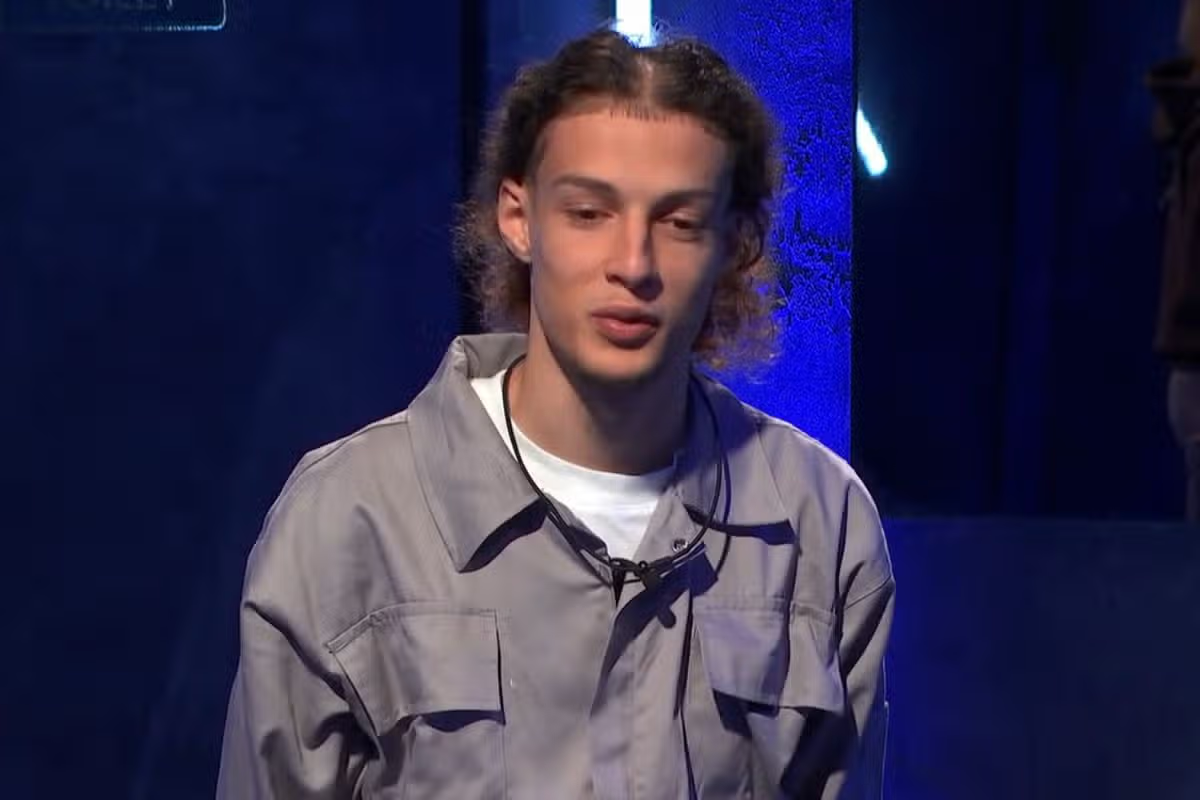
Omar is one of this year’s youngest housemates(Image: ITV)
Big Brother fans are just discovering why Omar El Mayer looks so familiar.
The 21-year-old Londoner was introduced on the ITV2 show as a jewellery seller, and claimed he would bring “a different energy” to the house ahead of his grand entrance. He added that should he win the show, he would “buy all the kids from my estate school shoes and give something back to my community.”
So far viewers have watched him forge a sweet relationship with co-star Rhianna, also 21. The pair have been going from strength to strength, with Rhianna recently praising her beau for his support during the House of Nothing twist, telling Big Brother she would have been unable to endure it if not for him.
While he has been a calming presence in the house for Rhianna, it seems Omar has reached his limit. Tonight’s episode (October 1) sees the star clash with both Rob and Yasmin in the wake of the housemates dancing on the table.
“This is mad – I put my bread on that table yesterday. And he’s got his feet on it. It’s horrible,” Omar says. As Rob cleans the surface and quips that it was “for the germophobes”, Omar doesn’t take kindly to the remark.
“It’s not germaphobia,” he clarifies, before adding: “Yesterday I put my toast on that table and ate it off the table. That means if I didn’t see you do that, today I would have put toast on top of your feet.”
Later on he tells Yasmin to stop “with the obnoxiously loud songs”, leading to a confrontation between the pair. Yasmin hits back, telling him: “Let your hair down. Have a laugh. It’s alright. F****** hell. I’m going to do what the f*** I please. Stop telling me what to do. You keep telling me what to do and I don’t like it.”
Amidst the drama, fans have worked out why the star looks familiar. That is because he is a rapper that goes by the stage name of PAIID, and he boasts close to 30,000 monthly listeners on the platform. He has also posted frequently online as a content creator, though his social media accounts are no longer accessible.
“WAIT… PAIIDGRAM IS OMAR FROM BIG BROTHER?! I KNEW I RECOGNISED HIM!!” one viewer remarked along with a montage of video clips of the reality star. Meanwhile another show fan took to Reddit to ask if others were aware of his past.
“Did anyone know Omar is a rapper, he goes by the name ‘PAIID’ on Spotify,” they started. “Also, he was a TikToker previously, he went by ‘paiidtt’ and ‘fxpaiid’. He deleted his account a few days before BB began, but there still are some reposts of his videos. I found this out now, I’m wondering if everyone already knows this or not.”
Big Brother airs Sundays to Fridays at 9pm on ITV2 and ITVX.
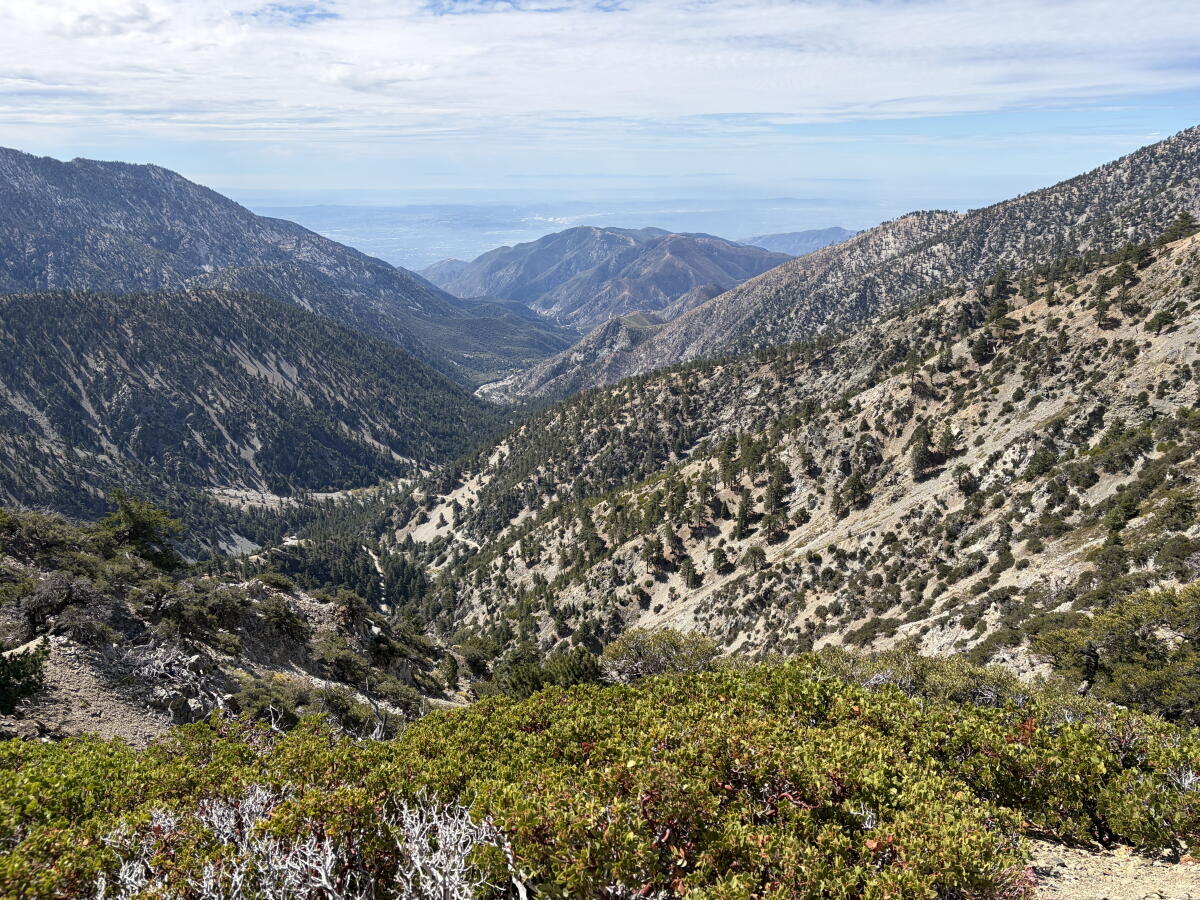
Unauthorized repairs of Devil’s Backbone Trail near Mt. Baldy to be fixed
This summer, Southern California hiker Mark Orr spotted a hazard he struggled to stop thinking about: a crumbling, narrowing section of the Devil’s Backbone Trail near Mt. Baldy.
Orr wanted to help.
In early August, he trekked about 5.6 miles from the trailhead near Manker Flat campground to the site, hauling 85 pounds of gear with him over two trips. Orr first spent two hours digging out a wider route and then built what he dubbed an “anti-erosion fence” by installing 30-inch rebar stakes, stainless steel wire, clamps, aluminum flashing and zip ties. A few weeks later, Orr posted a video documenting his work to his YouTube channel, where he’d previously shared about hiking and other DIY projects. In the video, which Orr has since made private, he said he’d never performed trail work.

A view from Baldy Road leading up the Mt. Baldy Notch in the San Gabriel Mountains.
(Jaclyn Cosgrove / Los Angeles Times)
The people of the internet were initially grateful. “I can’t imagine doing this in my backyard let alone at 9,350 ft. You are THE MAN,” one YouTube user wrote. “I’ve hiked the backbone dozens of times and will remember you with gratitude every time I come across this section,” another person said. One person said his son was one of the three people who died while hiking the Backbone Trail in late December, and he wanted to connect with Orr.
But, as the video’s view count ticked up, concern over Orr’s work mounted into rage.
Two camps developed: Those who lauded Orr’s efforts and those who felt he should be held accountable for what they argued was damage to the trail. “I give this guy an A+ on his intentions and effort,” a Reddit user wrote on a post about Orr’s video. “If a section is dangerous, it should ‘look’ dangerous. To make it look safe, creates a bigger hazard as people will come to rely/trust in what is actually a DIY retaining wall. What happens when that eventually gives way? What if someone is hurt/killed as a direct result of this DIY project?”
In this edition of The Wild, our weekly outdoors newsletter, I will report out the current status of the trail where Orr completed his work. I will discuss how we got here — where an individual, not the U.S. Forest Service, tackled a trail repair — and where we go from here, including how you can do your part without upsetting half the outdoors corner of the internet and violating federal policy.
First, let’s talk about Mt. Baldy and how people usually get there.

A segment of the Devil’s Backbone Trail that hikers take to the Mt. Baldy summit.
(Jaclyn Cosgrove / Los Angeles Times)
Mt. San Antonio, commonly referred to as Mt. Baldy for its appearance, is a 10,064-foot peak in the San Gabriel Mountains and is the highest point in Los Angeles County.
Outside of winter, when much of the trail can become covered in snow and ice, most hikers reach Mt. Baldy via two routes. They start near the Manker Flat campground and walk Falls and Baldy roads until they either turn north-ish onto the Baldy Bowl Trail, often referred to as the “Ski Hut” route because hikers pass the Sierra Club’s green building, or hikers continue on Baldy Road until they reach the Mt. Baldy Notch. From here, hikers start the Devil’s Backbone Trail first by trekking up a fire road and then taking on a grueling, narrow 1.9(ish)-mile jaunt that gains about 1,500 feet and always makes me question my life choices about halfway through.
The Devil’s Backbone is named as such because of its shape, including segments where hikers walk a narrow stretch with steep drop-offs on both sides. This steepness is part of what makes it susceptible to erosion — and why only serious, well-equipped mountaineers should traverse it during the winter.

The Devil’s Backbone Trail, per the U.S. Forest Service, is 3.24 miles long, starting at Baldy Notch and ends at Mt. Baldy Summit.
(Jaclyn Cosgrove / Los Angeles Times)
On Sunday, I headed up Baldy Road to see how Orr’s repairs were holding. I am active in the r/socalhiking Reddit community, where I first learned of the story, and had already seen images showing a hole developing at the start of Orr’s repairs.
But no one had pinpointed exactly where they were.
Once I reached the Devil’s Backbone, a hiker warned me about a particularly steep and narrow section he’d just traversed.
“Is this the part with the repairs?” I asked.
“No, that part is way up, and it is already breaking down,” he told me.
I then chatted with two high schoolers coming back from summiting Baldy, one of whom hopes to attend a University of California school to study environmental science. “A little bit of rain,” and it’s gone, he said of Orr’s repairs.

A segment of a repair performed by a local hiker that has started to fail.
(Jaclyn Cosgrove / Los Angeles Times)
Just over a mile into the Devil’s Backbone, I spotted the shiny aluminum of Orr’s anti-erosion fence. And I spotted the hole where fill dirt has fallen through. Before Orr started his work, the trail was narrow — his work did widen the route, but how long will it hold?
Alan Coles, a trail crew leader with the San Gabriel Mountains Trailbuilders, which maintains routes in the backcountry and Baldy area, told me the answer is probably not long, especially given the rain and snow we could get this winter from El Niño.

A segment of the Devil’s Backbone Trail where a hiker attempted to widen and repair the crumbly trail.
(Jaclyn Cosgrove / Los Angeles Times)
“Taking another look at the video, the problem with the trail may be due to a buildup of material washing down from above,” said Coles, who has 35 years of trail maintenance experience. “Often the best solution is to dig it out and lower the trail to the original alignment, which will also widen it. The problem with the repair is that the hardware he installed would make that difficult. In time, the material he used will come apart, and those stakes will get more exposed, leading to problems with people tripping on them, especially if there is snow.”
Coles said to begin work in Angeles National Forest, he must submit a list of trails that his organization wants to work on to the U.S. Forest Service. The agency’s archaeologist, biologist and other technical experts will review his list. If there are any issues with a particular trail that Coles has identified needs repairs — like if an endangered species is known to live in a creek next to the trail — the Forest Service could deny his request, thus leaving the trail unmaintained.

A hiker walks near the hole created by unauthorized repairs performed in early August.
(Jaclyn Cosgrove / Los Angeles Times)
Coles said the Devil’s Backbone Trail is a “very difficult repair” for a lot of reasons, including its high altitude and the need for a crew to get permission to use the fire roads to shorten the distance they have to haul their gear. Coles said hikers often ask him when his crew will work on the Three T’s Trail, as the route has several downed trees and other issues, and his crew faces similar access issues.
Coles said he sympathizes with Orr’s reasoning for repairing the trail: People died in that area.
“His heart’s in the right place, but it really needs to be done with someone who says, ‘OK, here’s how you properly do a repair like that,’” Coles said.
It’s impossible when thinking about Orr’s repairs not to think about the old adage of, “The road to hell is paved with good intentions,” and the brutal irony is that, once you reach the Devil’s Backbone, you’re going to need more than that.

Two hikers navigate down the Devil’s Backbone Trail after summiting Mt. Baldy, the highest point in L.A. County.
(Jaclyn Cosgrove / Los Angeles Times)
When I spoke to Orr after my hike, he said he hopes that he can join the trail crew to remove what he did and repair the trail properly.
“The first thing is, it was nothing but well intentions by somebody who loves the mountain and wants it to be safer for everybody,” Orr said. “I totally get that my first crack at this, I didn’t do everything right, and I’m actively working with the San Gabriel Mountains Trailbuilders to get it right before this winter.”
The final challenge, though, will be getting officials at the U.S. Forest Service to approve the work plan. A spokesperson at Angeles National Forest did not respond to my request for a comment or an interview for this story.
Orr’s trail repairs come at a time when outdoors lovers are feeling particularly protective of public lands. The Trump administration has continued its efforts to peel back layers of environmental protections, like the Roadless Rule, raising the alarm of park advocates who fear not even Yosemite is safe from development.

The sunset as viewed Sunday on a trail often referred to as the “Ski Hut” route.
(Jaclyn Cosgrove / Los Angeles Times)
At the same time, the U.S. Forest Service and National Park Service have both seen massive staffing cuts during Trump’s second term, and this comes after decades of underfunded trail construction and repair.
In the early 1980s, “each of the five Angeles Forest districts had a full-time, paid trail crew of eight to 10 members. Now there are only summertime crews with three to four members. Forest Service officials and the agency’s critics agree that if it were not for the volunteer corps of 700 trail builders, the mountain paths would not be repaired for years,” according to a 1993 Times story.
Those crews, Coles said, were one of the casualties from a swath of federal budget cuts in the 1980s. A 1986 Times story noted that, in just four years, “the amount of federal money allocated for trail maintenance nationwide and in Southern California … dropped about 50%.”
“For the most part, without the volunteers, you wouldn’t have a trail system today,” Angeles National Forest official Don Gilliland told The Times in 1993.

The sun goes down, casting orange and pink hues through the clouds above the San Gabriel Mountains near Mt. Baldy Village.
(Jaclyn Cosgrove / Los Angeles Times)
The agency continues to rely heavily on volunteers. The U.S. Forest Service estimates that it has about $10.8 billion in deferred maintenance, including $241 million in deferred trail maintenance and almost $70 million in trail-bridge deferred maintenance, according to a recent budget document.
In an analysis of that backlog of work, officials with the U.S. Government Accountability Office heard from one regional official who told them that the trail maintenance program “is held together by Band-Aids and baling wire.”
If you’d like to be part of that baling wire, you can join Orr in joining a local trail crew. There are several who service the San Gabriel Mountains and their foothills.
It is easy to read about Orr’s efforts and point out the obvious mistakes he made. It’s another thing to take action, whether that’s donating to local trail crews or volunteering on their work days. I’ll see you out there, focusing on the latter.

3 things to do

A coyote drinks water puddling near the golf course at Griffith Park.
(Mel Melcon / Los Angeles Times)
1. Document dicots and deer in L.A.
The Los Angeles Public Library, along with other city agencies, will launch this year’s L.A. Nature Quest at 9 a.m. Saturday at the Griffith Park Visitor Center. The L.A. Nature Quest is an annual monthlong effort to document as much of L.A.’s flora and fauna as possible using iNaturalist, a citizen science app. Attendees will be guided by rangers and other experts in a morning of outdoor exploration and nature journaling. Downloading iNaturalist beforehand is recommended. Register at eventbrite.com.
2. Sit down and spy birds in Pasadena
The Pasadena Audubon Society will host a seated birding experience at 8 a.m. Saturday on the Gamble House lawn (4 Westmoreland Place in Pasadena). Guests should bring water, sunscreen, a lawn chair or blanket, and a hat. Participants can bring their own binoculars, but there will be some to loan out for those without. Register at eventbrite.com.
3. Marvel at mushrooms in Monrovia
Monrovia’s Canyon Park Nature Center will host the opening reception for the Mushrooms of the San Gabriel Mountains at 10 a.m. Sunday. Mycologist Aaron Tupac will share with guests about how and why they photographed the specimens shown in the exhibit, along with sharing information about our local fungi populations. Learn more at Tupac’s Instagram page.

The must-read

Biologists collect olive ridley sea turtle eggs from nests on Southern California beaches.
(Huntington Beach Police Dept.)
In mid-September, two heart-shaped olive ridley sea turtles made history when they dug nests on Seal and Huntington beaches, marking the first documented natural sea turtle nests on the U.S. West Coast. Times staff writer Corinne Purtill wrote that biologists and cheloniophiles barely had time to celebrate before realizing that these nests were at risk of being destroyed by incoming storm surges and high tides. Biologists recovered just over 200 eggs. “We had to make some quick decisions,” said biologist Jonathan Snyder of the U.S. Fish and Wildlife Service at the Aquarium of the Pacific in Long Beach on Friday. “This is the decision that we made, and I think it’s the best one for species recovery.”
Happy adventuring,

P.S.
Montrose Search and Rescue recently highlighted the perils of taking the wrong route to hike Strawberry Peak. Strawberry Peak, visible from several L.A. hikes, is the highest point in the front range of the San Gabriel Mountains. Montrose Search and Rescue recently rescued hikers, though, who’ve ended up on the mountaineering route. Their video highlights how crucial it is to know your route before you go — and to ensure you have a physical map with you in case you get lost. Stay safe out there, folks! (And don’t hike Strawberry Peak right now — it’s too hot.)
For more insider tips on Southern California’s beaches, trails and parks, check out past editions of The Wild. And to view this newsletter in your browser, click here.

How Powerful Should Venezuela’s Next President Be?
Photo: Acting President Ramón J. Velásquez (1993–1994) and his cabinet on the last day of his term. Dr. Velásquez, both during his brief tenure and previously at the helm of a special commission, was a leading proponent of decentralization in the late 20th-century. | Source: Archivo Fotografía Urbana.
The next democratically elected president of Venezuela will inherit an office that is simultaneously too powerful and not powerful enough.
Too powerful because decades of centralization have placed extraordinary political, fiscal and administrative authority in Miraflores. Not powerful enough because whoever inherits it will also confront a damaged bureaucracy, weak public services, deteriorated infrastructure and institutions that may still be controlled by political adversaries.
That combination will make concentration tempting.
A new government will have an enormous reconstruction mandate and voters impatient for results. Every institutional restraint will risk looking like another obstacle left behind by chavismo. Decentralization can wait until the State is stabilized. Congressional procedures can wait because the crisis is urgent. Extraordinary executive authorities can be justified because ordinary government is too slow.
Many of those arguments will contain some truth.
That is what makes them dangerous.
Chávez inherited Venezuela’s presidentialist political culture and radicalized it.
If Venezuela wants this transition to be the last one it needs, the country cannot simply transfer the powers accumulated in the presidency to someone more democratic. But neither can it respond to authoritarianism by constructing an executive incapable of governing.
The question is not whether Venezuela needs a strong president or a weak one. It needs to decide what the president should actually be strong enough to do.
Miraflores was powerful before Chávez
Chavismo radically expanded executive power, but it did not invent Venezuelan presidentialism.
Long before Hugo Chávez, the presidency occupied an unusually commanding position over the political system. Oil reinforced that arrangement. Whoever controlled the national government controlled the principal source of public revenue, and the ability to distribute that revenue made Caracas not merely the political center of Venezuela but the financial center on which much of the rest of the government depended.
The result was a particular understanding of political effectiveness. Presidents were expected to not merely administer the executive branch but to solve national problems, distribute resources, arbitrate conflicts and impose direction on the State.
Chávez inherited that culture and radicalized it.
Carlos Rangel would have recognized something familiar in the phenomenon. His critique of Latin American political culture repeatedly returned to the attraction of the providential leader: the politician whose extraordinary personal mandate supposedly allows him to rise above institutions that appear slow, compromised or incapable of producing the transformation the country requires.
A new democracy has to be built for the political society Venezuela actually has.
Chavismo gave that tradition a twenty-first-century vocabulary. The leader possessed a direct relationship with the people. Institutions that resisted him therefore did not represent legitimate constraints on democratic power; they interfered with the popular mandate.
That logic did not begin with Chávez, and removing chavismo will not automatically remove it.
This is one reason institutional design matters more than hoping Venezuela will simply develop a different political culture. A new democracy has to be built for the political society Venezuela actually has, including its recurring attraction to presidents who promise to cut through institutions rather than patiently govern through them.
Decentralization was one answer
Venezuela has attempted to solve part of this problem before.
The decentralization reforms beginning in 1989 transformed Venezuelan politics by allowing voters to directly elect governors and mayors. They created alternative centers of democratic legitimacy, allowed regional leaders to build careers outside national party hierarchies and weakened the assumption that every important political decision had to originate in Caracas.
Those reforms were real democratic progress.
They also occurred during the accelerating crisis of the political system that had governed Venezuela since 1958. Carlos Andrés Pérez was attempting a profound economic transformation while confronting social unrest, two coup attempts, resistance within his own party and an increasingly fragmented political environment.
Enough independently powerful actors with absolute vetoes can also make coherent government extraordinarily difficult.
It would be wrong to claim that decentralization caused Pérez’s downfall. The crisis of his second government had far deeper causes. But the period should caution against the assumption that dispersing power automatically produces better government. A political system needs restraints. It also needs the capacity to reach decisions.
Juan Linz famously warned that presidential systems contain an inherent problem of competing legitimacy: both the president and the legislature can claim a direct mandate from voters. Venezuela could face that problem almost immediately in a transition. A newly elected president may claim a national mandate for reconstruction while legislators, governors, courts and other institutions exercise equally legitimate powers to resist particular policies.
Those conflicts are not defects but rather an essential part of democracy.
But enough independently powerful actors with absolute vetoes can also make coherent government extraordinarily difficult. The goal cannot therefore be to create as many obstacles to presidential action as possible.
Decentralization has to mean power, not administration
Chavismo subsequently demonstrated another weakness in Venezuela’s earlier decentralization: elected local government does not necessarily amount to decentralized power.
A governor who depends overwhelmingly on transfers determined in Caracas may be politically elected but remains fiscally vulnerable to the center. A municipality with responsibilities but inadequate revenue possesses decentralization on paper. A regional government whose police, infrastructure projects or public services can be bypassed by parallel national authorities is autonomous only until Miraflores decides otherwise.
Chávez and his successors became adept at exploiting these weaknesses. Political authority could be recentralized, resources redirected, parallel institutions created and opposition-controlled governments bypassed without formally abolishing governors or mayors.
A president who negotiates every administrative action with multiple institutions would not protect democracy for very long. It could instead discredit it.
A serious decentralization therefore has to involve more than another constitutional declaration that Venezuela is a federal State.
It must ask where revenue is collected, who controls it, which responsibilities genuinely belong to states and municipalities and which functions require national coordination. Regional governments need enough authority and predictable resources to govern without requesting political permission from the president. But the national government must retain enough capacity to maintain common standards, respond to national emergencies, redistribute among regions and preserve the Venezuelan State as a functioning whole.
That balance is much harder than simply transferring competencies from one level of government to another.
The State must still be able to act
An executive constrained by law is not the same thing as an impotent executive. The Venezuelan president should be capable of executing a legally approved budget, directing the national administration, coordinating responses to disasters, conducting foreign policy and implementing the program on which voters elected the government. Rebuilding infrastructure, stabilizing public finances and restoring basic services will require a national government capable of making decisions and making those decisions stick.
A presidency that must negotiate every administrative action with multiple institutions would not protect democracy for very long. It could instead discredit it. Citizens judge democratic government partly by whether it governs. If elections repeatedly produce leaders incapable of responding to crime, blackouts, inflation or deteriorating public services because every decision disappears into institutional paralysis, frustration with democratic restraint will eventually become politically valuable. The politician promising to eliminate the obstacles will always be waiting.
Institutional design has to emerge from Venezuela’s own history and needs.
Machiavelli understood the underlying problem centuries before modern constitutionalism gave it different terminology: a political order that cannot preserve itself will not remain a political order for long. Democracies require enough power to respond to genuine threats.
The danger lies in what happens next.
Emergency authorities created to save the State can outlive the emergency. Executive discretion justified by reconstruction can become normal government. A president given extraordinary authority because democratic institutions are initially weak acquires the ability to ensure that those institutions remain weak.
Venezuela has already lived that cycle.
Miraflores should matter less
The difficult conclusion is that democratic reconstruction will require whoever next controls the presidency to surrender powers at precisely the moment when there will be compelling reasons to retain them. That is a much harder political proposition than replacing chavista officials.
Someone who has spent years fighting to reach Miraflores may arrive there facing a devastated country and discover an arsenal of executive authority that could make reconstruction easier. It will be extraordinarily tempting to argue that institutional reform should come later, after the emergency has passed and the country has stabilized.
But democratic restraints are easiest to support when they constrain somebody else. Their real test comes when they constrain us.
The president should not determine whether an opposition governor receives the resources necessary to govern. The executive should not be able to transform regulatory authority into political discipline. Emergency powers should expire without depending on presidential generosity. Institutions capable of investigating the government should not owe their survival to that government’s continued support.
None of this necessarily requires turning Venezuela into a parliamentary republic, copying the United States or mechanically importing someone else’s federal model. Institutional design has to emerge from Venezuela’s own history and needs.
But one principle should survive whatever arrangement eventually emerges: winning the presidency should not mean winning the State. That principle protects more than the opposition, it also protects the president.
Winning should give politicians the authority to govern without giving them the tools to decide whether anybody else will ever govern again.
A system in which the loss of Miraflores does not mean losing access to every meaningful source of political authority makes electoral defeat less existential. Governors can govern. Legislators retain influence. Parties can preserve territorial organizations. Former incumbents can imagine returning through elections rather than manipulating the State to avoid leaving. Distributing power can therefore make alternation easier to accept.
The point is not to make political victory meaningless. Elections must have consequences. Governments need enough authority to implement different programs or democracy becomes little more than a ritual for changing administrators.
The objective is narrower: winning should give politicians the authority to govern without giving them the tools to decide whether anybody else will ever govern again.
That is the distinction Venezuela failed to maintain.
And it brings three problems of institutional reconstruction together. Venezuela needs institutions that remain democratic regardless of who occupies them. It needs a State capable of implementing rules while remaining bound by them. And it needs political power distributed widely enough that no single electoral victory becomes an ownership of the Republic.
For 25 years, Venezuela’s political system increasingly revolved around a simple question: who controls Miraflores?
A durable democracy will require making the answer matter considerably less. The next president of Venezuela should inherit enough power to govern the country, but considerably less power to define it.