





Dodgers must break their reliance on home runs to beat Braves
The most impressive number the Dodgers put up this season was 100 — the games they won. They had to do a lot of things right to get there.
No Dodger ranked among the top 16 in the majors in home runs or the top 37 in RBIs, yet they were fourth in runs scored. How? They were third in the majors in walks and near the bottom in strikeouts, which allowed them to manufacture runs by stringing together long innings rather than relying on the long ball.
Two games into the postseason, that script has flipped. After Sunday’s 3-2 loss to the Braves, the Dodgers head to Atlanta with their best-of-five National League Division Series tied. Suddenly the Braves, who will start ace Chris Sale on Tuesday, have the edge.
“Getting the split in this place against these guys, yeah, it’s awesome,” Braves manager Walt Weiss said.
All seven of the Dodgers’ runs in the NLDS have come on five home runs, three of them with the bases empty. The Dodgers are 0 for 9 with men in scoring position, stranding 13 runners. They’ve also struck out three times more often than they’ve walked and are batting .215 against the relay team of 10 pitchers Atlanta has used.
“We didn’t throw out a bunch of hits, but there was still traffic,” Dodgers manager Dave Roberts said. “We didn’t need many hits tonight to have a different result, and we just couldn’t get it.”
Sure it’s a small sample; just two games. Yet it should be a troubling one for the Dodgers, the two-time defending World Series champions.
“Sometimes it’s just you can’t hit,” said Mookie Betts, who walked twice. “I mean, there’s nothing really you can do to explain that. You’ve just got to be in the moment and come through. We had some moments today [when] we didn’t come through.
“That’s part of the game. We’ve just got to keep giving ourselves moments, and eventually something will happen.”

“We’ve got to find a way to score some runs without hitting a home run,” added Freddie Freeman, who homered Sunday and has three hits in the series. “That’s our biggest thing right now. So keep getting guys on base and get that big hit.”
Freeman said the Braves have done a good job keeping the Dodgers hitters off-balance by emptying their bullpen, sending in a fresh pitcher every couple of innings.
“It’s tough because you’re facing a different arm every single time you’re going up there,” Freeman said. “It’s different angles, different velocities, different things. So stringing hits together is very hard.
“This is the playoffs. We’re not going to score eight to 10 runs. It’s hard. Pitching staffs are good.”
Dodgers outfielder Teoscar Hernández wondered whether the Braves’ game plan might soon backfire. Aside from Sale, Weiss has few pitchers left the Dodgers haven’t seen; eventually they’ll catch up, he says.
“We’ve seen basically the best out of the bullpen,” Hernández said. “We can have a better plan for Tuesday and Wednesday.”

Will Smith reacts after popping out during the fifth inning in the Dodgers’ 3-2 loss to the Braves on Sunday.
(Eric Thayer / Los Angeles Times)
Although the Dodgers committed the second-fewest errors and gave up the fewest unearned runs this season, they haven’t looked sharp defensively in the postseason, with all three Atlanta runs Sunday coming with two outs.
The Braves loaded the bases in the first inning on a single and two walks before scoring when a diving Betts snared a Mauricio Dubón grounder up the middle, but threw wild and late to first, enabling Ronald Acuña Jr. to score. They then went ahead to stay in the fifth on a line drive to left that Hernández misplayed into a triple, followed by reliever Kris Bubic’s wild pitch.
“I didn’t think he hit it that good,” Hernández said. “I didn’t break in, but I broke to the side. And then when I realized, it was too late.”
Atlanta’s final run came in the seventh when Michael Harris II one-hopped the wall in right-center, allowing Matt Olson, running from first on the full-count pitch, to score.
Now the advantage swings to the Braves, who go to Truist Park, where they had the second-best home record in the league.
“We knew it was going to be a battle. We knew those guys weren’t going to go down,” Roberts said of the Braves.
“Now it’s a three-game series.”

France vs Belgium: UEFA Nations League – Olise, De Bruyne, teams and format | Football
EXPLAINER
Only one point separates Group A1 leaders France and second-placed Belgium before Monday’s clash.
Published On 5 Oct 2026
Who: France vs Belgium
What: UEFA Nations League 2026-2027, Group A1 match
Where: Stade de France, Saint-Denis, France
When: Monday at 8:45pm (18:45 GMT)
How to follow: Al Jazeera Sport will bring you all the build-up and live updates from 15:45 GMT.
Two-time world champions France host Belgium in the last of four Nations League games played over this extended international window.
Recommended Stories
list of 4 itemsend of list
Monday’s clash in Saint-Denis pits the top two teams in A1 against each other with France looking to complete the double in this league phase after their initial victory in Brussels in late September.
France and Belgium both enter this match with their creative stars in red-hot form. Michael Olise scored a goal in back-to-back matches while Kevin De Bruyne’s double steered Belgium to victory last time out.
However, Belgium will have to do without De Bruyne for the Les Bleus test with the midfield sensation suspended alongside their captain, Youri Tielemans.
Here’s all you need to know about France vs Belgium:
What is the UEFA Nations League?
The UEFA Nations League was founded in 2018 to reduce the number of friendlies and give nations competitive matches against equally ranked teams.
In this competition, countries from across Europe participate in a league structure that features promotion and relegation.
How does the UEFA Nations League work?
The teams compete across four divisions, facing every other team in their group twice: once at home and once away. The league phase ends in November.
In the top-most league, League A, the top two teams from each group go through to the quarterfinals, which will take place in March.
The finals will again be contested between four teams. The host and the dates of the finals have not been confirmed yet.
How have France and Belgium played in the Nations League?
France lead Group A1 with seven points from three games.
Belgium are second in the group with six points.
- Italy 0-2 Belgium
- Belgium 0-1 France
- Belgium 3-0 Turkiye
France vs Belgium: Head-to-head
- Matches: 79
- French wins: 30
- Belgian wins: 30
- Draws: 19
France vs Belgium: Form guide
France: D-W-W-L-L
Belgium: W-L-W-L-W
What have the coaches said?
Zinedine Zidane (France): “We always want to win. We are competitors. The most important thing is to prepare well for matches and to feel comfortable on the pitch. I am very satisfied with the mentality I have seen so far. I have clear convictions. I love the French national team, and I have top-class players, but I know it will take time. I am very happy with what I have seen.”

Mark van Bommel (Belgium): “France have an exceptional amount of quality. They’re a complete team. In the first match, however, we should have taken at least a point. So it is possible tomorrow. We have to be top in all areas.”
Team news and predicted lineups
France
Matteo Guendouzi and Dayot Upamecano are suspended, and Warren Zaire-Emery is out with a thigh injury.
Probable France XI: Mike Maignan; Pierre Kalulu, Jeremy Jacquet, Maxence Lacroix, Adrien Truffert; Rayan Cherki, Lucas Da Cunha, Eduardo Camavinga; Michael Olise, Ousmane Dembele, Desire Doue
Belgium
De Bruyne and Tielemans are both suspended after picking up two yellow cards in successive matches.
Probable Belgium XI: Senne Lammens; Timothy Castagne, Nathan Ngoy, Brandon Mechele, Maxim De Cuyper; Nicolas Raskin, Romeo Lavia, Hans Vanaken; Dodi Lukebakio, Charles De Ketelaere, Mika Godts
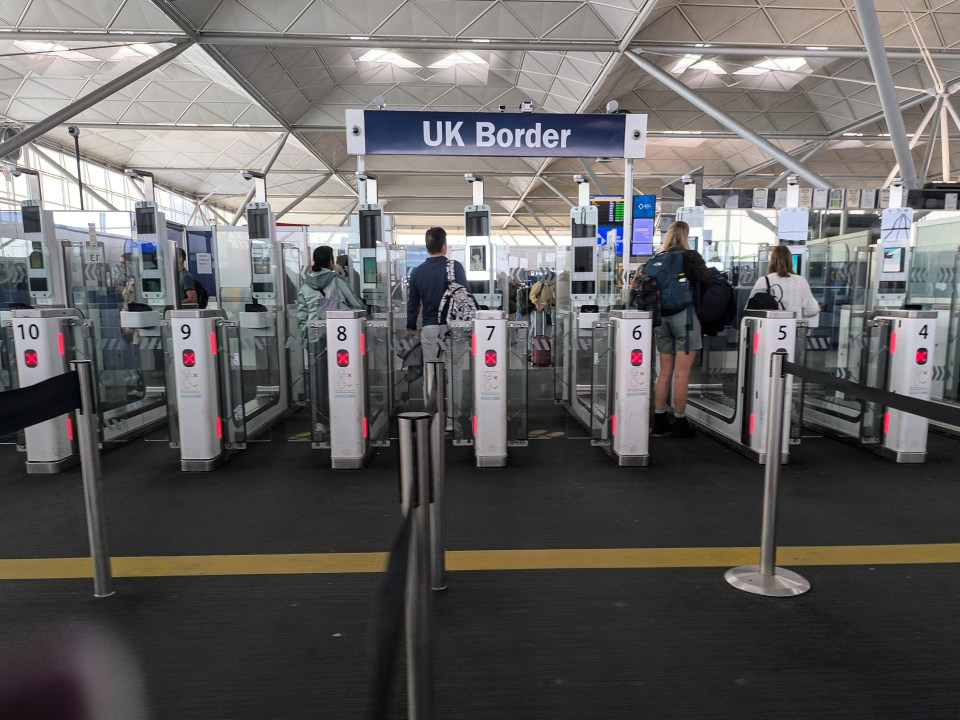
Brits to travel through UK airports WITHOUT scanning passports in new rules
NEW travel technology is being rolled out across UK airports – which will let you leave without having to scan your passport.
There is nothing worse than returning from your holiday tired and wanting to go home, only to have to dig out your passport to travel through the e-gates.

But within the next few weeks new ‘contactless borders’ are expected to be installed at Birmingham and East Midlands airports which won’t require you to scan your passport.
Instead, the new system will scan your face and match it to your passport image stored in its system.
The system would work by airlines sending passport images of British passengers arriving each day, to border control.
Anyone then not recognised at an e-gate, will be asked to revert to the current method of scanning their passport.
Read more on travel inspo
If this also failed, then the passenger would need to go to a manned border force desk.
The aim of the new process is to reduce long queues at airports.
The Times reports that it would then eventually be used across all e-gates at a number of airports.
This includes Birmingham, Bristol, Cardiff, East Midlands, Edinburgh, Glasgow, Gatwick, Heathrow, London City, Luton, Manchester, Newcastle and Stansted airports, by early next year.


Initially, it would only be for British passport holders, but could extend to other nationalities in the future.
Phil Douglas, the director general of Border Force, said: “It will mean we have a more secure border and a much faster transit through the airport.
“It’s quicker, it’s more modern, it’s more secure.”
Other new e–gate rules were rolled out earlier this year, which now allows kids aged as young as eight to use them, rather than manual checks.
Spain’s Pedro Sanchez announces snap election amid housing crisis | Housing News
Sanchez calls early vote after Parliament rejected housing relief measures proposed by his minority government.
Published On 5 Oct 2026
|
Updated: a few seconds ago
Spanish Prime Minister Pedro Sanchez has announced a snap general election after Parliament rejected housing relief measures proposed by his minority government.
Sanchez said on Monday the vote would take place on November 29. “We need to renew people’s support,” he said in a televised address.
Recommended Stories
list of 3 itemsend of list
“We need to mobilise and win a much larger progressive majority in Parliament, one that will allow us to overcome vested interests, deliver new social advances and continue transforming Spain.”
He also acknowledged having made mistakes and falling short of previous campaign promises.
“I also know that part of that social majority is dissatisfied today,” Sanchez said.
The government’s defeat in Parliament on Friday was the latest in a series of political setbacks for the centre-left leader, followed by mass protests across the country over the housing crisis.
The government said more than 70,000 people took part in a housing protest in the capital, Madrid, on Saturday.
Anger had been building since late last month, when an 87-year-old woman, Marai del Carmen Abascal, was evicted from her home of 70 years in Madrid after an international investment fund bought her building and increased the rent.
Far right gains ground
But facing the electorate is a risky move for Sanchez. Opinion polls suggest that a coalition led by the conservative People’s Party (PP), with support from the far-right Vox party, is the most likely outcome in the election.
If they win, it would be the first time since the death of dictator Francisco Franco that a far-right party has entered central government.
If Sanchez loses the election, it would also mark the end of one of Europe’s last left-leaning governments as the far right continues to gain ground across the continent.
Sanchez has stood out worldwide for his strong stance on progressive ideas, from defending the rights of Palestinian people to defending multilateral institutions and cracking down on tech oligarchs.
The prime minister, who has never won enough votes to form a majority government, has brought together a series of fragile and seemingly impossible coalitions, ranging from the far left to the separatist right, to remain in power for three successive terms, lasting eight years.
The election was due next year before Sanchez brought it forward.
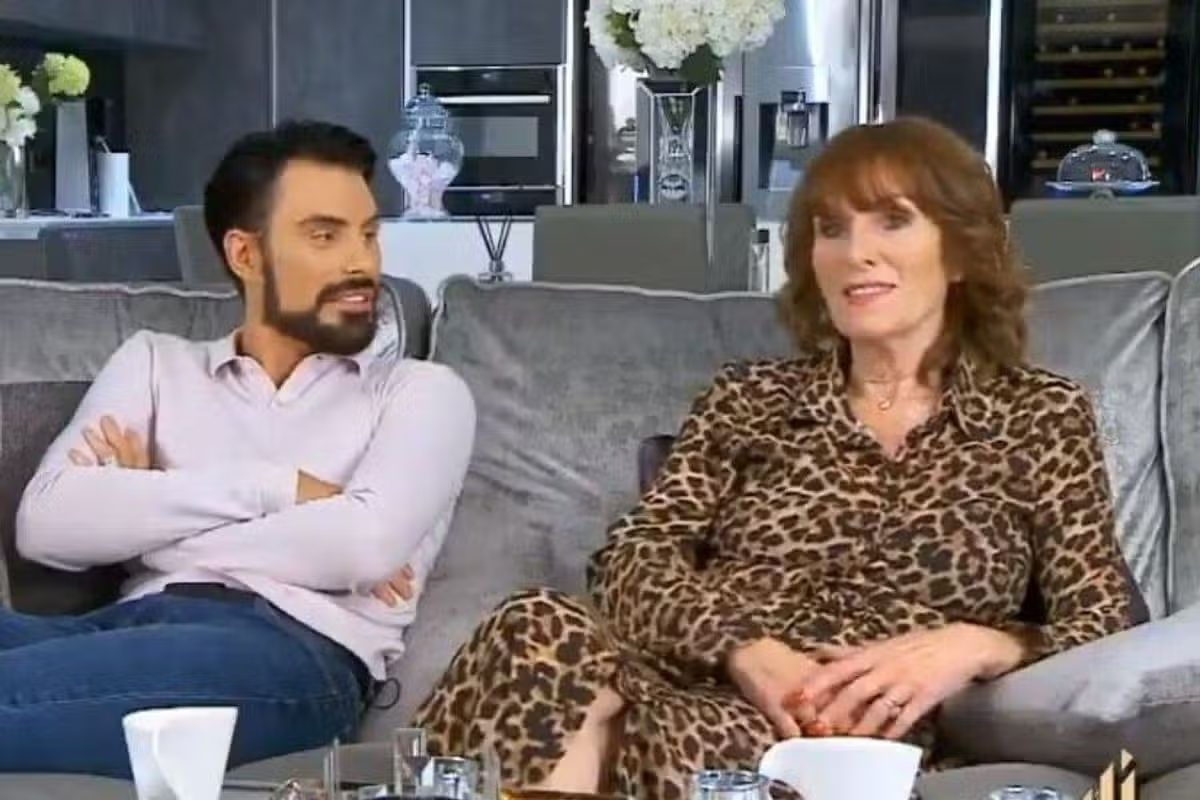
Rylan Clark brands mum Linda a ‘nightmare’ after she suffers ‘another health issue’
Rylan Clark revealed that his mother Linda has suffered another health issue, following a turbulent few years which have also seen her break her arm and leg while on holiday

Rylan Clark said his mum was ‘a nightmare’ (Image: c4)
Rylan Clark‘s mum Linda has shared a health update after he voiced concerns about her wellbeing. During his BBC Radio 2 show last weekend, he told listeners that his mum would be joining him for their weekly on-air chat following a break, but revealed that she had recently injured herself.
At the start of his show, he said: “Mummy Linda is going to be back on the phone a bit later on, hopefully she’s alright, she scraped her leg the other day, so that’s been fun. I’m just like okay, yep, here we go, another issue but I’m sure she’ll be fine.”
Later in the programme, Linda confirmed that she was fine before telling him: “You ain’t got to tell everyone thank you.”
Rylan went on to call his mum “a nightmare walking”, following her many other health ordeals.
The 74-year-old insisted that she would no longer do things around the house after her previous accidents.
“You said that before when you broke your arm and leg just falling over,” the 37-year-old replied. She responded: “I get bored and I need to do things.”
Back in January, Linda suffered a fractured shoulder and was left bruised after falling over on ice while taking her bins out.
Last year, she also took a tumble down a retailer’s escalators, leaving her in need of medical attention.
During a holiday in Spain in 2023, she broke her arm and leg, leaving her needing to be escorted back to the UK on a private jet equipped with medical equipment.
Rylan took time off work during this period to support his mother through her surgery and recovery.
Two months later, he shared a photo of her at his Essex home for the first time since the accident, as they celebrated his birthday together.
During the latest episode of his show, Rylan also jokingly urged producers to “sack” him after poking fun at the BBC’s strict advertising rules.
He went on to insist he “didn’t care” about the BBC’s rules while rapper Professor Green, whose real name is Stephen Paul Manderson, took part in his Rylexa feature, inspired by Amazon’s voice assistant Alexa.
Introducing the game, Rylan said: “I’ve been creating a new artificial intelligence machine called Rylexa, I’m looking for people to buy shares in it. If you want, we can talk after the show.”
Aware of the broadcaster’s impartiality guidelines, which are in place because UK viewers fund the BBC through the TV licence fee, Professor Green responded: “Sure. There are other AI platforms that you can invest in, isn’t that what you’ve got to say on the BBC?”
Rylan cheekily exclaimed: “But they’re not Rylexa! Who cares? Sack me!”.

NFL: Kansas City Chiefs, San Francisco 49ers & Minnesota Vikings stay unbeaten – week four round-up
Kansas City have dominated their rivalry with the Raiders in recent years, but Las Vegas are vastly improved after winning only three games last season and pushed the Chiefs all the way.
The Raiders led 13-10 heading into the final quarter in Vegas, which featured three lead changes before Kansas City held on for a 30-27 win.
The turning point came as new running back Kenneth Walker maintained his stunning start by scoring two touchdowns in 19 seconds, with the Chiefs regaining possession immediately by forcing a fumble on the kick-off return.
The Raiders gave themselves hope with a Brock Bowers score and stayed alive until the final play, when Kirk Cousins was tackled as he threw and his wayward pass was intercepted.
Walker finished with 177 yards from 22 carries, while team-mate Tyquan Thornton also had two touchdowns and 111 receiving yards.
After missing last season’s play-offs, the Chiefs look capable of getting back into Super Bowl contention. They next face the Los Angeles Chargers, who are 0-4 after losing 30-23 to defending champions the Seattle Seahawks.
World Space Week: Which countries have sent people to space? | Space News
Sixty-nine years ago this day, the Soviet Union launched Sputnik 1, the first satellite to orbit Earth, opening the Space Age and setting off a race with the United States.
Ten years later, on October 10, 1967, the Outer Space Treaty came into force.
Recommended Stories
list of 3 itemsend of list
In 1999, the United Nations started observing World Space Week – from October 4 to 10 – to celebrate the contribution of space technology for the benefit of humanity. Schools, space agencies, museums and astronomy clubs around the world hold stargazing nights, science classes, exhibitions and talks by astronauts and scientists.
Today, more than 80 countries have put satellites into orbit, and people from over 50 of those have travelled to space.
In this visual explainer, Al Jazeera looks at which countries have done so, how many space travellers have been women, and what comes next for human spaceflight.
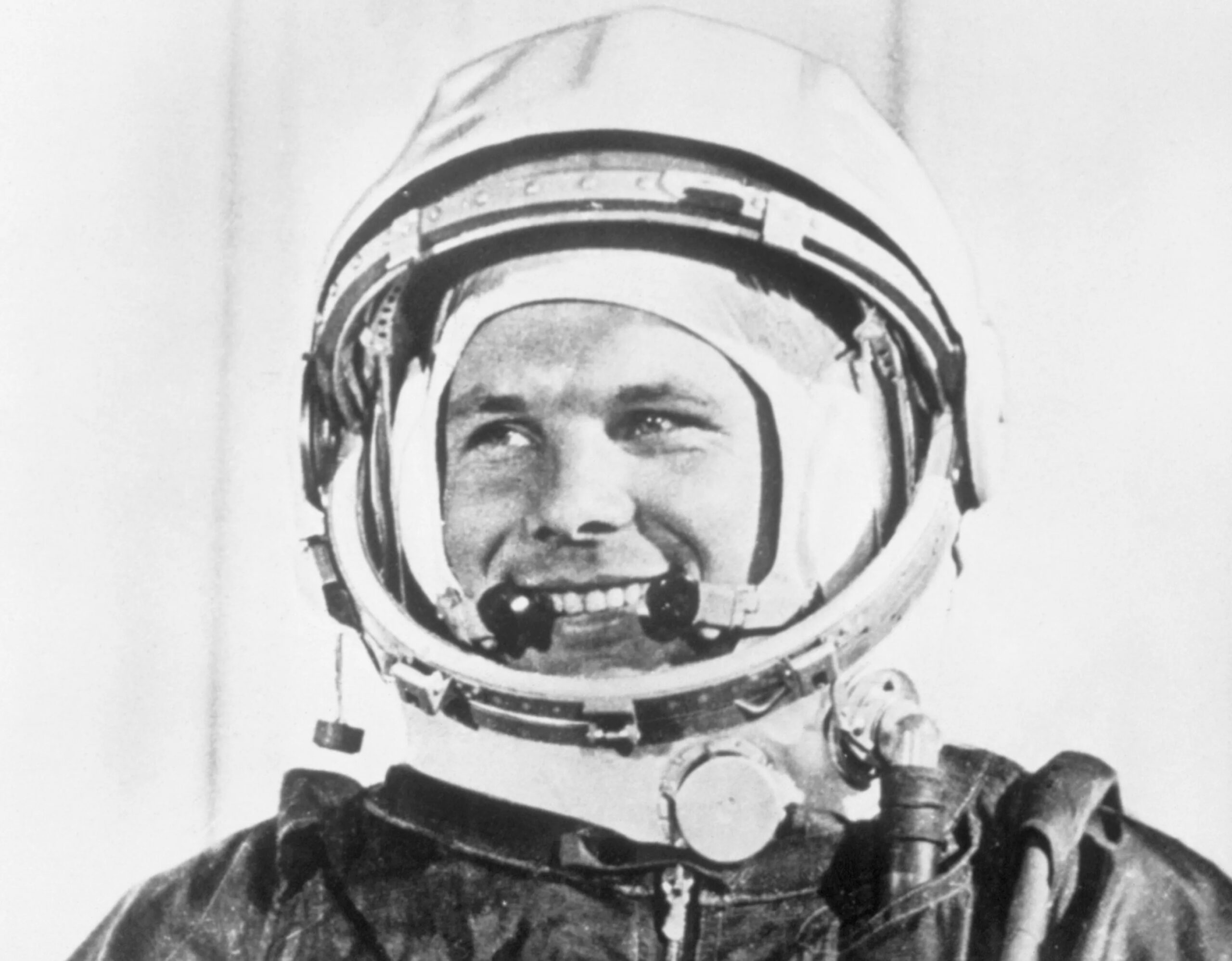
The first man in space – Yuri Gagarin
On April 12, 1961, Soviet astronaut Yuri Gagarin became the first human in space.
On board the Vostok 1 spacecraft, he completed one orbit of Earth at about 27,400km/h (17,025mph) during a 108-minute flight. He later ejected from the spacecraft and landed by parachute.
The mission demonstrated that humans could survive launch, weightlessness and re-entry, giving the Soviet Union a major early victory in the Cold War Space Race.
![Yuri Gagarin, the world's first spaceman. [Getty Images]](https://i0.wp.com/occasionaldigest.com/wp-content/uploads/2026/10/GettyImages-514885012-1791125806.jpg?w=640&ssl=1)
Six years later, on October 10, 1967, the Outer Space Treaty entered into force. Signed by the US, the United Kingdom and the Soviet Union, it established that space should be explored and used peacefully and that no country could claim it as territory.
Less than two years later, NASA’s Apollo 11 mission landed the first humans on the moon. On July 20, 1969, Neil Armstrong became the first person to walk on its surface.
![Astronaut Neil A. Armstrong, in training for the projected Apollo 11 lunar landing mission, is being suited up for the first full dress rehearsal of activities he is to perform during the projected moon landing. [Getty Images]](https://i0.wp.com/occasionaldigest.com/wp-content/uploads/2026/10/GettyImages-515287304-1791126174.jpg?w=640&ssl=1)
Where does space begin?
There is no single agreed boundary for where space begins: most international bodies use the Karman line, 100km (62 miles) above Earth, while the US military, NASA and the Federal Aviation Administration count anyone who flies above 80km (50 miles).
Either way, it is closer than it sounds: if Earth were the size of an apple, space would begin about as far from the surface as the thickness of its skin.
Which countries have sent people to space?
By the Karman line measure, at least 746 people from 52 countries have travelled to space, including professional astronauts and paying tourists.
Some hold dual nationality, and some flew for countries that no longer exist, such as the Soviet Union.
The graphic below breaks down space travellers by country.

Two countries still dominate the list. The US has sent 369 people to space, and the Soviet Union and Russia have sent 138 combined. China, the third country to launch people on its own rockets, has sent 29.
![American astronaut Alan Bartlett Shepard Jr (1923 - 1998), Commander of NASA's Apollo 14 lunar landing mission at the Kennedy Space Center in Florida, 14th November 1970. [Space Frontiers/Getty Images]](https://i0.wp.com/occasionaldigest.com/wp-content/uploads/2026/10/GettyImages-1141685928-1791125972.jpg?w=640&ssl=1)
One in seven space travellers is a woman
Space remains a male-dominated frontier. Science fiction may be full of women commanding starships, but of the 746 people who have travelled to space, only 112, or 15 percent, have been women, about one in seven.
Soviet astronaut Valentina Tereshkova became the first woman to travel to space in June 1963. The US did not follow for another 20 years, until Sally Ride flew in June 1983.
The share of women is rising, though, largely because of commercial flights. More than half of the women who have flown since 2020 went up as paying passengers or guests on Blue Origin’s suborbital rocket.

The typical space traveller is 40
Most people who have flown to space were in their 30s or 40s on their first flight, which together account for 85 percent. The median age is 40. Commercial flights have widened that range.
The youngest traveller, Oliver Daemen, was 18 when he flew in 2021. The oldest, Ed Dwight, was 90 years and eight months old when he flew in 2024, about two months older than William Shatner had been on his flight three years earlier.
What comes next for human spaceflight?
In April 2026, the Artemis II crew flew around the moon and reached about 406,771km (252,756 miles) from Earth, breaking the distance record set by Apollo 13 in 1970.
Next is Artemis III in 2027, a rehearsal in Earth orbit to test docking with lunar landers built by SpaceX and Blue Origin. NASA is targeting 2028 for Artemis IV, which aims to land astronauts near the moon’s south pole, the first crewed landing since 1972.
India plans its first crewed Gaganyaan flight in 2027, making it the fourth country to launch people on its own rocket. China aims to land astronauts on the moon around 2030.


Center Parcs launches £310 Christmas activity for families – but you don’t even meet Santa
Families staying in Center Parcs in the run-up to Christmas can book an “unforgettable” experience in the comfort of their own lodge, but the price tag has led to criticisms from fans of the holiday park

The experience takes place in your own lodge and includes personal touches(Image: Center Parcs)
Center Parcs has always had a premium image, which comes with premium prices. However, fans of the lakeside holiday parks have taken to social media to complain about one of its new activities on offer for the festive season.
The Twilight Elf Visit is billed as “New and exclusive, an unforgettable Christmas experience awaits” on Center Parc’s website. It goes on to describe the experience: “As dusk begins to settle over the forest, gather in the comfort of your lodge for a surprise visit from two magical elves. Bringing an enchanting tale to tell, they’ll lead your family on a truly personal Christmas adventure filled with storytelling, festive surprises and magical moments.”
One Center Parcs guest, who was considering booking the experience, took to a Facebook page to question the price. They asked: “Has anyone seen on the website the new Twilight Elf visit to your lodge…. Surely no one is paying that sort of price £300+ for just one child!?!” She went on to post a screenshot of the prices she’d been quoted for the elf visit on Thursday, December 22. For one child, the activity costs £310, £360 for two, £410 for three, and £460 for four kids.
Do you have a travel story to share? Email webtravel@reachplc.com
When contacted about the cost of the activity, a spokesperson for Center Parcs said: “This is a private, personalised Christmas experience, with two elves visiting the family’s own lodge for 45 minutes. The visit brings a festive adventure into the place where families are spending their holiday together, with stories inspired by and tailored to the guests themselves and opportunities for children to become part of the magic.
“Throughout the experience, the elves reveal the special connection between the forest and the North Pole through storytelling, interactive moments and festive surprises. Children also create a Christmas wish to send to Santa, and families have the opportunity to capture photos with the elves.
“What makes Twilight Elf Visit special is the combination of time dedicated exclusively to the family, personal touches woven into the storytelling, and the intimacy of having the experience brought to their own lodge, so each experience for our guests is unique to them. It goes beyond a traditional festive meet and greet, giving children an active role in a story that feels personal to them, with the whole family sharing the experience in our unique forest setting.
“It’s a new, optional addition to our wider Winter Wonderland programme, which also includes favourites such as Santa’s Parade and the Enchanted Light Garden. We want families to have a choice of ways to enjoy the season together, with Twilight Elf Visit offering something particularly personal for those who choose it.”
The cost of the experience also includes a “beautifully engraved wooden family keepsake box filled with exclusive mementos to treasure long after your adventure ends. From a cuddly toy carrying each child’s Christmas wish to magical keepsakes inspired by your visit, each item is thoughtfully chosen to help your family relive the wonder of the season for years to come.”
But not everyone was convinced the activity would be worth the money. One poster noted: “This has to be the most expensive activity I have ever seen at [Center Parcs] …and I’ve been going years.” Another wrote: “This has to be a wind up?”. While a third commented: “That’s disgusting.”
However, many posters defended the cost of the experience. One said: “Yes, It’s a lot of money but I don’t see why everyone is so outraged about it, it’s obviously a very luxury thing they are offering, like the treehouses, If someone can afford them then they can afford the cost for the private elf visit.”
Others pointed out that other premium Christmas activities with kids can be just as expensive. “To be honest, people who go to Lapland UK are paying £300 sometimes more. So yes, there are people who will pay it.”
Have a story you want to share? Email us at webtravel@reachplc.com

Who were the top teen athletes at the Asian Games? | Athletics
Teenage athletes have headlined some of the biggest Asian Games triumphs, leading their countries to historic gold medals, breaking records and cementing their legacy as formidable forces in the field.
Far from being intimidated by competitors double or triple their age, these schoolchildren remained cool and unfazed as they cruised to gold at their Asian Games debut.
Recommended Stories
list of 4 itemsend of list
Many are already familiar with the pressure and expectations of the world stage and have dominated their sport all season.
Al Jazeera Sport looks at some of the stars who left their mark in Japan:
Yu Zidi, 13
China: Swimming
At just 13, Yu was named female Most Valuable Player (MVP), as she bagged three gold medals and broke as many Asian Games records in a fairytale debut.
The schoolgirl stormed to victory in the women’s 200m butterfly, 200m and 400m individual medley (IM) and had a comfortable lead over her competitors.
Her time of two minutes and 6.10 seconds (2:06.10) in the 200m IM stands as a world junior record and second-fastest time ever.
“I don’t think I am what people describe as a prodigy,” she said after being crowned MVP. “I will continue to train hard, push myself and work alongside young athletes across Asia to inspire more young people to love and take part in sports, especially swimming.”

Zhang Zhanshuo, 19
China: Swimming
Zhang held up seven fingers after his 400m freestyle win to count out his gold medals at the Games – the most at this edition, and more than what 27 of the 45 participating nations had in their medal tally at the conclusion of the event.
He set Games records in the 400m and 800m freestyle, an Asian record in the 200m, and helped power China to gold and Asian records in the men’s 4x100m and 4x200m freestyle relays.
But the 19-year-old has bigger victories in sight.
“The Asian Games is not the goal. I’m still aiming for the Olympics and competing with the best,” he said.
The teenager’s haul helped China sign off from swimming with 30 golds out of 41 medal events in the pool, with chief rival Japan a distant second with seven titles.

Shin Ohashi, 17
Japan: Swimming
Ohashi broke the world record in the men’s 200m breaststroke (2:04.83) in front of a home crowd to become the first swimmer under the 2:05 mark.
The gold added to his title in the 100m breaststroke shared with China’s Dong Zhihao, bronze in the 50m breaststroke, and silver in the mixed and men’s 4x100m medley relays.
The teenager said he was surprised and honoured that Olympic champion Leon Marchand knew who he was, after the Frenchman described the 17-year-old as a “scary” prospect ahead of the 2028 Los Angeles Olympics.
“I respect him because I know just how strong he is. But if I want to win, he’s someone I know I’ll have to beat.”
Ohashi’s world record performance came just a week after the teenager recovered from COVID-19.

Yan Ziyi, 18
China: Athletics
Yan was already javelin world number one and Asian record holder when she stepped onto the field for her Games debut – her first and only throw of 70.46 metres was enough for gold and a Games record.
It was the sixth-best of all time and well ahead of Olympic champion and home hero Haruka Kitaguchi’s 62.70m.
Yan is closing in on the world record of 72.28m set by Barbora Spotakova in 2008. In May, she hurled a world-leading, record-breaking 71.74m to open an unprecedented season.

Chen Yujie, 17
China: Athletics
Chen stormed to a new Games record in the women’s 100m en route to her first gold as she announced herself as the new sprint queen in Asia.
“I have no limits,” was her response when asked how much faster she hopes to run.
She followed up her podium finish with a silver in the 200m and gold in the women’s and mixed 4x100m relays.

Taiju Goto, 17
Japan: Athletics
Goto narrowly missed gold in the men’s 400m hurdles, but his 47.93s was enough for a world under-18 best time, Asian under-20 best time, and a new personal best.
The teen star has run sub-50 seconds eight times this season alone, an impressive feat for a 17-year-old. His Asian Games silver added to the World Under-20 one he bagged in August.

Kumkum Mohod, 17
India: Archery
Mohod scripted history for India when she became the first Indian to win an individual recurve archery gold at the Games. The 17-year-old helped India to gold in the women’s team recurve, and partnered with Dhiraj Bommadevara for mixed team silver.
Mohod’s gold was no stroke of luck; she defeated South Korea’s reigning world champion and Olympic medallist Kang Chaeyoung in the quarterfinals before dominating China’s Zhu Jingyi in the semifinals.
“Ever since I’ve made it to the national team, I’ve been visualising this moment. I had visualised shooting an X, and that is exactly what happened,” she told reporters after the match, according to Indian media.

Anahat Singh, 18
India: Squash
World junior champion Anahat Singh has been India’s finest in the sport for several years now. Despite only being 18, Aichi-Nagoya was Singh’s second Asian Games outing after competing at Hangzhou 2023, where she won two bronze medals in the mixed doubles and women’s team events.
This time round, she won a silver in the women’s singles against world number five Sivasangari Subramaniam of Malaysia. However, her semifinal match against Japan’s Satomi Watanabe was what she called the “best win” of her career after producing a stellar comeback to defeat the world number six.

Yuki Kurihara, 11
Japan: e-sports
At just 11 years of age, e-sports prodigy Kurihara became the youngest gold medallist in Asian Games history when he won Puyo Puyo Champions.
“I’m really happy. The gold medal is really beautiful, shiny and heavy,” Kurihara said after his final, where he barely broke a sweat.
Kurihara started playing Puyo Puyo in his first year of primary school – where he still studies – and soon started competing and winning in tournaments. He obtained his pro licence in April this year and regularly beats adults, often triple his age.
![TOKONAME, JAPAN - SEPTEMBER 26: Gold medalist Yuki Kurihara of Japan poses on the podium at the medal ceremony for the Esports Puzzle [Puyo Puyo Champions] on day seven of the 20th Asian Games Aichi-Nagoya at Aichi Sky Expo on September 26, 2026 in Tokoname, Aichi, Japan. Kurihara becomes the youngest gold medalist at the Asian Games at the age of 11. (Photo by Toru Hanai/Getty Images)](https://i0.wp.com/www.aljazeera.com/wp-content/uploads/2026/10/getty_6ac2424a21-1791115850.jpg?w=640&ssl=1)
Ku Yong-yan, 12
Taipei: Skateboarding
Ku took silver in the men’s skateboarding park with 87.33 points, and was just one of several teenagers – in his case, a pre-teen – who medalled in skateboarding at the Games.
Japan’s Izuru Nagahara, 15, took gold in the event. China’s Zhu Yuanling, also 15, won gold in the women’s street skateboarding competition.
China’s Cao Shiqi finished fourth in women’s skateboarding park and was the youngest athlete in China’s delegation at the Games.


History making Big Brother winner is unrecognisable after huge £70k success
Big Brother continues to deliver plenty of drama and chaos as viewers are once again invested in another series

A Big Brother star made history over 20 years ago(Image: ITV)
Big Brother’s first ever winner is looking almost unrecognisable decades on from their £70k success.
The hit social experiment has once again returned to screens, bringing with it plenty of drama and chaos as regular people from across the UK move in to the iconic house where they will live for several weeks.
However, before the reality show made its iconic return to ITV, Big Brother had originally launched on Channel 4 screens back in 2000, before making its way to Channel 5 during its third series in 2002.
There has been plenty of iconic moments throughout Big Brother, with the show remaining a firm favourite amongst viewers as housemates face brutal tasks and weekly evictions. But as a brand new series continues, with the new housemates hoping to leave their mark, we have taken a look back at the show’s first ever winner, including his most iconic moment.
Who won the first ever Big Brother?
Craig Phillips was the first ever contestant to win Big Brother UK back in 2000, making history from the launch show. The then-builder from Liverpool saw his life change after 64 days in the iconic house, winning a staggering £70,000 cash prize.
At just 28 years old at the time, Craig became a firm favourite in the Big Brother house where he stayed alongside Nick Bateman (then known as ‘nasty Nick’) as well as Melanie Hill. His success also continued when he won a National Television Award for Best Live Television Moment of the Year.
What did Craig Phillips do with his Big Brother prize money?
After winning the £70,000 cash prize, Craig decided to put his winnings to a good cause, donating it to his friend Joanna Harris who had Down’s Syndrome, to pay for her heart and lung transplant.
According to the official Craig Phillips website: “He had begun raising money with friends for Harris sometime before entering Big Brother, raising only small amounts of money towards the £250,000 needed for her operation in the USA, but within 6 days of winning he achieved the target required for her life saving operation thanks to public support and generous donations from celebrities.”
Craig has worked closely with a variety of charities, often taking part in fundraising events such as abseiling one of London’s tallest buildings as well as sky diving.
Where is Craig Phillips now?
Since his Big Brother success, Craig Phillips has far from faded from the spotlight. He has gone on to build a successful career as a property developer, DIY expert and television presenter, famed for popular shows such as 60 Minute Makeover and Trading Up.
He has also not been a stranger to reality TV, having raised £40,000 for charity from Back to Reality as well as appearing on Ant and Dec’s Saturday Night Takeaway
Fans may not have realised he turned his attention to music, releasing a charity single for Christmas 2000, which reached the charts, raising tens of thousands for the Down’s Syndrome Association.
Right now though, the former Big Brother winner lives in Spain with his family having also launched the Mr & Mrs DIY TV channel alongside wife Laura.
Craig Phillips’ most ‘iconic’ Big Brother moments
Arguably his most iconic moment was his confrontation with Nick Bateman, then nicknamed Nasty Nick. After Nick was seen breaking the rules, Craig gathered the housemates calling for an intervention before going face to face with his co-star.
Another iconic moment was causing mass panic on Ultimate Big Brother when he gate crashed and staged an eviction.
With millions of people tuning in to the live final, Craig made history winning the first ever Big Brother series as he stepped out to a huge crowned, later earning him the National Television Award.
Speaking to Channel 4 back in 2020, Craig was asked what it was like winning Big Brother as he replied: “This is a question I’ve been asked thousands of times and if I am being honest it’s so hard to answer! Because it was and still is the most surreal moment and experience, I’ve ever had!
“It was the ultimate combination of emotional highs as well as a scary situation to be in – once I’d stepped out the door I started to live a life that most people dreamed of having, almost the entire country knew my name and appeared to love me!
“Every A-List celeb I chatted to became my friend, people and companies were paying me obscene amounts of money to be associated with them, I had bodyguards that chauffeured me around day by day and we changed hotel every night for month and months!”
Big Brother continues tonight at 9pm on ITV2 and ITVX
BBC Sport’s daily football quizzes: Who Am I?, Five in Five and Brainteaser
Guess the footballer in as few attempts as possible.
After each wrong guess you unlock a new clue. The fewer clues you need to get the right answer, the more points you score.
Once you’re done keep scrolling to beat all three of BBC Sport’s daily quizzes.
Djokovic defeats top seed Zverev to reach China Open semifinals | Tennis
Novak Djokovic to face Daniil Medvedev in the semifinals in Beijing after the Russian defeats Francisco Cerundolo.
Published On 5 Oct 2026
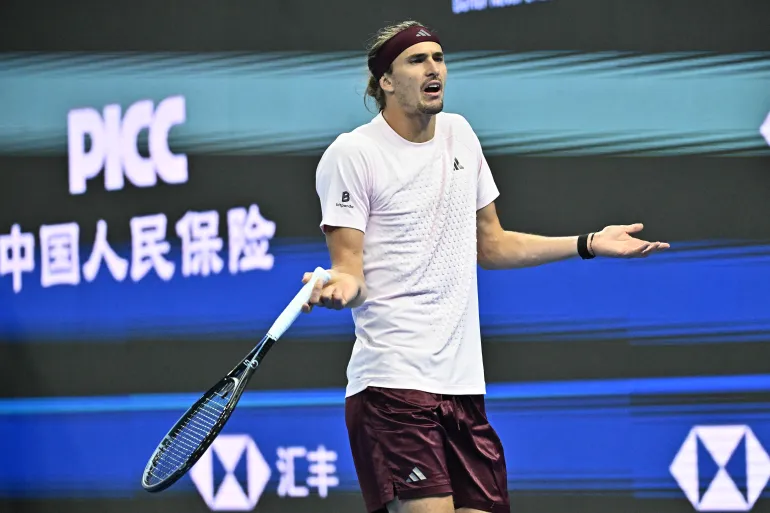
Novak Djokovic has brushed aside ongoing injury-related struggles and produced a trademark comeback to defeat top seed Alexander Zverev 4-6, 6-4, 6-4 for a place in the China Open semifinals, extending his unbeaten record in the tournament.
Playing the ATP 500 event in Beijing for the first time since 2015, the six-time champion was pushed to the limit by reigning French Open and US Open champion Zverev, who delivered 19 aces in the match on Sunday.
Recommended Stories
list of 4 itemsend of list
Meeting for the first time in nearly 16 months, Djokovic struggled to contain the German’s power in the early stages as the 29-year-old Zverev claimed the opening set, but the Serb gradually worked his way into the match and refused to let his opponent pull away.
“I had a terrible start – two double faults at the beginning. It was quite cold, and honestly, I didn’t feel warmed up, but my fault,” Djokovic said.
“I gave him an early break, and then it was hard to come back in the first set.”
The contest was briefly interrupted by a moment of controversy when Zverev argued that the electronic advertising signage had gone dark during a rally and requested a video review after losing the point.
Replays showed a section of the signage had switched off although not as Zverev was missing the forehand. The chair umpire ordered the point to be replayed, prompting a frustrated exchange from Djokovic.

‘Held my nerves’
The turning point came late in the second set when Djokovic broke at 5-4 to level the match, shifting the momentum in his favour after a tightly contested battle.
With little separating the pair in the third, the Serbian struck again at 5-4 on the Zverev serve, securing the decisive break to seal the victory in two hours and 35 minutes.
“I was trying to be aggressive and come to the net and change up the pace, not giving the same pattern,” Djokovic said.
“I am just glad that I held my nerves, played good shots at important moments, 5-4 in the second and third.”
The pair had not met since Roland Garros in 2025, where Djokovic won in four sets, and Sunday’s encounter again highlighted the Serb’s ability to deliver under pressure despite a season disrupted by physical issues.
With the victory, Djokovic moved a step closer to a seventh China Open title and an elusive first trophy of the year while denying Zverev another opportunity to strengthen his bid for the world number one ranking.
Djokovic will face Daniil Medvedev in the semifinals after the Russian defeated Francisco Cerundolo 7-6(4), 6-3 earlier.

Rybakina withdraws from Wuhan after China Open exit
World number one Elena Rybakina withdrew from this month’s Wuhan Open due to a foot injury, tournament organisers said on Sunday, a day after the Kazakh suffered a shock defeat in her opening match at the China Open.
Rybakina, who lost to world number 118 Alina Charaeva in Beijing, said she would take time away from competition to recover.
“I’m very sorry to the fans who were looking forward to seeing me play,” Rybakina said in a story posted on the tournament’s Instagram account.
“I’ll take some time to rest and recover. Thank you for your understanding and continued support.”
The 27-year-old has been managing a lingering lower leg and foot problem that also forced her to retire from her Cincinnati quarterfinal against Iga Swiatek in August.
Despite the setback, Rybakina recovered in time for the US Open, where she claimed her third Grand Slam title, rose to world number one and became the first player to qualify for the season-ending WTA Finals.
Rybakina is next expected to compete this month in the Ningbo Open in China, where she will try to defend her title.
The Wuhan Open is scheduled to take place from October 12 to 18.

B-1B Bombers Make Hasty Departure From England
U.S. Air Force B-1B Lancer bombers that had been deployed to RAF Fairford in the U.K. since operation Epic Fury have returned to their home stations, a U.S. defense official confirmed to TWZ. The hasty movement was reportedly sparked by new Iranian threats against the base, although the Pentagon doesn’t confirm that assertion.
The sudden withdrawal came a week after a major incident was declared near Fairford following the arrest of five men on suspicion of driving bomb-laden vans toward it. They were later released on bail after no explosives were found. However, Counter-Terrorism police are continuing the investigation and said they were considering whether a foreign state had been involved. On Wednesday, British Prime Minister Andy Burnham said the incident might have had an Iranian link.
The Wall Street Journal was the first to report the departure.

Bomber strikes launched from Fairford, which included ones executed by both B-1s and B-52s, were a central aspect of major U.S. combat operations against Iran earlier this year. In addition, the installation is a major hub for U.S. military aircraft in the United Kingdom. It is a regular host of strategic assets, including bombers and U-2 spy planes. It also acts as a pit stop for other aircraft, including fighters, that are being ferried to and from the United States.
The U.S. withdrew all 12 B-1s “after commanders received new threats about an Iran-backed plot against the installation,” The New York Times reported, citing two U.S. officials.

“The withdrawal was highly unusual: Such moves are rarely made so quickly from an allied air base in a peacetime country thousands of miles from a combat zone,” the publication added. “The need to move the bombers out of the base, R.A.F. Fairford, was deemed so urgent that some of the planes and their flight crews left while aerial refueling aircraft were still being scrambled to support their flights to the United States. At least three of the planes had landed at their home base in South Dakota by Sunday.”
U.S. officials declined to tell the Times the specific nature of the new information that prompted the Lancer withdrawal, some of which had just arrived in the past week as part of a normal rotation of forces to maintain the B-1 forward presence in Europe.
“One U.S. official said the new information was part of the same threat warnings that surfaced three weeks ago, but specific details and a sense of urgency spiked in the past 24 hours, alarming commanders,” the publication noted.
As we previously reported, Tehran directly threatened RAF Fairford in July over its use as a base to launch attacks against Iran.
“The American aggressor army, which used to launch cruise missiles from its vessels in the Indian Ocean in its aggression after the official resumption of the war, with the end of the missile reserves of the aforementioned vessels, yesterday switched to using B1 planes flying from Fairford Air Base, England,” Tasnim News Agency, a quasi-state outlet in Iran with ties to the country’s powerful Islamic Revolutionary Guard Corps (IRGC), claimed on Telegram on July 23. “As the officials of the Ministry of Foreign Affairs also stated, any base that is used to invade Iran’s territory is our legitimate goal.”
Local aircraft spotters and aviation photographers began to notice the aircraft departing in large numbers earlier on Sunday.
The aircraft left in several waves, according to the DefenceGeek X account, run by the senior editor of the U.K. Defence Journal.
The defense official who confirmed the withdrawal said the aircraft movements won’t affect overall readiness.
“The Airmen that operate America’s bomber force, including B-1s, B-2s, and B-52s, remain ready to deliver precision global strike capabilities – including through operations that launch and recover from the continental United States – anywhere, anytime,” the official added.
When we asked the Pentagon about the retrograde movement of bombers from the U.K., they did not confirm the security issue that prompted it, stating:
“U.S. Air Force bombers routinely operate around the world to support global force readiness and operational requirements. While operational security precluded us from confirming the movement of our assets and forces in real-time, we can acknowledge now that all U.S. bombers that were deployed to RAF Fairford have re-deployed to their home stations in the United States. The Airmen that operate America’s bomber force, including B-1s, B-2s, and B-52s, remain ready to deliver precision global strike capabilities – including through operations that launch and recover from the continental United States – anywhere, anytime.”
Regardless, this is the first time in months that RAF Fairford has not hosted U.S. bombers.
Contact the author: howard@twz.com

Vodafone launches new TV streaming service with Netflix and HBO Max from 33p per day
The mobile network has just rolled out Vodafone TV, offering hundreds of channels alongside streaming apps in a choice of affordable monthly subscriptions.

Vodafone TV delivers live and on-demand TV channels from Freely.
Vodafone has launched a new TV streaming service to rival major brands like Sky. The mobile network has already expanded to the home broadband market and has now gone one step further with the rollout of Vodafone TV.
This new WiFi-powered platform brings together hundreds of TV channels and streaming apps like Netflix and HBO Max from £10 per month – equal to roughly 33p per day. Each Vodafone TV subscription also provides more than 300 video games available to play over a Cloud service without a console.
The entry-level Vodafone TV plan delivers more than 200 live channels and on-demand TV with Freely for £10 per month. The £17 Vodafone TV Essential plan includes the same perks, plus Netflix and HBO Max subscriptions, worth a combined £13.98, at no extra cost.
READ MORE:
Mobile customers can combine Vodafone Entertainment with Vodafone TV Essential to create Vodafone TV Ultimate, which adds Disney+ or Prime Video to the package for a total of £25.50. All this is available through a plug‑in entertainment hub that delivers 4K content without a satellite dish or aerial.
The compact device has Freely built in, which unlocks access to more than 70 live channels and thousands of hours of on‑demand content from the BBC, ITV, Channel 4, Channel 5, and more. Viewers can also stream more than 150 additional live TV channels, while apps like Disney+, Prime Video and DAZN are also available with paid subscriptions.
Get Vodafone TV from £10 per month
Vodafone TV delivers hundreds of TV channels plus Netflix and HBO Max from £10 per month.
There’s a caveat, though, as customers must commit to a 24-month contract to secure Vodafone TV, during which time monthly prices will increase by £1.50 each April. This means the £10 subscription will cost £11.50 from April 2027 and £13 from April 2028.
Vodafone TV is available to Vodafone customers with a mobile or broadband plan, including existing customers and those signing up for a new contract. Until October 28, the brand is giving away Vodafone TV Essential free for 24 months when new customers take out Pro Broadband package from £39, saving £408 over the contract term.
Sky is giving away freebies too, with its own TV and broadband bundles, including the Essential TV and 900Mbps Full Fibre Gigafast Broadband. This £35 plan now delivers 12 times faster speeds (vs 75Mbps) at no extra cost.
Elsewhere, Virgin Media’s £32.99 Entertainment bundle includes more than 200 channels and free Netflix, but slower 516Mbps broadband. Announcing the launch of Vodafone TV, the firm’s Consumer Director, Rob Winterschladen, said it brings together customers’ entertainment while helping them cut unnecessary costs.
He said: “Households are dealing with a TV set‑up that’s become far too complicated – juggling multiple apps, long channel bundles and services they often don’t use. Our research shows that more than a third of people haven’t changed their TV provider in the last five years, with the perceived hassle of switching a big blocker and, as a result, they are still paying for features that should be standard.
“Vodafone TV gives customers a smarter alternative: one simple, intuitive experience that brings their favourite entertainment together and helps them cut out unnecessary costs. With Netflix and HBO Max included for £17 per month, it delivers exceptional value from day one.”

My search for the perfect Italian aperitivo in Verona | Verona holidays
I arrived in Verona, I admit, without a particularly clear idea of what aperitivo meant. In Italy, the ritual – broadly, a drink and something small to eat before a meal – speaks a different dialect in every city.
Milan has turned it into a polished after-work institution. In Venice, it is more itinerant: an ombra (a small glass of wine) along with a cicchetto (a bite-size snack) and then on to the next bacaro (one of the city’s traditional wine bars). Verona follows another logic.
Veronese wine writer Angelo Peretti has described the osteria (the traditional tavern at the heart of the city’s drinking culture) as a Verona institution: somewhere its social life takes shape over a gòto (the local word for a glass of wine), usually with something small to eat at the counter, often while standing.
I thought I understood. Then, at about 9.30am one morning, while drinking coffee opposite the Teatro Filarmonico, I noticed that aperitivo had already begun without me. A woman ordered a bianchetto, a small glass of white wine. A couple, already defeated by the heat, asked for two spritzes. Two friends shared a bottle of sparkling wine.
Nobody had announced that it was “aperitivo time”. More strikingly, nobody seemed to find any of this unusual.
That was when my search really began. I decided not to look for one type of bar, or even one type of drink. What mattered was whether I would actually stop there for an aperitivo – alone, with friends or simply while waiting for dinner.
At Monte Baldo, which opened in 1909, the counter was still being set up, with a man I took to be the owner assembling the day’s tartine (small open sandwiches with various toppings). A very young waitress offered to help me choose a wine. There were more than 30 wines by the glass, mostly priced between €5.50 and €11. I chose an alta langa, a traditional-method sparkling wine from Piedmont, partly because the bottle was still unopened. They opened it without hesitation.
With lunch ahead, I ordered two tartine: baccalà mantecato (Veneto’s creamy stockfish spread whipped with olive oil) and boiled egg with anchovy. Both were excellent: fresh bread, generous toppings, clearly just made. The tartine cost €4.60; the wine €7.
As I was leaving, a man walked in carrying a motorcycle helmet. Before he had time to order came the question: “Your usual?” However many tourists pass through Verona, somebody still has a usual.
8.5/10
This is one of Verona’s great wine institutions. I arrived before 7pm, as the tartine counter was being filled. The mood was formal: staff in crisp uniforms and a queue of slightly bewildered tourists. With one person serving, it moved slowly as he explained the wines, €3 tartine and where to eat them – at the bar, at small indoor tables, or outside.
I chose an €8 glass of franciacorta, Lombardy’s traditional-method sparkling wine, with two tartine: pancetta coppata (cured pork neck wrapped in pancetta) and gorgonzola cream. Both were generously topped, though the bread, while perfectly decent, wasn’t anything to write home about. Total: €14.
As I drank, nearby tables were laid for dinner and reserved signs appeared. I asked whether I should move. “Absolutely not.” Those few aperitivo tables, I was told, stay for drinkers unless the place is exceptionally busy.
6.5/10
A sommelier I trust at one of Verona’s grander restaurants sent me to Tor-Tor, perhaps revealing more interest in wine than in the finer points of aperitivo. Still, it seemed worth a punt. Tucked down a side street behind the Arena, every outdoor table was taken; inside, a regular occupied the counter, deep in wine talk with the owners.
The blackboard and a small wooden menu board revealed a serious selection of natural wines, with plenty from Veneto. I went for a €7 orange wine – white grapes fermented in their skins – which came with popcorn, then added two €2 polpette (small savoury balls, one meat, one aubergine) plus €1.50 olives dressed with oil and chilli.
The polpette did the job nicely; the wine was excellent and expertly recommended. The crowd was overwhelmingly local, and the regular at the counter was still talking wine when I left.
8/10
after newsletter promotion
Just across the Adige river in Veronetta, on the edge of Verona’s main tourist circuit, Ai Preti feels like a neighbourhood local. It is large, with dark wood throughout, and has the sort of retro look that comes from never having tried to look retro.
Two counters divide the food between cold tartine and hot snacks. I chose one with baccalà mantecato, another with caramelised onions, and a horse meat polpetta. Tartine cost €2, the polpetta slightly less; with a €4 glass of wine, the whole aperitivo came in under €10.
By 7.45pm, both displays were almost bare, although my polpetta seemed freshly cooked. The crowd looked entirely local, paying far more attention to one another than to the labels. Magazines lay around for anyone drinking alone. Here, aperitivo felt like the working day quietly unwinding.
7/10
I was early for dinner. The restaurant next door was still closed and I had half an hour to kill. Filling the gap before dinner is, after all, the primary function of the aperitivo.
Velvet occupies part of a 15th-century palazzo. There is a handsome counter with stools, though I chose a small table. Three nearby tables were already occupied by a more dressed-up crowd than I had encountered in Veronetta, drinking and talking without much hurry.
There was plenty of wine on the list, but I went for a €12 negroni. It arrived with fried plantain crisps, cashews and little savoury pastries with tomato – at no extra cost. A separate food menu offers more substantial bites, including edamame falafel and chicken wings.
By the time I’d finished my drink, the restaurant next door was open. Half an hour neatly accounted for.
8/10
Morandin was the only place I visited twice. My first visit was almost accidental – a glass of wine became dinner – so I returned a week later, just before 9pm, to make sure I hadn’t simply got lucky. On paper, its long afternoon closure, from 2.30 to 7pm, had been my only doubt.
It was another punishingly hot evening in Veronetta. Every outside table was taken and the fans inside did little more than move the heat around. I was wearing absurd red-and-blue striped trousers. A man I took to be one of the owners, there as a customer, noticed our near-matching trousers and came over for a high five. “They say we look like we’re in pyjamas. They don’t understand fashion.”
Wines run from €2.50 to €6 and, even at that relatively late hour, the cicchetti display was the fullest I had seen: battered vegetables, frittata, prawn skewers, €1.30 meatballs with tastasal (seasoned pork mince) and €1.80 tartine. I chose a durello, the crisp local sparkling wine from the Lessini hills, a meatball and a tuna-and-egg tartina.
The waiters were run off their feet; regulars greeted one another and foreign voices were scarce. Fifteen minutes later, I asked about dinner. “Full.” Ten minutes on, a table appeared. Aperitivo had not replaced dinner; it had made staying for it irresistible.
10/10
Elfyn Evans defies history to join Britain’s rally greats Colin McRae and Richard Burns with WRC title
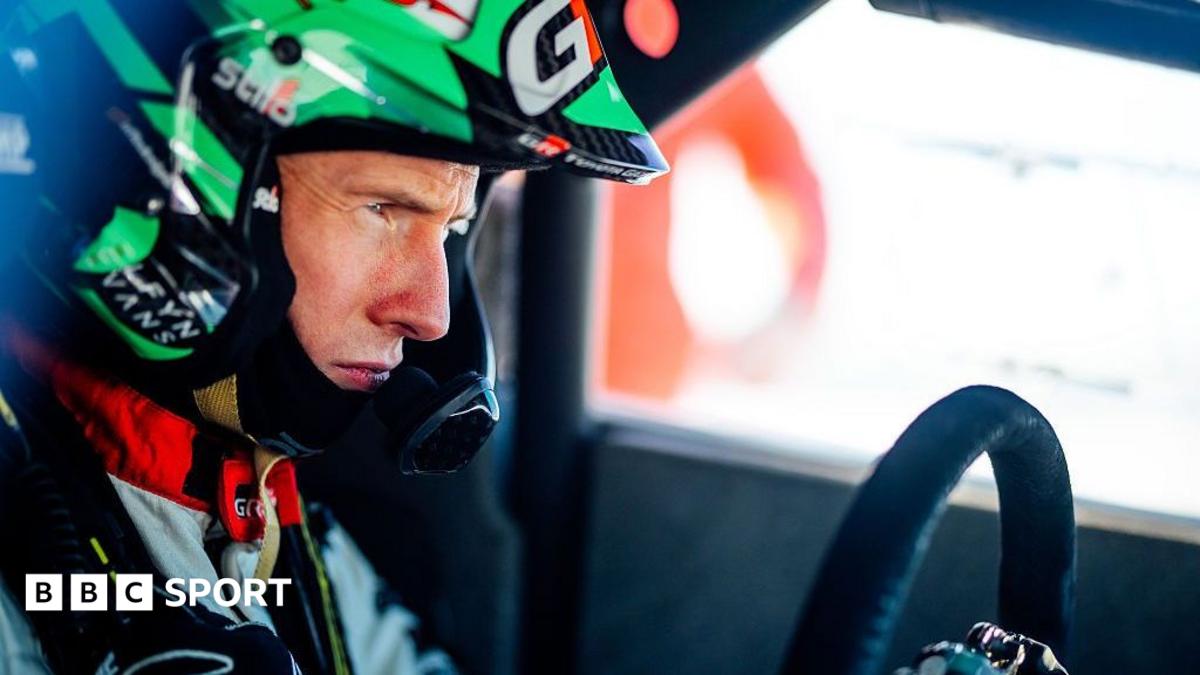
For what must have felt like an eternity, Elfyn Evans feared history was repeating itself yet again.
At 3.05pm local time in Sardinia on Sunday, Evans could only stand and watch as another world rally title looked to be slipping from his grasp.
Evans was preparing in his head yet another runners-up speech – it would be his sixth – as he waited for Oliver Solberg to cross the finish line and be crowned world champion.
How could this be happening again?
Of the five previous times he had been championship runner-up, three had been decided on the final day and twice after he had taken a lead into the final event.
But at 3.06pm, for once the motor-racing gods were on his side.
With just two turns to go on the final stage of the final round and with victory in sight, Solberg somehow careered off the track into the Sardinian sand to hand Evans his first world title.
In the most dramatic of finishes, the 37-year-old from north Wales became the first British winner of the of the World Rally Championship (WRC) in 25 years.
Only two British men had taken the title since the WRC’s 1977 inception, matching the exploits of legendary pair Colin McRae (1995) and Richard Burns (2001).
Louise Aitken-Walker was Britain’s first world champion when WRC ran a women’s version in 1990.
Middle East oil exports surpass pre-war levels despite tensions, data shows | Oil and Gas News
IRGC commander says oil flows through US-supervised route in Hormuz are ‘negligible’.
Published On 5 Oct 2026
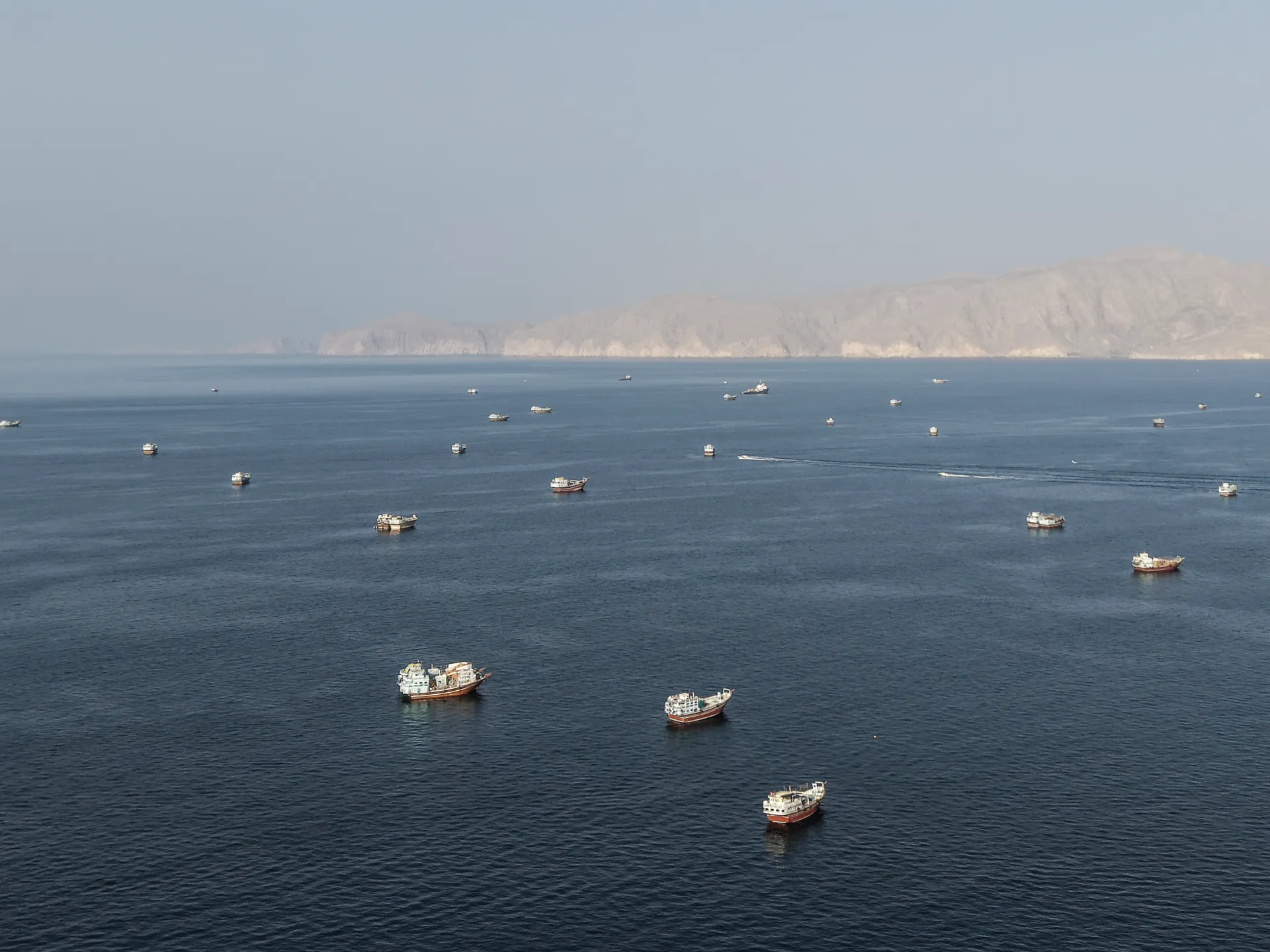
Crude oil exports from the Middle East have risen above pre-war levels on four of the seven days in the last week of September, provisional data from ship-tracking firm Kpler showed.
However, senior Islamic Revolutionary Guard Corps (IRGC) commander Ali Fadavi said in a televised interview on Sunday night that only three to four million barrels of oil per day (bpd) are now moving through the route, dismissing the amount as “negligible” when compared with pre-war traffic.
Recommended Stories
list of 3 itemsend of list
Fadavi said, for the first time, no US vessels were present in the Gulf, the Strait of Hormuz, the Sea of Oman or even the northern Indian Ocean and US warships are “100 percent vulnerable” to IRGC attacks.
Kpler data showed crude exports from the region exceeded pre-war levels on September 24 and between September 27 and 29, rising to 19.5-22.5 million bpd.
Around that time, Iran claimed success in attacking ships – including US Navy vessels – near the Strait of Hormuz, saying the strikes had forced Washington to move its warships further from the Iranian coast.
Before the US-Israel war on Iran began, exports averaged 18 million bpd between March 2025 and February 2026.
According to Kpler data, the overall tally for crude, oil products, chemicals and non-gas liquids averaged 22.4 million bpd in the seven days to September 30.
On October 1, the seven-day moving average for crude exports was at 18.5 million bpd. This includes transits via the Strait of Hormuz, the Red Sea, exports from terminals and ship-to-ship transfers in the Gulf of Oman.
The number of liquefied natural gas cargoes exiting the Strait of Hormuz also rose in September to its highest monthly level since February.
The figures exclude any vessels that might have crossed the strait with their automatic identification system transponders turned off to avoid detection.
The United Kingdom Maritime Trade Operations agency reported at least one attack a day in the Strait of Hormuz or in the Gulf of Aden since October 2.
On Sunday, Iran’s top negotiator and parliament speaker, Mohammad Bagher Ghalibaf, said the Strait of Hormuz would remain closed until the United States accepts Tehran’s seven-day plan to reopen the waterway.
Russian lab worker dies of suspected plague in Siberia; US monitoring case | Health News
A Russian agency links the lab worker’s death to ‘pneumonia of unknown’ origin.
Published On 5 Oct 2026
An employee of a Russian anti-plague institute in the remote Siberian region of Irkutsk has reportedly died of a suspected pneumonic plague infection, according to a United States official.
“We are aware of reports of a fatal case of suspected pneumonic plague in Irkutsk Oblast, Russia. We are monitoring the situation closely with the CDC [Centers for Disease Control and Prevention] and our other interagency partners,” a State Department official told Al Jazeera
Recommended Stories
list of 3 itemsend of list
“Many details have not been confirmed. We encourage Russian authorities to share accurate information quickly and openly,” the official said.
Alexei Tsydenov, the governor of the Buryatia region, said in a post on his Telegram channel on October 3 that a woman in the neighbouring Irkutsk region had “died, maybe of the plague”.
Russia’s official TASS news agency reported on Sunday that the country’s consumer watchdog, Rospotrebnadzor, said in a statement that an employee of the Irkutsk Anti-Plague Research Institute of Siberia and the Far East had been diagnosed with “pneumonia of unknown aetiology”.
The watchdog also said it expanded testing of samples from the patient and found no microorganisms associated with her professional activities.
Pneumonic plague is caused by the bacterium Yersinia pestis, usually found in small mammals and their fleas. According to the World Health Organization (WHO), the plague is highly infectious and can be fatal if not treated early.
Local media named the woman who died as 28-year-old laboratory technician Darya Shipilova.
Media reports say that authorities in Siberia’s Irkutsk region have placed nearly 200 people under medical observation.
‘Lanterns’ finale: The creators on John Stewart’s journey, the Halogram
This story contains spoilers for Episode 8 of HBO Max’s “Lanterns.”
From the very first time Tom King and DC Studios’ James Gunn ever talked about a Green Lantern show, they envisioned John Stewart as the kind of hero who could generate excitement and change the tide of any battle upon his arrival.
“The idea was to build a character as compelling and impactful as, say, Thor in the Marvel universe,” says King, the “Lanterns” co-creator, during a recent video call. “Someone who arrives in a movie with a thunderclap, and … the audience [just] screams when they arrive because you’re in love with that character … not just [for] the power set they have, but the integrity of that character.”
That hero officially takes flight in Sunday’s “Lanterns” finale.
Episode 8 of the HBO Max superhero crime drama, titled “Dirt and Stars,” sees John Stewart (Aaron Pierre) take up the mantle as Earth’s newest Green Lantern. After solving the mystery of his predecessor Hal Jordan’s (Kyle Chandler) death, Stewart claims Jordan’s power ring as his own, recites his oath and jets off toward his next adventure. (A second season of “Lanterns” has not been announced, but the character will appear in Gunn’s upcoming “Superman” sequel, “Man of Tomorrow.”)
Co-created by King, Damon Lindelof and Chris Mundy, “Lanterns” introduces Jordan as a grizzled, veteran member of the Green Lantern Corps, intergalactic space cops who are armed with a special ring that allows them to manifest objects and manipulate energy.

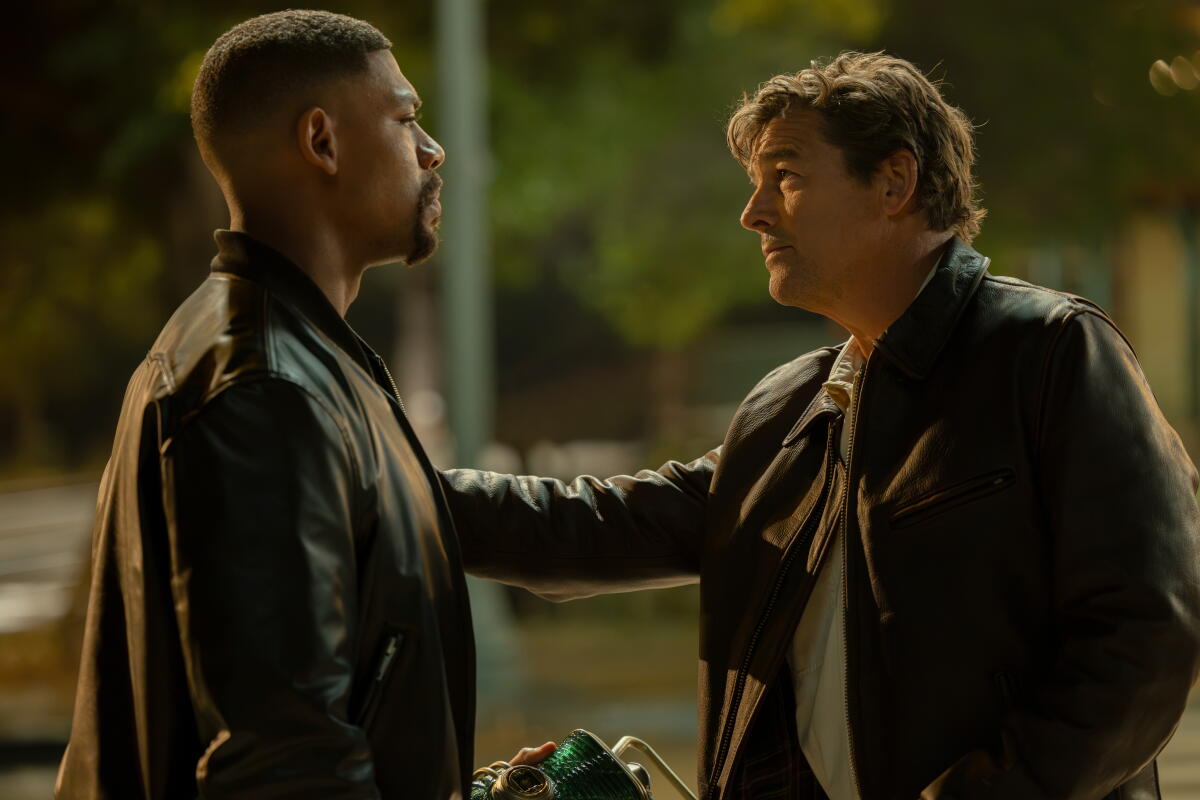
In the finale, John Stewart, left, claims Hal Jordan’s (Kyle Chandler) ring as his own.
(John Johnson / HBO Max)
Stewart is a new Green Lantern recruit, but when an investigation into the whereabouts of a killer alien robot on the run goes awry, they go their separate ways.
“One of the cool things about the canonical Green Lanterns is that, technically speaking, there’s only one ring delegated to this particular sector in which Earth fell,” says Lindelof of one of the show’s central conflicts.
The creative team knew from the jump that Stewart would be the one to bear that ring at the end of the season, but the idea that Stewart would be a child prodigy whose parents preordained his path to become the next Green Lantern developed over time.
“We [decided] the first part of John’s life is going to be [about] coming to terms with the fact that he doesn’t really want the ring — or he doesn’t want the ring on those terms,” Lindelof says. “Then there would have to be some period of time where he was living his dream. … Then and only then would he be able to wipe the slate clean, as it were, and gravitate back toward a healthy way to want the ring.”
In the comics, Green Lanterns are known for their oaths, which they recite when recharging their rings or to reaffirm their commitment to the group. In “Lanterns,” Stewart creates his own version that acknowledges his journey and perspective on becoming a Green Lantern.
“We talked a lot about it in the room, but the feeling was that he was changing the relationship with the Guardians in that moment,” Mundy says, referring to the immortal aliens that created the Green Lantern Corps.

In the end, Hal, left, is able to impart lessons that nobody else would have been able to teach John.
(John Johnson / HBO Max)
The Guardians had once considered Stewart an ideal replacement for Jordan because he was willing to blindly follow orders, but by the time he claimed Jordan’s ring, it’s clear Stewart has no plans to be affiliated with the Guardians or the Green Lantern Corps in that way, and the writers wanted his oath to reflect that.
“We wanted John to take [the role] on his terms,” Mundy says. “Even though Hal didn’t train him as well as he should have trained him, he taught him lessons that nobody else would have taught him. … [Including] how you need to be your own person even as you’re working for this organization.”
Besides his unconventional path to becoming a Green Lantern, Stewart is in possession of a unique lantern for recharging his ring that was forged by Sinestro, Jordan’s disgraced mentor.
The “Lanterns” showrunner remained coy when asked whether this lantern’s more ominous origins could lead to any unintended consequences for Stewart.
“It’s rife with possibility, is what I will say,” Mundy says.
In separate interviews, Mundy, Lindelof and King discussed the “Lanterns” finale, Stewart and Jordan’s bittersweet reconciliation and the show’s fiercely protective mothers. Their comments have been edited for clarity and length.
Because the “real” Hal is killed in 2026, his relationship with John is left unresolved. John shares a moment with the Halogram, the backup version of 2006 Hal’s consciousness, after working with him and the mystery is solved, but can you address that lack of proper closure for them?
Mundy: We talked about this thing as a love story between these guys in a certain way, but one of them has to die in order for them to truly come together. Even over the course of the Halogram being in the show, he never called John “Junior” ever. He always called him “trainee.” Until the last moment when he says … “I love you, too, Junior.” There’s something very bittersweet about the fact that the two people we spent all that time with don’t fully have their moment together.
King: What I think is hinted at between the Halogram and the final Hal we get is this Sinestro subplot. This is right from the comics, but Hal’s best friend, his mentor, the person who trained him, betrayed everything he trusted and Hal had to put him away. I think the trauma of that moment closed Hal up. It damaged him … so he was unable to see John for what he is and unable to listen to John the way he should. [With the Halogram] John finally encounters a Hal who hasn’t gone through that and they can have conversations they couldn’t have before. John can start to feel the empathy that Hal denied him, and he can see Hal for who Hal really is.
Lindelof: I love the idea that that version of Hal and John are unresolved. There is no apology. There is no forgiveness. The only closure that John can get is from this earlier version of Hal who has a lot of sympathy and empathy, not just for John, but for himself. Obviously, this is a crazy sci-fi superhero show, but that feels more authentic to life. Sort of like when someone that you love is gone, and you find a note that they wrote or an old birthday card and you extrapolate new meaning from it even though it’s from an earlier version of them.

Viewers get some backstory on the romance between Kerry Kane (Kelly Macdonald) and Hal.
(John Johnson / HBO Max)
Why was it important to show more of 2026 Hal Jordan’s life before his death in the finale?
Lindelof: The only flavoring that we get of him directly [before this] is in the diner scene, when John comes for his apology and doesn’t get one. Only toward the very end of that scene after John has hit Hal, and Hal says, “Don’t let anybody know that you were here,” is there a flash that something has changed in this guy. It’s one thing for Kerry to tell us that they were in love, or to hear Hal’s “buttercup” voicemail, but I think that the audience needed to see it and experience it. Hal is not a changed man in 2026, but he’s an evolved man. And there’s real tragedy inherent in all of the decisions that he’s making because we know that all of those decisions basically lead him to be a corpse in the stands at a football game. The subtle differences by which Kyle plays older Hal versus Halogram Hal is really on sharp display in the finale.
With Noah being a Manhunter, it turned out that he and John were dealing with similar questions around lineage and legacy and nature versus nurture. How did the exploration into these themes evolve during the show’s development? Much of it is unpacked in their truck ride together.
King: The basic idea [was] that John had been one of these kids who had been told, “You’re going to be this when you grow up.” Like a Tiger Woods or Michael Jackson-esque child. We started talking about what that’s like — to be a prodigy, to be forced into [something]. The idea that you’re kind of programmed by your parents. And then we were talking about Manhunters. The problem with Manhunters is they’ve been programmed to do this one thing, and they can’t defy their programming [to eradicate mankind]. That’s why they had to eventually be erased. Then we started talking about the parallel of programming and overcoming programming, and what makes you human, what doesn’t, that parallel came first. Those were the very nascent ideas, and we took that to our brilliant writers room, and [Breannah Gibson], Justin [Britt-Gibson] and Vanessa [Baden Kelly] added their own personal experience to that and made it a much richer … and personal story.
Mundy: John still doesn’t know if he’s about to die in this car. Noah is trying to learn about himself and figure out if he wants to kill John or die himself. The important thing was to hold that tension and then kind of step that conversation through chapters. There’s anger about what happened to Zoe. After he understands that a little bit better, he says “these are the different ways my life could go.” And then John can actually bring a piece of himself. We talked all the time about the way John was raised and the programming of the Manhunters and what’s “programming” and what’s “being raised.” Then there’s a confession that ends up being false, but also this request to be killed. There were three distinct sections of that conversation, and we wanted them all to be meaningful and personal.

In the final scenes of the episode, John and Kerry have a conversation about what parents are willing to do for their children.
(John Johnson / HBO Max)
With both Hal and John, so much of their intergenerational trauma is tied to their fathers. But with Noah and John, you also see just how big of a role their mothers have played in shaping them. How did that aspect come about?
Mundy: Once we knew that Noah was a Manhunter, it felt too cheap and too easy for that to be the answer [to the mystery of Hal’s death]. But it felt key to the answer of it, and we were talking so much about parenthood and what you would do for your child and what it means. What’s protecting people and what’s not? It just became a given pretty early on that Kerry would be the answer at the end. It just fit into the same story Bernadette was going through. And [John’s] conversation with Kerry explains so much of that.
Lindelof: I think this all came from Vanessa Baden Kelly. We had written the pilot, where John’s father is shooting the apple off of his head, and then when Vanessa came on shortly thereafter, she’s like, “Where’s mom?” It is one of those moments where you realize it, particularly because we were three men, but also inside of the canon of these superheroes, it’s always a dad. So the idea was having Bernadette really be the mastermind of John’s upbringing as a way to provide a simultaneous salve for her husband’s shame about being afraid about losing out on the opportunity.
I think that Kerry is an equally fierce mother. Obviously, she loves Hal. But when you watch it a second time after you’ve seen the finale, you realize that there’s guilt there as well because of what she did to him, all in the name of her son.
John starts to reframe what Bernadette did as something for him, as opposed to something for her — in a lot of ways, it was a selfless act. She’s doing it knowing that her child will hate her, but that he’ll be the Earth’s Green Lantern, and there’s going to be an aspirational quality to that for generations to follow.
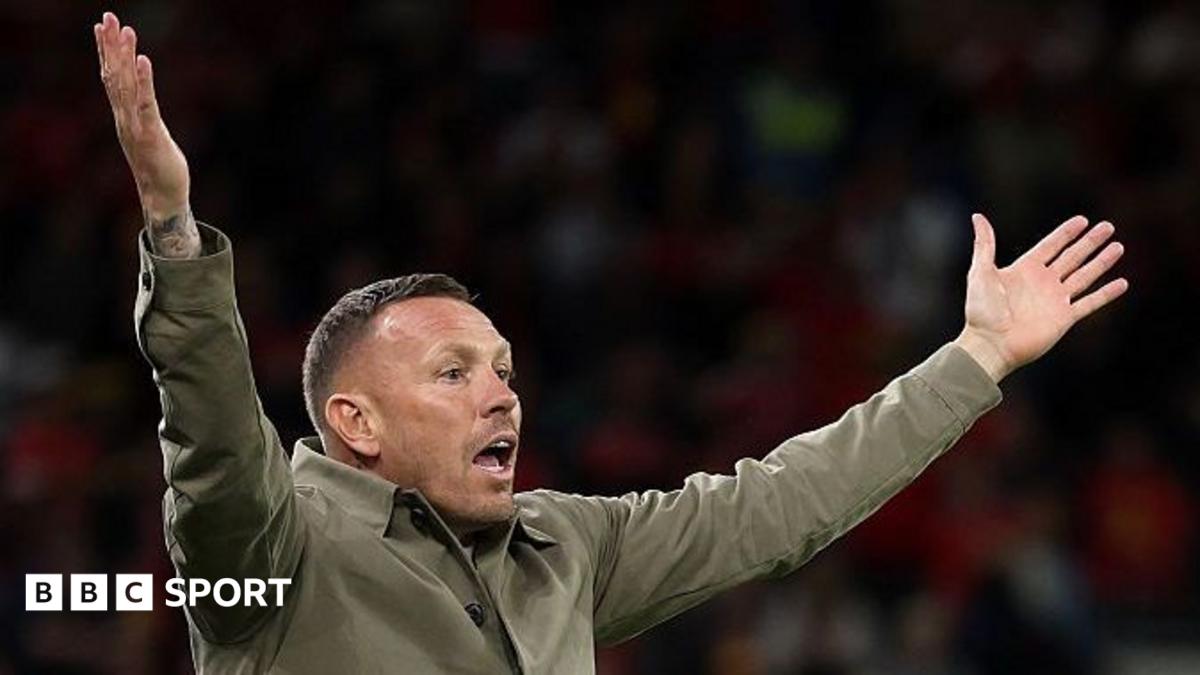
Wales 0-1 Denmark: Craig Bellamy bemoans four-game window after Nations League loss
Traditionally, international sides have played six games across three windows – all of which have featured two fixtures – in September, October and November.
But for the first time this year, the September and October breaks were merged.
Wales’ hopes of coping with the new schedule were not helped by a string of injuries, with stars such as Karl Darlow, Joe Rodon, Dylan Lawlor and Harry Wilson missing the entire camp and David Brooks dropping out of the squad after defeat by Portugal in the opening game.
Bellamy said Dan James was not fit enough to play against Denmark after he was left on the bench at the Cardiff City Stadium, and acknowledged Ben Davies probably should have been rested after he was withdrawn late on.
“If we have a few injuries, which we had more than one or two, they miss four games,” said Bellamy.
“We can deal with two, do you understand? And then the squad will get really tested. The intensity of the squad, the athleticism, really I think [the four-game break] is designed for the elites.
“[They can] say, we can go, we can go, we can turn over these games really, really quickly and we can change, we can change [the team] like for like because we have the numbers. So, it puts a real stress on a lot of us.”
FBI arrests ‘Chinese foreign agent’ for spying on Taiwan president’s son | Espionage News
A California woman allegedly sent photos and videos of President Lai’s son and his family to Chinese officials.
Published On 5 Oct 2026
The FBI has arrested a “Chinese foreign agent” at Los Angeles International Airport accused of spying on the Taiwanese president’s son.
Wanying Zhang, also known as Heather, was arrested on Sunday before her planned departure to China, the first assistant US attorney for the Central District of California, Bill Essayli, said in a post on X.
Recommended Stories
list of 3 itemsend of list
Authorities charged Zhang, 34, of Irvine, California, with acting as an unregistered foreign agent.
Zhang surveilled Taiwanese President William Lai Ching-te’s son, the FBI said. The agency did not directly name Zhang’s alleged target, but later shared a news article identifying him as Lai Ting-yu.
The US Justice Department said Zhang travelled to Seattle in 2025 at the behest of Chinese officials. She sent photos, video and license plate information of the Taiwanese leader’s son and his family to China.
Essayli called Zhang a “Chinese foreign agent” and said she “used tradecraft to avoid detection”.
“She never notified the Attorney General she was acting for a foreign government, a federal offense,” he added.
Essayli said Zhang will appear in a Los Angeles federal court on Monday.
William Lai Ching-te and his Democratic Progressive Party say that Taiwan is already an independent country separate from China. Beijing views the island as Chinese territory.
Washington does not have formal diplomatic ties with Taiwan, but the US is bound by law to provide the island with the means to defend itself.
Earlier this week, the US delivered two F-16V Block 70 fighter jets to Taiwan as the island seeks to build its defence capabilities to deter a feared attack by China.
In January, Chinese President Xi Jinping pledged to achieve the “reunification” of China and Taiwan, calling Beijing’s long-held goal “unstoppable”.
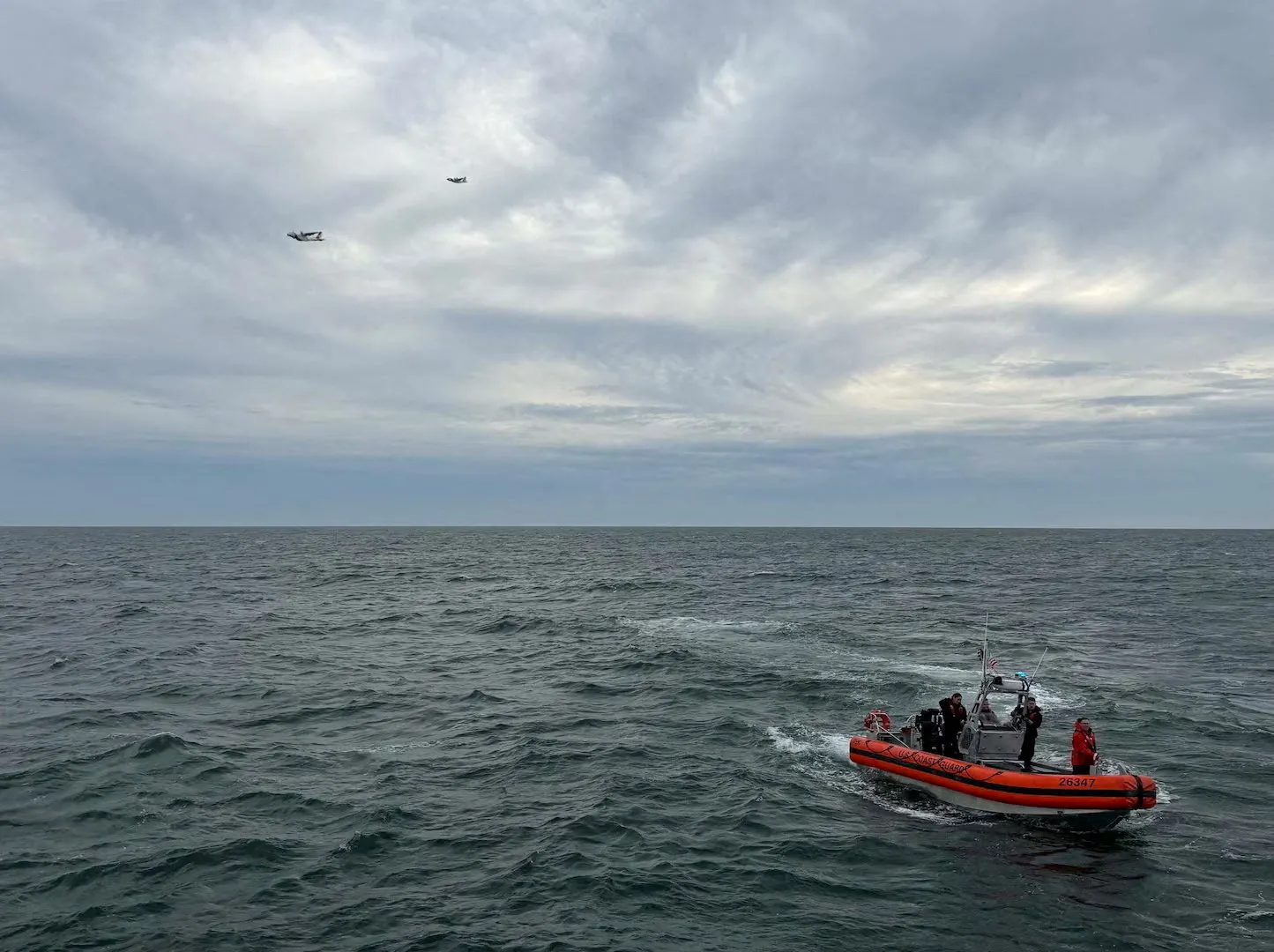
US coastguard suspends search for six on board crashed medical jet | News
Debris found off Nantucket island after the air ambulance disappeared while flying from Bermuda to Boston.
Published On 5 Oct 2026
The United States coastguard has suspended its search for six people on board a medical transport jet that crashed while flying from Bermuda to Boston.
“Suspending a search is not an easy decision,” Rear Admiral Matthew Lake, commander of the coastguard’s Northeast District, said in a statement on Sunday.
Recommended Stories
list of 2 itemsend of list
The search was called off after teams spent about 66 hours covering 4,445 miles (7,150km) by air and sea and confirmed that debris found off the shore of Massachusetts’s Nantucket Island came from the aircraft.
The Gulfstream G100 carried two pilots, two medical staff, a patient and a relative, Clarence Togeretz, director of flight operations at Canada-based Latitude Air Ambulance, told Canada’s public broadcaster CBC.
The four crew members were Canadian, and the two passengers were Bermudian, according to authorities.
In a statement on Sunday, Latitude Air Ambulance said, “Given the information shared by authorities and the conclusion of the search-and-rescue phase, we must now face the heartbreaking reality that the four members of our Latitude team, our patient and the patient’s family escort, who were aboard Heartbeat 104, are presumed to have died.”
Attention has turned to what happened in the jet’s final minutes, when flight-tracking data showed a steep descent and air traffic controllers struggled to re-establish contact.
Authorities have not determined what caused the aircraft to come down.
The aircraft had flown to Bermuda to collect the patient and was heading to Boston Logan International airport.
The US Federal Aviation Administration alerted the coastguard at about 2am on Saturday (06:00 GMT) after contact with the jet was lost.
Lake said at a Sunday news conference that the water around the debris was about 80 to 90 feet (24-27 metres) deep.
He offered condolences to the families of those on board and thanked the agencies involved in the operation.
Latitude Air Ambulance specialises in medical evacuation and repatriation flights, carrying patients home from other countries.
The company says its missions are normally staffed by two pilots and medical personnel.