


Growing outrage in Japan after US Marine arrested in woman’s killing | News
The 20-year-old soldier denies the charge as protests held on Okinawa and in Tokyo.

Published On 5 Oct 2026
Japan’s prime minister says the killing of a woman, allegedly by a US Marine stationed in Okinawa, is a “heinous crime”, and she has called on the United States to “thoroughly enforce discipline” amid growing outrage in Japan.
Sanae Takaichi told lawmakers on Monday that the government has urged the US to provide “full cooperation with the investigation” and called for “strict discipline among US military personnel”.
Recommended Stories
list of 4 itemsend of list
About 54,000 US military personnel, including 18,000 Marines, are stationed in Japan. The majority of these forces are based in Okinawa, a Japanese island that came under US administrative control at the end of World War II and was returned to Japan in 1972.
Crimes including rapes, assaults, hit-and-run and drink-driving incidents by US personnel have long sparked protests on the island.
The new case involves a 20-year-old Marine who was arrested on suspicion of killing a 39-year-old woman at a hotel in the city of Naha and stealing her wallet, police said on Sunday.
The Kyodo News agency, quoting police, reported that the woman’s body was found in a hotel room and she appeared to have been strangled.
The Marine was arrested by Japanese police on Sunday and sent to prosecutors on Monday, according to Kyodo News. He has denied the charges.
“The occurrence of such a heinous crime is extremely regrettable,” Takaichi said.
Chief Cabinet Secretary Minoru Kihara told reporters on Monday that Tokyo will “continue to urge the US side to thoroughly enforce discipline” among its soldiers in Japan.
Kihara, who is in charge of mitigating the impact of US forces in Okinawa, said Tokyo has protested to the US at “various levels”.
The incident has caused outrage across Japan, and the Japanese Ministries of Foreign Affairs and Defence have summoned the US ambassador and the commander of US forces in Japan.
According to Jiji Press, about 100 people held protests outside the Okinawa prefectural government building on Sunday and shouted: “How much longer do we have to bear all of this?”
Another 100 people participated in a rally in Naha on Sunday, Japanese media reported.
Okinawa native Sorane Sakihama, 24, who organised a similar rally in Tokyo on Sunday, said she cried upon learning about the woman’s death.
“We couldn’t protect her. That made me so angry and sad,” the university student told the AFP news agency, adding that she was planning to organise another protest in front of the US embassy on Tuesday evening.
“I want to ask them: What are these soldiers stationed here for? They might say they are here to protect lives or boost security. But how can they say that when a life was taken by one of their own?”
Since Okinawa was returned to Japan, about 6,000 US military personnel have been arrested in Japan, according to the Yomiuri Shimbun newspaper.

Here’s the backstory on 6 choices Zoe Kazan made in her ‘East of Eden’ adaptation
p]:text-cms-story-body-color-text”>
When Zoe Kazan learned she was going to adapt “East of Eden,” she knew it meant she’d be destroying a copy of John Steinbeck’s 1952 novel with scribbled notes in different colors, highlights and earmarked edges. So she ordered a used one from Powell’s Books — it has somebody else’s last name written on it, she points out.
“It’s a treasure to me,” she said during a recent video call from London.
Steinbeck’s Cain and Abel-inspired novel follows two families across decades as a way to explore good and evil, legacy, free will and what makes a person. Driving many of the biblical parallels are two sets of siblings — half-brothers, Charles and Adam Trask, and later, Adam’s fraternal twin sons Cal and Aron — each competing for their father’s attention and love. Disrupting their lives is an enigmatic woman named Cathy Ames, who Adam marries and who gives birth to Cal and Aron.
The book-to-screen adaptation has been Kazan’s passion project. And for a tale of familial legacy, she had her own to confront — in 1955, her grandfather Elia Kazan directed a film version that starred James Dean and covered the last third of the book, which focused on Cal and Aron. Zoe Kazan’s interest in the story took shape decades later when, as a teenager, she discovered the book.
She found herself drawn to Cathy, its famous antagonist.
“I felt repelled by her, attracted by her, curious about her. I felt empathy. I felt hared. I felt love. I felt all these things,” Kazan said. “I had never read anybody like her. I just remember, every few pages, wanting to stop and read aloud to someone the things that she was doing or [the things] that someone was saying about her.”
She also felt the pull of the story’s examination of intergenerational cycles and familial legacy.
“It feels a little bit like a chicken-and-egg situation. Which came first: Was I drawn to this book because of its intergenerational aspects or did this book teach me to think about intergenerational aspects?”
Now streaming on Netflix, the seven-part adaptation Kazan shepherded — alongside co-showrunner Jeb Stuart — covers more ground of the multigenerational saga than her grandfather’s film. This new version also centers Cathy.
Here’s what Kazan told us about her vision.

Bank of America’s Marcelo Mousalli at the 2026 Global Finance Awards
Home  Media Conferences and Events
Marcelo Mousalli, Head of Product for Latin America at Bank of America, speaks with Global Finance editor Paul Curcio at the 2026 Global Finance Transaction Banking Awards, Fontainebleau, Miami Beach.

Women’s Super League takeaways: Manchester City and London City dominate
This season is the WSL’s biggest ever, literally, with the league expanding from 12 to 14 teams and three coming up from WSL 2.
But does bigger mean stronger?
Crystal Palace look the most comfortable of the promoted sides, boasting six points from five games and they moved to eighth in the WSL table by drawing at Aston Villa on Sunday.
But things are more difficult for the other promoted sides, Birmingham and Charlton, who prop up the table.
Despite some promising patches, WSL 2 champions Birmingham have just two points and one of those came against Crystal Palace.
At least France forward Oceane Hurtre looks suited to this level, sitting as joint top scorer in the WSL with five goals from five games.
Hurtre scored against Everton in defeat on Sunday but defender Neve Herron summed things up by saying Blues were “second to everything” after the game.
Meanwhile, it looks bleak for Charlton, bottom of the table with zero points, 15 goals against and only two goals scored.
After their 5-1 loss to Brighton on Sunday, goalkeeper and captain Sophie Whitehouse said: “It just wasn’t good enough.
“It’s a tough league. The jump up is so big. You can’t make any mistakes.”
WMA members must call for release of detained Palestinian medics | Human Rights
More than 1,700 healthcare workers have been killed during the genocide in Gaza. Israel has detained hundreds more without charges. Doctors, nurses and paramedics who stayed to treat the wounded have themselves become casualties of this war.
When medical staff are killed, imprisoned or disappeared, it is not only they who pay the price. Patients lose the people they rely on to keep them alive.
This is something delegates who gather in Rotterdam this week for the General Assembly of the World Medical Association (WMA) must remember. The fate of their Palestinian colleagues should be put on the table, not as a debating point, but as a test of whether the world’s governing body of medical ethics still means what it says.
The WMA already recognised the seriousness of these issues last year by adopting a resolution on the protection of healthcare in conflict. That was an important step and a welcome reaffirmation of the principles of medical neutrality. The challenge now is to ensure this is followed by the commitment of every medical association to explicitly support it and to use its influence to pressure governments to act.
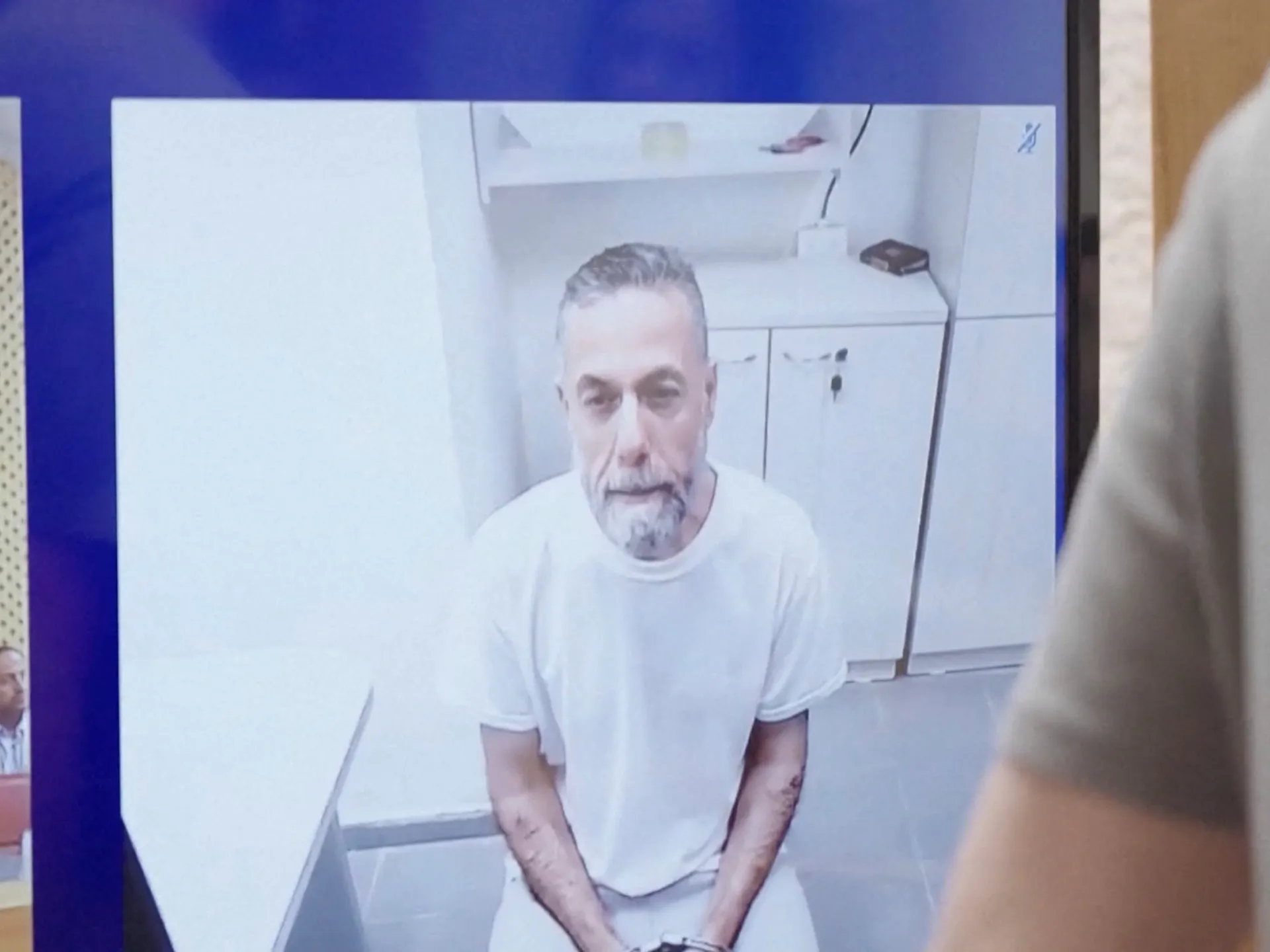
If the WMA Assembly needs a single face for this file, it could be the one of Dr Hussam Abu Safia, the paediatrician who was the head of Kamal Adwan Hospital, the last functioning hospital in northern Gaza until Israeli forces stormed it in December 2024.
He’s been held now for more than 22 months without charge under Israel’s Incarceration of Unlawful Combatants Law, which permits indefinite detentions. He reportedly continues to endure prolonged solitary confinement, beatings, severe weight loss and untreated pre-existing conditions. An international petition for his release has drawn the signatures of more than 970 medical professionals from 41 countries.
Alongside him stands Dr Mazen al-Rantisi, the 71-year-old family physician from Ramallah in the occupied West Bank, known as the “doctor of the poor”. He was arrested in June in a predawn raid on his home.
In addition, our longtime Doctors Without Borders (MSF) colleague, Dr Mohammed Hassan Ali Obeid, a respected 43-year-old Palestinian orthopaedic surgeon and father of three children, has been detained under the Unlawful Combatants Law in Israel for more than 600 days without charge.
Although detained health workers have been released, more than 80 remain in Israeli custody alongside at least a dozen arrested from the West Bank.
The World Health Organization (WHO) has recorded 1,000 attacks on healthcare, which have resulted in more than 1,000 deaths and 1,700 injuries in Gaza since October 7, 2023. Roughly 90 percent of Gaza’s health infrastructure has been destroyed or damaged. In August 2025, United Nations experts stated that the systematic destruction of the health system amounts to “medicide”.
In the West Bank, where no wartime emergency provides cover, the WHO also documented more than 1,000 attacks on healthcare since October 7, 2023, with 42 deaths and at least 218 injuries.
Ambulances are stopped at checkpoints and their crews taken. Medics trying to reach people injured in settler attacks have themselves been obstructed. Dialysis and oncologic patients stay home because the checkpoints make the journey to treatment impossible. Healthcare workers have been shot, detained and killed during Israeli military raids.
All of this represents Israel’s deliberate and systematic endeavour to dismantle Palestinians’ capacity to provide care. This is consistent with its clear and blatant disregard for Palestinian life.
The WMA Assembly should speak plainly about what is happening. It should call publicly for the release of detained Palestinian doctors, including Abu Safia, al-Rantisi and Obeid. It should press for independent access to those still being held. And it should back independent investigations into attacks on healthcare in Gaza and the West Bank with the findings made public regardless of where they lead.
This is an opportunity to collectively pressure fellow medical associations, political authorities and any relevant bodies to take action.
What lies before the Rotterdam assembly is a duty. One that reaffirms loudly, structurally, universally the founding proposition of the WMA: that membership carries an ethical responsibility, which does not flex with geography or alliances.
Healthcare workers are not targets. Either a white coat is worth protecting everywhere, or it is protected nowhere. The test is not simply whether we affirm these principles, but whether we uphold them when it matters most.
The views expressed in this article are the author’s own and do not necessarily reflect Al Jazeera’s editorial stance.

Win a luxury two-night stay for two at the iconic Town Hall Hotel in East London, including dinner at Elis!
Ready for a luxury East London break? Enter our exclusive competition to win a stylish two-night stay at the award-winning Town Hall Hotel, complete with daily breakfast and an exquisite dinner for two at Elis.

Win a luxurious 2 night stay in the stunning Town Hall Hotel
Looking for the ultimate East London escape? We’ve teamed up with the award-winning Town Hall Hotel in Bethnal Green to give one lucky reader and a guest the chance to win a stylish two-night stay, complete with daily breakfast and dinner at the acclaimed Elis .
Housed inside the former Edwardian Bethnal Green Town Hall, this Grade-II listed landmark seamlessly blends grand historic architecture with cutting-edge modern design. Step inside to discover sweeping marble staircases, intricate Art Deco detailing, and a striking glass-and-steel extension—creating a boutique retreat like no other.
Experience the best of East London
Positioned right in the energetic heart of Bethnal Green, Town Hall Hotel is perfectly placed for exploring East London’s vibrant culture from the independent boutiques of Shoreditch, to the iconic Columbia Road Flower Market and historic Brick Lane.
When you’re not out exploring, unwind in the hotel’s breath taking 14-metre indoor heated swimming pool, squeeze in a session at the gym, or relax with a cocktail at the bar.
What you can win:
- A two-night stay for two guests in one of the hotel’s spacious, gallery-like luxury suites (featuring fully equipped kitchens and bespoke interiors).
- Daily breakfast (B&B) to start each morning in style.
- Dinner for two at Elis, where two-Michelin-starred chef Rafael Cagali and his team serve up a relaxed menu inspired by his Brazilian-Italian roots.
For your chance to win simply fill in the form below. if you can’t see the form, click here.
This competition closes on the 15th November.

Photos: Yemen’s hospitals struggle to operate amid persistent power outages | Humanitarian Crises News
Aden, Yemen – In this coastal city long accustomed to sweltering, humid summers, the absence of electricity can reshape an entire day.
When the power cuts out, fans and air conditioners fall silent. Sleep becomes difficult. Students race to finish their homework before darkness arrives. Children spill onto the streets while young men drift towards the sea in search of moving air and cooler waters.
Inside hospitals, where treatment cannot be postponed until the lights come back on, electricity carries a different weight altogether.
Yemen’s power crisis predates the current war. Even before the conflict, only about 55 percent of the population had access to electricity from all sources, which is among the lowest rates in the Middle East and North Africa.
Since 2015, damage to infrastructure, fuel shortages and ageing generation and distribution systems have left supplies even more fragile.
In Aden, power stations continue to face repeated shutdowns, leaving residents without electricity for long periods. Insurance premium increases on tankers carrying fuel to Aden have also reportedly made the crisis worse.

An assessment by the International Monetary Fund (IMF) published this year said Aden was receiving just two to six hours of electricity a day as structural weaknesses and fuel shortages caused frequent outages.
As the sun sets over the city, a second part of the day begins. Homes and businesses slip into darkness, punctuated only by small lights powered by batteries and solar systems. Residents often do not know how long the latest blackout will last, or how long the power will stay on once it comes back.
During the summer, when temperatures in Aden climb towards 40 degrees Celsius (104 degrees Fahrenheit), the consequences are hard to escape. Residents in the city interviewed in the middle of the year said their homes had become almost unbearable during the prolonged power cuts that plague the city. The heat does not always disappear when the sun goes down.

“Sometimes the power comes back while we are asleep, so we wake up to use it. Our lives have become tied to when electricity comes and goes,” one resident said. For her family, an outage is measured not just in hours but in problems. Children are unable to sleep, food spoils in warm refrigerators and housework must wait.
When the heat inside becomes too much, Youssef heads for the coast. The sea, he said, is no longer just a place of recreation but a refuge from the unbearable heat of the city.
“When the electricity is off for hours, it is very difficult to stay inside,” he said. “There is no fan and no air conditioning, and the humidity makes the heat worse, so we come to the sea.”
Towards the end of the day, young men and families gather along the waterfront. Some swim. Others simply sit beside the water and wait for the city to cool. But the sea cannot solve Aden’s electricity crisis. Hours later, Youssef returns home and sometimes finds the house exactly as he left it.
“Sometimes we get back and the power is still out, and we start waiting all over again,” he said.
For children like Mohammed, Saeed and Abdullah, blackouts have changed where childhood takes place. When their homes become too hot, they move into the street, running between houses or sitting with other children until late.

“It gets hot inside the house, so we come down and play in the street,” one of the boys said. “We play football or sit with our friends. Outside is better when the electricity is off.”
For them, a blackout is not an extraordinary event. It is part of the life they have grown up with.
The effects follow them into the classroom. In Aden, the United Nations Development Programme documented more than 7,000 students and teachers struggling in dark, stifling classrooms during power cuts. The installation of solar systems at eight schools and an education office has helped. One teacher reported that some students had fainted due to the heat.
At home, preparing for exams can depend on a rechargeable lamp or a small solar system if they have one.
In hospitals, there is no option but to simply wait out the darkness. Operating theatres, intensive care units, laboratories, medical refrigerators and dialysis machines all depend on continuous power.
The World Health Organization (WHO) says recurring power cuts disrupt lifesaving health services across Yemen, forcing facilities to rely on combinations of grid electricity, generators and solar systems.
In 2025, the WHO supplied about 4.33 million litres (1.14 million gallons) of fuel to 177 health facilities across the country to keep generators and essential equipment running.

Zeina Ahmed, a kidney patient, watches tubes carry her blood to a dialysis machine.
“For people at home, a power cut means heat and darkness. For us here, the first thing we think about is whether we will be able to have our dialysis or not,” she said.
“I come to the hospital knowing that I need this session. If it is delayed, I keep thinking about when I will get it and whether the machines will continue to work.”
After years of unreliable grid supply, solar panels, batteries and generators have become familiar parts of Yemen’s landscape.
They sit on rooftops, providing power to the homes, businesses and schools that can afford them.
More than half of Yemen’s homes now rely on solar power in some form, according to the WHO, while hospitals and other health facilities are increasingly adopting solar systems to keep essential services running.
Families who can afford to buy larger panels and batteries can power more appliances. Others might have just enough electricity for a light, a fan or a phone charger – a fragile shield against the dark and the heat.

Inside Coronation Street Christina star’s life from marrying co-star to famous brother
Coronation Street’s Christina Boyd star Amy Robbins’ life couldn’t be more different from her on-screen Weatherfield alter-ego’s

Inside Coronation Street Christina star’s life from marrying co-star to famous brother
Amy Robbins has become a firm favourite playing Christina Boyd on Coronation Street – but what do we know about her life?
Actress Amy joined the ITV soap in 2023 as Christina, the mother of Daisy Midgeley (Charlotte Jordan). Since then, Christina has become a regular and has been involved in several big storylines too.
From her devious catfishing scheme to finding love with undertaker George Shuttleworth (Tony Maudsley), her time in Weatherfield has not been short of drama.
Especially at the moment, as it was recently revealed that Christina’s long-lost granddaughter Lucy Parkinson (Anya Dewin) is living on the cobbles. And in Monday’s episode (October 5), Christina tries to get to know Lucy, who is unaware of the truth.
In real life though, Christina star Amy’s life couldn’t be more different from her on-screen Weatherfield alter-ego’s… Here, we’re taking a look inside the soap favourite’s life.
What has Amy been in?
Amy Robbins boasts an extensive television portfolio spanning many years. The RADA-educated star has featured in programmes.
These include Where the Heart Is, Heartbeat, Hollyoaks, EastEnders, Holby City, Doctors, and even Emmerdale. She appeared on the ITV soap in 2022, playing the defence barrister in the court case of the village serial killer Meena Jutla (Paige Sandhu).
Amy’s romance with husband
Amy is loved-up with her husband and fellow actor Robert Daws whose career spans almost 50 years. Robert has appeared in the likes of Death in Paradise, Holby City an he played Tuppy Glossop in ITV’s comedy Jeeves and Wooster from 1990 to 1993.
Robert also appeared on Coronation Street in 2010 playing Tom Hughes. As for Amy and Robert, the pair started dating while working on ITV medical drama The Royal in which Amy played Dr. Jill Weatherill and Robert played her on-screen husband Dr Gordon.
Talking about their romance, Amy told The Mirror in 2007: “We were friends for a long time. But I just knew I wanted to be with him. We are like two sides of the same person and have a similar outlook on life. We are both big family people and put our families first. People even say that we look alike.”
Amy and Robert also share two daughters, Elizabeth and May. However, according to Amy her first experience of childbirth was traumatic. She added to the publication: “It was a nightmare. I remember going into the labour ward and thinking I’d gone into hell and all these women were being tortured.
Amys’ famous brother
Amy belongs to a remarkably gifted theatrical family. Amy’s sibling Ted previously enjoyed his moment in Corrie’s spotlight, appearing in the programme seven years ago as Mary Taylor’s romantic interest, Brendan Finch.
Nevertheless, he’s equally recognised for his contributions to productions including Calendar Girls, The Slammer, Diddy Movies, and Benidorm. In 2023, Amy revealed the guidance Ted offered her after discovering she’d secured a role in the popular ITV soap.
She told The Mirror: “He told me not to underestimate the feeling of standing in the Rovers for the first time. He said it would be overwhelming, and he was right.
“His other piece of advice was not to call William Roache ‘Ken’ like he did. Ted bumped into William and accidentally said ‘hello Mr Barlow’.”
Amy’s other family
Meanwhile, Amy’s sister, Kate Robbins, is also a recognisable face, and the duo featured together in the 1986 sketch programme Robbins.
Kate has appeared on screen in programmes including Spitting Image, After Life, and EastEnders, whilst her daughter is I’m A Celeb and Rivals star, Emily Atack.
But that’s not everything, as Amy’s first cousin once removed is The Beatles icon Paul McCartney. Paul is Amy’s mum’s cousin, and she’s spoken warmly of him, stating: “He’s everything you would hope him to be, genuinely lovely.”
Coronation Street airs Monday to Friday at 8:30pm on ITV1 and ITVX
Why the Trump administration is reluctant to call the ongoing conflict with Iran a ‘war’
WASHINGTON — Late September in the Oval Office, President Trump declared, “Iran will never have a nuclear weapon. We’re gonna win that war very soon.”
It wasn’t the first time he’s described the hostilities as “war.”
On Feb. 28, the day U.S. and Israeli began bombarding Iran, he warned that “the lives of courageous American heroes may be lost, and we may have casualties. That often happens in war, but we’re doing this not for now. We’re doing this for the future, and it is a noble mission.”
But throughout seven months of back-and-forth strikes with Iran, Trump administration officials, and sometimes Trump himself, have performed verbal acrobatics to avoid the “W” word.

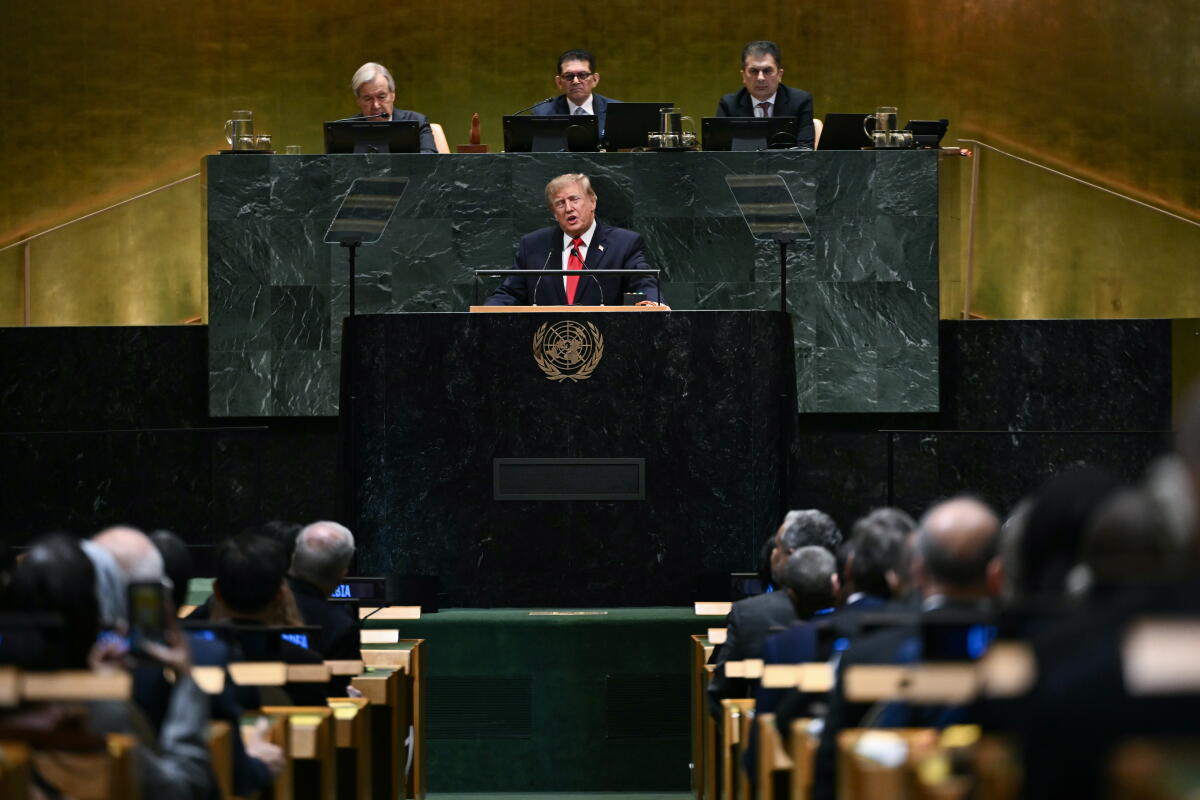
President Trump, addressing the United Nations General Assembly on Sept. 22, used the word “war” one time when referring to hostilities with Iran.
(Pool / Getty Images)
Senior administration officials loosely tossed around “war” during the first stages of conflict, but with polls showing the war in unpopular and congressional support waning, “war” and even “Operation Epic Fury” have become taboo among members of the Trump administration.
Trump has called attacks on Iran a “military operation,” “military decimation,” “excursion” and “skirmish.”
At a White House press briefing last month, Vice President JD Vance attempted to clear the air when a reporter asked about a potential end to what she called a “war in Iran.”
“I wouldn’t call it a war right now,” Vance said. “Major combat operations lasted for about six weeks.”

Vice President JD Vance, addressing reporters at the White House on Sept. 3, said, “I wouldn’t call it a war right now” when asked about the conflict with Iran.
(Chip Somodevilla / Getty Images)
Defense Secretary Pete Hegseth tread carefully in front of the Senate Appropriations Committee in July, repeatedly referring to a “conflict” in Iran that needed additional funding to continue.
On May 5, during the first of two delicate ceasefires with Iran, Secretary of State Marco Rubio announced an end to the objectives laid out in Operation Epic Fury and the beginning of “Project Freedom” — an effort to escort merchant ships through the Strait of Hormuz.
In April, Trump announced the blockade of Iranian ports. When asked about whether the blockade constituted an act of war, Rubio replied, “That’s not an act of war, that’s a defensive measure. It’s a counter to what they have decided to do.”
Senior Trump officials have maintained that the conflict can no longer be viewed as war because the intensity of strikes between the two countries has been reduced.
The “end” of Operation Epic Fury, the name Trump used when he announced hostilities on Feb. 28, was declared on May 5 — 60 days after the fighting began.
The timing was no coincidence. Under the War Powers Resolution of 1973, a president must cease all hostilities abroad after 60 days if there is no congressional declaration of war.
Legal and political considerations
Under the Constitution, only Congress declares war, but past presidents have routinely circumvented this rule by exercising their authority to direct the military and initiate strikes on targeted nations.
Nearly every modern president, from Dwight D. Eisenhower to Trump, has used this justification to undertake military action without the declaratory approval of Congress.
Congress can also choose to approve an Authorization for Use of Military Force, which grants the president legal authority to conduct military operations overseas.
Unless Congress sets a time limit on the authorization, authority to use the legal justification to launch military strikes can theoretically span multiple administrations.
Rep. Jamie Raskin (D-Md.), a former constitutional law professor at American University, said that presidents of both parties have avoided the term “war” when attempting to evade congressional approval of hostile action abroad.
“Trump has followed some of his predecessors in playing word games with the war power,” Raskin said. “What makes his case so extreme is that he proudly described it as a war and depicted it in glorified military terms.”
In March, seven days into the fighting, Trump said, “The war itself is going unbelievably. It’s as good as it can be.”
Congress has not officially declared war since World War II. The Vietnam War, the invasion of Afghanistan and both wars in Iraq were all approved by Congress under the umbrella of an Authorization for the Use of Military Force.
This year Congress has not approved such an authorization for the action with Iran. Fourteen Senate votes for a War Powers Resolution to curb Trump’s war efforts have failed in the chamber so far.
According to a CNN/SSRS poll last month, only 26% of Americans approve of the Trump administration’s handling of the Iran war.
Raskin said that he believes Trump’s terminology has shifted with the public mood, adding that he hasn’t heard any of his Republican colleagues “play along with the semantic games.”
“When things have turned south in the fortunes of this war, he has tried to pretend it’s something else,” Raskin said. “I think that has just further enraged the population.”
Past handling of congressional war power
The administration’s declaration that Operation Epic Fury had concluded echoed May 2003, when then-President George W. Bush stood in front of a banner reading “Mission Accomplished” aboard the USS Abraham Lincoln, approximately six weeks after Operation Iraqi Freedom began.
“Major combat operations in Iraq have ended,” Bush said. “And now our coalition is engaged in securing and reconstructing that country.”

President George W. Bush speaks aboard the aircraft carrier USS Abraham Lincoln off the California coast on May 1, 2003.
(J. Scott Applewhite/AP)
Despite the victory lap, combat operations in Iraq and across the Middle East continued through the aughts. The Iraq war wouldn’t officially end until 2011, with President Obama’s signature.
Obama himself relied heavily on the 2001 Authorization for the Use of Military Force — passed by Congress under Bush — in his military campaign against Islamic State during his presidency.
According to Council on Foreign Relations data, Obama launched 542 drone strikes and killed 3,797 people in Yemen, Pakistan and Somalia without renewed approval from Congress.
A case more analogous to Trump’s comes in former President Truman’s unilateral decision to deploy U.S. troops to Korea in 1950. The Truman administration forwent congressional approval altogether and used United Nations Security Council resolutions to justify the intervention against Communist forces in the north, according to a White House news release from the time.
There were many critics of this exercise of executive war powers, most notably, Ohio Republican Sen. Robert A. Taft, who argued that Truman had usurped congressional war powers.
However, that Congress still provided monetary support, granting Truman military funds and extensions to the draft to raise additional troops for the Korean War effort. According to historical Gallup polls, 78% of Americans in 1950 approved of U.S. intervention in Korea.
Trump sticking with ‘war’
While Vance and other administration officials continue to avoid “war,” it does slip out now and then. Trump has been, perhaps, the most discordant messenger of the administration when discussing Iran.
After referring to the “war” on social media and public interviews more than a dozen times, Trump backed Vance’s comments about the Iran war no longer being active as he spoke to reporters in the Oval Office in September. He refuses to call the conflict a “war,” Trump said, because “you are supposed to get approval.”
“I call it a military conflict, because it’s small potatoes for us,” Trump said.

Glenn Irwin: Northern Ireland rider Irwin could ride at Brands Hatch after hospital discharge
Northern Ireland’s Glenn Irwin has been discharged from hospital after crashing in Sunday’s British Superbike round at Donington Park.
The 36-year-old was moved to Queen’s Medical Centre in Nottingham after the incident because of “concern regarding a possible spinal fracture”.
However, there was a positive update from the British Superbike Championship.
It said that Irwin been “pronounced clear and discharged and will be reviewed for fitness to ride at Brands Hatch”.
Irwin crashed on the penultimate lap of the third BSB race of the weekend at Starkey’s Bridge.
He was assessed and treated at the medial centre at the circuit, and was conscious and stable throughout.
It is the second time that the Ducati rider has been taken to hospital after a crash this season.
Irwin sustained pelvic and neck injuries in a crash at Snetterton in July and missed the two remaining races that weekend.
BSB leader Kyle Ryde won the opening two races of the weekend at Donington but Scott Redding clinched the third and final outing to take the championship to the final weekend at Brands Hatch from 17-18 October.

Gaza mothers seek breastfeeding support amid hunger and siege | Education
Palestinian mothers are finding it increasingly difficult to breastfeed their babies in Gaza. After three years of Israel’s genocidal war, women suffer malnutrition, displacement and poor healthcare, yet still strive to nourish their infants.
Published On 5 Oct 2026

Beautiful island nicknamed Europe’s Hawaii loses 100,000 tourists after Ryanair scraps all flights
AN island in Europe has already lost thousands of tourists after Ryanair axed all flights there earlier this year.
The budget airline previously operated flights to the Azores in Portugal, having launched in 2015.
However, they confirmed last year that they would be scrapping them all with the last flight taking place on March 28.
The cancellations were due to airport fees, Ryanair said, as well as environment taxes in Europe.
The removal of Ryanair flights – which also included a number of routes from the UK – has left just British Airways operating flights, along with European airlines TAP and Azores Airlines.
Most of these operate from mainland Portugal.


And new figures have found that the loss of Ryanair passengers has seen a drop in tourists of 100,000 already.
According to the Regional Statistics Service of the Azores (SREA), passengers arriving at the island airport dropped by 103,766 between April and August.
And there are fears this could increase even more, with projections of up to “391,000 overnight stays” lost a year.

Brits wanting to fly to the island from the UK can now only fly with British Airways, which runes flights from London Heathrow between April and October.
Otherwise alternative routes are to fly to Portugal with a connecting flight from Lisbon or Faro.

Closed English pier reveals massive £20million restoration ahead of reopening
ONE of the longest piers in the UK has unveiled its latest restoration update after being forced to close four years ago.
Southport Pier in Merseyside has been closed since 2022 after being deemed unsafe but is currently undergoing a huge £20million restoration project.
As part of the project, sections of the pier are being stripped back including the decking.
There will also be replacement steelwork, such as restoring the existing handrails and tramlines.
A total of 27 lighting arches have been removed as well as a half-way house and kiosk that have been taken down.
The pier, which is one of the longest in the UK and dates back to 1860, will undergo construction and reconstruction work until around September next year.
Read more on travel inspo


Sefton Council previously said: “The first task contractors will have is to assess the current condition of the existing paintwork on the structure’s columns. We want to ascertain if there has been any deterioration since previous assessments were undertaken.
“If the condition is good it can be left as is, however if not we will also need to repaint the whole structure as part of the repair works.
“This pre-construction work will take at least five days to complete.
“Following this we’ll shortly be moving onto the ground investigation stage within the coming weeks, which checks the stability of the ground underneath and around the Pier for materials like scaffolding.”

The pier originally opened in 1860 but the pavilion was destroyed in 1897 by a fire.
Another fire damaged the deck in 1959.
Then in 1975, it was awarded a Grade II listed status and a £7million tramway was added in 2002 running along the pier.
Notably figures associated with the pier include Charlie Chaplin, who performed there during his early career.

Court of Appeal hears residents’ parade challenge over Drumcree dispute
A challenge to the decision to allow a controversial Orange Order parade to go down a predominantly nationalist road is being heard in court.
The deadlock over the proposed march in Portadown – opposed by residents of the Garvaghy Road – has lasted since last Sunday morning.
The stalemate has reopened what was once the most bitter parading dispute in Northern Ireland, with stand-offs in the mid-to-late 90s accompanied by riots, roadblocks and killings.
The fresh Court of Appeal application argues that the Parades Commission, the organisation that approved the march, had “materially misdirected itself” on the police assessment of the potential for disorder.
The application also said the commission had not given an “accurate representation” of PSNI evidence in its decision.
The Garvaghy Road Residents Coalition (GRRC) and their legal representatives arrived at the court on Monday morning.
Loyalist activist Jamie Bryson, who has been acting as legal advisor to the Portadown District, Democratic Unionist Party (DUP) MP Carla Lockhart and Orange Order legal representatives also arrived.
The hearing began in Belfast at about 10:30 BST.

North West towers over step-mum Bianca Censori as they make rare family appearance with Kanye at festival
NORTH West was seen towering over her glam step-mum Bianca Censori, as they made a rare family appearance with Kanye West at a festival.
The rapper, 49, shares his eldest child, 13, along with Saint, 10, Chicago, eight, and Psalm, seven, with his ex-wife Kim Kardashian, 45.
The teenage reality star, who is famed for her family’s show The Kardashians, stepped out at ComplexCon with her famous dad and his wife.
Arriving at the Los Angeles Convention Centre for the event, and flanked by a 10-strong security team, the trio looked happy and relaxed.
With her striking blue hair and full face of heavy make-up, North looked older than her 13 years, as she towered over her step mum Bianca Censori, 31.
The young star’s dad’s wife also looked glam and was wearing a lot more clothes for the occasion than she usually does.
Read More about Kardashians


The trio’s appearance came after North’s mum Kim spoke about her concerns over her kids growing up in the spotlight – particularly North
The reality queen’s eldest is currently riding high as a TikTok star, and is also following in her father Kanye West‘s footsteps by forging a music career.
Speaking to the Sunday Times in the US, mum-of-four Kim, who is dating F1 superstar Lewis Hamilton, 41, said: “I do worry about it. Each kid does what they’re comfortable with.
“So, my little ones come around when I’m filming but they don’t really do storylines.
“North loves it a little bit more than the rest. I hold her back.
“All she wants to do is forward-facing projects.
“And so it’s like us really kind of trying to savour those moments and not doing everything that comes her way, so we can really make sure that we manage it the right way.”

People on the Move: World Bank, HSBC, J.P. Morgan, IA Global
Major executive moves and leadership changes across the finance industry.
This article appears in the September 2026 issue of Global Finance Magazine.

The World Bank Group appointed Michael Kremer to be the organization’s chief economist and senior vice president for development economics.
Most recently, he served as director of the University of Chicago’s Development Innovation Lab, where he researched economic growth, technological change, and development economics. Kermer, Abhijit Banerjee, and Esther Duflo jointly won the Nobel Prize in Economics in 2019 for their “experimental approach to alleviating global poverty.
Kremer “has spent his career not just identifying what works in development but proving it at scale,” said Ajay Banga, President of the World Bank Group. “That is exactly the kind of thinking we need.” —Rob Daly

After more than a decade at HSBC, Pam Kaur will step down as Group CFO, a position she has held since January 2025, before the bank’s 2027 annual meeting.
She will assume an advisory role to support Group CEO Georges Elherdy and ensure a smooth transition for her successor.
Kaur began her career in 2013 as group head of internal audit before advancing to the head of wholesale market and credit risk, group chief risk officer, group chief risk and compliance officer, and eventually group CFO.
Brendan Nelson, HSBC Group Holding plc chairman, praised Kaur for her “strong judgment and integrity.” She will leave the Group CFO role with the firm’s “deepest thanks and best wishes,” he added. —Rob Daly

J.P. Morgan
J.P. Morgan named Nelle Miller and William Sinclair as co-CEOs of its U.S. Private Bank in September.
The pair leads the firm’s $2.4 trillion U.S. private banking business, overseeing more than 5,500 professionals across 57 offices who serve the wealthiest individuals, family offices, and institutions nationwide.
The appointments follow the July 2025 naming of David Frame as global CEO of J.P. Morgan Private Bank. Miller and Sinclair joined in 2002 and 2007, respectively. Miller currently heads the firm’s New York market, while Sinclair leads the Financial Leaders Group.
“We have a fantastic franchise, with exceptional people and an unparalleled breadth of capabilities,” Sinclair said. —Anthony Noto

IA Global Capital, a technology-focused investment bank with offices in New York and London, announced that Jules Wurlod has joined the firm as managing director.
Wurlod has served as M&A director for circular businesses at Houlihan Lokey since 2020, focusing on circular technology services such as device-as-a-service, IT asset management, IT asset disposition, recommerce, and trade-in. He previously worked as a project leader at Boston Consulting Group, advising Fortune 500 companies and government officials across Europe and the Middle East on corporate strategy and sustainability. —Anthony Noto

Meet the Fox News correspondent leading the fight for press freedom at the White House
Even Fox News, one of President Trump’s preferred media outlets, isn’t exempt from his go-to term for any woman he dislikes.
“She can be so nasty,” was how Trump recently described the conservative-leaning network’s senior White House correspondent Jacqui Heinrich.
Never one to hold back, the president has also had harsh words for her spouse, Rep. Brian Fitzpatrick of Pennsylvania, a moderate Republican congressman. “Her husband votes against me all the time,” Trump once said. “Can you imagine?”
The double-barreled attacks don’t bother Heinrich, who as president of the White House Correspondents Assn. is leading the fight against Trump’s ban on CNN, MS NOW and Politico. When Trump delivered his insult at the WHCA’s dinner in July, Heinrich just shrugged and smiled.
“You don’t get into journalism to be well liked by the subject that you’re covering,” Heinrich said in a recent phone interview. “As long as I’m doing my job, which is to get the story and tell it fairly and fully, the rest of it is not really my business to care about. It’s probably not the last time I’ll upset him. The president still takes my calls.”
Heinrich’s durability is being put to the test as she delivers the public and private messaging on the latest battle with the White House over press freedom. Trump banned the three outlets from the White House grounds due to what he believes is their constant negative coverage.
A federal judge issued a temporary restraining order to block the move, calling it viewpoint discrimination and a violation of the outlets’ 1st Amendment rights. But the administration continues to prevent CNN from serving in
the press pool that follows the president at all times. More court hearings are ahead.
Over the last 10 days, Heinrich has issued public statements condemning the ban, monitored the legal proceedings and held back channel conversations with the White House in an effort to get Trump’s decision reversed. It’s a second job on top of covering the president and co-hosting a weekend program “The Sunday Briefing.”
Executives and journalists say privately that it’s helpful to have someone from a Trump-friendly outlet lead the organization to restore the press credentials of outlets the president views as hostile. The WHCA exists to maintain and facilitate access to the White House for its 900 members across 250 news organizations.
But for Heinrich, it’s logical that 1st Amendment arguments transcend any political leanings of any media outlet. If Trump’s ban stands, conservative news organizations could find themselves facing similar restrictions the next time a Democrat is in the Oval Office.
“When you empower the president to select who is allowed to ask them questions, it shrinks the room,” Heinrich said. “It shrinks the perspective and it hands over that same authority to the next administration, who will surround themselves with only voices that approve of or are supportive or friendly toward what they’re doing.”
Eugene Daniels, a co-host at the progressive-leaning MS NOW and a former White House Correspondents Assn. president, said the organization’s members from Fox News and the further right-leaning Newsmax were always supportive of 1st Amendment and press access issues during his tenure.
“A lot of our news organizations understand intrinsically that at some point the shoe could be on the other foot,” Daniels said. “The solidarity matters.”
Daniels has also known Heinrich since the two worked together years ago at a TV station in Colorado Springs, Colo., and believes she is well-equipped to push the WHCA’s cause.
“She’s clear eyed about the role of White House correspondents in covering any president,” he said. “She is very tough and always has been since we’ve met. She stands 10 toes down when it comes to what’s right.”
Heinrich’s respect for journalistic principles has even extended to her personal life. When Fitzpatrick first asked her out on a date five years ago, he had to wait several weeks for an answer. Heinrich checked with her Fox News bosses to see if dating an elected official was a conflict even though she was no longer assigned to covering congress.
“He was very patient,” Heinrich said. The couple was married at New York’s St. Patrick’s Cathedral in June.
Heinrich is among the correspondents at Fox News — which this week will mark 30 years on the air — whose reporting doesn’t adhere to the leanings of its opinion hosts and commentators.
In 2020, Heinrich reported on Trump’s false claims of voter fraud in the election he lost to Joe Biden, while commentators, hosts and guests on the network continued to raise doubts about the results. Her reporting angered hosts such as Tucker Carlson and Sean Hannity, who were concerned that her work was alienating viewers loyal to the president.
Carlson called on Fox News Media Chief Executive Suzanne Scott to fire Heinrich in a text that came to light three years later when Dominion Voting System filed its defamation suit against the network. Dominion claimed Fox News deliberately aired false statements about the company’s role in the 2020 election, settling the suit for $787 million.
But Heinrich said she was unaware of the conversations before they were revealed in a legal brief in February 2023. (Carlson was fired from Fox News two months later.) She has been promoted twice since 2020.
“My bosses never interfered with my reporting,” she said.
Heinrich, 37, studied international affairs at George Washington University and wanted to pursue a career in the State Department before internships at MSNBC and WRC-TV in Washington led her to journalism. After working at several local TV stations she became a Fox News correspondent in New York in 2018. She covered Congress and the 2020 presidential campaign before moving to the White House beat in 2021.
Heinrich was raised in New England in what she describes as a politically diverse family. Her parents divorced when she was young, and she split her time between a conservative father in New Hampshire, a politically moderate mother in Maine and a Bernie Sanders-supporting stepfather from Vermont. She believes her upbringing was excellent training for her profession.
“It was ‘Live Free or Die’ and socialism all under two roofs but one family,” she said. “We have developed a really keen ability to listen. I think that’s one of the most important parts of journalism, is hearing and understanding someone’s perspective enough that you can describe it to someone else in a way that is fair and complete.”
Once Heinrich gets past the current conflict with the White House, she’ll have to plan the association’s annual dinner. (The event was cut short and rescheduled this year after a gunman attempted to enter the ballroom at the Washington Hilton.)
Heinrich said even with the president’s open hostility toward the press, he will be welcomed to the event in 2027.
“We have invited the president every single year for the last 115 years and that’s not going to change just because of President Trump,” Heinrich said. “We uphold laws, norms, and traditions around here and we intend to keep it that way.”

Alex Scott withdraws from England squad for Czech Republic Nations League match with injury
Bournemouth midfielder Alex Scott has withdrawn from the England squad to face the Czech Republic on Tuesday with a thigh injury.
The 23-year-old is set to be out for six to eight weeks with the quadriceps issue.
Scott was excellent on his full debut as England defeated Croatia 7-0 in the Nations League on Saturday.
He felt the issue prior to the match, but played 70 minutes in central midfield alongside Elliot Anderson before being substituted.
Arsenal defender Ezri Konsa has also been ruled out of the fixture at Wembley as a precautionary measure, with the 28-year-old to return to the Premier League champions for treatment on an injury.
Bournemouth are due to play nine games between 10 October and 8 November.
Alongside their weekend Premier League commitments, they will play on Wednesday or Thursday for four consecutive weeks, facing Sturm Graz, AC Milan and Sparta Prague in the Europa League and Aston Villa in the fourth round of the Carabao Cup.
England coach Thomas Tuchel was effusive in his praise for Scott after the Croatia match.
“First start and what a start, what a performance,” said Tuchel. “He is so smooth on the ball, his decision making is at the highest level.
“He plays with so much confidence. He is so active, so confident. The work rate off the ball.
“He is just the complete package. He gave us a lot of mobility and a lot of variety and work rate in the centre of the pitch.”
Scott made his England debut in a 2-0 win over the Czech Republic in Prague on Tuesday, before his full debut four days later.
He joins French forward Eli Junior Kroupi on Bournemouth’s injury list, with the 20-year-old still unavailable after sustaining a foot problem in pre-season.
The Cherries are 17th in the Premier League and are winless after five matches, drawing three times and losing twice.
Marco Rose’s side defeated Lincoln to progress in the EFL Cup, and won 2-1 at La Liga side Real Sociedad on their European debut.
They return to Premier League action at Chelsea on Saturday (15:00 BST) and play Sunderland, Manchester United, Leeds and Ipswich prior to the November international break.

Formula One to probe software bug behind Bahrain GP chaos in Sepang | Motorsports
Drivers faced glitches at the race in Malaysia, where Lewis Hamilton had to stop and restart his car on the track.
Published On 5 Oct 2026
Formula One’s governing body has promised a full investigation into a software bug that caused chaos and forced the start of the Bahrain Grand Prix in Malaysia to be aborted, with drivers feeling like they were in battery-powered cars made of Lego.
Ferrari’s seven-time world champion Lewis Hamilton and Red Bull’s four-time champion and eventual race winner Max Verstappen were among several affected by the glitch on a formation lap after torrential rain and a long delay at Malaysia’s steamy Sepang circuit on Sunday.
Recommended Stories
list of 4 itemsend of list
Verstappen compared the experience to a “Lego race” held at Silverstone before the British Grand Prix while Hamilton, the sport’s most successful driver of all time, had to stop his car on track and restart it in what he said was a career first.
The episode was the latest in a difficult first season for the new era of cars and engines, with drivers at the pinnacle of motorsport unhappy since the opening race with the power units’ increased electrical component and the need for energy management.
FIA said afterwards that “an unprecedented combination of low engine speed, low-grip conditions, wet-weather energy management settings and the Sepang circuit’s sector configuration led to an unintended loss of power for a number of cars”.
“As a result, the FIA technical department removed the energy limit constraint in the affected sectors through an updated software release distributed to all competitors during the race delay caused by heavy rain, enabling teams to make the necessary changes to the power unit before the start of the race.
“This issue had not been detected by the FIA or the teams during testing or during the laps to the grid. The FIA, together with the teams and power unit manufacturers, will undertake a full review of the issue.”
The FIA’s single-seater director Nikolas Tombazis told reporters the lack of preseason testing in wet conditions had played a part in the chaos.
“Some cars went very slowly, almost came to a standstill. There was a bit of a concertina effect between cars, and some cars almost stopped completely,” he said. “That bug prevented the power from being redeployed, and for the cars to start again.
“I think if we had had a bit more testing, we probably would have managed to catch it in time, and not have such a situation.”
Sepang was the first race weekend of the season with wet conditions, although the track dried during the race.
“Sometimes things fall through the net and people learn, and you do a better job next time,” Tombazis said.

Monday 5 October Constitution Day in Vanuatu
The provided text outlines the historical background of Vanuatu, highlighting its transition from joint British and French governance over the New Hebrides islands to full sovereignty. It explains how Father Walter Lini formed a prominent political party in 1974 amid growing demands for self-rule. A diverse Constitutional Committee comprising political figures, religious leaders, and tribal elders subsequently drafted the foundational governing document. This constitution received formal authorization on October 5, 1979, and officially took effect when the nation achieved complete freedom on July 30, 1980. Additionally, the source material briefly references unrelated global news items, including a tragic ferry disaster off the coast of Vanuatu and various international political updates.

‘I went to see the Backstreet Boys in Dusseldorf and it was better than therapy’
Hannah Britt answered the millennial call to see 90s heartthrobs the Backstreet Boys at their 10-night residency in Dusseldorf, and found it to be the very best tonic ☆☆☆☆☆

Backstreet Boys are playing to over 450,000 fans in Dusseldorf over the course of their 10-night residency(Image: Justin Segura)
The new trend among some of the world’s biggest artists is turning concert-going into a musical pilgrimage. Indeed, from Celine Dion’s 26 nights in Paris, to Harry Styles‘ 12 at London’s Wembley Stadium, for many fans a gig ticket now comes with a city break.
Music residencies, which used to be the preserve of Las Vegas mega hotels, have hit the mainstream, with more and more acts opting to stay put and, instead of touring around from place to place, have their fans come directly to them. Talking about his run of Together, Together shows, Harry Styles explained that playing in one place instead of embarking on a traditional world tour would improve the quality of the performance and better support his personal wellbeing.
And the idea is catching. After a run of sold out shows at The Sphere in Las Vegas, everyone’s favourite 90s heartthrobs the Backstreet Boys announced 10 nights at the Merkur Spiel-Arena in Dusseldorf, a location chosen as it was the first place the I Want It That Way band cracked outside of America.
A homecoming, they told fans. Wear white. The millennial in me couldn’t resist. I used to kiss a picture of Nick Carter before retiring to my bunk bed each night aged eight. This was my chance to see him in the flesh. What’s more, compared to Vegas, Dusseldorf was practically next door. I simply had to go. And I’m so pleased I did.
A residency turns a pop concert into a cultural phenomenon. I’ll admit, other than knowing Dusseldorf was in Germany, I didn’t know anything about it. But I diligently booked my flight, enlisting my best friend Emily to join the fun.
I saw my first Backstreet Boys T-shirt on the plane. And a quick glance around showed me it was not the only one. Millennial white and baby blue adorned many of the passengers before they’d even left Manchester airport, and their number would only grow as we landed.
Once in the passport control queue in Dusseldorf, the singing began. And by the time Emily and I reached the city centre, we had found full blown boyband mania. Checking into our hotel, the chic and homely 25hours Hotel Das Tour which I’d found on Tripadvisor, and which was situated to the north of the city centre, life size cardboard cutouts of Nick, Kevin, Brian, AJ and Howie greeted us, along with a cocktail list inspired by the band, and a playlist to match.
In the foyer, an excited throng of diamanté-bedazzled women in their 30s buzzed excitedly. With partners and kids at home, a deliciously childlike giddiness replaced the adulthood we’d left behind. I found myself wishing I’d brought blue eyeshadow and butterfly clips.
Venturing out in search of sustenance, Düsseldorf’s bustling centre delivered mania still. A huge hopeful crowd was gathered outside of the band’s hotel, Breidenbacher. In the old town, the city’s bars blasted out the band’s biggest hits, from Larger Than Life to Incomplete.
White and blue balloons decorated the banks of the Rhine, and in the Marktplatz square a Backstreet Boys experience and merch shop drew huge queues. If you’d come to Dusseldorf for a quiet city break you’d have been most confused. But for those of us there for the show, it all added to the fun.
I found the mania endearing. It was exciting, intoxicating. It reminded me of Manchester before Oasis’ comeback shows in the city last year, only with less guitars and more earnest key changes. Even Emily, who arrived knowing one Backstreet Boys song in total, soon declared her desire for a tour T-shirt.
With some time to kill before the main event, we explored the Dusseldorf. Lunch was mussels and chips at the chic Robert restaurant on the riverbank, and views came courtesy of a boat trip down the Rhine, booked with ease on Get Your Guide.
We then partook in what appeared to be the city’s main occupation – drinking beer. Dusseldorf’s Altstadt (Old Town) is famously known as the “longest bar in the world” (längste Theke der Welt) because it packs around 260 to 300 bars, pubs, clubs, and traditional breweries into a compact area of just half a square km. It was brilliant fun, set of course to an ever-present soundtrack of our favourite five piece.
Producing bobbles, we put our hair in 90s bunches. Back home we’d have drawn stares. In Dusseldorf when the population was at a rough estimate 96% Backstreet Boys fans, we looked like we belonged. As we walked back to 25hr we smiled as we heard screaming coming from the Breidenbacher. The Boys had emerged from the hotel to say hello.
That evening, before heading to the arena we went to The Paris Bar on the 17th floor of 25hr. I had a Brian, Emily a Nick. Then we made our way to the show. A sea of denim, white combat trousers and glitter guided us there.
As the Backstreet Boys took the stage, the mania came to a head, but so did the joy. So began a setlist stuffed with nostalgia, dance routines, and all their biggest hits. It was like an injection of pure serotonin. The ticket may have come with a city break attached, but it turned out to be the very best therapy. And as everyone’s favourite key change came in the closing bars of Drowning, you could feel 60,000 millennials healing their inner child all at once.
*For tickets, see here; for more information about 25hr Hotel Das Tour, see here; for more information about Get Your Guide, see here; and for all things Tripadvisor, see here
Spain’s PM Pedro Sanchez calls snap election amid housing crisis | Politics
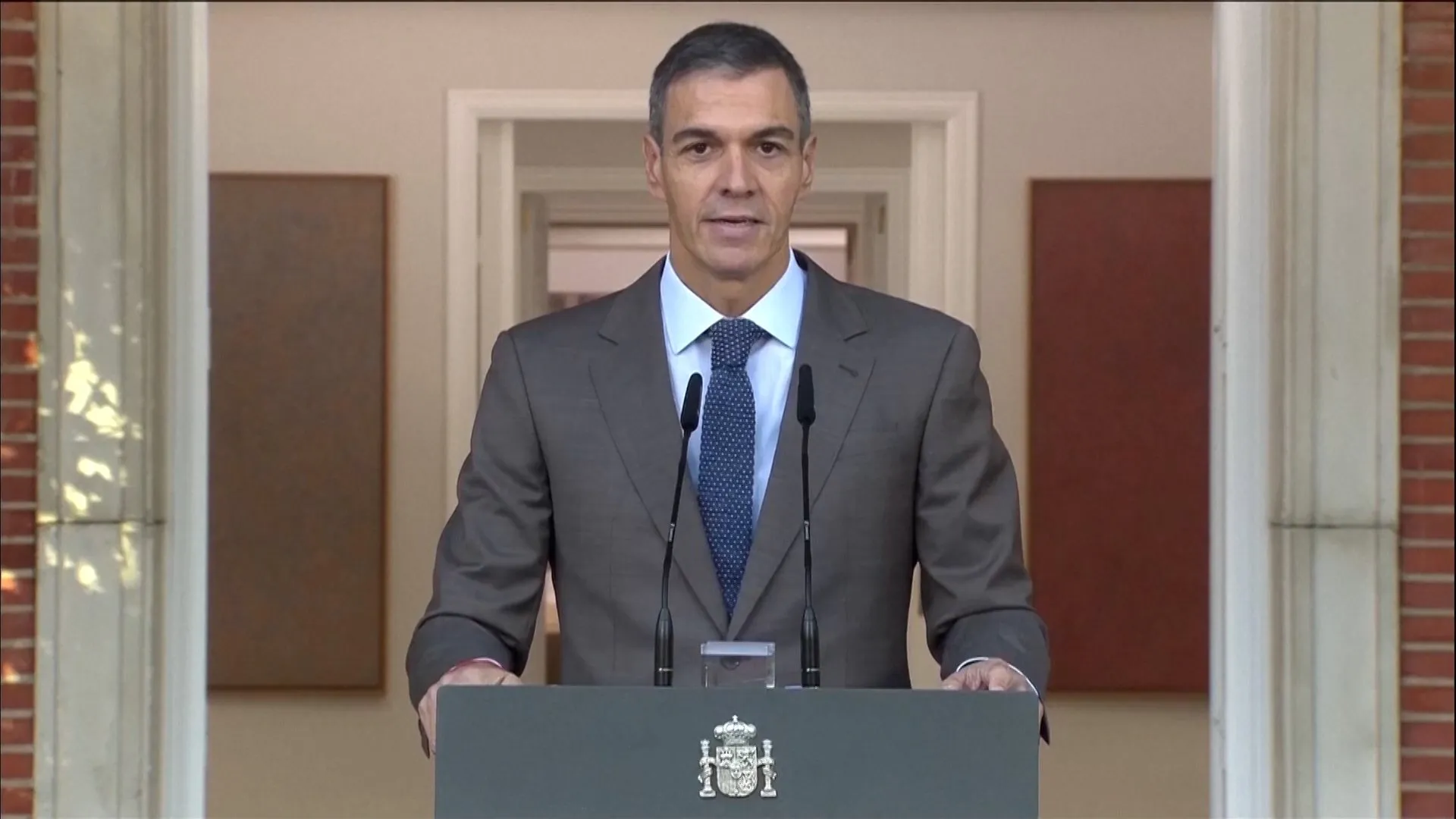
Spanish Prime Minister Pedro Sanchez has called a snap election for November 29. He’s seeking a renewed mandate after parliament rejected proposed measures aimed at easing Spain’s housing crisis amid growing public anger.
Published On 5 Oct 2026