


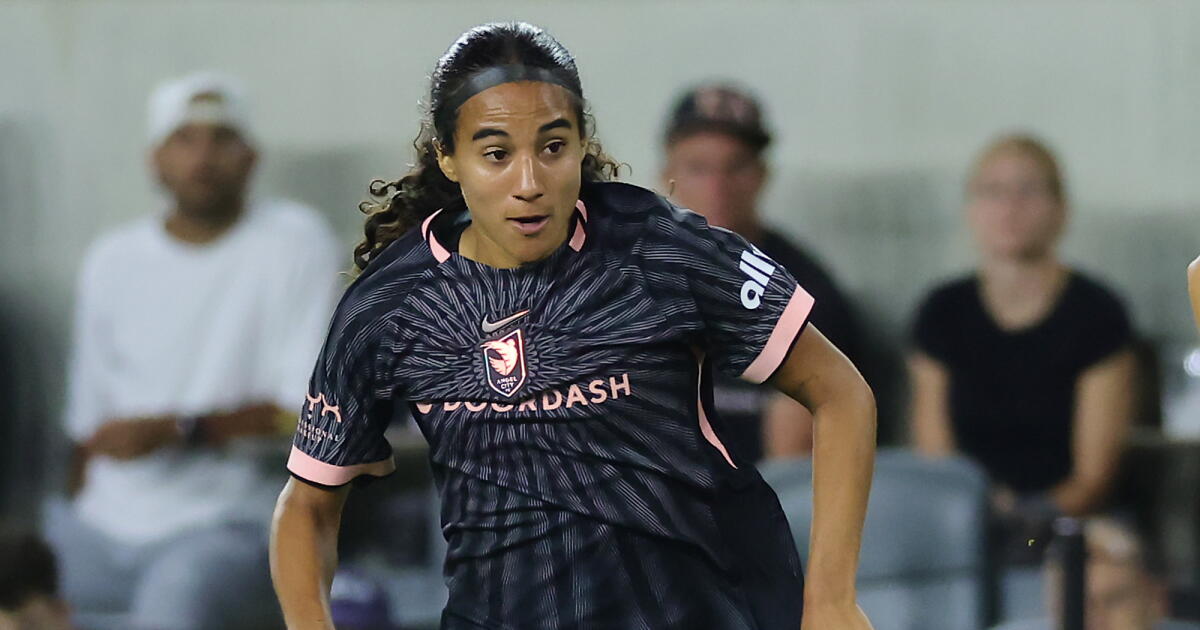
Taylor Suarez scores for Angel City in draw with Gotham FC
Taylor Suarez scored in the 91st minute goal to lift Angel City (12-8-7) to a 1-1 draw against host Gotham FC at Sports Illustrated Stadium in Harrison, N.J.
Suarez scored her third goal of her rookie season off an assist from Emily Sams.
Gotham (16-4-7) broke through first when Midge Purce found Rose Lavelle, who slipped a diagonal pass back to Jaedyn Shaw. Shaw met it with a one-touch shot past Angel City goalkeeper Angelina Anderson for her 10th goal of the season.

Spitting allegations as Ireland and Israel fight out ill-tempered draw | Israel-Palestine conflict
Ireland and Israel drew 1-1 in a second ill-tempered Nations League match. Irish and Israeli players wore black armbands to commemorate lives lost in Gaza and in the October 7 attacks, before tensions flared at half time over allegations of spitting.
Published On 5 Oct 2026
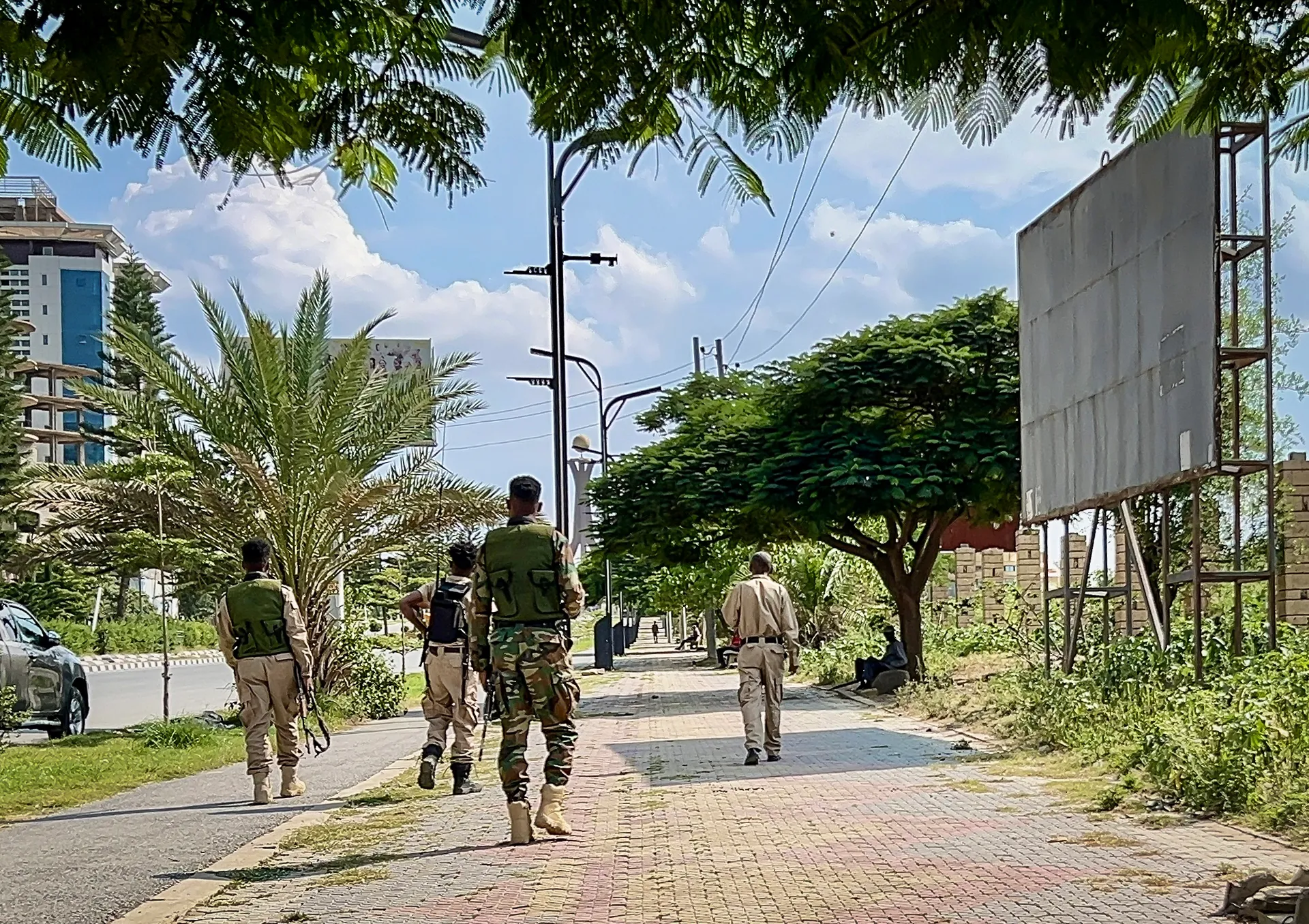
Ethiopia’s forces retake Mekelle amid renewed Tigray fighting | News
Addis Ababa, Ethiopia – The capture of Tigray’s regional capital Mekelle by Ethiopian federal forces and allied Tigray Peace Force fighters has revived painful memories of the 2020–22 Tigray war, with residents fearing a return to prolonged violence, displacement and economic hardship.
The Tigray People’s Liberation Front (TPLF) confirmed on Saturday that it had withdrawn from Mekelle, saying its regional administration would temporarily operate from another location. Government forces and allied fighters entered the city on Saturday, with a pro-government militia source, a humanitarian worker and a Mekelle resident confirming to the Reuters news agency on Sunday that they were in control of the city.
The development comes less than four years after the Ethiopian government and the TPLF signed the Pretoria agreement that ended two years of devastating fighting.
Berihu, a 32-year-old bajaj driver in Shire, northwestern Tigray, said the latest fighting had been particularly difficult to watch.
“I feel very heartbroken knowing that Tigray has gone back to full-scale war,” he said in a phone interview with Al Jazeera. “We have already seen what the last war did to our people, and now it feels like we are going through it all over again.”
The 2020–22 war killed hundreds of thousands of people, according to estimates, displaced millions and caused extensive damage to infrastructure and livelihoods.
The African Union-facilitated agreement, signed in Pretoria in November 2022, ended the large-scale fighting, but key issues, including the status of disputed territories, the return of displaced people and the disarmament of Tigrayan forces, remained unresolved.
In July, the TPLF said the Pretoria agreement had effectively collapsed, accusing the federal government of failing to implement key provisions. The federal government rejected that characterisation, saying it remained committed to the peace process while accusing the TPLF of undermining the agreement.
The political dispute was accompanied by growing military tensions, including reports of sporadic clashes and drone strikes in parts of Tigray. The two sides also traded accusations over troop movements and preparations for renewed fighting.
The capture of Mekelle marks a major development in the renewed conflict, putting the city once again at the centre of the fighting.
Fear spreads beyond Tigray
In Addis Ababa, the developments have also alarmed residents who remember the consequences of the previous war.
Abel, a 30-year-old shopkeeper, said the fighting had felt distant until explosions were heard in the capital.
“I woke up and heard that my city had been hit,” he said. “You hear about fighting in Tigray, and it feels far away. But when you hear about explosions in Addis Ababa, you start asking yourself what will happen next.”
Diplomatic sources said explosions were heard in several parts of the capital, including near the headquarters of Ethiopia’s military. Reuters separately reported that a source linked to an opposition alliance claimed the group had carried out drone strikes in Addis Ababa, including against military facilities. The claim could not be independently verified.
For Abel, the economic consequences are as concerning as the fighting itself.
“If the war becomes bigger, ordinary people will suffer,” he said.
Bisrat, a college student in Addis Ababa, said the overnight explosions had reinforced his fear that Ethiopia could be entering a much wider conflict.
“If Ethiopia goes into a full-scale war, ordinary people will suffer,” he said. “I fear seeing another Sudan.”
Sudan has been engulfed in war since April 2023, when fighting broke out between the army and the paramilitary Rapid Support Forces, displacing millions and creating a major humanitarian crisis.
The current fighting also involves a wider set of actors than the Tigray war that ended in 2022. The TPLF is part of a broader opposition alliance that includes armed groups from several parts of the country.
Fighting has also spread into Afar, while relations between Ethiopia and Eritrea have sharply deteriorated.
Ethiopian officials have accused Eritrea of interfering in Ethiopia’s internal affairs and supporting forces opposed to the federal government. Eritrea has rejected the accusations.
On Thursday, Ethiopia’s Ministry of Foreign Affairs announced the closure of its embassy in Asmara and declared 10 Eritrean diplomats persona non grata, saying they had been involved in activities that posed a threat to Ethiopia’s national security.
Eritrea subsequently announced that it was severing diplomatic relations with Ethiopia.
The diplomatic rupture has added to concerns that the renewed fighting could acquire a wider regional dimension.
Mekelle changes hands again
In Mekelle, residents were left trying to understand what comes next after the TPLF withdrawal.
Goitom, 37, said there was a period of uncertainty after TPLF forces left the city, with what he described as a security vacuum allowing theft in some areas, including government offices.
“On Friday night, we were hearing gunfire but did not know what was happening,” he said.
By Saturday, Ethiopian federal forces and allied fighters had taken control of key locations, including the airport, according to Goitom. Reuters and The Associated Press news agency also reported that government-aligned forces had entered Mekelle following the TPLF withdrawal.
“It feels like we are back to square one,” he said. “We have already seen what war can do to this city and to our families. People are worried about what will happen next.”
The TPLF, however, portrayed the withdrawal as a tactical decision rather than an end to the fighting.
In a statement issued on Saturday, the group said it had “temporarily moved out of Mekelle” and that the regional government would “operate from somewhere else”. It said the decision was intended to prevent further destruction in the city and indicated that its forces would continue the conflict from other positions.
For the federal government, the capture of Mekelle represents a significant step towards restoring federal control over the region.
Abraham Belay, former president of the Tigray Interim Administration, said on Sunday that preparations were under way to establish a new interim administration in Tigray, with the aim of holding regional elections within months.
“We are working to establish a new administrative structure that will enable the people of Tigray to govern themselves,” Abraham said in an interview with Fana Broadcasting Corporate.
He said new administrative structures would be organised from the kebele level upwards, with community participation, before regional elections were held.
The competing accounts leave the next phase of the conflict uncertain. The federal government says it is seeking to restore its authority and establish a new regional administration, while the TPLF says its forces will continue fighting from elsewhere.
Civilian fears return to the fore
For people who lived through the previous war, the return of fighting has brought back fears of displacement, destruction and another prolonged humanitarian crisis.
Berihu, the bajaj driver, said he had seen villages bombed and civilians caught up in the fighting during the previous conflict, experiences that have shaped his fears about what could follow.
“It is painful to even think that civilians could once again bear the cost,” he said.
After years of displacement, loss and disruption, he said, many people in Tigray simply want the fighting to stop.
“We have already suffered enough,” Berihu said. “We just want peace. We don’t want to go through the same thing again.”

Brooks Nader goes braless in plunging black suit for Paris Fashion Week appearance
BROOKS Nader went braless in a plunging black suit during Paris Fashion Week for an appearance at the Mugler show.
The model, 29, looked incredible in a plunging jacket with shoulder pads, which she teamed with a thigh-slit skirt.
She paired the outfit with strappy heels, a big bouncy blow dry and glamorous make-up.
The actress has recently been filming scenes for the Baywatch reboot in Malibu, where she plays a character called Selene based on the iconic series that made Pamela Anderson a global sex symbol in the 1990s.
The actress has become known for her risque red carpet style that leaves little to the imagination.
And this comes days after she once again showed off her figure in a zebra-print bikini as she posed for snaps in Portofino.


The model shared photos from her stay at the swanky Splendido hotel, posing for a cleavage baring snap.
And in one photo, she pushed together her cleavage underneath her sexy zebra-print bikini.
Last month, Brooks turned heads as she strutted down a Milano street on her way to a show in a completely sheer dress that showed off her black bra and underwear.
The actress completed her look with a matching garter belt and suspender tights, pointy leather stilettos and oversize black sunglasses.
Brooks was linked to Rocketman actor Taron Egerton earlier this year, although she said in June that she was single.
Brooks, who is best friends with British singer Ellie Goulding, got married to advertising exec Billy Haire in 2019 after four years together.
They split in 2024 and she went on to have short-lived relationships with former Strictly Come Dancing star Gleb Savchenko and Greek Prince Constantine-Alexios.
In September it was claimed she was seeing tennis pros Carlos Alcaraz and Jannik Sinner.
Addressing the rumours, she said: “I would just say a lady never kisses and tells, especially twice.
“Dating is such a loose term these days… My only thing is, guys do it all the time, so why can’t I do it?”
Brooks stars alongside her sisters in the reality show Love Thy Nader and her Baywatch reboot, is due to air next year.

Rams defy their history and pull off comeback win over Eagles
PHILADELPHIA — It’s rarely sunny in Philadelphia for Sean McVay and the Rams.
Before Sunday’s game against the Eagles, McVay was 1-6 against them, 1-4 at Lincoln Financial Field and 0-4 against Eagles coach Nick Sirianni.
The last time the Rams visited here, the Eagles blocked a field-goal attempt and returned it for a touchdown on the final play.
And for much of the game Sunday, gloom once again engulfed McVay and a team that opened the season as a heavy Super Bowl favorite.

-
Share via
Gary Klein breaks down what went right for the Rams in their 24-20 comeback win over the Philadelphia Eagles.
But it finally lifted midway through the fourth quarter, with quarterback Matthew Stafford leading two touchdown drives that gave the Rams a come-from-behind, 24-20 victory.
“A lot of gutsy efforts,” McVay said, “and I have a headache from hell right now.”
No doubt stress-induced.
While McVay enjoyed watching Kyren Williams rush for two touchdowns and receiver Puka Nacua rush for another, the Rams had to overcome turnovers, penalties and special teams miscues to improve to 2-2.
After sitting out two games because of a hip injury, Nacua caught nine passes for 125 yards, several during the final two scoring drives.
“I’m excited to get on this plane and get up out of here,” Nacua said. “Hopefully, they have some Philly cheesesteaks for us.”
The Rams had mostly had their fill of Philadelphia after losing an NFC divisional game here in 2024 and last year’s debacle that ended with the blocked field goal and touchdown.
“We obviously haven’t found a way to get it done here,” McVay said, “and our guys found a way today.”

Rams players celebrate with Kyren Williams following one of his two fourth-quarter touchdowns against the Eagles on Sunday.
(Chris Szagola / Associated Press)
The Rams can thank their defense.
The Eagles were without receiver DeVonta Smith and left tackle Lane Johnson, and star running back Saquon Barkley left the game in the first quarter after suffering a hamstring injury.
The Eagles were 0 for 12 on third downs. They converted only one of four fourth downs and managed just 172 yards.
“When it was the time for us to make a play, the defense stepped up,” said edge rusher Byron Young, who had 2½ of the Rams’ four sacks, “and we had to do what we do.”
Despite their elation over Sunday’s victory, the Rams have plenty to fix.
Stafford was great down the stretch but otherwise did not look like the reigning NFL most valuable player. He completed 32 of 51 passes for 317 yards with two interceptions.
The Rams, historically one of the league’s least-penalized teams under McVay, had 13 penalties for 91 yards in last Sunday’s 30-26 defeat by the Denver Broncos. On Sunday, they were flagged eight times for 100 yards.
“Any way you could shoot yourself in the foot — we were doing it on the offensive side of the ball,” Stafford said.
Special teams also continued to be an issue. The Rams gave up a long punt return that set up a touchdown, and usually reliable kicker Harrison Mevis missed a 48-yard field-goal attempt.
But the defense kept the Rams within striking distance.
“You’d like to see [us] play as a team where you go and score, and then hold ‘em, score and hold ‘em and score,” receiver Davante Adams said. “But sometimes that’s not how it plays out.
“[The defense] did their thing to put us in a position to win it, and we went down there and finished the job.”
The Rams trailed, 20-10, at halftime, as the Eagles turned two interceptions into 10 points, and Jalen Hurts tossed two touchdown passes to receiver Darius Cooper.
After Mevis missed, it got uglier.
Near the end of the third quarter, it finally looked like the Rams’ defense would be rewarded for a good play: It stopped Hurts on a fourth-down tush push, giving the offense a first down at the Eagles’ 38-yard line.
But Nacua’s penalty for an illegal block stymied the possession, and Stafford’s fourth-down pass for tight end Tyler Higbee fell incomplete.
McVay rallied the offense on the sideline.
“He said, ‘Make things go. Wipe it. Get to the next play,’” Higbee said.
Stafford said McVay was “trying to put some belief” in the team.
“I think we had it,” Stafford said, “but it was great to hear from him.”
The defense came up big again, stopping the Eagles on downs at the Rams’ two-yard line.
On came Stafford, who ranks fourth all time in fourth-quarter comebacks.
“We call it the Mamba period,” said Williams, who rushed for 80 yards in 15 carries and had 10 receptions for 67 yards. “We knew we had to get things done. … Matthew, man, he got us all together. He said ‘Let’s freakin’ do it’ and we did the dang thing.”
Stafford engineered a nine-play, 98-yard drive that Williams finished with a one-yard touchdown run to cut the deficit to 20-17 with less than four minutes left.
Stafford got the ball back with 2:55 left at the Rams’ 21-yard line. He connected with Nacua three times and Higbee once before Williams scored on a seven-yard run with 1:10 remaining.

Rams quarterback Matthew Stafford slides after running the ball against the Eagles on Sunday.
(Matt Slocum / Associated Press)
The play included Williams’ trademark second and third efforts.
“I wasn’t looking at any defender,” Williams said. “I wasn’t looking at any blocks. I was just having that smell, that nose for the end zone.”
Next up: Josh Allen and the 3-1 Buffalo Bills, a 29-26 loser Sunday against the New England Patriots.
The Rams will go into the game a .500 team riding the high of a comeback victory rather than trying to get out of a 1-3 hole.
At some point, the Rams will welcome back edge rusher Myles Garrett, defensive lineman Aaron Donald, who sat out because of a sore back, and tight end Terrance Ferguson, who like Garrett is on injured reserve. They are still more than capable of becoming the team that was hyped throughout the offseason.
So Sunday’s victory — rather than another loss in Philadelphia — could pay dividends.
“Hopefully,” Stafford said, “it was really important come later in the year.”

Nearly 1,500 migrants arrive in Myanmar from Malaysia despite UN warnings | Refugees News
Malaysia continues mass refugee deportations despite warnings from the UN about unsafe conditions in an active war zone.
Published On 5 Oct 2026
Nearly 1,500 Myanmar refugees and migrants deported from Malaysia have arrived in their war-ravaged country under an opaque repatriation scheme heavily criticised by human rights groups and the United Nations refugee agency.
The 1,479 returnees, transported from Malaysia on board two navy warships and a hospital ship on Tuesday, arrived in southern Yangon early Sunday, Nay Lin Tun, a regional government minister, said.
Recommended Stories
list of 3 itemsend of list
They are among 5,000 Myanmar nationals who will be repatriated in stages from Malaysia, where more than 10,300 others are being held in immigration detention centres, according to the country’s Home Ministry.
Malaysia insists all returnees agreed to voluntary repatriation, but rights monitors have raised concerns that Myanmar refugees had little choice and warned that conditions for return remain unsafe.
The UN refugee agency said this past week that its staff were not allowed to meet the Myanmar nationals to confirm whether their decisions to return “were genuinely free and informed”.
Rohingya make up the majority of Myanmar refugees and asylum seekers in Malaysia, but it remains unclear how many members of the persecuted Rohingya are among the returned group.
The deportation was carried out during escalating raids on refugee communities in Malaysia by immigration officials, which led to the detention of more than 50,000 refugees in 2026.
Malaysian Prime Minister Anwar Ibrahim announced the repatriations in July against a backdrop of rising xenophobia towards refugees, particularly the Rohingya.
Kuala Lumpur is moving ahead with plans to return a second group of more than 3,500 refugees and migrants, saying they have caused financial, social and security burdens.
While Malaysia is not a party to the UN Refugee Convention and treats refugees as undocumented migrants, it is home to about 215,600 refugees and asylum seekers registered with the United Nations High Commissioner for Refugees (UNHCR).
This includes more than 126,000 mainly Muslim Rohingya refugees.
Myanmar pledged last month that returns will be “safe and dignified”.
But Yap Lay Sheng, a senior human rights specialist with Fortify Rights, told the AFP news agency: “There’s no telling how the regime would treat returnees.”
Myanmar has been accused of committing genocide against the Rohingya Muslim minority. Earlier this year, the International Court of Justice (ICJ) opened its first genocide case it has heard in full in more than a decade.
The UNHCR and rights groups said returnees could face persecution and forced military conscription in an active war zone. Myanmar has been embroiled in a civil war since the military seized power from the elected government in 2021.
The war has killed more than 100,000 people since the coup, according to the Armed Conflict Location and Event Data (ACLED) project.
Myanmar’s Min Aung Hlaing, the military coup leader who was installed as civilian president in April, is expected to visit Malaysia soon to discuss the repatriation scheme.

Last One Out, Shut Off the Lights
Venezuela’s electrical grid was hard hit by US sanctions. (Venezuelanalysis)
Friday morning. The electric fluctuations were so frequent that I decided to go to the gym and work out for a bit. Though I was tempted to get angry with my work being interrupted, I remembered that Caracas is a bubble when it comes to electricity. In other parts of the country, blackouts happen sometimes twice a day, sometimes lasting for 16 hours in total.
In their anguish, people have taken to the streets, burning tires and blocking highways. Without fans or air conditioning it is hard to survive the Super El Niño phenomenon, which recently joined our catalog of misfortunes by raising temperatures across the board. Children who can’t sleep at night end up falling asleep in school the next day.
Not only that, these blackouts and power surges damage appliances and put water pumping stations offline, leaving communities without water supply. What makes everything worse is that authorities do not publish rationing schedules, making it impossible for families and businesses to undertake any minimal planning.
To “explain” things, the acting Delcy Rodríguez government celebrated the fact that national electricity demand exceeded 16,424 megawatts (MW) on September 22, calling it a “historic milestone” and highlighting a 9% increase compared to the peak demand in 2025.
What officials failed to mention is that in 2013 Venezuela recorded a demand of 18,700 MW, far, far higher than the figure announced this month, without any blackouts.
Furthermore, the supposed economic improvement is that oil production rose to 1.23 million barrels per day, but it appears that the United States is the only one benefiting from the additional revenue. The vast majority of the Venezuelan population is seeing absolutely no economic benefit, neither before nor after the twin earthquakes. Between shady business deals and power outages, we are truly in the dark.
Meanwhile, Interior Minister Diosdado Cabello assured that he “wouldn’t sugarcoat things for the people” and admitted that the electricity crisis “is a serious problem.” However, his solution was to ask mayors and governors to request that private companies with power plants generate their own electricity. We will then surely see a “record high” diesel demand, which will leave the agricultural sector without fuel.
The truth is that the blackouts are causing massive paralysis, costing the industrial sector up to 44% of its productive hours. In a country that has advocated “economic diversification” for years, the little energy that is available is prioritized to keep oil production going in the oil-producing regions – lest Trump and the corporations get upset – and to try and mitigate the impact on the country’s capital.
What is rarely mentioned is that although Venezuela has a nominal installed capacity of approximately 35,000 MW, a figure that doubles the national peak demand, actual stable generation barely reaches 12,000 MW. This operational deficit is what causes the constant blackouts the population is currently enduring. The 1,300 MW that the authorities promise to bring back online in the coming months will only slightly alleviate the issue.
The deterioration of the National Electric System (SEN) is structural and affects both transmission and distribution. The transmission grid exceeds its technical safety limits almost daily by transmitting more power than allowed, causing voltage fluctuations. At the same time, the distribution system has been deteriorating for years. There is a shortage of basic spare parts, transformers, and distribution cables resulting from years of US sanctions.
To add to the paradox, what is the proposed solution? Privatization! At a time when service is at its worst, the National Assembly has preliminarily approved reform of the Organic Law of the National Electricity System and Service to open up generation, transmission, distribution, and commercialization to private operators. The incentive is a new tariff structure designed to reflect “the real costs” of the service and generate “reasonable returns” for investors.
Truth be told, if we were to pay “the real costs” of the current service, we would have to be compensated day after day. Perhaps people will go from having no electricity due to the condition of the power grid to having no electricity because they cannot afford the bill.
Even in a country where we’ve grown accustomed to hearing extravagant promises – ranging from millions of barrels of daily crude output to imminent economic prosperity – the outlook for electricity is far from encouraging. Preliminary assessments from experts suggest that a complete overhaul to prevent blackouts and modernize the grid in the medium and long term could cost up to $40 billion.
Maybe the US would be willing to “lend” us some of our own money to do this? Even if it did, we would obviously have to do it through US corporations, because if there’s one thing Washington knows how to do, it’s paying itself and keeping the change.
The best example is the recent oil deal, “the biggest in history” according to Trump. From what has been reported, Venezuela is going to hand over 17 prime oil fields, some producing extra-heavy crude in the vast Orinoco Belt and others producing light crude in Lake Maracaibo, to a company that seems straight out of a lazy Hollywood movie script.
The company in question is NABEP, owned by Alejandro Betancourt – who deserves a column all to himself – and which will now be under the control of the Pentagon. The US will have preferential access to the oil produced, including 20% at cost. The most screwed-over country in the hemisphere, handing over subsidized oil to the superpower that kept it under a vicious blockade for more than a decade.
Which brings us back to the electricity problem. From the oil deal to the state of the electrical grid, propagandists want us to believe that once the US is satisfied, once the transnational corporations and their local allies are making enough money, things will improve for the Venezuelan people. We have seen that movie before and it turns out differently. Let the last one out turn off the lights.
Jessica Dos Santos is a Venezuelan university professor, journalist and writer whose work has appeared in outlets such as RT, Épale CCS magazine and Investig’Action. She is the author of the book “Caracas en Alpargatas” (2018). She’s won the Aníbal Nazoa Journalism Prize in 2014 and received honorable mentions in the Simón Bolívar National Journalism prize in 2016 and 2018.
The views expressed in this article are the author’s own and do not necessarily reflect those of the Venezuelanalysis editorial staff.

Monday 5 October Constitution Day in Vanuatu
From the late 19th century, Britain and French had been wrestling for control of the New Hebrides, a group of about 80 islands in the South Pacific Ocean.
In 1906, they agreed to share control through a unique Anglo-French Condominium.
With the movement for independence gaining momentum in the 1960s, Father Walter Lini established the New Hebrides National Party (now the Vanua’aku Pati) in 1974.
The date for full independence of Vanuatu was agreed in 1979 when the drafting of a constitution got underway. The Constitutional Committee consisted of representatives of different political parties, religious leaders and local tribal chiefs.
The Constitution was signed on October 5th 1979. It came into force on July 30th 1980, when the New Hebrides gained independence as the Republic of Vanuatu

Dakota Johnson looks sensational as she poses as a Playboy bunny with a cig to promote a TV stint
ACTRESS Dakota Johnson looks as glovely as a Playboy bunny for a guest TV appearance.
She posed in rabbit ears with an unlit cig to promote her stint hosting the US version of Saturday Night Live.


The 37-year-old was joined on the show, above, by best pal Taylor Swift, who she joked is her love-life therapist.
Dakota and Coldplay’s Chris Martin ended their eight-year relationship last year, and she has recently been linked to rapper Machine Gun Kelly.
Taylor’s video for No 1 single Patient Zero stars Dakota, who was also in New York to plug film Verity. Its promo tour has seen her travel the globe.
Wonder where she’s hopping off to next?
Read more on Dakota Johnson


We told last month how Fifty Shades of Grey star Dakota and rapper Machine Gun Kelly were said to have grown close at Taylor Swift’s wedding in July.
They enjoyed a weekend date at in New York, where Dakota was spotted heading to Taylor’s apartment alone — joined soon after by Kelly, real name Colson Baker.
The pair later headed to Michelin-starred restaurant Estela, and it is claimed they spent the night at a hotel.
A source said: “Dakota and Kelly were properly introduced and started hanging out after Taylor’s wedding.
“They are both single and getting to know each other.”
Dakota, daughter of Hollywood stars Don Johnson and Melanie Griffith, and Coldplay frontman Chris were understood to have got engaged in 2020 but neither confirmed the news publicly.
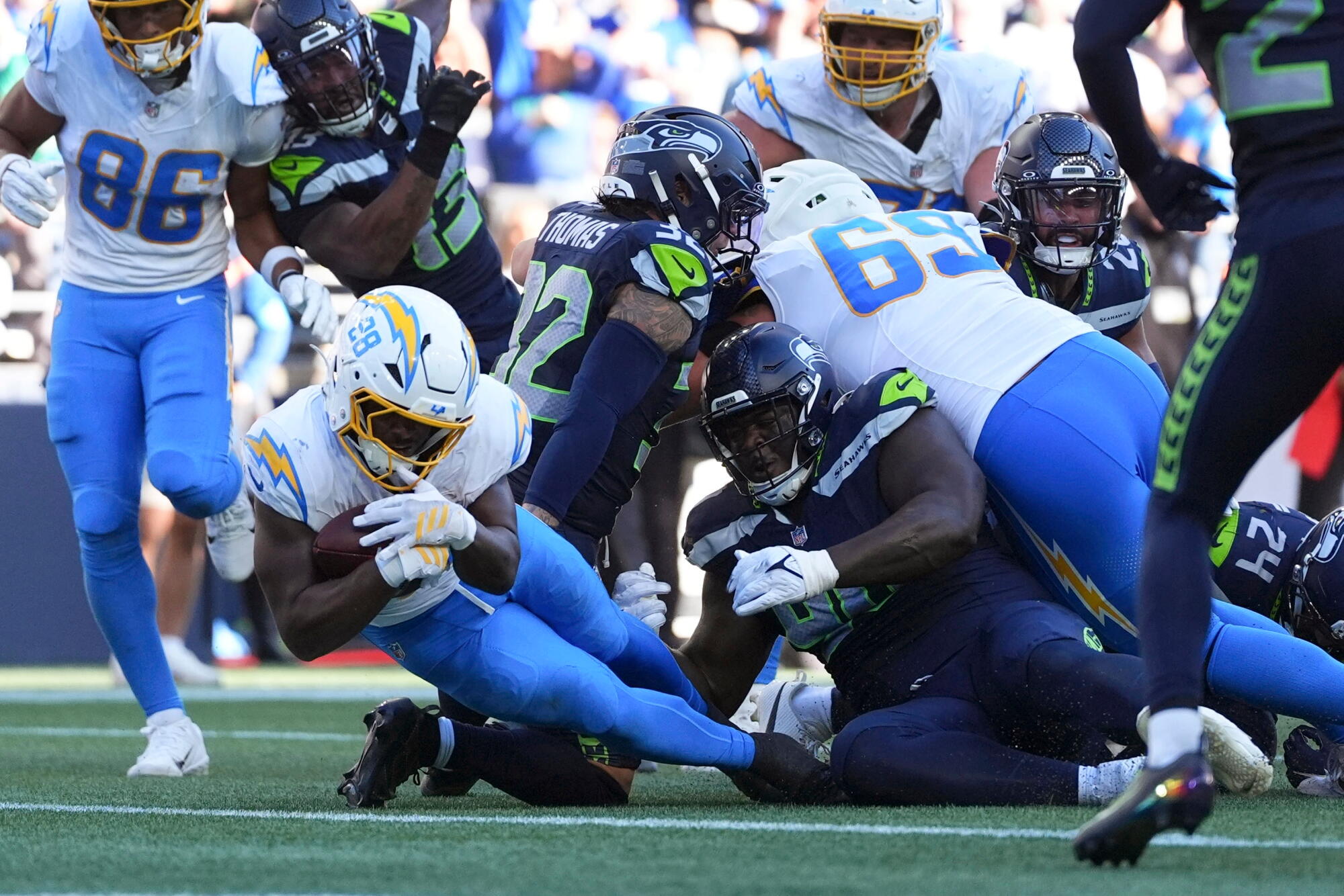
Chargers spiral to 0-4 as chaotic offense dooms rally vs. Seahawks
SEATTLE — In a game that looked lopsided for the better part of three quarters, the Chargers did enough Sunday to scare the defending Super Bowl champions.
Small victory, but at least it was something for the winless Chargers, who scored a touchdown and field goal in the fourth quarter before falling to the Seattle Seahawks, 30-23.
The visitors, who trailed by 19 in the third quarter, were behind by a touchdown when they took over at their 11 with 1:42 remaining. Three plays into that against-all-odds drive, the Seahawks stripped the ball from Justin Herbert, recovered the fumble and ran out the clock.
The Chargers dropped to 0-4, likely crossing the point of no return. The last time the Chargers started 0-4 was 2017, their first season back in Los Angeles.
Only one team — the 1992 San Diego Chargers — made the playoffs after losing its first four games, and that Bobby Ross-coached squad won 11 of its final 12 games.
These Chargers have 13 games left, and identifying potential wins on the remaining schedule is a nearly impossible task.
Remember the thought that new offensive coordinator Mike McDaniel would unlock all the potential of Herbert? Almost sounds silly now, with the way the team has stumbled and bumbled its way through the first four games.
Previous little rhythm or continuity. Nowhere to go but up.
Sunday was the first time the Chargers finished within a touchdown of their opponent.
For much of the game, Herbert looked lost. His pass was intercepted on the first play from scrimmage and again late in the first half, when his throw landed right in the belly of linebacker Ernest Jones IV.

Chargers running back Kimani Vidal scores a touchdown during the fourth quarter of a 30-23 loss to the Seahawks on Sunday.
(Lindsey Wasson / Associated Press)
Injuries didn’t help. All-Pro safety Derwin James Jr. was deactivated by the Chargers because of a hamstring injury, and the team subsequently lost No. 1 receiver Ladd McConkey (foot) and right tackle Joe Alt (neck) for the second half. In the fourth quarter, left tackle Rashawn Slater lay for several moments on the turf and was examined by medical staff before rising to his feet and walking gingerly to the sideline with an ankle injury.
Herbert took a beating. He was sacked four times, and the Seahawks were flagged twice for roughing the passer. He had three turnovers. His toughness was not in question, though, not after some of those crushing hits.
At least last season the Chargers could point to a specific positional breakdown. Their offensive line was a disaster. This year, nothing is working well — although the defense did turn in a gem for three quarters in the Week 3 loss at Buffalo, including five takeaways.
It has been a disastrous and unfamiliar start for Chargers coach Jim Harbaugh, who before this season had never lost his first two games, either in college or the pros.

Chargers coach Jim Harbaugh reacts during the third quarter Sunday.
(Steph Chambers / Getty Images)
As unpleasant as his job might be at the moment, Harbaugh is ostensibly safe. He’s signed for two more seasons, and the Chargers would owe him more than $30 million were they to part ways with him. Cutting loose McDaniel would be expensive, too, and there’s no clear successor waiting in the wings.
There’s little respite to be found in the Chargers’ upcoming games. They play host to Denver next Sunday, then are at Kansas City, and play the Rams after a week off. Then, the Chargers have a home game against Houston — also surprisingly winless — then play at Baltimore, where the 3-1 Ravens are coached by former Chargers defensive coordinator Jesse Minter.
The Seahawks, defending Super Bowl champions, got a collective whiff of smelling salts before Sunday’s game, having suffered an embarrassing loss at Washington a week earlier. They weren’t about to lose back-to-back games for the first time since 2024.
They were far from perfect, however. After the Seahawks picked off Herbert on the first play from scrimmage, the Chargers returned the favor on Seattle’s first play, intercepting a Sam Darnold pass. That set up a field goal drive and a fleeting 3-0 lead by the visitors.
According to Elias Sports Bureau, the Chargers-Seahawks game marked the first since 1978 — as far back as the stats go — that began with consecutive interceptions.
The advantage didn’t last long. The Seahawks pulled away as the second half wore on, scoring three unanswered touchdowns and tearing through the heart of the Chargers’ defense, sometimes scarcely touched.
Iran war live: Yemen fighting intensifies; Tehran says ready for US attacks | News
Live updatesLive updates,
Yemen’s government announces major offensive against Houthis, as Iran says ‘there is no military solution’ to conflict with US.


Published On 5 Oct 2026
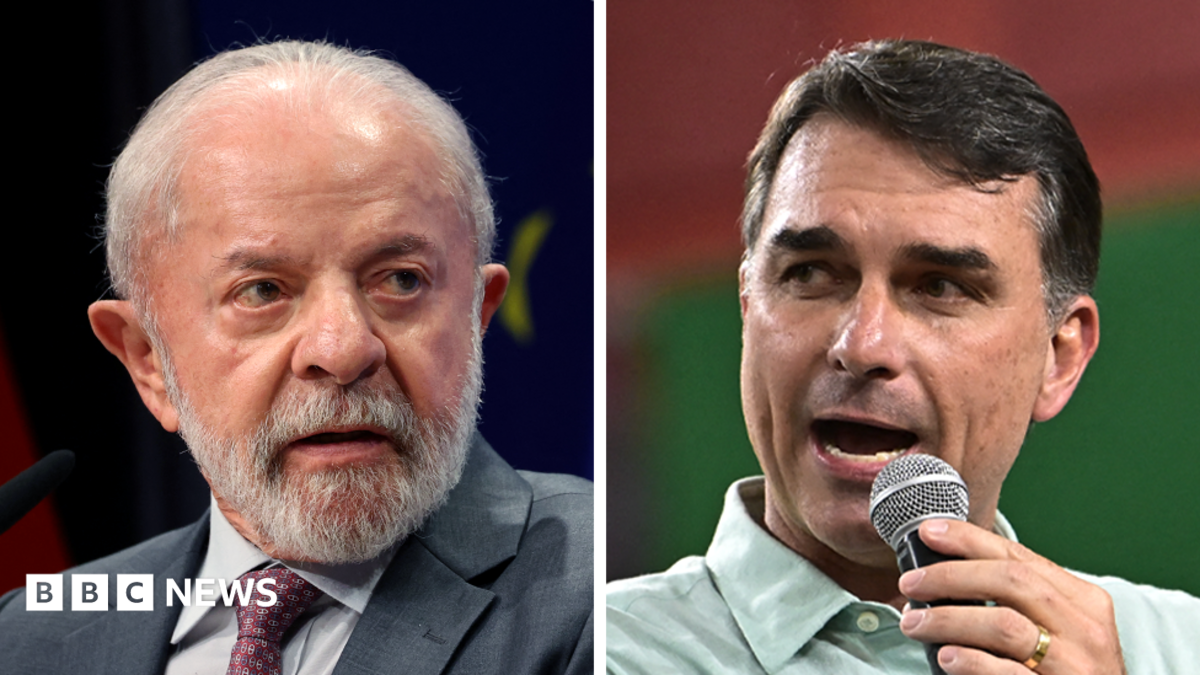
Polls close in Brazil as Lula and Bolsonaro remain neck and neck
Some countries, from which Brazilians living overseas are able to vote, have also already released preliminary vote count data.
In China, Lula won 56.63% of the votes, while Bolsonaro came in second with 31.33%. Lula also won in countries including South Korea, New Zealand and Saudi Arabia.
In Israel, however, Bolsonaro won 74.40% of the valid votes. He also won 71.59% of the valid votes in Japan.
Today’s result will also determine the composition of the Senate from February 2027 onwards, as 54 of the Senate’s 81 seats are being contested, representing two-thirds of the chamber.
Currently, the largest bloc in the Senate is Bolsonaro’s Liberal Party (PL), followed by the Social Democratic Party (PSD), which has served in a coalition government under Lula.
In the last election four years ago, Lula narrowly defeated Flávio Bolsonaro’s father, Jair. But the tumultuous aftermath of the election, which saw Jair Bolsonaro convicted of plotting a coup after thousands of his supporters stormed the Brazilian Congress, has had a lasting impact on the nation’s political life and this election.
Jair Bolsonaro is serving a 27-year sentence for plotting a coup and is barred from standing for office.
Because of recurrent health problems, he is currently under house arrest rather than in a cell, but he has been prohibited from posting on social media or making public statements.
Despite these restrictions, there is little doubt that Flávio Bolsonaro has his father’s backing.

Strictly Come Dancing fans crying as star is voted off the show in ‘unfair’ elimination
Fans of Strictly Come Dancing made their thoughts clear after the first dance off of the series sent one emotional couple packing after just two weeks

The first dance off left one Strictly couple heading for the exit(Image: BBC)
Strictly Come Dancing fans were shocked as the first celebrity was sent packing after Movie Week. Celebrity hairstylist Chris Appleton was emotional after he was cut from the hit BBC competition after losing in a dance off against Jaime Winstone.
The stylist, 43, who has worked with the likes of Kim Kardashian and Jennifer Lopez, was near the bottom of the leaderboard with a score of 33 after two weeks of dancing.
And it was the end of the road for Chris and his pro partner Amy Dowden, who were tearful at the decision They performed their Cha Cha to I’ll Be Ready from Baywatch, before Jaime and Carlos Gu performed their Cha Cha to Oh, Pretty Woman from Pretty Woman.
Jaime was unanimously saved buy the judges and lives to dance another day.
To see more of the stories you love from The Mirror and to find them easily in Google then make us your preferred source. Free and easy-to-do, just click on the link here to find more from The Mirror at the top of your feed.
Viewers took to X to say: “i so wish amy and chris’ partnership could’ve lasted longer 🙁 , a partnership i wanted from the very beginning.”
Another said: “SO sad to see Chris and Amy go. I don’t think they deserved to this week. Imo it should’ve been Melanie and Aljaz. But the public vote how they want to. And honestly I do still think Chris would’ve done MUCH better in a same sex partnership, but it was his choice. #Strictly.”
And a third said: “God I can feel myself crying for Chris and Amy. It’s so unfair.”
It’s the second time in successive series that Amy has been dumped at the first hurdle. She also got the boot alongside The Apprentice’s Thomas Skinner in 2025.
Chris said he had felt a “whirlwind of emotion” and said: “I’m 43 and got good at doing what I did which is hair. So to come into something like this, I felt so out my comfort zone.
“I saw myself in a way I’d never seen myself and challenged myself in ays I never knew I’d be challenged. But I’m very grateful for everyone who’s been involved.”
And he said having a friend in Amy is something he is thrilled with, before saying he wished he could have helped her go further. The professional dancer added she is “heartbroken” but her heart is only breaking because she doesn’t get to dance with Chris any more.
Fans were shocked after Melanie and Aljaz avoided the dreaded dance off despite being rock bottom of the judges’ leaderboard. One user said: “melanie must have got more votes than loads of people to get through over jaime who was much higher on the leaderboard #Strictly.”
The show was a huge success with fans tuning in too. A Strictly spokesperson said: “Strictly’s movie week was the most watched programme of the night, with a peak of 5.6 million viewers. As ever, overnight ratings do not give the full picture of all those who watch in an on-demand world.”
Like this story? For more of the latest showbiz news and gossip, follow Mirror Celebs on TikTok, Snapchat, Instagram, Twitter, Facebook, YouTube and Threads.

Republic of Ireland 1-1 Israel: Heimir Hallgrimsson says Israel ‘tried to intimidate us’ amid spitting row
Republic of Ireland head coach Heimir Hallgrimsson said he felt Israel were “trying to intimidate” his team amid allegations of spitting during Sunday’s tense Uefa Nations League draw.
The teams clashed at half-time in the 1-1 draw, played behind closed doors in Serbia, with the Irish Times, external reporting that Republic of Ireland head of athletic performance Damien Doyle alleged he had been spat at by an Israel player.
On television pictures, a voice can be heard saying “he spat on me” as the players made their way down the tunnel at TSC Arena.
“I don’t want to get involved in that, but it’s been like this these two games. It’s tense, it’s a lot of emotions,” Hallgrimsson told Off The Ball, external when asked about the incident.
“[It] was an accusation of spitting on someone but I didn’t see it. No, we don’t want to talk about this. This will be reviewed, probably like everything else that’s happened between the two teams.
“I felt like they were trying to intimidate us from kick-off but I give a lot of credit to the players to stay calm. It could have been a game of yellow and red cards but we were composed, the players were composed, they did well in controlling emotions.”
Asked about the half-time incident, Israel head coach Ran Ben-Shimon said he “didn’t see anything”.
“[At] half-time I was in the dressing room, my room, with my staff,” he said.
“I didn’t see anything. When I get the chance to check I will get back to you.”

Mysterious luminous object burns in the skies above Libya | Newsfeed
A mysterious object has been filmed flying over Tripoli and parts of western Libya, with witnesses reporting a loud explosion shortly afterward. No official statement has been released regarding the nature of the object.
Published On 4 Oct 2026

What Boeing’s New Rendering Of Its Winning F/A-XX Fighter Tells Us
We have officially received our second rendering of Boeing’s F/A-XX concept, which has now officially won the tender, beating out Northrop Grumman to build the Navy’s next-generation stealth fighter. Let’s take a look at what we can see in this new image and discuss what insights it may provide.
Before we start, it’s worth reminding our readers that we are basing this analysis on two publicly released renders of a highly classified aircraft design. There are deliberate choices made in these renderings to obscure critical features and capabilities and mislead foreign intelligence as to the jet’s intended capabilities. So please keep in mind that the details are bound to change. This is also just a preliminary analysis. We will expand on it once we have more time to digest what we are seeing.
The front quarter view of the jet taxiing to a catapult aboard a carrier shows us a very broad, tailless, heavy tactical aircraft. This is a large jet. Clearly internal volume was a driving design factor, as it should be. You can read more about this in our past reporting here.

The aircraft is depicted with what appears to be a large single-piece canopy with a cockpit for just a pilot. Visibility to the rear looks limited at best. There has been much speculation about the possibility that F/A-XX will have the provisions for two crewmen in order to better take on its complex roles over long distances — in particular acting as a battle manager, including for Collaborative Combat Aircraft (CCA) and other drones. This appears not to be the case, and a high degree of automation and artificial intelligence (AI) will have to help with what will be extremely complex tactical problems the single pilot will face. It’s also worth noting that U.S. Navy carrier air wings have retained two-seat tactical jets for frontline use, with the F/A-18F Super Hornet and EA-18G Growler serving today. If F/A-XX replaces these aircraft, it will be the end of frontline two-seat tactical jet operations for the seagoing service.

We see a very broad nose section, which could (and likely would) contain a relatively giant active electronically scanned array (AESA) radar. There is also a prominent chine-line edge wrapping around the forward fuselage, which is a normal trait of low-observable (stealthy) aircraft. The nose looks a bit more contoured, similar to the only other rendering we have of Boeing’s F/A-XX, compared to the shovel-like design of the company’s F-47 for the U.S. Air Force. Below the rear of this visible chine-line appears to be the engine intakes, mounted on the sides of the lower fuselage. They look to be a blended trapezoidal arrangement and are also set far back from the nose.
The F/A-XX’s extremely stout landing gear are depicted prominently in this new image, with a twin-wheel nose gear and thick mains. These are customary features for a carrier-based fighter and especially a heavy one like this.

The jet’s wings have a positive dihedral just like the F-47 renders, which seems to be something of a trademark of Boeing’s next-generation fighter design. This Klingon Bird of Prey look harkens back to the Boeing Bird of Prey demonstrator, which you can read more about here. We also see the wing’s large trailing edge flaps extended, which would be critical to slow-speed terminal operations around the carrier.
Finally, one thing we don’t see clearly is of particular note: the canard foreplanes that have been featured in F-47 imagery, as well as hinted at in Boeing’s only other F/A-XX rendering. It isn’t clear if they may be blended with the fuselage above the inlet areas and are obscured by the steam, or if they simply do not exist in this rendering. The inclusion of canards has been one of the most debated aspects of the F-47 and Boeing’s F/A-XX design, although they seem to make more sense for a naval fighter considering the tailless jet’s low-speed requirements that are needed to fly off the carrier. Again, you can read our past feature about the canards and our follow-up here and here.

While the aircraft clearly shares distinct attributes with the F-47, it isn’t clear exactly how far the commonality between them goes. We could end up with a literal navalized F-47, which would leverage as much efficiency as possible between the two designs, or we could see major design elements and even proportional changes. The requirements imposed by carrier operations do dictate size and weight, to a certain degree. What lives beneath the jet’s skin – hardware and software – will have the most commonality regardless.
There is also the question of the aircraft caught on a thermal imager flying outside of Area 51, which was likely a Next Generation Air Dominance (NGAD) demonstrator from Boeing, or at least an aircraft related to those efforts based on how unique Boeing’s design clearly is. It’s always possible that the Navy flew its own NGAD demonstration program. The service has been notoriously tight-lipped about its NGAD risk reduction efforts.
The matter of the F/A-XX aircraft’s formal designation is also a question that remains unanswered. If this is a navalized F-47, then F/A-47 could be the jet’s official designation. If it differs substantially, or the Navy just wants to differentiate their design for whatever reason, we could see a different moniker applied. F/A-45 is possible, too, considering the F-47 was partially named in honor of President Trump, who approved the decision to move the Air Force’s program forward. Trump is the 45th and 47th President of the United States.
So, even on this day of long-awaited F/A-XX revelations, it’s also a reminder of just how much we do not know about both the Navy and the Air Force’s NGAD enterprises and their resulting designs, both of which will now be officially brought to you by Boeing.
Contact the author: Tyler@twz.com

Big Brother star’s fate ‘sealed’ as fans fume over ‘atrocious’ behaviour
Tonight’s episode left Big Brother viewers unhappy when the two newcomers arrived in the house

This week marks the House of Revelations (Image: ITV)
ITV Big Brother fans are convinced one star’s fate has been “sealed” after what they called “atrocious” behaviour in the iconic house.
Last week, housemates Rochelle and Johanne went head-to-head in the third public vote of the series, with viewers at home facing an impossible decision – who will be voted out?
After weeks of clashes and heated arguments with one another, the showdown came to an end when Johanne was announced as the third housemate to be evicted from the Big Brother house after more than one million votes were cast.
But in another huge twist, two new housemates were introduced, Twinks and Catrin, who stunned their fellow housemates when they arrived just minutes after Johanne’s exit.
Tonight’s episode (October 4) followed on from Friday’s live eviction as the newcomers were welcomed into the house, but of course in true Big Brother fashion, therewas more drama and chaos for viewers to lock into.
As the new faces were introduced, all appeared to go well until Rochelle and Philip spoke privately admitting they did not trust Twinks and Catrin. Philip could be heard saying: “I don’t trust her, the one with the multicoloured dress, she’s about 40 you can tell, she’s not young.”
He later added: “I think she’s going to be dangerous you know”, after references they know about the outside world. Rochelle also came up with nicknames which did not go down well with viewers.
Rhianna could also be heard telling Yasmin she was “jealous of Omar” but fans were quick to slam the housemates for being unwelcoming.
On X, one person said: “This is giving replacements on bad girls club what’s with the hostility”, as another echoed: “They’ve only been in there five minutes, how you gonna be jealous and bitter all ready.”
A third added: “Phillip is about to have the one of the biggest downfalls in a very long time on this show. Every episode he’s becoming more and more nasty and miserable.”
A fourth fumed: “Nahhhhh these housemates behaviour is atrocious. Absolutely atrocious. Disgusting people”, as a fifth commented: “I’d walk right back out the door this is the least welcoming crowd omfg #bbuk.”
Some called for Rochelle to be nominated this week and face the public vote once more. One person said: “We’ve all agreed Rochelle to go next right.”
Another penned: “Philip and Rochelle not being very welcoming If they keep this up then they might find themselves nominated next!” A third predicted: “Rochelle and Phillip are gonna plummet in the public’s eye. They’re nasty.”
However, for some, the two remain a firm favourite as one person wrote: “Rochelle and Phillip might be b***** but I love them omg.” Another penned: “Love Rochelle, no filter at all!”
Big Brother continues tomorrow at 9pm on ITV2 and ITVX

Laker Matisse Thybulle tested by Luka Doncic, Austin Reaves
When Matisse Thybulle was asked what it has been like trying to defend offensive savants Luka Doncic and Austin Reaves during the Lakers training camp, he shook his head and smiled.
Thybulle was emphatic with his answer.
“I mean, you have to work soooo hard. They’re soooo talented,” Thybulle said, laughing. “And it’s just … I think for me it’s great because getting to play against two of the best offensive players in the NBA every day just primes you for — I think it primes all of us, but me specifically — just primes you for what to expect. And I think it was a big thing when you’re growing up that practice should be harder than the games. And I think in the NBA it’s a little different because you just have to pace yourself for such a long season. But guarding Luka and AR, practice is definitely going to be harder than the games.”
During the first four days of Lakers training camp, Thybulle was frequently listed as one of the players who has been a menace on defense.
It was why the Lakers signed the 6-foot-5 free-agent wing to a one-year, $3.2-million contract.
Thybulle, along with Ziaire Williams and Adou Thiero, has been praised for how disruptive he has been during workouts.
“I just think naturally it’s going to be a healthy competition and it gets you better. It’s going to make Austin better when Ziaire is picking them up full court every possession and Matisse is in the passing lane trying to blow things up,” Lakers coach JJ Redick said. “I think [Thybulle and Williams] — [and] Adou with his physicality — those guys are getting better from practicing that way. It goes both ways.”
Thybulle made a name for himself on the defensive end of the floor. He is a two-time NBA all-defensive second team selection, both times with the Philadelphia 76ers in 2021 and 2022.
Still, Thybulle said he’s picking up new skills.
“I think, like the best offensive players in the league — Luka being probably one of the best — change pace so well,” Thybulle said. “And I think as I’m growing in this league, growing as a defender, learning when to change pace and go for steals versus sitting back and being solid and make it more of a cat-and-mouse game as opposed to trying to be in every passing lane every single time.”
On offense, Thybulle will try to mold his game around Doncic and Reaves.
Thybulle will be asked to knock down corner threes and fill the lane on the fast break.
Over the course of his seven-year career, he has made 34.9% of his three-pointers.
“I think luckily for me, I started my career in an offense that was similar to that, and just understanding you never know when it’s going to come, but just to be ready,” Thybulle said. “And just for me personally, at this point, having the confidence in my shot to know that when it comes, I’m ready for it, as opposed to just hoping for the best. I think it goes a long way as well.”
Health has been an issue for Thybulle during the past two seasons with the Portland Trail Blazers.
He played in just 30 games last season while recovering from a torn ulnar collateral ligament in his left thumb and in just 15 games during the 2024-25 season because of right knee and right ankle injuries.
But he’s healthy now and ready for a breakout season.
He’s one of nine new players on the roster and he’s one of the Lakers that will compete for a starting role.
“I leave those decisions up to the coaches,” Thybulle said. “Yeah, so for me, if my teammates are happy with how I’m playing and the coaches are happy with how I’m playing, that’s a good sign to me that I’m doing a good job. But if that means I’m coming off the bench or that means I’m starting, I trust that the coaches know how to use me best to create the most impact, and we’ll go with that.”
Two starting spots up for grabs
When the Lakers play their first exhibition game Monday night in Sacramento, the big story line will be the starting five.
Redick has said Doncic, Reaves and Walker Kessler will for sure start and that the other two spots will be decided by an open competition.
Redick was asked who would be available in Sacramento.
“Obviously, [we’re] still working through stuff,” he said.

Cornell case puts New York’s progressive image at odds with its rape laws | Education News
Last month, a woman identified as Jane Doe filed a lawsuit against Cornell University, the fraternity Chi Phi and the seven fraternity members she accused of gang-raping her on the night of October 19, 2024.
Her allegations have triggered a nationwide reckoning in the United States over the prevalence of sexual assault on college campuses.
Recommended Stories
list of 3 itemsend of list
But the case has also reignited efforts to reform laws in the state of New York.
While the left-leaning state has long presented itself as a leader in women’s rights, advocates say sexual assault survivors still face pervasive legal barriers when they seek justice.
Erica Vladimer, a lawyer and founding director of Harassment-Free New York, a survivor-led nonprofit, told Al Jazeera that much of the legislation currently in the spotlight is the culmination of years, if not decades, of work.
“These are bills that we have been fighting for for years when sexual violence is not in the news,” Vladimer said.
She drew a line between the #MeToo movement, which began in 2017 as an online campaign to denounce sexual misconduct, and the current wave of outrage following Doe’s allegations.
“It speaks to the fact that the #MeToo movement is not dead. It is a movement, not a moment,” Vladimer said.
Already, leaders in Albany, the state capital, have signalled they would take action following the Cornell case.
On Wednesday, the New York Assembly announced it had formed a working group to examine the state’s sexual-assault laws and develop recommendations for the 2027 legislative session.
Still, advocates say more concrete measures are needed to address the crisis.
“I appreciate that this work is happening,” said Lindsey Boylan, a New York City Council candidate. “It doesn’t undo the fact that rape culture is pervasive in the United States and very much so alive and well in New York.”
Boylan was the first woman to publicly accuse former New York Governor Andrew Cuomo of sexual harassment in another high-profile misconduct case, back in 2020. She is among those calling for greater reform.
Here are some of the measures advocates are pushing state lawmakers to adopt or amend:
‘Voluntary intoxication’ statute
The Cornell University case has brought renewed attention to New York’s “voluntary intoxication” statute, a legal loophole that can make it harder to prosecute sexual assault when a person has willingly consumed alcohol or drugs.
New York Governor Kathy Hochul pledged on Friday to work with lawmakers to close the gap.
“It should not matter whether they chose to use drugs or alcohol. Voluntary intoxication is not a license for sexual assault or gang rape. Period,” Hochul said.
Under the current state law, a person who voluntarily drinks or takes drugs is not considered “mentally incapacitated” during an assault, even if they become too intoxicated to consent.
That can make it harder for prosecutors to bring a sex-crime charge. The law primarily recognises incapacitation in the context of sexual assault when a person was involuntarily intoxicated, unconscious or otherwise “physically helpless”.
That distinction has become central to the Cornell case. Doe has acknowledged that she consumed substances before the alleged rape, saying that she was pressured into drinking alcohol and taking the dissociative drug ketamine.
The Tompkins County district attorney initially declined to bring charges, pointing to the law’s stance on “voluntary intoxication”. But the investigation has since been reopened, amid public pressure.
New York is one of 19 states in the US that distinguish between “voluntary” and “involuntary” intoxication when it comes to determining consent in sexual violence cases.
But the Cornell case has spurred a push to remove the distinction from the law books. Critics have argued that sexual assault is no less grievous if a victim is drunk or has chosen to take drugs.
“I mean, to have New York, a supposedly progressive state, penalise people who are sexually abused for drinking is disgusting,” Boylan told Al Jazeera.
Vladimer, for her part, explained that distinguishing between “voluntary” and “involuntary” intoxication as a means for pursuing sexual assault cases shifts the focus onto the actions of victims, rather than perpetrators.
“We essentially have codified victim-blaming by saying if you become voluntarily intoxicated and then are sexually assaulted, you essentially cannot seek justice in our court system,” Vladimer told Al Jazeera.
In June, the New York state Senate unanimously passed a bill to allow sexual assault charges regardless of whether a victim is intoxicated voluntarily or involuntarily.
But the legislation has yet to be taken up in the state Assembly.

The rape-shield gap
New York’s rape-shield protections limit the use of evidence about a complainant’s sexual history and conduct in criminal proceedings. But those protections do not currently extend to civil cases.
This distinction could matter in the Cornell case because Doe filed a civil lawsuit.
Vladimer said questions about a survivor’s behaviour could come up in the discovery process of a civil case, as well as in court.
“There is the potential of her having to face questions about things like her sexual history,” Vladimer said.
Bridie Farrell, the director of victim rights advocacy and legislation at the law firm Weitz and Luxenberg, told Al Jazeera that she has seen major differences in how male and female survivors are questioned in civil cases where this practice is still permitted.
In one case involving a brother and sister who were both sexually assaulted, Farrell said the man was not questioned about his sexual history while the woman was “grilled on it”.
A bill sponsored by State Senator Liz Krueger would extend rape-shield protections to civil proceedings. The measure passed the Senate in June and is currently before the Assembly Judiciary Committee.

Retaliatory defamation lawsuits
Advocates are also pushing for legislation to prevent retaliatory defamation lawsuits.
Boylan said she has spent more than $2m defending herself in legal proceedings connected to her accusations against Cuomo, who stepped down as New York governor in 2021.
He has repeatedly denied any allegations of wrongdoing, despite a state attorney general’s report that concluded he “engaged in conduct constituting sexual harassment”.
“Every step of the way, we have a system that penalises people for speaking up about their own harm,” Boylan said.
Boylan and Charlotte Bennett, a former aide who also accused Cuomo of sexual harassment, are proponents of the Speak Your Truth Act, which would provide legal protections for people who publicly report sexual assault, harassment or discrimination.
The bill, sponsored by Assembly member Jessica Gonzalez-Rojas, would make certain communications about sexual assault, harassment or discrimination privileged when they are made without malice.
It would also allow survivors of sexual misconduct who successfully defend themselves against a defamation lawsuit to recover legal fees and costs. The bill remains in an Assembly committee.

A recent win, a long way to go
For Bridie Farrell, the victims’ rights advocate, the fight for legal change is personal.
Farrell was a 15-year-old competitive speed skater in 1997 when she said she was sexually abused by her 33-year-old teammate and mentor. She came forward with her story of abuse in 2013.
By then, the statute of limitations in her case had expired. Farrell later became an advocate for changes to New York’s laws, helping to pass the Child Victims Act in 2019 that extended the time available for survivors of childhood sexual abuse to pursue criminal and civil claims.
The law allowed Farrell to file her own case, which she did in 2020. She tells Al Jazeera that a trial has finally been scheduled for June 2027.
“Before we passed the Child Victims Act in 2019, New York was one of the worst in the country,” Farrell said of the situation for sexual assault survivors seeking justice.
Farrell considers the legal impediments to Doe’s case — like the “voluntary intoxication” statute — all too predictable. “I’m not surprised if we haven’t updated a law that is archaic,” she said.
Still, lawmakers have signalled willingness to reform such laws. In announcing the state Assembly’s working group on sexual-assault laws, Speaker Carl Heastie pledged to “thoughtfully” consider how the state can strengthen its laws.
“The allegations being reported out of Cornell University are truly horrifying,” Heastie said on Wednesday. “We want to do everything we can to ensure victims of sexual assault see justice served.”
But survivors and sexual violence advocates say the Cornell case points to problems that go beyond any single law. They hope to see widespread systemic and societal change.
“Changing legislation is incredibly important. But legislation in a lot of cases can only go [as far as] the paper that it’s written on,” Boylan said. “It would be amiss to orient this horrible, tragic, unacceptable, infuriating case in isolation without looking at the broader rape culture of our state and our country.”

Ireland refuse handshake with Israel and don armbands in Nations League tie | Football News
Ireland players again wore black armbands in recognition of Palestinians killed in Gaza and bowed their heads during the Israeli national anthem before the teams’ second UEFA Nations League football match on Sunday.
The League 3 Group B match ended in a 1-1 draw and, despite being played behind closed doors and on neutral ground, was once again played out in a confrontational manner.
Recommended Stories
list of 4 itemsend of list
Ireland goalkeeper Caoimhin Kelleher stepped in as captain for Dara O’Shea, who was excused to be with his wife for the birth of their child, and pointedly avoided shaking hands with Israel captain Dor Peretz, despite completing the usual pre-match formality with the referee and one of his assistants.
Kelleher’s action was a repeat of O’Shea’s, who refused to shake Israel captain Manor Solomon’s hand before the first match in Debrecen, Hungary, last week. Ireland went on to win that game 3-0 through three first-half goals.
Solomon was dropped to the bench for Sunday’s match in Backa Topola, Serbia. Israel forward Sayed Abu Farchi was back in the squad after serving a suspension for getting sent off following his gun-simulation goal celebration during Israel’s 3-1 defeat to Austria on September 25.
Finn Azaz, whose mother has Israeli heritage, was among the Irish substitutes after playing from the start against Austria on Thursday.
Troy Parrott’s penalty in the 39th minute, after a foul by Peretz on Jimmy Dunne, gave Ireland a 1-0 halftime lead. A disagreement also broke out on the sidelines as the players made their way off the field for the interval, although the referee quickly intervened.
Peretz secured a point for Israel with a poked effort from close range in the 47th minute.
Sunday’s game was initially supposed to be played in Dublin, but the Football Association of Ireland (FAI) moved it to a neutral venue for “operational reasons” in June following widespread calls for a boycott in protest of Israel’s genocidal war on Gaza. The FAI said the game would be played with no fans present.
It followed the FAI’s motion the previous November calling on UEFA to ban Israel from club and international competitions.
All the Irish players had been under pressure from home – where affinity with Palestinians is strong – to boycott the second match against Israel, though the pressure was greater during the first game.
“I felt that pressure growing day by day, and it’s getting almost to a breaking limit now,” Ireland coach Heimir Hallgrimsson said at the time.
Ultimately, only reserve goalkeeper Gavin Bazunu decided to skip both of the contentious games, saying in a statement that it was his “personal belief that the killing of innocent people is wrong”.
More than 160 Irish sportspeople had signed an open letter urging the FAI to reconsider its decision to go ahead with the two games.
Before the departure for Hungary, people protested outside the team hotel in Dublin for the players to boycott the matches. The SIPTU trade union displayed a huge poster in central Dublin beside the River Liffey asking the players to “Go with your conscience!” and “Don’t play with genocide” beside an image of a blood-splattered ball.
Former Ireland coach Brian Kerr said the FAI had “lost the respect of the Irish people” for going ahead with the games.
But the FAI argued UEFA could sanction the team. Ireland is cohosting the 2028 European Championship with England, Wales and Scotland.
Protesters threw tennis balls with Palestinian flags onto the field during Ireland’s 2-2 draw with Austria on Thursday. A man with a Palestinian flag also tried running onto the field.
On Saturday, an Israeli journalist stated during the pre-match news conference that the Irish players had called the Israeli players “monkeys” during last week’s game, leading to an immediate rebuke from Irish communications officer Kieran Crowley, who said it was “a lie” and ended the news conference.
The players had only decided to go ahead with the fixtures after a dramatic day in Debrecen before the first match, when both the news conference and training were delayed for hours while they deliberated. They reportedly voted 14-8 in favour of continuing after Bazunu’s withdrawal that morning.
Ireland’s national broadcaster RTÉ was only providing stripped-back coverage of both games against Israel to meet contractual obligations. There was no studio presentation, commentary on the international feed, or analysis. RTÉ said it was not accepting advertising or sponsorship around either game.
RTÉ also recently announced that Ireland will boycott the Eurovision Song Contest for a second year due to Israel’s participation.

Tom Cruise-led ‘Digger’ tanks at the box office
The Tom Cruise-led movie “Digger” cratered at the box office this weekend, limping to a fifth-place finish with $8 million in the U.S. and Canada in its theatrical debut.
The Warner Bros. film was expected to do poorly after polarizing reviews from critics and a challenging marketing campaign. The film had a production budget of about $125 million. Worldwide, the film brought in just $20 million in its opening weekend, meaning the studio will probably post a significant loss from the release.
A representative of Warner Bros. did not respond to a request for comment.
Amazon MGM Studios’ “Verity,” starring Anne Hathaway, easily lapped “Digger,” coming in first at the domestic box office with a haul of $32.6 million. The film made $62.5 million worldwide.
The underwhelming performance from “Digger” marks a rare misfire from the usually bankable Cruise and adds to a difficult year for Warner Bros.’ film studio, whose lineup of movies has struggled to connect with audiences. That’s in stark contrast to 2025, when the studio ran up a string of hits such as “Sinners” and “Weapons.”
It also comes as Paramount Skydance’s $111-billion acquisition of Warner Bros. Discovery is set to close Tuesday. As part of the merger, there have already been several management shake-ups, including the exit of Warner Bros. film chiefs Pam Abdy and Michael De Luca. The duo oversaw the studio for the last four years, providing a mixed bag of hits and misses for the Burbank-based studio.
The deal is expected to dramatically reshape Hollywood by combining two of the major studios, a move that is expected to lead to massive layoffs. Paramount has already told Wall Street that it’s planning $6 billion in cost cuts.
“Digger” is the result of nine years of work, as director Alejandro González Iñárritu started on the project before the pandemic. The film is a satire about an impending climate change apocalypse that’s triggered by the drilling operations of oil tycoon Digger Rockwell, played by Cruise, who looks nearly unrecognizable clad in prosthetics and graying hair.
In a post-screening, onstage discussion last week, Cruise noted the carefully handcrafted props and sets.
“Everything is practical,” he said. “It was so beautiful, and I just have to say … AI can’t do that.”
Sony Pictures’ “Resident Evil” came in second at the box office this weekend with $12.5 million in its third weekend in theaters. Paramount’s “Heart of the Beast” ($11 million) and A24’s “Primetime” ($8 million) ranked third and fourth.
As of last week, Warner Bros.’ domestic box-office haul this year was $437.7 million, representing about 5.6% of the total theatrical revenue in the U.S. and Canada, according to Rentrak data.
Last year, Warner Bros.’ total at this time was $1.8 billion, aided by back-to-back successes starting with “A Minecraft Movie,” which went on to become the highest-grossing movie at the domestic box office during that calendar year.
The studio does not have any film in the top 20 of domestic box-office earners this year, with Emerald Fennell’s adaptation of “Wuthering Heights” ranking at 21 with $84 million. Bets on films such as Maggie Gyllenhaal’s “The Bride!” cratered, while DC Studios’ “Supergirl” misfired.
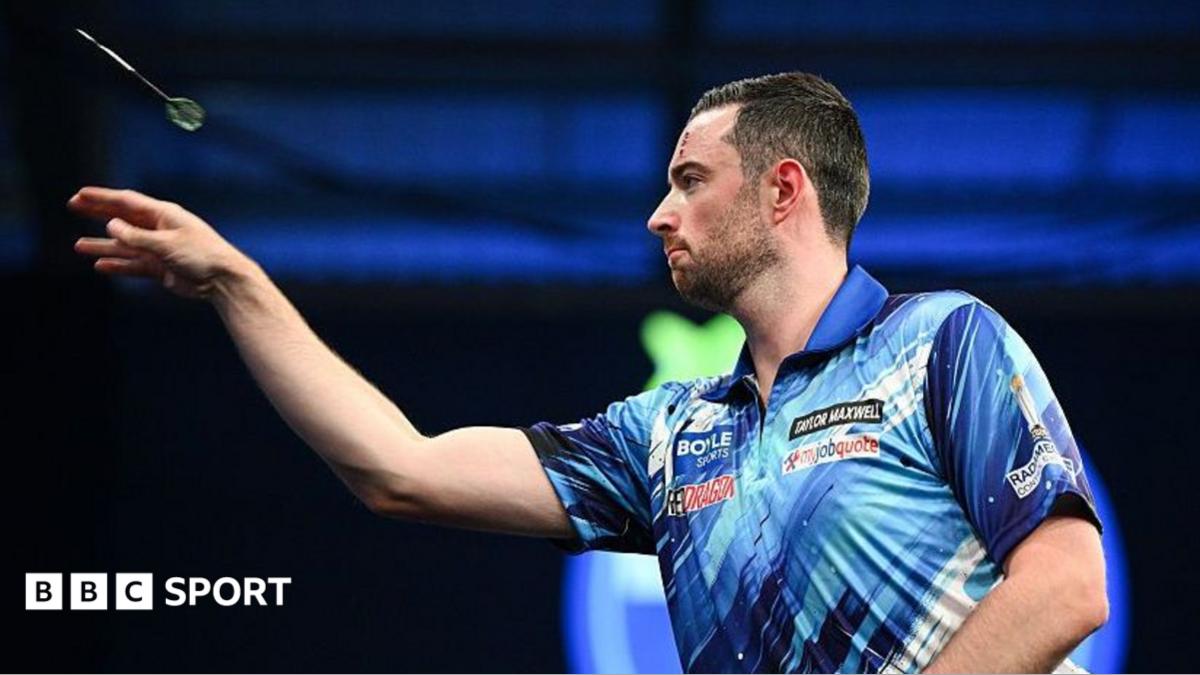
World Grand Prix Darts 2026 results: Luke Humphries beats Gerwyn Price
Price, who was playing in a fourth Grand Prix final, claimed the first set with a stunning 132 three-dart average.
He raced into a 3-0 lead and Humphries admitted afterwards that avoiding a 6-0 clean sweep was on his mind such was the brutality that Price was producing.
The fourth set saw the momentum swing however. With Price waiting on tops to move to within two sets of victory, Humphries nicked it by taking out a brilliant 105, with what he said “felt like the biggest shot of my career”.
From there his levels started to rise and he claimed the following three sets to lead.
Price rallied in set eight and won three successive legs to force a best-of-three finale, but, after a short break, Humphries found another gear.
Set nine went to a deciding leg, but unlike the previous four sets in the match where that had happened, there was a break of throw, with Humphries finishing in 10 darts.
That left Price dejected and Humphries won three unanswered legs to claim a ninth major PDC title.
“The sport is in such a special place that when you pick these trophies up they mean a lot more,” said Humphries.
“When I was winning, I don’t think there were so many good players. I’m happy to win a couple a year – one a year is great.
“To go on and win like I did is going to be tough. I don’t think I can’t do it, I’m just trying to pick up as many titles as I can.
“I worked incredibly hard, showed a lot of grit and determination. I think these are a lot sweeter than the ones you win with ease.”