Los Angeles County will halt some payments from its $4-billion sex abuse settlement, leaving many plaintiffs on edge as prosecutors ramp up an investigation into allegations of fraud.
L.A. County agreed last spring to the record payout to settle a flood of lawsuits from people who said they’d been sexually abused by staff in government-run foster homes and juvenile camps. Many attorneys had told their clients they could expect the first tranche of money to start flowing this month.
But the county’s acting chief executive officer, Joseph M. Nicchitta, said Thursday that the county would “pause all payments” for unvetted claims after a request by Dist. Atty. Nathan Hochman. These are claims that have been flagged as requiring a “higher level of scrutiny,” according to a joint report submitted Thursday by attorneys in the settlement.
The district attorney announced he would investigate the historic settlement after reporting by The Times that found some plaintiffs who said they were paid to sue. Investigators have found “a significant number of cases where we believe there is potential fraud,” according to a spokesperson for the prosecutor’s office. The State Bar is spearheading a separate inquiry into fraud allegations.
On Jan. 9, Hochman formally requested the county pause the distribution of funds for at least six months, which he said would give his office “a reasonable opportunity to complete critical investigative steps.”
“Premature disbursement of settlement funds poses a substantial risk of interfering with the investigation by complicating witness cooperation, obscuring financial trails, and impairing my office’s ability to identify and prosecute fraudulent activity,” Hochman wrote in a letter to Andy Baum, the county’s main outside attorney working on the settlement.
Plaintiff lawyers argued the county was required to turn over money by the end of the month.
The county said it came to an agreement Thursday and plans to turn over $400 million on Friday, which would “cover claims that have already been validated,” according to a statement from Nicchitta. That money will go into a fund where it will be distributed when judges are finished vetting and deciding how much each claim is worth.
“No plaintiff was getting paid until the allocation process is completed,” said the county’s top lawyer, Dawyn Harrison. “The County is not overseeing that intensive process.”
The rest of the payments, Nicchitta said, will be on hold until the claims can “be appropriately investigated.”
“The County takes extremely seriously its obligations to provide just compensation to survivors. Preventing fraud is central to that commitment,” he said. “Fraudulent claims of sexual assault harm survivors by diluting compensation for survivors and casting public doubt over settlements as a whole.”
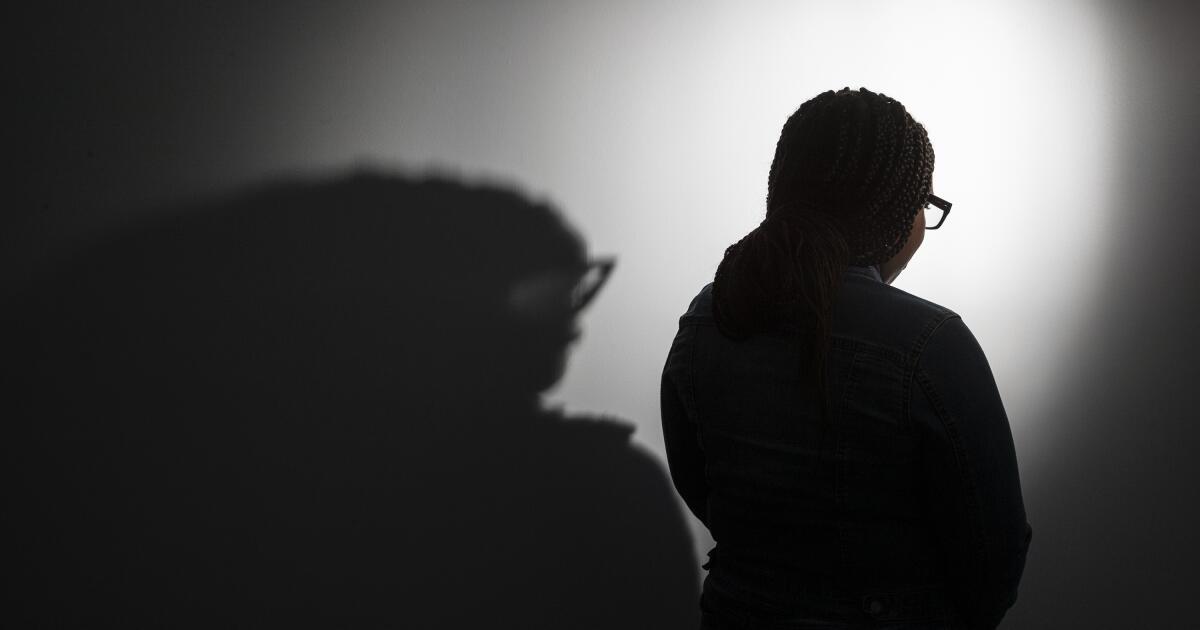
The uncertainty has sparked a sense of despair among those who spent the last few years wading through the darkest memories of their lives in hopes of a life-changing sum.
Andrea Proctor, 45, said the last few years have been like “digging into a scar that was healed.”
“The whole lawsuit just blew air out of me,” said Proctor, who sued in 2022 over alleged abuse at MacLaren Children’s Center, an El Monte shelter where she says she was drugged and sexually abused by staff as a teenager. “I’m just sitting out here empty.”
Proctor said she desperately needs the money to stabilize her life, the first part of which was spent careening from one crisis to the next — an instability she traces partially to the abuse she suffered as a minor.
Since a 2020 law change that extended the statute of limitations to sue over childhood sexual abuse, thousands have come forward with claims of abuse in county-run facilities dating back decades. The county resolved claims it faced last year through two massive payouts — the first settlement for $4 billion, which includes roughly 11,000 plaintiffs, and a second one last October worth $828 million, which includes about 400 victims.
Now, according to court filings made public Tuesday, the county faces an additional 5,500 claims of the same nature, leaving the prospect of a third hefty payout looming on the horizon.
“They’re telling me the ship has sailed,” said Martin Gould, a partner with Gould Grieco & Hensley, who said he wants this next flood of litigation to focus on pushing for arrests of predatory staff members still on the county’s payroll. “I don’t believe that.”
Gould says his firm, based in Chicago, represents about 70 victims in the new litigation. James Harris Law Firm, a small Seattle-based firm that specializes in big personal injury cases, has about 3,000. The Right Trial Lawyers, a firm that lists a Texas office as its headquarters, has about 700, according to an attorney affiliated with the firm.
These lawyers will be pleading their cases in front of a public — and a Board of Supervisors — at a moment when the conversation has shifted from a reckoning over systemic sexual abuse inside county facilities to concerns about the use of taxpayer money.
A series of Times investigations last fall found nine clients represented by Downtown LA Law Group, or DTLA, who said they were paid by recruiters to sue. Four said they were told to make up their claims.
All the lawsuits filed by the firm, which represents roughly a quarter of the plaintiffs in the $4-billion settlement, are now under review by Daniel Buckley, a former presiding judge of the county’s Superior Court.
DTLA has repeatedly denied any wrongdoing and said in a previous statement that it “categorically does not engage in, nor has it ever condoned, the exchange of money for client retention.”
Several DTLA clients said they were unaware of the probes by the State Bar and the district attorney, though they were told this month to expect delays in payments due, in part, to “a higher-than-expected false claim potential.”
The delays have caused extra anguish for some plaintiffs who have taken out loans against their settlement.
Proctor took out loans worth $15,000 from High Rise Financial, an L.A.-based legal funding company, which collects a larger portion of her payout with each passing year. She now owes more than $34,000, according to loan statements.
Proctor said High Rise Financial recently inquired about buying her out of the settlement payment, which the county is expected to pay out over five years. The loan company told her she could get a percentage of her settlement up front in a lump sum, with the company pocketing the rest as profit. For example, she said, she was told if she received a $300,000 payout, she could get $205,000 up front.
“Conversations were held with consumers to assess their interest in a potential financial arrangement related to a possible settlement,” High Rise said in a statement. “No agreements were sent, nor were any transactions entered into.”
Proctor’s friend Krista Hubbard, who also sued over abuse at MacLaren Children’s Center, borrowed $20,000 to help her through a period of homelessness. She now owes nearly $43,000. She said she, too, got the same offer this month from High Rise of getting bought out of her settlement.
Hubbard, who is crashing at the home of her godfather in Arkansas, said she’s considering it.
“How much longer is it going to take?” she said. “Am I going to be able to not be homeless?”
The $828-million settlement, which includes just three law firms, is running into its own roadblock with lawyers belatedly learning that roughly 30 of their clients were also set to receive money from the $4-billion settlement despite rules barring plaintiffs from receiving money from both.
The overlap has led to a dispute over which pot of money should cover payments to those plaintiffs. Those in the $828-million settlement, which has a much smaller pool of plaintiffs, are expected to get much more.
“It reeks,” said Courtney Thom, an attorney with Manly Stewart & Finaldi, who said she believed the county should have flagged long ago that there were identical clients in both settlements.
“It is not for me to fact-check for the county,” she told Judge Lawrence Riff at a court hearing Wednesday. “It is not for me to cross-reference names.”
Some of these plaintiffs had two different sexual abuse claims against the county — for example, one lawsuit alleged abuse in foster care while a second involved juvenile halls. Other clients had identical claims in both groups and mistakenly believed the two firms that represented them were compiling the information into one claim, Thom said.
Baum, the outside attorney defending the county, told Riff he wanted to ensure the clients didn’t “have their hands in two cookie jars.”