claim

Why some patients are pushing to change Kaiser’s medical dispute process

Wilfredo Engalla, a 51-year-old Filipino immigrant, alleged in a medical malpractice case that Kaiser doctors misdiagnosed him with colds and allergies for years before eventually informing him he had terminal lung cancer.

He died before his complaint could be heard by an arbitrator, which his Kaiser policy required. His case prompted a withering rebuke from the California Supreme Court, which said Kaiser’s system of arbitrating legal disputes was subject to long delays and unfair to its members. The year was 1997.

Nearly three decades after the landmark decision, the HMO giant — which made a series of sweeping reforms after the ruling — is once again facing questions over whether its arbitration system is stacked against the interests of its members.

Plaintiffs attorneys, legislators and patients say Kaiser’s private and confidential process for arbitrating legal disputes over medical care still has key flaws that favor Kaiser over patients bringing malpractice cases. The company insures about 25% of Californians, including some employees of the Los Angeles Times.

“Kaiser has really lost its way,” said Assemblyman Robert Garcia (D-Rancho Cucamonga). Garcia, who is a longtime Kaiser member, recently introduced a bill to require the California attorney general to oversee arbitrations mandated by any health plan.

Kaiser defended its arbitration system, saying in a statement that it was fair for both patients and the nonprofit.

Many companies and other organizations, including some hospitals, HMOs and physician groups, require their customers or patients to take their complaints to private arbitration rather than to court.

But unlike most other companies, which send claims to large arbitration firms, Kaiser created its own system back in 1971.

Under Kaiser’s system, once a neutral arbitrator is selected, either party can opt to disqualify that person without cause. There is no limit on the number of disqualifications.

Although the health plan designed the system to be fair, patients and their lawyers have alleged that in reality Kaiser’s greater knowledge of arbitrators’ past rulings and its ability to veto arbitrators give it an advantage to pick favorable judges.

Critics such as Arlan Cohen, a physician and attorney who has brought more than two dozen cases against the health plan, say the system also provides a financial incentive to arbitrators to rule in Kaiser’s favor in order to be selected for future cases.

While Kaiser has access to all the decisions made by arbitrators in its system, the patient’s family gets a more limited disclosure of an arbitrator’s history of cases, lawyers say, adding that it’s not easy to see which arbitrators have ruled frequently for Kaiser.

Kaiser said it disagreed that the system allowed it to select favored arbitrators.

“The appointment process is not influenced by whether the arbitrator has ruled for or against KP or has a record of ruling against Kaiser Permanente,” its statement said.

“As required by law, both parties receive information about potential arbitrators and can decline to move forward with any they are not comfortable,” the statement said.

One problem is what experts call the “repeat player effect,” in which a large company appearing repeatedly before the same panel of arbitrators allegedly gains an advantage over the individual bringing a single complaint.

David Allen Larson, past chair of the American Bar Assn.’s dispute resolution section, said the repeat player effect happens because the patient will likely be choosing an arbitrator on the health plan’s system just once, while “Kaiser is selecting them every single day.”

“They know the system. They know the rules,” Larson said of Kaiser. “The entire process gives them an advantage.”

Alan Kang, a lawyer, in a recent petition filed in L.A. County Superior Court, contends that the fees the arbitrators earn from hearing cases — as much as $2,000 an hour — give them an incentive to rule in Kaiser’s favor so they are chosen to hear more cases.

“When a judge’s future income is at stake, it is impossible to be impartial,” Kang wrote in the petition.

The petition seeks to void the December decision of an arbitrator who ruled against the family of Evangelina Aquino, a Kaiser employee who died of cancer at age 40.

Kang, the Aquino family and the medical experts they hired for the case say her cancer would have been treatable if Kaiser doctors had found it with a test they said her symptoms called for. Kaiser argued it was a different kind of cancer that was aggressive and untreatable. The arbitrator agreed with Kaiser in the December decision.

After the ruling, Kang began analyzing data from Kaiser’s system.

His review of dozens of cases in the last six years found that judges overseeing the most cases nearly always ruled for Kaiser.

“The message is clear: deliver wins for Kaiser and you will get additional business,” Kang wrote in his court petition.

The Oakland-based health plan declined to answer questions about its arbitration system and Kang’s claims, but said in a statement that its “arbitration process is designed to be fair, impartial, and accessible to all members. While some arbitrators may handle multiple Kaiser Permanente-related cases, they are not employed by Kaiser Permanente, and they are selected by both parties, in accordance with the law.”

“We recognize that arbitration cases often involve difficult and deeply personal experiences for patients and families,” the statement said, “and we take all concerns raised through these processes seriously.”

Kaiser’s unique arbitration system

Arbitration can have advantages over the court system, including allowing Kaiser to save on legal costs, which otherwise would raise the price of premiums it charges to families, employers and governments.

Kaiser offers to pay the arbitrators’ fees, which can save families tens of thousands of dollars.

Arbitration may also lead to faster outcomes, possibly avoiding years of litigation. Unlike civil litigation, arbitration decisions are especially difficult to appeal.

After the criticism by the state Supreme Court in 1997, Kaiser reformed the system by creating the Office of the Independent Administrator. The office is funded by a Kaiser trust and the $150 fee each patient filing a claim must pay, said Marcella Bell, who serves as the independent administrator.

Bell said the office works independently from Kaiser.

The office selected 195 retired judges and lawyers to serve on a panel that patients and Kaiser can choose from when selecting a neutral arbitrator to oversee and decide a malpractice case.

Rules written by the independent administrator, in consultation with the health plan and an advisory board, allow Kaiser and the family to cut an arbitrator they don’t like, at multiple steps in the process.

The administrator’s office randomly selects 12 members from its panel. Both sides can each remove any four of those arbitrators. The two sides then rank the remaining arbitrators in order of preference. The administrator selects the top-ranked arbitrator to hear the case.

The two parties then still have the ability to disqualify that selection without cause.

nurses strike outside of Kaiser Permanente on Broadway in Oakland

Members of the United Nurses Assns. of California and Union of Healthcare Professionals strike outside Kaiser Permanente in Oakland on Jan. 28.

(Jessica Christian / San Francisco Chronicle)

Last year, Kaiser’s arbitration system closed 529 arbitration cases.

The arbitrators threw out 14% of the cases, ruling in favor of Kaiser’s motion for summary judgment, and dismissed an additional 5% of cases on technical or procedural grounds.

Only 23 cases, or 4% of the total, went to a hearing. Among those, the arbitrator decided for Kaiser in 17, with the patient winning the remaining six.

Patients and their families withdrew their claim in 20% of the cases. About half of those patients did not have a lawyer and had tried to represent themselves.

The parties settled for an undisclosed sum in 57% of the cases. The settlements are confidential.

Patient safety questions

Those who have studied the use of arbitration by Kaiser and other HMOs for medical malpractice claims say the secrecy of the settlements and the closed hearings could keep safety problems from coming to light.

“The secrecy of arbitration proceedings may prevent publicity that could reveal poor doctors,” the California Research Bureau warned in a report in 2000 that analyzed Kaiser’s system. That compares with public court cases that could deter “bad behavior” in the future, the researchers wrote.

In December 2023, 53-year-old Francisco Delgadillo arrived at the Kaiser ER in Vallejo with severe chest pain. After an initial assessment, he waited eight hours for care, according to state regulators.

He died in the lobby. A state and federal investigation found multiple violations, including that Kaiser failed to have a licensed nurse monitoring the dozens of patients in the ER’s waiting room.

The Delgadillo family filed an arbitration claim. Their lawyer Jeff Mitchell said the case settled for a confidential sum and he could not discuss it.

Mitchell agreed that the secrecy raised patient safety concerns.

“They love the system, otherwise they would not be so hellbent to keep it,” Mitchell said of Kaiser’s repeated efforts to dispel criticism. “They don’t want these cases to get in front of juries.”

A nurse enters data into a computer at a standing desk while a patient with a mask sits nearby

A licensed practical nurse attends to a patient at a Kaiser Permanente in Culver City in September.

(Allen J. Schaben / Los Angeles Times)

Calls for reform

Despite the changes Kaiser made after the 1997 court decision, patients and their families have continued to complain.

According to the administrator’s 2025 annual report, the “most common” complaint the office heard last year was about the neutral arbitrator.

“Most complained that the arbitrator was biased, partisan, unjust, and in Kaiser’s favor,” the report said.

Stephen Martinez, a retired aerospace engineer from Bellflower, is leading the effort to pass the state bill introduced by Garcia.

At an April hearing in the state Assembly, Martinez spoke about how his wife had found a lump in her breast and asked for an appointment with her longtime caregiver at Kaiser to examine it. Instead she was sent to a physician assistant, who dismissed it, he said.

“The PA prescribed warm compresses, a sports bra, and limited chocolate,” Martinez testified. “We would later find that Lindalee did have breast cancer that had already spread.”

Martinez and his wife said they spent $175,000 on lawyers and medical experts to bring that arbitration case. A chief breast surgeon at Kaiser and another surgeon who had retired from that job both testified that the Kaiser physician assistant failed to follow the health system’s guidelines.

Kaiser’s expert argued that the physician assistant did an appropriate exam and that his low suspicion of breast cancer was reasonable. The neutral arbitrator concurred and ruled against the couple.

After passing the Assembly, Assembly Bill 1770 is now in the state Senate for consideration. The bill lets the attorney general decide what actions they will take to ensure health plan arbitrations are handled fairly and transparently. If the bill passes, the state would add four deputy attorneys general, a legal analyst and three legal secretaries to do that work, according to a legislative analyst’s report.

Kaiser says it has concerns about the bill, including that it would “create overlapping state oversight and duplicative reporting requirements.”

A Kaiser Permanente building at sunset in downtown Oakland

Kaiser Permanente’s corporate offices in downtown Oakland in January 2025.

(Jane Tyska / East Bay Times via Getty Images)

Questions of a missed diagnosis

When Janene Fowler was 22, her body seemed to turn against her. She grew weak, pain shot through her hands and feet, her heart raced. She soon required a wheelchair.

Fowler’s medical chart detailed what could have caused her disabling problems. A test eight years before had found a deficiency of vitamin B12, according to the chart. Over the years, Kaiser doctors noted problems such as depression, unexplained pain, shortness of breath, a sore tongue and an abnormal gait — all possible symptoms of vitamin B12 deficiency.

In February 2022, after her family complained about her not being able to see a neurologist, she got an appointment. The specialist noted her vitamin deficiency, telling the nurse to start her on a supplement at once. But the treatment did not begin because the paperwork was lost, her medical records show.

Two weeks later, Fowler left Kaiser to see a doctor at UCLA. A doctor there quickly started injections of B12.

Her symptoms gradually got better, but her new doctors say the years-long deficiency left permanent damage. She still can’t walk without help.

The arbitrator, a retired judge, sided with Kaiser’s doctors and experts, who questioned whether Fowler’s problems were caused by a deficiency of vitamin B12. While one test showed a deficiency, he noted that a second test failed to confirm it. He wrote that Fowler and her lawyers had failed to prove that Kaiser “breached its duty of care.”

Cohen, Fowler’s lawyer, asserted that the retired judge’s decision was contrary to UCLA medical records, which detail her deficiency and treatment.

Fowler now spends most of her time at home. She can’t drive. She often falls when she tries to get around with a cane. She loves to cook, but said she burns herself when she tries.

“My hands don’t really do what I tell them,” she said.

Kaiser declined to answer questions about her case, citing patients’ privacy rights.

Fowler said she’s angry about how the health plan’s doctors and its arbitration system treated her.

“I thought I was going to die, and no one at Kaiser seemed to care,” she said. “What justice can you have in a system that is run by those you are trying to sue?”

Source link

Resort ‘heroes’ filmed carting away towels being used to claim sunbeds

Tourists say people were putting the towels on the beds first thing then not coming back until 4pm

Resort ‘heroes’ filmed carting away towels being used to claim sunbeds

Resort workers have been hailed heroes after being filmed removing piles of towels from unoccupied sunbeds reserved by holidaymakers. The viral clip has delighted travellers fed up with people claiming loungers for hours without using them.

It was filmed at Camping Le Marsouins in Argelès-sur-Mer, near Perpignan, France. With several holiday resorts now introducing rules to stop guests reserving sunbeds they are not using, staff at the campsite decided to take matters into their own hands.

The clip, which has racked up over three million views and 80,000 likes, showed two members of staff in yellow and red uniforms collecting towels from empty loungers. They piled the abandoned towels onto a single sunbed, freeing up the rest for guests who are actually using the pool

Vir Ginie, who filmed the video, explained why staff stepped in. She said: “The idea is to free up unoccupied sun loungers. People come and leave their towels as soon as the pool opens, then leave and come back around 4pm, for example.

“So the loungers are unavailable for people at the pool and, in high season, it causes problems and annoys the other holidaymakers.”

The clip reignited the long-running debate over holidaymakers reserving poolside loungers for hours before returning to use them.

One viewer said: “About time – all hotels should be doing this.” Another said: A big round of applause for these staff members.

“This is exactly how it should be in every hotel.” While a third said: “All hotels should do this.”

Source link

Trump repeats debunked claims about voting vulnerabilities

President Trump used a rare prime-time address Thursday night to renew his attacks on the security of U.S. elections, telling Americans that the nation’s voting system is “so broken” that “no one can possibly defend it,” an unprecedented effort by a sitting president to undermine public confidence in domestic elections.

Many of the claims he made, which echo those he made after he lost the 2020 election, have been debunked by investigations, audits and court proceedings. Trump did not claim that vote counts were changed or election systems were hacked, and his warnings that the nation’s elections could be vulnerable to foreign influence have long been made by members of both parties.

But the president amplified those claims and others in an effort to cast fresh doubt over what he said was a “stolen” and “rigged” election and renew calls to pass a federal voting law ahead of the November election.

“Addressing this crisis of elections security demands that Congress will pass the SAVE America Act,” Trump said. “How easy is that to do? Unless you want to cheat.”

Trump said he directed the White House to release a tranche of heavily redacted documents that purport to show “vulnerabilities” in the nation’s voting system, with the goal of “correcting them very, very quickly.”

The 26-minute address to the nation — a platform traditionally reserved for rare moments of national importance — was the latest effort by Trump to attempt to assert more federal control over state elections.

Major broadcast networks declined to air Trump’s speech in full, instead reporting on it. Trump complained about NBC and ABC as he spoke, saying they should lose their broadcasting licenses. He falsely claimed that “they and others in the media are part of a plot” to “continue this fraud.”

In his remarks, Trump alleged China carried out what is believed to be the “largest compromise of election data history” starting during the 2020 election cycle and claimed that “members of the deep state” in the American intelligence community covered it up.

He directed the FBI, the director of national intelligence and other agencies led by some of his loyalists to investigate and prosecute the people responsible for the cover up.

Democrats swiftly condemned Trump’s claims as baseless and rehashed ideas that have little to do with actual election administration.

“Donald Trump is releasing unverified, meaningless documents to appease his own delusions about an election he lost resoundingly, all while continuing to withhold 3 million pages of the Epstein files,” Senate Minority Leader Chuck Schumer said on X.

Multiple reviews of the 2020 election have concluded that Democrat Joe Biden won legitimately, and election experts say there is no evidence that widespread fraud affected the outcome of the election.

“It’s been more than half a decade, with numerous audits, recounts, and more than 60 court cases, each finding no evidence of widespread voter fraud,” Sen. Alex Padilla (D-Calif.) said in a statement. “Clearly, this is no longer about an election Donald Trump lost six years ago. It’s about him laying the groundwork to try to ‘take over the voting’ in the upcoming midterm elections.”

Ahead of the speech, elections and democracy experts had cautioned that the president may attempt to sow doubt in the security of the nation’s election system or bolster debunked fraud claims.

Trump has taken a series of steps since retaking office aimed at exerting control over elections. Some experts said Thursday’s address could be interpreted as a sign that Trump is running out of moves in the lead up to the midterm elections, where Republican control of the House is at stake.

“The fact that they’re throwing everything up on the walls at this point demonstrates panic,” said David Becker, executive director of the nonpartisan Center for Election Innovation and Research. “They are not operating from strength right now. They are operating from weakness.”

Trump delivered the address with his approval rating stagnating at 37%, according to a Washington Post-Ipsos poll released Thursday, with weakening enthusiasm among Republicans.

This is a breaking news story and will be updated.

Source link

Trump seeks prime-time spotlight for election claims, raising concerns

President Trump appeared poised to question the security of U.S. elections with a planned prime-time speech Thursday night, eliciting fears from Democrats and voting rights advocates that he is planning yet another play for federal control over voting in November’s midterms.

The exact reason for the speech has not been disclosed by the White House, with Trump only characterizing it to reporters this week as “really, really big news.” He confirmed it would have to do with “free and fair elections.”

The Washington Post reported, citing sources, that Trump planned to argue that there are vulnerabilities in the nation’s election infrastructure and claim that China had accessed U.S. voter data. The White House declined to confirm any such details Wednesday.

The announcement of the speech set off concerns among the president’s political opponents, as well as elections experts and voting rights advocates, that Trump could again escalate claims that the nation’s voting system is vulnerable to domestic fraud and foreign attacks.

He has previously said that Republicans should “nationalize” election administration, a job that falls to the states under the Constitution, and has pressured his party to tighten federal voting rules.

“We don’t know anything about what he might say … or what he might try to do with his very limited powers, as the president, over elections,” said David Becker, executive director of the nonpartisan Center for Election Innovation and Research. “I expect we’re going to hear a lot of rehashed and debunked claims.”

The president could potentially use new claims to argue that the nation is facing an emergency in upcoming elections that necessitates further federal intervention into voting, Rep. Joseph Morelle of New York, the ranking Democrat on the House Administration Committee, which has oversight of elections, said in an interview with The Times.

“This is going to be the rationale for declaring a national emergency,” Morelle said. “It’s transparent that he is creating the emergency and he’s creating the evidence out of whole cloth to suggest there is an emergency.”

Sen. Alex Padilla (D-Calif.), the top Democrat on the Senate Rules Committee, which oversees federal elections, told The Times on Wednesday that Trump was using a known playbook to “[sow] doubt about the outcome before a single vote has been cast.”

“All signs show that tomorrow’s speech will be more of the same: debunked conspiracy theories offered up not because they’re true, but because chaos and doubt are the only cards he has left to play,” Padilla said.

The speech, which Trump announced on social media Monday, comes four months ahead of midterm elections that will determine whether his party retains legislative control in Washington.

White House spokesperson Karoline Leavitt dismissed news reports about what Trump might say in the 6 p.m. PDT speech as speculation, and said “nobody knows yet what President Trump will ultimately say.”

The address also comes as Trump’s ceasefire with Iran has fallen apart, renewing expectations for increased gas prices, and his approval rating on the economy has steadily dropped. On Tuesday, it also became public that Trump had paid $5.6 million to the writer E. Jean Carroll, as ordered by a jury that in 2023 found Trump liable for sexually abusing and defaming her.

“What we’re going to be talking about Thursday is, it doesn’t get bigger,” Trump told reporters who asked Tuesday about the speech. “Because without free and fair elections you don’t have a country.”

Trump has spread baseless claims of widespread election fraud for years. But his prioritization of his claims about the voting system — even as much of the nation’s attention is on cost-of-living issues — has been on particularly clear display in recent days.

He has aggressively lobbied reluctant Republican senators to pass his voter ID legislation, refusing to sign a bipartisan housing bill over it; he fired all remaining members of the bipartisan U.S. Elections Assistance Commission; and his Justice Department said it would send election monitors to six states.

Since the midterm primaries began, Trump has also sown doubt about election security — chiefly in California, where he suggested Democrats had cheated or attempted to in the gubernatorial and Los Angeles mayoral primaries.

Georgia Democratic Sen. Jon Ossoff, whose state was often at the center of Trump’s 2020 fraud claims, said the president’s speech posed a threat to voting rights.

“I expect him to use whatever he puts out there on Thursday as a pretext, either for some attempted unconstitutional use of federal power to interfere in the election,” Ossoff said Tuesday on MS Now, “or to give his proxies and loyalists in state and local jurisdictions some cover for whatever they might attempt, or to lay the groundwork for challenging the result.”

Any effort to federalize or take over elections would face serious legal obstacles, said Nahal Kazemi, a Chapman University law professor. Although Congress can pass laws regarding election administration, as it did with the Voting Rights Act, the executive branch doesn’t play a role in running elections.

“You run into essentially a brick wall that is the Constitution, which makes very plain that states run elections,” Kazemi said.

When it comes to concerns about foreign interference, experts say there is little evidence of other countries attempting to hack systems or change votes. Instead, foreign actors have largely operated via disinformation campaigns, as the U.S. determined had occurred in the 2016 and 2020 elections.

“Of the information that is available to us now, there’s no reason to be alarmed about the possibility that a foreign adversary is going to take over election systems,” said Kazemi, who has studied foreign election interference.

One of the things that helps make American elections generally secure, she said, is that they are not centralized but are run by thousands of counties. Hacking into so many voting systems would be extraordinarily difficult for a foreign adversary, she said.

Jenny Farrell, executive director of the League of Women Voters of California, said California “takes elections security extremely seriously” and has one of the most secure systems in the country, subject to strict voter verification measures and intense chain of custody and auditing procedures.

Democrats have worked with elections experts in recent months on attempts to assure the public that U.S. elections are safe and secure. They have also tried to counter claims by Trump that mail ballots and voting machines are unreliable.

A slew of 2020 election reviews, including by Trump’s first administration, concluded that Trump lost and Biden won. Election experts say there is no evidence that widespread fraud determined the outcome of the election.

A judge also found that claims pushed by Trump and his attorneys that the company Dominion Voting Systems manipulated votes cast through its machines in favor of Biden were untrue.

Source link

Sheinbaum rejects US claim that Mexico’s government is linked to cartels | Government News

Sheinbaum has denounced remarks from DEA head Terry Cole as a baseless ‘political statement’ about Mexico.

Mexican President Claudia Sheinbaum has rejected a claim from the head of the United States Drug Enforcement Administration (DEA) that there is a deadly connection between her government and the country’s influential criminal cartels.

During her daily news conference on Wednesday, Sheinbaum pushed back, saying the DEA’s remarks seemed “more ‌like a political statement than one backed by evidence”.

Recommended Stories

list of 3 itemsend of list

She added that the DEA should focus on combating drug trafficking, distribution and money laundering within its own country. The US, she pointed out, is the world’s largest market for illicit drugs.

Sheinbaum has repeatedly faced accusations under US President Donald Trump that her country is “run” by cartels.

Several Trump officials have mirrored that assertion. On Tuesday, for instance, DEA Administrator Terry Cole said ⁠the Mexican government and cartel networks were “one and the same”.

The Mexican government responded by saying Cole’s remarks did not reflect its efforts to work with the US to combat cartels.

It added that Mexico continues to be willing to collaborate with the US to combat crime, as long as its sovereignty was respected.

Since Trump took office for a second term, Sheinbaum has faced pressure from her northern neighbour to crack down on crime in her country.

In response, she has pledged close cooperation with the US, while pushing back against Trump’s militaristic approach to Latin America.

Her administration has repeatedly rejected the prospect of the US conducting military operations on its soil without the federal government’s consent.

Initially, Trump and Sheinbaum appeared to forge warm relations, with the US president praising his Mexican counterpart as “marvellous”.

But Sheinbaum has become increasingly vocal in her criticism of the Trump administration in recent months.

In April, for instance, she rebuked the US for issuing an indictment against ⁠Sinaloa Governor Ruben Rocha, amid allegations his campaign worked with the Sinaloa Cartel to violently influence the 2021 gubernatorial election.

Sheinbaum said no evidence had been produced to back the US’s claim against Rocha. She also argued that rooting out corruption was a domestic issue, not an international one.

Earlier this week, Mexico filed criminal complaints with US prosecutors over the deaths of ‌Mexican ‌nationals swept up in Trump’s mass deportation campaign.

Sheinbaum’s remarks on Wednesday came as the US Department of the Treasury announced that two more criminal organisations in Mexico — the Juarez Cartel and Los Viagras — had been designated “foreign terrorist ⁠organizations and specially ⁠designated global ⁠terrorists”.

The Trump administration has made such designations in the past, as it has sought to frame its actions in Latin America as a war on so-called “narco-terrorists”.

Source link

South Korean defense chief faces desertion claim, reform backlash

South Korean Defense Minister Ahn Gyu-back (R) talks with National Security Adviser Wi Sung-lac (C) during the National Fiscal Strategy Meeting, chaired by South Korean President Lee Jae Myung, at the presidential office Cheong Wa Dae in Seoul, South Korea, 13 July 2026. Photo by YONHAP / EPA

July 13 (Asia Today) — South Korean Defense Minister Ahn Gyu-back is facing mounting pressure from an allegation that he deserted his military post four decades ago and growing opposition to his plan to consolidate the country’s three service academies.

The two controversies have converged, raising questions about whether the Lee Jae Myung administration can maintain momentum behind its broader military reform agenda.

Complaint filed over parliamentary testimony

Kim Young-soo, head of the Korea Institute for Military Rights and a former Navy major, filed a police complaint against Ahn on June 27. The complaint alleges Ahn violated a law governing testimony and evidence before the National Assembly.

At a news conference at the National Assembly on Monday, Kim claimed Ahn left his post without authorization for about seven months while serving as a supplementary-duty soldier with an Army unit in Gochang County in 1984.

Kim also alleged that military police arrested Ahn and detained him for 30 days.

The complaint argues that Ahn gave false testimony during his confirmation hearing in July 2025 when he denied that such incidents had occurred.

The case is being investigated by Yongsan Police Station in Seoul. Police are scheduled to question Kim as the complainant Thursday.

The allegations have not been substantiated and remain under investigation.

Ministry calls allegation “clearly false”

The Defense Ministry rejected the desertion allegation Friday, calling it “clearly false.”

According to Ahn and the ministry, he completed his required service and was discharged from supplementary duty in January 1985. He returned to Sungkyunkwan University in March but was told in June that he was required to perform additional service.

The ministry said the issue arose after Ahn’s mother served lunch to active-duty soldiers at the request of his company commander. The period during which the incident was internally reviewed was mistakenly omitted from the administrative process when Ahn was initially released from duty, leading to his recall in August.

The ministry said Ahn was never detained or subjected to disciplinary action.

It has declined to publicly release his military service record, however, arguing that disclosing an incorrect 40-year-old document could create further misunderstanding regardless of the underlying facts.

Ahn has said he will seek to have the record corrected after leaving office.

SBS reported Sunday that a small number of ruling-party officials had examined the military records and said they contained no entries related to desertion or detention.

Military academy announcement abruptly postponed

Amid the dispute, the ministry abruptly postponed the scheduled release of its basic plan for establishing a unified armed forces academy. The announcement was canceled about 100 minutes before a briefing Monday.

The proposal calls for jointly selecting cadets for the Army, Navy and Air Force academies. Cadets would receive common instruction during their first two years and service-specific education during their third and fourth years.

The government has also reportedly considered relocating the Korea Military Academy from its current campus in northeastern Seoul to South Jeolla Province.

The ministry attributed the postponement to Ahn’s attendance at a presidential meeting and his schedule accompanying President Lee to a NATO summit.

The decision was widely interpreted, however, as a response to strong opposition from retired military organizations and alumni associations.

Academy alumni stage first joint protest

The alumni associations of the Army, Navy and Air Force academies held a rally outside the National Assembly on Wednesday opposing the consolidation plan and the proposed relocation of the Army academy.

It was the first time the three associations had jointly mobilized over the issue.

People Power Party Reps. Han Ki-ho and Lim Jong-deuk, both graduates of the Korea Military Academy, attended the demonstration. They described the proposal as a deterioration of national defense rather than genuine reform and called for it to be reconsidered from the beginning.

Twelve former commanders of the Army Training and Doctrine Command also issued a statement calling for a review of the plan.

The opposition People Power Party has linked the military service allegation with the academy consolidation proposal and called for Ahn’s resignation.

Independent lawmaker Han Dong-hoon has also demanded that Ahn release his military service record.

A public petition seeking Ahn’s impeachment had received more than 310,000 signatures as of Sunday.

Thursday’s police questioning of the complainant is expected to become the first major turning point in the dispute over Ahn’s service history.

The policy battle, however, is unlikely to disappear regardless of the investigation’s outcome.

Opposition to consolidating the academies and dismantling the Defense Counterintelligence Command has already developed independently of the allegation against Ahn. The unprecedented joint protest by the three academy alumni associations demonstrates the extent of that resistance.

The ministry’s continued refusal to release Ahn’s service record is also prolonging the controversy. Its decision to postpone correction procedures until after Ahn leaves office risks allowing the dispute to remain a source of political conflict.

At the same time, treating the military service allegation and the academy reform proposal as a single political issue could undermine a substantive national security debate.

Defense experts familiar with the controversy say the allegation should be investigated according to the law, while the merits of military reform should be debated separately according to the national interest.

— Reported by Asia Today; translated by UPI

© Asia Today. Unauthorized reproduction or redistribution prohibited.

Original Korean report: https://www.asiatoday.co.kr/kn/view.php?key=20260713010004389

Source link

Librarians turn to civil rights agency to oppose book bans

She refused to ban books, many of them about racism and the experiences of LGBTQ+ people. And for that, Suzette Baker was fired as a library director in a rural county in central Texas.

“I’m kind of persona non grata around here,” said Baker, who had headed the Kingsland, Texas, library system until she refused to take down a prominent display of several books people had sought to ban over the years.

Now, Baker is fighting back. She and two other librarians who were similarly fired have filed workplace discrimination claims with the U.S. Equal Employment Opportunity Commission. And as culture war battles to keep certain books from children and teens put public and school libraries increasingly under pressure, their goal is redemption and, where possible, eventual reinstatement.

So far, it’s a wait-and-see whether the claims will succeed — and set new precedent — in the struggle between teachers and librarians around the country who oppose book bans and conservative activists who say some books are inappropriate for young minds.

The fight has involved a record number of book-banning efforts, some libraries cutting ties with the American Library Assn. — which opposes book bans — and even attempts to prosecute librarians for allowing children to access books some consider too graphic.

At least one terminated librarian has gained a measure of success.

Brooky Parks, who was fired for defending programs on anti-racism and LGBTQ+ stories she organized for teens at the Erie Community Library north of Denver, won a $250,000 settlement in September. Reached through the Colorado Civil Rights Division, the settlement requires her former employer to give librarians more say in decisions involving library programs.

Parks’ settlement with the High Plains Library District capped a stressful eight-month period without work, when community donations helped her avoid losing her home. And it will probably resolve Parks’ claim with the EEOC, said attorney Iris Halpern, who represents Parks and the other two librarians.

“I just wasn’t going to back down from it. It was just the right thing to do,” said Parks, now a librarian at the University of Denver.

After her firing in 2022, Baker filed an EEOC claim against her employer, the Llano County Library System in Kingsland. And in September 2023, Terri Lesley filed a claim over her firing last summer as executive director of the Campbell County Public Library System in Gillette, Wyo.

Halpern, with the Denver firm Rathod Mohamedbhai, compared the wrongful-termination claims to civil rights-era legal battles.

“It is honestly sad that we’ve gotten to this point. But history is a constant struggle, and we have to learn from our past,” she said.

The 1964 Civil Rights Act established the EEOC to enforce laws against workplace discrimination. One legal expert thinks the librarians might be able to prevail on the grounds that, under those laws, employees may not be discriminated against for associating with certain classes of people.

“With any case, the devil can be in the details in terms of how the facts come out and what they can present. But these are definitely actionable claims,” said Rutgers University law professor David Lopez, a former EEOC general counsel.

An EEOC investigation can take more than a year. After that, the EEOC may attempt to reach a settlement with the employer out of court, sue on the employee’s behalf or issue a letter saying the employee has grounds to sue on their own.

The librarians haven’t yet received an EEOC response and none is expected before the end of next year.

“I would love to be optimistic,” Baker said. “I know there are a lot of people in this community who are just absolutely behind the library being open and free and equal for all. And there’s a lot of people who aren’t. So it’s a hard, hard situation.”

EEOC spokesperson Victor Chen declined to comment on specific filings, saying, “We can’t even confirm or deny we have these complaints.”

The county attorney offices and other representatives of the government officials who fired Parks, Baker and Lesley did not return phone and email messages seeking comment, or declined to comment.

At her Texas library, Baker displayed several books that have been targeted in recent book bans and a sign that read: “We put the ‘lit’ in literature” — a reference to a Tennessee pastor’s recent burning of books.

Baker was fired after refusing to take down the display and signs — considered the last straw after she resisted book banning in her library.

In March, a federal judge ordered 17 books returned to Kingsland library shelves while a citizen lawsuit against book banning proceeded. The works ranged from children’s books to award-winning nonfiction, including “They Called Themselves the K.K.K: The Birth of an American Terrorist Group,” by Susan Campbell Bartoletti; and “It’s Perfectly Normal: Changing Bodies, Growing Up, Sex, and Sexual Health,” by Robie Harris.

“Content-based restrictions on speech are presumptively unconstitutional and subject to strict scrutiny,” Texas U.S. District Judge Robert Pitman wrote in his March 30 ruling. He cited a 2015 U.S. Supreme Court ruling that barred communities from banning signs because of what they say.

The Llano County Commissioners Court decided against closing the county’s three libraries in response to the ruling. Closing the libraries would have echoed the history across the U.S. of closing swimming pools rather than desegregating them, Halpern said.

Like Baker, Lesley had trouble finding work after being fired from the library system she directed in Gillette, Wyo. Her dismissal followed two years of turmoil over challenges to the books available and library programs.

Some of the same county officials who opposed a transgender magician’s plans to perform at the library went on to join local residents in seeking to ban books, according to Lesley’s EEOC filing.

Baker and Lesley both were fired after local officials appointed new library board members willing to be more aggressive about pulling books.

“Our county commissioners appointed board members who were sympathetic to the people who wanted to remove the books. And it was a long dance to try to get it there. And in the end they had to fire me, I think, in order to be able to meet their goal,” Lesley said.

The Campbell County Commission skirted a deputy county attorney’s recommendation not to appoint past applicants for the board without reinterviewing them along with new candidates, according to Lesley’s EEOC claim.

“I saw this as a well-executed attack on the library by a group of citizens and elected officials. It was an attack on the LGBTQ+ community as well,” she said. “And it was an attack on the books.”

Source link

Tuareg fighters claim to have shot down a Russian helicopter in Mali | Al-Qaeda

NewsFeed

Tuareg fighters in Mali have released footage claiming to show a Russian Africa Corps Mi-24 helicopter crashing after it was reportedly shot down. The incident comes amid escalating clashes between Malian forces, their Russian allies and armed groups.

Source link

Super League: Wakefield 29-23 Huddersfield – Trinity claim narrow win over bottom side

On the back of eight straight losses things could hardly have got off to a worse start for the Giants when Johnstone got in at the corner and prop McMeeken then dotted down, after Rourke flicked Jake Trueman’s kick back.

However, they did not go under and two solo efforts in four minutes from Gagai and Geyer saw them turn the match on its head for the first time.

Sinfield’s first Super League try since joining from Leeds in the off-season gave Wakefield a 16-12 lead at the break, but Russell kicked a 40/20 in the first play of the second half and O’Donnell crashed over.

Huddersfield, who were looking for a first wince since 4 April, could not hold on to their narrow lead as Jowitt kicked a penalty after a high shot on McMeeken to level and Rourke held off the attentions of three players to get in at the corner.

The visitors fought back once more when Swift cut in off the left edge and grounded the ball to make it 22-22.

Sinfield’s drop-goal nudged Wakefield back into the lead before Russell’s long ranger levelled the scores yet again.

But the former Trinity man was left desolate when his pass was grabbed by Rourke who managed to get away from the chasers and win it.

Huddersfield will raise the curtain on Magic Weekend when they play York Knights at Everton’s Hill Dickinson Stadium next Saturday, with Daryl Powell’s men playing his former side Castleford in Sunday’s first match.

Wakefield: Jowitt, Rourke, Scott, Pitts Johnstone, Sinfield, Trueman, Tevaga, Vagana, Nikotemo, Rodwell, Smoothy, McMeeken.

Interchanges: Hamlin-Uele, Smith, Lolesio, Tate.

Huddersfield: Flanagan Jr, Swift, Jagger, Gagai, Milne, Lolohea, Russell, Powell, Dunford, O’Donnell, Rogers, Rush, Patolo.

Interchanges: English, King, Cozza, Geyer.

Source link

Trump tries to blame Reflecting Pool woes on vandalism without proof

The paint is peeling from the Lincoln Memorial Reflecting Pool after the renovation ordered by President Trump, and he is now alleging, without substantiation, that someone damaged it intentionally.

“We’ve had some real problems with Vandalism at the beautiful Reflecting Pool,” he posted on his social media site Friday night. “Just like three days ago, they destroyed the grass outside of the Pool, they’ve also done everything possible to hurt the inside surface that was just installed.” He offered no details to substantiate his claim.

Agencies responsible for law enforcement and upkeep on the National Mall — the U.S. Park Police, National Park Service and Department of the Interior — did not immediately respond to requests for comment.

The Washington Post reported that Park Police officers arrested someone Friday who they said was peeling paint from the pool, an act that would not explain the clouds of algae in green water and swaths of loose blue paint detached from the bottom.

Trump insisted something nefarious was going on. “No different than the chemicals that were used on the National Mall, they used something similar in the Reflecting Pool to try to destroy and demean our beautiful work,” he posted.

That was a reference to the discovery of large numbers etched in discolored grass on the National Mall the week before: “86 47,” apparently advocating to “86” — get rid of, in restaurant lingo — the 47th president.

Authorities claimed the numbers may be a threat against Trump, and they are investigating. Trump’s Department of Justice has tried — unsuccessfully so far — to prosecute Trump foe and former FBI Director James B. Comey for posting a photo of seashells arranged in the numerals “86 47.”

Trump’s claims of vandalism came after days of negative attention to the state of the Reflecting Pool, which has raised concerns about the no-bid contract of more than $14 million to refurbish. The president has said the pool rehab was needed as the nation’s 250th anniversary celebrations ramp up.

The pool was swiftly beset by an algae bloom that returned its waters to the greenish color that Trump had tried to replace by having the bottom painted “American flag blue.”

Federal workers treated the pool with hydrogen peroxide to kill the algae. Now, chunks of the blue paint are gone, exposing its rocky bottom.

Source link

Beckhams put on a united front as they hit back at Brooklyn team’s ‘untrue & unfair’ claim Harper visit ‘choreographed’

THE BECKHAMS appeared to put on a united front after they hit back at Brooklyn’s teams claims that Harper’s visit was “choreographed”.

Harper, who was in the US to see footballer dad David, 51, get a star on the Hollywood Walk of Fame, was seen arriving at Brooklyn’s Beverly Hills pad in a SUV.

The Beckham family put a united front after hitting back at Brooklyn’s team Credit: BackGrid
Brooklyn’s reps claimed Harper’s visit to his LA home was ‘choreographed’ Credit: BackGrid

The 14-year-old arrived “unannounced” and “left seconds later without seeing him”, according to claims in Page Six.

A spokesperson for Brooklyn and his wife Nicola Peltz hit out at his famous parents, claiming they organised the whole thing – an allegation dismissed by family source as “clearly nonsense”.

In new photos, David and Victoria, 52, were seen out for dinner at Nobu in Malibu amid the ongoing feud with Brooklyn.

The family appeared tense as they headed into the swanky eatery.

READ MORE ON THE BECKHAMS

‘SET UP’

Brooklyn Beckham’s team accuses David & Victoria of choreographing Harper’s visit


JOG ON

Brooklyn Beckham ignores dad David’s Hollywood Walk of Fame with jog in NYC

The fashion designer wore a khaki midi dress and black heels with a pair of oversized glasses, while David opted for a white T-shirt and black jeans.

A spokesperson for Brooklyn and his wife Nicola Peltz hit out at his famous parents Credit: Getty
Brooklyn’s teams latest allegation have been dismissed by a family source as ‘clearly nonsense’ Credit: BackGrid
Romeo Beckham was seen standing firmly by his parents amid the fallout Credit: BackGrid
The family were seen arriving at swanky restaurant Nobu in Malibu Credit: BackGrid

Victoria and David’s son Romeo, 23, was also present for the dinner, along with his girlfriend Kim Turnbull, 25.

Romeo has stood by his parents throughout the family fallout his brother.

And last night was no different as he attended the meal out, just a day after sister Harper attempted to heal the rift by visiting Brooklyn’s LA home.

Harper was reportedly hand-delivering a letter as she arrived at Brooklyn’s home.

A rep for Brooklyn and Nicola said: “That photographers were in place as the letter was hand delivered says it all – this was choreographed for the cameras.”

But source for the Beckhams hit back today, saying: “This is clearly nonsense and just another untrue and unfair accusation.”

Shortly after news of Harper’s very brief visit, Brooklyn took to social media to reveal that he wasn’t in Los Angeles.

He shared a photo of him jogging in park in New York City.

Yesterday a source told Page Six how the budding chef, married to actress Nicola Peltz, 31, was out of town with his wife.

Earlier this year, David and Victoria Beckham‘s eldest son let rip at his parents in a brutal social media takedown – and said he has no wish to reconcile.

In a scathing statement, Brooklyn told how he grew up with “overwhelming anxiety” having been “controlled” by his parents most of his life.

Since then, understandably, tensions have been high.

This week, Brooklyn snubbed former England footballer David on his special commemoration day.

He gave his speech before unveiling his star and he mentioned his children – but did not name them individually.

“My beautiful children who are the reason I get out of bed in the morning,” he said while choking back tears.

“Kids, I hope you bring my grandchildren here one day and tell them about a boy who dreamed big,” he added.

Later on, David closed down any potential chat about Brooklyn as he insisted the family troubles are a “private matter”.

Brooklyn’s furious tirade on Instagram came amid a bitter family feud which has rumbled on for months.

In his jaw-dropping message earlier this year, he made 12 key accusations towards his loved ones including allegations of “bribery” and family members telling Nicola “she’s not family”.

During his bombshell post, Brooklyn claimed: “I grew up with overwhelming anxiety. For the first time in my life, since stepping away from my family, that anxiety has disappeared.

“I wake up every morning grateful for the life I chose, and have found peace and relief.”

He added: “My parents have controlled narratives in the press about our family.

“The performative social media posts, family events and inauthentic relationships have been a fixture of the life I was born into.”

At the time, he was criticised for “hypocrisy” after Brand Beckham had opened many doors for him in his career.

He also alleged Victoria cancelled making his spouse Nicola’s wedding dress “at the 11th hour” and that his mum then “hijacked” their first dance.

In six blistering posts on his Instagram stories he claimed dad David and mum Victoria have been trying to “endlessly ruin my relationship” with Nicola.

He said: “I do not want to reconcile with my family. I’m not being controlled, I’m standing up for myself for the first time in my life.”

Friends of the Beckhams told The Sun how the pair had been left “floored” by their son’s accusations.

Source link

Many Californians feared federal meddling in elections before Trump’s latest baseless attacks, poll finds

Even before President Trump’s latest wave of unfounded claims of election fraud in California, a significant share of voters in the state expressed concerns about federal interference in the electoral process, according to a new poll.

Trump on Monday claimed on his social media site that the race for Los Angeles mayor was a “Rigged Election,” an allegation that came after Democrat Nithya Raman overtook Republican Spencer Pratt for second place in the ongoing primary election vote count.

Raman’s lead had prompted Rep. Abe Hamadeh, an Arizona Republican, to call for the election to be federalized, or run by the federal government rather than the state, a message Trump reposted.

Earlier Sunday, Trump had alleged during an interview with NBC News that California elections officials “were cheating.” That came after a debunked social media conspiracy theory claiming that a lag in an update of electronic voting data by the Associated Press showed Pratt was being cheated. On Monday, House Speaker Mike Johnson said the elections process in the L.A. mayoral race “stinks to high heaven.”

The ongoing attacks by Trump and his supporters continue to erode confidence in the nation’s elections, especially among Republicans, threatening a pillar of American democracy, said political scientist Eric Schickler, co-director of the Institute of Governmental Studies at UC Berkeley.

“The president … wants to use those claims to make changes in the election process that could make it harder for people to vote, and that certainly is a threat to our democratic institutions,” Schickler said.

“One thing we’ve learned in recent years is that we just cannot take the voting process for granted, cannot take for granted that both sides will accept as legitimate the outcome, and can’t take for granted the idea that there won’t be efforts to essentially manipulate the vote counting process,” he added.

A new poll released Friday by the institute found that 41% of California voters were “not confident” that this year’s elections would be free of federal interference. Although 48% had confidence that there would be not meddling, the concerns expressed were still significant, Schickler said.

More telling was the partisan divide among voters when asked whether they have confidence that local officials would conduct fair and secure elections and that the vote count would be accurate. Among Democratic registered voters, 79% said they trusted elections officials to provide an accurate vote count. Among Republicans, 55% said they were not confident that would occur.

California voters who don’t belong to either party said by a 2-1 margin that they had confidence in the vote count, the poll showed.

“The positive is that local officials are still widely trusted by Democrats, no-party-preference voters, and at least a share of Republicans, though a lot fewer than I think in the past, and a lot fewer than you know we would want for a really healthy democracy,” Schickler said.

That growing mistrust among certain parts of the electorate comes after years of baseless claims by Trump that the 2020 election was stolen from him, as well as Republican-led efforts to restrict the use of mail-in ballots and impose new requirements for voters to show identification and proof of citizenship.

Recent rulings by the conservative-leaning Supreme Court also have rolled back federal protections under the Voting Rights Act. In April, the court sharply limited a part of those protections that had forced states to draw voting districts to help elect Black or Latino representatives to Congress, as well as state and local boards.

Trump and his allies have used California’s slow vote-counting process to allege cheating. The day after the June 2 primary, Trump claimed without evidence that Democrats were trying to “steal” the gubernatorial and L.A. mayoral primaries. The next day, he alleged that California Democrats had “found” mail-in ballots and were “rigging the election” with them.

Secretary of State Shirley Weber and other officials have said California’s voting system prioritizes voter accessibility and security over speedy results. The state has more than 23 million registered voters, and ballots go through numerous verification steps, including verifying signatures on mail-in ballots.

“Over 97% of our folks actually vote by mail. They want to keep that system. That system demands more contact, more touching of the ballot, more verification of the individuals who are voting. All of those things take time,” Weber said during a recent interview with ABC10 in Sacramento.

Gov. Gavin Newsom’s office called Trump’s claims during the recent “Meet the Press” interview the “most severe case of California Derangement Syndrome we’ve ever seen.”

Newsom is considering a 2028 run for president and has consistently warned that Trump may try to interfere in both the 2026 and 2028 elections.

The Berkeley poll found that California voters overall — 74% — want candidates running for president in 2028 to prioritize defending democracy and making voting more accessible. Among Democratic voters, 95% said that was important; among Republicans, 41%.

Funding for the poll was provided to IGS by the Evelyn and Walter Haas, Jr. Fund, a private foundation based in San Francisco that aims to increase civic participation and improve the state’s democratic processes.

The poll of 8,578 registered California voters was conducted between May 19 and 25 online in English and Spanish and has a margin of error of about 2 percentage points in either direction.

Times staff writers Alene Tchekmedyian and Kevin Rector contributed to this report.

Source link

Alexander Zverev wins French Open to claim first Grand Slam title | Tennis

Alexander Zverev has finally secured his maiden Grand Slam title with a dramatic five-set victory over Italy’s Flavio Cobolli in the French Open final on Sunday.

The second seed became the first German man to win a major tournament since Boris Becker at the 1996 Australian Open with a 6-1, 4-6, 6-4, 6-7 (5/7), 6-1 victory after four hours and 16 minutes.

Recommended Stories

list of 4 itemsend of list

“This court is so special to me in so many ways… but now finally, it’s a happy end,” said Zverev, who suffered a season-ending ankle injury in the 2022 semifinal against Rafael Nadal on Court Philippe-Chatrier, where he was also edged out in five sets by Carlos Alcaraz in the 2024 final.

It was Zverev’s fourth Grand Slam final and second at Roland-Garros after some heartbreaking near misses in his career.

“We’ve been through losses, we’ve been losers at times as well in the most important moments,” he said during the trophy presentation, turning to his team.

“But at the end of the day, we’re Grand Slam champions now, and that’s what counts.”

Cobolli, the 10th seed, was bidding to become the first Italian man since Adriano Panatta to win the French Open in 50 years.

The 24-year-old had never even played a Slam semifinal before, let alone a final, after his last-four opponent Matteo Arnaldi withdrew from the tournament due to illness.

“It’s not easy for me to talk right now,” said Cobolli after receiving his runner-up trophy from Panatta, before addressing Zverev.

“I’m happy for you, but I’m also sad because I was close and I feel it. So now you’ve achieved your dream, let me win the next time.”

Both players appeared to struggle with nerves at various points in the match, especially Cobolli during an error-strewn first set.

But Zverev’s greater experience showed in a deciding set that was far tenser than the scoreline suggested, as he managed to get over the line.

The 29-year-old was handed a golden opportunity to break his Grand Slam duck by the injury-enforced absence of reigning champion Alcaraz and surprise early exits for Jannik Sinner and Novak Djokovic.

The world number three was not always in control, making 54 unforced errors, but did enough to finally shed the tag of being one of the best players to have never won a major.

Zverev had previously also lost in six Slam quarterfinals and seven semifinals, alongside his three final defeats.

The most agonising miss of all was his first major final, when he blew a two-set lead and failed to serve for the championship against Dominic Thiem at the 2020 US Open.

The now-retired Thiem was watching on from the stands at Roland-Garros as Zverev belatedly put the memories of that match to bed six years later.

Alexander ‌Zverev in action.
Alexander Zverev plays a forehand return to Italy’s Flavio Cobolli during the final [Julien de Rosa/AFP]

Cobolli’s nervy start

Cobolli made a nervy start and appeared to be struggling to deal with the occasion as the first set quickly got away from him in 39 minutes and he made 16 unforced errors.

He managed to settle into the match with three successive holds of serve in the second set, and then made his move out of nowhere to break in the seventh game.

Zverev had been completely untroubled on serve previously, but produced a scrappy game featuring two double-faults and a wild forehand on break point before turning to gesticulate angrily towards his coaching staff.

Cobolli started to grow in confidence and served out the set to breathe life into the final.

A higher-quality third set disappeared from Cobolli’s grasp in the 10th game, though, as from 30-0 up, he lost four points in a row, including a poor forehand that flew well wide on set point.

The world number 14, who will climb into the top 10 for the first time next week, hit straight back with a break in the opening game of the fourth set.

He could not pull away in the set, though, as both players ended up being broken twice, including Cobolli when he served for it at 5-4.

But the Italian rallied himself to push it into a tie-break, which he took to force a decider with a blistering forehand winner on his second set point.

Following a delay before the start of the final act after Cobolli left the court, Zverev struck first blood with a break in the first game.

Cobolli’s hopes were finally all but extinguished when he missed a break-back point and then dropped serve again to slip 3-0 down.

Zverev staved off three more break points in the fourth game and eased to victory from there, falling to the clay in celebration after Cobolli shanked an overhead on his second championship point.

Alexander ‌Zverev and Flavio Cobolli react.
Flavio Cobolli and Alexander Zverev embrace at the end of their five-set thriller [Dimitar Dilkoff/AFP]

Source link

U.S. attorney says FBI and federal prosecutors are investigating alleged election fraud in California

First Assistant U.S. Atty. Bill Essayli on Friday morning said his office “has multiple election fraud investigations underway,” in coordination with the FBI in Los Angeles.

Essayli’s remarks, posted to X, seemed to be in response to President Trump alleging in his own social media post late Wednesday that Democrats in California were “cheating” in the state’s primary election, and that there was an investigation underway in Essayli’s office.

Essayli’s office also confirmed that one of its prosecutors — Assistant U.S. Atty. Robert Renner — was at a Los Angeles County ballot processing center Friday “to observe the vote counting process.”

A spokesperson for Dean Logan, head of the L.A. County registrar-recorder/county clerk’s office, described the visit as in line with other routine observations of the counting process, which is open to public observation by appointment.

Democratic officials firmly rejected Trump’s claims of cheating, which they had warned he would make in advance of the election given his long record of objecting to and claiming fraud in elections he and his party lose.

Trump provided no evidence for his claims, other than to complain about California taking a long time to count ballots and criticizing its mail ballot system, suggesting it was a source of fraud. California officials have acknowledged the process takes longer than they would like, but said that is a result of a careful, accurate count of millions of ballots, many of which were mailed on election day.

“Taking the time to do this work correctly protects voters’ rights and ensures the integrity of our elections,” California Secretary of State Shirley Weber said Thursday. “California has built a strong system that expands access, empowers voters, and ensures more Californians can fully participate in our democracy.”

According to Weber’s office, about 5.6 million ballots had been processed in the state as of Thursday evening, while an estimated 3.6 million additional cast ballots remained.

Steve Hilton, a Republican who was leading in the gubernatorial race, said Friday that he expected to make it to November’s head-to-head race between the top two primary finishers — despite Trump insinuating Democrats were rigging the vote to exclude him. But Hilton also lambasted the state for counting so slowly, and said Gov. Gavin Newsom should deploy state resources to help ensure results are verified by next Thursday.

“This shambles is absolutely shameful for our state,” Hilton said, of the slow results.

Newsom’s office dismissed Hilton’s comments as uninformed. “It’s concerning that a candidate for Governor doesn’t know the Governor has nothing to do with counting ballots,” said Brandon Richards, Newsom’s deputy director for rapid response.

Essayli — a Trump loyalist the administration has kept in charge of one of the country’s largest federal prosecutor’s offices through a legal loophole, and despite his failing to be confirmed by the Senate — said he would not comment “on any specific investigation.” But he added that protecting California’s elections is “a top priority” for his office, and that “California’s election system has serious structural vulnerabilities.”

He said California’s mail ballot system, which a vast majority of voters rely on in the state, and its voter ID requirements — he said there were none, but California does have measures to ensure voters are who they say they are, including signature verification — create “conditions where fraud can go undetected and unpunished, eroding public confidence.”

“We will follow the evidence wherever it leads and prosecute any violations of federal election law to the fullest extent,” Essayli said.

He also noted that his office is working with Assistant Atty. Gen. Harmeet Dhillon, head of the Justice Department’s Civil Rights Division, to “conduct a comprehensive audit of California’s voter rolls.”

The Justice Department sued the state for its voter rolls, in a lawsuit that was thrown out by a federal judge who called the demand “unprecedented and illegal” and accused the federal government of trying to “abridge the right of many Americans to cast their ballots.”

The Justice Department appealed the ruling, and the case is now before the U.S. 9th Circuit Court of Appeals.

“The state has stonewalled every effort to verify that only eligible U.S. citizens are registered to vote,” Essayli wrote. “My office will not look the other way. We will investigate and prosecute. Every legal vote deserves to be counted. Every illegal vote cancels one out.”

Essayli’s office did not provide any additional information about Renner’s presence at the county balloting center, or about its fraud investigations. Essayli also provided no evidence of widespread fraud or acts by Democrats in the state to rig or steal the election, as Trump continued to claim Thursday.

Essayli did, however, point to a case in which a woman recently pleaded guilty to paying homeless people on Skid Row to help get initiatives on the California ballot. “Yes. There is evidence of election fraud in California. Here’s a case we charged just last month. More investigations are underway,” Essayli wrote.

Election experts say there are certainly examples of fraud in voting, but they are isolated and rare, and there is no evidence that fraud is widespread or exists in volumes large enough to sway elections. They note Trump has tried to argue such fraud in the past — including in disputing his 2020 loss to Joe Biden — but has never been able to prove it.

Michael Sanchez, Logan’s spokesperson, said Logan’s office was notified by Essayli’s office late Thursday that an assistant U.S. attorney would be visiting the ballot processing center to observe.

“The individual arrived this morning, was provided an overview of the public observation program, and participated in a walkthrough of the ballot processing operations,” Sanchez said.

Sanchez said election officials “routinely host observers representing a wide range of interests, including members of the public, candidates, political parties, advocacy organizations, and government agencies.”

California Atty. Gen. Rob Bonta’s office has also been involved in monitoring ballot processing in the state, including during last year’s vote on Proposition 50.

On Friday, Bonta acknowledged Renner’s presence at the L.A. County facility, and said his office also had a presence at the facility, was “monitoring the situation closely, and stands ready to protect voters and ensure California’s election laws are followed.”

Other Democrats in the state have also defended the state’s election process and blasted Trump for calling it into question.

“Let’s be honest about what this is: A blatant attempt to cast doubt in our election results, and a phony pretext for Trump to act illegally in the midterms,” Sen. Adam Schiff (D-Calif.) wrote on X. “California has safe and secure elections. And it takes time for every vote to count. It’s called democracy, Donald.”

Source link

Trump, without proof, claims ‘cheating’ in California vote, says federal probe underway

To the surprise of few, President Trump has once again claimed without evidence that Democrats are somehow cheating to win California’s primary elections — writing on social media late Wednesday that federal prosecutors in Los Angeles are investigating the matter.

“The Dumocrats are at it again! They are trying to STEAL THE GOVERNOR OF CALIFORNIA PRIMARY, AND THE MAYOR OF LOS ANGELES, PRIMARY, AWAY FROM TWO GREAT REPUBLICAN CANDIDATES. Here we go with the very late and massive numbers of MAIL IN BALLOTS,” Trump posted to his social media platform Truth Social.

“There’s BIG cheating by the Dumocrats in California. Votes are all tied up. May not be in for weeks. Under investigation by the U.S. Attorney’s Office in Los Angeles,” he wrote in a second post. “Why the vote counting DELAY???”

A spokesperson for the U.S. attorney’s office in Los Angeles — run by Trump loyalist First Assistant U.S. Atty. Bill Essayli — declined to comment Thursday morning on Trump’s claims of an investigation.

California Secretary of State Shirley Weber’s office also did not immediately respond to a request for comment.

Gov. Gavin Newsom’s office responded directly to Trump late Wednesday with its own social media post, writing, “Trump is lying about California again — time to take the phone away from grandpa and put him to sleep.”

On Thursday morning, Newsom’s office wrote that there “is a lot of misinformation floating around about California’s election — including from the President,” and recommended people watch a CNN video about California’s election process. It concluded that delays in vote counting in the state are essentially a result of state leaders deciding that providing voters with “last minute options” for casting ballots is more important than a quick count.

“And yes, for the record: we wish the votes were counted faster, too,” Newsom’s office wrote — a nod to the fact that the issue isn’t new.

In an email, Brandon Richards, Newsom’s deputy director for rapid response, said Trump’s claims are part of “a tinfoil hat level conspiracy theory that has been debunked repeatedly.”

The president’s claims of cheating were predicted before the election by both elections experts and Democratic leaders in California, who dismissed them in advance as more baseless bluster from a president beset by low approval ratings.

A worker counts ballots

A worker puts ballots in a counting machine at the Los Angeles County Ballot Processing Center on Wednesdayin City of Industry.

(Kayla Bartkowski/Los Angeles Times)

Those same experts and Democratic leaders acknowledge that California’s system for counting votes takes a long time and should be quickened, but stress that is not because of anything nefarious. Rather, it is because California allows voters to cast ballots by mail up until election day — and then has to count those ballots, which can number in the millions and are subject to manual signature verification.

Trump has long dismissed such explanations. An election denier since he first entered politics more than a decade ago, Trump has pushed skepticism about elections he and his party lose time and again since — most notably when he claimed, again without evidence, that the 2020 election he lost to Joe Biden was stolen.

Trump even challenged Biden’s victory in court, but his claims were rejected completely because neither he nor his attorneys could produce any evidence substantiating them.

He has combined his tactic of targeting undocumented immigrants for political gain with his skepticism of election integrity by claiming, again without evidence, that such immigrants somehow vote in large numbers, particularly in big blue states such as California, despite experts saying there is no evidence of that.

He has alleged that mail ballots — such as those used by the majority of California voters — are a particularly rich source of voter fraud, despite again having no basis for the claim and it being disputed by experts.

A consistent feature of his election fraud claims is that they arise and target races only when Republicans lose or lose ground.

And, he has tried to use the power of his administration to make sweeping changes to election laws to bar mail ballots and require strict voter ID and proof of citizenship measures, despite the control of elections and their rules being constitutionally given to the states.

Those efforts have prompted a wave of litigation between the Trump administration and California and other blue states, with multiple cases pending in the courts over voter ID, proof of citizenship, mail balloting and the role that the U.S. Postal Service may be allowed to play in processing such ballots.

Trump’s latest remarks came as additional vote counting on Wednesday narrowed the advantage of Republican Steve Hilton over his Democratic challengers in the California governor’s race and closed the gap in the L.A. mayoral race between the MAGA-aligned candidate Spencer Pratt, currently running second, and City Councilmember Nithya Raman, who is running third.

The trend was anticipated. Elections experts warned before vote counting began of the potential for a “red mirage,” wherein earlier voting among Republicans and late voting among Democrats — many of whom were unsure of whom to vote for in the two high-profile races — would create an early illusion of Republican victories despite large volumes of liberal votes from major population centers still to be counted.

It is a trend that has played out repeatedly in past elections, and one that does not come as a surprise to careful elections watchers.

Elections officials in California knew such claims were going to be made, as they’ve been made in the past. Some local elections officials made a point of preparing their staffs for baseless claims of election fraud in advance of this year’s primaries. State officials made repeated efforts to explain the reasons why California elections take time, precisely to undercut claims amid counting that the delays were the result of fraud.

But those claims have come regardless, and not just from Trump.

Above an X post Wednesday suggesting Pratt was losing ground to Raman as more counts came in, Florida Gov. Ron DeSantis wrote, “California keeps dumping votes. Odds are shifting because the vote dumps always seem to go one way. Count until you get the result you want?”

Above another X post Wednesday noting that the California count would take time, Katie Miller, a former Trump administration official and conservative podcaster married to Trump’s top advisor Stephen Miller, wrote, “The Democrats are about to steal the LA mayoral race once again using mail-in voting.”

Both of the posts that DeSantis and Miller were responding to were from Polymarket, a prediction market where people can bet on the outcomes of political races, pop culture events and a slew of other subjects.

Such emerging financial markets, which process billions of dollars in bets, are causing rising concerns about political meddling for profit — including by campaign staffers and other individuals with insider knowledge of polling and other campaign information, or by politicians and their operatives, whose public remarks about politics can swing those markets.

Source link

Man City threatens legal action against Real Madrid following Haaland claim | Football News

Enrique Riquelme held up a Real Madrid shirt bearing Erling Haaland’s name, while campaigning for club presidency.

Manchester City is considering legal action after Real Madrid presidential ⁠candidate Enrique Riquelme ⁠said he would sign the Premier League club’s Norwegian striker Erling Haaland if elected.

Riquelme, a renewable energy entrepreneur challenging incumbent Florentino ⁠Perez, made the pledge during an appearance on Spanish television on Wednesday, where he held up a Real Madrid shirt bearing Haaland’s name.

Recommended Stories

list of 4 itemsend of list

“The stories which ⁠have emerged from Spain regarding the future of Erling Haaland are untrue,” a City spokesperson said on Thursday.

“There is no chance of this happening, and there is no contractual clause to enable it. We are considering legal action for ‌the use of our player’s image in this context.”

Riquelme said Haaland, who scored 38 goals in all competitions last season, had a release clause and wanted to move to the Spanish club, adding that he would make the transfer a priority if he wins Sunday’s election.

A joint statement from the 25-year-old footballer’s father, Alfie Haaland, and his agent, Rafaela Pimenta, swiftly ⁠rejected the suggestion, describing it as “not true”.

Riquelme added he ⁠would try to sign City’s Spain midfielder Rodri, saying he had spoken to the player’s agent and would “do everything possible” to bring the Ballon d’Or winner to Madrid.

The remarks come against ⁠the backdrop of Real’s presidential election, the first in two decades in which Perez is not running unopposed, ⁠after the club’s two seasons without a major ⁠trophy.

Voting is scheduled for Sunday, with some 100,000 club members eligible to take part.

Haaland had the option to join Real in 2022, when he left Borussia Dortmund. But he chose City, where ‌his father played.

While the striker, who won the Premier League Golden Boot for the third time in four seasons, said he would like to play ‌for ‌Real one day, there has been no suggestion he is unhappy at City. He signed a new nine-and-a-half-year contract in January 2025.

Perez announced on Wednesday that, should he be elected, he would bring Benfica manager Jose Mourinho back to Real Madrid for a second term at the helm of Los Blancos.

The Portuguese former manager of Manchester United, Chelsea and Inter Milan previously won the La Liga title during a three-year spell in Madrid.

Source link

Erling Haaland: Man City threaten legal action over Real Madrid candidate’s transfer claim

Manchester City are contemplating taking legal action over a promise to sign striker Erling Haaland by a candidate in Real Madrid’s presidential election.

Enrique Riquelme – a renewable energy magnate who is challenging current president Florentino Perez for the position – unveiled a Real Madrid shirt bearing Haaland’s name while on television on Wednesday, saying: “He has a release clause and would like to join Real Madrid.”

A swift denial was issued in a joint statement by Haaland’s father and agent, before City rubbished the suggestion.

“The stories which have emerged from Spain regarding the future of Erling Haaland are untrue,” the statement read. “There is no chance of this happening and there is no contractual clause to enable it.

“We are considering legal action for the use of our player image in this context.”

More to follow.

Source link

Democratic voters confident California election is secure, Republicans less so, poll finds

California voters are deeply divided over the trustworthiness of state elections heading into Tuesday’s primary, with most Democrats but less than half of Republicans expressing confidence in the electoral process, according to a new poll.

The polarized view follows a years-long campaign by President Trump and his Republican allies to question the legitimacy of American elections, especially in California and other blue states. It also follows robust efforts from liberal leaders, elections officials and voting rights experts to denounce Trump’s claims as baseless.

Overall, registered voters in the state — which skews heavily Democratic — expressed confidence in local election officials by a 2-to-1 margin, with 65% expressing confidence and 31% expressing a lack of confidence, according to the poll released Tuesday by the UC Berkeley Institute of Governmental Studies and co-sponsored by The Times.

However, those figures shift dramatically when sorted by political party, and even more when parsed by partisan leaning.

For example, 79% of Democratic voters expressed confidence in local officials running a secure and fair election, compared to 62% of independent voters and 42% of Republican voters, the poll found.

While 82% of voters who identified as strongly liberal expressed confidence, just 38% of voters who identified as strongly conservative did so.

A volunteer assists a voter at a polling site.

A volunteer assists Melani Hurwitz at a polling location Monday at the Cal State Long Beach Walter Pyramid.

(Eric Thayer / Los Angeles Times)

“It’s clearly a partisan issue, and it is being promoted by the president and others who are his followers,” said Mark DiCamillo, the director of Berkeley IGS polls. “Strong conservatives and the Republicans are the least confident, and a lot of them are saying [they are] not at all confident. That’s a pretty extreme statement.”

Rick Hasen, an election law expert and director of the Safeguarding Democracy Project at UCLA Law, said he expected Republican confidence to be even lower given Trump’s decade of undermining trust in elections, especially in liberal, diverse states such as California. But he said neither Trump’s narrative nor public sentiment about election security — which generally shows voters are more confident “when their side wins” — reflects reality, which is that “our elections are administered well.”

“There’s very little evidence of manipulation or of fraud or even of incompetence,” Hasen said. “Anyone who looks objectively would see that there are numerous safeguards to ensure we have free and fair elections in California.”

Trump has long contended without evidence that voter fraud is pervasive among undocumented immigrants and in states, such as California, that use mail ballots, and blamed his 2020 loss to Joe Biden on such fraud despite experts rejecting the claim and Trump’s own allies and lawyers being unable to prove it.

A voter's feet in a poll booth.

A voter casts their vote inside the Westchester Family YMCA Annex on Monday.

(Kayla Bartkowski / Los Angeles Times)

Since returning to the White House last year, Trump has tried to implement strict new requirements for voter ID and proof of citizenship and to limit or bar mail-in voting, and called for greater federal or Republican Party control over state-run elections. In February, he said that “Republicans ought to nationalize the voting” in “at least 15 places” where they lose.

On Saturday, Trump falsely claimed that California doesn’t have any voting booths and only accepts mail ballots.

Democratic leaders, elections experts and voting rights advocates have all pushed back. They’ve backed their assurances that the state’s elections are safe with lawsuits to block Trump’s efforts to assert federal control. They also warn that his administration may try to intervene anyway, including by sending federal immigration agents to polling locations or intercepting or invalidating mailed ballots.

When Trump issued an executive order in March 2025 purporting to require voters to provide proof of citizenship, California sued, with a court blocking the policy while the litigation continues. When the Justice Department sued California Secretary of State Shirley Weber in September for refusing to hand over the state’s voter rolls, California won a dismissal in court. When Trump issued another executive order this March directing the U.S. Postal Service to take control of mail balloting, California sued again. That litigation is ongoing.

Last week Gov. Gavin Newsom signed a bill barring federal agents and other law enforcement from interfering with local and state elections officials or confiscating ballots, voter rolls or voting machines without a warrant. Newsom said California voters were experiencing “legitimate anxiety” over election integrity given the threats from the Trump administration and the recent actions of Riverside County Sheriff Chad Bianco — a MAGA-backed Republican candidate for governor who recently seized hundreds of thousands of ballots as part of what he said was an investigation into potential fraud in last year’s election.

An election worker carries a bin of ballots.

An election worker collects extracted vote by mail ballots to be tallied at the Los Angeles County Registrar-Recorder/County Clerk Ballot Processing Center in City of Industry.

(Gary Coronado / For The Times)

Newsom said he expects Trump to interfere with the upcoming election as well because “every single thing that Donald Trump is saying only suggests that he will do more, not less, to intimidate and to impact the outcome of this election,” but that the state stands ready to respond.

California Atty. Gen. Rob Bonta last week said that his office is preparing for “all different types of scenarios” involving federal interference, from ballots being seized to immigration agents showing up at polling locations.

“We are currently monitoring any potential risks or threats, and we’re ready for any possibility,” he said.

Sen. Alex Padilla (D-Calif.) last week blasted the U.S. Postal Service for issuing a proposed rule to implement Trump’s mail ballot changes, despite the ongoing litigation. In April, Rep. Nancy Pelosi (D-San Francisco) helped convene a pair of “shadow hearings” in California where fellow House Democrats and a panel of experts shot down Trump’s claims about widespread fraud and expressed confidence in state elections.

A Berkeley IGS Poll from a year ago found that California voters support requiring first-time voters to show ID to prove citizenship in order to register, and that most supported requiring a government ID every time a voter casts a ballot. However, another Berkeley IGS Poll from last month found that strong majorities of California voters believe American democracy is under attack or being “tested.”

Dean Logan, head of the L.A. County registrar-recorder/county clerk’s office, said that overall confidence, “despite a sometimes volatile state and national narrative,” was “gratifying.”

“Election officials take connection to their community seriously. We recognize that our job is to facilitate their voting experience, and that voter participation is key to election security,” Logan said. “Regardless of party affiliation, our role as election officials focuses on the function and process of ensuring the voice of the electorate is heard and that compliance with the election laws adopted in our state is achieved.”

Jesse Salinas, president of the California Assn. of Clerks and Elections Officials and the registrar of voters in Yolo County, said local elections officials are “proud to be a steady source of trust at a consequential moment,” and stand ready to “open our doors to any voter who wants to see firsthand how our elections work and to answer any questions they may have.”

Times staff writer Iris Kwok contributed to this report.

Source link

Despite Trump’s insistence, in-person voting does exist in Los Angeles

Yes, voting centers will be open across Los Angeles this week. And no, you don’t have to cast your ballot by mail.

With days left before the June 2 primary, President Trump made a round of misleading claims about the electoral process, this time falsely suggesting that the city was holding elections only by mail.

Trump’s comments came Saturday during an appearance on Fox News when he was asked by host Lara Trump — the president’s daughter-in-law — about his predictions for the upcoming primary.

“You know, they don’t have voting booths; everything’s by mail,” Trump responded. “I don’t think a Republican can win in California unless you pass the Save America Act — then they’re gonna have to show proof of citizenship, they’re going to have to get rid of mail-in voting.”

The L.A. County registrar-recorder moved to set the record straight in a tweet posted Sunday morning that read “MISINFORMATION ALERT.”

Noting that in-person voting was in fact allowed, the agency announced that it had 646 vote centers across the county — each with multiple voting booths. The centers will be open from 10 a.m. to 7 p.m. on Monday and Tuesday, the agency said in the posting, while tagging Fox News and the White House.

A map of polling locations featured on the agency’s website shows that there are dozens of voter centers available countywide. Mobile vote centers also were made available at various sites in the county. Mobile voting runs for the 10 days before election day and will not be available on June 2, according to the county registrar-recorder.

As of Friday morning, 333,000 mail-in votes had been cast in the June 2 primary for Los Angeles mayor, city attorney, city controller and eight of the 15 City Council seats. This was up from 321,000 at the same time in 2022, according to registrar-recorder.

Registered voters already should have received a ballot in the mail. Those who choose to vote in person can take their mail-in ballot to a vote center and ask to vote in person instead. Residents who haven’t yet registered to vote can still do so by requesting a conditional voter registration application at any voter center and filling out their ballot as they normally would.

Recent polling suggests that, ahead of Tuesday’s primary, incumbent Los Angeles Mayor Karen Bass has what pollsters deem a statistically insignificant lead in her bid for reelection as the city’s top executive. Bass is locked in a tight race with councilmember and former ally Nithya Raman and Spencer Pratt.

Trump has signaled his support for Pratt but hasn’t formally endorsed the former reality TV star and registered Republican. Former Trump advisor Steve Bannon said the president hadn’t done so out of the fear it would hurt Pratt’s chances in Democrat-dominant Los Angeles.

In 2020, during the outbreak of the COVID-19 pandemic, Gov. Gavin Newsom took the unprecedented step of issuing a statewide order for voting by mail for that year’s election in what he described as a necessary step to limit the virus’ spread.

A handful of rural counties had no in-person voting locations that March.

In 1979, the state eliminated the need for an excuse to receive an absentee ballot, and an option to choose permanent absentee voting was created in 2002. In the decades since, Californians have embraced the flexibility that voting away from a polling place offers. In nearly every statewide election since 2008, the majority of votes have not been cast at a traditional polling place.

Fourteen more counties — including Orange, Sacramento and Santa Clara — have adopted the state Voter’s Choice Act, an optional state law that requires them to mail every voter a ballot and to replace traditional neighborhood polling places with multipurpose vote centers. Those in-person locations offer multiple election services for up to 10 days before election day.

Los Angeles, the 15th county to adopt the new state law, was initially given special permission by the Legislature to implement it without mailing every voter a ballot.

Trump has for years repeated baseless claims that the 2020 election was stolen and that undocumented immigrants were swaying elections by voting illegally.

In light of these claims, Trump and some Republicans have pushed for new restrictions on voters. A federal proposal known as the Save America Act — which would require Americans to prove they are U.S. citizens before they register to vote and to show identification at the polls, among other things — cleared the U.S. House but stalled out in the Senate.

In November, California voters will weigh in on a similarly contentious ballot measure pushed by Republicans that would require all voters in future elections to show identification every time they vote in person or provide a special PIN when submitting mail-in ballots.

Under current state law, Californians are required to provide identification when registering to vote and must swear under penalty of perjury, a felony, that they are eligible to vote and are U.S. citizens. They are not required to show or provide identification when casting a ballot in person or by mail.

If passed, the California ballot measure would require voters to present government-issued identification, such as a state driver’s license, every time they vote. Voters mailing ballots would be required to write a four-digit number, essentially a PIN, on their ballot envelopes matching the one generated when they registered to vote.

Critics of California’s voter ID initiative, including many legal scholars, say the ballot measure addresses a problem that does not exist.

In May, a federal judge handed Trump a victory by declining to halt the president’s executive order creating a federal list of eligible voters and then directed the U.S. Postal Service to deliver mail ballots only to those on the list. Observers say the decision opens the door for potential sweeping changes in how American elections are run shortly before this year’s midterm elections.

The Associated Press contributed to this report.
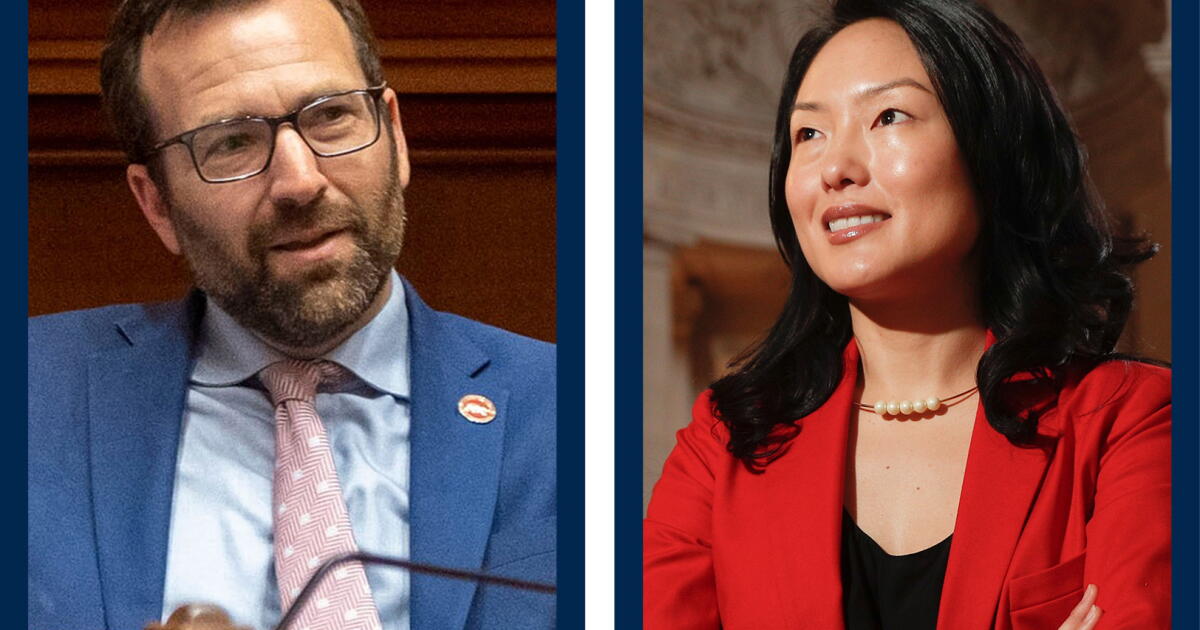
Source link