settlement

Judge temporarily blocks payouts from Trump’s $1.8B ‘anti-weaponization’ settlement fund

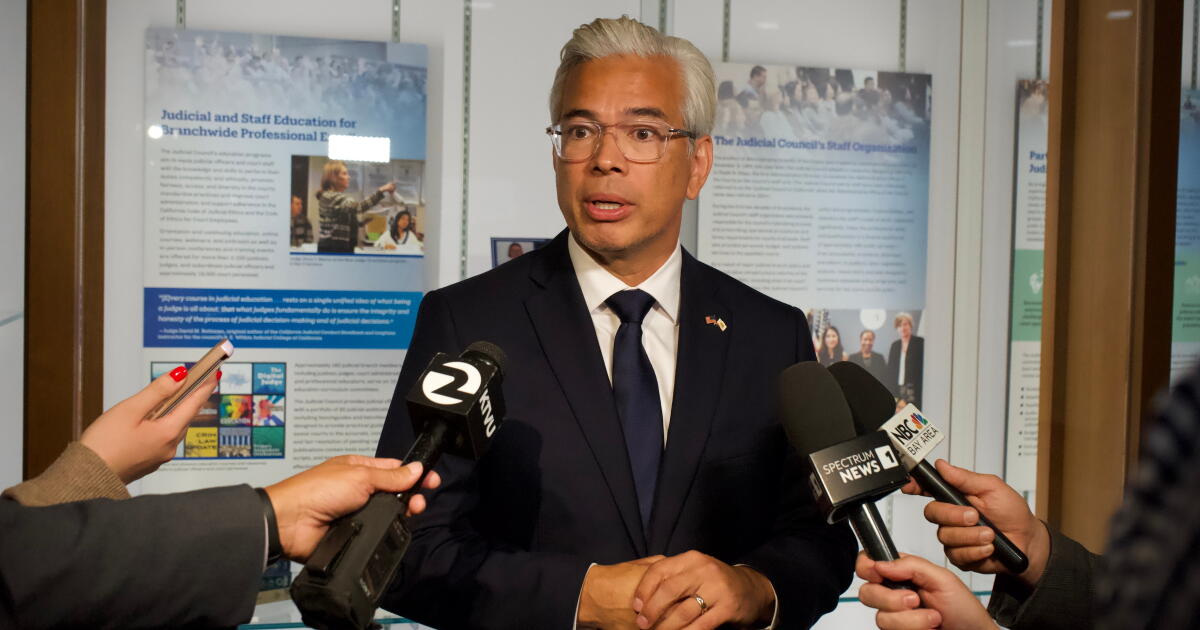
A federal judge on Friday temporarily blocked President Trump’s administration from paying any claims through a new $1.776 billion settlement fund for the Republican president’s allies who believe they were victims of a weaponized government.

U.S. District Judge Leonie Brinkema in Alexandria, Va., also barred the government from moving forward with the fund’s creation while litigation is pending to challenge it.

The judge, who was nominated to the bench by President Clinton, a Democrat, scheduled a June 12 hearing for arguments on whether to extend the order blocking payouts from an “Anti-Weaponization Fund.” The government created the fund to resolve Trump’s lawsuit against the Internal Revenue Service over the leak of his tax returns.

The White House declined to comment on the judge’s ruling and referred all questions to the Justice Department, which didn’t immediately respond to a request for comment.

The fund has generated a fierce backlash since it was announced last week, with even Republicans pressing acting Atty. Gen. Todd Blanche over the eligibility considerations and the possibility that even violent rioters at the U.S. Capitol on Jan. 6, 2021, would be free to seek compensation.

The Justice Department hasn’t formed the five-member commission that will decide on payout criteria, so there has been no money paid out yet or claims accepted.

Plaintiffs’ attorneys from the legal advocacy group Democracy Forward are seeking a court order halting the fund’s implementation and preventing the Trump administration from disbursing any payouts from it. The federal suit claims there is no legal basis or accountability behind the fund.

The Virginia lawsuit’s plaintiffs include a fired prosecutor and a college professor acquitted of assaulting federal agents at a protest.

“The unlawfulness that has imbued the Anti-Weaponization Fund from its inception requires that it be wholly dismantled,” the suit says.

At least two other lawsuits, both filed separately in Washington, also are challenging the fund’s creation. A lawsuit filed by the advocacy group Citizens for Responsibility and Ethics in Washington refers to the fund as “a jaw-dropping act of presidential corruption.” Two police officers who helped defend the Capitol from a mob of Trump supporters sued last week.

During a congressional hearing, Blanche wouldn’t rule out the possibility that rioters who assaulted police on Jan. 6 could be eligible for fund payouts.

Nearly 1,600 people were charged with Capitol riot-related federal crimes. Over 1,200 were convicted and sentenced before Trump handed out mass pardons, commuted prison sentences and ordered the dismissal of every pending Jan. 6 criminal case last year.

Kunzelman writes for the Associated Press. AP writers Darlene Superville, Alanna Durkin Richer and Eric Tucker contributed to this report.

Source link

Brazil Nixes Settlement for Stablecoin eFX

Resolution 561 ends stablecoin cross-border settlements, cutting fintech efficiency and margins.

Banco Central do Brasil (BCB) has banned fintech and payment providers from settling overseas payments in stablecoins or crypto. With Resolution 561, the BCB is implementing new rules regarding its electronic foreign exchange (eFX) policy, which governs how payment institutions and e-money issuers provide cross-border services. 

Its immediate effects, when the new rules go into effect on Oct. 1, will be the return of bank spreads, correspondent fees, and settlements in days rather than minutes, while the cost of international transactions, especially remittances, will increase for businesses and consumers. 

Resolution 561 updates Brazil’s eFX framework, which regulates digital cross-border payments settled through traditional foreign-exchange channels. It will restrict companies from collecting reals in Brazil, converting them into stablecoins like USDT or USDC, and then using them for fiat remittances.

The resolution does not prohibit stablecoins in Brazil, Thiago Amaral, partner at Barcellos Tucunduva Advogados, told online publication Migalhas. “What it does is prevent eFX providers from using virtual assets to settle payments or receipts with their counterparts abroad.”

Companies can still use non-resident real accounts to settle international payments, and for individuals, this will not affect their ability to trade crypto. Brazil’s crypto market is worth between $6 billion and $8 billion a month, with stablecoins accounting for roughly 90% of its volume.

Resolution 561 also mandates stricter Know Your Customer (KYC) procedures. According to BCB officials, the resolution aims to ensure traceability, supervision, and compliance with exchange rate regulations while strengthening anti-money laundering efforts.

Remittances Affected

Remittances are likely to be most affected by the changes. Cross-border payment “plumbing” helped many navigate the 1% tax on cash remittance transfers and the further 3.5% tax on remittances and foreign currency purchases, which went into effect in May 2025. In 2024, remittance inflows totaled $4.7 billion, accounting for 0.2% of Brazil’s GDP.

“With the ban on the use of stablecoins in eFX settlements, operators involved in international remittances, overseas purchases, cash withdrawals while traveling, and digital transfers to other countries lose the main advantage they had over traditional banks,” José Artur Ribeiro, CEO of Brazilian crypto exchange operator Coinext, told Brazil’s Money Times.

This article appears in the June 2026 issue of Global Finance Magazine.

Source link

Republican progress on immigration bill stalls out over Trump’s ballroom, DOJ settlement

Senate Republicans appeared increasingly unlikely to meet their self-imposed deadline for passing a roughly $70-billion immigration enforcement bill this week as disputes over security funding for the White House and the Trump administration’s $1.8-trillion settlement fund effectively derailed progress.

Republicans were already expected to abandon $1 billion in security money for the White House complex and President Trump’s ballroom amid backlash from members of their own party. But then questions about the settlement fund added to some of the senator’s concerns. They are questioning who would get the money.

Republican senators met with acting Atty. Gen. Todd Blanche on Thursday as they worked to finalize the bill’s text and whether to put parameters on the settlement, which was designed to compensate Trump’s allies who believe they have been politically persecuted. Sen. John Thune (R-S.D.) told reporters that senators had questions and wanted to know “how we might make sure that it’s fenced in appropriately.”

But senators who emerged from the meeting were tight-lipped and indicated that lawmakers would not hold a vote on the package before leaving Washington for a Memorial Day break, risking failure to meet Trump’s June 1 deadline.

Asked about a vote this week, Sen. Susan Collins (R-Maine) responded, “I don’t even know.” Sen. John Kennedy (R-La.) was more blunt: “We’re going home,” he said.

The last-minute scramble comes as Democrats have criticized Republicans for trying to fund Trump’s ballroom when voters are concerned about basic affordability issues — and as some GOP lawmakers have grown increasingly frustrated with Trump. Several GOP senators have spoken out against the settlement, which was announced this week, and many were upset by the president’s endorsement Tuesday of Texas Atty. Gen. Ken Paxton in the party primary runoff next week against Sen. John Cornyn.

Asked Thursday at the White House if he was losing control of the Senate, Trump replied: “I don’t know, I really don’t know. I can tell you — I only do what’s right.”

Possible parameters on Trump’s settlement fund

The “anti-weaponization” fund, part of a settlement that resolves Trump’s lawsuit against the IRS over the leak of his tax returns, unexpectedly became one of the main complications in the bill. Democrats said they would force votes to block it or place restrictions on it.

Democrats have an opening because Republicans are trying to pass the immigration enforcement bill through a complicated budget process that requires a long series of amendment votes. Democrats are considering multiple amendments, potentially to block that new fund outright or to ban any payments to Trump supporters who harmed law enforcement officers in the Jan. 6, 2021, attack on the Capitol.

Presenting a united front, Democrats from both the House and Senate rallied on the Capitol steps Thursday to show their opposition. Senate Democratic leader Chuck Schumer of New York said the amendment process “will give Republicans countless chances to do the right thing.”

He added that if they declined to make changes, it would show voters that “Ballroom Republicans are not working for you, they are busy fighting for Trump.”

Those amendments, along with others, could pass as a growing number of Republicans have voiced reservations about the fund. So Republicans are now discussing their own last-minute additions to head that off, potentially placing some parameters on the settlement and who could receive compensation, according to two people with knowledge of the private discussions who requested anonymity to discuss them.

It was unclear how any Senate changes would be received in the House. House Speaker Mike Johnson (R-La.) said Wednesday that the House will pass the bill “whatever form it takes.”

Tensions rise between Senate and White House

As Republicans challenged the settlement and parts of his agenda, Trump unloaded on the Senate in a social media post on Wednesday.

He urged Republicans to fire the Senate parliamentarian, Elizabeth MacDonough, who said over the weekend that parts of the $1-billion security proposal cannot remain in the ICE and Border Patrol bill. Trump also renewed his long-standing calls for the Senate to pass the SAVE Act, a Republican bill that would require all voters to prove U.S. citizenship, and to end the Senate filibuster.

Republicans need to “get smart and tough,” Trump said, or “you’ll all be looking for a job much sooner than you thought possible!”

While they have been loyal to Trump on most issues, Senate Republicans have resisted his repeated calls — even in his first term — to kill the filibuster, which triggers a 60-vote threshold in the Senate.

Hanging over the growing GOP rift is Trump’s surprise endorsement of Paxton. That intervention has Republican senators privately fuming that it could cost them their majority in November as they view the incumbent, Cornyn, as the better candidate in the November general election.

Secret Service request falters

Under the Secret Service’s request, about $220 million would fund security improvements related to the ballroom. The rest would go for a new screening center for visitors, training and other security measures.

Sen. Thom Tillis (R-N.C.) said the effort to add the security package to the bill was a “bad idea.” The bill should not have included the other security improvements, he said, “because it’s just giving everybody the ‘billion-dollar ballroom.’”

Several other Republicans in the House and Senate have questioned the request, and senators left a briefing with the director of the Secret Service last week saying they needed a lot more information.

People “can’t afford groceries and gasoline and healthcare, and we’re going to do a billion dollars for a ballroom?” asked Louisiana Sen. Bill Cassidy, who lost reelection in his GOP primary on Saturday after Trump endorsed one of his opponents.

Left in the bill is the money for ICE and Border Patrol, which Democrats have blocked for months in protest of the administration’s immigration enforcement crackdown.

Democrats demanded changes for the agencies, but negotiations with the White House yielded little progress. So Republicans are using the complicated budget maneuver called reconciliation — the same process that allowed them to pass Trump’s tax and spending cuts bill last year — to fund the agencies through the end of Trump’s term with a simple majority and no Democratic votes.

Still, passage requires sign-off from the parliamentarian and unity from Republicans.

Jalonick, Freking and Groves write for the Associated Press. AP writers Collin Binkley, Lisa Mascaro and Joey Cappelletti contributed to this report.

Source link

U.S. government agrees to drop tax claims against Trump in broadening of IRS lawsuit settlement

The U.S. government will permanently drop tax claims against President Trump, according to a settlement document that is part of a deal to resolve Trump’s $10 billion lawsuit against the Internal Revenue Service over the leak of his tax returns.

As part of the settlement agreement, the U.S. is “forever barred and precluded” from examining or prosecuting Trump, his sons and the Trump organization’s current tax issues, according to a one-page document posted to the Justice Department’s website on Tuesday.

The settlement, which marks an extraordinary use of executive power, goes beyond resolving litigation and effectively helps shield the president from further examination of his finances and legal conduct.

The move comes after the Trump administration announced Monday the creation of a nearly $1.8 billion fund to compensate allies of the Republican president who believe they have been unjustly investigated and prosecuted, an arrangement that Democrats and government watchdogs derided as “corrupt” and unconstitutional.

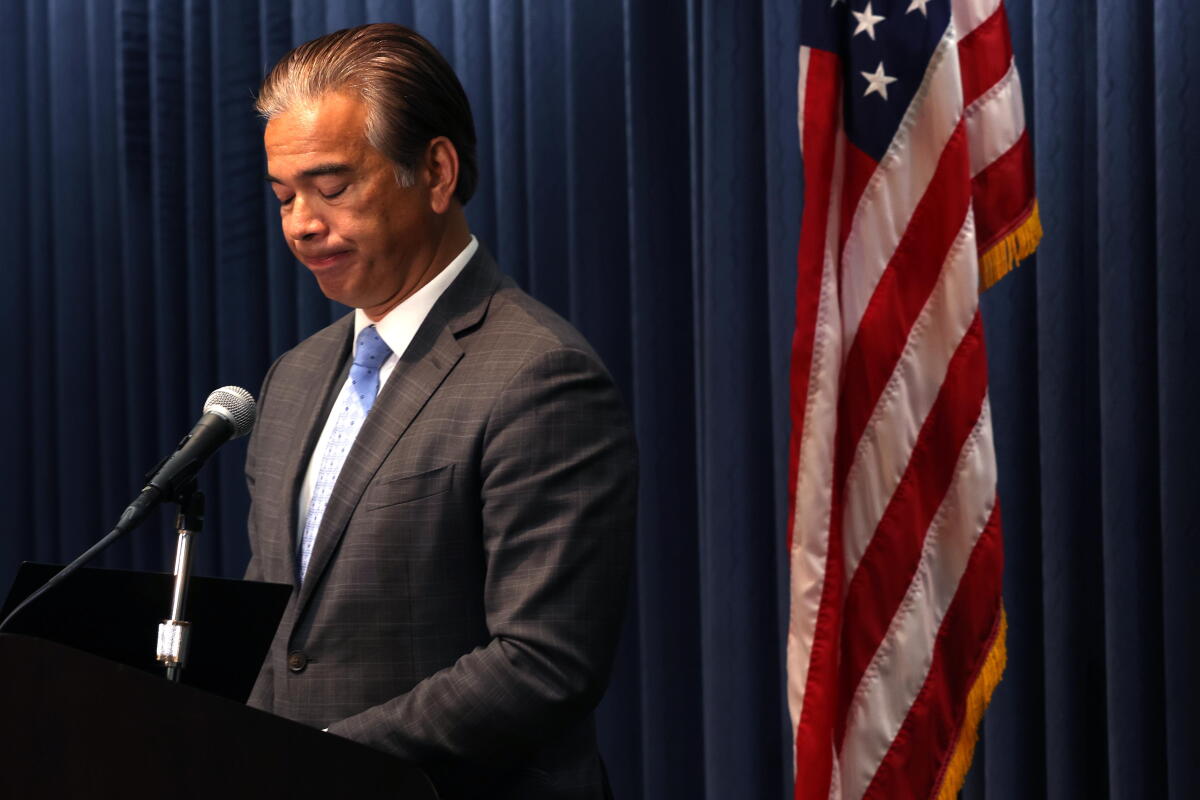
The “Anti-Weaponization Fund” of $1.776 billion will allow people who believe they were targeted for prosecution for political purposes, including by the Biden administration Justice Department, to apply for payouts, creating what acting Atty. Gen. Todd Blanche called “a lawful process for victims of lawfare and weaponization to be heard and seek redress.”

Blanche, who was grilled by lawmakers on Capitol Hill on Tuesday, would not rule out the possibility that people who carried out violence during the Jan. 6, 2021, riot at the U.S. Capitol will be considered for payouts from the new fund.

Democratic lawmakers and ethics watchdogs slammed the creation of the fund, saying it was corrupt, opaque and had the potential to become a “slush fund” for the president and his allies.

Sen. Ron Wyden, D-Ore., said Democrats intend to “fight every element of this self-dealing settlement.”

“Not only is this another heinously corrupt act by the most corrupt administration in history, it’s clearly a violation of the law that prohibits interference by executive branch officials in IRS audits.”

The fund was announced after Trump, his sons Eric Trump and Donald Trump Jr., and the Trump Organization agreed to drop their lawsuit against the IRS and the Treasury Department. The lawsuit alleged that a leak of confidential tax records caused them reputational and financial harm and negatively affected their public standing, among other allegations.

According to a separate settlement agreement posted to the Justice Department website Monday, Trump will receive a formal apology from the U.S. government but “will not receive any monetary payment or damages of any kind,” from the settlement.

Trump told reporters at the White House on Monday that the fund is dedicated to “reimbursing people who were horribly treated.”

Hussein writes for the Associated Press.

Source link

Texas Children’s Hospital to create ‘detransition clinic’ after legal settlement

May 15 (UPI) — Texas Children’s Hospital plans to create the first “detransition clinic” in the United States as part of a settlement with the state for provided transgender care, officials announced Friday.

Texas Attorney General Ken Paxton announced the settlement, which will also require the hospital to fire and revoke the medical privileges of doctors, as well as pay a $10 million fine.

The hospital will make care at the clinic free of charge for its first five years and offer services for children to detransition to their gender assigned at birth.

Paxton investigated the Houston-based hospital in 2023 for the transgender care services it offered at the same time the state legislature was outlawing gender-affirming care for children.

“I applaud Texas Children’s Hospital for changing course and committing to being part of the solution by agreeing to form a first-of-its kind Detransition Clinic that will provide free care to those who have been victimized by twisted, morally bankrupt transgender ideology,” Paxton said in a statement.

The settlement, he said, is meant to reverse damage caused by “ideologically motivated physicians who harmed patients with their transition care, which the attorney general’s office alleged included the use of false diagnosis codes.

The hospital, in its own statement, said that it had spent the past three years cooperating with the investigation, “navigating an unconscionable campaign of mistrusts and mischaracterizations of gender affirming care.”

It said that multiple internal and external investigations support that the hospital has been compliant with all laws — before and after the state ban on transition care.

“Today, we made the difficult decision to settle with the Texas attorney general and the Department of Justice, closing a chapter that has been wrought with falsehoods and distractions,” the hospital said.

“To be clear — we are settling to protect our resources from endless and costly litigation,” it said. “This settlement will allow us to redirect those precious resources to focus on life-saving care and groundbreaking discoveries of our exceptional clinicians and scientists.”

Source link

Musk reaches $1.5M settlement with SEC over 2022 Twitter buyout

Elon Musk, pictured in the Oval Office at the White House in May 2025, on Monday settled a lawsuit filed by the SEC over his purchase of Twitter in 2022, which will see him pay a $1.5 million fine while admitting no wrongdoing. File photo by Francis Chung/UPI | License Photo

May 4 (UPI) — Elon Musk on Monday settled a lawsuit filed against him by the Securities and Exchange Commission for $1.5 million after the agency accused him of breaking securities laws.

The SEC alleged in January 2025 that Musk cost Twitter shareholders $150 million because he delayed disclosing his purchase of more than 5% of shares in the company within the 10 days required by law.

Musk’s purchase of Twitter led to a series of lawsuits because of how he purchased the company, which has since been renamed to X, which saw him become its biggest shareholder before he launched a successful hostile takeover, The Washington Post reported.

In the settlement, which still needs to be approved by a judge, would see Musk pay a $1.5 million penalty while allowing him to admit no wrongdoing, CNBC reported.

“A trust vehicle has agreed to a small fine for being late on one filing,” Musk attorney Alex Spiro said of the agreement, which will see one of his client’s revocable trusts paying the fine.

Musk made a play to buy Twitter in 2022, first buy purchasing more than 5% of the company, which he did not disclose and was the reason the SEC filed suit, which allowed him to put other investors in a poor position before he launched his takeover.

President Donald Trump signs a series of executive orders in the Oval Office of the White House on Thursday. Trump signed an order to expand workers’ access to retirement accounts. Trump also signed legislation ending a 75-day partial shutdown of the Department of Homeland Security after the House voted in favor of funding. Photo by Aaron Schwartz/UPI | License Photo

Source link

Court sentences Purdue Pharma to pay $5.5B, clearing settlement path

A federal court on Tuesday sentenced Purdue Pharma to pay more than $5.5 billion in criminal penalties. File Photo by Justin Lane/EPA-EFE

April 28 (UPI) — A federal judge on Tuesday sentenced Purdue Pharma to pay more than $5 billion in criminal penalties, clearing the way for the OxyContin maker to complete its bankruptcy settlement agreement and resolve thousands of opioid-related lawsuits filed against it by states, local governments, tribes and other plaintiffs.

The sentence, handed down by a federal court in Newark, N.J., comes after Purdue pleaded guilty in October 2020 to charges over its role in the opioid crisis.

Prosecutors said the Sackler family-owned company worsened the crisis that has killed hundreds of thousands across the United States by aggressively marketing its addictive drugs while downplaying the risks of overdose and addiction.

Thousands of lawsuits have been filed against the company over its role in the crisis, and Purdue filed for Chapter 11 bankruptcy in 2019 as part of an agreement to resolve them.

With Tuesday’s sentence, Purdue can be dissolved and replaced by the public benefit company Knoa Pharma, which will receive the assets and expertise of the old company to produce addiction treatments and overdose-reversal medications.

“Purdue Pharma put profits over patient health and safety,” Acting Attorney General Todd Blanche said in a statement announcing the sentence handed down by a federal court in Newark, N.J.

“The company willfully rejected the law and ignored the diversion of their highly addictive prescription drugs.”

About 806,000 people died from an opioid overdose from 1999 to 2023, according to the U.S. Centers for Disease Control and Prevention.

Court documents accused Purdue of illegally marketing its opioids from 2007 to 2017, generating billions in profit.

The penalties announced Tuesday include a $3.544 billion criminal fine and an additional $2 billion in criminal forfeiture, though the Justice Department said it will credit up to $1.775 billion against the forfeiture amount based on the value conferred to state, local and tribal governments through its bankruptcy.

“No penalty can undo the widespread devastation Purdue has inflicted, but today’s sentence serves long-overdue accountability for its reckless and unlawful conduct,” Inspector General T. March Bell of the U.S. Department of Health and Human Services said in a statement.

Source link