attorney

Their homes burned in the Eaton fire. Why Edison has kept information about the fire under wraps

After last year’s disastrous Eaton fire, Southern California Edison executives vowed to be transparent about what caused the inferno that killed at least 19 people and left thousands of families homeless in Altadena.

“As we better understand exactly what happened on Jan. 7, we do so with a commitment to remain transparent,” Pedro Pizarro, chief executive of Edison International, the utility’s parent company, said in a published statement after the fire.

In court, however, Edison is keeping crucial documents of the cause of the Eaton fire secret, a legal strategy it has used to shield what happened in at least seven earlier wildfires it was blamed for igniting, according to a Times review.

Edison’s stance has caused mounting frustration with attorneys representing fire victims who are seeking compensation for their losses.

“The Eaton Fire cases should be decided on their merits, not on what information that SCE has been able to withhold,” lawyers for the victims wrote in a recent court filing.

State regulators have repeatedly criticized Edison for its secrecy in previous fires, saying it violated safety regulations and stopped officials from learning the root cause so that similar disasters could be prevented.

For more than a year, Edison employees have been gathering detailed information about what ignited the fire in an investigation the company is required to perform under state utility regulations.

But most of that information is being withheld by Edison’s claim of attorney-client privilege, as well as a protective order that it asked a judge to approve soon after the fire.

Protective orders are commonly used in civil lawsuits, but most cases do not have the broad ramifications to the public as the Eaton fire.

Pedro Pizarro, chief executive of Edison International, at the Semafor World Economy Summit.

Pedro Pizarro, chief executive of Edison International, at the Semafor World Economy Summit in Washington on April 14.

(Aaron Schwartz / Bloomberg)

Because of the secrecy, it’s not possible to know just what Edison has found, attorneys for Eaton fire victims said in a filing.

In past fires, regulators have requested from the company — and been denied — photographs, notes, text messages and other records generated by the Edison crew that was first to arrive at the site where the blaze ignited. The company has argued its attorney directed the crew, making the evidence privileged.

The victims’ lawyers say Edison shouldn’t be able to withhold from them most evidence from its investigation into the blaze by claiming that the findings and related documents are covered by attorney-client privilege and therefore confidential.

Sealed Eaton fire documents

Lawyers for victims say that documents sealed by a protective order show evidence of where Southern California Edison’s safety measures fell short before the deadly fire.

  • Poor inspection and repair of the idle transmission line suspected of igniting the fire
  • Tower holding the idle line was “virtually unattended for decades”
  • Dried vegetation removed under electrified wires but not beneath the idle line
  • Problems with contractors inspecting the line

In a recent interview with The Times, Pizarro disagreed that the company was keeping information on the cause of the Eaton fire secret.

“We believe we’ve been transparent,” Pizarro said. “Facts are not privileged, and so we provided facts as we have known them.”

He said the company’s investigation was continuing. “We still, to this day, don’t fully understand what happened,” he said.

Pizarro said the protective order was needed to keep many things confidential, including some not related to the fire’s cause. For example, he said, it protects maps of the electrical system, which can’t be revealed because of terrorism concerns.

Signs blaming Southern California Edison for the Eaton fire are seen near cleared lots.

Signs blaming Southern California Edison for the Eaton fire are seen near cleared lots in the Altadena area of Los Angeles County on Jan. 5.

(Josh Edelson / AFP via Getty Images)

He pointed to several company disclosures, including two letters it sent to regulators soon after the Eaton fire that said it was evaluating whether a century-old transmission line, which hadn’t carried power since 1971, “could have become energized” and helped lead to the fire.

Pizarro said last year that the possible reenergization of that old line is a leading theory of the fire’s cause.

The company has said little else about the fire’s cause, other than it safely maintained and inspected the idle line, just like it did its energized lines.

Edison faces thousands of lawsuits from victims of the fire, which burned 14,021 acres and leveled a wide swath of Altadena. The lawsuits allege, in part, that the company was negligent for failing to safely maintain its transmission lines and for leaving the idle line in place when it knew it could become energized. Edison denies the claims of the lawsuits, which have been consolidated in L.A. County Superior Court.

Some documents that Edison says are not privileged and agreed to provide to the victims’ lawyers are sealed by a protective order that the company and the plaintiffs’ lawyers requested.

Plaintiffs’ attorneys often agree to such protective orders on the theory that doing so would allow the utility to more freely share information that could help their case.

Power lines hang from towers carrying power from the Southern California Edison Gould Station.

Power lines hang from towers carrying power from the Southern California Edison Gould Station.

(Carlin Stiehl / For The Times)

Two months after the fire, Los Angeles County Superior Court Judge Laura Seigle signed the protective order — which covers documents that both sides provide in discovery — including business information deemed proprietary and personal customer data.

According to the protective order, if the case is settled, the lawyers will decide whether the sealed documents should be returned to Edison or destroyed.

If the case proceeds to trial, some of the evidence could become public.

Yet even with the protective order in place, plantiffs’ attorneys say Edison has refused to provide them with evidence from its investigation into the fire, saying it’s protected by attorney-client privilege.

The state-required investigations “are not private inquiries undertaken for SCE’s benefit and legal protection,” the plaintiffs’ lawyers wrote in a filing last year. “Those investigations are regulated activities that exist to protect the public and enhance public safety by preventing future fires.”

To begin those investigations, Edison’s crews often get to the ignition site before government officials. In the 2019 Saddleridge fire in Sylmar, an investigator from the Los Angeles Fire Department found the yellow police tape at the road leading to where the blaze started on the ground and an Edison truck leaving the site, according to his report.

California utility regulators have said the earliest observations at the scene are critical in determining what happened.

L.A. Fire Justice attorney Mikal Watts presents findings on the cause of the Eaton fire.

L.A. Fire Justice attorney Mikal Watts presents findings on the cause of the Eaton fire at transmission tower 3 at a January 2025 news conference in Pasadena.

(Robert Gauthier / Los Angeles Times)

Loretta Lynch, former president of the California Public Utilities Commission, which regulates the electric companies, said she believed Edison was wrongly using attorney-client privilege and protective orders “as a sword to prevent justice.”

Lynch said the confidentiality could keep evidence of Edison’s possible negligence from being used at a future state hearing that will look at whether the company acted safely and prudently before the Eaton fire.

In that hearing, if the commission finds the company acted prudently, all damage costs will be covered by a state wildfire fund and Edison customers. The company and its shareholders would pay nothing.

“It’s time to stop this game of allowing utilities to be negligent and then walk away with their customers paying for it,” Lynch said.

Kathleen Dunleavy, an Edison spokeswoman, said the company’s “assertions of privilege in civil court have nothing to do” with the future state hearing on whether the company acted prudently.

Dunleavy added that the company has been cooperating with government fire investigators and the plaintiff lawyers, responding to their requests for data.

The government’s investigation into the cause of the fire has not yet been released.

Asked about the company’s withholding of documents in court, Pizarro pointed to a 2024 California Appeals Court decision that found that Edison’s assertion of attorney-client privilege to keep evidence sealed in litigation over the 2017 Creek fire was appropriate under the law. The court said that protecting the documents generated in the internal investigation from public disclosure allowed the company’s attorneys “to investigate not only the favorable but the unfavorable aspects” of their client’s situation.

Lawyers for victims of the Creek fire, which destroyed more than 100 homes and structures near Sylmar, say Edison failed to provide evidence that showed its line was a likely cause of the blaze, leading government investigators to initially wrongly blame electrical equipment owned by the L.A. Department of Water and Power. Edison continues to deny it caused the fire.

A fire truck makes its way past a portion of the Creek fire.

A fire truck makes its way past a portion of the Creek fire along Wheatland Avenue in Sylmar on Dec. 5, 2017.

(Genaro Molina / Los Angeles Times)

In the Eaton fire case, a few details of what’s in the confidential documents have been revealed in court, showing they could be significant when the first trial begins next year.

In February, plaintiff lawyers filed 13 sealed exhibits for only the judge to review, saying they showed how Edison had neglected inspections, maintenance and repair of the idle line. The records are subject to the protective order, shielding them from public view.

“There is ample evidence in this case that SCE performed more frequent and higher quality inspections and maintenance on its live equipment than it did on its inactive facilities,” they wrote.

“From all indications, SCE left Tower 208 virtually unattended for decades,” they added, referring to the pylon that held the idle line and was found to be the location of the fire’s first flames.

The plaintiff lawyers also said the protective order prevents them from disclosing photos to the public that show Edison left vegetation growing under the idle line while removing it from beneath the live wires running parallel to it, according to the court filing. Utility regulations require vegetation to be removed from under and around electric lines to reduce the risk of fire.

The lawyers added that the sealed documents showed that Edison was having problems with an outside contractor it had hired to inspect its transmission lines.

Asked about the filing, Pizarro said the claims were assertions by the plaintiff attorneys that would be debated in court.

Some legal experts have criticized the use of protective orders for keeping the public in the dark about dangerous corporate actions or products.

Lynch said protective orders and confidential settlements in wildfire litigation are preventing the public from learning information that could stop future deadly fires. She said California should consider legislation to ban the use of the secrecy tactics in wildfire lawsuits.

Firefighters work to contain a fire.

Firefighters work to contain the Saddleridge fire on Oct. 10, 2019, in the Sylmar neighborhood of Los Angeles.

(Patrick T. Fallon / For The Times)

The Times found protective orders in lawsuits against Edison for the 2017 Thomas fire and mudslides, which killed 23; the 2018 Woolsey fire, which killed three; the 2019 Saddleridge fire, which killed one; and the 2022 Fairview fire, which killed two. Those fires together caused billions of dollars in damages and destroyed thousands of homes.

Lawyers for the Eaton fire victims told the judge in February that the protective order, as well as similar secrecy orders in lawsuits over other fires, had kept them from speaking publicly about certain subjects in the courtroom, including what they knew about Edison’s line inspections.

“This is a significant case, against one of the world’s largest providers of electricity, which has, through the use of Confidentiality Protective Orders in other cases, impaired the Plaintiffs’ ability to fully inform the Court,” they wrote.

Late last month, Judge Seigle ordered Edison to give the victims’ lawyers more of the documents they had requested. The protective order limits the public’s access to them.

Source link

Effort to hold Uber liable for driver sexual assaults heads to ballot

California’s trial attorneys and Uber — longtime courtroom foes — are officially bringing their fight to the November ballot.

A coalition of lawyers and advocates announced Thursday that it has gathered enough signatures to ask voters to support a “first in the nation” law that would make rideshare companies legally responsible for sexual assaults that happen to a driver or customer during a trip. Uber has argued it’s not liable for assaults committed by drivers, who are considered independent contractors.

“We must hold Uber accountable today,” said Danielle Tudahl, who recounted being sexually harassed and chased by an Uber driver after ordering a ride through the app, at a Sacramento news conference. “Californians are finally demanding action to try and close some of these gaps and put people’s safety over corporate profits.”

Uber has described the ballot measure, which is sponsored by the Consumer Attorneys of California, or CAOC, as retaliation for its own November ballot push to cap how much attorneys can earn in car crash cases in California.

“This ballot measure is a cynical ploy by billboard lawyers,” said Nathan Click, a spokesperson for A More Affordable California, an Uber-backed coalition. “CAOC didn’t spend millions to put this on the ballot to protect survivors — their goal is protecting billboard lawyer profits.”

The coalition that supports Uber announced last week it had gathered enough signatures for a measure that would cap attorney fees for car crash cases at 25%, among other changes.

Uber says its ballot measure will give victims a larger cut of their settlement money, rather than the payout getting siphoned off primarily to attorneys and doctors. Attorneys fire back that it will leave thousands of people with small or thorny cases without a lawyer because they won’t have financial incentive to sue.

Both sides are gearing up for an expensive fight. Uber has given more than $77 million. The Alliance Against Corporate Abuse, the CAOC-backed coalition pushing the sexual assault measure, has raised more than $68 million from law firms across the state, according to campaign finance records.

The money has helped pay for billboards that have sprouted across L.A. informing drivers that, according to the New York Times, Uber received a report of sexual assault or misconduct every eight minutes on average between 2017 and 2022. The company was the subject of a series of investigations by the paper into sexual assault by drivers. The company says it has invested billions in keeping riders safe and has “done more than any other company to confront” sexual violence.

The proposed sexual assault measure would require ride-share companies to let riders know if the person picking them up has a history of sexual misconduct and conduct yearly fingerprint and background checks for drivers.

The company is currently fighting more than 3,000 lawsuits from passengers who claim they were sexually assaulted or harassed by Uber drivers. Those cases are being coordinated by a federal judge in California.

The attorney coalition had also pushed an initiative aimed at nullifying Uber’s fee-capping measure if it passed. Alex Stack, a spokesperson for the campaign, said they were “pausing/withdrawing” the measure to “focus the fight on our sexual assault prevention measure and beating Uber’s initiative.”

Source link

Lawyer says guards beat and pepper-sprayed detainees at Florida’s ‘Alligator Alcatraz’

Guards severely beat and pepper-sprayed detainees at a state-run immigration detention center known as “Alligator Alcatraz” in the Florida Everglades this month, according to a lawyer for two detainees.

The guards targeted Katherine Blankenship’s clients and other detainees at the facility after they complained about not having phone access on April 2, Blankenship said in a court declaration.

The phones, which weren’t functioning, are the primary way for detainees to communicate with family and their attorneys while in the detention center. The guards began taunting the detainees, who were in a cell, then became “more aggressive and were yelling and threatening to enter the cage,” Blankenship wrote.

When one detainee approached a guard, he was punched in the face. The guards then started beating other detainees in the cell. One of Blankenship’s clients was punched in the right eye, thrown to the floor and beaten by several guards. He was kicked in the head and his shoulder and arm were injured. A guard put his knee on the detainee’s neck while restraining him, according to the attorney’s declaration, which included a photo made during a video call almost a week later showing the detainee with a bruised eye.

“The officers beat several people during this incident and broke another detained individual’s wrist,” Blankenship wrote. The detainee whose wrist was broken is not one of her clients.

Phone service was restored the next day without any explanation for why it was cut off.

The Florida Department of Emergency Management didn’t respond to questions emailed Wednesday about the incident.

Blankenship’s declaration was included in a court filing accusing state and federal officials of failing to comply with a federal judge’s preliminary injunction last month ordering detention center officials to provide access to timely, free, confidential, unmonitored and unrecorded outgoing legal calls. U.S. District Judge Sheri Polster Chappell in Fort Myers, Florida also said facility officials must provide at least one operable telephone for every 25 people held in the facility.

The judge’s order came in a response to a lawsuit that claimed detainees’ First Amendment rights were being violated.

State officials have denied restricting detainees’ access to their attorneys and cited security and staffing reasons for any challenges. Federal officials who also are defendants denied that detainees’ First Amendment rights were violated. State officials last week filed a notice that they plan to appeal the judge’s order.

The Everglades facility was built last summer at a remote airstrip by Republican Gov. Ron DeSantis’ administration to support President Trump’s immigration policies. Florida also has built a second immigration detention center in north Florida.

During a visit last week to the detention center, U.S. Rep. Debbie Wasserman Schultz, a Florida Democrat, said she wasn’t given the chance to talk to detainees. She described conditions at the detention center as “inhumane.”

“The way the detainees are housed is cruel and unnecessary,” she said.

Schneider writes for the Associated Press. AP journalist Gisela Salomon in Miami contributed to this report.

Source link

Former Chapman University dean disbarred for Trump 2020 election role

The California Supreme Court ordered attorney and former law school dean John Eastman disbarred on Wednesday for his role aiding the Trump administration’s attempt to overturn the 2020 election.

The court ordered Eastman’s name be “stricken from the roll of attorneys” and that he pay $5,000 to the State Bar of California.

Eastman’s attorney, Randall A. Miller, told the Associated Press that the court’s decision “departs from long-standing United States Supreme Court precedent protecting First Amendment rights, especially in the attorney discipline context.” Miller did not immediately return an after-hours phone call seeking comment from The Times.

State Bar Chief Trial Counsel George Cardona said in a statement that the ruling “underscores that Mr. Eastman’s misconduct was incompatible with the standards of integrity required of every California attorney.”

“Today’s California Supreme Court order disbarring John Charles Eastman from the practice of law in California affirms the fundamental principle that attorneys must act with honesty and uphold the rule of law, regardless of the client they represent or the context in which that representation occurs,” said Cardona said.

The Supreme Court’s decision affirms a 2024 ruling from State Bar Judge Yvette Roland that Eastman be prohibited from practicing law.

In a marathon trial that lasted off and on from June to November 2024, the State Bar, which regulates lawyers in California, argued that Eastman was unfit to practice law for peddling bogus claims that fraud cost Trump the election and for promoting a fake-elector scheme to block the electoral count.

“It is true that an attorney has a duty to engage in zealous advocacy on behalf of a client,” Roland wrote in 2024 in a 128-page ruling. “However, Eastman’s inaccurate assertions were lies that cannot be justified as zealous advocacy.”

Roland found Eastman culpable of 10 of 11 counts of misconduct.

Eastman fomented “predictable and destructive chaos” when he stood beside fellow Trump adviser Rudolph W. Giuliani on Jan. 6, 2021, and told an enormous crowd at the Ellipse that the election had been fraudulent, the bar argued.

Eastman claimed he was acting in good faith, and as a vigorous champion of his client. But State Bar attorneys argued that “the evidence, including his often not-credible trial testimony, shows that he held — and still holds — truth and democracy in contempt.”

Despite Eastman’s repeated assertions that Joe Biden’s victory was illegal, Roland ruled, Eastman’s own words showed he knew that proof was lacking.

The judge cited an email that Eastman sent to a friend, Cleta Mitchell, on Nov. 29, 2020, acknowledging that fraud serious enough to sway the results could not be proved.

“It would be nice to have actually hard documented evidence of the fraud in the areas to which the analyses pointed,” Eastman wrote.

After the 2024 ruling Eastman responded on his Substack writing that he hoped the California Supreme Court or U.S. Supreme Court would “step in to put a stop to this lawfare that has become a serious threat to the First Amendment, the right of controversial clients and causes to legal representation, and more broadly to our adversarial system of justice.”

Eastman has a long history in California’s conservative legal circles. He was hired by Chapman’s law school in 1999 and was dean from June 2007 to January 2010, then continued to teach courses in constitutional law, property law, legal history and the 1st Amendment.

He retired in early 2021 after more than 100 Chapman faculty and others affiliated with the university signed a letter calling on the school to take action against him for his role in the Jan. 6 insurrection.

Wednesday’s decision is a bookend in a lengthy investigation into Eastman’s actions that began in 2021. In October of that year, the nonpartisan legal group States United Democracy Center filed an ethics complaint calling on the State Bar to investigate Eastman’s Jan. 6 actions.

Christine P. Sun, senior vice president of legal at the States United Democracy Center, said on Wednesday that the court’s decision is “part of a broader reckoning for those who seek to undermine the rule of law.”

“Eastman played a central role in the plot to overturn the 2020 election—pressuring state officials, advancing baseless claims in court, and promoting a fringe theory that the vice president could reject certified electoral votes,” Sun said in a statement. “His unethical actions have had real, lasting consequences for our democracy, and we applaud the California Supreme Court’s decision to disbar him.”

Staff writer Christopher Goffard contributed to this report

Source link

Venezuelan National Assembly Picks New Attorney General, Ombudswoman

The new officials were backed by a large majority of the legislature. (Archive)

Mérida, April 14, 2026 (venezuelanalysis.com) – The Venezuelan National Assembly (AN) appointed Larry Devoe as the new Attorney General and Eglée González Lobato as the Ombudswoman during an ordinary session on Thursday, April 9.

The appointments were the result of a parliamentary selection process in the wake of the resignations of Tarek William Saab and Alfredo Ruiz, who previously held the positions, in February. The new officials will assume their roles immediately.

The National Assembly finalized the appointments following the review of a list of 71 candidates for Attorney General and 61 for Ombudsman. According to official reports, the selection focused on technical and academic backgrounds, while multiple deputies spoke of the need to select “consensus” candidates.

Devoe is a lawyer who has held various legal and diplomatic positions within the Venezuelan government, having served as the Executive Secretary of the National Human Rights Council. In recent years, he represented Venezuela before the United Nations (UN) and the Organization of American States (OAS) on human rights matters.

Devoe had taken over the Attorney General post on an interim basis following Saab’s resignation. Saab had served as the country’s top prosecutor since 2017. Following his appointment and swearing-in, Devoe used his official channels to vow that his office would be committed to “defending human rights” and “protecting our people.”

For her part, new Ombudswoman González is also an attorney and a university professor specializing in Administrative Law at the Central University of Venezuela (UCV).

She served as the Director of the UCV’s Democracy and Elections Chair and has worked as an institutional and electoral analyst. The parliamentary nominations committee highlighted González’s academic background and experience in human rights as primary factors for her selection to replace Ruiz.

Devoe and González were ratified on the posts with the approval of 275 of 285 National Assembly deputies, receiving the endorsement of the ruling Socialist Party (PSUV) and allies, as well as part of the opposition.

González, who has been identified as representing a sector of the moderate opposition, was proposed by David Uzcátegui from the Fuerza Vecinal party. Devoe’s candidacy was put forward by the PSUV.

Addressing the chamber, National Assembly President Jorge Rodríguez emphasized the importance of reaching political agreements and “respecting differences.”

The right-wing Libertad faction opposed the appointments, with legislator Henri Falcón stating that the appointees did not meet “autonomy and democratic plurality” criteria.

“In the past, the institutions have been used as politically partial spaces and ideological trenches,” stressed Falcón, a former presidential candidate.

The renewal of the Attorney General and Ombudsman’s Office coincides with the processing of thousands of amnesty requests currently under review by judicial authorities. According to the National Assembly, the Amnesty Law approved in February has benefited more than 8,000 beneficiaries in less than two months.

“The economy is the most important thing”

Parliamentary leader Jorge Rodríguez stressed the importance of “dialogue” among different political factions and working to “strengthen” state institutions in a recent interview with Spanish daily El País.

“We are rapidly pushing for changes so that people feel the country’s democratic institutions are functioning properly,” he stated.

When asked about the possibility of holding elections, Rodríguez argued that the country’s economy is “the most important thing right now.”

Since January, the Venezuelan legislature has fast-tracked a number of important new laws with support from the acting Delcy Rodríguez administration, including pro-business reforms to the country’s hydrocarbon and mining frameworks.

“The Venezuelan economy needs to gain enough momentum so that the population feels this entire process was worth it,” he added, in reference to the January 3 US bombings and kidnapping of President Nicolás Maduro which Rodríguez described as a “traumatic event.”

The Venezuelan official went on to argue that “there is much work to be done” ahead of an eventual electoral process, including the selection of an electoral authority that all political organizations can “trust.”

Edited by Ricardo Vaz in Caracas.

Source link

Another woman accuses Swalwell of sexual assault; says she was drugged in Beverly Hills in 2018

Another woman came forward Tuesday to describe rape allegations against Rep. Eric Swalwell, who announced his resignation from Congress on Monday amid a torrent of sexual misconduct accusations.

Lonna Drewes said at a news conference called by her attorneys that she was drugged and raped by Swalwell (D-Dublin) in 2018 while she was working as a model in Beverly Hills.

Drewes said she met Swalwell three times as she was growing her fashion software company and toying with the idea of a political career.

On the third occasion, she said, she believed he drugged her glass of wine. She said they were supposed to go to a political event and they stopped by his hotel room to retrieve some paperwork.

She said she found herself incapacitated despite having had only one drink.

“He raped me and he choked me and while he was choking me I lost consciousness and I thought I died,” she said. “I did not consent to any sexual activity.”

Swalwell’s attorney Elias Dabaie did not immediately respond to a call or email requesting comment. Swalwell has previously denied allegations against him, while acknowledging undefined “mistakes.”

Swalwell and his team threatened legal action against several individuals over the claims, Dabaie previously confirmed to The Times.

Lonna Drewes and Eric Swalwell

Lonna Drewes, left, says she met Rep. Eric Swalwell (D-Dublin) on three occasions in Beverly Hills in 2018. She says he sexually assaulted her on the third occasion.

(Myung J Chun / Los Angeles Times)

Drewes said she didn’t undergo a rape kit test, but disclosed the assault to people close to her and described it in her calendar. She did not have contact with Swalwell again, one of her attorneys said.

Drewes said she had no interest in Swalwell romantically and was drawn to his friendship, she said, in part because he touted connections that she believed could help her grow her businesses. She was in a relationship at the time, and he had a pregnant wife, she said.

The alleged rape had a severe impact on her mental health, causing her to self-medicate, she said. She said she also went to therapy sessions at a sexual assault center.

“I did not want to live anymore,” she said. “I cried all the time for years.”

She said she’d been considering a run for Beverly Hills City Council at the time. After the incident, she said, she feared a political backlash and felt like she had no choice but to remain silent.

Lonna Drewes, walking behind her lawyer Arick Fudali

Lonna Drewes walks behind her lawyer Arick Fudali during a news briefing in Beverly Hills on Tuesday.

(Myung J. Chun / Los Angeles Times)

“My delay in taking action against Eric was driven by fear, not doubt,” she said. “I have never doubted what happened.”

The L.A. County Sheriffs Department said Tuesday that it is investigating the case.

“The investigation remains in its preliminary stages and is ongoing,” the department said. “Investigators are in the process of gathering information, reviewing available evidence and conducting follow-up inquiries as part of a comprehensive investigative process.“

A spokesperson for the L.A. County district attorney’s office said the Sex Crimes Division had been assigned to work with law enforcement partners in an unfolding investigation.

Arick Fudali, one of the attorneys representing Drewes, said he hoped his client’s account would encourage other women to come forward.

“This is not about Democrat versus Republican,” Fudali said. “This is about accountability versus silence.”

“Lonna deserves what all women deserve — autonomy over her own body,” said attorney Lisa Bloom.

Bloom is well-known for representing high-profile victims of sexual misconduct, including women in cases against actor Bill Cosby and commentator Bill O’Reilly. Bloom said they would be providing text messages, journal entries and photographs to the police. Those include a photo of Drewes and Swalwell at the opening of a restaurant called Avra that was displayed Tuesday for reporters.

Bloom said she wanted to assist with an investigation by the Manhattan district attorney, who has opened a case into allegations against Swalwell. She said three other women have reached out to her.

Swalwell, who has served in the House of Representatives since 2013, has said he plans to fight the “serious, false” allegations made against him.

“However, I must take responsibility and ownership of the mistakes I did make,” Swalwell wrote in a statement Monday.

Bloom called Swalwell’s recent statements about the accusations against him “blather and spin” and a “slap in the face” to victims.

“Stop it,” she said. “Own your behavior.”

Swalwell had been a Democratic front-runner in the hotly contested and crowded race to be California’s next governor. Then in two bombshell reports in the San Francisco Chronicle and CNN on Friday, women accused the congressman of sexual assault and misconduct.

Candidates in the California gubernatorial race reacted to the new allegations with horror.

“The level of my disgust and outrage just continues to grow,” former state Controller Betty Yee told The Times after a business forum in Sacramento. “The fact that this is still being uncovered, that it could be bigger than what we already know?”

Swalwell said he would resign from his congressional seat under intense pressure from lawmakers of both parties. The resignation came on the heels of the House Ethics Committee opening an investigation into the sexual misconduct allegations and bipartisan threats to expel him from the House if he did not resign as women continued to come forward.

One woman told CNN that after messaging with Swalwell about her interest in Democratic politics last year, she met him for drinks and tried to deflect his advances without jeopardizing potential job opportunities. She said she began to feel “really fuzzy” and intoxicated and later found herself in his hotel room with no memory of how she got there.

Another woman, a former staff member who accused Swalwell of rape, told CNN she met him for drinks in 2019, blacked out and awoke naked in his hotel bed and could tell she had had intercourse. She said that in a separate encounter years later, he forced himself on her while she was too intoxicated to consent and despite her protests.

Gov. Gavin Newsom on Tuesday called a special election for Swalwell’s Alameda County seat on June 16, two weeks after the state’s regularly scheduled primary. If no candidate receives 50% of the vote, a second special election will be held on Aug. 18.

The June 2 regular primary and Nov. 3 general election will decide who will represent the recently reconfigured district for the next term, starting in January 2027. The special election decides who will represent the district for the remaining months of Swalwell’s term.

Times staff writers James Queally, Dakota Smith and Seema Mehta contributed to this report.

Source link

DHS advised immigrant children to self-deport until a judge stepped in

Last September, the Department of Homeland Security started advising unaccompanied immigrant children that they could either self-deport or expect to face long-term detention.

But a federal judge in Los Angeles on Mondayordered the government to stop using such “blatantly coercive” language, ruling that the new advisals, as they are known, violated a 40-year-old court order that bans immigration agents from pressuring unaccompanied children to give up asylum claims and leave the U.S.

According to court documents, the legal advisal was given to recently detained immigrant children. Unaccompanied children are those in the country without a parent or legal guardian.

The minors were told they had the option to return to their country, that doing so would result in no administrative consequences and that they still could apply for a visa in the future.

But the children also were told that if they chose to seek a hearing with an immigration judge or indicated that they were afraid to leave the U.S., they could expect to be held at a detention facility “for a prolonged period of time.”

Those who turned 18 while in custody would be turned over to Immigration and Customs Enforcement for deportation, they were told. The advisal, though generally passed on verbally, was written out in court documents by lawyers representing the immigrant children, which the government did not dispute.

“If your sponsor in the United States does not have legal immigration status, they will be subject to arrest and removal,” the advisals continued. “The sponsor may be subject to criminal prosecution for aiding your illegal entry.”

U.S. District Judge Michael W. Fitzgerald said that “such a threat disturbingly mirrors” the testimony of Jose Antonio Perez-Funez, a plaintiff in a 1980s class-action lawsuit challenging the tactics of immigration officers.

Perez-Funez, who was 16 when he was arrested near the Mexican border, testified in 1985 in Los Angeles federal court that he agreed to self-deport because federal officers said he would face lengthy detention if he didn’t return to El Salvador.

Perez-Funez’s case originally led the court to establish due process safeguards for immigrant children, giving them the right to speak with a relative or attorney before signing forms that waive their pursuit of legal protection.

“The Government was thus already on notice that such a statement delivered in this environment is precisely the kind of inappropriate persuasion the Injunction sought to prevent,” Fitzgerald wrote.

Fitzgerald, a judge in the Central District of California, also denied a request by the federal government to end the permanent court-mandated safeguards for immigrant children.

In response to a request for comment, U.S. Customs and Border Protection provided a statement, attributed to a spokesperson who wasn’t named, that the agency is following the law and protecting children. The agency said the advisal document explains to unaccompanied children their options available under federal law.

“Many unaccompanied minors are brought to the border by smugglers and face real risks of exploitation, which is why providing a clear, lawful advisal is essential,” the statement said. “It ensures they understand their rights and options — and for many who were trafficked or coerced, returning home to their family is the safest path.”

Unaccompanied children are first held by Homeland Security before being turned over to the Office of Refugee Resettlement, which is within the Department of Health and Human Services, for long-term housing. Federal law requires ORR to provide them with a legal consultation within 10 days.

“It is difficult to imagine a scenario more coercive than the one faced by [unaccompanied immigrant children] in the 72 hours before they are transferred into ORR custody, particularly for noncitizen children who likely do not know whether they possess any rights at all,” Fitzgerald wrote in his order.

In declarations to the court, children wrote that they felt threatened by the government’s advisals. One minor, identified as D.A.T.M., said the threats to prosecute their parents and of long-term detention caused them to sign voluntary departure papers.

Mark Rosenbaum, an attorney at the pro bono law firm Public Counsel, helped secure the 1986 court order. He said his legal team discovered Homeland Security had changed the advisals only after a government attorney notified him in November that the agency was going to seek to end the court-mandated safeguards.

“I consider this a war on children — the most vulnerable population,” he said.

The government has until Thursday to decide whether it will appeal the judge’s ruling. Regardless, Rosenbaum said, his goal is to establish more aggressive monitoring of unaccompanied children’s cases to ensure their rights aren’t violated again.

Source link

Swalwell’s attorney sends out cease and desist notice over unverified sexual assault allegation

An attorney for Rep. Eric Swalwell, a leading Democratic candidate for California governor, on Thursday sent a cease and desist letter to an unknown individual demanding that they stop accusing the congressman of sexual assault.

Swalwell’s attorney Elias Dabaie of the law firm Dabaie Kelley, in Los Angeles, confirmed Friday that he sent the cease and desist letter, which tells the recipient that they could be sued for defamation. A copy of the letter was posted online by a social media influencer on Friday, and Dabaie confirmed it was authentic.

Swalwell (D-Dublin) and his representatives earlier this week denied allegations made by social media influencers and repeated by political insiders in recent weeks that he behaved inappropriately toward young staffers and others.

Dabaie’s letter sent Thursday states that it “has come to our attention that you have made false statements accusing Mr. Swalwell of sexual assault and non-consensual sexual encounters…”

“We write to demand that you immediately and permanently cease and desist from continuing your wrongful conduct, including by stopping any further publication of such information or allowing it to be disseminated in any form, whether oral, written, electronic or otherwise,” the letter stated.

Dabaie confirmed to The Times that he sent the letter via text. He declined to say whether other cease and desist letters had been sent.

“I can tell you that there have been multiple baseless allegations made against the Congressman and we are attacking them on all fronts,” he said.

A spokesperson for Swalwell’s campaign didn’t immediately respond to a request for comment.

Cheyenne Hunt, a Laguna Hills attorney and executive director of a progressive advocacy group who has said she is helping organize a group of women who allege inappropriate behavior toward Swalwell, posted a screenshot of Dabaie’s letter online on Friday.

“This is the first page of the cease and desist letter from Swalwell’s team — it has has been shared with permission from the recipient,” she wrote on social media.

The name of the individual who received the letter was redacted.

Hunt told The Times on Friday that she was aware of two individuals who received cease and desist letters from Swalwell’s team.

Swalwell earlier in the week denied any inappropriate behavior, including allegations that his office required interns to sign nondisclosure agreements. “It’s false,” he told reporters.

Swalwell said he never behaved inappropriately with female staff members or had a sexual relationship with a staff member or an intern.

Source link

How sensitive LAPD files got leaked online — and what happens next

The disciplinary files of Los Angeles police officers are closely guarded secrets, protected by some of the nation’s strictest confidentiality laws.

But now, many of those secret files have been splashed across the internet, along with tens of thousands of other sensitive records from the L.A. city attorney’s office.

The extent of the data breach is still unclear, and city officials have said they are investigating to find out what was taken, who was responsible and how the city’s cybersecurity was compromised.

A ransomware hacking collective called WorldLeaks, which has gained a reputation for extorting private and public entities by threatening to disclose confidential files on the internet, has claimed responsibility.

The group first announced the breach on March 20. City and LAPD officials did not comment on whether the hackers requested a ransom in return for not releasing the information — or whether the city paid one. Some reports suggest that the group was behind a hack of L.A. Metro last month that forced it to shut down part of its transit network.

The Times spoke with several sources familiar with the investigation into the data breach who requested anonymity because they were not authorized to discuss the case publicly, and reviewed a partial inventory of the leaked files, including screenshots of some materials.

Here’s what we know so far.

How did hackers get the LAPD files?

The hacking group appears to have exploited vulnerabilities in a system used by the Los Angeles city attorney’s office, enabling the group to make off with nearly 340,000 files, according to the sources familiar with the case.

In the wake of the George Floyd protests, the sources said, the city was flooded with dozens of lawsuits from protesters who had been injured by LAPD officers. To handle the deluge of new cases, the city created a file-sharing system so that attorneys on both sides could access discovery materials, including some considered private under court orders.

It was akin to Dropbox or Google Drive, the sources said, and access was supposed to be restricted to just authorized users.

But the system, according to two sources familiar with the investigation, was not password-protected because city officials believed that it needed to be accessible to other parties, including outside attorneys hired to assist with civil litigation.

The sources said the system expanded far beyond its initial scope and came to include records from hundreds of lawsuits involving the LAPD.

In a statement issued to The Times on Wednesday, Ivor Pine, a spokesperson for the city attorney’s office, described the hack as “unauthorized access to a third-party tool used by the City Attorney’s Office to transfer discovery to opposing counsel and litigants.”

How did the LAPD and city officials find out?

Few inside the LAPD knew about the extent of the leak until The Times published a story Tuesday revealing files that appeared online.

After the news broke on Tuesday, the department released a brief public statement acknowledging the disclosure of “discovery documents from previously adjudicated or settled LAPD civil litigation cases.” The department noted that the “breach does not involve any LAPD systems or networks.”

Pine said that once the city attorney’s office realized its file-sharing system was compromised, it “took immediate steps to secure the tool and investigate what information was accessed.”

“No other City applications or systems were involved in this incident,” Pine said. “The information was self contained in this application without any links or access to any department records or systems.”

What are the consequences of the massive leak?

The data breach could have political ramifications for embattled City Atty. Hydee Feldstein Soto, who is up for reelection.

Last week, she earned the endorsement of the powerful Los Angeles Police Protective League, which represents rank-and-file LAPD officers. But union officials contend that Feldstein Soto failed to mention the leaked documents to them until they learned of the hack Tuesday evening.

On Wednesday, the union issued a scathing statement.

“To say we are disappointed by the lack of urgency and forthrightness from the City Attorney’s office is an understatement,” the union’s statement said. “We will keep asking the tough questions and once we receive answers we will take appropriate action.”

Feldstein Soto’s challenger in the city attorney’s race, John McKinney, said the public deserves immediate answers.

“The lack of transparency isn’t just concerning, it’s unacceptable,” said McKinney, who currently leads the major crimes bureau at the L.A. County district attorney’s office. “By keeping the public in the dark, witnesses and Los Angeles Police Department families may have been put at risk.”

Lawyers for police officers reported numerous calls from clients worried their personnel and medical records were exposed, raising the prospect of more costly litigation. About 900 officers are currently suing the department over the 2023 release of mugshot-style images and other materials in response to a public records request.

How much information was snatched and what’s in it?

In all, according to posts about the data breach, 7.7 terabytes of information was available for download.

The LAPD statement described the files in the recent hack as coming from closed cases, but at least one of the files reviewed by The Times involved a lawsuit over an alleged sexual assault by a police officer that was set for trial next week.

Also disclosed were personnel files from dozens of current and former officers. Every officer’s personnel records are contained within a system called TEAMS II.

It is a detailed history that includes records on arrests they have made, training sessions they have attended, citizen complaints received against them and lawsuits they have been involved in, along with any history of traffic collisions, shootings or other uses of force, commendations, assignments, workers’ compensation claims and more.

Such records can be turned over as discovery in civil cases, but almost always under a protective order that restricts them from being shared publicly.

An untold number of internet users have downloaded the terabytes of data in the weeks since its release. What surfaces next remains to be seen.

Source link

Lil Tjay arrested. Lawyer denies Offset shooting connection

Lil Tjay’s attorney is denying that the rapper was involved with Offset’s shooting.

Dawn M. Florio, the rapper’s apparent attorney, posted a statement on Instagram on Tuesday slamming “false rumors” that Lil Tjay was involved at the incident that occurred Monday at the Seminole Hard Rock Hotel & Casino in Hollywood, Fla.

“Lil Tjay has not been shot, nor has Lil Tjay been charged with any shooting,” the statement says. “Any reporting to the contrary is false. We encourage people to consult trusted news sources, and to verify the accuracy of any reporting, before reflexively sharing or repeating baseless rumors.”

The Seminole Police Department previously told The Times that one of the two individuals arrested Monday in connection to the incident related to Offset’s shooting was Tione Jayden Merritt. The 24-year-old is known professionally as Lil Tjay. Merritt was booked into a Broward County jail on charges of disorderly conduct and operating a vehicle without a valid license.

As of Tuesday morning, charges had not been filed against the second detainee.

According to police, the incident began as a fight near the hotel valet. After Offset was shot, he was transported to Memorial Regional Hospital in Hollywood and was listed as in stable condition.

Born Kiari Cephus, Offset gained prominence as a member of rap trio Migos along with fellow Georgia rappers Quavo and Takeoff. The group was founded in 2008 and together until Takeoff was fatally shot in 2022. Offset shares three children with estranged wife Cardi B.

Times staff writer Clara Harter contributed to this report.


Source link

Environmental groups urge appeals court panel to lift halt on closing Florida’s ‘Alligator Alcatraz’

Environmental groups on Tuesday asked a federal appellate court panel to drop its temporary halt of a lower court’s order instructing state officials to close an immigration detention center in the heart of the Florida Everglades known as “Alligator Alcatraz.”

The Everglades facility remains open, still holding detainees, because the appellate court in early September relied on arguments by Florida and the Trump administration that the state had not yet applied for federal reimbursement, and therefore wasn’t required to follow federal environmental law. State officials opened the detention center last summer to support President Trump’s immigration crackdown.

Questions by the three appellate judges during oral arguments in a Miami courtroom focused on how much control the federal government had over the state-built facility and under what circumstances an environmental review was required to be in compliance with federal law. The judges did not indicate when they would rule.

Jesse Panuccio, an attorney for the Florida Department of Emergency Management, told the judges federal funding and federal control of the facility were the two criteria for determining if the federal environmental law would apply and the federal agencies had no control over the state-run detention center.

Florida was notified in late September that FEMA had approved $608 million in federal funding to support the center’s construction and operation.

“You need both,” Panuccio said. “Even with funding, I don’t think that would follow because they don’t have federal control.”

An attorney for the environmental groups said the law requiring a review applied to the facility because the Department of Homeland Security had authorized the funding and immigration was a responsibility of the federal government, not the state.

“What is different about this property is that immigration is constitutionally a federal function,” said Paul Schwiep,” an attorney representing the Friends of the Everglades and the Center for Biological Diversity. “The state has no role.”

The federal district judge in Miami in mid-August ordered the facility to wind down operations over two months because officials had failed to do a review of the detention center’s environmental impact according to federal law. That judge concluded that a reimbursement decision already had been made. The appellate court halted the order on an appeal.

The environmental lawsuit was one of three federal court challenges to the Everglades facility since it opened. In the others, a detainee said Florida agencies and private contractors hired by the state had no authority to operate the center under federal law. The challenge ended after the immigrant detainee who filed the lawsuit agreed to be removed from the United States.

In the third lawsuit, a federal judge in Fort Myers, Fla., ruled the Everglades facility must provide detainees there with better access to their attorneys, as well as confidential, unmonitored, unrecorded outgoing legal calls.

Schneider writes for the Associated Press.

Source link

Two days a month? Rivals for city attorney spar over return to office

Good morning, and welcome to L.A. on the Record — our City Hall newsletter. It’s Noah Goldberg and David Zahniser, giving you the latest on city and county government.

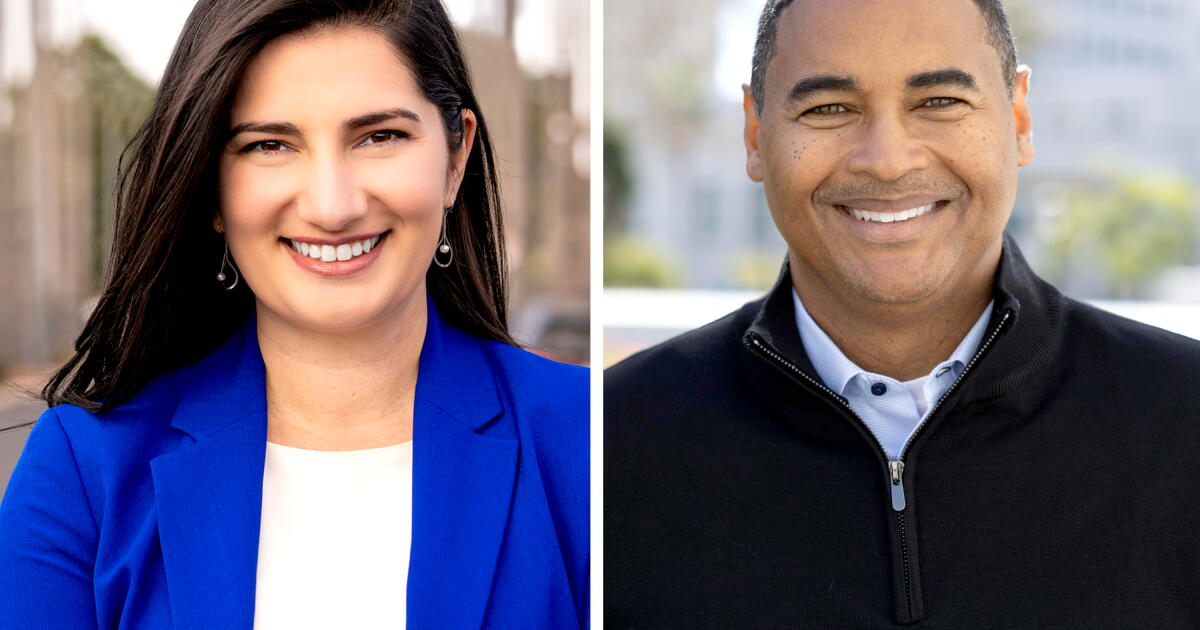
Los Angeles City Atty. Hydee Feldstein Soto and challenger Marissa Roy have sharply different views on how the office should be run.

Literally, the office.

Feldstein Soto said it’s important for attorneys to be in the office, and adopted a policy last year requiring most staff attorneys to be there at least three days a week, with supervisors required to be in four days weekly. Previously, the rule was up to three days of remote work per week.

“It builds teamwork. It ensures cohesion. It ensures that you have the opportunity to review and evaluate the work of new employees while they are still on probation,” she said in an interview.

That policy, however, has put Feldstein Soto at odds with the Los Angeles City Attorneys Assn., which endorsed Feldstein Soto in 2022 but has yet to weigh in this year.

Roy, the deputy state attorney general and the most well-funded of three challengers in the June 2 city primary election, recently told the city attorney’s union that the city’s lawyers should only have to show up at the office two days a month, not counting court appearances. That’s the policy at the state attorney general’s office, where Roy works for Atty. Gen. Rob Bonta.

“There’s no reason why the city attorney’s office can’t have that same policy,” Roy told The Times.

Many companies and public agencies adopted liberal work-from-home policies during the COVID-19 pandemic, although those policies have been largely rescinded to one degree or another. Still, Roy contends that the two days a month is reasonable given the sacrifices lawyers make to work for the government.

“You’re taking a pay cut from the private sector. You’re doing it because you care. You’re doing it for work-life balance and we have to respect that,” said Roy, who has been endorsed by the Los Angeles chapter of the Democratic Socialists of America as well as the county Democratic Party.

Feldstein Soto said Roy’s two-days-per-month proposal creates logistical issues since the city’s lawyers are required to appear in court and be present for legal questions that arise at city meetings. She also said liberal work-from-home policies make it too easy for lawyers to take on outside work.

Roy is Feldstein Soto’s most significant opponent, racking up endorsements and more than $450,000 in campaign contributions through the end of December. Feldstein Soto raised more than $685,000 through the end of last year.

Challenger Aida Ashouri, a lawyer and activist, said she supports the current policy, saying it provides flexibility to employees while also ensuring they confer in person.

“We want to continue to make sure that people see their co-workers, that we have meetings in person,” Ashouri said. “I think meetings in person can be very effective and better for communication purposes.”

The fourth candidate, Los Angeles County Deputy Dist. Atty. John McKinney, said remote work is a “valuable tool for work-life balance.”

He said he would build on Feldstein Soto’s existing remote work rules, though he did not outline exactly what his policy would be.

The Los Angeles City Attorneys Assn. filed an unfair employee relations claim against the city last year when Feldstein Soto toughened the rules. The attorneys claim that the changes should have been bargained with the union.

The Los Angeles City Attorneys Assn. endorsed Feldstein Soto when she first ran four years ago, but hasn’t yet made an endorsement in the city’s June 2 election. The endorsement is expected to be discussed by union officials next week, said union president Ann Rosenthal, who said the city policy makes it hard to recruit new attorneys.
Citywide, departments make their own determinations on RTO, said Matt Szabo, the city administrative officer.

Szabo said the city is discussing a draft citywide policy on remote work with city employee unions.

You’re reading the L.A. on the Record newsletter

Sign up to make sense of the often unexplained world of L.A. politics.

State of play

— DOCUMENT DROP: The Charter Reform Commission sent the City Council its written recommendations for changing the city’s government. Among the ideas: a larger City Council, a two-year budgeting cycle and greater authority for the council over policing policies. The council will decide how many of the proposals should appear on the Nov. 3 city ballot.

— A NEW FRONT-RUNNER? City Councilmember Nithya Raman came out ahead of incumbent Karen Bass in a new poll on the Los Angeles mayor’s race, though the poll’s director cautioned that it did not give the whole picture. Raman had a commanding lead, with 33% of voters supporting her, while Bass trailed at 17%, according to the poll by Loyola Marymount University’s Center for the Study of Los Angeles.

— OR MAYBE NOT: Meanwhile, a survey released by UCLA’s Luskin School of Public Affairs found Bass in the lead, with reality TV star Spencer Pratt coming in second and Raman a close third. With 40% undecided, the race remains “wide open,” said Zev Yaroslavsky, director of the Los Angeles Initiative at UCLA Luskin, a former L.A. council member and county supervisor. The poll’s margin for error is 4%.

NEED FOR SPEED (CAMERAS): By the end of the summer, 125 speed cameras will be installed on dozens of streets throughout Los Angeles, specifically on roads that are in school zones, are known street-racing corridors or where speeding has resulted in a high rate of traffic accidents.

— EATON FIRE RECOVERY: At the end of March, just under 3,400 applications to rebuild residences destroyed in the January 2025 Eaton fire had been filed. That’s about 56% of the roughly 6,000 residential structures in Altadena that CalFire designated as destroyed, a Times review found.

— CAL-EXODUS: A new UC Berkeley study found that people who moved out of California dramatically improved their financial conditions. A surprising finding from the California Policy Lab: Those leaving the state are increasingly moving out of its wealthiest areas.

— PACK YOUR TRUNK: Nearly a year after the Los Angeles Zoo shipped Billy and Tina the elephants off to a zoo in Tulsa, Okla., animal rights activists have kept up the call to relocate them to a sanctuary. Actor Samuel L. Jackson is among those weighing in.

QUICK HITS

  • Where is Inside Safe? The mayor’s signature homeless relocation program was in North Hollywood and brought more than 40 people indoors in Councilmember Imelda Padilla‘s district.
  • On the docket next week: The City Council will remain in recess next week.

Stay in touch

That’s it for this week! Send your questions, comments and gossip to LAontheRecord@latimes.com. Did a friend forward you this email? Sign up here to get it in your inbox every Saturday morning.

Source link

Bondi struggled to prosecute Trump foes. But will a new attorney general make a difference?

Pam Bondi is out of her job after failing to deliver criminal cases against President Trump’s political enemies.

But there’s no guarantee her successor will have any better success at placating the president.

Over the last year, Bondi’s Justice Department has encountered resistance from judges, grand jurors and its own workforce in trying to establish criminal conduct by one Trump foe after another. A new attorney general will confront not only Trump’s demand for political prosecutions — a constant dating back to his first term in the White House — but also the same skeptical court system, and factual and legal hurdles, that have impeded efforts to deliver the sought-after results.

“At the end of the day, it’s not like there were some magic steps that Pam Bondi could have taken to make bad cases look good to grand juries or judges,” Peter Keisler, a former acting attorney general in President George W. Bush’s administration, said in an email. “The problem is that the president is demanding that prosecutions be brought when there’s no evidence and no valid legal theory. A new Attorney General won’t change that.”

Bondi was just the latest Trump attorney general pressed to meet the president’s demands of loyalty and desire for retribution. Trump in his first term called for Jeff Sessions to investigate Democrat Hillary Clinton and ultimately pushed him out over his recusal from the Russia election interference investigation. He berated another attorney general, William Barr, over Barr’s refusal to back his false claims of election fraud in the 2020 contest. Barr resigned soon after.

Bondi arrived at the Justice Department 14 months ago seemingly determined to remain in Trump’s good graces unlike her predecessors had, heaping praise on him, offering unflinching support and embarking on investigations into Democrats and the president’s adversaries — even amid concerns from career prosecutors about the sufficiency of evidence.

Days after Trump implored Bondi via social media last September to prosecute former FBI Director James Comey and New York Atty. Gen. Letitia James, the Justice Department did just that, securing indictments in Virginia.

But the win was short-lived: a judge weeks later dismissed the cases after finding that the prosecutor who filed them, Lindsey Halligan, was illegally appointed. Grand juries have since refused to bring new mortgage fraud charges against James and the Comey case is mired in a thorny evidentiary dispute and statute of limitations concerns. Both Comey and James have vigorously denied any wrongdoing and called the cases against them politically motivated.

Since then, a federal grand jury in Washington refused to return an indictment against Democratic lawmakers in connection with a video in which they urged U.S. military members to resist “illegal orders.” And a federal judge has quashed Justice Department subpoenas issued to the Federal Reserve as part of an investigation into testimony last June by Chair Jerome Powell about a $2.5 billion building renovation.

The judge, James Boasberg, said that the government has “produced essentially zero evidence to suspect Chair Powell of a crime” and called its justifications for the subpoenas a “thin and unsubstantiated” pretext to force Powell to cut interest rates. A prosecutor on the case subsequently conceded in court that the investigation had not found evidence of a crime.

An additional investigation into a Trump enemy remains underway with prosecutors in Florida scrutinizing former CIA Director John Brennan over testimony to Congress related to Russian interference in the 2016 election. That investigation has been open for months, but has not produced charges and it’s not clear that it will. Brennan’s lawyers have similarly called the investigation baseless.

One high-profile Trump critic who could face trial in the years ahead is his former national security adviser, John Bolton, though the investigation that produced that indictment and examined Bolton’s handling of classified documents began before Trump took office.

For now, the Justice Department will be led by Deputy Atty. Gen. Todd Blanche, who has a longstanding relationship with Trump after having served as one of his personal lawyers. Several people familiar with the matter told the Associated Press on Thursday that Lee Zeldin, a Trump loyalist and head of the Environmental Protection Agency, has been privately mentioned by Trump as a possible pick.

Whoever holds the job in the long term will almost certainly be expected to carry out Trump’s retribution campaign with more success, said Jimmy Gurule, a former Justice Department official and law professor at Notre Dame. Blanche appeared to acknowledge as much in a Thursday evening interview with Fox News, saying “I think the president is frustrated, everybody is frustrated ” and that “what we saw happen for the past four years is unforgivable and can never happen again.”

“If she was fired because Trump did not think that she was moving quickly enough in bringing criminal cases against his political enemies, then you would expect that the person that would replace her would probably agree to escalate those efforts,” Gurule said.

Tucker writes for the Associated Press.

Source link

Puka Nacua in rehab: How it could impact his future with Rams

p]:text-cms-story-body-color-text clearfix”>

Rams wide receiver Puka Nacua warms up before a playoff game against the Carolina Panthers in January.

Rams wide receiver Puka Nacua warms up before a playoff game against the Carolina Panthers in January.

(Eric Thayer / Los Angeles Times)

Last week, a woman filed a civil lawsuit against Nacua, alleging that on New Year’s Eve he made an antisemitic statement during a group dinner and later bit her shoulder. Nacua’s attorney told The Times before the lawsuit was filed that Nacua “denies these allegations in the strongest possible terms,” and that Nacua would “pursue all available legal remedies in response to these false and damaging statements.”

During a livestream in December, Nacua criticized NFL officials and made a gesture regarded as antisemitic. Nacua apologized, and the Rams and the NFL issued statements condemning antisemitism and discrimination. But after the Rams’ loss to the Seattle Seahawks, Nacua criticized officials in a social media post from the locker room. The NFL fined him $25,000.

“The play on the field is amazing, and then with what the play has dictated and determined there is a responsibility in terms of representing all things not exclusive to just that,” McVay said Monday when asked about Nacua. “He knows that, those are expectations and we are hopeful that … this will be an opportunity for him to learn and grow, and we are hopeful that he’s a Ram for a really long time.

“But he understands what the responsibility is, not exclusive to just the production on the field.”

Snead described Nacua as a “young man, becoming,” who is “continuing to evolve” as a person and player.

“You need to be on your Ps and Qs in both categories,” Snead said, “both variables, right, to earn that type of contract.”

Tony Pastoors, the Rams’ chief operating officer, said “everything gets weighed” in the process.

“It isn’t just, ‘OK, turn it on on Sundays and make decisions from there,’” Pastoors said. “We have to take in every data point we can.”

Source link

Florida congresswoman Cherfilus-McCormick committed 25 ethics violations, House panel finds

Democratic Rep. Sheila Cherfilus-McCormick of Florida committed numerous violations of House rules and ethics standards, the House Ethics Committee found Friday in a ruling that could add weight to Republicans’ potential push to expel her from Congress.

After meeting into early Friday morning following a seven-hour hearing, the ethics panel of four Democrats and four Republicans found that Cherfilus-McCormick had committed 25 ethics violations, including breaking campaign finance laws. The panel said it would recommend a punishment in the coming weeks.

The allegations center around Cherfilus-McCormick’s receipt of millions of dollars from her family’s healthcare business after Florida made an overpayment of roughly $5 million in disaster relief funds. Cherfilus-McCormick is accused of using that money to fund her 2022 congressional campaign through a network of businesses and family members.

The congresswoman, who is running for a fourth term representing a southeastern Florida district, has denied wrongdoing, and her attorney stridently criticized Thursday’s public hearing — the first open proceeding in nearly 15 years. But the ruling from the Ethics Committee could fuel a potential vote on her expulsion and divide a Democratic caucus that is trying to make a comeback to power in the November midterm elections.

Cherfilus-McCormick also faces federal charges for allegedly stealing the $5 million in COVID-19 disaster relief funds and using it for purchases like a 3-carat yellow diamond ring. Her brother, former chief of staff and accountant were also charged. She has pleaded not guilty to those charges, and her attorney indicated Thursday that the trial is expected to start in the coming months.

What did the ethics panel find her guilty of?

The congresswoman declined to testify during Thursday’s ethics hearing, citing her 5th Amendment right against self-incrimination. Her attorney, William Barzee, sparred with some of the lawmakers on the ethics panel and argued that they should have allowed a thorough ethics trial, where he could present witnesses and evidence to counter the conclusions of House investigators.

Barzee accused the panel of giving further momentum to the effort to “throw a woman out of Congress who was duly elected by her constituents” based primarily on bank records.

Committee investigators laid out 27 violations of House ethics standards and rules in a 242-page report. The report accused Cherfilus-McCormick of winning a 2022 special election by portraying her campaign as self-financed when it was actually funded through the $5-million overpayment her family’s company received from Florida for coronavirus vaccination services.

Barzee had argued that “she was entitled to that money,” pointing to a document that broke down how her family would share the proceeds from the healthcare business. But lawmakers on the ethics panel were skeptical of that argument.

The panel found Cherfilus-McCormick guilty of all but two of the ethics violations proposed by investigators. Lawmakers declined to find her guilty of one allegation of receiving political help from an organization run by an advisor and her husband that received funding from the Haitian government. The panel also did not find her guilty of refusing to cooperate with the ethics investigation.

Will there be a push to expel Cherfilus-McCormick?

The full House Ethics Committee said it would meet after Congress returns from a two-week break in April and consider what punishment to recommend for a vote in the House.

Rep. Greg Steube, a Florida Republican, told reporters Thursday that once the committee makes a determination he “will move on the floor to expel.”

House Democratic leaders have declined to condemn Cherfilus-McCormick and said they wanted to see the ethics process play out. A couple of members of the Congressional Black Caucus, one of the most powerful groups of Democratic members, also showed up to the start of the ethics hearing Thursday in an apparent show of support for Cherfilus-McCormick.

But Democratic Rep. Marie Gluesenkamp Perez, a moderate member from Washington state who often breaks with her caucus, posted on social media Friday morning that “since she was found guilty, she should resign or be removed.”

The last member to be expelled from Congress was Republican Rep. George Santos of New York in 2023. He argued at the time that the House would be “haunted” by the precedent of expelling a member before a criminal trial played out. House Speaker Mike Johnson (R-La.) voted against expulsion at the time, expressing the same concern.

It takes a two-thirds majority in the 435-member House to expel a member.

Groves and Kinnard write for the Associated Press. Kinnard reported from Columbia, S.C.

Source link

DHS attorney said agents in Los Angeles should have ‘started hitting’ protesters, emails show

A lead attorney for the Department of Homeland Security suggested that federal agents should have “just started hitting the rioters and arresting everyone that couldn’t get away” during an anti-ICE protest in Los Angeles last June, internal emails show.

The note was in an email chain obtained by the nonprofit watchdog group American Oversight through the Freedom of Information Act and shared exclusively with The Times.

In it, attorneys for Homeland Security appear to be discussing the June 9 lawsuit filed by California Gov. Gavin Newsom over President Trump’s deployment of thousands of California National Guard troops to Los Angeles.

Under the subject line “California DOD Lawsuit,” officials coordinated legal filings defending the Trump administration and included a draft declaration by the Los Angeles field office director of Immigration and Customs Enforcement supporting the deployment of military forces.

The final email in the thread was from Joseph Mazzara, then-acting DHS general counsel, and he appears to be referring to an incident in which protesters tried to breach a protective line at a federal building.

On June 11, he wrote: “Every time I read about the battering ram incident I’m just floored at how wild that is.”

Referring to law enforcement as “they,” he continued: “They should have, when they brought the line in, just started hitting the rioters and arresting everyone that couldn’t get away from them. No one likes being hit by a stick, and people tend to run when that starts happening in earnest.”

The Department of Homeland Security didn’t respond to requests for comment.

Mazzara was later appointed deputy commissioner of U.S. Customs and Border Protection.

Politico reported that Mazzara is among 10 staffers who followed former Homeland Security Secretary Kristi Noem to the State Department after she was fired this month from DHS and given a new role as special envoy for the Shield of the Americas.

The battering ram incident Mazzara referred to is detailed in court documents for the lawsuit.

A June 19 order from a panel judges from the 9th Circuit Court of Appeals states that Trump administration attorneys presented evidence of protesters interfering with federal officers. The protesters threw objects at ICE vehicles, “pinned down” several Federal Protective Service officers and threw “concrete chunks, bottles of liquid, and other objects,” the order said.

Protesters also “used ‘large rolling commercial dumpsters as a battering ram’ in an attempt to breach the parking garage of a federal building,” the order states.

Mazzara’s comment in the email thread with other Homeland Security attorneys was given to American Oversight with a watermark showing the agency had intended to withhold it. American Oversight also received a version of the documents with that statement redacted.

Chioma Chukwu, executive director of American Oversight, said it’s no wonder the administration wanted to keep Mazzara’s comments hidden.

“They reveal a level of hostility toward protesters that is deeply at odds with the government’s obligation to protect civil liberties — and there’s no FOIA exemption that justifies hiding them,” she said.

Kerry Doyle, the former top ICE attorney during the Biden administration, said Mazzara’s comments show a shocking carelessness about the potential for harm against both the general public and the officers he was employed to protect.

The email, she said, “seems to encourage, or, at the very least, support constitutional violations by the operators that are supposed to be getting legal counsel from him to avoid violating the law.” Plus, commenting on operational strategy is outside the scope of his responsibilities, she said.

“He’s doing a disservice to the people that are on the front line, that rely on him and his colleagues to give them the parameters of what they can and can’t do,” Doyle added. “If you give them bad legal advice, you are setting them up for liability.”

Noem’s removal came amid backlash against an escalation of violence during Trump’s crackdown on immigration, including the shooting deaths of U.S. citizen protesters by immigration agents.

Doyle said part of the secretary’s job is to set the tone for the agency so the rank and file know what is expected of them. Mazzara’s comments, she said, show how that tone has permeated all facets of the agency.

After the U.S. Supreme Court cast doubt on the Trump administration’s legal theory for using troops in domestic law enforcement operations, the president in December began removing the National Guard from Los Angeles and other Democratic-led cities.

The protests last summer caused significant property damage in a small section of downtown Los Angeles. But grand juries refused to indict many demonstrators accused by federal prosecutors of attacking agents, and a Times review of alleged assaults found that most incidents resulted in no injuries.

Source link

Puka Nacua denies woman’s claim that he made antisemitic comment

Puka Nacua has denied a woman’s claim that he made an antisemitic comment, says the Rams wide receiver’s attorney.

Madison Atiabi made the claim this week in an application for a temporary restraining order obtained by The Times.

Atiabi asserted in the court filing that during a group New Year’s Eve dinner, Nacua said “f— all the Jews … in a manner audible to [her] and others at the table.” Atiabi added that Nacua’s “vulgar, threatening, violent and harassing conduct” escalated as the evening progressed.

After dinner, Atiabi said she was in a car with Nacua and others when the Rams star bit her on the left shoulder, leaving a substantial bite mark that was photographed. Nacua also is alleged to have bitten the thumb of Atiabi’s friend “so forcefully that she screamed in pain,” according to the filing.

Nacua’s attorney, Levi McCathern, said he has spoken to witnesses — including other Rams players who were present — who didn’t hear Nacua make the antisemitic statement. He also said the bite was innocent “horseplay.”

“Puka denies these allegations in the strongest possible terms,” McCathern said. “We will pursue all available legal remedies in response to these false and damaging statements.”

The request for a temporary restraining order was denied by a Los Angeles Superior Court judicial officer and a hearing is scheduled for April 14.

“Our office was contacted with demands of millions of dollars in exchange for not publicizing these allegations,” McCathern told TMZ. “This is not a legitimate claim — it is blackmail.”

In December, Nacua apologized for an antisemitic gesture he made while appearing on a livestream with Adin Ross and N3on.

The livestreamers, with Nacua out of earshot, discussed whether Nacua would get in trouble if he performed a move that references an offensive stereotype about Jewish people. Ross is Jewish, but he often performs the move in his livestreams.

They suggested Nacua, who led the NFL with 129 receptions and was named an All-Pro in 2025, perform the gesture the next time he scored a touchdown.

“At the time, I had no idea this act was antisemitic in nature and perpetuated hateful stereotypes against Jewish people,” Nacua wrote in his post. “I deeply apologize to anyone who was offended by my actions as I do not stand for any form of racism, bigotry or hate of another group of people.”

The Rams distanced themselves from Nacua’s gesture in a statement.

“There is no place in this world for antisemitism as well as other forms of prejudice or hostility towards the Jewish people and people of any religion, ethnicity, or race,” the team said.

Source link

California attorney general asks judge to block Nexstar-Tegna merger

California Atty. Gen. Rob Bonta is asking a judge to unravel Nexstar Media Group’s $6.2-billion acquisition of rival TV station owner Tegna — the latest in a flurry of merger twists.

Nexstar announced late Thursday that it had consummated the Tegna takeover — despite a lawsuit that Bonta and seven other Democratic state attorneys general had filed in federal court the previous day.

The state officials sued to block the union of the station groups, alleging the new colossus would violate antitrust rules and a federal law limiting broadcast station ownership.

The lawsuit was filed in U.S. District Court in Sacramento.

Hours after that filing, the Federal Communications Commission’s Media Bureau in Washington approved Nexstar’s deal — clearing the way for the nation’s largest TV station group owner to swallow the third-largest station group.

The purchase gives Nexstar, which owns KTLA-TV Channel 5 in Los Angeles, 265 television stations.

On Friday, Bonta and the other attorneys general asked a judge for a temporary restraining order to freeze the takeover until a hearing on the matter.

“Nexstar/Tegna is not a done deal,” Bonta said Friday in a statement. “I will not let these corporate behemoths merge without a fight.”

It was not immediately clear when a judge might rule on the request for a restraining order.

Bonta appeared at a lawmakers’ hearing in Burbank on Friday to explore the impacts of another huge merger: Paramount Skydance’s proposed $111-billion takeover of Warner Bros. Discovery. Bonta’s office has opened an investigation into the Paramount-Warner merger, but Bonta said Friday that no decision has been made on whether he or other attorneys general will seek to block it.

For now, he is focused on derailing the Nexstar-Tegna deal.

“We filed a suit before that deal closed,” Bonta told The Times. “We think our case is extremely strong. There is no way this should be approved.”

At issue is whether the FCC had the power to grant a waiver that would allow Nexstar to control TV stations that reach nearly 80% of U.S. households. In 2003, Congress set the station ownership cap at 39% of the country.

The Department of Justice also gave its blessing to close the deal.

The three FCC commissioners did not vote on the matter — despite pleas from the lone Democrat on the panel who advocated for an open process.

Approval of the merger was rapid after President Trump endorsed the consolidation on Feb. 7.

“We need more competition against THE ENEMY, the Fake News National TV Networks,” Trump wrote in his social media post.

“Letting Good Deals get done like Nexstar – Tegna will help knock out the Fake News because there will be more competition, and at a higher and more sophisticated level,” Trump wrote. “GET THAT DEAL DONE!”

In a statement Thursday, Nexstar founder and chief executive Perry Sook thanked Trump and FCC Chairman Brendan Carr, saying Nexstar was “grateful” they recognized the “dynamic forces shaping the media landscape” and allowed the transaction to move forward.

Source link

Man in pipe bomb case argues Trump’s Jan. 6 riot pardons apply to him

President Trump’s sweeping act of clemency for rioters who stormed the U.S. Capitol also should apply to a man charged with planting pipe bombs near the national headquarters of the Democratic and Republican parties on the eve of the Jan. 6, 2021, riot, the suspect’s attorneys argue in a bid to get his case dismissed.

In a court filing Monday, defense attorneys assert that Trump’s blanket pardons extend to the charges against Brian J. Cole Jr. because his alleged conduct on Jan. 5, 2021, is “inextricably tethered” to what happened at the Capitol the next day. They’re asking U.S. District Judge Amir Ali to throw out the case before trial.

Justice Department prosecutors didn’t immediately respond in writing to the defense’s request. In a previous court filing, prosecutors said Cole, under questioning by FBI agents, denied that his actions were related to the Jan. 6 proceedings at the Capitol.

On his first day back in the White House last year, Trump pardoned, commuted prison sentences and ordered the dismissal of all 1,500-plus people charged in the attack by a mob of his supporters.

Nearly a year later, Cole was arrested on charges that he placed two pipe bombs outside both the Republican and the Democratic national committees’ headquarters in Washington the night before the riot. The devices didn’t detonate before law enforcement officers discovered them Jan. 6.

Cole’s attorneys said the Justice Department’s framing of the case has explicitly linked Cole’s alleged conduct on Jan. 5 to the events of Jan. 6, when rioters disrupted the joint session of Congress for certifying Joe Biden’s electoral victory over Trump.

“That is not happenstance sequencing in time. It is the government’s theory of Mr. Cole’s alleged motive and context,” defense lawyers wrote. “According to the government, the timing was chosen because of what was scheduled to occur at the Capitol on January 6.”

They also argued that prosecutors’ theory of a possible motive places Cole’s alleged conduct “in the same political controversy that animated the January 6 crowd.”

In court filings, prosecutors have said that Cole confessed to investigators after his Dec. 4 arrest. He told FBI agents that he felt “bewildered” by conspiracy theories related to the 2020 presidential election and “something just snapped” after “watching everything, just everything getting worse,” prosecutors said.

Cole has remained jailed since his arrest. His attorneys have appealed Ali’s refusal to order Cole’s pretrial release from custody. The judge hasn’t set a trial date yet.

Cole, 30, of Woodbridge, Virginia, has been diagnosed with autism and obsessive-compulsive disorder. His attorneys say he has no criminal record.

Authorities said they used phone records and other evidence to identify him as a suspect in a crime that confounded the FBI for more than four years.

Kunzelman writes for the Associated Press.

Source link

California trial attorneys push bills to rein in ‘bad actors’

A group of California trial lawyers is backing a package of bills aimed at policing their industry by ramping up the penalties for attorneys who recruit clients illegally or prioritize the desires of hedge fund investors.

The Consumer Attorneys of California, a prominent trade group, said it is supporting two bills this session meant to crack down on the “small number of bad actors engaged in illegal conduct that threatens to undermine public trust” in the state’s legal bar.

The group said the bills, introduced Monday by Assemblymembers Ash Kalra (D-San José) and Rick Chavez Zbur (D-Los Angeles), were a response to recent Times investigations involving California lawyers. The Times found nine clients within L.A. County’s $4-billion sex-abuse settlement who said they were paid to sue and, in some cases, fabricate claims that became part of the historic payout. Another story examined opaque investor financing arrangements used by some firms.

“We’re not trying to insulate ourselves from accountability,” said Douglas Saeltzer, president of the attorney group, in an interview. “There needs to be consequences.”

The bill introduced by Zbur would disbar any attorney who is convicted of illegally soliciting clients. Kalra’s bill would ban private equity firms and hedge funds from dictating case strategy after giving money to a law firm.

Plaintiff’s attorneys say the legislative push is an attempt to clean up their profession’s image. It comes amid efforts by companies and governments frequently targeted by lawsuits to rein in a barrage of litigation.

Uber is pushing a measure for the November ballot that would limit how much lawyers can collect in fees for car crash cases, encouraging Californians to “stop the billboard lawyer scam.” A coalition of California counties has simultaneously begun circulating language to lawmakers that would limit attorneys’ ability to sue over older sex-abuse cases, pointing to recent allegations of fraud.

Zbur’s legislation, Assembly Bill 2039, would require the State Bar strip the license of any attorney with a felony conviction for a practice known as capping, in which law firms directly solicit or procure clients to sign up for lawsuits. Currently, attorneys convicted of capping can face suspension or probation, but are eligible to keep their license.

Under the bill, the attorney also would be disbarred for a misdemeanor capping conviction if the lawyer “acted knowingly and for financial gain.”

“It really is making very clear that if you’re engaging in this kind of capping, then there’s going to be a consequence,” Zbur said.

All clients who said they were paid to sue L.A. County over sex abuse were represented by Downtown LA Law Group, one of Southern California’s largest personal injury firms. The firm, also known as DTLA, is under investigation by the district attorney, the State Bar and L.A. County.

DTLA has denied any wrongdoing and said its lawyers “operate with unwavering integrity, prioritizing client welfare.”

Zbur’s bill also would provide whistleblower protections to people who report on attorney misconduct and tighten the rules around client loans. California is one of the few states where lawyers can lend money directly to clients.

Other states have barred the practice, concerned that direct loans give an attorney too much leverage over their clients.

The second bill introduced Monday, AB 2305, is aimed at the rising trend of private equity firms and hedge funds lending money to law firms and profiting from the payouts. The Times reported in December that investors were financing some of the flood of sex-abuse litigation against L.A. County.

Supporters of litigation finance say it gives attorneys the funding they need to take on deep-pocketed corporations and represent victims who can’t afford to sue on their own. Critics say investors can secretly sway case strategy, putting their profit before the best interests of a client.

“These Wall Street investors are salivating,” Kalra said. “This is just gonna clearly say, ‘No, no more. We’re not gonna allow these types of investments to influence the practice of law.’”

Kalra’s bill would bar investors from weighing in on litigation, such as who the firm should take on as a client and when they should settle a case. Any contracts that allow investor influence would be void under the law.

It’s unclear how the restrictions would be enforced. It’s often difficult to tell when an investor is financing a firm’s caseload, much less whether they’re exerting influence on a case.

Lawyers already are barred under the State Bar’s rules from allowing a third party to dictate case strategy and are barred in many cases from sharing legal fees with a nonlawyer.

“We’re finding that’s not enough,” Kalra said. “We actually need clear statutory safeguards.”

Source link

8 convicted on terror charges in shooting at Texas ICE site

A federal jury Friday convicted nine people — eight on terrorism charges — over a shooting at a Texas immigration facility that federal prosecutors tied to antifa, the decentralized far-left movement that has become a target of the Trump administration.

One person was also found guilty of attempted murder after prosecutors say he opened fire last summer outside the Prairieland Detention Center outside Fort Worth, wounding a police officer. The Justice Department called the violence an attack plotted by antifa operatives, but attorneys for the accused denied that characterization, saying there were no antifa associations and that there was merely a demonstration with fireworks before gunshots broke out.

U.S. District Judge Mark Pittman, an appointee of President Trump, presided over the nearly three-week trial in Fort Worth. It was closely followed by legal experts and critics who called the proceedings a test of the lengths the government can go to punish protesters.

FBI Director Kash Patel had said the case was the first time charges of providing material support to terrorists had targeted people accused of being antifa members.

“Today’s verdict on terrorism charges will not be the last as the Trump administration systematically dismantles Antifa and finally halts their violence on America’s streets,” U.S. Atty. Gen. Pam Bondi said in a statement.

Short for “anti-fascists,” antifa is not an organization but rather an umbrella term for far-left militant groups that confront or resist neo-Nazis and white supremacists at demonstrations.

Protesters denied having antifa ties

Defense attorneys told jurors that there was no plan for violence on July 4 outside the facility in Alvarado.

Of the nine defendants on trial, eight faced the charge of providing material support to terrorists, among other charges. The ninth defendant, Daniel Sanchez Estrada, was charged with corruptly concealing a document and conspiracy to conceal documents. He was found guilty of both.

Sanchez Estrada’s attorney, Christopher Weinbel, said he can’t believe jurors “came to this conclusion.” Weinbel said his client had deployed as a member of the U.S. Army several times and he’d hoped what he sacrificed for the country “meant something.”

“But I feel like it turned its back on justice with this. … The U.S. lost today with this verdict,” Weinbel said.

Prosecutor Shawn Smith told jurors during closing arguments that the group’s actions — including bringing firearms and first aid kits and wearing body armor — were all signs of nefarious intent. He said they practiced “antifa tactics” and were “obsessed with operational security.”

Attorneys for the defendants have said that there was no planned ambush and that protesters who brought firearms did so for their own protection — in a state with very lenient gun laws.

A test of 1st Amendment rights

The terrorism charges followed Trump’s order last fall to designate antifa as a domestic terrorist organization. Those charges did not require a tie to any organization, and there is no domestic equivalent to the State Department’s list of foreign terrorist organizations. That’s in part because organizations operating within the United States are protected by broad 1st Amendment rights.

Critics of the Justice Department’s case have said the outcome could have wide-reaching effects on protests.

“That opposition is something that the government wants to squash, so a case like this helps the government kind of see how far they can go in criminalizing constitutionally protected protests and also helps them kind of intimidate, increase the fear, hoping that folks in other cities then will think twice over protesting,” said Suzanne Adely, interim president of the National Lawyers Guild, a progressive legal group.

Trial focused on shots fired

Attorneys for the defendants have said most protesters began leaving when two guards from the center came outside. That was before any shots were fired.

Prosecutors said Benjamin Song, a former Marine Corps reservist, yelled, “Get to the rifles,” and opened fire, striking one police officer who had just pulled up to the center.

Though it was Song who opened fire, prosecutors charged several other protesters with attempted murder of an officer and discharging a firearm, but they were found not guilty. The prosecution had argued that from the group’s planning, it was foreseeable to those others that a shooting could happen.

The officer who was shot, Alvarado Police Lt. Thomas Gross, testified that when responding to the scene he saw a person clad in all-black with their face covered and carrying a rifle. He told jurors he was shot with a round that went into his shoulder and out of his neck.

Song’s attorney, Phillip Hayes, told jurors during closing arguments that there wasn’t a call to arms before Gross arrived on the scene and “aggressively” pulled out his firearm. Hayes suggested that Song’s shots were “suppressive fire” and that a ricochet bullet hit the officer.

Leading up to the trial, several people pleaded guilty to providing material support to terrorists after being accused of supporting antifa. They face up to 15 years in prison at sentencing.

Some of them testified for the prosecution, including Seth Sikes, who said he went to the detention center because he wanted to bring some joy to those held inside.

“I felt like I was doing the right thing,” he said.

Stengle writes for the Associated Press. AP writer Jim Vertuno in Austin, Texas, contributed to this report.

Source link

California attorney general vows to scrutinize Paramount/Warner deal

California Atty. Gen. Rob Bonta called out the federal government for largely vacating its role as antitrust regulator, saying it’s now up to California and other states to look out for consumers’ interests.

Bonta, the state’s top law enforcement officer, spoke Thursday at a Capitol Forum conference in Beverly Hills on antitrust issues and the future of Hollywood. His appearance came just days after the U.S. Department of Justice settled its case against Live Nation and Ticketmaster a week into a high-stakes trial, leaving state attorneys general to try to continue to fight that battle on their own.

The Justice Department’s about-face revealed a major fracture in antitrust enforcement. State attorneys general — particularly in Democratic-controlled states — say their role is becoming increasingly important to challenge alleged anti-competitive behavior.

President Trump has “abdicated the federal administration’s responsibilities to hold big corporations accountable to the law and protect a competitive marketplace,” Bonta said.

Bonta’s appearance comes as another major Hollywood merger appears to be sailing through its federal review with Trump’s tacit approval: Paramount Skydance’s proposed $110-billion deal for Warner Bros. Discovery.

The merger, announced late last month, has rattled Hollywood unions and some antitrust experts. It would combine legendary film studios, robust television production units and two prominent news organizations, CBS News and CNN, as well as dozens of cable channels.

“Paramount and Warner Bros. haven’t cleared regulatory scrutiny,” Bonta said. “My office has an open investigation into [the deal] and we intend to be vigorous in our review.”

California could bring its own lawsuit to block Paramount’s takeover, or join with other state attorney generals to launch legal proceedings to try thwart the deal or extract concessions — even if the Justice Department ultimately clears David Ellison’s deal.

Bonta outlined various concerns, including a continued contraction of Hollywood’s labor market, the consolidation of streaming services — Paramount+, HBO Max, Pluto and Discovery+ — and potentially higher prices and lower wages.

“There’s no industry as iconically California as the entertainment industry,” Bonta said. “It’s baked into California’s DNA.”

California Attorney General Rob Bonta. (Paul Kuroda / For The Times)

California Attorney General Rob Bonta vowed to drill into Paramount Skydance’s proposed takeover of Warner Bros. Discovery.

(Paul Kuroda/For The Times)

Paramount filed for Justice Department approval in December .

The maneuver started the regulatory review clock. And last month a key deadline for the Justice Department to raise concerns about Paramount’s proposed acquisition of Warner passed without comment from Washington.

Paramount has said it could finalize its deal by the end of September.

The architect of Paramount’s strategy, Chief Legal Officer Makan Delrahim, delivered his own keynote address, stressing the Ellison-family’s acquisition of Warner Bros. would not reduce competition and instead would be “a huge win for the creative community.”

“Paramount’s transaction with Warners is an opportunity to expand output, to grow the number of movies, shows and other content we are offering to the consumer,” Delrahim said, adding that will result in “more job opportunities,” including in Southern California, which is reeling from a production flight to other states and countries.

Delrahim conceded that Paramount was driven to buy Warner Bros. — it prevailed after Netflix bowed out — because Paramount is not big enough to compete in an industry dominated by technology giants.

He criticized the proposed Netflix deal, saying he doubted it would have passed regulatory muster due to Netflix’s strength in the streaming market.

Paramount still needs to win the support of Warner shareholders, and also gain regulatory approvals from the Justice Department, state attorney generals and overseas governments.

“This deal is a big win for Los Angeles, for California and for all communities that embrace filmmaking,” Delrahim said.

Tech mogul Larry Ellison has personally guaranteed the $45.7-billion in equity needed for the transaction . The company would have to take on more than $60-billion in debt — raising concerns among Hollywood workers about large-scale cost-cuts and layoffs.

“What is Paramount doing is …paying $110 billion to take out a rival,” said attorney Ethan E. Litwin, a former lawyer for TV networks, who also spoke at the conference. “When you take out a major rival in a highly concentrated industry … you are taking out competitors for projects. “

Bonta declined to say whether he would try to stop the Paramount-Warner merger.

Progressive State Leaders Committee, an affiliate of the Democratic Attorneys General Association, in December hired Rohit Chopra, a former director of the Consumer Financial Protection Bureau and former commissioner on the Federal Trade Commission, as a senior advisor. He will help coordinate efforts as the group, including Bonta, wages antirust enforcement battles.

“The federal government is just not enforcing the law,” Chopra said during Thursday’s conference. “Our states are really the last line of defense.”

Source link