attorney

Los Angeles city attorney trails challengers early; incumbent city controller holds lead

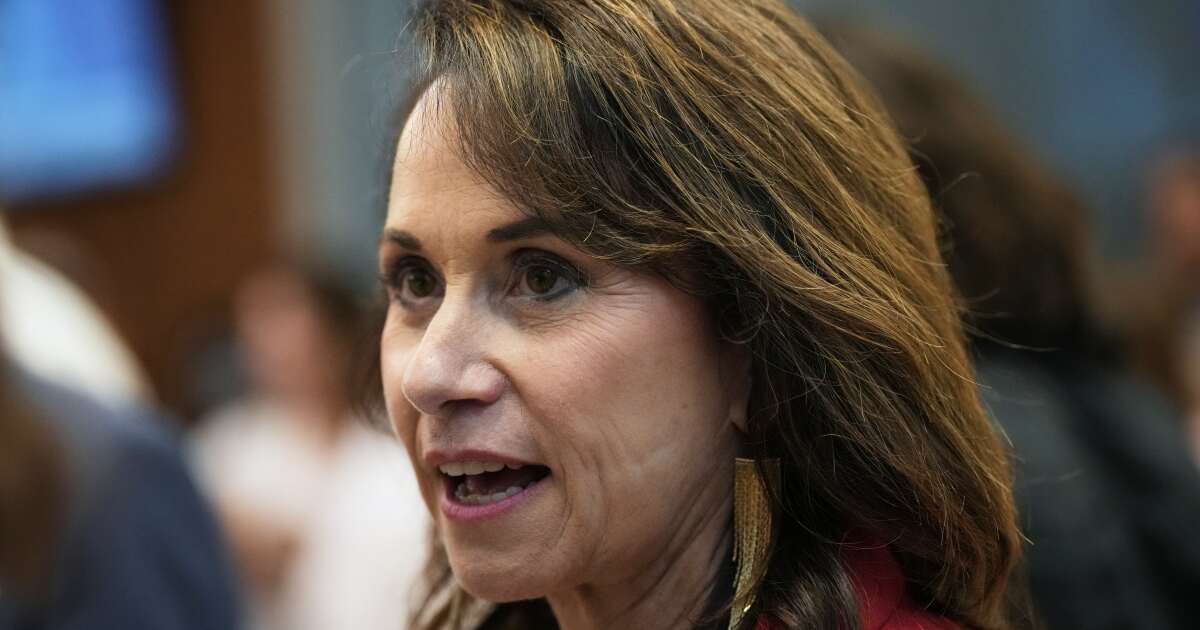
Los Angeles City Atty. Hydee Feldstein Soto lagged behind her two well-funded challengers based on early returns Tuesday night. But her incumbent colleague, City Controller Kenneth Mejia, appeared to be faring better in his bid to stay in office, holding a double-digit lead over finance executive Zach Sokoloff.

Progressive Marissa Roy led the field vying to serve as Los Angeles’ top lawyer in the first batch of returns surfacing around 8:20 p.m.

L.A. County Deputy Dist. Atty. John McKinney sat in second, while Feldstein Soto was positioned third. The top two finishers will advance to November’s general election. It could be days before the outcome of the race is clear. Mail-in ballots with a Tuesday postmark will be accepted by county election officials for another week.

With only two candidates running, the controller’s race will be decided this month and will not go to a runoff in November.

The city attorney’s race transformed suddenly this spring after the Los Angeles Police Department’s largest union broke with Feldstein Soto and backed McKinney. Independent expenditure campaigns have thrown $3 million behind McKinney in recent weeks, with much of that money coming from a political action committee controlled by Airbnb.

Feldstein Soto sued the rental giant for violating price gouging laws in the wake of the Palisades fire last year and has openly questioned whether McKinney would shy from aggressive litigation against Airbnb if elected.

“Special interests have gotten really accustomed to special treatment at City Hall. They get special treatment all the time,” Feldstein Soto said in a recent interview, suggesting that both McKinney and Roy had been compromised by outside spending. Independent expenditure campaigns supporting Roy also received roughly $725,000.

McKinney told The Times that if elected, he would “absolutely” sue Airbnb if necessary.

A representative for Feldstein Soto’s campaign declined to comment on the early returns late Tuesday night.

The three leading candidates often sounded like they were campaigning for different jobs.

Roy said she would run the city attorney’s office as L.A.’s “largest public interest law firm,” focusing on tenants’ rights, wage theft and other issues affecting working-class Angelenos. A deputy attorney general in the California Department of Justice, she also vowed to sue the Trump administration, linking arms with the attorney general’s office and other city attorneys in aggressive litigation to curb what many Californians see as targeted abuses of power.

McKinney talked more like he was running for city prosecutor, leaning heavily on his experience winning high-profile felony trials in the downtown courthouse. He said he would improve the way the city attorney prosecutes gun crimes and animal abusers. Despite his lack of experience as a civil litigator, McKinney also said he could bring down the city’s litigation costs, which exploded under Feldstein Soto.

“While all votes have not yet been fully counted, we feel optimistic about qualifying for the General Election in November. People want political courage. They want leadership,” McKinney said in a statement Tuesday night. “What is already clear, is that this election has been shaped by the pressing and undeniable concerns of the people of Los Angeles.”

McKinney previously ran for L.A. County district attorney in 2024 but disappeared in a crowded primary field.

While her term has been marked by financial strain, allegations of misconduct and mistreatment of employees and recent questions about her handling of a data breach that led to the leak of a trove of LAPD records, Feldstein Soto maintained that her opponents are far too inexperienced to serve as the city’s top lawyer.

She said she improved public safety by repairing her office’s relationship with the LAPD and filed more misdemeanors than her predecessor. Although legal costs surged, Feldstein Soto said she did her best to mitigate damage on a number of difficult cases she inherited when taking office in 2022. The rise of so-called “nuclear verdicts” in civil claims reflects a nationwide trend rather than a fault of her leadership, she said.

Feldstein Soto was endorsed by Mayor Karen Bass and U.S. Sen. Adam Schiff (D-Calif.). Roy had the support of the L.A. County Democratic Party, the city chapter of the Democratic Socialists of America and U.S. Sen. Bernie Sanders (I-Vt.). In addition to the police union, McKinney was backed by his boss, L.A. County Dist. Atty. Nathan Hochman.

The city controller’s race, normally a fairly sleepy affair, has turned into the second-highest-spending race in the city.

Mejia, 35, known for his two corgis that he often features on billboards across Los Angeles, sought to retain his seat as the city’s accountant and auditor.

His only challenger was Sokoloff, a senior vice president for asset management at Hackman Capital Partners. Sokoloff, 37, alleged Mejia did not properly utilize the controller’s office to run audits on city departments and failed to keep up the auditing pace of his predecessor.

Sokoloff’s mother, Sheryl, has spent $7.5 million on independent expenditures in the race, mostly on attack ads and mailers against Mejia. Often, the ads point to allegations that Mejia in 2023 fostered a toxic workplace and made inappropriate sexual remarks to female subordinates.

A woman who identified herself as Sheryl Sokoloff hung up on a Times reporter last week when asked about the race expenditures.

Mejia said Sokoloff’s mother — married to Jonathan Sokoloff, managing partner of private equity firm Leonard Green & Partners — was trying to bankroll the seat for her son.

Mejia has long run on accountability and transparency for the city’s budget and made public-facing databases across dozens of topics on the controller’s website in his first term.

A licensed certified public accountant, Mejia is a member of the Green Party and does not accept endorsements from political parties or politicians. He was endorsed by the Los Angeles Daily News and multiple labor unions, including the United Teachers of Los Angeles and United Auto Workers.

Sokoloff, a Democrat, was endorsed by multiple former controllers, notable Democrats — including Schiff — and the L.A. County Democratic Party, along with other business advocacy groups.

Source link

Former head of Iowa school district sentenced to 2 years for falsely claiming to be a US citizen

The former superintendent of Iowa’s largest school district who was arrested last year in the Trump administration’s immigration crackdown was sentenced Friday to two years in prison.

Ian Roberts is likely to be deported to his native Guyana in South America once he serves the sentence. He pleaded guilty in January to falsely claiming to be a U.S. citizen and illegally possessing firearms, which together carry a maximum sentence of 20 years in prison. His lawyers had proposed that he be put on probation “to facilitate his removal from the United States,” but prosecutors had argued that his likely deportation should not be a factor.

Prosecutors alleged Roberts knowingly lacked employment authorization for nearly all of his two-decade career in urban education and submitted a counterfeit Social Security card when he was hired as superintendent of the Des Moines public school district, which serves 30,000 students.

Roberts’ stunning case bookended the school year. His September arrest occurred as President Trump’s administration was sending increased numbers of federal immigration officers into American cities to round up immigrants.

Des Moines Public Schools said last month that it revised its conflict-of-interest policy after an audit found Roberts awarded district business to a consulting firm he worked for, affirming findings first reported by the Associated Press in the weeks after federal immigration officers detained him.

Roberts was in his school-issued vehicle when officers stopped him on Sept. 26 in a targeted U.S. Immigration and Customs Enforcement operation. He allegedly fled before he was located with the help of state troopers. Authorities said a loaded handgun was wrapped in a towel under the seat and $3,000 in cash was in the car. Three other weapons were recovered during a search of his home.

In a court filing, attorneys for Roberts said he has dedicated his life in the U.S. to public service and has not been a threat to public safety. After Roberts married a U.S. citizen, his attorneys said, he was denied lawful permanent residency because he failed to disclose that he had been arrested. He said he did not think he needed to because the charges against him were dropped.

“While Dr. Roberts tried to adjust his status three more times, this initial mistake by Dr. Roberts sealed his fate,” his attorneys wrote. “In the background of his career for the next 24 years, this denial of his adjustment of status haunted Dr. Roberts like a ghost, eventually derailing his life and career.”

Dozens of people submitted letters on Roberts’ behalf to dispute how he has been portrayed and provide details of his positive impact. His lawyers wrote that he likely faces deportation to Guyana, where he will “be left without his career, without his wife, without his children, in a country where he has not lived for thirty years.”

In recommending a three-year sentence, prosecutors described a yearslong and deliberate misrepresentation of his legal status. Prosecutors said a reduced sentence is not appropriate just because Roberts is likely to be deported.

They said they do not know what documents Roberts presented to show eligibility for work dating back to 2008, years before he was approved for temporary status in 2018, but he “deliberately obtained employment without work authorization at school after school, within state after state.”

Fingerhut writes for the Associated Press.

Source link

Chicago U.S. attorney denies investigation into E. Jean Carroll

May 29 (UPI) — Reports that the U.S. Attorney’s Office in Chicago is investigating President Donald Trump accuser E. Jean Carroll are denied by that office, one day after widespread reporting by multiple news outlets.

“In light of wide-spread reporting and intense media and public interest into the E. Jean Carroll matter in New York, the Chicago U.S. Attorney’s Office can confirm that it has not opened — and has never opened — a criminal investigation into E. Jean Carroll. Any claim to the contrary is categorically false,” U.S. Attorney for the Northern District of Illinois Andrew S. Boutros posted a statement on X.

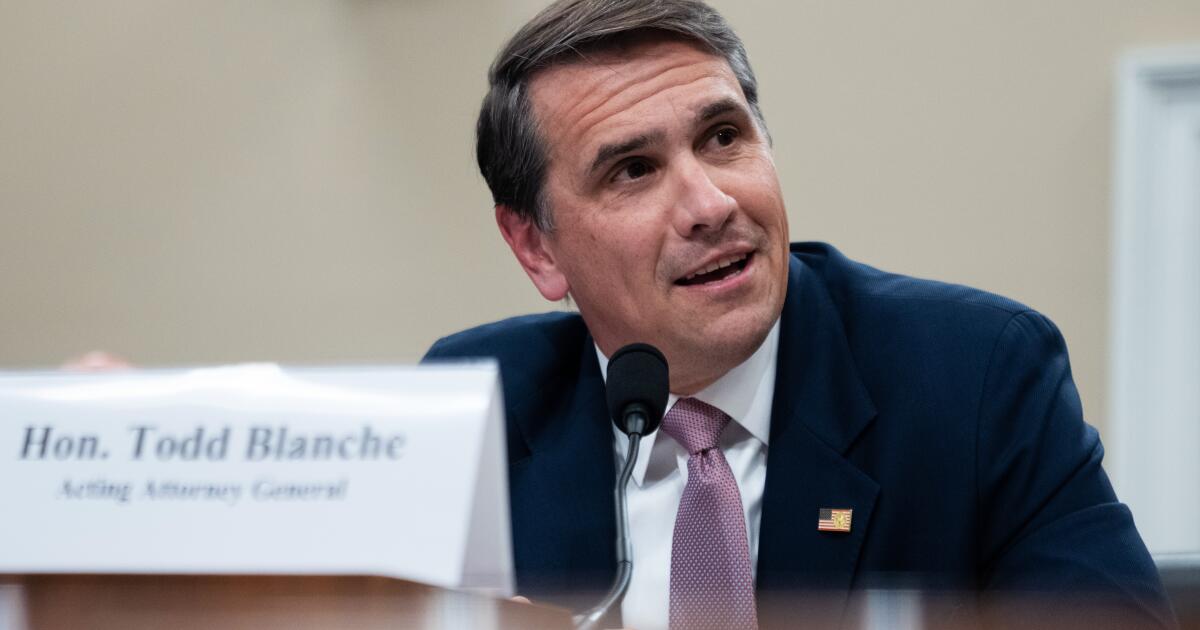
CNN broke the news Thursday, citing multiple sources familiar with the matter, and other news outlets confirmed with their sources. They reported that Acting Attorney General Todd Blanche had recused himself from the investigation because he had represented President Donald Trump in one of his appeals of a civil case brought by Carroll.

Carroll won two civil suits against Trump. One alleged that he sexually assaulted her in a New York department store in the 1990s and another one was for defamation in 2019, after he denied the assault and said she made up the attack to boost book sales. In the assault case, Carroll was awarded $5 million, and in the defamation case, she was awarded $83 million.

The reported investigation was allegedly into a 2022 deposition in which Carroll said she received no outside funding for the suit. Later, it came to light that billionaire Reid Hoffman, co-founder of LinkedIn, paid some of her legal fees and expenses.

The BBC reported Friday that CBS News had initially reported the investigation but later reported that its source had clarified that Carroll’s testimony about funding for her lawsuits against Trump was being looked at as part of an investigation into a nonprofit run by Hoffman. CBS published an editor’s note Thursday to clarify.

Secretary of State Marco Rubio and President Donald Trump participate in a Cabinet meeting in the Cabinet Room of the White House on Wednesday. Photo by Samuel Corum/UPI | License Photo

Source link

Leaked files, ‘nuclear verdicts’: Inside the L.A. city attorney race

The Los Angeles city attorney is often described as the most powerful elected official almost no one’s ever heard of.

The office prosecutes most misdemeanor crimes, defends the city against costly lawsuits and serves as the public’s chief lawyer at a time when L.A. faces frequent attacks from a hostile White House. Races for the office tend to be sleepy affairs, but this year’s contest has featured last-minute entrants, a whopping influx of cash and defections among the incumbent’s key supporters.

City Atty. Hydee Feldstein Soto’s first term was marked by an explosion in costly litigation against the city and allegations of misconduct and mistreatment of employees. She has denied wrongdoing and defended her record, but now two well-funded opponents are flanking her from different sides of the political spectrum.

The race began to heat up last month after a data breach that saw a massive trove of LAPD records leaked onto the internet. That spurred the city’s police union to withdraw its endorsement of Feldstein Soto and tell its members to vote instead for John McKinney, a Los Angeles County prosecutor who has received a massive influx of corporate cash to support his campaign in recent weeks.

The progressive challenger is Marissa Roy, a deputy attorney general in the California Department of Justice. Roy, 34, has said she would run the office as a sprawling “public interest law firm” that sues to fight wage theft and renter harassment, champions a care-first approach to homelessness and stands as a legal bulwark against the Trump administration.

Roy Behr, a veteran political consultant in the city, said Roy and McKinney have clear brands and target audiences, whereas Feldstein Soto may now be a candidate without a constituency.

“It wouldn’t surprise me at all if she didn’t make the runoff. What she’s facing are two people with pretty clear critiques from different directions,” he said of the incumbent. “All she’s left with is ‘I did an OK job in an office that people don’t really understand.’”

Feldstein Soto, 67, says she’s the steady hand the city needs as it faces a budget crisis and gears up to host the Olympics in two years. She scoffed at her opponents’ lack of experience in a recent interview, dismissing Roy’s campaign promises as “insane,” and noting that McKinney’s history as a felony trial prosecutor has little overlap with the city attorney’s job.

“This is not the time for on-the-job training,” she said.

A former corporate lawyer, Feldstein Soto squeaked through the primary before sailing to victory in her bid for the position in 2022. She has since taken heat for defending aggressive LAPD crowd control tactics, and also for her refusal to prosecute hundreds involved in 2024 campus protests against the war in Gaza.

Although Feldstein Soto has received endorsements from Mayor Karen Bass and Sen. Adam Schiff (D-Calif.), critics say frequent personality clashes have alienated her from the city’s Democratic kingmakers. McKinney called her a “bully” in a recent interview and said her behavior has demoralized her staff.

Feldstein Soto pushed back on those criticisms, touting steps she has taken to modernize the office and enhance public safety. She argued many of the allegations against her stem from a 2024 lawsuit filed by a disgruntled employee, who claimed they were subjected to a “barrage of retaliatory actions” after reporting issues within the office, including mishandling of grant funds, discriminatory treatment of co-workers and “inappropriate alcohol consumption” in the workplace. The case remains pending. Feldstein Soto said the employee was fired for having improper outside employment.

Los Angeles City Atty. Hydee Feldstein Soto

Los Angeles City Atty. Hydee Feldstein Soto hosts a May 12 news conference to discuss the recent prosecution and conviction of a UCLA early childhood teacher charged with sexual abuse.

(Carlin Stiehl / Los Angeles Times)

Explaining her decision to drop most charges in the campus protest cases, Feldstein Soto pointed out many lacked enough evidence for prosecution.

The city’s legal payouts have exploded under her watch — jumping from $64 million in the mid-2010s to $294 million in the last fiscal year. Feldstein Soto said the rising costs reflect an increase in “nuclear verdicts” in civil courts nationwide.

Feldstein Soto noted the city’s payouts were inflated by a “cascade of horrible” cases that were pending when she took office. She said she could only mitigate the damages, citing as examples cases that involved the city’s misuse of federal housing grants and a massive sewage spill.

“I’ve protected the city at every turn,” she said. “I’m the only candidate in my race who has the receipts to prove that I can do this.”

Roy said the biggest challenge may be convincing Angelenos to cast a vote at all in what has historically been a low-turnout, down-ballot contest.

“It’s where we always start, to be honest,” she said. “It is one of the most important, least understood positions.”

In a city where 60% of residents are renters and many feel under siege by the Trump administration, Roy has campaigned as a civil rights avenger ready to spar with landlords or the White House on behalf of working-class Angelenos.

She recently hit the streets sporting a crisp purple blazer, violet chrome manicure and a battered pair of black Rothy’s flats, evidence of the shoe-leather she and her army of volunteers have already invested in the race.

Roy typically starts her pitch by explaining what the city attorney actually does, then delivers her vision for the post.

“Of course it’s the lawyer for the city, but what people don’t realize is it’s also the lawyer for the people,” she said to one would-be voter in Silver Lake.

John McKinney speaks during a news conference.

John McKinney, a county prosecutor running for L.A. city attorney, speaks at a May 5 news conference where he received endorsements from Dist. Atty. Nathan Hochman and the Los Angeles Police Protective League, the union for rank-and-file LAPD officers.

(Kayla Bartkowski / Los Angeles Times)

McKinney, 58, said he wants more “aggressive” prosecutions for misdemeanor gun crimes, and believes the city attorney has the power to “leverage” homeless people into mental health or addiction treatment after they’ve been arrested.

Despite having no experience as a civil litigator, the deputy L.A. County district attorney also thinks he can help drive down lawsuit costs for the city.

McKinney told The Times he envisions himself as “a protector, as the local prosecutor, and a defender, as the general counsel of the city.”

“I think public safety is the number one priority, or should be, of all elected officials,” he said.

While Feldstein Soto and Roy have raised considerable war chests, McKinney has received just $72,000 in direct contributions, according to campaign finance records. But independent expenditures supporting his bid have supercharged his finances in the last two weeks, pouring $1.7 million into the race.

The vast majority of those funds have come from a political action committee backed by Airbnb, which Feldstein Soto sued last year for violating price-gouging laws in the wake of the wildfires. The city attorney has aggressively prosecuted and sued those seeking to profit off wildfire victims, winning a $1.2-million settlement against another rental company in a price-gouging suit this week.

Feldstein Soto said both of her challengers are financially beholden to special interests, pointing to McKinney’s Airbnb windfall money Roy has taken from a political action committee bankrolled by an organization whose attorneys often sue the city.

“They’re not investing millions of dollars for fun and for free because they think these candidates are going to be great city attorneys … they are expecting a return on investment,” Feldstein Soto said.

McKinney said Airbnb simply believes in his campaign to clean up the city, which would improve tourism and the company’s profits in the city.

Roy said she has received broad support from across the legal profession and is committed to reducing lawsuit payouts that have “spiraled out of control.”

Dan Schnur, a USC professor and former advisor to Republican politicians in California, said Feldstein Soto’s biggest obstacle might not be her opponents, but voters themselves fed up with elected officials citywide.

“The challenges she faces are very similar to what Bass is going on in the mayor’s race,” he said. “This is a very impatient and angry electorate that wants change now.”

Source link

‘Housewives’ star Erika Girardi settles $25-million civil lawsuit

Pop crooner and “Real Housewives of Beverly Hills” star Erika Girardi quietly put an end to a long and splashy legal battle over her ex-husband’s now-defunct law firm on Thursday, settling a $25-million bankruptcy lawsuit in Los Angeles federal court.

The suit alleged the singer should have known she was profiting off embezzled funds linked to the sprawling case against her ex-husband, former L.A. legal heavyweight Tom Girardi, and his firm Girardi Keese. The couple was accused of funneling millions from the law firm to prop up Erika’s music career.

Performing as Erika Jayne, she topped the charts in the 2010s with a series of raunchy dance club hits. But court records show she spent millions more than she made as a musician.

Larry W. Gabriel, an attorney for the plaintiffs in the case, wrote in a pretrial filing Monday that Erika and a company associated with her “received the benefit of [Tom] Girardi’s massive fraudulent scheme.”

Tom Girardi is currently serving a seven-year sentence in federal prison after he was convicted of wire fraud for bilking his personal-injury clients in 2024. The disgraced former attorney was found to have stolen tens of millions from his firm.

His wife’s pop hits mixed boasts about luxury brands and explicit sex acts with pulsing dance beats and a bratty falsetto, a tone actress Lake Bell famously dubbed “sexy baby voice.

In depositions taken as part of the suit, Erika said she had no knowledge of her husband’s crimes. She claimed to be ignorant about where the millions she spent on recording, merchandise, tours and “fun, playful, and sparkly outfits” were drawn from.

“I did not know how much I spent per month or per year,” she said in one exchange. “Girardi Keese paid my Amex credit card bill every month.”

Monday’s filings show Girardi Keese paid at least $14 million in charges to her American Express account between 2008 and 2020.

The payouts began in the late 2000s when Erika, then a stay-at-home mom, sought to relaunch herself as a performer. In 2016, near the height of her pop fame, her husband began to complain she was charging too much on the credit card account. After repeated entreaties to tamp down her spending, Girardi tried for the first time to look at her balance.

Soon after, Girardi grew suspicious of charges being made to her card by a Hollywood costumer — worries she reported to one of Girardi Keese’s clients, an agent in the Secret Service, records show.

On the advice of the agent’s Secret Service colleagues, she said she disputed the AMEX charges and was ultimately refunded more than half a million dollars to her personal account, despite the original payments having come from the law firm.

Erika Girardi’s attorney did not immediately respond to requests for comment Friday.

Source link

Officers who defended Capitol from rioters sue to block payouts from $1.8-billion ‘anti-weaponization’ fund

Two police officers who helped defend the U.S. Capitol from an attack by a mob of President Trump’s supporters sued on Wednesday to block anyone — including Jan. 6, 2021, rioters — from receiving payouts from a new $1.776-billion settlement fund for people who claim to be victims of politically motivated prosecutions.

The officers’ attorneys filed the federal lawsuit a day after acting Atty. Gen. Todd Blanche defended the fund’s creation during a congressional hearing. Blanche, a personal attorney for Trump before joining the Justice Department, wouldn’t rule out the possibility that rioters who assaulted police on Jan. 6 would be eligible for fund payouts.

The lawsuit claims the government’s “Anti-Weaponization Fund” is an illegal slush fund that Trump will use to “finance the insurrectionists and paramilitary groups that commit violence in his name.” It describes the fund’s creation as “the most brazen act of presidential corruption this century” and calls for dissolving it.

“No statute authorizes its creation, the settlement on which it is premised is a corrupt sham, and its design violates the Constitution and federal law,” the suit says.

The fund stems from a settlement of Trump’s $10-billion lawsuit against the IRS over the leak of his tax returns. It’s designed to compensate those who believe they were mistreated by prior administrations’ Justice Department. Decisions on payouts will be made by a five-member commission appointed by the attorney general.

More than 100 police officers were injured during the Capitol riot. Nearly 1,600 people were charged with Jan. 6-related crimes, but Trump used his pardon powers to erase all of those cases in a sweeping act of clemency last year.

The plaintiffs suing Trump over the fund are Metropolitan Police Department officer Daniel Hodges and former U.S. Capitol Police officer Harry Dunn, who is running in Maryland for a seat in Congress. Hodges and Dunn both testified before Congress about their harrowing experiences on Jan. 6. Videos captured a rioter ripping a mask off Hodges as he was pinned against a door during a fight for control of a tunnel entrance.

The officers claim the fund “encourages those who enacted violence in the President’s name to continue to do so.”

“Dunn and Hodges already face credible threats of death and violence on regular basis; the Fund substantially increases the danger,” the suit alleges.

On Tuesday, members of Congress peppered Blanche with questions about the fund. He described it as “unusual” but not unprecedented. Blanche failed to acknowledge that Trump’s Justice Department has investigated and prosecuted some of the Republican president’s political enemies, including former FBI Director James Comey and New York Atty. Gen. Letitia James.

Blanche and Treasury Secretary Scott Bessent also are named as defendants in the officers’ lawsuit. Spokespeople for the Justice and Treasury departments didn’t immediately respond to requests for comment on the suit.

One of the attorneys for the officers is Brendan Ballou, a former Justice Department prosecutor who handled Jan. 6 cases.

Kunzelman writes for the Associated Press.

Source link

A former Becerra aide pleaded guilty in a fraud case. I still have questions

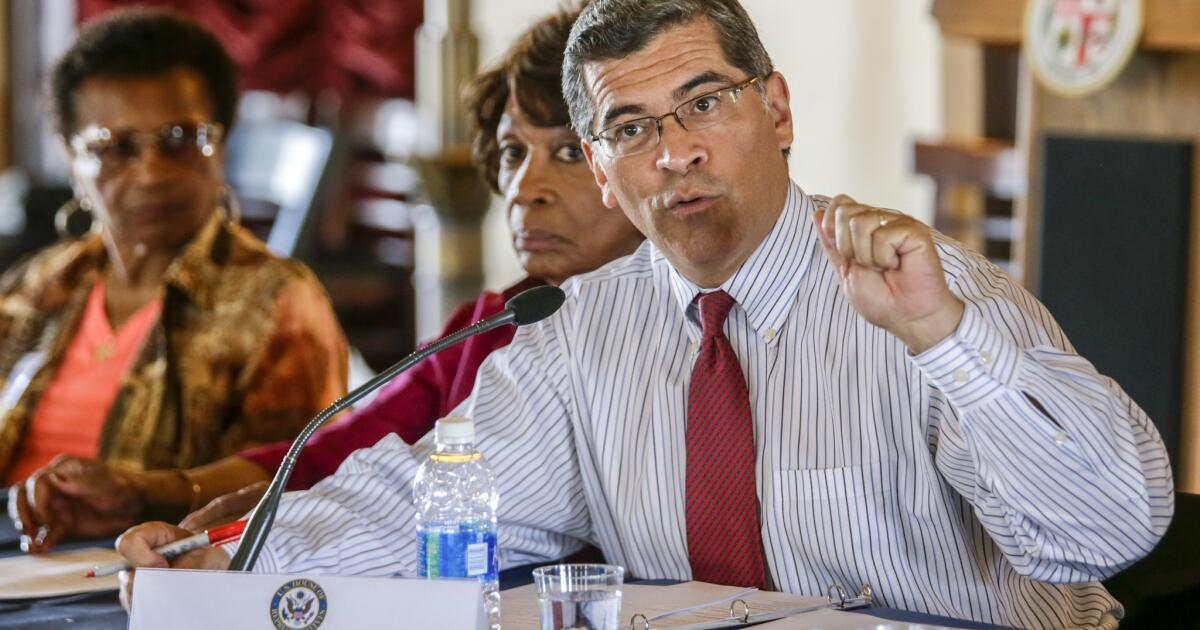
Dana Williamson, one of the political heavyweights at the center of a financial scandal involving gubernatorial candidate Xavier Becerra, looked shell-shocked Thursday morning in a federal courtroom in downtown Sacramento, as most folks do when bad choices collide with the hard realities of the justice system.

A thousand-yard stare in her eyes, Williamson responded “guilty” three times in a voice that required a microphone to be heard as the judge walked her through a plea deal reached days before with the U.S. Department of Justice. She likely won’t be sentenced until fall (possibly close to the general election) but will — again, just a likely here — at best face home confinement and at worst upward of three years in prison.

It’s a colossal fall for a woman who wasn’t so much a consultant as a political operative to Becerra, Gov. Gavin Newsom, former Gov. Jerry Brown and a slew of companies including Meta and PG&E. She was known at the Capitol as a woman who got things done, sometimes with finesse, sometimes not.

It was her savvy and ability to deliver whatever was needed through her deep connections and knowledge of the complicated structures — official and cultural — that govern the California halls of power that make her predicament all the more confounding. Especially because, far from stealing money for self-enrichment, she actually paid money to be part of this scheme.

That alone, to me, raises questions.

Though Williamson’s guilty plea may seem like an ending to the saga, it shouldn’t be, because there’s still a lot lurking in the dark corners of this deal.

If Becerra makes it past the primary, which seems (I’ll use that word again) likely, voters have a right to know.

Here’s the simple backstory, according to court documents. Becerra’s close aide, Sean McCluskie, took a pay cut to remain with his boss when he moved to Washington to become President Biden’s secretary of Health and Human Services.

Strapped for cash, McCluskie asked Williamson to receive money from Becerra’s dormant campaign account — which Becerra was legally not allowed to manage while holding federal office — and pass it through a bunch of other accounts before giving it to McCluskie’s wife as payment for a nonexistent job.

Williamson’s attorney, McGregor Scott, said Thursday that Williamson received $7,500 each month from the Becerra account and added $2,500 from her own funds before sending it on to ultimately reach McCluskie — for a total of $10,000 a month.

McCluskie was “living on a government salary,” Scott said Thursday after court. “Wife is home with the kids. They didn’t have enough money, and that’s where this all originated. [Williamson] was simply trying to help a friend in a pinch as best she could.”

Scott, a former Bush and Trump United States attorney, managed to get Williamson’s original 23-count indictment knocked down to the Becerra account issue, along with lying to the FBI and filing a false tax return.

McCluskie entered his own guilty plea in the case last November and is scheduled to be sentenced, along with the third lobbyist, in June.

Becerra, who is a slim-margin front-runner for governor, was the victim in this case — or more precisely, his state campaign bank account was, according to court documents.

There has never been any indication that Becerra was investigated as a participant, and he has forcefully denied wrongdoing, calling it a “gut punch” that his advisers allegedly betrayed him.

That, of course, hasn’t stopped the other candidates from using the case against him.

“My opponents have spent millions spreading lies to purposefully mislead voters,” he wrote Thursday on social media. “Today confirms what I have said from day one: I did nothing wrong. Case closed.”

Meanwhile, Scott, the attorney, also said Thursday that Williamson assumed, based on her conversations with McCluskie, that McCluskie had spoken to Becerra about the concept of the money transfer. Text messages in court records show a brief and ambiguous exchange between McCluskie and Williamson that backs that up.

Scott said that Williamson never spoke directly with Becerra about the scheme.

That leaves the distinct possibility that Williamson believed Becerra knew what was happening — but never asked him. Dumb? Maybe. But Williamson isn’t usually dumb.

“The understanding that McCluskie conveyed to my client was it was OK to proceed,” Scott said.

Becerra has repeatedly said he believed the $10,000 a month was a legitimate fee being paid to manage the funds in the dormant account while he could not — though that is an amount above what is usual for such work, as my colleague Dakota Smith has reported.

Becerra has also repeatedly used some variation of the “case closed” line, seemingly hoping to move past this scandal without further answers.

But at the very least, it deserves some kind of mea culpa from Becerra or lessons learned, a more robust conversation than the brush-off it’s been getting. Because either McCluskie is one heck of a con man who rolled both Becerra and Williamson, making both believe what was happening was kosher with entirely different tales, or someone isn’t being entirely honest.

Did Becerra never question why an account with almost no activity was costing so much to manage? Did he never wonder what Williamson was doing to earn all that money? Should he, with his decades of legal and political experience, have seen red flags, even with a trusted adviser? Or is Williamson, facing sentencing, just trying to paint herself in a sympathetic light?

“I’m not trying to paint my client as a victim,” McGregor said. “She’s accepted responsibility today for what she did by pleading guilty. She’s now a felon. So you know, we’re not trying to do anything to dance away from that.”

Williamson may be done dancing, but the music’s still playing, and the fancy footwork of politics continues.

Source link

Venezuelan Attorney General to Investigate Unreported Death in State Custody

Attorney General Devoe vowed to clarify the death of Victor Quero. (Archive)

Caracas, May 11, 2026 (venezuelanalysis.com) – Venezuelan Attorney General Larry Devoe has opened an investigation into the death of Victor Hugo Quero Navas in state custody in July 2025.

“The investigation aims to clarify the facts in a timely and impartial fashion,” Devoe’s statement, published on Thursday, read. “There will be a prompt exhumation of [Quero’s] body in accordance with Venezuela’s penal code.”

Quero’s case drew headlines in recent days following reports that a request for amnesty under the Amnesty Law approved in February was denied, only for Venezuelan authorities to reveal that he had passed away months earlier.

On May 6, attorney Moisés Gutiérrez from the Human Rights and Democracy Coalition NGO informed that the Second Control Court in Caracas had denied amnesty for Quero due to the charges against him, which reportedly included terrorism, criminal association, and conspiring with foreign agencies, falling outside the scope of the Amnesty Law.

Gutiérrez argued that Quero, a 51-year-old Caracas businessman and retailer, was in a situation of “enforced disappearance,” having had no contact with relatives or a lawyer of his choice since being arrested in early January 2025.

On May 4, Public Ombudswoman Eglée Lobato met Quero’s mother, Carmen Teresa Navas, and vowed to “activate institutional mechanisms” to provide information on her son’s judicial case.

However, last Thursday, Venezuela’s Prison Ministry issued a statement disclosing that Quero had died on July 24, 2025, due to an “acute respiratory failure” following a “pulmonary thromboembolism.” Authorities added that he had been detained in the Rodeo I prison in the outskirts of Caracas since January 3, 2025 and was admitted to a hospital with “gastrointestinal bleeding” ten days before his death.

The Prison Ministry reported that Quero was buried on July 30, 2025, and that he had provided no next-of-kin information nor had any visits from relatives. Nevertheless, his mother made multiple documented visits to Rodeo I, only to receive no information on her son’s whereabouts.

The 82-year-old Navas was taken to Quero’s grave on Thursday and demanded a DNA test to confirm her son’s identity. She lamented having spent more than a year visiting the prison and judicial institutions without any answers. There was likewise no public information on any hearings in Quero’s case.

During an October visit to the Ombudsman’s office, Navas was informed of the charges against Quero and that he remained in Rodeo I, despite the fact that he had reportedly died three months earlier.

Following the latest revelations, multiple NGOs have accused Venezuelan judicial institutions of recurring human rights and due process violations. The Justicia, Encuentro y Perdón organization called for an “independent and exhaustive investigation” under the Minnesota Protocol on the Investigation of Potentially Unlawful Death.

Lavoe and Lobato took office in April following a parliamentary selection process. Their respective predecessors, Tarek William Saab and Alfredo Ruiz, have yet to comment on Quero’s case. 

Venezuelan Acting President Delcy Rodríguez did not address the case explicitly but vowed to take action against “deviations in the justice system.”

“The deviations in the penal justice system exist,” she said during a televised event on Saturday. “I have information and call for action against judges who charge fees to grant amnesty. This must stop.”

Venezuela’s February Amnesty Law grants a blanket amnesty for crimes committed in contexts of political violence since 1999. The law excludes serious human rights violations, crimes against humanity, and war crimes.

According to Venezuelan officials, more than 9,000 people have benefited from amnesty in recent months. A majority of them were not imprisoned but were still facing trial or parole-type measures.

In April, Rodríguez created a commission on penal justice reform, headed by Devoe, referring to “evils that persist” in the judicial apparatus and calling for a “truly humane justice system.” Interior Minister Diosdado Cabello, also a member of the commission, said authorities were investigating issues of prison overcrowding and systematic trial delays.

Rodríguez had served as vice president since 2018, while Cabello took over as interior minister in August 2024. In 2021, Cabello headed a parliamentary commission tasked with undertaking a “judicial revolution.” However, complaints of prison overcrowding and poor conditions, as well as due process violations, continued.

Edited by Lucas Koerner in Caracas.

Source link

Man charged in White House correspondents’ dinner attack pleads not guilty

A man accused of storming the White House Correspondents’ Association dinner while armed with guns and knives pleaded not guilty on Monday to charges that he attempted to kill President Trump and fired a shotgun at a Secret Service officer who tried to stop the attack.

Cole Tomas Allen was handcuffed and shackled and wearing an orange jail uniform when he appeared in federal court for his arraignment. Allen didn’t speak during the brief hearing. One of his attorneys entered the plea on his behalf.

Allen’s lawyers are asking U.S. District Judge Trevor McFadden to disqualify at least two top Justice Department officials from direct involvement in prosecuting him because they could be considered victims or witnesses in the case, creating a potential conflict of interest.

Acting Atty. Gen. Todd Blanche and U.S. Atty. Jeanine Pirro were attending the event when Allen ran through a security checkpoint and fired a shotgun at a Secret Service officer, authorities said. In a court filing last week, Allen’s attorneys argued that it creates at least the appearance of a conflict of interest for Blanche and Pirro to be making any prosecutorial decisions in the case.

McFadden, a Trump nominee, didn’t rule from the bench on that question but asked Allen’s attorneys to elaborate on the possible scope of their recusal request. Defense attorney Eugene Ohm said the defense likely would seek to disqualify Pirro’s entire office from involvement in the case. Ohm acknowledged that a bid to disqualify the entire Justice Department would be unlikely.

“That would be quite a request,” the judge said.

McFadden gave prosecutors until May 22 to respond in writing to the defense’s request. The judge asked the government to specify whether it believes Pirro and Blanche could be considered victims in the case.

“That might add some clarity here,” McFadden said.

In their filing, Allen’s attorneys suggested that the appointment of a special prosecutor might be warranted.

Allen is scheduled to return to court on June 29.

A Secret Service officer was shot once in a bullet-resistant vest during the April 25 attack at the Washington Hilton hotel, which disrupted and ultimately prompted an early end to one of the highest-profile annual events in the nation’s capital. The officer fired five shots but didn’t hit anybody, authorities said.

Allen, 31, of Torrance, was injured but was not shot.

Besides the attempted-assassination count, Allen also is charged with assaulting a federal officer with a deadly weapon and two additional firearms counts. He faces a maximum sentence of life in prison if convicted of the attempted assassination charge alone.

Allen was placed on suicide watch after his arrest, but jail officials removed him from that status after several days. Allen’s attorneys complained that he had been unnecessarily confined in a padded room with constant lighting, repeatedly strip searched and placed in restraints outside his cell.

Allen told FBI agents that he didn’t expect to survive the attack, which could help explain why he was deemed to be a possible suicide risk, a Justice Department prosecutor has said.

Allen was outfitted with an ammunition bag, a shoulder gun holster and a sheathed knife when he took a photo of himself in his room at the hotel just minutes before the attack, according to prosecutors. In a message that authorities say sheds light on his motive, Allen referred to himself as a “Friendly Federal Assassin” and alluded obliquely to grievances over a range of actions by Trump’s Republican administration.

Authorities have alleged that Allen on April 6 reserved a room for himself at the Hilton where the event would be held weeks later under its typical tight security. He traveled by train cross-country from California, checking himself into the hotel a day before the dinner with a room reserved for the weekend.

Trump was rushed off the stage by his security team at the Saturday night event and appeared at the White House two hours later, still in his tuxedo, to talk about the attack and the suspect.

“When you’re impactful, they go after you. When you’re not impactful, they leave you alone,” the president said. “They seem to think he was a lone wolf.”

Kunzelman writes for the Associated Press.

Source link

Guatemalan attorney general sanctioned by U.S. to leave office

Guatemalan Attorney General Consuelo Porras arrives April 9 at the Nominating Commission in Guatemala City, Guatemala, for an interview as part of the selection process for attorney general and head of the Public Prosecutor’s Office from 2026 to 2030. She lacked support for another term. Photo by Alex Cruz/EPA

May 6 (UPI) — Consuelo Porras, Guatemala’s attorney general, will leave office May 17 after years of confrontation with President Bernardo Arévalo.

Porras is ending an eight-year term that began in 2018 under sanctions imposed by the United States, the European Union and more than 40 countries that accused her of corruption and undermining democracy by attempting to interfere with the results of Guatemala’s 2023 presidential election.

The relationship between Porras and Arévalo was marked by open confrontation and institutional hostility since the president’s electoral victory in 2023.

Arévalo repeatedly accused Porras of leading an “attempted coup” through judicial investigations aimed at dismantling Semilla, the political party that brought him to power, and blocking his inauguration. Porras defended her actions as enforcement of the law.

After taking office, Arévalo sought to remove her through legal reforms and public meetings that she refused to attend, deepening a political crisis in which the executive branch and the Public Ministry operated as opposing forces until the end of her tenure.

Arévalo announced Tuesday that he had officially appointed attorney Gabriel García Luna to lead the Public Ministry for the 2026-2030 term.

While announcing the appointment, Arévalo said the decision was intended to mark the beginning of a “new stage of justice” in response to demands from the Guatemalan people.

The president said the Public Ministry requires leadership capable of “rescuing” the institution and strengthening its independence. He added that the new attorney general would not serve the interests of the government or “particular or spurious political interests,” but instead guarantee impartial justice.

According to reports by Guatemalan newspaper Prensa Libre and Argentine outlet Infobae, Arévalo justified his choice by saying the country needs officials capable of rebuilding judicial institutions after years of crisis.

Porras attempted to seek a third term, but failed to secure enough votes from the nominating commission to reach the final shortlist of six candidates presented to the president.

Before leaving office, she also unsuccessfully sought a seat on Guatemala’s Constitutional Court, a position that would have granted her immunity from possible future legal proceedings.

Among the most serious allegations she could face is a criminal complaint related to her alleged connection to a network of illegal adoptions of Indigenous children during the 1980s. United Nations experts have already called for independent investigations into the case.

Civil society organizations have also documented at least 16 alleged cases involving misuse of the criminal justice system, including political persecution against the Semilla party, journalists and judicial officials.

Although Guatemala’s current Supreme Court blocked several attempts to strip Porras of immunity while she remained in office, her departure could allow the next attorney general to reopen those complaints and launch additional investigations into alleged obstruction of justice and corruption during her administration.

U.S. sanctions mainly involved the revocation of her visa and a permanent ban on entering the country for both her and her husband after she was designated a “corrupt and anti-democratic actor” under the Engel List.

The U.S. Engel List is a State Department-mandated public sanctions list that names foreign individuals from Guatemala, El Salvador, Honduras, and, since 2021, Nicaragua whom the United States determined engaged in significant corruption, undermined democratic institutions or obstructed corruption investigations. Those on the list are barred from entering the United States and have their visas revoked.

That designation later served as the basis for the European Union and Canada to impose harsher sanctions, including the freezing of assets and bank accounts in those jurisdictions, sharply restricting her financial freedom outside Guatemala.


Source link

L.A. city attorney challenger gains support of D.A., police union

Los Angeles County Dist. Atty. Nathan Hochman and the union that represents rank-and-file police officers offered a stinging rebuke of embattled City Atty. Hydee Feldstein Soto on Tuesday morning while endorsing one of her challengers in the upcoming election, county prosecutor John McKinney.

Hochman said he analyzed the field and decided the city attorney’s office “desperately needed” an experienced litigator like McKinney, who has been a prosecutor for 28 years and handled some of the city’s highest-profile trials.

“What we need in the L.A. city attorney’s office is someone who actually has courtroom experience, someone who understands how to win a trial,” Hochman said. “Someone who has actually not only talked the talk, but walked the walk.”

Hochman and leaders from the Los Angeles Police Protective League, the union which represents the majority of LAPD officers, stood shoulder to shoulder in endorsing McKinney. The league recently rescinded its endorsement of Feldstein Soto.

Feldstein Soto has been under fire for weeks, with her office accused of failing to properly inform other city officials about a hack of confidential files that saw 337,000 documents, videos and photographs leaked online. The documents amount to millions of pages, and appear to mostly come from civil lawsuits against the city that have been resolved in court. The files were not secured by a password, according to sources who spoke previously with The Times and requested anonymity because they were not authorized to discuss the ongoing investigation.

The city attorney’s office previously responded to questions from The Times by referring to a public report issued April 17, which said a preliminary investigation indicated that “the incident was contained to that third-party environment, and that no other City applications, systems, or department records were accessed or affected.”

While many of the documents dealt with relatively minor issues, others contained sensitive information about police officers. The Times used the leaked documents last month to reveal how the LAPD disciplined the officers who blew up a city block when they misjudged the weight of seized fireworks in South L.A. in 2021.

Sgt. Chris Wecker, vice president of the police union, said officers’ frustration with Feldstein Soto goes beyond the data breach. Wecker noted the city had paid out gargantuan sums in civil cases under Feldstein Soto’s administration, some of which the union believes she misplayed.

“Los Angeles has seen a dramatic rise in lawsuits, settlements and verdicts against the city costing taxpayers hundreds of millions of dollars,” he said. “The city attorney should not simply react to lawsuits after they’ve been filed. He must work proactively with city departments to identify legal risks before they turn into costly litigation.”

Feldstein Soto has also been accused of mismanaging her office and using the city’s prosecutorial powers for personal vendettas in multiple lawsuits, allegations she has repeatedly denied.

McKinney said he believes the city attorney’s office can do more work to reduce homelessness and criticized Feldstein Soto for her handling of an array of misdemeanor crimes including animal cruelty and trespassing. He said he is a proponent of “Broken Windows” policing — the idea that enforcing lesser laws will reduce felonies and deter criminals from committing worse crimes — and took a shot at Feldstein Soto’s handling of the data breach.

If such an incident happened under his watch, he said his “first call would be to the [Los Angeles Police] Department, the second to the FBI and the third to the people impacted.”

Feldstein Soto’s office has said senior LAPD officials and the city’s IT department were alerted as soon as the leak was discovered, and the FBI is investigating the matter.

Although it’s rare for the county district attorney to weigh in on the race for their city level counterpart — ex-Dist. Atty. George Gascón did not offer an endorsement in the 2022 contest which Feldstein Soto won — Hochman and McKinney are political allies who have aided each other before.

When Hochman emerged from a crowded 2024 primary field to challenge Gascón, McKinney endorsed him and functioned as a campaign surrogate.

A longtime trial prosecutor who oversaw a number of high-profile cases, including winning a conviction against the man who killed beloved L.A. rapper Nipsey Hussle, McKinney was promoted to oversee all special prosecutions in the office after Hochman’s election night victory.

Hochman said his endorsement was more about things McKinney had done right than anything the incumbent had done wrong.

Feldstein Soto still has the endorsements of U.S. Sen. Adam Schiff (D-Burbank) and Mayor Karen Bass, who is fighting her own difficult reelection battle.

Marissa Roy, a deputy attorney general with the California Department of Justice, is running to the left of the field and has the backing of the county’s Democratic party, the Democratic Socialists of America and her boss, California Atty. Gen. Rob Bonta. Roy has said she wants to turn the office into “the largest public interest law firm in the city,” targeting wage theft, tenant harassment and other issues impacting working-class Angelenos.

A call to Roy’s campaign was not immediately returned Tuesday.

Los Feliz attorney Aida Ashouri is also running.

The announcement from Hochman and the LAPD union could jump-start McKinney’s flagging campaign. He’s raised only $78,000 since entering the field, far less than either Roy or Feldstein Soto.

McKinney is relying on some of Hochman’s past campaign resources, hiring both the man who managed Hochman’s victory in the 2024 district attorney’s race and fundraiser Trey Kozacik, who operates the Pluvious Group.

The group was successful in helping Hochman build a massive war chest during his 2024 run for office, but its work helping organize fundraisers for President Trump in Los Angeles has drawn scrutiny before. The city has often found itself in litigation against the Trump administration in recent years, efforts McKinney would likely have to lead if elected.

McKinney, a registered Democrat, previously told The Times he would protect the city’s residents in court, “regardless of who’s in the White House.”

“I have been very, very disturbed by the activities of some federal law enforcement agencies that have come into Los Angeles and intentionally attempted to terrorize our people,” he said.

Times Staff Writers David Zahniser and Libor Jany contributed to this report.

Source link

L.A. city attorney election guide: Feldstein Soto vs. three challengers

p]:text-cms-story-body-color-text clearfix”>

The city attorney’s office is charged with prosecuting a wide array of misdemeanors, including drunk driving, public intoxication, petty theft, trespassing and other lower level crimes.

Roy, 34, has promised to place a heavy emphasis on the legal process known as diversion, which allows defendants to avoid incarceration and instead obtain court-supervised social services, such as anger management or addiction counseling. In cases involving nonviolent crimes, diversion is more likely than jail to keep people from becoming repeat offenders, she said.

“It makes not only the person whole, but the community safer,” she said.

Ashouri, 43, said she is the only candidate to work within the city attorney’s criminal branch, handling cases involving guns, drunk driving and domestic violence. During a one-year stint as a reserve deputy city attorney, she concluded that too many minor cases were heading to trial.

“We need to focus on cases that are harming people,” she said. “Los Angeles is the capital of hit-and-runs. The city doesn’t take vehicular crimes seriously.”

McKinney, 58, pointed to his lengthy history prosecuting felony offenses, many of them homicides. In an interview, he argued that the city is not properly prosecuting quality-of-life crimes, which has in turn left the city feeling less safe.

“It looks dirty. It looks dingy. It looks chaotic. It feels chaotic,” he said.

McKinney criticized Feldstein Soto for dismantling specialized units in her office, including those focused on domestic violence and gangs and guns.

Feldstein Soto, 67, cast those changes in a different light, saying she carried out “a strategic rebalancing” of the criminal branch that redistributed the office’s workload. She said the office’s gang unit “lost its primary mission” in 2021, because of a legal settlement that effectively ended enforcement of the city’s 46 gang injunctions.

On the campaign trail, Feldstein Soto has highlighted her work fighting sex trafficking on the city’s notorious Figueroa Corridor and, more recently, nearby Western Avenue. She said the city has shifted emphasis away from arresting sex workers and toward the prosecutions of the johns.

The city attorney said she also has worked to expand “restorative justice” programs, including one that holds outdoor court proceedings on Skid Row.

Source link

Cole Tomas Allen, Torrance man accused of trying to kill Trump at press gala, to remain jailed

Cole Tomas Allen, the 31-year-old Torrance man charged with trying to kill President Trump at last weekend’s White House Correspondents’ Assn. dinner, will remain in federal jail pending trial.

Allen agreed to his ongoing detention during a brief hearing in federal court in Washington, D.C., on Thursday. “He’s conceding detention at this time,” one of his federal public defenders, Tezira Abe, told Magistrate Judge Moxila Upadhyaya, according to CNBC.

He did not enter a plea during the hearing, according to the Associated Press.

Abe and Allen’s other public defender, Eugene Ohm, had argued in a filing Wednesday for Allen’s pre-trial release, citing his lack of a criminal record, family support and ties to his church, as well as inconsistencies and weaknesses they allege exist in the government’s case against him.

Abe and Ohm did not respond to a request for comment following the hearing.

In addition to trying to kill Trump, a terrorism-related charge that carries a potential life sentence, Allen faces two firearms charges related to his allegedly transporting two guns across state lines as he traveled from California to Washington by Amtrak train, and allegedly discharging one of those firearms — a shotgun — during the incident.

In arguing for Allen’s release in their Wednesday filing, his attorneys not only insisted he was no danger to the community, but questioned the government’s reasoning and evidence for the charges against him.

Allen was captured on a hotel video camera sprinting past U.S. Secret Service agents and into the secured event space a floor above the dinner while armed, according to prosecutors, with the shotgun, a pistol, and various knives. He then fell to the ground and was detained, according to prosecutors.

Trump administration officials who were at the dinner, including Acting Atty. Gen. Todd Blanche and Jeanine Pirro, the U.S. attorney for D.C., charged him swiftly — leaning heavily on an email Allen had sent to family just as he was breaching event security, which Trump and others referred to as a “manifesto” but which was titled an “Apology and Explanation.”

In that document, Allen allegedly wrote that he was targeting top Trump administration officials, with the highest ranking among them receiving top priority. He allegedly wrote that he would “go through” others at the event to get to those officials, but that he was not targeting guests or hotel staff and had chosen buck shot rather than slugs to “minimize casualties” in the room.

The charge of attempting to kill the president hung largely on that document, according to charging documents.

Blanche and Pirro also alleged that Allen had fired a shot during the encounter with Secret Service agents, in which they said a Secret Service agent was shot in the ballistic vest. Prosecutors also alleged in court that Allen had fired his shotgun, noting their recovery of one spent casing, but made no mention of a Secret Service officer being shot in the vest.

That alleged shot served as the basis for the one count of discharging a firearm.

In their filing arguing for Allen’s release, his attorneys questioned the legitimacy of both arguments.

They wrote that the government’s “sole proffered evidence” of Allen’s intent to kill Trump — the “Apology and Explanation” letter — was “far from clear” and never actually mentioned Trump by name.

“The government’s evidence of the charged offense — the attempted assassination of the president — is thus built entirely upon speculation, even under the most generous reading of its theory,” Allen’s attorneys wrote. “While the government may be able to say that the letter expresses an intent to target administration officials, it falls well short of narrowing those officials to President Trump.”

Regarding the one count of discharging a firearm, Allen’s attorneys wrote that the government “has not asserted that Mr. Allen ever fired any of the recovered weapons.” They wrote that the government, “after essentially asserting that Mr. Allen shot a Secret Service Officer in the criminal complaint, has apparently retreated from the theory by not mentioning the alleged officer at all” in its filing arguing for Allen’s ongoing detention.

In the latter document, prosecutors wrote only that an officer had seen Allen fire his shotgun “in the direction of the stairs leading down to the ballroom.” However, they provided little evidence to support that claim, other than that the shotgun held a spent cartridge in its barrel.

“In sum,” Allen’s attorneys wrote, “the government’s entire argument about the nature and circumstances of the offense is based upon inferences drawn about Mr. Allen’s intent that raise more questions than answers.”

Prosecutors, in a separate filing in the case related to evidence gathering, rejected the defense claims.

“The preliminary analysis of the crime scene is consistent with the government’s evidence that your client fired at least one shot from the 12-gauge pump action shotgun in the direction of Officer V.G., and that Officer V.G. fired his service weapon five times,” they wrote. “The government is aware of no evidence thus far collected and analyzed that is inconsistent with the above.”

They wrote that evidence suggests Allen fired his Mossberg 12-gauge pump-action shotgun “at least one time as he ran past the magnetometers on the Terrace Level of the Washington Hilton.”

They wrote that investigators recovered one spent cartridge from the chamber of the shotgun, that the “government’s preliminary ballistics and video analyses show that your client fired his shotgun in the direction of” the Secret Service officer identified only as “V.G.,” and that “at least one fragment was recovered from the crime scene that was physically consistent with a single buckshot pellet.”

Source link

U.S. attorney: Suspect in shooting at correspondents’ dinner due in court

April 27 (UPI) — Cole Allen was due to be arraigned in federal court in Washington, D.C. on Monday, accused of carrying out a shooting at the White House Correspondents’ Association Dinner on Saturday, at which President Donald Trump, the First Lady and many of his cabinet were present.

U.S. Attorney for the District of Columbia, Jeanine Pirro, told a news conference that a suspect would be formally charged with an initial two counts — using a firearm during a crime of violence and assaulting a federal officer using a dangerous weapon.

“The defendant will be arraigned on Monday in federal district court. But make no mistake, there will be many more charges based upon the information that we are learning in this very fluid situation,” said Pirro.

“It is clear, based upon what we know so far, that this individual was intent on doing as much harm and as much damage as he could,” added Pirro, who said she was present when the shooting started at the event at the Washington Hilton hotel on Saturday night.

Beyond that, Pirro said investigators were working to discover the suspect’s possible motivation for the alleged attack and would not be drawn on whether he was specifically targeting Trump, or whether he was cooperating with law enforcement.

“At this point, what we know is the individual charged the checkpoint with a firearm in his hand. We know he was running in the direction of the ballroom that the president was in as well as other cabinet members. So what his specific motivation was, we can’t say at this point. However, as we continue to investigate that, we’ll continue to work towards that,” she said.

Monday’s hearing is expected to be short — only for the judge to make Allen aware of his legal rights and for Pirro’s office to apply to remand Allen in custody.

The suspect has yet to be officially named by authorities but NPR said two people familiar with the investigation, who were not authorized to speak publicly, identified him as Cole Tomas Allen, 31, of Torrance, Calif.

Authorities believe the suspect acted alone in the incident in which a Secret Service Uniformed Division officer was allegedly shot and no one else has been arrested.

The Secret Service officer, who was wearing a bullet proof vest, was treated in the hospital and released.

Trump said Sunday that a suspect arrested in connection with the shooting had written an anti-administration “manifesto” that allegedly stated he was targeting members of the Trump administration.

He said that, based on the contents of the document, the suspect was “a sick guy” and anti-Christian.

“When you read his manifesto, he hates Christians. That’s one thing for sure. He hates Christians, a hatred. And I think his sister or his brother actually was complaining about it. You know, they were even complaining to law enforcement. So he was, he was a very troubled guy,” said Trump.

The suspect reportedly sent the manifesto to members of his family minutes before that incident occurred, along with an apology, who then raised the alarm

The New London Police Department in Connecticut confirmed being contacted about two hours after the alleged attack at around 10:49 p.m. EDT on Saturday “by an individual who expressed concern about the incident that occurred at the White House Correspondents’ Association Dinner earlier in the evening.”

Allen was a mechanical engineering graduate from the California Institute of Technology in Pasadena and also had a master’s degree in computer science from California State University Dominguez Hills in Carson City, according to the Los Angeles Times.

His LinkedIn profile states that he was a member of Caltech’s Christian fellowship, as well as the Nerf club.

More recently, he was working developing video games and as a part-time private tutor teaching math and biology.

Allen’s voting registration record denotes “no party preference” and the only known record of any political donation in the past 10 years dates from 2024 when he gave $25, via an online fundraising platform, to former Vice President Kamala Harris’ presidential campaign in the Nov. 2024 election.

President Donald Trump and first lady Melania Trump participate in the 2026 White House Correspondents’ Association Dinner in Washington on April 25, 2026. Photo by Yuri Gripas/UPI | License Photo

Source link

Their homes burned in the Eaton fire. Why Edison has kept information about the fire under wraps

After last year’s disastrous Eaton fire, Southern California Edison executives vowed to be transparent about what caused the inferno that killed at least 19 people and left thousands of families homeless in Altadena.

“As we better understand exactly what happened on Jan. 7, we do so with a commitment to remain transparent,” Pedro Pizarro, chief executive of Edison International, the utility’s parent company, said in a published statement after the fire.

In court, however, Edison is keeping crucial documents of the cause of the Eaton fire secret, a legal strategy it has used to shield what happened in at least seven earlier wildfires it was blamed for igniting, according to a Times review.

Edison’s stance has caused mounting frustration with attorneys representing fire victims who are seeking compensation for their losses.

“The Eaton Fire cases should be decided on their merits, not on what information that SCE has been able to withhold,” lawyers for the victims wrote in a recent court filing.

State regulators have repeatedly criticized Edison for its secrecy in previous fires, saying it violated safety regulations and stopped officials from learning the root cause so that similar disasters could be prevented.

For more than a year, Edison employees have been gathering detailed information about what ignited the fire in an investigation the company is required to perform under state utility regulations.

But most of that information is being withheld by Edison’s claim of attorney-client privilege, as well as a protective order that it asked a judge to approve soon after the fire.

Protective orders are commonly used in civil lawsuits, but most cases do not have the broad ramifications to the public as the Eaton fire.

Pedro Pizarro, chief executive of Edison International, at the Semafor World Economy Summit.

Pedro Pizarro, chief executive of Edison International, at the Semafor World Economy Summit in Washington on April 14.

(Aaron Schwartz / Bloomberg)

Because of the secrecy, it’s not possible to know just what Edison has found, attorneys for Eaton fire victims said in a filing.

In past fires, regulators have requested from the company — and been denied — photographs, notes, text messages and other records generated by the Edison crew that was first to arrive at the site where the blaze ignited. The company has argued its attorney directed the crew, making the evidence privileged.

The victims’ lawyers say Edison shouldn’t be able to withhold from them most evidence from its investigation into the blaze by claiming that the findings and related documents are covered by attorney-client privilege and therefore confidential.

Sealed Eaton fire documents

Lawyers for victims say that documents sealed by a protective order show evidence of where Southern California Edison’s safety measures fell short before the deadly fire.

  • Poor inspection and repair of the idle transmission line suspected of igniting the fire
  • Tower holding the idle line was “virtually unattended for decades”
  • Dried vegetation removed under electrified wires but not beneath the idle line
  • Problems with contractors inspecting the line

In a recent interview with The Times, Pizarro disagreed that the company was keeping information on the cause of the Eaton fire secret.

“We believe we’ve been transparent,” Pizarro said. “Facts are not privileged, and so we provided facts as we have known them.”

He said the company’s investigation was continuing. “We still, to this day, don’t fully understand what happened,” he said.

Pizarro said the protective order was needed to keep many things confidential, including some not related to the fire’s cause. For example, he said, it protects maps of the electrical system, which can’t be revealed because of terrorism concerns.

Signs blaming Southern California Edison for the Eaton fire are seen near cleared lots.

Signs blaming Southern California Edison for the Eaton fire are seen near cleared lots in the Altadena area of Los Angeles County on Jan. 5.

(Josh Edelson / AFP via Getty Images)

He pointed to several company disclosures, including two letters it sent to regulators soon after the Eaton fire that said it was evaluating whether a century-old transmission line, which hadn’t carried power since 1971, “could have become energized” and helped lead to the fire.

Pizarro said last year that the possible reenergization of that old line is a leading theory of the fire’s cause.

The company has said little else about the fire’s cause, other than it safely maintained and inspected the idle line, just like it did its energized lines.

Edison faces thousands of lawsuits from victims of the fire, which burned 14,021 acres and leveled a wide swath of Altadena. The lawsuits allege, in part, that the company was negligent for failing to safely maintain its transmission lines and for leaving the idle line in place when it knew it could become energized. Edison denies the claims of the lawsuits, which have been consolidated in L.A. County Superior Court.

Some documents that Edison says are not privileged and agreed to provide to the victims’ lawyers are sealed by a protective order that the company and the plaintiffs’ lawyers requested.

Plaintiffs’ attorneys often agree to such protective orders on the theory that doing so would allow the utility to more freely share information that could help their case.

Power lines hang from towers carrying power from the Southern California Edison Gould Station.

Power lines hang from towers carrying power from the Southern California Edison Gould Station.

(Carlin Stiehl / For The Times)

Two months after the fire, Los Angeles County Superior Court Judge Laura Seigle signed the protective order — which covers documents that both sides provide in discovery — including business information deemed proprietary and personal customer data.

According to the protective order, if the case is settled, the lawyers will decide whether the sealed documents should be returned to Edison or destroyed.

If the case proceeds to trial, some of the evidence could become public.

Yet even with the protective order in place, plantiffs’ attorneys say Edison has refused to provide them with evidence from its investigation into the fire, saying it’s protected by attorney-client privilege.

The state-required investigations “are not private inquiries undertaken for SCE’s benefit and legal protection,” the plaintiffs’ lawyers wrote in a filing last year. “Those investigations are regulated activities that exist to protect the public and enhance public safety by preventing future fires.”

To begin those investigations, Edison’s crews often get to the ignition site before government officials. In the 2019 Saddleridge fire in Sylmar, an investigator from the Los Angeles Fire Department found the yellow police tape at the road leading to where the blaze started on the ground and an Edison truck leaving the site, according to his report.

California utility regulators have said the earliest observations at the scene are critical in determining what happened.

L.A. Fire Justice attorney Mikal Watts presents findings on the cause of the Eaton fire.

L.A. Fire Justice attorney Mikal Watts presents findings on the cause of the Eaton fire at transmission tower 3 at a January 2025 news conference in Pasadena.

(Robert Gauthier / Los Angeles Times)

Loretta Lynch, former president of the California Public Utilities Commission, which regulates the electric companies, said she believed Edison was wrongly using attorney-client privilege and protective orders “as a sword to prevent justice.”

Lynch said the confidentiality could keep evidence of Edison’s possible negligence from being used at a future state hearing that will look at whether the company acted safely and prudently before the Eaton fire.

In that hearing, if the commission finds the company acted prudently, all damage costs will be covered by a state wildfire fund and Edison customers. The company and its shareholders would pay nothing.

“It’s time to stop this game of allowing utilities to be negligent and then walk away with their customers paying for it,” Lynch said.

Kathleen Dunleavy, an Edison spokeswoman, said the company’s “assertions of privilege in civil court have nothing to do” with the future state hearing on whether the company acted prudently.

Dunleavy added that the company has been cooperating with government fire investigators and the plaintiff lawyers, responding to their requests for data.

The government’s investigation into the cause of the fire has not yet been released.

Asked about the company’s withholding of documents in court, Pizarro pointed to a 2024 California Appeals Court decision that found that Edison’s assertion of attorney-client privilege to keep evidence sealed in litigation over the 2017 Creek fire was appropriate under the law. The court said that protecting the documents generated in the internal investigation from public disclosure allowed the company’s attorneys “to investigate not only the favorable but the unfavorable aspects” of their client’s situation.

Lawyers for victims of the Creek fire, which destroyed more than 100 homes and structures near Sylmar, say Edison failed to provide evidence that showed its line was a likely cause of the blaze, leading government investigators to initially wrongly blame electrical equipment owned by the L.A. Department of Water and Power. Edison continues to deny it caused the fire.

A fire truck makes its way past a portion of the Creek fire.

A fire truck makes its way past a portion of the Creek fire along Wheatland Avenue in Sylmar on Dec. 5, 2017.

(Genaro Molina / Los Angeles Times)

In the Eaton fire case, a few details of what’s in the confidential documents have been revealed in court, showing they could be significant when the first trial begins next year.

In February, plaintiff lawyers filed 13 sealed exhibits for only the judge to review, saying they showed how Edison had neglected inspections, maintenance and repair of the idle line. The records are subject to the protective order, shielding them from public view.

“There is ample evidence in this case that SCE performed more frequent and higher quality inspections and maintenance on its live equipment than it did on its inactive facilities,” they wrote.

“From all indications, SCE left Tower 208 virtually unattended for decades,” they added, referring to the pylon that held the idle line and was found to be the location of the fire’s first flames.

The plaintiff lawyers also said the protective order prevents them from disclosing photos to the public that show Edison left vegetation growing under the idle line while removing it from beneath the live wires running parallel to it, according to the court filing. Utility regulations require vegetation to be removed from under and around electric lines to reduce the risk of fire.

The lawyers added that the sealed documents showed that Edison was having problems with an outside contractor it had hired to inspect its transmission lines.

Asked about the filing, Pizarro said the claims were assertions by the plaintiff attorneys that would be debated in court.

Some legal experts have criticized the use of protective orders for keeping the public in the dark about dangerous corporate actions or products.

Lynch said protective orders and confidential settlements in wildfire litigation are preventing the public from learning information that could stop future deadly fires. She said California should consider legislation to ban the use of the secrecy tactics in wildfire lawsuits.

Firefighters work to contain a fire.

Firefighters work to contain the Saddleridge fire on Oct. 10, 2019, in the Sylmar neighborhood of Los Angeles.

(Patrick T. Fallon / For The Times)

The Times found protective orders in lawsuits against Edison for the 2017 Thomas fire and mudslides, which killed 23; the 2018 Woolsey fire, which killed three; the 2019 Saddleridge fire, which killed one; and the 2022 Fairview fire, which killed two. Those fires together caused billions of dollars in damages and destroyed thousands of homes.

Lawyers for the Eaton fire victims told the judge in February that the protective order, as well as similar secrecy orders in lawsuits over other fires, had kept them from speaking publicly about certain subjects in the courtroom, including what they knew about Edison’s line inspections.

“This is a significant case, against one of the world’s largest providers of electricity, which has, through the use of Confidentiality Protective Orders in other cases, impaired the Plaintiffs’ ability to fully inform the Court,” they wrote.

Late last month, Judge Seigle ordered Edison to give the victims’ lawyers more of the documents they had requested. The protective order limits the public’s access to them.

Source link

Effort to hold Uber liable for driver sexual assaults heads to ballot

California’s trial attorneys and Uber — longtime courtroom foes — are officially bringing their fight to the November ballot.

A coalition of lawyers and advocates announced Thursday that it has gathered enough signatures to ask voters to support a “first in the nation” law that would make rideshare companies legally responsible for sexual assaults that happen to a driver or customer during a trip. Uber has argued it’s not liable for assaults committed by drivers, who are considered independent contractors.

“We must hold Uber accountable today,” said Danielle Tudahl, who recounted being sexually harassed and chased by an Uber driver after ordering a ride through the app, at a Sacramento news conference. “Californians are finally demanding action to try and close some of these gaps and put people’s safety over corporate profits.”

Uber has described the ballot measure, which is sponsored by the Consumer Attorneys of California, or CAOC, as retaliation for its own November ballot push to cap how much attorneys can earn in car crash cases in California.

“This ballot measure is a cynical ploy by billboard lawyers,” said Nathan Click, a spokesperson for A More Affordable California, an Uber-backed coalition. “CAOC didn’t spend millions to put this on the ballot to protect survivors — their goal is protecting billboard lawyer profits.”

The coalition that supports Uber announced last week it had gathered enough signatures for a measure that would cap attorney fees for car crash cases at 25%, among other changes.

Uber says its ballot measure will give victims a larger cut of their settlement money, rather than the payout getting siphoned off primarily to attorneys and doctors. Attorneys fire back that it will leave thousands of people with small or thorny cases without a lawyer because they won’t have financial incentive to sue.

Both sides are gearing up for an expensive fight. Uber has given more than $77 million. The Alliance Against Corporate Abuse, the CAOC-backed coalition pushing the sexual assault measure, has raised more than $68 million from law firms across the state, according to campaign finance records.

The money has helped pay for billboards that have sprouted across L.A. informing drivers that, according to the New York Times, Uber received a report of sexual assault or misconduct every eight minutes on average between 2017 and 2022. The company was the subject of a series of investigations by the paper into sexual assault by drivers. The company says it has invested billions in keeping riders safe and has “done more than any other company to confront” sexual violence.

The proposed sexual assault measure would require ride-share companies to let riders know if the person picking them up has a history of sexual misconduct and conduct yearly fingerprint and background checks for drivers.

The company is currently fighting more than 3,000 lawsuits from passengers who claim they were sexually assaulted or harassed by Uber drivers. Those cases are being coordinated by a federal judge in California.

The attorney coalition had also pushed an initiative aimed at nullifying Uber’s fee-capping measure if it passed. Alex Stack, a spokesperson for the campaign, said they were “pausing/withdrawing” the measure to “focus the fight on our sexual assault prevention measure and beating Uber’s initiative.”

Source link