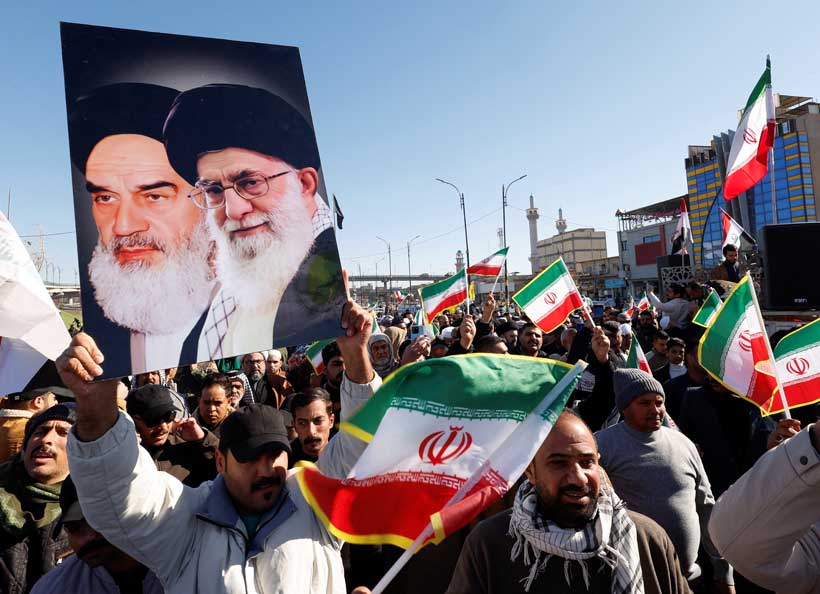
Almost fifty years after the revolution in 1979 that changed the political landscape of Iran, Iran is at the crossroads of its history, which is defined by economic pressures, social pressure, and the changing geopolitical environment. The Islamic Republic was constructed as a combination of revolutionary ideology, anti-Western response, and promise of social justice. In the present day, although the ideological framework is still maintained, the sustainability of that framework is being strained increasingly by the structural economic pressures of the day, generational shifts, and changing regional hegemony.
On the economic front, Iran is continually constrained by global sanctions and inefficiency in its structure. Withdrawal by the United States from the Joint Comprehensive Plan of Action (JCPOA) and the reimposition of massive sanctions in 2018 have cut off much of the oil exports of Iranian oil, banking, and foreign investment flows. The country works well under its economic potential despite the fact that Tehran has been able to sustain limited oil sales, especially through discounted sales to China and through surrogate routes. The inflation rate has been above 40 percent during the recent years, the Iranian rial is falling drastically, and unemployment among the youth is also a burning issue. It is the middle and lower classes that are directly impacted by these economic pressures and that pose a legitimacy challenge that cannot be solved only through rhetorical means of revolution.
The internal landscape is a manifestation of long-term frustration. Frequent demonstrations regarding fuel prices, the state of the economy, and social liberation indicate the growing disparity between state discourses of resistance and the realities that the citizens encounter. The newer generation born after the revolution has lost any connection with the revolutionary memory of 1979 and perceives governance less as ideologically symbolic and more based on economic performance and individual opportunity. The policy employed by the state has been based on the repressed handling of dissent, which consists of the limitation of the mobilization of protests and the prevention of the collapse of the system. Although this is a way of maintaining short-term stability, it does not deal with structural issues like brain drain, capital flight, falling purchasing power, and diminished faith in long-term economic potential.
The main political quandary is consequently a legitimacy transformation quandary. In the past, the Islamic Republic gained legitimacy through revolutionary mobilization, religious control, and confrontation with the external hostilities, especially the United States and Israel. Nevertheless, the contemporary politics demands more and more performance-based legitimacy—providing economic growth, stability, and material changes in the quality of life. The conflict between ideological stability and realistic adjustment is the characteristic of the contemporary crossroads of Iran.
Iran is geopolitically a country that exists in the complex web of pressures. The United States is still the main external agent, which affects the Tehran strategic calculations. The policy of Washington is alternating between the engagement of diplomacy and coercion, yet the ultimate goal is the same as it is: avoiding the possibility of Iran obtaining nuclear weapons competence and reducing its impact in the region. In Tehran, it will need negotiations that will help soften sanctions and stabilize the economy, but any deal will not collapse under the perception of submission over matters of sovereignty, ballistic missile potential, and relations with the region.
Meanwhile, the nuclear and missile programs in Iran are considered to be existential threats to Israel. The shadow struggle that has been there for a long time, including cyber attacks, precision attacks, espionage, and proxy wars, has heightened strategic mistrust. The intensity of this rivalry is shown by the fact that Israel has been carrying out its operations within Iran and against Iran-related targets in Syria. Any intensification would attract Gulf states and disrupt world energy supply, especially through the Strait of Hormuz, which is a choke point in the oil markets of the world. Even minor confrontations will have a global economic impact, as Iran is strategically placed in the important maritime paths.
The regional policy of Iran has focused on the establishment of strategic depth by alliance and coalition with non-state actors and supportive governments within Lebanon, Iraq, Syria, and Yemen. This system becomes a deterrence and leverage factor, making it difficult to engage in a direct military strike on the territory of Iran. Geostrategically, this doctrine of forward defense has enhanced the bargaining power of Iran. But it is likewise causing tension with the other Arab countries and creating the impression of destabilization in the region. The recent diplomatic thaw between Iran and Saudi Arabia, which was facilitated by China, shows that both sides noticed that continued confrontation is expensive in terms of both economics and strategy.
Iran is geographically at one of the most strategic points of Eurasia. It connects the Persian Gulf with Central Asia, the Caucasus, and South Asia. The International North-South Transport Corridor is one of the major trade routes that can make Iran a major transit route between India and Russia and Europe. This geo-economic location, in theory, has colossal prospects of being rolled into new multipolar trade systems. Sanctions and political isolation in reality prevent full access to the global markets. The latter can be said to be strategic convergence, as Iran was brought closer to Russia, especially after the war in Ukraine, as a result of Western pressure. But such convergence also subjects Tehran to secondary sanctions and makes it less flexible in its East-West balancing.
Iran—Concerns about the nuclear problem continue to be the major pivot of the external affairs. Tehran maintains that its nuclear program is nonviolent and has indicated that it is free for verification. But the Western governments require more guarantees and wider negotiations, which can feature missile capabilities and regional operations. It is possible that a strictly limited nuclear deal will minimize the risks of immediate proliferation and alleviate the economic pressure, which might make the Iranian internal situation more stable. Nonetheless, such a deal may not help solve any underlying rivalries between the region but could simply freeze the situation unless there are larger regional de-escalation mechanisms. On the other hand, the inability to find any solution will lead to the further worsening of the economy and the possible military clash.
In a more geo-strategically global understanding, the balance of power between the Middle East and the rest of the world will be influenced by the course of Iran. In case Tehran manages to negotiate the lifting of sanctions and turns in the direction of economic integration with the Gulf states, it will be able to shift from the resistance-focused model to the development-oriented state step by step. This would strengthen the stability of the region, safeguard the energy security, and minimize the motivation to intervene. It would also make the regional rivalry be based more on economic rivalry rather than military rivalry, especially in terms of infrastructure rivalry, trade corridor rivalry, and energy market rivalry.
Nevertheless, should the negotiations fail and the confrontation escalate, Iran might apply the asymmetric deterrence further, increasing the range of its missiles and extending proxy bases. That way would strengthen the preemptive stance of Israel and increase the presence of the US military in the Gulf. The escalation would disorient shipping routes, exert more volatility on oil prices, and disintegrate the security infrastructure in the region. To the surrounding Arab nations, which require diversifying and changing their economies, new warfare would destroy investment conditions and long-term strategies.
On the domestic front, economic resilience is what will sustain the strategic position of Iran. The political principle of endurance can only be stretched so far as inflation undermines the wages and the depreciation of currency undermines savings. This needs structural changes: enhancing transparency, welcoming foreign investment, and a non-hydrocarbon economy, and empowering the business sector. Foreign policy victories cannot entirely offset its dissatisfaction at home without economic change.
After all, the crossroads of Iran is not only ideological but also structural. The state has to strike a compromise between sovereignty and economic need, deterrence and diplomacy, and ideological identity and practical governance. Its strategic location means that its decisions will have a far-reaching impact, not only across its frontiers, but also on the energy markets of the world, the great-power politics, and the new security order of the Middle East. The future of Iran becoming a development-oriented regional power with full membership in multipolar networks or being a sanction-bound resistance state under continuous pressure will not only dictate the internal stability of the country but also the geopolitical orientation of a long-time conflict-ridden and strategically divided region.