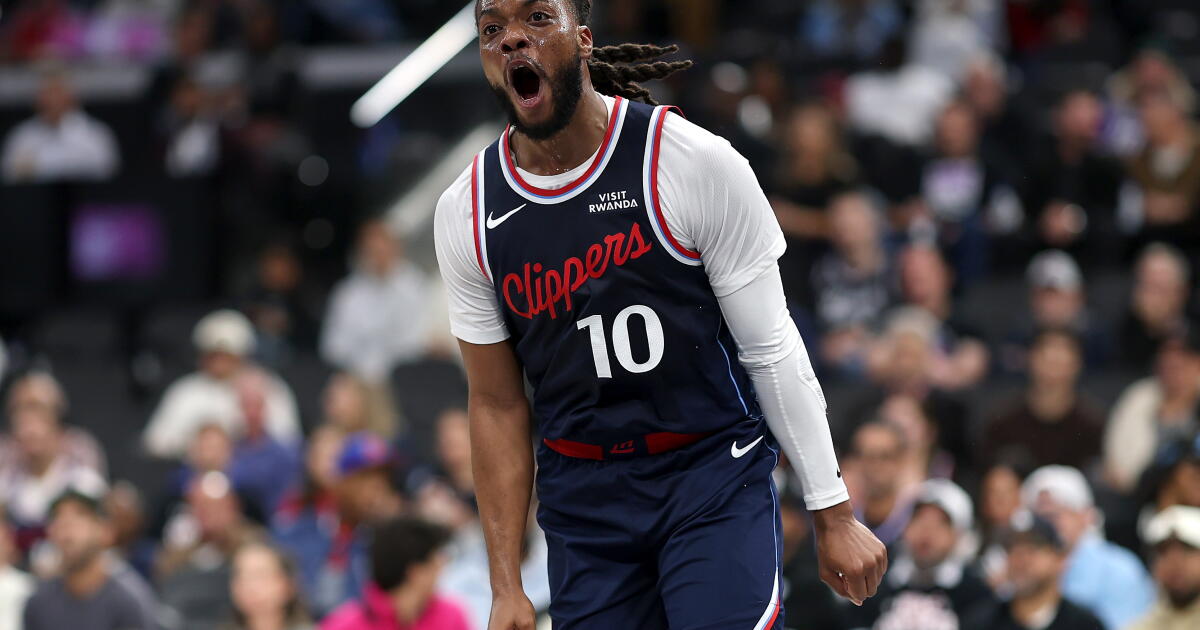
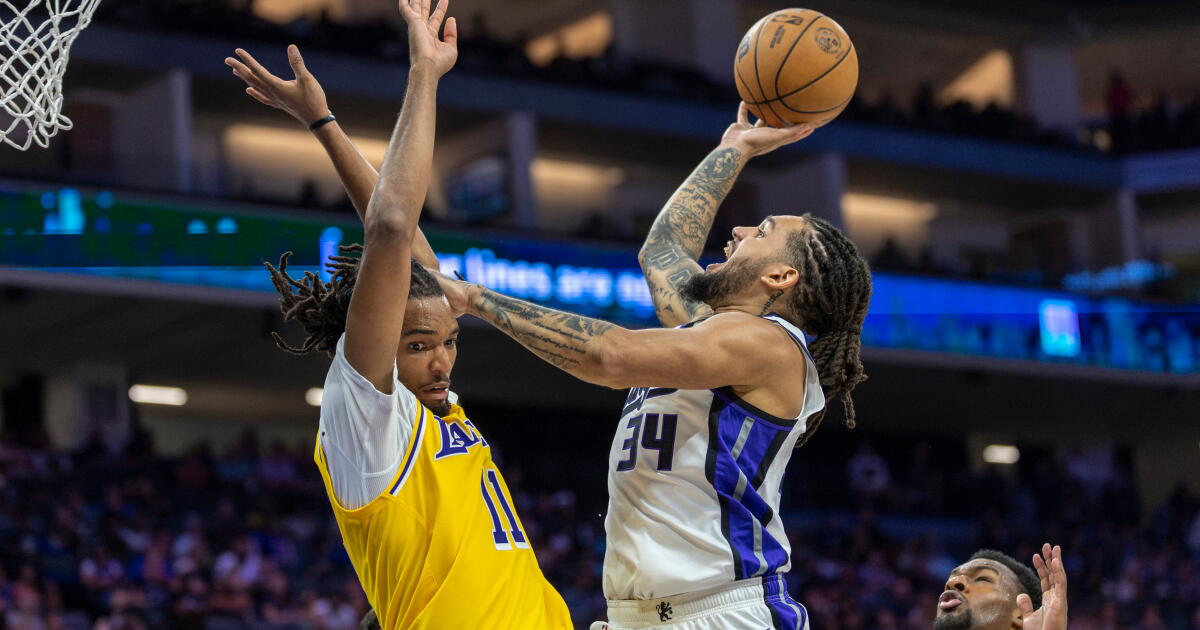
Darius Garland, microphone in hand, waited patiently at midcourt to speak before the Clippers tipped off their 2026-27 NBA season against the Sacramento Kings on Wednesday night at Intuit Dome.
“Clipper Nation, Clipper Nation,” the eighth-year guard said to raucous cheers in Inglewood. “We’ve been working hard all summer, ready to really turn up this year. [We’ll] try to play at the highest level. [I] really appreciate the support from my teammates, coaching staff [and] organization — really appreciate everybody that comes out and … continues to support. We’re gonna be here all year.
“Clipper Nation, let’s go.”
Garland wasted no time giving Clippers fans something to smile about after an offseason of torment and transformation. He started the game shooting five-for-five from the field and three-for-three from deep, scoring 16 points in nine minutes and fueling the Clippers’ 121-96 blowout win over the Kings.
Beginning his first full season in Los Angeles after being acquired from Cleveland in a trade for James Harden in February, Garland led the Clippers with 30 points on 11-for-19 shooting and four assists.
Zach LaVine and Domantas Sabonis, meanwhile, did the heavy lifting for Sacramento, with the shooting guard scoring 28 points and the center facilitating the offense with 14 points, eight assists and 18 rebounds.
Key Kings forward Keegan Murray was scoreless through the first three quarters and was held to just two points. And rookie guard Darius Acuff Jr., whom Sacramento selected No. 7 in the draft out of Arkansas, posted 12 points on an abysmal five-for-24 shooting in his debut.
The Clippers, however, had fun to start the post-Kawhi Leonard era.
Following Garland’s lead, L.A.’s returners, including forward Derrick Jones Jr., guard Kris Dunn and centers Isaiah Jackson and Brook Lopez, were efficient and productive. Jones finished with eight points, five assists, six rebounds and an electric alley-oop slam; Dunn had seven points, seven assists and five rebounds with his usual hard-nosed defense; Jackson had 13 points and five rebounds; and Lopez had 17 points and 11 rebounds.
But Clippers fans were plenty focused on the new guys.
Former Lakers forward Rui Hachimura, who signed a three-year deal with the crosstown rival in the offseason, struggled in his Clippers debut and finished with 10 points on three-for-13 shooting. Guard Gradey Dick, a piece of the offseason trade that sent Leonard back to Toronto, was far more productive with 12 points.
Then there’s the rookie out of Illinois.
Keaton Wagler, the Clippers’ No. 5 pick in the draft, posted 15 points with five assists and five rebounds off the bench. The team’s highest draft pick since Blake Griffin (No. 1 in 2009) was clearly comfortable from the jump and gave his new fan base plenty to be hopeful for.
“He’s already shown that he’s mature,” coach Tyronn Lue said pregame. “I think he doesn’t get rattled, and just being around him for the last few months, whether he’s making shots [or] missing shots [and] not playing well, he’s always the same. He has the confidence to just keep shooting the balls, even when he’s missing.”
Wagler had an assist on his first touch and converted a savvy layup for his first career points.
Fellow rookie Baba Miller, a forward the Clippers drafted with the No. 36 pick, finished with four points and three rebounds.
Lue — whose first starting lineup featured Garland, Dunn, Jones Jr., Hachimura and Jackson — and the Clippers are in unfamiliar territory without a superstar on the roster and with most outsiders expecting the team’s streak of 15 consecutive plus-.500 campaigns to end.
But as Clippers interim president of basketball operations Trent Redden nervously said on media day, the team works well with its back against the wall.
Injury updates
The Clippers said guard Bradley Beal (knee), center Yanic Konan Niederhauser (foot) and forwards Brandon Ingram (heel) and Max Strus (foot) are all making progress in their rehab journeys but won’t travel for the team’s first road game on Sunday against the Oklahoma City Thunder.
Rhyne Howard added 16 points and Naz Hillmon had 15 for the Dream, who host Game 4 on Saturday.
It was the second straight strong game for Reese, who had 30 points and 16 rebounds in Game 2, which the Dream also won for their first victory ever in the Finals. She now has a double-double in each game of the Finals.
“It feels good when you’re in the Finals. It’s a long season and you play against everybody and go through and push through, but when you can do it at the highest level, this is what you live for, this is what the offseason is for,” Reese said. “I put the work in for this moment and I’m just happy I could lead the team to a win. We’re feeling good going into Saturday.”
With the score tied at 49 in the third quarter, Atlanta scored eight straight, including four by Reese. Golden State got within 59-55 on Tiffany Hayes’ layup, but could get no closer as Atlanta closed the quarter scoring 12 of the final 14 points.
Atlanta has dominated the third quarter so far in the series, outscoring Golden State 63-35 in the three games.
This game was originally scheduled to be played on Thursday at the Gateway Center Arena, where the Dream play most of their home games. The league was able to work with the Atlanta Hawks and State Farm Arena to play the next two games of the championship series there so that they could have a much bigger crowd. Gateway seats 3,500 fans while State Farm Arena can seat more than 17,000.
Wednesday night’s game was sold out, as is Game 4 on Saturday, which will also be played at State Farm Arena.
The Clippers will have their hands full when the season opens trying to contend in the always tough Western Conference after being slapped with the harshest penalties in league history for violating salary cap circumvention rules.
With Kawhi Leonard, James Harden and Ivica Zubac gone from last season’s team, they’ll focus on developing a new core of stars, including rookie Keaton Wagler, when they open play Wednesday by hosing the Sacramento Kings at Intuit Dome.
Another positive for the team: Tyronn Lue is a proven asset as coach and he’ll be tasked with developing and blending in the younger players. Wagler spent the summer building up his body and has potential to be a strong defender.
The league’s year-long investigation is over and the Clippers have a clear path, albeit rocky, to move on and again become competitive in the West. They finished ninth in the conference last season and were eliminated by the Warriors in a play-in game.
Now fully recovered from a foot injury, two-time All-Star guard Darius Garland will be counted on to provide floor leadership. Also returning are former All-Star guard Bradley Beal, guard Kris Dunn, forward Derrick Jones Jr. and center Brook Lopez.
“I think we can surprise a lot of people,” Garland said.
Garland is fully recovered from toe and foot ligament injuries. In 19 games last season, he averaged 19.9 points with 6.4 assists. With a full offseason and training camp, Garland is expected to be one of the team’s top players.
Other young players to watch are guard Kobe Sanders, who had a productive rookie season when averaging 7.3 points and nearly 20 minutes a game as part of the rotation, and center Yanic Konan Niederhauser, who had his rookie season end early because of a foot injury but he showed promise over 41 games.
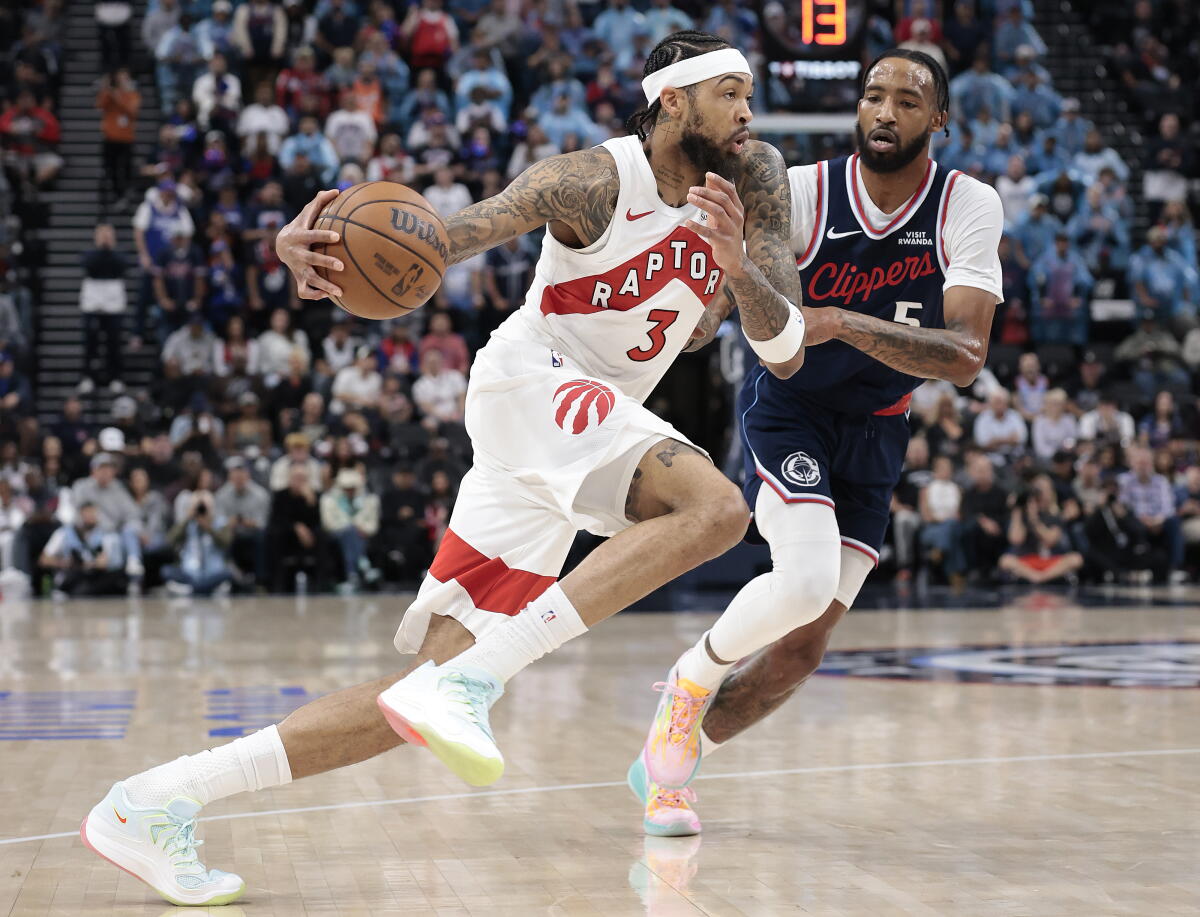
Forward Brandon Ingram, driving against Clippers forward Derrick Jones Jr. last season, is now a teammate after the Kawhi Leonard trade was completed following the salary cap circumvention investigation.
(Ronald Martinez / Getty Images)
Additions include All-Star forward Brandon Ingram and guard Gradey Dick, who were part of the Leonard trade to Toronto, wing Max Strus, guard Jalen Pickett, forward Baba Miller, forward Isaiah Jackson and forward Nick Martinelli.
“I know [there are] little to no expectations for us this year,” said Ingram, who will miss the start of the season while recovering from May surgery for a partially torn Achilles. “We have enough in the building to compete. This is what we love to do. So, we’ll go out and compete every single night, learn, go on to the next game and get better and better.”
Strus also will be out for a while after injuring his right foot during training camp.
Departed from the team are forward John Collins, guard Bogdan Bogdanovic, forward Nicolas Batum and wing Bennedict Mathurin.
Also noteworthy: owner Steve Ballmer won’t be sitting courtside after being banned by the NBA for a year as part of the team’s steep punishment for circumventing salary-cap rules. Top basketball executive Lawrence Frank has been banned for six months. The penalties included the loss of five first-round draft picks.
“I give our players a lot of credit … the leadership is great [and] the morale is great, even in these tough situations,” Lue said at the start of training camp. “That’s good to see, when you have your players coming in every day, giving everything they have; a lot of teams don’t have that.”
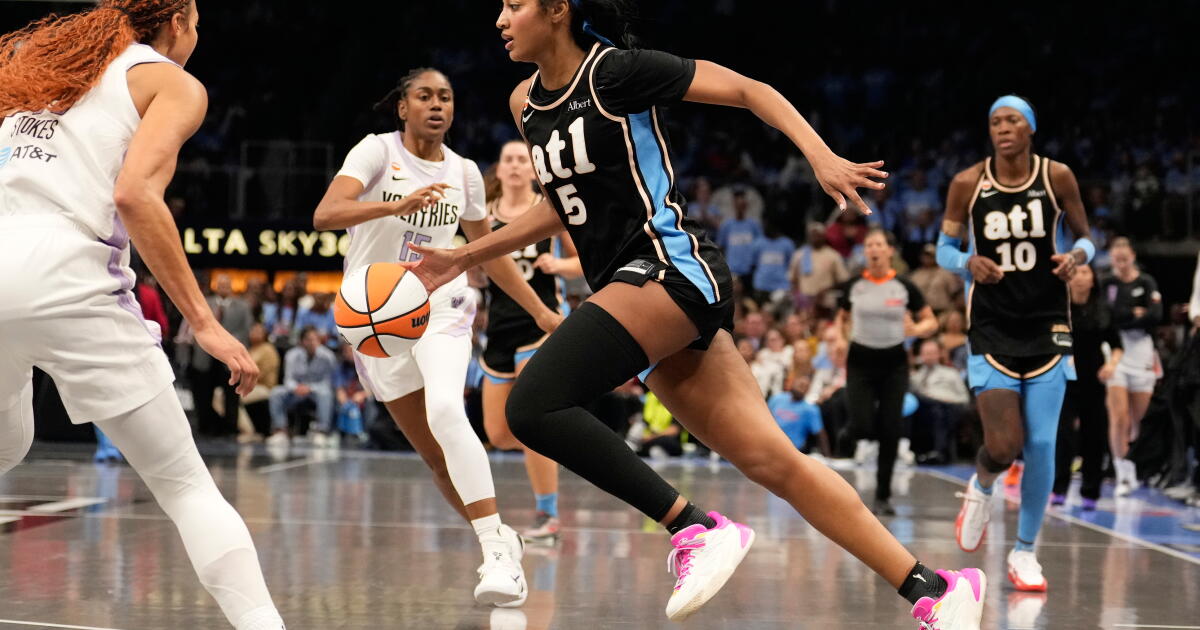
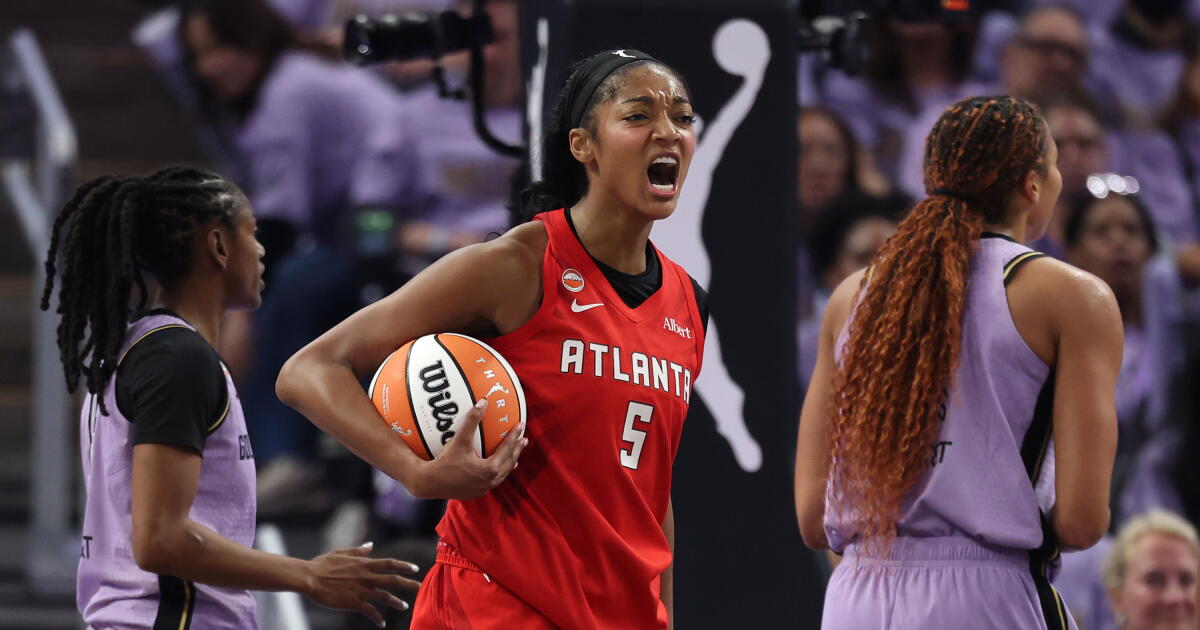
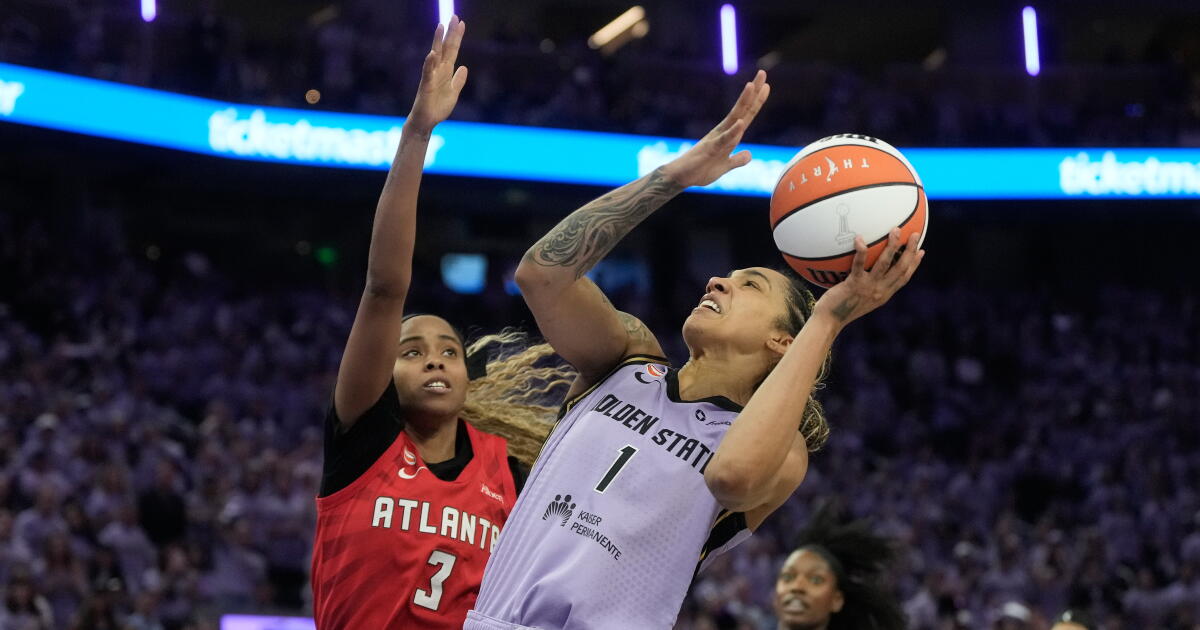
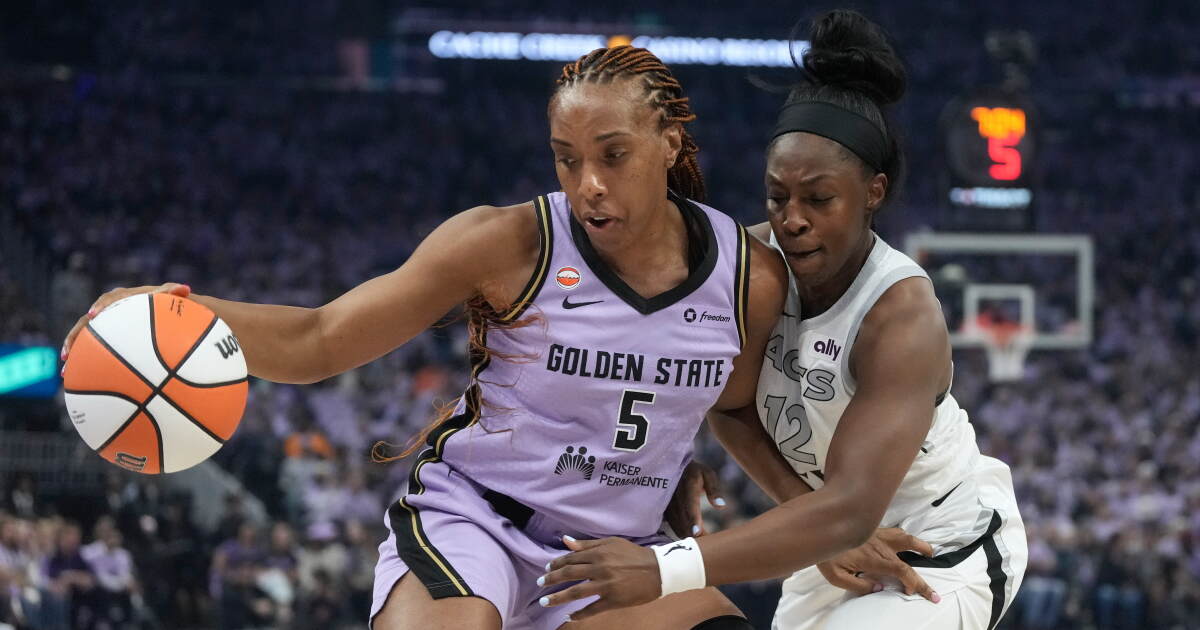
SAN FRANCISCO — Angel Reese had 30 points and 16 rebounds, Allisha Gray added 18 points and the Atlanta Dream stymied Golden State on both ends in the second half, beating the Valkyries 79-65 on Monday night to even the best-of-seven WNBA Finals at one game apiece.
Rhyne Howard set a Finals record with six steals, while Jordin Canada contributed 13 points, 10 assists and seven rebounds as the Dream earned the franchise’s first Finals victory after going winless in three previous trips — 0-10 overall. They now head home having salvaged a split in front of the boisterous “Ballhalla” crowd at Chase Center.
“This environment is tough to play in. Shoutout to the fans. Shout out my team, though,” Reese said. “We came and fought. I mean, that Game 1 was tough for us. But we moved on.”
Reese became the third player with at least 30 points and 15 rebounds in a Finals game, joining Jonquel Jones for Connecticut in 2019 and Breanna Stewart for Seattle in 2020.
“She was definitely way more aggressive, she had a great game,” Valkyries center Kiah Stokes said. “We let everyone kind of have their way.”
Game 3 is Wednesday in Atlanta, where the next two matchups were moved to the NBA Hawks’ State Farm Arena so more fans could attend. It holds more than 17,000, as opposed to the Dream’s regular home, Gateway Center Arena, which accommodates only 3,500.
Chase Center holds 18,064 and has sold out every game since the Valkyries began playing last year.
Gabby Williams finished with 14 points on three-for-15 shooting after she was the only Golden State player to score in double figures with 26 points in Saturday’s 68-64 Game 1 win. The Valkyries shot 34.4% and went seven for 24 from three-point range.
“We shot terribly,” point guard Veronica Burton said. “We missed shots that we make all the time.”
Foul trouble almost did in the Dream this time — but Reese simply wouldn’t have it. She went scoreless in the second half of the opener but delivered the big baskets and key defensive stops two days later, finishing 10 for 16 from the floor while dishing out three assists and blocking two shots.
“We watched film and saw the things that we messed up on. When I said that they didn’t do anything to mess us up, it was literally just us,” Reese said. “And we can see that tonight. And we’re gonna carry that over in Atlanta. Atlanta, y’all better pull up and pop out, I’m looking forward to it.”
Atlanta scored 24 points off Golden State’s 19 turnovers to hand the Valkyries their first loss in regulation since a 73-70 defeat at Chicago on Aug. 21. The Dream had just eight points off turnovers in Game 1 but returned to the defensive formula that advanced Atlanta this far.
The Lakers waived former first-round pick Dalton Knecht on Monday to reach the NBA’s maximum roster requirements before the season begins this week.
The 17th overall pick in the 2024 draft had fallen out of the rotation in the last two seasons but had a chance to prove himself during training camp and the preseason, when the Lakers had 16 players on guaranteed contracts. Knecht, who averaged 4.2 points per game and 10.2 minutes per game last season, played just 14 combined minutes in the last two preseason games.
Knecht’s role had greatly diminished since he flashed his scoring potential as a rookie. After scoring 37 points in a win over the Utah Jazz in November 2024 and tying the single-game rookie record with nine made three-pointers, Knecht looked as if he could have been the steal of the draft. But after a trade to Charlotte for center Mark Williams was rescinded, Knecht never settled back into the rotation.
The Lakers brought in nine new players during an offseason roster overhaul, further burying Knecht on the forward depth chart.
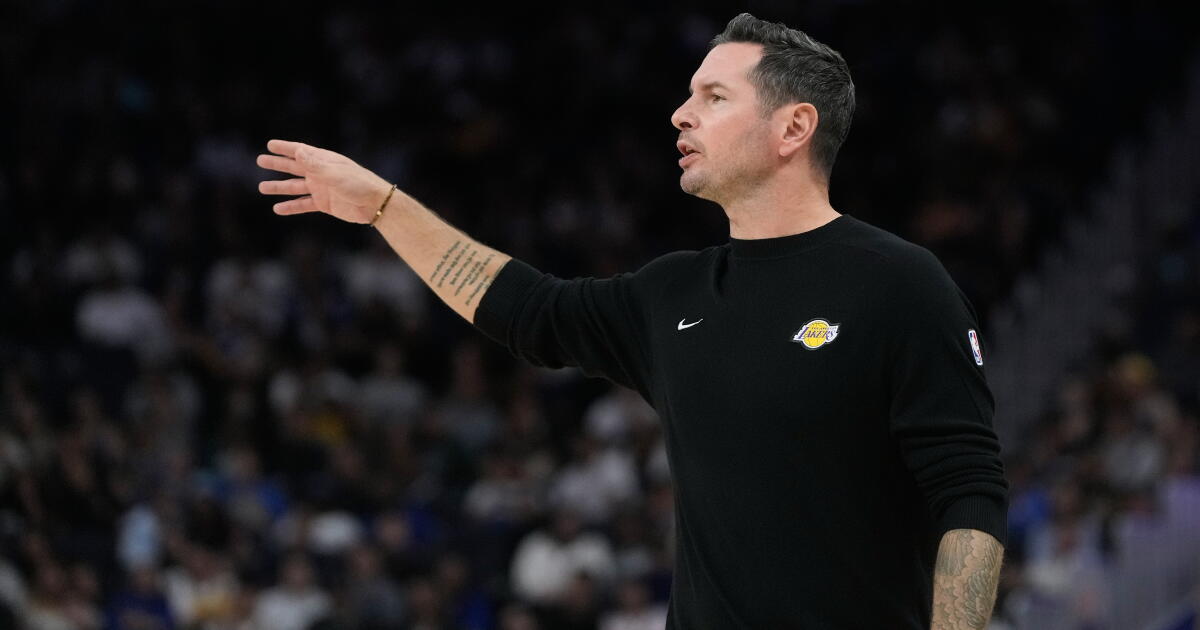
“The team changed,” Lakers coach JJ Redick said of Knecht ahead of the Lakers’ preseason finale last Friday. “The needs changed, the fit changed. I think he got better as a player over the last two years.”
The Lakers looked into acquiring center Jericho Sims from the Milwaukee Bucks during the preseason in exchange for Knecht, sources close to the situation but not authorized to speak publicly told The Times. But talks broke down when the Lakers were unwilling to part with multiple second-round draft picks.
The Lakers, who wanted to solidify their backup center position behind Walker Kessler, have only three second-round draft picks (2031, 2032 and 2033) available to trade. They already don’t control their first-round pick until 2032 after sending two first-round picks and two first-round pick swaps to Utah to acquire Kessler this summer.
Knecht was given an “excused absence” from practice Monday, Redick said. The deadline for teams to reach the maximum of 15 standard contract players was 2 p.m. PDT Monday before regular-season games begin Tuesday. The Lakers open their season Wednesday at Crypto.com Arena against the Golden State Warriors.
Redick also said guard Bronny James was excused from practice, noting there were players who were “under the weather.” The third-year guard who was picked 55th overall in the same draft as Knecht remained on the Lakers’ updated roster.
James worked his way into the postseason rotation last season while the Lakers were struggling with injuries to their backcourt. He averaged 2.9 points and 1.2 assists during the regular season while shooting 38.6% from three.
Injury update
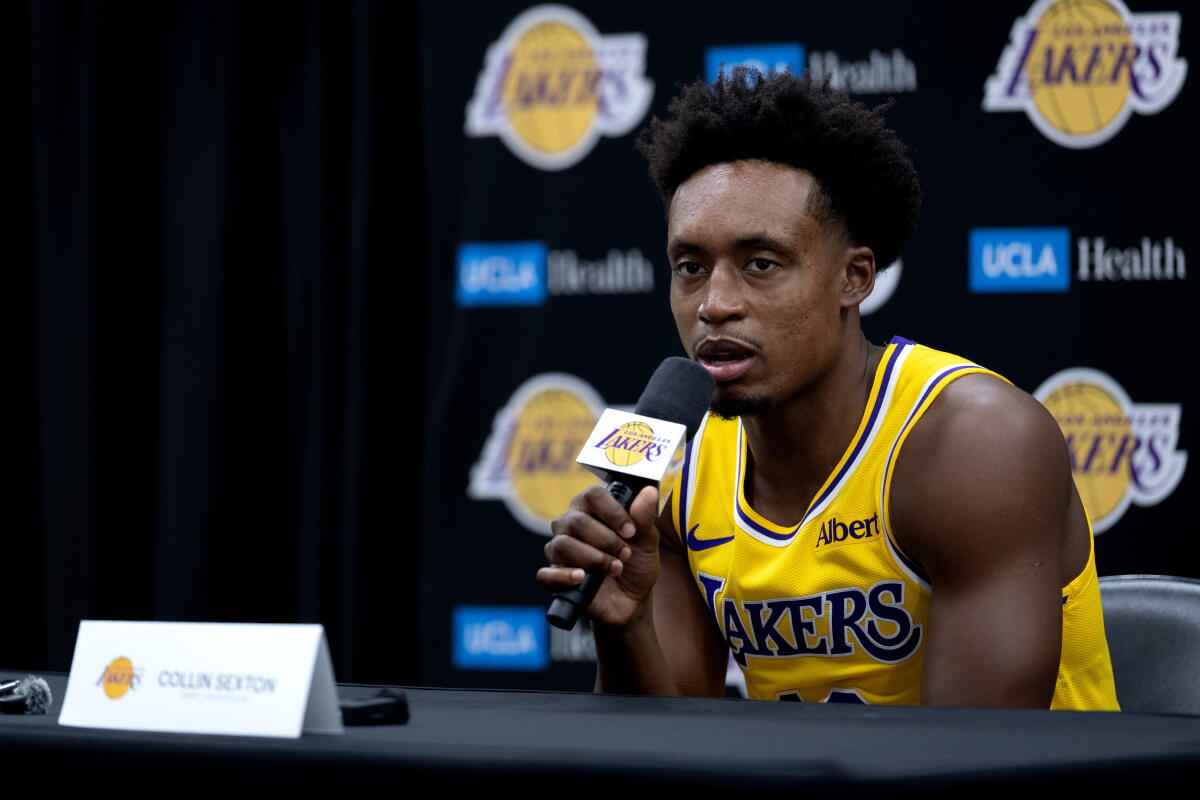
Lakers guard Collin Sexton speaks during the team’s media day in El Segundo on Sept. 28.
(Eric Thayer / Los Angeles Times)
For the first time since training camp started, Collin Sexton was a full participant in practice with the Lakers on Monday. Still, Sexton wasn’t ready to fully commit to playing in the Lakers’ season-opener Wednesday.
Sexton missed all five preseason games and a lot of practices with a lower right leg injury.
Sexton, who said he felt good at practice, was asked about playing against the Warriors.
“We’ll be taking it day by day,” he said. “At the end of the day, I had a really good practice today, felt good. Super excited to be back out there with the guys, so I look forward to it.”
Sexton said he had some “tightness and stuff” in his lower leg, “but I feel pretty good.”
He was asked what caused the injury.
“Nothing particular,” Sexton said. “I think we figured it out and now we’re just moving forward and just continue to get these reps in, continue to play five on five, and get out there as soon as possible.”
Sexton is a 6-1 point guard the Lakers signed to back up Luka Doncic and Austin Reaves in the backcourt. The Lakers signed him to a two-year, $19.2-million deal.
“He’s another guy that can bring the ball up and can create his own [mismatch],” Doncic said. “So we’re excited to have him back.”
Second-year forward Adou Thiero and rookie guard Cameron Carr both missed practice Monday.
But having Sexton back was a good sign for the Lakers.
“It felt good, super excited to be back out there, honestly, just getting out there and getting up and down, legs felt a little heavy, but it was great,” Sexton said. “It was definitely a great day, great practice for the team as well, and the guys were really competing.”
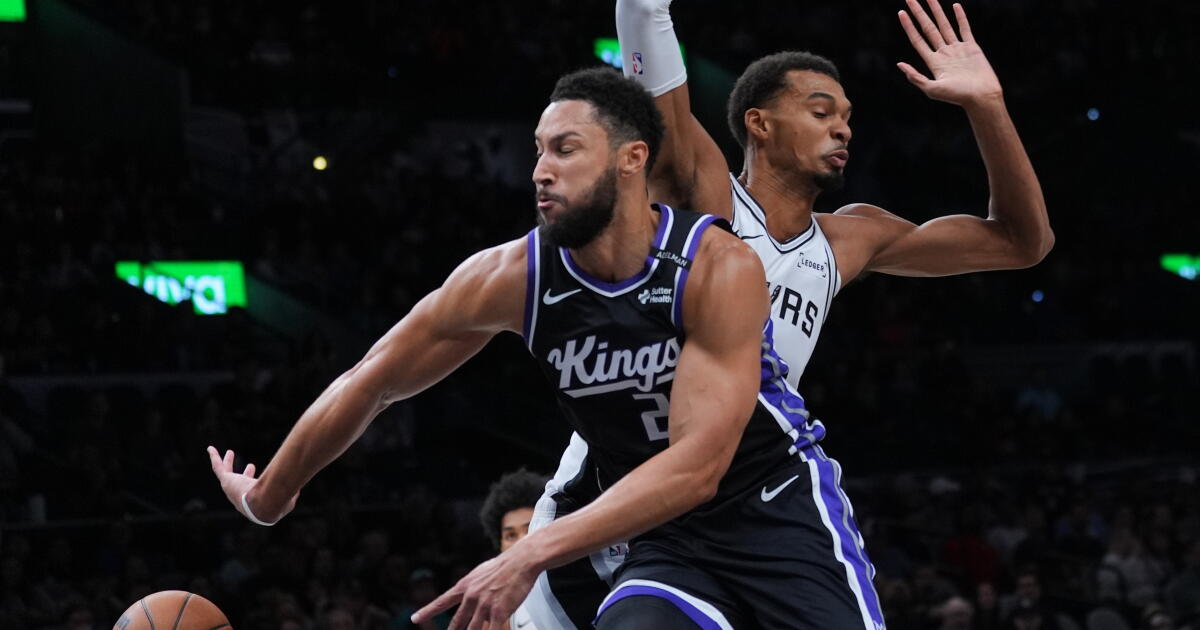
Ben Simmons’ comeback attempt with the Sacramento Kings generated more than one blip on the basketball radar during the preseason before it came to an abrupt end Sunday when he suffered a torn Achilles tendon during practice.
Injuries had restricted the former No. 1 overall draft pick to appearing in only 107 games the last five seasons, but his return on a one-year $3.5 million, non-guaranteed contract had gone well enough that he was set to start in the regular-season opener Wednesday against the Clippers.
Simmons, considered the greatest player to come out of Australia, made news in August by taking part in the national team’s player-driven minicamp in Melbourne, a precursor to the 2027 FIBA World Cup and 2028 Olympics. Simmons, 30, has never played in a major tournament for his home country.
He also became an unwitting part of an embarrassing episode three weeks ago at Kings media day when open microphones captured an off-air conversation between female reporters discussing the physical appearance and personalities of Simmons and teammates.
A woman’s voice said, “That’s what comes with being Ben Simmons. He is cringe, cringe,” and another woman added that he is “lucky he’s so fine.” The first media member agrees, saying, “He’s a good-looking dude. His skin is, like, so smooth, I was like, damn, no tattoos?” The media members have yet to be identified.
He refrained from commenting on the exchange except to back teammate Zach LaVine, whose personality also was criticized by the reporters. But Simmons will be in street clothes from now on. The Kings said he will undergo surgery to repair the tear, which normally requires a recovery period of six to 12 months.
“I’ve faced challenges before that tested me mentally, physically, and emotionally, and I’ve found a way through every single one of them,” Simmons said in a statement posted to his Instagram Stories.
Being sidelined is nothing new for Simmons. He missed his entire first NBA season with the Philadelphia 76ers in 2016-2017 with a foot injury, missed the entire 2021-2022 season with a back injury and the entire 2025-2026 season to focus on his physical recovery from back and leg issues as well as his mental well-being. He last played for the Clippers in the spring of 2025, averaging 16.4 minutes and 2.9 points over 18 games.
That production was a far cry from the promise he displayed coming out of LSU, where in his one season was a consensus All-American after averaging 19.2 points, 11.8 rebounds and 4.8 assists a game. A 6-foot-10 point guard, Simmons was NBA Rookie of the Year in 2017-2018, joining Hall of Famers Oscar Robertson and Magic Johnson as the only rookies to reach 1,000 points, 500 rebounds and 500 assists. And Simmons was an All-Star the next three seasons before injuries began mounting.
His return this preseason was intentionally low key, sliding onto the roster of the lowly Kings (22-60 last season) without much fanfare. Simmons was quietly repairing a reputation marred by his succession of injuries and the performance anxiety and emotional burnout he has openly discussed.
He also seemed keen on representing Australia for the first time. Simmons was forced to miss the 2024 Paris Olympics with a back injury after passing on the Rio 2016 and Tokyo 2021 Games even when relatively healthy. Now any sort of return is again in jeopardy.
Tries: Chessum, Van der Flier Cons: Searle 2 Pen: Searle
Leicester Tigers began their Champions Cup campaign with a 41-17 defeat by French club Pau.
Portugal international Rodrigo Marta crossed for two of the home side’s five tries, with a late burst helping them earn a bonus point from their Pool One opener.
Despite falling behind to an early Pau penalty, Leicester did well in the early exchanges, their tactical kicking game keeping them camped in their opponents’ territory.
Billy Searle’s 50-22 put the Tigers in superb field position and they capitalised through captain Ollie Chessum, who was making his first appearance of the season after recovering from a foot injury.
Pau fought back well, however, showing their quality with three tries in a 20-minute spell either side of half-time.
They had already seen a Sacha Zegueur try ruled out for a knock-on before Marta, the leading try-scorer in this season’s Top 14 with six in five appearances, and prop Jon Zebala touched down late in the first half.
Centre Marta raced in again from 30 metres to extend Pau’s lead after the interval.
Archie van der Flier powered over in the corner to move Leicester back within seven points, but that would be the final time Leicester would be within range of a losing bonus point, as Pau scored 17 points without reply.
Fly-half Axel Desperes added a further penalty, Theo Attissogbe sent winger Aaron Grandidier Nkanang over unchallenged in the corner and Fabien Brau-Boirie intercepted a Leicester pass to complete the scoring.
Leicester’s remaining Pool One matches are against Clermont Auvergne, Glasgow Warriors and Leinster.
It was 41 years ago in April of 1987 as a 28-year-old sportswriter that I was given one of my favorite assignments.
From LAX, I flew to Indianapolis, rented a car and drove one hour to Bloomington, Ind., home of the NCAA basketball champion Indiana Hoosiers. My most vivid memory was nervously driving on Route 37 with no GPS guiding me and seeing the many varieties of basketball hoops hanging on farm houses and family homes, providing powerful evidence that all the stereotypes about the state’s love for basketball were true.
This was months after the best selling book, “A Season on the Brink,” was published. And a month after coach Bob Knight and Indiana won their fifth NCAA basketball championship.
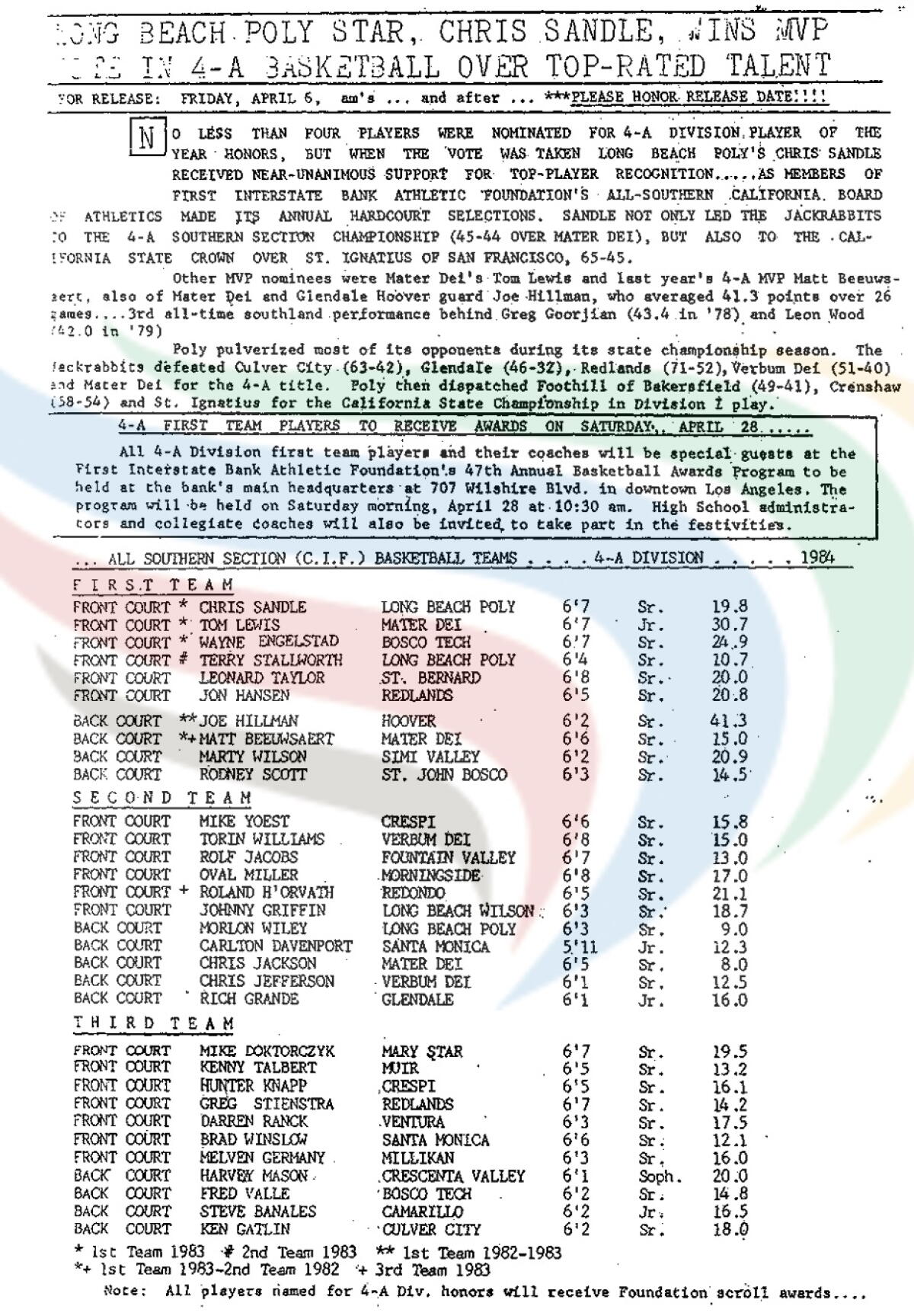
My assignment was to check in with Glendale native Joe Hillman, a 1984 Hoover High graduate who was Knight’s first recruit from west of the Mississippi River. Hillman averaged 41.3 points his senior year at Hoover He ended up being a reserve guard behind Steve Alford and Keith Smart on the 1987 NCAA championship team, so it was perfect timing.
He also continued to play baseball and was a 25th-round draft pick of the Oakland Athletics in 1986.
Fast forward to Tuesday at the YMCA in La Cañada Flintridge. The guest speaker for the Glendale Quarterback Club was Hillman. It was the first time seeing him since my trip to Indiana. Now 60 and living outside of Indianapolis, Hillman was asked tough questions.
1984 All-CIF basketball team.
(1984 Foundation)
Can you still hit?
“I can still do that.”
Can you still make free throws?
“I don’t know about that.”
How come you never went into coaching?
“I wouldn’t have been patient enough.”
How did Knight convince you to go to Indiana?
“We don’t have this in Indiana,” Knight told him during a visit to Santa Anita while looking out at the San Gabriel Mountains. “Why would a California kid come to Indiana?”
Hillman: “I want to play on a national championship team.”
Any Knight stories to tell?
“I don’t know if you can put them in a paper.”
Years later, when talking to other players, Hillman said, “There was a method to his madness. They all had the same stories with different names.”
Indiana’s Daryl Thomas (24) and Joe Hillman (44) victorious during interview with CBS announcers Billy Packer (L) and Brent Musberger (R) in 1987.
(Manny Millan/Sports Illustrated via Getty Imaages)
Among the Knight truths: Players who practiced best always got to play. The best players always got the most heat from him. Anyone who graduated from Indiana received his total loyalty.
Hillman remembers calling Knight eight years after graduation seeking a phone number to reach a Reebok executive to inquire about a job. Knight ended up telling the executive he’d drop Adidas shoe contract for Reebok if Hillman were hired. Hillman didn’t get the job but learned what Knight would do for any player who got his degree.
“He was the most honest, most blunt coach,” Hillman said.
Asked why he chose to be subjected to such harsh criticism for four years, Hillman said, “My father was on me from the time of T-ball. He said constructive criticism was good.”
Comparing today’s college sports environment of NIL deals with the 1980s, Hillman said, “It would have been scary what kind of money we could have gotten.”
Hillman expressed disappointment at the lack of multiple-sport athletes today in high school sports. He said even Knight appreciated and supported his option to keep playing baseball.
Looking back on that trip from 1987, I re-read my observations: “The four-lane highway that stretches from Indianapolis to Bloomington is virtually deserted as darkness begins to descend over the lush, green countryside. The temperature is in the 50s, and the sky is overcast after three straight days of damp weather. The picturesque Midwestern landscape is immaculate, but equally alluring are the distinctive basketball hoops found among the farms and family homes along Route 37. Hoops are everywhere — on barns, rooftops, telephone poles, even next to power transformers.”
I remember getting lost in a forest trying to find where Hillman was living in a townhouse.
I wrote: “After finding the correct street, the quickest way to locate an Indiana basketball player’s residence is to ask a young fan. Shooting baskets by himself on a court not far away was a 12-year-old.
Behind a standout performance from quarterback Ty Dieffenbach in his first UCLA start, the No. 12 Bruins defeated Wisconsin 17-7 at the Rose Bowl on Saturday.
Dieffenbach orchestrated a six-play, 89-yard drive in the fourth quarter to help seal the win for the Bruins, who clinched bowl eligibility by improving to 6-0 under coach Bob Chesney. UCLA is the only undefeated team in the Big Ten.
Although UCLA (6-0, 4-0) entered with one of the most potent ground attacks in the nation, the Badgers’ (4-2, 2-1) stalwart defense — a unit that ranked No. 15 in total defense and ninth in passing yards allowed heading into the game — held UCLA to just 3.2 yards per carry. Heisman Trophy contender Wayne Knight was limited to just 29 all-purpose yards, though he scored his 12th touchdown of the season.
With UCLA struggling to get a push at the point of attack and the Wisconsin defense sealing the edge, the Bruins put their trust in Dieffenbach, who started in his first Football Bowl Subdivision game following Nico Iamaleava sustaining a knee injury against Oregon last week that could keep the senior out for the remainder of the season.
The understudy shined in the spotlight.
Even though expectations were tempered for Dieffenbach, he largely did not miss a beat, completing 22 of 33 passes for 264 yards — better than any single-game passing yards total Iamaleava has produced at UCLA.
Dieffenbach set up UCLA’s first touchdown in the second quarter when he completed a 21-yard pass to Jalen Saint Paul one play before Knight scored on a one-yard carry.
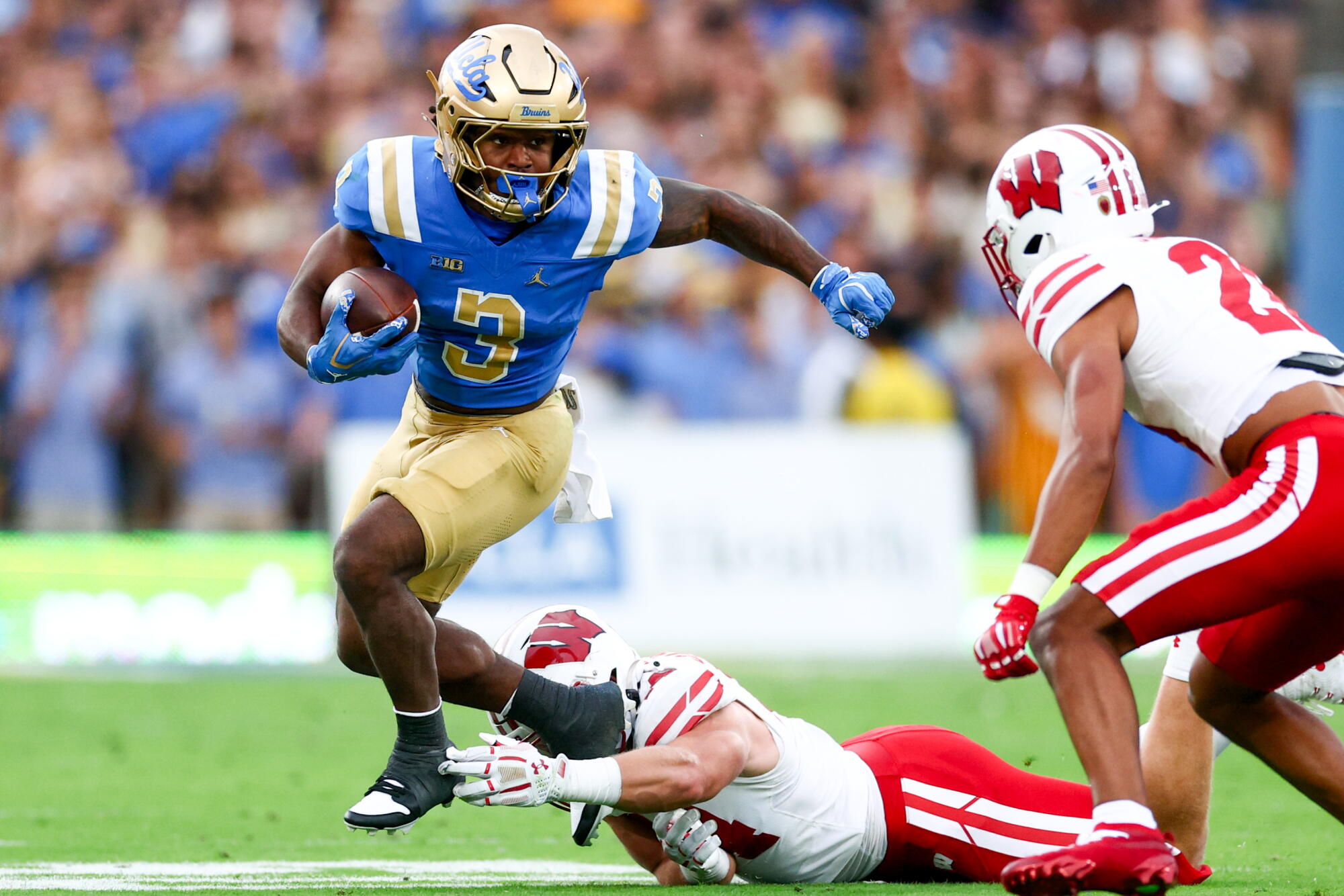
UCLA running back Wayne Knight breaks a tackle from Wisconsin safety Marvin Burks Jr. during the second quarter Saturday.
(Ronaldo Bolanos / Los Angeles Times)
UCLA’s second score — a touchdown that put the Bruins up 10 points in the fourth quarter — capped Dieffenbach’s most impressive drive. Starting at the UCLA 11, Dieffenbach connected on passes of 28 and 33 yards on a drive that culminated with Anthony Woods scoring on a three-yard run.
Dieffenbach looked poised in the pocket as he made passes under pressure. He excelled on third down, with UCLA converting on 13 of 20 tries. He threw one interception, which came on a Hail Mary as expired in the second quarter, and took just one sack.
Giving Dieffenbach some breathing room, UCLA’s defense dominated again, holding Wisconsin to 214 total yards. Even without UCLA starting outside cornerback Rodrick Pleasant, the Bruins’ secondary blanketed the Badgers in coverage, giving up just 66 passing yards, with Wisconsin’s top receiver Jaylon Domingeaux finishing with 26 yards.
Wisconsin running back Darrion Dupree is tackled by UCLA defensive lineman Sahir West during the second quarter.
(Ronaldo Bolanos / Los Angeles Times)
And while the “Bruin Bullies” held up at the line of scrimmage against the Badgers’ tailbacks, Wisconsin quarterback Colton Joseph ran for 71 yards and one touchdown, using various formations and fakes to confuse the Bruins’ stacked box.
While UCLA failed to produce a takeaway for the first time this season — despite forcing two fumbles, both of which were recovered by Wisconsin — the Bruins made several key stops to help UCLA stay in control.
A 10-yard sack from fifth-year linebacker Jalen Woods on third down late in the second quarter led to an unsuccessful 46-yard field-goal attempt by Gavin Lahm, leaving Wisconsin scoreless at halftime.
UCLA wide receiver Brian Rowe Jr. celebrates after making a catch in the second quarter Saturday against Wisconsin.
(Ronaldo Bolanos / Los Angeles Times)
After Wisconsin scored its only touchdown and subsequently forced UCLA into a three-and-out late in the third quarter, the Badgers had the ball with a chance to take the lead. But the Bruins forced two incomplete passes and stuffed Joseph at the line to force a punt.
In the fourth quarter, UCLA stopped running back Darrion Dupree short of a first down on fourth-and-two at the Bruins’ 48 to all but end the Badgers’ hopes of a comeback.
SAN FRANCISCO — Gabby Williams converted two free throws with 1:18 left to put Golden State ahead, two more with 4.1 seconds to go and finished with 26 points facing constant pressure from Atlanta’s stingy defense, and the Valkyries held off the Dream 68-64 in Game 1 of the WNBA Finals on Saturday.
Williams scored 16 of her points in the second quarter and no other Valkyries reached double figures as they shot 32.1% and seven of 33 from three-point range.
“We always knew we were going to find a way somehow,” Williams said on the microphone postgame as fans chanted “Gabby! Gabby!”
Rhyne Howard missed a three-point try with 1:09 left but Angel Reese made a steal moments later. Naz Hillmon missed from deep. Kiah Stokes missed the first of two free throws with 23.8 seconds left. Then Allisha Gray missed a three with nine seconds left.
Williams then hit the free throws a few seconds later to seal the victory.
Game 2 in the best-of-seven series is Monday night back at Chase Center, where the ear-piercing noise from a raucous “Ballhalla” crowd made for the exact hostile environment Valkyries coach Natalie Nakase requested from the home fans.
One of these two franchises will capture its first championship, and if the first game is any indication it’s going to be an all-out defensive fight.
Gray returned from injury to score 19 points, Reese added 14 points and 12 rebounds.
Jordin Canada contributed eight points, seven assists and five rebounds for the Dream, hitting a timely 13-foot jumper with 4:23 remaining.
Williams’ driving layup with 3:22 to play pulled Golden State within 62-61. Canada banged awkwardly into Williams’ knee on a box out during her late free throws and the Valkyries’ star was being cared for by an athletic trainer on the bench in the waning moments.
Gray was in the starting lineup and had gone through a light practice Friday after missing the last two games of Atlanta’s sweep of the New York Liberty in the best-of-three semifinal series with an injured left ring finger — on her shooting hand.
Golden State guard Tiffany Hayes hit her face hard on the floor trying to make a steal in the closing minutes and was down with 2:38 remaining before walking off the court on her own to the locker room.
The Lakers have to cut their roster to 15 by the opener. Pelinka mentioned the possibility of consolidation trades to reach the maximum number, but no transactions have materialized, especially with the Lakers trying to cling to their limited draft assets. They don’t control their own first-round pick until 2032 and don’t have a second-round selection until 2031.
If the Lakers can’t pull off a deal, forward Dalton Knecht could be at risk of being waived. Since getting traded as a rookie and returning when the transaction was rescinded, the 17th overall pick in the 2024 draft has never carved out a steady role with the Lakers. Early, he looked like he could be the steal of the draft when he averaged 18.9 points per game during a nine-game stretch in November 2024, including a two-game, 64-point heater in which he hit 14 of 24 three-pointers. He scored more points in his 19 NBA games (231) than he did all of last season (228).
“I think the biggest thing is the team changed,” Redick said before Friday’s game of Knecht’s career arc. “The team changed. The needs changed, the fit changed. I think he got better as a player over the last two years. I think each guy has, particularly last year, each guy got plenty of opportunities with the amount of injuries we had. So I just think coming into this year, we added a lot of wings and he’s in a tough spot right now.”
Forward Jarred Vanderbilt, who has about $25 million left on his contract over the next two seasons, did not suit up for Friday’s preseason finale.
After joining the team through a trade from Washington this offseason, guard Jaden Hardy understood that roster moves would continue through training camp. On the fringe of the rotation, he said he didn’t let it bother him.
“I just came in [with a] clear head, clear mind, new situation, new opportunity,” said Hardy, who has a $6-million salary this season and a team option for next year. “I feel like it’s a blessing to be here and I’m just coming in here every day working, taking care of my business.”
He stated his case for a roster spot with 13 points in 14 minutes Friday.
“Heck yeah. Fired up about that,” Chargers coach Jim Harbaugh said. “Really good week of preparation. … Excited for this opportunity.”
Harbaugh said he didn’t know whether McConkey or Johnston would have limited snaps.
The Chargers, though, could use all the reinforcements they can get. They enter Arrowhead Stadium averaging 16.8 points per game — third-worst in the NFL — eager to snap a nightmare five-game skid heading into their bye week.
Tre’ Harris, who led the Chargers’ banged-up wideout unit against the Broncos, is out with a hamstring injury; KeAndre Lambert-Smith (hamstring) is questionable with the same ailment.
Rookie wideout Brenen Thompson (quad), whose unparalleled speed helps open up offensive coordinator Mike McDaniel’s scheme, is also questionable after missing the last three games.
Quarterback Justin Herbert isn’t the type to complain about working with limited options.
“You have to try to keep the game the same,” Herbert said. “You can’t let it affect you too much.”
But it’s refreshing to have McConkey and Johnston back.
“Yeah, it was awesome to see those guys out there,” Herbert said Wednesday. “They’ve made so many plays for us. And, you know, we expect them to make more plays for us, too.
“To have those guys back out there — I know they’re doing everything they can to be out back out there for this team.”
Unfortunately for the Chargers, the offensive line is still severely hobbled.
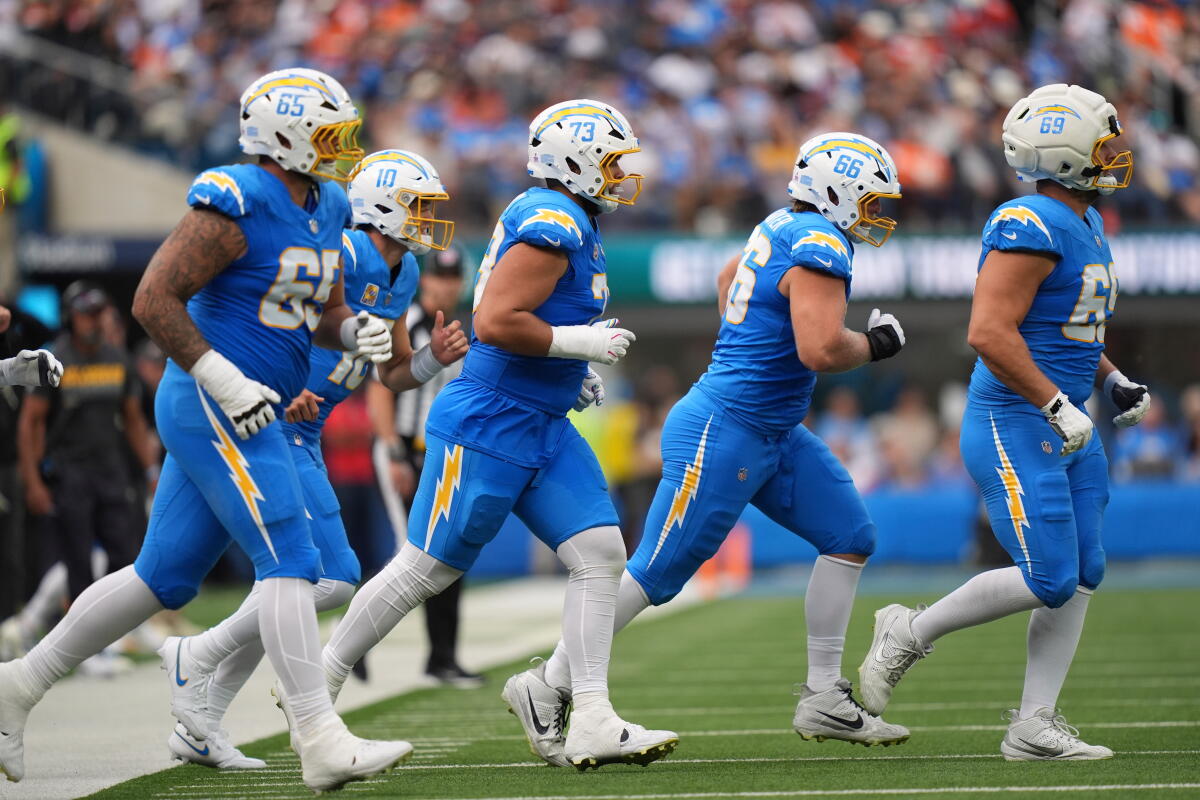
Chargers offensive linemen, from left, guard Logan Taylor, guard Alex Harkey, center Jake Slaughter and guard Cole Strange run onto the field with quarterback Justin Herbert during a loss to the Denver Broncos on Oct. 11.
The offensive line was already down left tackle Rashawn Slater (ankle), who is on injured reserve, and center Tyler Biadasz, whose season was over before it started when he sustained an anterior cruciate ligament tear in August.
McDaniel liked what he saw from the offensive line against the Broncos. He’s optimistic, really with no other choice, about the unit entering the matchup with the Chiefs, a team allowing the NFL’s seventh-fewest points per game (19.3).
“There [were] a lot of positives from the offensive line perspective,” McDaniel said. “I’ve never been a part of that many rookies playing at once. Fortunately, we drafted the right guys, and they [are] made of the right stuff. … There was a lot to build on.”
Kansas City, as usual over the last decade, will be a force to reckon with — especially at home.
Quarterback Patrick Mahomes and new running back Kenneth Walker III have the Chiefs averaging the fifth-most points per game (29.5) and the second-most yards per game (412) amid a 4-0 start.
“Explosiveness, man,” Chargers edge rusher Khalil Mack said. “[Walker is] breaking tackles. Just the ability to create plays between him and [Mahomes], man. That’s a special duo there in that backfield.”
One the Chargers will have trouble stopping, as they’ll also be without key defensive players like safety Derwin James Jr.
Winning in the NFL is already challenging enough. But for the injury-riddled Chargers, it’s been impossible so far, and it won’t be any easier Sunday.
“Communicating and keeping your poise and all those factors,” Harbaugh said of preparing for the loud environment in Kansas City.
When coach JJ Redick announced his starters for the Lakers’ final preseason game Friday night, he was asked if those same players would start opening night Wednesday against the Golden State Warriors.
Quentin Grimes, who had started the first four preseason games and had been solid in his role, was not among them.
“I know that there’s a chance Quentin is gonna have an opportunity to start,” Redick said. “This was the original plan we were gonna have for the Sacramento game with Collin [Sexton] out. … We just wanna get a look on that tonight, and we’ll see. But nothing definitive for next week.”
Grimes averaged 12.3 points, 2.5 assists and shot 53.3%, including 41.2% from three-point range, in 24.3 minutes per game in the preseason.
Redick said he was “still open to both” when asked if he could start Grimes and stagger his time with the starters on the bench.
In his first five NBA seasons, Grimes has mostly been a reserve, starting 146 of 318 games.
Grimes started the second half for the Lakers and scored 11 points in a 121-106 loss to the Denver Nuggets at Crypto.com Arena.
“I think you’re looking for balance in lineups and you’re looking for players that complement and fit each other,” Redick said. “He’s going to start a lot of games for us. That’s just the reality of it. I don’t know who our base starting group is yet, but we’re going to look at this tonight.
“We wanted to get a look on this first game because Collin was out. That fourth ballhandler for us hasn’t been great. I said that the other night and talked to those guys … I don’t say anything out here that I don’t tell my players. So Quentin is also going to maybe have some looks as a ballhandler.”
Doncic, who didn’t play in the second half, finished with 15 points.
Reaves scored 19 points, Williams had 14, Kessler had six and Thybulle had seven.
Injury update
Sexton didn’t play in any preseason games because of a lower right leg injury. Redick said Sexton has been able to practice more.
“He continues to trend in the right direction,” Redick said.
Adou Thiero (maintenance) and Cameron Carr (contusion) didn’t play.
He made one of the biggest splashes in the Lakers’ first preseason game. Ziaire Williams set the tone of the Lakers’ new defensive style, pressuring the ball the full length of the court and injecting energy into his teammates. The Sierra Canyon High alumnus sank three three-pointers in a stellar debut for his hometown team.
Then came the swelling in his left foot.
After a minor injury slowed Williams’ preseason ascent, the 6-foot-9 forward could be in position to return to the lineup for the Lakers’ preseason finale at 7:30 p.m. Friday against the visiting Denver Nuggets. Williams practiced fully Thursday after missing the last three games. He’ll leave the final call up to the Lakers’ medical staff as the team tries to maximize its preseason preparation.
“It’s important, man, just to get game reps with each other, but health is key,” said Williams, who had 13 points and a steal as a starter in the preseason opener against the Sacramento Kings on Oct. 5. “If you can’t go, you just can’t. It’s not the end of the world. Going back to championship identity, we’re looking ahead at the bigger picture. So it’s not worth [it] to risk your body for a game that doesn’t count and then be out for the real games.”
With nine new players, the Lakers needed training camp and preseason games to build chemistry as a group. Small injuries to several players interrupted the process, but with one fewer preseason game than last year and almost double the total practice days, coach JJ Redick said integrating new players still has “been pretty seamless.”
“We would love to have gotten looks with everybody healthy and everybody good to go,” Redick said, “but we also have to be smart with an 82-game season.”
The Lakers debuted new center Walker Kessler only this week, and the star acquisition who jammed a pinky finger early in training camp still has not played in a game with guard Luka Doncic, who was held out of Tuesday’s game for a planned rest day. Doncic participated fully in practice Thursday, as did forward Adou Thiero, who sat out Tuesday because of “maintenance,” Redick said. Rookie Cameron Carr (undisclosed) remained out of practice Thursday after missing the last two games.
Guard Quentin Grimes has been a preseason iron man. The free-agent signing who is angling for a starting position has played a team-high 97 minutes in four preseason games. With Doncic and Austin Reaves playing together only once in the first four games, Grimes has filled a larger ballhandling role than he might have if the Lakers were at full strength. The 26-year-old guard who is on his fifth team in six seasons credited his journeyman history for helping him get comfortable with a do-it-all role.
“I’ve done a good job of just creating offense, creating opportunities whether that be for myself or for teammates, getting everybody involved,” said Grimes, who is averaging 12.3 points and 2.5 assists on 53.3% shooting in the preseason. “I feel like this team allows me to play on the ball, off the ball in any situation. I feel like I’ve played that kind of [role at] every stop.”
Collin Sexton is the only offseason acquisition who has not made his Lakers debut. Battling a lower leg injury, Sexton participated in all of practice except for periods of live play Thursday. After practice, the guard was seen with kinesiology tape snaking up his right calf while working on the court with assistant coaches.
Sexton’s presence could help stabilize the Lakers’ offense, which is averaging 25.3 turnovers during the preseason.
When Sexton was sidelined at the beginning of the preseason, Redick said he was not worried about the guard’s status for the Oct. 21 season opener against Golden State. When asked Thursday about Sexton’s availability, Redick said simply he was “trending in the right direction.”
Chargers offensive coordinator Mike McDaniel didn’t shy away from discussing his job security Thursday amid a frustrating 0-5 start to the season.
“I feel like it’s core to my job to always feel that way,” McDaniel said when asked if he’s coaching for his job. “I need to do the very best I possibly can, all the time, because [of] the players, the organization, the fans.
“So, that’s second nature. … I think it’s disrespectful to all those that choose to invest in our game and our team to not look at things that way. The second you get comfortable in this league, it’s a wrap; it’s too good. I will be doing my very best, because from an integrity standpoint, I think it’s really insulting to do anything else. And that won’t change.”
McDaniel says his determination is unwavering. His place in the Chargers’ organization, however, might not be if things don’t change soon.
The Chargers, who rank 10th in total yards allowed per game on defense (311.6), enter Sunday’s road game against the undefeated Kansas City Chiefs averaging just 16.8 points per game, the third-lowest mark in the NFL above just the also-winless Miami Dolphins (14.0) and Tennessee Titans (11.6). Quarterback Justin Herbert ranks 22nd in passing (937 passing yards) and is last in the NFL in total quarterback rating (26.6).
Injuries have played a significant role in the Chargers’ offensive struggles. Eight offensive players either didn’t practice or were limited in practice because of injuries on Wednesday. Four rookies started on the offensive line in Sunday’s loss to the Denver Broncos and wide receivers Ladd McConkey, Quentin Johnston and Brenen Thompson, didn’t play.
McDaniel insists that he’s been giving the franchise all he has.
“I would be so embarrassed if I told you, ‘Well, now I’m going to try harder,’” McDaniel said. “Like, what? What have you been doing? I’m confident in the players that we have. The improvement that I see before the results generally lead to good things. But talk is cheap. We got to do.”
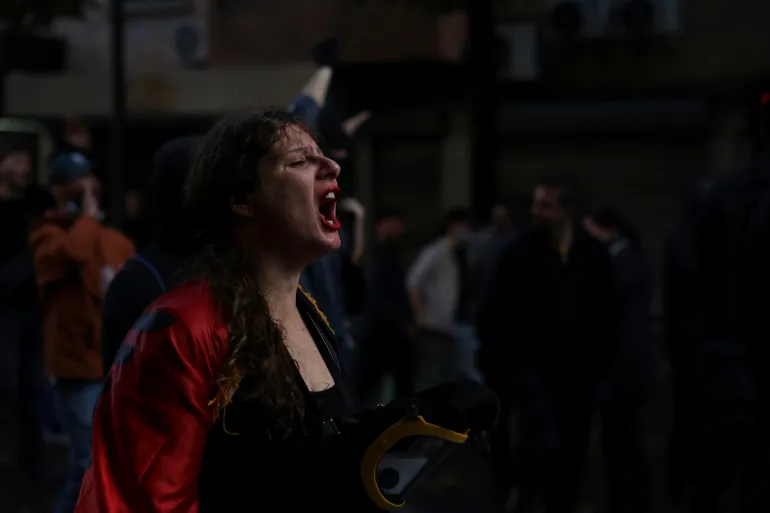
Student protests against poor conditions in Albania’s education system have continued for a third day in the capital, Tirana, as Prime Minister Edi Rama insists he will not resign.
Demonstrators have called on Rama to quit in often violent protests since Tuesday. They have set fire to several buildings across the city, including the prime minister’s office, ministry buildings and branches of several banks.
Recommended Stories
list of 4 itemsend of list
Dozens of police officers and protesters have been injured amid attempts to disperse the crowds using water cannon and tear gas.
“What you are seeing is the boiling point of months of suppressed grievances,” Albanian journalist Arlis Alikaj told Al Jazeera.
A protester during clashes in Tirana on Tuesday demanding the resignation of Prime Minister Edi Rama [Hameraldi Agolli/AP]
Students have complained for months about the high cost of education and their limited employment prospects after graduation.
Afrim Krasniqi, a professor and researcher at the Institute for Political Studies in Tirana, told Al Jazeera that students and young people protested peacefully for nearly three months, “yet their demands were largely ignored, while the government often responded with discrediting campaigns rather than genuine dialogue”.
He added that the current escalation reflects “frustration not only with the government itself, but also with the lack of institutional accountability and responsiveness.”
The protests represent one of the most serious waves of public discontent directed at Rama, who won a fourth term last May but has since faced public anger over corruption allegations involving senior officials.
The unrest in Tirana coincides with a broader wave of student protests across Europe. In France, secondary school students have spent weeks protesting and blockading schools, demanding more teachers and better learning facilities. They have warned that deteriorating school buildings and overcrowded classrooms are undermining the quality of education.
Protests against Rama’s government began a few months ago, fuelled by plans to build a luxury resort along Albania’s largely unspoilt southern coast. Jared Kushner, US President Donald Trump’s son in law, is involved in the project.
Local media reported that the protests spread from Tirana to universities in Elbasan and Shkoder on Wednesday.
Albania is among the economies of the Western Balkans seeking to catch up with European living standards. However, the gap with the European Union average remains evident in purchasing power, wages, productivity and the quality of public services. Despite economic progress, the country continues to face challenges including emigration, regional inequalities and the need for stronger institutions and the rule of law.
After Montenegro, Albania stands out as one of the countries that has made the most progress towards full EU membership. However, behind the optimistic political rhetoric, frustration is growing among citizens over the slow pace of European integration and the lack of tangible improvements in their daily lives.
A protester throws a plastic bottle towards riot police during clashes in the Albanian capital on Thursday [Hameraldi Agolli/AP]
While opposition groups seek to support the demonstrators and capitalise on the moment to strengthen their own position, Alikaj said the protests are being driven by young people and students demanding systemic change.
On Thursday, Rama – who has been PM since 2013 – told Reuters, “As for calls for my resignation, governments change through democratic elections. Last year, we had elections, not a revolution.”
Sokol Lleshi, a lecturer at the University of New York Tirana specialising in political science and international relations, said social change is more likely to emerge from a broader coalition of different social groups, rather than mass mobilisation limited to university and secondary school students.
“Elite defection from the current ruling political elite could enable the institutional means to channel societal dissatisfaction or resentment into political and policy changes. Yet, the current student protest does not seem to replicate the December 2018 mass movement of university students and its effects”, Lleshi said.
The student protests that shook Albania in December 2018 began over rising education costs and forced Rama to dismiss eight ministers as part of a cabinet reshuffle and announce a package of measures known as the “Pact for the University”.
But some of the students’ demands remained unmet.
Lleshi drew some more positive conclusions from Albania’s past experience of social unrest.
Albanian society is polarised and unequal, “with hollowed intermediary political institutions”, he said, but the legacy of unrest and political confrontation will serve as a “warning to avoid destabilisation”, he said.
LAS VEGAS — The plan for the Lakers had been to turn their fourth preseason game into a dress rehearsal for the upcoming season.
But that was not the case.
The Lakers did get the preseason debut of center Walker Kessler on Tuesday night, a good sign for them to see their biggest acquisition of the summer play.
But on the flip side, Luka Doncic didn’t play in the Lakers’ 101-89 loss to the Golden State Warriors at T-Mobile Arena because he was resting.
“He’s not injured, just getting the night off,” Lakers coach JJ Redick said.
So, it was left up to Kessler, Austin Reaves and the rest of the available Lakers to sort things out. And Reaves and Kessler were on point.
In just his second preseason game, Reaves was doing what is expected of him, scoring 28 points on 10-for-18 shooting, including four for seven on three-pointers, with seven assists and four rebounds. But forced to handle the ball more with Doncic out, Reaves also had seven turnovers.
Kessler started and had 11 points, nine rebounds, one blocked shot and one steal in 16 minutes.
For the Lakers, it was good to see Kessler on the court. They gave up a lot to acquire him in a trade with the Utah Jazz — two unprotected first-round picks and two pick swaps and then signing him to a four-year, $130-million contract.
Kessler played in only five games last season while recovering from a torn labrum in his left shoulder.
He missed the first three Lakers’ preseason games because of a left pinky injury.
Kessler yearned to play again.
“Yeah, I mean it was a lot of fun being out there again,” he said. “It’s been so long. Before the game I was actually pretty nervous, to be honest. But, getting out there and just playing with the guys, it was a blast. I can’t really, you know speak to … I think I have a certain presence on the floor, but I think my teammates around me did a great job of playing defense on the perimeter. I think we shared the ball really well tonight. Just how it was, especially in the first half. It was a lot of fun.”
He began his night with a defensive rebound, which allowed the Lakers to set up their offense early in the first quarter.
Kessler then cut to the basket, took a pass from Reaves and scored on a layup, his first points of the preseason.
His second basket was a left-handed layup early in the second quarter. Shortly after, Kessler blocked a shot by Warriors center Charles Bassey from behind, a display of his defensive presence.
Another good sign, less than a minute later, was when Kessler got an offensive rebound and bounded back up for a dunk.
When the Warriors went to their small-ball lineup in the first quarter, it meant the 7-foot-2 Kessler would be tested on defense, because his man was 6-2 Gary Payton II. It meant Kessler was forced to play defense on the perimeter and not down low where the Lakers prefer him.
Still, Kessler held his own.
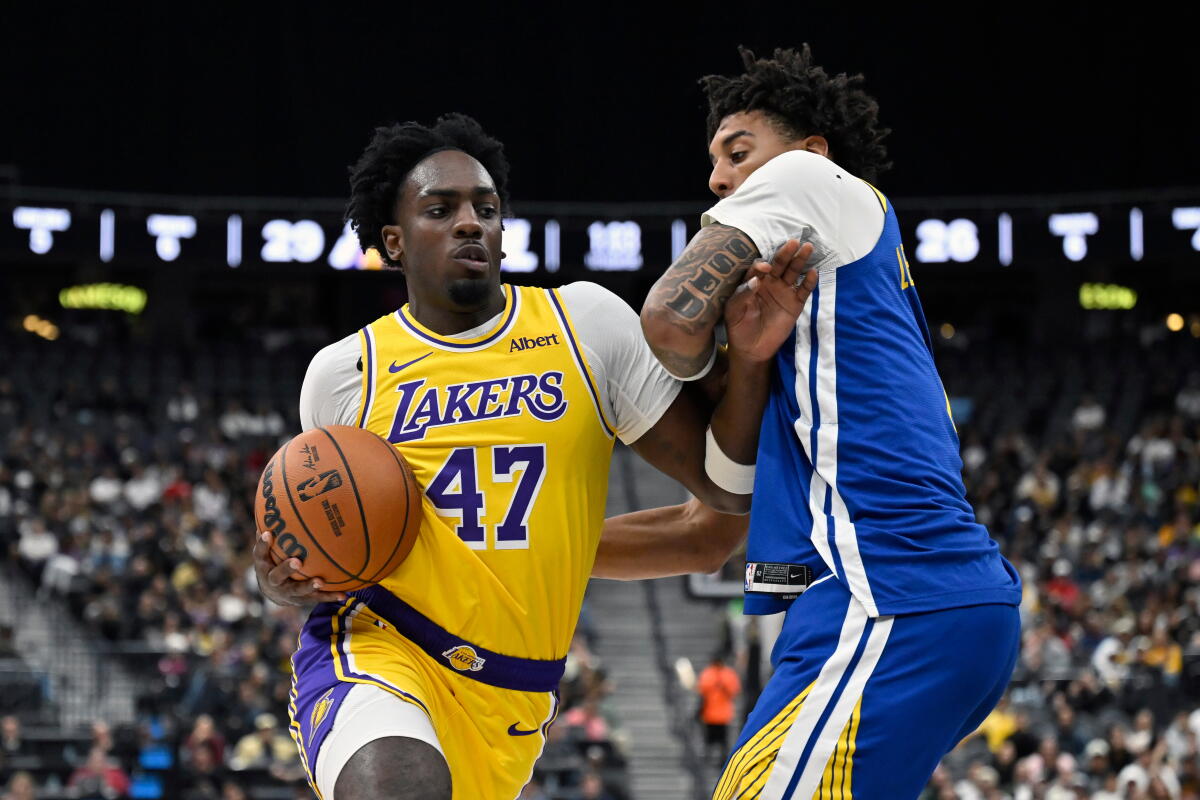
Lakers forward Arthur Kaluma drives the ball against Warriors forward Yaxel Lendeborg during the first half Tuesday.
(David Becker / AP)
While he was out and unable to play, Kessler learned a few things about himself.
“Yeah, I think what I missed most was competing,” Kessler said. “Quite frankly, competing to win, and I think as far as making me a better basketball player, I just think it has made me long to go try to win every game and win every night. So returning, I think it makes me a little better basketball player.”
The Lakers lost to the Warriors for the second time this preseason. Their other two games were victories over the Sacramento Kings. They play one more preseason game, Friday night against the Denver Nuggets at Crypto.com Arena, and then open the season against the Warriors at home on Oct. 21.
Before the game, Redick said the plan was for the Lakers to “continue to work on us.”
“We have kind of circled this game, not as a full dress rehearsal, just in terms of our scout presentation, but we gave the guys a sample of that this morning and at shoot-ariund,” Redick said. “Not as much game-planning necessarily, but just kind of the sequencing of how we present prior to a game. We’ll do the same thing pregame with a brief personnel tape. We just want to get better. I mean, that’s the biggest thing. We want to get healthy, we want to get better, we want to continue to build our fitness and cardio level and find a rhythm. And it’s been a little disjointed with having some guys out.”
Redick said rookie Cameron Carr, guard Collin Sexton (lower leg) and forwards Ziaire Williams (right foot contusion) and Adou Thiero (undisclosed) “are still day to day” with their injuries.
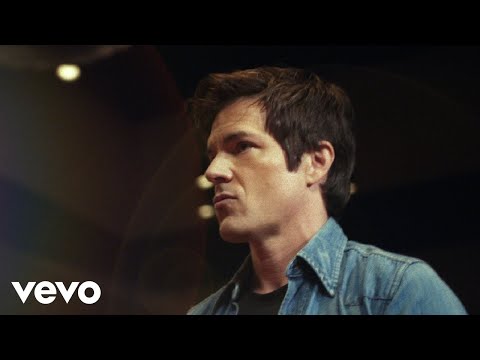
Brandon Flowers stands onstage at the Ford Theatre wearing a sharp black suit and a bejeweled bolo tie and tells the audience about his cousin Bobby’s job parking cars in the 110-degree heat of the Las Vegas Strip.
“That was gonna be me in another life, only my big plan was to work at the Bellagio,” he adds. “Nicer place, more tips.”
As the frontman of the Killers, Flowers, 45, has spent more than two decades singing about the struggles and the temptations at the heart of the American dream. But on his new solo album, “Thrasher,” he trades the Killers’ gleaming, synth-laced rock for the crackling sound of hand-played country music.
He cut the LP at Nashville’s historic RCA Studio A, where country giants like Dolly Parton and Waylon Jennings once worked; not only that, but to accompany him he recruited veteran session players including David Rawlings, Bruce Bouton and 85-year-old Charlie McCoy, who played harmonica on George Jones’ immortal “He Stopped Loving Her Today.”
Yet for all its old-school country cred, “Thrasher” also emphasizes Flowers’ roots as a Vegas showman — his tremulous croon, his go-for-broke emotion, his almost preacherly understanding of how to take a crowd up (and up) and how to take it back down. Think Glen Campbell or Donny Osmond.
“Or Wayne Newton,” says Rawlings with admiration. The guitarist, known for his long collaboration with Gillian Welch, performed with Flowers at July’s Newport Folk Festival. “It’s really thrilling to see the way he inhabits this stuff onstage,” he adds. “I have such incredible respect for anybody who knows how to entertain at that level because it’s an absolute gift — and it’s really hard work.”
Flowers, who grew up in Las Vegas and Utah and who shares three sons with his wife, spoke about the album in his dressing room last month a few hours before the Ford show. A sequel to “Thrasher,” recorded during the same sessions, is due out next year.
The Nashville OGs who played on these records — do you think they were impressed by you? I think they were refreshed. I think they didn’t quite know what they were getting into and were pleasantly surprised.
For you, it was a different way of working, right? These players are artists. But it’s also just another day on the job. You feel that: “Charlie’s got to leave at 4 to go to the Opry.” He still gets his licks in.
I wonder what it would’ve sounded like to cut 10 Killers classics with this band. Probably like the Traveling Wilburys or something. The second album has some of that DNA. This one was more of a narrative album — a lot of stories. The other one, it’s more in the romantic realm. I’m excited to get it out. I have another one cooking.
A third album? Well, because they’re so efficient. It’s opened up a door for me that I feel like I’ll always be able to explore. If I have 10 songs, I can go to Nashville for five days and cut the whole thing. We do two songs a day, no problem.
You’ve said there’s this idea in rock music that making an album needs to feel like climbing a mountain. I blame it on U2. You don’t feel like you’re doing it right if you’re not doing that. We really went into that on “Sam’s Town” — we climbed Everest, man. When we finished “Sam’s Town,” I remember the last day — it was like 6 in the morning, the sun was up and we were finally done. What a relief it was.
Now the veil has been lifted. It doesn’t have to be like that.
Did you get a feel for Nashville as a town while you were there? I got a breakfast spot: Cafe Roze. I don’t want to blow it up too much because I want to be able to get in. But you know Cafe Stella in Silver Lake? They used to have my favorite breakfast in the world: sourdough, soft scramble, prosciutto and Parmesan. And they have that exact thing at Cafe Roze — it’s like I’m transported back. I could eat it every day with a side of avocado.
“Thrasher” follows a number of country excursions by rappers and pop stars. Do you have any anxiety about being seen as a carpetbagger? No, because I’m not trying to bulldoze my way into the world and open a bar in Nashville. This is an authentic part of myself — I have an education in this music. People have a lot of preconceptions about country music, especially lately. Everyone says the same thing: cold beer, dirt road, Friday night. But there’s such an art to the tradition — it’s a soulful artistic endeavor. I’m trying to come at it from that angle.
What’s your relationship with modern country music — Morgan Wallen and Miranda Lambert and the like? I don’t have one. It’s more people that are on the fringes, I guess — Jason Isbell or Sturgill Simpson. I got Sturgill’s guitar player because I was a fan of that stuff.
Before I heard “Thrasher,” I expected kind of a stripped-down Isbell vibe. I could see him doing “In a Heartbeat” or “Miss America.” But once we got to Nashville and got the guys in the room, it just got a little more pep in its step.
Does being embraced by the Nashville industry feel like a reasonable goal? That’s a whole other nut to crack. You hear stories about Dwight Yoakam having a tough time — and he brought some heat. Or John Prine just because he was from Illinois and not from further south. I’m not gonna go on a campaign to prove how worthy I am.
You’ve been dinged by people who think you’re putting on an accent on this record. I feel like this is more how I speak than maybe they’re accustomed to. I don’t know, I might’ve leaned in a couple times. There is a Utah accent — it was something I was embarrassed by when I was younger. But now I’ve lived there 16 years of my life total, so it just starts feeding its way back in.
Is your vocal approach different for country than for rock? There’s more quiet in these songs — more room for the story to be told. In the rock band, I’m competing — everybody wants to be heard — whereas this one, there’s this beautiful thing where the guys don’t mind being in the background. They want to frame the picture, and I’m the picture.
Did you find yourself making more of an effort to enunciate? I’ve always been cognizant of that. Just today, there was a band — I won’t say who it was — but I was interested in hearing their new thing, and I didn’t understand a word until the chorus. I was rooting for the guy the whole time, but it’s like: How can I fall in love with this if I don’t know what’s happening?
Brandon Flowers performs last month at the Ford Theatre.
(Rob Loud)
Got some questions about specific songs. “One of Us” is about your brother-in-law, which made me realize how few people write songs about their in-laws. He passed away unexpectedly a few years ago. You know, I’m the youngest of six, and he married my oldest sister. She’s 17 years my senior, so when they got married, I was a kid — he became my big brother and was a masculine figure in my life and all that. There’s your family and then there’s your found family, and he’s part of my found family. I wanted to honor him, and this is my way of doing it.
I assume your sister’s heard the song. Oh yeah. A lot of those moments happen on this record where I had to play the song for the person, and you just can’t help but be brought closer together. You’re taking part in their grief but we’re also celebrating him. It was beautiful.
“Miss America” is about another one of your sisters. The one next in line.
She’s addressing an abusive ex, and you sing it from her point of view — from a woman’s perspective. It just started like that. I don’t remember a moment of thinking: Am I gonna do this from the outside or am I gonna step into her shoes? Maybe it’s something to do with that Tom Waits song [“Christmas Card from a Hooker in Minneapolis”] — something about that maybe gave me permission.
Did you play “Miss America” for that sister? It felt like the gentlemanly thing to do. If she’d said no, I would’ve been heartbroken because I think “Miss America” is gorgeous — I’m really proud to be part of it. But I would’ve honored her wishes.
In “An American Dream,” the point of view seems to keep shifting. At one point I think the narrator becomes Elvis Presley? Chorus 1, I’m singing with this man that used to give me cigars and tobacco when I was a kid — we’re singing it together. Giving a 13-year-old Red Man tobacco — there was nothing shady about it, or nothing too shady — but it was still a wild move. Then Chorus 2, Elvis and I are both singing — I see it that way.
Which era of Elvis are you envisioning? Whenever I think of him, I think of him in ’68. Nobody’s ever looked that good — it’s not fair.
You’re known for your flights of lyrical fancy: “Burning down the highway skyline in the back of a hurricane,” for instance, from the Killers’ “When You Were Young.” Did country music allow for those flourishes? Verse 2 of “Does It Ever Cross Your Mind?” is a great example: “I could’ve been born in Bangladesh but I wasn’t / I was born here with just enough jelly beans in my basket to ask you to go wishing on a star.” That’s fun.
In “An American Dream” you say, “We blew through starlight on bricklayers’ knees.” We’re performers, and we’re here to entertain you. But we’re working-class men, me and Elvis.
Some of these lines get at this crucial point that I think your music makes, which is that pageantry and sincerity can coexist. I think people get confused a lot — they might look at a line like the one you just talked about and think it’s total bulls—. It’s annoying to me to read a review and see where they just don’t get it — and they think they’re the smart one. I saw someone talking about my tropes, and they brought up the Bangladesh line. I thought: What are you talking about? That’s the most left-field line.
You’re challenging the listener to accept that over the top doesn’t necessarily mean phony. It’s so American to be over the top and to still have substance. That’s the chorus of “An American Dream”: “Gold and silver / God and glitter.” I guess I’m trying to spoon-feed it there a little bit.
Plenty of Killers songs involve people making bad decisions. How do you think about the degenerate’s place in country music? It’s funny how people aren’t quite familiar with how wild it was. The same person in me that was excited about old Depeche Mode stories still gets excited about old George Jones stories. And a part of me yearns for that. But I keep it under wraps.
Your oldest son is 19, which means you became a dad at a fairly young age. It was just par for the course. I grew up in an LDS family — my sisters were having kids when they were 17 and 18. So having Ammon at 26 — that was the oldest anyone had had their first child in my family. They were like, “Brandon might be gay.”
How did you reconcile the rock star and new dad halves of your life? It sort of gave me a direction early on because I was a little bit teetering in those days. Who’s ready to have this wild fame brought on them at such a young age? We weren’t the Beatles, but “Hot Fuss” and “Sam’s Town” were really successful records — we went straight to arenas. It was tough to navigate, and family gave me an anchor.
Do you hear before parenthood and after parenthood in your music? There’s a song called “Be Still” on the fourth record — a song to the kids. But I don’t know if the writing changed that much. Everybody was getting older in the band, so whatever happened, you can’t place the blame just on me.
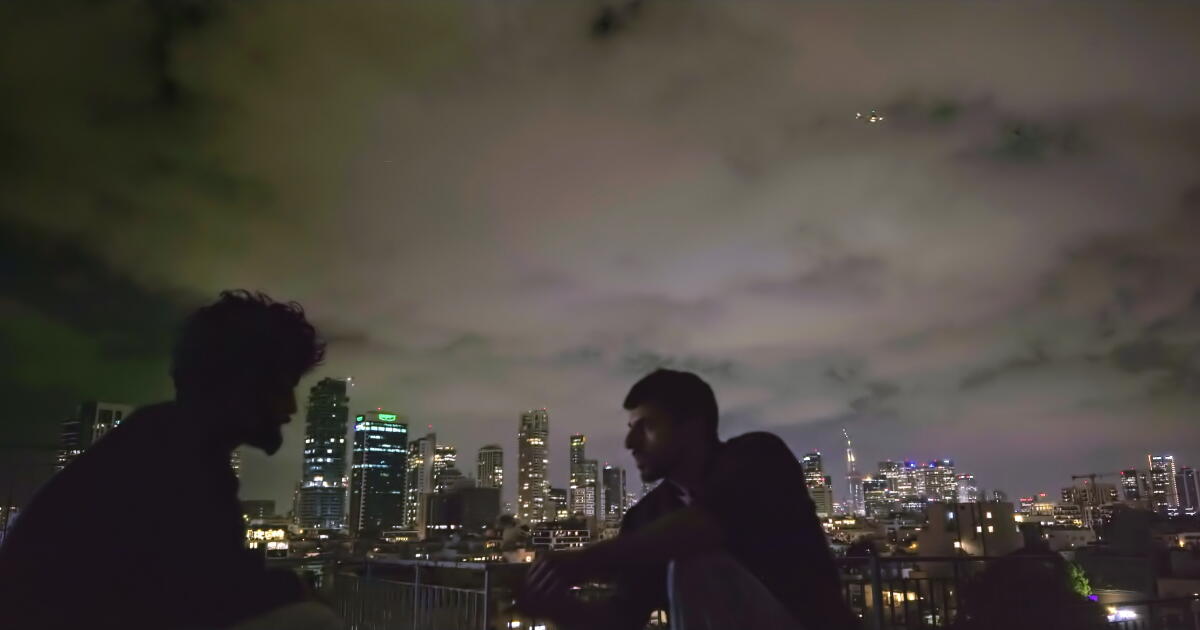
Using interviews filmed on rooftops at night in Tel Aviv, the documentary “NAZA” uncovers Israel’s brutal methodology of warfare in Gaza since the Hamas-led Oct. 7, 2023, massacre that took 250 hostages and killed at least 1,200 people. The testimony offered by these insiders is under the cloak of darkness, but the light it shines on the mass killing of Palestinian civilians is so harsh it burns the conscience. (The title refers to the Israel Defense Forces’ use of an acronym for the Hebrew term for collateral damage: nezek agavi.)
Israeli directors Yuval Abraham and Rachel Szor, half of the quartet (with Basel Adra and Hamdan Ballal) behind the Oscar-winning “No Other Land,” secured one-on-one interviews with 24 Israeli intelligence personnel and soldiers, digitally altering their faces and voices while their silhouettes are framed by the lit cityscape. Sitting across from interviewer Abraham, they recount their participation in a military campaign that has killed over 73,000 in Gaza, according to the Gaza Health Ministry, and is ongoing. Used as an estimation of casualties — just put a number in front, “20 NAZA”— it suggests a battle calculation that has permitted the detachment of moral consquences.
One participant makes his need for anonymity clear: “Israel will put me in jail.” At the same time, there has been clamor for the exposure of these sources so they can be prosecuted for war crimes. The uproar over “NAZA” has also led the filmmakers to be called traitors in their country. Prime Minister Benjamin Netanyahu has threatened to revoke their citizenship.
It all speaks to the power of a well-timed movie, since much of the reporting in “NAZA” has already been published by the Guardian, a co-producer of the documentary, and corroborated by other news outlets. After its theatrical run, the Guardian will stream “NAZA” for free on its website.
The picture painted from the interview subjects, who occasionally draw sketches of weapons-screen interfaces on notepads, is of a computerized tracking-and-killing apparatus, culled from the surveillance Israel keeps of nearly every phone in Gaza. The system is augmented by AI that isn’t always accurate about a target’s presence yet is implemented with airstrikes. Eavesdropping on children is used to track a targeted father’s arrival home in a program called “Where’s Daddy?” As one person says, “You hack her phone and then kill her.”
What’s chilling about these interviews is how they don’t feel like whistleblowing but rather a fact-finding inquiry with available explainers who betray little affect or remorse, even when the topic of personal doubt arises. When one is asked whether this is genocide, the answer comes back, “Yes.” “NAZA” eschews probing for guilty feelings, though, because the point is to unearth a process of obliteration: how it works and what it looks like as implemented by the willing. “My role is technical,” a subject says.
In between these interviews are glimpses of the occasional Israeli news media snippet and at one point an archival reminder of the circumstances of Tel Aviv’s founding. But most insistently, the interstitial visuals are cinematographer Szor’s night shots of apartment facades in modern Tel Aviv: citizens at rest with their loved ones, working out or eating in front of their televisions. It’s a casual surveilling of placidity just up the coast from the atrocities we hear about. “NAZA” isn’t just tough-to-hear journalism, it’s real filmmaking, the visual juxtapositions getting us to think about who doesn’t get to enjoy a quiet evening at home, especially when remote war-waging starts to look like a goal-oriented office shift with a lunch break — or a video game.
Wherever you fall regarding the continued destruction of Gaza, what the filmmakers of “NAZA” make disturbingly clear is that the simplest machinery to spread dehumanization and death is happening now, easing its users into acceptance and rewriting everything about the moral cost of conflict. It’s stone-cold frightening.
LAS VEGAS — Kayla Thornton scored 18 points and the second-year Golden State Valkyries became the quickest expansion team to reach the WNBA Finals, sweeping the defending champion Las Vegas Aces 87-77 in overtime Friday night in Game 3.
The second-seeded Valkyries will have home-court advantage and will host No. 4 Atlanta beginning Oct. 17. The Dream swept New York earlier on Friday, and now teams are 22-0 in playoff history when leading a series 2-0.
Las Vegas, which was seeded third, had won three of the past four championships.
Gabby Williams added 16 points for the Valkyries, including eight in overtime. Former Aces Kiah Stokes and Tiffany Hayes each had 11 points, and Stokes also grabbed 10 rebounds.
A’ja Wilson, honored before night’s game for winning an unprecedented fifth MVP, scored 21 points, but on six-for-19 shooting for the Aces. She also had 10 rebounds, joining DeWanna Bonner as the only players with 1,300 points and 600 rebounds in the postseason.
Jackie Young added 18 points and Chelsea Gray 17.
A 17-point run bolted Golden State past the Aces for a 53-47. Las Vegas closed within a point by the end of the quarter, giving the Aces only seven points in the period.
The Aces led by six points late in the game before the Valkyries evened the score when Gabby Williams stole the ball from Wilson and Thornton finished with a transition layup to make it 69-69 with 1:50 left.
Golden State then took the lead Veronica Burton’s 9-foot floater with 1:12 remaining. The Aces tied the score on Gray’s inbound pass to Young with 27 seconds left and ultimately force overtime.
The extra period belonged completely to the Valkyries, who outscored the Aces 16-6.
Dak Prescott and the Dallas Cowboys suffered an unexpected loss to the previously winless Tampa Bay Buccaneers and their undrafted rookie quarterback Jalon Daniels in front of a home crowd on “Thursday Night Football.”
Some might describe the loss as “embarrassing” — in fact, one guy actually said that exact word in the Cowboys tunnel within earshot of Prescott as he walked to the locker room after the game.
Online video footage shows Prescott looking back at the man — who was there as a transportation service driver and not an employee of the Cowboys or AT&T Stadium — while still walking, then turning away. The man then said something else, possibly “you heard me,” which prompted the veteran quarterback to look back and say, “You say it once I look off, huh?” while still walking.
Prescott can then be seen speaking to a Cowboys security employee and gesturing in the direction of the other man. Footage shows the security employee going back down the tunnel, presumably in search of the heckler, but it is unclear what happened after that. The Cowboys declined to comment for this article.
Prescott was asked about the incident during his postgame news conference. At first, he simply acknowledged that the person wasn’t necessarily wrong in his assessment of the game.
The four-time Pro Bowl selection was then asked if he thought the comment was disrespectful.
“You know, when he said it I just happened to look at him, and at that point he looked away, didn’t look. And when I turned my head back, he said something else,” said Prescott, who completed 24 of 42 passes for 316 yards with one touchdown and two interceptions.
“So that’s the part that — just as a man or as a person, feel free to speak your mind. Just speak it. Don’t coward away from the reaction that you’re going to get. If you’re saying it’s embarrassing, say it’s embarrassing. If you’re saying it to me, then say it to me. Don’t go back on it. So that’s all that was, and hate it that it’s even being talked about, to be honest with you.”
The Cowboys led 10-7 at halftime, but Tampa Bay scored 17 points in the third quarter to take control of the game. Dallas pulled to within 24-16 late in the fourth quarter, but Prescott threw his second interception of the night deep in Buccaneers territory with 1:16 remaining to seal the game.
Owner Jerry Jones called the game’s result “extraordinarily, extraordinarily disappointing.”
“Boy, I’ve been so disappointed before with losses, but this was disappointing,” Jones told reporters after the game. “And I’m disappointed because I see potential growth here. And we need to have good experiences on an individual basis as well as a team. And this was not a good experience out here.”
Prescott said he hesitates to use the word “embarrassing” to describe the loss because “I feel like I’m discrediting the NFL if I use that and particularly the Tampa Bay Bucs and a great Todd Bowles-coached and defensive-coached team.”
But, he added, “when a winless team comes into your home stadium on a Thursday night primetime game, yeah, we’re supposed to win that. So it sucks and it’s right up there close to ‘embarrassing,’ but I don’t know if I would say that.”
And though it was just a preseason game Thursday night, Doncic and Reaves showed why they form one of the most dynamic offensive backcourts in the NBA.
The Lakers duo linked up on the very first play against the Sacramento Kings, with Reaves passing to Doncic as he cut to the basket before scoring while being fouled.
Both played 25 minutes, with Doncic finishing with 23 points on six-for-16 shooting during the Lakers’ 114-110 win over the Kings at Crypto.com Arena. Reaves had eight points on two-for-seven shooting, eight assists and five rebounds.
Doncic, who picked up a technical foul with six minutes and 48 seconds left in the third quarter, and Reaves, who played in his first exhibition game after missing the first two, gave the fans something to be excited about.
Doncic’s moment came in the second quarter when he drilled a 31-foot, one-legged three-pointer off a pass from Sandro Mamukelashvili (19 points).
Reaves’ moment came late in the second quarter when he had a nice hesitation move that froze Emanuel Sharp, allowing him to waltz along the baseline for a layup.
Lakers coach JJ Redick explained why Doncic and Reaves have been so close in their time playing together.
“I think there’s good chemistry with each other,” Redick said. “I think it’s just the natural way they like each other. They like playing together. I think having them together means there’s automatically two ballhandlers on the court. I think that’s like an underrated part of the NBA now … having two-to-three ballhandlers on the floor at all times.”
Injury update
Walker Kessler and Collin Sexton both missed their third straight preseason game and Ziaire Williams missed his second straight game. Cameron Carr, Dalton Knecht and Arthur Kaluma also didn’t play.
Kessler, the Lakers’ big acquisition at center from the Utah Jazz, has been nursing a finger injury he sustained after hitting the backboard during practice.
“We’ve got to check in tomorrow. … It’s not concerning. He’ll play in the preseason,” Redick said.
Redick said Williams had “some soreness, but it’s not anything that we’re concerned about.”