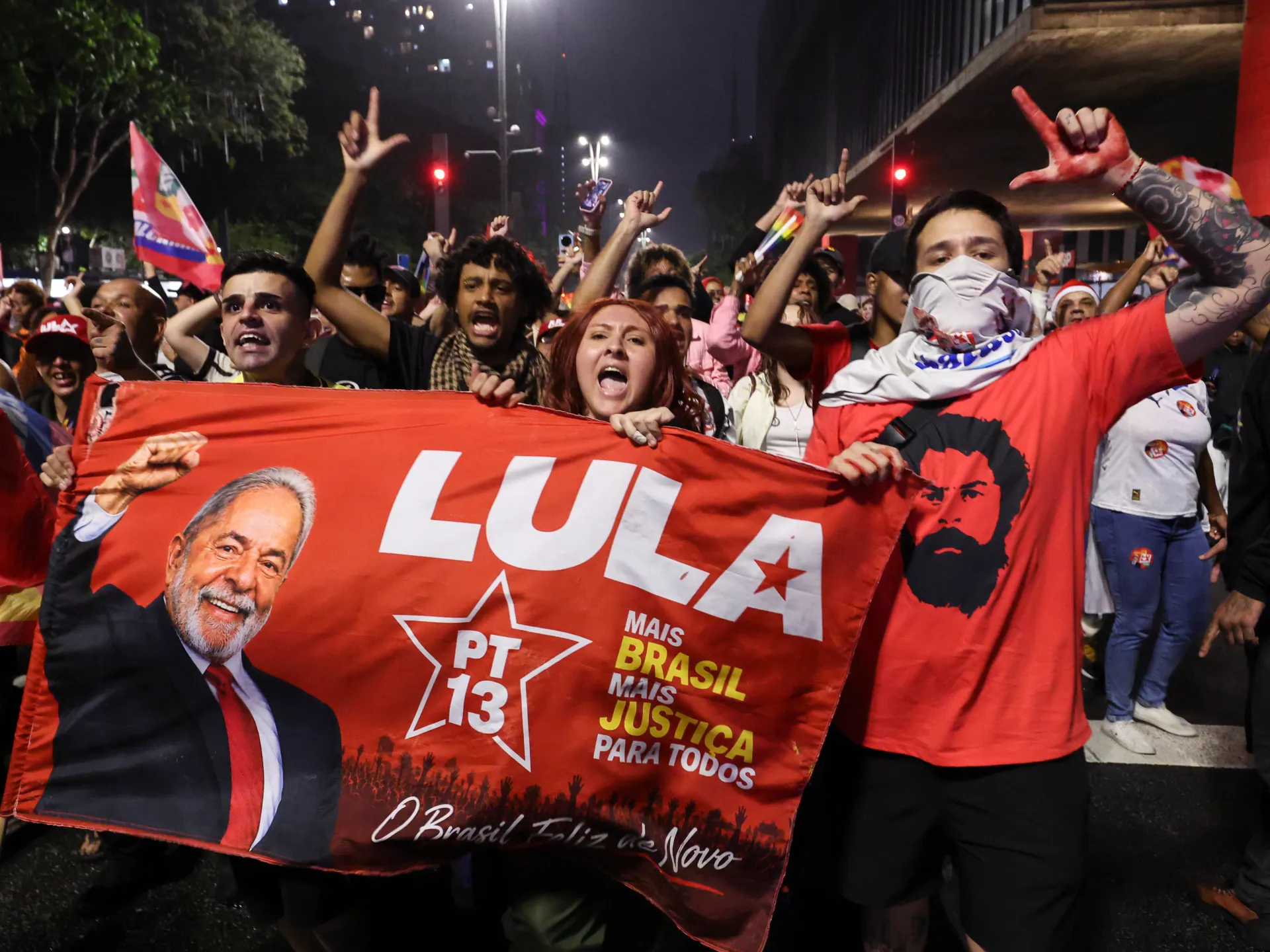
At 80, President Luiz Inacio Lula da Silva has pulled off an extraordinary political victory. After losing the first round to Flavio Bolsonaro, son of former President Jair Bolsonaro, by 47 percent to 45 percent, Lula defied the odds to secure a stunning second-round victory, with 51.8 percent of the vote against Bolsonaro’s 48.2 percent.
His triumph confounded every pre-election poll and crowned a dramatic campaign revival that few had anticipated.
Lula’s victory in Latin America’s largest country does more than halt the far right’s return to power in Brazil. It breaks a succession of right-wing electoral victories across the region and deals a major blow to United States President Donald Trump’s increasingly interventionist agenda in the Western Hemisphere.
When Bolsonaro unexpectedly defeated Lula in the first round, the result sent shockwaves across Brazil and beyond. For the government, the defeat was particularly startling given its strong socioeconomic record. What followed was an extraordinary three-week political mobilisation that transformed the sluggish first-round campaign of Lula’s Workers’ Party into an existential confrontation over the future of democracy and sovereignty in Brazil.
The economic record was hardly that of a government heading for defeat. Brazil’s economy grew by a cumulative 9.2 percent between 2023 and 2025, compared with an average of just 5.6 percent among its South American neighbours. Unemployment fell from 9.3 percent in 2022 to a historic low of 5.4 percent in 2026.
Brazil also exited the United Nations Hunger Map in 2025, after having returned to it under the Bolsonaro senior administration. In the Amazon, deforestation fell to its lowest level in decades, a sharp reversal of the trend under his predecessor.
Not everything has been rosy under the Lula administration. Millions of Brazilians have remained trapped in credit-card debt, struggling with extremely high interest rates, while an explosion of online gambling has devastated the livelihoods of families. The run-off result sent a clear signal that there was social discontent.
Lula responded with unusually bold measures: a sweeping debt-relief initiative and restrictions on online betting, as well as expanded social benefits, fuel subsidies, and the transition from a six-day to a five-day working week. These policies sought to reconnect the government’s macroeconomic achievements with the everyday economic anxieties of Brazilian voters.
Bolsonaro offered a radically different vision for Brazil: sweeping spending cuts, privatisations, lower taxes and, above all, an iron-fisted response to crime and insecurity. His proposals included building five maximum-security prisons modelled on El Salvador’s notorious penitentiary system and authorising lethal force against heavily armed criminals.
Bolsonaro also pledged to pardon his father, sentenced to 27 years for plotting to overturn the 2022 election, and to grant clemency to those convicted over the January 8, 2023 assault on Brazil’s democratic institutions. For his supporters, this represented an opportunity to reverse what they considered judicial persecution. For his opponents, it threatened to rehabilitate the attempted coup and undermine judicial independence.
Lula’s campaign came back re-energised, with many young Brazilians mobilising at the grassroots level. The campaign was able to overcome even algorithmic bias by social media giants like Meta, which favoured Bolsonaro.
Ultimately, the election became a battle not only over Brazil’s democracy but also its sovereignty. Trump’s administration has intervened conspicuously in Brazilian politics throughout Lula’s term, imposing punitive tariffs, sanctioning a Supreme Court justice involved in Jair Bolsonaro’s prosecution and openly embracing his son’s candidacy.
In May, Trump received Flavio Bolsonaro in the Oval Office. Two days later, Secretary of State Marco Rubio designated Brazil’s two largest crime organisations as foreign terrorist organisations, a measure Flavio had publicly requested.
These designations carry implications extending far beyond electoral politics. They potentially open the door to US military operations on Brazilian territory under Washington’s expanding war on so-called “narcoterrorism”. The world saw how one such foreign terrorist designation enabled the US to intervene militarily in Venezuela and abduct its sitting president.
Whereas Trump seeks to draw Latin America’s largest country into Washington’s expanding system of hemispheric military dominance, Lula has defended Brazil’s strategic autonomy, insisting that cooperation against organised crime must respect national sovereignty.
He framed the election as a choice between a sovereign Brazil charting its own course and one subordinated to Washington’s geopolitical agenda. Sunday’s election result shows that the Brazilian people have made their choice.
Importantly, Lula’s victory may mark a turning point in Latin America’s rightward shift. Since Trump’s return to the White House, the right has scored a string of electoral victories in Honduras, Chile, and Bolivia, among others. But Lula’s re-election suggests that its momentum may be faltering.
The result comes just ahead of the US midterms and could deliver a significant setback to the strength of Trump’s leadership in the Americas. In Argentina, President Javier Milei — who regularly attacks Lula and threw all his weight behind Bolsonaro — has been sliding in the polls ahead of next year’s presidential election. In Chile, President Jose Antonio Kast has suffered an even more precipitous collapse in public support.
Mexico’s Claudia Sheinbaum, for her part, has likely breathed a sigh of relief. A Lula defeat would have left her increasingly isolated in a region gravitating towards Mexico’s northern neighbour. Instead, Latin America’s two most populous countries and largest economies will remain firmly on the left for the foreseeable future.
It is too early to declare the region’s rightward turn over. But Lula’s victory raises the possibility that the wave has already crested. Brazil will not be joining Trump’s Shield of the Americas, and while the “Donroe Doctrine” remains a threat, its moment of greatest ascendancy may already be behind it.
Lula’s victory is a vindication of a lifetime spent fighting for society’s most marginalised and disenfranchised. And its significance extends far beyond Brazil’s borders. For defenders of democracy, multilateralism, international law, environmental protection and the sovereignty of the Global South, it sends a powerful message: the far right’s advance is neither inevitable nor irreversible. Not in Brazil. Not anywhere.
The views expressed in this article are the author’s own and do not necessarily reflect Al Jazeera’s editorial stance.
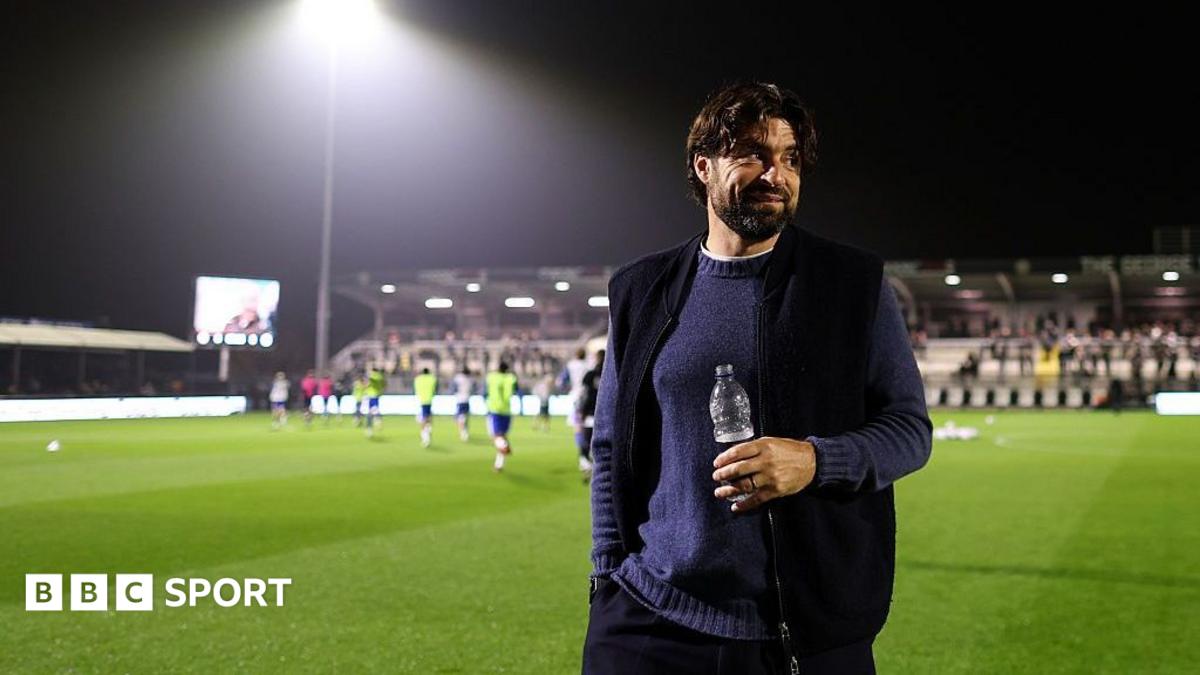
Martin – a sometimes polarising personality with fans who have criticised his style and ability following a 17-game spell at Rangers last season – had been the target of anger following two wins in eight which left them 17th in League One and a point above the relegation zone.
Home defeats by Burton, Oxford and Peterborough were a world away from the Champions League quarter-final against Atletico Madrid in 2017.
That has little bearing internally at the club and BBC Sport can reveal the Foxes were working under a transfer embargo for five weeks in the summer.
It related to the EFL’s Salary Cost Management Protocol (SCMP) with an independent Club Financial Review Panel agreeing future Premier League distributions within Leicester’s SCMP calculation could not be used to increase their spending capacity.
It meant the club could not sign players until they brought money in, although it only disrupted the order of summer business.
Jeremy Monga and Abdul Fatawu were not sold until the middle of July and only after Monga left for Manchester City on 11 July were the Foxes able to bring in Conor Chaplin and Alex McCarthy five days later.
Four of the starting XI on Tuesday signed on deadline day and 66% of the players joined after the season started.
Leicester missed out on targets who were not willing to wait but Chaplin, McCarthy and Wes Burns were just three who were prepared to hold on to join Martin.
It is the relationships the head coach has built and something which has started to turn the tide at Seagrave.
Martin inherited a broken, expensive squad, which had lost the faith and connection with supporters and a dressing room which let egos get in the way and lacked work ethic.
In a different financial reality, it needed to be stripped back and, including loans and academy exits, 34 players left the club in the summer and 16 arrived.
Sources have told BBC Sport the atmosphere at the club has now markedly improved.
The £100m training ground is one of the best in the country – with a herb garden and golf course – but has been seen as part of the problem over the decline in standards.
Players have been allowed to become too comfortable but Martin has worked hard to change the culture and behaviours.
There is a blanket ban on mobile phones in the canteen and anyone breaking the rules is not fined, they run.
Players – and staff – have to run the length of the pitch and back in 35 seconds three times, with a 35-second break in between.
The same punishment is handed out for lateness, with Martin and his senior staff also adhering to it to set the standards.
Earlier this season players left tape and drinks at the swimming pool and were shown a picture the next day. The punishment was the same. Run.
A woman holds a sign that reads in Spanish, “Corruption has left us in the dark,” during a protest against power cuts in Valencia, Venezuela, on Oct. 2, 2026. (Graphic by Truthdig; images by AP Photo, Adobe Stock)
The “biggest oil deal in history” was announced almost simultaneously by acting Venezuelan President Delcy Rodríguez and U.S. PresidentDonald Trump on Aug. 28. However, many Venezuelans didn’t find out until the next day because massive blackouts — up to 16 hours a day and partly caused by increased oil production — kept them from scrolling the news.
At the United Nations a month later, Trump bragged that he had taken Venezuela’s “spoils,” while Rodríguez said the deal with the U.S. would contribute to resolving the energy needs of “the hemisphere and the international economy.” Venezuelans then asked: What about our energy needs and economy?
The oil deal, the legal and operational details of which are still unknown, covers the exploitation of 17 fields and 65 billion barrels, which equates to 20% of Venezuela’s total reserves — the world’s largest, at an estimated 303 billion barrels. U.S. companies will invest $100 billion in exploiting the fields, a figure which — according to Venezuelan government projections — would translate into more than $209 billion in tax revenue for Venezuela over the years of the contract.
The announcement sparked questions and criticism from different sectors of the country, with concerns about the lack of information and the impact on sovereignty. In response, Rodríguez tried to explain the deal’s benefits in a nationally televised address, noting, “How much does Venezuela receive? Based on a barrel price of $65 … revenue would reach $209.3 billion for the state. In concrete terms, this means that for every barrel produced and sold, about $19 goes to [Venezuela].”
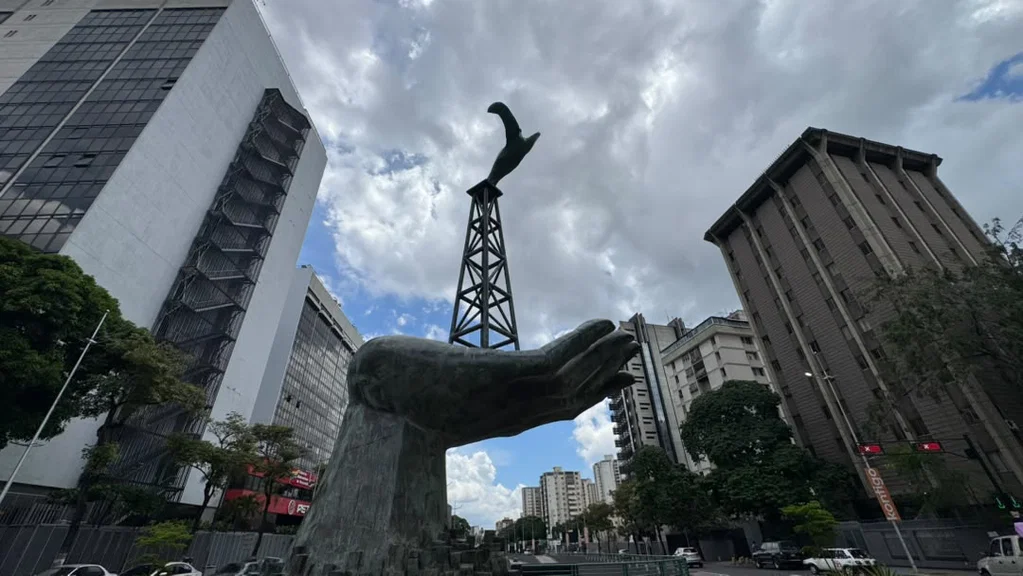
Paúl del Río’s Monument to Peace, erected in 2003, honors the recovery of the Venezuelan oil industry after the government increased state control in 2001, and after the opposition strike ended. (Jessica Dos Santos Jardim)
Oil drives the Venezuelan economy. Currently, it accounts for 71% of the nation’s total exports, but now much of that revenue goes to the U.S. In the first quarter of this year, out of a total of $7.76 billion in exports, $5.5 billion came from oil activity. As the acting president’s address went on, many of us only had more doubts.
A few hours later, Venezuelan economist Francisco Rodríguez summed up some of the nation’s concerns: “Do the projected tax revenues … correspond to nominal amounts, inflation-adjusted amounts, or net present values? A nominal amount of $19 per barrel in 2051, the project’s final year, would correspond to a real value of about $9 today.”
“The $209 billion equates, over 25 years, to about $8.4 billion annually, a relatively low amount compared with the tax revenue Venezuela has collected in the past at similar production levels. The amount would be even lower if it corresponds to a nominal total.” According to Central Bank of Venezuela data, Venezuela took in a record $82.8 billion in 2008 alone from oil sales.
Contradictions
Trump later contradicted Delcy Rodríguez’s 25-year timeline, saying the deal would involve a century of concessions. Francisco Rodríguez, the economist, noted that extracting 65 billion barrels in 25 years would be impossible, due to lack of infrastructure.
“What rights does the U.S. acquire over these resources after 25 years? Can a future Venezuelan government decide to withdraw from this deal if it doesn’t like it?” he asked.
And why wouldn’t they like it? Trump said on Truth Social that Venezuela will begin supplying the U.S. strategic oil reserve immediately through “a gift.” Nobody knows what that means exactly, but since the military intervention on Jan. 3, the revenue generated by the sale of Venezuelan oil — we don’t know how much that is either — is already “in the custody” of the U.S. Treasury.
“It doesn’t look like Venezuela will benefit broadly in the long term. It’s like being on floor minus-18 and going up to minus-10,” Venezuelan researcher Blas Regnault, who specializes in energy policy and oil governance, told Truthdig from The Hague, Netherlands.
“There could be an indirect reactivation of the economy because of the indirect jobs that may emerge in some regions. But let’s also keep in mind that the country has been 100% blockaded, suffocated, so any door that opens will bring some benefits, but this is not the benefit one would expect for a sovereign country,” he said.
“That’s the other problem: There’s no sovereignty of any kind over the resource itself, over what’s being sold. On top of that, there’s a lot of opacity — you’re analyzing blind.”
This “opacity” is also illegal. Articles 150 and Article 187, Paragraph 9, of Venezuela’s Constitution state that contracts of national public interest with foreign states or entities require approval from the National Assembly. However, although the Assembly endorsed the announcement of the deal on Sept. 1, its president, Jorge Rodríguez, said it had not yet been “submitted” to the legislature. Then, a month later he said that “according to some legal experts, it doesn’t need to be reviewed.”
It’s clear that Venezuela is once again, as it was for much of the 20th century, a kind of “U.S. oil province,” Regnault says, “Recovering sovereignty won’t be easy because Venezuela is strategic to U.S. interests.”
“On top of that, the other side of the coin is that China has become a key player [globally]. Today the Chinese do what Saudi Arabia used to do when it cut production and pushed prices up. With this Strait of Hormuz crisis, after the naval blockade of Iran, it was discovered that China had more reserves than previously thought, and that kept the crisis from being bigger and the price from reaching $150.”
That is precisely why U.S. Secretary of State Marco Rubio celebrated the fact that several of the oil fields included in the deal were once “dominated by China and Russia and Iran.” At the same time, the U.S. government has decided to maintain sanctions against Venezuela, thereby preventing any new economic players. In fact, the U.S. Treasury Department, through its Office of Foreign Assets Control, updated its oil licensing policy for Venezuela in late September through Orders 46E, 48D and 49B, which benefit U.S. businesses but maintain an absolute ban on Russia, Iran, Cuba, North Korea and China.
“The [Venezuelan] government has already amended the Hydrocarbons Law to try to create more favorable conditions for investors in the oil and gas sector, but … the [U.S.’] problem isn’t domestic supply. They need to monopolize the world’s energy reserves, markets and prices in order to prevail in the rest of their economic activities,” oil expert David Paravisini explains to Truthdig from Caracas, referring to a legal reform that was passed on Jan. 29 and created the possibility of technical and operational management and direct commercialization by private companies. He believes that for Venezuela, the deal is a diplomatic “quest” to survive.
People block a street during a protest against power cuts in Valencia, Venezuela, on Oct. 2, 2026. (AP Photo/Jacinto Oliveros)
Trump is also maintaining some of his domestic support by presenting Venezuela as the great economic and geopolitical victory of his administration, especially after the war against Iran — which was supposed to last “only a couple of weeks” — reached the six-month mark and cost more than $37.5 billion through the end of July. In fact, Trump has claimed again and again that this oil deal will lower fuel costs inside the U.S. and come “at no cost whatsoever to the American taxpayer.””
Does this mean the $100 billion investment will come from private companies? The deal also aims to exploit eight greenfield blocks, areas where crude has been identified but which have not yet been developed. But what happens if that investment does not materialize? Since Jan. 9, Trump has been trying, without success, to persuade U.S. oil companies to invest in Venezuela.
Corruption is fine if the U.S. profits
So far, the only company we’ve heard about is North American Blue Energy Partners (NABEP), which was selected on Aug. 31 by the Trump administration to lead oil extraction projects in the 17 Venezuelan fields.
According to the White House, the Department of Defense will hold a 35% equity stake in NABEP and, in addition, the Barbados-registered company will grant Washington the right to buy 20% of the oil it produces at the cost of production.
NABEP, which has only operated in Venezuela for two years, was awarded the deal without a prior bidding process. The company belongs to Venezuelan businessperson Alejandro Betancourt, who was under investigation by federal prosecutors in Florida until January 2026 for allegedly laundering more than $1 billion from the state-owned Petróleos de Venezuela (PDVSA). The case was then closed suddenly under the orders of U.S. Deputy Attorney General Todd Blanche (now the attorney general), after a decade-long investigation. He is still the subject of open investigations in Switzerland and Spain.
Betancourt comes from a middle-class family but studied at the private religious school Instituto Cumbres de Caracas, where he befriended Javier Alvarado Pardi, son of Javier Alvarado Ochoa, who later became president of Electricidad de Caracas, deputy energy minister and a PDVSA executive.
Back in 2009, Alvarado Ochoa presented Betancourt and his engineering firm, Derwick Associates, as the best solution to Venezuela’s power generation crisis. Betancourt went on to receive 12 government contracts, awarded without competitive bidding, worth a total of $5 billion, which were either never completed or were implemented improperly, according to Transparency Venezuela and the Organized Crime and Corruption Reporting Project (which is funded by the U.S. government, among other countries).
So why Betancourt? Rubio said that he is no longer under investigation by the U.S., has supported the Venezuelan opposition and he has demonstrated his ability to produce oil. In that vein, NABEP claims it produces 200,000 barrels of crude a day, just behind Chevron.
However, Victor Hugo Majano, a Venezuelan investigative journalist and director of the well-known outlet La Tabla, told Truthdig that Betancourt overbilled the Venezuelan state by billions of dollars for power plants that never worked. He cited information from Thor Halvorssen, an anti-Chavista activist and cousin of Venezuelan opposition leader Leopoldo López. With that money, Betancourt bought a Dassault Falcon private jet and the historic Alamíin Castle in Spain.
Halvorssen also says Betancourt, who is also linked to 50 companies spread across 15 countries, paid former New York prosecutor Adam S. Kaufmann to halt prosecutions; former Wall Street Journal reporters to discredit whistleblowers; and former New York City Mayor Rudy Giuliani to bring the U.S. Justice Department over to his side.
“Despite this, the U.S. still doesn’t attack Venezuelan corruption. They want to protect the dollar and the U.S. financial system. They are only worried about securing capital flow, money that is not controlled by the state, the [Venezuelan] government,” Majano said.
More oil for the U.S., less electricity for Venezuela
Meanwhile, Venezuelans are paying the price for both Betancourt’s alleged corruption and the oil deal. So far this year, oil production has increased by 29.9%, going from 924,000 barrels per day (bpd) in January to an average of 1.2 million bpd. The increase has been driven by the need to deliver oil to U.S. companies, and it has directly worsened the nation’s electricity crisis.
Authorities acknowledge this; Venezuela’s interior minister, Diosdado Cabello, said in May the country is seeing higher electricity demand due to the growth in oil production, which “is a very serious problem.” The Ministry of Electrical Energy also noted that demand has reached 15,625 megawatts (MW), “the highest energy consumption figure in the last eight years, an increase of 3.6% compared with the peak reported in 2025.”
However, this statement omits that Venezuela actually has a nominal installed capacity of approximately 35,000 MW, double the country’s peak demand, but stable real generation barely reaches 11,000 MW. This shortfall is a result of both U.S. sanctions and domestic corruption, which together have led to disinvestment, lack of maintenance, fuel shortages (plants designed to run on natural gas have been forced to use low-quality diesel) and transmission problems.
Where does oil production come in? Víctor Poleo, an electrical engineer and former vice minister of Energy and Mines from 1999 to 2001, told Truthdig that “the national oil industry uses up about 1,500 MW, of which about 250 MW is self-generated, but another 1,250 MW is taken from the national interconnected system. This draw is 24/7 and must be continuous in order to carry out crude extraction, transport, pumps and compressors and refining.”
High-voltage transmission lines cross the Waraira Repano mountain range overlooking Caracas, Venezuela. (Jessica Dos Santos Jardim)
Poleo, who bases his analysis on studies by fellow electrical engineer Nelson Hernández, says light, medium and heavy crudes are estimated to require between 9 kilowatt-hours and 15 kilowatt-hours per barrel to produce. For extra-heavy Orinoco crudes, the estimate is 24 kilowatt-hours per barrel. “As a result, citizens lose their quality of life so that oil can be produced.”
This deterioration is particularly notable in Zulia state, Venezuela’s so-called oil cradle, where production has risen to between 350,000 and 370,000 barrels per day of light and medium crude — far below the historic peak of 1.5 million bpd in 2004, but a figure that, for its residents, has translated into daily blackouts exceeding 12 hours.
From the Isla Dorada residential complex in northern Maracaibo, capital of Zulia, José Javier León tells Truthdig that power failures “have worsened dramatically.” In his area, outages used to last four hours but now exceed seven.
“In many places there are double rounds, meaning the power goes out in the morning and at night, or at night and then before dawn. All the problems have gotten worse, and we don’t know the real reasons. In the suburb of Cuatricentenario, one of the most working-class areas and where the government had the most electoral support, the cuts are the worst,” he says.
León complains that residents are not alerted when the outages will happen. There is nothing like the electricity rationing schedules of the past, which would at least let them plan better. “In my area, there is no domestic gas, so we have electric stoves. Also, these are apartment buildings, where we have to turn on pumps to get water.” To make matters worse, the temperature in Zulia often reaches 39 degrees Celsius (102 Fahrenheit) because of the humidity.
In the Andes, outages add up to as many as 12 hours a day, and 16 hours in rural or border areas. From La Hechicera, an urban neighborhood in the city of Mérida, Silvana Solano tells Truthdig that the power used to go out for seven to eight hours, once a day, “but for the past two months, it goes out twice a day, the first time for seven hours and the other for around five hours, and we can’t predict the schedule. This also affects phone signals, which keeps us from communicating, making payments, etc.”
Some government institutions, including the Mérida mayor’s office, are open only from 8 a.m. to noon. Solano says she is worried that public schools, which operate until 3 p.m., will also adopt this schedule, in turn affecting parents’ working hours. Throughout September, residents of the towns of Caja Seca (Zulia state) and Nueva Bolivia (Mérida state) blocked the Pan-American Highway to protest the power outages.
To Venezuela’s north, on the famous Margarita Island, Alejandro Pérez tells Truthdig there are areas that have gone seven to eight months without water service. “Here we pay for water trucks, $50 for 10,000 liters of water, sometimes with $60 we get 13,000 liters, but you have to pay in foreign cash or at the parallel rate because the Central Bank of Venezuela exchange rate isn’t accepted here.” The black market or informal exchange rate is worth more, for those with foreign currency, than the official exchange rate.
Unlike other Caribbean islands, Margarita doesn’t have significant natural sources of fresh water. Some 90% of the area’s water comes from the mainland, crossing the sea through underwater pipelines that require gigantic pumping stations.
The contradictory rhetoric and the endless problems we face daily mean that, according to the latest AtlasIntel poll conducted for Bloomberg News, only 10% of Venezuelans believe the country will benefit from the oil pact with the U.S. — data that also aligns with the most recent study by the firm Meganálisis, the same one that after Jan. 3 said 92.2% of Venezuelans loved Trump. Emotions change, social problems persist, and without electricity, no economic improvement will be possible.
The views expressed in this article are the author’s own and do not necessarily reflect those of the Venezuelanalysis editorial staff.
Big Brother fans weren’t impressed with one star’s actions during the latest episode
Philip sparked backlash on Thursday(Image: ITV)
One Big Brother star has sparked backlash after their comments in the house.
The hit reality series returned to screens on Thursday (October 15), ahead of the next eviction. Yasmin, Twinks and Rob will all face the public vote on Friday night (October 16). Yasmin notably received a killer nomination this week, while Twinks and Rob each received six nominations from their fellow housemates.
The housemates tackled another shopping task during the latest episode, as the house transformed into Big Brother’s body. The teams were given various challenges to determine who would be awarded the luxury shopping budget, while the losing side had to face basic rations.
Drama quickly ensued when Rochelle upset Harry during the task, leading to him storming out of the living area. Harry was supported by his fellow housemates as he broke down in tears in the bathroom.
But the tension didn’t end there, as Philip later shared his true feelings about Rochelle, who he has appeared to be close with in the house. During a whispered conversation in the garden, Philip told Lynx: “Lynx, I have wished for her to go.
“So, if she f****** goes, because it’s got that way now. I haven’t got no time for her. I haven’t, I’m telling you, I’m speaking honest with you. That’s why I have time in bed, because I want to stay away from her. And that’s no word of a lie that.”
Ensure our latest Big Brother stories always appear at the top of your Google Search by making us a Preferred Source. Click here to activateor add us as Preferred Source in your Google search settings
Philip went on: “Rochelle has said too much… And it’s funny what she kept saying to me and all. She’d say, ‘You’re my best friend in here.’ She said, ‘You’ll never turn on me, will you? Never turn on me.’ She kept saying that to me. She’s got too f****** much to say.”
Lynx added: “And it’s never-ending. And like you make such a pure soul like Harry get like that today, and then you come in the bathroom and make it about you. It’s just sometimes you just have to think about what you say.”
Philip continued: “See, she’s had a very privileged [life] from a child. I think she’s been spoiled, and I think she’s got away with everything. Everything she wants, she got. She never wants to listen about you, about your life, about your things. And do you know what? I’m not really interested and I don’t want to tell her.”
Lynx then said: “Since Sam went or like, when he was giving his reason to vote her, he was like, ‘All you talk about is me, me, me.’ God that stuck with me.”
Philip shared that Sam was “f****** right” about what he said, before concluding: “This is what she’s like. And come on, Lynx, she’s got on everyone’s [nerves]. She has. The ones [that have] gone and the ones [that are] here, she f****** has.”
Content cannot be displayed without consent
Viewers were left speechless after hearing Philip’s comments, with many sharing their shock on social media. “Not a good look,” one person wrote on X.
Another added: “Wow can’t believe Philip’s now turning on Rochelle. I sense a downfall coming.” A third said: “Not Philip showing his true colours after that chat about Rochelle!”
A fourth viewer echoed the sentiment, saying: “Philip is giving game player, sorry not sorry.” Someone else similarly shared: “Philip turning on his ‘best friend’ is not what I expected.”
Phillip and Rochelle ended up on a blazing argument during the latest episode of Big Brother but fans of the ITV2 reality show are convinced they know the real reason behind their row
Rochelle and Phillip come to blows in the Big Brother house(Image: ITV)
Another argument has blown up inside the Big Brother house between an unlikely duo.
The House of Power kicked off during Sunday’s (October 11) episode and it didn’t take long before a row broke out between Phillip and Rochelle.
During a conversation with house guest Gemma Collins, Phillip and Rochelle opened up about Twinks moving into the house as one of the new arrivals alongside Catrin.
Phillip explained: “I said her [Twinks] ‘you’ve come into our house, our house’. I said ‘don’t you f****** forget it’. However, Rochelle disagreed saying: “You didn’t f****** say it like that’.”
A furious Phillip hit back, saying : “Don’t call me a liar” before adding “You’ve got too much to f***ing say for yourself, you f****** nosey t*** and you can f*** off away from me”. However, Rochelle insisted: “I haven’t called you a liar.”
The row didn’t last long and they quickly made up much to the amusement of their fellow housemates but some fans have been left wondering if Phillip is “turning on” Rochelle because he heard the crowd chanting “Get Rochelle out” during Friday’s (October 9) live eviction which saw Pauline forced to the leave the house.
Taking to X, formerly known as Twitter, one fan penned: “Phillip turning on Rochelle after he heard the get Rochelle out chants. More faces than a town clock that one.” Another added: “I think Phillip heard the ‘get Rochelle’ out chants.”
A third person said: Phillip heard the crowd saying ‘get Rochelle out’ now he thinks if I turn on her people will love me, well no.” A fourth agreed: “Philip heard the ‘get Rochelle chants’ and is now turning on her.”
However, some fans are convinced Phillip will go on and win the entire series, with one viewer writing on social media: “Honestly Phillip for the win” and someone else posting: “Love Phillip he owns it, says how it is, he’s funny and he cheers the housemates up as well. Phillip to win for me.”
The argument between the friends comes just days Rochelle said her and Phillip were “the Beckhams” because they were “better together” in reference to celebrity couple David and Victoria Beckham.
Elsewhere in the episode, Big Brother shared the House of Power rules explaining: “Housemates, as you know, this week is all about the power. Soon, the house will be split into two teams. In your teams, you’ll take on a series of tasks. At stake – power in the house. “
Celebrity house guest Gemma then had pick two team captains, she chose Sam and Rob, and they then had to decide who they wanted on their teams in preparation for the head-to-head battles that lie ahead.
The winning team gets power of the house until the next game and are the only ones allowed to use the kettle, toaster, air fryer, hot tub and hair appliances.
The losing team must do all the cleaning, are only allowed two minutes in the shower each and aren’t allowed to sit on the sofa.
Big Brother airs Sunday to Thursday on ITV2 and ITVX at 9pm
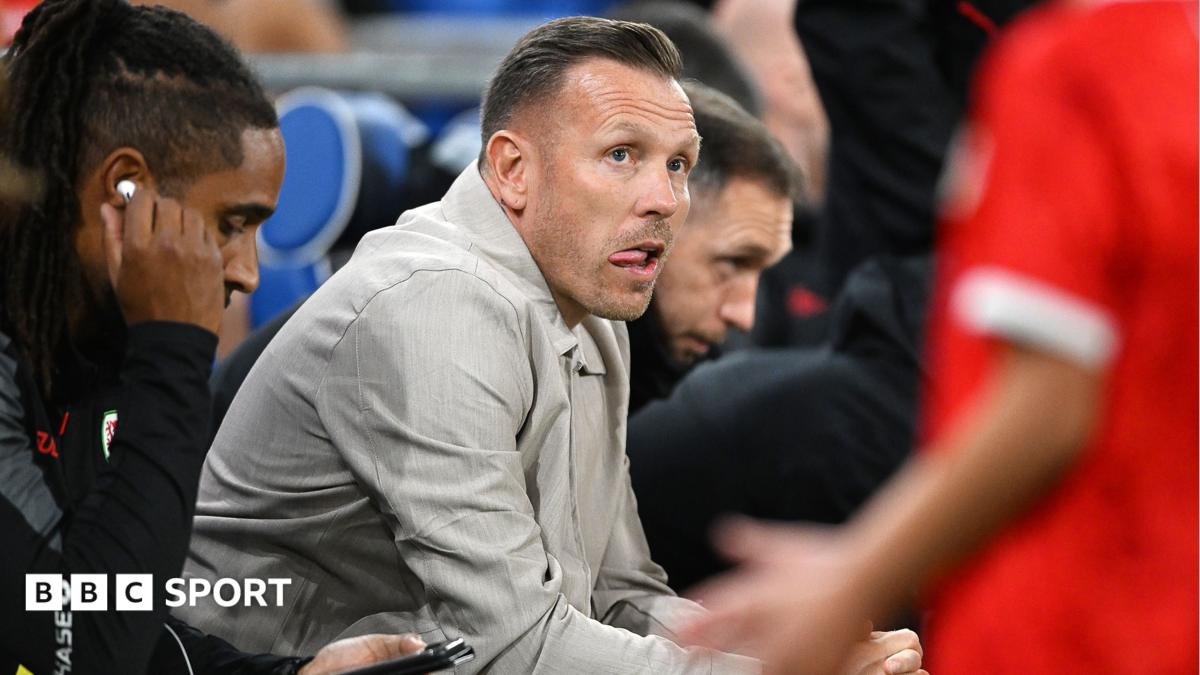
And yet it was the performance perhaps more than the result that appeared to win fans over again and reset the relationship between supporter and head coach.
“If they wanted to turn, that was their chance,” Bellamy said on S4C of the crowd response to Oscar Bobb’s opener after 11 minutes in what was Wales’ first home game since those Burnley links. “But they didn’t, they drove players on.”
Indeed, there had been only a Red Walled-willingness for Wales – and Bellamy – to be better throughout the 90 minutes, the noise lifting as Haaland remained contained and the hosts continued to move forward. They liked what they saw. Action, not words.
Bellamy admitted to having an “identity meeting” with players to try and re-establish what had been the hallmarks of his initial time in charge. It evidently did the trick given the way the tempo and aggression returned.
On the ball there was plenty to please the eye, not to mention the resilience to close a game out – a key criticism of that World Cup campaign.
One win is only one win, but there were red-shirted signs of redemption, from Liam Cullen’s performance – a player Bellamy has been criticised for selecting over others – to Neco Williams’ free-kick following a difficult night in Denmark.
But suddenly the Nations League campaign has new life and the chance of remaining in the top tier, and maybe even a seeding boost for those Euro 2028 qualifiers.
“It felt more like what we saw at the start under Craig,” said former Wales midfielder Joe Ledley.
“I think people have wanted to see it back but they saw it here. Fans don’t always have patience, decision-makers don’t always have patience so I think everyone knew we needed to see a result – but we also saw the performance and things we’ve not seen for a while. That’s a Craig Bellamy side.”
So instead of breaking point, was this a turning point?
“I hope so,” said Robert Earnshaw, another former Wales teammate of Bellamy and now part of the Match of the Day Wales team with Ledley.
“Craig needed it, the team needed it, I think the whole nation needed it,” said Earnshaw.
“Our levels dropped after the disappointment of the World Cup and it was about how could we bounce back – and here we felt that energy and excitement again.
“They had to give the crowd things to be cheerful about, because they were missing that for a while. Against Denmark we were miles away from what we’ve seen.
“This was a statement win.”
And – although the next test fast approaches against Denmark in Cardiff on Sunday – maybe it was also a line drawn.