We’ve all been there – booking a flight and hoping for a decent seat. But which spot on the plane should you avoid at all costs? I asked the experts, and they all agreed on one area to steer clear of.

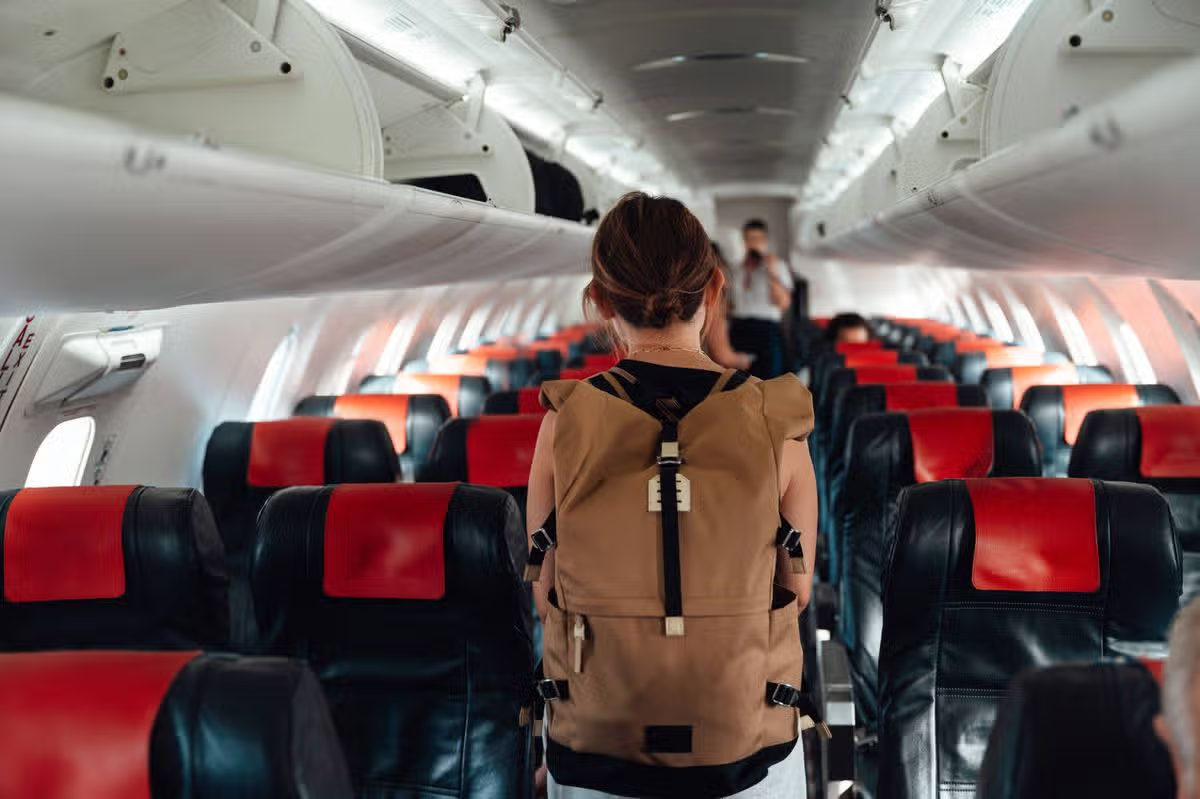
Boarding a plane can feel like a lucky dip(Image: Oscar Wong via Getty Images)
Finding yourself in the wrong plane seat is a surefire way to start off a holiday with a whimper.
I recently found myself wedged next to an increasingly wound-up man on a Ryanair flight. He kept huffing, puffing and angrily texting his girlfriend until, five minutes after take-off, he erupted. “Get your elbow off me, my guy,” he shouted at the man sitting on the other side of him, who understandably looked surprised and confused.
Although shouting at strangers probably isn’t the solution, being in an uncomfortable budget airline seat, wedged between strangers on a hot summer day, is no fun. Which is why choosing the right plane seat can make a big difference to the start of your holiday. From cabin noise to limited storage, an uncomfortable spot can leave you wishing you had booked elsewhere.
Do you have a travel story to share? Email webtravel@reachplc.com
To help holidaymakers make that choice, we asked travel experts which seats they would avoid. Most pointed to the same area: the very back of the plane, and not because you’re more likely to sit next to angry passengers there. Nicholas Smith, Holidays Digital Director at Thomas Cook, said the rear of the aircraft can be particularly uncomfortable for passengers who are unsettled by turbulence.
He explained: “Seats at the very back are typically less desirable. They are close to the galley and restrooms, service can be slower, food choices may be limited, and it is also the area where movement during turbulence feels strongest.”
Nicholas recommended thinking about what matters most before choosing a seat. Although seat selection often costs extra, it may be worthwhile if comfort is a priority.
He said: “Thinking about your priorities in advance also makes a difference – nervous flyers will be more comfortable over the wings, those with a tight connection should choose an aisle near the front, while couples booking a row of three might secure the window and aisle, leaving the middle free for a chance at extra space.”
Izzy Nicholls, a travel expert and founder of road trip blog The Gap Decaders, also advised avoiding the rear of the cabin. She said: “Seats at the back are best avoided. They’re typically noisier because of engine proximity and galley activity, and you’ll be among the last to board and leave the plane.”
For a quieter journey with fewer interruptions, Izzy recommended sitting towards the front. She explained: “Travellers who want a calmer journey should book seats at the front of the plane. This area is away from restrooms and heavy foot traffic, so you’ll experience fewer interruptions.
“Choosing an aisle seat here also gives you the freedom to stretch your legs and get up easily without disturbing others. Select these placements to make long flights more comfortable and reduce the effects of motion.”
Storage is another consideration, particularly for passengers who board late. Jacob Wedderburn-Day, CEO and co-founder of luggage storage company Stasher, warned that overhead space near the back may be harder to find. He said: “Avoid sitting near galleys and toilets, where staff members often store their things in overhead bins, leaving less space for passenger baggage. The last few rows are a concern because if you board late, the bins above you may be filled, which means you may have to store your luggage several rows away. Also, stay away from seats that are located behind bulkheads, as these spaces often have limited storage.”
Andrea Platania from Transfeero highlighted further drawbacks of the last row, including restricted recline and noise. Andrea said: “The very last row is typically the least desirable: limited recline, proximity to bathrooms, and more cabin noise. Middle seats anywhere are usually least popular unless you’re traveling in a group.”
Passengers looking for extra legroom could consider an exit-row or bulkhead seat, although these options come with restrictions. Andrea added: “Exit-row and bulkhead seats offer more space, but they come with trade-offs: fixed armrests, limited recline, or restrictions for passengers traveling with children.”
For those concerned about turbulence or prone to motion sickness, Andrea recommended choosing a seat over the wings rather than at the back. The expert advised: “Sit over the wings. This area is closest to the aircraft’s centre of gravity, so you’ll feel less turbulence compared to the back, where bumps are magnified.”