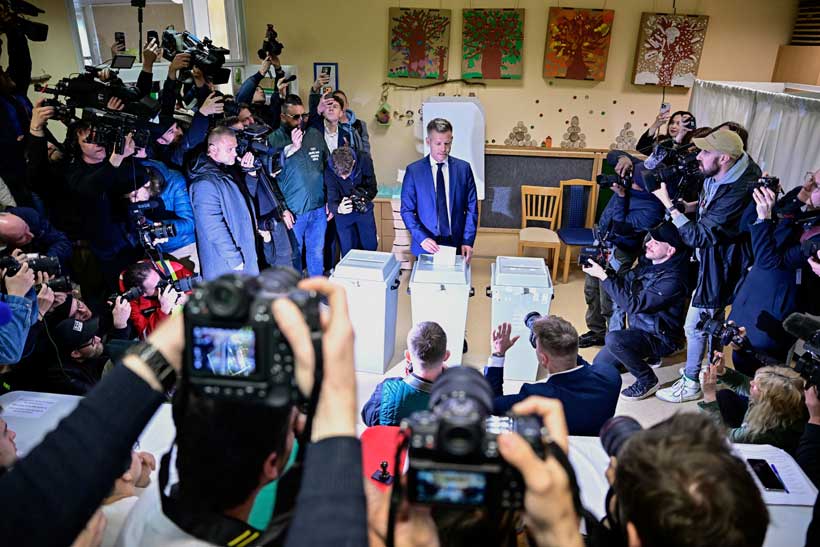
Hungarians began voting in an important election on Sunday that could end Prime Minister Viktor Orban’s 16-year rule. This election is significant not only for Hungary but also for Russia and right-wing movements in the West, including the U. S. Orban, who identifies as a eurosceptic nationalist, has developed an “illiberal democracy” that has drawn parallels with Donald Trump’s MAGA agenda. However, many Hungarians are dissatisfied with Orban, 62, due to economic stagnation and high living costs, as well as the growing wealth of oligarchs linked to the government.
Current opinion polls suggest that Orban’s Fidesz party is trailing Peter Magyar’s center-right opposition Tisza party by 7-9 percentage points, with Tisza receiving around 38-41%. Voting started at 6 a.m. local time and is set to close at 7 p.m. Pollsters predict a record voter turnout. Many citizens, like Mihaly Bacsi, express a desire for change, highlighting tensions in the country under the current government. There is hope among voters for a return to Hungary’s Western commitments, which they associate with the pre-Orban era.
The election is being closely monitored by European Union officials, who have criticized Orban for undermining democracy, media freedom, and minority rights in Hungary. A potential defeat for Orban could also impact Ukraine negatively by blocking a crucial EU loan. Orban has framed the vote as a decision between “war and peace,” claiming that Magyar would lead Hungary into conflict, a point Magyar disputes.
Despite backing from figures like U. S. Vice President JD Vance and alliances with far-right European leaders, Orban’s campaign faced challenges due to allegations of collusion with Moscow. Orban emphasizes his goal of protecting Hungary’s national identity and values amidst global challenges. In contrast, Magyar, 45, appeals to voters’ frustrations over state corruption and declining living standards, especially among younger people eager for change.
Orban’s popularity is particularly low among those under 30. To combat this, he has introduced measures like income tax cuts for younger workers and a subsidized mortgage scheme. However, Magyar’s vision for change resonates more with the electorate. Analysts believe the election results are uncertain with undecided voters and changes to the electoral landscape, suggesting outcomes could range from a Tisza supermajority to a Fidesz majority. If Tisza wins, reversing Orban’s changes could be a challenging task for the new government.
With information from Reuters