If your destination falls victim to a wildfire or other extreme event, what should you do, and can you get your money back? A consultant for independent financial research company Defaqto has explained what Brits need to look out for

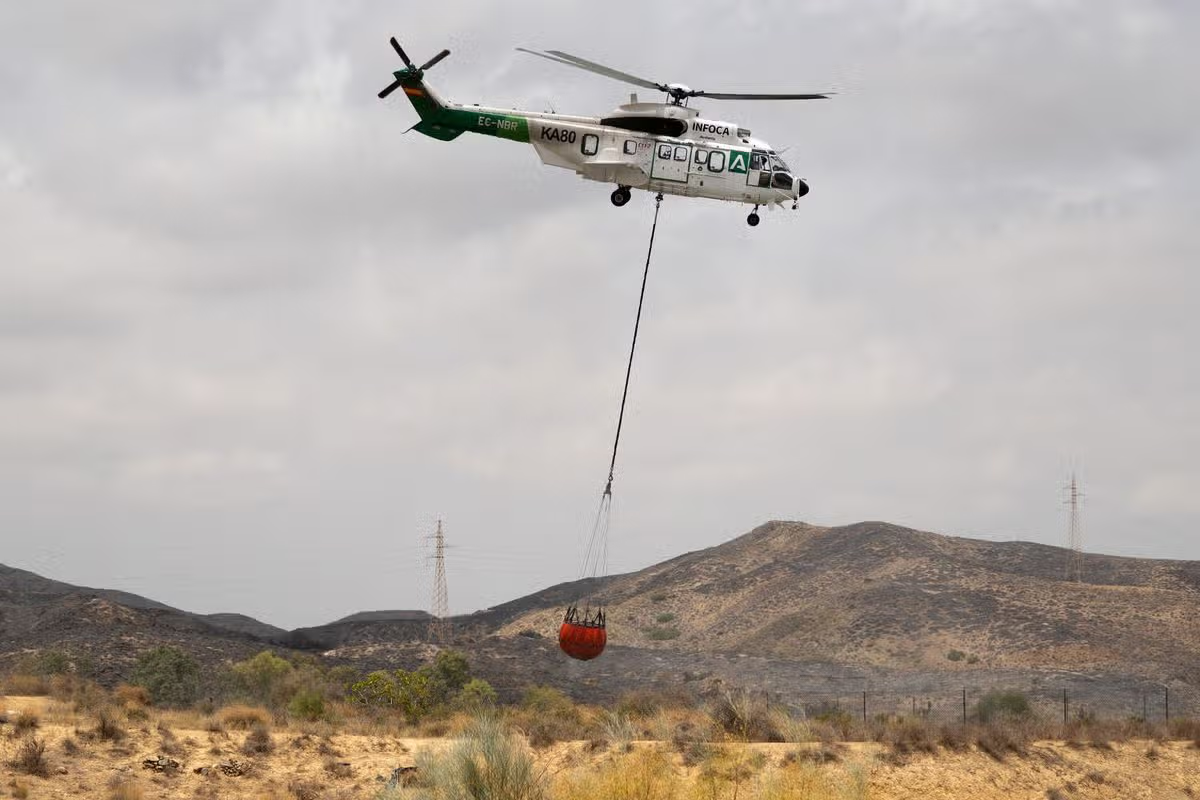
Spain has been tackling one of its deadliest wildfires(Image: JORGE GUERRERO / AFP via Getty Images)
Many Brits will be heading off to Spain for the busy summer season in the coming weeks, and no doubt seeing the headlines about wildfires will cause some alarm if you’ve got a holiday booked.
Wildfires broke out in the Almería province of Spain last week. So far 13 people have been confirmed dead, among them, seven Britons. Almeria is part of the Andalusia region, and is popular with expats and holidaymakers. The Foreign, Commonwealth & Development Office (FCDO) recently updated its advice for anyone travelling to Spain.
It said: “If you are in an area affected by the wildfire follow instructions from local authorities and emergency services at all times, avoid travelling into or through the affected area, and follow updates from the emergency services.”
People who were planning trips to Andalusia and other areas of Southern Europe suffering from wildfires and other extreme weather events may be wondering where this leaves them. Anna-Marie Duthie, an insight consultant at independent financial research company Defaqto, gave her thoughts.
Anna-Marie said: “If your airline cancels your flight due to wildfires, they should offer you the chance to rebook, or provide a full refund. If your holiday was booked as a package, this refund should cover all elements — flights, accommodation and transfers.
“But if you’ve booked everything separately, you’ll need to deal with each provider independently. Your airline may refund your flight, but your accommodation provider may not if the property is unaffected. This is why it’s essential to speak directly with providers in the first instance and check with your insurance provider regarding the cover they include.”
Travellers should regularly check the FCDO website to see tailored advice for their destination and ensure no travel warnings are in place. Anna-Marie said: “If government advice changes, advising against travel to the area after you have booked your trip, then you may be covered for cancellation or curtailment.
“You may also be covered for additional travel and accommodation costs should your trip be disrupted due to a catastrophic event, if your insurer offers this cover or you’ve paid to include it.”
Anna-Marie believes that extreme weather events could affect the travel insurance industry in future, saying: “Whilst it’s difficult to know exactly how travel insurance may change over the next decade, longer term there is a chance that we may end up seeing less insurable destinations and increased premiums. What we do know, however, is that travel insurers are used to having to adapt to an ever-changing world.”
But she added: “It is unlikely and we are yet to see any immediate changes to policies because of the current heatwave. It is unlikely insurance providers will change their policies in the near future to incorporate extreme heat. Current clauses may refer to ‘severe’ or ‘extreme’ weather, but the definitions for these can vary and currently no providers go as far as to specify criteria such as maximum temperatures.
“Where the heat causes events such as the current wildfires, this is a separate consideration and would be classed as a catastrophe or natural disaster. Cover for this will all depend on your insurer’s definitions and extent of benefits.”
Have a story you want to share? Email us at webtravel@reachplc.com