extreme

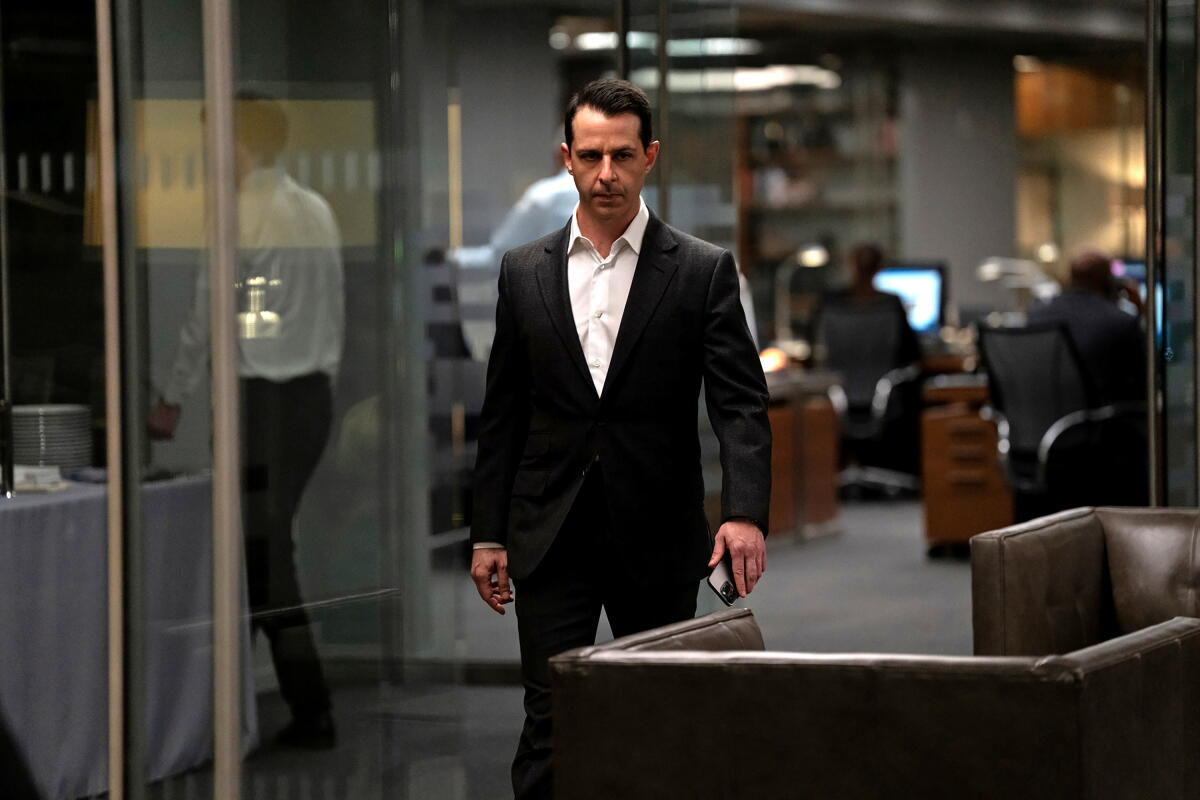
‘Evil Dead Burn’ review: Extreme horror finds glee in destruction

Heard about that fresh new wave of horror dominating the box office and charming even the snootiest of critics?

“Evil Dead Burn” — less an inferno than a partly scorched reheating — isn’t that. Director Sam Raimi’s original 1981 “The Evil Dead,” filmed in the Tennessee woods by a bunch of hyperactive dreamers, has since morphed into a monolithic franchise that mainly serves to keep the lights on. Some foundational elements remain: wobbly camera sprints through the forest, demons with a smiling love of bodily destruction. But the house feels dormant.

Sébastien Vaniček, a French filmmaker of vigor if not vibrancy, is the fourth director to pick up the series, now on its sixth installment. It’s hard to know from his palette what thrills him, or if he sees colors at all, given the film’s muddy, deadening grayscape. (A softly falling snow, almost mocking of the action to come, is a nice touch.) Vaniček knows where his movie needs to end up — a sloppy showdown in a home with a lot of power tools lying around — but sometimes he lingers, adding transient curiosity to a serviceable story.

A tense family coalesces around the memorial of its eldest son, cut down in the prime of what seems like an argument-leaden life. Mainly, we focus on Alice (Souheila Yacoub), his bruised foreign-born widow, a black sheep among them who doesn’t have any words to offer at the service. Already, they all hate each other, but what they don’t know is that younger failson Joseph (Hunter Doohan), a wannabe writer, has been busy going through his grandfather’s notes concerning the Book of the Dead, unwittingly summoning vicious spirits to a fractious dynamic.

These people shouldn’t be around each other, but whereas a mightier movie like “Hereditary” would simmer that grief into a boiling pot of bad behavior, “Evil Dead Burn” has something more obvious and darkly funny in mind. The spirits (we call them Deadites in this universe) slip into a human host, we see a telltale contraction of the irises, and it’s off to the races.

The gore comes like a tide, shockingly for a mainstream studio wide release. Vaniček is clearly inspired by the extremity that has marked so much horror from France over the last two decades, in notorious exports such as “High Tension” and “Martyrs.” But it’s also show-offy and ill-considered: When a family dog receives a furious fork-stabbing, it’s hard to know who the film is for. Elsewhere, heads are exploded by guns, cleaved and gashed, though not so irretrievably that a possessed couple can’t enjoy a long lip-lock (“You haven’t kissed me like that in years,” a partner says, her mouth bloodied).

As it goes on, “Evil Dead Burn” itself feels possessed by a kind of narrative impatience: Can’t we just get to the good stuff? Raimi was capable of shapelier storytelling than this. These reboots in his name — on which, it should be said, he is a producer — somewhat demean his legacy by reducing “Evil Dead” to a viscera delivery device. I can’t say the audience I saw it with was particularly juiced.

But a loopy grandma (Maude Davey), stricken with dementia, gets her licks in via a brutally deployed fountain pen that is notably not used for writing. There’s a hint in that. This movie is not for those who want anything beyond a steak served blue.

‘Evil Dead Burn’

Rated: R, for strong bloody horror violence and gore, and language

Running time: 1 hour, 50 minutes

Playing: Opens Friday, July 10 in wide release

Source link

White House criticizes Smithsonian museum for ‘extreme political activism’

July 6 (UPI) — The White House marked Independence Day by releasing a scathing report on the Smithsonian Institution, particularly the Smithsonian’s National Museum of American History, for what it called “extreme political activism.”

The report, “Saving America’s Story: How Ideological Capture at the Smithsonian Institution’s National Museum of American History Erases Our Heritage,” accuses the museum of anti-white bias and claims it “no longer treats the American story as a shared national inheritance to be taught or celebrated but as a political instrument to divide, dispirit and discourage our citizens.”

The report takes exception to display language that “refuses to affirm the exceptional courage of the American people” and displays that connect the Founding Fathers with slavery, along with many other complaints.

It also says the museum endorses illegal immigration, advocates transgender issues and focuses on Christianity as “an instrument of conquest, exclusion or cultural erasure.”

Julissa Marenco, a spokeswoman for the Smithsonian, said in a statement, “For more than 180 years, the Smithsonian has served the American public with nonpartisan and independent scholarship, and we remain committed todoing so,” The New York Times reported.

The report was written by the Domestic Policy Council, a White House organization tasked with the president’s domestic agenda. Vince Haley, its leader, was in charge of the administration’s celebration of the nation’s 250th anniversary.

The report particularly criticizes Anthea Hartig, the Smithsonian’s director, saying she has “advanced an ideological agenda contradictory to museum’s founding purpose of fostering patriotism.”

According to the Smithsonian’s website, the institution was founded in 1846 to be “an establishment for the increase and diffusion of knowledge.” It oversees 21 museums and The National Zoo.

This new report is a follow-up to President Donald Trump‘s executive order in March 2025. In that order, “Restoring Truth and Sanity to American History,” Trump tasked Vice President JD Vance with overhauling the Smithsonian with Congress.

The White House also ordered the institution to turn over thousands of pages of documents, threatening it with budget cuts. The Smithsonian has been independent of the president and executive branch but derives more than half of its budget from federal sources.

Trump’s executive order in 2025 ordered Vance to “prohibit expenditure on exhibits or programs that degrade shared American values, divide Americans based on race or promote programs or ideologies inconsistent with federal law and policy.”

Source link

Extreme weather disrupts US’s 250th anniversary celebrations | Donald Trump

NewsFeed

Extreme weather disrupted the US’s 250th anniversary celebrations, forcing evacuations, cancellations and delays. Despite setbacks including a National Mall evacuation and a fireworks display setting the Brooklyn Bridge on fire, Trump called the day ‘one of the most joyous and glorious’ in US history.

Source link

Great American State Fair shuts down for hours due to extreme heat

People attend the “Great American State Fair” on the National Mall in Washington, D.C., on Wednesday. The Freedom 250-backed event was temporarily shut down Friday due to extreme heat. Photo by Bonnie Cash/UPI | License Photo

July 3 (UPI) — The Great American State Fair was temporarily shut down Friday due to extreme heat as temperatures in Washington, D.C., reached 100 degrees.

Freedom 250 announced Friday afternoon that the event on the National Mall was suspended until 5 p.m. Friday due to the heat, which reached 100 degrees at 2 p.m. Friday with a heat index of 111.

“The safety and well-being of our guests, volunteers, performers, vendors, and staff is our highest priority. Conditions are expected to improve later this afternoon, and we look forward to welcoming everyone back at 5:00 p.m. as preparations continue for this evening’s festivities,” Freedom 250 said on social media just before 1:30 p.m.

A follow-up post confirmed the gates would reopen at 5 p.m.

Friday evening’s events at the fair include performances by Hugo Castillo, Mickey Smith Jr. and Grace Moody Miller.

“Complimentary water distribution stations will be available throughout the fair site, with food and beverages available for purchase,” organizers wrote.

Source link

Extreme heat bears down as America 250 celebrations ramp up. Trump heads to Mt. Rushmore

Festivities commemorating the 250th anniversary of American independence from Great Britain kick into higher gear across the United States on Friday as celebrations are balanced with efforts to stay safe as much of the country bakes under extreme heat.

President Trump will travel to South Dakota to deliver a speech and watch fireworks at Mt. Rushmore. And in a novel twist, there will be a ball drop in New York City’s Times Square at midnight to usher in the July Fourth holiday with much the same revelry that is typically reserved for New Year’s Eve.

The activity culminates in the main event Saturday, when fireworks will erupt in communities across the U.S., along with backyard cookouts and block parties. Trump will deliver another speech at the National Mall in Washington before what is being billed as a historically massive fireworks show.

But for all the celebrations, there are also serious safety considerations as potentially record heat grips much of the Midwest and East Coast. Officials have warned those celebrating the holiday to stay hydrated and take air-conditioned breaks as needed.

The heat has already affected some of the programming surrounding the holiday. In Washington, organizers of the Capitol Fourth concert banned the public from attending a Thursday rehearsal because of the heat.

The concert Friday, a staple of Washington’s Independence Day traditions, is on, but the gates will open to the public later than usual, at 7 p.m. EDT, an hour before the show. Organizers of celebrations in Washington on Saturday said they were adding water stations along with cooling resources and medical support.

From Boston to Norristown, Penn., and Gettysburg National Military Park, plans were shifting to accommodate the soaring temperatures. Amtrak canceled some trains in the Northeast due to excessive heat that could affect the tracks.

The holiday is unfolding at a unique time in the U.S. The anniversary has served as an opportunity for the country to reflect on its history while also reminding it of the political polarization of the moment.

Even the celebrations themselves have not quite escaped the divide.

Freedom 250, an organization aligned with the White House, has come to rival America250, a bipartisan group founded by Congress a decade ago. Freedom 250 has organized much of the activity in Washington, including the Great American State Fair, which has gained attention for the relatively small crowds it has attracted. America250 is behind the ball drops unfolding in many cities, including New York, and will host a concert in Los Angeles on Saturday.

About 4 in 10 U.S. adults feel “proud” about the country’s 250th anniversary, according to an April survey from the Associated Press-NORC Center for Public Affairs Research. Roughly 3 in 10 said “excited” describes their emotions.

Sloan writes for the Associated Press. Associated Press writers John Hanna in Topeka, Kan., Michael Casey in Cambridge, Mass., and Calvin Woodward in Washington contributed to this report.

Source link

UN warns likelihood of ‘extreme weather events’ as El Nino set to intensify | Weather News

World Meteorological Organization forecasts more likelihood of heatwaves, droughts and heavy rainfall due to El Nino.

The United Nations’ weather watchdog is warning governments and humanitarian organisations to brace for “extreme weather events” including heatwaves, droughts and heavy rainfall due to the El Nino weather phenomenon.

The World Meteorological Organization (WMO) said in a statement on Friday that El Nino conditions had already set in and are “forecast to strengthen rapidly” between July and September.

Recommended Stories

list of 3 itemsend of list

El Nino typically peaks between November and February.

The UN agency has activated climate information services and early warning systems to help governments and humanitarian agencies prepare support plans for farmers and vulnerable communities.

“El Nino conditions are already under way and are forecast to strengthen rapidly into a strong event – as accurately anticipated by WMO forecasts,” said WMO Secretary-General Celeste Saulo.

“This will intensify the chances of drought and heavy rainfall and the risk of heatwaves on land and marine heatwaves in many regions of the world.”

Saulo added that “advanced seasonal forecasts and early warnings are vital to save lives and cushion the impact on our economies and our communities.”

El Nino is a natural climate phenomenon that warms surface temperatures in the central and eastern equatorial Pacific Ocean, bringing worldwide changes in winds, pressure and rainfall patterns.

El Nino events typically occur every two to seven years and usually last between nine and 12 months. Not all regions of the world are affected.

Conditions oscillate between El Nino and its opposite La Nina – both phases of the El Nino-Southern Oscillation (ENSO) – with neutral conditions in between.

Even when ENSO is neutral, extreme weather can still occur.

On Thursday, the WMO reported that global ocean temperatures hit a new high in June, partly driven by El Nino.

The last El Nino contributed to making 2023 the second-hottest year on record and 2024 the all-time high, at about 1.55 degrees Celsius (2.79 degrees Fahrenheit) above the 1850-1900 pre-industrial average.

Source link

Are Europe’s extreme summers the new normal? What the science says | Weather

Temperatures in Europe hit a new high this summer, with hotter early-summer heatwaves triggering illness, deaths and the collapse of infrastructure across the continent.

Transport buckled on Sunday as temperatures hit 40C (104F) across Germany, the Czech Republic and Poland. In France, days averaging 29.8C (85.6F) – spiking to 44C (111.2F) in one town – gave way to storms, leaving an estimated 1,000 excess deaths behind.

Scenes like this may well be the new normal.

Last summer’s heatwave alone caused an estimated 2,300 climate-related deaths in 12 European countries, WWA says.

A study by World Weather Attribution (WWA) has found that intense heat on this level is now tens to hundreds of times more likely than it was in 2003, and was unheard of 50 years ago.

“Heat-related mortality is likely to remain a feature of Europe’s warming climate,” warns Dr Hans Kluge, the World Health Organization (WHO)’s regional director for Europe. Deaths have already risen by an average of 52 per million people annually since the 1990s, he told Al Jazeera – a trend he says shows little sign of reversing on its own.

So what does this mean for the future? Are these temperatures the new normal, and if so, why?

We asked the climate experts:

Is this really the new normal?

Yes, it certainly looks that way. According to WWA, heatwaves were generally about 3.5C cooler in June 1976, and 2C cooler even in 2003.

“Think of it like a race where the starting line has been moved much closer to the finish,” Dr Akshay Deoras of the University of Reading told Al Jazeera. Ultimately, this is down to global warming, he says.

Europe has warmed at roughly twice the global average since the 1980s, according to the European Commission’s climate change service, Copernicus.

Deoras says this amounts to “loading the dice” towards once-rare extremes.

WWA’s modelling goes further: at current emissions rates, an event of the magnitude of this summer’s heatwave is expected to occur every couple of decades – and today’s extremes are effectively a preview of what an ordinary summer could look like by the middle of the century.

Why is this happening in Europe now?

The immediate trigger is a stalled high-pressure system, or a “heat dome”, which traps heat in one concentrated area for days or weeks.

interactive- Heat dome-june24-2026-1782302509

Heat domes aren’t new, but Europe’s already-shifted baseline means the same pattern now produces far hotter outcomes than decades ago, Deoras told Al Jazeera.

Professor Hannah Cloke of the University of Reading told Al Jazeera that’s because the warming behind new, extreme weather patterns comes from emissions released decades ago, and the climate system takes time to respond – so we’re feeling the effects now of pollution from the past.

Copernicus’s European State of the Climate 2025 report confirms this: more than 95 percent of the continent saw above-average annual temperatures last year, alongside record Alpine glacier loss and the highest sea-surface temperatures ever measured in Europe.

And because Europe is warming roughly twice as fast as the rest of the planet, that gap with the global average is projected to keep widening – meaning whatever the world experiences on average in the coming decades, Europe will likely see first, and worse.

Is this trajectory irreversible?

Partly. Some of the damage is permanent. Some of it isn’t – yet.

Take glaciers. Because the effects of pollution from decades ago are cumulative, “some of what we are experiencing this summer is already locked in”, Cloke says.

Alpine glaciers, which feed major European rivers, she says, have already shrunk past the point of recovery, and their contribution to summer river flow is “permanently reduced”.

Not everything is set in stone, however. “Every tonne of emissions avoided changes the odds of what comes next,” Cloke says.

What we do now, therefore, will decide the difference between summers that are simply hard to live with in the future, and summers that become “genuinely beyond our ability to cope with”.

Some resources, like groundwater in northern Europe, can still recover – “but the window to act is narrowing with each dry year”, she says.

What is this doing to human health?

The toll is already severe and likely to worsen.

The Lancet Countdown Europe calculates that there were 62,000 heat-related deaths across the region in 2024 alone, with projections showing a steep further rise by 2050 if we don’t make changes.

Much of the problem, Kluge told Al Jazeera, is architectural and largely unaddressed.

“Most of the housing stock across this region was designed for a colder climate – to retain heat, not shed it,” he said, warning that without large-scale retrofitting, deaths could keep climbing past 2050 regardless of how good warning systems become.

His prescription: treat heat as predictable, not an emergency.

“Governments need to plan for heat the way they plan for winter flu – as a recurring, predictable challenge requiring permanent infrastructure, not a one-off crisis requiring emergency improvisation.” The highest-return step, he added, is identifying who’s most at risk – often older people living alone – and reaching them before a heatwave hits, not after.

What else can be done?

Cloke points to two priorities: early warning systems that reliably reach the people who most need to be protected, and an overhaul of water infrastructure in Europe which has been built for rainfall patterns that no longer exist.

Deoras says emissions also still matter: cutting them won’t eliminate heatwaves, which are “a natural part of the climate system”, but doing so would make them “less intense, less frequent and shorter-lived”.

None of the experts who spoke to Al Jazeera describe this as hopeless.

They do warn that the window of opportunity for addressing the issue is narrowing: infrastructure can still be retrofitted, emissions can still be cut, warning systems can still be improved – if the decisions to do so are made now, rather than after the next heatwave.

What a “normal” European summer looks like in 2050 is still being written, they say.

Source link

‘Extreme’ travel warning issued for Brits heading to France, Spain and Portugal

A “heat-dome” settling over western Europe could bring temperatures of up to 40C by Wednesday, with this latest UK heatwave expected to surpass the June record set in Hampshire in 1976

The UK Government has issued an ‘extreme’ travel warning for Brits heading to France, Spain and Portugal as a heatdome settles over western Europe.

The weather front is predicted to deliver temperatures approaching 40C by Wednesday, with this latest heatwave anticipated to eclipse the June record established in Hampshire in 1976.

Red heat alerts have been issued in France, Spain, and other nations across western and central Europe as heatwave conditions are forecast to intensify in the coming days.

More than half of France’s regions are currently under the harshest weather warning. Tragically, two children aged two and four were found dead in their family car in the town of Carpentras in the south of France, in an incident believed to be linked to the weather.

In a section on the Foreign Office’s website titled ‘extreme weather’, an update for France issued today reads: “Find out what you can do to prepare for and respond to extreme weather and natural hazards. In summer months, there is a risk of higher than normal temperatures in France. Check current weather forecasts and read about how to protect yourself on the Meteo France website.”

A similar warning for Spain reads: “Extreme weather can affect many areas of Spain, particularly over the summer months. Follow the Spanish Meteorological Office (AEMET) and European Meteorological Services for severe weather warnings.”

And the Portugal advice reads: “In Summer months, there is a risk of higher than normal temperatures in Portugal. Check current weather forecasts and read about how to protect yourself on the Portuguese Institute for Sea and Atmosphere website.”

Back in the UK, record high temperatures are forecast over the coming days.

Met Office spokesman Grahame Madge said: “The Met Office is flagging 39C as a headline maximum temperature on Thursday, most likely for somewhere in London or the South East. Forecast temperature values are indicative and are subject to a slight range either side.

“It is possible we could see temperatures higher than the 39C if the final values are at the upper end of our narrow range. It is important to remember that the temperature value is only one element of this extreme heatwave story. The other major factor is the high humidity which for many will make the intense heat even harder to endure.”

Throughout the night, temperatures remained above 20C at nine sites across England, registering what the Met Office classifies as a tropical night. Scorching temperatures gave way to thunderstorms and lightning strikes across England in the early hours of Tuesday morning.

Commuters also faced significant disruption across London’s transport network on Tuesday morning. The Elizabeth Line was hit by flooding caused by heavy rainfall, resulting in no service running between Heathrow Terminals 2 and 3 and Heathrow Terminal 4, Transport for London confirmed.

Passengers on the Mildmay Line also faced severe delays, with the line operating a reduced service due to the sweltering conditions. On the national rail network, soaring temperatures are also forecast to cause sagging overhead electric wires, buckled rails and lineside fires, with passengers urged to avoid non-essential travel and, if a journey is unavoidable, to ensure they have a bottle of water with them.

Avanti West Coast announced it intends to operate fewer services than normal between Tuesday and Thursday, warning that “there’s a risk of further disruption”.

Chiltern Railways has scrapped more than half its services across those three days “to ensure the safe operation of the railway”. The operator said: “We strongly advise you to avoid travelling if possible.”

The RAC revealed it is handling 10% more breakdowns than usual at this time of year and expects demand to “increase significantly as temperatures peak”.

The scorching weather is also set to cause considerable disruption for parents as schools shut or close early to shield children from the heat. Pupils have been told they may wear PE kit rather than full school uniform, which typically includes long trousers and blazers. A number of after-school clubs have also been called off.

Source link

Utah canyon BASE jump kills 2, including extreme athlete who performed with Madonna

A weekend BASE jumping accident in a Utah canyon killed two people, one of them a daredevil athlete best known for performing onstage with Madonna at the 2012 Super Bowl, authorities said.

The Sheriff’s Office in Grand County, Utah, confirmed one of the dead was Andy Lewis, an extreme athlete known for feats in BASE jumping, a dangerous sport that involves parachuting to the ground after jumping from a tall fixed object such as a building, a bridge or a desert cliff overlooking a deep canyon.

In BASE jumping circles, Lewis had a huge following and a reputation for pushing the envelope — leaping into tighter spaces or deploying his parachute later than his peers would dare, said John McEvoy, a BASE jumping instructor in Twin Falls, Idaho, who has jumped with Lewis.

“He had an incredible level of athleticism and skill that was developed over years of practice,” McEvoy said. “But then he would take an incredible amount of risk.”

Lewis’ other sport made him an overnight celebrity, thanks to Madonna

Lewis was also a prominent figure in the niche sports of slacklining and tricklining, which combine elements of high-wire walking with aerial acrobatics — sometimes at perilous heights.

Lewis went from obscure athlete to overnight celebrity when he appeared onstage in Madonna’s 2012 Super Bowl halftime show. Dressed in a Roman toga, Lewis bounced and executed tricks on his inch-wide line as though it was a trampoline while Madonna sang behind him.

“My phone actually rang itself to death three days in a row,” Lewis said soon afterward in an appearance on Conan O’Brien’s late-night show.

Emergency responders were dispatched Sunday to a report of people injured in a BASE jumping attempt at Mineral Bottom, a remote desert area near the Utah-Colorado line, according to the Sheriff’s Office. Lewis and an unidentified 50-year-old man died at the scene, the office said in a news release.

Sheriff’s Lt. Al Cymbaluk confirmed to the Associated Press that it was Lewis the extreme athlete who died. He said he had no further details on the fatal accident.

BASE jumping is far more dangerous than skydiving

Though there’s no official tally of BASE jumping deaths, a list compiled by the website BASEaddict.com shows 540 total fatalities worldwide since 1981 — including 30 people killed last year. Prominent deaths include BASE jumper Dean Potter and his climbing partner, Graham Hunt, who were killed in 2015 while attempting a wingsuit flight in Yosemite National Park.

A study focused on BASE jumping in Norway, published in a medical journal in 2007, estimated that BASE jumping carried risks of injury or death five to eight times greater than skydiving.

Lewis openly acknowledged the sport’s inherent danger.

“It’s weird to think about how many people are dead, because it’s like a normal thing,” Lewis told documentary filmmaker Ella Warnick in an interview published last year.

Lewis owned BASE Jump Moab, a business that offered excursions to inexperienced customers using tandem jumps, in which the customer was harnessed to a guide wearing the parachute.

Sheriff’s spokesperson Cymbaluk said he didn’t know whether Lewis and the other man killed were performing a tandem jump.

Tandem BASE jumping carries additional risk because it straps together two people, one of whom generally lacks experience, under a single parachute, McEvoy said. But because they involve novices, they also tend to be the most low-risk, basic types of jumps.

“Within BASE, it’s a very controversial topic,” McEvoy said. “There’s a lot of people who say it’s the stupidest thing in the world and others arguing, `No, we’re giving people the experience of their lives.’”

No one immediately returned phone, text and Facebook messages left Monday for BASE Jump Moab.

Lewis won four straight world championships in competitive slacklining from 2008 through 2011. Lewis set a Guinness World Record for slackline surfing, swaying his feet side to side in a rocking motion that mimics surfing, while keeping his balance above China’s Diaoshuilou waterfall in 2011.

In 2014, he walked a slackline suspended between two hot air balloons more than 4,000 feet above the Nevada desert.

Bynum writes for the Associated Press.

Source link

How extreme weather and heat could affect players at World Cup 2026 | World Cup 2026

Sweaty, shirtless football players lying on the pitch have seldom raised eyebrows as they did last week when photographs of European players struggling to train in the heat sparked concerns over sweltering US summer temperatures at the World Cup.

Scientists have long cautioned that extreme heat could disrupt sporting events. Last month, climate experts warned that one in four World Cup games could be played in very hot conditions, affecting fans and players alike.

Recommended Stories

list of 4 itemsend of list

Those warnings materialised last week; social media was abuzz with sunburnt players — mostly from European teams used to cooler climates — dousing themselves with water to cool off. Norway’s team even opted to wear ice collars around their necks during the friendly against Morocco.

But England captain Harry Kane quickly dismissed speculation over how much the heat would affect players, saying it “won’t be a factor”, thanks to his team’s World Cup training regimen.

So, how much will higher temperatures actually affect players at the World Cup? Al Jazeera takes a look.

What have experts said about heat during World Cup matches?

Th 2026 World Cup could be the hottest on record since the tournament began in 1930 due to a sharp rise in global temperatures, explained Al Jazeera weather presenter Everton Fox.

“Around half a dozen of the venues are prone to extreme heat; places like Dallas, Houston, Miami and the Mexican venues are all likely to swelter,” Fox said.

Daytime temperatures there are expected to average 28C, though the stadiums in Dallas, Houston and Atlanta have air conditioning.

Approximately 26 of the 104 matches could reach at least 26C in the Wet Bulb Globe Temperature (WBGT) index — which measures how effectively the body can cool itself — while five games are expected to be played in conditions of 28C WB or higher, according to World Weather Attribution (WWA), a network of climate scientists.

Of those 26 matches, 17 will be played in stadiums with cooling systems, reducing risks for players and fans.

But more than a third of the games with a one in 10 chance of exceeding 26C will be in venues without air conditioning.

How do hotter temperatures impact athletes’ performance?

Heat stress due to increased humidity, exposure to solar radiation and the effects of wind speed will impact players running around in direct sunlight, Fox said.

“All this makes it harder for the body to cool down as it becomes harder for sweat to evaporate as quickly,” said Fox, a senior meteorologist with more than 30 years of experience.

Physical performance coach Raiyan Abbasi explained that, although the body sweats to achieve thermoregulation – a process that allows the body to maintain its core internal temperature – excessive sweating due to heat could lead to dehydration, cramps and increased fatigue.

Are athletes used to such high temperatures?

“Yes, the majority of athletes will know how to deal with this kind of heat since they’re elite players training and competing in various conditions,” said Abbasi, who has worked as a physical performance coach for British clubs Swansea and West Ham, as well as the Pakistan national side.

Teams will have a performance coach and medical staff to make sure players are ready for the tournament, including through acclimatisation, Abbasi explained – echoing what Kane said over the weekend after his side beat New Zealand 1-0 in Tampa, Florida, where temperatures soared beyond 30C.

INTERACTIVE-Football FIFA Venues of World Cup 2026-1776670771

Do athletes from hotter nations have an advantage?

World Cup nations whose players train in hotter climates may have a slight advantage when it comes to adjusting to high temperatures in the US.

“But essentially, countries that prepare and perform well can minimise that difference,” Abbasi said, adding that heat can be used positively too.

“Heat is a significant factor in creating good athletes; one way to improve athletic capabilities is to train in the heat.

“It can make big adaptations in your body to improve body temperature.”

Could the World Cup have been held before or after summer in the US?

Fox noted that international tournaments are traditionally in the European domestic off season, which is when the 2026 World Cup is being held.

“Ideally, US weather is most conducive in the spring and autumn, but you’d then be looking at the tornado season in spring and hurricane late summer through autumn before you even begin to think about their domestic sports which locals have more interest in,” Fox said.

What measures has FIFA taken for players and fans?

FIFA said it has carried out heat-risk planning, with measures including three-minute hydration breaks in each half of games, cooling infrastructure for fans and players, adapted work-rest cycles, and enhanced medical readiness that scale according to real-time conditions.

“The hydration breaks probably need to be longer to gain full benefit, but then you risk turning it into a game of four quarters,” Fox said jokingly, although he argued that FIFA could have confined games to northern parts of the US and Canada.

FIFA has also delayed kickoff times for some matches to start outside the hottest afternoon hours.

Source link

I go on extreme day trips for dates without my five kids from Morocco to Majorca

WHEN it comes to date nights, one mum doesn’t just stick to dinner instead, she travels around the world.

Oliviyah Stevens and her partner Kyle have been to Italy, Morocco and Majorca after swapping dinner dates for holidays.

Oliviyah Stevens and her partner Kyle opt to travel for their dates Credit: Oliviyah Stevens
The pair go on day trips to the likes of Majorca – flights are cheaper than a family dinner Credit: Oliviyah Stevens

Oliviyah is a mum-of-five, with her oldest child being 14 and her youngest being one.

But she doesn’t let childcare come in the way of travelling, or love life, after discovering extreme day trips.

Oliviyah and her partner Kyle also go abroad every few months for what they call ‘date day’.

Oliviyah, who hails from Walthamstow, explained why she’s been swapping dates and family days out for travel.

IT’S A WASHOUT

UK indoor waterparks with VIP spas, mega slides and 30C tropical climates


CHEAP THRILL

UK’s best-value theme parks MAPPED, plus hotels nearby for £29 & cheap parking

She said: “Everything in London is so expensive – the price of flying to Majorca is the same as an evening meal.”

In April 2026, the couple sorted childcare for their kids and took an extreme day trip to Majorca where flights cost them just £62 each.

In comparison, the average price of a meal at a mid-range London restaurant can be £60.

If you factor in alcohol and train or tube fares, it racks up the price.

Or if you take the whole family out for dinner, you’d be looking at over £100.

During their trip to Majorca, the pair managed to explore the island and even had time to take a boat ride.

Oliviyah and Kyle take ‘date days’ every couple of months Credit: Oliviyah Stevens

On another occasion, the couple had their three-day break to Crete cut short due to a cancelled flight.

But rather than end the trip early, the pair took advantage of their childcare and flew to Morocco instead.

The pair got to enjoy the Moroccan sunshine and were back home within 30 hours.

On another occasion, the pair travelled to Luxembourg to see the Christmas markets.

Oliviyah travels on her own too when her partner can’t go with her – but she does it in one day so she’s back in time for dinner.

Her very first extreme day trip was to Alicante which takes just over two hours on a plane.

Oliviyah said: “The trip was amazing, I had well-needed downtime, and I managed to get through at least 30 pages of my book.  

“I got the bus from the airport straight to the beach and sat on the beach for an hour.  

“Then I got hungry so I went to a café on the beach.”

In total, Oliviyah has visited 20 countries and has just added Pescara in Italy to her list where she paid £30 for a return flight. 

Oliviyah searches for cheap flights on Skyscanner to keep costs low Credit: Oliviyah Stevens

Her kids don’t miss out though as Oliviyah does also take them on extreme getaways – they’ve been to Italy, Morocco and Bucharest.

Oliviyah said: “My first ever extreme day trip was one with our two younger kids and my partner to Italy for the day. 

“The flight out was at 7am and we came back to London at 11pm.  

“It was for Kaius and Kenyah’s birthday who are born a year and two days apart in Bergamo.  

“We went to a theme park called Leolandia – it was a lot cheaper than going to Chessington.” 

As for how she keeps costs low Oliviyah revealed: “I scroll through Skyscanner, look at whatever is available and just book it.  

“I don’t care about anything as long as it’s affordable and the flight times are OK.”


Source link

‘Extreme’ health risk warning for popular Brit holiday destination

People visiting these islands could be at risk of high UV levels

People have been urged to take certain precautions as the ultraviolet radiation risk at a popular holiday destination area has been raised to “extreme”. Health officials in the Canary Islands have elevated the UV risk across several of the islands.

According to the Canary Islands Health Department, UV radiation levels are presently classified as “very high” across all islands. And Fuerteventura, Lanzarote and Gran Canaria have reached the highest “extreme” warning category.

Prolonged exposure to ultraviolet radiation can lead to serious health complications, including DNA damage, severe sunburn, allergic skin reactions, eye conditions and a heightened risk of skin cancer, including melanoma. Health experts also caution that UV exposure can suppress the immune system and even trigger the reactivation of viruses such as cold sores.

The alert particularly impacts those who spend lengthy periods outdoors, whether for work or leisure, as well as individuals with fair skin, light eyes or a family history of skin cancer. Children and older adults are also regarded as especially at risk.

As reported by Canarian Weekly on May 21, health authorities are strongly advising people to avoid direct sunlight between 11am and 5pm wherever possible, seek out shaded areas and wear protective clothing, wide-brimmed hats and approved sunglasses with UVA and UVB protection. The application of SPF 50 sunscreen is highly recommended, even on overcast days.

Authorities also issued a reminder to parents that babies under one year old should never be exposed directly to sunlight, as their skin is particularly sensitive and incompatible with most sun creams. The Canary Islands consistently record some of the highest UV radiation levels across Spain throughout the year, owing to their geographical position and climate.

How to apply sunscreen

The NHS warns that most people do not apply enough sunscreen. As a guide, adults should aim to apply around six to eight teaspoons of sunscreen if you’re covering your entire body.

READ MORE: Drivers in England urged to put ‘light coloured’ towel in their car from FridayREAD MORE: 5 UK areas issued with amber heat health alerts as heatwave warning upgraded

If sunscreen is applied “too thinly”, the amount of protection it gives is reduced. If you plan to be out in the sun long enough to risk burning, sunscreen needs to be applied twice:

  • 30 minutes before going out
  • Just before going out

Sunscreen should be applied to all exposed skin, including the face, neck and ears, and head if you have thinning or no hair, but a wide-brimmed hat is better. Sunscreen needs to be reapplied liberally and frequently, and according to the manufacturer’s instructions.

This includes applying it straight after you have been in water, even if it’s “water resistant”, and after towel drying, sweating or when it may have rubbed off. It’s also recommended to reapply sunscreen every two hours, as the sun can dry it off your skin.

Further to this, the NHS recommends you should do the following to stay safe in the sun:

  • Spend time in the shade between 11am and 3pm
  • Never burn
  • Cover up with suitable clothing and sunglasses
  • Take extra care with children
  • Keep babies under six months out of direct sunlight
  • Use at least factor 30 sunscreen – make sure to use enough and re-apply frequently

Source link

How could extreme weather affect World Cup 2026?

There are six host cities (Miami, Houston, Dallas, Monterrey, Kansas City and Atlanta) where the WBGT could feasibly reach at least 32C (90F) during the afternoon which would be considered as extreme heat stress where the body really struggles to keep itself cool.

To reduce these risks, matches are generally scheduled outside the hottest part of the day, with many kick-offs taking place in the late afternoon or evening. Scotland’s group C game against Brazil in Miami, for example, will have a kick-off time of 18:00 ET (23:00 BST).

Some venues, including stadiums in Houston and Dallas, also have retractable roofs and climate control to moderate conditions.

Summer heatwaves are also a common occurrence in North America and Mexico where temperatures can rise 10C (50F) or more above average, potentially pushing conditions into much more challenging territory for both players and fans.

In New York for example, the location of this year’s World Cup final on 19 July at 15:00 ET (20:00 BST), a typical heatwave could result in air temperatures in the mid-30sC (mid 90F) and WBGT of around 30C (86F) leading to extreme heat stress.

Source link

Inside the elaborate, competitive L.A. book club taking immersion to the extreme

They call themselves the Booked Babes. Tonight, the women are gathered in Anna Sokol’s kitchen, surrounding an oven-roasted duck stuffed with apples. The dish is a Ukrainian delicacy from Sokol’s home country, where she was once a fashion designer and influencer. Now, she’s in Venice Beach. Sunlight bleeds in from the window where the sun is setting over the Venice Canals. At the women’s feet, a mini Bernedoodle, Zipper, paces nervously, barking at arriving guests. Screams echo from the upstairs bedrooms, where two husbands are in exile, watching a Green Bay Packers game with a newborn baby.

Tonight’s book club is Eastern European-themed, prompting the women to wear red cardigans and dresses. The book under discussion is “The New Rules” by Russian-born TikTok influencer Margarita Nazarenko, who prescribes gender roles that Sokol recognizes as distinctly Eastern European. Nazarenko is a best-selling author with more than 600,000 followers on Instagram, known for offering practical, blunt dating advice to women. “Her methodology feels very Eastern European in male and female relationships and dynamics,” Sokol explains as her guests pick at deviled eggs and brie cheese with manicured nails.

The guest list for the Booked Babes is small — only six women, with one of them commuting remotely from Miami; this time, she joins over FaceTime. The Booked Babes was founded more than two years ago at a holiday party as a New Year’s resolution to read more and forge new friendships. Since then, the women have become best friends, and the book club meetings they host have taken on a life of their own —becoming more spectacular and competitive with each meeting.

The Booked Babes journeyed to a gothic mansion in La Jolla and dressed as Marie Antoinette in extravagant rococo dresses.

The Booked Babes journeyed to a gothic mansion in La Jolla and dressed as Marie Antoinette in extravagant rococo dresses.

(Anna Sokol)

“It started off very normal in the beginning, very casual,” book club member Cassandra Leisz explains. “I don’t really know when the switch happened.”

With each passing month, the book club became more elaborate and more involved — including vacations in coastal towns, costuming, pickleball tournaments and monogrammed custom merch.

Take the historical literary fiction novel “Perfume: The Story of a Murderer” by Patrick Süskind, for example, set in the 18th century. The group journeyed to a gothic mansion in La Jolla and dressed as Marie Antoinette in extravagant rococo dresses. Eighteenth century activities included croquet and designing a custom perfume, all accompanied by fashion photography. Sokol chose the novel for its cult status in Ukraine: “Everyone read it, even though it’s a really weird book.”

For the book club members, the spectacle is part of the fun. “It gives us all a chance to be creative and come together. You get to make it whatever you want it to be. There’s the element of: how do I want to express myself in this time period?” says Leisz.

The "Booked Babes" book club

For the book club pick “Flawless” by Elsie Silver, Ashley Goldsmith planned a cowboy picnic in Franklin Canyon, complete with her mother’s vintage Chevy pickup truck.

(Anna Sokol)

For her turn hosting, Leisz rented a boat — not quite a yacht, she clarifies — in Marina del Rey, paired with lobster rolls and champagne. The novel was “The Wedding People” by Alison Espach, set in a hotel in Newport, R.I. Leisz leaned into the snobby, blue-blood aesthetic described in the book for her outing.

“It is a financial commitment. We put a lot of money into it between the decor, the gifts and the activity,” says Leisz.

Opinions and literary taste often vary among the women. The book club enjoys sparring over polarizing books, but the point is always friendship. “There are a lot of times I don’t like the book, but I love having an opportunity to spend time with girlfriends,” says Ashley Goldsmith.

The "Booked Babes" book club

Custom merch like personalized sweatshirts, elaborate gifting and travel have become a tradition for this book club.

(Anna Sokol)

For her book club on “Flawless” by Elsie Silver, Goldsmith planned a cowboy picnic in Franklin Canyon, complete with her mother’s vintage Chevy pickup truck for photo ops. The meal was followed by a mechanical bull-riding competition at Saddle Ranch. Goldsmith even hired a security guard to secure the public picnic bench beginning at 7 a.m.

The Booked Babes have attracted attention on the members’ social media with eager requests to join. The book club always politely declines, given its specific chemistry. “The second we started posting about this and talking about it, people were like, ‘Oh my God, how do I join?’” says Leisz. Since schedules are already tricky to maneuver, the club does not accept new members.

The Booked Babes raise their glasses.

The Booked Babes raise their glasses.

(Carlin Stiehl / For The Times)

In curating a book club, the members insist that diversity of opinion is key. “We’re all quite different from each other. We have very different backgrounds. Some of us come from different countries,” says Leisz. Illana O’Reiley, who joined over Facetime, immigrated from Dublin and is currently living in Miami.

At dinner, the book club sits down for the Ukrainian meal to discuss “The New Rules.” On the table are elaborate rose arrangements and settings draped in red ribbon. Amanda Ghaffari slyly streams the Green Bay Packers game on her iPhone. O’Reiley jokes via Facetime she is eating popcorn and watching the hit gay drama “Heated Rivalry.”

1

A flower arrangement is set for a themed book club.

2

A cheese plate.

3

Book club members wear red and pink dresses for their meeting.

1. A flower arrangement is set for a themed book club. 2. A cheese plate. 3. Book club members wear red and pink dresses for their meeting. (Carlin Stiehl / For The Times)

The conversation includes some light teasing about each other’s attachment styles — the intimate banter of close friends. Victoria Frenner, who is a therapist, expresses skepticism about the book’s punchy tone. “When someone is speaking on something with a lot of conviction, like, there always has to be some kind of caveat,” Frenner says.

“This is why I wanted you to read it. It’s very Eastern European-focused.” Sokol says. “American girls are a little more on the independent side. She doesn’t say ‘don’t be independent,’ but she talks a lot about femininity.” Sokol recounts the dizzying story of meeting her husband at a wedding in Moscow, which begins with her husband attending a nightclub in Dubai.

Ashley Goldsmith reads her individualized star chart.

Ashley Goldsmith reads her individualized star chart.

(Carlin Stiehl / For The Times)

For the activity planned, Sokol, who is eight months pregnant and wearing a dazzling candy-pink dress that matches the chosen book’s cover, presents the members with their own custom Slavic astrology reading, one she procured from a Ukrainian astrologer she visited when she was 19. Fortune telling and mysticism are common in Eastern Europe, she explains. The custom readings are bound in booklets, each featuring a spirit animal, such as a panda, and suggested habits.

“Avoid fast cars and motorcycles. Avoid countries with active war,” one of the booklets read.

Ghaffari explains that ever since she was 3 years old in Milwaukee, her mother has been in a decades-long book club. “She flies back for it, and she’ll recommend books that they just read,” Ghaffari says. Three weeks ago, Ghaffari had her first baby, who is in attendance, whom she jokes is the “book club heir.”

The Booked Babes fall quiet as they thumb through their astrology booklets, reading about destiny, transfixed by the mesmerizing promise of inevitable fate.

Connors is a writer living in Los Angeles. She hosts the literary reading event Unreliable Narrators at Nico’s Wines in Atwater Village every month.


Source link

Wildfires in Georgia burn thousands of acres amid extreme drought

The Pineland Road Fire in Clinch County, Ga. — which has been burning for five days — is one of two wildfires in the state that, between them, have scorched more than 40,000 acres, destroyed more than 120 homes and endangered nearly one thousand more. Photo by Georgia Department of Natural Resources/EPA

April 25 (UPI) — Two wildfires in Georgia have burned thousands of acres and dozens of homes over a couple of days amid extreme drought in the Southeast.

The fires — the Highway 82 Fire in Brantley County and the Pineland Road Fire in Clinch County — have between them scorched more than 40,000 acres and destroyed at least 120 homes, ActionNewsJax and CBS News reported.

Each of the two fires is roughly 10% contained, and are among a host of blazes being fought in southeast Georgia and northeast Florida, where the weather is not expected to cool off any time soon.

“So we got the two most dangerous, biggest, problematic fires anywhere in the United States in the small area we’re having to fight,” Georgia Gov. Brian Kemp told reporters on Friday.

“We need a change in the weather, but until we get that, we’re just going to stay after these fires and do everything we can to get them contained,” he said.

The Highway 82 fire, which grew overnight by a few thousand acres, has destroyed around 90 homes and businesses, is thought to have been started by a mylar balloon landing on a power line that started to spark, News4Jax reported.

The Highway 82 Fire so far has burned nearly 10,000 acres, prompting mandatory evacuations in some parts of Brantley County and voluntary evacuations across the entire county, according to reports.

Brantley’s county manager, Joey Cason, told reporters that strong winds are expected in the area later today and recommended that people follow mandatory evacuation orders if they are issued.

The Pineland Road Fire, which is burning on what is privately owned forest, was started by sparks from somebody welding a gate, ABC News reported.

That fire has already burned more than 32,000 acres and is experiencing the same weather conditions as neighboring Brantley County.

U.S. President Donald Trump departs the White House en route to Davos, Switzerland on Wednesday. Photo by Olivier Douliery/UPI | License Photo

Source link