wildfires

Where are the fires in Kefalonia? Wildfires map shows areas affected after tourists evacuated on Greek island

EMERGENCY crews are battling wildfires across the popular Greek island of Kefalonia, forcing tourists and locals to evacuate homes and holiday accommodation.

Heatwave conditions and gale-force winds have fuelled blazes across the Ionian island, sending thick smoke over holiday regions and putting British travellers on alert.

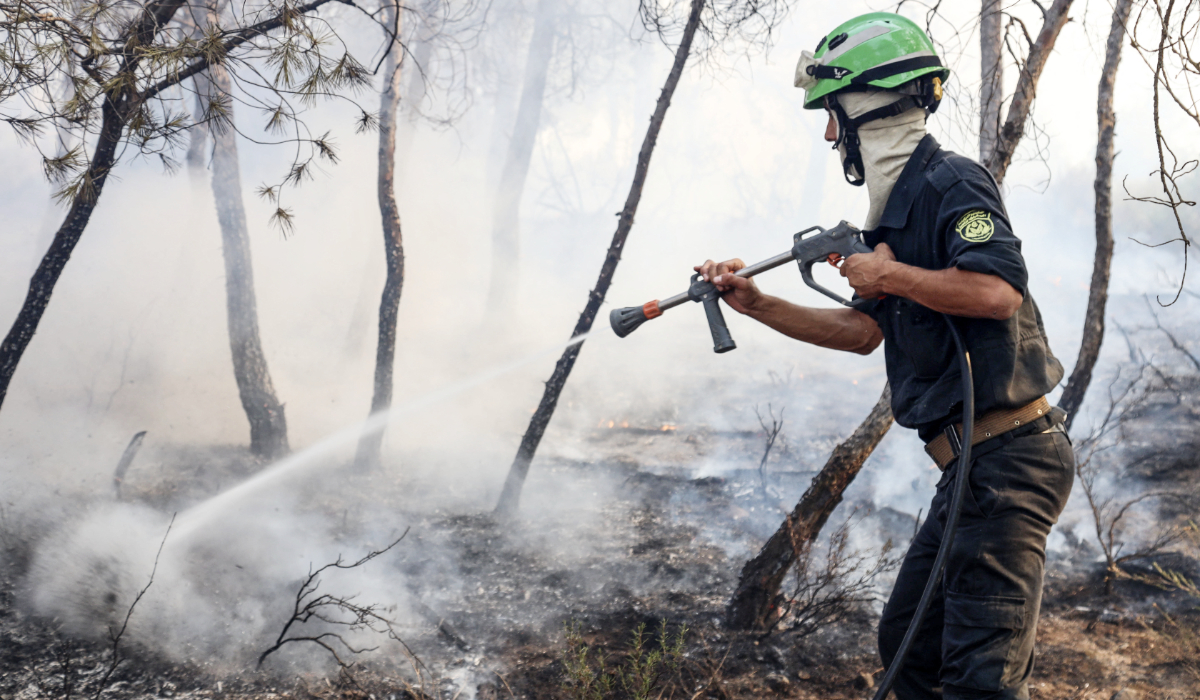
A firefighter works to extinguish a wildfire in the Megara Region, west of Athens on August 3, 2026 Credit: AFP
Wildfires initially erupted in the dense pine forests of Kefalonia before spreading towards residential settlements Credit: Getty

Here is your guide to where the blazes are located, how they started, and what the latest official advice says for holidaymakers heading to Greece.

Where are the fires in Kefalonia?

Wildfires initially erupted in the dense pine forests and scrubland near Pastra, in the south-east of the island of Kefalonia.

The Greek Fire Service and local municipal authorities issued urgent precautionary evacuation orders via the national emergency alert system after flames threatened nearby homes and tourist lodgings.

Evacuations were triggered for several inland villages as flames moved close to residential zones.

SEA IT

All 25 of the English Riviera beaches ranked from best to worst – by a Devon local


STAY ALERT

Is it safe to travel to Greece? Latest holiday advice amid wildfires evacuations

While precautionary evacuations were ordered, local authorities and ground crews largely brought the fire near Pastra under control.

Though firefighters – supported by specialised water-dropping aircraft and helicopters – still remain on high alert for flare-ups.

Evacuations were triggered for several inland villages, including Kapandriti in the south-east of the island

While main coastal resorts remain open, drifting smoke plumes and shifting winds have affected air quality and visibility across nearby districts.

How did the fires start?

The outbreak of wildfires on Kefalonia comes amid an intense summer heatwave gripping Greece and wider southern Europe.

While official investigations into the exact ignition points remain ongoing, authorities point to a combination of extreme environmental factors.

Prolonged periods of temperatures exceeding 40C have left vegetation bone-dry, creating conditions where a single spark can instantly trigger a wall of fire.

Strong, unpredictable gusts have also whipped embers across containment lines and made aerial firefighting exceptionally dangerous.

In coastal areas, high sea winds briefly prevented water-scooping aircraft from operating safely.

Greece has suffered dozens of wildfire outbreaks in recent days, including severe blazes in Attica, Halkidiki, and Crete, putting emergency services under heavy strain.

Is it safe to travel to Kefalonia?

The UK Foreign, Commonwealth & Development Office (FCDO) has updated its safety guidance for Britons visiting Greece, but has not advised against travel.

While it has not placed a blanket travel ban on visiting Greece, officials advise all travellers to exercise caution, stay informed, and follow local emergency instructions.

Holidaymaker checklist:

  • Monitor Emergency Alerts: Ensure your mobile phone can receive emergency broadcast messages from @112Greece. If an evacuation alert is issued, follow instructions from local authorities immediately.
  • Contact Your Travel Provider: Major operators (such as TUI, Jet2 and EasyJet) are monitoring the situation closely. If your accommodation or flight is impacted, contact your provider before travelling.
  • Check Travel Insurance: Verify that your travel insurance policy covers natural disasters, trip interruptions, or emergency relocations.
  • Emergency Numbers: If you are in immediate danger in Greece, call 112 for emergency services. British nationals requiring urgent consular assistance can contact the Foreign Office on +44 (0)20 7008 5000.

Travellers heading to unaffected resorts on the island can generally proceed with their plans.

But checking live traffic and local authority updates before set-off is strongly recommended.

Source link

Why are the Washington wildfires so severe? Spokane fires explained | Climate Crisis News

A cluster of fast-moving wildfires has devastated the outskirts of Spokane, Washington state, with 65,000 people told to leave their homes. More than 700 buildings have been destroyed as the fires spread from surrounding vegetation into residential neighbourhoods, posing an unprecedented threat to lives and property.

The blazes have become the top firefighting priority in the US because of their scale and the danger they pose to communities. While no deaths have been confirmed, authorities say it will take time to assess the full extent of the damage as search teams begin entering the hardest-hit areas.

Recommended Stories

list of 1 itemend of list

The evacuation orders expanded from about 4,000 people on Sunday to 65,000 by Monday, highlighting the speed at which the fires spread into populated communities.

Here is what to know:

What is happening in Spokane, Washington?

Spokane, Washington’s second-largest city, is at the centre of one of the state’s most destructive wildfire emergencies in recent history after three fast-moving wildfires erupted on its northern outskirts over the weekend. Fanned by strong winds and fueled by exceptionally dry vegetation, the fires have burned more than 8,000 acres (3237 hectares) and spread from surrounding forests and grasslands into residential neighbourhoods, forcing approximately 65,000 people to evacuate, according to the Spokane Valley Fire Department.

Hundreds of buildings, most of them homes, have already been destroyed, with aerial surveys suggesting many more may have been damaged. Entire neighbourhoods have been reduced to charred rubble, with some properties left standing only as brick chimneys.

The scale of the disaster has overwhelmed local resources, prompting one of the largest firefighting operations in the state, with more than 1,000 firefighters deployed from across the region.

A handout photo made available by the Spokane Valley Fire Department shows the Fairview Fire northeast of Spokane, Washington [EPA]

Despite the massive response, the fires remain uncontained, and officials say it could take days to fully assess the destruction. While no deaths have been confirmed, authorities initially received nearly 300 reports of missing people after the evacuations, though that number has since fallen significantly as families have been reunited. Emergency shelters have been opened across Spokane, and officials are urging residents not to return to evacuated areas or fly drones, which can disrupt critical aerial firefighting operations.

Firefighters are taking advantage of a brief period of cooler temperatures and lighter winds, but forecasters warn that hotter, drier and windier weather is expected to return later this week, raising fears that the fires could spread even further.

Washington is experiencing one of its worst wildfire seasons in more than three decades, with about 450,000 acres (182,000 hectares) burned so far this summer. More than 250,000 acres have burned in recent major fires alone.

A handout photo made available by the Spokane Valley Fire Department shows the Fairview Fire northeast of Spokane, Washington [EPA]

What caused the fires?

Local news outlets have reported that the Spokane County Sheriff’s Office announced on Monday evening that a 37-year-old had been arrested on suspicion of arson in connection with the fire.

However, experts say the conditions that allowed the fires to spread so rapidly were already in place.

Washington has been experiencing severe drought and an unusually low winter snowpack, leaving vegetation exceptionally dry and highly flammable. Those conditions have been compounded by periods of extreme heat, low humidity and strong winds, creating an environment in which even a small ignition can quickly grow into a fast-moving wildfire.

Scientists have also linked increasingly severe wildfire seasons across the western US to human-caused climate change, which has contributed to hotter temperatures, longer droughts and drier landscapes. While climate change does not directly ignite wildfires, it makes them more likely to spread rapidly and become more destructive once they start.

Why are the Washington wildfires so severe?

The Washington wildfires have become particularly severe because several factors have converged, allowing the blazes to spread rapidly.

  • Multiple large fires burning simultaneously: Spokane is dealing with three major wildfires at once, while dozens of other significant fires are burning across the western US. Managing multiple large incidents simultaneously has made it harder to concentrate resources on a single fire.
  • The fires advanced rapidly into populated communities: Driven by strong winds, the flames jumped roads and rivers, allowing them to move from forests and grasslands into residential neighbourhoods. More than 700 buildings have been destroyed, making the fires far more difficult to contain as they threaten homes, businesses and critical infrastructure.
  • Firefighting resources are stretched: More than 100 new wildfires have been reported across 15 US states over a single weekend, placing extraordinary pressure on national firefighting resources. Although more than 1,000 firefighters have been deployed to Spokane, emergency officials say aircraft, equipment and personnel are being shared across multiple emergencies.
  • An ongoing threat despite improved weather: Firefighters have benefitted from a brief period of cooler temperatures and lighter winds, but officials warn that hotter, drier and windier conditions are expected to return. With the fires still not contained, there is a significant risk that they could grow further or ignite new areas.

What role are drought, heat and climate change playing?

Scientists say drought, extreme heat and climate change are making wildfire seasons longer, more frequent and more destructive across the western US.

Drought dries out vegetation, turning forests and grasslands into fuel that can ignite and burn more intensely.

Heat and low humidity accelerate fire spread by drying vegetation even further and creating conditions in which flames can move rapidly across the landscape.

Climate change amplifies these conditions, as rising global temperatures are increasing the likelihood of prolonged droughts, more frequent heatwaves and longer fire seasons, making large, destructive wildfires more likely once they ignite.

A Virgin Mary statue remains untouched in front of a burned out residential home in the Balboa neighborhood of Spokane, Washington, on August 2, 2026.
A Virgin Mary statue remains untouched in front of a burned-out residential home in the Balboa neighborhood of Spokane, Washington, on August 2, 2026 (AFP)

What is the weather forecast for midweek?

The weather is expected to worsen again by midweek.

While Monday and Tuesday offered a brief, helpful window of cooler temperatures and calmer winds, the midweek forecast calls for a return of:

  • Extremely high temperatures, particularly on Thursday, with highs forecasted up to 37 degrees Celsius (99 degrees Fahrenheit). On Monday, it was at 22C (72F).
  • Low humidity (very dry conditions).
  • Gusty winds with speeds up to 26 km/h.

Because the fires remain completely uncontained, authorities are keeping evacuations in place. They warn that the worst outcome would be letting residents return to their homes, only to have to evacuate them again 24 to 48 hours later when the hot, windy weather returns.

Washington’s entire congressional delegation is awaiting a response from President Donald Trump regarding their request for an expedited emergency declaration to deliver immediate federal relief to displaced families.

Are other states also fighting wildfires?

According to the National Interagency Fire Center, most of the fire activity in the US remains concentrated across the country’s northwest.

Right now, the major fires are mostly grassland burns in Idaho, Oregon and Utah, as well as fires in Florida’s Everglades National Park, in addition to new fires reported in Left Creek in Wyoming, Antelope Creek Fire in Nevada and the Sand Creek and Middle Coulee fires in Montana.

A lightning-caused fire that has burned more than 530 square miles (about 1,370 sq km) of grassland in western Idaho and eastern Oregon continued to grow on Monday. The area is home to cattle ranches, and authorities said the fire is threatening more than 600 homes and 800 other structures.

In central Utah, a blaze quadrupled in size more than the weekend to nearly 109 square miles (282 sq km) by Monday afternoon. More than 100 cattle have died, according to law enforcement.

Source link

Travel chaos across Europe as Italy, Greece and Hungary hit by fierce wildfires with thousands evacuated

Travel plans for around 1.6 million UK tourists heading to Italy were disrupted Rome, Milan, Venice and Naples hit by red alert. Greece helicopters fight fire despite midair crash which one Brit crew member miraculously survived.

BREAKING France forest fires- Thousands of tourists evacuated from campsites popular with Brits

Extreme weather brought chaos across Europe today, with warnings of 40C (104F) temperatures in some of the worst-hit countries.

Travel plans for about 1.6 million UK tourists heading to Italy were disrupted as nearly every city was placed on ‘red alert’ for extreme heat. Cities from north to south – including the capital Rome, Milan, Venice and Naples – were warning residents and tourists about the health risks. Temperatures have hit the mid-30sC in many places.

Authorities warned the ‘healthy and active’ were also at risk; not just groups including the elderly, very young children and people with chronic illnesses. Meanwhile, five water-dropping planes and five helicopters took off at dawn today to help firefighters near Athens – after a midair collision in which a Brit helicopter crew member miraculously survived.

The collision between the two fire-fighting choppers showed the extreme danger on the frontline of Europe’s wildfire emergency. Flames bore deeper into the region of the Greek capital, forcing fresh evacuations in the early hours. A Greek national and a Dane died when their helicopter collided with another near the seaside area of Psatha.

The British national and another local man were taken to a hospital, where their injuries were reported as minor. Foreign firefighting and helicopter crews are often deployed in Greece to help tackle wildfires during the country’s hot, dry summers.

More than 1,000 people have been evacuated from the region, including more than 250 rescued by boat from beaches in Greece. Evacuation orders were issued for three more areas, while crews worked to create firebreaks in a forest to help halt the blaze’s advance

In France, firefighters guarded a still-burning scar four times the size of Paris. The blaze raged through pine forests and scrubland over the weekend, whipped by gale force winds that often prevented water-dropping planes from operating.

Hungary is facing power cuts after the drought sweeping across much of Europe forced its only nuclear power plant to shut down. Peter Magyar, the prime minister, said the country was preparing for a “critical” week after the level of the Danube River, which cools the plant, fell to a record low.

The government was considering applying mandatory electricity restrictions for large companies starting today, Mr Magyar said: “We are facing the most critical five days ahead,” he said in a Facebook video.

The Paks power plant will not be generating, while the hottest, 40C days are ahead. The power grid, our public services, and we ourselves will all come under enormous strain.

The Danube has fallen to its lowest level in 30 years in several countries, including Romania. The drought has triggered water-use restrictions in more than 100 cities and villages, including on the outskirts of Budapest.

Mr Magyar called on companies, public institutions, local governments and households to significantly reduce or reschedule electricity use during evening peak hours between 5pm and 10pm.

Italy is in the midst of its fourth extreme heatwave of the summer, with temperatures hitting 40C in many parts of the country. According to official estimates, a total of 17.4 million tourists will be travelling in Italy until August 23, including 8.4 million Italians and nine million visitors from abroad, with about 1.6m expected from the UK.

Dash firefighting aircraft were seen through smoke as they flew over a wildfire in Correns, southeastern France, though the situation in the area was largely under control. Rory Boland, editor of Which? Travel, said wildfires in Greece were ‘deeply worrying’ for UK travellers.

He said: “It’s essential, however, that travellers don’t cancel their trips, especially those not due to travel for the next week or two. Travellers who cancel now will likely forfeit the right to a refund or rebooking, and you’re unlikely to be able to claim on travel insurance, as the FCDO has not warned against travel to the affected regions.

“Where possible, holidaymakers should wait until closer to their departure date to see if their holiday can go ahead or what flexible booking options may be offered by their tour operator or airline. Travel companies will be prioritising anyone due to depart in the next couple of days.”

Source link

Is it safe to travel to Greece? Latest holiday and flight advice as wildfires spark more evacuations

GREECE continues to be affected by the wildfires hat have already seen thousands evacuated across Europe.

A dry climate along with strong and high winds have been causing fires to spread quickly – so here is everything you need to know about the latest travel advice.

Hundreds of firefighters have been deployed to control the fires in Greece Credit: Reuters
Some of the biggest at the moment are in the regions of Boeotia and West Attica Credit: Reuters

Where are the wildfires in Greece?

Currently, some of the worst wildfires in Greece are concentrated around the regions of both Boeotia (Viotia) and West Attica, which is west of Athens.

Over the weekend, firefighters have been on the front line trying to control the blaze which has been picked up due to high winds.

Yesterday, two crew members onboard firefighting helicopters died as they collided while trying to extinguish the flames.

There are active fires near Agios Nektarios, Megara, and Mount Kithairon.

SUNNY STEALS

Sun-drenched European holidays with £1.50 pints and stays from under £9pp


HOL YES

Cheapest summer for holidays in YEARS – with August breaks still on sale for £188pp

It’s not just the mainland, as the Greek islands have been affected too.

Crete has seen huge fires, particularly in the Rethymno area, with thousands of residents and tourists being evacuated for safety.

On the island, more than 5,700 hectares of land have been burnt.

Fires have also broken out on the islands of Paros, Lesvos, Andros and Kalymnos.

Yesterday, a wildfire in the south of Kefalonia forced evacuations late at night as the fire spread through multiple villages.

Earlier in the week, a firefighter died after battling flames near the Peloponnese port town of Gytheio.

Helicopters have been dropping water to control the blazes Credit: REUTERS

Kyriakos Mitsotakis, the Greek Prime Minister, has warned of “extremely difficult” days ahead.

There is a further threat of more fires as wind gusts have exceeded 78mph in the last few days.

Is it safe to travel to Greece right now?

The UK Foreign Office (FCDO) hasn’t issued any specific warning regarding the wildfires in Greece, but does have some advice.

It does read: “There is a high risk of wildfires during the summer season from April to October. Ensure that your mobile phone is registered to receive emergency alerts to warn you of wildfires near your location.”

The advice from GOV.UK says:

“Wildfires are highly dangerous and unpredictable. The situation can change quickly.

The travel advice to Brits travelling to Greece remains changed Credit: REUTERS
But it’s important to be prepared in case of evacuation Credit: Reuters

“To avoid starting wildfires:

  • leave no litter, especially not glass which is known to start fires
  • make sure cigarettes are properly extinguished
  • do not light barbecues

“Causing a wildfire or a forest fire is a criminal offence in Greece – even if unintentional. If you see a fire, call the emergency services on 112.

“Be cautious if you are in or near an area affected by wildfires:

  • follow @112Greece for official updates
  • follow the guidance of the emergency services
  • call the Greek emergency services on 112 if you are in immediate danger
  • contact your airline or travel operator who can assist you with return travel to the UK”

Are flights still going to Greece?

Flights to airports such Athens International Airport and Heraklion in Crete remain unaffected.

If you are due to fly in and have concerns, it may be worth contacting your airline to check if they are operating normally.

Can I cancel my trip?

If you do choose to cancel your trip, it is best to contact your airline or holiday provider.

There is no obligation for companies to refund bookings unless government advice changes.


Source link

Dangerous summers: How heatwaves and wildfires change life across Europe | Weather

Europe’s summers are transforming. What were once considered exceptionally high temperatures, such as the near 40 degrees Celsius (104 degrees Fahrenheit) being experienced in Prague, are becoming the norm.

According to Europe’s Copernicus Climate Change Service, late May and June heatwaves brought daily average temperatures of more than 10C (18F) above the norm in parts of France, the United Kingdom and Spain.

Recommended Stories

list of 4 itemsend of list

Western European temperatures averaged 20.74C (69F) in June, 3.06C (5.4F) above the 1991-2020 average.

With some temperatures climbing well above 40C, prolonged droughts, destructive wildfires and shrinking rivers are no longer freak events but recurring features of European summers.

Scientists have repeatedly warned that climate change would increase the frequency and intensity of extreme weather. Heatwaves now last longer, arrive earlier and affect more countries simultaneously.

The consequences extend beyond uncomfortable temperatures. They are reshaping ecosystems, economies and daily life across much of the continent.

Wildfires: Larger, earlier and more destructive

Extreme heat dries vegetation, turning forests, scrubland and grass into fuel for fires. When strong winds combine with prolonged drought, fires can spread more rapidly and become ever more difficult to control.

Countries across the Mediterranean area – including Spain, Portugal, Greece, Italy and France – have a history of wildfires. But fire season now starts earlier, lasts longer, and affects regions that in the past faced a much lower risk.

The European Union recorded at least 1 million hectares (2.5 million acres) of land burned in the region last year, nearly double the historical average.

Some fires are so intense they generate their own weather systems. Known as pyrocumulonimbus clouds, these towering smoke clouds can produce powerful winds, lightning and embers that ignite new fires several kilometres away, making them even harder to contain.

Beyond the immediate destruction of homes and forests, wildfires damage biodiversity, release dangerous quantities of carbon dioxide and leave landscapes vulnerable to erosion and flooding when heavy rain eventually returns.


Water under pressure

Heatwaves also place enormous strain on Europe’s water resources. Higher temperatures increase evaporation from rivers, lakes and reservoirs while reducing soil moisture. Mountain snowpacks melt earlier in spring, leaving less water available during the hottest months.

Rivers such as the Rhine, Po and Danube have repeatedly experienced unusually low water levels during recent summers. Low rivers disrupt shipping, reduce hydroelectric power generation and can threaten industrial operations that rely on river water for cooling.

Agriculture is often among the hardest hit sectors due to high temperatures. Farmers across Southern and Central Europe are dealing with reduced crop yields, livestock heat stress and greater demand for irrigation at the same time water is becoming scarce.

A study released in May by the European Investment Bank and the European Commission projected that climate change threatens to increase annual European agricultural losses by as much as 66 percent by 2050, threatening the future of food production.

Some regions are already restricting water use during prolonged dry spells, a sign of how climate change is beginning to affect everyday life.

People spend time on a newly exposed island due to the low water level of the Danube River in Kisoroszi, Hungary, August 1, 2026. REUTERS/Marton Monus
People spend time on a newly exposed island due to the low water level of the Danube River in Kisoroszi, Hungary, on August 1, 2026 [Marton Monus/Reuters]


Health hazards, strain on energy systems intensify

Heat is among Europe’s deadliest natural hazards. Unlike floods or storms, the impacts are often less visible but more widespread.

Older people, children and people with existing medical conditions are most at risk. Hospitals see increased admissions linked to dehydration, heatstroke and cardiovascular illness during heatwaves.

Cities are especially vulnerable because concrete and asphalt absorb and retain heat, creating what is known as the urban heat island effect. Night-time temperatures remain high, preventing buildings and people from cooling down.

The growing use of air conditioning offers some protection but creates another challenge.

Electricity demand often surges during heatwaves as millions of people seek relief from the high temperatures. This coincides with a slump in efficiency in power generation as warmer rivers mean that the cooling of thermal and nuclear power stations is more of a challenge.

This creates a growing challenge for Europe’s energy systems as demand rises precisely when supply can become more constrained.

Economic costs escalate

The financial effects from this environmental crisis are mounting. The European Environment Agency estimates that extreme weather has already cost Europe 738 billion euros ($850bn) from 1980 to 2023. At least 162 billion euros ($190bn) of that was in the most recent three-year period.

The agency projected a lack of robust climate action could cost the European economy more than 5.6 trillion euros ($6.4 trillion) by 2050. These costs affect almost all sectors of the economy.

Wildfires destroy homes, tourism infrastructure and businesses. Drought reduces agricultural production while low river levels disrupt trade and manufacturing.

Outdoor workers in construction and agriculture face reduced productivity as extreme heat makes working safely more difficult.

Insurance losses from weather disasters have also risen sharply over recent decades. Three-quarters of Europe’s natural disaster losses are uninsured, according to the European Central Bank.

Meanwhile, governments face growing costs associated with responding to emergencies and rebuilding communities.

Many economists argued that investing in climate resilience today will be significantly cheaper than repeatedly paying the costs of more frequent disasters.

A person walks by an area burnt by fire, in Montfort-sur-Argens, in the Var department, amid worsening drought conditions following a heatwave and water shortages across much of France, August 2, 2026. REUTERS/Florion Goga
An area in Montfort-sur-Argens in the Var department of southern France burned in a wildfire amid worsening drought conditions after a heatwave and water shortages across much of the country [Florion Goga/Reuters]

Adapting as warming accelerates

Climate projections consistently indicate that Europe will continue to warm faster than the global average. Southern Europe is expected to experience hotter and drier summers, increasing the likelihood of severe drought and wildfires.

Even Northern Europe, traditionally associated with milder summers, is expected to experience more intense heatwaves. Cairngorms National Park in the Scottish Highlands recently witnessed wildfires that forced local communities to flee

Communities are already adapting to some extent. Cities are planting more trees to provide shade, redesigning streets to reduce heat, expanding early warning systems and have begun developing cooling centres for vulnerable residents.

Water conservation, improved forest management and more resilient infrastructure are becoming important parts of long-term planning. Agriculture is also changing as farmers experiment with drought-resistant crops, different planting schedules and more efficient irrigation systems.

But scientists stressed that adaptation alone will not be enough. Without significant reductions in greenhouse gas emissions, the conditions that create extreme weather are expected to become more common in the years ahead.

Europe’s recent summers are no longer viewed simply as isolated weather events. They offer a glimpse of what a warmer climate could mean.

The challenge lies in responding to today’s extremes and preparing populations for climates in which intense anomalies become normal.

Source link

Thousands under evacuation orders as Pacific Northwest wildfires rage

Dangerous wildfires are spreading across the Pacific Northwest, forcing thousands of people to evacuate their homes in parts of Washington state and Oregon. Photo Courtesy Washington Department of Natural Resources.

Aug. 2 (UPI) — Thousands of people were ordered to evacuate their homes across the Pacific Northwest on Saturday, as dangerous wildfires spread in parts of Washington state and Oregon.

Three major wildfires are burning around Spokane, the largest of which had burned more than 3,500 acres by Sunday morning, NPR reported.

“I was sitting near an elementary school and saw a wall of flames east of the school and just a cascade of black smoke and a wall of flames coming toward me,” Alexandra Duggan, who lives in the area, told NPR.

More than 5,000 structures are threatened by the fires, which have knocked out power from ore than 13,000 homes, CNN reported.

Gov. Bob Ferguson of Washington declared a state of emergency, saying, “Our record-setting drought and high winds are creating dangerous conditions across the state.”

“If you are in the area, please continue to be vigilant and follow directions of emergency personnel,” Ferguson said in a statement on X.

In Oregon, wildfires have burned more than 1.8 million acres this season, OPB reported.

On Saturday, more than 25,000 Oregonians were under evacuation orders in central and southeastern Oregon.

One of the blazes, east of Mount Hood, had already burned some 23,000 acres by Saturday morning and remained at 0% containment.

“The reason we’re seeing these conditions… is that things are really dry,” said Matt Callihan, a lead meteorologist for the National Weather Service, to OPB. “We haven’t seen rain in a long time. It’s been hot, so that’s allowed fuels to cure pretty well.”

Source link

Greece battles raging wildfires as flames appear to ease in France | Weather News

French wildfires show signs of easing, with containment efforts holding in Var and Gironde after destructive blazes.

Gale-force winds have fanned flames across multiple parts of Greece, intensifying a new front in Europe’s wildfire emergency, while major fires in France and Spain show signs of easing, with blazes either not advancing or under control.

Hundreds of firefighters, backed by water-dropping planes and helicopters, worked with emergency workers to protect Porto Germeno, a popular resort on the Gulf of Corinth, as heavy winds drove flames through the coastal area west of Athens on Saturday.

Recommended Stories

list of 3 itemsend of list

The fire broke out on Friday near the neighbouring village of Agios Vasileios. About 300 people were evacuated by sea, and authorities issued further evacuation orders for the regions, according to The Associated Press.

Greek authorities issued emergency alerts for several areas for Saturday and warned of extreme wildfire risk in the regions of Attica and Evia.

A Greek newspaper, Protothema, reported the fire in Porto Germeno split into three fronts and many houses caught fire in the area, prompting authorities to issue evacuation orders for nearby towns of Agia Paraskevi, Kryo Pigadi and Agios Nektarios.

Theodore Giannaros, a wildfire meteorologist at the National Observatory of Athens, told The AP an estimated 15 to 19 square miles (39 – 50sq km) had been affected, although authorities had not issued an official burned-area figure.

Fires ‘under control’ in France

The wildfires that have ravaged France are “today under control”, French Prime Minister Sebastien Lecornu said on Saturday, more than a week after the largest wildfire since 1949 flared up.

“Overall, the fires are now under control in our country” and, in Gironde, in the southwest, “we have returned to a more stable situation,” he said in an interview with the La Tribune Dimanche weekly.

French Interior Minister Laurent Nunez said flames that left a trail of destruction across villages have eased. In a post on X, he said fires in Gironde were now under control while “significant work has been done to contain the fire’s progression by the 1,500 firefighters” in the mountainous southeastern Var department, where fire burnt through 1,500 additional hectares (3,700 acres) of land.

In the Var, defensive lines around the Gros Bessillon fire held overnight, and no additional ground burned, Var Prefect Simon Babre told French media on Saturday.

Portugal’s major wildfire was declared under control, while Spain’s largest fires were no longer making sustained advances and most evacuation orders had been lifted.

Spanish conditions mixed

Spain continued battling several wildfire hot spots on Saturday, two days after the government declared the end of a national emergency caused by huge fires in the country’s central provinces.

However, fires worsened overnight in Leon.

Europe is Earth’s fastest-warming continent, heating at more than twice the global average since the 1980s, according to the European Union’s Copernicus climate service. Rising temperatures and prolonged drought leave vegetation drier and more combustible, allowing fires to spread faster and burn more intensely.

Source link

Where are the wildfires in Crete? Map shows areas hit by fires as thousands evacuated from Rethymno

THOUSANDS of locals and British holidaymakers have been evacuated from Crete after deadly wildfires swept through the popular Greek hotspot.

At least three emergency responders have lost their lives during the crisis across Greece, including two firefighters who became trapped in their vehicle near the mountain village of Krya Vrysi in Crete.

Flames fanned by gale-force winds have spread across a 15-kilometre front Credit: Getty
At least three emergency responders have lost their lives during the crisis across Greece Credit: Getty

Flames fanned by gale-force winds have spread across a 15-kilometre front on the island at the peak of the summer holiday season.

Around 8,000 people were ordered to move to safety as flames closed in on southern resort villages, destroying homes, farms, and livestock in their path.

The crisis comes as severe heatwaves spark wildfires across Southern Europe and parts of the UK, with firefighters battling blazes from Spain and Turkey to Suffolk.

Where are the wildfires in Crete?

The primary fire zone in Crete is located along the island’s southern coast in the Rethymno region, specifically within the Agios Vasileios municipality.

HOL YES

Cheapest summer for holidays in YEARS – with August breaks still on sale for £188pp


EUROPE ON FIRE

Three ‘heroic’ firefighters dead as Greece hit by wildfire hell

Villages and coastal areas hit by emergency evacuation alerts include:

  • Krya Vrysi, Melambes, and Sachtouria
  • Agios Pavlos, Triopetra, and Agia Paraskevi
  • Orne and Ligres
The primary fire zone is located along the island’s southern coast

More than 200 firefighters, supported by 53 fire engines, have been tackling the south-coast blazes.

Nearby resort areas such as Agia Galini were evacuated as a precaution before conditions stabilised enough for some tourists to return.

Is it safe to travel to Crete?

It remains safe to travel to the vast majority of Crete.

The island’s main transport hubs – including Heraklion Airport and Chania Airport – remain open and operating normally, outside the fire zone.

Popular northern holiday destinations, including Rethymno’s historic Old Town, Chania, Heraklion, Elounda, and Agios Nikolaos, currently remain unaffected and open for business.

If you are due to travel, tour operators advise checking the exact location of your accommodation.

Anyone staying near the active southern fire zone should contact their hotel or package provider before travelling, follow official 112 emergency text alerts, and ensure travel insurance covers natural disaster disruptions.

Holidaymakers on the island are urged to download emergency alert apps, keep mobile devices charged, and strictly observe local fire bans.

How did the fires start?

Specialist arson investigation teams from the Greek Fire Service have launched formal inquiries into the exact ignition points of the Rethymno fires.

While investigations are ongoing, extreme heat and weather conditions created the perfect storm for rapid ignition.

A prolonged summer heatwave pushed temperatures above 40C, thoroughly drying out low vegetation, pine forests, and olive groves across the island.

Strong gusting winds reaching up to 102 km/h (7 on the Beaufort scale) whipped minor ignitions into runaway blazes within minutes.

Authorities across southern Europe have repeatedly warned that even minor human carelessness – like discarded glass, outdoor barbecues, or unextinguished cigarettes – can instantly trigger a major blaze in these dry conditions.

What is the forecast for Crete?

The weather outlook for Crete remains challenging, with forecasters predicting high temperatures to persist near or above 40C across the Aegean region.

But the primary hurdle for emergency crews has been unpredictable wind.

Violent, changing gusts have forced water-dropping planes and heavy helicopters to temporarily ground operations due to turbulence.

Fire crews are reliant on wind speeds dropping in the coming days.

Lower winds wills allow aerial firefighting squadrons to safely scoop seawater and drop targeted payloads on hot spots in Crete’s steep mountain terrain.

While ground teams continue to build containment lines, civil protection authorities maintain a high wildfire alert across Crete and wider Greece.

Source link

Is it safe to go to Turkey right now? Latest travel advice for holidays and flights as wildfires hit tourist regions

WILDFIRES are continuing to sweep across Europe and Turkey is one of the latest countries to battle the blazes.

Here’s everything you need to know right now about travelling to Turkey.

Wildfires have broken out in parts of Turkey including the Antalya Province Credit: AFP
Another wildfire is in Seydikemer in the district of Muğla Credit: AFP

Where are the wildfires in Turkey?

Fires have broken out in various parts of Turkey.

One location which is popular for holidays is Antalya, and within the province there are multiple wildfires.

Currently, these are further inland than the coastal resorts popular with tourists.

The Fethiye–Antalya highway was temporarily closed due to smoke but later reopened under controlled conditions.

PARK UP

Epic UK holiday parks with waterparks, theme parks & Spoons pubs from £3pp a night


HOL YES

Cheapest summer for holidays in YEARS – with August breaks still on sale for £188pp

Another serious and active fire is in Seydikemer, 20-minutes away from the city of Fethiye, where 600 people have been evacuated from their homes.

It’s in the hills between Fethiye and Marmaris – the fire started on Wednesday morning and spread into woodland.

On the northwestern Aegean coast, three neighborhoods in the Ayvalık district – Hacıveliler, Tıfıllar, and Bağyüzü – have been evacuated.

This is as a precaution due to a wildfire spreading across Turkey’s western Balıkesir province.

Agriculture Minister Ibrahim Yumakli said on X: “We are continuing to fight the wildfires day and night.

He said emergency responders had tackled 169 fires across the country since Wednesday, and 163 of those have “been completely brought under control.”

Antalya is one of the most popular regions for Brits Credit: Alamy

Is it safe to travel to Turkey right now?

Most of Turkey is still considered safe to travel to, excluding the areas of the Syrian-Turkey border.

But officials do heed warning about the natural disaster as there is a “high risk of wildfires during the summer season from April to October”.

It reads: “Wildfires happen frequently in Turkey during summer.

“You could get a fine or prison sentence for lighting a fire of any kind or discarding cigarettes in risk areas such as woodland. Look out for signs that tell you fires, barbeques, and smoking are prohibited.

“If there is a wildfire in your area, local authorities may tell you to leave your accommodation. Follow the directions of local authorities.

“If you see a wildfire, call emergency services on 112.”

GOV.UK adds that “extreme temperatures can affect many areas of Turkey over the summer months.”

Are flights still going to Turkey?

Flights to Turkey remain unaffected.

If you are due to fly in and have concerns, it may be worth contacting your airline to check if they are operating normally.

What if I have a holiday to Turkey booked?

As the Foreign Office has not warned against travel to Greece, there are no special circumstances in place for holidaymakers to cancel their trip and receive a full refund.

Depending on what travel insurance you have, your policy might include natural disaster cover.

If so, your insurance policy should cover you for when you are unable to reach your holiday destination due to natural disasters, like wildfires.

So it is worth checking your travel insurance policy.

Can I cancel my trip?

If you do choose to cancel your trip, it is best to contact your airline or holiday provider.

There is no obligation for companies to refund bookings unless government advice changes.


Source link

George and Amal Clooney evacuate home in France amid wildfires

George and Amal Clooney evacuated their 425-acre Provence wine estate in southeastern France amid the wildfires spreading across Europe.

The “Jay Kelly” star revealed the news in a letter to Didier Bremond, the mayor of the town of Brignoles, east of Marseille.

“Dear Didier, [a]t this point we have no idea whether our beautiful home makes it through this terrible moment,” the letter read.

“As we evacuate Brignoles we want to emphasise 2 things, first we hope you and the people of our city are safe and second that Amal and [I] are committed to making sure that whatever happens to our village, we are part of this community and we’ll be part of making it whole.

“We love Brignoles and our friends who live there.”

The fire near Brignoles sparked on Wednesday and burned about 250 acres. The Brignoles fire was significantly smaller than the massive wildfire that recently ravaged southwestern France near Bordeaux, where 84,000 evacuees were allowed to return home Thursday as firefighters gained control over flames that had burned an area four times the size of Paris.

In December, the French government announced that the Clooneys, including their 9-year-old twins, Ella and Alexander, were awarded citizenship.

The Clooneys bought property in France — a farm, he recently told Esquire — in August 2021 for $8.3 million, when their twins were 4. He said it was a “much better life” there for the children.

“Yeah, we’re very lucky. … A good portion of my life growing up was on a farm, and as a kid I hated the whole idea of it. But now, for them, it’s like — they’re not on their iPads, you know?” he said in the interview, published in the magazine’s October/November issue.

“I was worried about raising our kids in L.A., in the culture of Hollywood. I felt like they were never going to get a fair shake at life. France — they kind of don’t give a s— about fame. I don’t want them to be walking around worried about paparazzi. I don’t want them being compared to somebody else’s famous kids.”

George Clooney and Amal Alamuddin, a human-rights lawyer, tied the knot in September 2014 in Venice, Italy.

The Associated Press and former Times staff writer Christie D’Zurilla contributed to this report.

Source link

Is Crete safe to travel to right now? Everything to know about your holidays and flights amid huge wildfires

CRETE is the latest destination to be struck by wildfires and with it being a holiday hotspot for Brits, lots are asking – is it still safe to travel to?

Here’s everything you need to know right now about travelling to the Greek island.

Can you still go to Crete on holiday? Here’s everything you need to know Credit: Reuters
Firefighters have been battling wildfires in Crete since the beginning of this week Credit: Reuters

Where are the wildfires in Crete?

The majority of the wildfires in Crete are on the south of the island.

On Wednesday, a large fire broke out in the south of the Rethymno regional unit where around 8,000 people have been evacuated.

A large fire is being tackled near the villages of Krya Vrysi, Orne and the coastal resort of Agia Galini.

Hotels in Rethymno have been placed on high alert.

PARK UP

Epic UK holiday parks with waterparks, theme parks & Spoons pubs from £3pp a night


HOL YES

Cheapest summer for holidays in YEARS – with August breaks still on sale for £188pp

It’s believed the fire that has been exacerbated by 125km per hour winds has destroyed a number of homes in the area.

According to the BBC, it’s one of the biggest active fires on the island, with its front exceeding 9.3miles.

Hundreds of residents and tourists were evacuated from Krya Vrysi on Wednesday.

Hundreds of firefighters have been deployed to battle the blaze, and two sadly died on Wednesday during high winds in Crete.

Forecasters warn fire-prone conditions will spread towards the centre of Europe this week, with Greece among one of the places most affected.

Is it safe to travel to Crete right now?

The travel advice for Greece remains unchanged.

One of the current fires is near Agia Galini, a coastal resort (stock picture) Credit: Alamy Stock Photo

But there are warnings on being prepared for wildfires which are “high risk” between April and October.

The advice from GOV.UK reads:

“Ensure that your mobile phone is registered to receive emergency alerts to be warned of wildfires near your location.

“Wildfires are highly dangerous and unpredictable. The situation can change quickly.

“To avoid starting wildfires:

  • leave no litter, especially not glass which is known to start fires
  • make sure cigarettes are properly extinguished
  • do not light barbecues

“Causing a wildfire or a forest fire is a criminal offence in Greece – even if unintentional. If you see a fire, call the emergency services on 112.

“Be cautious if you are in or near an area affected by wildfires:

  • follow @112Greece for official updates
  • follow the guidance of the emergency services
  • call the Greek emergency services on 112 if you are in immediate danger
  • contact your airline or travel operator who can assist you with return travel to the UK”

Are flights still going to Crete?

Flights to Crete remain unaffected.

If you are due to fly in and have concerns, it may be worth contacting your airline to check if they are operating normally.

What if I have a holiday to Crete booked?

As the Foreign Office has not warned against travel to Greece, there are no special circumstances in place for holidaymakers to cancel their trip and receive a full refund.

Depending on what travel insurance you have, your policy might include natural disaster cover.

If so, your insurance policy should cover you for when you are unable to reach your holiday destination due to natural disasters, like wildfires.

So it is worth checking your travel insurance policy.

Can I cancel my trip?

If you do choose to cancel your trip, it is best to contact your airline or holiday provider.

There is no obligation for companies to refund bookings unless government advice changes.


Source link

Gironde wildfires flare up as French region braces for new 40C heatwave

On Tuesday morning the Gironde prefect ordered a new evacuation of all camping sites near the coast at Lacanau, while those in the nearby town were allowed to stay put but told to prepare for sudden evacuation.

About 4,000 tourists told to leave the area are in addition to the 220,000 people evacuated around France in recent days.

An estimated 240 homes and houses have been destroyed, officials have said.

By midday on Tuesday firefighters were already intervening in various parts of the region to tackle fires that were picking up again.

A 23-year-old man who was arrested on suspicion of starting a fire in the Var region. is now facing 15 years’ imprisonment. Interior Minister Laurent Nuñez said that 184 people had been arrested since 6 July in connection with the fires.

Peggy Plouhinec, the general director of Château Picque Caillou – one of the few wine estates on the west side of Bordeaux – told the BBC that her business chose to close at the weekend because of the smoke, but that the situation had improved since then and that a bout of rain on Sunday night had helped.

While her vineyards were not at risk, she said tourists had “deserted” the region.

“The hospitality sector will be impacted this summer, that’s for sure,” she added. “What is happening is unprecedented. We’re lucky that we haven’t been too affected yet, but the business will still suffer from the lower numbers of tourists.”

“But many people have lost their homes or their businesses, not to mention the firefighters who have been hard at work for weeks now and who must be exhausted.”

One resident of Cap Ferret, which was evacuated late last week, told French media that his main concern now was for the peninsula he lived in, rather than the big city city inland.

“Everyone talks about saving Bordeaux, but in Bordeaux there’s nothing but concrete. Have you ever seen concrete burn?”

“Here, there are only trees… and when you see all that has burned, it’s a catastrophe.”

Additional reporting by Xavier Pallas

Source link

France and Spain brace for heatwave that could worsen raging wildfires | Climate Crisis News

Both countries expect to see temperatures soar into Wednesday, which could cause the blazes to spread.

The spread of wildfires in France and Spain that had come dangerously close to the cities of Bordeaux and Madrid appears to be slowing, authorities say, but they are bracing for yet another stifling heatwave this week, which could fan the flames of current blazes and ignite new ones.

Nearly 4,000 people were evacuated from tourist sites in the Lacanau area of the Gironde region in southwestern France on Tuesday, bringing the total number who have fled Gironde to well over a quarter of a million. The wine-growing region, which includes the historic city of Bordeaux is the worst affected in France by the wildfires

Recommended Stories

list of 3 itemsend of list

“We are at a point of fragility,” Eric Brocardi, spokesperson for France’s national firefighters federation, told BFMTV on Tuesday. “We will continue attacking this fire despite the forecast rise in temperatures.”

Images posted by the French newspaper Le Figaro showed ash on a beach in Lacanau. Sophie Brocas, Gironde’s prefect, has banned all sporting and cultural events until August 8.

France’s fourth heatwave of 2026 is expected to begin on Tuesday as temperatures are forecast to reach as high as 40 degrees Celsius (104 degrees Fahrenheit) in the coming days. When the heatwave reaches Spain on Wednesday, temperatures are expected to be even hotter there.

In Spain, 116,000 people have had to leave their homes since the wildfires began, but some have since been able to return. In the central province of Toledo, people from nine of 11 evacuated towns were allowed to go back to their homes on Tuesday.

Interior Minister Fernando Grande-Marlaska said people “can be a little more at ease” after progress overnight in tackling the many blazes in the country, which are mostly concentrated in central Spain.

Firefighters are also dealing with blazes in the neighbouring provinces of Avila and Toledo. About 800sq km (310sq miles) of land have burned.

One Spanish evacuee from the east of the country told the Reuters news agency he had witnessed “total chaos”.

“It was like in the movies where hell cracked the ground open, and you see the red hell.”

The scorching heat has renewed concerns about climate change with Spanish Prime Minister Pedro Sanchez describing the fires as “the most painful expression of a climate emergency”.

Sanchez said authorities are beginning “to see the light at the end of the tunnel in the fight against wildfires” but cautioned that the upcoming heatwave still has to be dealt with.

Source link

Wildfires ‘stark reminder’ of extreme climate challenge – William

Wildfires in the UK and Europe are a “stark reminder of the challenges posed by an increasingly extreme climate”, the Prince of Wales has said.

More than 300,000 people have so far been evacuated from parts of France and Spain as wildfires continue to rage on the continent, with another intense heatwave on the way.

In Scotland a major incident was declared at the weekend as a result of a major wildfire in the Cairngorms, while a number of smaller fires have burned elsewhere in the UK.

Prince William wrote in a post on X: “Our thoughts are with everyone affected by the devastating wildfires across France, Spain and the UK.”

“We are deeply grateful to the firefighters, emergency services and volunteers working tirelessly in extraordinarily difficult conditions.

“These events are a stark reminder of the challenges posed by an increasingly extreme climate and the importance of protecting both people and nature.”

Climate change is driving up temperatures around the world – but particularly in Europe. It is the fastest warming continent, heating up twice as fast as the global average, according to the Copernicus climate service.

This is causing increased summer heatwaves, greater pressure on Europe’s water supply, and more intense wildfires.

Wildfires are currently tearing through France and Spain.

France has seen its worst fires in two decades, while officials in the Spanish capital Madrid say they are the worst the region has ever experienced.

In the UK, an assessment by the Met Office showed that fires could be exceptionally severe by Wednesday if they were to start in parts of London, the south east or the east of England as a result of hot, dry conditions.

London Fire Brigade said it dealt with more than 1,300 incidents over the weekend – including grass fires, property fires and rescuing a person from the Thames.

It has urged people to avoid disposable barbecues, dispose of smoking materials and put litter in the bin or take it home to avoid starting wildfires.

Temperatures are expected to rise again later this week, with a fourth heatwave of the year looming for some areas. Amber heat health alerts have been issued for much of eastern England.

According to provisional Met Office data, the month of July has been 3C above average across the UK, which could see it end up as one of the hottest Julys on record.

Source link

Wildfires in southwest Europe: What we know so far | Climate Crisis News

Wildfires are rampaging through vast areas of land in southwestern Europe, forcing France and Spain to evacuate more than 325,000 people from their homes.

Some of the worst fires in France since World War II come just weeks after record-breaking heatwaves scorched Europe. Authorities have deployed thousands of firefighters to battle the blazes.

Recommended Stories

list of 3 itemsend of list

On Sunday, France’s Interior Minister, Laurent Nunez, said about “115,000 hectares (284,171 acres) have burned in wildfires in France since the start of the year”. In Spain, 119,458 hectares (295,187 acres) of land have been burnt as of July 22 , according to data from the Copernicus European Forest Fire Information System (EFFIS).

More than 150,000 hectares have burned across Spain since January, said Prime Minister Pedro Sanchez – that’s six times the area destroyed during the same period last year.

Wildfires destroyed 2.2 million hectares (5.4 million acres) of land in Europe in 2025 – up from 1.4 million hectares (3.5 million acres) in 2022, according to the United Nations.

What is the main cause of the wildfires and why are authorities struggling to contain them?

What has happened?

Since early July, wildfires have been burning across southern and western Europe, with France and Spain being the worst hit.

About 220,000 people have been evacuated from their homes in France, about 75,000 people in Spain, and around 30,000 others there ordered to shelter in place, according to authorities.

In Spain, a fast-moving wildfire in the Andalusia region killed at least 12 people on July 10 . By July 20 , the fires had spread hundreds of kilometres to the capital, Madrid. At least 10,000 people have been evacuated following wildfires in the central region of Madrid. On July 24 , Spanish authorities declared a national emergency, saying two major blazes were “out of control”.

Over the weekend, a separate blaze in Spain’s eastern Castellon province ravaged more than 4,300 hectares (10,625 acres), regional authorities said.

“The fire is out of control, it’s very difficult to extinguish from a technical standpoint, especially because of the adverse weather conditions that will continue throughout the day,” the regional leader of Valencia, Juanfran Perez, told reporters near the site.

The wildfire in Spain has now entered the Sierra de Espadan natural park, containing large forests of pine trees and cork oaks.

In France, the wildfires are among the country’s worst since World War II and have particularly ravaged the Cap Ferret peninsula, an exclusive holiday destination on France’s southern Atlantic coast about 70km (43 miles) from Bordeaux.

Reporting from Maubec, near Toulouse, Al Jazeera’s Nina Montagu-Smith said: “When I visited Arcachon, a seaside town just across the bay from Cap Ferret on Thursday last week, we could see the fires on the peninsula. Within hours, the sky had blackened and the smoke was thick over Arcachon town.”

“All trains from Arcachon were cancelled, apparently due to an ‘electrical fault’,” she added. “Fire engines were lining the A63 from Bordeaux towards Arcachon on Thursday evening as I drove eastwards to Libourne, which is 100km from the fires in the Gironde region,” she said.

Our correspondent noted that after the wind picked up on Thursday evening, smoke from the blaze reached Libourne, where ash was falling from the sky.

“We have since relocated further east in France towards Toulouse, where the sky is very grey and we could still smell the smoke on Sunday night,” she added.

Fires on the Cap Ferret peninsula in southwest France, as seen from across the bay in Arcachon, a town on the French Atlantic coast
Fires on the Cap Ferret peninsula in southwest France, as seen from across the bay in Arcachon, a town on the French Atlantic coast [File: Courtesy of Nina Montagu-Smith]

The wildfires have now spread through areas surrounding Bordeaux, where firefighters were trying to prevent the flames from reaching the regional capital.

Bordeaux Mayor Thomas Cazenave said the fire was just 15km (nine miles) from entrances to the main city.

“We have a fire that is not under control and which is moving in the direction of the city area,” Interior Minister Laurent Nunez told France 2 TV on Sunday evening. “The overall situation is very unfavourable, we are in a situation that is unprecedented.”

So far, authorities have moved 197,000 people from areas around Bordeaux – including popular holiday spots which are generally crowded at this time of the year.

The Bordeaux region is famed for its vineyards and the ‌‌city is one of the main transport hubs for tourists visiting nearby holiday resorts on the Atlantic coast.

Cazenave said earlier on Sunday that there were no plans yet to evacuate Bordeaux, whose wider metropolitan area has a population of about 850,000. Nunez said authorities would continue to assess the situation calmly and realistically, and the government has warned against road or rail travel to the area.

The wildfires disrupted Sunday’s Tour de France finale in Paris, which organisers shortened from 133 to 89 kilometres (83 to 55 miles) after security forces originally assigned to the race were redeployed to fight the fires instead.

Why are these fires so bad?

Scientists are warning that pyrocumulonimbus clouds – unprecedented in southwest Europe – are forming.

According to the British Royal Meteorological Society, these are thunder clouds “created by intense heat from the Earth’s surface”. They can make conditions almost impossible for firefighters.

They are formed similarly to normal clouds, but “the intense heat that results in the vigorous updraft comes from fire, either large wildfires or volcanic eruptions”, the society said. It explained that there may be a burst of rain because of them but warned that this rain “can then carry embers from the fire, igniting spot fires away from the source. In some cases, dry lightning from these storms can strike without rain, further spreading the wildfire”.

A spokesman for France’s National Firefighters Federation of France (FNSPF) told the AFP news agency: “Lightning forms within the cloud, striking the embers on the ground and further fuelling the fire … It produces a low, rumbling sound. While this type of fire occurs regularly in Canada and Australia, it is unprecedented in France,” he said on Sunday.

“We have reached a point of ‘operational impossibility’ that requires us to accept the need for strategic retreat – to understand and acknowledge a natural force beyond our control,” he said.

“It calls for … knowing what can be done and, above all, what cannot. The situation on the ground is defensive rather than offensive; it is a war-like scenario where we are under constant bombardment and must get everyone to safety,” he added.

What are authorities doing now?

Spanish and French authorities say firefighters alone cannot fight the blaze and have appealed for international help.

On Sunday, Spanish PM Pedro Sanchez visited fire-hit areas in Avila, one of three central provinces affected by major blazes alongside Madrid and Toledo, where more than 45,000 hectares (111,000 acres) have burned.

“We have a window of opportunity this weekend to fight the wildfire and, therefore, to protect lives, protect population centres and, ultimately, to bring this very serious wildfire under control as far as possible,” he said.

Sanchez said his government will declare a civil protection emergency for the central provinces plagued by the wildfires on Tuesday, unlocking additional recovery funding.

French Prime Minister Sebastien Lecornu wrote on X ⁠⁠on Saturday: “The fires which ⁠⁠are hitting our country have reached a level that has never been seen before”.

Lecornu called another government crisis meeting on Saturday for ministers to discuss the response to the emergency, the second such meeting in as many days.

French President Emmanuel Macron was holding a cabinet crisis meeting on Monday.

The European Union’s civil protection mechanism is monitoring the situation and has been assisting. Under the mechanism so far, Greece and Italy have sent firefighting aircraft to Spain, while Portugal has deployed more than 100 military personnel, along with equipment.

Two more aircraft will arrive “as soon as possible” from Turkey, the Spanish interior ministry added on X.

Why are these fires becoming so much harder to contain?

Wildfires have been a common occurrence in Europe in recent years, but authorities have increasingly been struggling to contain them.

Sanchez said the growing scale of the fires and their intensity, fuelled by increasingly extreme weather such as the heatwaves this summer, require policies grounded in climate science.

Eduardo Rojas, chairman of the Board at the Programme for the Endorsement of Forest Certification told Al Jazeera’s Inside Story programme on Sunday that there are multiple factors causing the wildfires which also need attention.

He said the fires in the wild lands of the country have occurred where the “urban interface is extraordinarily complex”. He noted that some areas were “built up in the 60s, 70s and 80s without a proper city plan and with lack of infrastructure, lack of water availability…and with a lack of knowledge of the neighbourhoods.” When a fire occurs, therefore, there is a “lack of knowledge” about how to deal with them.

“The fire in west Madrid is a kind of fire that doesn’t burn a huge area but creates a lot of hesitation,” he said.

“We also have farms where cereals are harvested and even [with] a small lightning [strike], the cereal can start to burn and at the end a big agricultural area ends up burning which is a big damage for farmers,” he noted.

“These kinds of fires need to be tackled in a totally different way because their cause and their environment and conditions are incomparable with one another,” he added.

Laurie Laybourn, executive director of Strategic Climate Risks Initiative, a non-partisan thinktank told Al Jazeera that governments across the continent are unable to cope with the pace at which climate change is occurring.

“All governments develop what are called reasonable worst-case scenarios to inform their planning and in many instances the events that we’re seeing are going beyond even those. So what that tells us is that the tools that we’ve got, the analysis that is informing government planning is a step behind how fast climate change and its supercharging of disasters is,” he said.

So is this all mainly because of climate change?

According to the European Forest Institute, a wildfire “is a chemical reaction of combustion, which requires a source of heat (lightning, an agricultural “burn” which escapes, or a spark originating in an electric line), oxygen and fuel (forests, shrubs or pastures) to get started.”

“Wildfire risks are increasing worldwide because of climate change and land use change,” the institute added in a July 9 report.

In a recent report, the World Health Organization’s regional director for Europe issued a warning about climate change, saying it is directly responsible for intensifying wildfires and their increasing frequency.

There are clear indications that climate change is “supercharging” incidents such as wildfires, Laybourn told Al Jazeera.

“Any disaster is very complex. The causes are multilayered, including how we build and how we use land…But climate change is supercharging the conditions that make us vulnerable to things like wildfires and that has been something that’s been predicted now for many decades and tragically becoming true in front of our eyes,” he said.

According to Copernicus, the European Union’s climate change service, Europe is now the fastest warming continent on Earth, with temperatures increasing twice as fast as the global average since 1980.

Laybourn explained that this summer’s heatwaves were also caused by climate change.

He warned and stressed that governments need to prioritise tackling the issue.

“This should be a moment of profound alarm and reflection, particularly for governments.”

Source link

Is YOUR France or Spain holiday threatened by horror wildfires? Latest travel advice

AS WILDFIRES continue to spread across France and Spain major travel advice has been issued for tourists heading abroad for the summer.

Thousands of excited Brits are gearing up to go on holiday in the coming days but “monster” flames tearing across Europe are beginning to cast doubt over travel plans.

Raging wildfires are closing in on the ancient French city of Bordeaux Credit: Getty
Raging infernos have engulfed vast parts of Spain forcing 160,000 from their homes Credit: REUTERS

The Foreign, Commonwealth and Development Office (FCDO) has urged Brit holidaymakers to take care when travelling to the south-west of France where the two main wildfires are spreading.

The Gironde wildfire has been scorching huge swathes of land as it continues to grow as the Biscarrosse fires also rage on.

The FCDO has told travellers to follow instructions and updates from local authorities and emergency services at all times and to call 112 for the emergency services if people are in danger.

They make it clear that “no travel can be guaranteed safe” and that precautions must be taken ahead of time.

HOLIDAY HELL

Wildfires rip through Spain including ‘biggest EVER blaze’ as Brit hols begin


20 MINS OF TERROR

Inside Ryanair hell flight as head is sucked out of window & masks deploy

Firefighters battle a wildfire spreading in Cestas-Pierroton, south-western France Credit: EPA

Having appropriate travel insurance is also a necessity if you want a refund.

Experts say if you’ve booked a package holiday and the company you’ve booked with cancels because of wildfires, you should be offered a refund or have alternative arrangements offered to you.

If you’ve booked your flights and accommodation separately, you will need to speak to your airline and the company you booked your hotel, apartment or villa with separately to see if they will refund you.

Make sure to keep a record of any official warnings, cancellation notices, emails from your airline and screenshots of travel advice.

Similar guidance has been issued for people heading to Spain with the UK government advising people to avoid travelling through the two main affected areas of Madrid and Avila.

Both Spanish regions are already under a national emergency as thousands of hectares of land are being ravaged by multiple fires.

French officials have also urged holidaymakers to stay away from wildfire zones and told tourists already in active areas to pack their bags and make plans to leave.

Sophie Brocas, the prefect for Nouvelle-Aquitaine, said: “We urge tourists not to come to this region, at least until the situation is under control.

Firefighters in Spain have been battling the biggest blaze in the country’s history just outside Madrid Credit: Reuters

“I encourage tourists who are already here to consider another destination.”

Authorities have already evacuated campsites, tourist accommodation and some residential areas across the south-west.

French President Emmanuel Macron is due to convene a crisis meeting later today to discuss the wildfires as they near the tourist city of Bordeaux.

Flames are now just seven miles away from the ancient French city centre with hundreds of thousands of people in Gironde already being evacuated from their homes.

Your rights if your holiday is cancelled due to wildfires

EXPERTS are warning any Brit families who have holidays booked to Spain or France to check the official advice, and make sure you are covered by your travel insurance.

Rhys Jones, travel insurance expert at Go.Compare, said the FCDO should always be the main place to check.

He said: “Wildfires can move quickly and cause serious disruption, so if you’re due to travel to an affected destination, the first thing to do is check the latest FCDO advice for that country and your specific resort or region.

“If they advise against travel, your holiday provider or travel insurer may be able to support you, depending on how you booked and what your policy includes.”

You should also check your travel insurance policy before you go to see what it covers.

“Some include cover for natural disasters under ‘catastrophe cover’, but this is not always included as standard and not every insurer will define wildfires in the same way,” Rhys added.

“Look at whether your policy covers cancellation, travel disruption, alternative accommodation, emergency medical treatment and repatriation, and contact the insurer directly if anything is unclear.”

He adds: “Don’t wait until you are in the middle of an emergency to understand your cover.

“Check your policy wording before you go, know your insurer’s emergency contact details, and make sure your documents are easy to access online and offline.”

Your travel insurance could help you get back any costs your accommodation provider or airline won’t refund you for, if it covers cancellation or “catastrophe”.

Sitting even closer to the fires is Bordeaux Airport with the hotel nearby being evacuated overnight.

Flights are yet to be impacted despite a cloud of smoke beginning to choke the city.

The latest update from Bordeaux Airport came on Sunday as they said: “The airport is currently operational and is doing everything it can to provide the region with all the necessary support in the ongoing fight against the fires. 

“Commercial flights are operating as normal.”

People gather at an exhibition centre being used for people displaced by the wildfires, in Bordeaux Credit: AFP
The French military has been called in to assist with the response Credit: Reuters

Anyone travelling should contact their holiday provider and airline before jetting off.

For information on the wildfires, the French Prefecture has opened a public information line from 9am to 5pm which can be accessed by calling +33 (0)9 70 80 90 40 (select option 1 for Gironde).

Across in Spain, temperatures are on track to reach above 40C – sparking concerns that the heat will only help fuel the wildfires.

Officials have said due to the volatile nature of fires, the situation is being reassessed day-by-day so tourists should continue to check the latest guidance.

The raging inferno around Madrid was described as being “at its peak” over the weekend and  “beyond the capacity” of firefighters to control.

Source link

What’s causing the unprecedented wildfires in Europe? | Climate News

France and Spain have deployed thousands of firefighters, and neighbouring countries have sent help.

Wildfires are ravaging many parts of western and southern Europe, with France and Spain among the hardest hit.

The World Health Organization has warned that climate change is contributing to the frequency and intensity of the fires. This is clear in the record temperatures and successive heatwaves seen across the continent since May. France and Spain have deployed thousands of firefighters, and neighbouring countries have sent assistance. Authorities say the situation is unprecedented.

Recommended Stories

list of 4 itemsend of list

So, what will it take to extinguish the flames?

Presenter: Per Nyberg

Guests:

Eduardo Rojas – chairman of the board at the Programme for the Endorsement of Forest Certification

Soraya Fettih – global campaigns coordinator at 350.org, an international environmental organisation focused on addressing the climate crisis

Laurie Laybourn – executive director of Strategic Climate Risks Initiative, a non-partisan think tank

Source link

Heatwave drives major wildfires across North Africa | Newsfeed

NewsFeed

Extreme heat and strong winds are fuelling a wave of wildfires across North Africa, with major fires burning in Tunisia, Algeria and Morocco. Tunisia has called in international firefighting aircraft as crews battle fires threatening forests, farmland and nearby communities.

Source link

Europe wildfire horror as British holidaymakers describe running for their lives over huge blazes

Some 270,000 people have been forced to evacuate parts of Western France and central Spain – while a major incident has been declared in the Cairngorms National Park

British holidaymakers have described running for their lives just yards from a raging wildfire.

The terrifying scenes come as 270,000 people have been forced to flee as blazes continue to rip through parts of Southern Europe. Fire crews on Saturday were braced to drop fire-busting chemicals from a cargo plane in the Gironde region in Western France, where an inferno has been roaring since Wednesday.

And with the wind direction shifting, officials fear the flames are moving dangerously close to the nearby city of Bordeaux. Authorities have ordered people between the fire and the city to evacuate, including from parts of western suburbs and other towns and villages.

The French military have been drafted in to help and the Spanish government has declared a national emergency. Among those caught up was Brit David Morton and his family, who came within 500 yards of the main fire in Cap Ferret peninsula.

He said: “The flames were higher than full-size forest pine trees, so five or six storeys high, and it was clear this was a fire that was out of control at that point. Our phones were all flashing and bleeping; there was a message saying we had to evacuate immediately and drive on the one road out of the [Cap Ferret] peninsula. We literally threw everything into our suitcases and within 15 minutes were in the hire car.”

Zac Morrison, 21, described similarly dramatic scenes. We had the gendarmerie [French military] going door to door – it was something like out of a movie – we had to take everything,” said Zac, from London. “Other people have been sleeping in schools and warehouses and the beaches have had people just waiting for the go ahead – there’s people on the beach here with their suitcases. I’ve heard about houses burning in just an hour, it’s scary but sadly people here are getting used to it.”

Other Brits have moved to different areas in France to continue their hols. Mark Dorey, from Leeds, decided to drive to the Dordogne with his wife and three children after being evacuated from a campsite near Parentis-en-Born. He said: “You wouldn’t believe it, but me and my two boys were watching a Queen tribute act at the campsite bar – straight after a rendition of Bohemian Rhapsody someone stopped them to say we were being evacuated at about 10pm.

While the wildfires show no sign of slowing, the Foreign Office last night chose not to impose warings against travel to France or Spain. France’s minister for international partnerships Éléonore Caroit told tourists: “You have entire areas that are fine, you’re seeing similar phenomena in Spain and other countries.

“I’m in Paris and nothing is happening, and most other regions are OK, so do please come to France and do not cancel your travel plans. But wherever you are, please do be advised as to what might be happening.”

In Madrid the fires are in the wider region far outside the city centre – and authorities are battling to stop different fires merging. But the flames have already shut down a facility for US space agency Nasa 37 miles west of the Spanish capital. The city’s regional president Isabel Díaz Ayuso said it was the “worst fire in the history of the region.”

Successive heat waves with record-shattering temperatures have turned forests and scrublands into tinderboxes. Fires have burned 130,000 hectares of forest already this year in Spain, an area the size of Rome.

Other European nations are stepping into help, with Italy, Greece, the Netherlands, Portugal, Croatia, the Czech Republic and Slovakia already providing water-dumping planes and helicopters to the Spanish and French fire fronts.

Things are burning closer to home too, as emergency services continue to battle a blaze in the Cairngorms National Park. The fire has now been declared a major incident, and smoke could be seen 59 miles away in Aberdeen.

Scotland’s First Minister John Swinney said it is “essential people avoid the affected areas,” adding: “The wind has changed direction overnight, which means the track of the fire has altered once again and the threat to Nethy Bridge has reduced, for the moment at least. Ground and helicopter resources are being focused on the current path of the fire and new fire breaks constructed.”

Source link

More than 220,000 evacuated in France and Spain due to wildfires

In south-west France, authorities have evacuated around 200,000 people after wildfires ripped through the Gironde and Landes regions.

In the early hours of Saturday, four towns near Bordeaux were evacuated “as a precaution”.

The towns were Saint-Médard-en-Jalles, Saint-Jean d’Illac, Martignas-sur-Jalles, and Saint-Aubin de Médoc, which Le Monde reported had a total population of 58,400 residents.

The Gironde blaze, described by local prefect Sophie Brocas as an “XXL fire”, has burned through more than 19,000 hectares (46,000 acres) of forest and destroyed about 80 homes.

Officials evacuated the entire Cap Ferret peninsula on the south-west coast, with hundreds escaping by boat after flames swept through the popular tourist destination.

The area has a year-round population of just under 8,000 people, but numbers can increase 10 fold during the summer holiday season.

Fire and rescue chief Marc Vermeulen said conditions were more severe than during the devastating fires that hit the region in 2022, with drought enabling the blaze to continue spreading through the night.

“We have never seen a convective fire of this magnitude,” France’s Interior Minister Laurent Nuñez told French broadcaster TF1, adding that around 50 firefighters had been injured.

He said the blaze was “self-sustaining” and changing direction, with the fire moving east towards Bordeaux on Friday evening.

“We are going to reorganise our response so we can fight it from the ground and prevent it from advancing toward Bordeaux,” he said.

Source link