wildfires

More than 200,000 people flee wildfires in France, Spain

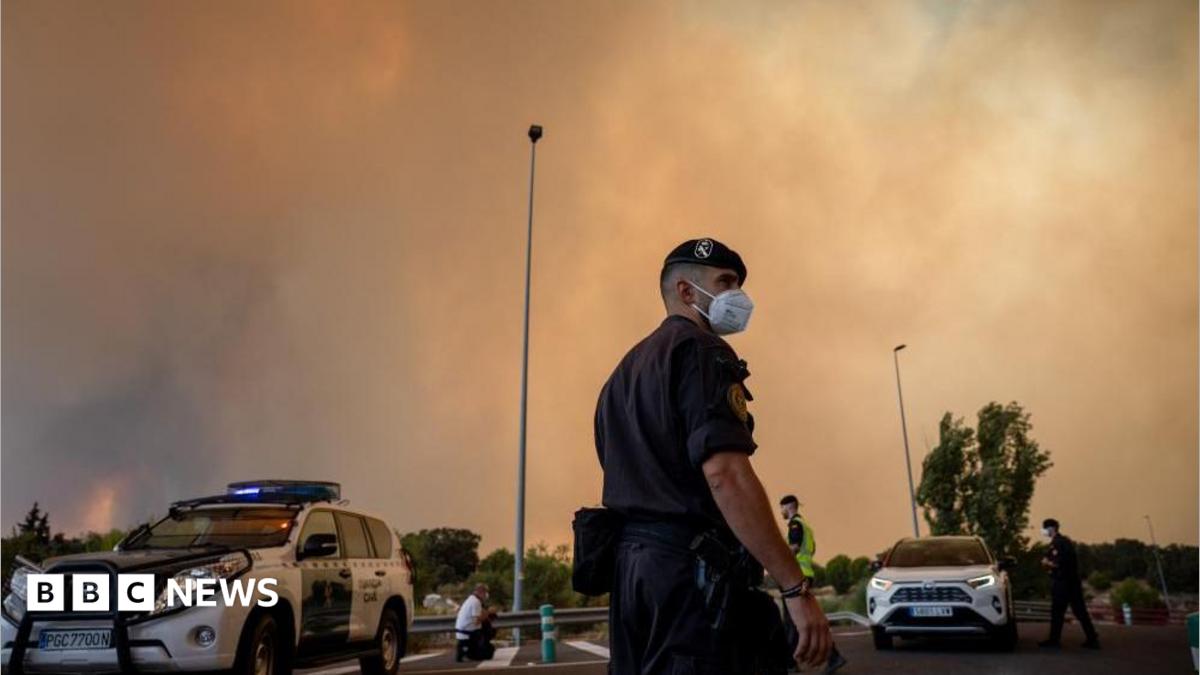
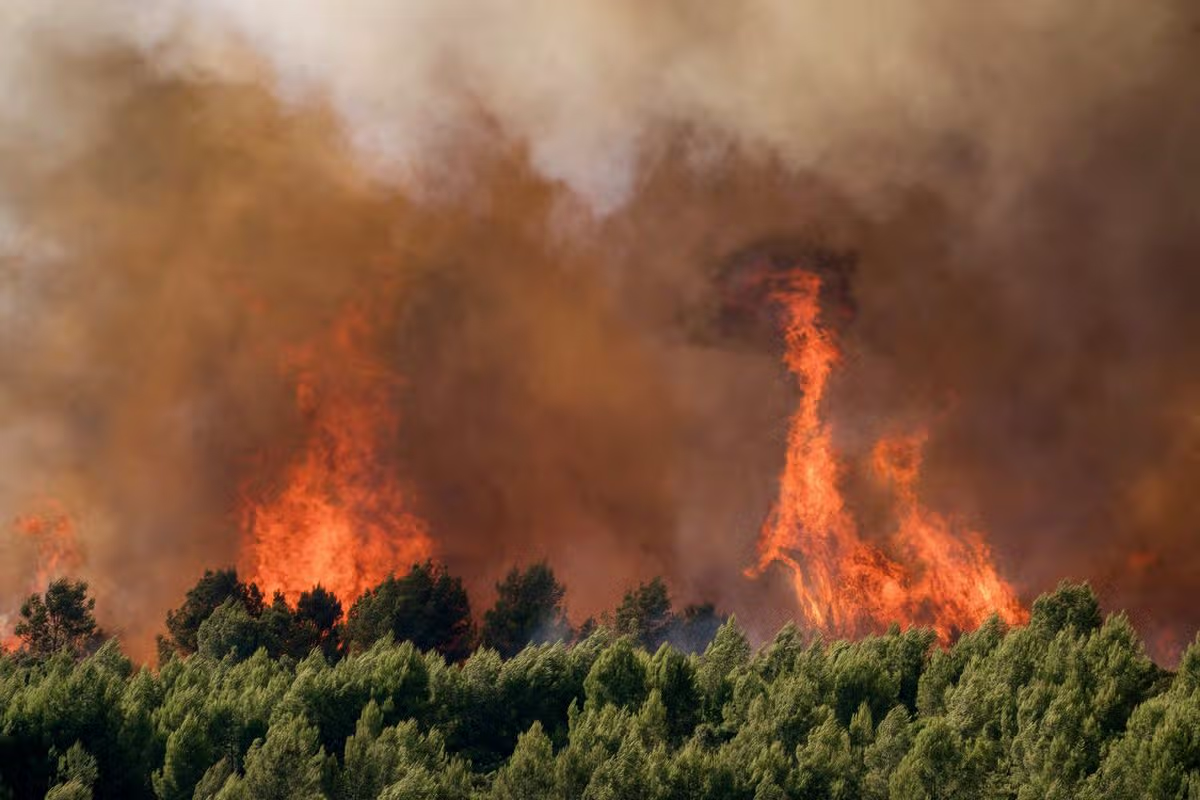
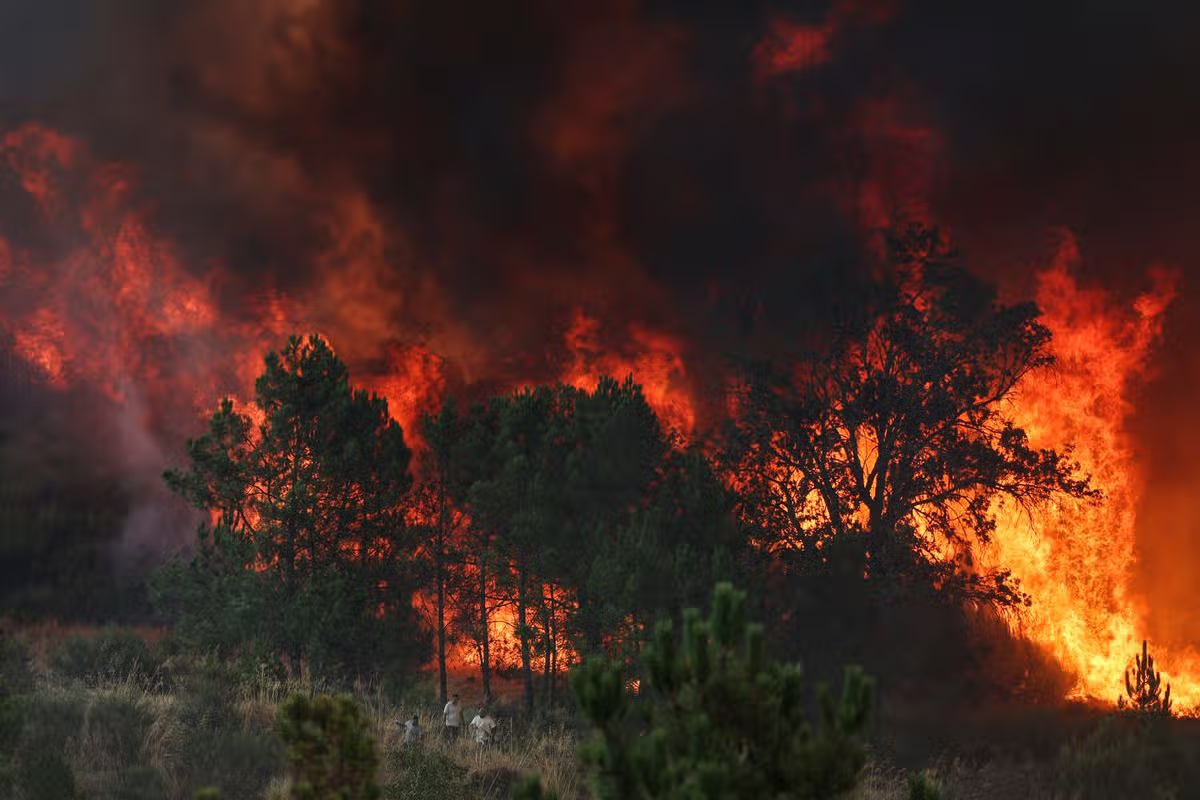
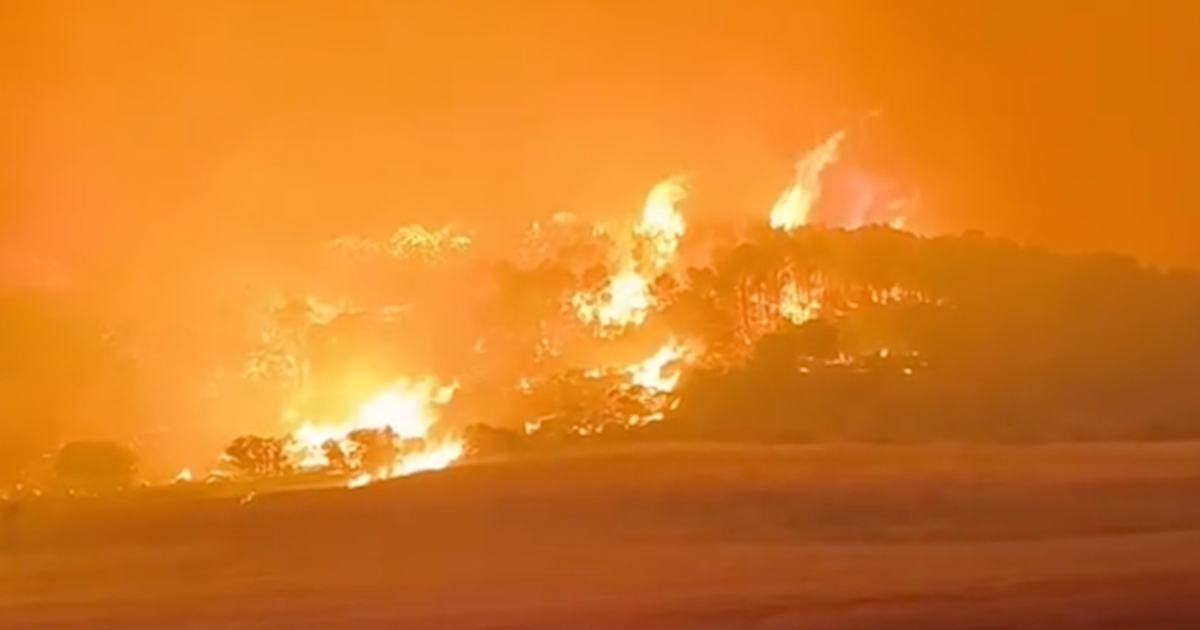
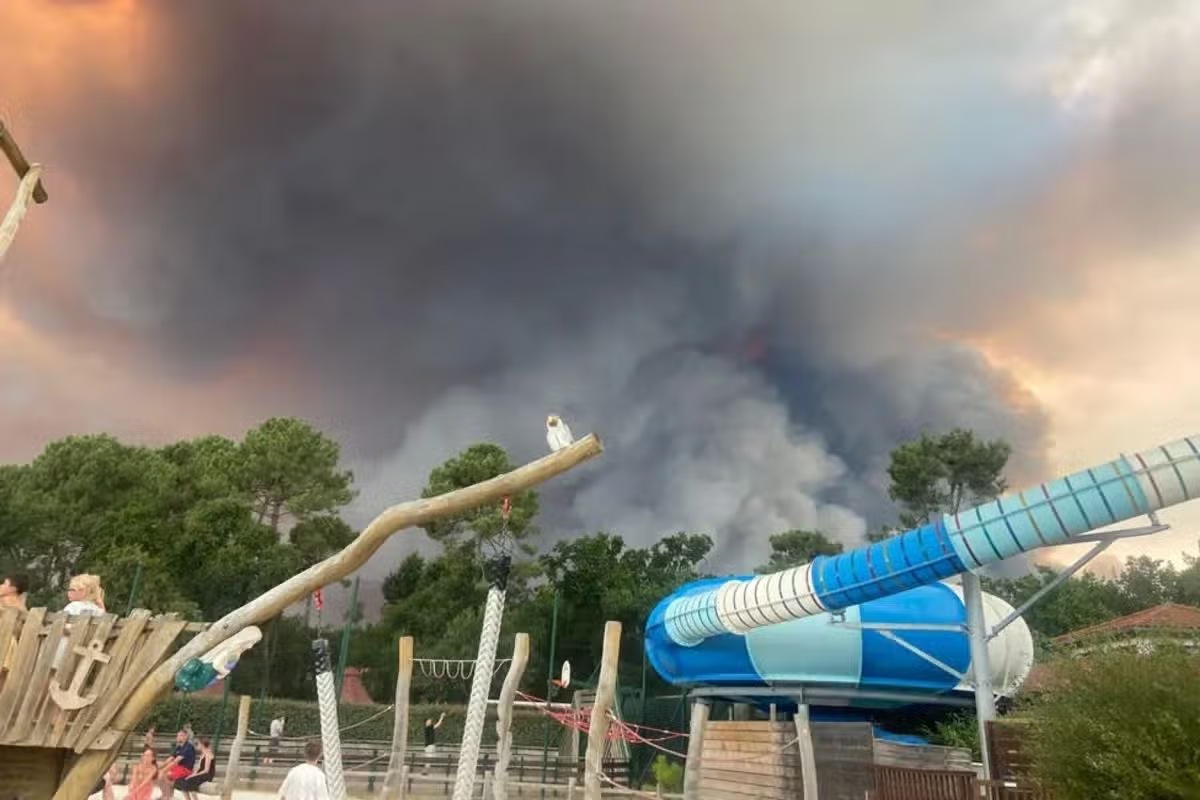
Spanish authorities declared a national emergency as three blazes burning near Madrid merged into one, forcing some 60,000 people from their homes. In France, 141,000 people were evacuated from the regions of Gironde and Landes. Photo by Damien Rembert/EPA

July 24 (UPI) — More than 200,000 people fled their homes on Friday in fear of powerful wildfires tearing through Spain and France.

Spanish authorities declared a national emergency as three blazes burning near Madrid merged into one, forcing some 60,000 people from their homes.

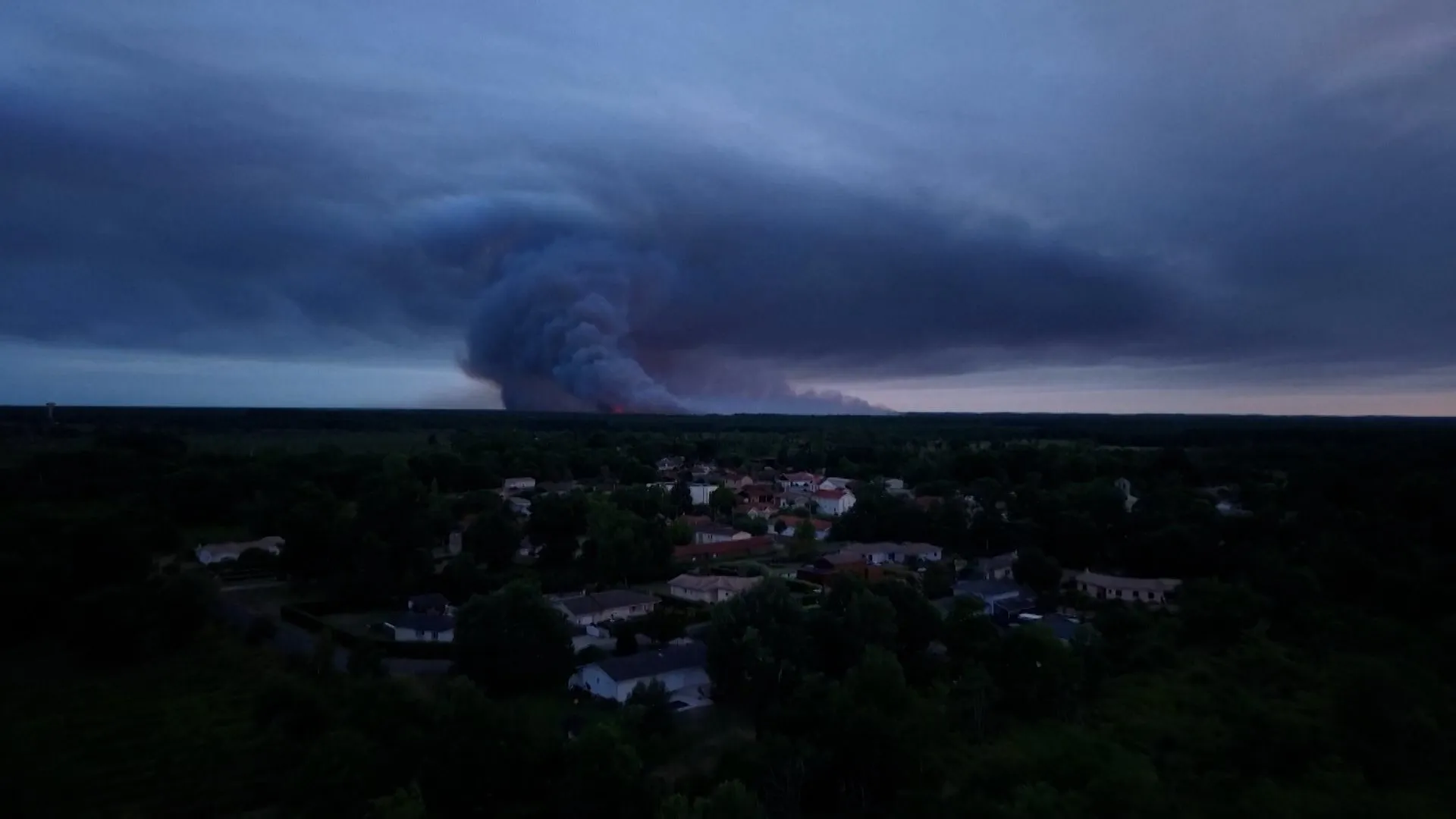
In France, 141,000 people were evacuated from the regions of Gironde and Landes.

“This is the worst wildfire in our region’s history,” Madrid’s regional leader, Isabel Díaz Ayuso, told reporters.

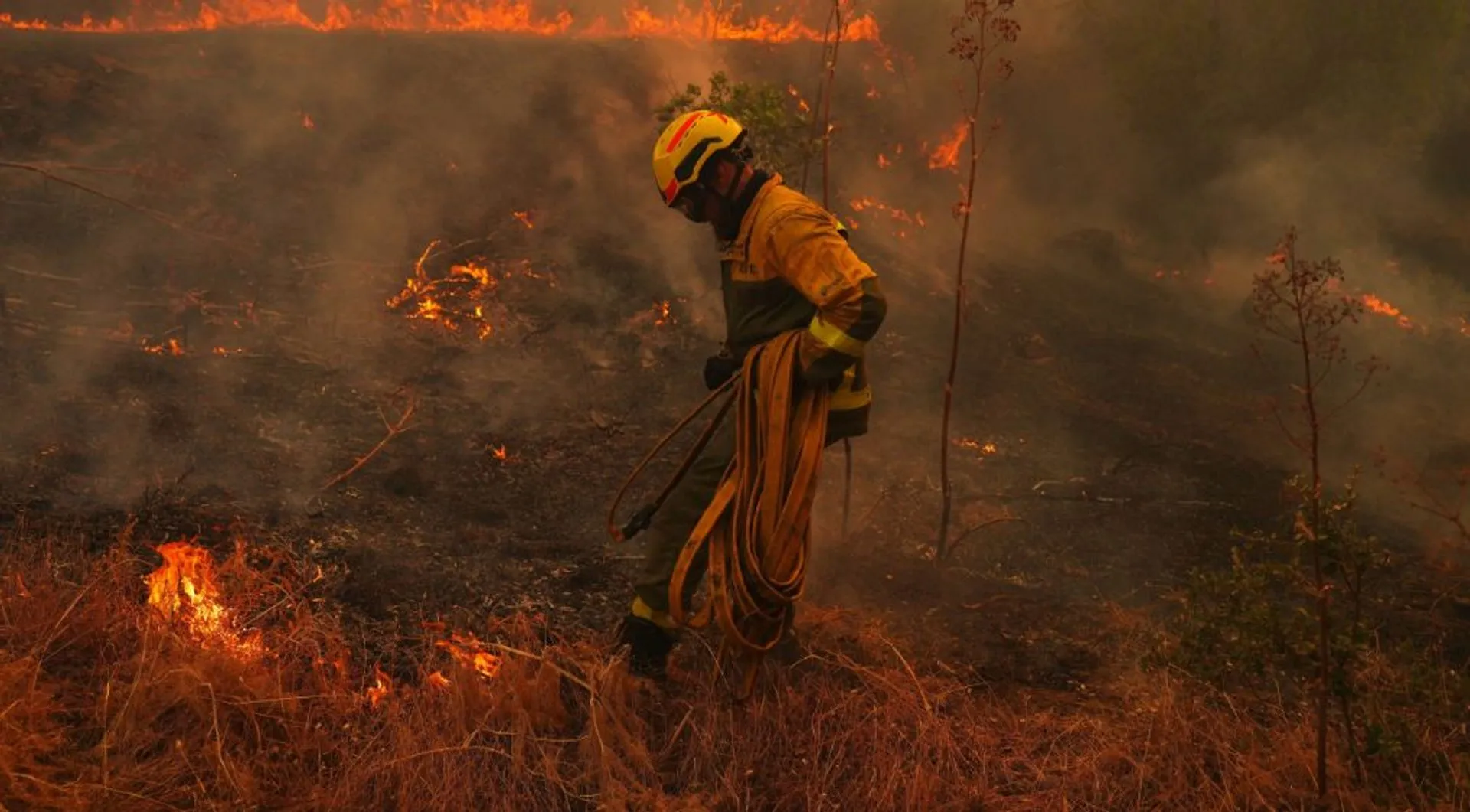
France’s Interior Minister, Laurent Nunez, said 50 firefighters had been injured fighting the wildfire.

“We have never seen a convective fire of this magnitude,” Nunez told TF1.

“We are going to reorganize our response so we can fight it from the ground and prevent it from advancing toward Bordeaux,” he added.

In Madrid, firefighters said the blaze is beyond their control, BBC reported.

“The wildfire is at its peak and is currently beyond the capacity of firefighters to contain,” Carlos Novillo, emergency management chief in Madrid, told reporters.

“It’s not possible to attack the fire in that area, so defensive measures are being taken,” he added.

French President Emmanuel Macron said the country requested support from the European Union.

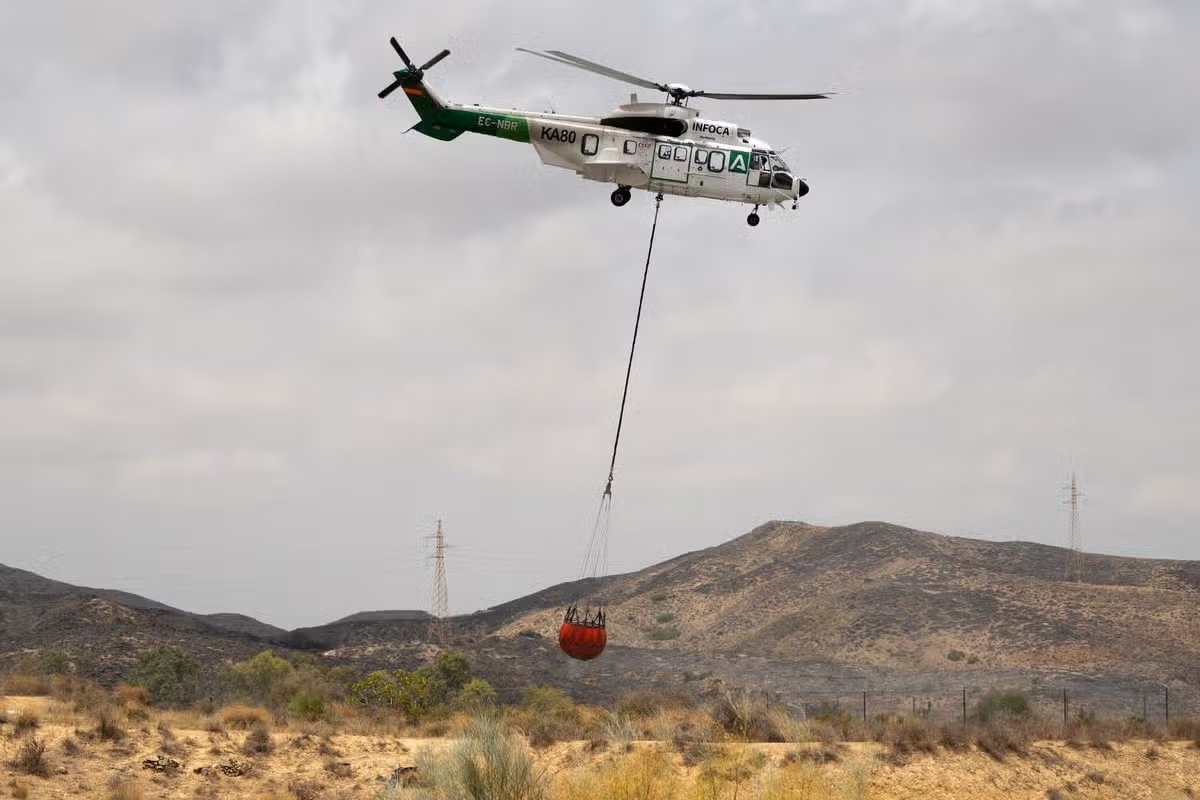
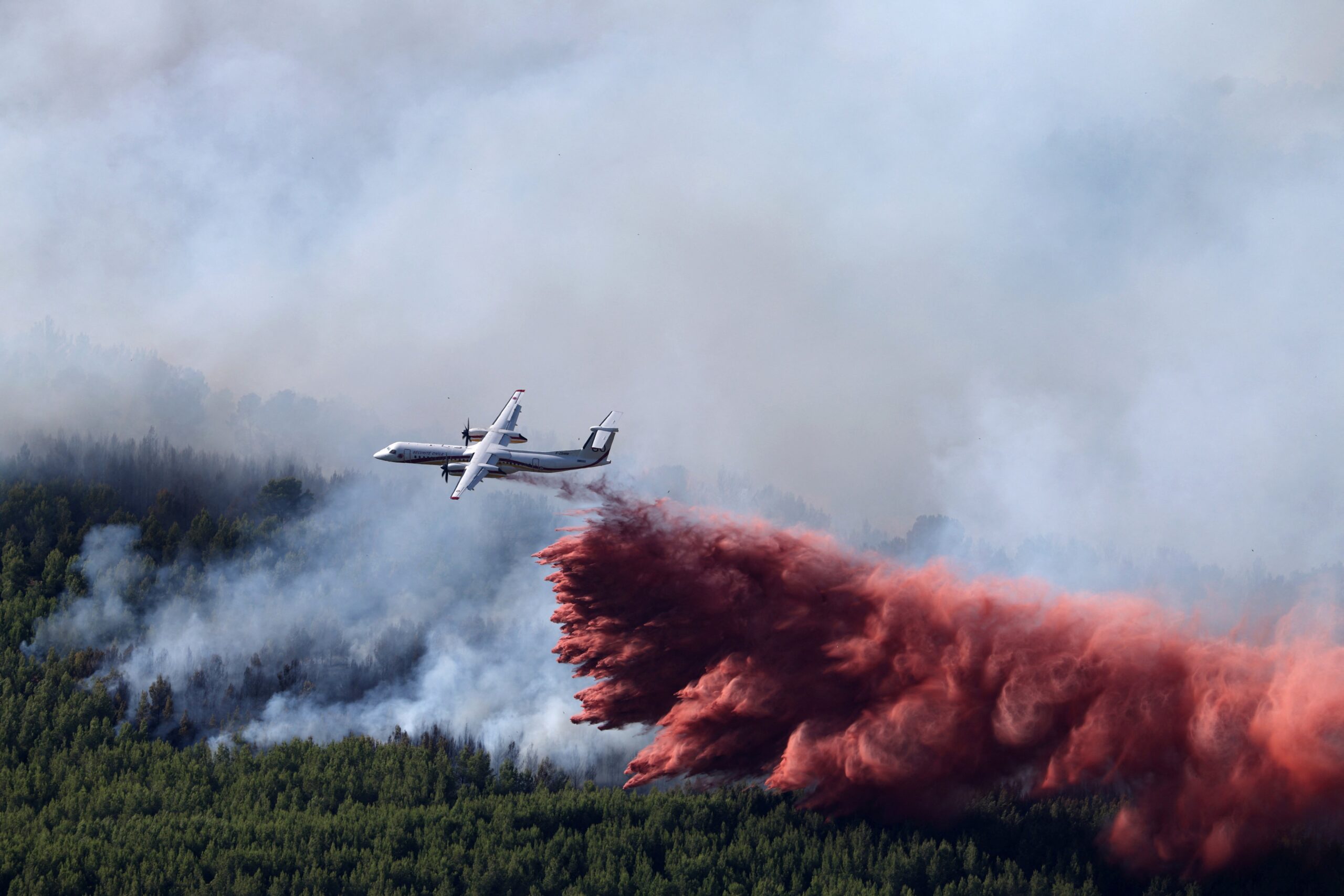
“We will soon be able to count on reinforcements from two Croatian Canadair aircraft, two Portuguese Air Tractor planes, as well as two heavy Black Hawk helicopters from the Czech Republic and Slovakia,” Macron wrote on X. “This concrete, swift, and operational solidarity is a precious strength in the ordeal.”

The president said the situation remains “under very high tension.”

“My thoughts go out to our firefighters and the rescue forces who are battling relentlessly on the fire front,” Macron added. “Their courage commands respect.”

Source link

Heatwave hell sparks summer of chaos as THOUSANDS queue for holidays and wildfires force Brits to flee hotels

As 6.3 million people embark on road trips, the UKHSA has issued a yellow heat health alert with a risk to life for the elderly and vulnerable

More than six million people are hitting the roads as the summer holidays begin – battling 30C temperatures and nose-to-tail traffic jams.

The AA predicts 6.3 million of us will make journeys between now and Thursday. Yellow heat health alerts are in place across much of the country until tomorrow morning and the UK Health Security Agency is warning of minor impacts on health and social care services and an increased risk to life for vulnerable people.

The Port of Dover is braced for its busiest weekend of the summer. Holidaymakers faced gridlock as they waited for ferries today, and tomorrow is set to be the same. Ferry company DFDS said its wait times at Dover were up to 60 minutes at border controls.

But officials hope it will be smooth sailing compared to the May half-term getaway, when waiting times hit four-and-a-half hours due to technical issues with thenew border check Entry Exit System.

The RAC’s Simon Williams warned: “Drivers should be ready for some very busy roads this weekend and expect delays. The best advice is to plan journeys and think about setting off earlier or later in the day to avoid traffic jams.”

Opting to stay at home this week will also come with its challenges. Millions of Brits are now subject to hosepipe bans and a drought has been officially declared for large parts of north and mid-Wales.

The rest of Wales, along with much of central, southern and eastern England, is in the “prolonged dry weather” ­category – one stage below a drought. But parts of Britain might be in for some light relief from Sunday, as high pressure retreats and brings outbreaks of rain.

Showers could be heavy in the north and the west of the UK, with 20mm possible in parts of north west Scotland. The rain will be much patchier further south and east, with large swathes of England and Wales forecast to get just a few millimetres at most. And it’s likely some locations in the south of England will not see a drop.

The Met Office’s Dan Suri said: “After a prolonged spell of hot, dry and settled weather, some will see a temporary change this weekend as weather fronts move south east across the UK. While some areas, particularly in the north and west, will see rain and showers, many places are likely to receive ­relatively little rainfall.

“For much of southern England, dry conditions are expected to remain the ­dominant feature, with ­temperatures recovering quickly next week and the potential for very warm or locally hot weather to return.”

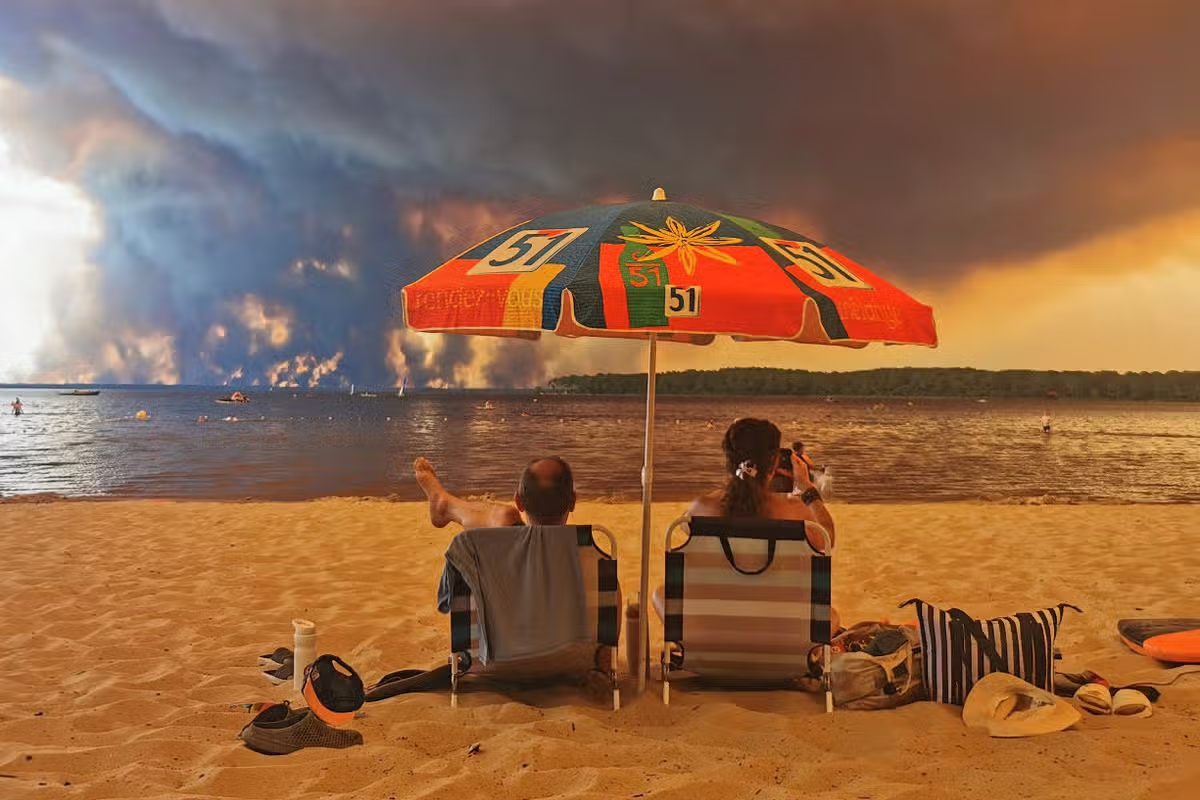
Meanwhile, British holidaymakers were among thousands evacuated from the Cap Ferret peninsula as wildfires raged across south-west France. Tens of thousands are being forced to leave the upmarket resort, including hundreds escaping by boat.

Headmaster David Morton, 53, from Gloucester, was holidaying in the coastal village of Petit Piquey with his wife and sons when they received an emergency text message at 3am.

He said: “We got in our car, packed everything up as quickly as we could… and then set off and joined a very long, slow-moving queue of traffic. We could see several fires in the distance. The whole forest was on fire.”

The fire has so far consumed around 10,000 hectares – nearly the size of the city of Manchester – with water-bombing planes deployed in a bid to keep the flames under control. French Interior Minister Laurent Nunez said 40,000 people either had been or were preparing to evacuate from the Cap Ferret peninsula.

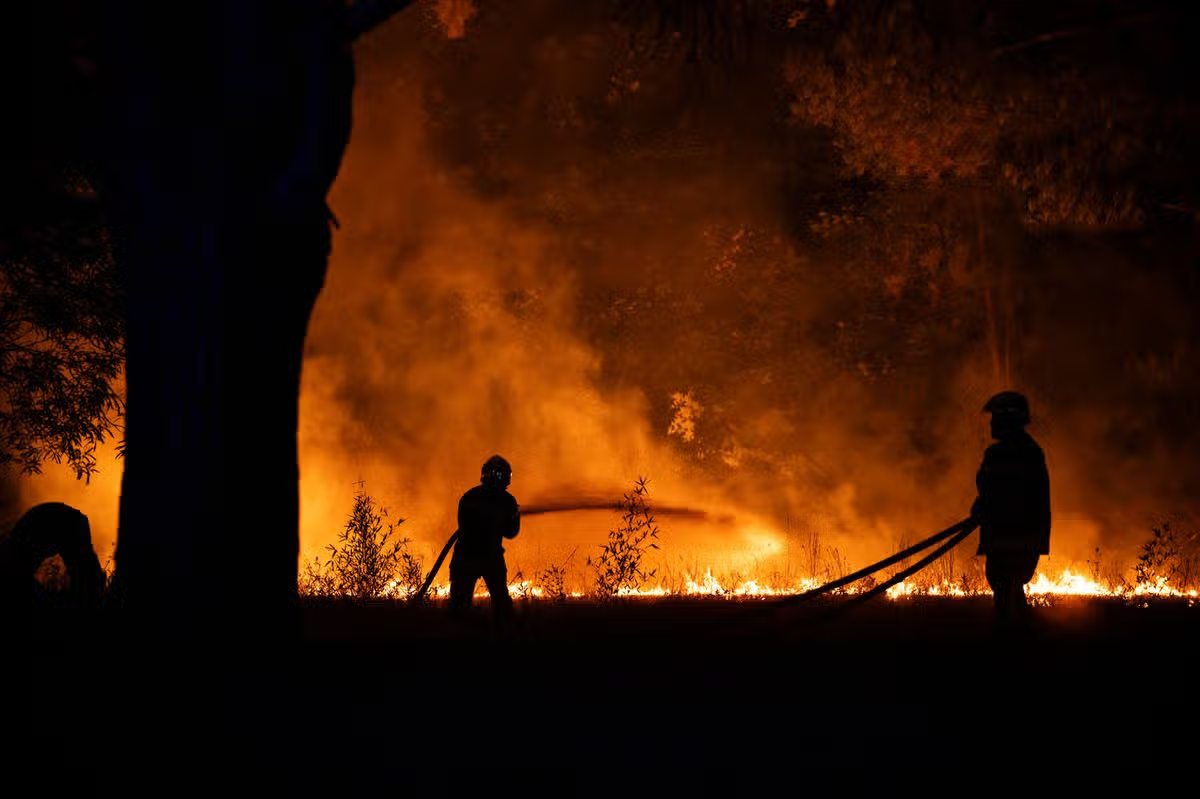
Firefighters also battled blazes in Le Porge and Lacanau in the Gironde department of south-west France, while smoke from the fires dominated the skyline in nearby Biscarrosse.

Elsewhere in Europe, Spain has declared a national emergency after 20,000 people were forced to flee due to fires near Madrid, while the Italian island of Sicily has also been hit.

Source link

New July 24 Foreign Office ‘wildfire’ alert for parts of France

People have been given a fresh update on the situation

The Foreign Office has issued an update for people in or travelling to parts of France affected by ongoing wildfires. More areas are facing immediate threats, with thousands forced to flee from the growing danger zone.

As of July 24, the country is battling dozens of wildfires, with the largest having been burning since Tuesday (July 21). Reports suggest that the massive Cap Ferret Peninsula blaze has forced thousands to evacuate the French tourist spot.

The fires, which began earlier this week, have burned for days, with almost 25,000 acres of land (including pine forest) caught up in the flames. The popular tourist region of Arcachon Bay has been evacuated by authorities as the fire threatened homes and businesses in the area.

Posting an update this afternoon, July 24, the Foreign Office said: “Wildfires are affecting parts of Gironde, including areas around Saumos, Le Porge and Lège-Cap-Ferret, where French authorities have evacuated campsites, tourist accommodation and some residential areas. A separate wildfire is also affecting parts of Landes, including Biscarrosse and surrounding areas.

“Access to affected areas may be restricted and roads may close at short notice. If you are in the area or planning to travel there, follow the advice of local authorities, monitor local media, and check with your accommodation or travel provider before travelling.”

The Foreign Office has previously warned that France has a “high risk of wildfires during the summer season”. The chances of wildfires are often higher between the months of April and October.

The risk is highest in the south of the country, particularly along the Mediterranean coast, in Corsica, and in areas of the south-west during periods of hot, dry weather. Check the French weather service’s fire alert map before travelling and monitor local authority advice during your stay.

In the summer months, there is a risk of higher-than-normal temperatures in France. Tourists should monitor the weather forecasts online using trusted sources like the Met Office or the Meteo France website.

If you’re staying in or near a high-risk area, the French government has advised people to know what to do if a wildfire breaks out and how to prevent wildfire outbreaks in the first place. Causing a wildfire in France is illegal, even if it is started by accident, and you could get a fine or a prison sentence.

If you are caught in a wildfire or witness one, call emergency services on 18 (fire) or 112 (emergency services). After alerting the authorities, take shelter and cover your nose and mouth with a damp cloth to protect yourself from the smoke.

The French government said: “Take shelter in a cleared property until the intervention of the emergency services. No car can be considered as a safe place because it may catch fire easily.”

Source link

France wildfires force mass evacuations from southwestern Gironde region

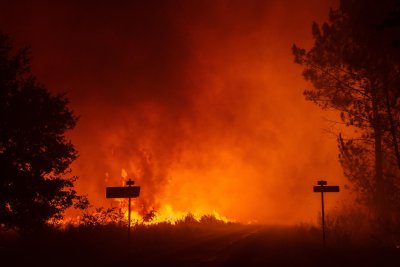
A road in Lege-Cap-Ferret in southwestern France is engulfed by an inferno late Thursday as a huge wildfire threatens the Cap Feret Peninsula, prompting authorities to evacuate tens of thousands of residents and holidaymakers. Photo by Damien Rembert/Gironde Department Fire and Rescue Service/EPA

July 24 (UPI) — Authorities in France’s southwestern Gironde region ordered tens of thousands of people to evacuate from the popular Cap Ferret peninsula vacation spot Friday in the face of an “XXL” wildfire threatening to cut off the promontory. As many as 2,000 escaped by boat.

French Interior Minister Laurent Nunez said 40,000 residents and tourists had been evacuated or were currently being moved from the cape, which is bordered by the Atlantic Ocean to the west and the Arcachon Bay to the east.

The fire has burned through at least 25,000 hectares after breaking out Wednesday in Saumos, a small town about 25 miles away to the northeast.

Authorities began evacuating of the town of Ares, south of Lege-Cap-Ferret on the Bay of Arcachon side of the peninsula after the fire picked up pace and intensity overnight, said fire and rescue chief Marc Vermeulen.

A local council member said 2,000 people had already made the 7.5-mile boat crossing to Arcachon on the southern side of the bay.

More than 800 firefighters from across France were battling the flames in an operation run out of a command center set up in a stadium in Le Porge, six miles northeast of Lege-Cap-Ferret.

Gironda Prefect Sophie Brocas said 53 homes and a campsite had been razed but that firefighters had managed to save 2,000 houses.

More than 23,000 people were also evacuated from homes, campsites, a nursing home and a summer camp due to another wildfire around Biscarrosse, about 15 miles south of Arcachon in the Landes department.

Landes prefect Gilles Clavreul said the fire was being fueled by a combination of winds of more than 30 mph and searing temperatures in the high 30s degrees Celsius.

Calling the situation very serious, President Emmanuel Macron said France had requested the European Union’s civil protection mechanism be activated, which would allow the deployment of firefighting aircraft from other members of the bloc.

“We will soon be able to count on reinforcements from two Croatian Canadair aircraft, two Portuguese Air Tractor planes, as well as two heavy Black Hawk helicopters from the Czech Republic and Slovakia,” he wrote in a post on X late Thursday night.

In Spain, authorities declared a national emergency Friday as they continued to battle three major wildfires west of Madrid in the areas of Villa del Prado and San Martín de Valdeiglesias, as well as Burgohondo in Avila province

Prime Minister Pedro Sanchez said Friday that many communities across Spain and beyond were being impacted by fires “ravaging thousands of hectares.”

“The government has deployed all available resources to halt the terrible fires that are currently affecting numerous areas: Avila, Leon, Toledo, Madrid, and other parts of Spain. We are living through a dramatic situation, not only in various Spanish provinces but also in regions of neighboring countries. Forest fires are ravaging thousands of hectares and affecting numerous communities,” he wrote on X.

“The government will stand by your side during the emergency and in the recovery,” added Sanchez.

Astronaut Buzz Aldrin walks on the surface of the Moon during the Apollo 11 mission on July 20, 1969. Photo by NASA/UPI | License Photo

Source link

Southern Europe wildfires kill 3 firefighters, force thousands to flee

A wildfire burns in Burgohondo municipality in Avila province, 60 miles west of Madrid, on Wednesday forcing more than hundred residents to evacuate from the area. Photo by Raul Sanchidrian/EPA

July 23 (UPI) — Three firefighters were killed, two in France and one in Italy, and 12,000 people were forced to evacuate as wildfires continued to ravage areas of southern France, Italy and Spain.

Almost 6,000 acres have been burnt in the area west of Bordeaux, where 10,000 people were ordered to flee amid a ban on internal combustion and electric engines and road closures, the Gironde regional government said Thursday.

Authorities said 500 firefighters were tackling the blaze, which was moving southwestwards after breaking out in Saumo, a small town 20 miles northwest of Bordeaux, on Wednesday and that firefighting aircraft were en route to the scene.

No injuries had been recorded.

The two French firefighters died Tuesday as they battled to bring a separate blaze under control in a suburb of Bordeaux.

Var, a department on the Cote d’Azur between Marseille and Nice, was also badly affected, with thousands of acres burnt. Residents evacuated there were allowed to return to their homes Thursday to assess damage on strict instructions to restrict movement and activities because of the risk the fire could flare up again, amid windy conditions.

Meteo-France red alerts for forest fires were in place across several other departments in southern France on Thursday.

In Italy, a firefighter was killed and another was injured Wednesday battling a major fire on Sicily.

Sicilian Civil Protection chief Salvo Cocina said the wildfire in San Cataldo, in the southwest of the island, was one of 10 major incidents that had triggered the evacuation of residents, as a precaution.

About 6,000 firefighters, forestry officers and civil protection personnel were deployed in the operation.

The regional government said the most critical fires were in Casaboli, Bivona, Alimena, San Cataldo, Galati Mamertino districts and certain areas of the Madonie Park and Syracuse areas.

Footage online, shot by the Spanish Civil Guard, shows officers going door-to-door telling residents to leave as a major wildfire raged southwest of Madrid, between Almorox and Villa del Prado.

It comes after a huge wildfire to the north of the capital in Guadalajara province that broke out on July 16 razed almost 80,000 acres and a deadly forest fire in southeastern Almeria province that killed at least 11 people on July 10.

Across European Union countries, wildfires have burnt more than 628,000 acres so far in 2026, European Forest Fires Information System figures show — although the figure was below the 668,000 acres burnt in the same period in 2025.

Astronaut Buzz Aldrin walks on the surface of the Moon during the Apollo 11 mission on July 20, 1969. Photo by NASA/UPI | License Photo

Source link

Thousands forced to evacuate as wildfires sweep across southern France | Climate News

NewsFeed

Thousands of people are being evacuated from areas of southern France as firefighters battle huge wildfires. Researchers say climate change is intensifying heat and drought, creating conditions for larger and more destructive wildfire seasons across Europe.

Source link

Does travel insurance pay out for a wildfire or extreme weather?

If your destination falls victim to a wildfire or other extreme event, what should you do, and can you get your money back? A consultant for independent financial research company Defaqto has explained what Brits need to look out for

Many Brits will be heading off to Spain for the busy summer season in the coming weeks, and no doubt seeing the headlines about wildfires will cause some alarm if you’ve got a holiday booked.

Wildfires broke out in the Almería province of Spain last week. So far 13 people have been confirmed dead, among them, seven Britons. Almeria is part of the Andalusia region, and is popular with expats and holidaymakers. The Foreign, Commonwealth & Development Office (FCDO) recently updated its advice for anyone travelling to Spain.

It said: “If you are in an area affected by the wildfire follow instructions from local authorities and emergency services at all times, avoid travelling into or through the affected area, and follow updates from the emergency services.”

People who were planning trips to Andalusia and other areas of Southern Europe suffering from wildfires and other extreme weather events may be wondering where this leaves them. Anna-Marie Duthie, an insight consultant at independent financial research company Defaqto, gave her thoughts.

Anna-Marie said: “If your airline cancels your flight due to wildfires, they should offer you the chance to rebook, or provide a full refund. If your holiday was booked as a package, this refund should cover all elements — flights, accommodation and transfers.

“But if you’ve booked everything separately, you’ll need to deal with each provider independently. Your airline may refund your flight, but your accommodation provider may not if the property is unaffected. This is why it’s essential to speak directly with providers in the first instance and check with your insurance provider regarding the cover they include.”

Travellers should regularly check the FCDO website to see tailored advice for their destination and ensure no travel warnings are in place. Anna-Marie said: “If government advice changes, advising against travel to the area after you have booked your trip, then you may be covered for cancellation or curtailment.

“You may also be covered for additional travel and accommodation costs should your trip be disrupted due to a catastrophic event, if your insurer offers this cover or you’ve paid to include it.”

Anna-Marie believes that extreme weather events could affect the travel insurance industry in future, saying: “Whilst it’s difficult to know exactly how travel insurance may change over the next decade, longer term there is a chance that we may end up seeing less insurable destinations and increased premiums. What we do know, however, is that travel insurers are used to having to adapt to an ever-changing world.”

But she added: “It is unlikely and we are yet to see any immediate changes to policies because of the current heatwave. It is unlikely insurance providers will change their policies in the near future to incorporate extreme heat. Current clauses may refer to ‘severe’ or ‘extreme’ weather, but the definitions for these can vary and currently no providers go as far as to specify criteria such as maximum temperatures.

“Where the heat causes events such as the current wildfires, this is a separate consideration and would be classed as a catastrophe or natural disaster. Cover for this will all depend on your insurer’s definitions and extent of benefits.”

Have a story you want to share? Email us at webtravel@reachplc.com

Source link

Is it safe to travel to Spain right now amid wildfires? Everything you need to know if you have a holiday booked

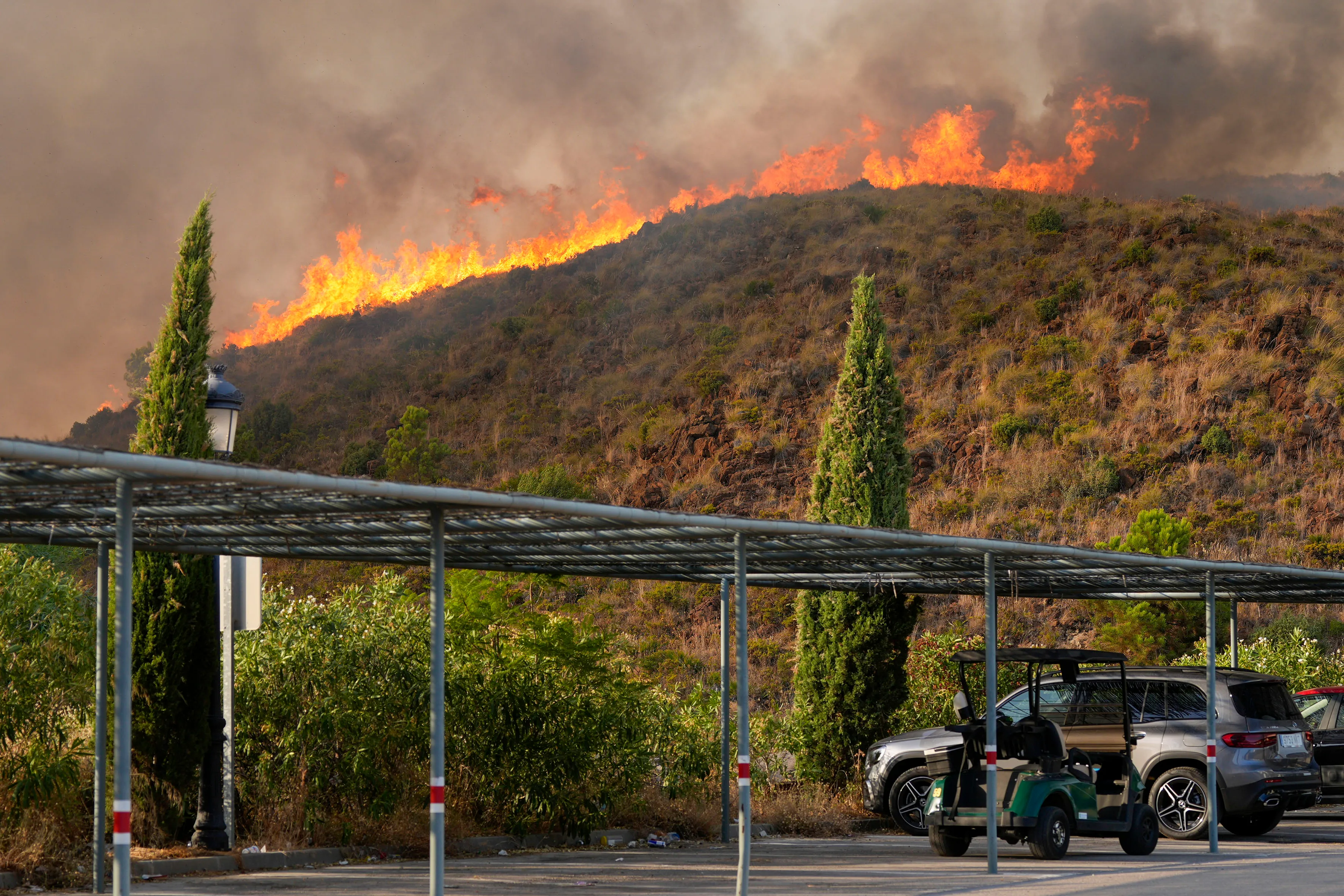
Wildfire burning across a mountainside in Estepona, Spain, with smoke filling the sky above.

FIRES across Spain have resulted in 11 deaths and widespread chaos, with tourists forced to flee their villas and evacuated from hotels.

Here is everything you need to know if you have a holiday to Spain coming up.

Wildfires across Spain have already resulted in 11 deaths, including four suspected Brits Credit: EPA
Emergency services have been deployed to tackle the ongoing fires Credit: EPA

What is happening in Spain?

Extreme temperatures have resulted in wildfires in parts of Spain, along with France, Portugal and Greece.

The hot weather – expected to go over 40C this week – has resulted in dry forests and conditions, making them more prone to wildfires.

Local authorities have deployed over 150 firefighters and 200 military personnel to tackle them.

It is Spain’s worst wildfire in more than two decades and the Andalusia region’s most devastating in history

BLAZE HELL

Four Brits feared among 12 dead in Spain wildfires after getting trapped in car


KILLER BLAZES

French firefighter dead & Spanish villas evacuated as Europe hit by wildfires

Where are the fires in Spain?

The fires in Spain are predominantly along the south of the country.

The blaze broke out in Los Gallardos, Almeria, southern Spain, and have since spread to areas including Cadiz.

Aragon, Catalonia and Valencia are the other regions tipped to be worst-affected.

What is the current travel advice for Spain?

All of Spain still remains safe to travel to, according to the UK Foreign Office.

However, they do have updated the travel advice.

The website states: “Local authorities have reported a wildfire in Los Gallardos, Almería, in Andalucía. 

Tourists have also been evacuated in some of the areas Credit: Reuters
The current travel advice has been updated by the UK Foreign Office Credit: Alamy

“If you are in an area affected by the wildfire: 

  • for emergencies, call 112  advice on what to do when it comes to wildfires.
  • follow instructions from local authorities and emergency services at all times 
  • avoid travelling into or through the affected area 
  • follow updates from the emergency services”

The UK government also has wider information on them in general, saying: “Wildfires happen often in Spain, including on the islands, during the summer months.

“Be aware of your environment when visiting or driving through woodland areas. For information on wildfire risk visit the Spanish Meteorological Office (AEMET).

“Causing a wildfire is a criminal offence in Spain, even if unintentional. Make sure cigarette ends are properly extinguished, do not light barbecues and do not leave empty bottles behind.

“You can be heavily fined for not following the rules against lighting outdoor barbecues in forest areas. Make sure you know the rules if considering a barbeque.

“For information on what to do in the event of a wildfire, visit Civil Protection.”

Are holidays to Spain affected?

Most holidays remain unaffected if you are heading to Spain in the next few weeks.

Passengers will be contacted by their tour operator or airline if this changes.

Source link

Foreign Office updates France travel advice as country hit by wildfires ahead of summer

The Foreign Office’s latest France travel advice has been updated with more information for Brits as wildfires have been raging across Europe and seen thousands evacuated from high risk areas

Wildfires have been raging across parts of Europe this week, affecting destinations including Spain, France, Portugal and Greece. Thousands have been evacuated as a result, with locals and tourists also being urged to ensure their phones can receive emergency alerts.

In southern France, over 10,000 people were evacuated from small towns and villages in the French Pyrenees, near the border with Spain, reports the BBC.

Meanwhile, spectators heading to watch the third stage of the Tour de France were urged to stay away on Monday, to make access easier for emergency vehicles in the area.

Following the wildfires, on Tuesday (July 7), the Foreign Office updated its France travel advice to warn Brits of the ‘high risk’ of fires in France over the coming months, and point to the existing advice it has on what to do if you’re staying in or near a high-risk area.

The updated advice warns: “There is a high risk of wildfires during the summer season from April to October. For advice, visit the wildfires section on the Safety and security page.”

The Foreign Office already had existing advice about the risk of wildfires in France, which always sits within its guidance. The latest update just reminds Brits that the advice exists, and where to find it.

At the time of writing, the guidance on wildfires in France reads: “Wildfires can start anywhere in France during the summer months, particularly along the Mediterranean coast and in Corsica.

“The French weather service has launched a fire alert map to help travellers stay up to date.

“Fires have become more frequent because of drought and high temperatures. French authorities may evacuate areas and close roads for safety reasons. Causing a wildfire is illegal in France, even if it is started by accident. You could get a fine or a prison sentence.

“If you’re staying in, or near, a high-risk area see advice from the French government (in English) for information about:

  • what to do if a wildfire breaks out
  • how to prevent wildfire outbreaks
  • protecting your home from wildfires (including mandatory bush clearance)

“If you are caught in, or witness, a wildfire, call the emergency services on 18 (fire) or 112 (emergency services).”

Source link

Tour de France 2026: Fans urged not to attend end of third stage because of wildfires

Tour de France fans have been urged not to attend the end of the third stage because of wildfires in the south of France.

Monday’s mountain stage will begin in Granollers, Spain, and conclude within 60 kilometres (37.3 miles) of some of the worst of the fires across the border in Les Angles.

While the 195.9km route is not expected to change, Tour organisers have asked fans and unessential personnel to stay away from the final 40km.

“An exceptional fire calls for exceptional measures for the Tour,” said race director Christian Prudhomme.

“We invite the public not to come to the edge of the race or to the finish site.”

Europe has been dealing with extreme heat and wildfires during the past few weeks, with a record-breaking heatwave recorded in June.

The fire that has affected the Tour is currently being contained within the Pyrenees-Orientales region, where aircraft have been deployed to battle the blaze.

A key stretch of the mountain pass providing access to the race will be closed.

Nearly 3,000 people were evacuated after a wildfire ignited near Perpignan on Thursday.

“We obviously think first of all of the populations who are affected by the fire, of all those who have to move, and then we also think about the people who would be here to host the Tour,” added Prudhomme.

Jonas Vingegaard holds a narrow lead over reigning champion Tadej Pogacar in the general classification standings after Isaac del Toro won stage two on Sunday.

Source link

FCDO issues Portugal wildfires warning to Brits ahead of summer holidays

The Foreign, Commonwealth and Development Office (FCDO) has issued an urgent travel warning to Brits heading to Portugal this summer

Brits heading to Portugal are facing an urgent travel alert this summer. The warning, issued by the Foreign, Commonwealth and Development Office (FCDO), comes amid devastating wildfires sweeping through parts of the European nation.

More than 1,000 firefighters are tackling the blazes just north of Porto. Euronews reports that authorities have declared a red heat alert across the country, a firm favourite with British holidaymakers. Approximately 2.5 million Brits travel to the country annually.

An extreme high temperature warning has been put in place by the Portuguese Institute for Sea and Atmosphere, covering Porto and regions to the north and east of the coastal city. In all, 12 of the nation’s 18 districts are on alert, from Thursday 2 July until at least Saturday 4 July, with a ‘persistent spell of extremely high temperatures, both daytime highs and overnight lows’.

The remaining six regions are under orange alert, heightening the wildfire threat. This has triggered a warning from the FCDO. It says: “There is a high risk of wildfires during the summer season from April to October.”

It continues: “There is an increased risk of wildfires from April to October when the weather is hot and dry. Wildfires can start anywhere in Portugal.

“Wildfires are highly dangerous and unpredictable. The Portuguese authorities may evacuate areas and close roads for safety reasons.”

You should: “Starting a fire, even if it is by accident, is illegal and you could get a fine or a prison sentence. For information about active wildfires and forecasts, visit the Portuguese Met Office website for information on Portugal and Madeira.”

The Minister of Internal Administration has suggested the possibility of deliberate criminal activity behind the widespread blaze, which broke out overnight.

“Night-time does not usually provide conditions for ignitions to occur, and yet there were two ignitions at around 02:00–03:00 in the morning,” said Luís Neves, speaking to journalists in Torres Novas. He added that ‘everything indicates that there was, in fact, human involvement, criminal behaviour’.

Source link

Everything to know about travelling to France right now as heatwave wildfires spark evacuations and plane diversions

Wildfire in Pouzols-Minervois near Narbonne

THOUSANDS of people have been evacuated across the south of France due to huge wildfires across the region.

Along with flights being forced to divert, we’ve explained everything you need to know.

Wildfires have spread across the south of France, resulting in evacuations and flight diversions Credit: EPA
Smoke seen over Canet en Roussillon which was evacuated Credit: Alamy

What is happening in France right now?

Extreme temperatures in France have resulted in huge wildfires that have sparked evacuations.

Emergency services including water-dropping helicopters and firefighters have been deployed, with more than 3,000 people evacuated, after highs of 44C have been reported.

The blaze in France is believed to have been sparked by a discarded cigarette butt.

Officials have spent much of the summer battling with wildfires in France, with over 9,000 reported along the Mediterranean coast.

SPLASH IN

The best free water attractions in UK cities for kids to cool down in the heat


SPLASH OUT

Gorgeous free lido with sweeping city views is returning to UK this summer

Where are the wildfires in France?

The current wildfires have affected the towns of Sainte-Marie-la-Mer and Canet-en-Roussillon.

Three campsites popular with both locals and tourists were evacuated in response.

An airport in Perpignan was also forced to temporarily close with flights diverted to other airports such as Toulouse.

Two fires also broke out on the outskirts of Marseille, France’s second-biggest city.

Emergency services have been called in to tackle the blazes Credit: Reuters

Is it safe to travel to France right now?

All of France is safe to travel to, although the UK Foreign Office has some guidance regarding wildfires in the country.

It says: “Wildfires can start anywhere in France during the summer months, particularly along the Mediterranean coast and in Corsica.

“Fires have become more frequent because of drought and high temperatures.

“French authorities may evacuate areas and close roads for safety reasons.”

It also warns that anyone who causes a wildfire – even by accident – can face fines and even prison.

Anyone caught up in a wildfire should call fire services on 18 or emergency services on 112.

Source link