insurance

Gas prices, wildfire, insurance, climate – what each candidate said last night

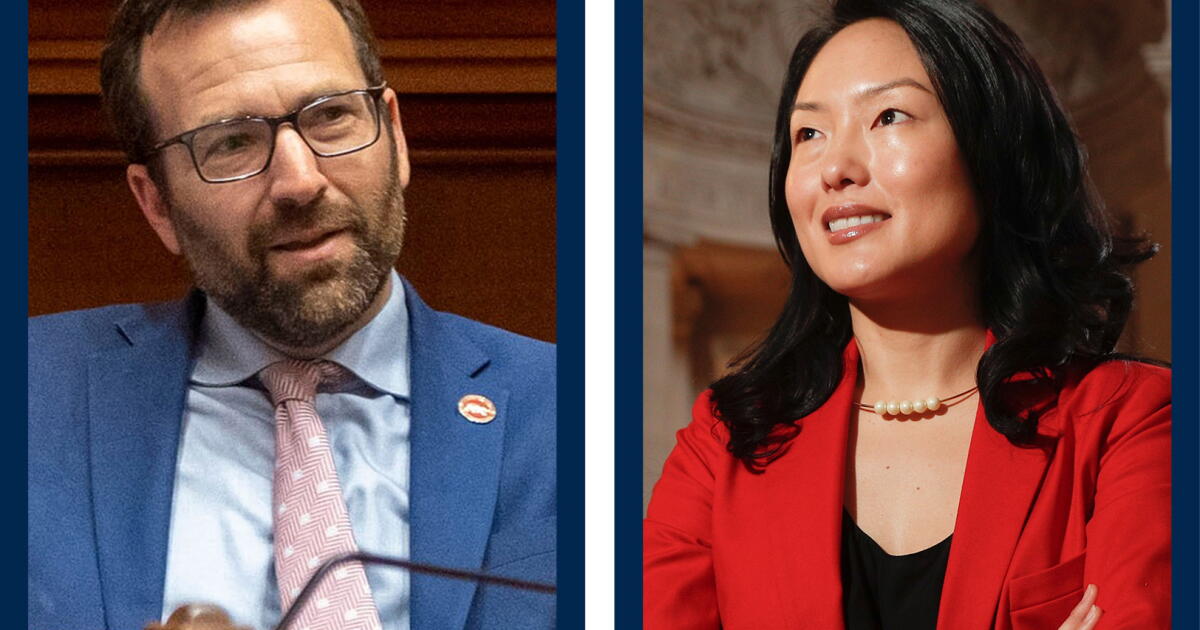
Wildfire and insurance — issues amped by climate change — along with the price of gas, took center stage at the California governor’s debate on Tuesday night.

Here are some of the candidates’ defining statements, starting left of the stage:

Tony Thurmond

The Democratic State Superintendent of Public Instruction addressed the state’s wildfire insurance crisis, where private insurers have been dropping policies as climate changes fuels more frequent catastrophic fire. The state has allowed insurers to raise rates in return for writing more policies, but so far its backup FAIR Plan, meant to provide coverage when other companies will not, continues to grow.

Thurmond said he would withhold tax credits, subsidies and benefits from non-cooperative insurers, although moderators and other candidates raised questions about the legality of this strategy.

“The governor can certainly work with the Insurance Commissioner to say there should be no rate increase unless the insurance industry is actually writing policies. They have failed California in our greatest need. They’ve taken the money for premiums and then when people needed to have support to rebuild their homes, they said, ‘whoops, we’re not going to help you.’ Then they got a rate increase. I’m sorry, where I come from, when you do a bad job, you don’t get a raise.”

Chad Bianco

The Republican Riverside County Sheriff said insurers aren’t leaving California because of climate change, but because the state has failed to pass and enforce vegetation management and defensible space policies that would reduce wildfire risk.

“It wasn’t global warming, stop believing that. It was a failed environmental policy that doesn’t allow fire departments to prevent defensible space around our homes or clear out the brush for 30 years that are building in our mountains and in our hills that took out a city. [Insurers] specifically said we were going to lose a city, and our governor said ‘we don’t care.’ And so the insurance companies left.”

Inadequate brush clearance has contributed to other fires in the state, although it’s not a factor experts cite in the Los Angeles fires specifically.

Tom Steyer

The Democratic billionaire hedge fund founder who is positioning himself as the climate candidate in the race, touted his drive to make oil companies pay for damages from climate change, including rising insurance rates and homes lost to wildfires.

“In environmentalism, I have three real rules. Number one is polluter pays. It’s absolutely critical that if people are going to pollute and damage the environment and cause harm to their neighbors, they pay. Two, we have to include environmental justice in every single environmental rule. And third is we need to start to deploy all of the clean energy stuff that’s cheaper now and get us back to the front of the world in leading it.

“There is one person that the corporations are going after, including Big Oil, who is spending millions of dollars to stop me. The electric monopolies, PG&E, millions of dollars to stop me, because I’m the person on this stage who’s the change agent.”

Steve Hilton

The former Republican Fox News commentator said insurers should be allowed to raise rates consistent with actual wildfire risk. He also advocated for “modern forest management,” removing fuel from forests, as a way to protect against wildfires, reduce carbon emissions from fire, and revive the state’s timber industry.

“We can create jobs and opportunity in rural California and reduce carbon emissions in the process, because we won’t have the mega wildfires.”

Asked if he supports the transition to electrification, he promoted natural gas: “Yes, but let’s be sensible about electric. Right now, we have a fleet of gas fired power stations generating electricity that are running at 10 to 15% of their capacity, even though we have abundant natural gas in California that we could be using to generate affordable, reliable electricity that would lower the cost of electric bills for consumers and businesses.”

According to the U.S Energy Information Administration, California’s natural gas production provides less than one tenth of what the state consumes.

Xavier Becerra

The former Health and Human Services Secretary said he would call a state of emergency as governor to require wildfire insurers to freeze rates and come to the table.

“This affordability crisis is hitting every family, and we have to act as if this were a break glass moment … Rate payers have to understand what their risk is, so they understand why they are going to pay for what they’re going to pay for their home insurance. But an insurance company has to be open and transparent about how its pricing its policies so people can afford it.”

Moderator Julie Watts noted that California home insurance rates are below the national average and questioned the legality of a freeze.

Katie Porter

The former Democratic Orange County Congresswoman was asked whether California should keep its refineries. Two of them closed in the past year, reducing the state’s refining capacity by 20 percent and causing California to lean more heavily on imports.

She said the state should keep the remaining refineries open, but also rapidly scale up green energy to meet the state’s growing electricity demand: “Right now we need to keep all of our energy sources online. That’s just the reality that we’re in. … Right now those refineries, they’re up, they’re running, they’re creating good jobs. Let’s keep them there. But I want to be really clear … The people who work at those refineries, and the people who live in Kern County also face some of the worst pollution and lower life expectancies. Green energy gets us out of that.”

She also backed an idea to have state dollars cover insurance for insurers, known as reinsurance.

Matt Mahan

Democratic San Jose Mayor called to suspend the state’s 61 cent-per-gallon gas tax, used to fund road repairs, bridges, and public transport. The state is looking at a $216.4 billion revenue shortfall over the next decade due to increasing fuel economy and electric vehicles. The other Democratic candidates support keeping the tax; Mahan has instead proposed a flat fee on all vehicles.

He said: “I’m the only candidate on this stage who has pledged to suspend and then reform the gas tax. It is the most regressive tax in California. Working people, rural people, are spending three times as much maintaining our roads as wealthier EV owners.”

On the wildfire insurance crisis he said: “The government in Sacramento created so many restrictions, including taking over a year to approve any rate changes, prohibiting insurance companies from using climate data to project future costs, that they stopped writing new policies. The answer is bring them back, force them to compete, allow them to appropriately price risk, and then hold government accountable for maintaining our wildland, reducing all that vegetation and wildfire risk so that we don’t have these catastrophic fires.”

Antonio Villaraigosa

The former Democratic L.A. mayor expressed his concerns with the readiness of the state’s infrastructure to support a transition to electric vehicles.

“We need an all of the above strategy that understands we’ve got to transition from oil and gas to renewables. But here’s an example: the 2035 mandate [to ban gas-powered car sales]. We built 167,000 charging stations in the last 10 years. We need 2 million more to get to that mandate, and if we build them, we don’t have a grid. So we ought to build the grid instead of arguing about whether or not we need an all-of-the-above policy.”

Source link

South Korea pet insurance market grows but uptake remains low

A chart shows the number of pet insurance policies in South Korea rising sharply from 51,727 in 2021 to 251,961 in 2025. Graphic by Asia Today and translated by UPI

April 15 (Asia Today) — South Korea’s pet insurance market has expanded more than threefold in the past three years, but low enrollment rates continue to limit its growth, prompting insurers to step up marketing efforts.

According to industry data, the number of pet insurance policies in force reached 251,961 last year, up 55.4% from a year earlier. The figure has increased about 3.5 times from 71,896 in 2022.

New policy subscriptions have also risen steadily, while total premiums surpassed 100 billion won (about $75 million) for the first time, jumping from 28.8 billion won (about $21 million) in 2022 to 129.1 billion won (about $97 million) last year.

Despite the rapid growth, the market penetration rate remains low. Data from the KB Financial Research Institute show that only about 2-3% of pets are insured.

As of late 2024, about 15.46 million people in South Korea owned pets, with an estimated 7.63 million dogs and cats nationwide.

The low adoption rate contrasts with more mature markets such as Japan, where the pet insurance sector is valued at around 1 trillion won (about $750 million).

Industry officials say the market still has strong growth potential, driven by rising pet ownership and increasing veterinary costs. Government data show the average monthly veterinary expense per pet is about 37,000 won (about $28), though costs vary widely by clinic.

To raise awareness, insurers are expanding promotional efforts. Companies are launching supporter programs, hosting offline events and collaborating with influencers and pet trainers to reach potential customers.

For example, a pet-focused insurer recently launched a supporter program in which participants share their experiences using insurance products. Other companies have held in-person promotional events and partnered with well-known dog trainers to produce online content.

Analysts say high premiums and limited coverage remain key barriers. Calls are also growing for standardized veterinary pricing to reduce uncertainty in medical costs.

“As pets are increasingly seen as family members, interest in their health care is rising,” an industry official said. “Insurers are working to tap into latent demand by expanding coverage and improving price competitiveness.”

— Reported by Asia Today; translated by UPI

© Asia Today. Unauthorized reproduction or redistribution prohibited.

Original Korean report: https://www.asiatoday.co.kr/kn/view.php?key=20260416010004872

Source link

L.A. City Council panel seeks to ban e-bikes from city hiking and equestrian trails

A Los Angeles City Council panel is pushing to ban electric bikes from most city recreational trails, saying the machines pose a threat to hikers and equestrians.

The council’s Arts, Parks, Libraries, and Community Enrichment Committee voted 3 to 0 in favor of the measure, which now goes to the council’s Transportation Committee before potentially advancing to the full City Council, which would have to approve the ban before it takes effect.

“When you have something that’s motorized traversing that same space, especially if it’s somewhat of a rugged space, for folks that have sensitivities — knees, ankles — you don’t want to create an intimidating situation,” councilmember Adrin Nazarian said.

Although he voted to support the measure, Nazarian said he was open to making changes such as restricting some classes of e-bikes instead of a unilateral ban.

The ban, proposed by councilmember John Lee, would still allow e-bikes on designated bikeways in the city, including some of those along the L.A. River and city beaches.

Regular bikes are already banned from anything designated as a “trail,” according to a city ordinance, but a spokesperson for Lee said e-bikes were a gray area that his proposal aims to address.

Supporters of the measure include Lisa Baca of the Monteverde Ranch Equestrian Center in the northeast San Fernando Valley, who said horses are animals that can easily be spooked by facing moving e-bikes.

“They panic and it becomes very dangerous” for both riders, she said in an interview. At the same time, Baca noted that enforcing any ban on remote trails would be difficult.

Eli Akira Kaufman, director of the nonprofit advocacy group BikeLA, criticized the proposed ban as a “blunt instrument” and said the city should instead engage in a public education campaign aimed at getting people to share space safely.

Michael Schneider, chief executive of StreetsForAll, said the main problem on trails comes not from e-bikes but from people riding more powerful motorcycles and motorized trail bikes that aren’t street legal.

Federal regulations around e-bikes are lenient; they are considered nonmotorized vehicles like regular bikes and don’t require riders to have driver’s licenses or insurance. Local regulations, such as the one proposed by Lee, can vary widely by jurisdiction.

Under California law, e-bikes and e-motorcycles are separately classified by motor power, top speed and whether the bike has working pedals. Class 1 and Class 2 e-bikes don’t require licenses or insurance, while Class 3 riders need to be at least 16.

Catherine Lerer, a partner at law firm McGee Lerer Ogrin who has worked on dozens of e-bike accident cases, said accidents are more dangerous because riders — sometimes children — are moving faster than they would on a regular pedal bike.

“Minors riding e-bikes do not appreciate how fast that these bikes go, and they don’t know the rules that apply to riding an e-bike,” Lerer said. “It’s just a recipe for disaster.”

Source link

Foreign Office warns ‘do not travel here’ or risk invalidating your insurance

The FCDO has all the latest travel warnings listed online, advising against all travel to multiple countries

The Foreign, Commonwealth and Development Office (FCDO) provides regularly updated travel guidance for British nationals heading abroad. It’s vital to check the latest FCDO advice before your trip, as it could affect your holiday plans and travel insurance.

Choosing to travel against FCDO warnings can invalidate your travel insurance. You may also find that consular assistance is severely limited should you face an emergency. On its travel advice page, the government agency says: “No travel can be guaranteed safe. Read all the advice in this guide.”

To safeguard British nationals travelling overseas for work or pleasure, the FCDO provides up-to-date travel advice for every country worldwide. It’s essential to consult this guidance before every journey.

Should the FCDO consider a situation dangerous, it may advise against all travel or only non-essential travel to a particular country or specific regions within it. Alongside travel warnings, the FCDO provides useful information, including entry requirements, crime statistics, local laws and customs, and details regarding any forthcoming strikes or industrial action that could disrupt your holiday.

It’s important to be aware that if the FCDO issues a warning against all travel or all but essential travel to your chosen destination before your departure, your travel insurance is unlikely to provide cover. Consequently, any claims you make will in all probability be rejected.

Travel insurance is designed to safeguard you against unexpected and unforeseen risks. However, heading to a destination that the FCDO has declared dangerous carries a considerably greater risk than jetting off to a generally regarded safe country.

Should the FCDO issue a warning while you are already in an affected region, you will remain covered under the medical and personal accident sections of your travel insurance policy. However, this is provided you comply with the latest FCDO guidance for British nationals in that area.

While most travel insurance policies do not cover trips taken against official advice, there are a handful of exceptions. These particular policies were originally designed to protect individuals travelling to high-risk areas for professional reasons, such as journalists and aid workers. But, they are increasingly being taken up by leisure travellers keen to press ahead with their plans during the COVID-19 pandemic.

Political instability, natural disasters, and safety concerns are among the factors that can prompt an FCDO warning. The FCDO has issued numerous travel advisories, advising against “all travel” and “all but essential travel” to certain nations or regions across Europe, Africa, Asia, and South America.

Of the 226 countries featured on the FCDO’s travel advice page, certain destinations are currently marked as ‘do not travel’ zones owing to various concerns that ‘can not guarantee safety’, including security threats, health risks, and legal differences from Britain. Your travel insurance may be rendered invalid if you travel contrary to FCDO guidance concerning the following nations, as of April 2026.

Afghanistan

The FCDO advises against all travel to Afghanistan, saying: “Your travel insurance could be invalidated if you travel against advice from the FCDO.” The government agency says the security situation is volatile and tensions between Afghanistan and Pakistan have previously resulted in violent clashes in border regions.

It adds: “Travel throughout Afghanistan is extremely dangerous and a number of border crossings are not currently open. There is a heightened risk of British nationals being detained in Afghanistan. If you are a British national and you are detained in Afghanistan, you could face months or years of imprisonment. FCDO’s ability to help you is extremely limited and support in person is not possible in Afghanistan. For more details about the risks in Afghanistan, see Safety and security.”

Belarus

FCDO advises against all travel to Belarus. You face a significant risk of arrest if you have at any time engaged in any activity now considered illegal by the Belarusian regime. There is also a low risk that direct conflict linked to the war in Ukraine may spread to Belarus. Find out more about why FCDO advises against all travel.

Burkina Faso

FCDO advises against all travel to Burkina Faso. This is due to the threat of terrorist attacks and terrorist kidnappings, and the unstable political situation in the country.

It explains: “There is no British Embassy in Burkina Faso and all consular support is provided from the British Embassy in Accra, Ghana. They cannot provide in-person assistance. If there is serious violence, unrest or a deterioration in the security situation, it could be difficult to leave safely.

“Do not rely on the British government to evacuate you as they may not be able to do so. Have your own plans on how you would leave the country, make sure you keep all travel documentation up to date and monitor the local situation.”

Haiti

The FCDO advises against all travel to Haiti owing to the unstable security situation. There are presently no British consular officials in Haiti and the capacity to provide consular assistance is severely restricted and cannot be delivered in person in Haiti. British nationals may receive consular services assistance at our diplomatic mission in the Dominican Republic.

The government agency says: “If you choose to travel to or stay in Haiti against FCDO advice, try to avoid all crowds and public events, and take appropriate security precautions.”

Content cannot be displayed without consent

Iran

FCDO advises against all travel to Iran. It says: “If you are a British national already in Iran, either resident or visitor, carefully consider your presence there and the risks you take by staying. British and British-Iranian dual nationals are at significant risk of arrest, questioning or detention.

“Having a British passport or connections to the UK can be reason enough for the Iranian authorities to detain you.” British nationals should:

  • read if you’re affected by a crisis abroad. This includes guidance on ‘how to prepare for a crisis’ with suggestions on what you might include in your emergency supplies and ‘what to do in a crisis’
  • sign up to FCDO Travel Advice email alerts
  • monitor local and international media for the latest information
  • stay away from areas around security or military facilities
  • keep your departure plans under review, and ensure your travel documents are up to date
  • if you are advised to take shelter, stay indoors or find the nearest safe building or designated shelter. An interior stairwell or a room with as few external walls or windows as possible may provide additional protection

Mali

FCDO advises against all travel to the whole of Mali due to the unpredictable security conditions. The FCDO says if you’re in Mali, you should leave immediately by commercial flight if you judge it safe to do so.

It explains: “The international airport in Bamako is open, and commercial flights are available. Do not try to leave Mali by overland routes to neighbouring countries, as this is too dangerous. This is due to terrorist attacks along national highways. Terrorist group Jama’a Nusrat ul-Islam wa al-Muslimin (JNIM) has implemented blockades on key routes throughout Southern and Western Mali, including the capital city of Bamako.

“These blockades are targeting fuel trucks and are enforcing checkpoints for individuals attempting to pass through them. Attacks can occur at any time. There is a high threat of kidnapping and criminal activity across Mali, including in the capital, Bamako. If you choose to remain in Mali, you do so at your own risk. You should have a personal emergency plan that does not rely on the UK government. If you are a British national already in Mali, either resident or visitor, carefully consider your presence there and the risks you take by staying.”

Niger

FCDO advises against all travel to Niger. This is due to the rise of reported terrorist and criminal kidnappings of foreign nationals, which have taken place this year in Niger.

There is an ongoing risk of terrorist attacks throughout Niger, including in the capital, Niamey. The political situation remains unstable following the July 2023 military coup. Further instability is possible.

Russia

FCDO advises against all travel to Russia due to the risks and threats from its continuing invasion of Ukraine, including:

  • security incidents, such as drone attacks, and Russian air defence activity
  • lack of flights to return to the UK
  • limited ability for the UK government to provide support

There is an increased risk of British nationals being detained in Russia, including if the Russian authorities suspect you of engaging in or supporting activities against Russian law, even if the activities took place outside Russia.

Russia has a track record of targeting foreign nationals and holding them in detention as leverage over other countries. FCDO’s ability to assist you in these circumstances is extremely limited. There is also a high likelihood that terrorists will try to carry out attacks, including in major cities

South Sudan

The FCDO strongly advises against all travel to South Sudan owing to the threat of armed violence and criminal activity. The political and security situation remains unpredictable. Political tensions are high, and the security situation across the country could deteriorate rapidly and unpredictably.

If the unstable security situation deteriorates, routes into and out of South Sudan may be blocked. Juba airport may close or be inaccessible. Flights may be cancelled at short notice. Regional developments may also affect international transport. For example, in 2019 and 2023, events in Sudan caused South Sudan’s airspace to close temporarily. Consular assistance to British nationals is severely limited in South Sudan. In-person consular assistance is not available.

Syria

FCDO advises against all travel to Syria due to unpredictable security conditions and the threat of terrorist attacks. Regional escalation poses significant security risks and has led to travel disruption. British nationals should:

  • read If you’re affected by a crisis abroad. This includes guidance on “how to prepare for a crisis” with suggestions on what you might include in your emergency supplies and “what to do in a crisis”
  • follow advice from the local authorities and sign up to receive information and alerts
  • sign up to FCDO Travel Advice email alerts
  • monitor local and international media for the latest information
  • stay away from areas around security or military facilities
  • keep your departure plans under review, and ensure your travel documents are up to date
  • if you are advised to take shelter, stay indoors or find the nearest safe building or designated shelter. An interior stairwell or a room with as few external walls or windows as possible may provide additional protection

Yemen

FCDO advises against all travel to the whole of Yemen due to the unpredictable security conditions. If you’re in Yemen, you should leave immediately.

It says: “Support for British people is severely limited in Yemen. British Embassy services in Sana’a are suspended, and all diplomatic and consular staff have been withdrawn. The UK government cannot help British nationals leaving Yemen. There are no evacuation procedures in place.

“FCDO cannot offer advice on the safety of travelling to any potential departure point. The UK government’s ability to help with onward travel is severely limited and you’ll be expected to cover the cost of visas, accommodation, insurance and onward travel yourself. If you choose to remain in Yemen, you should minimise movement around the country and within cities and towns, monitor developments in the local security situation and follow other precautions in this travel advice.”

If you’re a British national in Yemen and need help from the UK government, you can call FCDO on 020 7008 5000 (24 hours).

Source link

Quake Victims, Insurance Carriers Meet Head-On at Hearing : Aftermath: More than 300 turn out for often heated town hall meeting. Disgruntled victims of temblor and representatives of several companies state their cases.

It was a showdown between quake-weary homeowners and the insurance companies they are still battling six months later.

More than 300 people turned out for the confrontation Wednesday night, filling an auditorium at Birmingham High School in Van Nuys for a hearing presided over by state Sen. Art Torres (D-Los Angeles), chairman of the Senate insurance committee and the Democratic nominee for insurance commissioner in the November election.

Besides disgruntled victims of the Northridge quake, the speakers included representatives of State Farm, the state’s largest carrier with 20% of the homeowners market, and No. 3 Farmers Insurance Group.

Nettie Hoge, head of consumer services for the California Department of Insurance, also participated in the often heated town hall meeting that Torres conducted as an official hearing of the insurance committee.

Hoge told the crowd that state Insurance Commissioner John Garamendi had persuaded Woodland Hills-based 20th Century Insurance Co. to restore homeowners coverage to about 14 of its customers whose policies the company recently canceled.

20th Century received so many quake claims that the state insurance department granted the company special permission to get out of the homeowners coverage business. One of the conditions, however, was that the company offer its customers two more annual renewals. Some of its policyholders have complained recently that the company was seizing on technical excuses to refuse immediately to renew their policies.

Many people in the audience brandished signs such as “Boycott 20th Century” and “20th Century, What Did You Do With Our Premiums?”

Torres said 20th Century was invited to send a speaker to the meeting, but declined. However, when Torres asked if anyone from 20th Century was in the audience, two people raised their hands. Rick Dinon, a senior vice president, said the executives were there because they hoped to “correct some misinterpretations of the company’s actions, motives and finances.”

“It hurts,” Dinon said of the homemade signs criticizing the company. “We hope we have the respect of our customers and we most assuredly respect them.

“It hurts a lot to be placed in an adversarial relationship with our customers. It is disappointing we can’t continue to offer them the kind of protection we have in the past.”

When an earthquake hits, “much of the suffering is from the reprehensible conduct of the insurance industry adjusting the earthquake loss,” said George Kehrer, executive director of Community Assistance Recovery, or CARE, a Northridge-based consumer group he said represents more than 5,000 property owners.

“Adjusters swarm into the state like killer bees,” Kehrer said, drawing a standing ovation.

Torres told the group that many of the complaints he has received have come from people who fear their company will abandon them. But he noted that Garamendi is proposing a statewide insurance industry pool as well as supporting proposals for national disaster insurance.

“It’s hard to be patient,” he said. “People in northern California are still dealing with insurance companies from the Loma Prieta quake” in October, 1989.

Bill Gausewitz, of Farmer’s Insurance, said his company had resolved 27,241 quake-related claims, about 90% of those it had received. Of those, 7,877 were dismissed without payment and the others received compensation, he said.

Torres asked Gausewitz if Farmers had received complaints that it refused to pay the true cost of earthquake repairs.

“Not that I know of,” Gausewitz replied, drawing hoots and jeers from the audience.

Hoge said the insurance department has received complaints of low payments by virtually all insurance companies hit by Northridge quake claims.

Torres, whose committee is wrestling with many quake-caused problems, including a growing homeowners coverage crisis, said he arranged the meeting to give angry quake victims a chance to air their grievances.

Disillusioned policyholders have inundated his Los Angeles and Sacramento offices with complaints, he said, ranging from switching adjusters in the middle of the claims process to “low-ball” offers to settle to delays receiving payoff checks. Some accused their insurance carriers of breaking promises or lying to avoid paying claims.

Source link

From Reactive Insurance to Proactive Investment

As climate change threatens insurability, adaptation finance has become a mechanism for capturing value.

When Neptune Insurance, the largest private flood insurance provider in the US, went public last October, it quickly achieved a multibillion-dollar valuation. For investors, it signaled that climate adaptation can be both profitable and scalable and that markets are becoming willing to reward business models built around adaptation rather than avoidance.

Built on AI-powered underwriting that integrates satellite imagery and forward-looking climate data, Neptune operates on the assumption that accurately pricing climate risk can restore insurability rather than signaling a retreat from it. During Hurricane Helene, the St. Petersburg, Florida-based company posted an 18% loss ratio—dramatically outperforming the federal government’s National Flood Insurance Program—while offering premiums 30% to 40% lower than alternatives.

“What we’re seeing in real time is that properties once considered uninsurable become insurable again when they’re rebuilt to modern codes and elevated,” says CEO Trevor Burgess. “That’s climate adaptation in practice.”

The potential is significant. The global investment opportunity for climate adaptation solutions is projected to grow from $2 trillion today to $9 trillion by 2050, according to a report from GIC, the Singapore sovereign wealth fund. The 2025 report, conducted with consultancy Bain, forecasts annual revenues from climate adaptation solutions—including weather intelligence systems, wind-resistant building components, flood protection infrastructure, and water conservation technologies—growing from approximately $1 trillion today to $4 trillion by 2050.

P&C Innovation

That potential is one reason the insurance industry is exploring new ways to help clients manage their risk.

“The change in insurers’ mindset to adopt innovative and transformative solutions is much higher than I have ever seen, especially in P&C insurance, where carriers are leading with AI-led solutions to study and manage climate risk,” observes Adil Ilyas, who heads the insurance group at Genpact, a professional services and technology consultancy specializing in digital transformation and AI. He points to AXA, Zurich, Allianz, and others that have launched parametric insurance solutions that give organizations fast-acting liquidity and cash flow following a disruptive event.

The acceleration of climate change adds urgency to opportunity. On LinkedIn, Allianz board member Günther Thallinger wrote in March 2025 that climate change is on the way to transforming life as we know it: “We are fast approaching temperature levels—1.5°C, 2°C, 3°C—where insurers will no longer be able to offer coverage for many of these risks. The math breaks down; the premiums required exceed what people or companies can pay. This is already happening. Entire regions are becoming uninsurable.”

A 2025 Allianz report, “Climate Risk and Corporate Valuations,” looks at industries facing accelerating risk, disrupted coverage, and fundamental questions about the future insurability of assets.

“We’re seeing a massive repricing event that’s going to unfold over the next couple of decades,” says Lead Investment Strategist and co-author Jordi Basco Carrera. “The question is whether it happens in an orderly way or whether we see a disorderly transition that creates much more volatility and destruction of value.”

The report examined how different climate scenarios would affect corporate valuations across 10 sectors in the US and Europe, using discounted cash flow models and interest coverage ratios.

Under the Net Zero 2050 scenario, representing aggressive climate policy with ambitious carbon-reduction targets, European real estate faces a staggering 40% correction in valuations. Telecommunications and consumer staples also see major setbacks. In the US, the healthcare and consumer discretionary sectors would each drop by roughly 16% while energy and basic resources face smaller declines of 6% to 7%, reflecting partial adaptation through renewables and critical materials demand.

The alternative—a delayed transition scenario where policy intervention is postponed—creates even more dangerous dynamics.

“A delayed transition is not a soft landing,” Basco Carrera observes. “It’s storing up energy for a much more violent adjustment later. The sectors that look like they’re benefiting in the short term are accumulating hidden risks.”

For CFOs managing enterprise risk, either scenario creates a new urgency. Traditional insurance would not be able to adequately protect against the systematic repricing of asset values driven by climate transition policies. Coverage typically compensates for discrete physical losses—a flooded warehouse, a storm-damaged facility—but offers no protection against the gradual or sudden devaluation of entire portfolios as carbon-intensive business models become economically unviable.

From Valuation Risk To Investment Opportunity

This is where adaptation finance enters as not just risk management, but a mechanism for capturing value during the transition.

Sectors that invest early in climate adaptation show remarkable resilience across all scenarios, according to Allianz’s research. Technology and healthcare demonstrate strength under every climate pathway analyzed while energy sectors that diversify into renewables and utilities and upgrade infrastructure face smaller corrections than those maintaining status quo operations.

Allianz’s research methodology was innovative, Basco Carrera notes, using data from the Network for Greening the Financial System (NGFS), a voluntary, international group of central banks and others launched in 2017 to manage climate-related risks in the financial sector.

“We integrated three NGFS transition scenarios into traditional financial valuation methods,” he explains. “This lets us see not just which sectors face risk, but specifically how much value is at stake and over what timeframe. That granularity is what CFOs need to make capital allocation decisions.”

The analysis introduced the concept of “Climate Elasticity of Demand,” measuring how global warming affects demand for goods and services. What emerged is a sophisticated view of how climate change will reshape entire markets, not just damage individual assets. Companies producing flood-resistant construction materials, for instance, don’t simply benefit from replacing damaged components after disasters. They capture sustained market share as building codes tighten, insurance companies mandate resilience standards, and property developers recognize that climate-resilient buildings command premium valuations.

WRI senior fellow Carter Brandon
Carter Brandon, WRI senior fellow

Commercial real estate provides an example of adaptation intelligence in practice.

Munich Re’s Location Risk Intelligence tool helps users determine their climate-related expected annual losses, according to Thomas Walter, Munich Re product marketing manager. A US-based real estate investment company using the tool to evaluate a multimillion-dollar building purchase found that the building sat in a highly flood-prone area, which led the company to walk away. Within months, a severe flood hit the building.

“They avoided both losses and depreciation,” Walter says.

Returns Beyond Avoided Losses

The investment case for adaptation strengthens when the full spectrum of value creation—not just avoided disaster costs—enters the picture.

The World Resources Institute, a global research nonprofit based in Washington, DC, analyzed 320 adaptation and resilience projects across agriculture, water, health, and infrastructure. Its research found that cumulatively, the analyzed investments cost over $133 billion and were expected to generate $1.4 trillion in benefits over 10 years. Individual investments generated an average return of 27%.

These figures are likely too low, says WRI senior fellow Carter Brandon: “We found that only 8% of investment appraisals estimated the full monetized values of these dividends, suggesting that the $1.4 trillion and the average rate of return are likely substantial underestimates.”

In a recent WRI report, Brandon and colleagues put forth a “Triple Dividend of Resilience” framework that addresses avoided losses from climate events, induced economic development, and additional benefits.

“By positioning portfolios to respond swiftly to emerging climate policies and market dynamics, investors not only limit potential losses but also capitalize on opportunities presented by the growing green economy,” Brandon contends.

Source link