The cyclone is due to make landfall on Wednesday, with more than 12 million people living along its projected path.
Published On 27 Oct 202627 Oct 2026
India is evacuating tens of thousands of people from its eastern coast as a strengthening Cyclone Arnab bears down on its coastal states.
The cyclone has intensified since Monday and is expected to make landfall by Wednesday morning.
The India Meteorological Department has issued a warning for the coastal states of Andhra Pradesh and Odisha, saying the “very severe” cyclonic storm was centred only 260km (160 miles) southeast of the port city of Visakhapatnam, the most populous in Andhra Pradesh.
The department expects Arnab to turn northwest and cross the coast by 11:30am local time (06:00 GMT) on Wednesday, with sustained winds of 115-125km/h (71-78mph) and gusts of up to 140km/h (87mph).
Andhra Pradesh, India [Al Jazeera]
Arnab formed over the Bay of Bengal, which is among the world’s main breeding grounds for tropical cyclones, frequently affecting India’s eastern coastal regions.
More than 12 million people live along the cyclone’s projected path, which runs inland and north across India, according to Andhra Pradesh’s disaster management authority.
Nearly 50,000 people had been moved to shelters from vulnerable areas of the state by Monday night, out of an estimated 400,000 in need of evacuation, the authority’s managing director, Prakhar Jain, told the Reuters news agency.
“Evacuation is continuing,” Jain said.
Railway authorities in the region said on social media that at least 12 trains had been cancelled in eastern India and services on 53 routes along the southern coast had been suspended for Tuesday and Wednesday.
In Odisha, authorities have announced plans to evacuate 48,000 people out of harm’s way, according to local newspaper The Hindu.
Authorities in neighbouring Nepal have advised tourists to stay away from high-altitude areas over concerns that Arnab could trigger heavy rain, snowstorms and avalanches in the Himalayas from Thursday night to Saturday.
The advisory comes after a Himalayan flash flood in August killed about 1,500 people in the country.
A Jet2 passenger plane was filmed veering off the runway onto the grass at Birmingham Airport on Sunday, as Storm Boelo winds whipped across the Midlands travel hub
Planes across the UK have been battered by the storm this weekend (Image: Steven Lomas / SWNS)
The terrifying moment a Jet2 passenger plane veered off the runway in strong Storm Boelo winds has been captured on video
In the clip, the passenger jet is seen approaching the runway. As it touches down on the tarmac, the plane bucks up a little, causing the aircraft to move around on its axis in the air. When the plane next touches down, its nose is directed off the runway.
The plane’s speed causes it to run off the tarmac and onto the grass, with dust and mud from the wheels billowing into the air. The plane’s pilots managed to correct its course, veering it back onto the tarmac and straightening it up.
No one was injured in the landing.
Were you on the flight? Email webtravel@reachplc.com
Content cannot be displayed without consent
A spokesperson for Jet2 told the Mirror: “Flight LS1310 from Venice to Birmingham temporarily moved off the runway after landing at Birmingham Airport, due to exceptional weather conditions caused by Storm Boelo. The aircraft immediately returned to the runway and taxied to the stand. We can confirm that everyone disembarked as normal.”
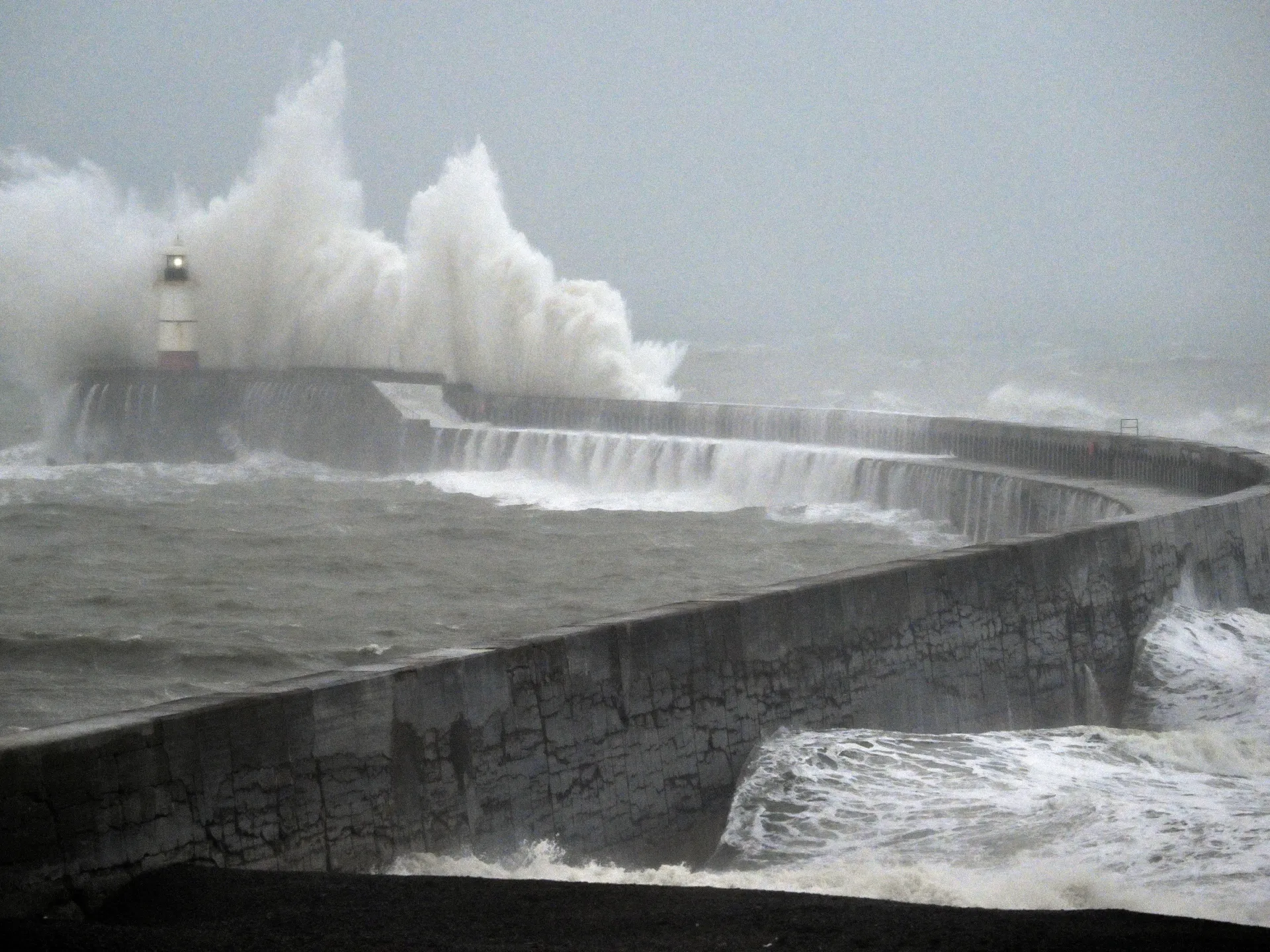
The landing was one of the dicier moments on a weekend in which gusts reached 80 miles per hour in parts of the country, causing dozens of cancellations and lengthy delays. There were also fatalities caused by the storm.
A 60-year-old man died after being struck by a falling tree in Dumfries and Galloway during Storm Boelo. Police Scotland said the man was on a road at Mid Kelton, near Castle Douglas, when the tree fell on him at around 10.30am on Sunday.
A spokesperson said: “We were made aware of a 60-year-old man having been struck by a falling tree on a minor road at Mid Kelton near Castle Douglas around 10.30am on Sunday October 25 2026. The man was pronounced dead at the scene. There are no suspicious circumstances and a report will be submitted to the procurator fiscal in due course.”
The Met Office has warned of possible injuries and danger to life from flying debris, alongside the risk of damage to buildings, power cuts and travel disruption. An amber wind warning came into force at 9pm on Saturday and remained in place until 9pm on Sunday. Only Orkney remained under a yellow warning.
Network Rail said most train services were expected to return to normal on Monday, but advised passengers to check their journeys online before travelling. On Sunday, nine of the rail operators suffered from severe disruptions, with Scotrail forced to suspend journeys on entire sections of its network.
Teams have cleared fallen trees and debris from tracks and carried out repairs to overhead lines and flooding-related damage that disrupted the network.
Gary Hopkirk, route director at Network Rail Scotland, said: “It’s been a really challenging weekend for Scotland’s railway and particularly for the teams who’ve been out in some very difficult conditions responding to whatever the weather has thrown at us. Our focus throughout has been on keeping people safe and trains moving wherever possible.
“Now the worst of the weather has passed, our attention is on getting the railway back to normal. We’ll be working as quickly as we can, but we won’t compromise on safety. We know disruption is frustrating and we really appreciate the patience people have shown this weekend while our teams do everything they can to get everyone moving again.”
Several roads and bridges across Scotland and Northern Ireland have been forced to close in the weather, while many of the ferry services between the Scottish mainland and the islands, as well as the island of Ireland and Britain, were cancelled.
Of CalMac’s 30 ferry services scheduled for Sunday, 27 were cancelled, with some suspensions expected to continue until Monday.
Storms Boelo and Austen kill a man in Scotland and cut power to thousands of homes in the UK, France and Germany.
Published On 26 Oct 202626 Oct 2026
A pair of storms battering northern Europe have killed one man, cut power to more than 150,000 homes, and disrupted flights and phone networks.
More than 82,000 homes in the United Kingdom, nearly 60,000 in France, and at least 10,000 in Germany had no electricity on Sunday after storms Boelo and Austen passed through the region within 24 hours, according to authorities in the countries.
Recommended Stories
list of 3 itemsend of list
A falling tree killed a man, 60, in southwestern Scotland on Sunday, while another falling tree injured two women in central Scotland, the Press Association reported.
Winds of up to 135 km/h (84 mph) were recorded in the Argyll and Bute regions of western Scotland. Trees and power cables brought down by the storm blocked roads and rail lines across Scotland and northern England.
In Brighton, on England’s southern coast, Austen blew away an unused pier on Friday.
Authorities have warned of flood risk in regions of both Scotland and England.
The Met Office, the UK’s national forecaster, warned that Boelo would bring a danger to life from flying debris and crashing waves and said people should stay indoors as much as possible.
From France to Germany
Across the English Channel, Europe battled its first big storm of the autumn, with strong winds inflicting widespread power cuts.
French energy company Enedis said that at Austen’s peak on Saturday, some 288,000 homes had no electricity. Some 59,000 remained without power at midday Sunday, mainly in Normandy and Brittany.
A marathon runner in the midst of a race in northern France was lightly injured by a tree knocked over in strong winds.
In Germany, Austen cut power to 10,000 homes in and around the southwestern town of Freiburg-Breisgau on Sunday. The town’s main hospital said it had to limit service to emergency cases because of the blackout, which also cut the mobile phone network.
German police said two people were seriously hurt on Saturday by scaffolding blown away by Austen’s strong winds at a market in the town of Nastatten.
The storms also hit the Netherlands and Belgium, where falling trees injured four people in Brussels on Saturday.
In the Netherlands, north of the island of Schiermonnikoog, three crew members on board a freight ship were injured in the storms, according to the country’s coastguard. Two of them were winched off and taken by helicopter to a hospital on the mainland.
The storms caused hundreds of flights to be cancelled or diverted across northern Europe, including at Amsterdam’s Schiphol airport, one of the continent’s busiest hubs.
Experts have warned of more extreme weather events due to climate change.
OUR Spotlight On column gives you the lowdown on what to see and do in popular holiday spots and off-the-beaten-track destinations.
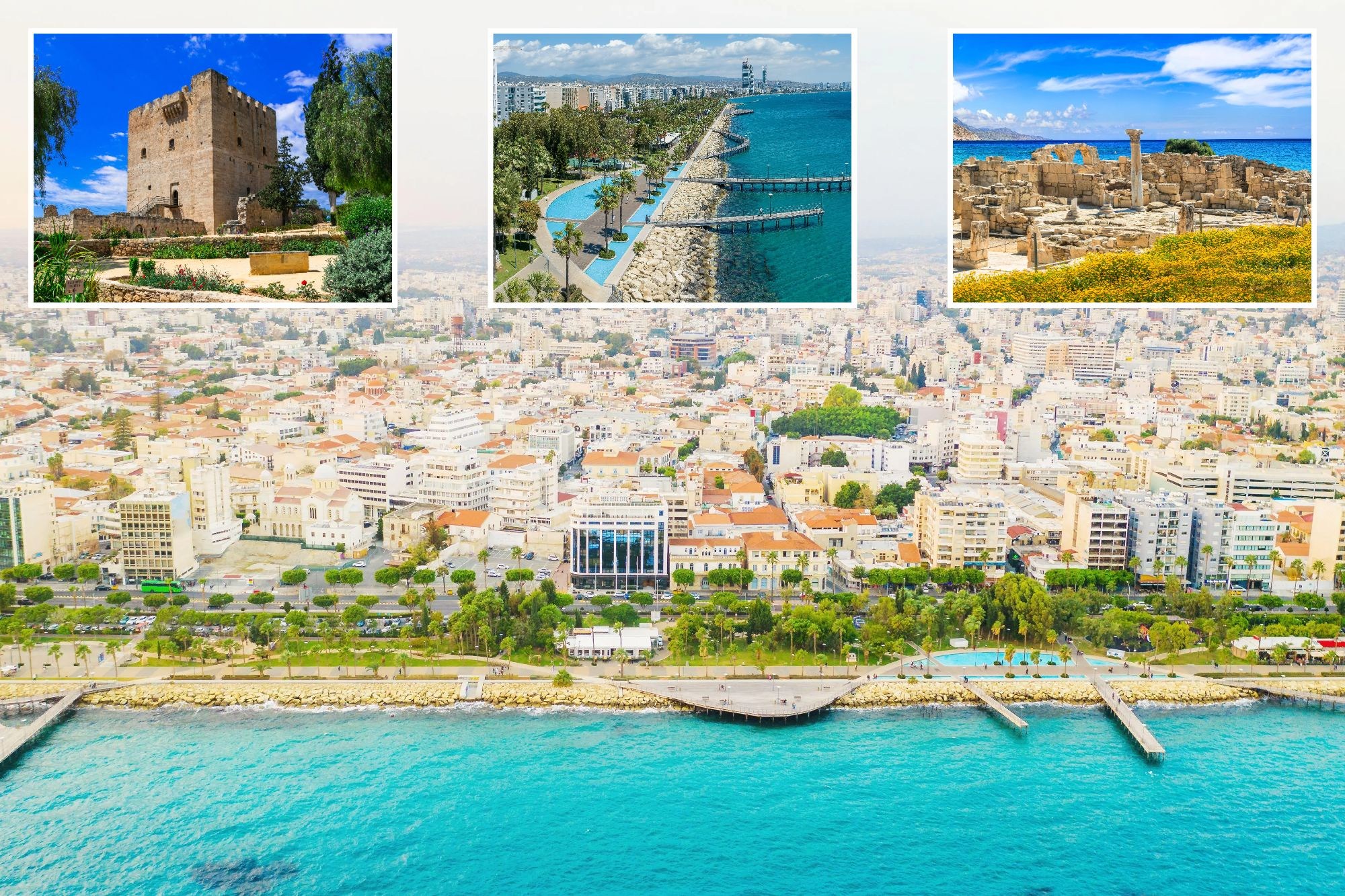
This week we’re shining a light on Limassol in Cyprus, home to gorgeous beaches and luxury marinas littered with quality restaurants.
Cyprus is one of the best Med destinations for some late winter sun, with it remaining one of the warmest European destinations in winter.
By that, I mean expect temperatures of 23C – not hot, but definitely t-shirt weather.
Sign up for the Travel newsletter
Thank you!
British Airways, Wizz Air and Ryanair all have direct flights to both airports which are around an jour from Limassol (with Ryanair offering them for as little as £14.99)
Here are some of our other top tips for a visit to the island city.
Limassol is so much more than a fly-and-flop destination – the second-largest city in Cyprus is rich in culture and fascinating history.
And you can unearth some of its magic at the Limassol Castle & Medieval Museum, which dates back to around 1590 (although it was demolished and has been rebuilt with several additions throughout the years).
Here you can take a detailed look at medieval pottery, old weapons and plates from the Byzantine era.
HIDDEN GEM
While most holidaymakers will spend their trip flopped on the beach, those with a more adventurous streak can take advantage of some gorgeous hiking trails, leading them to a couple of hidden waterfalls.
A little off the beaten track, at the foot of the Troodos Mountain, the tumbling Kaledonia and Millomeris falls are a magnificent sight – and great spot for a photo.
The stroll takes around an hour and is just shy of 3km from Pano Platres – you can reward your efforts with a refreshing dip in the waters.
Limassol is the perfect spot for winter warmthCredit: AlamyThe medieval Kolossi castle is worth a visitCredit: Alamy
BEST VIEW
Perched on a mighty hill, the ancient theatre of Kourion offers the most breathtaking view, with the Mediterranean ocean laid out below.
The horse-show-shaped archaeological site is pretty spectacular anyway, regardless of the sea views.
It was constructed at the end of the 2nd century BC, from local limestone and has seen many renovations over the years.
It’s no longer used for wild animal fights, understandably.
Instead, visitors today can expect regular theatre performances during the summer months.
RATED RESTAURANT
There’s no end to excellent restaurants in Limassol, but if you’re a meat-eater you can’t go wrong with a slap-up dinner at Prime Steakhouse.
Located within the City of Dreams resort, close to Limassol Bay and Salt Lake, the sophisticated restaurant has been nominated in the Hotel/Resort Luxury Dining category for this year’s Cyprus Eating Awards.
Properly juicy steaks are cooked inside a Mibrasa charcoal oven and can be paired with stilton, chimichurri or morel mushroom sauces.
Make sure to wash it down with one of the whisky-based cocktails.
For dinner with a view, right on the marina is Pyxida (another nominee in the Cyprus Eating Awards) which cooks up top notch, fresh seafood.
You can easily wander around in your t shirt in winterCredit: AlamyThe island is just a few hours from the UKCredit: Alamy
BEST BAR
Few bars serve better cocktails than stylish Catrinas Cyprus, a Mexican-restaurant-cum-bar close to the marina.
The classic menu features all the favourites from the zesty pornstar martini to aperol spritz
Travellers come for the fruity drinks in a laidback atmosphere, but stay for the lively music – sometimes as late as 2am.
HOTEL PICK
The sprawling City of Dreams Mediterranean sits right on the coast and is bursting with fun for families and adults alike, from its grand casino and late-night shows, to tennis coaching sessions and an adventure park with a zipline coaster and climbing wall.
The five-star setting is a great place to relax with several outdoor and indoor pools, a spa and even a hair salon for those wanting a holiday zhuzh.
Race delayed by two hours before being cancelled due to low visibility despite a sellout crowd at Phillip Island.
Published On 25 Oct 202625 Oct 2026
The final Australian MotoGP at the Phillip Island Grand Prix Circuit has been called off due to heavy rain, ruining the farewell for one of the championship’s most beloved circuits.
It was a crushing blow for the sold-out crowd at Phillip Island on Sunday before the Australian Grand Prix moves to the streets of Adelaide next year.
Recommended Stories
list of 4 itemsend of list
The Moto2 and Moto3 races were cancelled first, and the MotoGP race was delayed by two hours due to the weather before organisers threw in the towel and finally called it off at 3:40pm (04:40 GMT).
“Due to limited visibility affecting the operation of the medical helicopter the MotoGP Grand Prix race has been cancelled,” MotoGP said in a statement.
“The MotoGP riders will do a lap behind the safety car and stop on the main straight to greet the fans.”
Riders say farewell to fans in final parade
The dark clouds and pelting rain brought down the visibility around the circuit, affecting the medical helicopter, which would take 45 minutes to reach the circuit from mainland Melbourne in an emergency.
Other than two years lost to the COVID-19 pandemic, the seaside track south of Melbourne had been a fixture on the world championship calendar for 30 years and produced some of Australian motorcycling’s most memorable moments.
Australian two-time world champion Casey Stoner celebrated six wins there in succession from 2007 to 2012 while compatriot Mick Doohan sealed his fifth and final world title with victory in the 1998 race.
The raincoat-clad fans who persevered through the precipitation were treated to a farewell lap from the MotoGP riders, who waved as they slowly made their way around a soaking wet track.
Home racer Jack Miller did his best to entertain his supporters with a series of tricks, including a stand-up wheelie over the finish line, before heading over to the grandstand and throwing his gloves and boots into the crowd.
The seaside track south of Melbourne had been a fixture on the world championship calendar for 30 years and produced some of Australian motorcycling’s most memorable moments [AFP]
Miller dejected, sigh of relief for Martin
The Pramac Racing rider, a strong performer in the wet, cut a dejected figure when he was interviewed after completing his lap.
“This is a tough pill to swallow,” said the 31-year-old, who will be leaving MotoGP at the end of the season after more than a decade to join Pata Maxus Yamaha in the World Superbike Championship.
“You know, I was praying for rain all weekend. We got the rain, but obviously, we weren’t organised enough to get the racing going, so it’s a tough one.
“You guys deserve better. Honestly, all of you have done a fantastic job turning out for Phillip Island.”
Rain had been expected for the weekend, but MotoGP did not revive its 2023 strategy for the circuit when the Grand Prix was moved ahead to Saturday and the sprint scheduled for Sunday.
That sprint race three years ago was eventually called off.
The cancellation of the race also ended the opportunity for seven-time MotoGP champion Marc Marquez to extend his lead in the championship standings, particularly after his title rival Jorge Martin was declared unfit to compete in the race after fracturing his wrist.
Martin held the championship lead heading into the weekend but finds himself 10 points behind Marquez after failing to finish Saturday’s sprint following a gruesome crash.
On Sunday, Martin’s Aprilia team said he would not travel back to Spain to undergo treatment, however, boosting the 2024 champion’s hopes of racing at next week’s Malaysian Grand Prix and remaining in the title fight.
Authorities warn of ‘destructive winds’ and urge residents to shelter as the storm passes the island’s northeast.
Published On 23 Oct 202623 Oct 2026
Typhoon Champi has struck Taiwan, killing one person and injuring at least 350 others, as authorities warned of “destructive winds” and instructed people to stay indoors.
The storm swept past the island’s northeast on Friday, toppling trees, shutting shops and schools, cutting power to thousands of households, and forcing more than 4,300 people to evacuate from their homes.
Recommended Stories
list of 3 itemsend of list
Champi is heading towards China and Japan, forcing the cancellation of hundreds of flights in the region.
“From tonight through tomorrow morning conditions will be very windy and stormy everywhere,” Central Weather Administration (CWA) forecaster Lin Ping-yu said in a briefing. “Please try to stay indoors.”
Champi was briefly a super typhoon with winds of nearly 300 kilometres per hour (186 miles per hour) but has since weakened. The US Joint Typhoon Warning Center reported maximum winds of 185km/h (115mph).
Worse is still expected to come on Saturday. Champi could drop up to 900mm (35 inches) of rain between Thursday and Saturday, with the northeast hit hardest, the CWA said. More than 400mm fell in Yilan County on Friday.
CWA forecaster Lu Kuo-chen said the typhoon could slow near the island’s northeastern tip, prolonging its impact.
About 8,400 households in Japan’s Okinawa islands were without power on Friday afternoon, according to the Okinawa Electric Power Company. Champi is forecast to hover near Okinawa and then China’s eastern coast before turning northeast towards mainland Japan.
The United Nations said on Wednesday that El Nino, a natural cycle that warms the tropical Pacific, is heading off the charts.
“The current El Nino event could be unprecedented in strength. Literally off the monitoring charts that we have used for the past four decades,” said Celeste Saulo, secretary-general of the World Meteorological Organization.
It is expected to peak in December, with its impact lasting into 2027 and beyond.
High winds propelled the blaze across the army base in Wainwright, killing four soldiers and injuring dozens more.
Published On 23 Oct 202623 Oct 2026
A fire that killed four soldiers at a western Canadian military base was sparked by an exercise using live grenades, a military official said.
The deadly fire broke out on a grenade launcher range during military exercises on Saturday, with high winds propelling it across the base, Brigadier-General Vanessa Hanrahan, commander of the Canadian Forces Military Police Group, told reporters on Thursday.
“A subsequent change in wind direction and velocity significantly increased the fire’s intensity,” she added, with the flames spreading to a training area at the Wainwright military base in Alberta.
Due to the blaze being in the “permanent danger area” of the range, firefighters were unable to directly combat it, Hanrahan added.
The fire spread on Saturday afternoon during high-intensity combat training involving Charlie Company of the 3rd Battalion, Princess Patricia’s Canadian Light Infantry.
The military base lies in the prairies, a landscape of wide, open grasslands, rolling plains and scattered groves of trees.
About 84 soldiers were split between a grenade range and an area where they practised attacks on simulated enemy positions. The fire swept into the second training area.
Four soldiers died and 39 were injured, with 27 requiring hospitalisation. The incident was one of the worst peacetime tragedies for Canada’s military.
The soldiers and reserve members were participating in exercises ahead of a planned deployment to Latvia, where Canadian forces have their largest international military operation.
The Wainwright base is one of the largest bases operated by the Canadian Armed Forces. It regularly hosts training exercises involving military personnel from NATO countries.
During the final months of World War II and for several months in 1946, the base was used as an internment centre for German prisoners of war.
Eight areas in Spain remain under lockdown as Storm Adam continues to wreak havoc
Eight Spanish areas are still in lockdown(Image: MEDITERRANEAN via Getty Images)
Eight areas in Spain remain under lockdown after restrictions were lifted for some 137 municipalities earlier on Monday, October 19.
Large swathes of the country were ordered to stay indoors as Storm Adam wreaked catastrophic havoc across eastern Spain. Initially, the emergency lockdown covered 78 municipalities in Valencia province and 67 in Alicante. However, according to the Olive Press: “Restrictions have ended for 137 of 145 municipalities, but eight towns in La Safor and La Marina Alta remain under lockdown.
“Please be aware that the following areas are still confined: Bellreguard, Daimús, Oliva, Xàbia, Pego, Miramar, Piles, and Els Poblets. Stay safe and always check local guidelines before travelling through these areas.”
Content cannot be displayed without consent
Two fatalities have been confirmed, with a third potential victim of the storm discovered on Monday afternoon when Military Emergency Unit (UME) personnel uncovered the body of an elderly woman in her flood-ravaged home in Oliva, Valencia province. Authorities are yet to officially confirm whether the death was a direct result of drowning or natural causes.
According to the Majorca Daily Bulletin, rainfall totals surpassed 600 litres per square metre, rivers burst their banks and residents were left stranded on rooftops. Helicopters were deployed to rescue those trapped as torrential downpours swept through eastern Spain on Monday, triggering devastating floods that claimed at least two lives and prompted authorities to issue shelter-in-place orders for more than 800,000 residents.
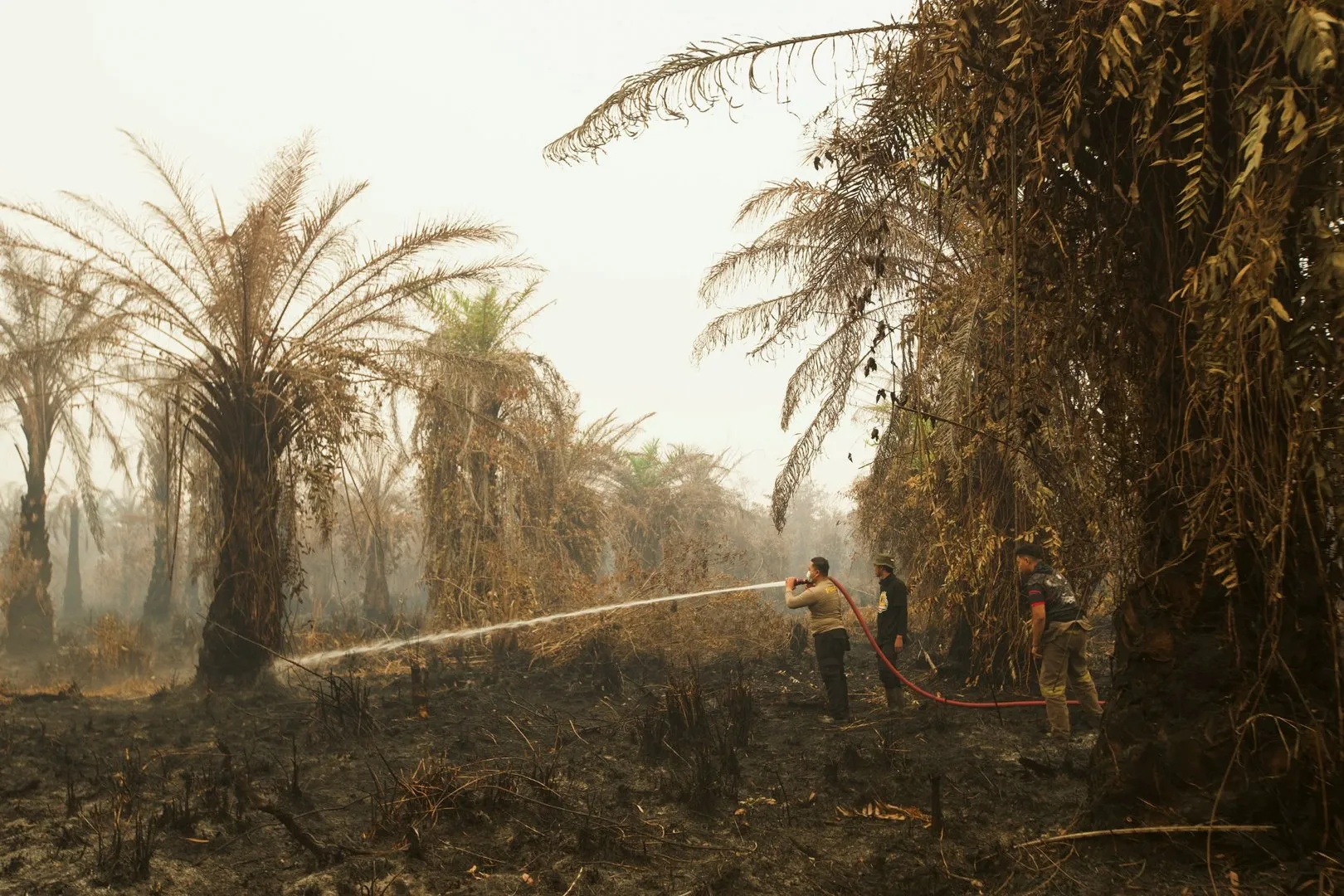
As forest fires and toxic haze in Indonesia’s Central Kalimantan continue to worsen, critics accuse authorities of failing to take adequate action to contain the crisis.
The fast-spreading Norte Fire in Orange County is fuelled by intense warm winds and unseasonably high temperatures.
Published On 17 Oct 202617 Oct 2026
A fast-spreading wildfire in Orange County, in Southern California, has engulfed several coastal properties and prompted widespread evacuation orders.
The Orange County Fire Authority said on Friday that the Norte Fire had scorched about 188 hectares (465 acres), with the state’s Cal Fire agency putting it at about 231 hectares (570 acres) by the evening, and that at least six homes had been damaged or destroyed in the San Juan Capistrano area.
Recommended Stories
list of 3 itemsend of list
The fire authority said firefighters were “aggressively attacking the fire from the ground and air” and issued pleas for people to stay clear of the area.
Unseasonably high temperatures and low humidity are fuelling the rapid growth of the fire, the AFP news agency reported.
The Norte Fire started in the coastal city of San Clemente on Friday and moved to the city of San Juan Capistrano, with some 6,000 homes and 16,000 residents under evacuation orders by the evening. An evacuation shelter has opened in each city while helicopters attempt to douse the flames.
Intense warm winds
The Norte Fire is one of several in the region driven by Santa Ana winds, intense warm gusts that blow from the southwest US interior towards the California coast.
The Santa Ana winds typically arrive in the autumn, right when Southern California’s vegetation is at its driest after a long, rainless summer, according to The Weather Channel.
Forecasters said winds blew at between 55km/h and 90km/h (35mph and 55mph) within coastal areas.
The strongest winds were expected through Friday, but the high heat and low humidity conditions that contribute to the growth of the fire are expected to last through Saturday night.
Tens of thousands of people in Los Angeles County were left without power as authorities attempted to lessen the possibility of electrical sparks that the heavy wind gusts could carry.
Other ongoing fires
California firefighters were also busy battling the Bryson Fire, which broke out on the outskirts of the Malibu beach community in Los Angeles County on Thursday. As of Friday, the fire had burned about 59 hectares (147 acres) and was 17 percent contained, according to Cal Fire.
The Henderson Fire was 20 percent contained and had burned 842 hectares (2,080 acres) in San Diego County by Friday, Cal Fire said. The blaze impacted Marine Corps Base Camp Pendleton and prompted freeway closures.
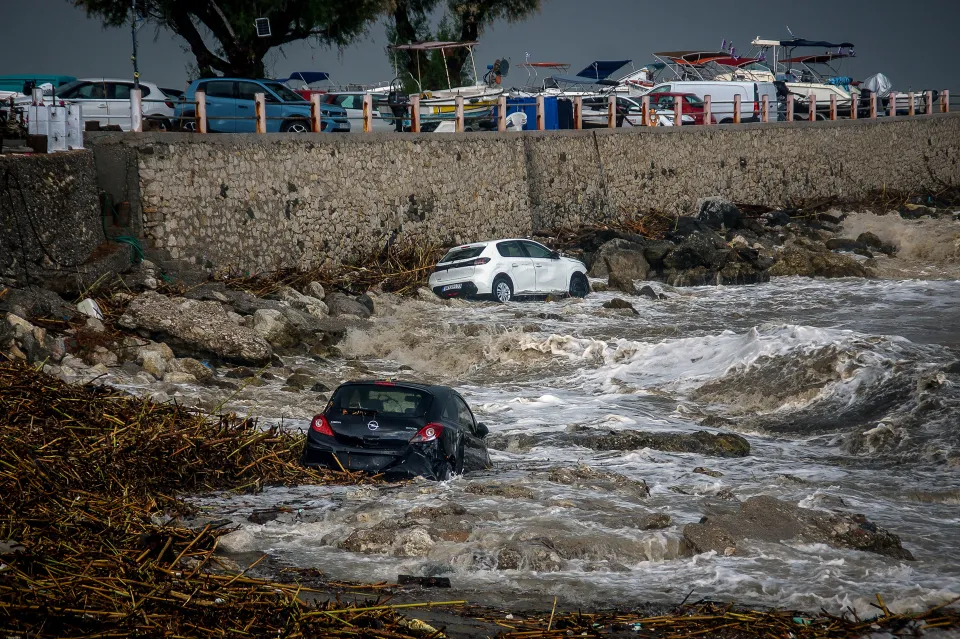
A STATE of emergency has been declared on the Greek island of Rhodes after flash floods swept cars into the sea and claimed the life of a hotel worker.
Cars are swept into the sea, following a heavy rainstorm on the Greek island of Rhodes, which left one person deadCredit: ReutersThe weather has flooded streets and caused rivers to overflowCredit: Reuters
Greek authorities have ordered British holidaymakers to restrict all but essential travel – here’s everything you need to know.
Where is the flooding in Rhodes?
Rhodes’ eastern coastline bore the brunt of the weather, with the area around Stegna beach near Archangelos suffering flash flooding.
Dozens of cars were submerged or abandoned across the island’s road network as drainage systems struggled to contain the rainwater.
Data from the National Observatory of Athens confirmed that Rhodes recorded 264mm of rain, 202mm of which fell in just six-and-a-half hours.
That’s a month’s worth of typical rainfall in a single morning.
What is the current Rhodes weather forecast?
Conditions across Rhodes have begun to calm as the worst of the storm front moves east.
The UK Met Office and the Hellenic National Meteorological Service both forecast drier conditions for the region on Thursday October 15, with sunny spells for the remainder of the day.
Temperatures are expected to peak at 23C, with moderate northwesterly winds between 12 and 16mph.
Though the forecast points toward calmer conditions, forecasters and officials stress that the danger has not fully cleared.
Because the island’s terrain is saturated, more rain could present a risk of further localised flooding and mudslides.
Tomorrow (October 16) is expected to stay largely dry and sunny, but an unsettled Atlantic front is forecast to push across the Aegean Sea over the weekend.
This is expected to bring a renewed chance of showers by Saturday.
Elsewhere in Greece, the Hellenic National Meteorological Service has issued yellow “Be Aware” alerts for Crete and the South Aegean.
What is the advice for holidaymakers?
Thousands of UK tourists visit the region every year for late-season sunshine.
With 112 emergency alerts remaining active, tourists are advised to limit their movements to absolutely necessary journeys.
Several key bridges and roads across Ialysos, Faliraki, Afandou, and Rhodes Town are submerged or damaged by mud.
Authorities have suspended multiple transport routes, including the key Rhodes–Faliraki tourist corridor and services to and from Akandia port.
Greek emergency services recommend that all travellers monitor local weather warnings through the Hellenic National Meteorological Service and follow instructions via the official @112Greece Twitter/X channel.
Never attempt to drive or walk through standing or flowing water, as road surfaces may have collapsed underneath.
Keep an eye on the UK Foreign, Commonwealth & Development Office (FCDO) travel advice pages for Greece regarding sudden disruptions.
AUTUMN is the perfect time for a city break holiday abroad.
Fewer crowds, cooler temperatures, and quieter restaurants – there’s something to be said for a long weekend post-summer.
And with hundreds of countries under our belts, as the Travel Team at The Sun, we know which are the best spots to visit after summer but before winter is in full swing.
Here are our favourite cities to visit this autumn, along with our top tips, cheap pints and very affordable flights thrown in.
Warsaw, Poland
Try the cosy Hala Koszyki food hall for some fantastic foodCredit: Alamy
Known as the Grinch by friends due to my ambivalence to Christmas, Warsaw is the perfect place to visit in autumn before the festive season takes over.
Not only is it also frequently named one of the cheapest city break destinations, but it was named top city to visit by European Best Destinations 2026.
The architecture of the city is stunning, with historic 17th century buildings compared to the more modern Brutalist blocks.
Start with a wander around the beautiful Old Town which was reconstructed after WWII, when 85 per cent of it was destroyed.
Then head over to the Neon Museum, with hundreds of huge neon signs from the Cold War (one to get your camera out for, definitely).
The food scene is fantastic too – I highly rate Momu which specialises in Polish dishes using a smoke-roasting oven, or huge food hall Hala Koszyki which was the first of its kind in the city.
You can find really cheap hotels – ibis budgets start from as little as £35 (so £17.50 each), while Ryanair flights are £30 return. So a mega cheap holiday!
Or you can find two-night city breaks for just over £100pp with loveholidays. Kara Godfrey, Deputy Travel Editor
Lisbon, Portugal
Lisbon is still warm but just as beautiful outside of summer with lots to doCredit: AlamyHow about trying to design your own street art on a graffiti workshop?
The Portuguese capital comes into its own in autumn, with oodles of sunshine and warm temperatures perfect for exploring its maze of hilly streets, grand squares and spectacular architecture.
I’ve just returned from a perfect weekend break that went beyond the tourist trail with the help of the new Andaz Lisbon hotel (rooms from £242 a night).
Just steps from the grand, riverfront square Praca do Comercio, the hotel in a former grand bank has a spectacular rooftop restaurant and bar.
Their exclusive experiences pair you with locals to delve deeper – like renowned street artist Migeul Brum who not only gave us a whistle-stop tour of some incredible murals and installations but allowed us to get hands on and create our own with a graffiti workshop.
Their Seven Hills by Night revealed some of the city’s vibrant neighbourhoods for fun after dark.
We sipped classic cocktails in hidden speakeasy Foxtrot and enjoyed a live performance of traditional Fado music at Bohemia Lx Se.
And for a glimpse of the glorious seafaring history, a tuk tuk tour took us to the arty district of Belem where we explored the Belem Tower and Monument to the Discoveries.
And of course, no visit to the district would be complete without sampling the irresistible custard tarts at the original bakery, Pastels de Belem.
Flights to Lisbon from £14.99 from the UK. Lisa Minot, Head of Travel
Tallin, Estonia
You can get pints of hot chocolate – the perfect drink for an autumnal stayCredit: Alamy
The capital of Estonia might not be your first thought for a city break but it should be.
With a three-hour flight time, the city is far enough away to feel a bit more of an autumn chill but not so far that the flight feels like a strain.
Tallinn is an easy city to walk around; all the main sights are close to each other, especially in the UNESCO World Heritage-listed Old Town.
Here you’ll find Gothic spires, cobbled alleyways and the Kiek in de Kök Fortifications Museum which even explores the city’s coffee culture.
And everything is super cheap – I managed to visit the KGB Prison Cells and then grab lunch afterward for around £15.
A pint will set you back a few euros, as will a PINT of hot chocolate – yes really.
The benefit of go in autumn is that the freezing weather of winter hasn’t quite kicked in yet and you can enjoy exploring the city crowd-free.
With LastMinute.com, you could head away for three nights to Citybox Tallinn City Center Hotel, which has a modern interior and light airy rooms for £194pp for three nights including flights. Cyann Fielding, Travel Reporter
Seville, Spain
Seville comes into its own in shoulder seasonsCredit: Alamy
Seville is the Spanish city that comes alive in shoulder season – seeing as summer has unbearable highs that approach 40C.
But that drops off in autumn, meaning you can get some post-summer warmth within just a few hours.
And there are some fantastic, must-see attractions, from the Seville Cathedral (the largest gothic cathedral in the world) and the Moorish Royal Alcazar of Seville.
Skip the expensive flamenco shows and watch the many free performances in the parks.
The ultimate cheap breakfast is at Bar Alfafa, a tiny restaurant squeezed between two roads where you will find coffee and toast for just €2.10 (£1.78), as long as you can find a table between the locals.
The beauty of Spain is that wine is cheap (expect to pay around €2-€3 (£1.69-£2.54) per glass), but head to the local chain 100 Montaditos where you can get beers for under €1.50 (£1.27).
TUI has three-night breaks for as little as £180 each, with your hotel and flights thrown in.
Cheap booze, quick flights and 28C highs in autumn – what more could you want? Kara Godfrey, Deputy Travel Editor
Vilnius, Lithuania
Go back in time as the leaves change colour in VilniusCredit: Getty
If you aren’t still longing after lounging about on beaches or sun-searching, but are ready to embrace autumn in all its glory, I’d say a trip to Vilnius is on the cards.
The capital of Lithuania, especially its medieval Old Town is beautiful with cobblestone streets, towering church towers and shops with autumnal window displays.
With its old-school look, I felt almost as if I’d stepped back in time.
It’s quiet too as Lithuania gets far fewer visitors in general than the likes of Spain or Portugal.
When I popped out early on a Sunday morning for a wander around the Old Town, it was practically deserted.
To make it even better, food and drink is cheap too. One cafe called Vynomanai sold coffee for €2 (£1.70) and beer for €3 (£2.55).
The best snack I tried and a must-try is called kepta duona. Essentially it’s fried bread in garlic – which is like the UK’s version of pork scratchings.
Flights start from £19 with Ryanair, or Loveholidays has seven-night breaks from £249pp. Alice Penwill, Travel Reporter
Amsterdam, The Netherlands
The famous canals come alive in autumnCredit: Alamy
Amsterdam is big on nature. Canals weave between its Baroque buildings and the cobblestone streets are lined by bushy trees that look even more spectacular in the autumn months, painting the streets in shades of red and orange.
While summer time is all about beer, the coming months focus on hot and cosy tipples like Warme Chocolademelk (Dutch Hot Chocolate) and Gluwhein (similar to mulled wine), both from around €4.
Grab yourself a glass from one of the traditional brown bars which tend to feature large windows from which visitors can watch the world go by, drink in hand.
Make sure to gobble back some Dutch classics. Comfort food is a staple in these parts and autumn is the perfect time of year to sample them.
Keep your eyes peeled for Stamppot, a hearty dish, made of mashed potato, sausages and sauerkraut – Moeders in the Jordaan whips up a truly authentic version.
Make sure to pick up some stroopwafels, too, a classic sweet treat which comprises of sticky caramel sandwiched between two thin, circular waffles.
You can still bag EasyJet flights from around £25 from London airports in November this year. Sophie Swietochowski, Assistant Travel Editor
Tirana, Albania
Tirana is often overlooked in favour of the Albanian Riviera but its a beautiful weekend destinationCredit: Alamy
It takes around three hours to reach the capital of Albania and once you’re there, there is plenty to do over a weekend at a leisurely pace.
In the centre of the city, visit Skanderbeg Square, the city’s central plaza featuring a towering clock tower.
Another top spot is the free Pyramid of Tirana – it’s a bit of a work-out to reach the top but the view of the city is well worth it.
And if there is one thing you shouldn’t miss, make sure to visit Bunk’Art 1 & 2 which are massive underground Cold War bunkers converted into museums, including one all about surveillance.
Street food will cost you a few quid and coffee or a pint is under £2 each.
What’s even better is that return flights cost as little as £28 per person. Cyann Fielding, Travel Reporter
Paris, France
Get some Christmas shopping done in the world’s fashion capitalCredit: AlamyIt’s one of the best places to come for food and shopping, says Sophie
I can think of no better place than Paris to transition you from summer, seamlessly into the cosy season. For me, it’s the shopping that draws me back year after year.
It is the fashion capital of the world, after all.
So make sure to travel with an empty suitcase so you can pick out your winter wardrobe while you’re here from the many vintage boutiques littered around the Le Marais district in the 3rd and 4th Arrondissements.
Here you’ll find classic kilo shops that sell bargain items priced by weight – you could pick up a whole outfit for €15.
Plus the city is just a hop, skip and a jumper over the Channel, reachable by plane, train or car – take your pick.
The culinary scene is another huge draw in autumn, too. Now is time to trade out the rosé wine for something more wintry and, in my opinion, no where in the world produces better red wine than France.
Le Barav, in the same region as the vintage shops, houses a wine shop on one side and restaurant on the other.
You can go and pick your wine for a supermarket price and then pay a €7 corkage fee to drink it in the restaurant area while tucking into a cracking charcuterie and cheese platter.
Wowcher city breaks with flights included start from £99. Sophie Swietochowski, Assistant Travel Editor
Simon caps a Pacific season of record-breaking intensity, as deadly storms wreak havoc from Hawaii to Mexico.
At least two people have died in Mexico after Hurricane Simon and former tropical storm Rachel brought torrential rain and catastrophic flooding to Pacific coast communities.
At a Monday news briefing, Guerrero Governor Evelyn Salgado confirmed that a 71-year-old man had died during Hurricane Simon after a retaining wall collapsed under the weight of intense precipitation.
Recommended Stories
list of 3 itemsend of list
According to the Guerrero-based news agency IRZA, the man, identified by his family as Albino Moreno Jimenez, had been feeding his animals on the western outskirts of Chilpancingo when a wall came crashing down on him.
A second death was announced later in the day in the state of Baja California along Mexico’s western coast. There, Governor Marina del Pilar said that a young girl had died from the effects of what was once Hurricane Rachel, which peaked in early October as a Category 3 storm.
At least 10 more people remain missing in Baja California, according to the governor. Eight were reported missing in the city of Ensenada, on the Pacific coast, and two in the fishing town of San Felipe on the Gulf of California.
The figures remain preliminary, with local newspaper La Jornada reporting a higher death toll of two in Baja California and 11 missing.
Death toll expected to rise
Rachel made landfall in the Mexican state as a post-tropical cyclone, and its remnants have travelled north through southern California in the southwestern United States.
Hurricane Simon, meanwhile, has churned off the coast of Mexico since the weekend. By late Monday morning, it had weakened from a powerful Category 4 storm to a Category 2.
Its maximum sustained winds had slowed slightly to around 155km/h (100mph), according to the US National Hurricane Center. Its centre was about 115km west-southwest of Cabo Corrientes, a cape in the state of Jalisco, drifting west at 3km/h.
Forecasters predict Simon could make landfall on Thursday or Friday. Hurricane warnings remain in effect for western Mexico, which is vulnerable to landslides and deadly surf conditions as a result of the storm.
Experts warn the death toll from both storms could rise, and officials have called on residents to exercise caution amid the devastation wrought by downed trees, high winds and floodwaters.
The Spanish newspaper El Pais reported the death of a cliff diver, Juan Patines, who was killed in Mazatlan, the northwestern state of Sinaloa, after jumping into the sea on Saturday night.
According to Mexican media, the heavy surf hampered his efforts to return to shore amid dangerous coastal conditions associated with Hurricane Simon. Local authorities later halted cliff-diving at the site due to hazardous sea conditions.
Officials have yet to confirm whether his death was directly linked to Hurricane Simon.
A record Pacific storm season
Rachel and Simon have battered Mexico’s western coast as part of an extraordinary stretch of hurricane activity across the Pacific.
The northeastern and central Pacific Ocean has experienced a record storm season this year, fuelled in part by the El Nino weather phenomenon, which results in warming waters in parts of the region. Twenty-one named storms have been recorded in the Pacific so far.
On Sunday, Simon tipped the region to a historic high for accumulated cyclone energy (ACE), a metric of the combined strength and longevity of tropical storms. This year has already surpassed the previous high set in 2018.
The US island chain of Hawaii has been among the hardest-hit places. In August, Hurricane Lala unleashed ruinous flooding on Hawaii’s Big Island as a Category 1 storm, killing a 93-year-old woman and destroying some 100 homes, according to state officials.
A few weeks later, Hurricane Lowell, a Category 4 hurricane at its peak, struck the Hawaiian islands of Kauai and Niihau, where powerful winds, storm surge and flooding overwhelmed towns and roads.
Roughly 90 percent of Kauai’s power customers were plunged into darkness as a result of electricity outages. At least two deaths were linked to Lowell.
In late September, Hurricane Nolo brought another round of flooding and landslides to the Hawaiian islands, though it did not make landfall.
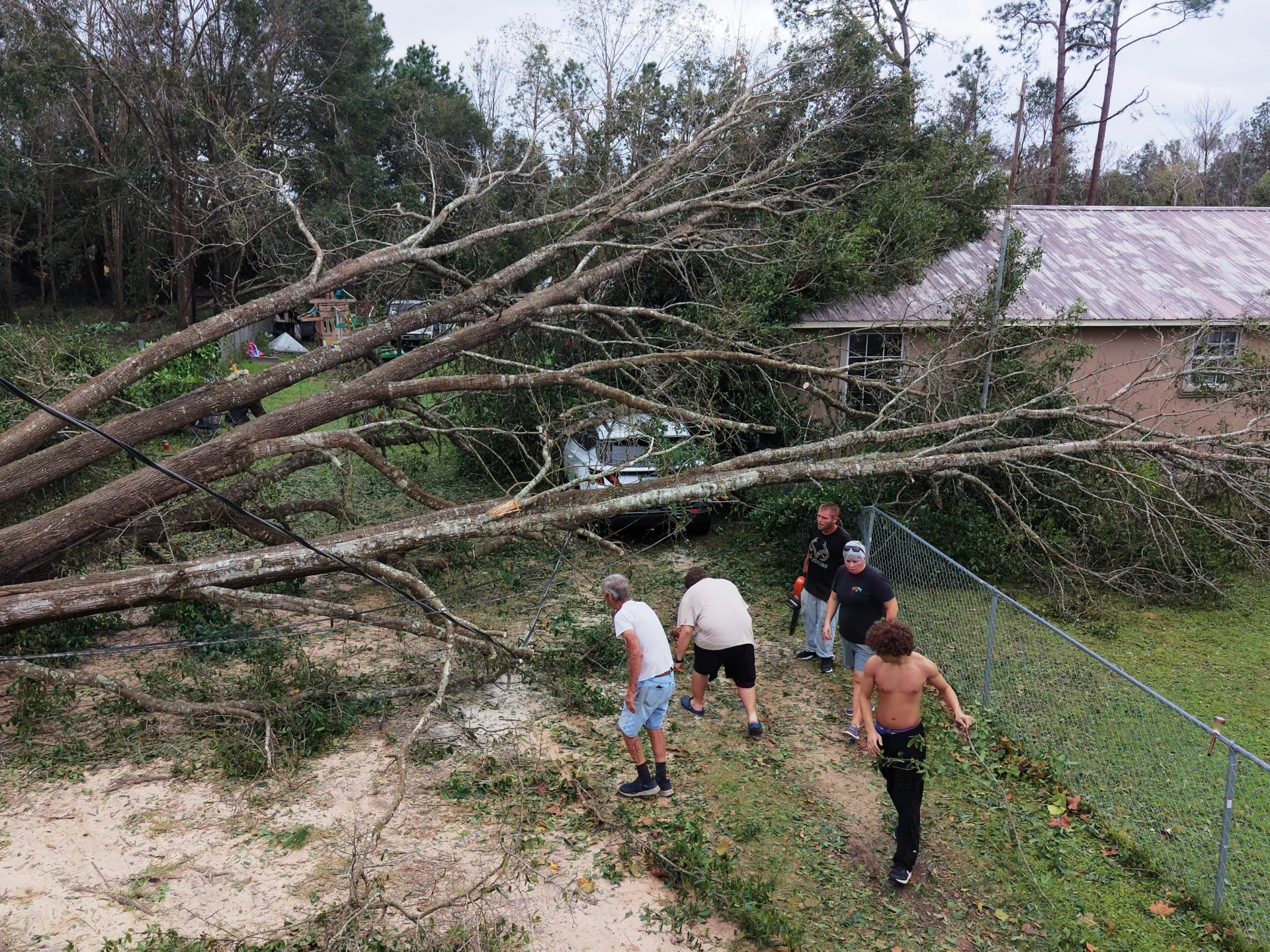
Residents across the southeastern United States have begun cleanup efforts after Hurricane Isaias, the first Atlantic tropical cyclone of the 2026 season, slammed ashore near Destin, Florida, on Friday.
As of midafternoon Sunday, roughly 356,000 customers remain without power in southern Alabama and the northwestern region of Florida, according to data from PowerOutage.com, an independent tracking website.
At its peak, the storm knocked out power to nearly 800,000 homes and businesses across the Gulf Coast.
Sarah Gatewood, a spokesperson for the utility company Florida Power and Light (FPL), announced that workers from across Florida and more than two dozen other states had mobilised to restore power.
At least four deaths have been linked to Isais after it made landfall as a Category 2 storm on the five-tier Saffir-Simpson Hurricane Wind Scale.
The tempest churned northward into Alabama on Saturday with fierce tropical-storm-force winds before weakening into a post-tropical cyclone and tracking further north towards the Appalachians.
Though its power is waning, the storm continues to endanger the mid-Atlantic region with the potential for flash flooding.
According to the National Weather Service (NWS), surface observations indicate that Isaias now has maximum sustained winds of 160 km/h (100 mph) and an estimated minimum central pressure of 28.88 inches, or 978 millibars.
Across Florida and Alabama, residents have reported damage from the storm’s high-velocity winds.
A Rest and Relax Inn in the resort city of Pensacola, Florida, saw its roof sheared off during the hurricane, and a boathouse was flattened in Destin.
The immediate struggle for basic necessities was most stark in Pensacola, the westernmost part of the Florida Panhandle, where the storm downed power grids and caused widespread structural damage.
Hundreds of cars lined the block around a United Cajun Navy distribution site, a volunteer disaster relief organisation, on Saturday morning.
Pensacola’s Mayor DC Reeves warned of critical drinking water shortages following the storm, which affected drinking wells and water infrastructure. Residents, he said, remain under an advisory to boil tap water before use.
“We are winding down day three of storm response and recovery operations, and we remain focused on public safety, clearing debris, and restoring critical infrastructure and services,” Reeves said on social media.
Isaias also forced the indefinite closure of Pensacola International airport, Florida’s 10th-largest airfield, due to severe damage.
Fallen trees and power lines continue to make travel hazardous in Houston County, Alabama, which remains under an emergency flash flood warning, according to state emergency officials.
“Due to the impacts of Hurricane Isaias, all Houston County roads are closed until further notice,” the agency posted on X.
Waves crash into homes as excavators try to protect California properties
Construction crews were seen trying to block waves entering homes along California’s coast, after Tropical Storm Rachel brought flooding and power outages to the region.
The Mexican community of Cabo Corrientes faces the risk of a direct hit as the Category 4 storm churns off Jalisco.
By Reuters and The Associated Press
Published On 11 Oct 202611 Oct 2026
Mexican President Claudia Sheinbaum has urged residents along the Pacific Ocean to stay indoors as Hurricane Simon’s powerful winds and heavy rains pound coastal communities.
As of Sunday, the hurricane’s eye was moving offshore of Mexico’s Jalisco state, with winds of at least 240km/h (150mph).
Recommended Stories
list of 4 itemsend of list
Torrential rain has already battered residents living between the Sierra Madre mountain range and the ocean. Communities in hilly and mountainous areas have been warned to brace for mudslides.
Simon reached Category 4 strength, on a scale of five, on Saturday, as part of an unusually active Pacific hurricane season.
“With the approaching impact of Category 4 Hurricane Simon, we urge residents of coastal municipalities in Jalisco, Colima, Nayarit and Michoacan to remain sheltered until authorities officially declare that the danger has passed,” Sheinbaum wrote in a post on the social media platform X on Sunday.
In a midday advisory, the United States’ National Hurricane Center (NHC) warned that Simon could produce “additional rainfall totals of 8 to 16 inches (20 to 41 cm) over portions of southwestern Mexico”.
Precipitation totals as high as 76 cm (30 inches) were possible in areas of Michoacan, Colima, and Jalisco until Monday.
It’s not clear whether the storm will make landfall. But the greatest risk of a direct hit lies at the moment with Cabo Corrientes, a town that sits on a cape in Jalisco, jutting into the Pacific Ocean.
A man boards up a shop as Hurricane Simon approaches Puerto Vallarta, Mexico, on October 10 [Fernando Llano/AP]
Mexico’s National Civil Protection Coordination (CNPC) placed 28 municipalities in Jalisco and Colima under its highest cyclone alert level, while another 93 municipalities were under a high alert level, according to civil protection bulletins.
Classes were suspended in the affected areas, and efforts to evacuate residents were under way.
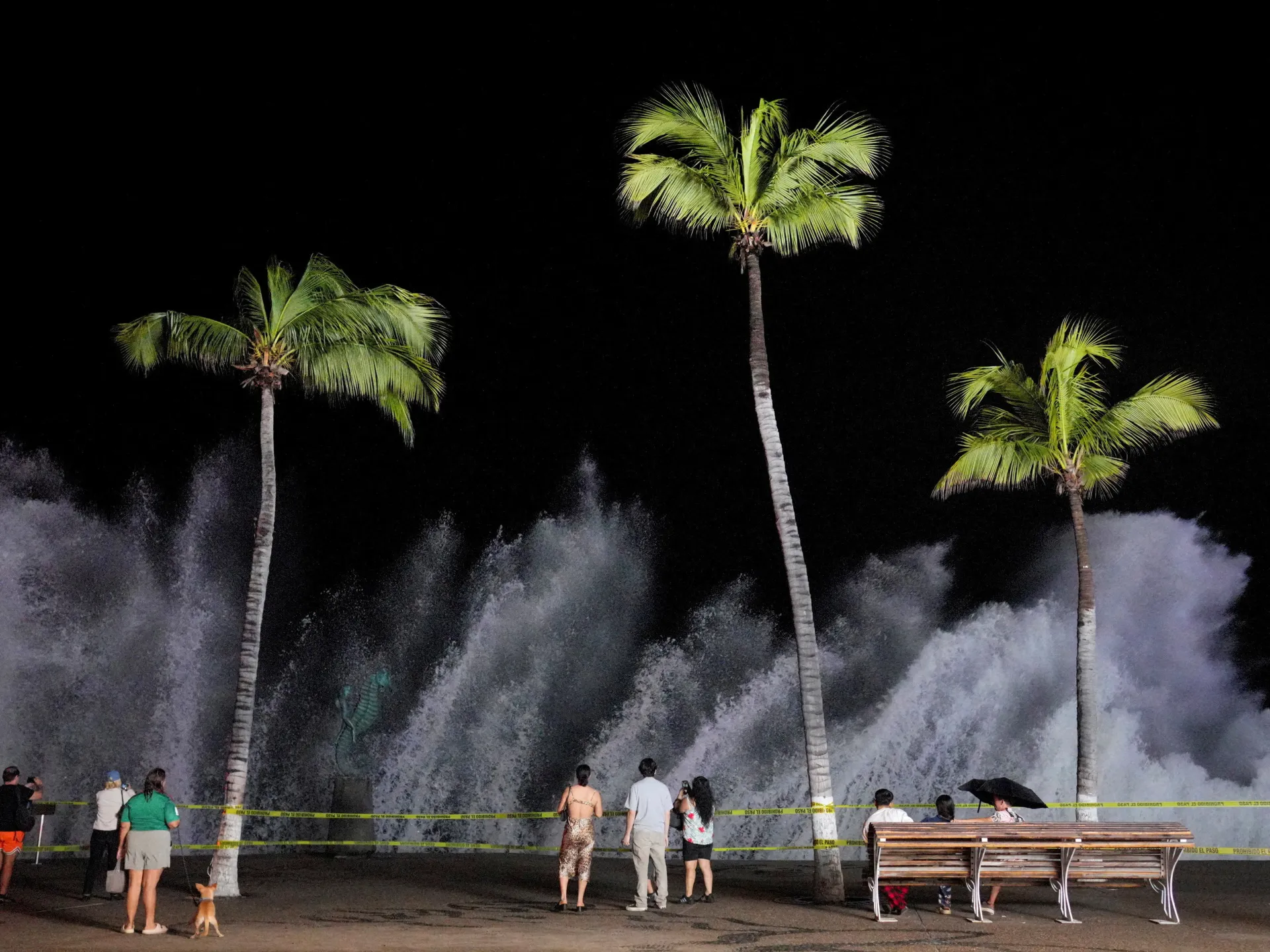
Businesses in popular tourist destinations like Puerto Vallarta boarded up windows and placed sandbags at entrances as the storm approached.
Jalisco’s Governor Pablo Navarro warned that the high-powered hurricane was creating “high-risk marine conditions” along the coast of his state, with waves reaching as high as eight metres (26 feet).
On Sunday, he also shared video on social media of the storm surge crashing onto sidewalks and flooding waterways.
“Here is the current state of Jalisco’s beaches this morning — from Barra de Navidad to Puerto Vallarta — as Hurricane Simon passes through,” he wrote in the video’s caption.
“I ask everyone to heed official instructions, take precautions and avoid putting themselves at risk. The safety of Jalisco’s families is the top priority.”
Storm damage stretches across Florida and Alabama as officials warn of continued flooding and possible tornadoes.
Published On 10 Oct 202610 Oct 2026
Hurricane Isaias, the first hurricane of the 2026 Atlantic season, has killed two people and left hundreds of thousands of customers without power across the southeastern United States.
The storm made landfall near Destin, Florida, on Friday evening as a Category 2 hurricane before weakening as it moved inland through Alabama overnight.
Recommended Stories
list of 3 itemsend of list
One person died in Birmingham, Alabama, when a tree fell on a house overnight, according to local emergency officials. A second person was killed in Escambia County, Florida, after a tree fell during the storm, according to local authorities.
Florida Governor Ron DeSantis said on Saturday that state officials had not confirmed any storm-related fatalities, including the report from Escambia County.
Isaias hit land with sustained winds of 169km/h (105mph), bringing powerful gusts and heavy rain to the Florida Panhandle. By Saturday morning, the storm had weakened to a post-tropical cyclone with wind speeds of about 55km/h (35mph).
Relaxing in a hotel lobby in Pensacola, Florida during a power outage ahead of the arrival of Hurricane Isaias, October 9, 2026 [Marco Bello/Reuters]
More than 900,000 electricity customers in Florida, Alabama and Georgia were without power early Saturday morning. That number has since gone down to under 800,000, according to PowerOutage.us.
Fallen trees and downed power lines caused widespread disruption, while flooding forced road closures in parts of southern Alabama, including Houston County. Alabama Governor Kay Ivey said on Saturday morning that her team was concerned about “strong winds, heavy rain and possible spinoff tornadoes”.
Local officials in Pensacola, Florida reported strong winds that damaged an airport and tore the roof off a hotel. Trees and power lines also came down across the city, leaving some residents without electricity and roads blocked.
Wind, rain, and flying debris as seen from a hotel lobby in Pensacola, Florida on Friday before the hurricane hit [Marco Bello/Reuters]
Despite the storm’s weakening, officials warned that dangerous conditions could persist. Heavy rainfall threatened flash flooding across parts of the Southeast.
“The flooding story is not over,” DeSantis said on Saturday, warning that saturated ground and continued rainfall could cause dangerous flooding a day or two after the storm passed. He said state search and rescue resources would remain available in case rapidly rising waters required emergency rescues.
Florida Attorney General James Uthmeier also warned residents to be alert for contractors seeking to exploit storm victims as homeowners begin repairing damaged properties.
Florida Power & Light worker Yosvany Quintero clears downed tree branches on Saturday [Octavio Jones/AP]
More than 664,000 customers in Florida and Alabama have been left without power as Isaias downs trees, power lines.
Published On 10 Oct 202610 Oct 2026
Hurricane Isaias has crashed into the United States Gulf Coast before losing speed and turning into a post-tropical storm as it moved over southern Alabama, threatening flash flooding and strong winds farther inland.
The US National Hurricane Center (NHC) said on Saturday that Isaias is about 89km (55 miles) south-southwest of Montgomery, with maximum sustained winds of 100 kilometres per hour (65 miles per hour).
Recommended Stories
list of 4 itemsend of list
When it made landfall near Destin, Florida, as the first hurricane of the Atlantic season, Isaias had maximum sustained winds of 169km/h (105mph), the agency said.
Roads in Destin were flooded, while in nearby Pensacola, police warned residents to stay off the streets because of debris across roadways.
While the extent of the damage was not immediately known, many area residents posted pictures online of downed trees and power lines, and one social media video showed a roof being ripped off an inn in Pensacola.
A man tries to push a car as waves wash over the road ahead of the arrival of Hurricane Isaias, in Englewood, Florida, US, October 9, 2026. [Englewood Area Fire Control District via Facebook/Handout via Reuters]
Some Panhandle counties temporarily suspended their emergency response on Friday night because of dangerous conditions.
Parts of southern Alabama were also flooded, with officials in Mobile reporting downed trees and power lines.
Roads in Houston County, which is in the southeastern corner of the state, were closed because of similar conditions.
More than 664,000 customers in Florida and Alabama were without power early Saturday, according to poweroutage.com.
One of the biggest concerns is a storm surge that could reach 0.91-1.52 metres (3-5ft) from Dauphin Island, Alabama, to Florida’s Aucilla River, according to the hurricane centre.
The storm grounded most Friday flights at several airports, including all flights in and out of Destin-Fort Walton Beach Airport.
Hotel guests are assisted using flashlights as electricity went off shortly before Hurricane Isaias’ landfall in Pensacola, Florida, on October 9, 2026. [AFP]
‘Under control’
Asked about hurricane preparations, President Donald Trump told reporters outside the White House, “We’re watching it very closely, the hurricane,” adding that it was “under control”.
Florida’s National Guard deployed about 5,000 soldiers and airmen to help with the response, with search-and-rescue teams ready to respond, while some prisons evacuated inmates.
“Emergency declarations have been approved in Florida and Alabama to ensure federal resources are available to respond to Isaias,” Homeland Security Secretary Markwayne Mullin said on X, as residents were urged to take shelter and watch out for hurricane conditions.
Another tropical storm, Rachel, was also expected to bring strong winds and rain to northern Mexico and Southern California over the weekend.
And Simon has strengthened into a powerful Category 4 hurricane as it barrelled towards Mexico’s coast early on Saturday.
The NHC said Simon’s maximum sustained winds increased to 225km/h (140mph). A storm of that strength or greater is considered a major hurricane.
Simon is expected to bring heavy rainfall over parts of southwestern Mexico, possibly concentrated along the coast of Jalisco and in parts of Michoacan, Colima, and Nayarit.
Forecasters warned of life-threatening flooding and mudslides.
Workers cordon off a petrol pump with yellow tape at a gas station in Navarre, Florida, on October 9, 2026, as Hurricane Isaias moves north toward the Florida Panhandle. [AFP]
A powerful tornado tore through western Sicily, causing injuries, widespread destruction and forcing evacuations across the cities of Marsala and Petrosino.
Switzerland’s glaciers are rapidly receding due to a combination of winters with too little snow and record-high temperatures across Europe this summer, scientists say. In all, one of the world’s top ski destinations has lost nearly one-fifth of its glacial ice in just five years.
In a report (PDF) published by the Swiss Glacier Monitoring Network (GLAMOS) and the Swiss Commission for Cryosphere Observation of the Swiss Academy of Sciences (SCNAT) on Thursday, researchers said Swiss glaciers lost 5.5 percent of their ice volume over the hydrologic year ending September 30, 2026, and nearly 20 percent since 2021.
Recommended Stories
list of 3 itemsend of list
Why is Switzerland, famed for its Alpine terrain and winter sports, losing its glaciers and what does this mean for the country?
Here’s what we know.
What have scientists discovered?
In September, a GLAMOS team visited 23 glaciers in Switzerland to record end-of-summer measurements of ice melt and snow accumulation.
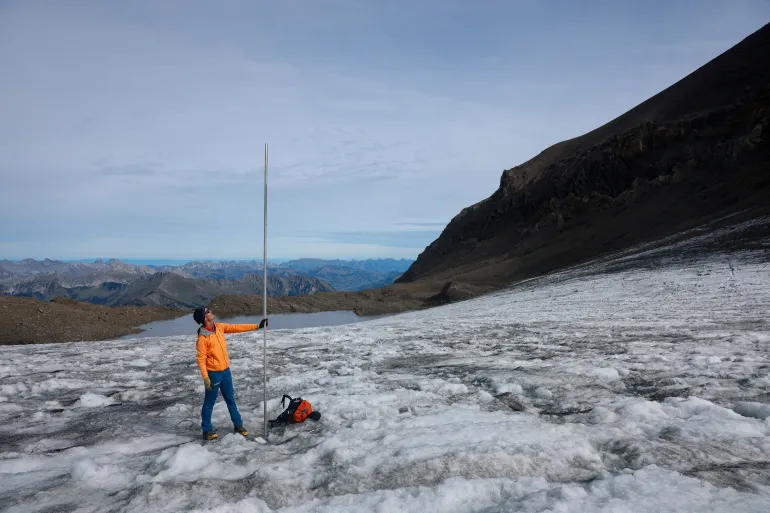
Visiting one glacier named Scex Rouge in the Western Swiss Alps in early September, GLAMOS chief Matthias Huss, one of the report’s researchers, told the Reuters news agency that a measuring pole, about four metres (13 feet) high, was drilled into the ice in July to provide the team with a point of reference.
“Now when we have come back here, we saw the pole was out by three metres [10ft]. So just in August and September of this year, even excluding the heatwaves of June and July, we have lost three metres of ice at an elevation of almost 3,000 metres [9,843ft],” he explained.
“This clearly indicates these conditions that we had this summer, they are just inconsistent with the survival of these small glaciers in the Alps,” he added.
Glaciologist at ETH Zurich and head of GLAMOS Matthias Huss holds a pole that indicates four metres of ice lost over the past year on the Scex Rouge glacier amid climate change at Glacier 3000 in Les Diablerets, Switzerland [File: Denis Balibouse/Reuters]
Why are glaciers in Switzerland losing ice?
According to the report, the total mean thickness of individual glaciers in Switzerland has fallen by between 2.5 and four metres in 2026. At glacier tongues – narrow glacial extensions of a glacier which project from land into a body of water – it had decreased by as much as 10 metres in some places over the summer.
“We can clearly attribute the massive ice loss to the warming, and thus anthropogenic [caused by humans] climate change. The summer has been the hottest on record in Switzerland. In addition, there was little snow in winter, and therefore the glaciers were poorly protected when the heat started,” GLAMOS chief Huss told Al Jazeera.
He noted that while their measurements have indicated that the melting has affected all glaciers in Switzerland equally, the effects were most visible on smaller glaciers.
“Those shrink very quickly and sometimes even completely disappeared. Also, large glaciers lost an enormous quantity of ice, but they remain impressive,” he added.
The report’s scientists warned that the glaciers also lost a total of about 2.2 trillion litres of water (581 billion gallons) between July and September alone.
“This is more than four times the annual drinking water consumption of all Swiss households,” the report’s researchers said and warned this could impact the country’s future water supply.
What does this mean for Switzerland?
Switzerland is a country known for winter sports and Alpine tourism, which depends on the glaciers. About 4 percent of the country’s entire workforce is employed in the tourism sector.
“This affects tourism and also how we perceive the mountains – they are no longer white but increasingly grey and black,” he told Al Jazeera.
He added that the water provided by glaciers is also important for the economy. “It is used to fill up hydropower lakes that produce clean energy, and supplies the biggest streams of Europe,” he said.
“We’re not yet seeing the full consequences as glaciers are still around and they contribute water when we need it. But this potential is soon being lost,” he added.
Harry Zekollari, a glaciologist and associate research professor at the Department of Water and Climate at the Vrije Universiteit Brussel, shared a similar view.
He stressed that glaciers are important natural water suppliers, as they provide water when people need it most – in summer, when it is hot and dry.
“With climate change, glaciers initially provide more water during summer as they rapidly melt. However, as glaciers become smaller, there is less ice to be melted, and as such the water supply in summer decreases. This peak in water supply has now been passed for glaciers in the European Alps, meaning that we expect glaciers to provide less and less water in the coming years,” he told Al Jazeera.
“Glacier changes can also cause natural hazards, and since most of the ice lost turns into water that reaches the oceans, the consequences of glacier loss [in Switzerland and elsewhere] will be felt for coastlines all around the globe,” he added.
Is there a solution?
Yes. According to Zekollari, in order to save as much glacier ice as possible in Switzerland, the world needs to stabilise rising temperatures as soon as possible.
“Projections for the European Alps and Swiss glaciers show that if we are able to rapidly stop emissions, we may still be able to save about one-third of their ice mass. However, in a case with strong warming, these glaciers are projected to lose more than 90 percent of their volume by 2100,” he said.
He noted that the situation is less grim globally as some glaciers in other regions are more persistent.
“However, even globally, future emissions play a big role and will decide whether we lose about 25 percent of glacier mass by 2100 – that’s the good case, with limited warming – or rather 50 percent – the bad case, with more warming,” he said.
“The losses in the longer term – past 2100 – are even larger due to the long response of glaciers, but also here it is the future warming that decides how much remains. Every 0.1 degree Celsius warming matters.”
Brits looking for cheap Spain holidays where it’s still warm and sunny into late October may want to check out one particularly charming destination
This article contains affiliate links, we will receive a commission on any sales we generate from it. Learn more
(Image: LightRocket via Getty Images)
Summer may officially be over, but there’s good news for those not quite ready to accept this fact, as Europe still offers a host of holiday options with hot and sunny weather.
In fact, there’s one Spanish destination that’s been tipped as one of the best holiday hotspots for October, thanks to its balmy temperatures, beautiful beaches and cheap flights.
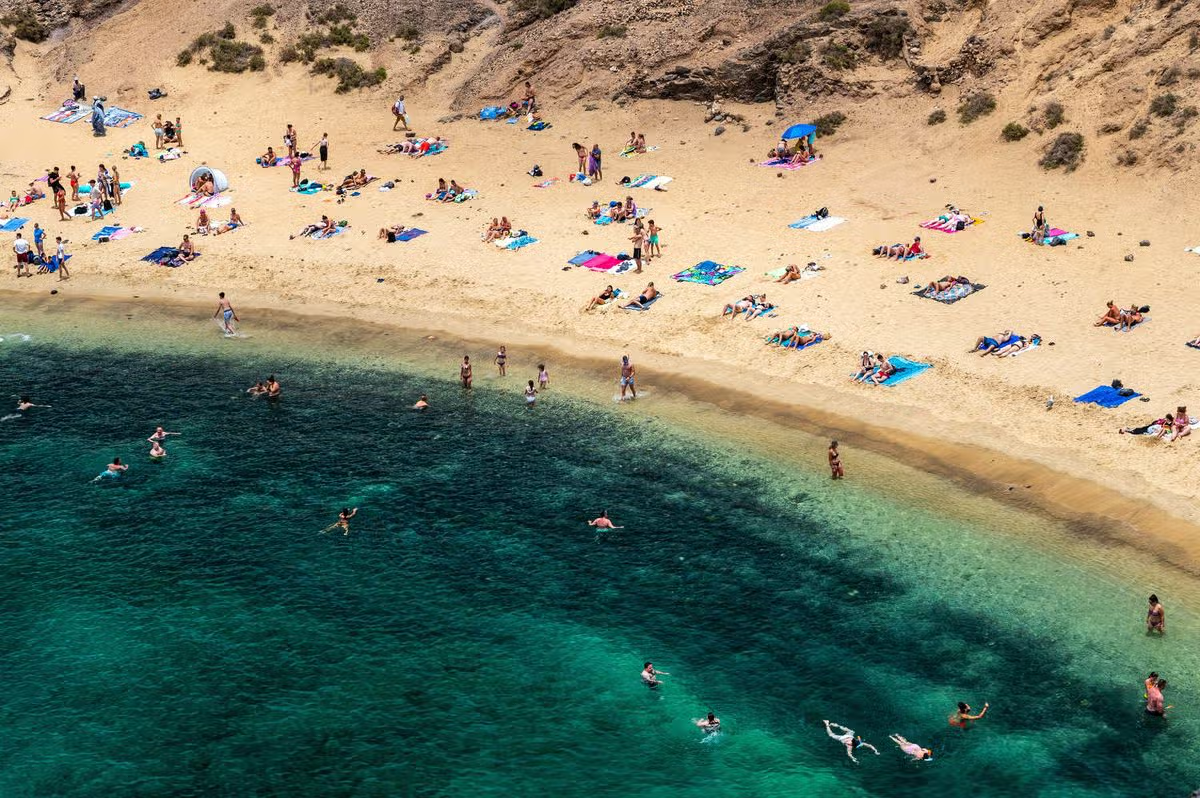
Lanzarote, in the Canary Islands, still boasts daytime temperatures of 25-27C, with sea waters still warm enough for swimming if you fancy a beach day and a dip. (Just pack some light layers for the evenings when temperatures drop to about 18-19C). Temperatures stay warm well into the winter months – it’s why the Canaries are such popular destinations year-round.
As for Lanzarote, it offers a wide array of different stays from luxury resorts ideal for a romantic getaway, to family-friendly all-inclusive breaks with kids’ clubs, poolside entertainment and family-friendly rooms.
Playa de Papagayo is the highest-rated beach according to TripAdvisor, with holidaymakers praising the golden sands and turquoise waters, although be warned that you’ll need to face a slightly dusty and bumpy road to reach the beach, and cross over some sand dunes. In terms of popularity, Papagayo is closely followed by Playa Blanca, another shoreline made up of soft sands and azure waters with a nearby port and marina if you fancy a waterfront lunch.
As for getting there, when we took a look on Skyscanner, there were plenty of flight options from 12 UK airports with fares from under £30 each way, based on two adults travelling outside of the half term dates. For example we found one-way fares from £17 from Liverpool, £19 from London, £21 from Bristol and £24 from Manchester. (For a family of four travelling during half term, the cheapest flights appeared to be from Bristol with prices from £148pp each way).
Given the weather, cheap flight options and array of accommodation, it’s therefore no surprise that Lanzarote has been named one of Europe’s top 10 best holidays for October, in a recent study from the travel experts at Solmar Villas. The team ranked 105 holiday destinations looking at factors including weather and affordable flights, with Lanzarote coming out sixth in the overall rankings.
Cyprus was the top destination taking four spots in the top ten, while Greece had three destinations on the list and Spain two, followed by Malta – you can check out the full top 10 list below.
British holidaymakers heading to one of Europe’s most popular destinations have been issued a warning
It concerns a volcanic eruption(Image: Getty Images)
Anyone travelling to Italy or the Vatican City this week have been told to check the latest official advice, after an update highlighted a developing issue that could affect some journeys. The Foreign, Commonwealth and Development Office (FCDO) updated its Italy travel advice on Monday, September 28.
The update relates to Mount Etna, the active volcano on Sicily’s eastern coast which is one of the world’s most active volcanoes. According to UNESCO, Etna’s eruptive history stretches back around 500,000 years, with at least 2,700 years of its activity documented by humans.
It is also one of Sicily’s best-known natural landmarks and was added to the UNESCO World Heritage List in 2013 because of its geological importance. UNESCO describes Etna as the highest mountain on a Mediterranean island and says its continuing activity has made it an important site for scientific research.
The latest FCDO advice says Italian authorities have increased the alert level because of volcanic activity at Mount Etna. Travellers are advised to follow instructions from local authorities if an eruption occurs.
It could have consequences for people travelling by air, with the FCDO stating that arrivals and departures at Catania Airport may be cancelled, delayed or rerouted to Palermo or Comiso if volcanic activity affects the airport. Holidaymakers heading to or from Catania have been advised to check with their airline or travel provider and the airport itself.
The FCDO does not advise against travel to Italy as a whole, but its general guidance states that “no travel can be guaranteed safe” and tells travellers to read the full advice before travelling. It also recommends appropriate travel insurance covering an itinerary, planned activities and emergency expenses.
There are also wider safety points for visitors to Italy, with the FCDO warning that demonstrations can occur with little or no warning in cities and advising people to avoid protests, political gatherings and marches. The government also says petty crime, including bag-snatching and pickpocketing, is more common in city centres and at major tourist attractions.
Wildfires remain another risk during Italy’s extended summer months, with the FCDO describing them as dangerous and unpredictable and advising visitors to check local alerts and weather forecasts. The same guidance says people should follow local authorities’ instructions and take care when travelling through woodland areas.
Anyone travelling should therefore check the FCDO advice shortly before departure because circumstances can change. The government’s travel guidance also recommends having appropriate insurance and following instructions from local authorities while abroad.

![Andhra Pradesh, India [Al Jazeera]](https://i0.wp.com/occasionaldigest.com/wp-content/uploads/2026/10/ae4d5f3f7c0245aeb39176fa1c5e2ae8_18.jpeg?w=640&ssl=1)















![Hotel guests are assisted using flashlights as electricity went off shortly before Hurricane Isaias’ landfall in Pensacola, Florida, on October 9, 2026. [AFP]](https://i0.wp.com/occasionaldigest.com/wp-content/uploads/2026/10/afp_6ac9f88e0b62-1791621262.jpg?w=640&ssl=1)
![Workers cordon off a petrol pump with yellow tape at a gas station in Navarre, Florida, on October 9, 2026, as Hurricane Isaias moves north toward the Florida Panhandle. [AFP]](https://i0.wp.com/occasionaldigest.com/wp-content/uploads/2026/10/afp_6ac9f8b26680-1791621298.jpg?w=640&ssl=1)