Author Harlan Coben, known for gripping thrillers that place ordinary people in extraordinary circumstances, has provided enough source material for book-to-screen adaptations on Netflix that it merits its own landing page. The latest screen translation of his work begins with a parent’s worst nightmare.
“I Will Find You” follows an imprisoned father wrongfully convicted of brutally murdering his son. When he learns his child may still be alive, it sets off a harrowing, twist-filled search for the truth. User discretion is advised as to whether that makes it the perfect binge for the Father’s Day weekend. “I Will Find You” is also the first series in Coben’s partnership with the streamer to take place in the U.S. — other projects have been set in countries across Europe, including the U.K., France and Spain, in four different languages. Coben and showrunner Robert Hull stopped by Guest Spot to discuss the eight-episode series.
Also in this week’s Screen Gab, our streaming recommendations include a series of brief historical videos that honor the 250th anniversary of the Declaration of Independence and a Netflix documentary that revisits Michael Jackson’s 2005 child molestation trial.
And if you’re a fan of “House of the Dragon,” which returns Sunday with its third season, check out coverage from Tracy Brown, our resident expert on all matters related to Targaryen family drama. She assembled a guide to refresh your memory on the events of the second season and spoke with Emma D’Arcy ahead of the new season.
Keep on reading (and watching). See you next week.
—Yvonne Villarreal
Turn on
Recommendations from the film and TV experts at The Times
“250 to 250”/@twofiftytotwofifty (YouTube)
In the spirit of the old CBS “Bicentennial Minutes” (the spirit of the old CBS for that matter) — which ran in commercial breaks from July 4, 1974, until Dec. 31, 1976, and featured celebrities telling a story from “200 years ago today” — historian and podcaster Heather Cox Richardson has mounted a series of similarly timed semiquincentennial videos, as “250 to 250.” Narrated by an array of scholars, politicians, activists, public servants and others, its overarching theme is that “the story of America has been one of the constant efforts of Americans — from all races, ethnicities, genders, and abilities — to make real the belief that we are all created equal and have a right to have a say in our democracy.” (It can’t be said too often.) Segments (there are 25 as of this writing) include the Constitutional Convention, the Triangle Shirtwaist Fire, the Erie Canal, the AIDS Memorial Quilt, Man o’ War, Eisenhower’s “D-day: In Case of Failure” statement, Rita Moreno, the Everglades, the Social Security Act, Fannie Lou Hamer, An Wang (the inventor of magnetic core memory), Thomas Paine’s “Common Sense” and L.A. Times reporter Rubén Salazar, killed by a sheriff’s rubber bullet during the 1970 National Chicano Moratorium March Against the Vietnam War. — Robert Lloyd

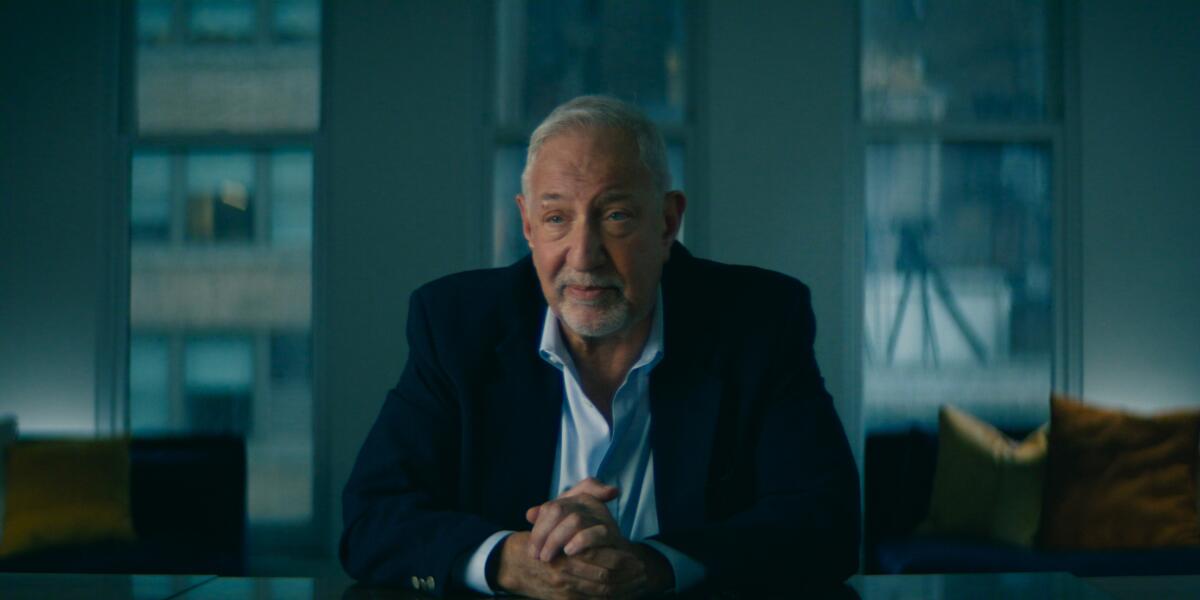
A still from “Michael Jackson: The Verdict” of Mark Geragos, who briefly served as the singer’s defense attorney.
(Netflix)
“Michael Jackson: The Verdict” (Netflix)
Moviegoers embraced “Michael,” propelling Antoine Fuqua’s film about the global superstar to become the highest-grossing music biography in movie history. But reviewers and others have continued to criticize the absence of references to the child molestation allegations that continually shadowed the singer. Netflix’s documentary “Michael Jackson: The Verdict,” however, brought it into focus. Directed by Nick Green, it chronicles the 2005 child molestation trial that threatened to derail Jackson’s career after a young boy accused him of abuse. The three-part series uses archival footage and new interviews with attorneys involved in the case, journalists, fans and members of Jackson’s inner circle to explore the trial, which sparked international attention, and its aftermath. Although the project is unlikely to affect Jackson’s popularity much, some of the revelations uncovered during the investigation are disturbing. — Greg Braxton
Guest spot
A weekly chat with actors, writers, directors and more about what they’re working on — and what they’re watching

Sam Worthington as David Burroughs, a wrongfully imprisoned father, in “I Will Find You.”
(Christos Kalohoridis/Netflix)
What would you do to save your child? “I Will Find You” follows David Burroughs (Sam Worthington), a father serving a life sentence for the gruesome killing his toddler son. But when his ex-sister-in-law Rachel Mills (Britt Lower), an out-of-work reporter, presents him with evidence that suggests his young son, Matthew, is still alive, it sets in motion a daring prison escape and a high-stakes rescue mission in search of the truth. And that’s just one of the parent-child dynamics that fuel the series to illustrate, as Coben told us, how most parents are “trying to do what we think is best for our child — and that could lead to greatness or it could lead to disaster.” Over a recent video call, Coben and showrunner Robert Hull discussed the chilling premise and the book moment that was most challenging to bring to screen. Beware of spoilers ahead. — Y.V.
Harlan, Netflix wanted to make this before you even finished the book. How did that shape or intensify your normal writing process? Is it hard to turn off the noise of the pressure that carries?
Coben: Actually, no. In terms of writing the novel, I’ve learned that the worst novels are the ones that you write thinking you’re going to make a great TV series or a movie. If you write a novel going, “Ooh, I can’t wait for it [to be adapted],” it’s going to stink — trust me. My caveat to that is, though, I don’t care about making changes. I don’t have fidelity to the novel. Once I knew it was going to be already a TV series, I made sure I cut off any thoughts of that, and just told Robby, “Your job is going to be to worry about how to adapt whatever I do.” The way it started was Robby and I had met, and we wanted to do something together at Netflix. We wanted to maybe do the first one that was going to be filmed [and take place in the U.S.], and weren’t sure which to do. I pitched the idea to Robby as I started writing the book, and Robby’s eyes lit up. We went to Netflix and [executives] were like which book is this? I’m “Well, it’s not a book yet; it’s a third of a book right now. I’ll finish it while Robby’s working on the pilot and the adaptation.
Robby, what pulled you into this story?
Hull: As a father myself, I would easily give my life to save my children. What would be terrifying is to not have that opportunity. And Harlan created this character [in that situation] — he says very early on in the book, “A father’s job is to protect my son, and I didn’t do that.” He’s [David] living in this spiritual prison, regardless. And in this day and age, to have someone come and say, “Hey, there might be a way for you to correct the past, to change the most horrible thing that’s ever happened to you” — I thought that was just an incredible way to start a story.

Britt Lower as Rachel Mills and Sam Worthington as David Burroughs in “I Will Find You.”
(Netflix)
Was there a moment from the book, or a twist, that was most challenging to bring to screen, or one that you were most excited about?
Hull: It’s actually the same moment: When Rachel comes [to the prison] and shows David the photograph very early on. That is a scene that has to establish who Rachel is, establish her back story, her pathos, her connection to David, introduce the mystery, David’s reaction to the mystery. There is so much going on. You have to check off in three pages and in the hands of possibly actors other than Sam and Britt, that could be a real train wreck of a scene. Sam’s reaction when he first sees that photo is just unmistakably incredible, and you don’t have to write it. He tells you in three or four seconds the last five years of what he’s been through, and the possibility that maybe things can be different just by staring at a photo, which is incredible.
Coben: That’s one of my favorite scenes too. Also the ending, making sure that landed and gave the emotional punch that I wanted and I felt when I was writing the book. I think we delivered it less-was-more there. It closes it and it leaves it, so you can interpret it your own way, and you can bring it. We were thinking, it’d be really interesting to ask people a year from now, “Where do you think those characters are?”
Let’s talk about that part of the ending — so spoiler warning starts here. The book goes more deeply into how Rachel and David’s relationship evolves into a romance by the end. The series is more vague — we see them hold hands. Robby, how did you want that moment to play?
Hull: If you want them to be together and you’re hoping they are, then I’ve done my job right. I actually don’t want to answer that question because the relationship is so complex and so dynamic. Early on, we didn’t want the traditional two-hander, where [it’s] “Oh, now they’re going to fall in love, now they’re going to come together.” No, Rachel’s her own character with her own story and pathos, and at the end, what they’ve been through together, if that moment is the promise of something more, great; if it’s the promise of “look what we’ve been through,” that’s OK too. That’s what I was going for, at least.
Do you think there’s more of David’s story to tell? Would you want a Season 2 to explore what happens next?
Coblen: I’m probably the only writer who will say this: No, not really. I don’t do Season 2’s unless I think they’ll be better than Season 1’s. Let me do new stories instead. This is a complete story to me. Now, if somebody says to me, “I’ve come up with an idea that might work, that could be as compelling as being [in prison] for five years for the murder of your child for the same character? I never say never. I’ve learned that in my career. But we’ll see. I don’t think so.
Robby’s like, “but I want a Season 2.”
Hull: The moment he said, “If you can come up with a story better than the one we told …,” I was like, “Oh, guess we’re not doing a Season 2.”
Before I let you go, what have you watched recently that you’re recommending to everyone?
Coben: “Your Friends & Neighbors” [Apple TV] by my pal Jonathan Tropper and my other pal Jon Hamm. I’m proud of the job they’ve done on that show and I’m happy for them.
Hull: “Run Away,” ’Safe,” “Fool Me Once.” [Each are a Coben adaptation for Netflix]. Those are the three I’m digging right now.
ICYMI
Must-read stories you might have missed