I SPEND most of my days scouring the web to track down the cheapest possible holiday deals – to share them all with Sun Club members.
Spending so much time filtering and flicking through holiday websites means I’ve gotten pretty good at seeking out a bargain.
Travel writer Jenna Stevens spends most of her days hunting down cheap holidays – here’s exactly how she finds the best dealsCredit: Jenna StevensWith my website trick I found a I found a week-long holiday to a four-star resort in Magaluf for £119ppCredit: Alamy
In fact, I’m often finding UK breaks for under £5pp, city breaks for £99 and under, and even family holidays abroad for £150pp or less.
So I’ve decided to reveal exactly how I find these cheap holidays: the very best websites to use, and how to use them to bag the best deals.
Holidays abroad
Loveholidays and On the Beach are two incredible companies when it comes to bagging the cheapest deals.
Both offer package holidays which bundle in your return flights, accommodation and board of your choice – so there’s no need to worry about having to book it all separately.
Loveholidays
With Loveholidays, it’s really easy to filter breaks by all inclusive, family friendly, short haul, long haul and more.
Their cheap holidays page lets you pick between cheap all-inclusives, beach holidays, city breaks and even family holidays with free child stays.
You can also filter by breaks under £500pp or even under £300pp. Drag the slider bar all the way down to the bottom, and you may even find hols for £120pp or under.
For example, under the ‘Cheap Beach Holidays’ tab, I found a week-long holiday to a four-star resort in Magaluf in October for £119pp.
On The Beach
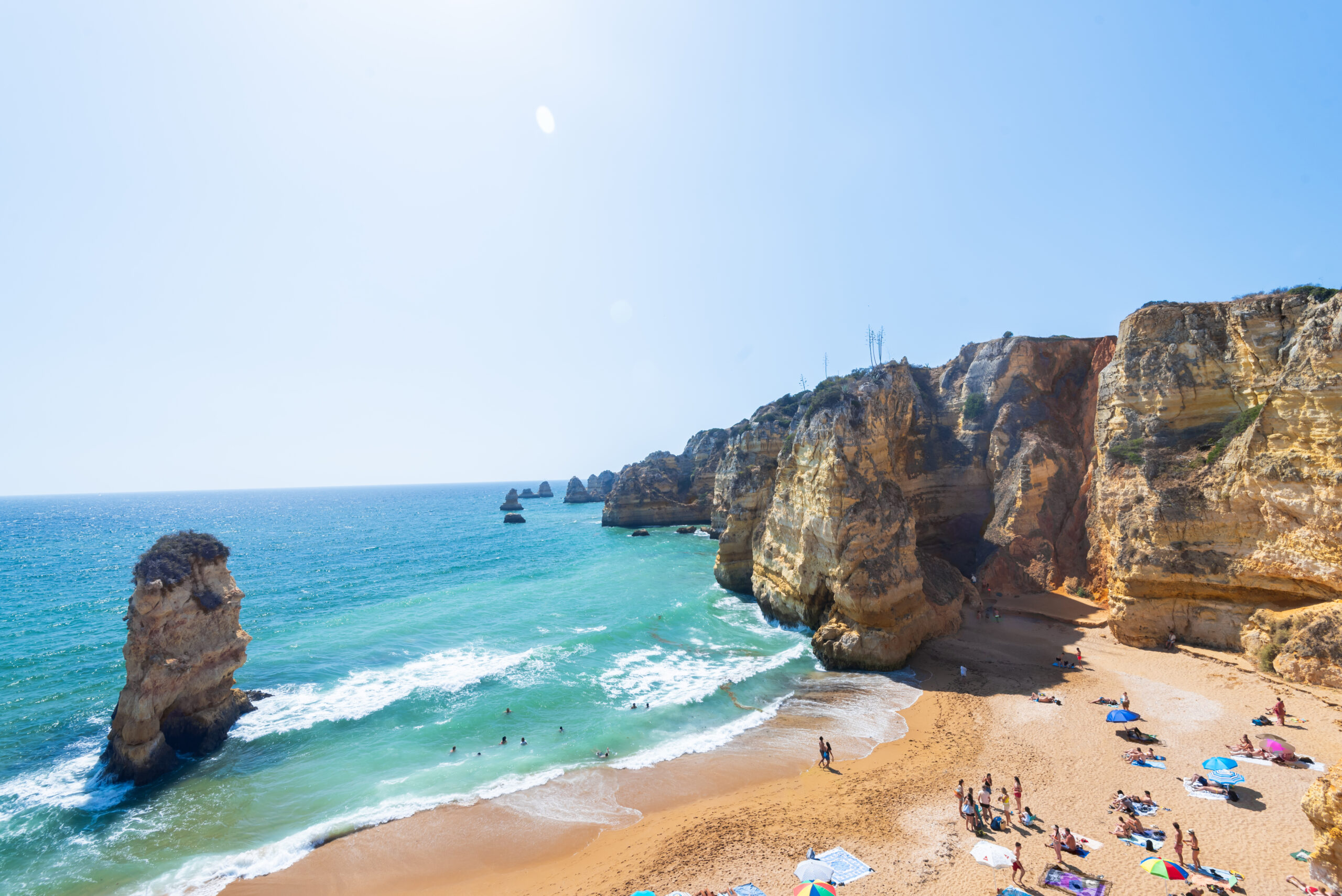
You can book a four night break in The Algarve with On the Beach for £95ppCredit: Getty
On The Beach works in a similar fashion, and their cheap holidays page is regularly updated with ‘our cheapest deals of the week’, which often start from a super low £100pp to destinations like Portugal and Malta.
This page also currently has a ‘cheap holidays for autumn under £500′ section.
Some of the cheapest holidays they’re offering this autumn are week-long breaks to Turkey (from £135pp) and the Canary Islands (from £180pp).
One of the best deals I found for autumn using the cheap holidays page to navigate the offers is for a four night break in The Algarve for £95pp.
Wowcher
As well as UK breaks, Wowcher is also great for booking holidays abroad.
Yes they have the classic £99 mystery holiday, but they also offer beach holidays, European city breaks, cruises and even long haul escapes.
These include a glamorous Lake Como getaway from £79pp, an all-inclusive Egypt holiday from £299, and even an incredible Las Vegas holiday with flights for £399.
Lastminute.com choose a deal of the week, with one recent bargain being a Tenerife hol for £484ppCredit: Alamy
Lastminute.com is another great site that does what it says on the tin – and more.
While the homepage often showcases some of the site’s best value deals, they also have specific pages rounding up cheap family holiday destinations as well as cheap adults-only resorts.
Plus the site is still king when it comes to bagging a last-minute break. This webpage rounds up the week’s best exclusive deal, plus an offer of the week and last chance bargains.
Offers of the week are certainly one to keep an eye open for – their most recent was for a trip to a 5* resort in Tenerife for four nights with flights for £484pp.
The site also has a loyalty programme which is completely free to join, and can bag you up to an extra 15 per cent off holidays and experiences.
The offers get better the more holidays you take, and as you climb the ranks you can unlock more and more perks.
These include free travel audioguides, 10 per cent off car hire and free lounge access if your flight is delayed.
Sundeals
Sundeals is the new kid on the block when it comes to cheap holiday deals, and is a new branch of familiar favourite holiday company TUI.
Here you can explore deals by budget (under £350, under £500, under £1,000) or by destination and more.
On their cheap holidays page, I’ve found all inclusive holidays from £234pp, beach holidays from £115pp and city breaks from £147pp.
Plus, the holiday company offers holidays with super low deposits from £30pp, so you can get your next break locked in for cheap.
Travelzoo
I found a Travelzoo deal for 11 nights in Egypt combining a Nile cruise and 5* hotel for only £549pp with flightsCredit: Alamy
This is the only site you’ll have to pay for on this list, but my goodness is your membership worth it.
A Travelzoo membership costs £30 a year, but you can also try out 30 days of membership for £1.
Signing up means you’ll get Travelzoo’s ‘Top 20 deals’ dropped into your inbox each week, so you can easily have a quick browse to see if anything takes your fancy.
Or you can head to the site to browse cheap holiday deals broken down into loads of specific categories, from Asia Pacific holiday deals to island holidays and safari deals.
The best value to be found for foreign holidays here is for long haul breaks. The first time I came across their long haul holiday deals, I couldn’t quite believe my eyes.
You can visit gorgeous hotels in New York for £653pp, the Dominican Republic for £690pp and Mexico for £860pp – all for a week-long break including flights.
I even found an 11-night Egypt holiday which packs in your flights, four nights at a 5* all inclusive resort – followed by a Nile cruise which stops at major historical sights – for an unbelievable £549pp.
To be able to view and book these deals, you have to be signed up as a member.
Where to look
Albania has been called ‘The Maldives of Europe’ due to the colour of its water and sandsCredit: Alamy
Where you’re looking for your holidays is equally as important as how you’re looking.
You might be tempted to hop online and look for the same familiar favourites you’ve been to before, such as cheap Spain or Greece holidays.
But if you’re open to trying somewhere new, I’d recommend not ticking the ‘destination’ box. Instead, go for ‘beach holidays’ and see what pops up.
That way, you’re opening up hundreds or even thousands of new holiday options – which massively increases your chances of finding something cheaper.
And if you know there’s somewhere you really don’t want to go to, you can just untick it from the left-hand column of the page. Easy peasy.
I’d recommend keeping an eye out for Bulgaria, Albania and Montenegro holidays specifically.
These three destinations are absolute powerhouses when it comes to an affordable beach holiday.
Bulgaria has all-inclusive getaways from £279 and flights from the UK under £15. Plus once you’re there, you can grab a meal out for under £9 and a cappuccino for just 88p.
Albania has been named the ‘Maldives of Europe‘ thanks to its beaches with bright white sand and electric blue seas, with holidays from £165pp.
Montenegro offers £255 holidays and even has been referred to as ‘St Tropez with Benidorm prices’ by one travel expert.
UK Holidays
Best Western GEM stays
Best Western package hotel stays with activities, like with their soft play family breakCredit: Best Western
Forget paying for just a bed for the night. Best Western’s GEM stays are hotel break packages with your room, food, and extra perks completely sorted for you.
The GEM packages stand for ‘Great Escapes, Memorable Stays’ and are centred around a huge variety of fun experiences.
The Somerset Family Escape package (from £123.38 per night) bundles in a family stay for two adults and one child with breakfast plus soft play access for the kids while parents can unwind in the spa.
Whereas the Ultimate Girls Night In package at Brackenborough Lakes & Resort reserves a hot tub lodge for two nights, breakfast each morning, three bottles of Prosecco and £15 takeaway credit per person from £44.50pp per night.
Wowcher
Head to Manchester for a swanky city break for £105 with Wowcher (41% off)Credit: Getty
The UK holidays section of Wowcher is hiding some serious bargains, from spa weekends, to city hotel stays, to rural retreats.
Look for any offers with the pink ‘Price Drop’ label to find the cheapest deals.
Some of the top offers for UK breaks on Wowcher right now include a 4* break in Manchester for two with breakfast for £105, shaving 41 per cent off full-price.
Another fantastic offer is for a wellness retreat to Woodford Bridge Country Club, where four people can escape for four nights from £79 (£4.94pp per night).
Travelzoo
Stay in Northumberland’s National Park for £59 with this Travelzoo bargainCredit: Getty
Travelzoo’s UK holiday deals are just as impressive as their deals for holidays abroad.
You can stay at one of the world’s oldest inns, The Olde Bell in Hurley, from £75 a night with breakfast. This saves you 48 per cent when compared to booking direct.
Another great deal is this two night break in Northumberland for £89pp, which puts you up in the Riverdale Hall Hotel which overlooks the Northumberland National Park.
And that super cheap £59 deal? It’s for a seafront stay in Eastbourne, with an overnight break for two at the The Lansdowne hotel, working out to only £29.50pp.
Remember, however, that you have to be a Travelzoo member to unlock these deals (£30 per year).
Holiday parks
If you opt for a cosy glamping pod instead of a caravan when booking you can save extraCredit: parkdeanresorts.co.uk
Whether you enjoy pitching up a tent, cosying up in a caravan or even splashing out on a hot tub lodge, holiday parks have stays to suit all budgets.
Choosing to stay in a holiday park can be a fantastic way to tick off a new UK destination without having to fork out on an expensive hotel.
You can often bag a three or four night family break at a holiday park for £90-£100 if you know where to look, which would typically only get you one night in a hotel!
£9.50 Holidays
If you’re looking for a super cheap getaway, The Sun’s £9.50 holidays offer some of the best rates out there, which are often significantly cheaper than booking with the same park direct.
The bargain holidays are released in stages throughout the year, with the biggest Hols from £9.50 drop taking place in January,
As a Sun Club member you can bag your break earlier than anyone else – so make use of this perk!
Make sure to check the Sun Club Offers Hub and club950.co.uk to keep updated with Hols from £9.50 releases.
Parkdean Resorts & Park Holidays
If the £9.50 holiday booking window is closed, Parkdean Resorts and Park Holidays offer some of the best rates among UK holiday parks.
Look out for Parkdean’s last minute breaks page where you can bag a three night stay in Norfolk from £99 or Cornwall from £109.
Park Holidays have 50+ award-winning parks across the UK – their short breaks page offers stays from £129.
Want to save even more? Go for a cosy wooden glamping pod instead of a caravan with Park Holidays, and you can stay from £50 for a two night break. These pods sleep four, so that’s only £6.25pp per night.
Asked about the state of the relationship between the UK and US, the prime minister said he believes it is “as strong as it’s ever been”.
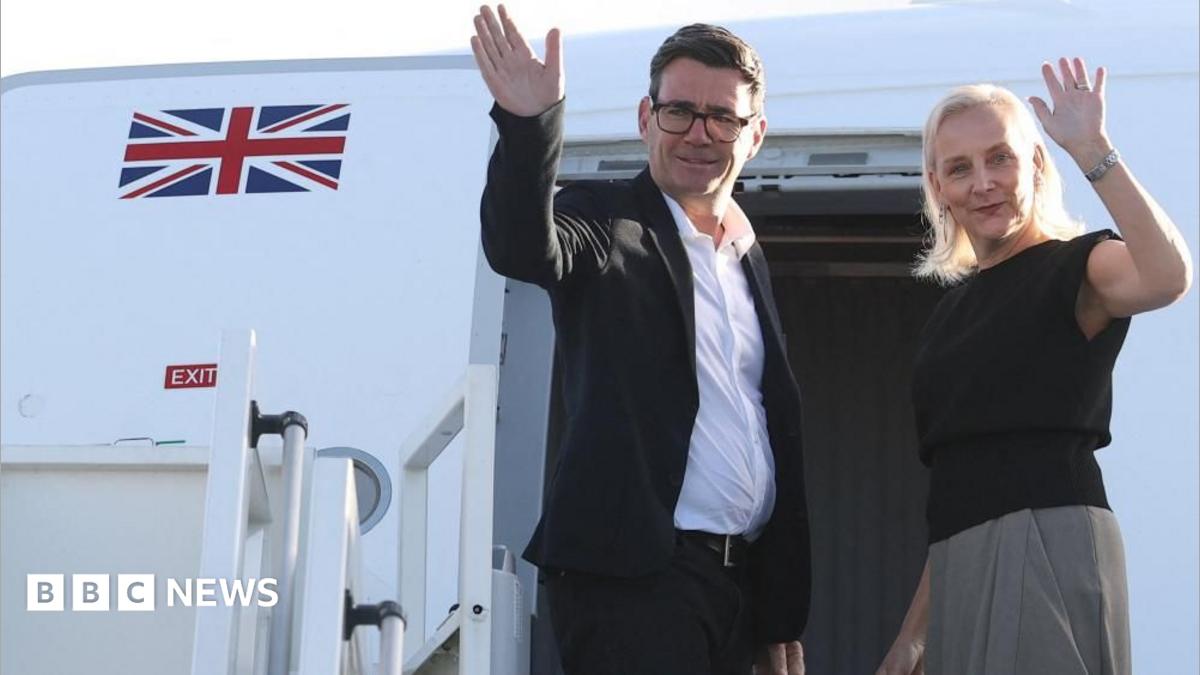
Burnham has travelled to New York with his wife, Marie-France Van Heel, for a day of diplomacy and a speech to the UN General Assembly, which is expected to focus on the opportunities and dangers associated with artificial intelligence (AI).
He said: “I will be making the case for closer international co-operation on AI, a just and lasting peace in Ukraine, and renewed efforts to bring an end to the conflict in the Middle East because what happens abroad impacts each and every one of us at home.”
The prime minister will also announce the start of work on a new AI and Autonomy partnership between the UK and the US, focused on protecting critical national infrastructure using AI tech.
Lib Dem leader Sir Ed Davey is expected to criticise this plan at the final day of his party’s conference, saying it “doesn’t come close to meeting the scale of the threat” and “only risks making us more dependent on a Trump administration in the pocket of the tech bros”.
He will also call for a global pause on superintelligent AI and propose a new International AI Safety Agency.
For a new British prime minister, the first meeting with a US president has always been a pivotal encounter, but officials are well aware of the added jeopardy of a public appearance alongside the most unpredictable president in American history.
In advance of the meeting, the UK revealed that the UK and the US have, for the first time, fired an American torpedo from a British undersea drone in a military exercise.
The torpedo, described as “heavyweight” by UK officials, is “designed to sink ships and deep diving submarines”, Downing Street said.
It was launched in UK waters last week from a 12-metre long undersea drone called Excalibur, made in Plymouth.
It is the first time either the UK or the US have launched a torpedo from an uncrewed underwater vessel, rather than a crewed submarine, and is seen as a breakthrough in attempts to protect vital infrastructure such as deep sea data cables.
“Our work together already shows what can be achieved when our two countries combine our expertise and innovation,” the prime minister said.
Burnham was also asked by reporters about the UK government seeking to hand over the Chagos Islands to Mauritius and pay to lease back the joint US-UK military base on Diego Garcia.
Burnham spoke to the Mauritian prime minister, Navin Ramgoolam, on Monday.
He was asked by reporters to outline what he had told Ramgoolam, whether he supported the deal and if he had a plan to convince Trump to back it.
Burnham replied: “I said that we remain determined to secure the long-term operation of the base, which is crucial to our security and that of our allies.
“The assurance I gave was I will work towards a resolution, at the moment we don’t have that, but I gave an assurance that I would commit to working towards one.”
STANDING on the deck with an Aperol spritz in hand and watching the beautiful Sicilian city of Messina fade into the distance, I feel like I am living the dream.
And indeed we pretty much have been since me, my husband Alistair and our 15-year-old twins Riley and Harris set off from the port of Barcelona on a seven-night Mediterranean cruise.
The charming and colourful Amalfi Coast, ItalyCredit: Alamy Stock Photo
As first-time cruisers, from the moment we step on to NCL’s 2,100-room, 18-deck Norwegian Epic – which underwent a massive refurb last year – it is brilliant fun.
Having checked on to the ship, we head to deck 15, with its two pools and three waterslides, to wait for our luggage to be delivered to our balcony state cabins.
Sign up for the Travel newsletter
Thank you!
Here, we take a peek at our fellow passengers – an eclectic mix of young and old from America, Canada, the UK and everywhere in between – as we settle on sunloungers with drinks and enjoy the live music, while waiting to depart.
Leaving Barcelona, we pass another ship and everyone cheers and waves to our fellow cruisers.
The party atmosphere makes for the most lovely holiday vibe.
All decked out
Pisa towers above Sinead and husband AlistairCredit: Supplied by Sinead McIntyre.The cobbled streets of MessinaCredit: Getty Images/iStockphoto
With so much to do on the ship, you could never be bored.
There are 16 restaurants, including brilliant inclusive eateries such as the buffet Garden Cafe and the waiter-serviced Manhattan Room and Spice restaurants, plus seven speciality options, which we can dine at as part of our free-at-sea package.
For our first night we opt for Shanghai’s Noodle Bar, which we talk about for days afterwards.
There, we tuck into starters including sushi and spare ribs before mains of black pepper beef with broccoli, melt-in-the-mouth snapper, chicken and prawn chow mein, and egg fried rice, all washed down with sake for me and Alistair.
Our cabins have super-comfy twin beds pulled together into doubles, a sofa, shower and toilet, as well as tonnes of storage space and a TV.
We barely feel the boat move as we fall into a deep sleep, waking the next day in Marseille, where we decide to spend our first full day exploring the ship’s decks from top to bottom, taking advantage of enjoying the attractions while most guests are on shore.
Riley and Harris are delighted to find a Starbucks, while I love the serene Mandara Spa with its 50 different treatments, and we all gasp at the huge gym.
There is also teenage club Entourage, as well as Epic Theatre, where evening shows take place.
We particularly enjoy Red, White & British – a show of covers from Brit artists through the decades.
Plus, there’s a video arcade centre and a huge casino, as well as countless bars.
Exploring done, we head to the pool to test the water slides, including the 200ft bowl slide.
Excursions – which start from £37 per person – can be booked via the NCL app pre-departure or on board, and save you having to find your own way around new destinations.
However, our second stop is Villefranche-sur-Mer, a pastel-coloured coastal town where the shingle beach is just a stroll from where we disembark the ship’s tender, making a beach day a no-brainer.
Afterwards, we hit the town’s cobbled backstreets and pretty shops, marvelling at the handmade jewellery in Jour De Plage and eclectic clothes in cute Le Shopping De Nat on Rue de l’Église.
The station, with regular trains to nearby Nice and Monaco, is a stone’s throw away though, and many of our fellow cruisers set off to explore those cities instead.
Pisa The Action
Peak views of Mount VesuviusCredit: Roberto MoiolaCatch a vibrant show at the Epic TheatreCredit: Supplied
That evening, we try Cagney’s Steakhouse, where we feast on jumbo shrimp cocktail or lobster bisque, followed by ribeye and fillet steaks served with a choice of sides – we love the parmesan truffle fries.
For dessert, the seven-layer chocolate cake is divine.
Our first excursion of the week is the following day when we arrive at Italy’s Livorno and take a coach to see the Leaning Tower of Pisa in all its glory.
Close by, we happen upon amazing pizzeria Santa Maria, where an extra-large pepperoni pizza costs £16.50 and feeds Alistair, Harris and me, while Riley plumps for a focaccia sandwich with mozzarella, £7 (Ristorantesantamaria.com).
The day ends with a trip to the historic seaside town of Viarregio, where we cool off with a dip in the crystal-clear water.
Opting to go it alone in Messina – as the port is located right in the city – we pop into the stunning Messina Cathedral, home to the world’s biggest, most complex astronomical clock, which stands 60m tall inside its bell tower.
Feeling suitably cultured, we then grab a taxi to Capo Peloro, a beautiful beach on Sicily’s north-eastern tip, where the Tyrrhenian and Ionian seas meet.
Just Our Vibe
Your cabin is callingCredit: Rick Diaz PhotographyUnwind on deck with an Aperol spritz in handCredit: Getty Images
Back on the ship, both teens decide to chill in their rooms, so Alistair and I grab the opportunity to head to Vibe Club, an oasis of adults-only calm on the 18th deck with four-poster sunbeds and a hot tub, where we sip cocktails as we say our goodbyes to Messina.
Dinner that night at the Teppanyaki is our stand-out meal of the week.
We feast like kings on miso soup and seaweed salad, and marvel as the chefs sing songs, catch eggs for the fried rice in their hats and cook up a storm.
My steak-and-prawn combo is delicious, as is the sake-based wasabi cocktail I wash it down with.
We finish the night at our favourite bar, Shaker’s Martini Bar, where I’ve developed a taste for the Dirty Martinis, and my whole gang love their nightly live music.
Our last full day cruising is spent on the stunning Amalfi Coast, where our excursion takes us past Mount Vesuvius and to the Phlegraean Peninsula, so we can snorkel above the Roman resort of Baia, with its marvellous mosaics that now lie submerged up to 13 metres below the sea, before relaxing on the golden sands.
It’s an Italian bank holiday, and at the nearby beach club dozens are drinking prosecco, eating whitebait cooked in a huge metal vat of oil and dancing to their hearts’ content.
This couldn’t be a more fitting end to our cruise – pulling up in the port of Civitavecchia, near Rome, the next morning, we’ve laughed, danced, eaten, drunk and experienced some of the most beautiful places in the world.
FYI
The seven-day Mediterranean Barcelona to Rome voyage with Norwegian Cruise Line starts from £505 per person (Ncl.com).
Add a Free At Sea package, from £249 per person, for unlimited drinks and speciality dining.
Flights to Barcelona, returning from Rome, start from £18 each way.
Avril, 77, was recently reunited with her daughter Eleanor after 60 years on Long Lost Family after being told she’d never find her child
18:32, 14 Sep 2026Updated 18:33, 14 Sep 2026
Avril, 77, was recently reunited with her daughter Eleanor after 60 years on Long Lost Family after being told she’d never find her child (Image: ITV)
A Long Lost Family star has made an emotional admission after being told for years that she would never find her daughter.
Avril, now 77, was only 15-years-old when she became pregnant, her mum then shipped her off to a mother and baby home in Carlisle, where she gave birth to a baby girl she called Michelle.
At only eight-weeks-old, Avril gave Michelle up for adoption and she was renamed Eleanor. Avril sought the help of Long Lost Family’s Davina McCall and Nicky Campbell, who travelled to Newcastle, to find her daughter, where she was emotionally reunited after 60 years apart on the ITV show.
However, this wasn’t Avril’s, who also has daughter Sharon, first attempt to reconnect with her first child, having previously contacted a rival programme to assist her in finding her long-lost daughter.
Speaking to Express.co.uk, Avril admitted that The Trisha Goddard Show rejected her because they believed they would never locate her. She explained: “I was listed on a couple of adoption agencies. I tried The Trisha Goddard Show, and she used to help people find their family.”
The ITV programme, which broadcast on Channel 5 from 2004 to 2012, regularly featured emotional family reunions, deep-rooted family secrets or disputes concerning adopted children.
But after reviewing Avril’s case, Channel 5 bosses conceded that even with the programme’s resources, they wouldn’t be able to trace her daughter, reports the Express.
She recalled: “Basically, I was told that I would never be able to find her because she had been issued a new birth certificate.
“So that led me to believe that there wouldn’t be an original birth certificate, and I was told that by two or three different professional people. But after 30 years, you just think, ‘Well, there’s not much else I can do. Hopefully, she might be able to find me’, but you just don’t know.”
The TV star went on to share that her other daughter, Sharon, proved to be her greatest supporter when she considered approaching another television programme for assistance. She said: “I have another daughter, Sharon, and I told her about Michelle.
“She was the one who said, ‘Yes, you should do it’. So that’s what I did. I wrote to Long Lost Family, and it went from there.”
The mother and daughter were eventually reunited on Eleanor’s birthday, with Avril telling her: “There aren’t any words to tell you, Eleanor. That I’ve always loved you and that you’re still mine. You’re my child.”
It comes as the reunited mother and daughter recently appeared on This Morning, where Avril said of meeting for the first time and if they had an instant bond: “Yeah, she was back in my arms where she belongs.”
KATIE Price has begged her terminally ill mum Amy to “find the strength to stay” in an emotional Instagram post.
The 48-year-old star said she’s never loved anyone as much as seriously ill Amy, 74, who is living lung condition Idiopathic Pulmonary Fibrosis (IPF).
Katie Price has made an emotional plea to her mum onlineCredit: katieprice/InstagramKatie said she’s never loved anyone as much as her mumCredit: katieprice/Instagram
She wrote: “Mum please don’t leave me, please find the strength to stay with me longer on this earth your my EVERYTHING.
“And you know I’ve turned everything around and your so proud of me. Your my eyes, my voice, my strength, my absolute Everything.
Sign up for the Showbiz newsletter
Thank you!
“You’re a warrior and I’m your baby girl always and you love me through everything and held my hand. I can’t lose yo, u not n, ow not EVE”R.”
SACRAMENTO — SEIU United Healthcare Workers West President Dave Regan allegedly tried to “extort” an SEIU state council endorsement of the billionaire tax ballot measure from other California union leaders, according to an investigation commissioned by Service Employees International Union.
The investigation and a second inquiry conducted on behalf of SEIU California found that Regan allegedly threatened and intimidated women who worked for the state council, and in one instance, physically assaulted a former executive director of the labor organization.
Regan, in an interview with The Times, denied the allegations that he attempted to extort from union officials. He also denied assaulting the executive director and said he did not threaten female labor leaders. He repeated a counterclaim he made to the union: The allegations against him are retaliation for his advocacy for Proposition 40, the proposed wealth tax that will be on the Nov. 3 ballot.
“They are internally contradictory, they are fundamentally biased, and maybe most importantly, they are politically motivated,” Regan said about the probes.
The law firm hired by the national union investigated Regan’s claim of retaliation but found the allegation could not be substantiated.
David Huerta, the president of SEIU United Service Workers West, and three other labor leaders filed a rare formal union charge against Regan in February.
The national union of SEIU has ultimate authority to resolve charges filed under its constitution and hired the New York labor law firm Cohen, Weiss and Simon to independently investigate the claims. The firm interviewed 18 current and former SEIU leaders and others in the California labor movement over nearly three months, according to its report.
The law firm’s report, reviewed by The Times, supported Huerta’s claim that on Dec. 3 Regan suggested the state council could be investigated for “governance issues” if the council did not endorse the billionaire tax on the November ballot. Huerta was then president of SEIU California.
“During the investigation, Huerta reported that he left the conversation with Regan feeling ‘extorted’ and believing that Regan might report unspecified governance concerns to the U.S. Department of Labor, which is known to be unfriendly to labor unions under the Trump administration, if state council did not support the billionaire tax,” the report said.
The law firm’s investigation substantiated an allegation that on the same day, Regan threatened Tia Orr, executive director of SEIU California, over the council’s position on the ballot measure. The SEIU probe found an allegation that Regan also assaulted one of Orr’s predecessors in the job, Courtni Pugh, in 2009, to be credible.
“SEIU California leaders filed charges against Dave Regan alleging a pattern of bullying, threats, abuse, harassment, physical violence and attempted extortion,” Christopher Calhoun, a spokesperson for SEIU California, said in a statement. “Initial investigations pertaining to these charges substantiated most of SEIU California leaders’ allegations.”
State union officials have temporarily banned Regan from the offices of SEIU California, a council of union leaders that coordinates political operations for all SEIU-affliated unions in the state, to protect female employees, according to the state council’s report.
Democratic National Committee delegate Courtni Pugh speaks at the California Democratic Party breakfast in Chicago on Aug. 20, 2024.
(Myung J. Chun / Los Angeles Times)
“Sufficient evidence was also found to substantiate that Regan has engaged in a pattern of subjecting former and current SEIU California female directors to intimidating and threatening physical behavior and verbal abuse,” the report commissioned by the state council said.
Leaders and workers within the labor movement describe Regan’s alleged behavior as an open secret at SEIU, which represents more than 2 million members nationwide and is the largest union in California.
The law firm hired by SEIU submitted its investigation report on July 28. Regan remains in his job as an administrative process moves forward with hearings. Regan will get a chance to make his case before SEIU determines any appropriate disciplinary action.
SEIU President April Verrett has the power to temporarily suspend Regan as the process plays out.
“SEIU is deeply committed to the safety and well-being of all people, including our members, staff, and the public, and takes these matters seriously,” said Dan O’Sullivan, a spokesperson for SEIU. “As soon as these concerns were raised, we initiated a deliberate and thorough process and retained independent, outside investigators to look into these allegations. Our process is active and ongoing, and the next steps include appointing a hearing officer and holding an evidentiary hearing through which all parties will be afforded due process.”
At a California Federation of Labor event on Dec. 3, Regan told Orr that “state council better endorse this measure by Jan. 1 or I’m coming for you,” she told investigators in both probes.
Regan rode to the airport with Orr and sat next to her on the plane “as part of a continued effort to intimidate her into providing state council’s support for the billionaire tax,” Orr told the investigators. As they left, Regan tapped his watch to suggest her time was running out, the report stated.
Regan told investigators that he learned last year that Orr was working behind the scenes to undermine his billionaire tax proposal. If approved by voters, the measure will retroactively apply a one-time 5% tax on the net worth of billionaires who were residing in California as of Jan. 1, 2026.
Regan denied that he threatened Orr, calling the claims “completely fabricated.”
“And again, the source of that is somebody who is not in favor of Proposition 40, and somebody who has not been leading the state council with practices of good governance,” Regan said in an interview.
Regan also denied intimidating Orr to investigators hired by the national union, but offered a different perspective on the SEIU California executive director. He said he traveled with Orr as a friend that day, had previously supported her professionally and offered her a job, according to the report.
The law firm said Orr believed that Regan was a “bully” who mistreated women of color and made it difficult for them to do their jobs at SEIU and had even “fought someone” when he didn’t “get his way.” Regan denied those allegations, including that he mistreated women of color.
“Orr therefore took Regan’s statement that he was ‘coming for’ her as a threat to her job security and her physical safety. She contemporaneously shared this fear with a colleague. Moreover, her response to Regan’s statement is reasonable because three interviewees — both current and former employees of state council — corroborated that Regan has verbally berated and at times physically intimidated or assaulted former state council executive directors,” the report stated.
The investigation commissioned by the national union concluded that UHW then launched a “fishing expedition” into the state council’s finances under Orr’s leadership, but did not substantiate a claim that Regan defamed her to allies of the labor movement.
The SEIU investigators also wrote that the claim that Regan assaulted Pugh was substantiated.
Pugh told investigators that Regan kicked open her office door and “jacked” her against the wall, according to the investigative report. While she was “pinned,” Regan pressed his finger into her chest and screamed that she was a “dumb ass,” the report said.
When he left her office, Pugh fell to the ground and began to hyperventilate, according to the report. Two colleagues found her, helped her breathe into a paper bag and walked her home, the report said.
Regan denied the allegation.
“It is a complete fabrication and a fiction made by somebody who has all of the incentive possible to critique or trash or criticize UHW generally, and me specifically, and no, there was no mention of it for 17 years,” he said.
The report also concluded that Regan recently threatened to sue SEIU Local 221 President Crystal Irving in an attempt to silence her from warning others about the alleged assault against Pugh.
Regan said the national union’s investigation was “fundamentally flawed” because it stated that Pugh “had nothing to gain from sharing her story” with Irving. Pugh, now a political consultant, has worked against the billionaire tax ballot measure, something Regan said gave her a reason to lie about him.
Pugh called Regan’s response “offensive to the women” who she said objected to his behavior. She said she detailed the alleged incident at the time to board members who oversaw her work and SEIU leadership. The encounter, she said, was well-known.
“I told my colleagues and organization leaders when it occurred,” Pugh said in a statement. “I was asked to participate in the later investigation because so many people had heard about the 2009 incident over the years. I chose to participate in the investigation because I saw that his behavior had continued and in hopes that no one else would have to endure this kind of treatment from him.”
Regan, in his interview with The Times, also denied the allegation that he attempted to force the state council to support the billionaire tax.
David Huerta, president of SEIU-USWW, speaks during a Memorial Day action in Los Angeles on May 21.
(Kayla Bartkowski / Los Angeles Times)
“Huerta then asked Regan if it was his intention to initiate an investigation,” according to the report. “Regan replied, ‘I don’t have to; there are others who would.’ In that conversation, Regan demanded a full endorsement of the billionaire’s tax initiative measure by the state council by Jan. 1.”
Regan told investigators he raised governance issues with Huerta and could not remember if he demanded the council’s support for the billionaire tax during the conversation, though he said he had been seeking the endorsement for months, according to the national union’s report.
“The investigation found that Regan likely suggested he would cause the DOL to investigate state council,” the report said. “According to Regan, he did discuss with Huerta that an investigation was possible.”
The executive board of SEIU California later voted in July to remain neutral on Proposition 40, marking a blow to Regan’s efforts to overcome an onslaught of opposition from California Gov. Gavin Newsom, billionaires and liberal groups concerned that the measure could backfire and reduce state tax revenue collected from the ultra wealthy.
Regan filed a counterclaim with SEIU in April, alleging that the state council initiated the complaint and launched its own investigation into him as a retaliatory “character assassination” for his advocacy for the billionaire tax, something the SEIU report said was not substantiated.
The investigative report submitted to the national union raised questions about Regan’s tactics to earn support for his causes.
Investigators said their probe “revealed that Regan has been associated with similar extreme efforts to secure political endorsements in the recent past.”
The firm reported that it reviewed text and email messages in which a representative for Regan offered to drop part of his counterclaim “in exchange for the state council’s endorsement of Tom Steyer for governor.”
“In an email response to that offer, a State Council representative stated they have ‘no interest in a behind-the-scenes trade involving dropping internal charges of misconduct in exchange for the making of a political endorsement.’”
The person working with Regan who sent the offer denied to the law firm that the conversation constituted extortion.
“This denial is not credible,” the firm wrote in the report. “The Regan Offeror stated that they were ‘extremely careful’ with their language when conveying Regan’s offer, as they were aware that what they said could be misconstrued as extortion. That the Regan Offeror took such care suggests that the offer was likely extortion.”
Regan also denied the claim, which he called a “complete fabrication.”
A second investigation by the Los Angeles law firm Barboza & Associates, which was hired by SEIU California, found sufficient evidence to substantiate a complaint that Regan bullied Jessica Bartholow, the council’s government relations director.
Bartholow reported to her superiors at SEIU California that Regan stood uncomfortably close and hovered over her at the bar at a fundraiser for the state Senate leader in San Diego in March as tensions flared over the billionaire tax. He then screamed an expletive at her in front of a crowd of lawmakers and lobbyists when she walked away from him, according to the state council’s report.
“Bartholow was scared and her heart was pounding,” investigators wrote in the report for the state council that was reviewed by The Times. “Bartholow had heard that Regan could be violent, and she did not know what he was going to do.”
Regan told investigators and The Times that he swore at Bartholow but denied that he physically intimidated her. Regan said he was upset with her over an allegation that she previously threw “four staff members of UHW out of the state council office.” The report commissioned by the state council discredited his claim and said “Bartholow did not throw UHW staff out of the SEIU California office or treat them rudely or disrespectfully.”
Lawyers hired by the state council said Regan intimidated another woman within the union during their investigation.
The state council investigation included an allegation that Regan physically and verbally intimidated Susan Li, an assistant director of external organizing for SEIU Local 721, on April 30 after a meeting with the Assembly Speaker’s Office and the California Primary Care Assn. Regan was allegedly upset with David Green, president of SEIU Local 721 who had just left for the airport, and began randomly screaming at Li, according to the investigative report on the probe commissioned by the state council.
Regan described the encounter as a conversation and said he did not scream at Li.
The state report said Regan “attacks female staff members instead of taking his concerns to the individuals who had the authority to make decisions.”
“Time and again, Regan unleashed his hostility toward the women who worked for SEIU California, and one from Local 721, in a physically intimidating and verbally abusive manner,” the report concludes.
Regan vigorously denied this assertion.
The state council report said Regan often berated Pugh when she worked at SEIU.
“Every week it was, ‘What the f— were you doing in this meeting? Why did you say that? You dumb ass bitch,’” the SEIU state report said. “Every time Regan called Pugh, she put him on speaker phone so everyone could hear him call her a f—up and tell her to f— off. Not one person said anything.”
Pugh told investigators hired by the national union that Regan continued to belittle her in meetings until she eventually resigned from the state council. She said she believed he formed a coalition to force her out of her job and that she would have been fired if she had not stepped down.
Terry Brennand, director of pensions, revenue and budget at SEIU California, told investigators that he and Mary Gutierrez, now deceased, heard Pugh sobbing in her office after Regan allegedly assaulted her.
“Brennand believed Pugh was in shock and traumatized,” the state SEIU report stated. “Pugh seemed frozen, terrified and not quite clear-headed. It was not the usual Pugh, who was direct, thoughtful and expressive. She was shaking and clearly traumatized.”
Three current and former SEIU California executive directors, all women of color, told Brennand that Regan had bullied them, the report said.
“That’s his forte,” Brennand said to investigators. “That’s his wheelhouse.”
Regan denied that he has a problem with women, or women of color.
“It is 100% false,” he said.
Lorena Gonzalez, president of California Labor Federation, said Regan’s union is overwhelmingly composed of women and women of color, who just reelected him to a position he’s held for 16 years.
“Ultimately they have the ability to make this determination of whether he’s an appropriate leader, which they just made again,” she said. “I think what’s most important is that we have to keep our eyes on the fact that Medi-Cal is being cut and we have no solution but the billionaire’s tax to fill that cut.”
Times staff writer Kevin Rector contributed to this report.
The presidential candidates and the parties are pouring money into campaign advertising at a record-breaking pace, some of it skirting federal laws designed to keep special interests from influencing the election, according to a pair of studies released Tuesday.
Political parties and independent organizations have spent or committed to spending more than $342 million on ads since the 2000 election cycle began in January 1999, already surpassing the entire 1996 cycle, according to the study by the Annenberg Public Policy Center at the University of Pennsylvania.
A separate study by the University of Wisconsin and the Brennan Center for Justice at the New York University School of Law found that the Democratic and Republican parties have combined to spend at least $44.2 million on ads since June. All of the ads featured their presidential candidates and most were paid for with so-called soft money donations.
The party advertising that features presidential candidates has been controversial because federal law prohibits the spending of soft money donations to influence the outcome of the election.
Campaign Finance Laws ‘Are Dead and Buried’
“Looking at these hard facts leaves no room for doubt, the campaign finance [laws] in this country are dead and buried,” said E. Joshua Rosenkrantz, president of the Brennan Center. “The American political parties are engaged in the greatest money-laundering scheme in history.”
The parties interpret the law to mean they can spend soft money on “issue advocacy” ads, which legally aren’t for the purpose of influencing the presidential race.
But according to the Brennan analysis of the largest 75 media markets, the parties have opted to run their ads only in states where the presidential race is competitive.
In fact, the Republican Party has accelerated its ad spending in places such as Florida, a traditional GOP stronghold where Vice President Al Gore has been rising in the polls. The two parties and their candidates are waging their ad war across a battlefield of about 17 states–a field that has essentially left out major media markets such as Los Angeles and New York.
Since the Democrats fired off the first ad in June, the party and Gore have aired their heaviest volume in Flint, Mich., followed by Scranton, Pa., and Pittsburgh. Republicans and the Bush campaign have been running their heaviest volume in Scranton, Cleveland and Columbus, Ohio, according to the Brennan study.
The last two weeks have seen the Bush campaign and Republican Party draw even in spending, pouring in a combined $8.7 million in the two weeks ending Sept. 13, about 18% more than the $7.4 million spent by Gore and the Democrats, the study found.
Data for the study come from the Campaign Media Analysis Group, which tracks ad spending in the top 75 markets.
The Brennan study found that few independent groups have advertised in the presidential race so far.
But the independent groups are deluging congressional and state races with money, according to the Annenberg study. More than 125 different groups are running ads this cycle, more than the last two cycles combined, the study concluded.
The largest segment of the issue ads, about 24%, focuses on health care, followed by the environment and gun control. The independent groups spending the most are backed by major industries–Citizens for Better Medicare, a group founded largely by the pharmaceutical industry, has spent about $34 million on ads, many of them aimed at a half-dozen competitive congressional races.
But there has been an explosion of smaller groups as well. A group called the Republican Ideas Political Committee, for example, said it has raised $70,000 to hit the air in Kansas City, Mo., with a controversial spot in which a harried mother says her son’s public school has “a bit more diversity than he could handle.”
Ads Now Focus on Specific Candidates
More than in the past, the ads are focusing on specific candidates instead of issues. So far this cycle, 52% of the issue ads have mentioned candidates, compared with about 35% at the same period in the 1998 election cycle, the study found.
Since the Annenberg researchers last surveyed issue-ad spending in March, the parties and independent groups have spent or committed an additional $224 million to ads.
Because Annenberg relied on the organizations themselves to provide some spending data, researchers said the numbers may not be precise. But the center has used the same methodology for three elections, so its estimates of the changes in spending should be accurate, officials said.
At this point in the race, “it’s clearer who the targets are,” said Lorie Slass, director of Annenberg’s Washington office. “More groups are entering the fray. They want to get close to election day to spend their money.”
(BEGIN TEXT OF INFOBOX / INFOGRAPHIC)
Presidential Campaign Ads
Television advertising in the presidential campaign has been almost entirely limited so far to 22 states, with the heaviest concentration focused on four of the most competitive areas. Spending reflected in the map combines all of the advertising purchases made in this calendar year by the Democratic and Republican parties as well as the campaigns for George W. Bush and Al Gore. In the state-by-state list, Republican figures include spending by the party and the Bush presidential campaign while Democratic figures include spending by the party and the Gore campaign.
Where the money was spent
ARKANSAS
Republican: $388,113
Democrat: $499,188
CALIFORNIA
Republican: $1,123,700
Democrat: $100
FLORIDA
Republican: $5,177,434
Democrat: $2,772,544
GEORGIA
Republican: $630,578
Democrat: $303,997
IOWA
Republican: $264,538
Democrat: $368,312
ILLINOIS
Republican: $2,419,731
Democrat: $2,381,482
KENTUCKY
Republican: $733,082
Democrat: $923,948
LOUISIANA
Republican: $387,533
Democrat: $516,408
MASSACHUSETTS
Republican: $95,800
MAINE
Republican: $434,389
Democrat: $570,261
MICHIGAN
Republican: $2,778,915
Democrat: $3,941,715
MISSOURI
Republican: $1,704,376
Democrat: $2,249,209
NEW HAMPSHIRE
Republican: $86,400
Democrat: $32,200
NORTH CAROLINA
Republican: $256,750
NEW MEXICO
Republican: $424,576
Democrat: $841,652
NEVADA
Republican: $326,700
OHIO
Republican: $4,485,212
Democrat: $4,795,589
OREGON
Republican: $800,635
Democrat: $1,054,452
PENNSYLVANIA
Republican: $5,776,120
Democrat: $6,648,116
WASHINGTON
Republican: $2,548,695
Democrat: $2,446,475
WISCONSIN
Republican: $1,137,594
Democrat: $1,691,948
WEST VIRGINIA
Republican: $117,500
Democrat: $41,600
Note: Through Sept. 13
Source: Campaign Media Analysis Group (Based on a survey of the nation’s top 75 media markets).